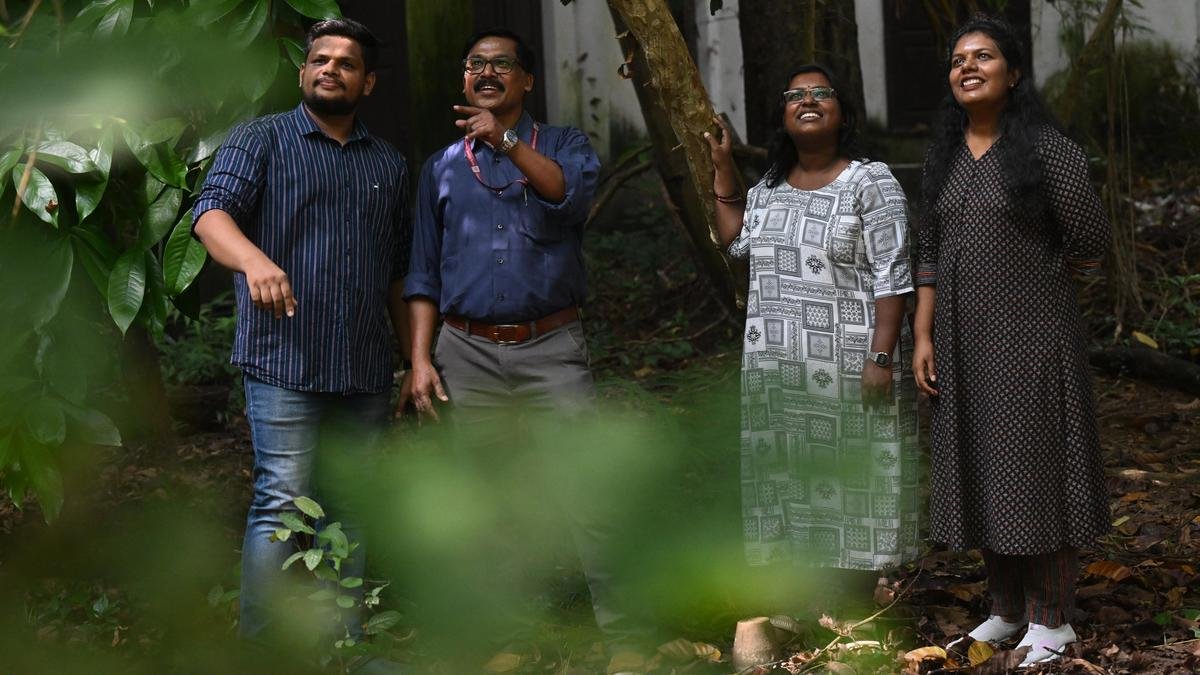
The ‘Lichenology Lab’ at a corner of the Department of Botany at Maharaja’s College, Kochi, is unassuming at first sight. A few steel cupboards have been packed against its walls and cardboard boxes, files and books are piled neatly on the desks. This seemingly ordinary space, however, opens the doors to a fascinating world of lichens. A herbarium, it houses over 4,000 dried specimens of lichens.
So what are lichens? Associate Professor of Botany and in-charge of the Lichenology lab at the college, Stephen Sequiera, explains: “They are organisms formed from a symbiotic relationship between a fungus and algae or cyanobacterium. Though they are commonly found on trees, rocks and soil, they still remain largely unexplored,” he says.
Stephen and his doctoral scholars Arun Christy, Aswathi Anilkumar and Arsha S Mohan have discovered four new species of lichens from the Western Ghats, a milestone in biodiversity research. While the discoveries reaffirm the lichen diversity of the Western Ghats, they also highlight the importance of their conservation and sustainable utilisation, says Stephen.
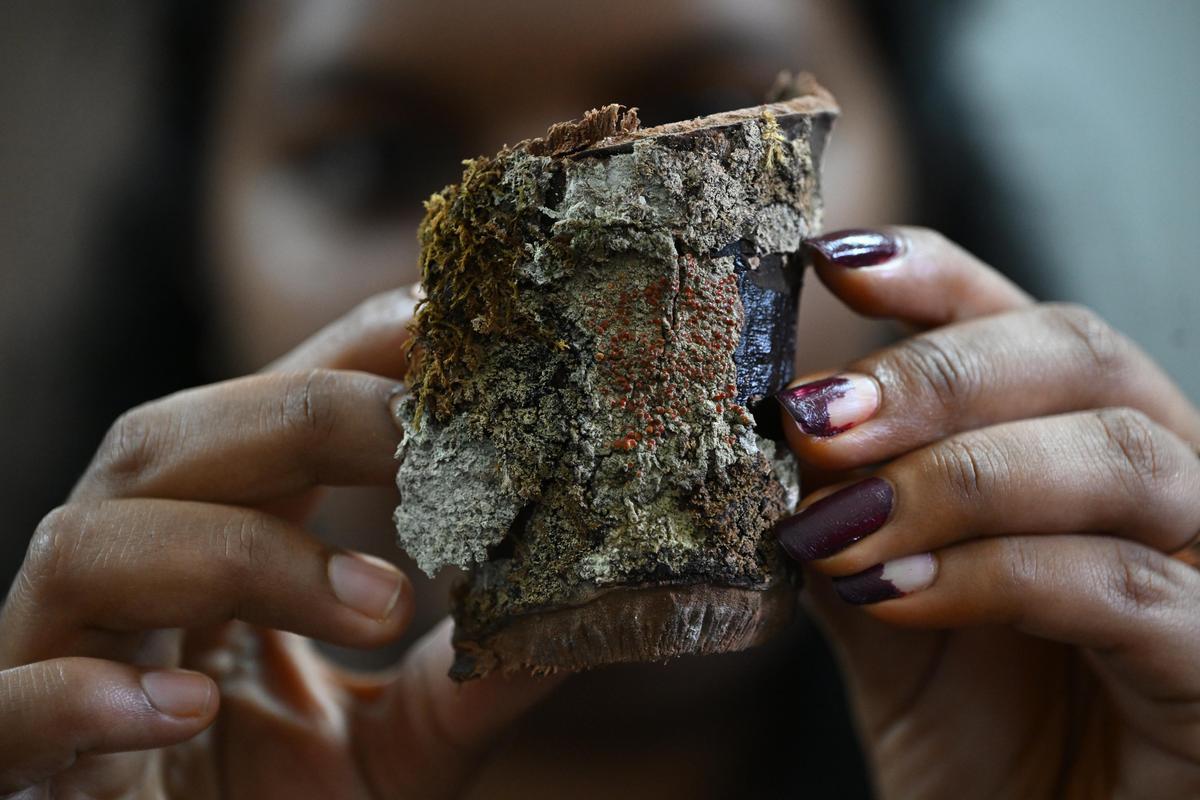
Lichen Haematomma sp
| Photo Credit:
THULASI KAKKAT
Newly-identified species
The newly identified species – Parmotrema sahyadricum (discovered from Wayanad), Solenopsora rhizomorpha (from Eravikulam and Mathikettanshola National Parks), Buelloa ghattensis (Mathikettanshola National Park) and Pyxine janakiae (Mathikettanshola National Park) – have been published in international scientific journals. The work that started in 2022 resulted in these discoveries. The team also recorded more than 50 species of lichens which are new reports to the Kerala part of the Western Ghats.
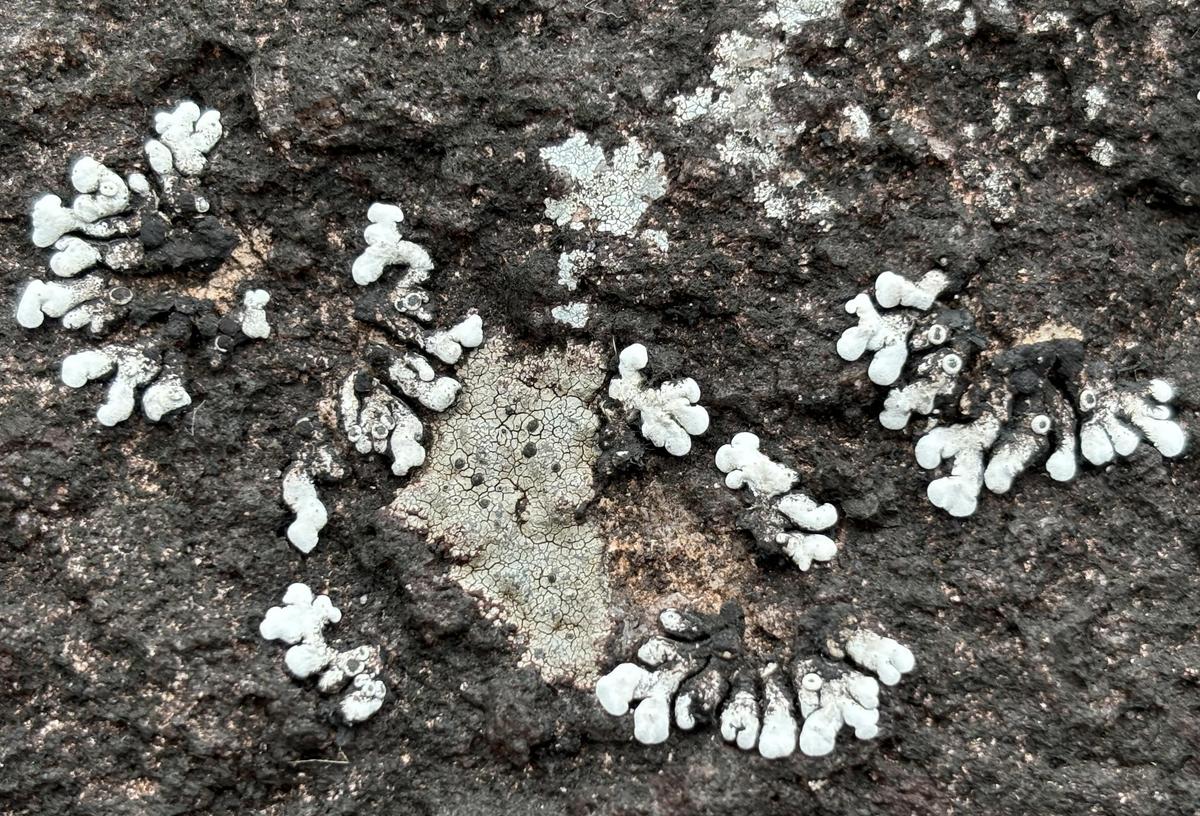
Solenopsora rhizomorpha
| Photo Credit:
Special Arrangement
The collection at the lichen herbarium at the college is one of the most extensive ones at college level and matches that of the Kerala State Council for Science, Technology and Environment (KSCSTE)-Kerala Forest Research Institute (KFRI) and the KSCSTE-Jawaharlal Nehru Tropical Botanic Garden and Research Institutes (JNTBGRI) in Kerala.
Looking for lichens
Lichens are all around us, if we observe them closely, they reveal their secret worlds to us, says this bunch of researchers. They can look very different based on where they grow, appearing as fungal formations on tree trunks and as grass on the soil or rocks. In the herbarium, in their dried form, they appear reduced to a grey smear or a discoloured knot of thread.
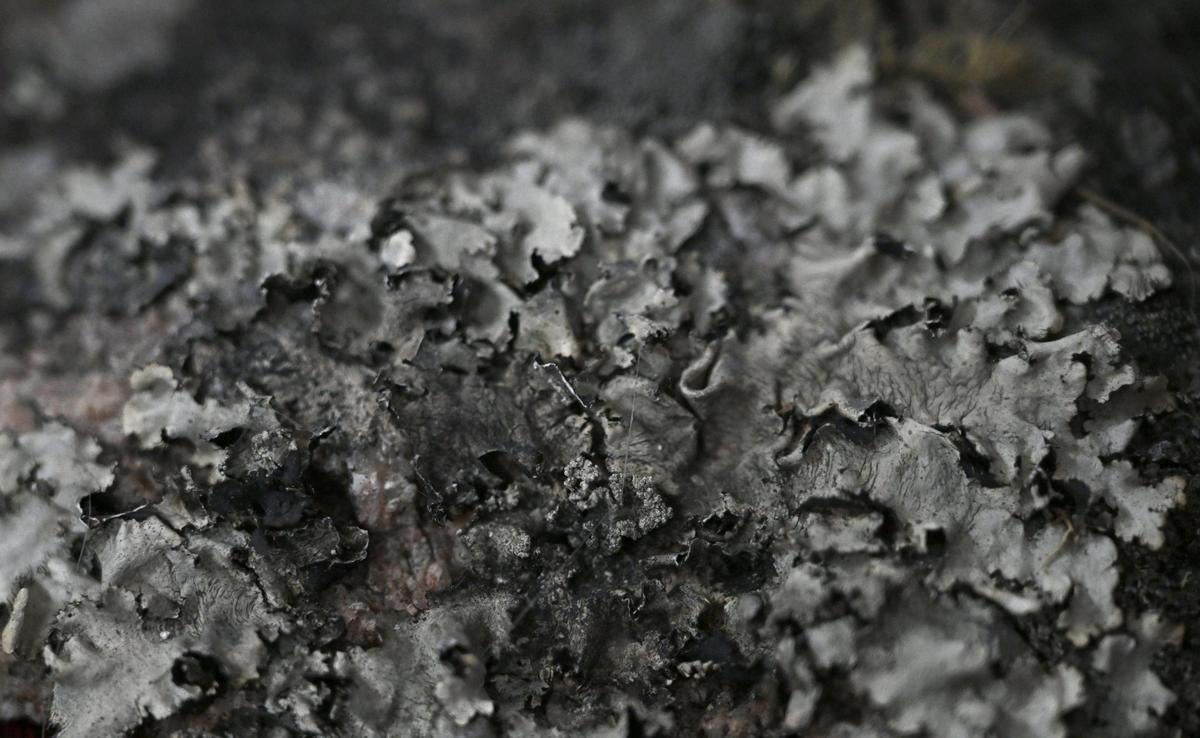
Parmotrema nilgherrense
| Photo Credit:
THULASI KAKKAT
Out of the 3,000 species of lichens in India, 1,706 of them are found in the Western Ghats, says Stephen, who has been studying lichens since 1998, when he was pursuing his doctoral programme at the KFRI, Peechi, Thrissur. He completed a KSCSTE-funded research project on the lichens of Kerala, in 2022, under which he developed a dedicated Lichen House at the Malabar Botanical Garden and Institute for Plant Sciences (MBGIPS) in Kozhikode. This facility, Stephen says, has over 100 species and was set up for the benefit of students, researchers and the general public, to see and explore lichen species that may otherwise go unnoticed. Even lichen species that are found in higher altitudes can be seen at the facility.
Biomonitoring agents
Kerala has over 800 species of lichens, he adds. Lichens play a vital role as biomonitoring agents owing to their carbon sequestration ability and sensitivity to air pollution. They absorb pollutants directly from the air; thereby indicating the health of the environment. “In 2022, as an experiment, we collected lichens from Wayanad and planted them in the Manjummel-Edayar region. After 28 days, when we checked, we could confirm the presence of heavy metals such as Copper, Zinc and Lead in them, which indicates the level of air pollution in the region,” says Stephen, who has described nearly 15 new species of plants from Kerala, including orchids, balsams and bamboos.
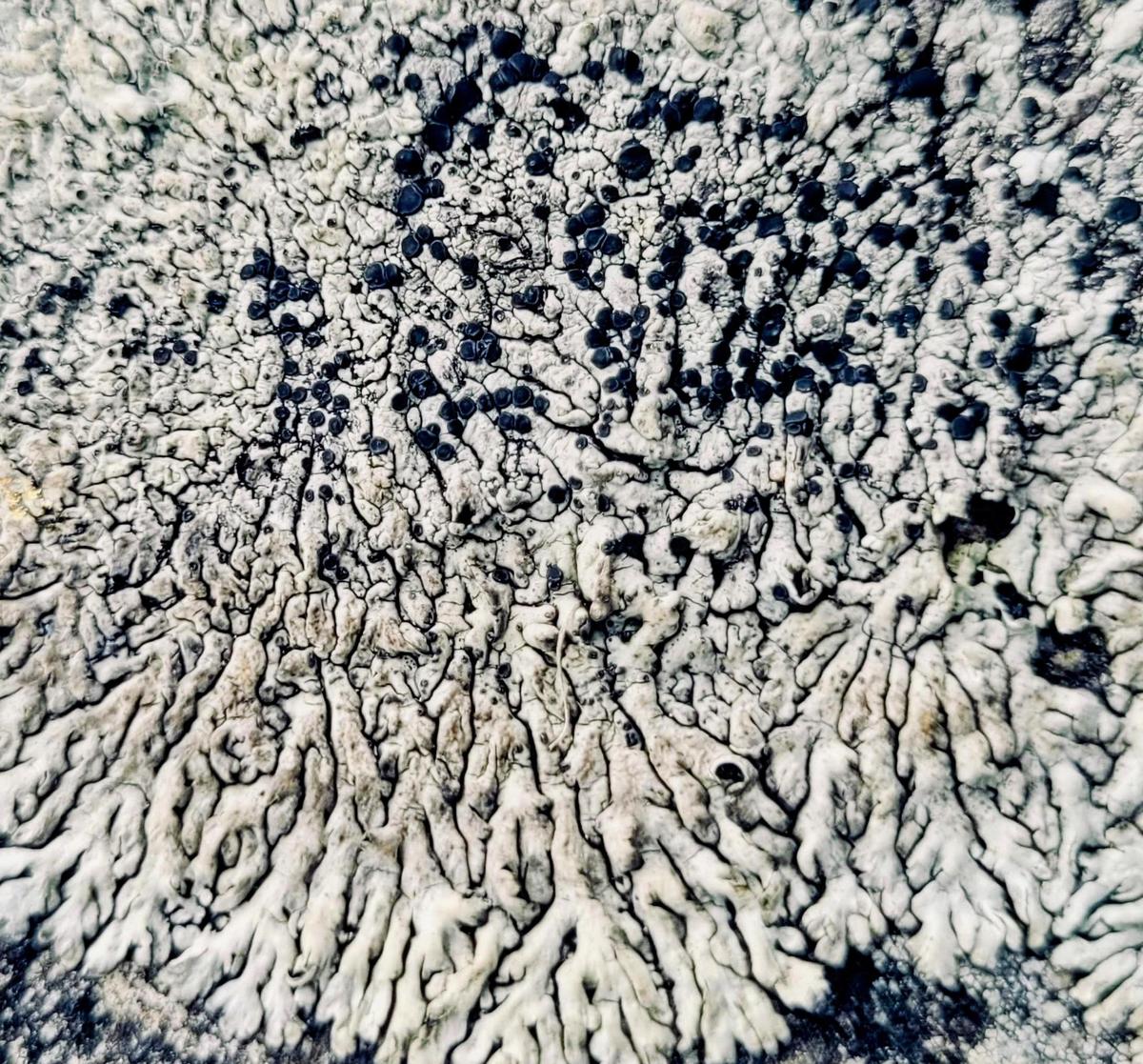
Pyxine janakiae
| Photo Credit:
Special Arrangement
Lichens also act as fertilisers in forests, as they break down rocks, disintegrating it to soil, fixing nitrogen and letting other life forms grow. “Lichens have medicinal properties too. Some species have anti fungal, anti tumor and anti cancer properties, they are used as food preservatives and flavouring agents as well,” Stephen explains.
Stone flower lichen, popularly known as kalpasi in Tamil and Dagad Phool in Hindi, is widely sold as a flavouring agent, especially in biryanis. Forest dwellers and indigenous communities, who know the medicinal value of some lichen species collect and sell them, too.
For the young scholars Arun, Ashwati and Arsha, who chose to study lichens, they are a constant source of inspiration. “There is still very little literature on lichens, and to a researcher, they hold huge potential,” says Arun.
Published – November 07, 2025 04:28 pm IST