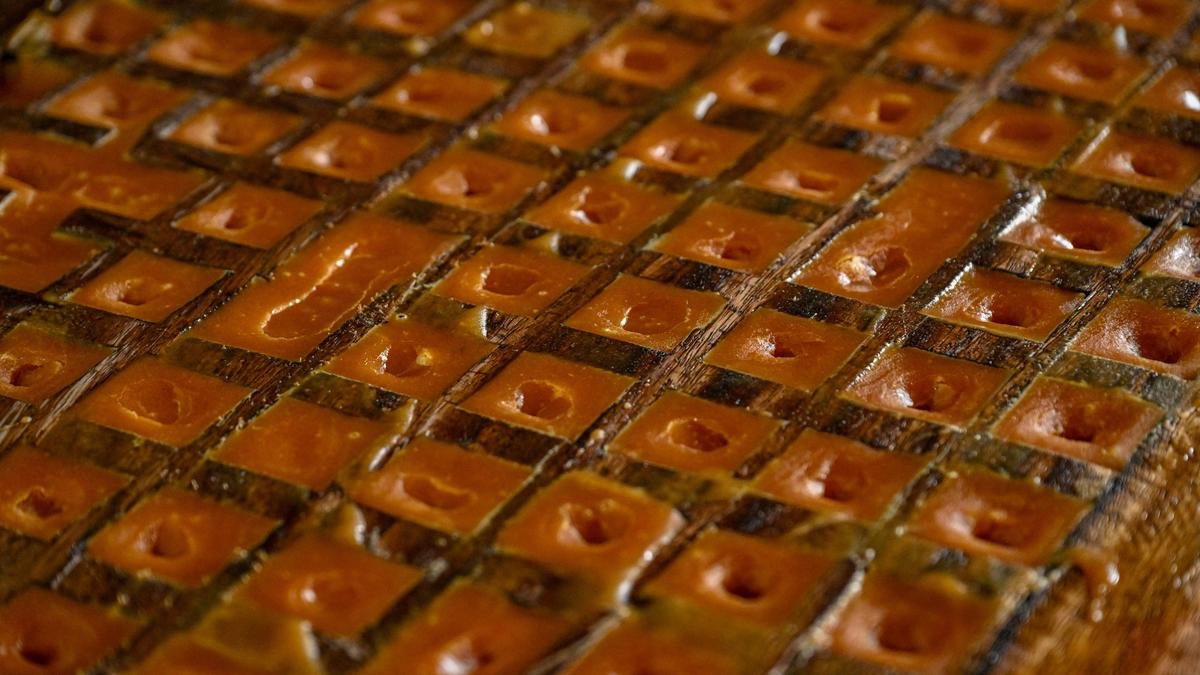
Till recently, the air in Veeramangudi, in Papanasam taluk of Tamil Nadu’s Thanjavur district, used to be redolent with the fragrance of caramelised sugarcane juice, thanks to the over 100 family-run jaggery units here. Of late though, these factories have started closing down due to an attack of yellow leaf disease in the sugarcane crop.
In their heyday, these units specialised in the soft and crumbly atchu vellam (jaggery set into cubical wooden moulds). A 2024 application for a Geographical Indication (GI) tag by the Veeramangudi Atchuvellam Producers Association, Thiruvaiyaru, reveals that the factories in and around the village produce approximately 245 tonnes of jaggery (7,000 bags of 35 kg each) annually.
The atchu vellam makers here cater to bigger retailers in Thanjavur and also sell their stock at the Neikkarapatti jaggery market near Palani, says P. Sathyaseelan, a third-generation farmer and jaggery maker from Veeramangudi. “It is no longer a profitable business. We are carrying on only because it is our family tradition, and we do not want it to vanish like other rural occupations,” he says.
A 30 kg sack of Veeramangudi atchu vellam typically fetches around ₹1,350 in the market. “This is quite a reasonable price, but of late, we have been unable to get even this, because of the unusable crop,” adds Sathyaseelan.
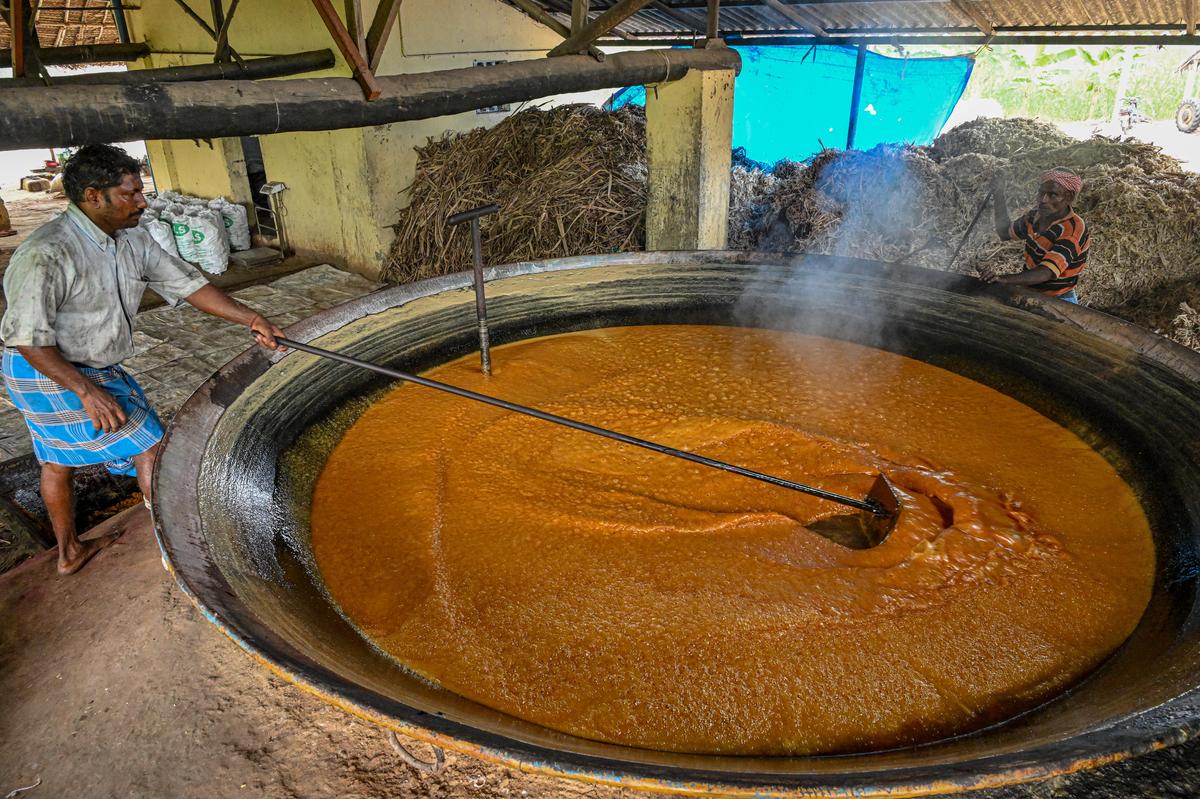
Sugarcane juice is cooked till it caramelises and thickens before being set into wooden moulds to make Veeramangudi atchu vellam.
| Photo Credit:
R. Vengadesh
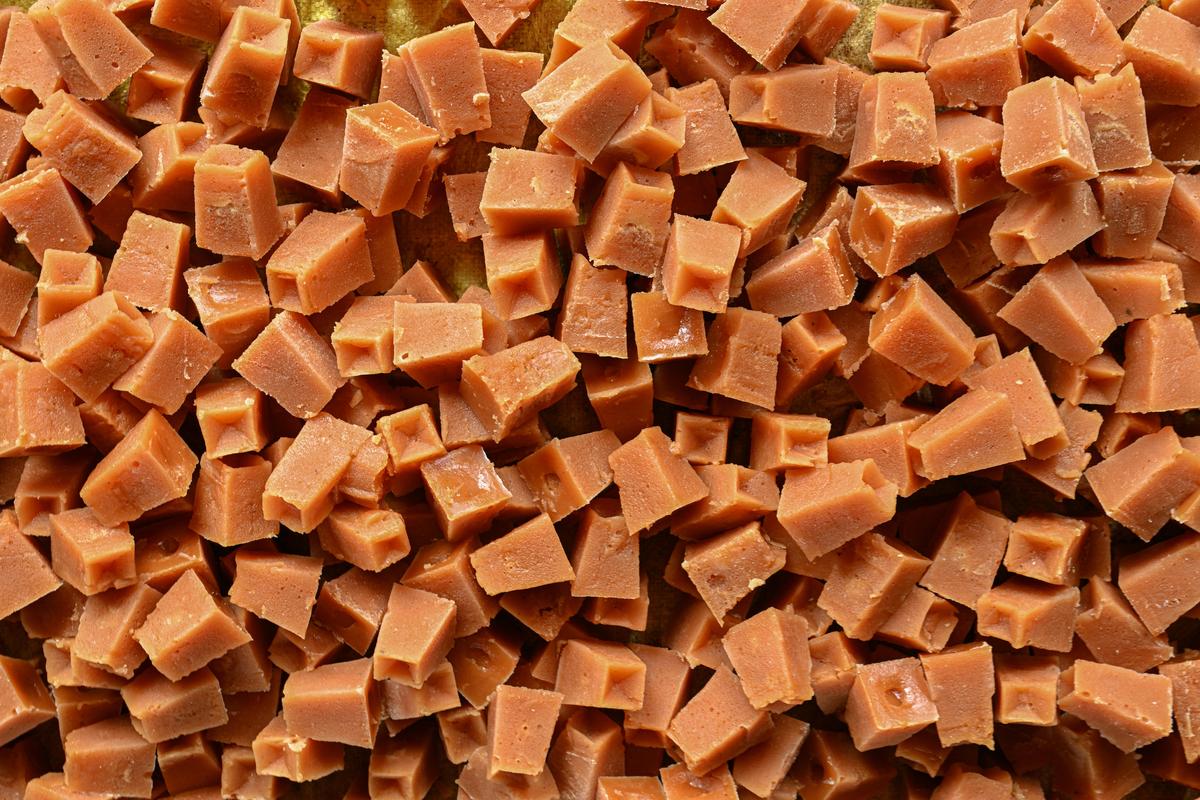
A close-up view of freshly made Veeramangudi atchu vellam cubes.
| Photo Credit:
R. Vengadesh
Integral part of Tamil Nadu
Jaggery is an emotional component of Asian cuisine. It turns up in home remedies, Ayurvedic medicines and as wedding gifts, and is the flavour definer in traditional sweet dishes like pongal, thothal/ dodol and chikki, besides being a spice stabiliser in sambar and rasam.
In Tamil Nadu, one of the five major sugarcane producing states in India (along with Uttar Pradesh, Maharashtra, Karnataka and Gujarat), many rural communities rely on jaggery production from sugarcane (known as vellam) and palm sugar (karuppatti) to cater to larger retailers, especially during the festival season that stretches from October to March.
During the Pongal festival being celebrated across the State this week, the making of sakkarai pongal — a sweet preparation made with freshly harvested rice, moong dal and jaggery in earthen pots on firewood stoves — is a treasured ritual symbolising prosperity and thanksgiving.
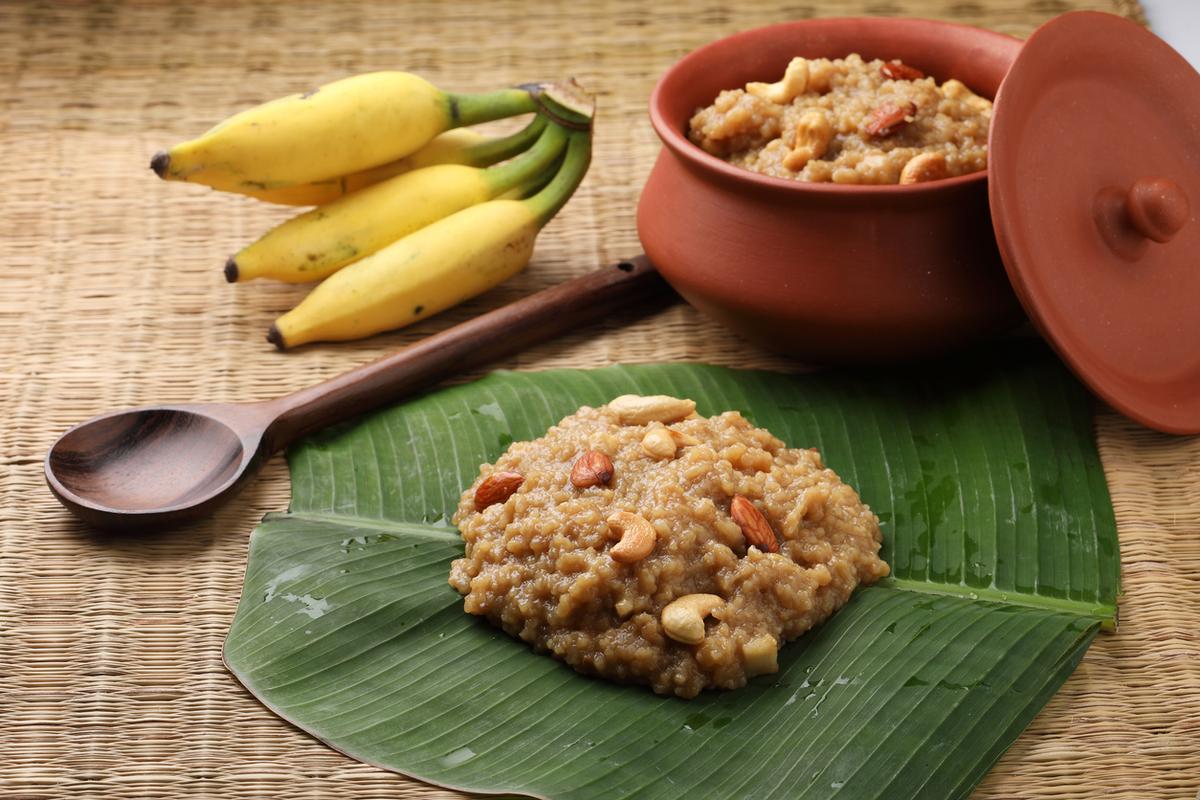
‘Sakkarai pongal ‘, a sweet preparation made with rice, moong dal and jaggery, is a staple of Pongal festival celebrations in Tamil Nadu.
| Photo Credit:
Getty Images
Traditionally, vellam makers are farmers who grow their own sugarcane, and process it for jaggery making in small thatched working sheds within their fields. Sugarcane ‘bagasse’ (the dry pulpy residue left after the extraction of juice) is used as fuel to cook the jaggery syrup down on large flat-bottomed pans.
Largely a self-sustaining cottage industry, Tamil Nadu’s jaggery hotspots include Salem, Erode, Namakkal, Madurai and Virudhunagar. Many villages in the Cauvery delta region also produce artisanal jaggery in significant quantities.
Other GI-tagged jaggery variants
Marayoor sharkara, Kerala
Handmade, with a distinct non-salty sweetness, and commonly used in Ayurvedic medicine
Kolhapuri gul, Maharashtra
The highest exported variety from India
Muzaffarnagar gur,Uttar Pradesh
The city has India’s largest jaggery market, accounting for 20% of the country’s total jaggery production
Made with care and precision
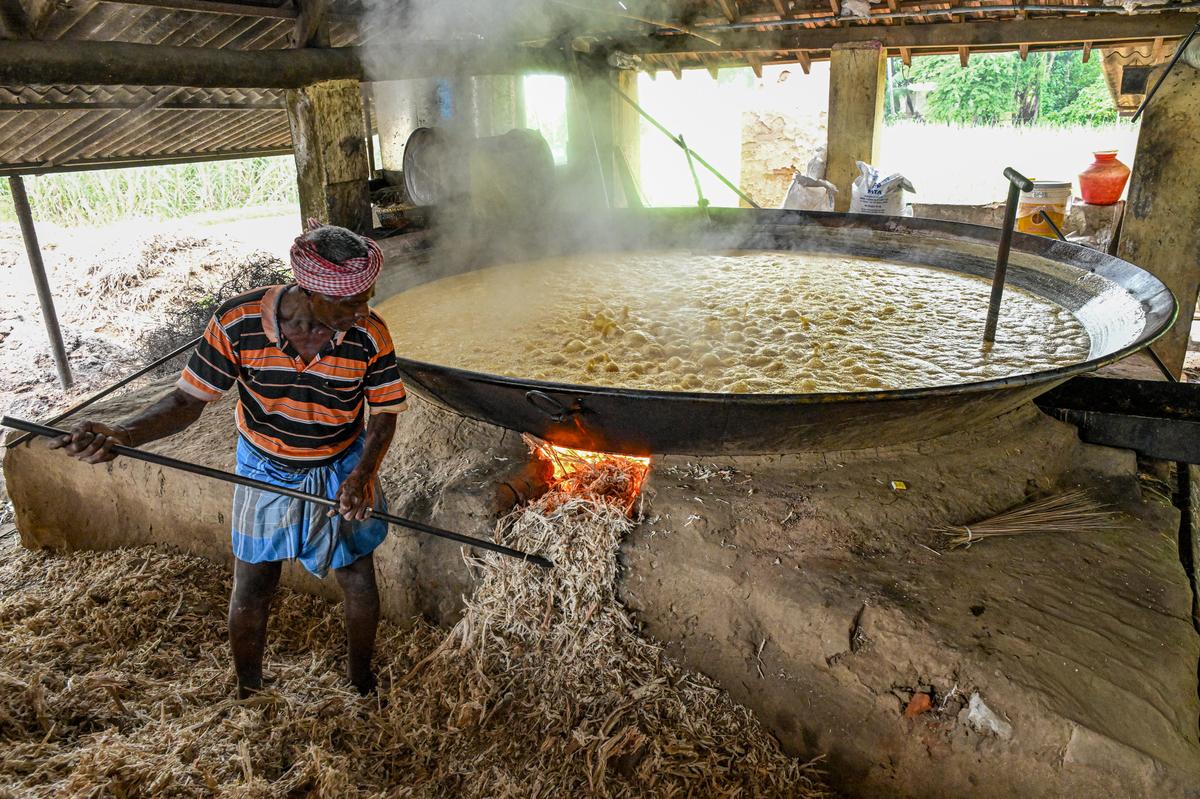
A master cook and his assistants stir the sugarcane juice continuously for up to two hours until it thickens.
| Photo Credit:
R. Vengadesh
Recently, before copious rains hit the Cauvery delta region, farmer Aravinth and his co-workers prepared a batch of atchu vellam, with a mix of old and new technology. Gone are the cattle-driven juice extractor machines, their place taken by a noisy motorised thresher. The juice is directed through an inbuilt channel into the koprai, a giant metallic flat pan set on a raised earthen stove that is lit up with large batches of bagasse fibre. A master cook and his assistants stir the juice continuously with the help of long paddle spoons for up to two hours until it thickens. “You cannot leave the mixture unattended, as it can burn easily when caramelisation starts,” says Sathyaseelan.
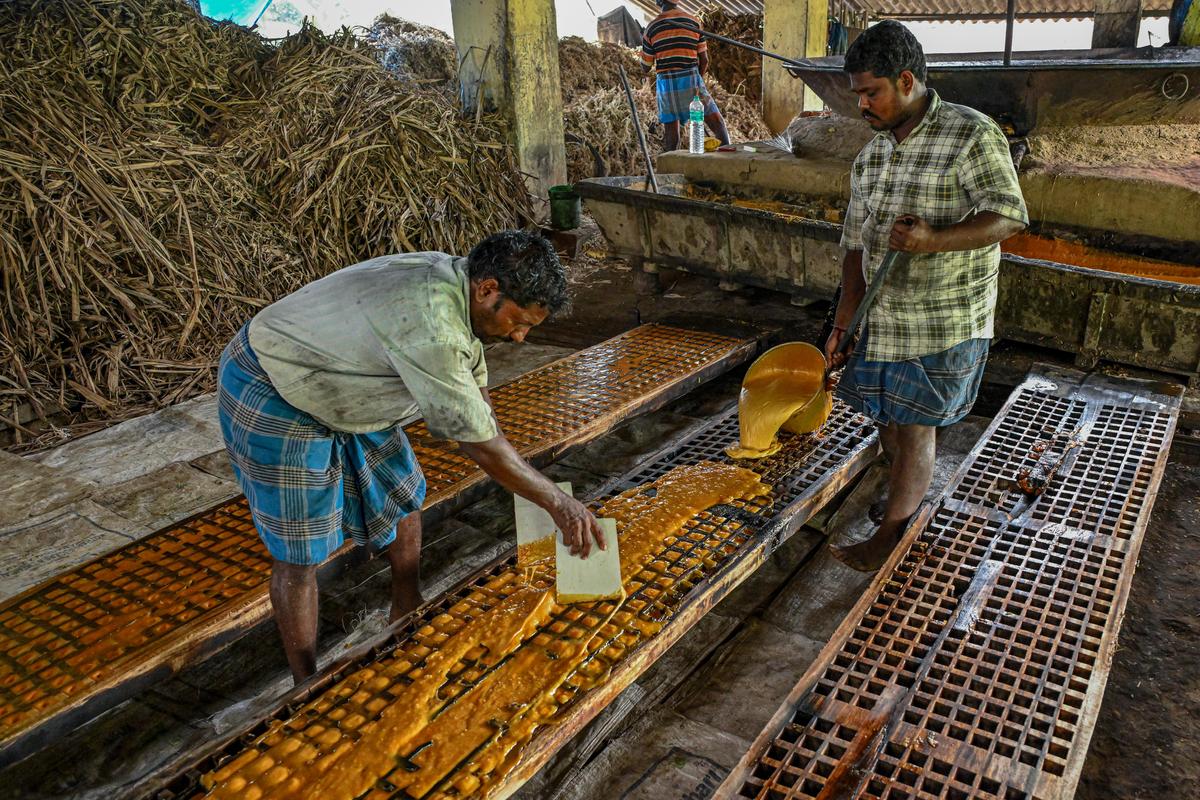
Workers pour and level hot jaggery syrup into wooden moulds at a traditional workshop near Thanjavur.
| Photo Credit:
R. Vengadesh
The concentrated cane sugar syrup is removed from the pan and allowed to rest for a while before it is poured into the atchu (mould) in wooden frames. Around 15 minutes later, the moulded jaggery is tapped out of the frames, cured for 30 minutes, and then packed in sacks.
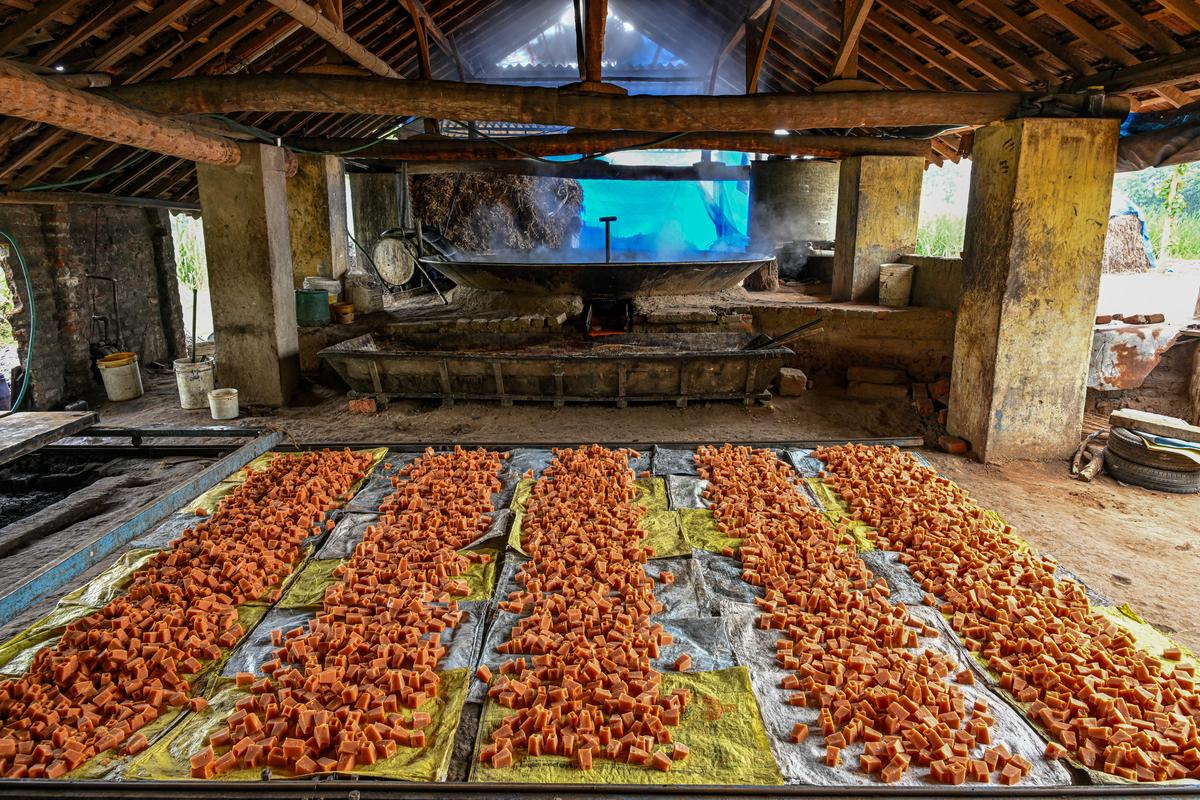
Rows of traditionally moulded atchu vellam (jaggery) cubes set out to cool.
| Photo Credit:
R. Vengadesh
On the cusp of change
The labour-intensive manufacturing technique has reduced the number of jaggery producers in many regions of Tamil Nadu. Modern-day industrial mills have shifted the processing from farms to factories. “Many farmers are moving away from sugarcane cultivation because its harvesting needs extra labour. And with the prolonged hot weather patterns, most of the crop is used for making juice or refined sugar. Only those with the financial resources can afford to produce jaggery profitably,” says M. Karthikeyan, secretary, Tamil Nadu Jaggery Merchants Association, Madurai.
However, health-conscious urban consumers are driving the demand for good quality jaggery. “In today’s culinary world, where farm-to-table and local ingredients are used for sustainability, jaggery stands out naturally. It is made with very little processing, unlike refined sugar,” says M.S. Raj Mohan, chef and head, Department of Hotel Management, G.T.N. Arts College, Dindigul.
Mohan says that jaggery also scores over white sugar with its flavour and aroma. “In classic recipes, replacing jaggery with white sugar changes the flavour, texture, and overall soul of the dish. It blends well with spices like cardamom, ginger, cumin and pepper, and contains minerals like iron, calcium, and potassium.”
nahla.nainar@thehindu.co.in
Published – January 14, 2026 08:35 pm IST