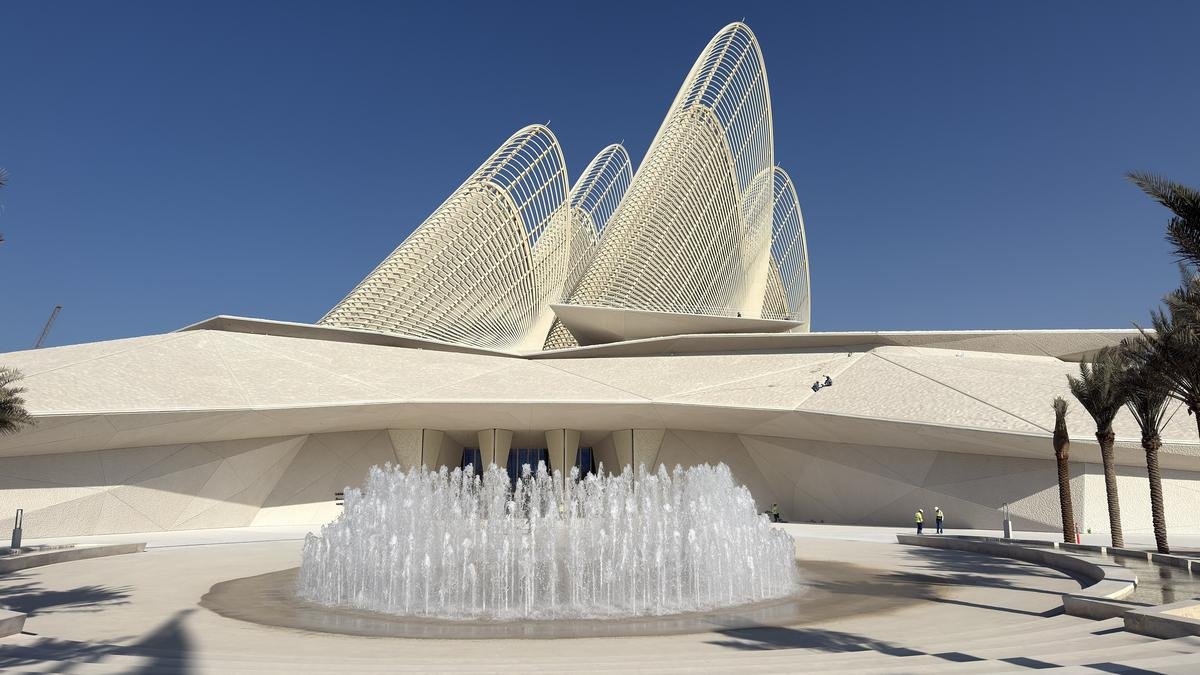
Museums are not merely places; they are stories woven across time and land. The newly inaugurated Zayed National Museum in Abu Dhabi proves this as its five tapering falcon wings rise dramatically above the skyline. Anchored inside is a 60-foot boat with a prow rising to 11 feet — the very vessel I once encountered in a school textbook on the Indus Valley Civilisation. Reconstructed with help from university scholars, researchers and boatmen from Kerala, using wood, coir and bitumen, the Magan boat is a Bronze Age marvel. It links this desert nation to Meluhha, the maritime trading port of the Indus Valley Civilisation.
Boats like these once carried copper across the Arabian Sea to ports on India’s western coast 3,000-4,000 years ago. Without a nail, bolt or screw, revived from engraved drawings and materials described in cuneiform writing on ancient tablets, the boat did a two-day sea trial in the Arabian Gulf, sailing 50 nautical miles, before being anchored at the museum.
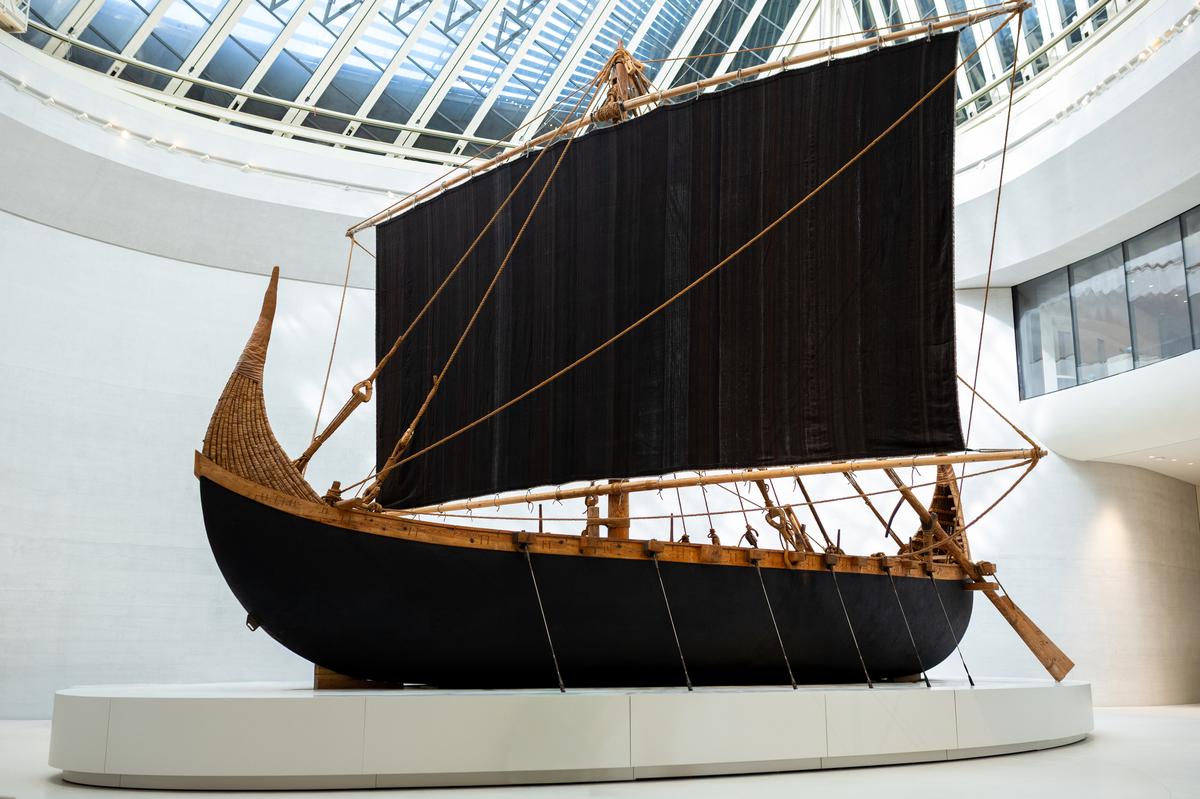
The Magan boat
More than a land of petroleum
The museum positions itself as a place where the world and civilisation are interpreted through an Arab lens. “The history here is from the perspective of the United Arab Emirates. It is not the other way around. It is not from a British perspective,” says Mohamed Khalifa Al Mubarak, Chairman of the Department of Culture and Tourism, Abu Dhabi.
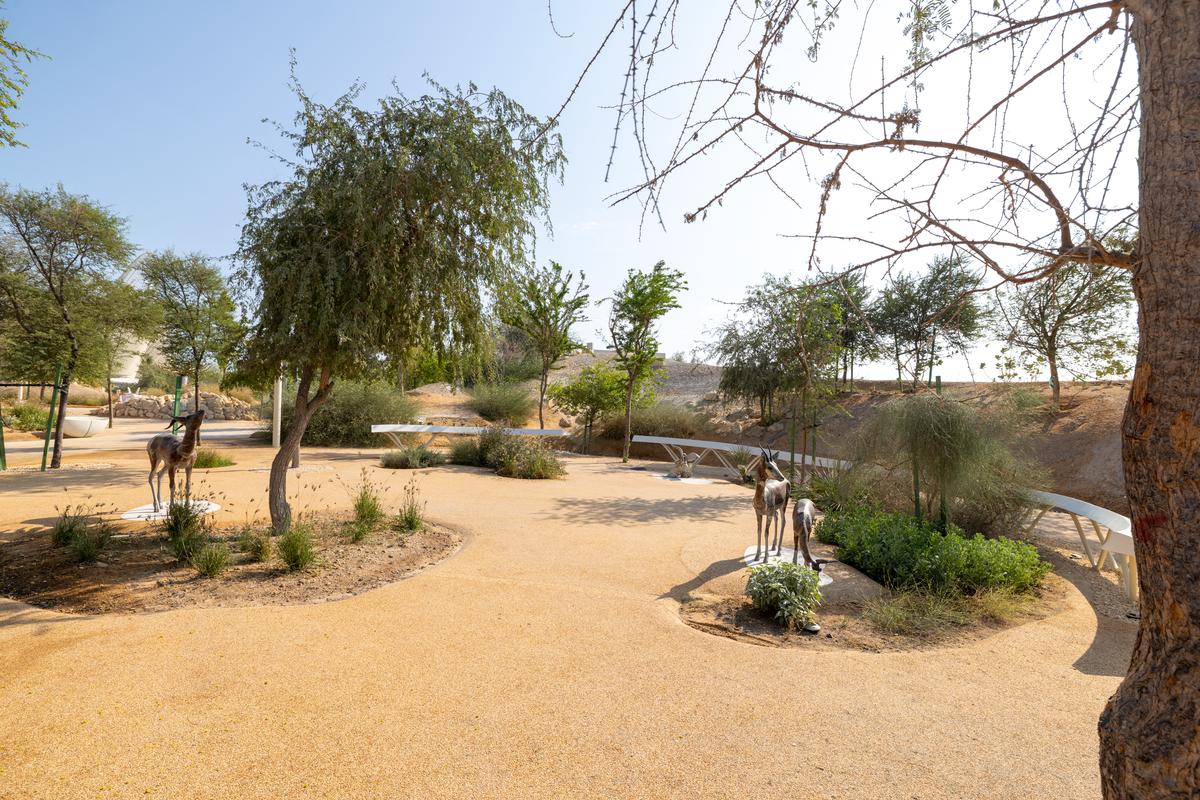
The open air gallery leading to the museum
With a massive 30-metre faceted mound, tipping the hat to the desert topography, the museum has been designed by British architect Norman Foster. The wingtips function as thermal chimneys, creating cooling air currents that pull out warm air from the building. The architects call them ‘Canadian vents’; Khalifa Al Mubarak calls them ‘barjeel’, an ancient wind-tower design that has long kept homes and public spaces cool across the region.

“The Zayed National Museum tells the unfolding story of the land and its people. It demonstrates the unifying power of our history and culture, providing a space where citizens, residents and visitors can see themselves reflected in the story of our people and our land. Bridging past, present and future, it will help shape how we understand the UAE’s evolving cultural narrative.”Mohamed Khalifa Al MubarakChairman of the Department of Culture and Tourism, Abu Dhabi
Walking through the space, I realise that museums are not just about contested objects; they are a culture speaking to itself, a collective memory that interprets the world and repositions our place within it. Here, an old notion dissolves — the idea of the UAE as merely a land of petroleum, sand dunes, date palms, sea and shopping malls, stripped of history. Instead, it evokes awe as it lays out a tapestry linking oasis, horses, coffee pots, dates, water infrastructure, and falcons, tracing the land’s story from the palaeolithical, pre-Islamic era to the modern one. “One of the surprises for me was finding a Bronze Era sword inside a burial mound in Al Ain. It was oxidised, but we learnt that people were buried with their personal goods. The restored sword showed the warrior mentality of the people,” Khalifa Al Mubarak says during the tour. It is this command of narrative that shapes the visitor experience.
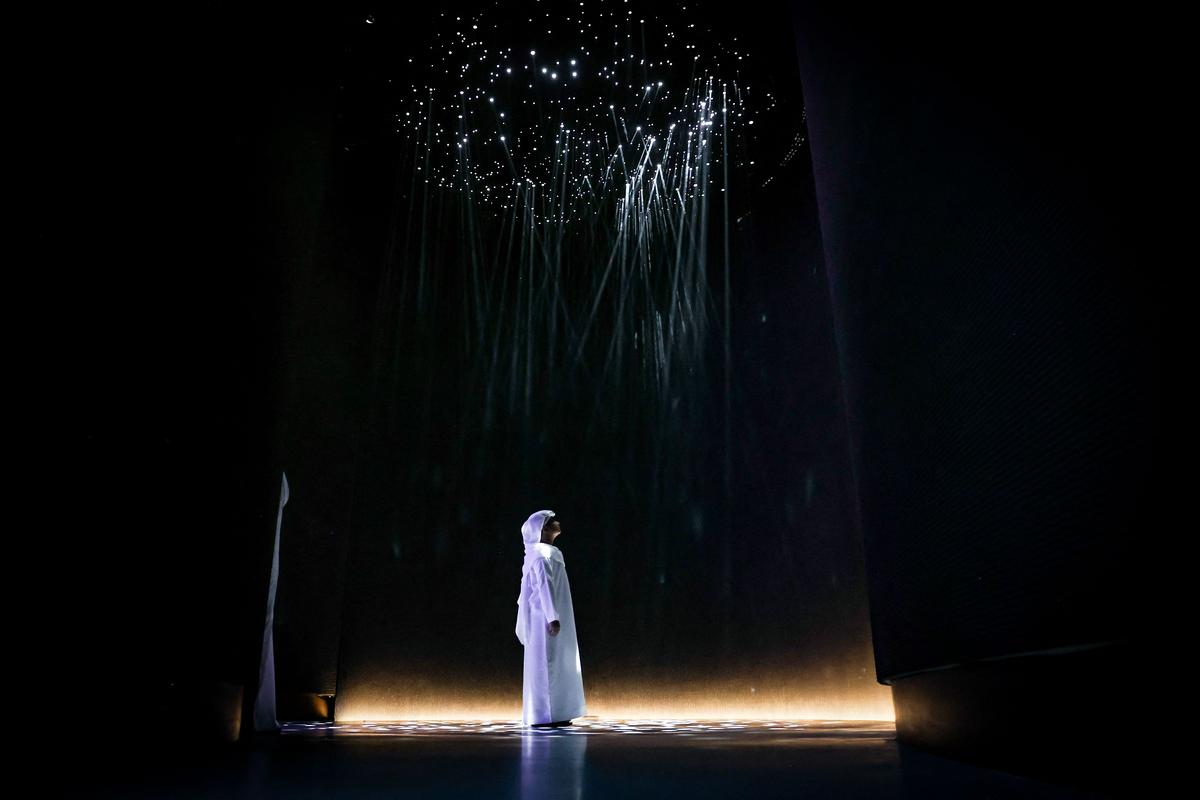
A child stands inside the Zayed National Museum in Abu Dhabi
| Photo Credit:
AFP
Celebrating the UAE
The museum houses 1,500 objects, sourced from all seven emirates, within six permanent galleries, combining archaeological artefacts, historic objects, audiovisual and sensory experiences, and contemporary installations and reconstructions. It also pays tribute to the life and times of Shaikh Zayed bin Sultan Al Nahyan, founding father of the UAE. The tour begins with the 600-metre outdoor Al Masar Garden, featuring a ghaf (Persian mesquite) tree from one of his residences. Inside, replicas of horses have been recreated from breeds descended from those he rode, and a replica of his 1966 Chrysler Newport and his camel stick accompany the exhibits.
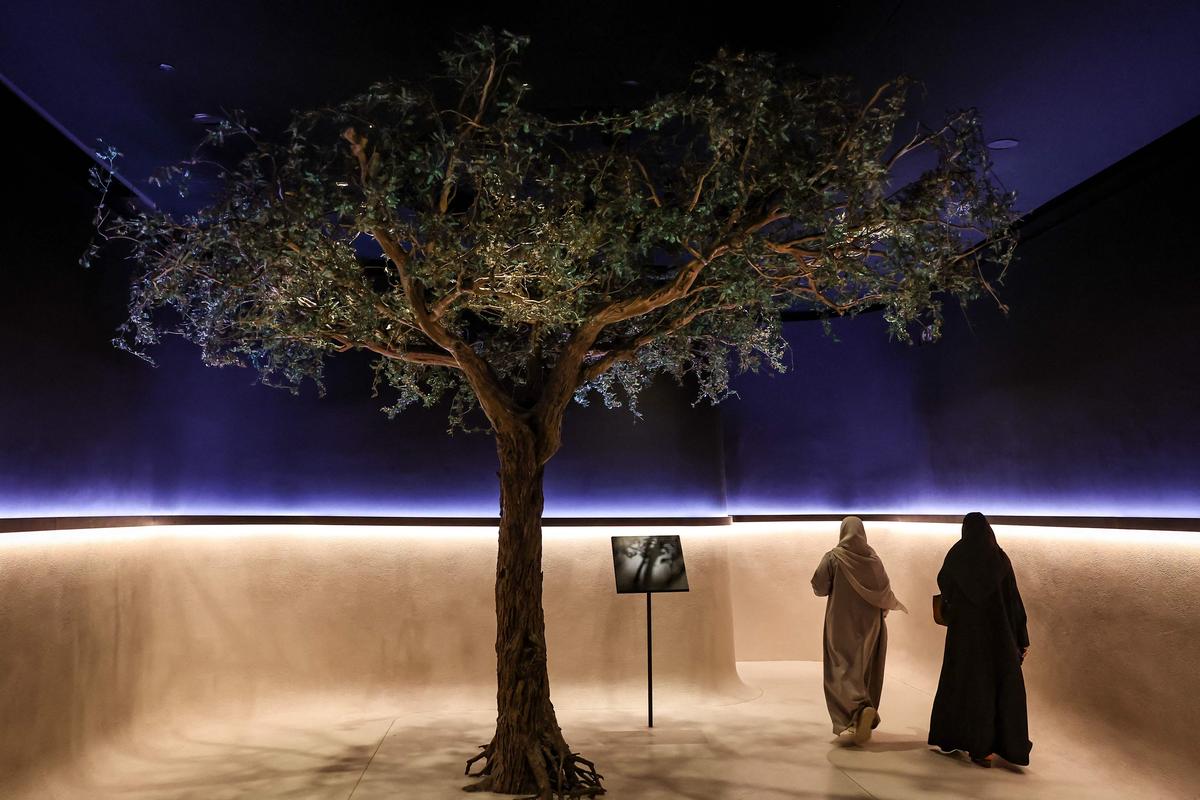
Women walk inside the Zayed National Museum in Abu Dhabi.
| Photo Credit:
AFP
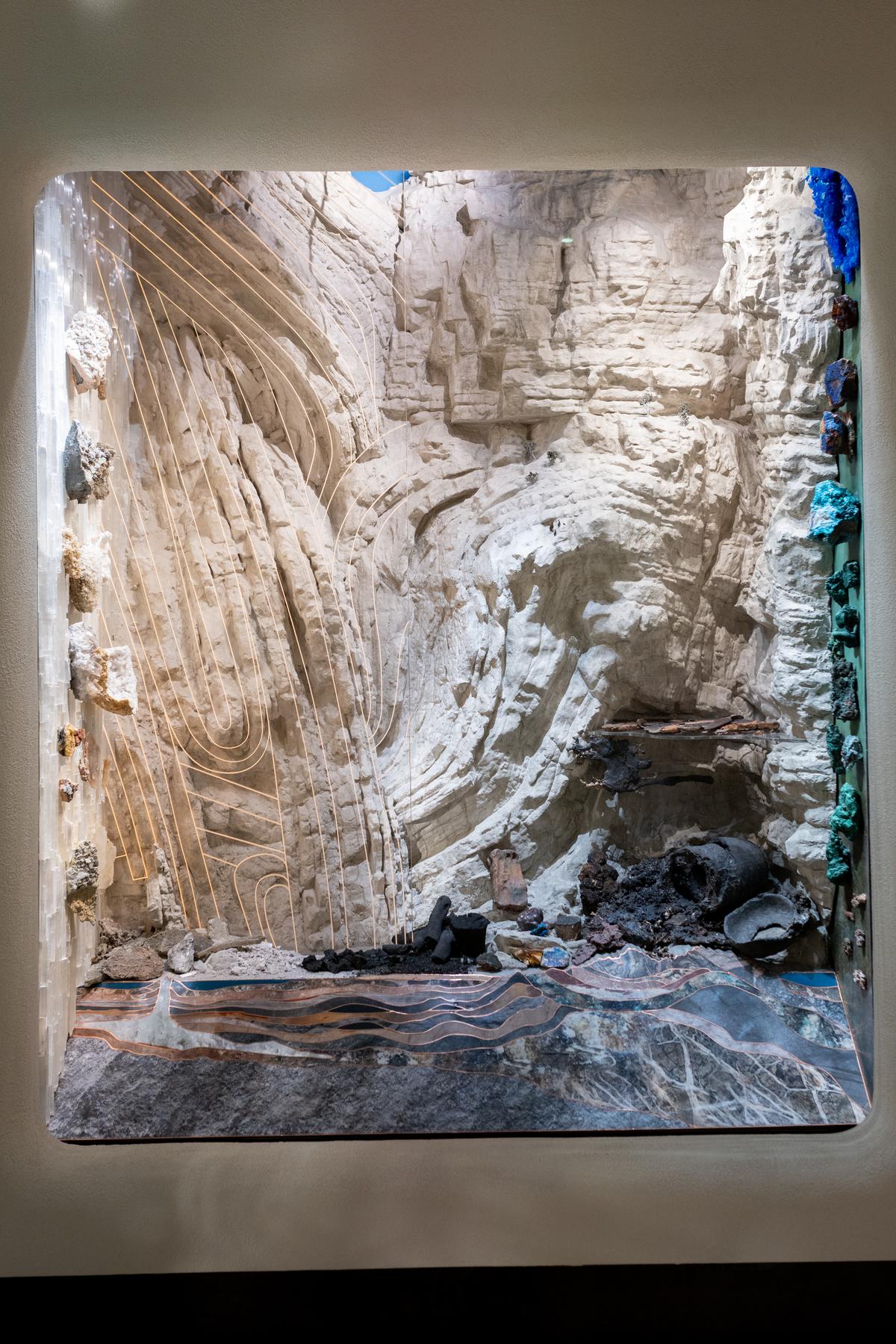
The narrative celebrates the nation’s enduring bond with falcons too. “Falcons were key to survival as they helped hunt during difficult times. They are our family,” says the curator of a gallery depicting a land that is part desert, part sea and part urban carnival. One diorama illustrates the ancient Tethys Sea and the formation of fossil fuels, represented through glass micro-organisms symbolising the country’s modern wealth. Another display presents one of the oldest known pearls, an 8,000-year-old find discovered in 2017 on Marawah Island, linking pearl-diving to the country’s long history.
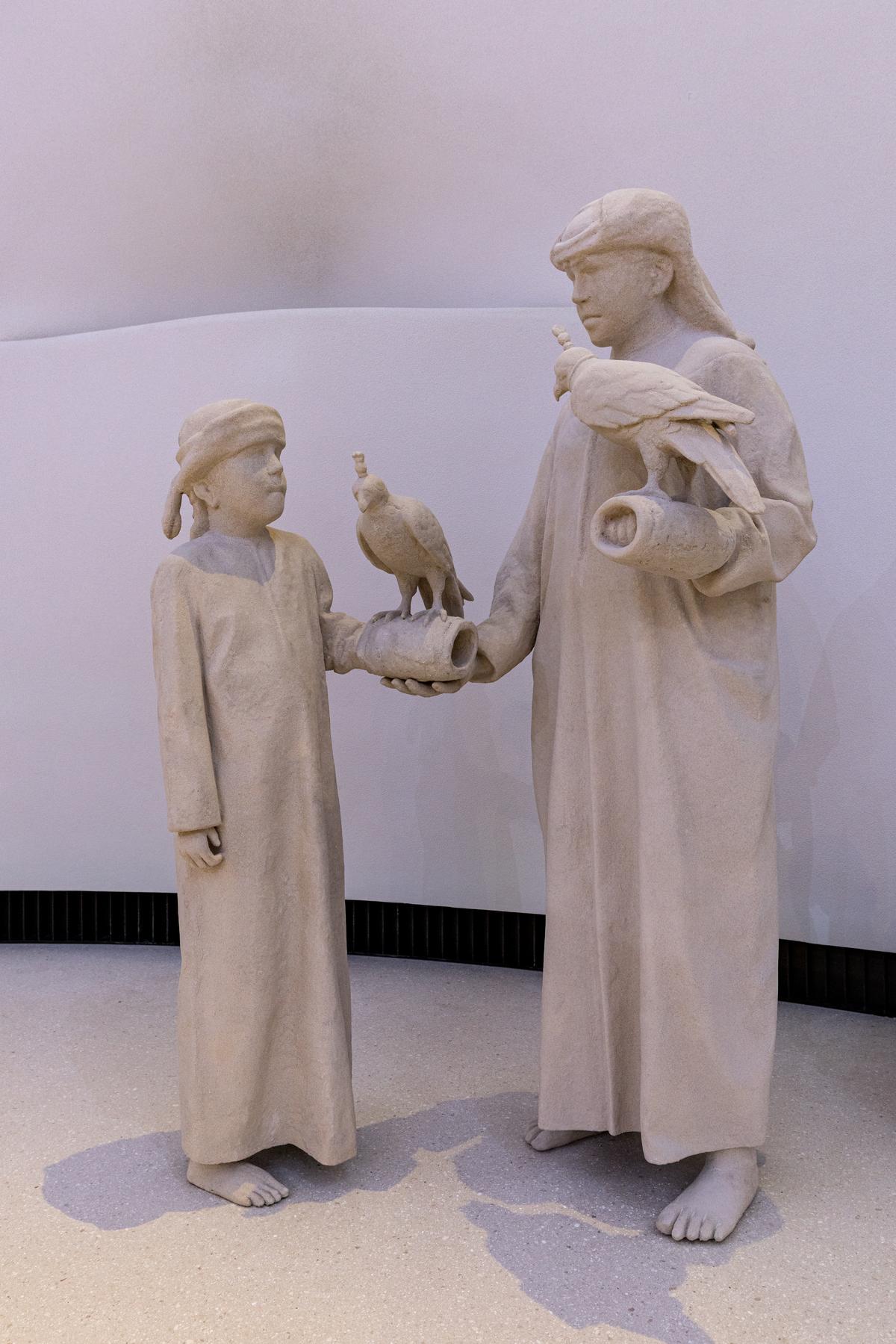
Statuery featuring falcons
The cultural district
Built on Saadiyat Island, the museum joins a constellation of institutions reshaping the UAE’s cultural landscape. It is at walking distance from the Louvre Abu Dhabi, on an artificial island crowned by a steel dome visible from space, which houses artefacts ranging from Renaissance paintings to bronzes from Tamil Nadu. The Guggenheim Abu Dhabi is under construction, while the Natural History Museum Abu Dhabi currently hosts Lucy, the 3.2-million-year-old skeleton considered the mother of humanity, on loan from Ethiopia.
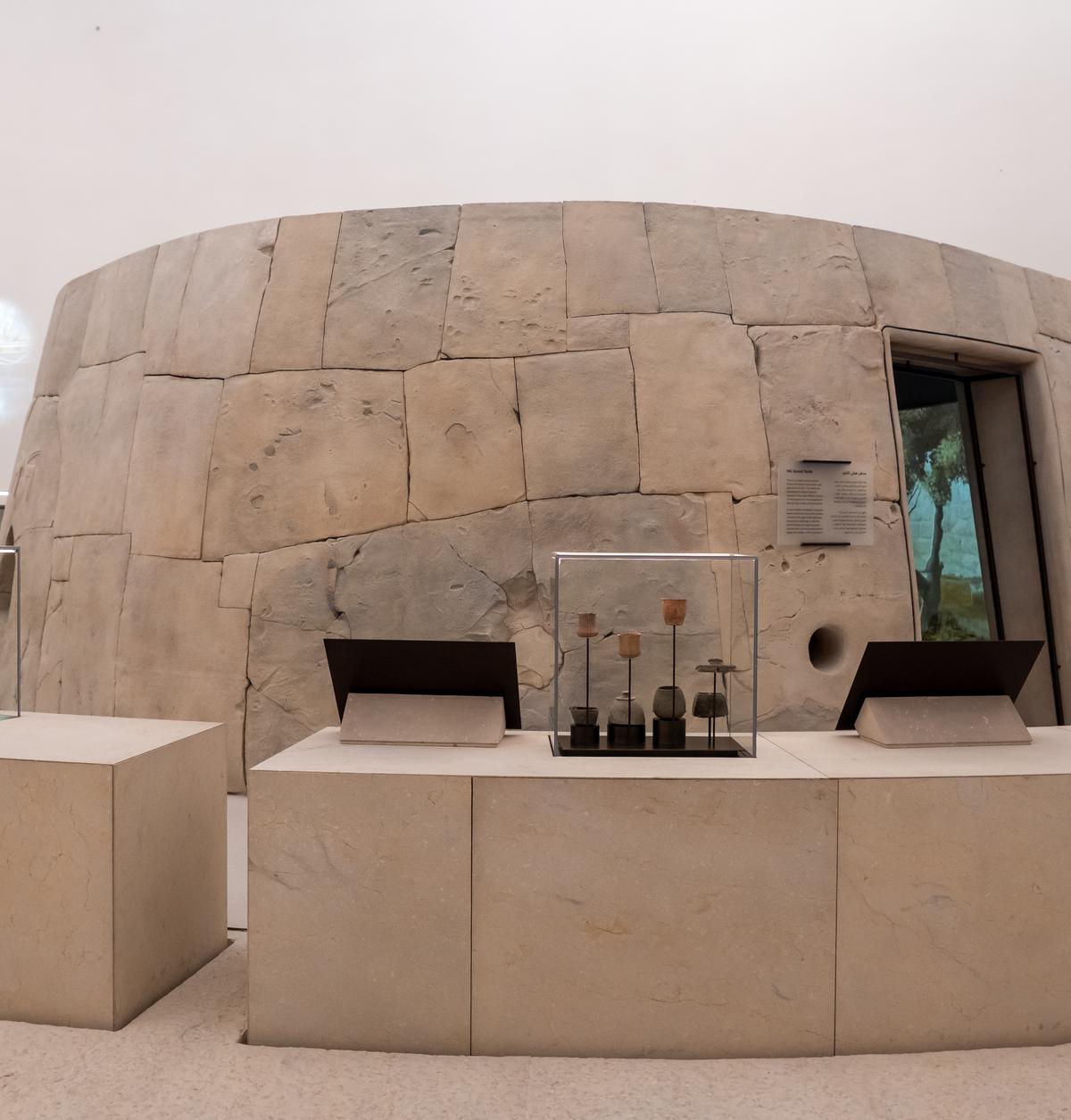
A burial mound
By bringing these intertwined human narratives together, Abu Dhabi is forging a new visual history of the country — one in which the Zayed National Museum asserts its suzerainty over culture and our collective human heritage.
Published – January 17, 2026 02:01 pm IST