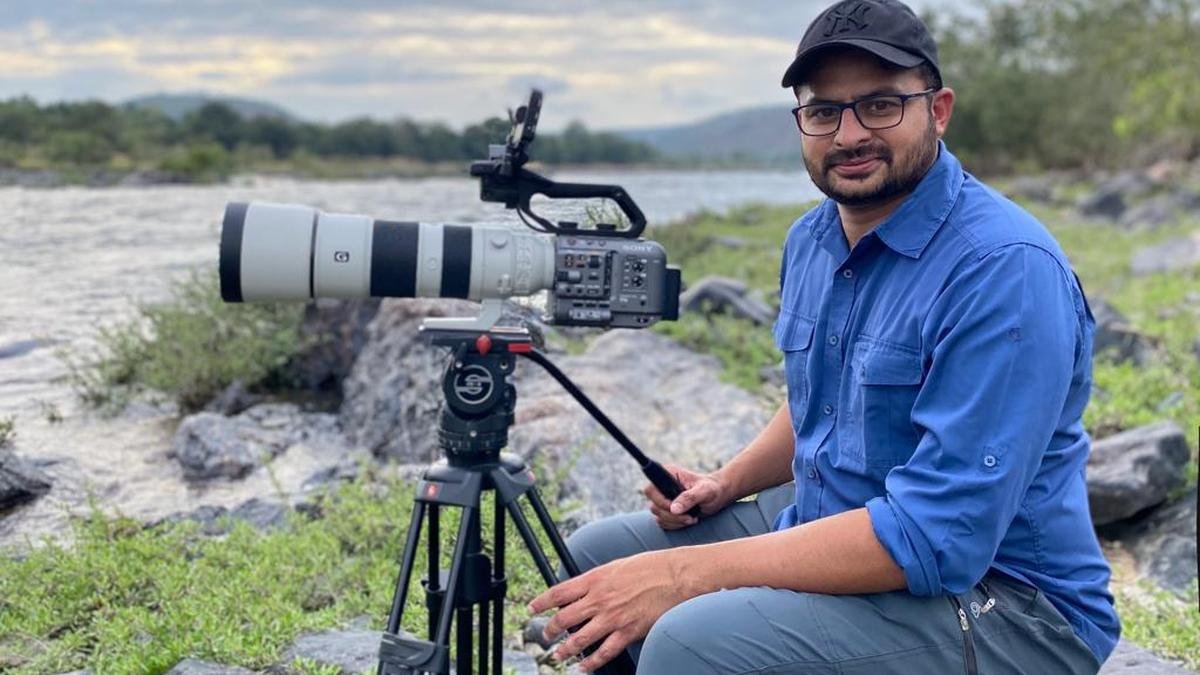
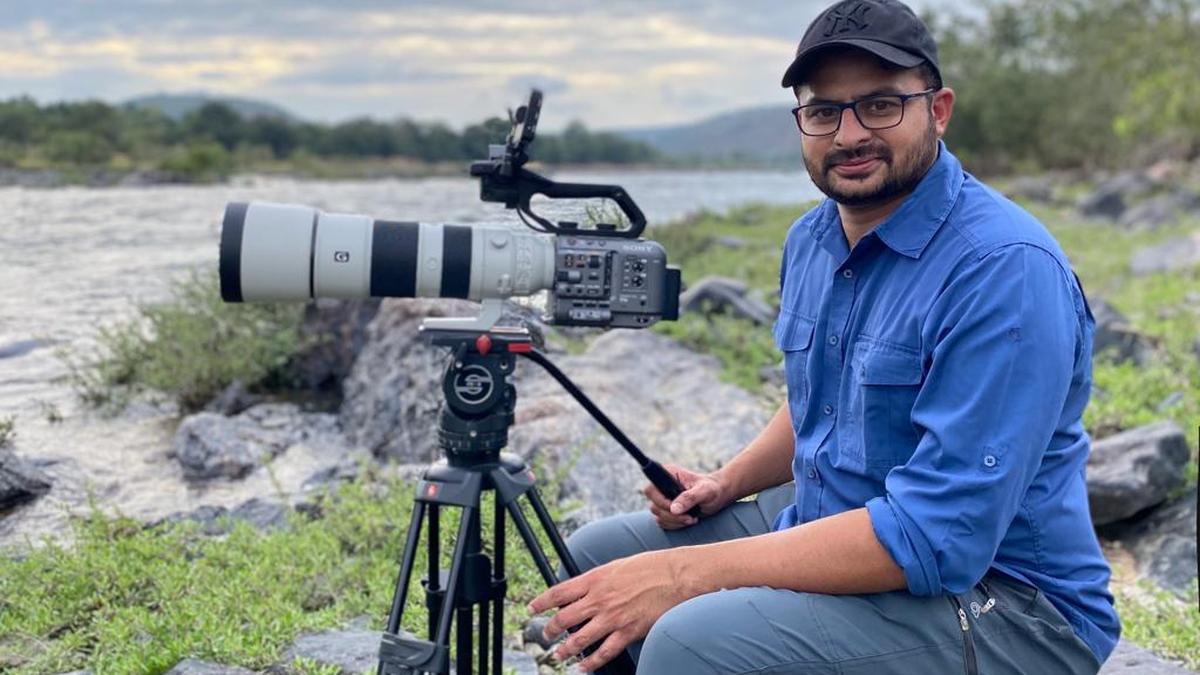
Wildlife photographer and filmmaker Kalyan Varma directed Wild Tamil Nadu
| Photo Credit: Special Arrangement
Wild Tamil Nadu begins with the soothing bass voice of Arvind Swamy, who introduces the film’s concept to the audience. “More than 2000 years ago, scholars wrote poems about a land where the natural world intertwined with the human spirit,” he says in the film, which was screened at The Hindu Lit for Life 2026. These ancient writings, known as Sangam literature, classified land into five realms: kurinji (hills), mullai (forests), marutham (croplands), neithal (coastal areas) and palai (arid land), he adds. “This is the story of these realms,” we hear him explain in this documentary, produced by Sundram Fasteners and directed by wildlife photographer and filmmaker Kalyan Varma.
Over the course of a little under an hour, viewers are introduced to a variety of animals, both great and small, who inhabit this land. Using breathtaking footage of the Great Hornbill whirring through endless skies, scattering seeds far and wide, herds of elephants cavorting through tea estates, an energetic family of dholes, scuttering ants, the mating flight of winged termites, and duelling rock agama lizards, Wild Tamil Nadu offers a peek into an incredibly diverse landscape.
In an earlier interview with The Hindu, filmmaker Kalyan Varma noted that the state has a staggering diversity of landscapes, ranging from mountain peaks as high as 2700 metres to marine ecosystems that support an incredibly rich and productive underwater life.

In that same interview, he also spoke about the film’s origin, his process as a film maker, the creative choices he made and why actor Arvind Swamy was chosen to do the voiceover “Tamil Nadu is proud of its language and heritage, which go back thousands of years. So, we wanted a voice that would do justice to it,” he said.
But Wild Tamil Nadu is far more than stunning shots of wildlife in various landscapes. It also offers insights into the interconnectedness of various ecosystems, discusses human-wildlife coexistence and conflict, and serves as a rallying cry for conservation. More than anything, however, it is “a story of resilience and hope..a delicate balance that has survived since the Sangam era,” as Swamy says in the film. “Now the future of this land rests in our hands.”
Published – January 18, 2026 02:12 pm IST