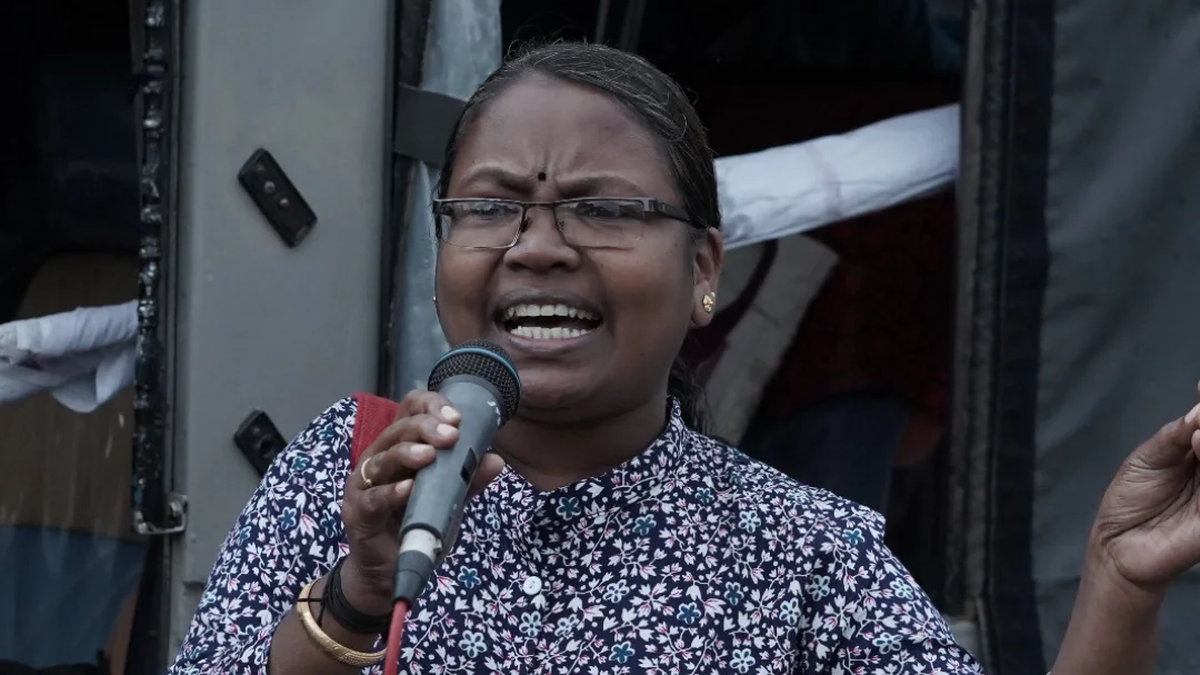

Bindhu Irulam
| Photo Credit: SPECIAL ARRANGEMENT
For Wayanad-based teacher, singer and poet Bindhu Irulam, who belongs to the Kattunayakan tribal community, poetry was woven into daily life from childhood. Listening to her parents narrate tales and sing songs after dinner under the moonlit sky, she developed an affinity towards the spoken word. She also affectionately recalls her uncle, who used to play her songs on an indigenous wind instrument.
As she grew up, Bindhu, more aware of the disappearing practices from her culture, took it upon herself to document the collective memory of her community in the Kattunayakan language — a blend of Tamil, Malayalam, Kannada, and Telugu but without a script. It is these efforts which have earned her the Kerala Folklore Academy’s Yuvaprathibha award recently.

“I was against receiving the award at first,” laughs Bindhu. “We feel sad about how our art was ignored for long. When the award committee reached out to me, I rejected the award. But then I thought, why deny it. I am happy that our art is getting recognised. It is an opportunity for us, from not having a stage to proudly claiming our space in the public sphere.”
Bindhu’s poems deal with her Kattunayakan identity, celebrating a harmonious relationship between humans and nature. “It hasn’t been long since we have been living in civilisation. We live close to nature. We consider it our god. We gathered from nature and lived off it.”
A few years ago, her poem Nanna Thod (My Stream) earned Bindhu the Special Jury Award from the Malayalam Sahitya Pravarthaka Sangham. She has also penned the lyrics for the track ‘Kulirikku neeraatti delile’ in Pada (2022), touted as the first song in Malayalam cinema in that language.
Origin Story
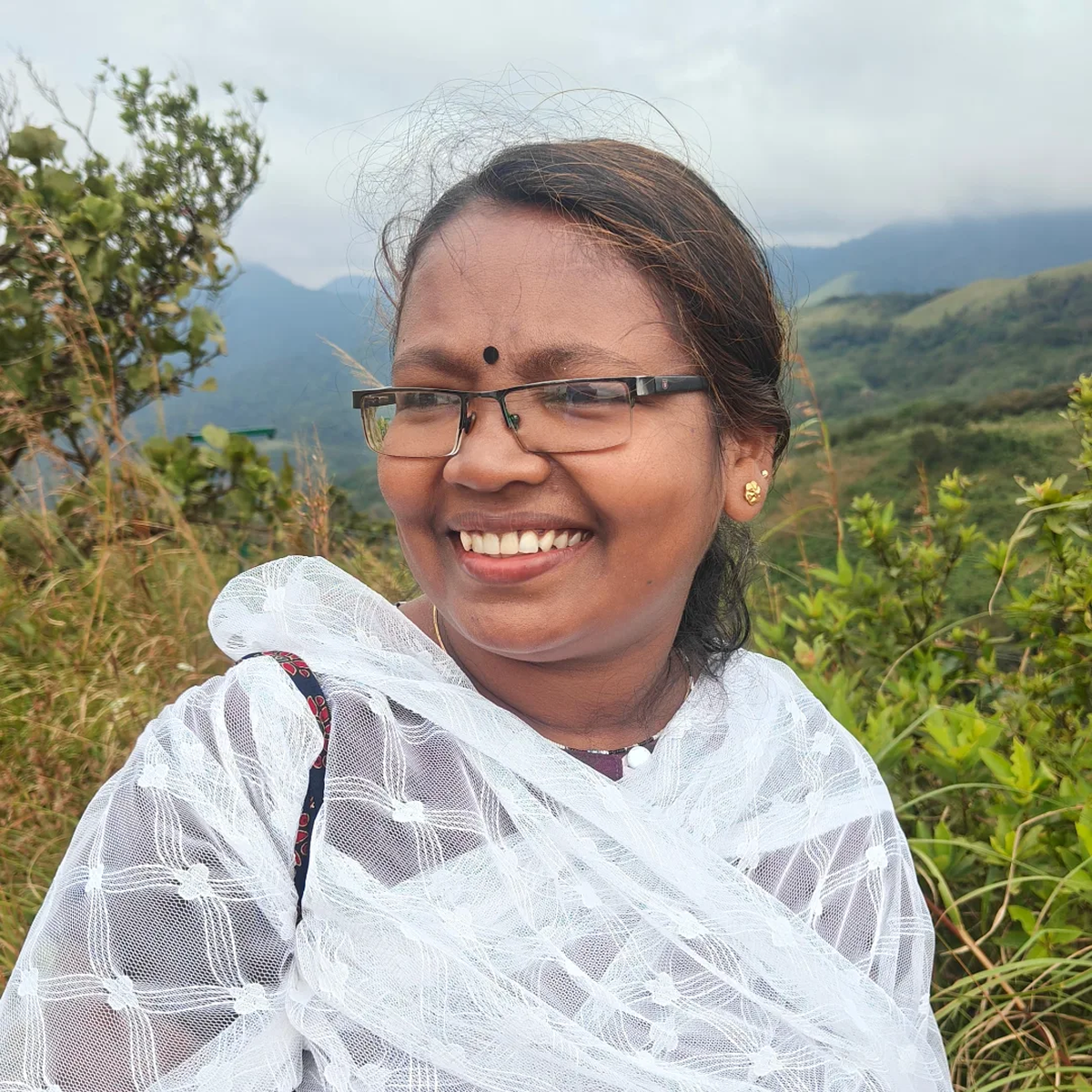
Bindhu Irulam
| Photo Credit:
SPECIAL ARRANGEMENT
Bindhu’s tryst with literature began in class VIII, when she wrote a play in their language with her friend for a competition and it won the award for the best play. A few years later, it was staged at the Keralotsavam youth festival, where it won the first prize.
The poet is also considered a talented singer specialising in Kattunayakan songs, which she learned as part of rituals in her community. These include art forms such as Bathatta, surrounding the harvest, and Thotti, a ritualistic art form related to girls’ first menstruation. “I have been collecting songs based around these rituals and performing them in schools.”
During the pandemic, Bindhu started compiling songs and writing poems in the Kattunayakan language. “I thought about what if more people read about our art forms, culture and oral history. I wanted the outside world to know more about it.”
“Initially, I was hesitant to speak our own language. There have been times when I was told to speak in Malayalam instead of our language. I never used to sing or speak in our language because of it,” says Bindhu, who recorded her poems and published them on social media. Seeing this, tribal poet and activist Sukumaran Chaligatha reached out to her to contribute to a compilation of tribal poems in the State.
“I write when I feel like writing. I used to see poetry in everything. I write about the past, our art, and our pain. I write that we are a group of people who used to live a certain life. But we don’t have our own food diet anymore. We used to collect meat, honey, roots and so on, from the forest. We no longer do it. We rarely hunted animals and used to eat what was left by tigers and leopards.”
Bindhu adds, “As time progressed, our rights were compromised. And when those rights were removed, our community’s way of life began to disappear.”
Published – February 04, 2026 11:08 am IST