If you have travelled to Europe even once, you are bound to encounter a stale joke. It is about how European powers waged wars against indigenous populations in the global South to own and exploit spice plantations, but the spices – except for pepper – never found their way into European cuisine. It is a tongue-in-cheek truism about the blandness of European food and having lived for about a decade in Germany, I can confirm there is truth to it.
But things were looking up for us one autumn day in Rotterdam.
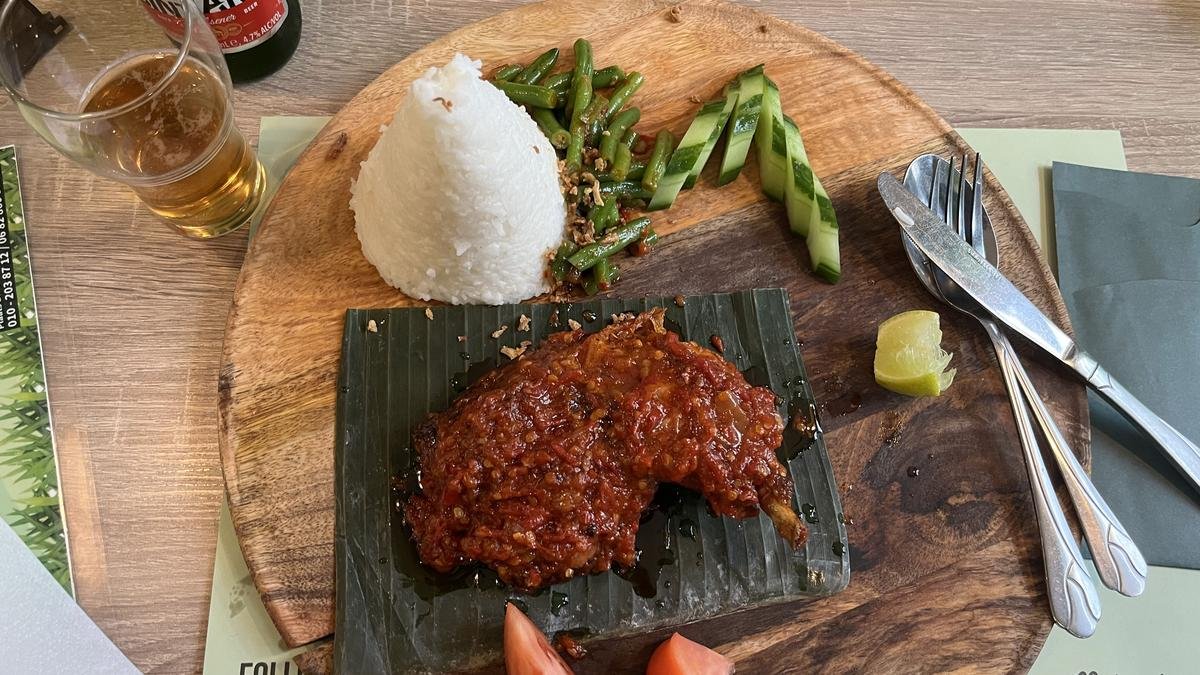
“Karaa ide,” said my Bangalorean friend digging into her smashed fried chicken – Ayam Penyet – smothered with coarsely saucy, deep-red sambal. Her forehead was sweating, her eyes were red and watering with tears of sweet torture from the chillies ground and mashed into the sambal. I watched her as she struggled with her meal and dug into my own Ayam Penyet – we had ordered the same thing.
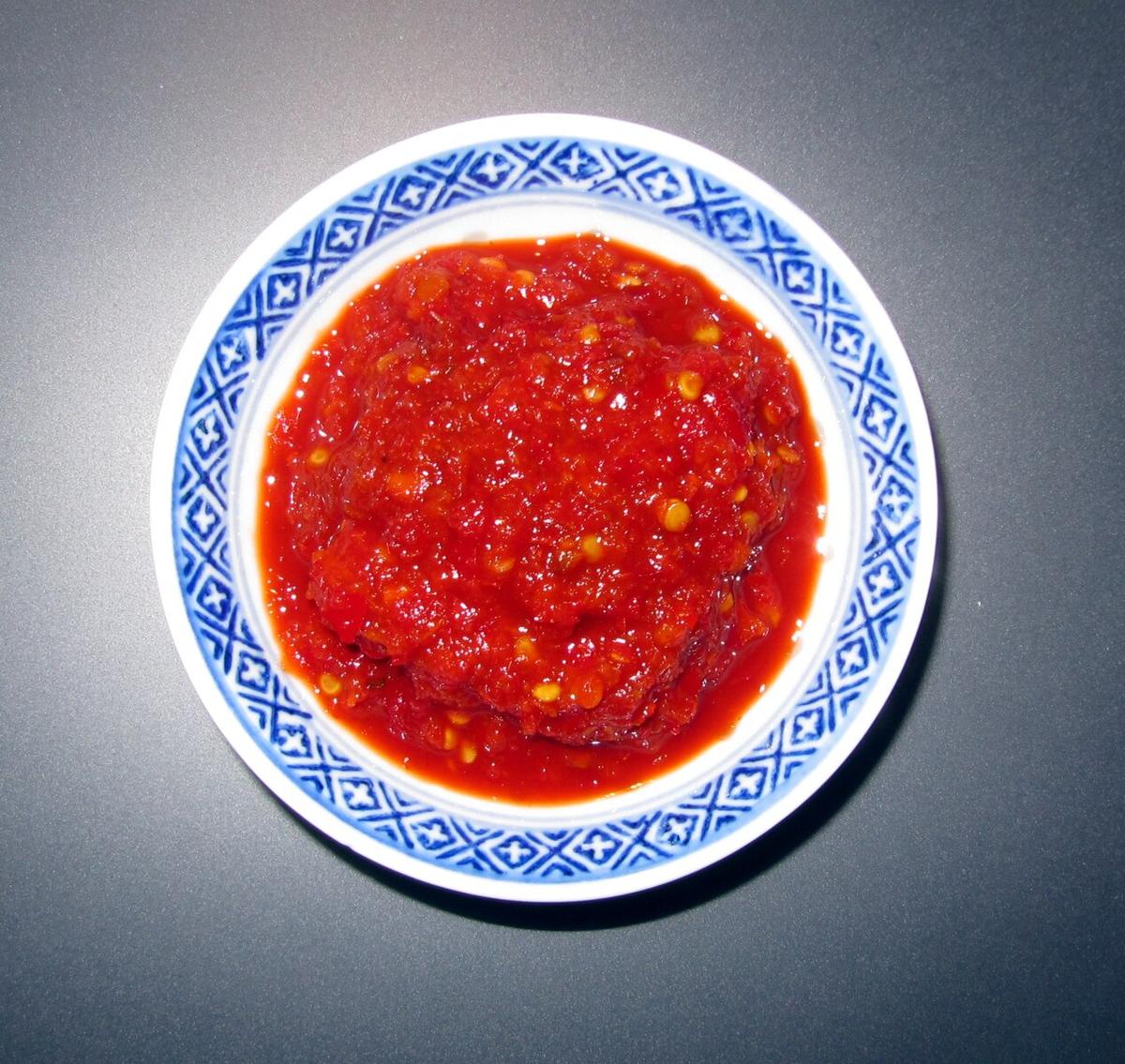
Sambal oelek, an Indonesian chilli paste
| Photo Credit:
Wikimedia commons
My friend’s Ayam Penyet at Waroeng EmJay in Rotterdam was the spiciest she ate in all her travels to Europe. With the blandness of European food dulling her senses during our travels, we went in search of Indonesian restaurants in Rotterdam and landed at the one we were sitting in.
Waroeng EmJay didn’t look much from the outside – its lime green signboard needed fixing years ago; it squatted in a less frequented street next to another flashy Asian restaurant that served Vietnamese food. But its tables were brimming with patrons – both European and Asian, its sambal scented airwaves gently clanged with a smattering of Bahasa Indonesia and Dutch. Always a good sign, I might have told my friend.
I won’t lie, I have had dreams of Waroeng EmJay’s Ayam Penyet since then. Sometimes my partner and I drive across the border from Germany to eat a meal of Nasi Goreng in border cities like Venlo. On my recent trip, when I visited a friend in Den Haag I asked her to take me to her favourite Indonesian restaurant and we ate Nasi Ayam Bakar Padang — grilled chicken with a green chilli sambal and stewed cassava leaves — at Waroeng Padang Lapek.
This time, when I found myself in Rotterdam for the IFFR film festival, it felt like my duty to investigate how the Netherlands became home to Europe’s best Indonesian food. Was it simply because of its colonial legacy? Afterall, the Dutch East India Company invaded Indonesia in the 16th Century to capture and monopolise the spice trade before ceding ground to the British.
I asked my television news editor-turned-train driver friend Tom Van Hal, whose career pivot I bookmarked to discuss on a later day, if it’s true Indonesian food is widely available in the Netherlands because of its colonial past. He broke my confirmation bias, shattered my perception, and to my dismay, told me my reasoning is probably not even partially correct.
“The answer is a little more complicated,” he said. “Chinese immigrants in the ‘60s and ‘70s started restaurants they called Chinese Indonesian restaurants, not with traditional food but with dishes that they made up that catered to the Dutch taste. That was the first exotic food in the Netherlands, and I ate that a lot in my childhood.”
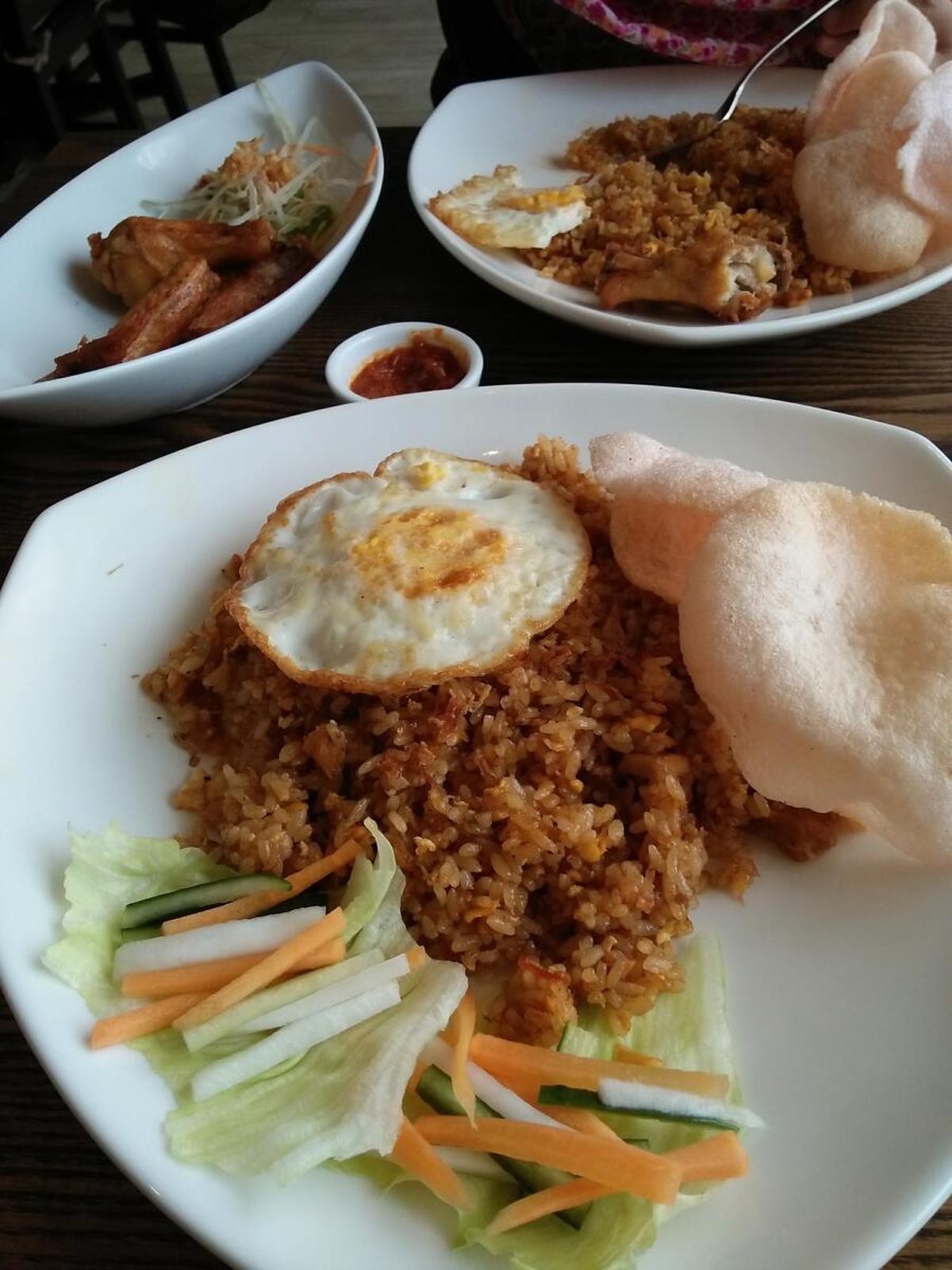
Nasi Goreng, an Indonesian rice dish
| Photo Credit:
Wikimedia commons
Van Hal remembered eating generic grilled pork dishes like Babi Panggang smothered with equally generic mild red sauces. Those restaurants flourished for decades because it perhaps appealed to a boomer generation’s colonial nostalgia. But they lost their standing when the younger generation, experimental and hungry for new cuisines and flavours, sought out more. Now the Rijsttafel, literally a rice table with rice and accoutrements of side dishes, is a staple when the Dutch eat out in groups.
There is not much research on the area, but I found from a recent study published in the International Journal of Current Science Research and Review that Retno Marsudi, the Indonesian Ambassador, was quoted as saying in 2013, “Indonesian food is like the second national food in the Netherlands.” This may be nationalist pride speaking because an entrepreneurial generation of Asians made it so.
I discovered there is some truth to what Van Hal said on the last day of my current trip to Rotterdam. At Kampong Express, hoping to eat Nasi lemak (admittedly the Malaysian national dish but also found in parts of Indonesia like Sumatra), I was greeted by a gaggle of Chinese aunties bustling around the kitchen and the service area.
Greeted is an overstatement because I found a just-vacated table myself and asked the server who nodded her head in assent. It felt like an early bird catches the worm situation. At lunch time, Kampong Express was packed with diners. It had a mix of Chinese, Malaysian and Indonesian staple on its menu, turmeric yellow Jianbing crepes overflowing with fillings, luscious chicken satay, nasi goreng and Nasi Lemak in at least five variants.
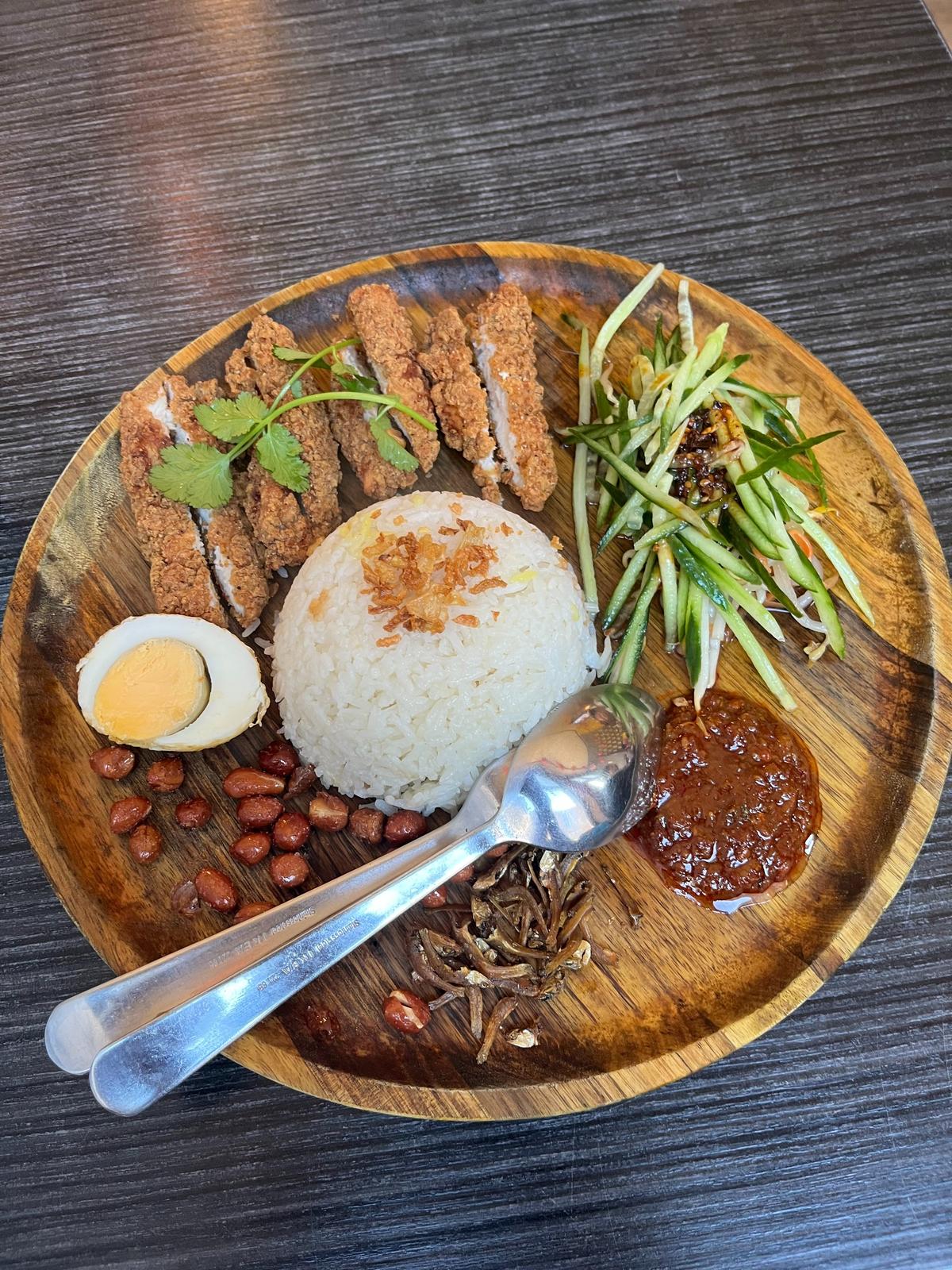
Nasi lemak in Kampong Express
| Photo Credit:
Prathap Nair
I ordered Nasi Lemak with boneless chicken and a drink of canned coconut water. When my order came and the sambal hit my mouth, I realised it was not spicy, nonetheless flavourful on my tongue in a balanced, savoury way. The tender chicken bits were enrobed in crispy breading and went down with a crunch. The spiralised cucumber and sprouts were well seasoned and the whole meal was further enhanced by the umami punch delivered by fried anchovies.
The gastronomical landscape in today’s Netherlands is a veritable ocean of choices and colonial connection may have very little to do with it. The country today offers every imaginable cuisine from Surinamese to Korean fried chicken to döners and Chinese hand-pulled noodles.
Colonial Europeans may have missed out on boosting their own cuisine’s flavour profile with the spice trade’s culinary loot that enriched them financially. But younger generations are getting a taste of it in their own land, often made by people to whom it rightfully belongs. If that is not decolonisation is, I don’t know what is.
Published – February 17, 2026 05:43 pm IST