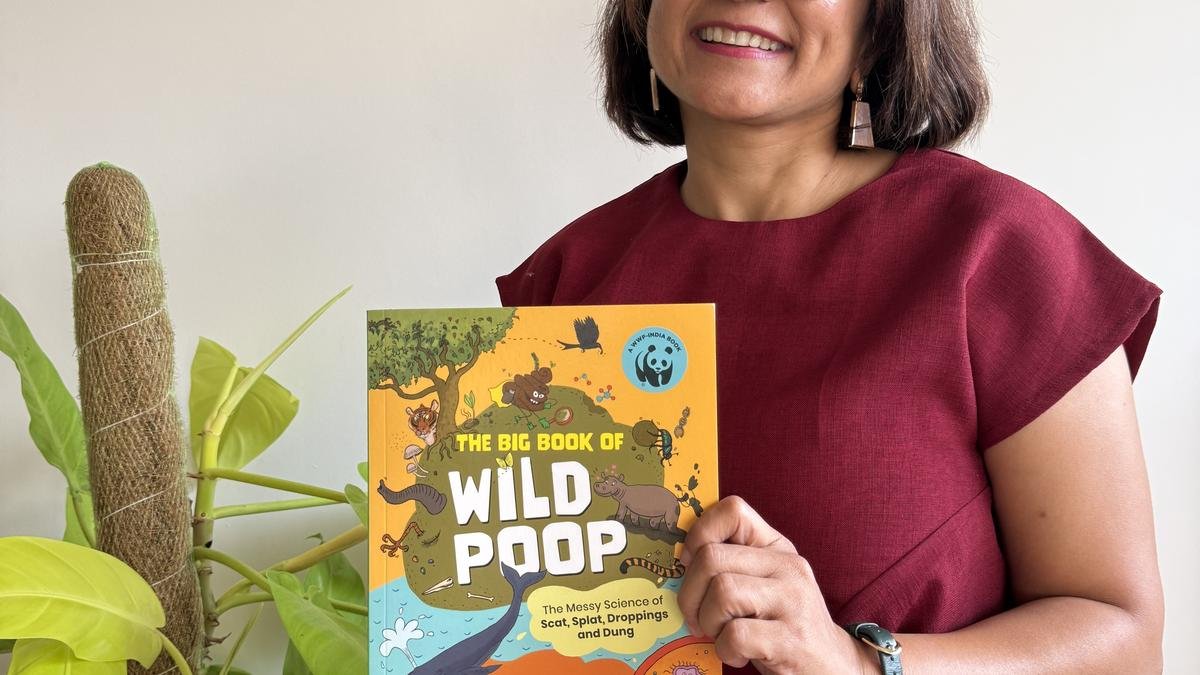
Shweta Taneja has always been drawn to the things that exist on the fringes of a society. “The dark spaces that people shove under the carpet or put into the closet have always attracted me,” explains the Bengaluru-based writer, whose latest book, The Big Book of Wild Poop (Juggernaut/Indian Pitta), is yet another exploration of something we do not talk about enough: digestive waste.
“Poop can be disgusting. (But) It is the most natural process in the world,” writes Shweta in the book, pointing out that it happens because we eat. And yes, it is “a metadrive of information”, something she constantly reiterates. For instance, “the wiggling invisible DNA inside the sticky, smelly stuff tells the story of how animals live, think, feel, migrate, communicate and evolve. Analysing this information, ecologists can figure out how to save them.”
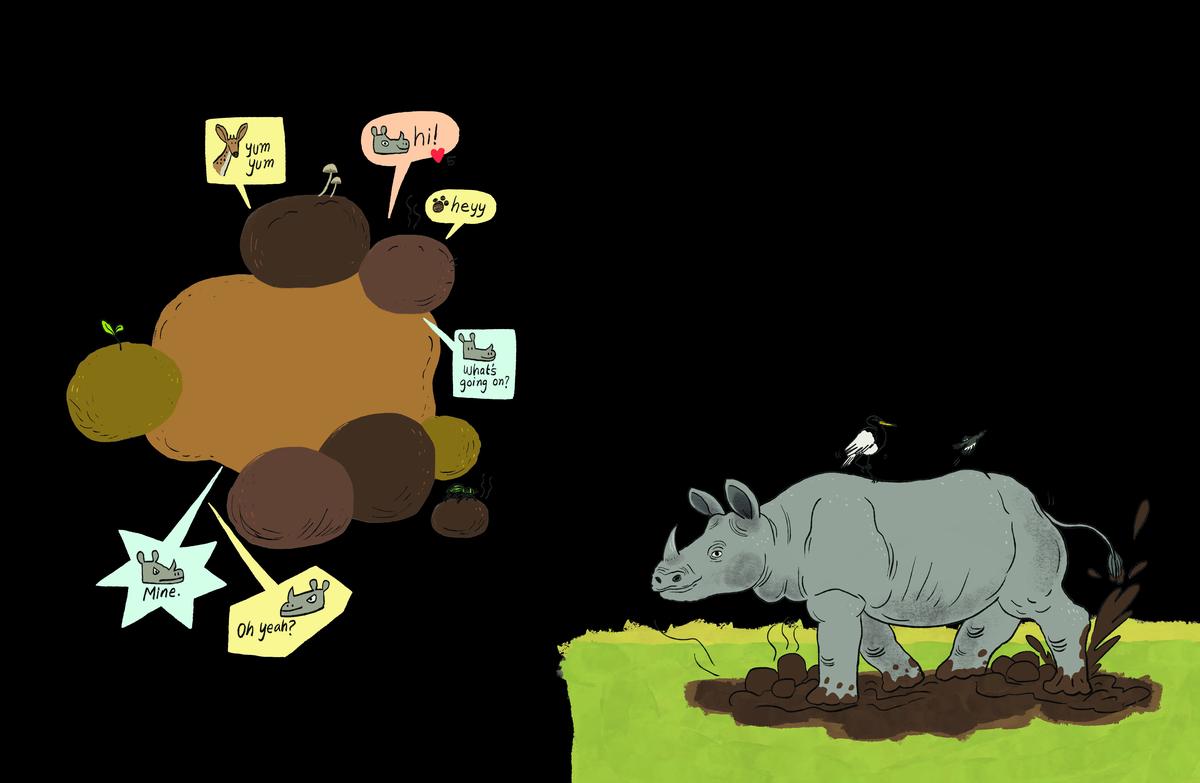
Poop can tell us more about wild animals
| Photo Credit:
Sunaina Coelho
Like many of her other books, The Big Book of Wild Poop, which came out in January this year, is a collaborative effort between her and the illustrator, Sunaina Coelho, a process she enjoys. “When you work with an artist, for a graphic novel or a visual book, you have to give space for the artist’s vision as well, so there will be more reiterations,” she says, adding that a lot of work went into this book during the editing stage to align the visuals and text. “The reason I adore comics and graphic novels is that there is such a beautiful collaboration and trust between each other’s vision that comes together.”
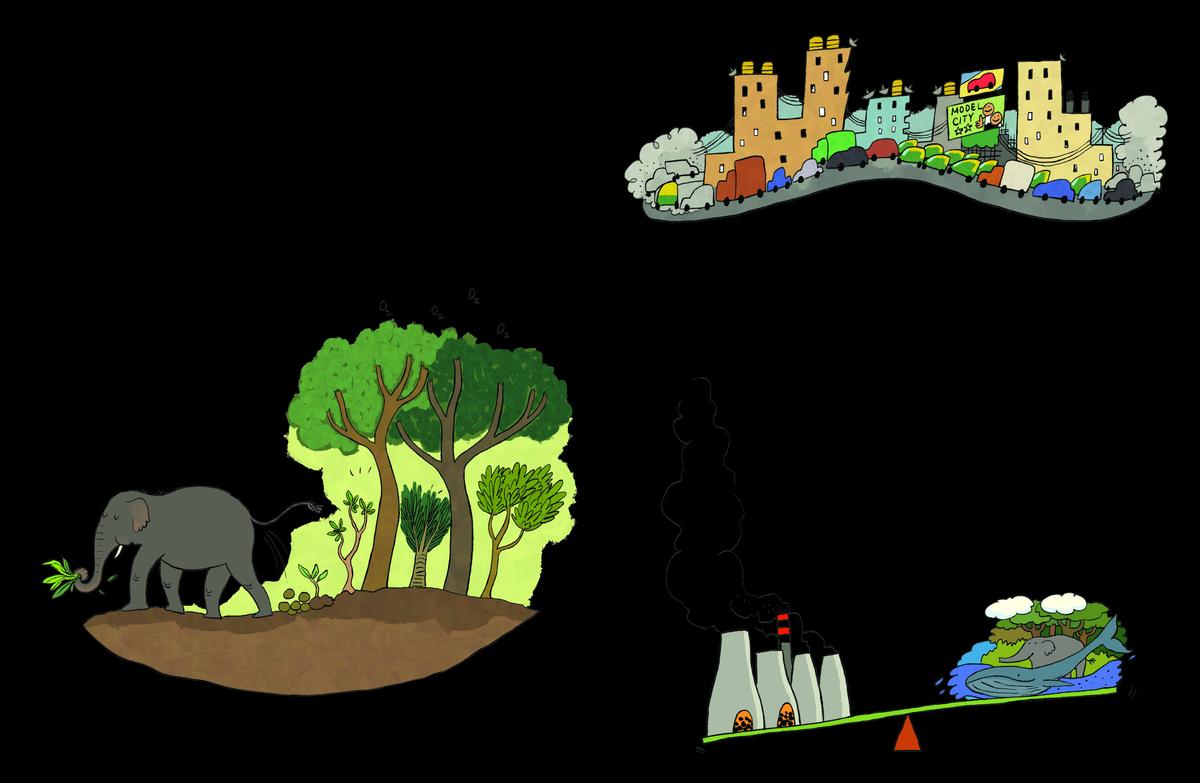
The book is a collaborative effort between Shweta and her illustrator
| Photo Credit:
Sunaina Coelho
The book’s overall aesthetic, packed with beautiful illustrations and quirky facts about faecal matter, is certainly a testament to this collaboration, offering a ridiculously fun, detailed read. It may occasionally cause the ick, but mostly makes one laugh out loud, allowing the reader to learn many aspects of biology without it feeling too academic.
Some of the questions addressed in the book include: how often various animals go, why herbivores produce the most amount of waste, are there any social cues encoded in scat and whether there are any benefits of poop besides getting rid of undigested waste (the answer is yes, be it nest building by hornbills, casual snacking by dung beetles, seed dispersal by civets and other animals, or even fighting climate change by blue whales.
It also has a chapter dedicated to how indigenous people in different parts of the country, including Kachchh in Gujarat, Mount Abu in Rajasthan, and the Kendrapara district of Odisha, often use it in traditional medicine.
“I wanted that to be in there because zootherapy is something that indigenous tribes in India still do — using wild animal ingredients in healing.”
In her opinion, introducing this information in a sensitive way will help children learn to respect another culture and not look down on it. “You need to respect indigenous knowledge, something I wanted to highlight in the book,” Shweta says.
The idea for The Big Book of Wild Poop emerged a few years ago, while Shweta was working at the Nature Conservation Foundation. Anita Mani, editor at Indian Pitta Books, approached her, saying there was a book she and WWF-India were planning, and asked if she would like to work on it.
“I said yes, I’ve been wanting to work on something like this for donkey’s years,” she says, with a laugh. “I think it was very serendipitous to find a writer who gets attracted to everything weird and niche and combines it with nature and science.”
Shweta began researching wild poop, scouring the internet for all available information, interviewing scientists, and perusing scientific papers to learn more. “I am a nature wanderer and lover, so I have strong observation. But I needed factual research and ecosystem experts to connect the knowledge and understand it in a larger scope,” says Shweta, who wanted to ensure that, despite it being a factual book on science, “it needs to have that weirdness.”
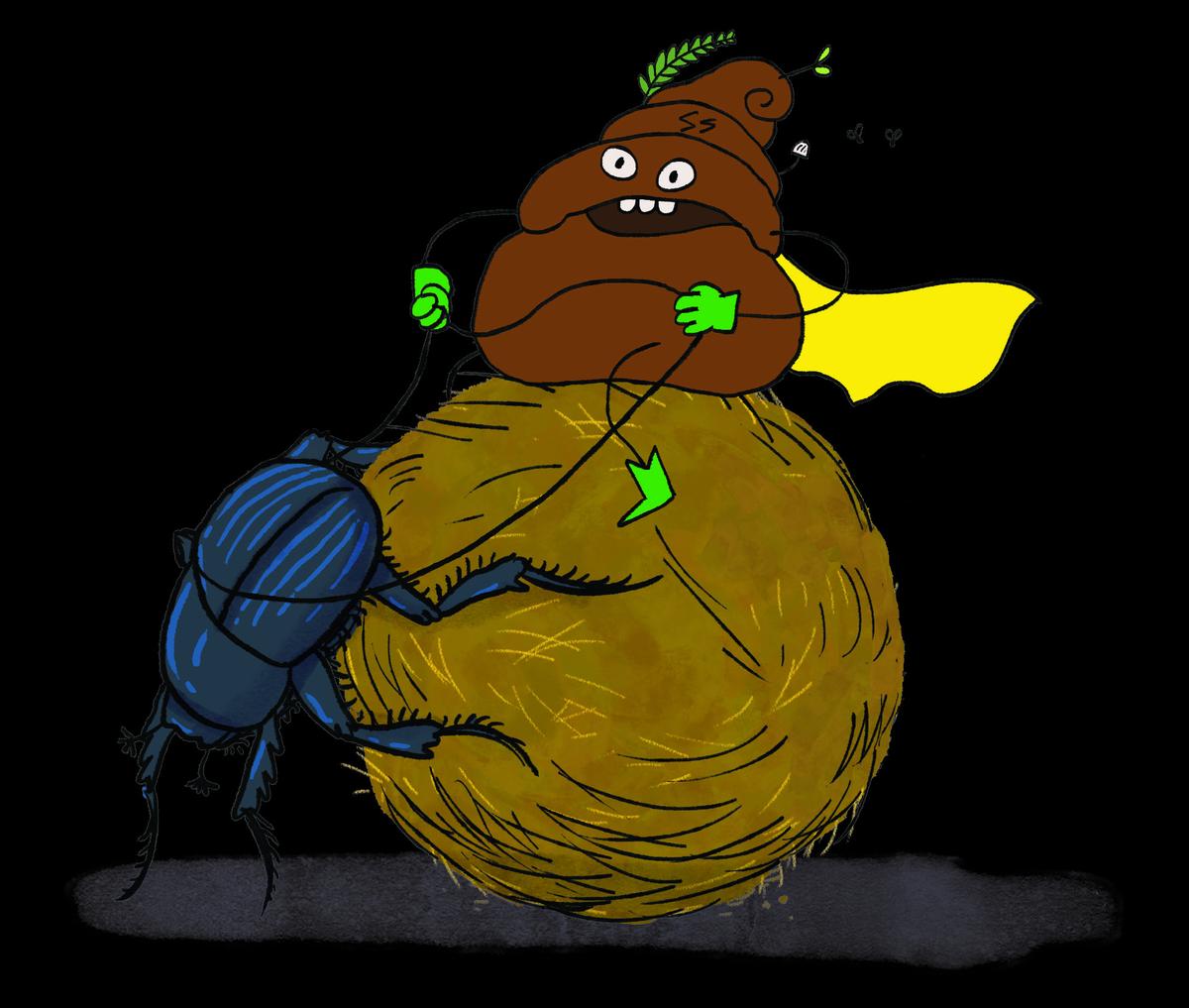
Poop can offer some surprising benefits
| Photo Credit:
Sunaina Coelho
Today’s children, in her view, are exposed to a lot of entertaining digital content, which makes them less likely to adopt a top-down approach to education. Science communication, she believes, needs to change if it wants to actually reach children, with narrative and interactivity being as important as factual details.
Also, “humour hasn’t been explored enough in science books in India. And we know that, no matter the generation, kids love burp and poop jokes,” says Shweta, who has just finished writing a science fiction book for adults and already has “two very nice books on my whiteboard, which I need to decide upon. One is fiction, and the other is non-fiction, so I need to decide what I want to begin with first.”
This is her second science book for children, the first being a more general book on science and scientists (They Made What? They Found What?), which also featured two fictional characters that children still quote, says Shweta, who has written 10 books so far across genres.
These include a three-book series starring a female tantrik detective, Anantya Tantrist, as well as short stories, graphic novels, and novels in genres ranging from mysteries to thrillers, science fiction, and paranormal fiction.
“That kind of hopping will keep happening to me, because I am always looking for the next exciting thing to write. Once you tweak tropes of a certain genre, you are tempted to try out new adventures in another genre,” says the former journalist, who continues to write a technology column for a national daily.
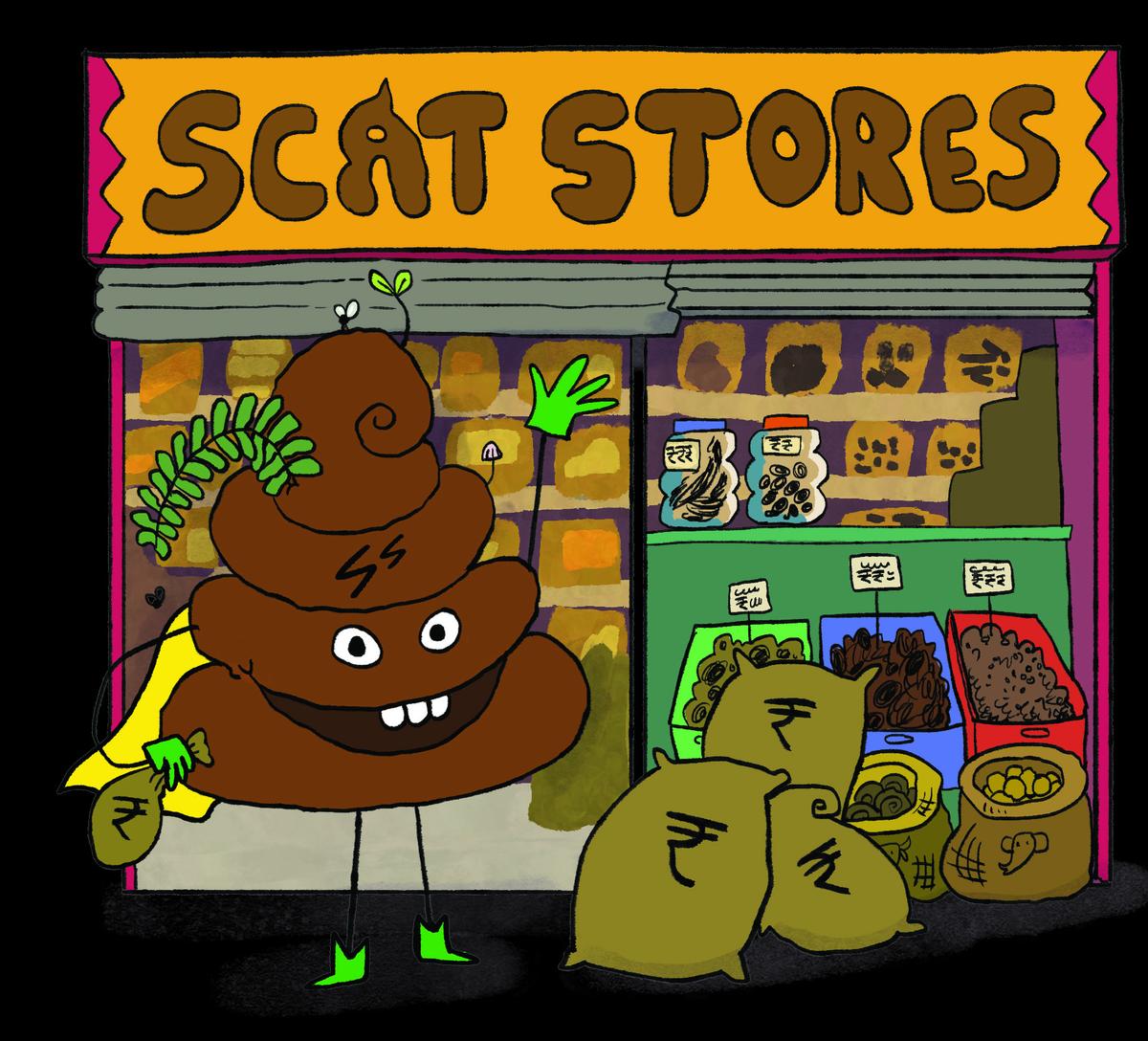
Children love poop jokes, says Shweta
| Photo Credit:
Sunaina Coelho
As a NIFT graduate who started as a fashion and beauty writer, before moving into science, ecology, climate change and philanthropy, she believes that being “part of so many bubbles over the years” has made her a better writer.
“We are in a culture of having people who are experts in only one niche, but I am a kaleidoscope with fractured elements of a lot of different communities in me. This makes me creative.”