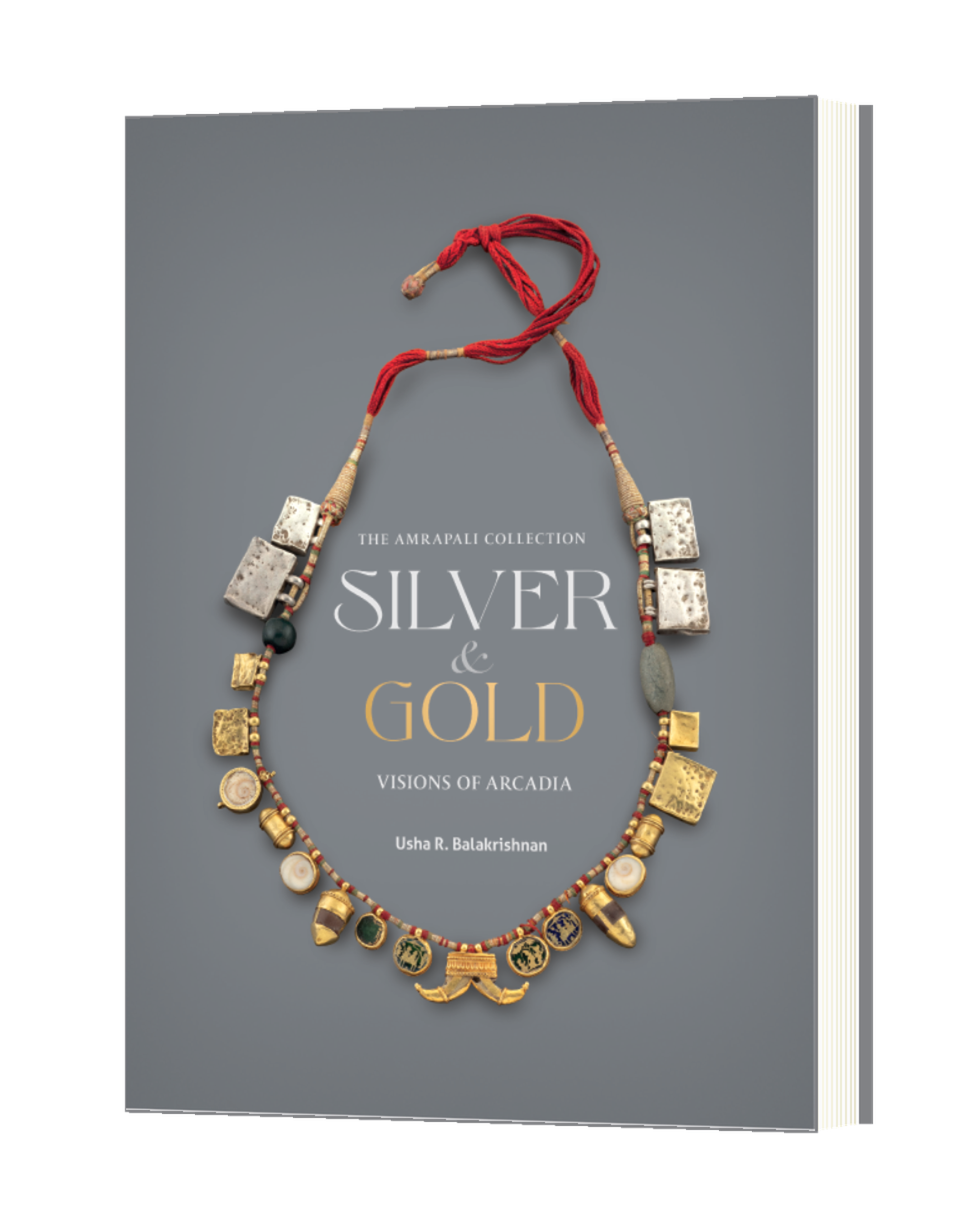
The publication of Usha R. Balakrishnan’s Silver & Gold: Visions of Arcadia is good news for art lovers and jewellery enthusiasts alike. Any new book by Balakrishnan merits close attention: she is arguably the most authoritative historian of Indian jewellery, having written or co-authored some of the field’s most significant titles and exhibition catalogues. This includes Dance of the Peacock: Jewellery Traditions of India (1999), one of the most comprehensive works on the subject, alongside Oppi Untracht’s 1997 seminal volume.
Other titles to check out
Balakrishnan’s oeuvre includes Jewels of the Nizams (2001); Alamkara – The Beauty of Ornament (2014); India, Jewels that Enchanted the World (2014); Enduring Splendor – Jewelry of India’s Thar Desert (2017); Treasures of the Deccan – Jewels of the Nizams (2018); and Munnu – Vision and Passion (2022).
As chief curator of the World Diamond Museum, she edited Diamonds Across Time: Facets of Mankind (2020). Her research ranges from princely jewels, most notably those once owned by the Nizams of Hyderabad (acquired by the Indian government in 1995 and entrusted to her for study and documentation), to the creative genius of contemporary jewellers and lesser-known rural and tribal jewellery traditions.
Silver & Gold: Visions of Arcadia book
| Photo Credit:
Courtesy The Amrapali Museum
Jewellery historian Usha R. Balakrishnan
| Photo Credit:
Courtesy The Amrapali Museum
Classic pastoral ideal
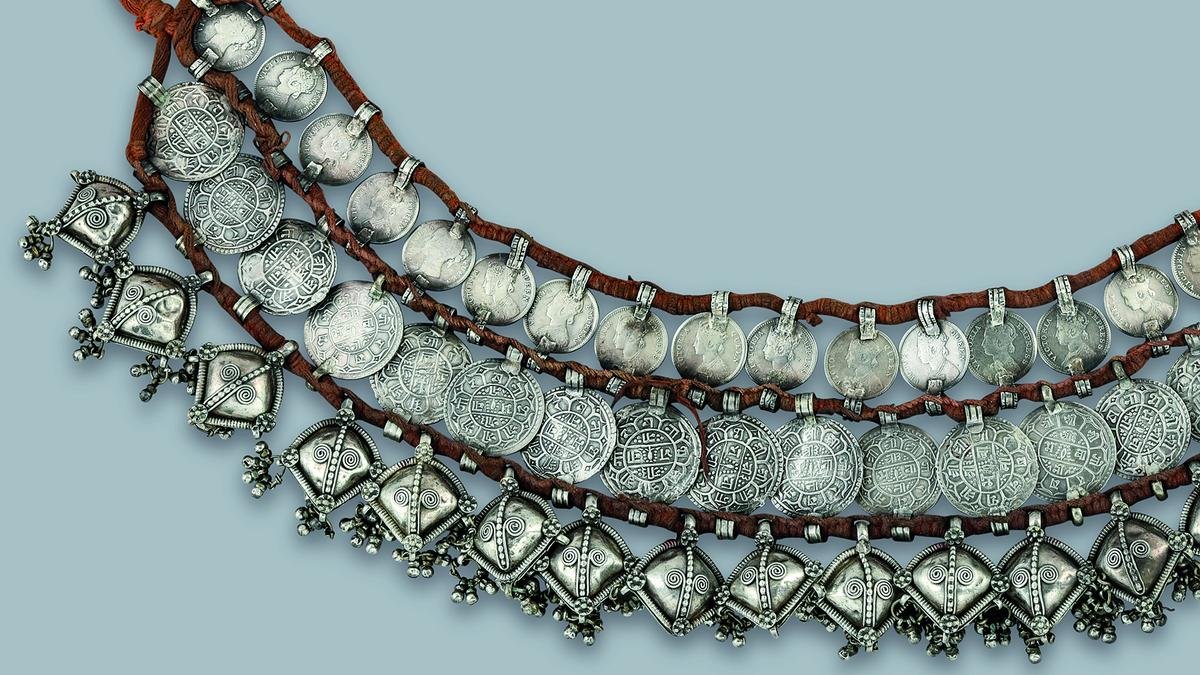
Part of a series edited by Pramod Kumar K.G. (co-founder of museum consulting company Eka Resources), and following Devdutt Pattanaik’s The Adornment of Gods (2022), Balakrishnan’s book documents hundreds of traditional Indian silver and gold jewels, largely from rural and tribal contexts. These works form part of the Amrapali Collection, of which about 800 pieces are displayed at their Jaipur museum.
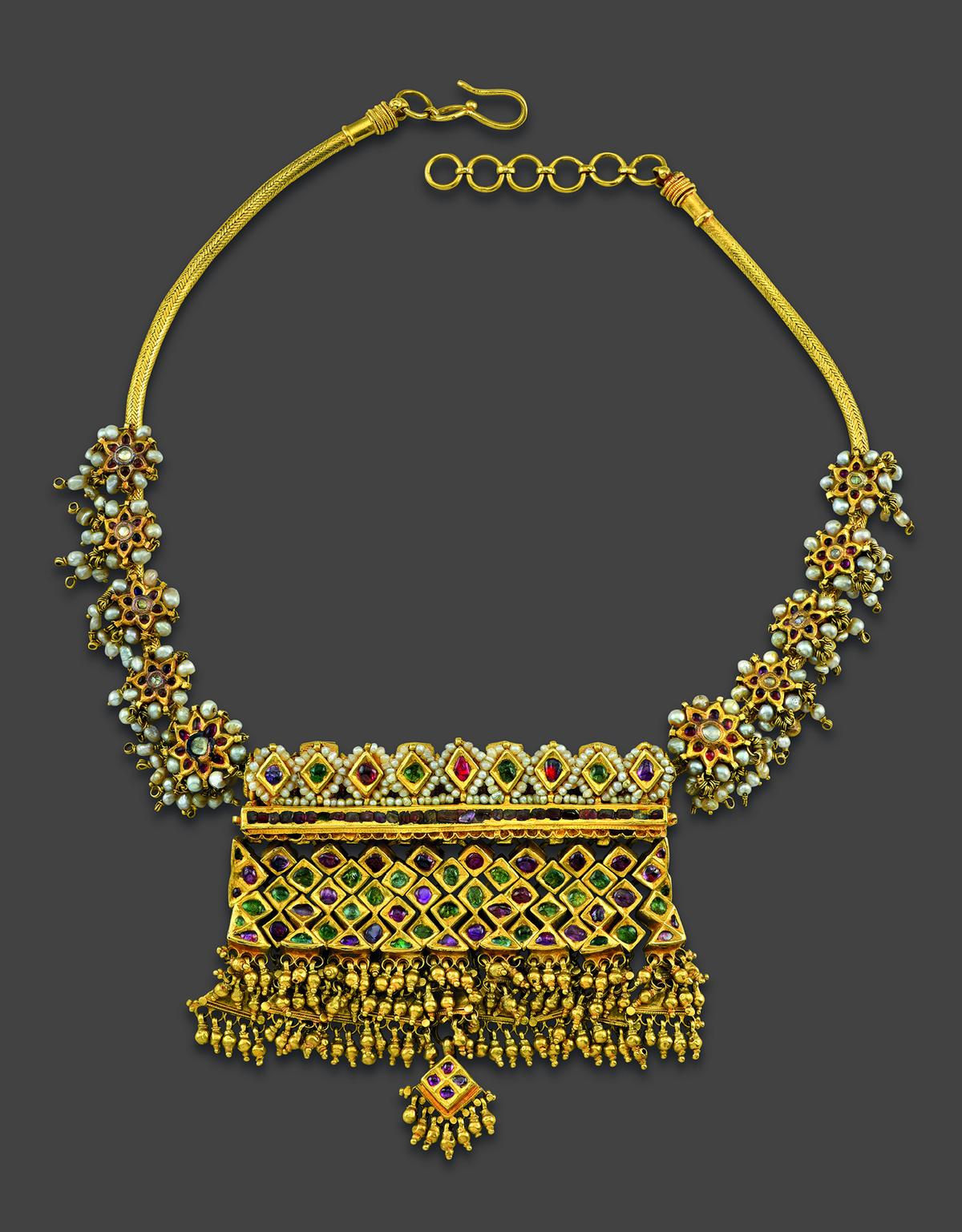
Timaniya (necklace), Rajasthan, 19th-20th century — gold, white sapphires, emeralds, rubies, and pearls
| Photo Credit:
Courtesy the Amrapali Family Collection
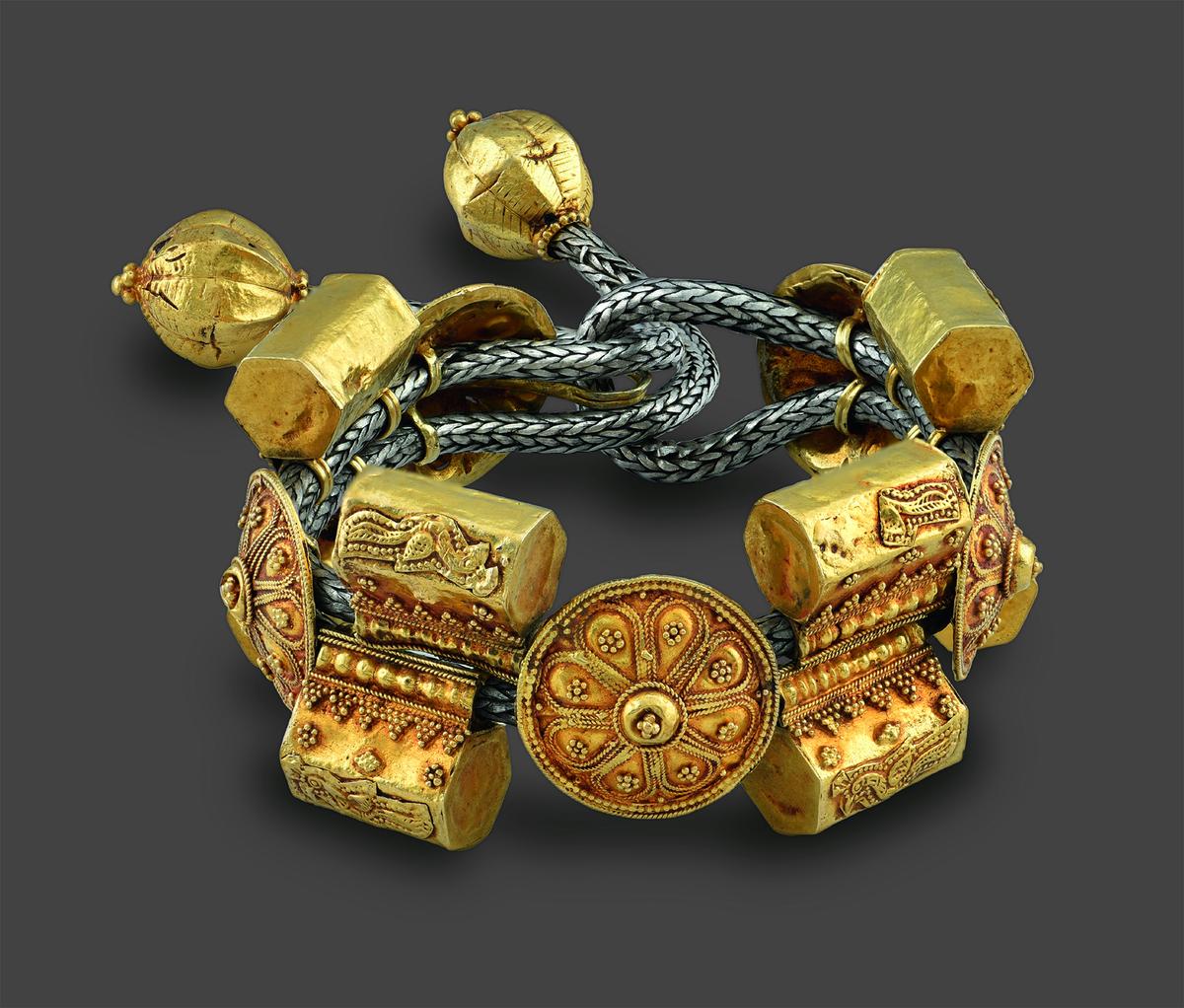
Bracelet, Gujarat, 19th-20th century — gold and silver
| Photo Credit:
Courtesy the Amrapali family collection
Opened in 2018, the museum is one of the finest holdings of folk and ethnic jewellery and precious objects. The collection (amassed by founders Rajiv Arora and Rajesh Ajmera) emerged in the early 1980s from their passion for traditional jewellery, produced and worn mostly by rural, nomadic and tribal communities.
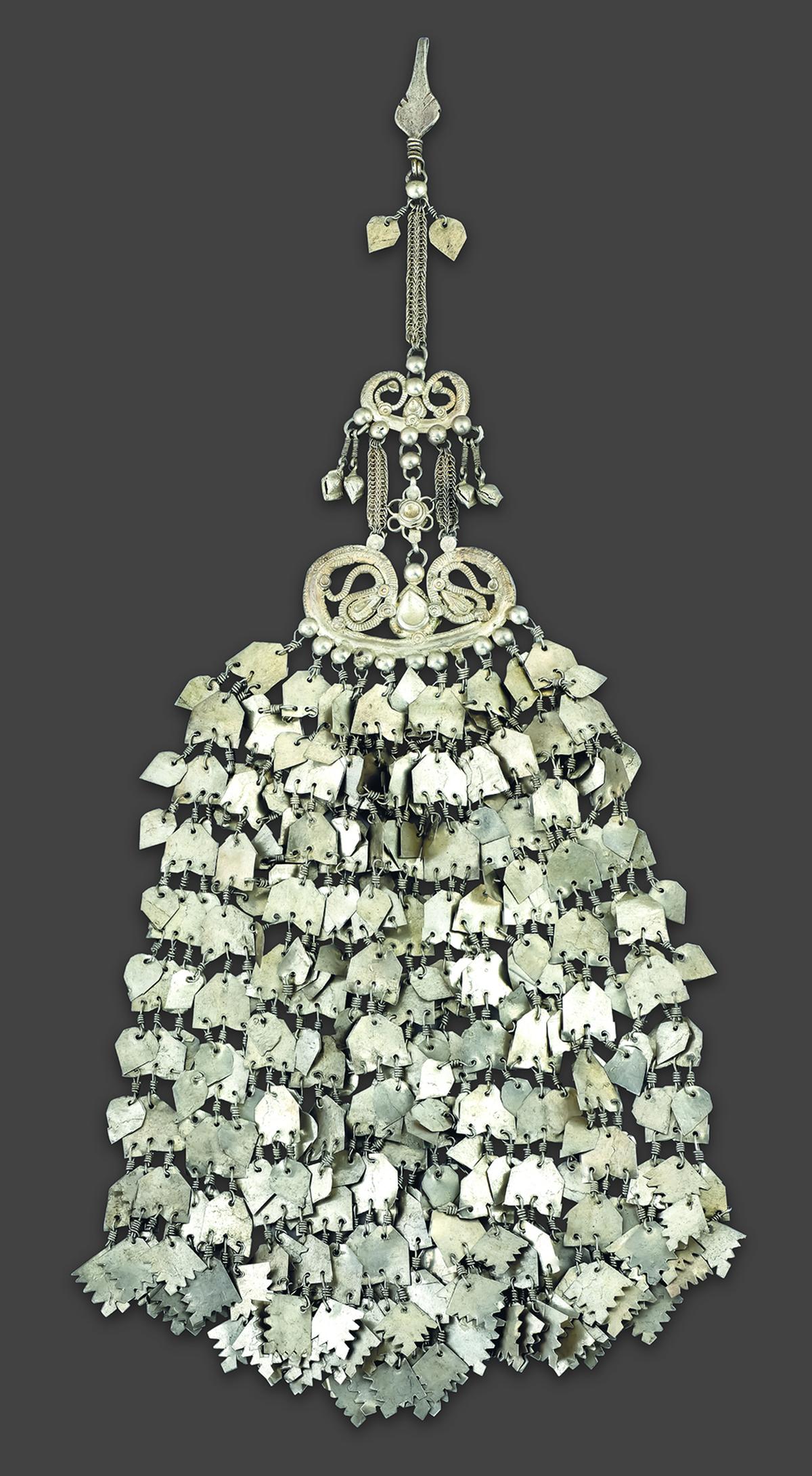
Pipla (head ornament), Himachal Pradesh, 19th-20th century, silver
| Photo Credit:
Courtesy The Amrapali Museum
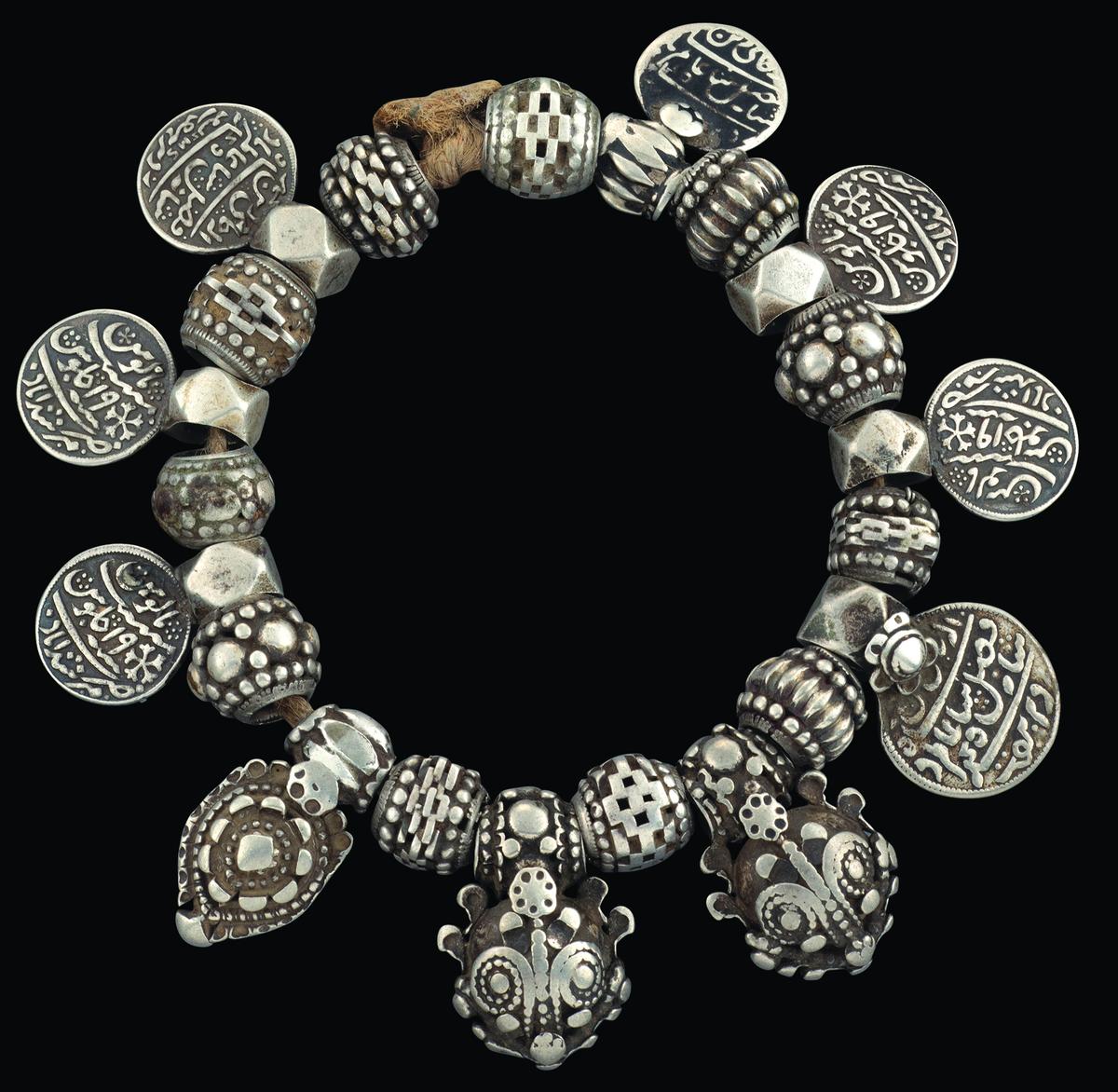
Rupaya bazu (armlet), Orissa, 19th-20th century, silver
| Photo Credit:
Courtesy The Amrapali Museum
The urgency of their work — acquiring pieces from villagers, pawnbrokers, village silver- and goldsmiths, antique dealers, auctions, and flea markets overseas — cannot be overstated: it has preserved forms that might otherwise have vanished.
In some regions, as I have seen first-hand, craftsmanship is rapidly disappearing, knowledge eroding, and tools and techniques discarded with disquieting ease. In Badami, a small town in Karnataka, a young silversmith told me that no one locally could make by hand even a simple ovoid lingam case (ayigalu or shivadhara) carried by Lingayat community members — such as the gold-embellished example illustrated in the book (p. 45, fig. 12) — let alone the more complex chauka and ayigalu shown later (p. 142, figs. 60-61).
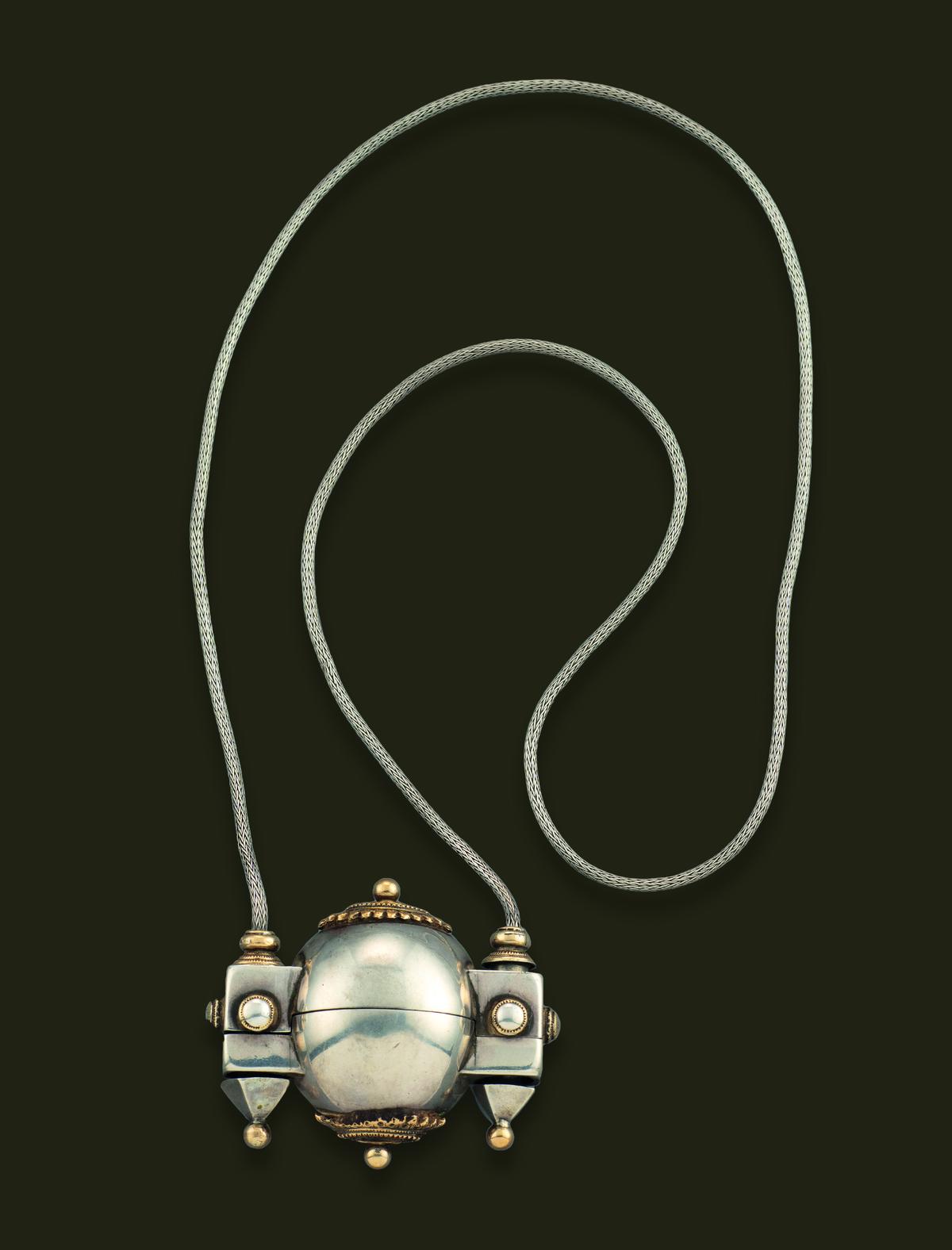
Ayigalu or shivadhara (lingam casket), Karnataka, 19th-20th century Lingayat community, silver, gold
| Photo Credit:
Courtesy The Amrapali Museum
Rather than offering a fastidious string of catalogue entries for each object, which would have been unmanageable given the magnitude of the collection, the book — written in the mellifluous prose that characterises Balakrishnan’s style — discusses selected jewels, mostly from the 19th and 20th centuries, to illuminate this vernacular, pastoral jewellery tradition. The author relates it to Arcadia, the classical pastoral ideal of rustic innocence and quiet pleasure.
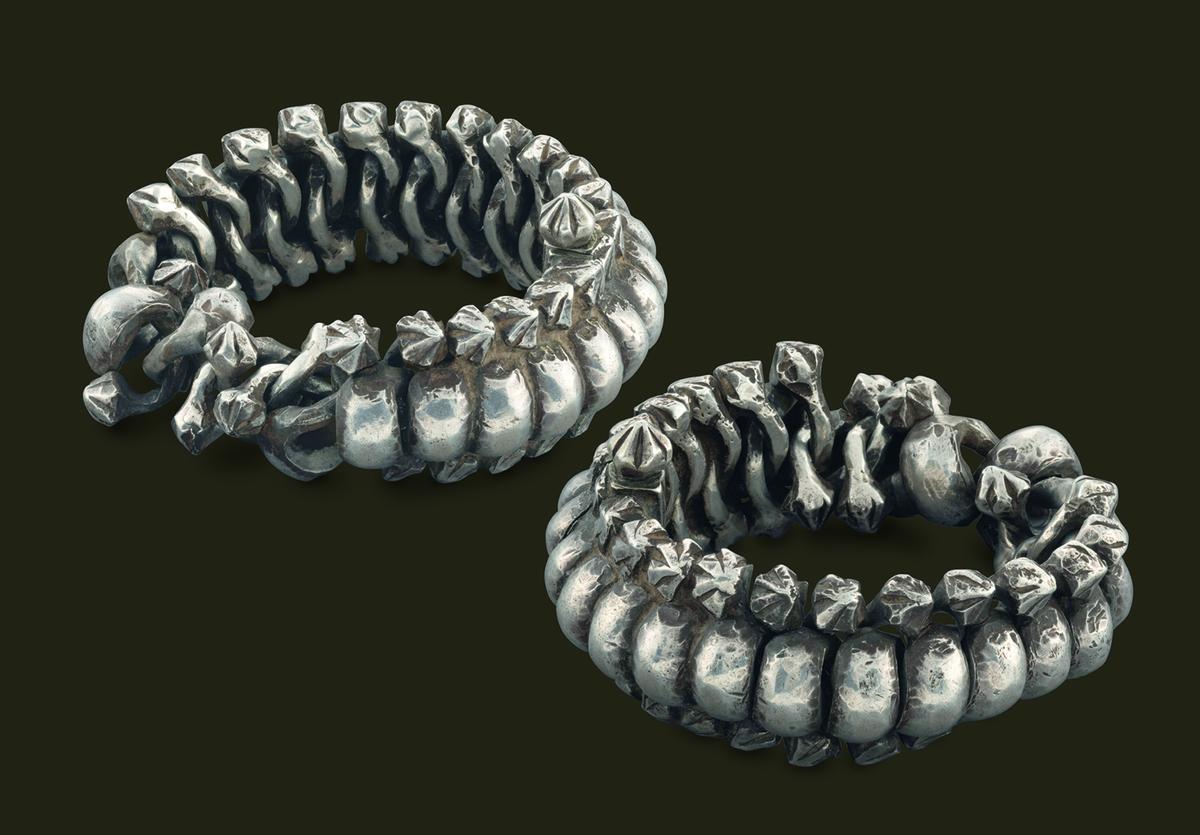
Sankhla or santh (anklets), Banaskantha in Gujarat, 19th-20th century, Patel Kherut community, silver
| Photo Credit:
Courtesy The Amrapali Museum
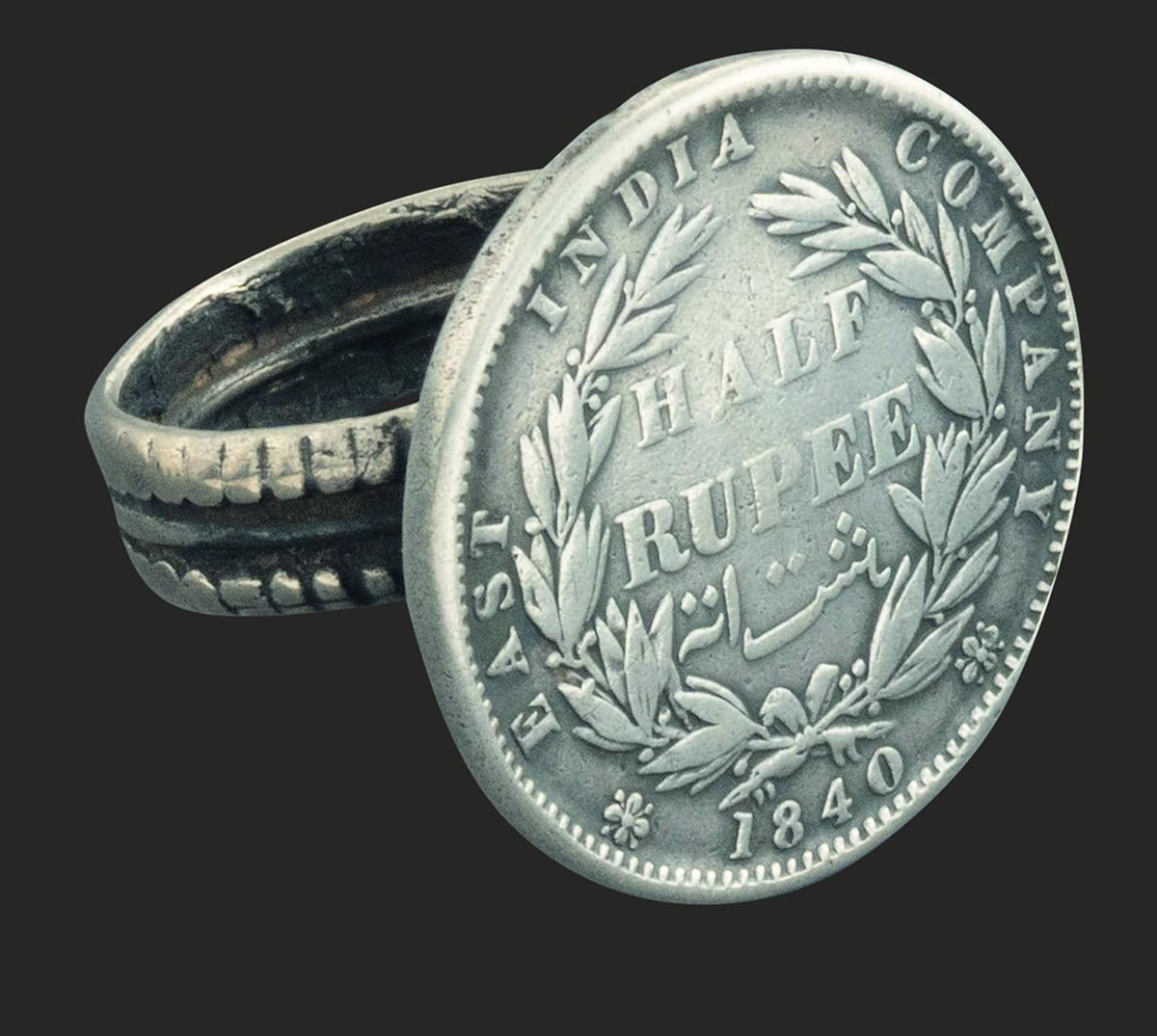
Anguthi (ring), western India, 19th-20th century, silver
| Photo Credit:
Courtesy The Amrapali Museum
Valuable resource
The book is divided into five chapters (Genesis, Ethnos, Legacy, Materiality, and Creation) and addresses the key factors that shaped the making and use of these jewels, highlighting their significance to the communities of origin, including the techniques used in their manufacture. To achieve this, Balakrishnan draws on a rich array of archaeological, art-historical, documentary, literary, and ethnographic materials.
Her command of the bibliography is especially noteworthy, as it encompasses not only the art-historical literature specific to the material objects, but also the conceptual frameworks drawn from anthropology and ethnology that help us understand such objects more fully. If the study of princely jewels was once dismissed as inconsequential, research on folk jewellery, too often deemed ‘primitive’, ‘mediocre’ or ‘unrefined’, has attracted even harsher criticism — something that Balakrishnan’s scholarly approach lays to rest.
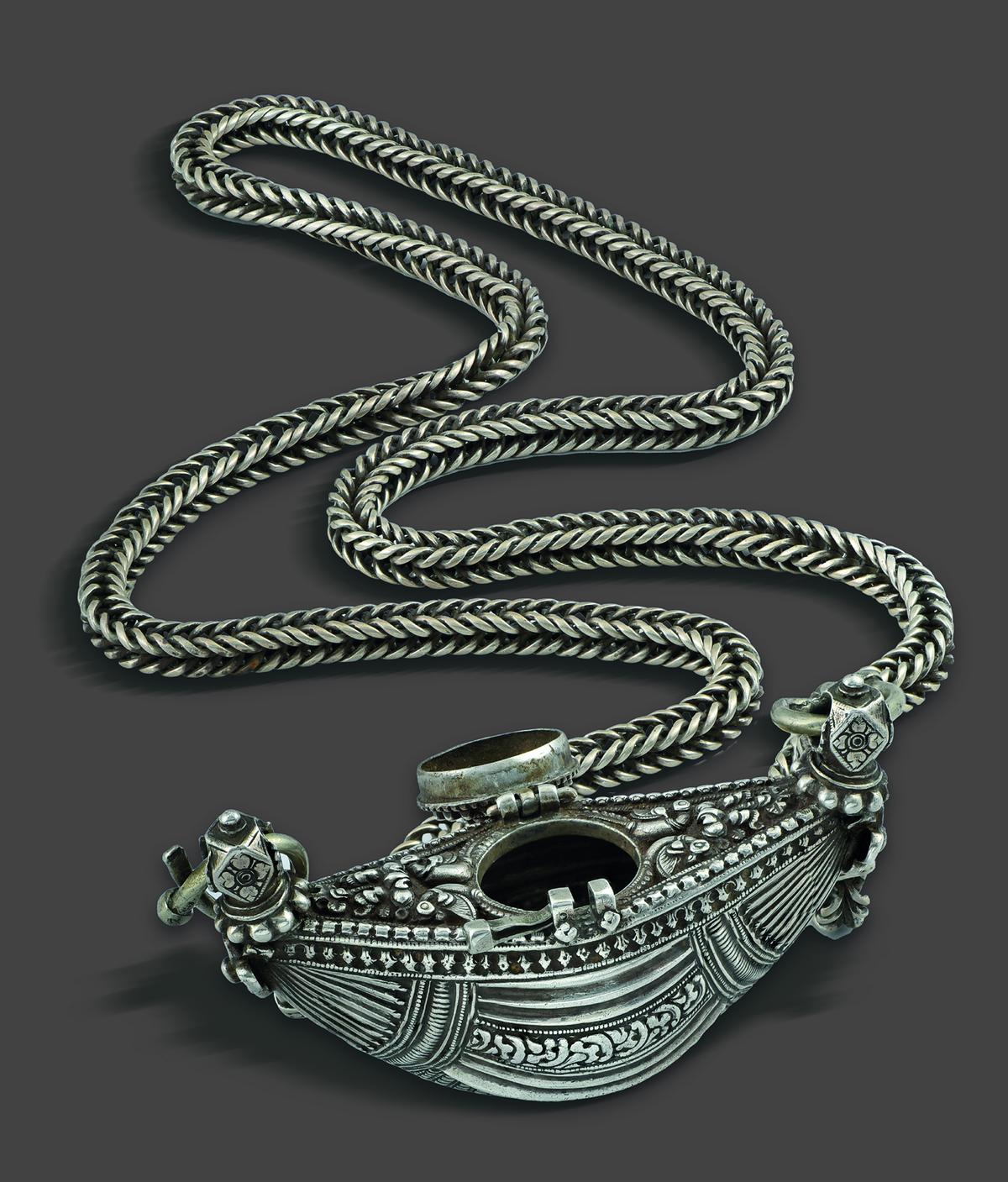
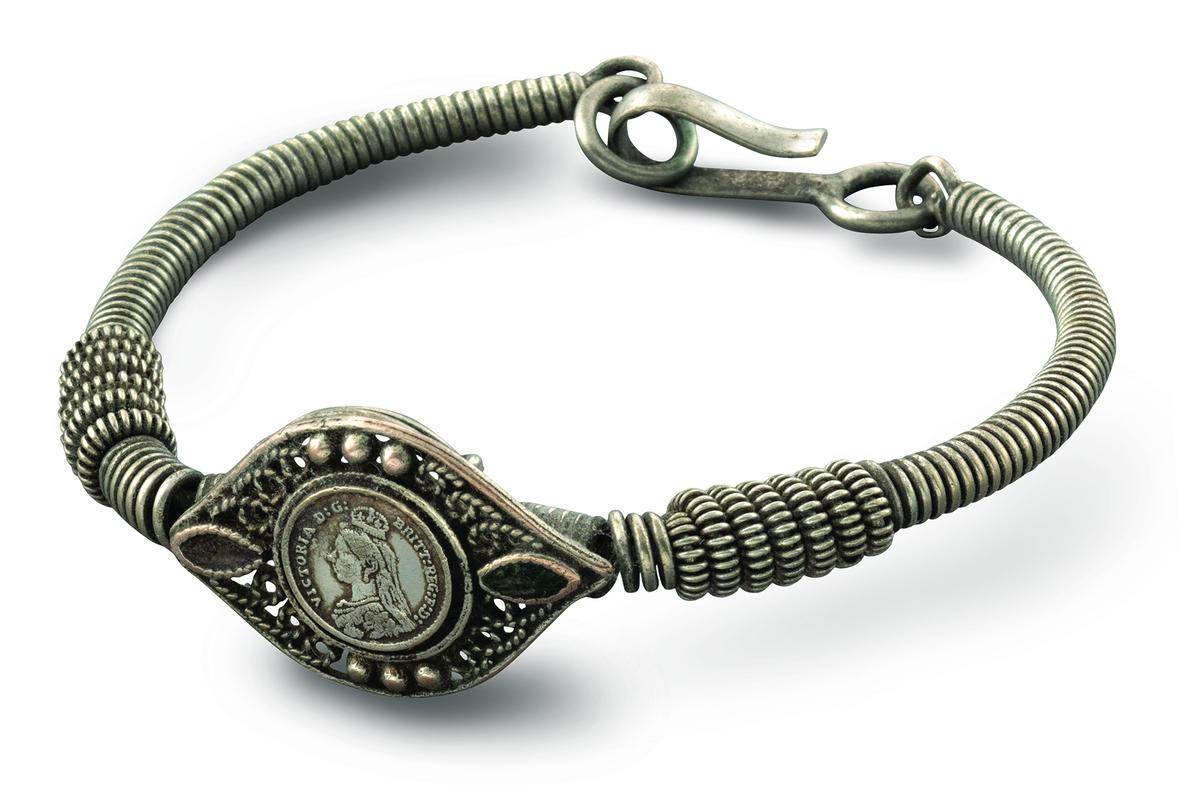
Bracelet from western India, 19th-20th century, silver and stones
| Photo Credit:
Courtesy The Amrapali Museum
Backed by technical labels and large illustrations, the book will be an invaluable resource for museum professionals, art historians and researchers, and will also inspire artists and designers to create new forms. There are, of course, jewels that one suspects were made and worn in more urban settings, but these are the exception.
While most are part of the Amrapali Foundation, some of the more spectacular pieces, usually in gold — such as the amulet necklace (haar) on the cover — belong to the Amrapali family collection. Beautifully produced by Mapin Publishing, this large-format book, with excellent photographs of the jewels by Umesh Gogna, is a feast for the eye as well as a scholarly work that mirrors the importance of the collection.
The writer is an art historian based in Lisbon.
Published – March 13, 2026 02:47 pm IST