Business

Global IT major Accenture set to launch operations in Tiruchi


The company had expressed its readiness to launch its operation in Tiruchi to the Tamil Nadu delegation at the World Economic Forum in Davos in January.

The company had expressed its readiness to launch its operation in Tiruchi to the Tamil Nadu delegation at the World Economic Forum in Davos in January.
| Photo Credit: Special Arrangement

Accenture, a global Information Technology major, is set to launch operations in Tiruchi, one of the key educational hubs in the State.

For the U.S.-based global multinational professional services company, Tiruchi will be the third city in the State, after Chennai and Coimbatore, where it would have a facility. The presence of a number of institutions and leading engineering colleges is said to have weighed in favour of Tiruchi.

According to sources, the IT giant will function from a building on Karur Bypass near Annamalai Nagar. Work is under way to create the infrastructure for its office.

V. Arun Roy, Secretary, Department of Industries, told The Hindu that the company had expressed its readiness to launch its operation in Tiruchi to the Tamil Nadu delegation at the World Economic Forum in Davos in January. It was a transformational move for Tiruchi, which had a huge chunk of IT graduates. It would create new employment opportunities and contribute to the State digital ecosystem.

Informed sources said the company had begun the process of posting employees and recruitment for various roles.

The move assumes significance in the background of setting up of a TIDEL Park, a joint venture of Tamil Nadu Industrial Development Corporation (TIDCO) and Electronic Corporation of Tamil Nadu (ELCOT) at Panjapur, adjacent to the new Integrated Bus Terminus, on the Tiruchi-Madurai Highway. The premises will have a built up area of about 5.58 lakh sq.ft. A sum of ₹315 crore is allotted to the project. The construction work has already begun and the project is scheduled to be completed within 18 months.

“Accenture move is a gift to the people of Tiruchi, which is known for its manufacturing sector. The entry of IT Major will bolster the service sector in Tiruchi. It will change the profile of the city,” says K.N. Arun Nehru, Member of Parliament, Perambalur.


Source link

Global IT major Accenture set to launch operations in Tiruchi


The company had expressed its readiness to launch its operation in Tiruchi to the Tamil Nadu delegation at the World Economic Forum in Davos in January.

The company had expressed its readiness to launch its operation in Tiruchi to the Tamil Nadu delegation at the World Economic Forum in Davos in January.
| Photo Credit: Special Arrangement

Accenture, a global Information Technology major, is set to launch operations in Tiruchi, one of the key educational hubs in the State.

For the U.S.-based global multinational professional services company, Tiruchi will be the third city in the State, after Chennai and Coimbatore, where it would have a facility. The presence of a number of institutions and leading engineering colleges is said to have weighed in favour of Tiruchi.

According to sources, the IT giant will function from a building on Karur Bypass near Annamalai Nagar. Work is under way to create the infrastructure for its office.

V. Arun Roy, Secretary, Department of Industries, told The Hindu that the company had expressed its readiness to launch its operation in Tiruchi to the Tamil Nadu delegation at the World Economic Forum in Davos in January. It was a transformational move for Tiruchi, which had a huge chunk of IT graduates. It would create new employment opportunities and contribute to the State digital ecosystem.

Informed sources said the company had begun the process of posting employees and recruitment for various roles.

The move assumes significance in the background of setting up of a TIDEL Park, a joint venture of Tamil Nadu Industrial Development Corporation (TIDCO) and Electronic Corporation of Tamil Nadu (ELCOT) at Panjapur, adjacent to the new Integrated Bus Terminus, on the Tiruchi-Madurai Highway. The premises will have a built up area of about 5.58 lakh sq.ft. A sum of ₹315 crore is allotted to the project. The construction work has already begun and the project is scheduled to be completed within 18 months.

“Accenture move is a gift to the people of Tiruchi, which is known for its manufacturing sector. The entry of IT Major will bolster the service sector in Tiruchi. It will change the profile of the city,” says K.N. Arun Nehru, Member of Parliament, Perambalur.


Source link

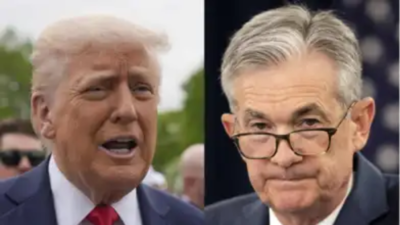
Rate rage returns: Trump demands ‘a full point’ rate cut from Fed, Wall Street cheers as jobs data signals resilience


Rate rage returns: Trump demands 'a full point' rate cut from Fed, Wall Street cheers as jobs data signals resilience

Wall Street surged Friday after a better-than-expected US jobs report and a blistering social media tirade by President Donald Trump demanding a full percentage point interest rate cut from the Federal Reserve. The sharp remarks, delivered in trademark all-caps on Trump’s Truth Social platform, were aimed at Fed chair Jerome Powell for failing to act aggressively despite a cooling inflation environment.“Too Late” at the Fed is a disaster! Europe has had 10 rate cuts, we have had none,” Trump wrote, insisting the Fed should “go for a full point, Rocket Fuel!” and sharply criticizing the Biden administration’s reliance on short-term borrowing. “There is virtually no inflation (anymore), but if it should come back, RAISE ‘RATE’ TO COUNTER. Very Simple!!! He is costing our Country a fortune.”Meanwhile, the S&P 500 index jumped 1.2% in morning trading, heading for its second straight weekly gain. The Dow Jones Industrial Average climbed 555 points, or 1.3%, to 42,874.34, while the tech-heavy Nasdaq Composite rose 1.3%, lifted by a rebound in major technology names. The rally was broad-based, with all 11 sectors of the S&P 500 in positive territory.Investors appeared to shrug off concerns about economic headwinds, drawing optimism from Friday’s Labour Department data that showed employers added 139,000 jobs in May. While slower than April’s revised figure of 147,000, the pace of hiring suggested continued labour market resilience despite Trump’s trade policies and regulatory crackdowns.Trump’s volatile tariff regime and threats against trading partners have drawn sharp criticism from US businesses. Retailer Lululemon plunged nearly 20% after cutting its annual profit guidance, blaming rising costs linked to Trump’s import taxes. The fallout added to warnings from other sectors, including airlines and consumer goods firms, about margin pressure and potential demand slowdown.Still, Friday’s bounce in equities was helped by hopes that the Trump administration could ease tensions with key partners. A reported “very good” phone call between Trump and Chinese President Xi Jinping raised optimism for progress in trade negotiations, although Chinese state media adopted a more cautious tone.Bond yields rose, reflecting shifting expectations for interest rate policy. The yield on the 10-year Treasury increased to 4.47% from 4.39% a day earlier, while the 2-year yield rose to 4.00%, up from 3.92%, indicating growing investor bets that the Fed could eventually pivot toward easing.Tesla shares recovered 3.6% following Thursday’s dramatic 14.5% plunge, triggered by Trump’s escalating feud with Elon Musk. The president had threatened to use executive powers to cut off federal contracts to Musk’s companies, wiping out nearly $150 billion in Tesla’s market value within a single session. The rebound came as both sides reportedly agreed to “cool off” amid backchannel talks arranged by White House aides.In global markets, European indexes posted modest gains while Asian equities were mixed. India’s Sensex rose 0.8% after the Reserve Bank of India cut its benchmark interest rate to 5.50%, marking a dovish shift as inflation eases.Oil prices remained stable, with US crude at $63.30 per barrel and Brent crude at $65.31. The dollar strengthened slightly against the yen, while the euro slipped to $1.1414, reflecting lingering caution in currency markets.As the Fed heads into its policy meeting later this month, markets remain on edge. Trump’s aggressive push for a large rate cut and his public criticism of Fed Chair Jerome Powell have reignited debate about central bank independence — and whether political pressure will influence the future trajectory of US interest rates.


Source link

With breakwater in place, GAIL’s Dabhol LNG Terminal turns all weather port, receives first vessel in monsoon  


State-owned GAIL India’s Dabhol LNG Terminal received its first liquefied natural gas cargo during monsoon on the back of commissioning of a crucial breakwater.

With the commissioning of the breakwater, the terminal has been designated an all-weather port. It is a critical transformation ensuring safe and reliable LNG operations even during the Southwest monsoon, which traditionally is a challenging period for marine logistics on India’s West coast, GAIL said on Friday.

It said this announcing that the first LNG vessel was successfully berthed and discharged at the Dabhol LNG Terminal following completion of the breakwater project. GAIL Bhuwan, the vessel, was received on June 2 by CMD Sandeep Kumar Gupta and Director (Marketing) Sanjay Kumar, marking commencement of uninterrupted, round-the-year operations at the terminal, the natural gas transmission and marketing company said.

With regasification capacity of 5 million tonnes per annum, the LNG Terminal serves as a vital link in India’s gas supply network via the Dabhol-Bangalore and Dabhol-Panvel cross-country pipelines. Unlike conventional land-connected structures, Dabhol is an island breakwater showcasing a feat of advanced marine engineering and involving extensive collaboration among multiple stakeholders. The ambitious project posed complex technical challenges and required innovative, customised solutions, GAIL said.

Expansion on cards

The commissioning of the facility is expected to significantly enhance vessel accessibility and improve capacity utilisation at the terminal, bolstering energy infrastructure and supply reliability. GAIL is considering expanding the terminal’s capacity to 6.3 MTPA in the first phase over next three years. Once expanded, the terminal is expected to handle up to 100 LNG cargoes annually, something important in the context of India’s target to increase natural gas consumption to 15% in its energy mix from existing 6%.


Source link

RBI reduces qualifying asset threshold for NBFC-MFIs


The Reserve Bank of India (RBI) on Friday reduced the qualifying asset threshold for non-banking financial companies – microfinance institutions (NBFC-MFIs) to 60% from 75%, in a boost to the industry.

Qualifying assets of NBFC-MFIs shall constitute a minimum of 60% of the total assets (netted off by intangible assets), on an ongoing basis. If an NBFC-MFI fails to maintain the qualifying assets as per the threshold for four consecutive quarters, it shall approach the Reserve Bank with a remediation plan for taking a view in the matter, the RBI said in a notification.

This will now help the microfinance sector to diversify and expand its assets and improve the financial position of the MFIs, JiJi Mammen, executive director and CEO of Sa-Dhan, a self-regulatory organisation for the microfinance industry, said.

“I am sure this will help the sector strengthen and provide better services to poor households. It is really great to see this decision on a day when  the monetary policy committee has announced a significant reduction in repo rate and lowering of cash reserve ratio. These steps will help in improving fund availability to the MFIs,” he said.

“This policy shift will enable accelerated diversification within our operations, ensuring balance sheet stability and positioning us for robust cross-cycle earnings,” said Ganesh Narayanan, CEO, CreditAccess Grameen Ltd.

It is a welcome step that will help NBFC-MFIs to comply with the requirement and give some scope for diversification. This decision empowers NBFC-MFIs with greater operational flexibility, enabling them to diversify their portfolio, serve a broader borrower base and structure loans with more adaptive terms, said Jugal Kataria, group controller, Satin Creditcare Network Ltd.

“By easing the norms and allowing flexibility for a temporary dip below the threshold for up to three consecutive quarters, the RBI has not only acknowledged ground realities but also ensured that NBFC-MFIs can maintain healthy liquidity, ” he said.


Source link

Dell appoints Manish Gupta as India president and MD


Dell Technologies on Friday announced the appointment of Manish Gupta as president and managing director for India, effective immediately.

Mr. Gupta would spearhead the company’s strategic growth initiatives and drive sales in India. Based in Bengaluru, he would report to Peter Marrs, president, Asia Pacific Japan & Greater China (APJC), Dell Technologies, said the company.

Mr. Gupta succeeds Alok Ohrie, who is leaving the company to dedicate more time to his family and focus on personal endeavours.

“I am excited to have Manish leading Dell in India. His technical expertise, deep market understanding, and visionary leadership will be instrumental in driving growth and innovation. Manish’s unwavering focus on customer success, partner collaboration, talent development, and innovation will further solidify Dell’s position as an industry leader,” said Mr. Marrs.

On his new role, Mr. Gupta said, “India presents immense opportunities, with businesses striving to harness technology for agility and competitive advantage.”

With a talented team, a strong portfolio, and a culture of innovation, Dell Technologies was uniquely positioned to empower customers on their digital transformation journey, he said adding he was looking forward to working with Dell’s clients and partners as they navigate change and drive an AI-powered future.

Mr. Gupta brings over 25 years of extensive experience in the IT sector, with more than a decade at Dell Technologies in leadership roles. Prior to this position, he led global alliances, channel engagement, and strategy development for APJC, as per a communique.

He has also served as vice president of the Infrastructure Solutions Group in India, where he contributed significantly to Dell’s growth and success.

Mr .Gupta holds an MBA from the Indian Institute of Management, Lucknow, and a Bachelor of Engineering from Panjab University. He is also a Fulbright-Nehru Fellow for Leadership in Management from the Carnegie Mellon University – Tepper School of Business. 


Source link

Elon Musk’s Starlink gets licence to start India services amid feud with Trump


Elon Musk’s Starlink has received a licence from the telecom department for providing satellite internet services in India, a key milestone that will take it closer towards launching commercial operations in the country.

Starlink is the third company after Eutelsat OneWeb and Jio Satellite Communications to get a licence from the Department of Telecommunications (DoT) to provide satellite internet services in the country.

A fourth applicant, Amazon’s Kuiper is still waiting for approvals.

DoT sources confirmed on Friday (June 6, 2025) that Starlink has indeed received the licence and said the company will be granted trial spectrum in 15-20 days of applying for it.

Starlink will now have to comply with the security norms such as providing access for lawful interception, before starting services.

The licence came hours after a huge public spat between Mr. Musk and U.S. President Donald Trump. The falling-out between the world’s richest man and the world’s most powerful person began when Mr. Musk, who left his role as head of the Department of Government Efficiency a week ago, denounced Mr. Trump’s sweeping tax-cut and spending bill.

On Thursday (June 5, 2025), it erupted in the verbal duel after Mr. Trump criticised Mr. Musk in the Oval Office. Mr. Musk responded, saying, “Trump would have lost” without his help, prompting the U.S. President to end U.S. contracts.

The licence from DoT came nearly a month after the Starlink was issued a letter of intent (LoI) by the telecom department.

The companies that have received the licence would, however, have to a wait a tad longer for commercial satcom spectrum as the Trai just recently sent its recommendations on pricing, and terms and conditions, to the government for its consideration.

The players will be able to start their services after the allocation of radio wave frequencies.

Typically, even before the commercial spectrum, the trial spectrum is required to test, and verify the systems and processes on security parameters to demonstrate that all norms and requirements, are being complied with.

The status of the Starlink’s final nod from the Indian space regulator, In-SPACe could not be immediately ascertained.

Starlink is a satellite internet service developed by SpaceX — the American aerospace manufacturer and space transportation company founded in 2002 by the world’s richest man Musk. It provides high-speed, low-latency broadband internet worldwide using satellite technology and is aptly described by some as broadband beamed from the skies.

Unlike conventional satellite services that rely on distant geostationary satellites, Starlink utilises the world’s largest low Earth orbit or LEO constellation (550 km above Earth).

This constellation of LEO satellites (7,000 now but eventually set to grow to over 40,000) and its mesh delivers broadband internet capable of supporting streaming, online gaming, and video calls.

Starlink, which had been vying for an Indian licence for some time now, recently signed pacts with Ambani’s Reliance Jio and Mittal’s Bharti Airtel, which together control more than 70% of the country’s telecom market, to bring the U.S. satellite internet giant’s services to India.

The nod for the satcom offering — known for its resilience in harsh conditions and conflict zones — coincides with escalation of Donald Trump-Elon Musk feud in the U.S.

Early last month, the government had issued stringent security norms mandating legal interception of satellite communication services and barred companies from linking connection of users in any form with any terminal or facility located outside the country’s border as well as processing of their data overseas.

The tighter security rules also mandate service providers to indigenise at least 20% of their ground segments of the satellite network within years of their establishment in the country. The satcom service licence holders will require security clearances for specific gateway and hub locations in India and compliance with monitoring, interception facilities and equipment requirements.

India’s rules mandate satcom firms to demonstrate system capabilities with respect to security aspects, including monitoring, to the Department of Telecom (DoT) or its authorised representatives before starting operations in India.

It is pertinent to mention that telecom regulator TRAI last month recommended that satellite communication companies like Starlink pay 4% of their adjusted gross revenue (AGR) as spectrum charges to the government — a rate steeper than what these firms had been lobbying for.

Operators offering satellite-based broadband internet services in urban areas would have to shell out an additional Rs 500 per subscribers annually, TRAI recommended. No additional levy would be applicable for services in rural areas.

COAI, whose members include Reliance Jio and Airtel, recently approached the telecom department to raise concerns over TRAI recommendations on the satcom spectrum.

The industry body argued that “incorrect assumptions” have led to unjustifiably low spectrum charges for satellite services relative to terrestrial networks — a claim strongly rejected by Trai, which has ruled out any review of recommendations at this stage, based on industry body COAI’s charges.


Source link

Forex check: India’s reserves dip by $1.24 billion to $691.49 billion in May-end; RBI says buffer still strong


Forex check: India’s reserves dip by $1.24 billion to $691.49 billion in May-end; RBI says buffer still strong

India’s foreign exchange reserves slipped by $1.24 billion to $691.49 billion in the week ending May 30, according to data released by the Reserve Bank of India on Friday. Despite the decline, the central bank said the reserve buffer remains robust. “At $691.5 billion, the reserves are sufficient to cover 11 months of imports and about 96 per cent of outstanding external debt,” RBI Governor Sanjay Malhotra said while announcing the Monetary Policy Committee’s decisions earlier in the day. The decline follows a sharp $6.99 billion rise in the previous week, with the overall reserves staying near the record high of $704.89 billion registered in September 2024, ANI reported. The central bank’s data showed foreign currency assets — the largest component of the reserves — fell to $584.22 billion, while gold holdings rose to $84.31 billion. The share of gold in the forex pool has nearly doubled since 2021, the RBI noted. India also held $18.57 billion in Special Drawing Rights and $4.39 billion in its reserve position with the IMF. Foreign exchange reserves are managed actively by the RBI to stabilise the rupee. The central bank typically buys dollars when the rupee strengthens and sells them to curb excessive depreciation


Source link

Tariff tremors: US adds 139,000 jobs in May even as hiring slows and recession fears grow


Tariff tremors: US adds 139,000 jobs in May even as hiring slows and recession fears grow

Amid rising concern over the economic fallout of President Donald Trump’s sweeping tariffs and federal workforce cuts, US employers added 139,000 jobs in May — a slowdown from the previous month, but still a sign of resilience in a jittery economy.Hiring eased from a revised 147,000 in April, while the unemployment rate held steady at 4.2%, the Labor Department said Friday. The monthly figure undershot expectations and added to the uncertainty surrounding Trump’s evolving trade stance and aggressive policy shifts, AP reported.Trump’s “massive taxes on imports — tariffs — are expected to raise costs for US companies that buy raw materials, equipment and components from overseas and force them to cut back hiring or even lay off workers,” the original AP report noted. At the same time, Elon Musk’s Department of Government Efficiency (DOGE) has initiated sharp staff cuts and cancelled federal contracts, further clouding the hiring outlook.Still, much of the economic damage hasn’t yet fully emerged in government data. “Any signs of weakness in the data this week would stoke fears of a recession again,” said former Federal Reserve economist Claudia Sahm, now chief economist at New Century Advisors. “It’s too soon to see the full effects of tariffs, DOGE, or other policies on the labor market; softening now would suggest less resilience to those later effects, raising the odds of a recession.Employers have added an average of 144,000 jobs per month so far this year — well below the pace of 168,000 in 2024, 216,000 in 2023, and 380,000 in 2022. In 2021, as the economy rebounded from the COVID-19 shock, monthly job creation had peaked at 603,000.The broader data picture remains mixed. Job openings rose unexpectedly to 7.4 million in April, but layoffs ticked up and fewer workers quit their jobs — a sign of reduced confidence in the labour market. Meanwhile, the number of new unemployment claims hit an eight-month high last week, even as overall levels remain historically low.Trump’s tariff moves — and the erratic way he rolls them out, suspends them and reintroduces new ones — have already left a mark. The nation’s GDP shrank at a 0.2% annual rate in the first quarter. Imports surged as firms rushed to bring in goods ahead of duties, then plunged 16% in April once tariffs took effect. That sharp decline, said Roosevelt Institute economist Michael Madowitz, could depress jobs in warehousing and logistics.Despite the headwinds, the US economy and labour market have, until now, defied expectations. “Whether it’s the ISM surveys, the ADP figures, or the jobless claims, the tone is clearly one of a weakening economic momentum,” noted Barclays Private Bank strategist Julien Lafargue.


Source link

US stock market today: Wall Street rallies past recession fears on soft jobs print; Tesla claws back after political blowup


US stock market today: Wall Street rallies past recession fears on soft jobs print; Tesla claws back after political blowup

US stocks edged higher early Friday after the May jobs report, which showed slower hiring amid ongoing economic uncertainty fuelled by President Donald Trump’s aggressive trade policies and a high-profile feud with billionaire Elon Musk.The Dow Jones Industrial Average (DJIA) jumped 431 points to 42,750.83, a gain of 1.02%, while the Nasdaq Composite surged 1.19%, adding 230 points to reach 19,528.61, as tech stocks led the early rally. The S&P 500 also advanced, climbing 58 points to 5,997.59, up 0.98%, putting the benchmark index on the cusp of the key 6,000 level.At 9:40 am, Tesla Inc’s stock price rose sharply to $299.46, gaining $14.76 or 5.19% compared to the previous close.Markets were buoyed by improving investor sentiment, even as the US 10-year Treasury yield rose to 4.472%, up 7.7 basis points, reflecting shifting expectations on inflation and interest rates. Despite the uptick in yields, equities remained resilient.Earlier, Futures for the Dow Jones Industrial Average rose 0.3%, while the S&P 500 and Nasdaq futures gained 0.4% each, signalling a cautious optimism ahead of fresh labor market data from the US Labour Department later in the day.Job growth slowed in May, with employers adding a solid but reduced 139,000 jobs, down from a revised 147,000 in April. The unemployment rate remained steady at 4.2%, underscoring a resilient labour market despite headwinds. Economists caution that Trump’s sweeping tariffs on imports, aimed at reducing trade deficits but raising costs for US companies, could eventually slow hiring and potentially tip the economy toward recession.Trump’s unpredictable trade war and his crackdown on illegal immigration — which may limit the available workforce — have clouded the economic outlook. However, the effects of these policies have yet to fully register in the government’s economic data.Adding to market jitters this week was a public spat between Trump and Elon Musk, CEO of Tesla and SpaceX. Tesla shares rebounded early Friday, climbing 4.7% after plunging 14.5% on Thursday following the heated exchange, which saw Trump threaten to use federal powers against Musk’s companies. The confrontation erased roughly $150 billion of Tesla’s market value in a single day, a loss larger than the market caps of many major US companies.Retail sector woes also surfaced as Lululemon shares plunged over 20% after the athletic apparel maker cut profit forecasts, citing tariff-related cost pressures and growing competition from start-ups. Consumer confidence appears to be wavering amid the ongoing tariff turmoil, weighing on discretionary spending.Investor hopes for a trade détente received a boost after Trump reported a “very good phone call” with China’s President Xi Jinping, with plans for their teams to meet soon. However, Chinese state media offered a more cautious assessment, tempering optimism.Global markets showed mixed reactions: Europe’s DAX and CAC 40 slipped modestly, while Asian indexes mostly advanced. India’s Sensex gained 0.8% following a key interest rate cut by the Reserve Bank of India to 5.50%.In the bond market, the yield on the US 10-year Treasury held steady near 4.39%, after falling earlier this week on speculation that the Federal Reserve may need to ease rates later this year to cushion the economic impact of tariffs.Energy prices showed little change, with US crude oil down slightly to $63.30 per barrel and Brent crude near $65.31.Currency markets reflected some risk-off sentiment: the US dollar strengthened against the yen, while the euro slipped to $1.1414.


Source link