Business

German firm Festo opens manufacturing plant in Hosur, invests ₹500 crore


The new plant will focus on the production of advanced pneumatic automation components

The new plant will focus on the production of advanced pneumatic automation components
| Photo Credit: Special Arrangement

Germany-headquartered Festo has inaugurated a state-of-the-art manufacturing plant in Hosur, Tamil Nadu, entailing investments to the tune of ₹500 crore. The plant will initially generate more than 1,000 direct and indirect employment opportunities. There are plans to scale operations and workforce in the coming years.

The new plant will focus on the production of advanced pneumatic automation components. This particular facility spans over 75 acres of developed industrial land to serve domestic and global markets with high-precision automation solutions.

“We are immensely proud to celebrate 100 years of Festo by reinforcing our commitment to India through this new facility,” said Thomas Böck, chairman of the management board of Festo. “This plant not only strengthens our local manufacturing capabilities but also reflects our vision of sustainable growth and technological leadership for the next 100 years.”

According to a statement, Festo is strongly positioned in all geographic regions to develop innovative solutions for customers fast and flexibly on site. “To this end, the company is further expanding its global R&D, global production, and logistics locations, as well as its supply chain. In doing so, Festo is focusing on increasing regionalisation, “local for local” – also to shorten transport routes and value chains, making them more resilient and minimising emissions,” the statement mentioned.

During the Global Investors Meet 2024, the first investors meet of the DMK government, Festo India gave a commitment to establish a greenfield manufacturing facility for pneumatic components in Krishnagiri district with a proposed investment of ₹520 crore, creating over 2,000 jobs.

With headquarters in Esslingen am Neckar, Germany, Festo supplies pneumatic and electrical automation technology to 300,000 customers of factory and process automation in over 35 industries. During the year 2024, Festo achieved a turnover of around €3.45 billion.


Source link

RBI cuts CRR by a steep 1%, to unlock ₹2.5 lakh crore to bank funds by December


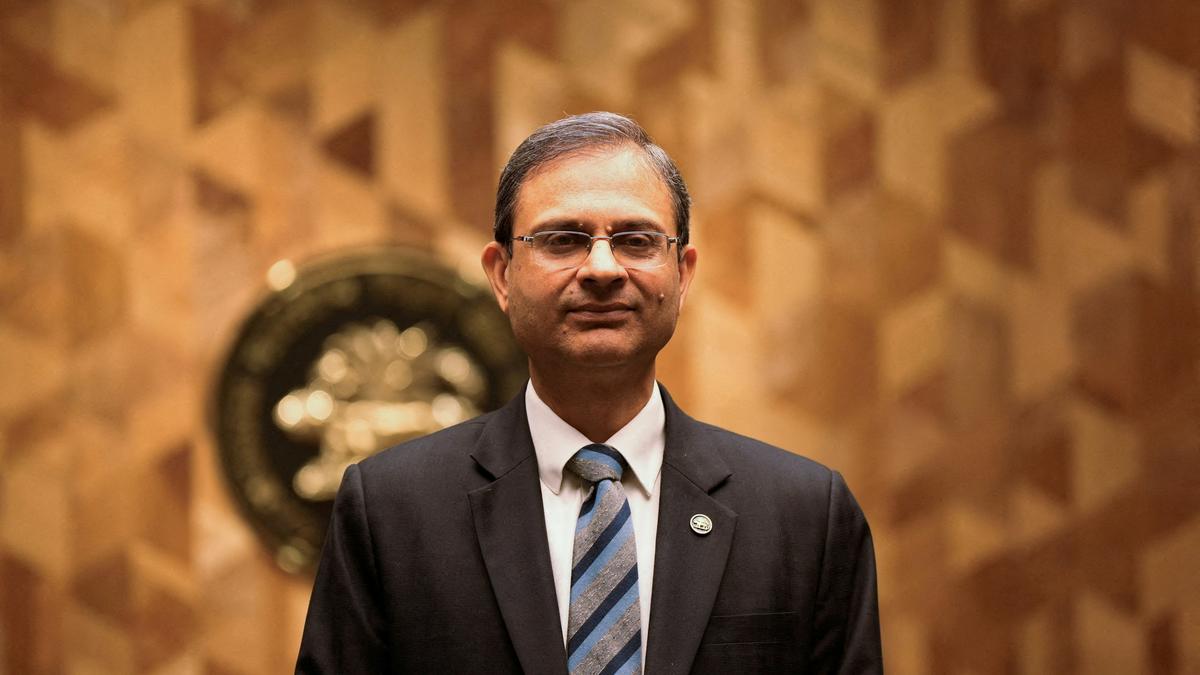
File photo of Reserve Bank of India Governor Sanjay Malhotra.

File photo of Reserve Bank of India Governor Sanjay Malhotra.
| Photo Credit: Reuters

Reserve Bank on Friday (June 6, 2025) decided to cut Cash Reserve Ratio (CRR) by a huge 1%, which will unlock ₹2.5 lakh crore liquidity to the banking system for lending to productive sectors of the economy.

With the reduction in four equal tranches ending November 29, 2025, the CRR would come down to 3%. This means that the commercial banks would have to maintain a lower level of 3 per cent in liquid cash form with the RBI allowing them to have higher funds for lending.

“The Reserve Bank remains committed to provide sufficient liquidity to the banking system. To further provide durable liquidity, it has been decided to reduce the cash reserve ratio (CRR) by 100 basis points (bps) to 3 per cent of net demand and time liabilities (NDTL) in a staggered manner during the course of the year,” RBI Governor Sanjay Malhotra said, while announcing the bi-monthly MPC outcome.


Also read: RBI repo cut: Industry reactions 

This reduction will be carried out in four equal tranches of 25 bps each with effect from the fortnights beginning September 6, October 4, November 1 and November 29, 2025, he said.

“The cut in CRR would release primary liquidity of about ₹2.5 lakh crore to the banking system by December 2025. Besides providing durable liquidity, it will reduce the cost of funding of the banks, thereby helping in monetary policy transmission to the credit market,” he said.

Higher credit flow will help in boosting economic growth which hit a four-year low of 6.5% in FY’25.

“I would like to reiterate that we will continue to monitor the evolving liquidity and financial market conditions and proactively take further measures, as warranted,” he said.

RBI had last slashed CRR by 50 basis points to 4% in the December 2024 MPC announcement. It was done in two equal tranches of 25 basis points, each with effect from the fortnight beginning December 14, 2024 and December 28, 2024.

The move led to the unlocking of Rs 1.16 lakh crore to the banking system and easing the liquidity situation.

The RBI on May 4, 2022 had raised CRR to 4.5% from 4% in an off-cycle Monetary Policy Committee (MPC) meeting, with effect from May 21 the same year.

RBI, however, did not tinker with Statutory Liquidity Ratio (SLR) and maintained it at 18 per cent.

SLR is a regulatory requirement that requires banks to hold 18 per cent of total deposits or net demand and time liabilities (NDTL) in government securities. This ensures that banks have sufficient liquidity to meet customer withdrawal demands and maintain financial stability.

On the liquidity situation, Malhotra said, a total amount of Rs 9.5 lakh crore of durable funds has been injected into the banking system since January.

As a result, after remaining in deficit since mid-December, liquidity conditions transitioned to surplus at the end of March.

This is also evident from the tepid response to daily Variable Repo Rate (VRR) auctions and high Standing Deposit Facility (SDF) balances – the average daily balance during April-May amounted to ₹2 lakh crore.

Reflecting the improvement in liquidity conditions, the weighted average call rate (WACR) – the operating target of monetary policy – traded at the lower end of the LAF corridor since the last policy, he said.

The comfortable liquidity surplus in the banking system has further reinforced transmission of policy repo rate cuts to short term rates, he said.

“However, we are yet to see a perceptible transmission in the credit market segment, though we must keep in mind that it happens with some lag,” he said.


Source link

Rise in repatriation sign of mature market: RBI Governor on moderation in net FDI


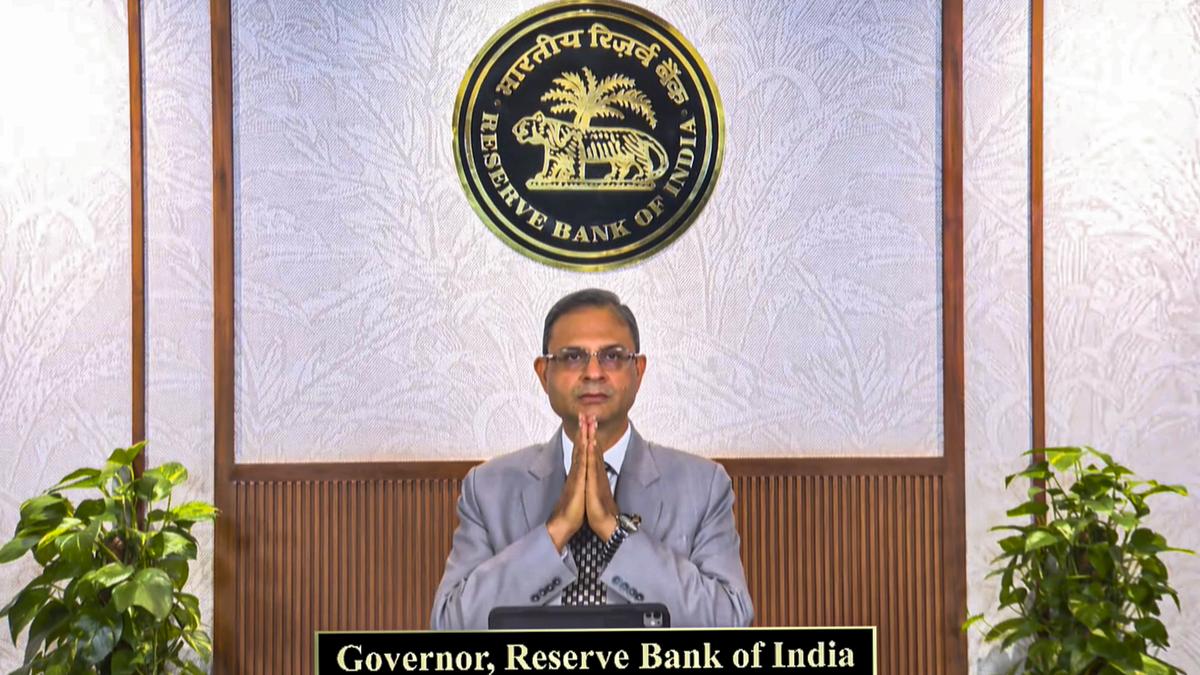
India continues to remain an attractive investment destination and rise in repatriation of funds is a sign of a mature market where foreign investors can enter and exit smoothly, Reserve Bank Governor Sanjay Malhotra said on Friday (June 6, 2025). Photo credit: X/RBI

India continues to remain an attractive investment destination and rise in repatriation of funds is a sign of a mature market where foreign investors can enter and exit smoothly, Reserve Bank Governor Sanjay Malhotra said on Friday (June 6, 2025). Photo credit: X/RBI

India continues to remain an attractive investment destination and rise in repatriation of funds is a sign of a mature market where foreign investors can enter and exit smoothly, Reserve Bank Governor Sanjay Malhotra said on Friday (June 6, 2025).

Gross foreign direct investment (FDI) inflows remained strong, rising by around 14% to $81 billion in 2024-25, from $71.3 billion a year ago. However, net FDI inflows moderated to $0.4 billion in 2024-25, from $10.1 billion a year ago.

In 2024-25, foreign portfolio investment (FPI) to India dropped sharply to $1.7 billion, as foreign portfolio investors booked profits in equities.

The moderation in net FDI “is on account of a rise in repatriation and net outward FDI, while gross FDI actually increased by 14 per cent,” Mr. Malhotra said, while unveiling the June monetary policy.

Rise in repatriation is a sign of a mature market, where foreign investors can enter and exit smoothly, he said, adding “high gross FDI indicates that India continues to remain an attractive investment destination”.

The governor also said that with the moderation in trade deficit in Q4:2024-25, alongside strong services exports and remittance receipts, the current account deficit (CAD) for 2024-25 is expected to remain low.

Furthermore, despite rising geopolitical uncertainties and trade tensions, India’s merchandise trade remained robust in April 2025.

As imports grew faster than exports, the trade deficit, however, widened during the month.

“Going forward, net services and remittance receipts are likely to remain in surplus, counterbalancing the rise in trade deficit. The CAD for 2025-26 is expected to remain well within the sustainable level,” Mr. Malhotra said.

As on May 30, 2025, India’s foreign exchange reserves stood at $691.5 billion, down from $692.721 billion during the week ended May 23. These are sufficient to fund more than 11 months of goods imports and about 96 per cent of external debt outstanding.

Overall, India’s external sector remains resilient as key external sector vulnerability indicators continue to improve, the governor said.


Source link

Access Denied


Access Denied

You don’t have permission to access “http://www.ndtv.com/business-news/sensex-up-by-500-points-after-rbi-cuts-repo-rate-by-50-basis-points-8601063” on this server.

Reference #18.4cfdd417.1749798236.280f1f7

https://errors.edgesuite.net/18.4cfdd417.1749798236.280f1f7


Source link

RBI rate cut to improve sales of affordable, mid-income housing properties: CREDAI


According to CREDAI, lower interest rates will increase homebuyer affordability and improve the financial viability of affordable housing projects. File photo

According to CREDAI, lower interest rates will increase homebuyer affordability and improve the financial viability of affordable housing projects. File photo
| Photo Credit: The Hindu

Realtors’ apex body CREDAI on Friday (June 6, 2025) described the Reserve Bank of India (RBI) decision to cut repo rate by 50 basis points as a bold step and said this will help boost sales of residential properties.

Hailing the decision, CREDAI president Shekhar G. Patel said the RBI decision will improve consumers’ sentiment, immensely benefitting mid-income and affordable housing segments, which have been struggling in the last few years.

“We welcome the RBI’s decision and view it as a bold and timely step toward stimulating domestic demand,” Patel said.

This decision comes at a pivotal time, as India is witnessing strong real estate momentum across metros as well as Tier 2 and Tier 3 cities.

“Lower lending rates will directly enhance home loan affordability, particularly in interest-sensitive categories like mid-income and affordable housing. Reduced EMIs are expected to significantly improve buyer sentiment and encourage first-time homebuyers to enter the market,” Mr. Patel added.

The cumulative 100 basis point reduction over the last six months is a welcome and strategic move, the CREDAI president said.

“We are particularly optimistic about its impact on the affordable housing sector, which has been under pressure on both the demand and supply sides.

Lower interest rates will increase homebuyer affordability and improve the financial viability of affordable housing projects,” he said.

According to many property consultants, housing sales declined across 7-8 major cities in the January-March quarter compared to the year-ago period.


Source link

RBI repo cut: Industry reactions


The Monetary Policy Committee (MPC) under the chairmanship of Sanjay Malhotra, Governor, Reserve Bank of India on Friday (June 6, 2025) voted to reduce the policy repo rate by 50 basis points (bps) to 5.50% with immediate effect. 

Consequently, the standing deposit facility (SDF) rate under the liquidity adjustment facility (LAF) shall stand adjusted to 5.25% and the marginal standing facility (MSF) rate and the Bank Rate to 5.75%. 

Here we give the reactions from industry circles

“The Reserve Bank of India’s decision to reduce the repo rate by 50 basis points to 5.5% underscores a clear commitment to supporting growth,” said Yashish Dahiya, Chairman & Group CEO of PB Fintech.

“Coupled with the shift to a neutral stance, it signals a more balanced and measured approach going forward. This move will ease borrowing costs and enhance liquidity, benefiting MSMEs and retail loan borrowers. Overall, we believe this step will positively influence India’s economic momentum amid global headwinds.”

50 bps rate cut to boost real estate, broader economy:

Shishir Baijal, Chairman and Managing Director, Knight Frank India, commenting on the announcement made by the RBI’s Monetary Policy Committee, said: The RBI’s 50 bps rate cut marks a strong and proactive stance aimed at lifting the low and mid value housing segments. Over the last few years, the strong housing market momentum was increasingly concentrating in the premium end even as there were signals of weakening the lower segments. With this cumulative 100 basis point cut in the policy interest rate we expect rekindling of the lower segments as affordability will witness a meaningful improvement for such homebuyers. We hope that the developer community too renews its focus in a big way to give longer legs to this housing market upcycle which is in its 5th year. Liquidity conditions remain balanced and conducive to supporting this monetary stance and we hope to see a greater transmission of this rate cycle.

Binod Kuma, MD and CEO of Indian Bank: The RBI’s decision to cut the repo rate by 50 basis points to 5.50% while changing its stance to neutral will boost credit demand in sectors like Retail, Agriculture and MSME. It will also encourage private capex. CRR cut will provide liquidity at the hands of banks. RBI is taking very proactive steps keeping in view looming headwinds on credit growth. Lower rates will spur the retail demand especially for affordable housing. Good monsoon coupled with lower rates augurs well for agriculture sector. It will drive consumption and will boost rural demand. MSMEs, which are vital to India’s economy, will see improved cash flow and more room to grow.

Ensure transmission

We will ensure to pass on rate transmission immediately to support entrepreneurs and keep the economy moving forward.

Anuj Puri, Chairman – ANAROCK Group

As widely anticipated, the RBI decided to reduce the repo rates by 50 bps (to 5.5%) to the backdrop of moderating inflation in the country. This is the third consecutive time this year that the apex bank has cut the repo rates. This effectively lowers the cost of borrowing, making home loan EMIs easier on the pocket and thereby directly improving affordability for buyers. This can potentially boost demand in the Indian real estate sector, especially in affordable and mid-income segments. Affordable housing faced the sharpest pandemic fallout, with sales and new launches shrinking in the top 7 cities.

ANAROCK data shows that affordable housing sales share plummeted from 38% in 2019 to 18% in 2024, while its supply share dropped from 40% to 16% in the same period. However, a 19% dip in unsold stock hints at sustained demand led by end-users. It will also lower developers’ borrowing costs. It is sincerely hoped that banks pass on the benefits of this move seamlessly to borrowers.

The reduction in the Cash Reserve Ratio (CRR) will help boost liquidity in the banking system, which means that banks have more funds to lend. Developers will be able to access more capital for their projects, and this can positively impact project completion timelines. It also gives banks the option to reduce home loan interest rates, which will have again positively impact sentiment in the affordable and mid-income segments.

Nevertheless, these positive impacts may be partially dampened by the ongoing global trade tensions and tariffs imposed by the Trump administration, which have increased the cost of imported construction materials and created economic uncertainty. We may see some impact on the demand for luxury and commercial projects, and developer margins may be squeezed.

While the rate cut is a strong positive for real estate, especially for affordable housing, much now depends on how well it can adapt to higher input costs and ongoing global uncertainties. Continued policy support and a shift to domestic sourcing could be critical for sustained growth.

Upasna Bhardwaj, Chief Economist, Kotak Mahindra Bank said, “The higher than expected repo rate cut comes along with a shift in the stance back to neutral. This clearly points towards future decisions being more data dependant given the significant global uncertainties. Furthermore, the sharp drop in CRR is likely to keep liquidity conditions suitably comfortable to ensure monetary transmission.”

Ranen Banerjee, Partner and Leader, Economic Advisory, PwC India.

The MPC has delivered an unexpected outsized policy rate cut of 50bps against a consensus expectation of a 25bps cut. This is accompanied by a 100bps staggered cut in CRR and a change in policy stance to neutral. The decision is likely owing to the GDP prints for Q4 of FY25 reflecting weakness in manufacturing and consumption, as well as the adverse impacts of global trade and conflict headwinds. The policy rate easing, combined with the liquidity increase for banks when system liquidity is already comfortable, is likely to add a second engine to the consumption growth flight that is anticipated to be already in flight from the income tax cuts taking effect in FY26. This is significantly positive for urban consumption, which printed weak in past quarters, and will also likely add a fillip to real estate, discretionary purchases, and private capex.


Source link

RBI springs surprise with 50 bps rate cut, Rs 2.5 lakh crore liquidity boost


RBI springs surprise with 50 bps rate cut, Rs 2.5 lakh crore liquidity boost

MUMBAI: In a move that jolted markets and defied expectations, the Reserve Bank of India cut its benchmark policy rate by 50 basis points and announced a Rs 2.5 lakh crore liquidity infusion via a 100 basis point reduction in the cash reserve ratio (CRR). The CRR cut reduces the portion of deposits banks must park with the central bank, effectively freeing up funds to support credit growth.Governor Sanjay Malhotra framed the dual action as a response to shifting macroeconomic conditions, stating that the evolving growth-inflation dynamics warranted “not just continued policy easing, but also front-loading the rate cuts to support growth.”The surprise rate cut came as inflation projections were revised downward. Consumer price inflation for FY26 is now expected to average 3.7%, compared to an earlier forecast of 4%. Yet the central bank maintained its full-year GDP growth forecast at 6.5%, with no changes to its quarterly estimates.Malhotra acknowledged the challenges facing the economy, remarking that “while price stability is a necessary condition, it is not sufficient to ensure growth. A supportive policy environment is vital, and this is even more important during periods of high growth uncertainty, such as the current times that we are witnessing at the Reserve Bank.”The twin measures—rate cut and CRR reduction—resemble an adrenaline shot to the financial system. While the rate cut narrows banks’ interest margins, the CRR relief cushions balance sheets, enabling continued credit transmission even as loan rates decline.The six-member monetary policy committee voted 5:1 for the 50 basis point cut. Nagesh Kumar, Ram Singh, Rajiv Ranjan, Poonam Gupta and Malhotra backed the move. Saugata Bhattacharya dissented, favouring a more modest 25 basis point cut.Alongside the rate decision, the committee altered its policy stance from “accommodative” to “neutral.” Malhotra noted that “under the current circumstances, monetary policy is left with very limited space to support growth,” and said future decisions would hinge on incoming data.The cut in cash reserve ration will happen in four equal tranches of 25 basis points, each coming into effect from the fortnights beginning, September, 6, October 4, November 1 and November 29.The magnitude and context of the rate cut make it especially noteworthy. Central banks in most advanced economies have adopted a holding pattern or continued tightening in response to persistent inflation. The Federal Reserve has kept its target range at 4.25%-4.50% since late 2024. The Bank of England, following a rate cut in May 2025, has held steady at 4.25%. The Bank of Japan remains focused on growth and currency stability, keeping its rate at 0.50% after a hike in January. The Reserve Bank of Australia and the Reserve Bank of New Zealand each cut rates in May, to 3.85% and 3.25%, respectively, and are expected to remain on hold. Sweden held rates at 2.25% in May, signalling a dovish bias, while Canada paused after a March cut to 2.75%, citing domestic pressures and global trade uncertainty.RBI’s downward revision to inflation forecasts is concentrated in the first half of FY26. CPI inflation is now expected to dip to 2.9% in Q1, down from April’s forecast of 3.7%, and to 3.4% in Q2, compared to the previous 3.9%. For Q3, the forecast has been nudged up to 3.9% from 3.8%, while Q4 remains unchanged at 4.4%.Malhotra also sought to allay investor concerns about India’s external position, asserting that “India continues to be an attractive investment destination.” He highlighted a 14% rise in gross foreign direct investment inflows. The recent softness in net FDI, he said, reflected repatriations by large industrial firms—an indicator, in his view, of a mature financial system that allows orderly exits.


Source link

RBI MPC meet: Why repo rate was cut by larger-than-expected 50 basis points; RBI governor Sanjay Malhotra explains


RBI MPC meet: Why repo rate was cut by larger-than-expected 50 basis points; RBI governor Sanjay Malhotra explains
The RBI has now cumulatively cut the repo rate by 100 basis points since the start of this year. (AI image)

RBI MPC Meet: RBI governor Sanjay Malhotra surprised everyone pleasantly by cutting the repo rate by a larger-than-expected 50 basis points. Experts had widely predicted a 25 basis points rate cut, barring exceptions like SBI and Morgan Stanley who had anticipated a front loading of repo rate cut. With today’s cut, the repo rate now stands at 5.5%, down from 6%. The RBI has now cumulatively cut the repo rate by 100 basis points since the start of this year. This means good news for borrowers since home loan EMIs are expected to come down substantially over the course of the year as the full benefit of the 100 bps cut is passed on by banks.

Why did RBI cut repo rate by 50 bps? Explained

We take a look at rationale for Monetary Policy Committee’s decision:

  • The projected inflation rate for the year has been adjusted lower to 3.7% from the previous estimate of 4.0%.
  • Inflation has shown a notable decline during the past six months, moving from levels exceeding the tolerance band in October 2024 to considerably below the target, displaying widespread easing across sectors.
  • Current projections for both immediate and longer periods provide assurance that headline inflation will consistently align with the 4% target. Furthermore, there is a strong likelihood that inflation figures will marginally fall below the target throughout the year.
  • The outlook for food inflation continues to remain subdued, whilst core inflation is anticipated to stay moderate, influenced by decreasing international commodity prices, corresponding with the expected deceleration in global economic growth.
  • However, GDP growth continues to fall short of desired levels, particularly due to global market challenges and prevailing uncertainties, said RBI.
  • Given these circumstances, it is crucial to boost domestic consumer spending and capital investment through appropriate policy measures to enhance economic momentum, the RBI said.
  • “This changed growth-inflation dynamics calls for not only continuing with the policy easing but also frontloading the rate cuts to support growth,” RBI said.

Also Check | RBI MPC Live UpdatesThe Monetary Policy Committee (MPC) cast their votes, resulting in a decision to lower the policy repo rate by 50 basis points, bringing it to 5.50%. Five members—Dr. Nagesh Kumar, Prof. Ram Singh, Dr. Rajiv Ranjan, Dr. Poonam Gupta and Sanjay Malhotra—supported the 50 basis points reduction. However, Saugata Bhattacharya opted for a more modest decrease of 25 basis points in the repo rate.“As global environment remains uncertain, it has become even more important to focus on domestic growth amidst sustained price stability. Accordingly, today’s monetary policy actions should be seen as a step towards propelling growth to a higher aspirational trajectory,” RBI governor Sanjay Malhotra concluded.


Source link

Access Denied


Access Denied

You don’t have permission to access “http://www.ndtv.com/business-news/rbi-cuts-repo-rate-by-50-basis-points-8600641” on this server.

Reference #18.4cfdd417.1749188052.8da62b6

https://errors.edgesuite.net/18.4cfdd417.1749188052.8da62b6


Source link

‘Call me fugitive but … ‘: Vijay Mallya apologises for Kingfisher failure; asks ‘where is the chori’ | India News


'Call me fugitive but ... ': Vijay Mallya apologises for Kingfisher failure; asks 'where is the chori'
Vijay Mallya appeared in a podcast.

NEW DELHI: Vijay Mallya, the prominent business figure, extended an uncommon public apology regarding Kingfisher Airlines‘ downfall, whilst firmly rejecting theft accusations and explaining his absence from India.Making an appearance in a lenghthy four-hour podcast with Raj Shamani, Mallya accepted responsibility for the collapse of the airline that once represented his distinctive business approach and said, “I apologise to everyone for the failure of Kingfisher Airlines.”During the podcast, Mallya expressed willingness to consider returning to India under specific conditions. “If I have a fair assurance of a fair trail and dignified existence in India, I will think about it (returning to India) seriously.” Responding to financial wrongdoing claims, Mallya said, “You may call me a fugitive, but I didn’t run away. I flew on a prescheduled visit. Fair enough, I didn’t return for reasons that I consider are valid… so if you want to call me a fugitive, go ahead. But where is the ‘chor’ (thief) coming from? Where is the ‘chori’ (theft)?”

Vijay Mallya Podcast: Rise & Downfall Of Kingfisher Airlines, Loans & RCB | FO364 Raj Shamani

The erstwhile businessman faces allegations of defaulting on loans exceeding Rs 9,000 crore, provided to Kingfisher Airlines by several Indian banks. Since 2016, he has resided in the United Kingdom, contesting extradition proceedings. Although a UK court ruled for his extradition in 2018, Mallya continues to oppose his return to India, citing concerns about unfair treatment and trial by media.


Source link