Business

Sudarshan Venu to be chairman of TVS Motor


Sudarshan Venu to be chairman of TVS Motor

CHENNAI: Just three years after he was appointed MD of TVS Motor, 36-year-old Sudarshan Venu is all set to take over as chairman of the company. TVS Motor has announced that its board has “unanimously” named Sudarshan Venu as “incoming chairman of the company.” Effective August 2025, Sudarshan Venu will be appointed CMD of TVS Motor.


Source link

Meeting soon to push economic corridor


Meeting soon to push economic corridor

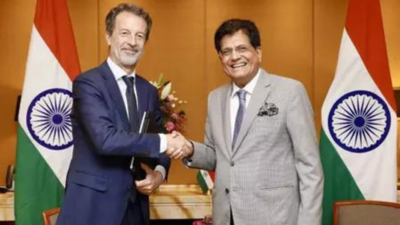
India and Italy on Thursday said a meeting will shortly be held in Mumbai to push forward India-Middle East-Mumbai Economic Corridor, which has been affected by the tension in West Asia. Commerce & industry minister Piyush Goyal said issues around financing and other aspects will be discussed.


Source link

Bajaj Finserv promoters to sell 2% stake, eye Rs 5.8k crore


Bajaj Finserv promoters to sell 2% stake, eye Rs 5.8k crore

MUMBAI: Two promoter entities of financial services major Bajaj Finserv are set to sell nearly 2% of the company through block deals on Friday, aiming to raise about Rs 5,800 crore ($679 million). Bajaj Holdings & Investment and Jamnalal Sons have put 3.1 crore Bajaj Finserv shares on the block at a base price of Rs 1,880, as shown in the term sheet for the deal.Currently, the Bajaj family holds about 60.6% in the NBFC major. If the two entities sell the entire stake put on the block, the promoters’ stake will decrease to 58.7%, currently worth about Rs 1.8 lakh crore.The base price of the shares being offered is Rs 1,880, a 3.3% discount to Bajaj Finserv’s Thursday closing at Rs 1,944 on NSE. At the initial stage of the deal, the promoters are offering a little over 2.5 crore shares of Bajaj Finserv, translating to about 1.6% of the company. At the base price, this stake will fetch about Rs 4,750 crore ($554 million) for the promoter family, as indicated in the term sheet. In case there is strong demand for the shares of the NBFC major, they will offer an additional 57 lakh shares (0.36%) of the company. This will accrue an additional Rs 1,078 crore ($126 million) to the promoters.Lately, the revival in the stock market prompted several promoters to offload part of their overall holding in their companies. In May alone, promoters sold about Rs 48,000 crore worth of stocks in their companies through block deals, reports showed. Last month, Singapore Telecom, one of the promoters of telecom services major Bharti Airtel, sold part of its stake in the company for about Rs 13,300 crore. In another large block deal, BAT, a promoter of tobacco to FMCG major ITC, sold part of its stake for over Rs 12,000 crore.


Source link

‘Quick commerce market to triple to Rs 1.7L crore in 2 yrs’


'Quick commerce market to triple to Rs 1.7L crore in 2 yrs'

BENGALURU: India’s quick commerce market is set to triple in size by 2027, reaching Rs 1.5-1.7 lakh crore. However, the segment’s rapid growth is exposing structural cracks in pricing, workforce stability, and profitability, a report by consulting firm Kearney said.The report, published on Thursday, showed that while quick commerce expanded beyond impulse buys to staples like rice, atta, and edible oil, most of the demand is not new. Nearly 93% of sales come at the expense of modern trade, e-commerce, and kirana outlets. Just 6-8% is incremental.Meanwhile, platform discounts average 6-9%, lower than e-commerce and modern trade players, which offer 13-18% off. Once delivery and handling fees are factored in, quick commerce becomes price-competitive only when compared to kiranas.Despite its popularity in top metros and tier-2 cities, adoption remains uneven across product categories. While snacks, cold beverages, and gifting items saw strong traction, categories like fruits, vegetables, electronics, and personal care continue to see low migration, with consumers preferring in-store purchases or wider selections available on other channels.Quick commerce’s most significant impact is in employment generation, but with trade-offs. It creates about 62-64 jobs per Rs 1 crore of monthly gross merchandise value, on par with general trade and higher than ecommerce (25-29) or modern trade (41-42). However, over 70% of these roles are last-mile delivery jobs, typically filled by gig workers with limited job security. Kearney expects a 60% surge in gig hiring in 2025 as platforms expand.


Source link

Irdai chief post vacant since March, reforms stall


Irdai chief post vacant since March, reforms stall

MUMBAI: Plans to revamp the insurance sector are in limbo, with key reforms stalling after Irdai chairman Debashish Panda left office in March. The post remains vacant, leaving the sector without regulatory leadership at a time when several major initiatives are awaiting rollout.The most ambitious among them is Bima Sugam, a unified digital marketplace for policy comparison, purchase, and servicing. With each insurer having invested a few crore in the platform, its launch plan is yet to be finalised. Bima Vistaar, aimed at rural bundled coverage, and Bima Vahaak, a women-led distribution model, are also facing technical and operational delays.Moves to shift to a risk-based capital framework and align insurance accounting with IFRS remain incomplete. These efforts, meant to modernise regulatory oversight and financial disclosures, have not progressed due to a lack of industry readiness and clarity on implementation.Proposals to allow 100% FDI, issue composite licences, and introduce differentiated capital norms have yet to be legislated. Plans to list state-run insurers have also not advanced amid resistance from within the public sector.At the same time, regulatory scrutiny of mis-selling and poor distribution practices has increased. RBI and the finance ministry have flagged concerns over banks and auto dealers forcing customers to buy bundled insurance. Regulatory audits have revealed issues such as opaque claim rejections, sharp premium hikes, and poor portability in retail health insurance.“If the insurance industry is to grow the way mutual funds did after 2010, we need greater transparency, lower costs, and rebuilt trust,” said Kamesh Goyal, co-founder of Go Digit General Insurance. “Sebi introduced direct plans and standard charges. Insurance could adopt similar guidelines-such as mandating refunds with interest when loss ratios fall below a certain level.”Goyal added that small retail customers are often subsidising large corporate groups. “We’re not saying distributors shouldn’t earn, but loss ratios at 10% are unsustainable. A level of 60-65% is more realistic, accounting for costs and investment income. Once a fair value proposition is in place, mis-selling naturally comes down,” he said. Public sector insurers are also under pressure, with three of them breaching solvency norms. While insurance premiums have increased, the number of individual policies has remained flat, limiting its impact on financial inclusion.Another area needing regulatory attention is surety bonds. Though these now substitute bank guarantees, insurers say they carry higher risk due to a lack of protection under bankruptcy laws-unlike banks. The delay in appointing a new chairman has slowed reform at a time when the sector needs urgent regulatory clarity.


Source link

Palo Alto’s Arora to join Uber’s board


Palo Alto's Arora to join Uber's board

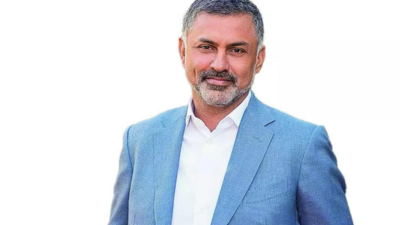
BENGALURU: Uber Technologies appointed Palo Alto Networks CEO Nikesh Arora to its board of directors, according to a regulatory filing with the US Securities and Exchange Commission (SEC). Arora will also join the company’s nominating and governance committee and the compensation committee. TNN


Source link

Should India amend its nuclear energy laws?


Discussions are ongoing in India to amend the nuclear liability framework, regulated by the Civil Liability for Nuclear Damages Act (CLNDA), 2010, and the Atomic Energy Act (AEA), 1962, to allow private companies to build and operate nuclear energy-generation facilities. This move is part of a broader strategy to expand India’s nuclear energy capacity from the current 8 GW to 100 GW by 2047, aligning with the country’s clean energy goals. Should India amend its nuclear energy laws? Ashley Tellis and D. Raghunandan discuss the question in a conversation moderated by Kunal Shankar.


Do you support the proposed amendments to India’s nuclear energy laws?

Ashley Tellis: If India has set for itself a goal of expanding nuclear energy, it cannot reach that goal without expanding its domestic capacity. If we are talking of a timeline that is, say, 20 years, we must supplement those indigenous capabilities with foreign participation. This is where there is a roadblock. Current Indian law prevents foreign participation. The imagined future when we negotiated the U.S.-India civil nuclear deal in 2008 was that foreign companies would participate in India’s nuclear renaissance. That dream has been frustrated by the legal evolution in the liability regime in India since 2000. So I would cheer the Prime Minister on, with respect to getting these amendments done.

D. Raghunandan: The idea of amending the law to attract foreign investment to expand nuclear power generation capacity in India is based on two flawed arguments or assumptions. The first is that the roadblock to expansion of nuclear power is one of investment. The second is that no major nuclear supplier country has shown domestic capacity expansion at the rate at which we assume India will expand. We have not seen that happen in the U.S. or France. Britain does not have much capacity anyway; Japan is on a slow track. Only China, perhaps, has the capacity to expand at scale and I don’t see major Chinese investment coming into India.

Ashley Tellis: The Indian nuclear liability law is a genuine impediment to foreign participation in the sector. Companies from France, Japan, and the U.S. have said they cannot enter the market if the current law stands. Russia is an interesting case because Rosatom is a parastatal. Even Rosatom refused to accept India’s liability law. India indemnified Rosatom through a contractual agreement reached in 2008 before the liability law was passed. After 2010, that is not an option available to the government because to indemnify through a private contract would violate parliamentary intention. This law affects Indian industry as well. The Department of Atomic Energy (DEA) had NPCIL (Nuclear Power Corporation of India Ltd) indemnify Indian private suppliers through contractual agreements. The problem started at Kovvada; after the civil liability legislation was passed, domestic suppliers refused to supply components. So NPCIL, through contractual agreements, waived liability using a rationale that if there is a failure in components made to their specifications, it is NPCIL’s fault, a logic that is suspect and never tested in court. Raghu is right: the U.S. is driving this pressure, partly for political and economic reasons. If we want foreign participation, we have to amend the law.

Regarding supply-side capacity, whether we have it now is suspect. But this investment in India is over a long horizon. Western nuclear suppliers are responsive to market signals and will build up capacity if demand presents itself.


One of the reservations with private companies’ participation has been about technology transfer, particularly as this is considered a strategic space with attendant security risks. Even if India were to amend the AEA, would the level of technology transfer that took place under agreements in the past between Russia and India take place in future? Particularly in the case of the Small Modular Reactors (SMRs) that appear to be gaining ground as a safer alternative to large nuclear reactors?

Ashley Tellis: This is a commercial question. If your suppliers are private entities, their technology transfer decisions will be based on profitability. Governments don’t have powers to force a private entity to transfer technology. The U.S. will have a role through its licensing process for what technology transfer is permitted. For example, the U.S. permitted Westinghouse to transfer certain reactor design technologies to China, a decision Westinghouse probably rues because the AP1000 technology was cloned by the Chinese. My expectation is that India will seek technology transfer and will probably get some, consistent with company profitability and what the U.S. government will want to protect for national security or proliferation reasons. Even Rosatom has not done a complete transfer of VVER-1000 technology to India; they have allowed India to build sub-components but maintain proprietary control over many elements, especially in the hot section, related to advanced materials and chemistry. This will not be a showstopper. Newer companies involved in SMRs are actually more enthusiastic about technology transfer than old majors because it is an economic decision to access the market, get economies of scale, and increase profit. This will not be a serious problem. The bigger problems are high capital costs and how much money will India be able to invest.

D. Raghunandan: A lot of this debate is based on hypotheticals and we cannot frame policies based on those. For 15 years, India has been chasing technology transfer and investment in defence, increasing FDI from 25% to 100%, yet no major foreign company invested or transferred technology because it’s not in their interest. So I am not convinced that new futuristic technologies such as SMRs, which India does not possess, will transform the nuclear energy landscape if they come to India. The argument often comes down to making smaller 200 MW or even 60-70 MW reactors instead of 500 MW ones. In its last Budget, India earmarked money for five small reactors based on the pressurised heavy water cycle that it is familiar with. The question is attracting investment to scale this up.


Dr. Tellis, considering India is a developing country with other commitments, for these newer SMR suppliers, would it not be fair to seek compensation [if things go wrong] because it’s an untested technology?

Ashley Tellis: No, I don’t think so. The Convention on Supplementary Compensation (CSC) is an international effort to create an environment conducive for expanding nuclear power production and understanding its inherent risks. The CSC’s purpose in a nuclear accident is not to litigate who is responsible, but to rush compensation to those affected. It has three key principles: first, all liability is channeled to the operator. Second, a pre-accident fund is created (the Convention has a three-tiered fund). Third, supplier liability is permitted if it’s through contract or if there are issues of wilful misconduct; there isn’t an overarching principle of supplier liability because of the fear of litigation delays. This model assumes an environment with adequate design review and a neutral regulatory authority not linked to the operator or supplier.

If a real nuclear accident occurs, the sovereign on whose territory it occurs is the ultimate guarantor of protection. The question was how to create a regime allowing them to pick from a readily available pool of money, hence the insurance pool systems. Regarding SMRs, the problem is not design immaturity. Many SMRs have very advanced passive designs. The real problem SMRs will face is economic: capital costs are still extremely high. We don’t know if the SMR cost will be disproportionately smaller. A big assumption with SMRs is that they will be manufactured through an assembly line process in a factory and components transported and assembled on site. I have greater faith in the SMR technology than in the assembly line model of manufacturing just yet.

Listen to the conversation in The Hindu Parley podcast
Ashley J. Tellis, Tata Chair for Strategic Affairs and a senior fellow at the Carnegie Endowment for International Peace; D. Raghunandan is with the Delhi Science Forum and the All India People’s Science Network

Published – June 06, 2025 01:58 am IST


Source link

Silver hits new record high at Rs 1.05L/kg


Silver hits new record high at Rs 1.05L/kg

MUMBAI: The price of silver in India reached a new all-time high of Rs 1.05 lakh per kg on the MCX on Thursday, as prices in the international market hit a 13-year high. The rally was fuelled by strong investor demand, soft US economic data, a weakening dollar, heightened geopolitical tensions, and firm industrial demand.


Source link

HealthKois sets up $300mn fund for early stage bets


HealthKois sets up $300mn fund for early stage bets

BENGALURU: HealthKois, a healthcare-focused investment firm, has set up a $300 million fund aimed at backing early growth-stage companies across healthtech, life sciences, medtech and climate-linked health infrastructure. The fund, which also includes a green shoe option of $100 million, was founded by the leadership team behind HealthQuad – Charles Janssen, Ajay Mahipal, and Dr Pinak Shrikhande. HealthQuad is another early-stage healthcare firm. HealthKois is targeting investments ranging between $7 -$25 million per company over the next four years.


Source link

‘Electric cars that nobody else wanted…’: Donald Trump’s shocking words on Elon Musk; says Biden should have terminated Musk’s subsidies


‘Electric cars that nobody else wanted…’: Donald Trump’s shocking words on Elon Musk; says Biden should have terminated Musk’s subsidies

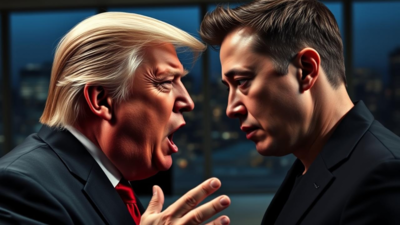
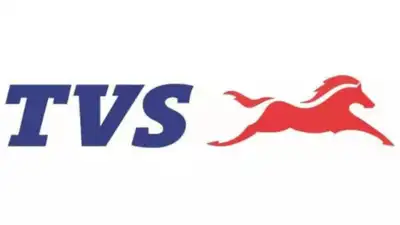
US President Donald Trump and Tesla CEO Elon Musk, once allies, are now publicly feuding following disagreements over the government’s new tax bill. The rift, which has played out in a series of increasingly pointed online posts, appears to mark a significant break in their relationship. The spat intensified after Musk vocally criticised the bill, calling it “a disgusting abomination” and urging people to “kill the bill.” In response, Trump hit back on Thursday, expressing “disappointment in Elon” and claiming he had cut Musk out of key government decisions. “Look, Elon and I had a great relationship. I don’t know if we will anymore. I was surprised,” Trump said in remarks from the Oval Office. Soon after, the president took to Truth Social to assert that he had rescinded Musk’s influence over electric vehicle (EV) policies. “Elon was ‘wearing thin,’ I asked him to leave, I took away his EV Mandate that forced everyone to buy Electric Cars that nobody else wanted (that he knew for months I was going to do!), and he just went CRAZY!” Trump wrote. He also suggested a potential move to cut off Musk’s federal support: “The easiest way to save money in our Budget, Billions and Billions of Dollars, is to terminate Elon’s Governmental Subsidies and Contracts. I was always surprised that Biden didn’t do it!”

Trump's post on Truth Social

Musk dismissed Trump’s claims, responding with a curt rebuttal on X: “Such an obvious lie. So sad.” Taking a more light-hearted jab at Trump’s threat to end federal contracts, Musk added, “This just gets better and better 🤣🤣 Go ahead, make my day …”In a separate post, Musk also asserted that Trump’s 2024 election win would not have been possible without his backing. “Without me, Trump would have lost the election, Dems would control the House and the Republicans would be 51-49 in the Senate,” he claimed. The fallout is notable given their history. Musk once praised Trump for efforts to reduce bureaucratic red tape and briefly served on the president’s business advisory council in early 2017. However, he stepped down that same year over differences regarding climate policy. In recent months, the two had appeared to reconcile, with Trump lauding Musk’s intellect and Musk supporting Trump’s reinstatement on social media platforms. But their latest exchange suggests the alliance may have once again fractured.


Source link