Business

Is IBC an effective resolution tool? | Explained


The story so far:

More than eight years have passed since the enactment of India’s Insolvency and Bankruptcy Code (IBC). According to data from the Insolvency and Bankruptcy Board of India (IBBI), creditors have realised ₹3.89 lakh crore under the framework, with a recovery rate of over 32.8% against admitted claims.

Why was the IBC enacted?

India enacted the IBC, its first comprehensive bankruptcy law, in 2016 to improve the overall corporate insolvency resolution process. Shifting control from debtors to creditors, the IBC introduced a time-bound resolution mechanism to streamline bankruptcy proceedings, reduce judicial delays, and improve creditor recoveries. According to current provisions, a maximum timeline of 330 days is allowed to find a resolution for a company admitted into the insolvency resolution process. Otherwise, the company goes into liquidation. So far, the Code has rescued 1,194 companies through resolution plans.

Is IBC a preferred route for debt recovery?

As per the Reserve Bank of India report on Trend and Progress of Banking in India released in December 2024, the IBC emerged as the dominant recovery route, accounting for 48% of all recoveries made by banks followed by the Securitisation and Reconstruction of Financial Assets and Enforcement of Security Interest (SARFAESI) Act (32%), Debt Recovery Tribunals (17%), and Lok Adalats (3%) in the Financial Year 2023-24. The realisation under IBC is more than 170.1% as against the liquidation value. Resolution plans, on average, are yielding 93.41% of the fair value of the Corporate Debtors (CDs), IBBI said.

Further, 1,276 cases have been settled through appeal, review, or settlement, and 1,154 cases have been withdrawn under section 12A. The Code has referred 2,758 companies for liquidation, as per IBBI data. Nearly 10 companies are being resolved against five going into liquidation.

Has IBC been an effective recovery mechanism?

Akshat Khetan, Founder, AU Corporate Advisory and Legal Services, pointed out that IBC has changed the underlying credit culture. As the Supreme Court once observed, “the defaulter’s paradise is lost” and the Code has created a credible threat that ensures timely repayment. 

On the recovery rate of 32.8%, Mr. Khetan pointed out that it must be interpreted in light of the distressed nature of the assets that come into the IBC process, often after years of erosion.

As the National Company Law Appellate Tribunal has rightly remarked in one of its rulings, “IBC is not a recovery mechanism; it is a resolution framework.” Compared to legacy systems, where recovery rates were often below 20% with timelines extending into decades, a 32.8% realisation is a leap forward, he said.

Mr. Khetan also stated that the statistic does not capture qualitative gains, such as job preservation, improved enterprise value, and restored investor confidence. In a framework designed to balance resolution over liquidation, the broader economic impact of IBC far outweighs numerical recovery alone, he said.

The provisions of the IBC have prompted debtors to take early action in distress situations, marking a shift in their behaviour. National Company Law Tribunal (NCLT) data show that 30,310 cases were settled prior to admission, covering underlying defaults worth ₹13.78 lakh crore till December 2024.

A study by the Indian Institute of Management, Bangalore, submitted to IBBI, said IBC has injected discipline in the credit allocation process and has prompted borrowers to adhere to stipulated payment schedules. The gross non-performing assets of the scheduled commercial banks have declined from a peak of 11.2% in March 2018 to 2.8% in March 2024. A part of that reduction is attributable to resolution processes enabled under IBC, it said.

The study also indicated a 3% reduction in the cost of debt for distressed firms post-IBC, compared to non-distressed firms, indicating an improved credit environment for distressed firms. The IBC has had a positive impact on corporate governance, reflected in the increased proportion of independent directors on the boards of companies resolved under the Code.

What are the major challenges?

In a recent report, India Ratings and Research said that judicial delays and post-resolution uncertainties continue to affect confidence in the IBC framework.

Even when resolution applicants are ready and the Committee of Creditors has granted approval, delays at the NCLT continue to push recovery timelines. In several cases, such delays result in extended litigation or failed implementation, increasing the risk of liquidation for a viable asset that requires timely execution, it said.

The future insolvencies also raise questions about the Code’s readiness to handle non-traditional enterprise defaults. While the IBC is legally broad enough to accommodate various resolution strategies, key commercial elements such as intellectual property valuation, treatment of employee dues, and tech continuity require a clearer treatment under the framework to make it future-ready, India Ratings said.

To enhance its effectiveness, India must invest in strengthening tribunal infrastructure, allow for pre-packaged insolvency, and establish jurisprudential guardrails to protect bona fide commercial decisions from post-resolution uncertainty, Mr. Khetan said.

While challenges persist, including process delays and recovery rates below expectations, the Code’s foundational structure remains sound. As implementation matures and jurisprudence evolves, the IBC is well-positioned to overcome these hurdles and fully realise its transformative potential in India’s financial ecosystem, IBBI Chairman Ravi Mital said in the recent quarterly newsletter.

Does the SC verdict on Bhushan Steel pose a challenge to IBC?

The recent developments in the Bhushan Power and Steel Ltd. case have reignited concerns around the finality of resolution outcomes and the predictability of the framework.

While the decision upholds compliance standards, its timing and implications highlight the need for judicial clarity and faster adjudication to sustain investor confidence in the process in the long term, India Ratings said.

By questioning a transaction that had been closed and operational for years, it risks unsettling the core principle of commercial certainty. If resolution applicants fear judicial reversals even after significant investment, they may hesitate to bid, undermining the IBC’s very purpose. The Bhushan verdict thus underscores the need for legal sanctity once a resolution plan is approved and implemented, Mr. Khetan said.

The IBC is not merely a piece of economic legislation, it is the backbone of India’s credit ecosystem. Its future lies in striking a fine balance between judicial oversight and economic pragmatism. As India aspires to become a $5 trillion economy, robust and predictable insolvency mechanisms are indispensable. The Code must remain nimble, continually evolving to meet emerging realities while ensuring that commercial wisdom is not second-guessed endlessly, he said.

Almost 78% of the ongoing Corporate Insolvency Resolution Process (CIRP) cases have exceeded 270 days, post-admission by the NCLT, as on March 31, 2025, ratings agency ICRA said.

A sustained momentum would be needed to minimise haircuts for lenders, which remain high at 67%, it said.

Nevertheless, some of the recent judgments reinforce the need for timely and transparent resolution, thereby putting greater onus on the Committee of Creditors (CoC) and NCLT. However, such rulings may also impact investor confidence in stressed assets setting precedents that the decision made by the CoC and the NCLT may be challenged and overturned by the judicial system, thus impacting the effectiveness of the resolution process, ICRA said.


Source link

Trade talks gain pace: India, EU hold three rounds in 35 days; Piyush Goyal says both sides committed to FTA


Trade talks gain pace: India, EU hold three rounds in 35 days; Piyush Goyal says both sides committed to FTA

India has stepped up efforts to finalise a comprehensive free trade agreement with the European Union, holding three high-level meetings in just over a month to push negotiations forward. Commerce and Industry minister Piyush Goyal met EU Trade Commissioner Maros Sefcovic three times in 35 days, underscoring the urgency both sides attach to concluding the long-pending trade pact.According to ANI, Goyal, who is on a two-day visit to Italy, said the frequency of discussions demonstrates a shared commitment. “We have held three meetings in 35 days. It shows our shared commitment to the FTA… we are trying to do it faster,” he told reporters on Thursday.The engagements included meetings on May 1 and May 23 in Brussels, followed by a third round on June 2 in Paris. India’s push comes after recently signing trade deals with the UK and the European Free Trade Association (EFTA), which includes Iceland, Liechtenstein, Norway and Switzerland.The India-EU trade talks were revived in June 2022 after being stalled for more than eight years. Discussions are also underway for an investment protection agreement and a geographical indications pact alongside the FTA.Political momentum peaked in February when Prime Minister Narendra Modi and European Commission President Ursula von der Leyen agreed to aim for an agreement by the end of the year.“We are making rapid progress on the very vibrant FTA, which would open opportunities for businesses on both sides,” Goyal said, describing the proposed deal as “very strong and mutually beneficial.”Despite the recent push, Goyal noted that current bilateral trade with Italy remains “low and sub-optimal” at about $15 billion in goods, signalling more room for growth.Italian Deputy Prime Minister and Foreign Minister Antonio Tajani echoed the sentiment, calling India and Italy “natural partners.” He said Italy is keen to increase exports to India and attract more Indian investment into the country.“Our goal is to reduce trade barriers,” Tajani said, in response to a question on US tariffs on steel and aluminium. He added that “duties are never positive” and emphasised the importance of easing global trade restrictions.The accelerated pace of India-EU engagement comes at a time when both sides are looking to diversify trade ties and reduce reliance on other major economies. A successful agreement could not only reset India’s trade flows with Europe but also serve as a model for future partnerships across the region.


Source link

Tribunal flags lapse: NCLT seeks updated Power of Attorney from SpiceJet’s lessors; next hearing set for July 3


Tribunal flags lapse: NCLT seeks updated Power of Attorney from SpiceJet’s lessors; next hearing set for July 3

The National Company Law Tribunal (NCLT) halted proceedings on insolvency pleas by three Ireland-based lessors over a Rs 77 crore default, after SpiceJet raised a legal validity issue.The tribunal has asked three aircraft lessors of SpiceJet to submit a valid Power of Attorney (PoA) to continue insolvency proceedings against the airline, after it was pointed out that the current PoA on record expires in February 2025, PTI reported.The matter pertains to petitions filed in April 2024 by AWAS 36698 Ireland, AWAS 36694 Ireland, and AWAS 36695 Ireland, seeking to initiate insolvency proceedings against the low-cost carrier over alleged defaults totalling Rs 77 crore.During the hearing on June 2, SpiceJet’s counsel argued that the PoA held by the person filing the petitions was only valid until February 11, 2025, and no fresh document had been submitted to prove current authorisation.The NCLT, in its order, noted the objection and said: “In order to continue the proceeding by the person who has initiated this petition, there must be a valid Power of Attorney existing at present point of time.”In response, counsel representing the lessors requested additional time to file the updated document. Accepting the request, the tribunal posted the matter for next hearing on July 3, 2025.SpiceJet, which has been in operation for 19 years, is facing several insolvency petitions across forums. These include filings from creditors such as Willis Lease, Aircastle Ireland Ltd, Wilmington, and Celestial Aviation, both at the NCLT and the appellate tribunal NCLAT.


Source link

Technologies to shape airport experience, say experts


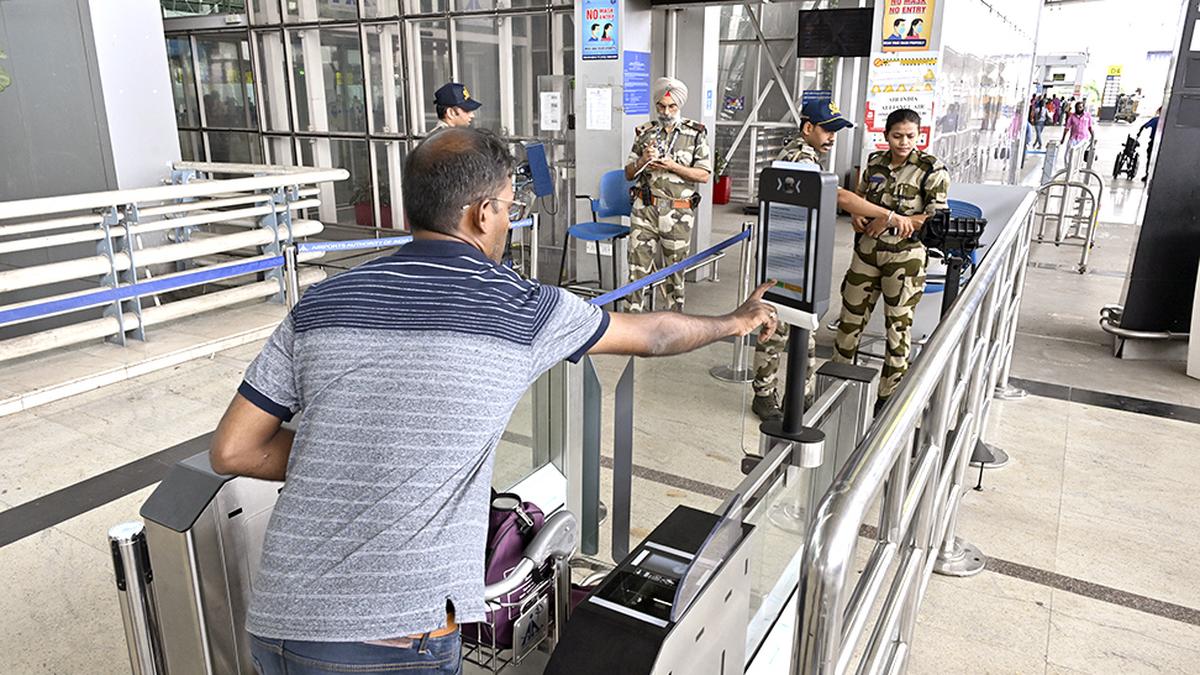
With the number of air passengers steadily growing India, transformative technologies like biometric-based Digi Yatra, AI-powered digital twins, integrated multi-modal transport systems, and Net Zero, LEED-certified terminals would shape airport experiences,  according to experts.

With the number of air passengers steadily growing India, transformative technologies like biometric-based Digi Yatra, AI-powered digital twins, integrated multi-modal transport systems, and Net Zero, LEED-certified terminals would shape airport experiences, according to experts.
| Photo Credit: VELANKANNI RAJ_B

With the number of air passengers steadily growing India, transformative technologies like biometric-based Digi Yatra, AI-powered digital twins, integrated multi-modal transport systems, and Net Zero, LEED-certified terminals would shape airport experiences, said experts.

They also stressed on the need to strengthen digital ecosystems to manage rising cybersecurity risks which has been identified as a crucial area of focus.

“India’s aviation growth presents a dual challenge—securing borders while easing the journey for millions of law-abiding passengers. In Mumbai alone, we clear 22,000–25,000 international travellers daily, averaging 10-minute customs clearance. Our aim is to cut this to 5 minutes,” said Joseph Gouda (IRS), Joint Director, Mumbai Customs while speaking at a round table discussion on “Reimagining airport passenger infrastructure through innovation, technology and sustainability” organised ahead of the Inter Passenger Terminal Expo 2025 by Media Fusion. 

“By adopting AI, ML, RFID, and Advanced Passenger Information systems, we are shifting from manual checks to smarter, targeted interventions. This transformation will make our infrastructure both more secure and passenger-friendly—essential for India’s aviation future,” he added.

Stating that India has transformed biometric travel with Digi Yatra, where one’s face becomes one’s boarding pass, Nitin Sharma, DVP – Business Development, of global security group dormakaba, said they were solving complex challenges—like group travel and one-click gate registration—while ensuring data privacy with automatic purging post-flight.

“Innovations like wider gates to prevent tailgating, now powered by AI and ML, were born from India’s unique needs and are setting global benchmarks. With under 10% of the population currently flying, we are preparing for exponential growth by scaling smart, cost-efficient technologies. India’s rapid pace of innovation is not only enhancing domestic operations but creating airport solutions the world is now adopting,” he said.

On the evolving airport infrastructure development in the country, Geetha Priya G, Senior Director – Infrastructure & Airports, JLL India said there was a need to build infrastructure that was resilient, adaptive and efficient. 

“Greenfield airports offer the luxury of blank canvas while brownfield sites push us to rethink with constraints for unique, smart and adaptive design solutions. The future lies in modular construction, digital first terminal cores that centralize operations, passenger movement and energy management.” 

“Early-stage collaboration is critical—drawing insights from operations, policy shifts, and tech trends helps avoid costly course corrections. We need a terminal design language rooted in sustainability, with built-in readiness for climate volatility, aging demographics, rapid digital changes and hybrid spaces that can handle intensity and downtime with equal ease. Aligning this vision with financial models that attract private investment is key to delivering infrastructure that’s future-ready and locally responsive,” she added.


Source link

ECB trims rates: Cuts benchmark rates by 25 bps amid Trump tariff risks; growth path now hinges on trade talks


ECB trims rates: Cuts benchmark rates by 25 bps amid Trump tariff risks; growth path now hinges on trade talks
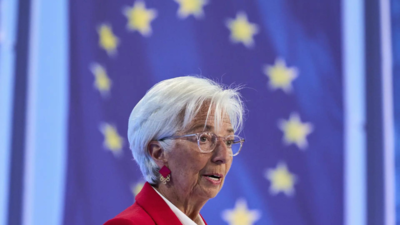
ECB President Christine Lagarde (AP)

The European Central Bank lowered its key interest rate by 25 basis points on Thursday, citing growing uncertainty from US trade threats and slowing eurozone momentum.In its eighth consecutive rate cut, the ECB reduced its benchmark rate to 2%, down from a recent high of 4%, as policymakers attempt to cushion the eurozone economy from the fallout of renewed trade tensions and sluggish domestic demand.The rate-setting council’s decision, announced at the ECB’s Frankfurt headquarters, comes after US President Donald Trump imposed fresh tariffs on European goods and threatened to raise them sharply in the absence of trade progress. Analysts had widely expected a rate cut, but uncertainty remains over how far the central bank will go in future meetings.According to the Associated Press, ECB President Christine Lagarde told reporters that upcoming monetary policy moves would depend heavily on geopolitical developments and the outcome of ongoing trade negotiations. “A further escalation in global trade tensions and associated uncertainties could lower euro area growth by dampening exports and dragging down investment and consumption,” she said. “By contrast, if trade and geopolitical tensions were resolved swiftly, this could lift sentiment and spur activity.Lagarde added that higher defence and infrastructure spending, along with productivity-enhancing reforms, could also support growth. European governments have ramped up military procurement in response to Russia’s war in Ukraine, partly amid concerns that the US may be pulling back from its commitment to support Kyiv.Despite Thursday’s move, Lagarde said the ECB was “not committing to a particular rate path,” reflecting the fluid outlook for both inflation and growth.The ECB had previously raised rates in 2021–23 to control a post-pandemic inflation spike exacerbated by the Ukraine conflict. With inflation now at 1.9%, just under its 2% target, the bank sees room to provide stimulus through cheaper credit.At the press conference, Lagarde also dismissed speculation from a Financial Times report that she may exit her role early to lead the World Economic Forum in Davos. “I can very firmly tell you that I have always been, and am, fully determined to deliver on my mission, and I’m determined to complete my term,” she said. “So I regret to tell you that you’re not about to see the back of me.” Her term as ECB president runs until October 31, 2027.Trump’s recent moves have rattled markets and policymakers across the bloc. The US president imposed a 20% tariff on EU goods and later threatened to double it to 50%, citing slow progress in talks with the EU’s executive commission. While both sides have agreed to hold off implementation and retaliation until July 14, the pause may be short-lived if negotiations stall.Separately, Trump this week raised steel tariffs from 25% to 50% for all countries except the UK, intensifying concerns of a broader global trade slowdown.The European Commission has already revised down its 2025 growth forecast for the region to 0.9%, from 1.3%, based on the assumption that the 20% US tariff might be negotiated down to no more than 10%.


Source link

US trade deficit narrows: Trade gap halves in April; China tensions keep outlook uncertain


US trade deficit narrows: Trade gap halves in April; China tensions keep outlook uncertain

A sharp drop in imports helped narrow the US trade deficit to its lowest in over two years, as sweeping tariffs imposed by President Donald Trump took effect across major global markets.The US trade deficit shrank to $61.6 billion in April, falling by more than 55% from March, according to government data released on Thursday. The pullback followed a record-high gap of $138.3 billion in March, when companies rushed to import goods ahead of expected tariff hikes.Imports tumbled 16.3% to $351 billion as Trump’s blanket 10% tariffs on nearly all trading partners came into force. The steepest declines were seen in consumer goods, with pharmaceutical and mobile phone imports dropping significantly.As reported by AFP, the data from the Commerce Department showed that exports in April rose 3% to $289.4 billion, driven by industrial supplies. However, automobile and auto part exports fell by $3.3 billion.Goods from China were most affected, with trade between the world’s two largest economies slowing sharply amid tit-for-tat tariff escalations that pushed levies on both sides past 100%. Shipments from China largely halted in April, before a temporary de-escalation agreement was reached.A phone call between Trump and Chinese President Xi Jinping is now expected to take place, raising hopes of further easing. But the outlook for a long-term trade deal remains unclear. Trump recently accused China of breaching the temporary accord, an allegation Beijing has denied.Alongside the 10% universal tariff, Trump also briefly announced steeper duties on dozens of countries, including the European Union and Japan, before pausing them to allow for negotiations. That pause is set to expire in early July.In addition to global levies, Trump has also imposed targeted tariffs on key sectors. Steel, aluminium, and automobile imports were hit with new duties in March and April, with rates on metals doubled again this month.The trade deficit reported in April was the smallest since early 2023, underscoring the immediate impact of the administration’s protectionist measures.


Source link

ITR filing FY 2024-25: Taxpayers take note! These 7 changes in new ITR forms excel utilities are important


ITR filing FY 2024-25: Taxpayers take note! These 7 changes in new ITR forms excel utilities are important

The income tax department has introduced new validation rules in the Excel-based ITR-1 and ITR-4 forms for FY 2024–25 (AY 2025–26), requiring more detailed disclosures at the time of filing — particularly from salaried taxpayers claiming deductions under the old tax regime. According to an ET report, experts say this shift to pre-validation aims to curb false claims and ensure quicker, more transparent return processing. Here are 7 key changes in excel utilities forms: 1. HRA claim now needs full salary and rent detailsTaxpayers claiming House Rent Allowance (HRA) exemption must now disclose their place of work, actual rent paid, actual HRA received, and salary break-up (basic salary and dearness allowance). They also need to indicate whether they live in a metro or non-metro city, as the exemption is based on 50% or 40% of the basic salary depending on location. These details are now mandatory in the ITR-1 form.2. Section 80C deduction requires policy number or IDTo claim deductions under Section 80C — which allows up to Rs 1.5 lakh on investments like PPF, tax-saving FDs, and life insurance — taxpayers must now provide the policy number or a valid document identification number. This move replaces earlier practice where only the deduction amount was reported, bringing more traceability and verification into the system.3. Section 80D needs insurer’s name and policy numberFor deductions on medical or health insurance premiums under Section 80D, taxpayers are now required to enter the name of the insurance company and the policy or document number in the return. This prevents unsupported claims and aligns deduction filings with insurance records.4. Section 80E asks for full education loan detailsTo claim interest deduction on education loans under Section 80E, taxpayers must provide detailed loan information. This includes the lender’s name, bank name, account number, date of sanction, total sanctioned amount, outstanding amount as on 31 March, and the interest paid. These fields are mandatory, and omission may prevent return submission.5. Section 80EE / 80EEA home loan claims need lender infoDeductions claimed for interest on home loans under Sections 80EE or 80EEA must now be supported with lender details, account numbers, sanction dates, loan amount, and outstanding balance. This ensures that housing-related deductions are verified against actual bank data and limits the scope for overlapping claims, such as HRA and home loan in the same city.6. Section 80EEB for loans needs sanction detailsTaxpayers claiming interest on loans for electric vehicles under Section 80EEB must disclose lender name, bank name, account number, loan sanction date, total loan amount, and remaining balance as on 31 March. The requirement mirrors the home and education loan fields and standardises loan-related disclosures across deduction categories.7. Section 80DDB needs disease name for medical claimsFor deductions under Section 80DDB — meant for treatment of specified diseases — the name of the disease being treated is now a compulsory field in the ITR form. This change is aimed at ensuring that medical deduction claims are specific and aligned with medical certification norms.Chartered Accountant Abhishek Soni, co-founder of Tax2Win, said the changes mark a move from post-filing scrutiny to real-time validation. “Previously, only deduction amounts were filled in. Now the ITR utility captures data upfront, which brings transparency,” he said.Gopal Bohra, Direct Tax Partner at N. A. Shah Associates LLP, explained that 276 validation rules are now active for ITR-1 and 347 for ITR-4. “If a required field is missing — such as a policy number or loan sanction date — the return won’t upload. The system will flag an error and halt the process,” he said.Ashish Niraj, Partner at A S N & Company, added that these fields are being introduced to stop deduction misuse. “Some taxpayers claimed HRA and home loan deductions for the same city. Now, fields like ‘place of work’ and lender details make cross-verification easier,” he said. “Only those with full, accurate documentation will be able to complete the filing.”


Source link

Anti-dumping duty to boost Bare PCB production: Ind-Ra


The imposition of a 30% anti-dumping duty (ADD) on bare printed circuit boards (BPCBs) will ‘meaningfully’ benefit domestic manufacturers in the short to medium term, India Ratings and Research (Ind-Ra) said. 

Since the duty was levied in March 2024 for a period of five years, BPCB manufacturers would continue to gain from the increase in imported PCB prices and have improved utilisation of their production capacities. 

The electronics industry, the main end-user, has had to brace with increased prices of 10%-15%. Although this is a short-term impact, the supply chain is expected to see a moderate structural shift in the medium to long run through setting up of capacities in India under the Make in India initiative, the rating agency said.

In the long term, the sustainability of these benefits will depend on resolving raw material supply chain challenges, particularly the continued reliance on copper-clad laminates (CCLs), which are predominantly imported from China, it added. 

Establishing local CCL manufacturing would enhance margins and improve supply chain resilience, it said.

“To strengthen India’s PCB manufacturing ecosystem, especially in light of ADD on BPCBs, it is essential to build a resilient raw material supply chain and capitalise on government-led incentive schemes,” said Abhash Sharma, Senior Director, Mid Corporates, Ind-Ra.


Source link

LIC raises stake in Dr. Reddy’s


In terms of number of shares, LIC had acquired more than 1.67 crore during this period, Dr. Reddy said in a filing.

In terms of number of shares, LIC had acquired more than 1.67 crore during this period, Dr. Reddy said in a filing.
| Photo Credit: Reuters

Life Insurance Corporation of India’s stake in Dr. Reddy’s Laboratories raced past the 8% mark recently with the country’s largest institutional investor acquiring an additional, more than 2% in the generic drugmaker since October 2024.

From about 6.20%, the holding increased to 8.21% in a period of less than eight months through open market purchases. In terms of number of shares, LIC had acquired more than 1.67 crore during this period, the Hyderabad-headquartered pharma major said in a filing.

Dr. Reddy’s shares closed 3.01% higher on Thursday at ₹1,289.90 apiece on the BSE.


Source link

TVS Motor board names Sudarshan Venu as chairman


TVS Motor Company Ltd. said its board has unanimously named Sudarshan Venu as incoming chairman of the company. Effective August 25, 2025, he will be appointed as chairman and managing director, the company said in a statement.

The current chairman, Sir Ralf Speth, had informed the board that he would not seek re-appointment as a company director at the upcoming annual general meeting (AGM). Consequently, he will step down as chairman at the close of the AGM on August 22, 2025. 

The board has decided to appoint Sir Ralf Speth as chief mentor of the company for a period of three years effective August 23, 2025. 

Venu Srinivasan, Chairman Emeritus, TVS Motor Company, said, “I express my sincere gratitude to Ralf for his exceptional leadership as chairman over the last three years. His contributions have been invaluable in guiding our strategic expansion into global markets and fostering innovation that has significantly strengthened our industry standing.”

“We are grateful for his continued support as chief mentor for TVS Motor and in welcoming Sudarshan into his new role. I am confident that Sudarshan, who in his capacity as Managing Director has demonstrated tremendous growth for the business, will take the Company to even greater heights,” he added.

Sir Ralf Speth, said, “It has been an honour for me to steer TVS Motor Company as its chairman over the last three years. As I hand over the chairmanship to Sudarshan, I am confident that under his leadership, the Company will continue its growth journey while championing core TVS values.”

Mr. Sudarshan Venu, said, “TVS has been built on our Chairman Emeritus’s commitment to customer centricity, quality and technology. As we look to the future we have to build on these values while capitalising on new opportunities and reimagining for the future. I am most grateful to him for his continued guidance.”


Source link