Business

What’s fuelling India’s next market leap? Sensex could hit 3 lakh by 2035, says Raamdeo Agrawal as compounding powers return


What’s fuelling India’s next market leap? Sensex could hit 3 lakh by 2035, says Raamdeo Agrawal as compounding powers return

As domestic money cushions corrections, veteran sees index doubling twice; points to compounding, macro strength and rising retail depth.The Indian equity market’s surprising ability to recover from every correction is no accident, says veteran investor Raamdeo Agrawal, who attributes the trend to the sustained flow of domestic capital. This resilience, he believes, will underpin a powerful compounding journey that takes the Sensex to 1.5 lakh by 2030 and 3 lakh by 2035.“We are getting whatever $50 to $100 billion flows continuously. So whatever you sell, there is support,” said Agrawal, Chairman and Co-founder of Motilal Oswal Financial Services. “It (inflows) does not allow it (market) to go down too much.”In an interview with ET Markets, Agrawal drew on four decades of historical data to justify his projection. “If you look at the last 45 years of history, the market has grown at a CAGR of 15%, which means double every five years. So now it is 80,000, I will say 1.5 lakh in five years. I am keeping 10,000 in my pocket (just to be safe). In 2030, it will be 1.5 lakh and in 2035, it will be 3 lakh.”Recalling the early days of his investing journey, he said, “When I bought my first stock in 1980, Sensex was at 100. And now it is at 80,000. So it is up 800 times at a CAGR of 16%. That’s the history.”Some may question whether the index can continue doubling at higher base levels, but Agrawal argues the global backdrop supports such growth. “See the world economy, which was, let’s say, $25 trillion in 1995, is about $115 trillion now. The world is growing at 5%, and even gold will double in 15 years. The economy will grow to $250 trillion in 2040. In that incremental growth, we will get around $10 trillion in the next 25 years.Agrawal urges investors to build a forward-looking mindset. “While picking stocks, you will have to look at 2035. You will not be able to recognise the market in 2035. It is going to become so big.”He pointed to Reliance Industries as a striking case of long-term compounding. “Reliance was a Rs 20,000 crore company in 2003–04. Today, it is a Rs 20 lakh crore company. That’s compounding which allows you to see the future approximately. That’s 99%, but a lot can happen in that remaining 1%.”“Half the time, the future will be better than what you are thinking. Half the time, it will be worse. Your job is to figure out that you end up being on the right side most of the time.”Agrawal outlined four big investment themes for the next decade:

  • Quick commerce: He believes this segment could unlock a $1 trillion opportunity. “Quick commerce is taking India by storm as everyone wants groceries and all other products home delivered. Who wants to carry a bag to buy stuff?” He estimates that $700–800 billion of that market value may be addressed despite catering to just 20% of the population.
  • Capital markets boom: The financialization of savings is driving participation. “There is a boom in capital markets,” he said, pointing to buzz around a possible NSE IPO. “It can be big as it is the mother of all capital market entities.”
  • Energy transition: Solar and wind energy, once distressed sectors, have turned around dramatically. “They were once in bankruptcy stage and look at them now!”
  • Manufacturing: Agrawal sees a nationwide shift as states woo industry. “This is a trend which started from Gujarat and now it is all over the country.”

Still, he advised caution: “These are tail-winded industries. Just because there is a tailwind, you cannot make money. You have to buy it at the right price.”On market structure, Agrawal said promoters hold about 50%, foreign institutional investors 17%, and the rest lies with domestic institutions and retail investors. “FIIs have options—they can go to Korea, China, Russia. So, they are net sellers marginally. These [domestic] guys are continuous buyers.”He said this trend reflects a maturing market. “As you become a developed country, it happens. By 2047, promoters will be as low as 5–10%.”Looking at India’s broader journey, Agrawal said, “At that time our economy was very weak. About 97% of people were below the poverty line and now only 20–30% people are below the poverty line. Today we are self-dependent on food and forex.”He added, “Just imagine if you are a poor man and your son has qualified to become a CA. What will he do now? We will beat the world. There is no corporation (globally) where there are no Indians.”Despite all uncertainties, he remains convinced: “Overall the market will keep growing at that 15%. I still see the index doubling in the next five years.”


Source link

Big defence boost! Rafale fighter aircraft fuselages to be made by Tata & Dassault in India; first time outside France


Big defence boost! Rafale fighter aircraft fuselages to be made by Tata & Dassault in India; first time outside France
Tata Advanced Systems will establish an advanced manufacturing facility in Hyderabad.

In a boost for ‘Make in India’ defence projects, Rafale fighter aircraft fuselage will now be manufactured by Tata Advanced Systems in the country. Tata Advanced Systems has entered into four Production Transfer Agreements with Dassault Aviation for manufacturing Rafale fighter aircraft fuselages in India, marking the first instance of these components being produced outside of France.According to Dassault, this substantial investment will establish a crucial centre for precision manufacturing within India’s aerospace sector.The collaboration involves Tata Advanced Systems establishing an advanced manufacturing facility in Hyderabad. This unit will produce essential structural components of the Rafale, comprising the lateral shells of the rear fuselage, complete rear section, central fuselage and front section, according to an ET report.Also Read | India’s defence exports surge to record high of Rs 23,622 crore in FY25; 34-fold increase from 2013-14The fuselage is the central body structure of an aircraft that serves as the main housing unit. It consists of a long hollow cylindrical structure that connects various components of the aircraft whilst maintaining minimal weight through its hollow construction. The specific design of the fuselage varies based on the aircraft’s intended purpose.The fuselage sections are scheduled to begin production in FY2028, with the facility aiming to produce two complete fuselages monthly.Eric Trappier, Chairman and CEO of Dassault Aviation, said: “This is a decisive step in strengthening our supply chain in India. Thanks to the expansion of our local partners, including TASL, one of the major players in the Indian aerospace industry, this supply chain will contribute to the successful ramp-up of the Rafale, and, with our support, will meet our quality and competitiveness requirements”.Sukaran Singh, Chief Executive Officer and Managing Director, Tata Advanced Systems Limited, said, “This partnership marks a significant step in India’s aerospace journey. The production of the complete Rafale fuselage in India underscores the deepening trust in Tata Advanced Systems’ capabilities and the strength of our collaboration with Dassault Aviation. It also reflects the remarkable progress India has made in establishing a modern, robust aerospace manufacturing ecosystem that can support global platforms.The collaboration intends to bolster India’s standing in the international aerospace manufacturing network, whilst advancing its objective of economic independence, according to Dassault.Also Read | ‘Make in India’ defence boost: Advanced version of BrahMos missile may be manufactured in Uttar Pradesh; India & Russia begin talks


Source link

Dr. Reddy’s, Alvotech to co-develop, market biosimilar of Merck’s cancer drug Keytruda  


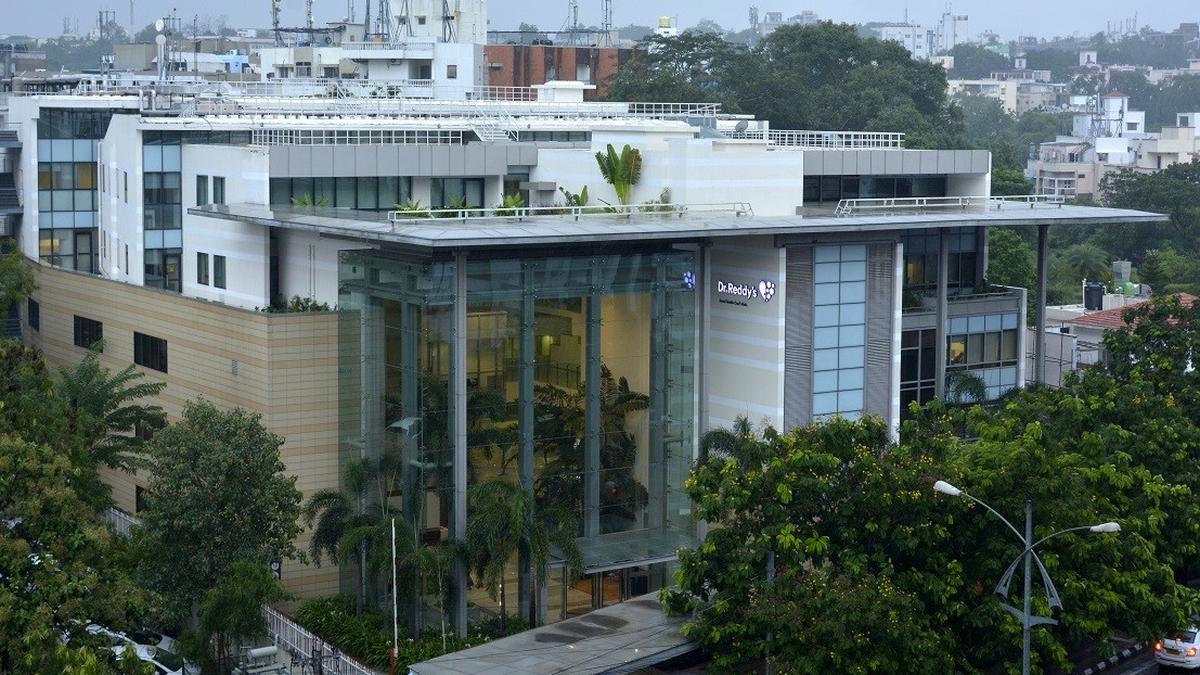
Dr. Reddy’s headquarters in Hyderabad

Dr. Reddy’s headquarters in Hyderabad
| Photo Credit: Arrangement

Pharma major Dr. Reddy’s Laboratories and Nasdaq-listed global biotech firm Alvotech will co-develop, manufacture and commercialise a biosimilar candidate to Merck’s cancer drug Keytruda (pembrolizumab) for global markets.

They will be jointly responsible for developing and manufacturing the biosimilar candidate and sharing costs as well as the responsibilities. “Subject to certain exceptions, each party will have the right to commercialise the product globally,” Dr. Reddy’s and Alvotech said on Thursday (June 5, 2025) in a joint statement announcing the signing of a licence agreement.

The collaboration will combine their proven capabilities in biosimilars thus speeding up the development process and extending global reach for the biosimilar candidate. A registered trademark of Merck Sharp & Dohme Corp, Keytruda is indicated for the treatment of numerous cancer types. In 2024, the worldwide sales of Keytruda were $29.5 billion.

Oncology top focus therapy

“Oncology has been a top focus therapy area for us and this collaboration will further enhance our capabilities in oncology, as pembrolizumab currently represents one of the most critical therapies in immuno-oncology,” Dr. Reddy’s CEO Erez Israeli said.

Alvotech chairman and CEO Robert Wessman said “we are pleased to enter into this collaboration for pembrolizumab with Dr. Reddy’s. This agreement demonstrates Alvotech’s ability to leverage its dedicated R&D and manufacturing platform for biosimilars, accelerating the expansion of our pipeline by pursuing growing global markets.”


Source link

Eternal share price jumps nearly 6%; Zomato parent among top Sensex gainers; check why the stock is rallying today


Eternal share price jumps nearly 6%; Zomato parent among top Sensex gainers; check why the stock is rallying today

NEW DELHI: Shares of Eternal Ltd, the parent company of food delivery platform Zomato, surged nearly 6% on Thursday, extending its two-day rally to over 8%. The upward momentum followed Morgan Stanley reaffirming the company as its top sector pick. The brokerage firm kept its target price at Rs 320, suggesting a possible 33% upside from current levels. It also set a lower range of Rs 200-220, calling the stock a “compelling risk-reward profile” for long-term investors.At 12:30 PM, Eternal was trading at Rs 258.93, a 5.39% gain from its previous close of Rs 245.68. By 11:40 AM, it was trading at Rs 259.10 on BSE, up Rs 13.60 or 5.54%, while on NSE, it stood at Rs 259.49, rising Rs 13.81 or 5.62%.The shares opened at Rs 247.30 on the BSE and hit a high of Rs 260.15. On the NSE, they started at Rs 248.00 and climbed to Rs 260.22 during early trading hours.Over the past three months, Eternal has gained 14%, though it remains 7% down year-to-date. The company’s market capitalisation currently stands at Rs 2.49 lakh crore.In its Q4 earnings report, Eternal posted a 77.7% year-on-year drop in consolidated net profit to Rs 39 crore, compared to Rs 175 crore in the same period last year.The company’s operational revenue demonstrated substantial growth, increasing by 63.8% to reach Rs 5,833 crore, up from Rs 3,562 crore in Q4FY24. The company maintains its position on the Nifty50 index with a market capitalisation of Rs 2.49 lakh crore. The share price currently stands between its 52-week parameters, above the lowest point of Rs 146.30 but beneath the peak of Rs 304.70.BSE Sensex, rose by 197.83 points to reach 81,196.08 when trading began on Thursday. Similarly, the NSE Nifty registered an increase of 71 points, reaching 24,691.20.Among the Sensex companies, notable gainers included Eternal, Power Grid, Reliance Industries, Sun Pharm, Mahindra & Mahindra, HCL Tech, Adani Ports and NTPC. On the other hand, companies such as Bajaj Finance, Bajaj Finserv, Nestle and Hindustan Unilever experienced declines in their share values.


Source link

Vande Bharat from Katra to Srinagar: New Indian Railways trains on USBRL via Chenab bridge to start from this date; check full schedule, stoppages & train numbers


Vande Bharat from Katra to Srinagar: New Indian Railways trains on USBRL via Chenab bridge to start from this date; check full schedule, stoppages & train numbers
Kashmir will finally get all-weather railway connectivity with the rest of India.

Udhampur-Srinagar-Baramulla Railway Link: Prime Minister Narendra Modi will inaugurate the 272 kilometres long Udhampur-Srinagar-Baramulla Railway Link (USBRL) project in Jammu & Kashmir on June 6. As part of the launch, PM Modi will inaugurate the Chenab railway bridge, Anji Khad railway bridge and flag off two pairs of new Vande Bharat train services as well.With this inauguration, Kashmir will finally get all-weather railway connectivity with the rest of India.Indian Railways will commence regular operations of the two new Vande Bharat Express trains to Kashmir from June 7, 2025 – a day after PM Modi’s inauguration of train services to Kashmir.The two Vande Bharat Express trains will run six days in a week. To begin with, train services will start from Shri Mata Vaishno Devi Katra to Srinagar. This is because the Jammu Tawi railway station is currently undergoing redevelopment work under the Amrit Bharat station scheme. Once that is completed, the Vande Bharat Express train services will extend up to Jammu from Srinagar.

Vande Bharat Express for Kashmir: Schedule of Train Number 26401/26402

  • Train number 26401 will leave the Shri Mata Vaishno Devi Katra railway station at 8:10 AM to reach Srinagar railway station at 11:08 AM, taking less than 3 hours. En route it will halt at the Banihal railway station at 9:58 AM.
  • In the return direction, train number 26402 will depart from the Srinagar railway station at 2:00 PM to end its journey at Katra railway station at 4:48 PM, again taking less than 3 hours between the two stations. It will stop at Banihal railway station at 3:10 PM.
  • These two train services will run on all days of the week except Tuesday.

Vande Bharat Express for Kashmir: Schedule of Train Number 26403/26404

  • Train number 26404 will start from Srinagar railway station at 8:00 AM in the morning to reach Shri Mata Vaishno Devi Katra railway station at 10:58 AM, taking a total of 2 hours and 58 minutes. En route the train will stop at Banihal at 9:02 AM.
  • On the return journey, train number 26403 will commence its journey from Katra at 2:55 PM to reach Srinagar railway station at 5:53 PM taking a total of 2 hours and 58 minutes for the journey. It will stop at Banihal railway station en route at 4:40 PM.
  • These two train services will run on all days of the week except Wednesday.

Indian Railways Udhampur–Srinagar–Baramulla Rail LinkThe Udhampur–Srinagar–Baramulla Rail Link (USBRL) stands as one of independent India’s most significant Indian Railways projects. This remarkable 272-kilometre railway network, constructed at ₹43,780 crore, traverses the challenging Himalayan terrain.The railway line comprises 36 tunnels extending across 119 kilometres, alongside 943 bridges that connect various valleys, ridges and mountain passes. This engineering achievement provides vital rail connectivity to isolated regions, whilst fostering enhanced transportation, commerce and tourism opportunities throughout Jammu and Kashmir.Two of the most important bridges on this stretch are the Chenab bridge and Anji Khad bridge. Chenab railway bridge is the world’s highest railway arch bridge and Ani Khad is Indian Railways’ first cable-stayed bridge.The Vande Bharat Express being put to service on the Jammu-Srinagar route is specifically engineered to withstand severe winter conditions in the Himalayan region. The train maintains efficient functionality at temperatures dropping to minus 20 degrees Celsius. The incorporation of heated windscreens, sophisticated heating mechanisms and thermally insulated lavatories will ensure year-round operations whilst maintaining passenger comfort.


Source link

Hyundai Motor exits Ola Electric; sells 2.47% stake for ₹552 crore


Hyundai exits Ola Electric Mobility by selling stake in the company for ₹552 crore.

Hyundai exits Ola Electric Mobility by selling stake in the company for ₹552 crore.
| Photo Credit: Reuters

South Korean automaker Hyundai Motor Company on Tuesday (June 3, 2025) exited Ola Electric Mobility by selling its entire 2.47% stake in the company for ₹552 crore through an open market transaction.

According to the bulk deal data available on the National Stock Exchange (NSE), Hyundai Motor Company sold more than 10.88 crore shares or 2.47% stake in Bengaluru-based Ola Electric Mobility.

The shares were disposed of at an average price of ₹50.70 apiece, taking the transaction value to ₹551.96 crore.

In a separate transaction, Kia Corporation, a part of global Hyundai-Kia Automotive Group, also offloaded over 2.71 crore shares, representing a 0.62% stake in Ola Electric Mobility.

The shares were sold by Kia Corporation at an average price of ₹50.55 per piece, taking the deal value to ₹137.35 crore.

Meanwhile, Citigroup Global Markets Mauritius purchased over 8.61 crore shares, amounting to a 1.95% stake in Ola Electric Mobility for ₹435 crore.

The shares were acquired at an average price of ₹50.55 apiece. This took the deal value to ₹435.47 crore.

Details of the other buyers of Ola Electric Mobility’s shares could not be ascertained on the NSE.

The scrip of Ola Electric Mobility declined 7.58% to close at ₹49.61 apiece on the NSE.

Last week, Ola Electric reported a consolidated net loss of ₹870 crore for the fourth quarter ended March 31, 2025, while noting that it is targeting profitability in the current fiscal.

The company had reported a net loss of ₹416 crore in the January-March quarter of the 2023-24 fiscal.

The revenue from operations declined to ₹611 crore compared to ₹1,598 crore in the year-ago period, the company said.

For FY25, the company reported a net loss of ₹2,276 crore against ₹1,584 crore in the 2023-24 fiscal. Its revenue from operations declined to ₹4,514 crore against ₹5,010 crore in FY24, it added.


Source link

Adani Group’s tax payments rises 29% to nearly Rs 75,000 crore in FY25; from Rs 58,104 crore in FY24; includes both direct & indirect taxes


Adani Group's tax payments rises 29% to nearly Rs 75,000 crore in FY25; from Rs 58,104 crore in FY24; includes both direct & indirect taxes

NEW DELHI: Adani Group announced on Thursday that it paid nearly Rs 75,000 crore in taxes in FY2024-25, marking a 29% increase from the previous year. The Adani Group said its listed companies contributed Rs 74,945 crore to the exchequer in FY2024-25, up 29% from Rs 58,104 crore in the previous year. This total includes direct and indirect taxes, along with payments made towards employee social security.“For fiscal year 2025 (April 2024 to March 2025 financial year), the Adani Group’s total contribution to the exchequer increased by 29 per cent to Rs 74,945 crore, from Rs 58,104 crore in FY 2023-24, through its portfolio of listed entities,” it said in a statement.The tax contribution of Rs 74,945 crore in FY25 equals the construction cost of Mumbai’s entire Metro network, which serves millions of commuters daily. This amount would also be sufficient to organise a contemporary Olympics event.The total contribution comprises Rs 28,720 crore in direct contributions, Rs 45,407 crore in indirect contributions, and Rs 818 crore in other contributions.Among the publicly listed companies, the primary contributors include Adani Enterprises Limited (AEL), Adani Cement Limited (ACL), Adani Ports and Special Economic Zone (APSEZ), and Adani Green Energy Limited (AGEL).“The details are covered in the independent annual reports published by seven of the group’s listed entities – Adani Enterprises Limited, Adani Ports and Special Economic Zone Limited, Adani Green Energy Limited, Adani Energy Solutions Limited, Adani Power Limited, Adani Total Gas Limited, and Ambuja Cements Limited,” the statement said.The figures include taxes from three additional listed companies – NDTV, ACC, and Sanghi Industries – which are owned by the seven primary entities. The group has published a document titled ‘Basis of Preparation and Approach to Tax’ on its seven entities’ websites, providing detailed information about the group’s global tax and other contributions.The document details direct contributions including global taxes and duties, indirect contributions comprising taxes collected and paid for stakeholders, and additional contributions like employee social security benefits.“Adani Group considers tax transparency as an integral part of its broader ESG framework. Through this voluntary initiative, the Group aims to demonstrate its commitment to transparency, foster stakeholder trust, and contribute to a more accountable global tax environment. The group strives to harmonise growth with social responsibility, aiming to transform India’s infrastructure landscape while promoting innovation and creating long-term value for stakeholders,” the statement added.


Source link

Eid al-Adha holiday 2025: Are banks and stock market open or closed on June 6 & 7? Check what’s open for Bakrid


Eid al-Adha holiday 2025: Are banks and stock market open or closed on June 6 & 7? Check what's open for Bakrid

NEW DELHI: Eid al-Adha, also known as Bakrid or Eid ul-Zuha, is expected to be celebrated in India on Friday, June 7, depending on the sighting of the crescent moon.The day is likely to be observed as a public holiday across most parts of the country. Schools, colleges, banks, and government offices are expected to remain closed to mark the occasion.

Eid al-Adha: Will banks be open or closed on the occasion?

Banks in several parts of India will be closed for two days this week in observance of Eid al-Adha (Bakrid), according to the RBI holiday calendar.

  • June 6 (Friday): Banks in Thiruvananthapuram and Kochi will be closed for Bakrid.
  • June 7 (Saturday): Most banks across India will remain closed, except in Ahmedabad, Gangtok, Itanagar, Kochi, and Thiruvananthapuram, where they will operate as usual. These cities stay open because it’s the first Saturday, which is not a bank holiday.
  • June 8 (Sunday): All banks across the country will be closed due to the regular weekly holiday.

Are NSE and BSE open or closed?

The Indian stock market (NSE & BSE) will remain open on both June 6 (Friday) and June 7 (Saturday). Both exchanges will follow their standard operating schedule as per their holiday calendar.

Will digital banking services be available?

Meanwhile, digital banking services like mobile banking, net banking, UPI, and IMPS will continue to work as usual, even if bank branches are closed in some areas. Customers can carry out all online transactions without any disruption.Essential services such as NEFT/RTGS transfers, demand draft processing, cheque book requests and card-related operations will remain available through digital channels, despite the bank holidays.


Source link

Rupee falls 9 paise to 85.96 against U.S. dollar in early trade


Image for representational purposes only.

Image for representational purposes only.
| Photo Credit: R. Ragu

The rupee depreciated 9 paise to 85.96 against the U.S. dollar in early trade on Thursday (June 5, 2025), weighed down by dollar demand from foreign investors, oil companies, and importers.

Forex traders said market participants are now keenly awaiting the outcome of the Reserve Bank of India’s monetary policy meeting for further cues.

The Reserve Bank’s rate-setting panel started its three-day brainstorming on monetary policy on Wednesday (June 4, 2025), and the outcome is scheduled to be announced on June 6.

At the interbank foreign exchange, the rupee opened at 85.86 and slipped further by 9 paise to 85.96 against the American currency in early trade over its previous close.

On Wednesday, the rupee depreciated for the second consecutive session and settled for the day lower by 26 paise at 85.87 against the U.S. dollar.

Meanwhile, the dollar index, which gauges the greenback’s strength against a basket of six currencies, was trading higher by 0.07% at 98.85.

Brent crude, the global oil benchmark, declined 0.14% to $64.77 per barrel in futures trade.

“The Indian rupee weakened past the 86 mark against the U.S. dollar, driven by a storm of global risk aversion and importer demand for dollars. Moreover, the sentiment remained fragile ahead of the central bank’s policy review,” CR Forex Advisors MD Amit Pabari said.

Meanwhile, the Russia-Ukraine tensions flared up once again, pushing Brent crude higher to $65.70 per barrel. For India, which is a net oil importer, this spells trouble, Mr. Pabari added.

In the domestic equity market, the 30-share BSE Sensex climbed 417.96 points or 0.52% to 81,416.21, while the Nifty rose 125.05 points, or 0.51%, to 24,745.25.

Foreign institutional investors (FIIs) purchased equities worth ₹1,076.18 crore on a net basis on Wednesday, according to exchange data.


Source link

Gold & silver price prediction today: What’s the gold rate outlook for June 5, 2025 – should you buy or sell?


Gold & silver price prediction today: What's the gold rate outlook for June 5, 2025 - should you buy or sell?
Gold rates and silver rates have been volatile in the last few weeks. (AI image)

Gold and silver price prediction: Gold rates and silver rates have been volatile in the last few weeks, though recently there are signs of MCX Gold and MCX Silver rising. Precious metal prices are affected by worldwide geopolitical developments and market sentiment shifts following Donald Trump’s tariff-related rulings. What’s the outlook for gold and silver prices and what should investors do? Abhilash Koikkara, Head – Forex & Commodities, Nuvama Professional Clients Group shares his views:MCX Gold OutlookMCX Gold has recently surpassed its previous swing high of ₹97,700 (August 2025), signalling a bullish breakout from a falling channel pattern. This technical shift marks the end of a series of lower highs and lower lows, indicating a potential trend reversal. The immediate resistance is at ₹99,900, the all-time high, with crucial support at ₹97,650.This bullish momentum is supported by factors such as safe-haven demand amid geopolitical tensions and volatility in the US dollar index. Additionally, expectations of a rate cut by the US Federal Reserve have further bolstered investor sentiment, contributing to gold’s upward trajectory.In summary, MCX Gold’s recent breakout above ₹97,700 suggests a shift towards a bullish trend, with the all-time high of ₹99,900 serving as the next target. Investors should monitor support at ₹97,650 for potential reversals.MCX Gold Trading StrategyCMP: Rs 98,930Target: Rs 99,900Stoploss: Rs 97,650MCX Silver OutlookMCX Silver has recently surged to an intraday high of ₹101,500 per kilogram, extending its rally towards the ₹103,700 mark. This upward movement not only signifies a potential breakout above its previous all-time high of ₹100,444 but also sets the stage for a new record if the momentum persists. Should prices sustain above ₹103,700, the next immediate target is ₹105,000.The bullish trend is underpinned by a confluence of factors, including heightened safe-haven demand amid global economic uncertainties, a declining US dollar index, and expectations of a potential rate cut by the US Federal Reserve. Additionally, silver’s industrial applications and investment appeal have contributed to its robust performance.Technically, the overall bias remains firmly positive, with support at ₹99,700. A failure to maintain above this level could lead to a retest of lower support zones. However, as long as prices hold above ₹99,700, the bullish outlook remains intact, with potential for further gains towards ₹105,000 and beyond.MCX Silver Trading StrategyCMP: Rs 1,01,500Target 1: Rs 1,03,700Target2: Rs 1,05,000Stoploss: Rs 99,700(Disclaimer: Recommendations and views on the stock market and other asset classes given by experts are their own. These opinions do not represent the views of The Times of India)


Source link