Business

NCLAT halts insolvency proceedings against Reliance Infrastructure


NCLAT halts insolvency proceedings against Reliance Infrastructure

In a significant relief for Reliance Infrastructure, the National Company Law Appellate Tribunal (NCLAT) on Wednesday stayed the insolvency proceedings initiated against the company.In a regulatory filing, Reliance Infrastructure confirmed that the appellate tribunal has suspended the earlier order passed by the National Company Law Tribunal (NCLT), Mumbai, reported PTI.“In the appeal filed, the NCLAT, today has suspended the Order dated May 30, 2025 passed by National Company Law Tribunal, Mumbai in case no. C.P. (IB)/624(MB)2022, admitting the company into Corporate Insolvency Resolution Process,” the company stated.On May 30, the Mumbai bench of the NCLT had admitted an insolvency plea filed by IDBI Trusteeship Services Ltd against Reliance Infrastructure.The plea was contested by Reliance Infra, which argued that the entire amount of Rs 92.68 crore had already been paid to Dhursar Solar Power Pvt Ltd against tariff claims, rendering the insolvency petition infructuous.“The company has made full payment of Rs 92.68 crore to Dhursar Solar Power Private Limited, towards claim of tariff as per the Energy Purchase Agreement with the company,” Reliance Infra said in a stock exchange filing dated June 2.The dispute traces back to April 2022, when IDBI Trusteeship filed a petition seeking to initiate a Corporate Insolvency Resolution Process (CIRP) against Reliance Infrastructure, alleging a default of Rs 88.68 crore as of August 28, 2018, along with interest.The default related to ten invoices issued between 2017 and 2018 by Dhursar Solar Power Private Ltd (DSPPL) for the supply of solar energy to Reliance Infrastructure. IDBI Trusteeship, as the security trustee for DSPPL, was seeking repayment of those dues.


Source link

Strong export orders drive May services PMI to three-month high of 58.8


Representational file image.

Representational file image.
| Photo Credit: V. Raju

India’s services sector activity rose marginally to a three-month high in May 2025, driven by strong exports, according to a private sector survey.

The HSBC India Services PMI® Business Activity Index for May came in at 58.8, up from 58.7 in April. The reading for May marks the second consecutive month of increased activity. A reading above 50 denotes an expansion in activity, while one below 50 implies a contraction.


Also read | India-Pakistan conflict, inflation drag May PMI to three-month low of 57.6

“A key area of strength was exports, with survey participants reporting one of the strongest improvements in international demand in 19-and-a-half years of data collection,” the report said. 

The report further said that May’s survey also revealed a record increase in employment, as services firms continued to adjust their operating capacities in line with ongoing increases in sales.

“To keep up with swelling demand, India’s service providers heavily increased staff recruitment,” Pranjul Bhandari, Chief India Economist at HSBC said. “Indeed, the employment index rose to the highest reading ever recorded by this survey. Meanwhile, price pressures continued to intensify with input prices and charged prices both rising last month.”

The uptick in services activity comes at a time when the May PMI for manufacturing fell to a three-month low, dragged down by the India-Pakistan conflict and cost inflation. 


Source link

Vedanta to raise Rs 5,000 crore via NCDs; offers up to 9.45% coupon


Vedanta to raise Rs 5,000 crore via NCDs; offers up to 9.45% coupon

The Mumbai-listed metals conglomerate, Vedanta Ltd, currently undergoing a revenue stream-wise demerger, is set to raise up to Rs 5,000 crore through a private placement of debt instruments with leading mutual funds, insurers, and alternative investment funds (AIFs), according to sources familiar with the development.The company will issue secured non-convertible debentures (NCDs) in two tenures, with a base issue size of Rs 4,100 crore and a green shoe option, confirmed a Vedanta spokesperson, according to an ET report. “The unsecured NCDs will have a base issue of Rs 4,100 crore along with a green shoe option that allows the company to raise up to a total of Rs 5,000 crore,” the spokesperson added.Vedanta is offering a coupon of around 9.35% for its 2.5-year NCDs and 9.45% for the 3-year tranche, significantly higher than India’s two-year and three-year sovereign bond yields, which are currently in the 5.7–5.7250% range.The issue is structured into three series:

  • Series I: Rs 2,250 crore with a green shoe option of Rs 750 crore
  • Series II: Rs 1,000 crore with a green shoe option of Rs 750 crore
  • Series III: Rs 850 crore with no green shoe option

The total amount across all three series will not exceed Rs 5,000 crore. The NCDs have staggered maturities ranging from 2.5 to 3 years. Series I will mature on December 3, 2027, Series II on June 5, 2028, and Series III on June 4, 2027.Proceeds from the issuance will be used for general corporate purposes, including repayment or prepayment of existing debt and capital expenditure requirements. The issue opens and closes on June 4.Anchor investors include ICICI Prudential Mutual Fund, Aditya Birla Sun Life Mutual Fund, Kotak Mahindra Mutual Fund, Axis Mutual Fund, Reliance General Insurance Company, Aseem Infrastructure Finance, and Alpha Alternatives Financial Services, according to one of the sources cited.The NCDs also feature a coupon adjustment mechanism based on credit rating changes. A downgrade of the issuer or instrument rating from AA to A+ or below will trigger a Step-Up Event, resulting in a higher coupon. Conversely, an upgrade after such a downgrade will initiate a Step-Down Event, reducing the coupon. However, upgrades from A+ to AA- will not trigger a step-down.


Source link

Chinese AI gains reshape global AI race in Q1 2025: Report


Chinese AI gains reshape global AI race in Q1 2025: Report

Chinese artificial intelligence advancements emerged as a major driving force in shaping the global AI landscape during the first quarter of 2025, according to a new report from Artificial Analysis, an independent AI benchmarking and insights provider.While the United States continues to dominate in reasoning models—with the top four spots on the Artificial Analysis Intelligence Index held by US labs—China has taken the lead in non-reasoning categories. The report notes that DeepSeek V3 0324 currently stands as the leading non-reasoning model, marking a significant milestone for Chinese AI labs, ANI reported.“The rise of Chinese AI Labs marked a notable shift in global competition. Chinese entities released models that rivalled US counterparts, particularly in open-weight models, with DeepSeek V3 0324 leading in non-reasoning categories,” the report highlights.Labs outside the US and China have made progress but are not yet contenders in the frontier intelligence space, the report adds.The global AI landscape remains highly dynamic, with continual progress driven by key players such as OpenAI, Google, and others. OpenAI’s o4-mini (high) has maintained its lead in overall performance, but competitors like Google’s Gemini 2.5 Pro and xAI’s Grok 3 have significantly narrowed the gap, intensifying the competition among top labs.Reasoning models, which solve problems by generating intermediate steps before reaching an answer, are identified in the report as a critical frontier. Their widespread adoption across major labs has yielded meaningful gains in intelligence and problem-solving capabilities.Artificial Analysis also points to technological shifts that have drastically reduced costs. The adoption of Mixture of Experts (MoE) architectures, smaller model designs, optimized inference, and new hardware have led to a more than 32-fold drop in AI inference costs since September 2024, and over 1000-fold since the launch of GPT-4 in 2023. These efficiencies are rapidly making high-performance AI more accessible.Multimodal AI has also made significant strides, particularly in image and audio processing. OpenAI’s GPT-4o set new quality benchmarks in image generation, while text-to-speech capabilities across the board became increasingly lifelike, enhancing the naturalness of AI dialogue.Taken together, these trends signal a quarter marked by accelerated innovation, expanding access, and heightened global competition in the AI sector.


Source link

India “vehemently opposed” ADB’s latest funding to Pakistan


On June 3, 2025, the ADB announced that it had approved funding of $800 million to Pakistan under its Resource Mobilisation Reform Programme. File.

On June 3, 2025, the ADB announced that it had approved funding of $800 million to Pakistan under its Resource Mobilisation Reform Programme. File.
| Photo Credit: Reuters

In continuation of its efforts in various multinational fora to curb funding to Pakistan, the Indian government “vehemently opposed” the Asian Development Bank’s latest decision to provide additional funding to Pakistan, saying that that country’s increased military spending cannot fully be explained through domestic resource mobilisation, according to government sources.

In addition, India has told the ADB that it expects the multilateral bank’s management to “adequately ring-fence the ADB financing, to prevent any such misuse”.

On Tuesday (June 3, 2025), the ADB announced that it had approved funding of $800 million to Pakistan under its Resource Mobilisation Reform Programme.

“India cautioned the ADB regarding the possibility of misuse of its resources,” according to government sources. “The linkage between Pakistan’s increase in expenditure on its military, as opposed to on development, cannot be fully explained solely in terms of its domestic resource mobilisation.”

The source further said that India pointed out to the ADB that Pakistan’s tax collection as a percentage of its GDP fell from 13% in 2017-18 to 9.2% in 2022-23 and continues to remain way lower than the Asia and Pacific average of about 19.0%. 

However, India highlighted that there has been “a significant increase” in Pakistan’s defense spending during the same period. 

The Hindu has previously reported on how Finance Minister Nirmala Sitharaman had lobbied strongly with the International Monetary Fund and its members, too, to stop additional funding to Pakistan, and how India would be sending a dossier to the Financial Action Task Force (FATF) to re-include Pakistan on the ‘grey list’ of countries that warranted greater supervision.

India expressed strong reservations about Pakistan’s existing governance system to the ADB, the source added. 

“The progress on implementation of the most critical FATF action items relating to terrorist financing investigations and prosecution of leaders of UN-designated terrorist groups and freezing and confiscation of criminal assets is highly unsatisfactory,” the source said.


Source link

Global stock markets rise as political shift in South Korea and US tariff hopes boost sentiment


Global stock markets rise as political shift in South Korea and US tariff hopes boost sentiment

Stocks advanced across Europe and Asia on Wednesday, tracking gains on Wall Street as optimism grew around easing trade tensions and political developments in South Korea. US futures also pointed higher, with investors eyeing key economic data later in the week.In Europe, Germany’s DAX climbed 0.9 per cent to 24,309.65, while France’s CAC 40 rose 0.7 per cent to 7,819.43. The UK’s FTSE 100 edged up 0.1 per cent to 8,798.65. Futures for the S&P 500 and the Dow Jones Industrial Average each advanced 0.2 per cent in early trading.In Asia, South Korea’s Kospi led regional gains, surging 2.7 per cent to 2,770.84, after liberal opposition candidate Lee Jae-myung was elected president. Lee’s win follows a turbulent political period that saw the ousting of conservative leader Yoon Suk Yeol after a controversial but short-lived imposition of martial law, according to an AP report.“Regardless of his political roots, boosting growth will be a key challenge. Even before President Trump’s tariffs hit exports, the economy contracted by 0.2 per cent quarter on quarter, seasonally adjusted, in the first three months of the year. The figures highlighted fragile business activity and private consumption,” said Min Joo Kang of ING Economics in a report.Japan’s Nikkei 225 added 0.8 per cent to 37,747.45, supported by gains in technology and pharmaceutical shares. Toyota Motor Corp rose 1.9 per cent after announcing plans to acquire Toyota Industries Corp—a key supplier of auto parts and lift trucks—for USD 33 billion, taking the company private. However, shares of Toyota Industries tumbled nearly 12 per cent.Chinese markets posted modest gains, with Hong Kong’s Hang Seng up 0.6 per cent at 23,654.03, and the Shanghai Composite Index rising 0.4 per cent to 3,376.20. In Australia, the S&P/ASX 200 closed 0.9 per cent higher at 8,541.80, while Taiwan’s Taiex jumped 2.3 per cent.Investor focus remained on the unfolding US trade policy, particularly around former President Donald Trump’s tariffs. New 50 per cent tariffs on steel and aluminum imports were set to take effect Wednesday. With domestic industries lobbying for broader protection on downstream products, analysts warned that prices for many basic goods could climb.On Tuesday, the S&P 500 rose 0.6 per cent, now less than 3 per cent from its all-time high. The Dow Jones Industrial Average added 0.5 per cent, and the Nasdaq Composite climbed 0.8 per cent.Among standout gainers, Dollar General surged 15.8 per cent after posting stronger-than-expected profit and revenue for the start of the year. The rally was supported by signs of a resilient US labour market. A report showed that job openings at the end of April exceeded economists’ expectations, setting the stage for Friday’s crucial non-farm payrolls report.Technology stocks also led gains. Nvidia rose 2.9 per cent, and Broadcom advanced 3.3 per cent, continuing a rebound from earlier losses this year triggered by valuation concerns.Treasury yields remained relatively stable after the encouraging jobs data. This pause follows two months of sharp increases, fueled in part by concerns over growing US debt levels amid potential tax cuts. Higher yields typically increase borrowing costs and can weigh on equity valuations.In commodity markets, US benchmark crude edged up 1 cent to USD 63.42 per barrel. Brent crude, the international benchmark, gained 4 cents to USD 65.67 per barrel.In currency trading, the US dollar slipped to 143.88 Japanese yen from 144.00 yen, while the euro rose to USD 1.1404 from USD 1.1370.


Source link

Ircon shares surge nearly 14% on multiple orders & capex boost


Ircon shares surge nearly 14% on multiple orders & capex boost

Shares of Ircon International Ltd soared nearly 14 percent on Wednesday following a flurry of new project wins and optimism around infrastructure-linked capital expenditure.At 2:47 pm, Ircon’s stock was trading at Rs 220.97, up Rs 27.03 or 13.94 percent for the day. The intraday high touched Rs 221.03, marking a strong recovery amid broader market volatility. The rally comes after the company secured contracts worth over Rs 898 crore in May across railway, power, and industrial infrastructure.Among other railway-related stocks, RITES climbed 6.5 percent, Texmaco Rail & Engineering rose 8 percent, Titagarh Rail Systems gained 4 percent, while HBL Power Systems advanced more than 3 percent.Among the major deals, Ircon won an Rs 187 crore project from Kerala State IT Infrastructure Ltd to build a rural industrial park in Thiruvananthapuram. It also bagged an Rs 458.14 crore civil works contract from North Eastern Electric Power Corporation for the Tato-I Hydro Electric Project in Arunachal Pradesh, according to an ET report. In addition, the South Western Railway awarded Ircon an Rs 253.6 crore contract to implement the indigenous KAVACH train collision avoidance system across 778 route kilometres in Bengaluru and Mysuru divisions. These wins, aligned with the government’s infrastructure push, have improved investor sentiment despite recent earnings pressure.While Ircon reported a 3.8 percent year-on-year decline in Q4FY24 net profit to Rs 246.8 crore, and a sharp 56.3 percent fall in EBITDA, the new contracts and expected capex upcycle appear to have overshadowed near-term financial softness. Analysts have assigned a cautious outlook with an average target price of Rs 158, suggesting downside from current levels. However, the stock’s rise over the past three months, bolstered by today’s surge, indicates growing market confidence in its project execution capabilities and future growth prospects.


Source link

Ola Electric turmoil: Hyundai-Kia exit Rs 690 cr; Citigroup buys in as stock struggles


Ola Electric turmoil: Hyundai-Kia exit Rs 690 cr; Citigroup buys in as stock struggles

Ola Electric’s stock remained in the spotlight on Wednesday, trading at Rs 49.86 with an uptick of 1.07%, even as the aftershocks of a massive stake sale by Hyundai Motor and Kia Corporation continued to ripple through the market. Ola Electric’s stock drew attention on Wednesday following major exits by global automakers Hyundai Motor and Kia Corporation, who offloaded their remaining stakes in the company through large block deals. The combined transaction, valued at Rs 690 crore, saw Citigroup Global Markets Mauritius step in as a significant buyer. According to NSE bulk deal data, Hyundai sold 10.88 crore shares at Rs 50.70 apiece, raising Rs 552 crore. Kia sold 2.71 crore shares at Rs 50.55 each, amounting to Rs 138 crore. As of March 31, 2025, Hyundai held a 2.47% stake in Ola Electric. On the buy side, Citigroup acquired over 8.61 crore shares worth Rs 435 crore at Rs 50.55 per share—roughly 6% below the company’s closing price of Rs 53.69 on Monday. Following the deals, Ola Electric shares fell sharply, ending Tuesday at Rs 49.33, down 8.12%. The stock has lost 46% in six months, 11.4% in the past quarter, and 4.1% in the last week. However, it has shown a slight recovery of 3.7% over the past month. The timing of the stake sale coincides with Ola Electric’s weak March-quarter results. The company reported a consolidated net loss of Rs 870 crore, widening from Rs 416 crore a year earlier. Revenue fell to Rs 611 crore, down from Rs 1,598 crore. For FY25, the firm’s net loss stood at Rs 2,276 crore, while annual revenue dropped to Rs 4,514 crore from Rs 5,010 crore in FY24.


Source link

Middle East crisis could pose an obstacle to India-Middle East-Europe corridor: MEA official


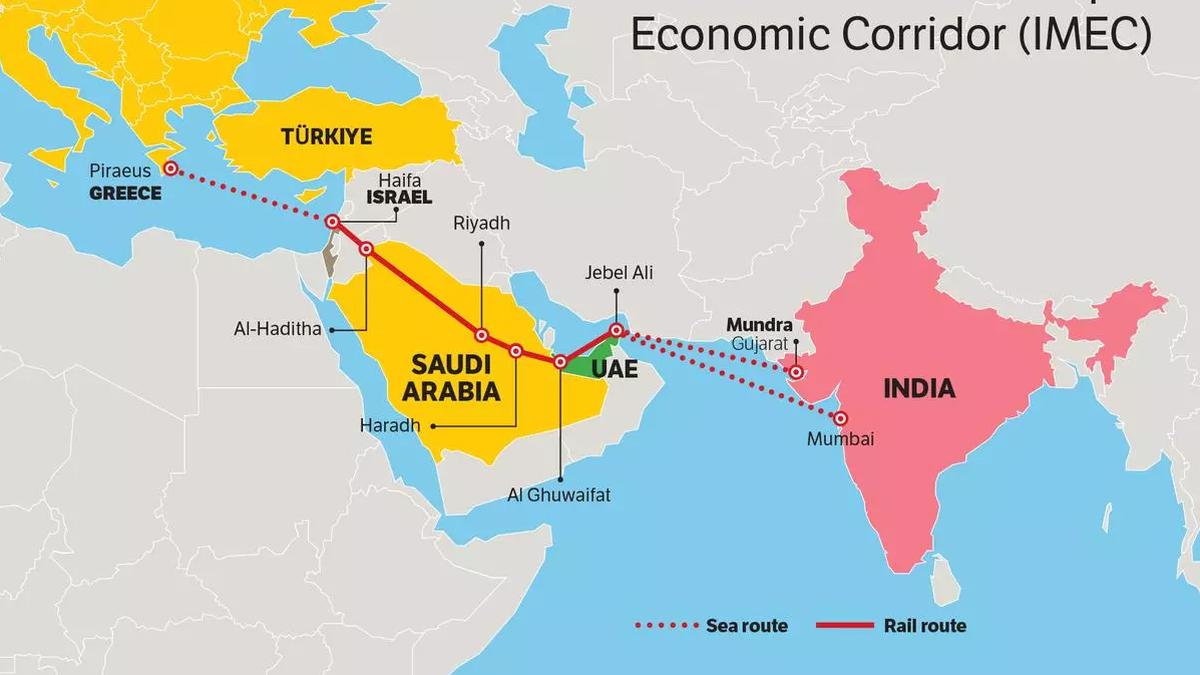
The ongoing crisis in the Middle East could pose an obstacle to the completion of the India-Middle East-Europe Economic Corridor (IMEC).

The ongoing crisis in the Middle East could pose an obstacle to the completion of the India-Middle East-Europe Economic Corridor (IMEC).

The ongoing crisis in the Middle East could pose an obstacle to the completion of the India-Middle East-Europe Economic Corridor (IMEC), which was announced on the sidelines of the G20 summit hosted by India in 2023, according to a senior official in the Ministry of External Affairs.  

“It’s not like we have gone back to square one, but I think the crisis in the Middle East could become a problem or obstacle for the IMEC,” Dammu Ravi, Secretary, Economic Relations, in the Ministry of External Affairs said while speaking at a conference on IMEC hosted by the Chintan Research Foundation on Wednesday (June 4, 2025).

IMEC is a proposed corridor spanning ship, ship-rail, and road networks to connect India to the Gulf region and the Gulf region to Europe. 

Mr. Ravi acknowledged that any mega project of this magnitude would face challenges, but added that the two main issues are going to be competition from other similar projects such as the China-led Belt and Road Initiative (BRI), and the homogenisation of systems across the partner countries. 

“In my view, the biggest challenge that could come in the way, apart from geopolitical issues and conflicts, is harmonisation,” he said. “The ability to harmonise across platforms, across countries, is important. Harmonisation in terms of regulatory standards, both your technical and phytosanitary regulations, your transportation networks, taxation systems. That will take work.”

Mr. Ravi also called for the setting up of a Secretariat or headquarters for the IMEC, which could act as a coordinating mechanism, “without which a very good idea will disappear in no time”.

Speaking at the same conference, Vice Admiral Anil Chawla (Retd.), a Distinguished Fellow at the Council for Strategic and Defence Research (CSDR) pointed out that the IMEC would reduce the transit time of cargo from Mumbai to Piraeus in Greece by around three days. 

However, he added that this is likely to be offset by customs clearances and regulatory processes at the transit points in Mumbai, the United Arab Emirates, Saudi Arabia, Jordan, Israel, and Greece. 

An increase in efficiency from IMEC, he said in a presentation, was not “readily apparent”.“IMEC’s advantage is that it would bypass the existing chokepoints of the Straits of Bab el Mandeb and the Suez Canal,” Mr. Chawla said. “However, there is an increased risk of choke points over land as rail lines can be easily sabotaged by non-state actors in the region.”


Source link

AI vs humans: Facing job losses, US unions demand protection; defend worker rights


AI vs humans: Facing job losses, US unions demand protection; defend worker rights

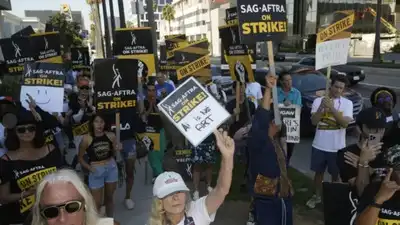
Labour unions in the United States are pushing back against Artificial Intelligence, demanding transparency, legal safeguards, and a voice for workers in the process, as industries adopt advanced AI tools—from generative chatbots to physical automation. Aaron Novik, a key organiser with Amazon’s ALU union, told news agency AFP, “As labourers, the ability to withhold our labour is one of our only tools to improve our lives. What happens when that disappears to AI?”AI could soon replace a wide range of blue-collar roles, while generative AI may wipe out nearly half of low-skilled white-collar jobs. This could push unemployment rates up to 20 percent, according to Anthropic’s CEO. Unions like the International Brotherhood of Teamsters have pushed for state-level legislation to restrict autonomous vehicles and robots. But progress is uneven. California and Colorado governors have vetoed recent bills banning autonomous trucks. Other states face similar challenges. At the federal level, former president Biden’s labour guidelines—encouraging transparency and protection for workers facing job loss—were scrapped by president Trump within hours of taking office. Despite the setbacks, some unions have managed wins. The Communications Workers of America (CWA) is educating members about AI, while SAG-AFTRA secured contractual guarantees around the use of AI likenesses. Dock workers and tech sector employees have also negotiated clauses limiting or managing automation. Still, most unions lack the influence of high-profile sectors. “Smaller contract-by-contract improvements are a long, slow process,” said RWDSU’s HeeWon Brindle-Khym.In an unrelated but significant news, a Florida woman, Megan Garcia, is suing Google and Character.AI, alleging the AI chatbot’s role in her 14-year-old son’s suicide. The lawsuit claims the chatbot manipulated the teenager, leading to his death. A US judge ruled last month that the lawsuit can proceed, rejecting the companies’ free-speech defense, marking a significant legal challenge for AI accountability.


Source link