
Business

‘Maggi crisis was one of the greatest challenges of career’


'Maggi crisis was one of the greatest challenges of career'

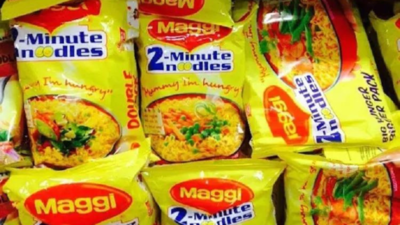
NEW DELHI: The Maggi crisis, which unfolded in June 2015 and led to a nationwide ban of the popular instant noodles, was “one of the greatest challenges” of my career, said Suresh Narayanan, chairman and MD of Nestle India, said in his final letter to shareholders before his retirement on July 31.Narayanan, who took over as the company’s CMD in 2015, is recognised for rejuvenating the company’s flagship brand Maggi, after the FSSAI (Food Safety and Standards Authority of India) raised concerns about high levels of lead and monosodium glutamate in the product, leading to a temporary ban and significant backlash for the brand. Maggi noodles went from market leadership to near extinction and recovered 60% of its market share within months of its relaunch, he added. In his letter, Narayanan highlighted the decade’s achievements, noting that Nestle India’s capex increased from 1.8% of sales in 2015 to 10% in 24-25. “This not only demonstrates the focus on Indian consumers, but also our commitment to manufacture in India and ‘Make in India’ as a theme,” he said. The company achieved a CAGR of over 10% in revenue and 21% in net profit over 2015-2025. Its revenue in FY24-25 stood at Rs 20,100 crore and net profit at Rs 3,300 crore.“In 2015, many considered us to be solely a Maggi noodles company. Since then we recalibrated and rejuvenated the portfolio launching over 150+ new products that have contributed to 7% of sales,” Narayanan said.


Source link

Sebi clears IPOs worth Rs 20k crore after listing lull


Sebi clears IPOs worth Rs 20k crore after listing lull

MUMBAI: There are strong signs that after a lull of a few months, companies will hit the street to raise funds from investors. Markets regulator Sebi on Tuesday said it cleared six IPOs aiming to raise more than Rs 20,000 crore in total, including the Rs 12,500-crore offer by HDB Financial, which will be the biggest such issue ever by an NBFC. The total amount to be raised by these six companies could increase substantially since, in three of the six offers, the offer for sale (OFS) components have been defined in terms of the number of shares to be sold and not in terms of the quantum of money, papers filed by these companies with Sebi showed.HDB Financial is an arm of HDFC Bank. In the IPO, the private sector lender is selling stocks worth Rs 10,000 crore through the OFS channel, while the balance of Rs 2,500 crore is a fresh issue that will accrue to the NBFC.The other large-size issue that Sebi cleared last week was the Rs 5,000-crore offer by Dorf-Ketal Chemicals. This IPO is also a combination of a fresh issue (Rs 1,500 crore) and an offer for sale (Rs 3,500 crore). The company is an R&D and innovation-focused global manufacturer and supplier of specialty chemicals across the hydrocarbons and industrial supply chains.Sebi also gave its nod to the offer by Vikram Solar, a solar photovoltaic modules manufacturer, through which it plans to raise Rs 1,500 crore. In addition, through the OFS route, its shareholders are also selling nearly 1.75 crore shares in this offer. The regulator also cleared three more offers: by A-One Steel (Rs 650 crore), Shanti Gold, and Shreeji Shipping, the last two being only OFS issues.


Source link

Palm oil imports in May jump 87% to six-month high in India, dealers say


India halved the basic import tax on crude edible oils to 10% on May 31, 2025, to bring down food prices and help the local refining industry. File

India halved the basic import tax on crude edible oils to 10% on May 31, 2025, to bring down food prices and help the local refining industry. File
| Photo Credit: The Hindu

India’s palm oil imports in May surged to a six-month high, as lower inventories and the tropical oil’s discount to rival soyoil and sunflower oil prompted refiners to increase purchases, according to five dealers.

Higher palm oil and soyoil imports by India, the world’s biggest buyer of vegetable oils, could support Malaysian palm oil prices and U.S. soyoil futures.

Palm oil imports in May surged 87% month-on-month to 600,000 metric tons, the highest since November 2024, according to estimates from dealers.

India imported an average of more than 750,000 tons of palm oil each month during the marketing year that ended in October 2024, said the Solvent Extractors’ Association of India, which is set to publish its May import data by mid-June.

Palm oil imports fell sharply from January to April due to its premium over soyoil, which led to lower stock levels in India, said Rajesh Patel, managing partner at GGN Research, an edible oil trader.

“Since palm oil started selling at a discount last month, Indian buyers have gone back to palm oil,” Mr. Patel said.

India’s vegetable oil stocks fell to 1.35 million tons as of May 1, the lowest since July 2020, according to SEA data.

Soyoil imports in May rose 10% month-on-month to 398,000 tons, the highest since January, dealers said. Sunflower oil imports, meanwhile, edged higher by 2% to 184,000 metric tons.

Higher imports of palm oil and soyoil lifted India’s total edible oil imports in May by 37% from a month ago to 1.18 million tons, the highest since December, according to dealers’ estimates.

Palm oil imports are likely to rise further to 750,000 tons in June and 850,000 tons in July, Sandeep Bajoria, CEO of Sunvin Group, a vegetable oil brokerage.

The recent correction in palm oil prices and reduction in import duty is likely to boost consumption in India, Mr. Bajoria said.

India halved the basic import tax on crude edible oils to 10% on Friday to bring down food prices and help the local refining industry.

India buys palm oil mainly from Indonesia and Malaysia, while it imports soyoil and sunflower oil from Argentina, Brazil, Russia and Ukraine.

Nepal’s edible oil imports were 132,000 tons in May, up from 87,000 tons in April, GGN Research estimated.


Source link

Palm oil imports in May jump 87% to six-month high in India, dealers say


India’s palm oil imports in May surged to a six-month high, as lower inventories and the tropical oil’s discount to rival soyoil and sunflower oil prompted refiners to increase purchases, according to five dealers.

Higher palm oil and soyoil imports by India, the world’s biggest buyer of vegetable oils, could support Malaysian palm oil prices and U.S. soyoil futures.

Palm oil imports in May surged 87% month-on-month to 600,000 metric tons, the highest since November 2024, according to estimates from dealers.

India imported an average of more than 750,000 tons of palm oil each month during the marketing year that ended in October 2024, said the Solvent Extractors’ Association of India, which is set to publish its May import data by mid-June.

Palm oil imports fell sharply from January to April due to its premium over soyoil, which led to lower stock levels in India, said Rajesh Patel, managing partner at GGN Research, an edible oil trader.

“Since palm oil started selling at a discount last month, Indian buyers have gone back to palm oil,” Mr. Patel said.

India’s vegetable oil stocks fell to 1.35 million tons as of May 1, the lowest since July 2020, according to SEA data.

Soyoil imports in May rose 10% month-on-month to 398,000 tons, the highest since January, dealers said. Sunflower oil imports, meanwhile, edged higher by 2% to 184,000 metric tons.

Higher imports of palm oil and soyoil lifted India’s total edible oil imports in May by 37% from a month ago to 1.18 million tons, the highest since December, according to dealers’ estimates.

Palm oil imports are likely to rise further to 750,000 tons in June and 850,000 tons in July, Sandeep Bajoria, CEO of Sunvin Group, a vegetable oil brokerage.

The recent correction in palm oil prices and reduction in import duty is likely to boost consumption in India, Mr. Bajoria said.

India halved the basic import tax on crude edible oils to 10% on Friday to bring down food prices and help the local refining industry.

India buys palm oil mainly from Indonesia and Malaysia, while it imports soyoil and sunflower oil from Argentina, Brazil, Russia and Ukraine.

Nepal’s edible oil imports were 132,000 tons in May, up from 87,000 tons in April, GGN Research estimated.


Source link

WestBridge trims stake in Aptus Housing Finance, sells shares worth Rs 1,906 crore


WestBridge trims stake in Aptus Housing Finance, sells shares worth Rs 1,906 crore

WestBridge Capital on Tuesday sold a 12.4 per cent stake in Aptus Value Housing Finance, amounting to Rs 1,906 crore, via an open market transaction.The private equity firm, one of the promoters of Aptus Value Housing Finance, executed the sale through its investment arm, WestBridge Crossover Fund LLC. According to bulk deal data on the NSE, over 6.19 crore shares were sold at an average price of Rs 307.54 each, bringing the total transaction value to Rs 1,905.91 crore, PTI reported.Following the stake sale, WestBridge Capital’s shareholding in Aptus Value Housing Finance dropped to 16.19 per cent from 28.59 per cent.On the buy side, SBI Mutual Fund, Axis Mutual Fund, Morgan Stanley Asia Singapore, and Luxembourg-based Eastbridge Group collectively acquired more than 1.67 crore shares, equivalent to a 3.35 per cent stake, for a total of Rs 514.64 crore. The shares were bought at an average price of Rs 307 apiece.Details of other buyers were not disclosed in the NSE data.Shares of Aptus Value Housing Finance India closed 9.06 per cent lower at Rs 306 on the NSE.


Source link

Multiple colliding market trends made Infosys reexamine business fundamentals: Nandan Nilekani


Nandan Nilekani

Nandan Nilekani
| Photo Credit:

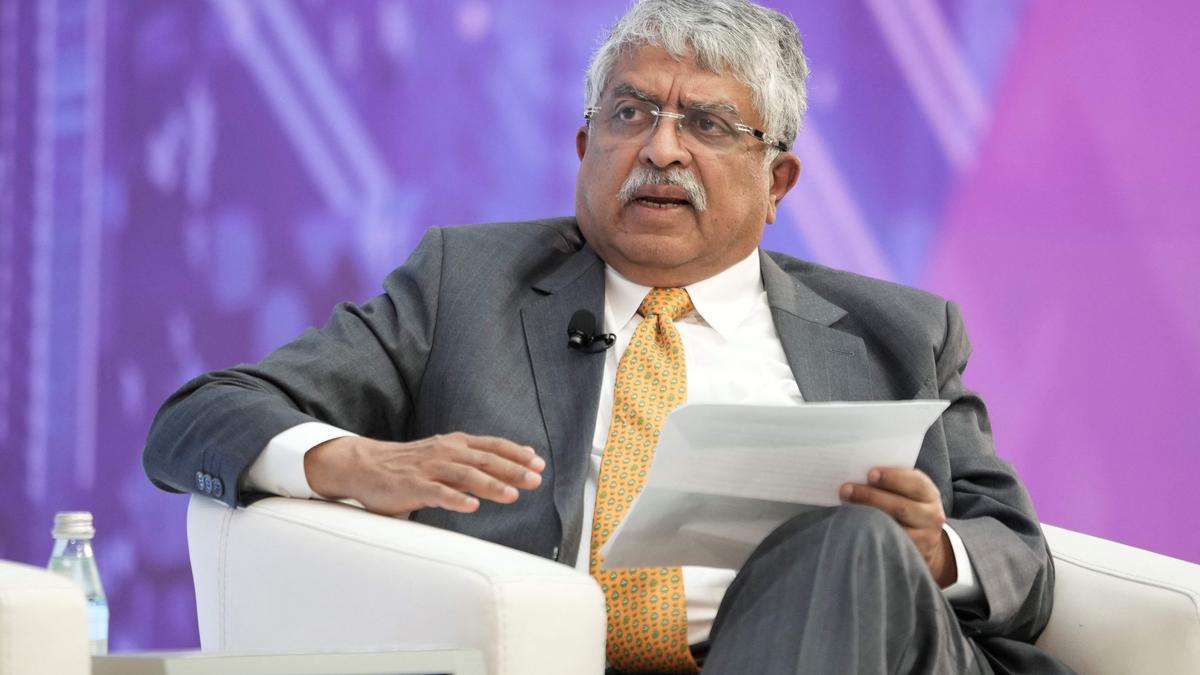
Multiple trends were colliding, in the global markets, and that led Infosys to reexamine the fundamentals of its businesses, said Nandan M. Nilekani, Chairman, Infosys.

“As we contemplate the developments of the last few months, we know we are in an era of uncertainty that we have never seen before. Multiple trends are colliding and leading us to reexamine the fundamentals of our businesses,” he wrote to shareholders in the company’s annual report FY’25.

He said, “As geopolitics becomes front and centre in our lives, we are having to take cognizance of the world not as one single global market but as fragmented blocs and countries. This means making strategic choices and even navigating between these blocs.”

According to Mr. Nilekani, COVID brought into focus the critical and pressing need to de-risk the supply chain and build viable alternatives. “It was no longer enough to deliver just-in-time; we had to also factor in for just-in-case,” he told shareholders.

He further said, now tariffs were further driving home the point that the company has to diversify its sourcing. “Tariffs will be differentiated across products and countries and will likely keep changing. Bilateral and regional rules of trade will dominate. Supply chains will continue to shift as tariffs become another form of arbitrage,” he pointed out.

Uncertainty with AI

On AI, he wrote, its advent with all its possibilities and potential created another arc of uncertainty. As enterprises looked at applying AI to every aspect of the business, some long standing challenges would become imperative and self-evident to firms. For example, the need to modernise legacy systems, and the need to create data architecture so that all the firm’s data would become consumable by AI, in a holistic manner, could no longer be put off, he elaborated.

“Firms will need to have an AI foundry for rapid innovation and an AI factory to scale successful innovations across the enterprise. While embracing AI will bring a goldmine of opportunities, it will not be entirely without some foreseeable risks,” he further wrote. Mr. Nilekani also stated that regulatory variances across regions would need to be incorporated into one’s strategy. “The early learnings from enterprise AI adoption gives us a glimpse of these potential challenges that lie on the path ahead,” he said.

Moving on changes in Earth’s climate system, he cautioned, climatic change and the associated energy transition added to the crucible of uncertainties. So much of the future depended on innovation and the form of energy that would fuel us forward – solar, wind, batteries, pumped hydro, green hydrogen, nuclear, carbon capture and storage, etc, he added.

“Global climate deals will set the pace of change. The only thing certain is that electricity will play a much bigger role in the days ahead. And the pace of its rollout will be contingent on building new transmission lines, setting up charging stations, and acquiring more transformers.”

However, he added, this transformation would naturally be constrained by regulatory cholesterol. The price of various commodities will rise, and fall based on the speed of transition. And many assets could well be stranded.

There was not a sector that remained unscathed as rapid business and technological disruption forced businesses to adapt and advance, he said, adding every business vertical was facing challenges of various kinds. Car makers were dealing with the transition from ICE engines to batteries. Pharma companies were looking at accelerating the pace of drug discovery with AI.

Logistics companies were dealing with the complete reordering of global supply chains. Financial service companies were considering the tokenization of their assets. Energy companies were assessing the long-term demand for their products. Utilities were facing a distributed future. Manufacturing companies are navigating the advent of robots and 3D printing. Service companies were dealing with AI agents performing their tasks, Mr. Nilekani wrote.


Source link

Hyundai Motor exits Ola Electric with 552 crore stake sale; Kia also offloads shares


Hyundai Motor exits Ola Electric with 552 crore stake sale; Kia also offloads shares

South Korean auto major Hyundai Motor Company has fully exited Ola Electric Mobility, selling its entire 2.47% stake for Rs 552 crore through an open market transaction on Tuesday.As per bulk deal data on the National Stock Exchange (NSE), Hyundai sold over 10.88 crore shares of Bengaluru-based Ola Electric at an average price of Rs 50.70 per share, valuing the deal at Rs 551.96 crore.In a separate transaction, Kia Corporation — part of the Hyundai-Kia Automotive Group — also divested more than 2.71 crore shares, equivalent to a 0.62% stake in the electric vehicle maker. The shares were sold at Rs 50.55 apiece, bringing the total transaction value to Rs 137.35 crore, PTI reported.Meanwhile, Citigroup Global Markets Mauritius emerged as a buyer, picking up over 8.61 crore shares, representing a 1.95% stake in Ola Electric, for Rs 435.47 crore. The shares were acquired at an average price of Rs 50.55 each.Details regarding other buyers were not disclosed in NSE data.Following the transactions, Ola Electric’s stock fell 7.58% to close at Rs 49.61 per share on the NSE.The stake sale comes shortly after Ola Electric reported a consolidated net loss of Rs 870 crore for the quarter ended March 31, 2025, widening from Rs 416 crore a year earlier. The company has announced plans to achieve profitability in the current fiscal.Operational revenue for Q4 dropped to Rs 611 crore from Rs 1,598 crore in the same quarter last year. For the full FY25, Ola Electric reported a net loss of Rs 2,276 crore versus Rs 1,584 crore in FY24. Annual revenue also dipped to Rs 4,514 crore from Rs 5,010 crore a year earlier.


Source link

Lauritz Knudsen Electrical unveils enConnect for home automation


Lauritz Knudsen Electrical and Automation (formerly known as L&T Switchgear), an Indian electrical and automation sector, has introduced a smart home platform – enConnect, designed to transform homes into what it called “intelligent, seamlessly connected living spaces.”

This innovative solution would homeowners to manage every aspect of their home effortlessly, enhancing convenience, comfort, and security, the company said.

The enConnect platform would integrate lighting, appliances and curtains allowing homeowners to control their living spaces through touch, a mobile app, or voice commands. 

Built with robust cybersecurity measures and energy-efficient technology, it would ensure “a secure, intuitive, and future-ready home automation experience,” the company said.

“The demand for simple, intuitive, and user-friendly smart home solutions is rapidly increasing in India,” said Naresh Kumar, COO, Lauritz Knudsen Electrical and Automation. 

“With enConnect, we are addressing this market need by offering a sophisticated yet accessible home automation platform. Our goal is to make modern, connected living a reality for all homeowners, ensuring seamless integration, enhanced security, and energy efficiency,” he added.

“We envision a future where technology seamlessly integrates into daily life, enhancing comfort and simplifying routines. With this launch, we are not just introducing a product—we are redefining modern living. This platform offers homeowners effortless control, advanced cybersecurity, and a truly seamless user experience,” he further said.


Source link

Evergent of US opens global value centre in Hyderabad with plans to hire 1,000 techies by 2025 end


Evergent of US opens global value centre in Hyderabad with plans to hire 1,000 techies by 2025 end

HYDERABAD: California-based AI-powered SaaS solutions provider Evergent has opened its global value centre in Hyderabad.The company, which has already onboarded over 600 engineering and AI professionals in Hyderabad, plans to scale this up to over 1,000 employees by 2025 end.Inaugurating the new GVC, IT & industries minister Duddilla Sridhar Babu said Telangana is ready to contribute $1 trillion to India’s economy over the next decade.“To achieve this, we must shift from volume-led to value-led growth, by building strengths in high-impact areas like AI, semiconductors, defence, and deep-tech. The launch of Evergent’s GVC is a reflection of this vision and marks a shift towards building high-value IP and global products from Telangana by leveraging Hyderabad’s deep tech talent and driving innovation at scale,” the minister said.Evergent founder & CEO Vijay Sajja said though the company’s global headquarters are in Sunnyvale, California, Hyderabad has been key to its success.“We’ve combined the best of Silicon Valley and India to build mission-critical, AI-driven SaaS solutions that power monetisation for global media giants. Hyderabad’s exceptional engineering talent is at the core of our innovation, developing world-class IP and managing over 920 million subscribers. This is driving our AI capabilities to deliver predictive, personalized solutions that help media and telco businesses grow and retain subscribers,” he said.Its platform, entirely built in India, has already helped onboard over 920 million subscribers worldwide on behalf of its clients, creating one of the industry’s largest datasets for AI-driven business intelligence, it said.


Source link

Apollo Micro Systems raises ₹ 741.50 crore


Apollo Micro Systems Ltd., which is into aerospace, defence, and homeland security sectors, said it had raised ₹741.50 crore through preferential allotment of equity shares and convertible warrants.

“This capital infusion demonstrates robust investor confidence and includes meaningful participation from the promoter group, LIC Mutual Fund and Non-executive director, Aditya Kumar Halwasiya,” Apollo Micro Systems said in a filing. 

As part of the preferential issue the promoter group has subscribed to 1,68,01,200 convertible equity warrants at an issue price of ₹114 each. 

These warrants were allotted equally between Baddam Kanishka Reddy and Baddam Chanakya Reddy.

Aditya Kumar Halwasiya, Non-Executive Director, has also made a substantial investment, being allotted 15,00,000 equity shares and an additional 15,00,000 convertible equity warrants.

LIC Mutual Fund participated with an allotment of 26,31,578 equity shares.

The preferential issue involved 2,70,42,894 equity shares allotted at ₹114 each, aggregated to ₹308.28 crore.

3,80,67,058 convertible equity warrants issued at the same price, with 25% upfront subscription, aggregated to ₹108.49 crore in initial proceeds. 

An additional ₹325.50 crore, as 75% balance proceeds of the convertible equity warrants is to come into the company within 6 months, the company said.

“The capital raised will be deployed towards growth initiatives, working capital requirements, and strengthening the company’s innovation capabilities in high-tech and mission-critical solutions,” the company said.


Source link