Business

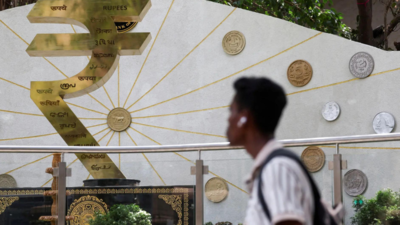
Rupee declines 21 paise to 85.60 against U.S. dollar


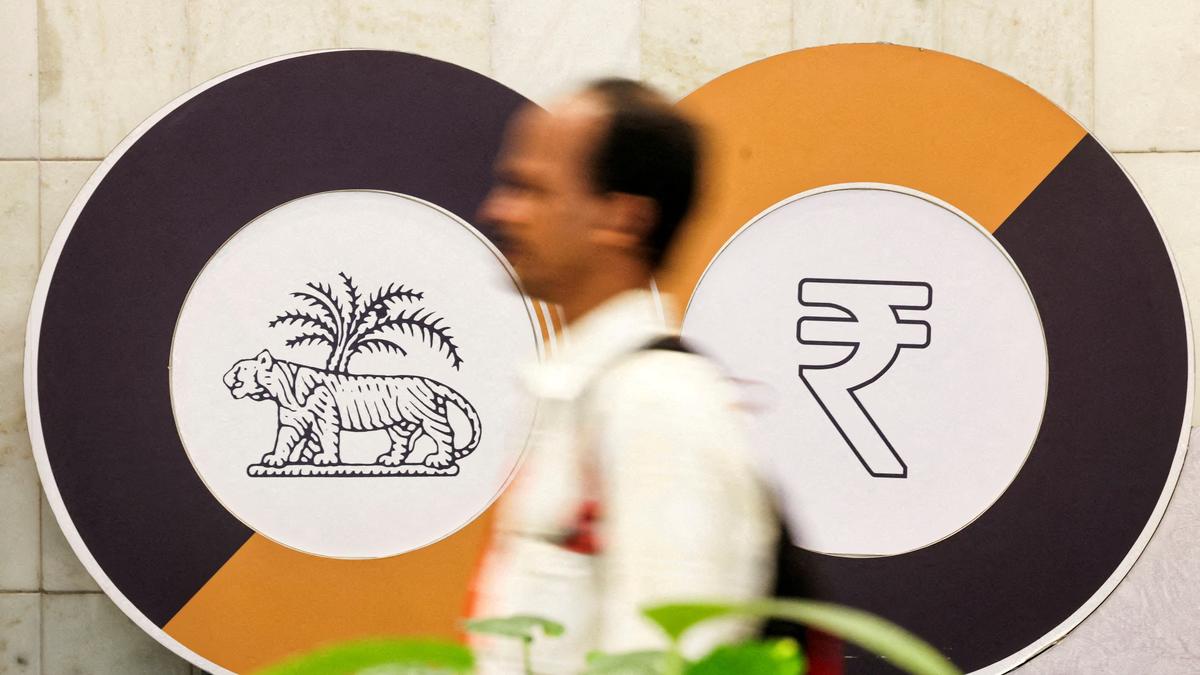
The rupee declined 21 paise to settle at 85.60 (provisional) against the U.S. dollar on Tuesday (June 3, 2025), weighed down by a firm American currency and outflow of foreign funds.

The rupee declined 21 paise to settle at 85.60 (provisional) against the U.S. dollar on Tuesday (June 3, 2025), weighed down by a firm American currency and outflow of foreign funds.
| Photo Credit: Reuters

The rupee declined 21 paise to settle at 85.60 (provisional) against the U.S. dollar on Tuesday (June 3, 2025), weighed down by a firm American currency and outflow of foreign funds.

According to forex traders, the local unit remained under pressure tracking negative domestic equity markets amid geopolitical uncertainties. Investors are also awaiting cues from the Reserve Bank’s monetary policy announcements.

RBI’s Monetary Policy Committee (MPC) will begin deliberations on its bi-monthly policy on Wednesday and the outcome is scheduled to be announced on June 6.

At the interbank foreign exchange, the domestic unit opened at 85.55 and moved between the high of 85.44 and a low of 85.60 against the greenback during the day. The unit closed the session at 85.60 (provisional) against the dollar, registering a loss of 21 paise from its previous close.

On Monday, the rupee appreciated 16 paise to settle at 85.39 against the dollar.

Anuj Choudhary, Research Analyst at Mirae Asset Sharekhan, said the rupee weakened against the dollar on weak domestic equities and FII outflows.

“Trade tensions between U.S. and China and renewed geopolitical tensions between Ukraine and Russia may also weigh on the domestic unit. Traders may take cues from job openings and factory orders data from the U.S.,” Choudhary said, adding, “USD-INR spot price is expected to trade in a range of 85.20 to 85.90.” Meanwhile, the dollar index, which gauges the greenback’s strength against a basket of six currencies, was trading higher by 0.25% at 98.95.

Analysts said the US dollar index lost some ground after ISM manufacturing PMI fell more than expected, but recovered soon as China’s manufacturing PMI showed slower-than-expected growth in that country.

Brent crude, the global oil benchmark, fell 0.12% to $64.55 per barrel in futures trade.

In the domestic equity market, the 30-share BSE Sensex tanked 636.24 points, or 0.78%, to close at 80,737.51, while the Nifty declined 174.10 points, or 0.70%, to 24,542.50.

Foreign institutional investors (FIIs) sold equities worth ₹2,589.47 crore on a net basis on Monday, according to exchange data.

A monthly survey released on Monday showed India’s manufacturing sector growth fell to a three-month low in May, restricted by inflationary pressures, softer demand and heightened geopolitical conditions.

The seasonally adjusted HSBC India Manufacturing Purchasing Managers’ Index (PMI) fell from 58.2 in April to 57.6 in May, highlighting the weakest improvement in operating conditions since February.


Source link

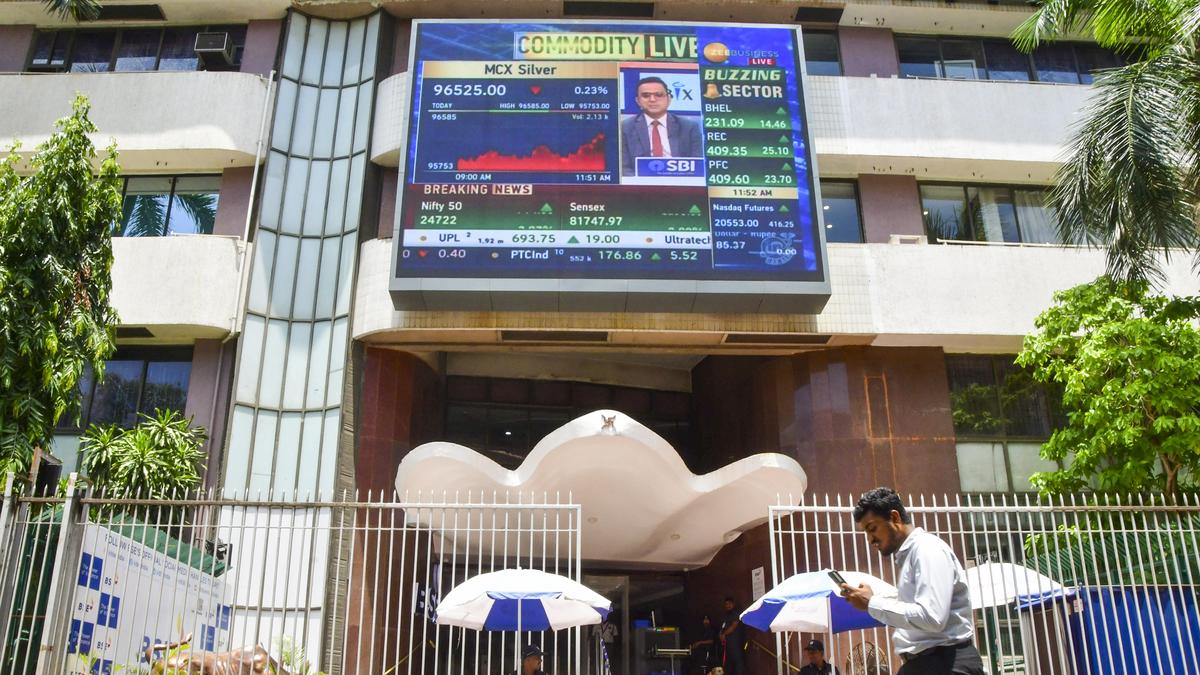
Markets extend losses for 3rd session amid broad-based selloff; Sensex and Nifty tumbled


Equity benchmark indices Sensex and Nifty tumbled nearly 1% on Tuesday (June 3, 2025) weighed down by a widespread selloff amid foreign fund outflows and growing geopolitical uncertainties.

Equity benchmark indices Sensex and Nifty tumbled nearly 1% on Tuesday (June 3, 2025) weighed down by a widespread selloff amid foreign fund outflows and growing geopolitical uncertainties.
| Photo Credit: PTI

Equity benchmark indices Sensex and Nifty tumbled nearly 1% on Tuesday (June 3, 2025) weighed down by a widespread selloff amid foreign fund outflows and growing geopolitical uncertainties.

Domestic markets stayed on the back foot for the third straight session as investors offloaded energy, finance and IT stocks, traders said.

In a volatile trading session, the 30-share BSE index tanked 636.24 points or 0.78% to settle at 80,737.51. During the day, it dropped 798.66 points or 0.98% to 80,575.09.

The NSE Nifty plunged 174.10 points or 0.70% to 24,542.50.

As many as 2,266 stocks declined, while 1,731 advanced and 147 remained unchanged on the BSE.

“The domestic market remained in negative terrain amid mixed global cues, geopolitical issues and a volatile currency market led by a weak USD. Profit-booking is evident across sectors, except for real estate stocks, supported by expectations of an interest rate cut by the RBI.

“Mid and small-cap stocks are experiencing relatively less consolidation than large caps due to better earnings growth & moderation in premium valuation. While short-term consolidation is likely to persist, strong domestic-oriented players are estimated to provide outperformance against external volatility,” Vinod Nair, Head of Research, Geojit Investments Limited, said.

From the Sensex firms, Adani Ports declined 2.42%. Bajaj Finserv, Bajaj Finance, Power Grid, Eternal, IndusInd Bank, Maruti, Tata Consultancy Services and UltraTech Cement were among the biggest laggards.

Mahindra & Mahindra emerged as the only gainer in the pack.

Adani Group’s 11 listed companies ended lower.

Adani Group on Monday said it does not handle any cargo coming from Iran or any Iranian-owned ship at any of its ports, as it denied any deliberate engagement in sanctions evasion.

In a stock exchange filing, the group said reports of links between any of its entities and Iranian LPG are “baseless and mischievous”.

The BSE midcap gauge declined 0.52%, while the smallcap index dipped 0.07%.

Among sectoral indices, power dropped 1.50%, utilities (1.42%), bankex (0.89%), energy (0.88%), capital goods (0.87%), financial services (0.80%) and teck (0.68%).

On the other hand, commodities and realty were the gainers.

“The Nifty has extended its consolidation phase for yet another day, showing no urgency in establishing a clear directional trend. It appears that investors are awaiting a decisive commentary following the RBI’s interest rate decision,” Rupak De, Senior Technical Analyst at LKP Securities, said.

Foreign Institutional Investors (FIIs) offloaded equities worth ₹2,589.47 crore on Monday, according to exchange data.

“The ongoing foreign fund outflows, coupled with weak global cues such as geopolitical tensions and uncertainty over trade deals, are adding pressure to the markets,” Ajit Mishra – SVP, Research, Religare Broking Ltd, said.

In Asian markets, Shanghai’s SSE Composite index and Hong Kong’s Hang Seng settled in positive territory, while Japan’s Nikkei 225 index ended lower. South Korean markets were closed.

European markets were trading lower. US markets ended higher on Monday.

Global oil benchmark Brent crude climbed 0.28% to $64.81 a barrel.

After tumbling 796.75 points or 0.97% to 80,654.26 in intra-day trade on Monday, the 30-share BSE Sensex witnessed volatile trends and later ended 77.26 points or 0.09% lower at 81,373.75. The Nifty dipped 34.10 points or 0.14% to settle at 24,716.60.


Source link

India’s domestic economic conditions will continue to be supportive for growth: Moody’s Rating


India's domestic economic conditions will continue to be supportive for growth: Moody’s Rating

Moody’s Ratings on Tuesday said that India’s strong domestic economic environment will continue to support economic growth, helping banks maintain healthy asset quality and keeping systemwide nonperforming loan (NPL) levels between 2–3 per cent over the next 12 months.In a report focused on the Indian banking sector, Moody’s stated that even amid heightened global economic uncertainties, Indian banks are likely to remain resilient due to the strength of domestic fundamentals.“While trade tensions have heightened economic uncertainty globally, India’s domestic economic conditions will continue to be supportive for growth. That will underpin banks’ asset quality, although the divergence of loan performance will remain across different product types and lenders,” Moody’s said as quoted PTI.The report noted that several domestic factors—including increased government capital spending, tax relief for the middle class to boost consumption, and supportive monetary policy—will provide a cushion for the banking system. Furthermore, India’s relatively low dependence on global goods trade offers a degree of protection from external shocks.“This will help banks preserve their asset quality. We expect the systemwide nonperforming loan (NPL) ratio to remain at 2-3 per cent in the next 12 months, compared to 2.5 per cent at the end of December 2024,” the agency added.Moody’s also highlighted the continued strength of wholesale loans, citing corporate profitability and low leverage as key factors. Wholesale lending forms a significant portion of Indian banks’ portfolios, alongside retail and agricultural loans.The agency cautioned that unsecured retail loans would remain more vulnerable than secured loans in the short to medium term.“New NPL formation rates for secured retail loans have broadly stayed low, while those for unsecured loans have risen in the past few quarters. As this trend persists, small private sector banks will continue to have weaker asset quality, than large private banks and public sector banks,” Moody’s said.


Source link

Rupee falls 21 paise to 85.60 against US dollar amid weak equities, FII outflows


Rupee falls 21 paise to 85.60 against US dollar amid weak equities, FII outflows

The rupee depreciated by 21 paise to close at 85.60 (provisional) against the US dollar on Tuesday, as a stronger greenback and persistent foreign fund outflows weighed on market sentiment.Forex traders said the domestic unit came under pressure due to negative trends in local equity markets and geopolitical uncertainties. Investors also remained cautious ahead of the Reserve Bank of India’s (RBI) upcoming monetary policy decision, PTI reported.The RBI’s Monetary Policy Committee (MPC) begins its three-day policy deliberation on Wednesday, with the outcome scheduled for announcement on June 6.At the interbank foreign exchange market, the rupee opened at 85.55 and traded between a high of 85.44 and a low of 85.60 against the dollar. It eventually settled at the day’s lowest point, recording a 21 paise loss from its previous close.On Monday, the rupee had gained 16 paise to finish at 85.39 against the US dollar.Anuj Choudhary, Research Analyst at Mirae Asset Sharekhan, attributed the rupee’s decline to subdued domestic equities and foreign institutional investor (FII) outflows.“Trade tensions between US and China and renewed geopolitical tensions between Ukraine and Russia may also weigh on the domestic unit. Traders may take cues from job openings and factory orders data from the US,” Choudhary said, adding, “USD-INR spot price is expected to trade in a range of 85.20 to 85.90.”The dollar index, which measures the greenback’s strength against a basket of six major currencies, was trading 0.25 per cent higher at 98.95.While the index initially weakened following a sharper-than-expected drop in the US ISM manufacturing PMI, it quickly rebounded after China’s manufacturing PMI revealed slower-than-anticipated growth.Meanwhile, Brent crude futures, the global oil benchmark, dipped 0.12 per cent to USD 64.55 per barrel.On the equities front, the 30-share BSE Sensex plunged 636.24 points, or 0.78 per cent, to settle at 80,737.51, while the NSE Nifty50 dropped 174.10 points, or 0.70 per cent, to close at 24,542.50.FIIs offloaded shares worth Rs 2,589.47 crore on a net basis on Monday, as per exchange data.A monthly survey released on Monday revealed a slowdown in India’s manufacturing sector, with the HSBC India Manufacturing Purchasing Managers’ Index (PMI) slipping to a three-month low. The PMI declined from 58.2 in April to 57.6 in May, indicating the weakest improvement in operating conditions since February, as inflationary pressures, softer demand, and heightened geopolitical concerns impacted growth


Source link

India’s Russian oil imports surge to 10-month high in May amid diversification push


India’s Russian oil imports surge to 10-month high in May amid diversification push

India’s imports of Russian crude oil surged to a 10-month high of 1.96 million barrels per day (bpd) in May, driven by continued availability at discounted prices compared to global benchmarks, according to ship-tracking data from Kpler.As the world’s third-largest oil importer and consumer, India imported around 5.1 million bpd of crude in May. This crude is processed into fuels such as petrol and diesel at domestic refineries, PTI reported.Russia remained India’s top supplier, accounting for over 38% of the total imports. Iraq held its position as the second-largest supplier with 1.2 million bpd, followed by Saudi Arabia at 615,000 bpd. The United Arab Emirates (UAE) supplied 490,000 bpd, while the United States rounded out the top five with 280,000 bpd—reflecting India’s ongoing efforts to diversify its energy sources and mitigate geopolitical risks.“Overall, India’s crude import profile for May 2025 highlights its price-sensitive, diversified sourcing strategy. Russian volumes remain elevated despite external pressures, reinforcing the primacy of economic pragmatism in India’s energy policy,” said Sumit Ritolia, Lead Research Analyst, Refining & Modeling at Kpler.India, which traditionally sourced most of its oil from the Middle East, significantly ramped up Russian oil purchases following the Ukraine conflict in February 2022. With Western sanctions and a reduced European appetite for Russian oil, Moscow began offering deep discounts that appealed to cost-conscious buyers like India.As a result, Russia’s share in India’s oil imports rose sharply from under 1% before the conflict to between 40% and 44% at its peak.Ritolia noted that Russia continues to offer crude at prices that are attractive when compared to global benchmarks like Brent and Dubai, and even versus Middle Eastern grades on a landed cost basis.“The strong inflow of Russian barrels into India is driven by a combination of economic, operational, and geopolitical factors,” he said.A major advantage comes from the pricing of Russian Urals crude, which—while not always heavily discounted—is still significantly cheaper than West African and Middle Eastern grades.“This pricing edge has supported stronger refinery gross margins for Indian processors. For instance, in May, average FOB prices for Urals stood around $50 per barrel, comfortably below the $60 a barrel price cap set by Western allies,” Ritolia added. This attractive pricing drew substantial shipping resources, including at least 20 tankers previously used for non-sanctioned trades, now repurposed to transport Urals.As a result, Russian export volumes to India rose notably.Looking ahead, Ritolia expects Russian crude to retain a 30–35% share in India’s oil import basket, especially if refining margins stay robust, FOB economics remain favorable, and sanctions continue to be limited in scope.However, he cautioned about emerging headwinds. “Kpler data suggests a modest rebound in Russian refinery throughput, potentially increasing by 100,000–300,000 bpd in the coming months. This could reduce Russia’s export availability by a corresponding margin and may slightly temper flows to India post-May,” he said.India is likely to maintain a diversified crude basket, but Russian barrels will remain central to its strategy—so long as discounts persist and payment mechanisms stay viable.With the onset of the monsoon season, some Indian refiners may scale back operations, which could temporarily reduce crude imports, particularly of lighter, sweeter grades, he noted.Crude exports from the Middle East are expected to hold a stable or slightly lower share in India’s import mix in the near term. This will be shaped by seasonal refinery adjustments and continued competition from Russian supplies. Still, the Middle East remains a long-term strategic component of India’s oil supply network.Following Russia’s invasion of Ukraine in February 2022, the U.S., European Union, and other Western nations imposed sweeping sanctions aimed at crippling the Russian economy. A major target was Russian oil exports, which faced restrictions and a shrinking European market.To find alternative buyers, Russia began selling oil at steep discounts—sometimes as much as $18–20 per barrel below global prices. India, with its vast energy needs and sensitivity to oil price fluctuations, capitalized on these offers.Although the price gap has narrowed in recent months, the discounts continue to make Russian oil economically attractive. In December 2022, the G7 introduced a price cap of $60 per barrel on Russian seaborne crude. This restricts Western firms from providing insurance and shipping services for Russian oil sold above that level.Russia has circumvented the cap by acquiring a fleet of older tankers and using alternative insurance options.


Source link

First Vande Bharat maintenance depot under construction in Rajasthan’s Jodhpur division


First Vande Bharat maintenance depot under construction in Rajasthan’s Jodhpur division

NEW DELHI: In a first for Indian Railways, a dedicated maintenance depot for Vande Bharat Express trains is being built at Bhagat Ki Kothi in Rajasthan’s Jodhpur Railway Division, a senior railway official confirmed on Tuesday. The facility is the first of its kind in the country, with four such depots planned across India.Speaking about the landmark project, Jodhpur Divisional Railway Manager Anurag Tripathi told ANI, “The Vande Bharat maintenance depot being built at Bhagat Ki Kothi in Jodhpur Division is the first of its kind in the country. It will handle maintenance for Vande Bharat trains from across India. Spread over 600 meters, it will have three pit lines to service three trains at once. Four more such depots are planned nationwide, but this is the first under construction.The depot, expected to be operational by end of 2025, will play a crucial role in the upkeep of India’s fastest trains. Tripathi also revealed that a Rs 200 crore proposal has been submitted to build an adjacent workshop and training centre.“Recruitment will happen through the Railway Recruitment Board, followed by training and deployment. We’ve also proposed a new Rs 200 crore project to build a workshop and training centre near the depot. Once approved, tenders will be floated and work will begin… The maintenance depot is expected to be ready by the end of this year… The workshop and training centre will take longer but will move swiftly once started...” Tripathi said.The Vande Bharat Express represents a new era in Indian Railways, focused on high-speed, self-reliant and sustainable transport solutions. The first train of this class was flagged off on February 15, 2019, on the New Delhi-Kanpur-Allahabad-Varanasi route, reaching speeds of 160 km/h.These indigenous trains are part of a broader push to upgrade maintenance infrastructure and technology for improved efficiency and performance of railway assets and personnel.(With inputs from ANI)


Source link

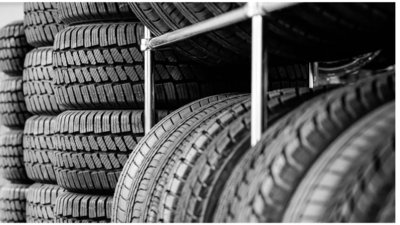
Tyre major MRF reclaims title as India’s highest-priced stock


Tyre major MRF reclaims title as India’s highest-priced stock

Tyre manufacturer MRF has regained its position as India’s highest-priced stock, surpassing Elcid Investments after a sustained rally in recent months. As of June 3, 2025, MRF shares were trading at Rs 1,38,100, marking a strong rebound from its 52-week low of Rs 1,02,124 recorded in March.Elcid Investments, which had briefly claimed the top spot, is trading at Rs 1,29,300. The stock has declined by nearly 60% from its all-time high of Rs 3,32,399.95 touched in November 2024.Elcid gained widespread attention in October 2024 when its share price skyrocketed during a special call auction held by the Bombay Stock Exchange (BSE). On October 29, its stock price surged from just Rs 3.53 to Rs 2,36,250 in a single day—an unprecedented increase of 66,92,535%, according to an ET report.The surge was triggered by a Securities and Exchange Board of India (SEBI) initiative to identify fair market values for holding companies that were trading far below their book value. This re-evaluation briefly made Elcid the most expensive stock in the country, overtaking MRF, which at the time was priced at Rs 1,22,576.Elcid’s momentum didn’t last. The stock peaked in November 2024 and has since seen a sharp correction. A key factor in the decline has been the falling share price of Asian Paints, in which Elcid holds a 1.28% stake. The value of this stake has dropped from Rs 3,616 crore in October 2024 to Rs 2,775 crore currently. Elcid’s present market capitalisation stands at approximately Rs 2,584 crore, now lower than the value of its holding in Asian Paints.Over the past year, shares of Asian Paints have fallen more than 21%, and nearly 30% over two years, putting significant pressure on Elcid’s overall valuation.While Elcid’s brief stint at the top was driven largely by market revaluation dynamics, MRF’s high share price is attributed to its relatively low number of outstanding shares. Analysts and investors are reminded that a stock’s market price does not necessarily reflect its intrinsic value.In contrast to Elcid, MRF’s gains are backed by strong fundamentals and solid earnings performance. For the March 2025 quarter, MRF posted a net profit of Rs 498 crore, up from Rs 380 crore in the same quarter last year. Revenue increased by 12% to Rs 6,944 crore, while EBITDA rose by 18% to Rs 1,043 crore, with margins improving to 15%.MRF remains India’s largest tyre manufacturer and is ranked among the top tyre makers globally. The company manufactures a wide range of tyres catering to various segments, including passenger vehicles, trucks, motorcycles, and agricultural machinery. It has also diversified into other businesses such as conveyor belts, paints, and sports goods over the years.


Source link

‘Adopt dual-track approach to…’: NITI Aayog has important suggestion on India-US trade deal


‘Adopt dual-track approach to…’:  NITI Aayog has important suggestion on India-US trade deal
The working paper emphasises that India’s agricultural industry requires protective measures. (AI image)

India-US trade deal: Following the US implementation of ‘reciprocal tariffs’, India ought to implement a two-pronged strategy, according to a NITI Aayog working paper. This involves reducing elevated tariffs on non-critical agricultural imports from the US, whilst tactically extending concessions in areas where domestic production falls short.The working paper, titled ‘Promoting India-US Agricultural Trade Under the New US Trade Regime’, emphasises that India’s agricultural industry requires protective measures to maintain stable prices for both producers and consumers, protecting them from significant international market fluctuations.“A dual-track approach is essential now. In the short term, India should consider to selectively reduce high tariffs on non-sensitive imports and negotiate non-tariff safeguards on vulnerable segments such as poultry,” states the paper.The analysis highlighted that the unexpected declaration of “reciprocal tariffs” and improved market accessibility for American exports following Donald Trump’s re-election as US President in January 2025 has created significant global economic uncertainty, particularly amongst US trading associates.The document proposed that India could tactically extend trade allowances in sectors where domestic production falls short, specifically in the domains of edible oils and nuts.Given India’s position as the world’s primary edible oil importer and America’s substantial surplus in genetically modified soybean production, the study indicated that India could extend certain import allowances for US soybean oil. This would address American requirements and decrease trade disparity whilst safeguarding domestic production.Additionally, the document advocated for India to seek enhanced access to American markets for its successful export commodities including shrimp, fish, spices, rice, tea, coffee and rubber. India currently generates approximately USD 5.75 billion yearly from agricultural exports to America. The study recommends incorporating duty exemptions or TRQs in trade discussions to expand this figure.In addition to strategic trade administration, India needs to implement medium-term structural modifications to enhance the international competitiveness of its agricultural sector.“This includes bridging the productivity gap by embracing appropriate technologies, market reforms, private sector participation, improvement in logistics and development of competitive value chains,” it said.The agricultural commerce between India and the US has shown notable alterations and consistent expansion over the past twenty years, indicating stronger bilateral economic relationships.An analysis of agricultural trade patterns between India and the US demonstrates that both nations are broadening their export offerings.Whilst conventional products like frozen shrimp, basmati rice and spices remain prominent exports, there has been a noticeable rise in exports of processed cereals and other value-enhanced products.Indian imports from the US primarily consist of premium products such as almonds, pistachios and walnuts.India continues to maintain a positive agricultural trade balance with the USA, which has grown progressively. Nevertheless, agriculture’s proportional significance in bilateral trade is declining.


Source link

OECD cuts global growth forecast to 2.9% in 2025 and 2026 amid escalating trade war


OECD cuts global growth forecast to 2.9% in 2025 and 2026 amid escalating trade war

The Organisation for Economic Co-operation and Development (OECD) lowered its global economic growth forecast on Tuesday, citing the impact of a widening trade war driven by US President Donald Trump’s tariff policies. The Paris-based organization warned that these measures, particularly new tariffs, are set to significantly slow the world economy, with the United States expected to be among the hardest hit.After a global growth rate of 3.3 percent in 2024, the OECD now predicts the world economy will grow by just 2.9 percent in both 2025 and 2026. This is down from its earlier forecasts in March, which projected 3.1 percent growth in 2025 and 3.0 percent in 2026, AFP reported.Since that previous forecast, President Trump has launched a series of tariffs that have unsettled global financial markets.“The global outlook is becoming increasingly challenging,” the OECD stated, highlighting that “substantial increases” in trade barriers, tighter financial conditions, reduced business and consumer confidence, and greater policy uncertainty could have “marked adverse effects on growth” if they continue.The OECD revised its 2025 growth projection for the US from 2.2 percent down to 1.6 percent, with further deceleration expected in 2026 to 1.5 percent. This comes despite Trump’s optimistic messaging, including a post on his Truth Social platform ahead of the OECD’s report, stating: “Because of Tariffs, our Economy is BOOMING!”The OECD’s ministerial meeting is being held in Paris on Tuesday and Wednesday, where US and EU trade officials are also expected to meet. This follows Trump’s threat of 50-percent tariffs on EU goods. Separately, the Group of Seven (G7) is also convening to discuss trade issues.“For everyone, including the United States, the best option is that countries sit down and get an agreement,” said OECD chief economist Alvaro Pereira in an interview with AFP. “Avoiding further trade fragmentation is absolutely key in the next few months and years,” he added.Trump introduced a baseline 10-percent tariff on global imports in April and has announced increased tariffs on a number of countries, though implementation has been delayed until July to allow time for negotiations. Additionally, the president has imposed a 25-percent tariff on cars and plans to raise tariffs on steel and aluminium to 50 percent starting Wednesday.In its report, the OECD emphasized that “weakened economic prospects will be felt around the world, with almost no exception,” noting that “lower growth and less trade will hit incomes and slow job growth.” The US economy, which expanded by 2.8 percent in 2024, now faces a bleaker outlook.The effective tariff rate on US merchandise imports has soared from two percent in 2024 to 15.4 percent—its highest level since 1938—according to the OECD. This spike, coupled with policy uncertainty, “will dent household consumption and business investment growth,” the report said.The organization also pointed to “high economic policy uncertainty, a significant slowdown in net immigration and a sizeable reduction in the federal workforce” as contributing factors to the US slowdown.While inflation across the Group of 20 (G20) economies is projected to moderate to 3.6 percent in 2025 and 3.2 percent in 2026, the US remains an outlier. Inflation in the United States is forecast to climb to just under four percent by the end of the year—twice the Federal Reserve’s target rate.China’s growth forecast has also been trimmed slightly, from 4.8 percent to 4.7 percent in 2025. China has been affected by triple-digit US tariffs, which have been temporarily eased. Japan’s growth outlook was revised down from 1.1 percent to 0.7 percent. However, the eurozone’s forecast remains steady at one-percent growth.“There is the risk that protectionism and trade policy uncertainty will increase even further and that additional trade barriers might be introduced,” Pereira wrote in the report.“According to our simulations, additional tariffs would further reduce global growth prospects and fuel inflation, dampening global growth even more,” he warned.


Source link

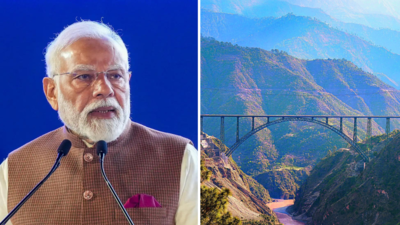
PM Modi to flag off Katra-Srinagar Vande Bharat, inaugurate world’s highest Chenab rail bridge


PM Modi to flag off Katra-Srinagar Vande Bharat, inaugurate world's highest Chenab rail bridge
PM to inaugurate Chenab rail bridge

NEW DELHI: Prime Minister Narendra Modi will inaugurate the world’s highest railway bridge, built over the Chenab River in Reasi district on June 6. Union minister Jitendra Singh confirmed this on Tuesday.Along with the bridge, the Prime Minister will also launch the Katra-Srinagar Vande Bharat train service. In a post on X, Jitendra Singh wrote: “Prime Minister Narendra Modi to inaugurate the Chenab Bridge on 6th June… History in the making. Just 3 days to go! The mighty Chenab Bridge, the world’s highest railway bridge, stands tall in Jammu and Kashmir…”The Chenab railway bridge, now officially part of the Katra to Sangaldan rail section, stands as the world’s highest railway arch bridge. This will be the first-ever train link connecting the Kashmir Valley with the rest of India.The bridge towers 359 meters above the Chenab River, surpassing even the Eiffel Tower in height. For the first time, Kashmir will be directly linked to the rest of India via rail.This bridge is a key component of the Udhampur-Srinagar-Baramulla Rail Link (USBRL) project, which spans 272 kilometers and includes 36 tunnels totaling 119 kilometers and nearly 1,000 bridges. The terrain’s complexity and the region’s seismic sensitivity posed major engineering challenges, but Indian engineers successfully executed this ambitious project, a feat many once deemed impossible.Railway officials highlighted the Chenab Bridge’s structural strength, mentioning that it can withstand wind speeds over 250 km/h and was built using about 30,000 metric tons of steel. One foundation, known as S20, is so massive it covers nearly one-third of a football field, specifying the scale and vision behind the structure.The entire USBRL project represents not just engineering excellence but also New India’s resolve and determination. With electric engines powered by specially designed overhead equipment (OHE) and advanced tunnel safety systems, the railway line is built for resilience and long-term service.The train service was earlier planned to begin on April 19 but was postponed after cancellation of PM Modi’s visit due to bad weather. After the Pahalgam attack and Operation Sindoor, this railway project now holds even more importance than before.


Source link