Business

‘Trump and Xi likely to speak this week,’ White House official says amid Tariff Turbulence

'Trump and Xi likely to speak this week,' White House official says amid Tariff Turbulence
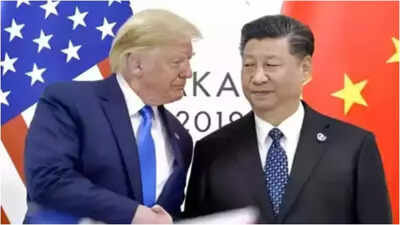
US President Donald Trump with China’s counterpart Xi Jinping (File Image)

US President Donald Trump and China’s counterpart Xi Jinping are likely to speak this week, White House press secretary Karoline Leavitt said on Monday, following the tension that flared between the two economic powerhouses over breaching tariff and trade restriction agreements.Responding to the reporter’s query, Leavitt said, “I can confirm that the two leaders will likely talk this week.” “And as always, when foreign leaders call, we will provide a readout of those calls,” she added, as per ABC News report.Treasury secretary Scott Bessent indicated on CBS’ “Face the Nation” that a discussion between Trump and Xi would occur “very soon” to address trade matters, including disputes over critical minerals and Chinese export limitations.Trump expressed confidence about speaking with Xi on Friday, while Chinese officials noted in April that no recent communications had occurred between the leaders.The US trade representative’s office extended tariff exclusions for certain solar manufacturing equipment and other Chinese products until August 31, providing additional time for ongoing Beijing negotiations.Bessent, who led Geneva negotiations resulting in a temporary trade war cessation between the world’s largest economies, acknowledged to Fox News that progress has been limited since then, Reuters reported.The US-China agreement to reduce triple-digit tariffs for 90 days sparked significant gains in global markets, though it failed to address core U.S. concerns about China’s state-controlled, export-focused economic structure.A US trade court determined on Wednesday that Trump exceeded his authority in implementing most tariffs on Chinese and other imports under emergency powers. However, a federal appeals court swiftly restored the tariffs the following day, temporarily suspending the trade court’s decision pending government appeal. The court set response deadlines of June 5 for plaintiffs and June 9 for the administration.


Source link

IndiGo doubles wide-body aircraft order


IndiGo doubles wide-body aircraft order

NEW DELHI: IndiGo doubled its wide body aircraft order by confirming the option for 30 wide body Airbus A350s. Now the airline has 60 A350s on firm order and has an option for 40 more. “We have signed the MoU with Airbus for confirming the option for 30 A350s. Their delivery starts in 2027,” airline CEO Pieter Elbers said at the IATA AGM on Sunday.“Delivery of initial 30 A350s ordered last year will begin in 2027 and continue till early part of next decade. Delivery of this next batch (of 350) will start after that and continue into the second half of the next decade,” Elbers said.


Source link

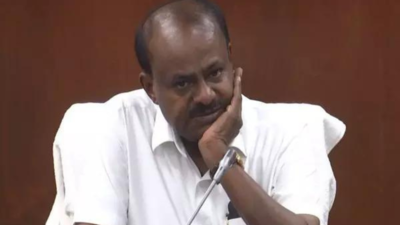
‘Tesla not interested in manufacturing in India’: H D Kumaraswamy


'Tesla not interested in manufacturing in India': H D Kumaraswamy

New Delhi: Tesla is not interested in manufacturing cars in India, but is keen to have showrooms to sell its vehicles, heavy industry minister H D Kumaraswamy said on Monday.Officials said the EV giant’s plans is focused on importing cars into the country, amid indications that Tesla is eyeing concessions under the India-US bilateral trade agreement to sell cheaper cars in India, without any commitment to manufacture locally. A top ministry official said since the deliberation with industry started to promote manufacturing of electric cars by global players, Tesla has not shown interest. tnn


Source link

Adani group denies WSJ report as ‘baseless’


Adani group denies WSJ report as 'baseless'

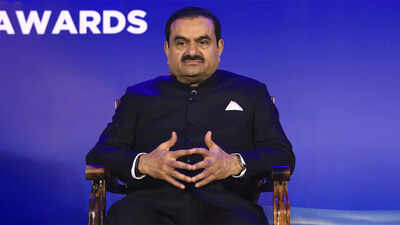
NEW DELHI: The Adani group has denied the Wall Street Journal report, alleging links between its entities and Iranian LPG as “baseless and mischievous”.“Further, we are not aware of any investigation by US authorities on this subject. The WSJ’s story appears to be based entirely on incorrect assumptions and speculation. Any suggestion that Adani group entities are knowingly in contravention of US sanctions on Iran is strongly denied. Any assertion to the contrary would not only be slanderous but also deemed to be an intentional act to injure the reputation and interests of the Adani group,” it said in a stock exchange filing.The statement said the Adani group does not handle any cargo from Iran at any of its ports, including shipments originating from Iran or any vessels operating under the Iranian flag. “Additionally, the Adani group does not manage or facilitate any ships whose owners are Iranian. This policy is strictly adhered to across all our ports.


Source link

Infosys promoters get Rs 2.3k crore dividend


Infosys promoters get Rs 2.3k crore dividend

BENGALURU/MUMBAI: Infosys promoters hold 54.2 crore shares (14.6% of total company shares), a stake so significant that the company’s latest dividend payout at Rs 43 per share translated into Rs 2,330 crore, shared among them. Infosys announced a total dividend of Rs 43 per share, including an interim dividend of Rs 21 per share for FY25. The total payout is a 52% jump compared to the Rs 1,527-crore dividend payout in FY24. Chairman Nandan Nilekani, owns four crore shares, earning him Rs 175 crore in dividends. Infosys co-founder NR Narayana Murthy holds 1.5 crore shares, reaping Rs 65 crore in dividends. The other promoters include Kris Gopalakrishnan with nearly 3.2 crore shares and dividends of Rs 137 crore. Sudha Gopalakrishnan maintains the highest individual shareholding of 9.5 crore shares, resulting in dividend earnings of Rs 410 crore. High Net-Worth Grand KidsThe next generation maintains substantial holdings. Narayana Murthy’s son, Rohan Murty, owns 6 crore shares, yielding Rs 261.5 crore in dividends, while Akshata Murty’s 3.8 crore shares earned Rs 167 crore. The third generation of Infosys promoters is now emerging into the spotlight, with some of the grandchildren holding significant stakes. Among them, Nikita and Milan Shibulal Manchanda each earned Rs 26.3 crore in dividends. Tanush Nilekani Chandra received Rs 14 crore, while the youngest shareholder, Ekagrah Rohan Murty, earned Rs 6.5 crore in dividends.


Source link

Back Adani Green expansion: Total


Back Adani Green expansion: Total

PARIS: TotalEnergies has said that it intends to back Adani Green’s expansion while lining up further investments in India.“On the renewable side, we continue to support the expansion of Adani Green, which already has 14 gigawatts of capacity. So, we will continue to support this growth,” Total Energies chairman and CEO Patrick Pouyanne said after meeting commerce and industry minister Piyush Goyal.After Adani got embroiled in legal actions in the US on corruption related allegations, TotalEnergies had said that it will not make any new “financial contribution as part of its investments in the Adani Group of companies”.Pouyanne said the company, which has invested $5 billion in India, intends to develop its energy business and sell more, especially from the US. “We are the largest US exporter of total energy. So, we can bring more. We also have a big venture in Mozambique,” he said.LNG is one of the sectors where India is seeking to step up purchases from the US as part of efforts to make trade between the two countries more equitable. India has a trade surplus of $41 billion with the US.Goyal met several business heads over the last two days. After his meeting with the minister, L’Oreal CEO Nicolas Hieronimus said the cosmetics major plans to more than double its business in India over the next couple of years.


Source link

Diversify critical mineral supply chain or face disruption: IEA


Diversify critical mineral supply chain or face disruption: IEA

PARIS: The International Energy Agency (IEA) on Monday cautioned that the concentration of critical mineral mining and processing in a few hands could affect global prices and supplies, while also suggesting that India should incentivise green mobility to reduce its vulnerability to high oil prices.“The world is entering a stage where the trade flows are not necessarily based on established WTO rules, but it is a different context. When we look at critical minerals, which are key for energy transition, but also key for defense, AI, manufacturing, chips, we are seeing a major concentration. This is a worry, because we at the IEA believe that the best energy security policy is diversification… my appeal to all the countries around the world (is to) try to diversify mining, refining and processing of key critical minerals otherwise, we may have unintended consequences of supply disruptions,” IEA executive director Fatih Birol said after a meeting with commerce & industry minister Piyush Goyal.China is the most important miner and processor of critical minerals such as lithium and the trade war has raised fears of supply disruptions and price increase as the US mounts pressure on Beijing.Asked about the transition to electric vehicles and the need to offer incentives, he said: “Countries, especially those which import oil, should consider incentives for electric cars to reduce imports… depending on the countries, the financial balances in some countries can be more generous. In some countries less generous, but there is a need, at least for the time being, to support the consumers in terms of buying their first electric cars. India should look at the electrification of mobility very closely, because currently we have low oil prices… If India wants to have an upper hand in terms of domestic oil trajectories, electric cars are one of the key solutions.”He also said the economics supports EVs. “In many countries, electric cars and commercial cars have the same prices. “Plus, in most countries around the world, if not all, driving one kilometer of a car is cheaper with electricity than the oil prices, unless oil prices go below $50 (a barrel). Sooner or later, electric cars will be dominating the streets.”Birol was all praise for India’s green energy transition as well as initiatives such as Ujjwala and LED bulbs. “In India, there was $1 investment in clean energy, there was $1 investment in fossil fuel. Today, for every $1 going to fossil fuels there is $4 for clean energy. India is a huge, huge, huge success story… This is good for India’s economy, good for India’s energy security and good for the world.”


Source link

B2B e-commerce startup Udaan raises $114mn


B2B e-commerce startup Udaan raises $114mn

BENGALURU: B2B ecommerce platform Udaan raised $114 million, led by M&G Investments and Lightspeed. The Bengaluru-based company said the funds will be used to deepen its category presence, particularly in FMCG and staples.Udaan secured the latest funding at a valuation of about $1.8 billion (unchanged), people familiar with the matter told TOI. The company previously raised $340 million in 2023, led by UK-based M&G Prudential, at the same valuation, marking a notable decline from its peak valuation of $3.2 billion in 2021. The company said it posted over 60% year-on-year revenue growth in 2024.


Source link

Auto companies flag China’s magnet supply risks


Auto companies flag China's magnet supply risks

NEW DELHI: Raising an alarm over challenges in procuring rare earth magnets from China, the auto industry has told govt that the matter will lead to stoppage of production of certain models from this week, while heading to a complete shutdown by the middle of next month. China has put the export curbs on rare earth magnets to ensure they are not used for making defence and weapon systems.This threatens launch of many new models, apart from disturbing the entire value chain across passenger vehicles, two-wheelers, and commercial vehicles. Companies at risk of production disruptions include, Maruti Suzuki, Mahindra, Hyundai and Kia, Hero Moto, TVS, and Bajaj Auto.Over the past month, auto companies discussed the matter with various govt departments to get clarity regarding the process to be adopted for obtaining the EUC (end-use case). On suggestions of the ministry of external affairs (MEA), they also had a discussion with the embassy of China in India. However, there has been no solution so far.The rare earth magnets are used for components like speedometers, electric motors, e-axles, electric water pumps, automatic transmission kits, speakers, sensors, and ignition coils in engines. Companies say an elaborate approval process has to be followed before the magnets can be procured, and a final approval from China’s ministry of commerce is also required.Heavy industries minister H D Kumaraswamy on Monday said govt is preparing to send a delegation of industry executives to China in two-three weeks to discuss the issue. Govt is working overtime to work out a solution to the issue, which began after the Chinese govt on April 4, imposed certain requirements in the export permit system for medium and heavy rare earth metals, its alloys, magnets and related products.On duration of inventory Maruti has before any impact on production, the automaker said it submitted an import application and it would be difficult to give “very specific details” until it receives a response. “It is not a restriction. It is an endorsement of end-use. In case there is an issue, we will inform all our stakeholders, including the stock exchange,” Rahul Bharti, senior executive director, corporate affairs, said.Bajaj Auto said the issue could have a “serious impact” on their EV production by July. The industry’s warning comes even as delegations of industry body Siam and component makers ACMA plan to visit China “at the earliest” to expedite permissions to procure the magnets used across automotive applications, both in petrol, diesel engines and EVs.


Source link

Boom towns’ share in credit rises as personal loans zoom


Boom towns' share in credit rises as personal loans zoom

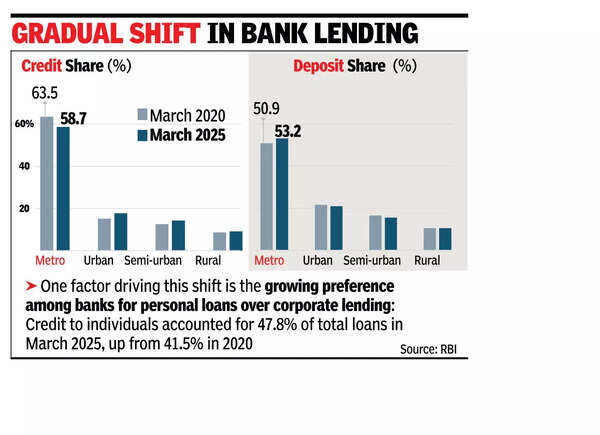
MUMBAI: In a gradual shift, share of bank deposits in metro cities has risen to 53.2% in March 2025 from 50.9% in 2020, even as their share in bank credit declined to 58% from 63% during the same period. The move is seem as a progress towards a policy goal of equitable distribution of bank funds across regions.One factor driving this shift is the growing preference among banks for personal loans over corporate lending. Credit to individuals accounted for 47.8% of total loans in March 2025, up from 41.5% in 2020, RBI data showed. Within this segment, the share of female borrowers rose to 23.8% from 22%.

.

For years, local politicians have demanded that deposits mobilised in a district or state be deployed for the development of that region. While metros still dominate the banking landscape, they are no longer pulling in deposit resources from across the country at the earlier scale.Another contributing factor is the movement of people and capital from metros to semi-urban areas. These regions have seen a rise in their share of deposits. As of March 2025, total individual deposits stood at Rs 234.5 lakh crore. Of this, metros accounted for Rs 124.8 lakh crore (53.3%), urban centres Rs 49 lakh crore (20.9%), semi-urban areas Rs 36.2 lakh crore (15.4%), and rural areas Rs 24.4 lakh crore (10.4%). In March 2020, the respective shares were 50.9%, 21.6%, 16.5%, and 10.9%. (see graphic) A similar pattern is visible on the lending side. Metro centres saw their credit share drop to 58.7% from 63.5%.Among personal loans, which have emerged as the fastest-growing category, growth slowed to 13.2% in FY25 but still outpaced overall credit growth. This lifted the segment’s share in total credit from 24.1% to 31% over five years. Housing loans became cheaper. The share of such loans with interest rates of 9% and above dropped to 36.8% in March 2025 from 54.5% a year earlier. Loans for consumer durables and other personal purposes – making up nearly a third of personal loans – also saw a decline in the share of high-interest borrowings (11% and above), from 50.3% to 47.4%.


Source link