Business

Rupee falls 26 paise to 85.78 against U.S. dollar in early trade on Trump tariffs


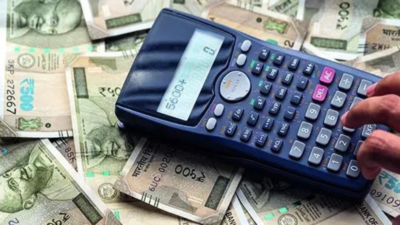
A roadside currency exchange vendor counts notes in New Delhi, India, February 10, 2025. REUTERS/Priyanshu Singh

A roadside currency exchange vendor counts notes in New Delhi, India, February 10, 2025. REUTERS/Priyanshu Singh
| Photo Credit: PRIYANSHU SINGH

The rupee slumped 26 paise to 85.78 against the U.S. dollar in early trade on Thursday, after U,S. President Donald Trump unleashed reciprocal tariffs on about 60 countries.

The U.S. has announced 27% reciprocal tariffs on India, saying New Delhi imposes high import duties on American goods, as the Donald Trump administration aims to reduce the country’s trade deficit and boost manufacturing.

The move is expected to impact India’s exports to the U.S. However, experts say that India is better-placed than its competitors, who also face increased levies.

Forex traders said, Mr. Trump’s reciprocal tariffs sent shockwaves through the market, and investors sought for safe haven.

At the interbank foreign exchange, the rupee opened at 85.77 against the greenback, then lost ground and touched 85.78, down 26 paise from its previous close.

On Wednesday, the rupee had settled at 85.52 against the U.S. dollar.

The new tariffs would bring about a fully-blown trade war which could in turn trigger a sharp global economic slowdown, forex traders added.

Meanwhile, the dollar index, which gauges the greenback’s strength against a basket of six currencies, was trading 0.72% lower at 103.06.

Brent crude, the global oil benchmark, fell 2.20% to $73.30 per barrel in futures trade.

The Indian rupee opened weak on risk aversion, as India was subjected to 27% of tariffs, which was unexpected, said Anil Kumar Bhansali, Head of Treasury and Executive Director Finrex Treasury Advisors LLP.

The range today is expected between 85.50 to 86.00, and exporters may sell as rupee approaches 86.00, he added.

In the domestic equity market, the 30-share BSE Sensex fell 324.40 points, or 0.42%, to 76,293.04, while the Nifty declined 75.05 points, or 0.32%, to 23,257.30 points.

Foreign institutional investors (FIIs) offloaded equities worth ₹1,538.88 crore on a net basis on Wednesday, according to exchange data.


Source link

26% Trump tariff on India not a setback, says Commerce Ministry


Commerce Secretary Sunil Barthwal. File photo

Commerce Secretary Sunil Barthwal. File photo
| Photo Credit: PTI

The Union Commerce Ministry is analysing the impact of 26 per cent reciprocal tariffs or import duties imposed by the United States on India, a senior government official said on Thursday (April 3, 2025).

Click here for the live updates on U.S. President Donald Trump’s tariff announcement

According to the official, the universal 10 per cent tariffs will come into effect on all imports into the United States from April 5 and the remaining 16 per cent from April 10.

“The Ministry is analysing the impact of the announced tariffs,” the official said, adding there is a provision that if a country would address the concerns of the US, the Trump administration can consider reducing the duties against that nation.

India is already negotiating a bilateral trade agreement with the U.S.. The two countries are aiming to finalise the first phase of the pact by fall (September-October) of this year.

“It is a mixed bag and not a setback for India,” the official said.

The U.S. President listed the high tariffs charged by India on American products as he announced reciprocal tariffs on countries across the board, declaring a 26 per cent “discounted” reciprocal tariff on India.

‘ Liberation Day’

“This is Liberation Day, a long-awaited moment. 2nd April 2025 will forever be remembered as the day American industry was reborn, the day America’s destiny was reclaimed, and the day that we began to make America wealthy again. We are going to make it wealthy, good, and wealthy,” Mr. Trump said on Wednesday (Apri 2, 2025) in remarks from the Rose Garden at the White House as he announced the closely watched reciprocal tariffs on countries that impose levies on American goods.

As he announced the tariffs, he held up a chart that showed the tariffs that countries such as India, China, the United Kingdom, and the European Union charge, along with the reciprocal tariffs that these countries will now have to pay.

The chart indicated that India charged 52 per cent tariffs, including currency manipulation and trade barriers, and America would now charge India a discounted reciprocal tariff of 26 per cent.

“India, very, very tough. Very, very tough. The Prime Minister just left. He’s a great friend of mine, but I said, you’re a friend of mine, but you’re not treating us right. They charge us 52 per cent…,” he said.


Source link

Sensex Drops Over 500 Points After Trump Announces 26% Reciprocal Tariff


New Delhi:

Sensex dropped by over 500 points, hours after US President Donald Trump announced a 26 per cent reciprocal tariff on India. 

The rupee fell 26 paise to 85.78 against the US dollar in early trade. 

Market experts stated that stocks are impacted by US President Donald Trump’s announcement of a reciprocal tariff. Investors are shifting funds to safer assets, such as gold, further exacerbating the sell-off in equities.

Among sectoral indices, Nifty Auto declined 1.25%, Nifty IT fell 1.67%, and Nifty Metals slipped 0.81%. However, the pharma sector outperformed, gaining 2.95%, as Trump’s tariffs did not impact this sector.

The impact of Trump’s announcement extended to US futures markets as well. At the time of filing this report, the Dow Jones Futures dropped by 1.94%, indicating a likely weak opening for Wall Street.

With global uncertainties rising, market participants remain cautious, closely monitoring developments related to trade policies and their economic implications.


Source link

TOI explainer: India likely to gain as Trump tariff shake-up hits Asia


TOI explainer: India likely to gain as Trump tariff shake-up hits Asia
The US tariffs present an opportunity for India to enhance its global trade and manufacturing position.

In a sweeping move on April 2, 2025, US President Trump announced a comprehensive new tariff framework aimed at reducing America’s trade deficit and bolstering domestic manufacturing. Dubbed the “Reciprocal Tariff Policy,” the plan first introduces a 10% universal tariff on all imports, effective April 5 through April 8. From April 9, this will be replaced by a set of country-specific reciprocal tariffs, significantly altering the cost of accessing the US market for over 60 trading partners.
The policy outlines three categories of imports:

  • Strategic goods like pharmaceuticals, semiconductors, copper, and energy products are fully exempt from any new tariffs.
  • Critical industrial sectors such as steel, aluminium, and autos face a blanket 25% tariff.
  • All remaining products fall under country-specific reciprocal tariffs, varying by trade imbalance and strategic priority.

Countries with large trade surpluses with the US, particularly in Asia, are among the most impacted. China tops the list, with certain goods now facing cumulative tariffs of up to 54%. Vietnam (46%), Bangladesh (37%), and Thailand (36%) follow closely.
It’s a mixed bag, not a setback: Commerce ministry
The commerce ministry is currently evaluating how the United States’ decision to impose 26% reciprocal tariffs on Indian imports will affect domestic industries, a senior government official said on Thursday.
“The ministry is analysing the impact of the announced tariffs,” the official said. They also noted that there is flexibility built into the US policy. “There is a provision that if a country would address the concerns of the US, the Trump administration can consider reducing the duties against that nation.”
“It is a mixed bag and not a setback for India,” the official added.
India’s tariff exposure: Lower than rivals, stronger opportunity
India’s position under the new regime is relatively advantageous. According to the Global Trade Research Initiative (GTRI) report, Indian goods face:

  • 25% tariffs on steel, aluminium, and autos (same as most countries).
  • Zero tariffs on pharmaceuticals, semiconductors, copper, and energy products.
  • A country-specific reciprocal tariff of 27% on all other exports, applied from April 9.

While a 27% tariff is significant, it’s well below what many Asian competitors now face. This creates a window of opportunity for Indian exporters to expand their market share in the US—but only if domestic reforms enable them to meet global standards on cost, quality, and scale.
“The imposition of higher reciprocal tariffs by the United States on several Asian countries, including China, Vietnam, Taiwan, Thailand, and Bangladesh, presents an opportunity for India to strengthen its position in global trade and manufacturing,” the GTRI report notes.
Sector-specific opportunities for India
1. Textiles and garments: A ready pivot
India’s textile sector stands out as the clearest short-term winner. High US tariffs on garments from China (54%) and Bangladesh (37%) make Indian products significantly more competitive in price.
India already possesses a large and diverse textile manufacturing base, and this cost advantage could help attract new orders from American retailers looking to diversify away from higher-tariff suppliers. Additionally, global brands may shift production from Bangladesh and China to India to avoid tariff burdens, especially for high-volume, low-margin products.
2. Electronics and smartphones: PLI-led growth
The electronics sector is another major area where India can benefit, the GTRI report said. With Vietnam and Thailand now facing high US duties on electronics and telecom goods, India has an opening to position itself as a competitive alternative.
India’s Production-Linked Incentive (PLI) schemes, particularly for smartphones and components, have already spurred investment from global players like Apple and Samsung. This momentum, paired with tariff advantages, could further strengthen India’s role in the electronics supply chain—especially in assembly and component manufacturing.
3. Semiconductors: Lower-end entry point
Although India currently lacks the advanced semiconductor manufacturing capabilities of Taiwan or South Korea, the steep 32% tariff on Taiwanese goods could lead companies to diversify parts of the supply chain.
India has the potential to build capacity in lower-end segments like packaging, testing, and fabrication of legacy chips. With sustained infrastructure development and policy support, India could begin to participate meaningfully in the global chip ecosystem.
4. Machinery, toys, and auto components: Diversification ahead
US tariffs on Chinese and Thai exports also affect sectors such as machinery, automobile parts, and toys. India, if it plays its cards right, could position itself as an alternate source in these segments. However, the key challenges will be attracting foreign direct investment, scaling production, and maintaining quality standards.
India’s advantage is conditional, not automatic
Despite the tariff opening, the GTRI report stresses that benefits for India are not guaranteed. To capitalize on this moment, India must address long-standing structural issues that hinder manufacturing growth.
These include:

  • Scaling up production capacity to meet large export orders.
  • Enhancing domestic value addition so that goods are not just assembled but produced in India.
  • Improving ease of doing business, particularly around labor laws, compliance, and taxation.
  • Modernizing logistics and infrastructure to reduce costs and improve supply chain reliability.

Policy predictability and long-term investment in education and technical skills will also be essential to sustaining growth across manufacturing sectors.
“India needs deep reforms for enabling scale production, domestic value addition and improving competitiveness to benefit,” the GTRI report emphasizes.
(With inputs from agencies)


Source link

India imposes ‘uniquely burdensome’ certification requirements: White House


India imposes its “own uniquely burdensome” testing and certification requirements in sectors such as chemicals, telecom products, and medical devices, making it “difficult or costly” for American companies to sell their products in the country, the White House said.

Click here for the live updates on U.S. President’s announcement on tariff

In a fact sheet issued after US President Donald Trump announced sweeping reciprocal tariffs on countries that levy taxes on US goods, the White House stated that non-tariff barriers—meant to limit the quantity of imports/exports and protect domestic industries—also deprive US manufacturers of reciprocal access to markets around the world.

Citing the example of India, the White House fact sheet said: “India imposes its own uniquely burdensome and/or duplicative testing and certification requirements in sectors such as chemicals, telecom products, and medical devices that make it difficult or costly for American companies to sell their products in India. If these barriers were removed, it is estimated that U.S. exports would increase by at least USD 5.3 billion annually.”

Mr. Trump announced a 26 per cent “discounted reciprocal tariff” on India, half of the 52 per cent levies imposed by the country on American goods, as he described India as “very, very tough.” The fact sheet, titled ‘President Donald J Trump Declares National Emergency to Increase our Competitive Edge, Protect our Sovereignty, and Strengthen our National and Economic Security’, noted that Trump has declared that foreign trade and economic practices have created a national emergency, and his order imposes responsive tariffs to strengthen the international economic position of the United States and protect American workers.

On the issue of addressing trade imbalances, the White House said that Mr. Trump is working to level the playing field for American businesses and workers by confronting the unfair tariff disparities and non-tariff barriers imposed by other countries.

“For generations, countries have taken advantage of the United States, tariffing us at higher rates,” it said, citing the example that the United States imposes a 2.5 per cent tariff on passenger vehicle imports (with internal combustion engines), while the European Union (10 per cent) and India (70 per cent) impose much higher duties on the same product. For networking switches and routers, the United States imposes a 0 per cent tariff, but India (10-20 per cent) levies higher rates. For rice in the husk, the US imposes a tariff of 2.7 per cent, while India (80 per cent), Malaysia (40 per cent), and Turkey (31 per cent) impose higher rates. Apples enter the United States duty-free, but not so in Turkey (60.3 per cent) and India (50 per cent).

“The United States has one of the lowest simple average most-favoured-nation (MFN) tariff rates in the world at 3.3 per cent, while many of our key trading partners, like Brazil (11.2 per cent), China (7.5 per cent), the European Union (5 per cent), India (17 per cent), and Vietnam (9.4 per cent), have simple average MFN tariff rates that are significantly higher,” the White House fact sheet said.

The White House stated in the fact sheet that China’s non-market policies and practices have given China global dominance in key manufacturing industries, decimating US industry. “Between 2001 and 2018, these practices contributed to the loss of 3.7 million US jobs due to the growth of the US-China trade deficit, displacing workers and undermining American competitiveness while threatening US economic and national security by increasing our reliance on foreign-controlled supply chains for critical industries as well as everyday goods.”

As he announced the tariffs from the Rose Garden in the White House, Trump held up a chart showing the tariffs that countries such as India, China, the European Union, Japan, Taiwan, South Korea, Bangladesh, Sri Lanka, and Pakistan levy on US products and the reciprocal levies that these countries will now have to pay.

On India, the chart showed that the country charged 52 per cent tariffs on the US “including currency manipulation and trade barriers,” and America will now charge India “discounted reciprocal tariffs” of 26 per cent.

“India, very, very tough. Very, very tough. The Prime Minister just left. He’s a great friend of mine, but I said, ‘You’re a friend of mine, but you’re not treating us right.’ They charge us 52 per cent. You have to understand, we charge them almost nothing, for years and years and decades, and it was only seven years ago, when I came in, that we started with China and we took in hundreds of billions of dollars from China in tariffs,” Mr. Trump said.

Prime Minister Narendra Modi had visited Washington DC in February, less than a month after Mr. Trump took the oath of office and began his second term in the White House as President.

Describing 2 April 2025 as “Liberation Day,” Mr. Trump announced reciprocal tariffs of varying degrees on 185 nations.

“This is Liberation Day, waiting for a long time. 2 April 2025 will forever be remembered as the day American industry was reborn, the day America’s destiny was reclaimed, and the day that we began to make America wealthy again, going to make it wealthy, good and wealthy,” Mr. Trump said on Wednesday (April 2) in remarks from the Rose Garden in the White House as he announced the closely-watched reciprocal tariffs on countries that impose levies on American goods.

In his nearly hour-long remarks on a cold Wednesday late afternoon in the Rose Garden, Mr. Trump listed various countries from around the world and the tariffs they charge on US products, saying, “For decades, our country has been looted, pillaged, raped, and plundered by nations near and far, both friends and foes alike. American steelworkers, autoworkers, farmers, and skilled craftsmen… They really suffered gravely. They watched in anguish as foreign leaders have stolen our jobs. Foreign cheaters have ransacked our factories, and foreign scavengers have torn apart our once-beautiful American dream.”

Joined by factory and automotive workers as well as members of his Cabinet in the audience, Mr. Trump signed the “historic Executive Order” instituting reciprocal tariffs on countries throughout the world.

“Reciprocal. That means they do it to us and we do it to them. Very simple. Can’t get any simpler than that,” Mr. Trump said to applause from those gathered for the event.


Source link

India’s first reaction on Donald Trump’s 26% reciprocal tariffs: ‘It’s mixed bag, not setback…’


India’s first reaction on Donald Trump’s 26% reciprocal tariffs: ‘It's mixed bag, not setback…’
India and the US are currently in discussions regarding a bilateral trade agreement. (AI image)

India has termed US President Donald Trump’s announcement of 26% reciprocal tariffs a ‘mixed bag’ and not a ‘setback’. The commerce ministry is assessing the 26% reciprocal tariffs imposed by the US on India, a senior government official said on Thursday. The official said that a universal 10% tariff will be implemented on all imports into the US from April 5, with an additional 16% taking effect from April 10.
“The ministry is analysing the impact of the announced tariffs,” the official was quoted as saying by PTI. The official added that provisions exist for the Donald Trump administration to consider duty reductions for countries that address US concerns.
India and the US are currently in discussions regarding a bilateral trade agreement, with both nations aiming to conclude the initial phase by fall (September-October) this year.
“It is a mixed bag and not a setback for India,” the official remarked.
Also Read | Donald Trump announces 26% ‘discounted’ reciprocal tariff on India: What will be the impact and is Indian economy relatively insulated?
Trump highlighted India’s high tariffs on American products whilst announcing across-the-board reciprocal tariffs, implementing a 26% “discounted” reciprocal tariff on India.
“This is Liberation Day, a long-awaited moment. 2nd April 2025 will forever be remembered as the day American industry was reborn, the day America’s destiny was reclaimed, and the day that we began to make America wealthy again. We are going to make it wealthy, good, and wealthy,” Trump declared on Wednesday from the White House Rose Garden whilst announcing the anticipated reciprocal tariffs.
Also Check| Donald Trump tariff announcements live
During the announcement, he displayed a chart showing tariffs imposed by various countries including India, China, the UK, and the European Union, alongside the new reciprocal tariffs these nations would face.
The chart revealed India’s 52 per cent tariffs, including currency manipulation and trade barriers, against which America would now impose a discounted reciprocal tariff of 26 per cent.
“India, very, very tough. Very, very tough. The prime minister just left. He’s a great friend of mine, but I said, you’re a friend of mine, but you’re not treating us right. They charge us 52 per cent…,” he said.


Source link

Top stocks to buy today: Stock recommendations for April 3, 2025


Top stocks to buy today: Stock recommendations for April 3, 2025
Top stocks to buy (AI image)

Top stock market recommendations:According to Aakash K Hindocha, Deputy Vice President – WM Research, Nuvama Professional Clients Group, Computer Age Management Services, PCBL Chemical, and Balrampur Chini Mills are the top buy calls for today. Here’s his view on Nifty, Bank Nifty and the top stock picks for March 27, 2025:
Index View: Nifty
Having rallied nearly 1900 points from its 9 month low in March, Nifty has now retraced 38.2% of this move on Fibonacci retracement scale. Given the price action on Nifty this week, it could well retrace 50% of this whole 1900 point rally on account of jitters on the tariff news which would hit Indian markets on Thursday early hours. The index continues to hold above the 6 month trendline breakout seen on weekly charts and this pullback is just a retesting of the same. The broader trend remains buy on dip and levels of 24000 could be soon seen by the end of this month. Markets are nervous ahead of the tariff implementation as well as the RBI MPC meeting next week. For now the 22900 -23000 zone is seen as a strong support for Nifty.
Bank Nifty
In line with Nifty, Bank Nifty as well shred close to 1.5% in Tuesday’s session but staged a comeback in Wednesday’s session. Bank Nifty has retested its 200DMA sub 51000 mark after completing its initial targets at 51650 which we had highlighted last week. The index has been leaning forwards in counts of – one step back and two step forward. Any dips between 49900 and 50400 are likely to get bought into for a strong up move towards 52500, given the outperforming stance of the index against Nifty for the past 6 months. Bank Nifty is down less than 4% v/s a drop of 10% on Nifty in the past 6 months.
CAMS (BUY):
LCP: 3756.75
Stop Loss: 3615
Target: 4150
Computer Age Management Services stock has bounced over 25% from its recent lows printed in March 2025. The price action suggests that the ongoing 2 week sideways consolidation is nearing an end and an upside resumption is on cards paving way for a bullish flag breakout formation. Given the strong bounce back from its low, stock is likely to extend its rally northwards by 10-12% after the breakout above 3800.
PCBL (BUY):
LCP: 435.40
Stop Loss: 405
Target: 470
Higher high, higher low formation seen on charts of PCBL with the stock sustaining above its recent dynamic resistance plotted on the 200 DMA. Scrip has given a fresh momentum breakout as it has closed above the resistance of 430 created by a downward sloping trendline. A quick 6-8% move can unfold from the current set up at which the stock holds.
BALRAMCHIN (BUY):
LCP: 555.40
Stop Loss: 532
Target: 596
With stock breaking above its 200 DMA resistance in the last fortnight, Balrampur Chini Mills has also given a breakout above sloping trendline resistance confirming a flag pattern breakout on daily charts. The consolidation above its 200 DMA before resuming the move forward confirms the presence of buyers for an anticipated up move towards 600 odd in the next couple of trading days.
Disclaimer: The opinions, analyses and recommendations expressed herein are those of brokerage and do not reflect the views of The Times of India. Always consult with a qualified investment advisor or financial planner before making any investment decisions.


Source link

Gold hits new high in US after Trump imposes reciprocal tariffs on ‘Liberation Day’


Gold hits new high in US after Trump imposes reciprocal tariffs on 'Liberation Day'

Gold prices reached a new high on Thursday(local time) after President Donald Trump’s declaration of new tariffs against most US trading partners.
Gold surged past its previous record around 2300 GMT, climbing above $3,150 an ounce as investors sought refuge in the precious metal amid declining stock market futures.
Gold trading continued its upward trajectory, reaching approximately $3,160 per ounce at 2345 GMT.
As of 0018 GMT, spot gold was up 0.4% at $3,145.93 an ounce, after hitting a record high of $3,167.57 earlier in the session.
Gold prices have risen nearly 20% since the start of 2025.
At the White House Rose Garden, Trump presented a chart detailing extensive measures, introducing particularly severe tariffs on major trading partners China and the European Union on what he termed “Liberation Day.”
Trump directed the most substantial penalties towards what he described as “nations that treat us badly,” implementing 34 %on Chinese goods, 20 %on European Union imports, and 24 %on Japanese products.
The presented chart indicated India’s 52 per cent tariffs “including currency manipulation and trade barriers,” against which the US would implement a “discounted reciprocal tariff” of 26 per cent.
Trump announced a “baseline” tariff of 10 %for remaining nations, including Britain.
Global financial markets experienced disruption following Trump’s announcement of comprehensive tariffs, particularly targeting China and the European Union, potentially compromising the economic statbility.
The US president revealed these measures after Wall Street’s closing bell, but the news still impacted open markets, pushing stock futures and bond yields lower, while gold prices achieved new records.
Later that evening, US futures declined, with the Dow Jones decreasing 2.4% at approximately 2345 GMT, Nasdaq dropping 4.2%, and S&P 500 futures falling 3.5%.
Trump’s recent trade announcements have consistently negatively affected Wall Street.
Technology companies relying on foreign-manufactured components experienced sharp declines, with Apple decreasing 7.4% after-hours, Nvidia falling 5.2%, and TSMC dropping 5.9%.
Futures markets typically demonstrate greater volatility compared to standard indices.
The clothing industry took a major hit, with Chinese products set for a 34% additional duty from April 9 and Vietnamese goods facing a new 46% “reciprocal” tariff.
Companies manufacturing in China or Vietnam experienced substantial declines, with Gap dropping 8.5 % after hours, Ralph Lauren declining 7.3%, and Nike falling 7.1%.
The dollar depreciated over one percent against the euro moments after Trump’s initial statement, while Bitcoin dropped over 3% in the evening after the announcements.


Source link

Asian markets slip following Trump’s announcements of big tariff hikes


File picture of an electronic stock board showing Japan’s Nikkei index.

File picture of an electronic stock board showing Japan’s Nikkei index.
| Photo Credit: AP

Asian markets and U.S. futures tumbled Thursday (April 3, 2025) following U.S. President Donald Trump’s announcement of big increases in tariffs on imports of goods from around the world.

Tokyo’s Nikkei 225 index dipped more than 3.4%, but recovered slightly. It was down 2.9% at 34,699.52.

Mr. Trump said he was imposing a 24% “reciprocal tariff” on Japan, one of the United States’ closest allies.

Donald Trump’s ‘Liberation Day’ tariffs: Follow LIVE updates here

South Korea, also an ally, was hit with a 25% tariff. Its benchmark Kospi slumped 1.9% soon after the opening, to 2,459.30.

In Australia, the S&P/ASX 200 fell 1.8% to 7,793.10.

The future for the S&P 500 dropped 3% while that for the Dow Jones Industrial Average lost 2%, auguring potential losses when U.S. markets reopen on Thursday (April 3, 2025).

On Wednesday (April 2, 2025), U.S. stocks whipped through another dizzying day before Mr. Trump’s unveiling of his “Liberation Day” tariffs.

The S&P 500 rose 0.7% to 5,670.97 after careening between an earlier loss of 1.1% and a later gain of 1.1%. It’s had a pattern this week of opening with sharp drops only to finish the day higher.

The Dow Jones Industrial Average added 0.6% to 42,225.32, and the Nasdaq composite climbed 0.9% to 17,601.05.

Elon Musk’s Tesla helped knock the market around after initially falling more than 6% following a report that it delivered fewer electric vehicles in the first three months of the year than it did in last year’s first quarter. It closed 5.3% higher.

Tesla is one of Wall Street’s most influential stocks because of its immense size, and it’s faced backlash due to anger about CEO Elon Musk’s leading the U.S. government’s efforts to cut spending.

On Wall Street, Newsmax fell 77.5% in its third day of trading to give back some of the meteoric gains from its debut at the start of the week. It surged 735% Monday and then another 179% on Tuesday.

Several airlines, meanwhile, flew higher to recover some of the sharp losses taken recently on worries that tariff-weary customers will fly less. United Airlines climbed 4.6%.

Financial markets around the world have broadly been shaky lately because of uncertainty about Trump’s trade war. He has said he wants tariffs to make the global system more fair and to bring manufacturing jobs back to the United States from other countries. But tariffs also threaten to grind down growth for the U.S. and other economies, while worsening inflation when it may be stuck above the Federal Reserve’s 2% target.

After the U.S. market closed, Mr. Trump declared a 10% baseline tax on imports from all countries and higher tariff rates on dozens of nations that run trade surpluses with the United States. The president held up a chart while speaking at the White House, showing the United States would charge a 34% tax on imports from China, a 20% tax on imports from the European Union, and 32% on Taiwan.

Mr. Trump earlier announced 25% tariffs on auto imports; levies against China, Canada and Mexico; and expanded tariffs on steel and aluminium. Trump has also put tariffs against countries that import oil from Venezuela and plans separate import taxes on pharmaceutical drugs, lumber, copper and computer chips.

Treasury yields swung in the bond market, echoing the indecision seen in the stock market.

The yield on the 10-year Treasury fell as low as 4.11% in the morning from 4.17% late Tuesday (April 1, 2025) and from roughly 4.8% early this year. But it later rose to 4.18%. Higher yields can indicate higher expectations for the economy or for inflation

In other dealings early Thursday (April 3, 2025), U.S. benchmark crude plunged $2.08 to $69.63 per barrel. Brent crude, the international standard, gave up $2.06 to $72.89 per barrel.

The dollar fell to 148.07 Japanese yen from 149.28 yen. The euro rose to $1.0897 from $1.0855.


Source link

Global markets slide after Trump slaps huge reciprocal tariffs on ‘Liberation Day’


Global markets slide after Trump slaps huge reciprocal tariffs on 'Liberation Day'

Asian markets and US stock futures tumbled on Thursday after Donald Trump unveiled a sweeping increase in tariffs on imports from across the globe, escalating trade tensions and sending investors into a frenzy.
Tokyo’s Nikkei 225 index dropped more than 3.4 per cent before a slight recovery, closing 2.9 per cent lower at 34,699.52. South Korea’s Kospi also slumped, losing 1.9 per cent to 2,459.30 after the US imposed a 25 per cent tariff on South Korean imports.
Australia’s S&P/ASX 200 slid 1.8 per cent to 7,793.10, while US futures hinted at steep losses ahead. The S&P 500 futures contract fell 3 per cent, and Dow Jones Industrial Average futures dropped 2 per cent, setting the stage for a volatile session when Wall Street reopens.
“Liberation Day” tariffs
US President Trump’s tariff announcement, which he called “liberation day” measures, included a 24 per cent “reciprocal tariff” on Japan, one of America’s closest allies, along with new levies on China, the European Union, Canada, and Mexico. Speaking at the White House, Trump showed off a chart outlining new import taxes, including a 34 tariff on Chinese goods, 20 per cent on the EU, and 32 per cent on Taiwan.
He justified the move as an effort to “bring fairness” to global trade and revive US manufacturing jobs. However, analysts warn the tariffs could stifle economic growth and push inflation higher at a time when the Federal Reserve is struggling to keep it under control.
Wall Street
Before the tariff announcement, US markets saw another turbulent session with the S&P 500 climbing 0.7 per cent to 5,670.97 after oscillating between a 1.1 per cent loss and a 1.1 per cent gain.
The Dow Jones Industrial Average rose 0.6 per cent to 42,225.32, while the tech-heavy Nasdaq advanced 0.9 per cent to 17,601.05.
Tesla dropped over 6 per cent on weak first-quarter deliveries but later recovered. However, it rebounded to close 5.3 per cent higher. CEO Elon Musk faced backlash over his involvement in the US government’s aggressive cost-cutting policies.
Meanwhile, Newsmax, which soared 735 per cent on its debut earlier in the week, plummeted 77.5 per cent on Wednesday, giving back some of its major gains.
Airline stocks recovered from recent tariff-related losses, with United Airlines climbing 4.6 per cent.
The bond market reflected the nervousness in equities. The yield on the 10-year US Treasury note swung between 4.11 per cent and 4.18 per cent, reflecting uncertainty over economic growth and inflation.
Oil prices tumbled in early trading on Thursday. US benchmark crude dropped $2.08 to $69.63 per barrel, while Brent crude fell $2.06 to $72.89 per barrel, as per AP.
In currency markets, US dollar weakened against the Japanese yen, slipping to 148.07 from 149.28. Euro, on the other hand, strengthened slightly, rising to $1.0897 from $1.0855.


Source link