Business

Small tea growers seek regulation of leaf agents, weather-based crop insurance


GUWAHATI

The North East Confederation of Small Tea Growers’ Association (NECSTGA) has sought steps, including weather-based crop insurance and regulation of leaf-dealing agents, to safeguard the 200-year-old beverage industry.

In a memorandum to the Chairperson of the Parliamentary Standing Committee on Commerce, the NECSTGA pointed out that the woes of small tea growers need to be addressed as they accounted for 52% of India’s total tea production.

The association’s president, Diganta Phukan, and secretary general, Binod Buragohain, said the quality of tea has been deteriorating because certain players blended poor quality teas, and unscrupulous agents acted as a bridge between small tea growers and bought leaf factories.

A bought leaf factory is a tea processing plant not associated with any estate or plantation group. A bought tea factory produces granular or orthodox teas, largely from leaves procured from small tea growers through agents or suppliers.

“More than 90% of the leaves are transported to the BLFs (bought leaf factories) by the agents, and 50% of these leaves are damaged during transportation,” the NECSTGA said, lamenting that small tea growers do not get the right prices because the bought leaf factories pay for the leaves through these agents.

“All agents should be regulated by the Tea Board of India through a monitoring mechanism,” the association said, calling for transparency in the supply chain to maintain the quality of tea.

Referring to Prime Minister Narendra Modi’s avowed focus on the northeastern region, the NECSTGA said the Centre should treat tea like other crops, including paddy and wheat, and come up with a minimum or sustainable support price policy. The small tea growers, in particular, have been finding it tough to stay afloat due to the increasing cost of production.

Underlining the impact of climate change on tea plantations, the association said weather-based crop insurance had become necessary for the small tea growers to cover damage due to drought and heavy rainfall. “Tea bushes have been damaged and green leaf production has been declining (due to extreme conditions),” it said.

The other suggestions of the NECSTGA include promotional schemes to increase the per capita consumption of tea in India to one kilogramme from the current 840 grams, and a brand name for Assam tea. It said the image of Assam tea had suffered without branding, which necessitated adherence to quality.

“Blenders are making tea brands in different names by adding poor quality made (processed) teas from various sources,” the association said.

The NECSTGA also said the Tea Board of India’s schemes should be made available for small tea growers across the northeastern States, beyond Assam.


Source link

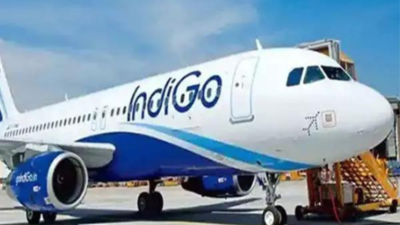
IndiGo confirms order for 30 additional Airbus A350s, strengthens wide-body fleet


IndiGo confirms order for 30 additional Airbus A350s, strengthens wide-body fleet

IndiGo airlines announced on Sunday that it has placed a firm order for an additional 30 wide-body A350 aircraft with Airbus, bringing their total A350 fleet commitment to 60 aircraft.Following their initial firm order of 30 A350 aircraft in April 2023, which included an option for 70 additional planes, IndiGo has now confirmed orders for half of the optional aircraft.During a press conference in the national capital, IndiGo’s Chief Executive Officer Pieter Elbers confirmed the conversion of 30 aircraft from their optional quota into a firm order.The carrier currently maintains an order book exceeding 900 aircraft, scheduled for delivery over the upcoming years.As India’s largest airline strengthens its international presence, it plans to commence operations to 10 new international destinations using leased Boeing 787 aircraft during the fiscal year ending March 2026.Meanwhile, in a separate development, IndiGo, Delta Air Lines, Air France-KLM and Virgin Atlantic announced their intention to establish a leading collaborative network connecting India with Europe and North America. India’s rapidly expanding aviation sector serves as a crucial element in this strategic alliance.The partnership combines IndiGo’s comprehensive domestic routes with Delta’s North American and transatlantic operations, Air France-KLM’s extensive European and North American coverage, and Virgin Atlantic’s British and transatlantic services. This integration aims to provide travellers with enhanced accessibility, streamlined connections and uniform service quality across different continents.The airlines’ collaboration will connect numerous cities across the United States, Canada, Europe and India, addressing the increasing international travel demands whilst establishing new benchmarks for global aviation connectivity and partnership.Read more: IndiGo, Delta Air Lines, Air France-KLM and Virgin Atlantic partner to connect India with Europe and North America


Source link

‘Don’t see as competition’: VinFast Asia CEO on rivaling Tesla with premium EV launch plans in India


'Don’t see as competition': VinFast Asia CEO on rivaling Tesla with premium EV launch plans in India
VinFast Asia CEO Pham Sanh Chau

VinFast, the electric vehicle arm of Vietnam’s Vingroup, is preparing a bold entry into the Indian market- setting the stage for direct competition with Tesla. With bookings for its vehicles scheduled to open this month, VinFast is banking on its VF7 and VF6 models to establish itself as a premium EV brand in one of the world’s fastest-growing auto markets.Pham Sanh Chau, CEO of VinFast Asia and Vietnam’s former ambassador to India, confirmed that the company aims to launch its vehicles ahead of the upcoming festive season. “We have our products in 16 countries, including Southeast Asia, the Middle East, the US… and VinFast will come to India with an entire ecosystem. Our first target is to position ourselves as the premium EV car in India through the VF7 and VF6, which we plan to roll out in the country by the festival season this year,” said Chau, as quoted by news agency PTI. Though Tesla is widely expected to enter the Indian market with fanfare, Chau downplayed notions of rivalry. “We don’t see Tesla, or even BYD for that matter, as competition. Our mission is green mobility. Anyone who shares that dream will be our friend,” he said. Still, VinFast’s plans clearly signal its intent to compete in the same space Tesla is eyeing- affluent urban buyers willing to pay a premium for electric innovation.“In Vietnam, we are the biggest selling car company, the largest charger and taxi service provider. We have done everything in Vietnam, and this is the time for us to go global. We wanted to enter India as it is a growing, dynamic automobile market,” Chau announced talking about expanding in India.VinFast has already invested $500 million in its new manufacturing facility in Thoothukudi, Tamil Nadu, with a total outlay of $2 billion committed by 2030. The plant, completed in just 15 months with strong state and central government support, will serve both the Indian market and export destinations in the Middle East and Africa. Initial production capacity is pegged at 50,000 units annually, with a ramp-up to 150,000 planned based on demand.To support its launch, VinFast will showcase its models at high-traffic locations such as shopping centres and airports before bookings open. The VF7 and VF6, currently manufactured in Vietnam, will be imported initially, though localisation is central to the company’s long-term strategy. “Localisation will help with government incentives, reduce costs, and make us more competitive,” Chau also said, adding that the company does not currently benefit from duty exemptions in India.Pricing has not yet been finalised, but Chau promised it would be “affordable” despite the premium positioning. “India is a sensitive market, and we will have an affordable price,” he said, while stressing the VF7 and VF6 will be “premium vehicles.”Beyond manufacturing, VinFast is laying the foundation for an EV ecosystem in India. This includes dealer networks, authorised service centres, charging infrastructure, and a used vehicle exchange program. Talks with state governments are underway to establish charging stations, with Chau expressing confidence in attracting support from Indian investors as well.By 2030, VinFast expects to employ up to 3,500 local workers, having already interviewed hundreds of engineering graduates from Tamil Nadu, accordingto Chau’s statement to PTI. The company’s expansion plan reflects a deep commitment to India, which Chau described as a “growing, dynamic automobile market.”


Source link

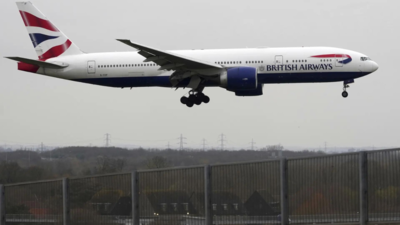
British Airways plans to boost India operations, eyes cargo gains from India-UK FTA


British Airways plans to boost India operations, eyes cargo gains from India-UK FTA
Image used for representative purposes

British Airways, operating for over a century in India, is set to expand its routes and flight frequencies, while also capitalising on cargo opportunities emerging from the proposed India-UK free trade agreement (FTA), according to Chairman and CEO Sean Doyle.The airline currently operates 56 weekly flights across five Indian cities- including thrice-weekly services from Mumbai, twice-daily flights from Delhi, and daily operations from Chennai, Bengaluru, and Hyderabad. This marks a significant increase from the 46 weekly flights it operated pre-pandemic. Calling India the airline’s largest single market outside the United States.In an interview with news agency PTI, Doyle said, “India is a very, very important market for British Airways. We’ve seen a 25 per cent increase in capacity compared to pre-pandemic levels, and we plan to continue expanding routes and frequencies.”British Airways will reintroduce first-class service on the Mumbai–London Heathrow route from October 27, using its Boeing 787-9 aircraft. This marks the return of the premium offering after a five-year hiatus, complementing the existing business, premium economy, and economy cabins.Doyle noted the growing importance of India in the airline’s global strategy, especially as demand for air travel surges among the country’s expanding middle class. “We want to be part of the growth of aviation in India. About 2,500 people work for British Airways in India. We see growth here that’s unprecedented in a generation,” he said.Increased cargo traffic is also expected under the FTA, particularly from niche export segments not just from the UK but also from surrounding markets served by British Airways.Commenting on the broader trade landscape, Doyle emphasized the importance of liberalized trade frameworks. “I was extolling the positives of a free trade agreement between the UK and India. Anything moving in the opposite direction needs to be examined closely,” he said, referring to uncertainties around tariffs and trade policies.British Airways is also preparing for future growth through fleet expansion, with a focus on acquiring more wide-body aircraft to support long-haul connectivity. India remains a strategic priority within this plan.He noted distinct travel trends across Indian cities. While Delhi and Mumbai predominantly cater to origin-and-destination (O&D) traffic between India and the UK, Bengaluru and Hyderabad are largely transit points for passengers heading to the United States.“If you look at markets like Bangalore and Hyderabad, that still is very much driven by connecting traffic into the United States… as we launch more services into India, and as we add more services into the United States, we give people more of a one-stop solution to get to more places than they can with any other carrier,,” Doyle added.


Source link

Gross GST collections rise 16.4% to over ₹2.01 lakh crore in May


The image is used for representational purposes only.

The image is used for representational purposes only.
| Photo Credit: Getty Images/iStockphoto

Gross Goods and Services Tax (GST) collections rose 16.4% to over ₹2.01 lakh crore in May, as per government data released on Sunday (June 1, 2025).

This comes after a record high GST collection in April, when the revenues touched an all-time high of ₹2.37 lakh crore.

In May, gross revenues from domestic transactions rose 13.7% to about ₹1.50 lakh crore, while GST revenue from imports grew 25.2% to ₹51,266 crore.

In May, the gross central GST revenues stood at ₹35,434 crore, State GST revenues at ₹43,902 crore and integrated GST at about ₹1.09 lakh crore. Revenues from Cess were at ₹12,879 crore.

In May, 2024, the mop-up was ₹1,72,739 crore.

Meanwhile, total refunds during the month fell 4% to ₹27,210 crore. Net GST mop-up stood at about ₹1.74 lakh crore, a 20.4% year-on-year growth.

Deloitte India Partner M S Mani said the wide variations in the growth of GST collections across states require a thorough analysis across the sectors that are important in each state.

While large states like Maharashtra, West Bengal, Karnataka and Tamil Nadu have reported collection increases of 17% to 25%, similar large states like Gujarat, Andhra Pradesh and Telangana have shown increases of up to 6%.

Some states like Madhya Pradesh, Haryana, Punjab and Rajasthan, have shown median increases of 10%.

“Hence, the average growth across the country does not appear to be uniformly reflected across States, possibly due to sectoral or seasonal factors which require a deeper data based analysis,” Mr. Mani said.


Source link

GST collections in May cross Rs 2 lakh crore mark for the second consecutive month; see 16.4% rise


GST collections in May cross Rs 2 lakh crore mark for the second consecutive month; see 16.4% rise
GST collections had hit a record lifetime high of Rs 2.37 lakh crore in April. (AI image)

The Goods and Services Tax (GST) collections crossed the Rs 2 lakh crore mark for the second consecutive month in May 2025. As per the data released by the Ministry of Finance, gross GST collections in May stood at Rs 2.01 lakh crore, which is a 16.4% rise compared to last year.The gross revenues from domestic transactions in May increased by 13.7% to approximately Rs 1.50 lakh crore, whilst GST revenue from imports saw a 25.2% rise to Rs 51,266 crore.The breakdown of May’s collections shows gross Central GST at Rs 35,434 crore, State GST at Rs 43,902 crore, and Integrated GST at about Rs 1.09 lakh crore. Additionally, Cess collections amounted to Rs 12,879 crore.For comparison, the collection in May, 2024, stood at Rs 1,72,739 crore. During the month, aggregate refunds decreased by 4% to Rs 27,210 crore.The net GST collection reached approximately Rs 1.74 lakh crore, showing a 20.4% increase compared to the previous year.GST collections had hit a record lifetime high of Rs 2.37 lakh crore in April, reflecting a 12.6 per cent growth compared to the previous year, as per the government data. The figure in April exceeded the second-highest revenue of Rs 2.10 lakh crore documented in April 2024, following the introduction of the indirect taxation framework on July 1, 2017. The GST revenue gathered in March 2025 amounted to Rs 1.96 lakh crore.The government’s Budget estimates indicate an expected increase of 11% in GST earnings, with anticipated collections reaching Rs 11.78 lakh crore, which includes both Central GST and compensation cess elements.Reacting to the numbers, Abhishek Jain, Indirect Tax Head& Partner, KPMG said, “It’s encouraging to see GST collections once again cross the ₹2 lakh crore mark. While last month’s spike was expected with year-end reconciliations, the consistency this month along with a 16 plus percent year-on-year growth points to strong underlying momentum and a recovery that’s clearly taking hold.”Deloitte India Partner M S Mani noted that the substantial differences in GST collection growth across states necessitate a detailed sector-wise examination for each state.Whilst major states including Maharashtra, West Bengal, Karnataka and Tamil Nadu recorded collection increases between 17% and 25%, other significant states such as Gujarat, Andhra Pradesh and Telangana showed growth up to 6%..States including Madhya Pradesh, Haryana, Punjab and Rajasthan demonstrated moderate increases of 10%.“Hence, the average growth across the country does not appear to be uniformly reflected across states possibly due to sectoral or seasonal factors which require a deeper data based analysis,” Mani said.


Source link

ADB commits $10 billion to boost India’s urban development and metro expansion


ADB commits $10 billion to boost India’s urban development and metro expansion

The Asian Development Bank (ADB) has committed $10 billion to support India’s urban development, including metro expansion, over the next five years. “Cities are engines of growth… ADB will mobilize capital, accelerate delivery, and scale solutions that keep India’s urban economy moving and people thriving on the road to Viksit Bharat by 2047,” Kanda stated, as quoted by PTI. The announcement came after ADB President Masato Kanda met with Prime Minister Narendra Modi on Saturday. The initiative will leverage a mix of sovereign loans, private sector financing, and third-party capital, with a key focus on the Urban Challenge Fund (UCF). Backed by ADB, the UCF aims to attract private investment into urban infrastructure. Foundational studies are underway in 100 cities, focusing on growth centres, redevelopment, and water and sanitation upgrades. ADB is also providing $3 million in technical assistance to support project development and strengthen the capacity of state and local urban bodies. Projections suggest that over 40 per cent of India’s population will reside in urban areas by 2030. ADB is currently engaged in 110 cities across 22 states, with 27 ongoing loans worth USD 5.15 billion targeting water supply, sanitation, housing, and waste management. In transport infrastructure, ADB has invested USD 4 billion in metro and regional rapid transit systems (RRTS) across eight cities- including Delhi-Meerut, Mumbai, Nagpur, Chennai, and Bengaluru—covering 300 kilometres. These projects aim to ease congestion, reduce pollution, and enhance mobility. ADB is also supporting skills development under the National Industrial Training Institute Upgradation Program, intended to boost manufacturing, foster private sector growth, and create jobs. During his visit, Kanda reviewed the Delhi-Meerut RRTS corridor and interacted with women trained through ADB-supported programmes. Under its 2023–2027 country partnership strategy for India, ADB plans to provide over $5 billion in annual assistance, including $1 billion for non-sovereign projects to encourage private investment. Since starting operations in India in 1986, ADB has committed $59.5 billion in sovereign lending and $9.1 billion in non-sovereign investments. As of April 2025, its active sovereign portfolio includes 81 loans totalling $16.5 billion. Founded in 1966, ADB comprises 69 members, 50 from the Asia-Pacific region, and serves as a leading multilateral institution promoting inclusive and sustainable development through financial support and strategic partnerships.


Source link

RBI slaps Rs 54.78 crore in penalties on banks and NBFCs for compliance lapses in FY25


RBI slaps Rs 54.78 crore in penalties on banks and NBFCs for compliance lapses in FY25
Reserve Bank of India’s (RBI)

NEW DELHI: The Reserve Bank of India (RBI) imposed penalties totalling Rs 54.78 crore on regulated entities (REs) during the fiscal year ending March 31, 2025, for contraventions and non-compliance with statutory provisions and regulatory directions.According to the RBI’s Annual Report for 2024-25, released on Thursday, the central bank undertook enforcement action in 353 cases across a wide range of regulatory breaches. These included failures in the cyber security framework, non-adherence to exposure norms, income recognition and asset classification (IRAC) rules, violations of Know Your Customer (KYC) guidelines, and delays in fraud classification and reporting.The report further revealed that cooperative banks bore the brunt of the action, with 264 penalties amounting to Rs 15.63 crore. Non-banking financial companies (NBFCs) and asset reconstruction companies faced 37 penalties totalling Rs 7.29 crore, while 13 housing finance companies were fined Rs 83 lakh.Among banks, the RBI penalised eight public sector banks to the tune of Rs 11.11 crore and 15 private banks faced penalties amounting to Rs 14.8 crore. Additionally, six foreign banks were also penalised for various lapses.The RBI noted that these enforcement actions were aimed at ensuring compliance and fostering a robust and sound financial system.


Source link

‘We never backed down’: Gautam Adani says ‘Adani Group has become more unbreakable & resilient’ amid challenges, scrutiny


'We never backed down': Gautam Adani says 'Adani Group has become more unbreakable & resilient' amid challenges, scrutiny
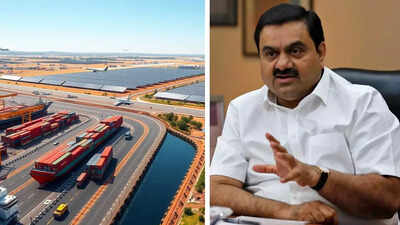
This is an AI generated image (left) and Gautam Adani (Right)

NEW DELHI: Gautam Adani, Asia’s second-richest person, said the Adani Group stayed strong and adapted its strategy despite facing a series of acquisitions and intense scrutiny, becoming stronger and more resilient.“In the face of fierce headwinds and relentless scrutiny – we have never retreated. Instead – we have recalibrated. We have reimagined. And we have become – more formidable, more unbreakable, more stronger and more resilient!” Adani said in the recent annual report of Adani Enterprises.He also announced that the conglomerate plans to invest $15–20 billion over the next five years across its businesses, backed by a strong balance sheet and steady growth.Adani noted that people often ask him “How does Adani Group keep doing it? How do we rise, time and again?”“My answer remains the same: Our conviction is anchored in clarity. Our objectives are aligned with India’s ambitions. And our strength comes from the belief that you – our shareholders – place in us,” he said.In January 2023, a report by US short-seller Hindenburg Research accused the Adani group of being “the largest con in corporate history,” causing stock prices to crash and wiping out over $150 billion in market value. The group’s largest public offering was also called off.Adani Group reduced debt, cut back on pledged promoter shares, attracted new investments, and refocused on its core businesses.Just as it began to recover, the group faced fresh allegations from US authorities, accusing it of bribery to win Indian power contracts and misleading investors, during fund raises.Adani Group denied all wrongdoing and said the group had faced challenges before and would face them again. Despite the setbacks, most Adani stocks have rebounded, and the group has reported record earnings.Regarding the US Department of Justice and SEC allegations concerning Adani Green Energy, he asserted that this wasn’t their first challenge.“Nor will it be the last,” he continued.“Every challenge sharpens our resolve. Every setback becomes a stepping stone,” he stated, emphasising that no member of Adani Group faces charges of violating Foreign Corrupt Practices Act (FCPA) or conspiring to obstruct justice.“We live in a world where negativity often echoes louder than truth. But as we cooperate with legal processes, let me also restate – emphatically – our governance is of global standards, and our compliance frameworks are robust and non-negotiable,” Adani further added.The conglomerate’s diverse portfolio spanning ports, airports, renewable energy, data centres, defence manufacturing, and city gas distribution has demonstrated substantial expansion in recent years.“History should remember us not for the size of our balance sheet, but for the strength of our backbone. Not just for the markets we entered, but for the storms we handled and emerged stronger. For it is easy to lead in sunshine, but true leadership is forged in the face of crisis,” he said.Adani also highlighted record profits across the group’s ports-to-energy businesses for the financial year 2024–25. He further said that the Adani Airports handled a record 94 million passengers, and the Navi Mumbai Airport is set to open later this year with an initial capacity of 20 million passengers, eventually expanding to 90 million.Adani Defence is developing ammunition and missile systems in Kanpur, and its surveillance and Kamikaze drones played a role in the recent Operation Sindoor, he added.


Source link

IndiGo to expand flight services in Assam after talks with CM Sarma


IndiGo to expand flight services in Assam after talks with CM Sarma

NEW DELHI: IndiGo airlines plans to increase its air services in Assam following a recent discussion with chief minister Himanta Biswa Sarma, according to an official statement released on Sunday.“The significant decision made by IndiGo management to introduce new flights and with stopovers of existing flights at new locations in Assam has been conveyed to the Assam chief minister on Sunday,” the release said.The state’s air connectivity is set to improve further with this expansion of flight services to and from the region.The announcement follows a meeting held on May 22 in New Delhi at the chief minister’s official residence, where he met with IndiGo’s senior management and the Civil Aviation Secretary.During the talks, Sarma urged the IndiGo senior officials to improve air connectivity to essential locations across Assam, specifically Silchar, Dibrugarh and North Lakhimpur.In response, IndiGo management confirmed a direct flight between Delhi and Jorhat beginning mid-September 2025. Additionally, they announced a new Guwahati-Navi Mumbai route starting winter this year.The airline confirmed that the Delhi-Dibrugarh service will now stop at Guwahati, establishing morning connections between Assam’s two capitals. They also revealed plans to introduce a morning Guwahati-Silchar service and assess regular operations from Lilabari Airport in North Lakhimpur.Sarma later posted on X: “During my recent meeting with the @IndiGo6E leadership in New Delhi, I urged them to enhance air connectivity to other key locations across Assam — particularly Silchar, Dibrugarh, and North Lakhimpur.“I’m pleased to share that IndiGo has responded positively and shared the following upcoming deployments: The Delhi-Dibrugarh flight will now include a stopover at Guwahati, providing morning connectivity between the two capitals of Assam,” the post added.IndiGo will adjust its timetable to establish a morning Guwahati-Silchar flight, addressing passenger requirements. A Guwahati-Navi Mumbai service will begin from Winter 2025-26. The airline will evaluate scheduled flights from Lilabari Airport in North Lakhimpur.“It was a pleasure to meet the leadership of @IndiGo6E in New Delhi to discuss their roadmap for expanding air connectivity in Assam. I appreciate IndiGo’s prompt response and look forward to their continued efforts in delivering quality service to the people of our state,” the post further added.


Source link