Business

Dr. Reddy’s gets I-T Dept order for notice over ₹2,396 crore tax demand 


The Income-Tax Department has issued an order that paves way for notice to generic drugmaker Dr. Reddy’s Laboratories over almost ₹2,396-crore tax demand.

The Assistant Commissioner of Income Tax, Circle 8(1), Hyderabad, in a May 30 order, deemed it appropriate to issue a notice under Section 148 of the Income-tax Act, 1961 to assess or reassess the income for assessment year 2020-21, Dr. Reddy’s said in a filing on Saturday.

The order follows a show cause notice in April on why a notice should not be issued for assessment of income “alleged to be escaped from tax consequent to the merger of Dr. Reddy’s Holding into Dr. Reddy’s under a scheme of amalgamation approved by the National Company Law Tribunal (NCLT), Hyderabad on April 5, 2022.

As per the April 4, 2025 notice, the tax demand was quantified at ₹2,395,81,79,470, Dr. Reddy’s said.

The scheme of amalgamation was carried with adherence to all legal requirements, including tax laws, and approved by NCLT, Hyderabad, on April 5, 2022 with effect from the appointed date April 1, 2019.

The company said it strongly believes that there is “no escapement of tax pursuant to the said merger scheme.” Nonetheless, it is reviewing the order/notice and will take actions as required, appropriately, Dr. Reddy’s said.

“Based on our assessment, there is no material impact on the financials, operations, or other activities of the company at this stage,” it said.


Source link

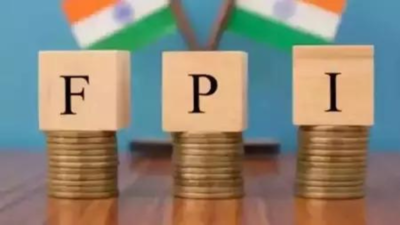
May sees record Rs 19,860 crore FPI inflow, highest in 2025: NSDL


May sees record Rs 19,860 crore FPI inflow, highest in 2025: NSDL

NEW DELHI: Foreign portfolio investments in Indian markets reached record levels in May 2025, as confirmed by National Securities Depository Ltd (NSDL) statistics, quoted by ANI. The month recorded net FPI inflows of Rs 19,860 crore, establishing May as the strongest month for foreign investments in 2025.The period from May 26 to May 30 saw foreign investors maintain their investment momentum with net inflows of Rs 6,024.77 crore. While positive inflows characterised most trading days that week, Friday registered a net outflow of Rs 1,758.23 crore.Although May demonstrated robust performance, the cumulative FPI investment for 2025 remains negative. The period from January through May shows net outflows of Rs 92,491 crore. Nevertheless, the substantial May inflows suggest a possible shift in foreign investor confidence.The uptick in FPI activity correlates with the declining US dollar value and positive developments in the Indian stock market.The robust economic foundations of India continue drawing international investors, although FPI flows remain responsive to international circumstances and external challenges.Whilst the year commenced cautiously, the positive May figures might indicate a directional change, provided global conditions maintain stability.Earlier data indicated FPI stock sales of Rs 3,973 crore in March. January and February witnessed equity sales of Rs 78,027 crore and Rs 34,574 crore, respectively.The final trading day of May saw the Indian stock market close marginally lower, influenced by varied global indicators. The Sensex decreased by 182 points (0.22 per cent) to 81,451.01, whilst the Nifty 50 settled at 24,750.70, down 83 points (0.33 per cent).


Source link

Kotak Bank’s Dy. MD Shanti Ekambaram to retire, Kashyap named ED


Shanti Ekambaram has been with the Kotak Group since 1991 and has played a pivotal role in shaping the Group’s growth and evolution of the institution 

Shanti Ekambaram has been with the Kotak Group since 1991 and has played a pivotal role in shaping the Group’s growth and evolution of the institution 

Kotak Mahindra Bank on Saturday announced that Shanti Ekambaram, deputy managing director, will be retiring from her role effective October 31 upon completion of her current term. 

The bank also announced Paritosh Kashyap, currently group president and business head – wholesale banking group, will be appointed as whole time director (executive director) and key managerial personnel.

Ashok Vaswani, MD & CEO, Kotak Mahindra Bank, said, “Shanti has been a cornerstone of Kotak’s journey. Her leadership has been marked by entrepreneurial thinking, deep customer insight, bold actions and an unwavering commitment to excellence.”

“Paritosh brings deep institutional knowledge, strategic foresight, and a strong customer-first mindset. I look forward to working closely with him as we continue to build the Kotak of tomorrow,” he added.

Ms. Ekambaram has been with the Kotak Group since 1991 and has played a pivotal role in shaping the Group’s growth and evolution of the institution over the past three decades. 

She has led several of the Group’s most strategic businesses, including Investment Banking, Capital Markets, Corporate Banking, Treasury, 811 and Consumer Banking.

Mr. Kashyap has been with Kotak for over three decades and has been heading the wholesale banking business since 2022. 

He has led several key businesses including Structured Finance, Real Estate, and Debt Capital Markets during his long career with the Group. 

He was also the MD and CEO of KMIL from 2016 to 2019 and is a member of the Group Management Council.


Source link

IBBI amends regulations to further streamline corporate insolvency resolution process


By enabling concurrent invitations, the resolution process will see reduced timelines, prevent value erosion in viable segments, and encourage broader investor participation, IBBI said.

By enabling concurrent invitations, the resolution process will see reduced timelines, prevent value erosion in viable segments, and encourage broader investor participation, IBBI said.
| Photo Credit: Image by rawpixel.com on Freepik

The Insolvency & Bankruptcy Board of India (IBBI) has notified the Insolvency and Bankruptcy Board of India (Insolvency Resolution Process for Corporate Persons) (Fourth Amendment) Regulations, 2025 that aim to further streamline and strengthen corporate insolvency resolution process.

As per the amended regulations notified on May 26, which come into effect immediately, the resolution professional — with the nod of Committee of Creditors (CoC) — can invite expression of interest for submission of resolution plans for a company under insolvency process either as a whole, or for sale of one or more of assets of the company, or for both.

By enabling concurrent invitations, the resolution process will see reduced timelines, prevent value erosion in viable segments, and encourage broader investor participation, IBBI said.

Where a resolution plan will provide for payment in stages, the financial creditors who did not vote in favour of the resolution plan shall be paid at least pro rata and in priority over financial creditors who voted in favour of the plan, in each stage. This approach balances the legitimate rights of dissenting creditors with the practical constraints of phased implementations, it said.

Resolution professionals are now required to present all resolution plans received, including those that are non-compliant, to the CoC along with relevant details. CoC has been empowered to direct the resolution professional to invite the providers of interim finance to attend CoC meetings as observers without voting rights, IBBI said.


Source link

OPEC+ announces sharp increase in July oil production


OPEC+ announces sharp increase in July oil production

VIENNA: Saudi Arabia, Russia and six other key OPEC+ members announced on Saturday a huge increase in crude production for July.They will produce an additional 411,000 barrels a day — the same target set for May and then June — according to a statement, which is more than three times greater than the group had previously planned.In recent years, the group within OPEC+ that is known as the “Voluntary Eight”, or V8, had agreed to daily reductions of 2.2 million barrels with the aim of boosting prices.But in early 2025, OPEC+ members decided on the gradual output increase and subsequently began to accelerate the pace.The moves have resulted in oil prices plummeting to around $60 per barrel, the lowest level in four years. OPEC+ “struck three times: (the output target for) May was a warning, June a confirmation and July a warning shot”, Rystad Energy analyst Jorge Leon told AFP.“The scale of the production increase reflects more than just internal supply dynamics,” he said. “This is a strategic adjustment with geopolitical aims: Saudi Arabia seems to be bowing to Donald Trump’s requests.” Shortly after taking office, the US president called on Riyadh to ramp up production in order to bring down oil prices, meaning cheaper prices at the pump for American consumers.


Source link

FM Nirmala Sitharaman counters social media claims of GST registration corruption and delay


FM Nirmala Sitharaman counters social media claims of GST registration corruption and delay
Finance minister Nirmala Sitharaman

NEW DELHI: Finance Minister Nirmala Sitharaman on Saturday endorsed the Central Board of Indirect Taxes and Customs (CBIC) for its detailed clarification on social media allegations surrounding delays and alleged corruption in GST registration processing.Her remarks came after a Twitter user posted screenshot of posted accusations by a LinkedIn user alleging that they had not received GST registration despite a 20-day wait. The post claimed corruption in the GST registration process.The Central Board of Indirect Taxes (CBIC) responded in detail countering the allegation to which Sitharaman wrote: “To provide service to the taxpayer is our duty. While so serving the taxpayers, transparency and integrity are crucial in earning their trust and confidence. Confident that the Board and the field formations will remain sensitive and responsive.”Meanwhile, the CBIC’s clarification, citing specific case details. It stated that the application in question was submitted on May 26, 2025, and fell under the jurisdiction of the Delhi State GST authorities- not the Central GST. Also, Delhi GST officials, according to CBIC, had processed the case promptly but had sought clarification regarding the designation of the company representative who signed the rent agreement.“The application was filed this week on 26th May (Monday) which was assigned to Delhi State GST. The Central GST authorities had no role in this matter. As per Delhi State GST authorities, the case was processed immediately and a query was raised about the missing designation of the person who has signed the Rent Agreement on behalf of the Company. At this stage the ARN was pending for reply from taxpayer side and it was duly informed to the taxpayer. The application will be processed by the Delhi GST authorities upon receipt of the pending information,” the CBI said while requesting to “to not circulate wrong information on the social media without knowing the facts.”


Source link

Industry bodies hail cut on crude oil customs duty, call it timely support for refiners


Industry bodies hail cut on crude oil customs duty, call it timely support for refiners

NEW DELHI: Industry associations Solvent Extractors’ Association (SEA) and Indian Vegetable Oil Producers’ Association (IVPA) have welcomed the government’s decision to reduce the basic customs duty on crude edible oils to 10 per cent, calling it a timely intervention that supports domestic refiners and discourages imports of finished products.Announced on Friday, the policy reduces the basic customs duty on crude palm, soybean, and sunflower oils from 20 per cent to 10 per cent. The effective import duty now stands at 16.5 per cent, down from 27.5 per cent. In contrast, refined edible oils continue to attract a 32.5 per cent basic duty, with an effective duty of 35.75 per cent.The move follows concerns raised by the industry over rising imports of refined palmolien. Over the past six months, SEA and IVPA had urged the government to widen the duty gap between crude and refined edible oils to protect local refiners.“The government’s decision to increase the duty differential from 8.25 per cent to 19.25 per cent is a bold and timely move. It will discourage imports of refined palmolien and shift demand back to crude palm oil, thereby revitalizing the domestic refining sector,” said SEA President Sanjeev Asthana.He added that while overall edible oil import volumes may remain unchanged, domestic prices are likely to fall, benefitting consumers.India, which imports over 50 per cent of its edible oil requirements, brought in 159.6 lakh tonnes worth Rs 1.32 lakh crore during the 2023–24 oil marketing year. Key sourcing countries include Malaysia and Indonesia for palm oil, and Brazil and Argentina for soybean oil.IVPA President Sudhakar Desai expressed appreciation for the government’s acceptance of their recommendation to expand the duty gap, calling the step a boost for domestic manufacturing.SEA Executive Director B V Mehta described the revised duty structure as “a win-win situation for vegetable oil refiners and consumers, as local prices will go down due to lower duty on crude oils.”Previously, the narrow 8.25 per cent duty gap between crude palm oil (CPO) and refined palmolien had incentivised finished product imports. Refined palmolien accounted for over 20 per cent of total palm oil imports in 2023–24, rising to nearly 27 per cent in the first half of 2024–25.On May 29, the cost-and-freight (C&F) price of refined, bleached, and deodorised (RBD) palmolien was USD 45 per tonne lower than that of crude palm oil, further skewing trade in favour of refined imports.


Source link

Donald Trump’s steel, aluminum tariff hike to hit $4.56 billion worth of Indian exports: GTRI report


Donald Trump’s steel, aluminum tariff hike to hit  $4.56 billion worth of Indian exports: GTRI report

The upcoming hike in US tariffs on steel and aluminium imports, announced by President Donald Trump, is set to impact Indian metal exports worth $4.56 billion, according to a new analysis by the Global Trade Research Initiative (GTRI).Beginning June 4, the higher duties are expected to raise product costs for Indian manufacturers and exporters in the American market, potentially affecting their competitiveness.“For India, the consequences are direct. In FY2025, India exported $4.56 billion worth of iron, steel, and aluminum products to the US,” said GTRI, as quoted by ANI.The US continues to be a key market for India’s metal sector. In FY2025, exports included $587.5 million worth of iron and steel, $3.1 billion in iron or steel products, and $860 million in aluminium and related items. The GTRI report cautions that increased tariffs on these categories will challenge India’s market share and profitability in the US.Trump on Friday announced plans to raise existing tariffs on steel and aluminium imports from 25 per cent to 50 per cent, citing national security concerns under Section 232 of the US Trade Expansion Act of 1962. The legislation enables the US president to impose trade restrictions if certain imports are found to pose a threat to national security.Read more: Donald Trump announces 50% tariff on steel imports from June 4 to ‘secure industry in US’Trump initially invoked this provision in 2018, setting a 25 per cent tariff on steel and 10 per cent on aluminium. These rates were revised in February 2025, with aluminium tariffs raised to 25 per cent.According to GTRI, the latest increase could drive US steel prices above $1,180 per tonne, with ripple effects on key sectors like automotive, construction, and manufacturing.India has filed a notification with the World Trade Organization (WTO) regarding the tariff hike and is exploring additional response measures.GTRI also flagged the environmental implications of the US move. “Steel and aluminium manufacturing are significant carbon emitters globally. While other nations invest in environmentally friendly production methods, the US policy lacks environmental considerations,” the think tank noted.“This decision demonstrates the Trump administration’s preference for economic nationalism over environmental stewardship,” GTRI said, adding that it raises questions about the US commitment to global climate goals and sustainable industrial development.


Source link

Metropolitan bank branches lose ground in credit, falls to 58.7% from 63.5% in five years: RBI


Metropolitan bank branches lose ground in credit, falls to 58.7% from 63.5% in five years: RBI

NEW DELHI: Bank branches in metropolitan areas have seen their share in overall credit decline to 58.7 per cent as of March 2025, down from 63.5 per cent five years ago, according to the Reserve Bank of India’s (RBI) latest report.The central bank attributed this shift to faster credit growth in non-metro regions. “With higher credit growth in rural, semi-urban and urban areas compared to metropolitan area, the share of metropolitan branches in total credit declined to 58.7 per cent in March 2025 from 63.5 per cent five years ago,” the report stated.Despite the drop in credit share, metropolitan branches continued to lead in deposit mobilisation, registering an annual growth of 11.7 per cent in March 2025. In comparison, rural, semi-urban, and urban centres posted growth rates of 10.1 per cent, 8.9 per cent, and 9.3 per cent, respectively.Overall, bank credit growth moderated to 11.1 per cent in FY25, down from 15.3 per cent in FY24. Deposit growth also slowed to 10.6 per cent from 13 per cent during the same period.The report also noted a shift in deposit composition due to rising term deposit rates, with the share of savings deposits dropping to 29.1 per cent from 30.8 per cent a year ago, and from 33 per cent two years ago.Credit growth declined across all categories of banks in FY25. Private sector banks recorded the sharpest drop, with growth falling to 9.5 per cent after maintaining levels above 15 per cent for three consecutive years.Personal loan growth- including housing, education, vehicle, credit card, and consumer durable segments- also slowed markedly to 13.2 per cent. However, this category’s share in overall credit reached 31 per cent. Loans for consumer durables and other personal purposes made up roughly one-third of total personal credit. Loans carrying interest rates above 11 per cent accounted for 47.4 per cent of total lending in this segment, down from 50.3 per cent a year earlier.Industrial credit, which forms about one-fourth of total bank lending, grew at 9.4 per cent in FY25, compared to 10.4 per cent in FY24.On the deposit side, women’s share remained stable at 20.7 per cent, while senior citizens continued to hold over one-fifth of total deposits. Meanwhile, term deposits exceeding Rs 1 crore rose to 45.1 per cent in March 2025 from 43.7 per cent in March 2024.


Source link

Indian bond market strengthens as inflation eases and anticipated RBI rate cuts: Jefferies


Indian bond market strengthens as inflation eases and anticipated RBI rate cuts: Jefferies

NEW DELHI: The Indian bond market is gaining momentum due to lower inflation and expectations that the Reserve Bank of India will cut interest rates, according to a report by Jefferies.The report indicates favourable conditions for domestic bonds, particularly appealing to long-term investors amid evolving global financial conditions. India’s consumer price inflation has shown a consistent downward trend. The previous fiscal year recorded an average of 4.6%, while April 2025 witnessed a reduction to 3.2%, reaching its lowest point since July 2019.The declining inflation trend has provided the RBI additional flexibility for interest rate adjustments, resulting in a 50 basis points reduction in policy rates. Jefferies anticipates further cuts of 75 basis points through 2025. The ongoing rate reduction phase is increasing the attractiveness of Indian government bonds, particularly when assessed against developed economies such as the United States.According to Jefferies, “While India 10-year rupee government bond has outperformed the US 10-year Treasury bond by 51% since April 2020 in US dollar terms. Indeed, it is no longer unthinkable that the ten-year Indian government bond yield will trade below the ten-year Treasury bond yield.”The Indian rupee and positive performance of local-currency emerging market bonds globally are contributing to the optimistic outlook. A significant global sovereign bond portfolio monitored by Jefferies shows India’s 15-year bond yielding 6.38%, representing the highest single-country allocation at 25%.This demonstrates sustained trust in the Indian bond market during structural transitions away from G7 debt instruments.Jefferies further said that “these bonds continue to outperform G7 government bonds, which is another sign of regime change from the Bretton Woods era, as is the growing evidence of supply concerns moving the long end of the US Treasury bond market”.The Indian bond market appears favourably positioned to gain from domestic rate reductions and international investment interest in emerging market debt, supported by decreasing inflation and attractive real rates. India continues to attract global investors seeking alternatives to G7 bonds, offering substantial yields, stable economic conditions, and potential currency value increase.


Source link