Business

Donald Trump’s steel, aluminum tariff hike to hit $4.56 billion worth of Indian exports: GTRI report


Donald Trump’s steel, aluminum tariff hike to hit  $4.56 billion worth of Indian exports: GTRI report

The upcoming hike in US tariffs on steel and aluminium imports, announced by President Donald Trump, is set to impact Indian metal exports worth $4.56 billion, according to a new analysis by the Global Trade Research Initiative (GTRI).Beginning June 4, the higher duties are expected to raise product costs for Indian manufacturers and exporters in the American market, potentially affecting their competitiveness.“For India, the consequences are direct. In FY2025, India exported $4.56 billion worth of iron, steel, and aluminum products to the US,” said GTRI, as quoted by ANI.The US continues to be a key market for India’s metal sector. In FY2025, exports included $587.5 million worth of iron and steel, $3.1 billion in iron or steel products, and $860 million in aluminium and related items. The GTRI report cautions that increased tariffs on these categories will challenge India’s market share and profitability in the US.Trump on Friday announced plans to raise existing tariffs on steel and aluminium imports from 25 per cent to 50 per cent, citing national security concerns under Section 232 of the US Trade Expansion Act of 1962. The legislation enables the US president to impose trade restrictions if certain imports are found to pose a threat to national security.Read more: Donald Trump announces 50% tariff on steel imports from June 4 to ‘secure industry in US’Trump initially invoked this provision in 2018, setting a 25 per cent tariff on steel and 10 per cent on aluminium. These rates were revised in February 2025, with aluminium tariffs raised to 25 per cent.According to GTRI, the latest increase could drive US steel prices above $1,180 per tonne, with ripple effects on key sectors like automotive, construction, and manufacturing.India has filed a notification with the World Trade Organization (WTO) regarding the tariff hike and is exploring additional response measures.GTRI also flagged the environmental implications of the US move. “Steel and aluminium manufacturing are significant carbon emitters globally. While other nations invest in environmentally friendly production methods, the US policy lacks environmental considerations,” the think tank noted.“This decision demonstrates the Trump administration’s preference for economic nationalism over environmental stewardship,” GTRI said, adding that it raises questions about the US commitment to global climate goals and sustainable industrial development.


Source link

Metropolitan bank branches lose ground in credit, falls to 58.7% from 63.5% in five years: RBI


Metropolitan bank branches lose ground in credit, falls to 58.7% from 63.5% in five years: RBI

NEW DELHI: Bank branches in metropolitan areas have seen their share in overall credit decline to 58.7 per cent as of March 2025, down from 63.5 per cent five years ago, according to the Reserve Bank of India’s (RBI) latest report.The central bank attributed this shift to faster credit growth in non-metro regions. “With higher credit growth in rural, semi-urban and urban areas compared to metropolitan area, the share of metropolitan branches in total credit declined to 58.7 per cent in March 2025 from 63.5 per cent five years ago,” the report stated.Despite the drop in credit share, metropolitan branches continued to lead in deposit mobilisation, registering an annual growth of 11.7 per cent in March 2025. In comparison, rural, semi-urban, and urban centres posted growth rates of 10.1 per cent, 8.9 per cent, and 9.3 per cent, respectively.Overall, bank credit growth moderated to 11.1 per cent in FY25, down from 15.3 per cent in FY24. Deposit growth also slowed to 10.6 per cent from 13 per cent during the same period.The report also noted a shift in deposit composition due to rising term deposit rates, with the share of savings deposits dropping to 29.1 per cent from 30.8 per cent a year ago, and from 33 per cent two years ago.Credit growth declined across all categories of banks in FY25. Private sector banks recorded the sharpest drop, with growth falling to 9.5 per cent after maintaining levels above 15 per cent for three consecutive years.Personal loan growth- including housing, education, vehicle, credit card, and consumer durable segments- also slowed markedly to 13.2 per cent. However, this category’s share in overall credit reached 31 per cent. Loans for consumer durables and other personal purposes made up roughly one-third of total personal credit. Loans carrying interest rates above 11 per cent accounted for 47.4 per cent of total lending in this segment, down from 50.3 per cent a year earlier.Industrial credit, which forms about one-fourth of total bank lending, grew at 9.4 per cent in FY25, compared to 10.4 per cent in FY24.On the deposit side, women’s share remained stable at 20.7 per cent, while senior citizens continued to hold over one-fifth of total deposits. Meanwhile, term deposits exceeding Rs 1 crore rose to 45.1 per cent in March 2025 from 43.7 per cent in March 2024.


Source link

Indian bond market strengthens as inflation eases and anticipated RBI rate cuts: Jefferies


Indian bond market strengthens as inflation eases and anticipated RBI rate cuts: Jefferies

NEW DELHI: The Indian bond market is gaining momentum due to lower inflation and expectations that the Reserve Bank of India will cut interest rates, according to a report by Jefferies.The report indicates favourable conditions for domestic bonds, particularly appealing to long-term investors amid evolving global financial conditions. India’s consumer price inflation has shown a consistent downward trend. The previous fiscal year recorded an average of 4.6%, while April 2025 witnessed a reduction to 3.2%, reaching its lowest point since July 2019.The declining inflation trend has provided the RBI additional flexibility for interest rate adjustments, resulting in a 50 basis points reduction in policy rates. Jefferies anticipates further cuts of 75 basis points through 2025. The ongoing rate reduction phase is increasing the attractiveness of Indian government bonds, particularly when assessed against developed economies such as the United States.According to Jefferies, “While India 10-year rupee government bond has outperformed the US 10-year Treasury bond by 51% since April 2020 in US dollar terms. Indeed, it is no longer unthinkable that the ten-year Indian government bond yield will trade below the ten-year Treasury bond yield.”The Indian rupee and positive performance of local-currency emerging market bonds globally are contributing to the optimistic outlook. A significant global sovereign bond portfolio monitored by Jefferies shows India’s 15-year bond yielding 6.38%, representing the highest single-country allocation at 25%.This demonstrates sustained trust in the Indian bond market during structural transitions away from G7 debt instruments.Jefferies further said that “these bonds continue to outperform G7 government bonds, which is another sign of regime change from the Bretton Woods era, as is the growing evidence of supply concerns moving the long end of the US Treasury bond market”.The Indian bond market appears favourably positioned to gain from domestic rate reductions and international investment interest in emerging market debt, supported by decreasing inflation and attractive real rates. India continues to attract global investors seeking alternatives to G7 bonds, offering substantial yields, stable economic conditions, and potential currency value increase.


Source link

Doubling tariff on steel, aluminium by U.S. to impact Indian exporters: GTRI


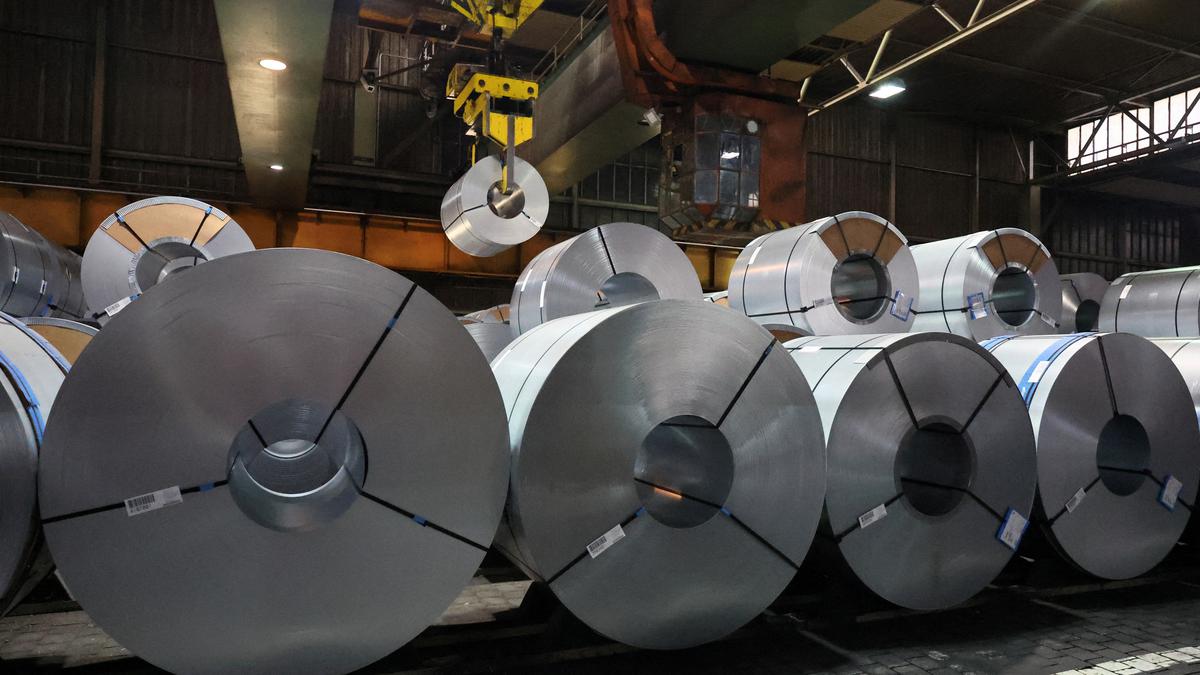
Representational image only. File

Representational image only. File
| Photo Credit: Reuters

“U.S. President Donald Trump’s announcement to double tariffs on imported steel and aluminium will impact Indian exporters, as it would hurt their profitability,” think tank Global Trade Research Initiative (GTRI) said on Saturday (May 31, 2025.)

On May 30, Mr. Trump announced that he would double the existing 25% tariffs on steel and aluminium imports from June 4. This hike comes under Section 232 of the U.S. Trade Expansion Act of 1962, a law that allows the President to impose tariffs or other trade restrictions if imports are deemed a threat to national security.

Mr. Trump originally invoked this provision in 2018 to set the 25% tariff on steel and 10% on aluminium. He raised tariffs on aluminium to 25% in February 2025. “For India, the consequences are direct,” the (GTRI) said.

In 2024-25, India exported $4.56 billion worth of iron, steel, and aluminium products to the U.S., with key categories, including $587.5 million in iron and steel, $3.1 billion in articles of iron or steel and $860 million in aluminium and related articles.

“These exports are now exposed to sharply higher U.S. tariffs, threatening the profitability of Indian producers and exporters,” GTRI founder Ajay Srivastava said.

India has already issued a formal notice at the World Trade Organization (WTO) signalling its intention to impose retaliatory tariffs on U.S. goods in response to the earlier steel tariffs. “With Trump now doubling the tariffs, it remains to be seen whether India will carry out the retaliation by increasing tariffs on certain U.S. exports within a month,” he said.


Source link

IndiGo to launch direct Mumbai-Adampur flights from July 2


IndiGo to launch direct Mumbai-Adampur flights from July 2

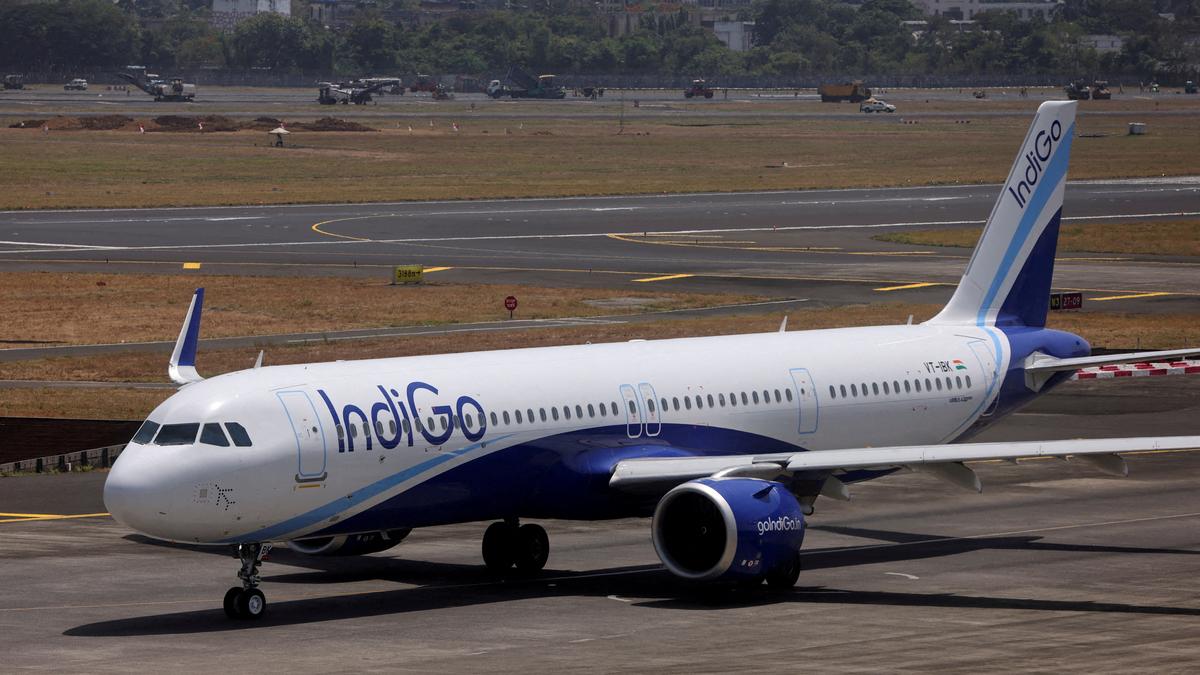
NEW DELHI: IndiGo has announced the launch of direct daily flights between Mumbai and Adampur (Jalandhar), Punjab, starting July 2, 2025. This marks Adampur as the airline’s 92nd domestic and 133rd overall destination.The new route aims to offer convenient travel options for both business and leisure travelers. IndiGo stated that the direct connection will strengthen access between Punjab’s agricultural and industrial sectors and the Mumbai metropolitan region, boosting trade and connectivity.The airline indicated that this route addition strategically accommodates both business and leisure travellers’ needs by offering suitable flight schedules.“IndiGo has always been at the forefront of enhancing regional connectivity, and we are pleased to announce exclusive direct flights between Mumbai and Adampur (Jalandhar), offering faster, affordable, and hassle-free travel. As Adampur becomes our 55th domestic and 77th overall destination from Mumbai, the new route unlocks opportunities to experience Punjab’s vibrant cultural heritage, while also boosting connectivity and economic opportunities. We shall continue to enhance our domestic network, catering to the rising demand for air travel in the region,” Head Global Sales, IndiGo Vinay Malhotra said.Adampur is a town in Punjab’s Jalandhar district, located on the Jalandhar-Hoshiarpur road. It is home to the Adampur Air Force Station, one of the oldest airbases in India.The town reflects a blend of traditional Punjabi culture and modern urban growth. Nearby attractions include Rangla Punjab Haveli, which showcases local heritage, and Devi Talab Mandir in Jalandhar, a well-known spiritual site.


Source link

Bank holidays 2025: Are banks open or closed on Saturday, May 31?


Bank holidays 2025: Are banks open or closed on Saturday, May 31?

New Delhi: Banks across India will stay open on Saturday, May 31, as it is the fifth Saturday of the month.According to the Reserve Bank of India (RBI) guidelines, banks are closed on the second and fourth Saturdays of each month, in addition to all Sundays. However, on the first, third, and fifth Saturdays, banks operate as usual. Since May 31 falls on the fifth Saturday, all banks will function normally.Many customers are often unsure about the status of banks on a fifth Saturday, as it doesn’t occur every month, leading to confusion about whether it is a working day or a holiday. Today, you can visit your bank branch as usual for transactions.Meanwhile, digital banking services such as mobile banking, net banking, ATMs, UPI, NEFT, RTGS, and IMPS will remain fully operational, even if a particular branch is closed for regional reasons.Upcoming Bank Holidays in June 2025

  • June 1 (Sunday): Regular weekly holiday
  • June 6 (Friday): Id-ul-Ad’ha (Bakrid) – Banks closed in Kerala
  • June 7 (Saturday): Bakrid – All banks closed across India
  • June 11 (Wednesday): Sant Guru Kabir Jayanti / Saga Dawa – Banks closed in Sikkim, Himachal Pradesh
  • June 27 (Friday): Ratha Yatra / Kang (Rathajatra) – Banks closed in Odisha, Manipur
  • June 30 (Monday): Remna Ni – Banks closed in Mizoram

There are no stock market holidays in June 2025. Trading will continue as per the regular schedule on all weekdays.


Source link

IndiGo announces direct Adampur-Mumbai flight


Image used for representative purpose only.

Image used for representative purpose only.
| Photo Credit: SHIV KUMAR PUSHPAKAR

Domestic airline IndiGo on Saturday (May 31, 2025) announced its direct flight services to Adampur (Jalandhar) in Punjab from Mumbai, starting July 2.

Adampur will be the airline’s 92nd domestic and 133rd overall destination, IndiGo said.

This new direct connection will provide Punjab’s agricultural and industrial sectors easier access to the major ports in the Mumbai metropolitan region, boosting trade opportunities, it added.

The airline also said the new route has been strategically introduced to cater to the needs of business and leisure customers, providing them with convenient travel options.

“As Adampur becomes our 55th domestic and 77th overall destination from Mumbai, the new route will boost connectivity and economic opportunities. We will continue to enhance our domestic network, catering to the rising demand for air travel in the region,” said Vinay Malhotra, head of global sales at IndiGo.


Source link

Air India to fly from Bengaluru to Kathmandu daily


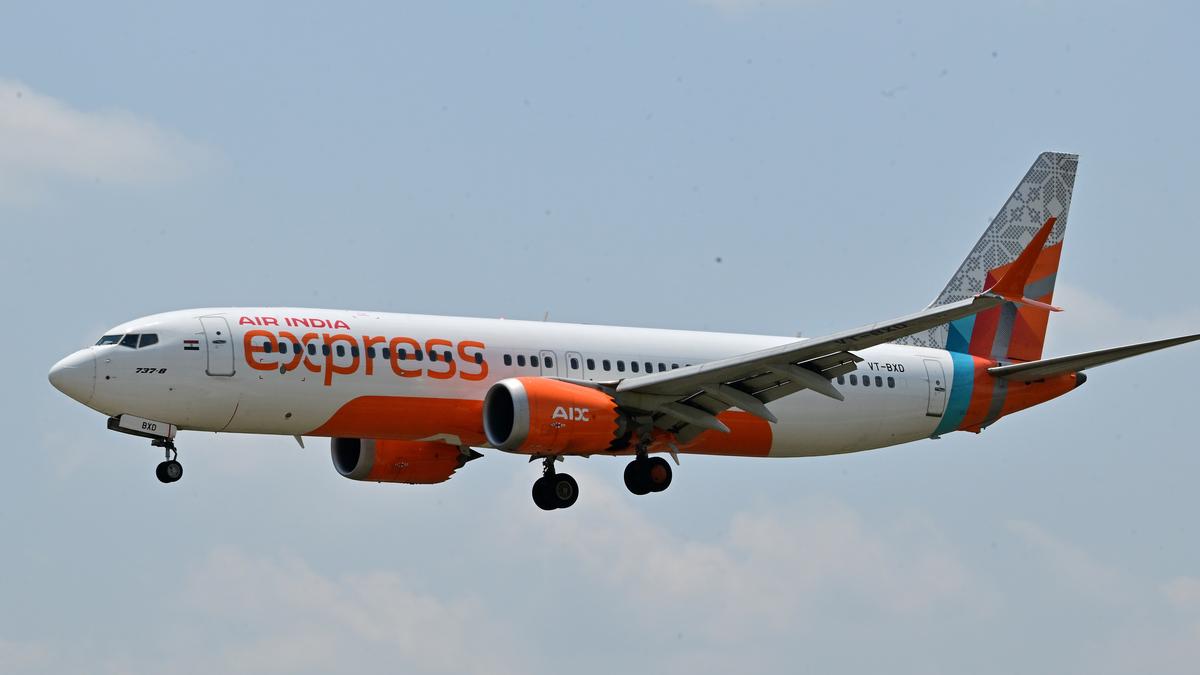
From Bengaluru Air India Express operates over 450 weekly flights connecting directly to 31 destinations.  File photo

From Bengaluru Air India Express operates over 450 weekly flights connecting directly to 31 destinations.  File photo
| Photo Credit: The Hindu

Air India Express will launch daily direct flights between Bengaluru and Kathmandu on June 1.

“The new route builds on our recent expansion into short-haul international leisure destinations such as Bangkok and Phuket,” Aloke Singh, Managing Director, Air India Express, said in a press release.

Bookings are now open on the airline’s website, airindiaexpress.com, and other major booking channels, with inaugural fares starting at ₹8,000 for Xpress Lite and ₹8,500 for Xpress Value.

From Bengaluru, the flight will depart at 5.05 am daily and it will depart Kathmandu at 9.05 am.

The new route also enables convenient one-stop connections to Kathmandu via Bengaluru from 20 cities across India, including Amritsar, Bhubaneswar, Delhi, Goa, Gwalior, Hindon, Hyderabad, Indore, Jammu, Jaipur, Kozhikode, Kochi, Mangaluru, Pune, Srinagar, Surat, Tiruchirappalli, Thiruvananthapuram, and Visakhapatnam, and Vijayawada.

One stop connections through Bengaluru also available from two international cities: Abu Dhabi and Dammam, according to the press release.

From Bengaluru Air India Express operates over 450 weekly flights connecting directly to 31 destinations.


Source link

IndiGo’s direct Delhi-Jorhat flight from mid-September: Himanta Biswa Sarma


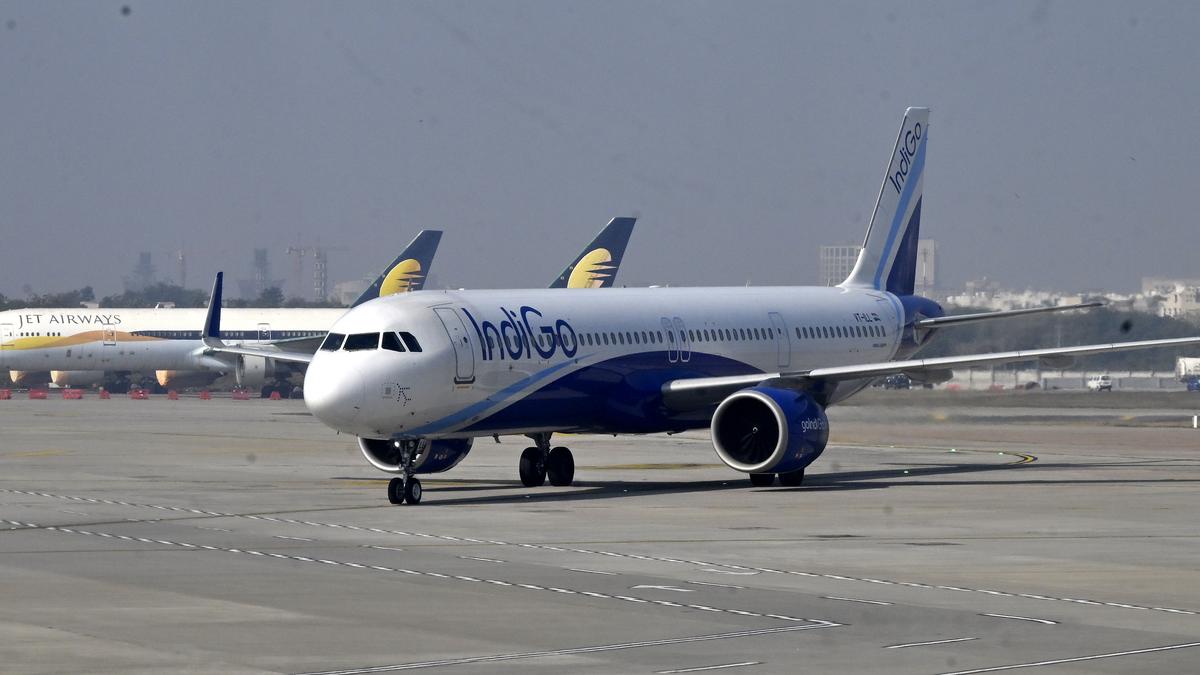
Image used for representative purpose only.

Image used for representative purpose only.
| Photo Credit: REUTERS

Assam Chief Minister Himanta Biswa Sarma on Saturday (May 31, 2025) said that low-cost airline IndiGo will commence a non-stop flight between Delhi and Jorhat from mid-September and has planned to enhance air connectivity to other locations in the State.

During his recent visit to New Delhi, the Chief Minister had met the senior management of the airline and urged them to expand air connectivity to other key locations across Assam, particularly Silchar, Dibrugarh, and North Lakhimpur, he said.

”New Delhi–Jorhat Direct Flight from September 2025- It was a pleasure to meet the leadership of @IndiGo6E in New Delhi to discuss their roadmap for expanding air connectivity in Assam,” the Chief Minister posted on ‘X’.

”Delighted to share that @IndiGo6E will commence a non-stop flight between Delhi and Jorhat starting mid-September 2025”, he added.

Expressing satisfaction about his meeting with the airline’s management, the Chief Minister said IndiGo has responded positively and shared the upcoming deployments.

The Delhi–Dibrugarh flight will now include a stopover at Guwahati, ”providing morning connectivity between the two capitals of Assam”, he said.

The low-cost carrier will restructure its schedule to introduce a morning Guwahati–Silchar flight, addressing the long-standing demand of passengers, Mr. Sarma said.

A new Guwahati–Navi Mumbai service will commence from the 2025–26 winter schedule, he said.

IndiGo will soon evaluate scheduled operations from Lilabari Airport in North Lakhimpur, the Chief Minister said.

”These additions, along with the upcoming Delhi–Jorhat direct flight, mark a significant step forward in improving Assam’s air connectivity,” Mr. Sarma said.

He appreciated IndiGo’s “prompt response” and looked forward to their continued efforts in delivering quality service to the people of Assam.


Source link

Anthropic hits $3 billion in annualised revenue on business demand for AI


In the consumer race, Anthropic’s Claude has seen less adoption than OpenAI [File]

In the consumer race, Anthropic’s Claude has seen less adoption than OpenAI [File]
| Photo Credit: REUTERS

Artificial intelligence developer Anthropic is making about $3 billion in annualised revenue, according to two sources familiar with the matter, in an early validation of generative AI use in the business world.

The milestone, which projects the company’s current sales over the course of a year, is a significant jump from December 2024 when the metric was nearly $1 billion, the sources said. The figure crossed $2 billion around the end of March, and at May’s end it hit $3 billion, one of the sources said.

While consumers have embraced rival OpenAI’s ChatGPT, a number of enterprises have limited their rollouts to experimentation, despite board-level interest in AI. Anthropic’s revenue surge, largely from selling AI models as a service to other companies, is a data point showing how business demand is growing, one of the sources said.

A key driver is code generation. The San Francisco-based startup, backed by Google parent Alphabet and Amazon.com, is famous for AI that excels at computer programming. Products in the so-called codegen space have experienced major growth and adoption in recent months, often drawing on Anthropic’s models.

This demand is setting Anthropic apart among software-as-a-service vendors. Its single-quarter revenue increases would count Anthropic as the fastest-growing SaaS company that at least one venture capitalist has ever seen.

“We’ve looked at the IPOs of over 200 public software companies, and this growth rate has never happened,” said Meritech General Partner Alex Clayton, who is not an Anthropic investor and has no inside knowledge of its sales.

He cautioned that these comparisons are not fully precise, since Anthropic also has consumer revenue via subscriptions to its Claude chatbot. Still, by contrast, publicly traded SaaS company Snowflake took six quarters to go from $1 billion to $2 billion in such run-rate revenue, Clayton said.

Anthropic competitor OpenAI has projected it will end 2025 with more than $12 billion in total revenue, up from $3.7 billion last year, three people familiar with the matter said. This total revenue is different from an estimated annualized figure like Anthropic’s. Reuters could not determine this metric for OpenAI.

The two rivals appear to be establishing their own swim lanes. While both offer enterprise and consumer products, OpenAI is shaping up to be a consumer-oriented company, and the majority of its revenue comes from subscriptions to its ChatGPT chatbot, OpenAI Chief Financial Officer Sarah Friar told Bloomberg late last year.

OpenAI has not reported enterprise-specific revenue but said in May that paying seats for its ChatGPT enterprise product have grown to 3 million, from 2 million in February, and that T-Mobile and Morgan Stanley are among its enterprise customers.

In the consumer race, Anthropic’s Claude has seen less adoption than OpenAI. Claude’s traffic, a proxy for consumer interest, was about 2% of ChatGPT’s in April, according to Web analytics firm Similarweb. Anthropic, founded in 2021 by a team that departed OpenAI over differences in vision, closed a $3.5 billion fundraise earlier this year. That valued the company at $61.4 billion. OpenAI is currently valued at $300 billion.


Source link