Business

Air India to fly from Bengaluru to Kathmandu daily


From Bengaluru Air India Express operates over 450 weekly flights connecting directly to 31 destinations.  File photo

From Bengaluru Air India Express operates over 450 weekly flights connecting directly to 31 destinations.  File photo
| Photo Credit: The Hindu

Air India Express will launch daily direct flights between Bengaluru and Kathmandu on June 1.

“The new route builds on our recent expansion into short-haul international leisure destinations such as Bangkok and Phuket,” Aloke Singh, Managing Director, Air India Express, said in a press release.

Bookings are now open on the airline’s website, airindiaexpress.com, and other major booking channels, with inaugural fares starting at ₹8,000 for Xpress Lite and ₹8,500 for Xpress Value.

From Bengaluru, the flight will depart at 5.05 am daily and it will depart Kathmandu at 9.05 am.

The new route also enables convenient one-stop connections to Kathmandu via Bengaluru from 20 cities across India, including Amritsar, Bhubaneswar, Delhi, Goa, Gwalior, Hindon, Hyderabad, Indore, Jammu, Jaipur, Kozhikode, Kochi, Mangaluru, Pune, Srinagar, Surat, Tiruchirappalli, Thiruvananthapuram, and Visakhapatnam, and Vijayawada.

One stop connections through Bengaluru also available from two international cities: Abu Dhabi and Dammam, according to the press release.

From Bengaluru Air India Express operates over 450 weekly flights connecting directly to 31 destinations.


Source link

IndiGo’s direct Delhi-Jorhat flight from mid-September: Himanta Biswa Sarma


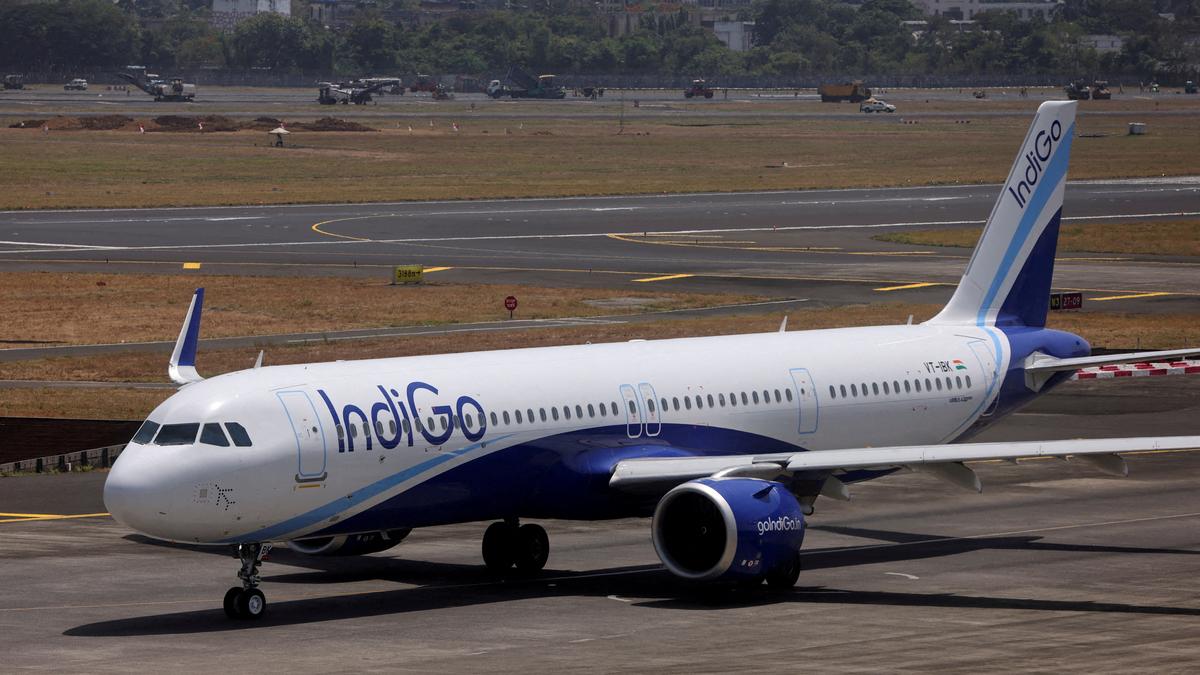
Image used for representative purpose only.

Image used for representative purpose only.
| Photo Credit: REUTERS

Assam Chief Minister Himanta Biswa Sarma on Saturday (May 31, 2025) said that low-cost airline IndiGo will commence a non-stop flight between Delhi and Jorhat from mid-September and has planned to enhance air connectivity to other locations in the State.

During his recent visit to New Delhi, the Chief Minister had met the senior management of the airline and urged them to expand air connectivity to other key locations across Assam, particularly Silchar, Dibrugarh, and North Lakhimpur, he said.

”New Delhi–Jorhat Direct Flight from September 2025- It was a pleasure to meet the leadership of @IndiGo6E in New Delhi to discuss their roadmap for expanding air connectivity in Assam,” the Chief Minister posted on ‘X’.

”Delighted to share that @IndiGo6E will commence a non-stop flight between Delhi and Jorhat starting mid-September 2025”, he added.

Expressing satisfaction about his meeting with the airline’s management, the Chief Minister said IndiGo has responded positively and shared the upcoming deployments.

The Delhi–Dibrugarh flight will now include a stopover at Guwahati, ”providing morning connectivity between the two capitals of Assam”, he said.

The low-cost carrier will restructure its schedule to introduce a morning Guwahati–Silchar flight, addressing the long-standing demand of passengers, Mr. Sarma said.

A new Guwahati–Navi Mumbai service will commence from the 2025–26 winter schedule, he said.

IndiGo will soon evaluate scheduled operations from Lilabari Airport in North Lakhimpur, the Chief Minister said.

”These additions, along with the upcoming Delhi–Jorhat direct flight, mark a significant step forward in improving Assam’s air connectivity,” Mr. Sarma said.

He appreciated IndiGo’s “prompt response” and looked forward to their continued efforts in delivering quality service to the people of Assam.


Source link

Anthropic hits $3 billion in annualised revenue on business demand for AI


In the consumer race, Anthropic’s Claude has seen less adoption than OpenAI [File]

In the consumer race, Anthropic’s Claude has seen less adoption than OpenAI [File]
| Photo Credit: REUTERS

Artificial intelligence developer Anthropic is making about $3 billion in annualised revenue, according to two sources familiar with the matter, in an early validation of generative AI use in the business world.

The milestone, which projects the company’s current sales over the course of a year, is a significant jump from December 2024 when the metric was nearly $1 billion, the sources said. The figure crossed $2 billion around the end of March, and at May’s end it hit $3 billion, one of the sources said.

While consumers have embraced rival OpenAI’s ChatGPT, a number of enterprises have limited their rollouts to experimentation, despite board-level interest in AI. Anthropic’s revenue surge, largely from selling AI models as a service to other companies, is a data point showing how business demand is growing, one of the sources said.

A key driver is code generation. The San Francisco-based startup, backed by Google parent Alphabet and Amazon.com, is famous for AI that excels at computer programming. Products in the so-called codegen space have experienced major growth and adoption in recent months, often drawing on Anthropic’s models.

This demand is setting Anthropic apart among software-as-a-service vendors. Its single-quarter revenue increases would count Anthropic as the fastest-growing SaaS company that at least one venture capitalist has ever seen.

“We’ve looked at the IPOs of over 200 public software companies, and this growth rate has never happened,” said Meritech General Partner Alex Clayton, who is not an Anthropic investor and has no inside knowledge of its sales.

He cautioned that these comparisons are not fully precise, since Anthropic also has consumer revenue via subscriptions to its Claude chatbot. Still, by contrast, publicly traded SaaS company Snowflake took six quarters to go from $1 billion to $2 billion in such run-rate revenue, Clayton said.

Anthropic competitor OpenAI has projected it will end 2025 with more than $12 billion in total revenue, up from $3.7 billion last year, three people familiar with the matter said. This total revenue is different from an estimated annualized figure like Anthropic’s. Reuters could not determine this metric for OpenAI.

The two rivals appear to be establishing their own swim lanes. While both offer enterprise and consumer products, OpenAI is shaping up to be a consumer-oriented company, and the majority of its revenue comes from subscriptions to its ChatGPT chatbot, OpenAI Chief Financial Officer Sarah Friar told Bloomberg late last year.

OpenAI has not reported enterprise-specific revenue but said in May that paying seats for its ChatGPT enterprise product have grown to 3 million, from 2 million in February, and that T-Mobile and Morgan Stanley are among its enterprise customers.

In the consumer race, Anthropic’s Claude has seen less adoption than OpenAI. Claude’s traffic, a proxy for consumer interest, was about 2% of ChatGPT’s in April, according to Web analytics firm Similarweb. Anthropic, founded in 2021 by a team that departed OpenAI over differences in vision, closed a $3.5 billion fundraise earlier this year. That valued the company at $61.4 billion. OpenAI is currently valued at $300 billion.


Source link

Donald Trump says ‘US very close to making deal with India’, claims Pakistan delegates to visit next week


Donald Trump says 'US very close to making deal with India', claims Pakistan delegates to visit next week

President Donald Trump on Friday (local time) claimed that the United States is “very close to making a deal with India,” adding that a representative from Pakistan is expected to visit Washington for talks next week.“Pakistan representatives are coming in next week. We’re very close to making a deal with India,” Trump told reporters at Joint Base Andrews.However, he made it clear that any ongoing conflict between India and Pakistan could derail such agreements. “And I wouldn’t have any interest in making a deal with either if they were going to be at war with each other,” he further warned.His remarks come amid heightened tensions between the two nuclear-armed neighbours following India’s May 10 ‘Operation Sindoor’, a counterstrike in response to the April 22 Pahalgam terror attack that claimed 26 lives.The United States has announced worldwide tariffs, potentially subjecting Pakistani exports to a 29% duty due to its $3 billion trade surplus with the American economy.Union minister Piyush Goyal’s recent Washington visit was aimed to progress trade negotiations, with both nations seeking to finalise an interim deal by early July, after India could face 26% duties on its US-bound exports. According to the ministry of external affairs, foreign secretary Vikram Misri visited the US from May 27 to 29. The Indian Embassy described his meeting with US deputy secretary of state Christopher Landau as a “great first meeting” that covered a wide range of bilateral priorities.Meanwhile, according to a Reuters report last week, India is expected to allow US companies to bid for government contracts worth over $50 billion, mostly from federal agencies—as part of ongoing trade negotiations with Washington.Earlier, Trump had once again reiterated his assertion about mediating a de-escalation between India and Pakistan, stating that his administration’s trade discussions potentially prevented a nuclear conflict between the two nations.“We talk trade, and we say we can’t trade with people who are shooting at each other and potentially using nuclear weapons… They understood and they agreed, and that all stopped,” the US President said.“I think the deal I’m most proud of is the fact that we’re dealing with India, we’re dealing with Pakistan, and we were able to stop potentially a nuclear war through trade as opposed to bullets. You know, normally they do it through bullets. We do it through trade. So I’m very proud of that. Nobody talks about it. But we had a very nasty potential war going on between Pakistan and India. And now, if you look, they’re doing fine,” he added.


Source link

AI’s Unchecked Ascent: How Big Tech is outpacing the regulatory rulebook


Artificial intelligence is experiencing a period of meteoric acceleration. Scarcely a week passes without fresh demonstrations of its expanding capabilities, as giants like OpenAI, Meta, Google, Anthropic and Microsoft unveil deeper integrations of their AI models, each flaunting ever more advanced capabilities. 

These firms’ fortunes were built on data, both scraped from the internet and personal user details. This digital information now serves as the lifeblood for all the AI tools they deploy to the general public as tiered products.

Some of these tech titans have faced scrutiny over their data practices, resulting in fines in certain instances and changes in their behavior in others. They have been questioned by regulators, courts, and the general public in several major economies. 

To understand the kind of data these firms collect and the methods they use, consider a 2020 class action lawsuit brought against Google. In Brown et al vs Google LLC, users alleged that the tech giant was tracking them even when they were browsing privately, using Google’s “incognito” mode. The users alleged that the tech giant was tracking their data, including shopping habits and other online hunts, despite them choosing to browse privately.

The search giant reached a settlement in April, and lawyers of the plaintiffs valued the accord as high as $7.8 billion. While users will have to individually file for damages, the company agreed to delete troves of data from their records following the settlement. 

In another case, Google agreed to settle a case brought against it by Texas Attorney General Ken Paxton over deceptive location tracking. The Silicon Valley company agreed to pay $1.4 billion for illegally tracking location and biometric details of users without consent. 

Google is not alone. Llama AI owner Meta is another data guzzler. The social media giant was accused of using biometric data of users illegally. The company agreed to pay $1.4 billion and sought to deepen its business in the state of Texas.

The settlement route

Both Google and Meta have denied any wrongdoing. This method of making out of court settlement coupled with denying wrongdoing only emboldens the tech giants. By settling, these companies avoid creating legal precedents that could be used against them or the broader tech industry in future cases. A definitive court ruling against their data practices could open the floodgates for similar lawsuits.

If Google and Meta’s legal woes are largely concerned with user data, OpenAI, the standard-bearer of AI’s rapid advance, finds itself contesting lawsuits that probe the very foundations of its training methodologies. Multiple class-action suits accuse the company of illicitly scraping vast quantities of personal data from the internet without consent to train its large language models. 

High-profile authors and media organisations, including The New York Times, have joined this legal fray, alleging copyright infringement and claiming their intellectual property was unlawfully used to construct the OpenAIs’ ChatGPT. 

The copyright battles aren’t limited to the U.S. Indian book publishers and their international counterparts filed a copyright lawsuit against OpenAI earlier this year, while publisher Ziff Davis sued OpenAI for copyright infringement in April, adding to the web of high-stakes copyright cases.

These cases starkly illuminate the conflict between the AI industry’s perceived hunger for limitless data and established protections for personal information and intellectual property. Even as litigation mounts, OpenAI, Google and Meta’s AI development and deployment continue, seemingly undeterred.

Oblivious to these legal and regulatory threats, tech giants appear to operate in a realm where conventional constraints are less binding. They not only continue to enhance their AI models but deploy them with ever-greater velocity even as legal frameworks struggle to catch up or even define the parameters of a race that is already decisively underway.

The EU gold-standard tested

Perhaps, an answer could lie in someplace across the Atlantic, where Europe’s General Data Protection Regulation (GDPR) represents a robust attempt to tether data use to individual rights. Penalties under GDPR can be formidable, and the EU has been moving beyond GDPR violations to broader digital market competition issues. 

Just this year, the EU fined Meta over the company’s user consent policy, which violated the bloc’s Digital Markets Act.

The EU’s scrutiny is not confined to American firms. Complaints have also targeted Chinese tech companies like TikTok and SHEIN, with allegations of unlawful data exports. While GDPR has undeniably compelled companies to adjust certain practices, the broader AI industry, particularly builders of foundational models, has continued its global expansion with little apparent deceleration. Moreover, the ultimate efficacy of Europe’s direct AI regulation remains an open question, with the EU’s AI Act not slated for full implementation until August 2025.

This dynamic is mirrored in other significant economies. India, with its Digital Personal Data Protection Act, 2023, is navigating this regulatory maze, formalising a data protection regime. The Act aims for a comprehensive framework, balancing consent requirements with provisions for future flexibility, thus attempting a delicate calibration between control and encouragement. India aims to be both a regulator and an important AI player.

China, too, has implemented stringent data privacy rules that make it difficult for foreign firms to transfer “significant data”. While China is strict about data transfers from its soil, the country has given AI development paramount strategic importance by support local firms to harness latest advances in emerging technologies. And as in the U.S., the firms investing most heavily in AI are often those with the largest data troves.

Thus, while courtrooms bustle and regulators issue stern pronouncements, AI giants forge ahead, relentlessly refining models and deploying them at remarkable speeds. Legal challenges, however significant, often resemble the wake behind a rapidly advancing ship rather than a rudder steering its course. It is abundantly clear that privacy laws and regulatory frameworks are struggling to keep pace.

The fundamental truth is that Big Tech’s AI innovation cycle currently far outstrips the slower, more deliberative cadence of legal and ethical calibration. In this race, user privacy and broader societal guardrails risk becoming afterthoughts—issues to be managed or litigated post hoc, rather than foundational principles guiding AI’s unchecked and transformative ascent.


Source link

Donald Trump sees ‘unlimited’ potential for ‘large-scale trade’ with Russia when ‘bloodbath is over’


Donald Trump sees 'unlimited' potential for 'large-scale trade' with Russia when 'bloodbath is over'

US President Donald Trump has put forward the possibility of resuming large-scale trade with Russia once the war in Ukraine ends, but experts say major obstacles stand in the way of such a move anytime soon.“Russia wants to do large-scale TRADE with the United States when this catastrophic bloodbath is over, and I agree,” Trump said in a statement following a phone call with Russian President Vladimir Putin. “There is a tremendous opportunity for Russia to create massive amounts of jobs and wealth. Its potential is UNLIMITED,” he added.But the ground reality paints a grim picture for the US–Russia business revival. Reasons behind:US firms remain waryAccording to the Associated Press, since Russia’s 2022 invasion of Ukraine, hundreds of foreign companies, including major US brands like Coca-Cola, Nike, Starbucks, ExxonMobil, and Ford — have exited the country.Now, more than three years into the war Trump is suggesting that the US-Russia trade could resume if a peace deal is reached. Putin has also said that foreign companies may return “under certain conditions,” but analysts warn that the business environment has changed dramatically, and not in favor of foreign investors.Russia now classifies nations allied with Ukraine as “unfriendly states,” imposing tight restrictions on withdrawing funds and allowing the government to seize key businesses. Companies that left were often forced to sell assets at half their value or simply write them off. Some, like Danone and Carlsberg, had their assets taken over by the Russian state.Elina Ribakova, a non-resident senior fellow at Brussels-based Bruegel research institute, asserts that Russia’s policy decisions and legislative modifications have inflicted “long-lasting damage” to its commercial landscape. According to her assessment, the possibility of American companies resuming operations in Russia remains “not very likely.Political risk, legal uncertaintyWhile some companies like Renault and Ford left Russia with repurchase agreements, the Russian legal system is now considered too unstable to count on such deals. The Kremlin has signaled it intends to strengthen local companies at the expense of foreign rivals. “We need to strangle them,” Putin said recently about Western tech firms like Zoom and Microsoft that limited services in Russia.“After all, they are trying to strangle us: we need to reciprocate. We didn’t kick anyone out; we didn’t interfere with anyone. We provided the most favorable conditions possible for their work here, in our market, and they are trying to strangle us,” he added.Putin assured a representative from Vkusno-i Tochka — the Russian company that replaced McDonald’s in the country — that the government would support them if McDonald’s ever tried to buy back its old outlets. When asked for comment, McDonald’s pointed to its 2022 statement saying that continuing to operate in Russia was no longer viable, AP reported.Economic outlook dimBeyond legal uncertainty, Russia’s economy is increasingly centered on military production, with little growth expected in civilian sectors. According to the Bank of Finland, Russia faces one of the lowest projected growth rates globally.Even the lucrative oil and gas sector may not draw American firms back. ExxonMobil wrote off $3.4 billion after its stake in the Sakhalin project was terminated. And while some smaller oil service firms might be interested in returning, they’d need to meet new Russian requirements for local investment and presence.Despite sanctions, over 2,300 foreign companies still operate in Russia, mostly from China and other non-Western nations.Sanctions still a major hurdleEven if the US were to lift sanctions, EU restrictions would continue, creating compliance issues for global firms. American sanctions, which carry the risk of being shut out of the US financial system, remain the most severe deterrent.For now, Trump’s vision of a post-war trade boom with Russia appears more political narrative than business reality, at least until there’s a dramatic shift in both geopolitics and the legal environment inside Russia.


Source link

EaseMyTrip posts Rs 8,691.6 crore Gross Merchandise Value in FY25; Hotels & Holidays jump 189% YoY in Q4


EaseMyTrip posts Rs 8,691.6 crore Gross Merchandise Value in FY25; Hotels & Holidays jump 189% YoY in Q4

NEW DELHI: EaseMyTrip reported strong growth in the fourth quarter of FY25, with Gross Booking Revenue at Rs 2,192.7 crore and operational revenue at Rs 139.5 crore, according to its financial report.For the full year ending March 31, 2025, EaseMyTrip achieved a total Gross Booking Revenue of Rs 8,691.6 crore, whilst operational revenue reached Rs 587.3 crore. The result was mainly driven by solid performance across key business areas and entry into new markets.Q4 results showed an EBITDA of Rs 17.3 crore with a 12.1 per cent margin, whilst Total Comprehensive Income reached Rs 18.5 crore. Annual EBITDA stood at Rs 161.2 crore with a 26.7 per cent margin, accompanied by a Total Comprehensive Income of Rs 117.1 crore.The organisation’s enhanced focus on non-air segments contributed significantly to these results, showing notable year-on-year improvements.The Hotels and Holidays division experienced 189 per cent YoY growth in Q4 FY25. Hotel night bookings increased to 2.8 lakh, showing 101.3 per cent growth compared to the previous year. Annual hotel night bookings rose by 81 per cent, reaching 9.3 lakh versus 5.2 lakh in FY24.Trains, Buses, and Other segments showed positive growth, with Q4 FY25 bookings increasing from 2.7 lakh to 3.6 lakh, representing 32 per cent YoY growth. Annual bookings in these segments increased by 26 per cent, reaching 13.03 lakh compared to 10.4 lakh previously.The Dubai operations of EaseMyTrip showed remarkable performance, according to news agency ANI.Dubai operations in Q4 FY25 achieved a GBR of Rs 231.7 crore, showing 266.4 per cent growth from Rs 63.2 crore in Q4 FY24. The Dubai vertical’s annual GBR reached Rs 701.4 crore, up from Rs 205 crore in FY24, demonstrating 242.2 per cent year-on-year growth, highlighting successful international market penetration.EaseMyTrip has launched new subsidiaries in Brazil and Saudi Arabia, marking its entry into two rapidly growing travel markets. Brazil’s travel industry is expected to reach USD 22.3 billion by 2028, while Saudi Arabia’s tourism sector is projected to more than double to USD 110.1 billion by 2033.


Source link

China manufacturing shrinks in May despite trade war truce


China manufacturing shrinks in May despite trade war truce

China’s manufacturing activity shrank in May for the second month running, official data showed Saturday, despite Beijing reaching a temporary ceasefire in a blistering trade war with the United States.Beijing and Washington agreed this month to pause staggeringly high tariffs, although US President Donald Trump on Friday accused China of breaching the de-escalation deal.While the two sides reached a temporary truce in mid-May, China recorded a contraction in factory output for the month. The Purchasing Managers’ Index — a key measure of industrial output — came in at 49.5, according to the National Bureau of Statistics (NBS).The reading was up from April’s 49 but fell short of the 50-point mark that separates growth and contraction.China’s overall economic output in May “continued to expand”, NBS statistician Zhao Qinghe said in a statement. According to some “US-related enterprises”, foreign trade orders “restarted at an accelerated pace, and import and export conditions improved”, Zhao added.The non-manufacturing PMI, which measures activity in the services sector, came in at 50.3, down from April’s 50.4.Chinese leaders are aiming for economic growth this year of five percent, a goal considered ambitious by many economists as the country battles weak domestic consumption.Zhang Zhiwei, president and chief economist at Pinpoint Asset Management, said “economic momentum is stable” although companies are operating in a challenging environment.“Firms in China and the US with exposure to international trade have to run their business under persistently high uncertainty,” he wrote in a note.Although Beijing and Washington agreed this month to pause steep levies for 90 days, the two sides already appeared deadlocked in negotiations. Trump argued Friday that Beijing had “totally violated” the bilateral deal, without providing details.


Source link

Vi loss narrows, gets approval to raise Rs 20,000 crore


Vi loss narrows, gets approval to raise Rs 20,000 crore

NEW DELHI: Vodafone Idea on Friday reported a loss of Rs 7,166 crore for the fourth quarter of the last fiscal, against Rs 7,675 crore in the same period of 2023-24. The company’s board also approved raising of Rs 20,000 crore to fund expansion.The company, reeling under a debt pile of over Rs 2 lakh crore, reported a revenue of Rs 11,014 crore in Q4 FY25 against Rs 10,609 crore in the same period of the previous fiscal. “Subject to the approval of shareholders’ and / or other requisite regulatory, raising of funds in one or more tranches, either by way of FPO or private placement or through any other mode…, which may or may not be listed up to amount of Rs 20,000 crore,” it said.


Source link

Government selects 3 more teams for foundation models of AI


Government selects 3 more teams for foundation models of AI

NEW DELHI: India is broadening its efforts to develop AI foundation models. After Sarvam AI, the government on Friday selected three more teams – Soket AI, Gan AI, and Gnani AI – for building indigenous AI models. IT and electronics minister Ashwini Vaishnaw said the country has 367 data sets loaded on AI Kosh. “So the app ecosystem is also now developing. In a sense, the entire ecosystem is now getting built.” Govt has also announced the availability of 16,000 more GPUs, which would take the compute facility available to startups and researchers to 34,000.Vaishnaw said significant progress was made on the India AI Mission, with a focus on the “democratisation of technology”. The compute facility, supercharged with 34,000 GPUs, will enable India to develop the AI ecosystem in a big way.“I would like to make some mention about the three teams that were selected today. Like Sarvam, these three teams also have a very big target ahead of them. Whichever sector they focus on, they must be among the top five in the world,” Vaishnaw said.


Source link