Business

‘Went COLD TURKEY, it was devastating for them…’: Donald Trump slams China for ‘violating’ trade agreement with US – what went wrong this time?


‘Went COLD TURKEY, it was devastating for them…’: Donald Trump slams China for ‘violating’ trade agreement with US - what went wrong this time?
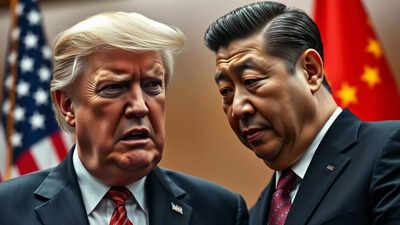
Donald Trump has always called China the ‘biggest abuser’ on tariffs. (AI image)

US President Donald Trump claims he was a ‘Nice Guy’ with China – that he helped China out of a ‘devastating’ situation when the world’s second largest economy was in ‘grave economic danger’. But, China ‘violated’ its agreement with the US, Trump has said in his latest social media post on the Truth Social. Trump’s latest salvo against China comes as no surprise for experts, who have come to accept Trump’s ‘flip-flops’ as a reality.Two weeks ago, the US and China announced reaching an agreement for a temporary 90-day reduction in their tariffs, following discussions between senior officials in Geneva. The United States decided to temporarily decrease its additional tariffs on Chinese goods from 145 percent to 30 percent. In response, Beijing implemented a corresponding reduction, bringing down its additional tariffs from 125 percent to 10 percent.US tariffs continue to be elevated, incorporating a 20 percent duty that the Trump administration recently applied to Chinese products, citing concerns about Beijing’s supposed involvement in illegal drug trafficking – an allegation that China has firmly disputed.But things seem to have gone down hill again since then. Trump’s social post reads, “Two weeks ago China was in grave economic danger! The very high Tariffs I set made it virtually impossible for China to TRADE into the United States marketplace which is, by far, number one in the World. We went, in effect, COLD TURKEY with China, and it was devastating for them. Many factories closed and there was, to put it mildly, “civil unrest.” I saw what was happening and didn’t like it, for them, not for us. I made a FAST DEAL with China in order to save them from what I thought was going to be a very bad situation, and I didn’t want to see that happen. Because of this deal, everything quickly stabilized and China got back to business as usual. Everybody was happy! That is the good news!!! The bad news is that China, perhaps not surprisingly to some, HAS TOTALLY VIOLATED ITS AGREEMENT WITH US. So much for being Mr. NICE GUY!”Tit-for-tat tariffs: It’s been a bumpy roadTrump has always called China the ‘biggest abuser’ on tariffs. On April 2, also called the ‘Liberation Day’ by Trump, the US President announced sweeping tariffs on most major economies, with China getting hit with 34% tariffs (plus 20% existing tariff). China had retaliated strongly by raising its own tariffs and the situation had quickly escalated to a level where Trump eventually imposed 245% reciprocal tariffs on China.Also Read | Big embarrassment! Pakistan’s crypto attempt to ‘please’ Donald Trump in a soupTrump levied huge tariffs on Chinese imports, responding to Beijing’s stringent restrictions on exports of critical minerals, which are vital components in various products from smartphones and electric vehicles to aircraft engines and nuclear submarines.China controls an overwhelming 92% of the world’s rare earth processing capabilities and the United States depends on Chinese supplies for approximately 70% of its rare earth compounds and metals. In the past Trump administration officials have said that China is wielding its market supremacy as a strategic tool, necessitating immediate US action.Global markets went into a tailspin following the trade war between the US and China and the 90-day truce between the world’s two largest economies had brought a sense of relief – albeit fragile!So, what went wrong between the US & China this time?Trump’s statement lacks details regarding China’s specific violations of the Geneva, Switzerland agreement and does not outline his intended response towards Beijing.A US official informed Reuters that China appeared to be delaying the issuance of export licences for rare earth minerals.US Trade Representative Jamieson Greer told CNBC that China had not fulfilled its Geneva commitments. He said, “The Chinese are slow-rolling their compliance, which is completely unacceptable and it has to be addressed.”Greer indicated that China’s supply of critical minerals, previously stopped due to Chinese trade countermeasures, had not resumed as stipulated in the Geneva agreement.Earlier, in a Fox News interview, US Treasury Secretary Scott Bessen had t indicated that negotiations with China regarding trade matters were “a bit stalled.”Also Read | ‘Overstepped his authority…’: What are the scathing observations made by US trade court in ruling against Donald Trump’s tariffs?Bessent mentioned the possibility of direct involvement from President Trump and Chinese President Xi Jinping. He also noted that a telephone conversation between the two leaders might take place in the future.Meanwhile, legal hurdles are mounting against Trump’s proposed tariff measures. A recent US trade court verdict said that the president exceeded his authority by invoking emergency economic powers to warrant comprehensive tariffs.The court’s decision halted the most extensive duties since Trump’s return to office, though the ruling remains suspended pending an appeal process.Nevertheless, the verdict maintains the existing tariffs that the Trump administration had established on specific industry imports, including steel and automotive sectors.Also Read | ‘Even if we lose…’: Donald Trump administration readying two-part strategy to impose reciprocal tariffs, says ‘we will do it another way’


Source link

United India Insurance back in black, posts ₹154 crore net in FY25 


United India Insurance Company returned to profitability reporting ₹154 crore net profit for 2024-25.

Compared to the ₹804 crore loss in previous fiscal, it is an impressive turnaround. It has made profit after several years, the State-owned general insurer said.

Gross direct premium income stood at ₹20,072 crore, combined ratio improved 4% to 121.67% and customer base raced past 2 crore mark, the country’s 4th largest general insurer said.

“Our relentless focus on technological innovation, customer satisfaction and risk management enabled us to adapt to evolving industry dynamics and emerge stronger,” CMD Bhupesh Sushil Rahul said.

Through prudent underwriting and strategic loss control measures, it has reclaimed its position as a profitable force in the industry, UIICL said. In alignment with IRDAI’s vision of ‘Insurance for All by 2047’ it has unveiled a range of cutting-edge insurance solutions designed to meet changing needs of customers while enhancing market competitiveness. The list includes comprehensive personal accident policy Sampurna Suraksha Bima; parametric insurance product Param Mitra Suraksha Policy; usage-based motor insurance cover tailored for customers with limited vehicle usage; United Cyber Kavach Policy; and home protection plan securing both property and belongings United Value Griha Raksha Policy.

By prioritizing customer-centric strategies, seamless claims processing and enhanced service standards, the company continues to reinforce its commitment to delivering financial security, strengthening customer trust and redefining industry leadership in the ever-evolving insurance landscape. UIICL has presence across India and offers a portfolio of insurance solutions, including health, motor, property, and marine coverage.


Source link

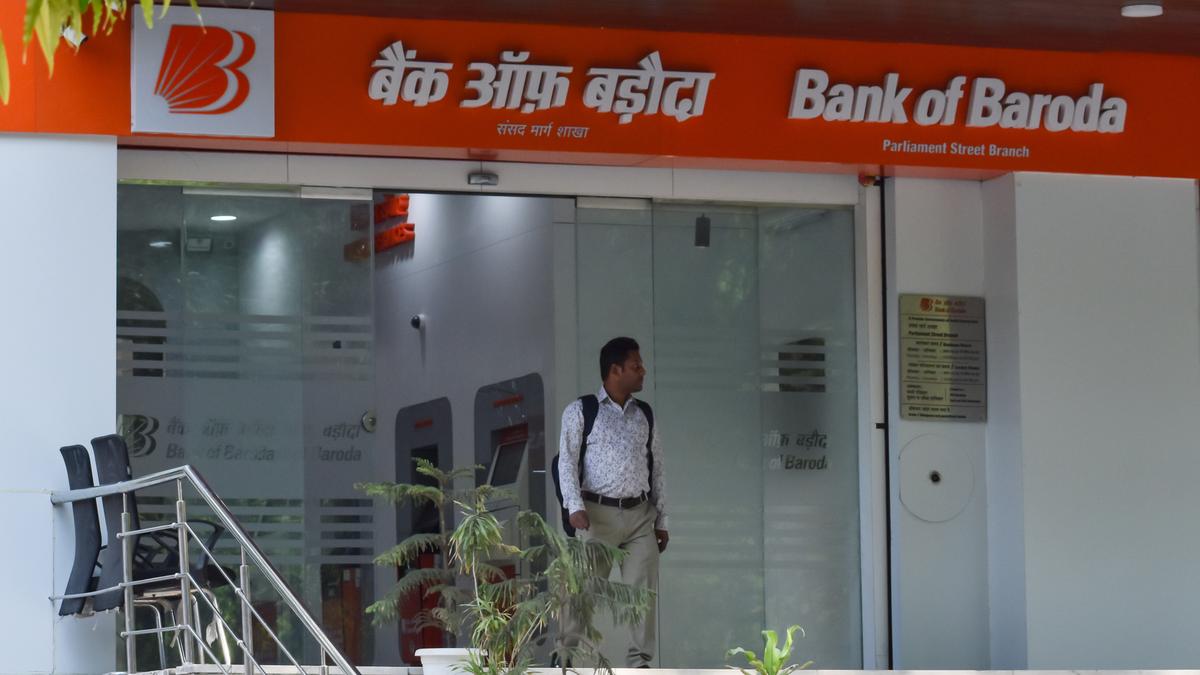
BoB signs MoU with T.N. Govt. for salary accounts


The newly-introduced salary-account package comes with comprehensive insurance coverage at zero cost to the employees, making it one of the ‘most attractive offerings in the banking sector.’

The newly-introduced salary-account package comes with comprehensive insurance coverage at zero cost to the employees, making it one of the ‘most attractive offerings in the banking sector.’
| Photo Credit: AMAN RAJ

Bank of Baroda (BoB) said it has entered into a Memorandum of Understanding (MoU) with the Government of Tamil Nadu to offer a customised salary account package for employees of the State Government, including employees of the Police, Forest, Fire & Rescue Departments. 

The newly-introduced salary-account package comes with comprehensive insurance coverage at zero cost to the employees, making it one of the ‘most attractive offerings in the banking sector.’

T. N. Suresh, General Manager & Zonal Head – Chennai Zone, Bank of Baroda said, “This collaboration will extend financial and insurance benefits to the employees of the State government, thereby supporting their financial aspirations and well-being.”

“This package has been thoughtfully designed to provide extensive insurance cover to employees along with various other benefits like concessional interest rates with waiver in processing charges on Retail loans,” he said.

Bank of Baroda’s customised Salary Account for Tamil Nadu State Government employees comes with  complimentary insurance benefits like Personal Accident Insurance with maximum coverage of ₹1.55 crore, Term Life Insurance coverage of ₹15 lakh, Permanent Total Disability Cover of up to ₹1 crore & Hospicash Facility of Rs. 2,000 per day for daily hospitalisation. 


Source link

Adani Ports raises ₹5,000 crore via NCDs


The issue, locked in a competitive coupon rate of 7.75%,  was fully subscribed by LIC. The debentures will be listed on the BSE, the company said in a statement. 

The issue, locked in a competitive coupon rate of 7.75%, was fully subscribed by LIC. The debentures will be listed on the BSE, the company said in a statement. 
| Photo Credit: INDRANIL MUKHERJEE

Adani Ports and Special Economic Zone Lt.d (APSEZ), said it has raised ₹5,000 crore through a 15-year Non-Convertible Debenture (NCD). 

The issue, locked in a competitive coupon rate of 7.75% p.a., was fully subscribed by LIC. The debentures will be listed on the BSE, the company said in a statement. 

“The issue shows APSEZ’s deep access to long-term capital from diversified sources at attractive pricing and significantly enhances APSEZ’s debt maturity profile. The transaction highlights APSEZ access to domestic markets for its longest tenure issuance till date, and one of the longest in Indian capital markets history,” the company said. 

The proceeds will fund a proposed buyback of APSEZ’s US Dollar bonds, pending board approval on 31 May 2025. A full subscription would extend the average debt maturity significantly longer—from 4.8 years to 6.2 years.

“This isn’t merely a financing exercise; it’s a proactive execution of a meticulously developed Capital Management Plan for APSEZ, focused on maintaining conservative leverage, extending the debt maturity profile, lowering cost, and diversifying funding sources. This plan is designed to support APSEZ with its long-term vision to become the world’s largest integrated transport utility,” said Ashwani Gupta, Whole-time Director & CEO, APSEZ in a statement.


Source link

Rupee slips 7 paise to 85.55 against US dollar amid volatile equities and rising crude prices


Rupee slips 7 paise to 85.55 against US dollar amid volatile equities and rising crude prices

The rupee gave up its early gains to close 7 paise lower at 85.55 against the US dollar on Friday, pressured by volatile domestic equity markets and a rebound in global crude oil prices. Caution prevailed among investors ahead of the upcoming GDP data release, forex traders said.The domestic currency opened at 85.35 and fluctuated between an intraday high of 85.25 and a low of 85.64 before settling at 85.55, marking a modest decline from the previous close. On Thursday, the rupee had ended 10 paise lower at 85.48, PTI reported.Anuj Choudhary, Research Analyst at Mirae Asset Sharekhan, said, “The rupee’s weakness today reflects a combination of increased demand for dollars from importers due to month-end transactions and rising crude oil prices. However, sustained foreign inflows and a softer US dollar index provided some support.”The US dollar index, which measures the greenback against a basket of six currencies, was up 0.28% at 99.49.Analysts noted that the dollar regained strength following a temporary stay imposed by a federal appeals court on a US federal court ruling that had challenged President Donald Trump’s sweeping reciprocal tariffs.Brent crude futures, the global oil benchmark, gained 0.41% to USD 64.41 per barrel.In the domestic stock market, the BSE Sensex declined 182.01 points, or 0.22%, to close at 81,451.01, while the Nifty dropped 82.90 points, or 0.33%, to 24,750.70.Foreign institutional investors (FIIs) were net sellers, offloading equities worth Rs 6,449.74 crore on Friday, according to exchange data.The Reserve Bank of India’s latest annual report highlighted the country’s robust growth outlook, stating that India is set to remain the fastest-growing major economy in the world in the fiscal year 2025-26.


Source link

​Nykaa gets a margin facelift as Q4 profit doubles


​Nykaa gets a margin facelift as Q4 profit doubles

BENGALURU: FSN E-Commerce Ventures, which operates Nykaa, reported a 110% year-on-year increase in consolidated net profit to Rs 19 crore for the March quarter, with margin gains in its core beauty segment and improved performance from its eB2B and retail operations. Revenue rose 24% year-on-year to Rs 2,062 crore in the quarter ended March 2025, while Ebitda increased 43% to Rs 133 crore. Ebitda margin improved to 6.5% from 5.6% a year earlier.For FY25, consolidated revenue stood at Rs 7,950 crore, up 24%, while gross merchandise value (GMV) rose 25% to Rs 15,604 crore. Annual net profit grew 81% to Rs 72 crore. The company attributed the growth to contribution from owned brands, retail expansion, and operating leverage in the beauty business.Nykaa’s beauty vertical reported GMV of Rs 11,775 crore in FY25, growing 30% year-on-year. “In Q4, we delivered a 9.6% Ebitda margin in beauty, the highest in the last eight quarters,” said Anchit Nayar, executive director and CEO, Nykaa Beauty. “This is the result of improved gross margins and cost efficiency, not just scale.”The company’s owned brand portfolio under the House of Nykaa crossed Rs 1,700 crore in GMV. Dot & Key led the segment with GMV of over Rs 900 crore in FY25. Anchit noted the brand’s post-acquisition growth was driven by new formats and strong customer retention. “Dot & Key is now among the top skincare brands across marketplaces, not just on our platform,” he said. Nykaa Cosmetics and Kay Beauty recorded GMVs of Rs 350 crore and Rs 240 crore respectively.The offline retail channel also showed momentum, with 50 stores added during FY25, the company’s largest annual expansion, taking the total count to 237 stores across 79 cities. Retail GMV grew 31% year-on-year, while same-store sales increased 15%. “Offline beauty retail is delivering both growth and profitability,” Anchit said. “We now have a strong foundation across metros and tier 1 cities to deepen store productivity.The company’s eB2B arm, Superstore by Nykaa, posted GMV of Rs 941 crore, growing 57% over FY24. Contribution margin improved by 484 basis points to -12.6%. The unit was recently demerged into Nykaa E-Retail following NCLT approval.Commenting on the overall performance, group chairperson and MD Falguni Nayar said, “FY25 reflects our ability to grow consistently while improving profitability. From here, the focus will be on margin expansion across verticals through leverage and operating discipline.”Nykaa Fashion, which has struggled with lower operating leverage compared to the beauty segment, saw a gradual recovery in Q4 with GMV growth of 18% year-on-year. However, full-year GMV grew at a more modest 12%, even as revenue rose 19% aided by marketing income and platform fees. Segment Ebitda margin improved to -8.3% in FY25, from -10.3% a year ago.“The margin profile is improving because we’ve made deliberate choices in terms of assortment and fulfillment strategy,” Abhijeet Dabas, executive vice president and business head of fashion e-commerce told analysts. “We focused on better curation, higher-quality traffic, and expanding our private-label play, and those changes are beginning to reflect in contribution margins.”Dabas added that fashion as a vertical is being rebuilt around core brand clusters and structural efficiencies. “This is not a GMV-first strategy. We are prioritising retention and frequency from high-intent users, and scaling categories where we see a clear path to contribution profit,” he said.


Source link

EPFO likely to allow instant PF withdrawals via UPI and ATMs from June 2025


EPFO likely to allow instant PF withdrawals via UPI and ATMs from June 2025

The Employees’ Provident Fund Organisation (EPFO) is set to revolutionize the way millions of employees access their provident fund (PF) savings. Starting June 2025, EPF members will be able to instantly withdraw PF funds via Unified Payments Interface (UPI) and ATMs, according to DD News.This major step is being implemented with the support of the Ministry of Labour and Employment and has already received approval from the National Payments Corporation of India (NPCI). The new facility will also allow users to check their PF balance directly on UPI platforms and transfer funds to their bank accounts without delays.Instant PF withdrawals under EPFO 3.0Currently, PF withdrawals involve submitting online claims followed by a waiting period for approval from EPFO field offices. This process can take several days or even weeks. However, the upcoming integration with UPI and ATMs is expected to make settlements instantaneous. Members will be allowed to withdraw up to ₹1 lakh instantly—especially helpful in emergencies.“EPFO has made significant improvements in its digital infrastructure by integrating over 120 databases,” said Sumita Dawra, Secretary at the Ministry of Labour and Employment. “These efforts have reduced claim processing time to just three days, with 95 per cent of claims now being processed automatically. Further upgrades are also in progress to make the system even more efficient.”Expanded withdrawal purposesCurrently, the EPF scheme allows withdrawals for medical emergencies, housing, education, and marriage, but members must meet specific eligibility criteria and provide proper documentation. With the upcoming changes, the scope of permitted withdrawal reasons will be expanded, giving employees greater financial flexibility for key life events.In another significant development, pensioners under the Employees’ Pension Scheme (EPS) of 1995 will be able to access their pensions from any bank branch across India starting January 1, 2025. This means retirees will no longer be restricted to specific banks or branches.Even if a pensioner relocates or changes banks, pension disbursal will continue seamlessly through the Centralised Pension Processing System (CPPS), eliminating the need to transfer Pension Payment Orders (PPO) between offices.


Source link

Tariff pressures still loom over summer outlook after softening US inflation in April


Tariff pressures still loom over summer outlook after softening US inflation in April

The US Federal Reserve’s preferred inflation gauge eased more than expected in April, offering a temporary reprieve from price pressures even as new tariffs introduced by President Donald Trump began to take effect.According to data released Friday by the Commerce Department, the personal consumption expenditures (PCE) price index rose 2.1% year-over-year, down from a revised 2.3% in March. The figure came in slightly below the 2.2% median forecast from economists surveyed by Dow Jones Newswires and The Wall Street Journal, keeping overall inflation just above the Fed’s 2% long-term target, AFP reported.On a monthly basis, headline inflation edged up 0.1%, mirroring the increase in the “core” PCE index, which excludes volatile food and energy prices. Core inflation rose 2.5% from a year earlier, just under the 2.6% economists had projected.“We’re seeing evidence that we were on track for a perfect landing when it comes to inflation,” said Gregory Daco, chief economist at EY, speaking to AFP. “But that unfortunately came before the tariff storm that is likely to lead to an inflationary acceleration over the course of the summer.”The April price gains were largely driven by a 0.5% increase in prices for durable goods and energy, which was partially offset by a 0.3% decline in food prices.Trump’s newly imposed tariffs, dubbed “liberation day” duties, took effect on April 2, with a 10% levy applied to most countries and even higher rates imposed on key trading partners shortly thereafter. Though some of the measures have since been paused, legal battles are ongoing.This week, the US Court of International Trade ruled Trump exceeded his legal authority, only for a federal judge to grant a temporary stay, allowing the tariffs to remain in place during the appeal.While it’s too early for these tariffs to be fully reflected in the data, Daco noted early signs of upward pressure, pointing out that furniture prices began climbing in April following the new duties. “That bodes poorly for the inflation outlook over the coming months,” he warned, suggesting that rising prices could begin to erode consumer spending.The Trump administration maintains that the tariffs will help reduce trade imbalances and won’t harm the broader economy, though many economists expect higher consumer prices and a slowdown in growth — at least in the short term.In more positive economic news, personal income rose 0.8% in April, significantly ahead of the 0.3% forecast. Additionally, the personal saving rate jumped to 4.9% from a revised 4.3% in March, indicating that consumers are holding onto more of their disposable income.For the Federal Reserve, Friday’s data may offer temporary relief. The central bank has kept interest rates steady at a range of 4.25% to 4.50%, and officials continue to deliberate over the timing of future rate cuts.Still, the outlook remains uncertain. Jeffrey Roach, chief economist at LPL Financial, cautioned that the current cooling in inflation may not last. “Inflation will likely reaccelerate for the remainder of 2025 as both supply and demand pressures will push annual inflation rates higher,” he wrote in a note shared with AFP.


Source link

Wall Street drifts lower, still set for best month since late 2023 amid mixed earnings


Wall Street drifts lower, still set for best month since late 2023 amid mixed earnings

Wall Street drifted lower Friday morning as investors weighed a mixed batch of corporate earnings and ongoing uncertainty surrounding former President Donald Trump’s shifting tariff policies. Despite the day’s dip, the market remained on track to close out what could be its best month since November 2023.The S&P 500 slipped 0.2% in morning trading. The Dow Jones Industrial Average ticked up 13 points, or less than 0.1%, as of 10:10 a.m. Eastern time, while the Nasdaq composite fell 0.5%.Shares of Gap Inc. dragged on the market, plunging 21.1%, even after the retailer reported better-than-expected profit and revenue. The company, which owns Banana Republic and Old Navy, warned that tariffs on imports from China and other nations could add up to $300 million in costs this fiscal year. While Gap has plans to mitigate about half of that impact, the warning spooked investors.Markets have spent much of the week reacting to the latest developments in the White House’s tariff policy. Earlier optimism that Trump’s tariffs might be easing helped fuel a rally, especially after a U.S. court blocked many of the levies on Wednesday. That helped push the S&P 500 toward its first winning month in four and potentially its strongest since late 2023.However, the situation remains uncertain. The White House is appealing the U.S. Court of International Trade’s ruling, keeping many of the tariffs in place for now. Tensions flared again Friday morning after Trump accused China of failing to uphold its end of the tariff pause agreement. “So much for being Mr. NICE GUY!” he posted on Truth Social.The comments briefly rattled markets, but futures soon stabilized. Many analysts believe Trump may seek alternative legal routes to continue applying tariff pressure.Trump argues that tariffs are essential to revitalizing American manufacturing, even if households and businesses feel short-term pain. The uncertain outlook has already prompted some companies to pull back. American Eagle Outfitters, for example, withdrew its financial forecast for 2025, citing economic ambiguity. Its stock fell 1.4% after it reported a steeper-than-expected quarterly loss.On the upside, Ulta Beauty shares surged 14.8% after reporting strong sales and raising its full-year revenue outlook, despite describing the business climate as “fluid.” Costco also edged higher, climbing 3.7%, after beating earnings expectations.Red Robin Gourmet Burgers rocketed 69% after surprising investors with a quarterly profit, while SharpLink Gaming extended its meteoric rally, rising 19.5% on Friday to bring its weekly gain to 1,308%. The marketing company, which connects consumers to sportsbooks and casino platforms, announced a $425 million plan to invest in Ethereum-based cryptocurrency ventures.Meanwhile, bond markets were calm. The 10-year Treasury yield dipped to 4.40% from 4.43%, while the two-year yield held steady at 3.92%, reflecting investor expectations that the Federal Reserve may hold rates steady for a while longer.A separate report from the University of Michigan showed that consumer sentiment improved slightly in May, especially after Trump paused many of his proposed tariffs on China. Still, Americans remain anxious. “Overall, consumers see the outlook for the economy as no worse than last month, but they remained quite worried about the future,” said Joanne Hsu, director of the Survey of Consumers.The Fed has so far held its benchmark borrowing rate steady in 2025 after a round of cuts late last year. Officials have indicated they want more time to assess the inflationary impact of tariffs before making further decisions.Global markets showed mixed movement. In Europe, France’s CAC 40 rose 0.3%, Germany’s DAX climbed 0.8%, and the UK’s FTSE 100 added 0.6%.In Asia, Japan’s Nikkei 225 dropped 1.2% to 37,965.10 after inflation data from Tokyo showed core prices rising faster than expected, fueling speculation that the Bank of Japan may raise interest rates.Australia’s ASX 200 gained 0.3%, while South Korea’s Kospi slipped 0.8% ahead of next week’s presidential election. Hong Kong’s Hang Seng lost 1.2% and China’s Shanghai Composite shed 0.5%.The trade court’s ruling applies only to some tariffs, leaving those on steel, aluminum, and automobiles—enacted under a different law—unaffected. On Thursday, the US Court of Appeals for the Federal Circuit allowed the president to continue collecting the contested tariffs temporarily while the case proceeds.In energy markets, US crude dipped 7 cents to $60.87 per barrel, while Brent crude fell 10 cents to $63.25. In currency trading, the US dollar weakened to 143.68 yen from 144.12 yen, and the euro edged down to $1.1344 from $1.1367.


Source link

Finance Ministry recommendations on gold loan norms ‘progressive step’: Muthoot Finance MD


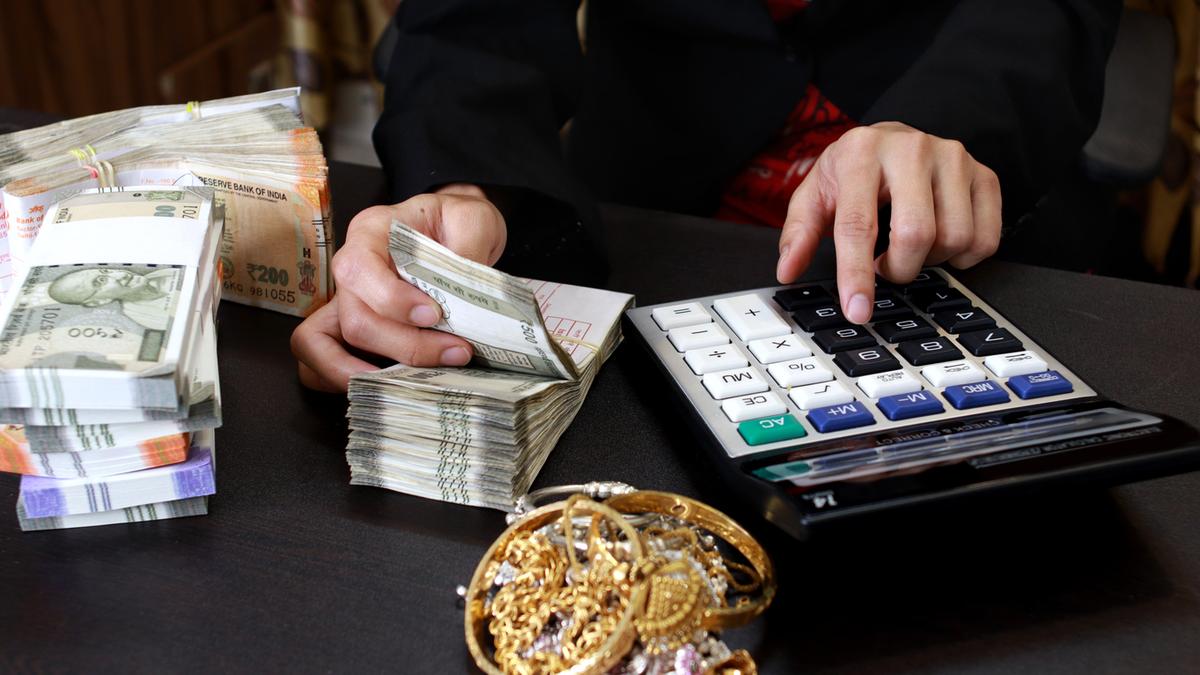
Image is used for representational purposes only.

Image is used for representational purposes only.
| Photo Credit: Getty Images/iStockphoto

The recommendations made by the Department of Financial Services, under the Union Finance Ministry, on the Reserve Bank of India’s draft gold loan norms mark a progressive step towards balancing regulatory oversight with financial inclusion, Alexander Muthoot, Managing Director, Muthoot Finance, said.

The phased implementation timeline and exemption for gold loans below ₹2 lakh reflect a deep understanding of the socio-economic realities of India’s underserved and rural borrowers — who largely depend on gold-backed credit for livelihood, education, and emergencies, he said in a statement.

Shares of gold loan non-banking finance companies rose on Friday (May 30, 2025), after the Finance Ministry recommendations.

Muthoot Finance shares rose over 6% to ₹2,200, while Manappuram Finance shares rose nearly 3% to ₹238 on the Bombay Stock Exchange (BSE).


Source link