Business

Tariff pressures still loom over summer outlook after softening US inflation in April


Tariff pressures still loom over summer outlook after softening US inflation in April

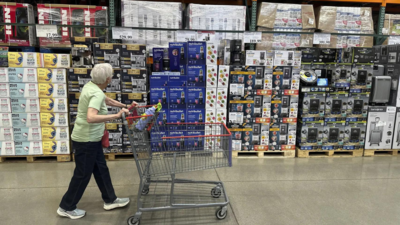
The US Federal Reserve’s preferred inflation gauge eased more than expected in April, offering a temporary reprieve from price pressures even as new tariffs introduced by President Donald Trump began to take effect.According to data released Friday by the Commerce Department, the personal consumption expenditures (PCE) price index rose 2.1% year-over-year, down from a revised 2.3% in March. The figure came in slightly below the 2.2% median forecast from economists surveyed by Dow Jones Newswires and The Wall Street Journal, keeping overall inflation just above the Fed’s 2% long-term target, AFP reported.On a monthly basis, headline inflation edged up 0.1%, mirroring the increase in the “core” PCE index, which excludes volatile food and energy prices. Core inflation rose 2.5% from a year earlier, just under the 2.6% economists had projected.“We’re seeing evidence that we were on track for a perfect landing when it comes to inflation,” said Gregory Daco, chief economist at EY, speaking to AFP. “But that unfortunately came before the tariff storm that is likely to lead to an inflationary acceleration over the course of the summer.”The April price gains were largely driven by a 0.5% increase in prices for durable goods and energy, which was partially offset by a 0.3% decline in food prices.Trump’s newly imposed tariffs, dubbed “liberation day” duties, took effect on April 2, with a 10% levy applied to most countries and even higher rates imposed on key trading partners shortly thereafter. Though some of the measures have since been paused, legal battles are ongoing.This week, the US Court of International Trade ruled Trump exceeded his legal authority, only for a federal judge to grant a temporary stay, allowing the tariffs to remain in place during the appeal.While it’s too early for these tariffs to be fully reflected in the data, Daco noted early signs of upward pressure, pointing out that furniture prices began climbing in April following the new duties. “That bodes poorly for the inflation outlook over the coming months,” he warned, suggesting that rising prices could begin to erode consumer spending.The Trump administration maintains that the tariffs will help reduce trade imbalances and won’t harm the broader economy, though many economists expect higher consumer prices and a slowdown in growth — at least in the short term.In more positive economic news, personal income rose 0.8% in April, significantly ahead of the 0.3% forecast. Additionally, the personal saving rate jumped to 4.9% from a revised 4.3% in March, indicating that consumers are holding onto more of their disposable income.For the Federal Reserve, Friday’s data may offer temporary relief. The central bank has kept interest rates steady at a range of 4.25% to 4.50%, and officials continue to deliberate over the timing of future rate cuts.Still, the outlook remains uncertain. Jeffrey Roach, chief economist at LPL Financial, cautioned that the current cooling in inflation may not last. “Inflation will likely reaccelerate for the remainder of 2025 as both supply and demand pressures will push annual inflation rates higher,” he wrote in a note shared with AFP.


Source link

Wall Street drifts lower, still set for best month since late 2023 amid mixed earnings


Wall Street drifts lower, still set for best month since late 2023 amid mixed earnings

Wall Street drifted lower Friday morning as investors weighed a mixed batch of corporate earnings and ongoing uncertainty surrounding former President Donald Trump’s shifting tariff policies. Despite the day’s dip, the market remained on track to close out what could be its best month since November 2023.The S&P 500 slipped 0.2% in morning trading. The Dow Jones Industrial Average ticked up 13 points, or less than 0.1%, as of 10:10 a.m. Eastern time, while the Nasdaq composite fell 0.5%.Shares of Gap Inc. dragged on the market, plunging 21.1%, even after the retailer reported better-than-expected profit and revenue. The company, which owns Banana Republic and Old Navy, warned that tariffs on imports from China and other nations could add up to $300 million in costs this fiscal year. While Gap has plans to mitigate about half of that impact, the warning spooked investors.Markets have spent much of the week reacting to the latest developments in the White House’s tariff policy. Earlier optimism that Trump’s tariffs might be easing helped fuel a rally, especially after a U.S. court blocked many of the levies on Wednesday. That helped push the S&P 500 toward its first winning month in four and potentially its strongest since late 2023.However, the situation remains uncertain. The White House is appealing the U.S. Court of International Trade’s ruling, keeping many of the tariffs in place for now. Tensions flared again Friday morning after Trump accused China of failing to uphold its end of the tariff pause agreement. “So much for being Mr. NICE GUY!” he posted on Truth Social.The comments briefly rattled markets, but futures soon stabilized. Many analysts believe Trump may seek alternative legal routes to continue applying tariff pressure.Trump argues that tariffs are essential to revitalizing American manufacturing, even if households and businesses feel short-term pain. The uncertain outlook has already prompted some companies to pull back. American Eagle Outfitters, for example, withdrew its financial forecast for 2025, citing economic ambiguity. Its stock fell 1.4% after it reported a steeper-than-expected quarterly loss.On the upside, Ulta Beauty shares surged 14.8% after reporting strong sales and raising its full-year revenue outlook, despite describing the business climate as “fluid.” Costco also edged higher, climbing 3.7%, after beating earnings expectations.Red Robin Gourmet Burgers rocketed 69% after surprising investors with a quarterly profit, while SharpLink Gaming extended its meteoric rally, rising 19.5% on Friday to bring its weekly gain to 1,308%. The marketing company, which connects consumers to sportsbooks and casino platforms, announced a $425 million plan to invest in Ethereum-based cryptocurrency ventures.Meanwhile, bond markets were calm. The 10-year Treasury yield dipped to 4.40% from 4.43%, while the two-year yield held steady at 3.92%, reflecting investor expectations that the Federal Reserve may hold rates steady for a while longer.A separate report from the University of Michigan showed that consumer sentiment improved slightly in May, especially after Trump paused many of his proposed tariffs on China. Still, Americans remain anxious. “Overall, consumers see the outlook for the economy as no worse than last month, but they remained quite worried about the future,” said Joanne Hsu, director of the Survey of Consumers.The Fed has so far held its benchmark borrowing rate steady in 2025 after a round of cuts late last year. Officials have indicated they want more time to assess the inflationary impact of tariffs before making further decisions.Global markets showed mixed movement. In Europe, France’s CAC 40 rose 0.3%, Germany’s DAX climbed 0.8%, and the UK’s FTSE 100 added 0.6%.In Asia, Japan’s Nikkei 225 dropped 1.2% to 37,965.10 after inflation data from Tokyo showed core prices rising faster than expected, fueling speculation that the Bank of Japan may raise interest rates.Australia’s ASX 200 gained 0.3%, while South Korea’s Kospi slipped 0.8% ahead of next week’s presidential election. Hong Kong’s Hang Seng lost 1.2% and China’s Shanghai Composite shed 0.5%.The trade court’s ruling applies only to some tariffs, leaving those on steel, aluminum, and automobiles—enacted under a different law—unaffected. On Thursday, the US Court of Appeals for the Federal Circuit allowed the president to continue collecting the contested tariffs temporarily while the case proceeds.In energy markets, US crude dipped 7 cents to $60.87 per barrel, while Brent crude fell 10 cents to $63.25. In currency trading, the US dollar weakened to 143.68 yen from 144.12 yen, and the euro edged down to $1.1344 from $1.1367.


Source link

Finance Ministry recommendations on gold loan norms ‘progressive step’: Muthoot Finance MD


Image is used for representational purposes only.

Image is used for representational purposes only.
| Photo Credit: Getty Images/iStockphoto

The recommendations made by the Department of Financial Services, under the Union Finance Ministry, on the Reserve Bank of India’s draft gold loan norms mark a progressive step towards balancing regulatory oversight with financial inclusion, Alexander Muthoot, Managing Director, Muthoot Finance, said.

The phased implementation timeline and exemption for gold loans below ₹2 lakh reflect a deep understanding of the socio-economic realities of India’s underserved and rural borrowers — who largely depend on gold-backed credit for livelihood, education, and emergencies, he said in a statement.

Shares of gold loan non-banking finance companies rose on Friday (May 30, 2025), after the Finance Ministry recommendations.

Muthoot Finance shares rose over 6% to ₹2,200, while Manappuram Finance shares rose nearly 3% to ₹238 on the Bombay Stock Exchange (BSE).


Source link

Centre announces additional benefits for NPS retirees under Unified Pension Scheme; claims open until June 30


Centre announces additional benefits for NPS retirees under Unified Pension Scheme; claims open until June 30

The ministry of Finance on Friday announced that Central government employees who retired under the National Pension Scheme (NPS) on or before March 31, 2025, and have completed at least 10 years of qualifying service — or their legally wedded spouses — will be eligible for additional benefits under the Unified Pension Scheme (UPS).These UPS benefits will be offered over and above the NPS benefits already availed by the subscribers.As per the notification, eligible NPS retirees may choose between a one-time payout equal to one-tenth of their last drawn Basic Pay plus Dearness Allowance (DA) for every completed six months of service, or a monthly top-up if their current NPS pension is lower than the UPS entitlement plus Dearness Relief. Arrears will be paid along with simple interest, based on applicable Public Provident Fund (PPF) rates, reported ANI. The Ministry stated that both physical and online modes of application will be available for claimants. In the physical route, the applicant must visit their respective Drawing and Disbursing Officer (DDO) and submit the required form. The online application process can be completed by visiting official website.The final date to apply for these additional UPS benefits is June 30, 2025, according to the ministry’s statement.Meanwhile, the Delhi Government is preparing to enhance the monthly pension for senior citizens and persons with disabilities by ₹500 to provide greater financial support.Earlier this year, the National Statistical Office (NSO) reported that over 6.4 crore new subscribers were added to EPF and ESI schemes between September 2017 and November 2019. During the same period, over 16 lakh individuals joined the National Pension Scheme.


Source link

US inflation gauge cools with little sign of tariff impact, so far | Business


US inflation gauge cools with little sign of tariff impact, so far
US inflation gauge cools with little sign of tariff impact, so far (Photo: AP)

A key US inflation gauge slowed last month as President Donald Trump’s tariffs have yet to noticeably push up prices, while American incomes jumped. Friday’s report from the Commerce Department showed that consumer prices rose just 2.1 per cent in April compared with a year earlier, down from 2.3 per cent in March and the lowest since September. Excluding the volatile food and energy categories, core prices rose 2.5 per cent from a year earlier, below the March figure of 2.6 per cent. Economists track core prices because they typically provide a better read on where inflation is headed. The figures show inflation is still declining from its post-pandemic spike, which reached the highest level in four decades in July 2022. Economists and some business executives have warned that prices will likely head higher as Trump’s widespread tariffs take effect, though the timing and impact of those duties are now in doubt after they were struck down late Wednesday in court. The inflation-fighters at the Federal Reserve said at their most recent meeting May 6-7 that inflation is still elevated, compared to their target of 2 per cent. Fed officials, who focus more on core prices, broadly support keeping their key interest rate steady while they evaluate the impact of the tariffs on inflation and jobs. The court ruling last Wednesday said that most of Trump’s tariffs were unlawful, including his duties on imports from Canada, Mexico, and China, as well as those on more than 50 other countries. Tariffs on steel, aluminum, and cars were implemented under different laws and remain in place. But the duties were allowed to remain in effect while the Trump administration appeals the ruling against them. And administration officials say they will find other legal authorities, if needed, to implement the tariffs. As a result, what tariffs will end up in place and for how long remains highly uncertain.


Source link

IT department releases Excel utilities for ITR-1 and ITR-4 for AY 2025-26


IT department releases Excel utilities for ITR-1 and ITR-4 for AY 2025-26

The Income tax department on Friday announced that the Excel utility for filing Income Tax Returns (ITRs) using forms ITR-1 and ITR-4 for Assessment Year 2025–26 is now available.“The Excel Utility for ITR-1 and ITR-4 for AY 2025-26 has been enabled and is now available for taxpayers,” the department said in a post on X.With the release of these utilities, taxpayers can now begin filing their returns for income earned during the financial year 2024–25.This year, the deadline for filing ITR-1 and ITR-4 has been extended to September 15, from the usual July 31, giving taxpayers additional time to comply.The forms were officially notified on April 29. However, the enabling of the filing utilities was delayed due to “structural and content revisions” introduced this year. According to the department, additional time was needed for system development, integration, and testing.Himank Singla, Partner at SBHS & Associates, welcomed the move. “It’s a big relief to see that the Excel Utilities for ITR-1 and ITR-4 for Assessment Year 2025–26 have been released. I have already filed ITR-4 using the utility, and the process was smooth. There are no major changes in the ITR-4 schema compared to last year,” he said, as quoted an ET report.However, he highlighted a significant change in the ITR-1 schema. “A new validation rule has been added: if certain TDS section codes appear—like 194B, 194BB, 194S, 194LA, 195, 196A, 194Q, or 194R—the utility will disqualify the return from being filed under ITR-1. This is particularly relevant for those earning from sources such as online gaming, crypto, lotteries, or property transfers,” Singla explained.“This is a very welcome and practical change. In earlier years, many filers unknowingly submitted ITR-1 with such income types, only to receive defective return notices. This rule prevents incorrect filings at the source and saves time and confusion,” he added.Who can file ITR-1 and ITR-4?

  • ITR-1 is available for resident individuals (excluding “not ordinarily resident”) with total income up to Rs 50 lakh. Eligible income sources include salary, one house property, interest income, long-term capital gains under Section 112A (up to Rs 1.25 lakh), and agricultural income up to Rs 5,000. Company directors, individuals with unlisted equity investments, income-tax deferral on ESOPs, foreign assets, or deductions under TDS section 194N are not eligible.

  • ITR-4 applies to individuals, HUFs, and firms (excluding LLPs) with income up to Rs 50 lakh, and income from business or profession under presumptive taxation (Sections 44AD, 44ADA, 44AE), as well as long-term capital gains under Section 112A (up to Rs 1.25 lakh).


Source link

GDP growth slows to 6.5% in 2024-25, slowest since the pandemic


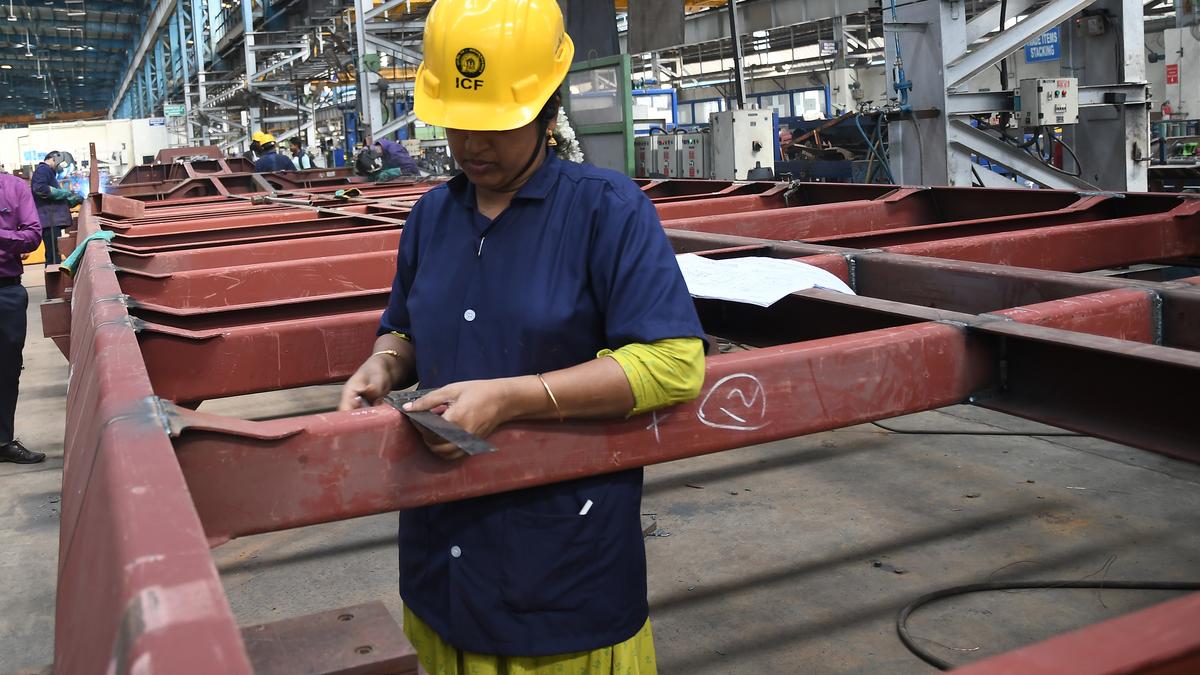
The manufacturing sector’s growth stood at 4.8% in Q4 of FY25, the second fastest quarterly growth in the year, on a high base of 11.3% in Q4 of the previous year. Representational file image.

The manufacturing sector’s growth stood at 4.8% in Q4 of FY25, the second fastest quarterly growth in the year, on a high base of 11.3% in Q4 of the previous year. Representational file image.
| Photo Credit: B. Velankanni Raj

While a significant uptick in economic activity in the fourth quarter of financial year 2024-25 pushed GDP growth for the full year to 6.5%, as per the provisional estimates for 2024-25 released by the government on Friday (May 30, 2025), this is the slowest since the pandemic year 2020-21.

As per data released by the Ministry of Statistics and Programme Implementation, real GDP growth in Q4 of 2024-25 accelerated to 7.4%, the fastest quarterly growth in the year. Quarterly GDP growth stood at 6.4% in Q3. Nevertheless, growth in Q4 of 2024-25 was slower than the 8.4% seen in the fourth quarter of the previous financial year.

The agriculture sector continued its strong performance in Q4, leading to a relatively strong showing for the full year. The ‘Agriculture, Livestock, Forestry & Fishing’ sector grew 5.4% in Q4 of the year, up from 0.9% in Q4 of 2023-24. This helped propel the full year’s growth for the sector to 4.6% in the full year 2024-25, up from 2.7% in 2023-24.

The manufacturing sector’s growth stood at 4.8% in Q4 of FY25, the second fastest quarterly growth in the year, on a high base of 11.3% in Q4 of the previous year. The sector grew 4.5% in the full financial year 2024-25, down from 12.3% in 2023-24.

The construction sector returned to double-digit growth of 10.8% in the fourth quarter, the fastest in the year, and faster than the 8.7% seen in Q4 of 2023-24. The sector’s full-year growth stood at 9.4% in 2024-25, down from 10.4% in 2023-24.

Growth in the tertiary sector — a composite of all the services sectors measured — stood at 7.3% in Q4, in line with the growth in Q2 (7.2%) and Q3 (7.4%). Growth in Q4, however, was slower than the 7.8% seen in the fourth quarter of 2023-24. In the full year 2024-25, the tertiary sector grew at 7.2%, lower than the 9% in the previous year.

The data released on Friday also showed that growth in household consumption – as measured by the Private Final Consumption Expenditure (PFCE) figure — quickened to 7.2% in 2024-25 from 5.6% in the previous year.

Gross Fixed Capital Formation, a measure of asset creation by the public and private sector, saw growth slowing to 7.1% in 2024-25 from 8.8% in 2023-24. This is despite growth in this spending quickening to a six-quarter high of 9.4% in Q4 of 2024-25. 


Source link

Rupee falls 8 paise to settle at 85.56 against U.S. dollar


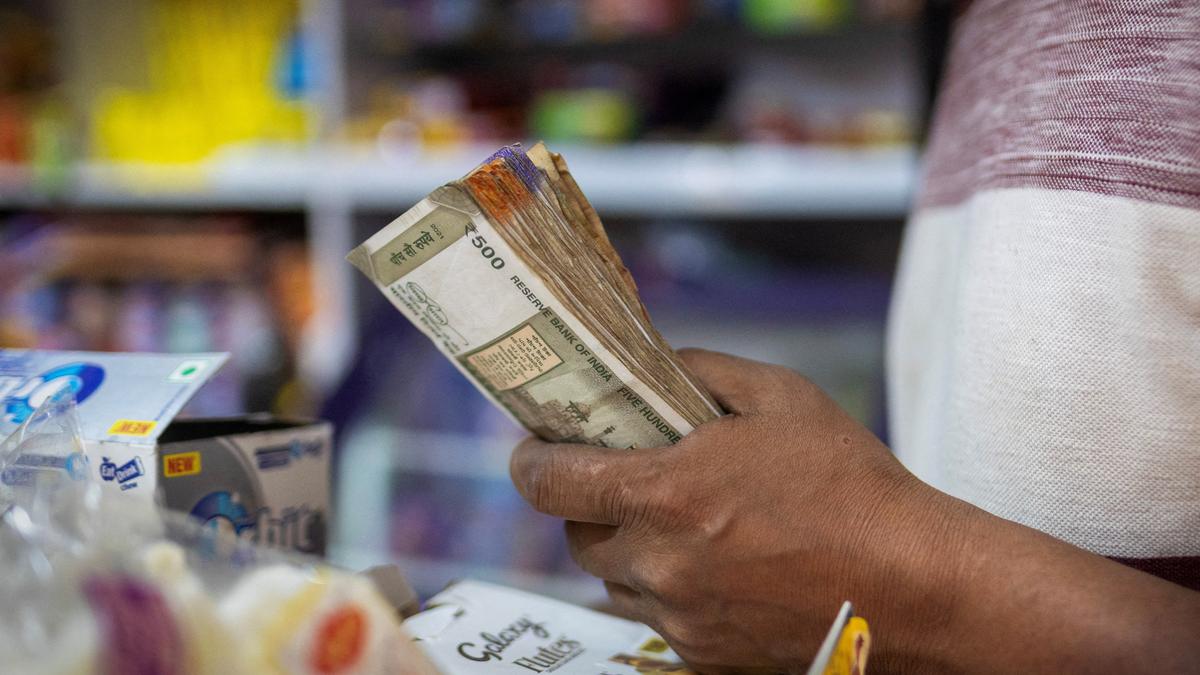
Forex traders said that a steady inflow of foreign funds supported the domestic unit even as investors stayed cautious, awaiting domestic GDP data to be released later in the day. Representational file image.

Forex traders said that a steady inflow of foreign funds supported the domestic unit even as investors stayed cautious, awaiting domestic GDP data to be released later in the day. Representational file image.
| Photo Credit: Reuters

The rupee pared its initial gains to settle 8 paise lower at 85.56 (provisional) against the U.S. dollar on Friday (May 30, 2025), as volatility in domestic equities and recovering global crude prices pressured the local currency.

However, a steady inflow of foreign funds supported the domestic unit even as investors stayed cautious, awaiting domestic GDP data to be released later in the day, forex traders said.

At the interbank foreign exchange, the domestic unit opened at 85.35 and moved between the intraday high of 85.25 and the low of 85.64 against the greenback. The unit settled the day at 85.56 (provisional), registering a loss of 8 paise from its previous close.

The rupee ended 10 paise lower at 85.48 against the dollar on Thursday (May 29, 2025).

Anuj Choudhary, a research analyst at Mirae Asset Sharekhan, said the rupee fell on weak domestic markets and a recovery in crude oil prices. Month-end dollar demand from importers also pressurised the rupee. However, the weak US dollar index and FII inflows cushioned the downside.

“Traders may take cues from the core PCE price index and personal income data from the U.S. The USD-INR spot price is expected to trade in a range of ₹85.30 to ₹86,” he added.

Meanwhile, the dollar index, which gauges the greenback’s strength against a basket of six currencies, was trading higher by 0.28 per cent at 99.49.

Analysts said the dollar showed signs of recovery after the U.S. federal court’s ruling against President Donald Trump’s sweeping reciprocal tariffs proved short-lived as a federal appeals court put a temporary stay on the ruling.

Brent crude, the global oil benchmark, rose 0.41 per cent to $64.41 per barrel in futures trade.

In the domestic equity market, the 30-share BSE Sensex fell 182.01 points, or 0.22 per cent, to close at 81,451.01, while the Nifty declined 82.90 points, or 0.33 per cent, to 24,750.70.

Foreign institutional investors (FIIs) purchased equities worth ₹884.03 crore on a net basis on Thursday (May 29, 2025), according to exchange data. The Reserve Bank, in its latest annual report on Thursday (May 29, 2025), said the country is poised to remain the fastest-growing major economy in the world even in FY26.


Source link

Sensex declines 182 points on losses in IT, metal shares, sluggish Asian peers


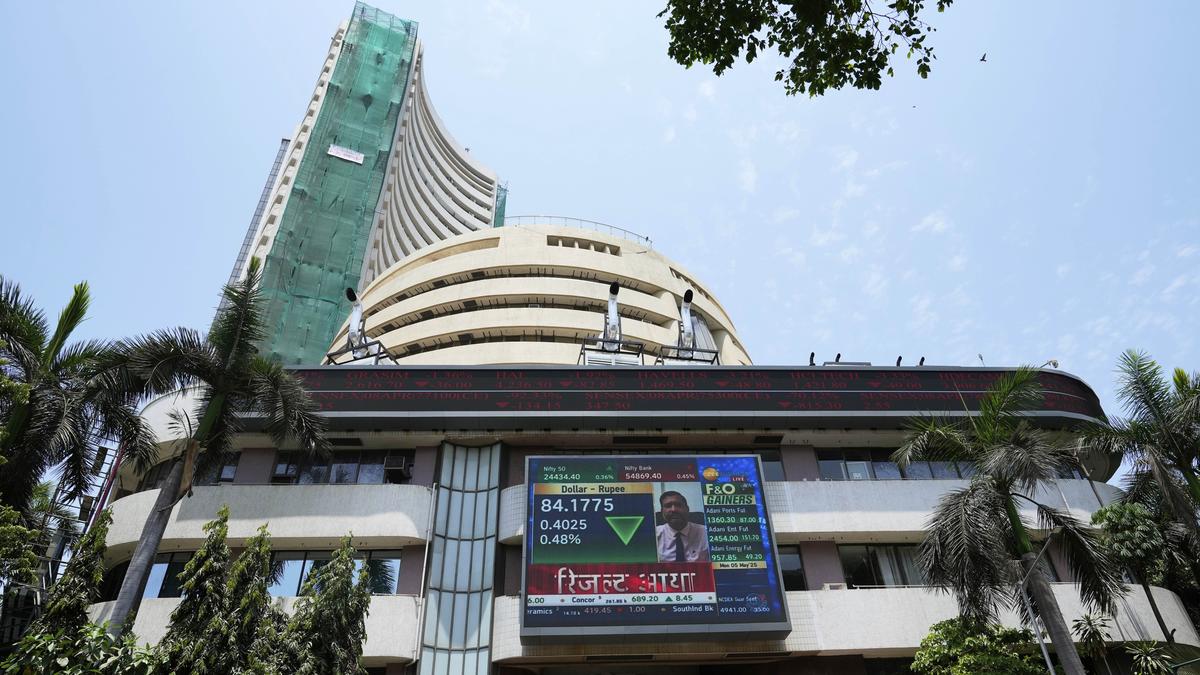
The 30-share BSE Sensex declined by 182.01 points or 0.22% to settle at 81,451.01 as 24 of its constituents retreated and six advanced. During the day, it dropped 346.57 points or 0.42%, to 81,286.45. File

The 30-share BSE Sensex declined by 182.01 points or 0.22% to settle at 81,451.01 as 24 of its constituents retreated and six advanced. During the day, it dropped 346.57 points or 0.42%, to 81,286.45. File
| Photo Credit: AP

Stock markets closed lower in a range-bound trade on Friday (May 30, 2025) following losses in IT shares and sluggish trends in Asian markets due to trade uncertainty after a U.S. appeals court temporarily reinstated reciprocal tariffs.

The 30-share BSE Sensex declined by 182.01 points or 0.22% to settle at 81,451.01 as 24 of its constituents retreated and six advanced. During the day, it dropped 346.57 points or 0.42%, to 81,286.45.

The NSE Nifty dipped 82.90 points or 0.33%, to 24,750.70.

Metals, IT, and auto sector shares declined while banking shares gained. Investors were cautious ahead of the release of domestic GDP data post-market hours, analysts said.

Among Sensex firms, Tech Mahindra fell the most by 1.73%. HCL Tech, Asian Paints, NTPC, Infosys, Nestle, Sun Pharma, and Tata Steel also closed lower.

Eternal, State Bank of India, HDFC Bank, Larsen & Toubro, Reliance Industries and Bajaj Finserv were the gainers.

“A range-bound movement continued in the market, with the temporary reinstatement of U.S. tariffs by the appeal court influencing investors to stay on the sideline. The global market may contend with macroeconomic concerns as the global trade landscape has yet to see stability, which may navigate a short-term consolidation.

“Meanwhile, FII inflows continued due to the volatility in the U.S. 10-year yield and an expectation of solid domestic Q4 GDP data later today and a rate cut by RBI,” Vinod Nair, Head of Research, Geojit Investments Limited, said.

“Markets languished in negative territory to end lower amid weak Asian cues as investors cut their positions in IT, metal, oil & gas and auto shares,” Prashanth Tapse, Senior VP (Research), Mehta Equities Limited, said.

The BSE midcap gauge declined 0.39% while smallcap index went up by 0.17%.

Among sectoral indices, metal dropped the most by 1.68%, followed by BSE Focused IT (1.14%), commodities (1.14%), utilities (1.09 per cent), tech (0.99%), auto (0.91%) and telecommunication (0.79%).

Financial Services, bankex and capital goods were the gainers.

On the weekly front, the BSE benchmark declined 270.07 points or 0.33% and the Nifty dipped 102.45 points or 0.41%.

In Asian markets, South Korea’s Kospi, Japan’s Nikkei 225 index, Shanghai’s SSE Composite index and Hong Kong’s Hang Seng settled in the negative territory.

Markets in Europe were trading higher. U.S. markets ended higher on Thursday (May 29, 2025).

Foreign Institutional Investors (FIIs) bought equities worth Rs 884.03 crore on Thursday (May 29, 2025), while Domestic Institutional Investors (DIIs) bought equities worth Rs 4,286.50 crore, according to exchange data.

Global oil benchmark Brent crude climbed 0.44% to $64.43 a barrel.

The BSE Sensex climbed 320.70 points or 0.39%, to settle at 81,633.02 on Thursday (May 29, 2025). The 50-share Nifty went up by 81.15 points or 0.33% to 24,833.60.


Source link

IndiGo will comply with any government regulations, says CEO Elbers on wet leasing of Turkish Airlines planes


IndiGo CEO Pieter Elbers said, “Flights between India and Türkiye are governed within the bilateral air service agreement.” File

IndiGo CEO Pieter Elbers said, “Flights between India and Türkiye are governed within the bilateral air service agreement.” File
| Photo Credit: PTI

IndiGo CEO Pieter Elbers on Friday (May 30, 2025) said it will comply with any government regulations amid the airline operating wet-leased planes of Turkish Airlines coming into focus.

Last week, Civil Aviation Minister K. Rammohan Naidu said the Civil Aviation Ministry was taking inputs from IndiGo and security agencies on the airline’s use of planes leased from Turkish Airlines and then will decide on the way forward.

“Flights between India and Türkiye are governed within the bilateral air service agreement. We are compliant today and we will continue to comply with any government regulations on those lines,” Mr. Elbers told PTI

On May 15, aviation security watchdog Bureau of Civil Aviation Security (BCAS) revoked the security clearance for Turkish company Celebi Airport Services India Pvt Ltd in the “interest of national security”, days after Türkiye backed Pakistan and condemned India’s strikes on terror camps in the neighbouring country.

Some online travel portals and associations have also issued advisories asking people not to visit Turkiye.

IndiGo is operating direct flights to Istanbul with two leased Boeing 777 aircraft from Turkish Airlines, having over 500 seats each. It also offers codeshare seats to more than 40 points in Europe and the U.S. through the codeshare partnership with the Turkish carrier.


Source link