Business

SEBI releases new framework on F&O risk monitoring


The Securities and Exchange Board of India (SEBI) has come up with a new framework for risk monitoring and increased the position limits for futures and options. In its latest circular, the markets watchdog said it had changed the method to calculate the value of open interest (OI) from notional value-based to delta-based. The new method will weigh OI by the price sensitivity making it impossible to manipulate trades.

SEBI has also increased the limits for positions for options. The net end-of-day open interest limit for options will be ₹1,500 crore and gross OI will be at ₹10,000 crore, SEBI said in the circular. For futures, the OI limits are fixed based on the type of investors ranging from 5% of future OI value to 15% of future OI value.

The regulator has decided not to impose limits on intraday trading.

“This is a progressive step. Delta-adjusted open interest is a true reflection of the positions taken by traders at large. In effect, positions are being assigned weights as per the delta, making the risk management framework stronger,” said Sahaj Agrawal, derivatives analyst at Kotak Securities. 

SEBI had come out with a consultation paper in February to tighten rules on derivative contracts after it discovered growing concerns of few people manipulating the market and gaining benefits. The proposals were reportedly too stringent for the market. SEBI came out with the circular after receiving comments from the stakeholders on the paper. It has set a phased timeline for exchanges to implement these steps till December 6.


Source link

Trump tariffs: Indian govt assessing impact of US court decision on tariffs, says Sources


The Indian government is assessing the potential impact of a U.S. court’s ruling that said President Donald Trump’s retaliatory tariffs on other countries were “unconstitutional”, according to government sources. 

The Indian government is assessing the potential impact of a U.S. court’s ruling that said President Donald Trump’s retaliatory tariffs on other countries were “unconstitutional”, according to government sources. 
| Photo Credit: Reuters

The Indian government is assessing the potential impact of a U.S. court’s ruling that said President Donald Trump’s retaliatory tariffs on other countries were “unconstitutional”, according to government sources. 

These sources also confirmed that the U.S. team of negotiators for the ongoing India-U.S. Free Trade Agreement discussions would be in India on June 5-6, and added that negotiations were “progressing well”. The Indian delegation, led by Commerce and Industry Ministry Piyush Goyal, returned from an around week-long trip to the U.S. last weekend. 

‘The Court of International Trade in the U.S. on May 28 ruled that the International Emergency Economic Powers Act of 1977— the legislation under which Mr. Trump imposed his ‘Liberation Day’ retaliatory tariffs— did not confer on the U.S. President the “unbounded authority” to impose unlimited tariffs on nearly all countries in the world. 

As such, the court set aside the tariffs, which were in any case paused by Mr. Trump until July 8. “The Worldwide and Retaliatory Tariff Orders exceed any authority granted to the President by IEEPA to regulate importation by means of tariffs,” the court noted. “The Trafficking Tariffs fail because they do not deal with the threats set forth in those orders.”

According to trade experts, India must use the opportunity provided by the U.S. court decision to pause and reassess its strategy in the FTA negotiations. 

“India should resist any agreement shaped by threats or based on unlawful measures,” former Director General of Foreign Trade Ajay Srivastava said. “Not only do these Trump-era tariffs violate World Trade Organization rules, but the U.S. court has now confirmed they also breach U.S. domestic law.” 

“With the Trump tariffs standing on shaky legal ground, India must pause and reassess its negotiation strategy before committing to an FTA that could disproportionately favor U.S. interests,” Mr. Srivastava added. 


Source link

Stock markets rebound after 2-day fall as U.S. court blocks reciprocal tariffs; Sensex up 320 points


Benchmark stock indices Sensex and Nifty rebounded on Thursday (May 29, 2025) after two days of decline, mirroring a rally in global markets as a U.S. court blocked President Donald Trump’s reciprocal tariffs.

The 30-share BSE Sensex climbed 320.70 points or 0.39% to settle at 81,633.02 in a volatile session amid monthly expiry in derivative contracts. During the day, it jumped 504.57 points or 0.62% to 81,816.89.

The 50-share NSE Nifty went up by 81.15 points or 0.33% to 24,833.60. The index swung sharply in both directions on the monthly expiry day before ending with gains. Metal, realty, pharma and IT sector indices were major gainers.

Among Sensex firms, IndusInd Bank climbed 2.41% a day after markets regulator Sebi barred its former CEO, Sumant Kathpalia, and four other senior officials from accessing the securities markets in connection with an alleged insider trading in the bank’s shares.

Sun Pharma, Adani Ports, Eternal, Tata Steel, Tech Mahindra and Axis Bank were also among the gainers.

Bajaj Finance, ITC, Bajaj Finserv and Asian Paints were among the laggards.

Investors rejoiced a U.S. federal court’s decision to block President Donald Trump’s sweeping reciprocal tariffs on imports.

“Global sentiment improved after a U.S. court struck down Trump’s reciprocal tax policy. However, the domestic market remained mostly rangebound during the day due to rising oil prices and higher U.S. 10-year bond yields. Some recovery was seen toward the end of the session, driven by F&O expiry-led covering.

“Export-focused sectors like IT and Pharma performed well, supported by hopes of easing trade tensions,” Vinod Nair, Head of Research, Geojit Investments Limited, said.

The BSE midcap gauge climbed 0.48 per cent and smallcap index went up by 0.39%.

Among sectoral indices, realty jumped the most 1.21%, followed by metal (0.89%), BSE Focused IT (0.79%), services (0.69%t), teck (0.65%), consumer discretionary (0.55%) and commodities (0.53%).

FMCG emerged as the only laggard.

As many as 2,022 stocks advanced while 1,954 declined and 135 remained unchanged on the BSE.

“While markets witnessed sideways movement in the first half, key indices rebounded on selective buying amid short covering on the monthly derivatives expiry day,” Prashanth Tapse, Senior VP (Research), Mehta Equities Ltd, said.

“Strong Asian and European cues also aided sentiment, even as investors await the release of the minutes of the US FOMC (Federal Open Market Committee) meeting,” Mr. Tapse said.

In Asian markets, South Korea’s Kospi, Japan’s Nikkei 225 index, Shanghai’s SSE Composite index and Hong Kong’s Hang Seng settled in positive territory.

Markets in Europe were trading higher. U.S. markets ended lower on Wednesday (May 28, 2025).

Foreign Institutional Investors (FIIs) bought equities worth ₹4,662.92 crore on Wednesday, according to exchange data.

Also, the Reserve Bank said that the country is poised to remain the fastest-growing major economy in the world even in FY26.

India’s industrial production growth slowed to 2.7% in April 2025 due to poor performance of manufacturing, mining and power sectors, according to official data released on Wednesday.

Global oil benchmark Brent crude jumped 1.42% to $65.82 a barrel.

The 30-share BSE barometer declined 239.31 points or 0.29% to settle at 81,312.32 on Wednesday. The Nifty dropped 73.75 points or 0.30% to 24,752.45.


Source link

Rupee declines 10 paise to settle at 85.48 against U.S. dollar


Image for representational purposes only.

Image for representational purposes only.

The rupee declined 10 paise to close at 85.48 (provisional) against the U.S. dollar on Thursday (May 29, 2025) due to a strong American currency against major crosses overseas and rising global crude oil prices.

However, positive domestic equity market and foreign fund inflows supported the local currency and restricted its slide, forex traders said.

At the interbank foreign exchange, the domestic unit opened at 85.56 and touched the intra-day low of 85.62 against the greenback. The unit hit the day’s high of 85.40 before ending the session at 85.48 (provisional) against the dollar, 10 paise lower from its previous close.

The rupee ended Wednesday’s session two paise higher at 85.38 against the dollar.

Anuj Choudhary, Research Analyst at Mirae Asset Sharekhan, said a surge in the U.S. dollar index and crude oil prices weighed on the rupee.

“Month-end dollar demand and FII outflows may also pressurise the rupee. USD-INR spot price is expected to trade in a range of ₹85.15 to ₹85.80,” he said.

Meanwhile, the dollar index, which gauges the greenback’s strength against a basket of six currencies, was trading higher by 0.11% at 99.89.

Analysts said the American currency index gained after a US federal court blocked President Donald Trump’s sweeping reciprocal tariff order, fuelling hope of easing global trade uncertainties.

Brent crude, the global oil benchmark, climbed 1.25% to $65.71 per barrel in futures trade.

In the domestic equity market, the 30-share BSE Sensex rose 320.70 points, or 0.39%, to close at 81,633.02, while the Nifty went up 81.15 points, or 0.33%, to 24,833.60.

Foreign institutional investors (FIIs) purchased equities worth ₹4,662.92 crore on a net basis on Wednesday (May 28, 2025), according to exchange data.

The Reserve Bank, in its latest annual report on Thursday, said the country is poised to remain the fastest-growing major economy in the world even in FY26.

According to official data released on Wednesday, India’s industrial production growth slowed to 2.7% in April 2025 due to poor performance of manufacturing, mining and power sectors.


Source link

Gold jewellery consumption to dip by 9-10% in FY26 on rising prices: Report


Domestic gold jewellery consumption is likely to decline by 9-10% in 2025-26, according to a report. File

Domestic gold jewellery consumption is likely to decline by 9-10% in 2025-26, according to a report. File
| Photo Credit: Reuters

“Domestic gold jewellery consumption is likely to decline by 9-10% in 2025-26, mainly due to a 33% surge in gold prices,” a report said on Thursday (May 29, 2025).

“The consumption of bars and coins increased 17% and 25%, respectively, in FY24 and FY25, reflecting investor preference for safe-haven assets amid global macroeconomic uncertainty and heightened geopolitical and trade tensions,” ICRA said in the report.

“This trend is likely to persist in FY26, with demand for bars and coins likely to grow by around 10%, accounting for 35% of the total gold demand,” it added.

The agency estimates that domestic gold jewellery consumption volumes to decline by 9-10% in FY26, following the 7% drop in FY25, even as investment demand will remain resilient.

Meanwhile, ICRA anticipates domestic gold jewellery consumption by value to continue to witness double-digit growth in FY26, with an estimated increase of 12-14%, notwithstanding a projected decline in volumes. “This is similar to the price-driven expansion seen in FY25 when the sector registered a 28% rise in value, largely attributable to a 33% surge in gold prices,” the report said.

“Organised large retailers are expected to post revenue growth of 14-16% YoY in FY26. This will be supported by continued gold price appreciation, planned retail expansion, and market share gains from the unorganised segment. A higher number of auspicious days in the fiscal is also expected to lend some support to demand, despite elevated prices and declining volumes,” ICRA senior vice-president and group head Jitin Makkar said.

In FY25, revenue growth for organised jewellers was driven largely by buoyant realisations, even as most players experienced volume contraction — except for a few that pursued aggressive store expansion, it stated. “This trend is expected to continue in FY26, supported by the sustained cultural importance of gold, stable wedding demand and a good number of auspicious days,” it added.

“Gold prices are expected to stabilise at current levels unless there are major global or geopolitical events influencing the price movements,” the report said.

ICRA estimates the industry’s operating margin to expand by approximately 30 basis points (bps) to 7.2% in FY26, aided by scale efficiencies and favourable pricing. However, net margin expansion is likely to be constrained by rising financing costs.

“Despite a projected 30 bps expansion in operating margins in FY26, net margin expansion will remain limited within 10 basis points due to higher financing costs stemming from elevated GML rates and increased working capital borrowings driven by high gold prices and planned store additions,” Mr. Makkar added.


Source link

NCLAT grants interim stay on NCLT order rejecting Vedanta’s demerger proposal


View of the Vedanta office building in Mumbai. File

View of the Vedanta office building in Mumbai. File
| Photo Credit: Reuters

The National Company Law Appellate Tribunal (NCLAT) on Thursday (May 29, 2025) granted an interim stay on the National Company Law Tribunal’s (NCLT) order rejecting part of Vedanta Ltd’s proposed demerger of its various businesses.

The diversified natural resources conglomerate Vedanta Ltd. decided to retain its Base Metals business and proposed to demerge 4 businesses into respective subsidiary companies, namely Vedanta Aluminium Metal Ltd., Talwandi Sabo Power Ltd. (TSPL), Malco Energy Ltd. and Vedanta Iron and Steel Ltd.

In March, NCLT Mumbai rejected the demerger of Vedanta’s power business and its merger with the resulting company TSPL, citing insufficient debt disclosure, after China’s Sepco Electric Power Construction Corporation (Sepco) objected to the proposal over its debt of ₹1,245 crore.

TSPL had moved NCLAT against the NCLT order.

“The issues raised before us need to be considered at length and presently in view of the submissions made, the scheme is severable and thus in case the stay is not granted to the impugned order, it may affect the second motion application filed in respect of other three transferor companies pending in different tribunals,” the NCLAT said in its order dated May 27.

The NCLAT also asked TSPL to provide a bank guarantee of ₹1,245 crore to protect the interest of Sepco, within two weeks.

The NCLAT stayed the portion of the scheme rejected by the NCLT till the next date of hearing. It posted the case for hearing on August 4 hearing.

Post the interim stay, Vedanta on Thursday said it remains committed to its strategic reorganisation plan and continues to work toward unlocking long-term value for all stakeholders.


Source link

India poised to be ‘primary engine’ of global economic growth in 2025 and 2026: World Economic Forum


India poised to be 'primary engine' of global economic growth in 2025 and 2026: World Economic Forum

India is set to be the main engine of global economic growth in 2025 and 2026, according to the World Economic Forum’s (WEF) Chief Economists Outlook report. The report, which surveys leading economists, highlights India’s strong economic fundamentals and positive outlook despite ongoing global uncertainties. “India, the region’s largest economy, looked set to be the primary engine of growth.” WEF stated, quoted ANI. The International Monetary Fund (IMF) projects India’s GDP growth at 6.2 percent in 2025 and 6.3 percent in 2026, positioning it as the fastest-growing major economy in South Asia. This robust growth makes India central to the region’s economic momentum.While South Asia faces challenges such as the impact of rerouted Chinese exports, the report notes encouraging signs. Recent purchasing managers’ index (PMI) data show better-than-expected performance, particularly in new export orders, indicating strong demand for goods and services in the region.The WEF also pointed out that the recently concluded trade agreement between India and the United Kingdom has bolstered India’s trade outlook, further strengthening economists’ confidence in the region.Among global regions, South Asia stands out as the most promising, with one-third (33 percent) of economists forecasting strong or very strong growth for the remainder of 2025.The outbreak of military tensions between India and Pakistan in early May has increased uncertainty in the region. Additionally, most chief economists expect inflation in South Asia to range from moderate (61 percent) to high (26 percent) in the coming months.On a global scale, the economic environment remains fragile. The WEF report highlights a weakening of the world economy since the beginning of the year, with particular worry over shifting US economic and trade policies.About 79 percent of surveyed economists view the recent dramatic US policy changes as part of a long-term structural shift, up from 61 percent in late 2024.In April, the US implemented sharp tariff increases on several countries, escalating economic tensions. Although most of these tariffs have been paused for 90 days, uncertainty about future actions persists.Despite global challenges, the outlook for India and South Asia remains positive, supported by strong economic indicators, trade gains, and growing investor confidence.


Source link

e-Rupee in circulation grows to ₹1,016 crore; RBI explores cross-border CBDC pilots


“The RBI is exploring the commencement of CBDC pilots on cross-border payments,” it said in the annual report. File

“The RBI is exploring the commencement of CBDC pilots on cross-border payments,” it said in the annual report. File
| Photo Credit: Reuters

“The value of Central Bank Digital Currency (CBDC) or e-rupee in circulation jumped to ₹1,016 crore at the end of March 2025 from ₹234 crore in the year-ago period,” the Reserve Bank of India (RBI) said on Thursday (May 29, 2025).

“The RBI is exploring the commencement of CBDC pilots on cross-border payments,” it said in the annual report without giving a timeline.

The CBDC was first introduced in November 2022 initially with a wholesale pilot, which was followed up with a retail one as well. Simplifying cross-border payments was one of the stated advantages of the CBDC, which had to be introduced in face of the challenge to the currency system from non-fiat virtual currencies such as Bitcoins.

“…the Reserve Bank is exploring commencement of CBDC pilots on cross-border payments both on bilateral and multilateral basis to overcome key challenges related to turnaround time, efficiency and transparency,” it said.

“Bilateral cross-border CBDC pilots with select countries are being “actively explored”, and progress has been made in finalisation of roadmap, technical aspects and use cases,” the report said.

The Reserve Bank’s participation in multilateral CBDC initiatives, particularly under the Bank for International Settlements (BIS) Innovation Hub, is also being considered, as per the report.

“The Central bank also aims to further expand the scope and coverage of ongoing pilots in e-Rupee-Retail and e-Rupee-Wholesale by introducing new use cases and features and also improve the technological aspects of the account aggregator framework to enhance transparency, customer convenience and efficiency,” it said.

“A bulk of ₹857 crore of the e-Rupee in circulation is in ₹500 denomination,” the annual report said, adding ₹200 (₹91 crore in circulation) and ₹100 (₹38 crore in circulation) denominations also have sizeable presence.

“Starting with the initial use cases of person-to-person (P2P) and person-to-merchant (P2M), the Reserve Bank expanded the Central Bank Digital Currency (CBDC)-Retail (e-Rupee-R) pilot to include offline and programmability features in FY25,” the annual report said. As at the end of March 2025, the e-Rupee retail pilot was expanded to 17 banks and 60 lakh users.

“To further enhance adoption and improve distribution, certain non-banks have been allowed to offer CBDC wallets. Moreover, the scope of e-Rupee-Wholesale was further expanded and diversified with the addition of four standalone primary dealers (SPDs),” it said.

Programmability use cases include direct benefit transfers to farmers against generation of carbon credits and loans to tenant farmers under kisan credit card (KCC) in select locations, it noted, adding that employee allowances for fuel/meal purposes are also being implemented by banks.

“Odisha has made e-Rupee payments to 88,000 beneficiaries under the Subhadra Yojana,” the annual report said, adding that discussions are under way with multiple Central Government Ministries and State Governments for leveraging programmability feature of CBDC to transfer funds to beneficiaries with a defined end use.


Source link

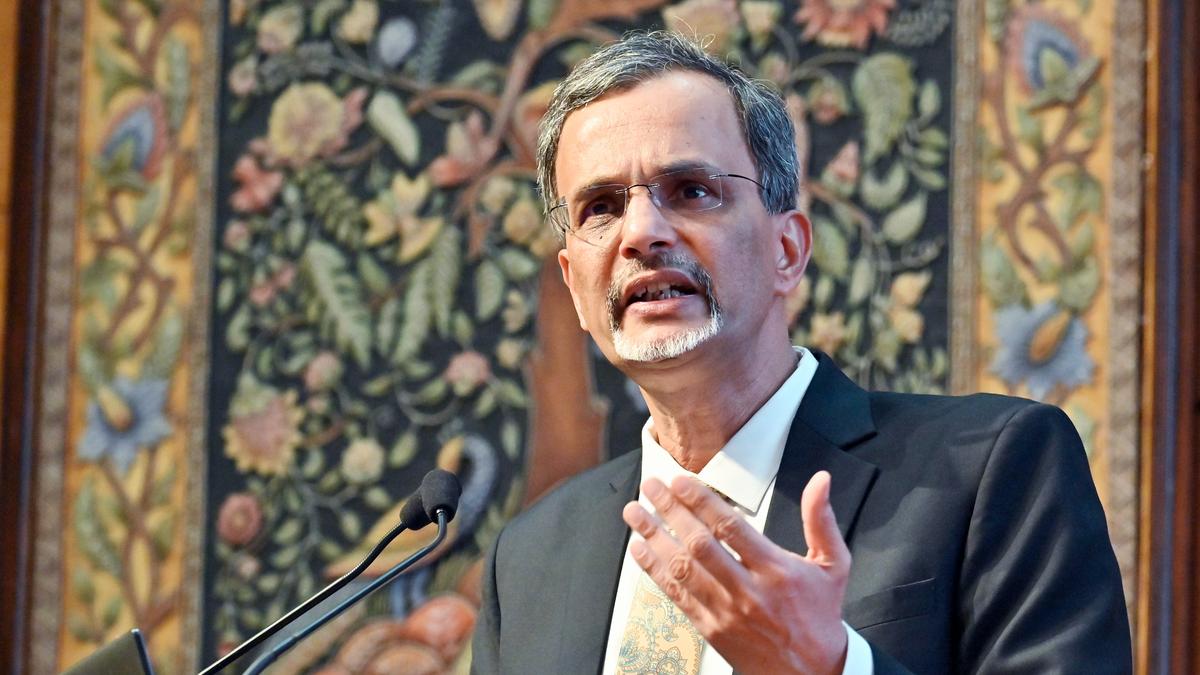
CEA Nageswaran cautions private sector about need to strike a balance between AI & labour


Chief Economic Advisor V. Anantha Nageswaran on Thursday (May 29, 2025) cautioned the private sector against the possible over-deployment of artificial intelligence (AI) tools to the detriment of labour, saying that India was a country that needs eight million additional jobs every year.

Chief Economic Advisor V. Anantha Nageswaran on Thursday (May 29, 2025) cautioned the private sector against the possible over-deployment of artificial intelligence (AI) tools to the detriment of labour, saying that India was a country that needs eight million additional jobs every year.
| Photo Credit: ANI

Chief Economic Advisor V. Anantha Nageswaran on Thursday (May 29, 2025) cautioned the private sector against the possible over-deployment of artificial intelligence (AI) tools to the detriment of labour, saying that India was a country that needs eight million additional jobs every year.

Speaking to gathered industry leaders at the Confederation of Indian Industry’s Annual Business Summit 2025, Mr. Nageswaran said that the deployment of end-to-end AI systems was a business policy choice and was not inevitable, and that companies could decide for themselves where to stop AI deployment and instead use labour.

“Going forward, in our country, while we understand that competitiveness and productivity considerations would require an increase in the number of GPUs, artificial intelligence engines being deployed, etc, we are a country which has to create 8 million livelihoods every year at minimum, excluding agriculture,” Mr. Nageswaran pointed out.

 “And therefore, we have to have policies that rely on capital led growth but also policies — and this is not just the government, but policies in the private sector — that are able to focus on labour intensive manufacturing as well,” he added.

The Chief Economic Advisor went on to say that this is a topic, where, rather than relying on public policy actions, this dialogue has to take place within the business community and with the government.

TCS chairman on AI-assisted enterprise

Mr. Nageswaran’s statements come a day after TCS chairman N. Chandrasekaran, in the company’s annual report, spoke about how “the rise of autonomous robots and AI agents promises a future of ‘dark factories’ and AI-assisted enterprise functions”. 

AI-powered ‘dark factories’ are manufacturing units that function with minimum human involvement. 

In his address, Mr. Nageswaran went on to cite a paper by an independent AI analyst in Berkeley, California, which pointed out that building end-to-end AI agents is a technological and policy choice, or business decision.

“You don’t have to train AI end-to-end,” Mr. Nageswaran told the gathered industry leaders. “You can decide where to stop, and where to deploy human labour as well. Striking the right balance between AI deployment and labour is actually a business decision choice and is not inevitable. This is something we need to consciously internalise.”

The CEA went on to again point out that the Indian private sector was facing a challenge where the growth in their profitability has not only exceeded the growth in their capital formation, but has also exceeded the growth in compensation, which includes hiring as well.

This situation, he said, was “something we can ill-afford for the next 25-30 years”. 


Source link

U.K. flags new Indian market for Scottish salmon trade after FTA


Downing Street noted that the FTA had “unlocked a new salmon market through our deal with India, with tariffs dropping from 33% to 0%”. (Representational image)

Downing Street noted that the FTA had “unlocked a new salmon market through our deal with India, with tariffs dropping from 33% to 0%”. (Representational image)
| Photo Credit: Getty Images/iStockphoto

The U.K. Government has flagged the unlocking of the Indian market for Scottish salmon following the Free Trade Agreement (FTA) with India, finalised earlier this month and expected to be formally signed off in the coming weeks.

Downing Street has this week been highlighting benefits of the India-U.K. FTA and other trade pacts struck in its wake with the U.S. and European Union (EU) in an effort to showcase the sectors and regions across the United Kingdom set to benefit.

“These trade deals deliver long term security for people in Scotland. They will create opportunities for more seamless trade and attract inward investment to grow the economy, making a difference to people’s lives,” Prime Minister Keir Starmer said in a statement.

“These changes will be felt everywhere, whether it’s lower food prices at the checkout, more choice for consumers and higher living standards that will improve livelihoods across Scotland,” he said.

Downing Street noted that the FTA had “unlocked a new salmon market through our deal with India, with tariffs dropping from 33% to 0%”.

“Securing frictionless access to key markets such as the EU, along with expanding opportunities in India, is crucial to protect our producers from unnecessary barriers like tariffs and red tape,” said Tavish Scott, chief executive of Salmon Scotland, the key representative of the sector.

“Ministers rightly recognise salmon as the jewel in the crown of our world-class produce and its vital role in the economy of coastal communities and across the U.K.,” he said.

However, in Scotland, the spotlight remains on the whisky industry which is set to see tariffs for exports to India slashed significantly over the next decade following what the U.K. has dubbed as a “landmark deal” — agreed on May 6 and expected to add an extra GBP 25.5 billion annually in the long run to the current two-way trade of GBP 41 billion.

Under the pact, Scottish distillers will immediately see tariffs halved from 150% to 75% and eventually to just 40% over the next decade.

U.K. Business and Trade Secretary Jonathan Reynolds said, “The three landmark deals secured this month with the U.S., India, and the EU have shown this government is serious about striking the deals that our businesses want and need.

“For Scottish businesses, these deals will mean stability and jobs protected as they seize new opportunities to sell to some of our biggest trading partners.”

“From our world-renowned whisky distilleries to our cutting-edge green energy sector, Scotland has so much to offer international markets… By securing better access to the European Union, United States and India, we’re creating real opportunities for Scottish businesses to grow, supporting jobs in communities from the Highlands to the Borders,” added Secretary of State for Scotland Ian Murray.

At the Indian end, leading Goa-based whisky producer John Distillers welcomed the India-U.K. FTA as a “significant step” towards strengthening bilateral trade and economic cooperation between the two countries.

“This may have a short-term impact on Indian products in India, however, we are confident about the quality of our products and believe we can rise to the challenge,” the makers of Paul John whisky said in a statement.

“We also hope that this deal will allow better ease of business for Indian products in the U.K.. It is crucial to ensure that both nations maintain a level playing field, safeguarding the interests of domestic industries and promoting fair competition,” it noted.

Until further details of the FTA emerge, the Indian distiller said it plans to continue to “build awareness and availability” of its portfolio in the U.K.

Other industries boosted by the FTA include soft drinks and food that the UK government says will “ramp up” Scotland’s export economy.


Source link