Business

e-Rupee in circulation grows to ₹1,016 crore; RBI explores cross-border CBDC pilots


“The RBI is exploring the commencement of CBDC pilots on cross-border payments,” it said in the annual report. File

“The RBI is exploring the commencement of CBDC pilots on cross-border payments,” it said in the annual report. File
| Photo Credit: Reuters

“The value of Central Bank Digital Currency (CBDC) or e-rupee in circulation jumped to ₹1,016 crore at the end of March 2025 from ₹234 crore in the year-ago period,” the Reserve Bank of India (RBI) said on Thursday (May 29, 2025).

“The RBI is exploring the commencement of CBDC pilots on cross-border payments,” it said in the annual report without giving a timeline.

The CBDC was first introduced in November 2022 initially with a wholesale pilot, which was followed up with a retail one as well. Simplifying cross-border payments was one of the stated advantages of the CBDC, which had to be introduced in face of the challenge to the currency system from non-fiat virtual currencies such as Bitcoins.

“…the Reserve Bank is exploring commencement of CBDC pilots on cross-border payments both on bilateral and multilateral basis to overcome key challenges related to turnaround time, efficiency and transparency,” it said.

“Bilateral cross-border CBDC pilots with select countries are being “actively explored”, and progress has been made in finalisation of roadmap, technical aspects and use cases,” the report said.

The Reserve Bank’s participation in multilateral CBDC initiatives, particularly under the Bank for International Settlements (BIS) Innovation Hub, is also being considered, as per the report.

“The Central bank also aims to further expand the scope and coverage of ongoing pilots in e-Rupee-Retail and e-Rupee-Wholesale by introducing new use cases and features and also improve the technological aspects of the account aggregator framework to enhance transparency, customer convenience and efficiency,” it said.

“A bulk of ₹857 crore of the e-Rupee in circulation is in ₹500 denomination,” the annual report said, adding ₹200 (₹91 crore in circulation) and ₹100 (₹38 crore in circulation) denominations also have sizeable presence.

“Starting with the initial use cases of person-to-person (P2P) and person-to-merchant (P2M), the Reserve Bank expanded the Central Bank Digital Currency (CBDC)-Retail (e-Rupee-R) pilot to include offline and programmability features in FY25,” the annual report said. As at the end of March 2025, the e-Rupee retail pilot was expanded to 17 banks and 60 lakh users.

“To further enhance adoption and improve distribution, certain non-banks have been allowed to offer CBDC wallets. Moreover, the scope of e-Rupee-Wholesale was further expanded and diversified with the addition of four standalone primary dealers (SPDs),” it said.

Programmability use cases include direct benefit transfers to farmers against generation of carbon credits and loans to tenant farmers under kisan credit card (KCC) in select locations, it noted, adding that employee allowances for fuel/meal purposes are also being implemented by banks.

“Odisha has made e-Rupee payments to 88,000 beneficiaries under the Subhadra Yojana,” the annual report said, adding that discussions are under way with multiple Central Government Ministries and State Governments for leveraging programmability feature of CBDC to transfer funds to beneficiaries with a defined end use.


Source link

CEA Nageswaran cautions private sector about need to strike a balance between AI & labour


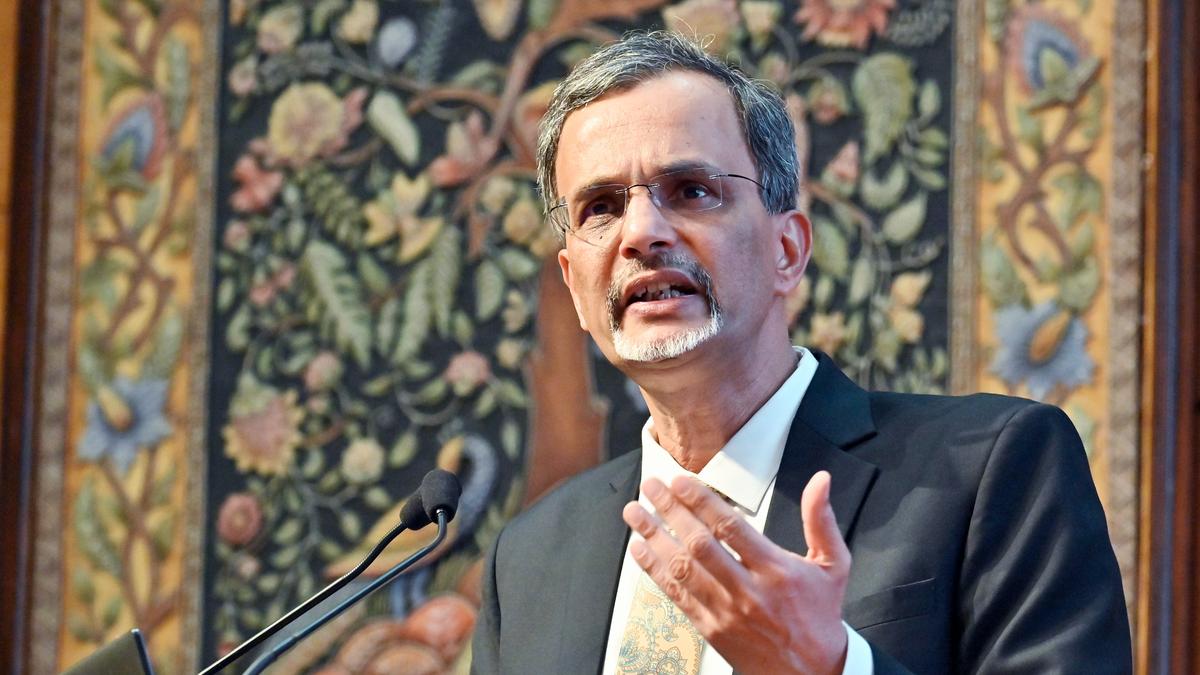
Chief Economic Advisor V. Anantha Nageswaran on Thursday (May 29, 2025) cautioned the private sector against the possible over-deployment of artificial intelligence (AI) tools to the detriment of labour, saying that India was a country that needs eight million additional jobs every year.

Chief Economic Advisor V. Anantha Nageswaran on Thursday (May 29, 2025) cautioned the private sector against the possible over-deployment of artificial intelligence (AI) tools to the detriment of labour, saying that India was a country that needs eight million additional jobs every year.
| Photo Credit: ANI

Chief Economic Advisor V. Anantha Nageswaran on Thursday (May 29, 2025) cautioned the private sector against the possible over-deployment of artificial intelligence (AI) tools to the detriment of labour, saying that India was a country that needs eight million additional jobs every year.

Speaking to gathered industry leaders at the Confederation of Indian Industry’s Annual Business Summit 2025, Mr. Nageswaran said that the deployment of end-to-end AI systems was a business policy choice and was not inevitable, and that companies could decide for themselves where to stop AI deployment and instead use labour.

“Going forward, in our country, while we understand that competitiveness and productivity considerations would require an increase in the number of GPUs, artificial intelligence engines being deployed, etc, we are a country which has to create 8 million livelihoods every year at minimum, excluding agriculture,” Mr. Nageswaran pointed out.

 “And therefore, we have to have policies that rely on capital led growth but also policies — and this is not just the government, but policies in the private sector — that are able to focus on labour intensive manufacturing as well,” he added.

The Chief Economic Advisor went on to say that this is a topic, where, rather than relying on public policy actions, this dialogue has to take place within the business community and with the government.

TCS chairman on AI-assisted enterprise

Mr. Nageswaran’s statements come a day after TCS chairman N. Chandrasekaran, in the company’s annual report, spoke about how “the rise of autonomous robots and AI agents promises a future of ‘dark factories’ and AI-assisted enterprise functions”. 

AI-powered ‘dark factories’ are manufacturing units that function with minimum human involvement. 

In his address, Mr. Nageswaran went on to cite a paper by an independent AI analyst in Berkeley, California, which pointed out that building end-to-end AI agents is a technological and policy choice, or business decision.

“You don’t have to train AI end-to-end,” Mr. Nageswaran told the gathered industry leaders. “You can decide where to stop, and where to deploy human labour as well. Striking the right balance between AI deployment and labour is actually a business decision choice and is not inevitable. This is something we need to consciously internalise.”

The CEA went on to again point out that the Indian private sector was facing a challenge where the growth in their profitability has not only exceeded the growth in their capital formation, but has also exceeded the growth in compensation, which includes hiring as well.

This situation, he said, was “something we can ill-afford for the next 25-30 years”. 


Source link

U.K. flags new Indian market for Scottish salmon trade after FTA


Downing Street noted that the FTA had “unlocked a new salmon market through our deal with India, with tariffs dropping from 33% to 0%”. (Representational image)

Downing Street noted that the FTA had “unlocked a new salmon market through our deal with India, with tariffs dropping from 33% to 0%”. (Representational image)
| Photo Credit: Getty Images/iStockphoto

The U.K. Government has flagged the unlocking of the Indian market for Scottish salmon following the Free Trade Agreement (FTA) with India, finalised earlier this month and expected to be formally signed off in the coming weeks.

Downing Street has this week been highlighting benefits of the India-U.K. FTA and other trade pacts struck in its wake with the U.S. and European Union (EU) in an effort to showcase the sectors and regions across the United Kingdom set to benefit.

“These trade deals deliver long term security for people in Scotland. They will create opportunities for more seamless trade and attract inward investment to grow the economy, making a difference to people’s lives,” Prime Minister Keir Starmer said in a statement.

“These changes will be felt everywhere, whether it’s lower food prices at the checkout, more choice for consumers and higher living standards that will improve livelihoods across Scotland,” he said.

Downing Street noted that the FTA had “unlocked a new salmon market through our deal with India, with tariffs dropping from 33% to 0%”.

“Securing frictionless access to key markets such as the EU, along with expanding opportunities in India, is crucial to protect our producers from unnecessary barriers like tariffs and red tape,” said Tavish Scott, chief executive of Salmon Scotland, the key representative of the sector.

“Ministers rightly recognise salmon as the jewel in the crown of our world-class produce and its vital role in the economy of coastal communities and across the U.K.,” he said.

However, in Scotland, the spotlight remains on the whisky industry which is set to see tariffs for exports to India slashed significantly over the next decade following what the U.K. has dubbed as a “landmark deal” — agreed on May 6 and expected to add an extra GBP 25.5 billion annually in the long run to the current two-way trade of GBP 41 billion.

Under the pact, Scottish distillers will immediately see tariffs halved from 150% to 75% and eventually to just 40% over the next decade.

U.K. Business and Trade Secretary Jonathan Reynolds said, “The three landmark deals secured this month with the U.S., India, and the EU have shown this government is serious about striking the deals that our businesses want and need.

“For Scottish businesses, these deals will mean stability and jobs protected as they seize new opportunities to sell to some of our biggest trading partners.”

“From our world-renowned whisky distilleries to our cutting-edge green energy sector, Scotland has so much to offer international markets… By securing better access to the European Union, United States and India, we’re creating real opportunities for Scottish businesses to grow, supporting jobs in communities from the Highlands to the Borders,” added Secretary of State for Scotland Ian Murray.

At the Indian end, leading Goa-based whisky producer John Distillers welcomed the India-U.K. FTA as a “significant step” towards strengthening bilateral trade and economic cooperation between the two countries.

“This may have a short-term impact on Indian products in India, however, we are confident about the quality of our products and believe we can rise to the challenge,” the makers of Paul John whisky said in a statement.

“We also hope that this deal will allow better ease of business for Indian products in the U.K.. It is crucial to ensure that both nations maintain a level playing field, safeguarding the interests of domestic industries and promoting fair competition,” it noted.

Until further details of the FTA emerge, the Indian distiller said it plans to continue to “build awareness and availability” of its portfolio in the U.K.

Other industries boosted by the FTA include soft drinks and food that the UK government says will “ramp up” Scotland’s export economy.


Source link

Access Denied


Access Denied

You don’t have permission to access “http://www.ndtv.com/business-news/indias-real-gdp-growth-projected-at-6-5-in-fy-2025-26-rbi-8536217” on this server.

Reference #18.4cfdd417.1748531674.1ecfcf4a

https://errors.edgesuite.net/18.4cfdd417.1748531674.1ecfcf4a


Source link

Farmers need to explore agro products to increase income: Vice-President Jagdeep Dhankhar


Vice-President Jagdeep Dhankhar pays tribute to former Prime Minister Chaudhary Charan Singh on his death anniversary, in New Delhi, on May 29, 2025.

Vice-President Jagdeep Dhankhar pays tribute to former Prime Minister Chaudhary Charan Singh on his death anniversary, in New Delhi, on May 29, 2025.
| Photo Credit: PTI

Vice-President Jagdeep Dhankhar on Thursday (May 27, 2025) asserted that the income of people has to increase eightfold to define Viksit Bharat and urged farmers to look beyond agriculture and explore agro-based products to increase their income.

Talking to reporters after paying tributes to former Prime Minister Charan Singh on his death anniversary in New Delhi, the Vice-President said Viksit Bharat, “or a developed India, does not refer to the rank of the nation’s economy in the world.”

He felt that to define Viksit Bharat and make it a ground reality, people’s income has to increase eightfold. He expressed confidence that such a development will certainly happen, provided farmers are far-sighted. Mr. Dhankhar said, “farmers make a lot of effort in cultivating and harvesting crops, but beyond that their role is negligible.”

He also called on farmers to increase their participation in the animal husbandry and agro-based industry. Mr. Dhankhar highlighted that the entire food-processing industry is based on farm produce and that farmers need to be part of the value addition based on their produce.


Source link

Schaeffler India opens new plant in Tamil Nadu


As compared to the initial commitment of ₹1,500 crores, Schaeffler India has invested ₹1,700 crore over last three years (from 2022 to 2024) to expand its local capabilities in India. File

As compared to the initial commitment of ₹1,500 crores, Schaeffler India has invested ₹1,700 crore over last three years (from 2022 to 2024) to expand its local capabilities in India. File
| Photo Credit: Reuters

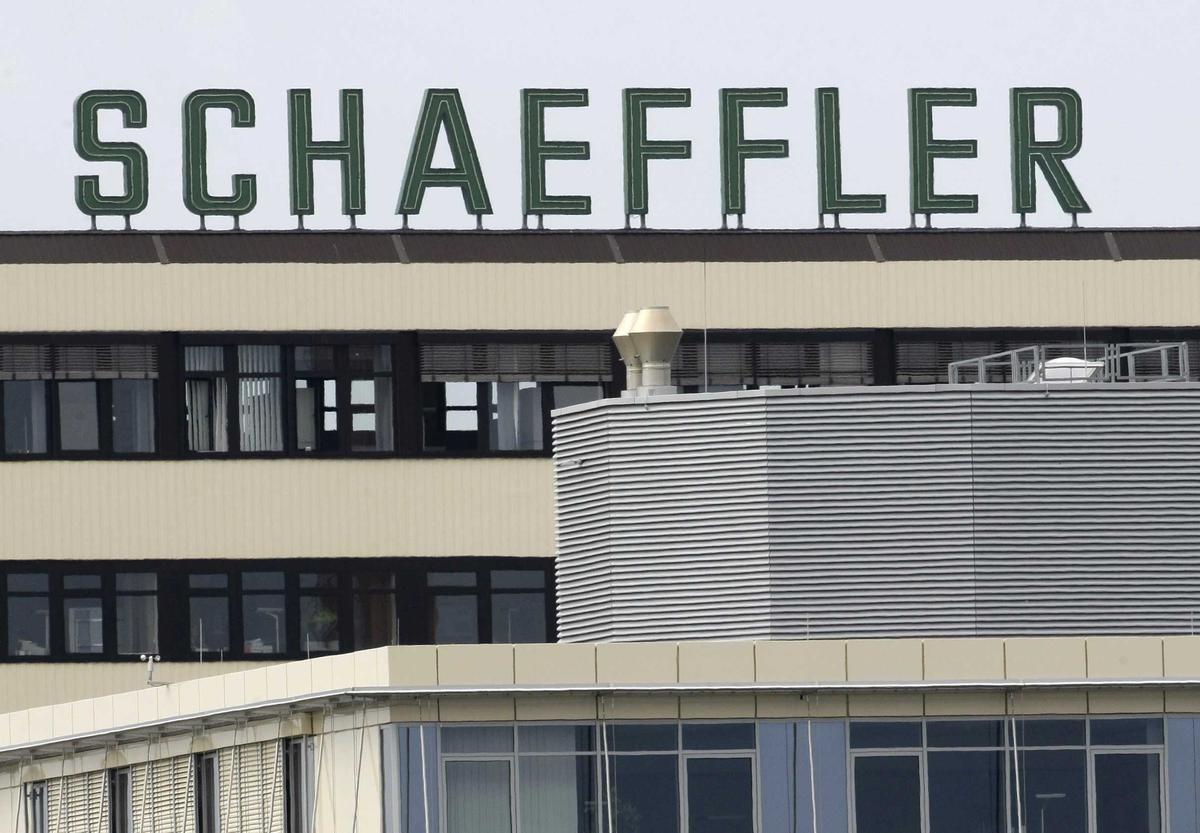
Schaeffler India Limited, a motion technology company, has inaugurated its fifth manufacturing facility in Shoolagiri, Tamil Nadu.

A press release said the plant, which has come up with an investment of ₹330 crores and spread across 16,500 sq. Metres, is dedicated for production of powertrain and chassis components and futuristic technologies. As part of Schaeffler India’s strategy to address growing market demands within the automotive industry, the manufacturing facility will serve as a hub for production and expansion of conventional and electrified powertrain technologies, primarily for the Indian market.

With this facility, the company also aims to increase its transmission component capacity significantly.

Schaeffler AG CEO (Powertrain and Chassis) Matthias Zink said in the press release that “India is a key market for Schaeffler. The new facility is a significant step in our efforts to expand our global manufacturing footprint and further localisation in the region.”

According to Schaeffler India Managing Director and CEO Harsha Kadam, “With the expansion of our production facilities, we are well-positioned to cater not only to the present local markets but also future needs as we transition towards e-mobility.”

As compared to the initial commitment of ₹1,500 crores, Schaeffler India has invested ₹1,700 crore over last three years (from 2022 to 2024) to expand its local capabilities in India. This includes the expansion of new product lines for powertrain solutions, e-mobility solutions as well as large and medium-sized bearings for industrial applications.

Schaeffler India also strengthened its presence in the digital automotive aftermarket space, with the acquisition of KRSV Innovative Auto Solutions Pvt. Ltd. (Koovers), a B2B e-commerce platform in 2023, the release added.


Source link

India poised to remain fastest growing major economy in FY26: RBI


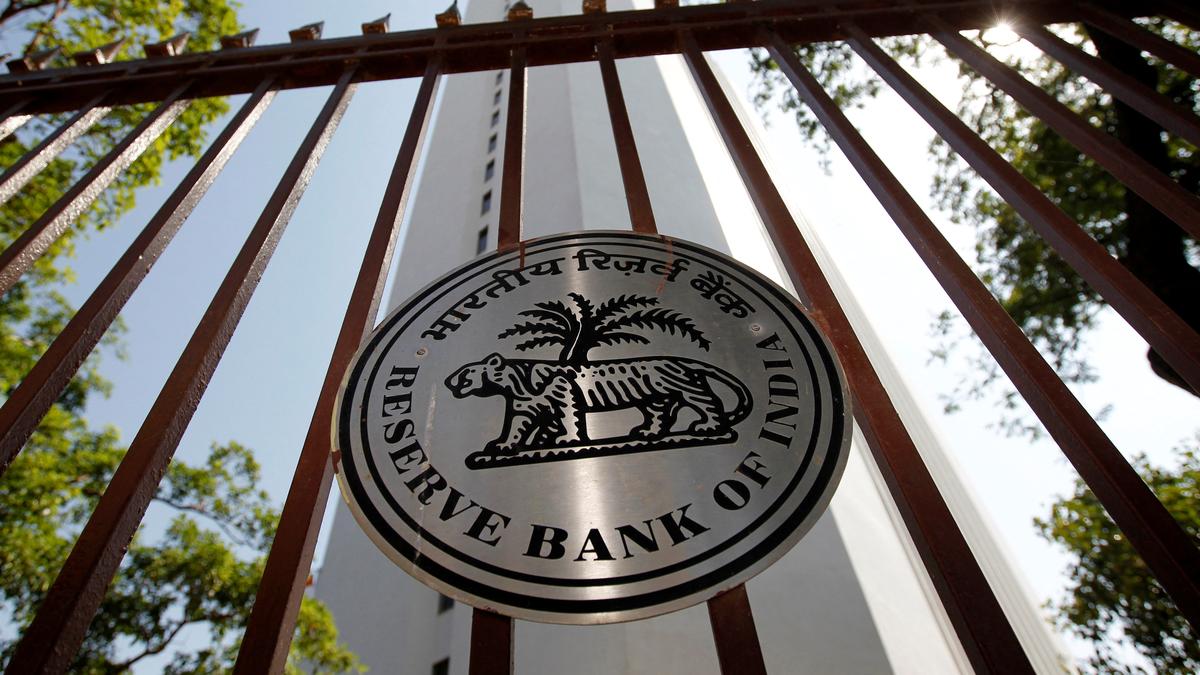
The Reserve Bank of India seal on a gate outside the RBI headquarters in Mumbai. File

The Reserve Bank of India seal on a gate outside the RBI headquarters in Mumbai. File
| Photo Credit: Reuters

The country is poised to remain the fastest growing major economy in the world even in FY26, the Reserve Bank said on Thursday (May 29, 2025).

The benign inflation outlook and a “moderation” in GDP expansion warrant the monetary policy to be supportive of growth going forward, the RBI said in its annual report.

“…the Indian economy is poised to remain the fastest-growing major economy in 2025-26 by leveraging its sound macroeconomic fundamentals, robust financial sector and commitment towards sustainable growth,” the RBI said in the latest report.

It flagged global financial market volatility, geopolitical tensions, trade fragmentation, supply-chain disruptions and climate-induced uncertainties as factors posing downside risks to the growth outlook and also upside risks to the inflation outlook.

However, factors like easing of supply-chain pressures, softening global commodity prices and higher agricultural production on above-normal south west monsoon augur well for inflation outlook, the central bank said.

Shifts in tariff policies may result in sporadic episodes of volatility in financial markets, it said, adding that exports may encounter headwinds on “inward-looking policies and tariff-wars”.

The trade pacts being signed and negotiated by India will help ensure that the impact is limited, the RBI said, adding that services exports and inward remittances will help ensure that the current account deficit is “eminently manageable” in the new fiscal.

The RBI, which has already lowered key policy rates in two consecutive reviews, said in the annual report that there is now a “greater confidence” on durable alignment of headline inflation to the 4% target over a 12-month horizon.

Considering the dynamic nature of the interest rate risk, banks need to address both trading and banking book risks, especially in light of moderation in net interest margins, it recommended.


Source link

Markets welcome court ruling against Trump’s tariffs as shares, U.S. dollar, oil gain


U.S. President Donald Trump. File

U.S. President Donald Trump. File
| Photo Credit: Reuters

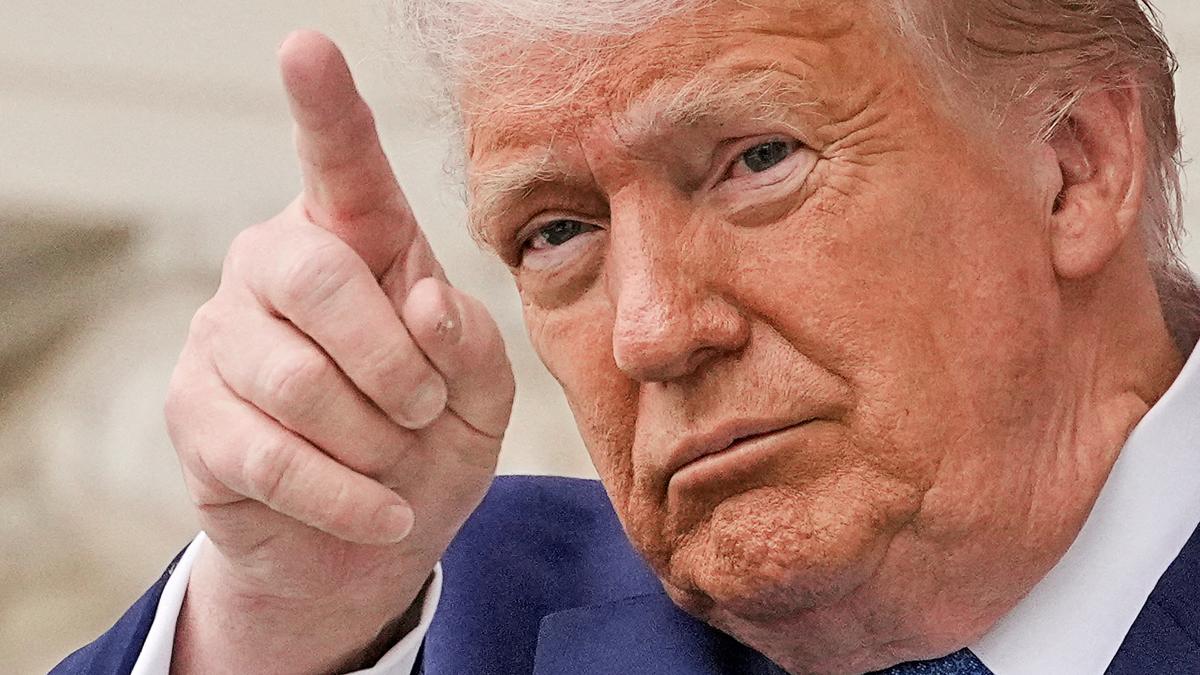
Financial markets welcomed a U.S. Court ruling that blocks President Donald Trump from imposing sweeping tariffs on imports under an emergency-powers law.

U.S. futures jumped on Thursday (May 29, 2025), and oil prices rose more than $1. The U.S. dollar rose against the yen and euro.

The Court found the 1977 International Emergency Economic Powers Act, which Mr. Trump has cited as his basis for ordering massive increases in import duties, does not authorise the use of tariffs.

The White House immediately appealed and it was unclear if Mr. Trump would abide by the ruling in the interim. The long-term outcome of legal disputes over tariffs remains uncertain. But investors appeared to take heart after the months of turmoil brought on by Mr. Trump’s trade war.

The future for the S&P 500 was up 1.7% while that for the Dow Jones Industrial Average gained 1.4%.

Japan’s Nikkei 225 index jumped 1.9% to 38,442.10. America’s largest ally in Asia has been appealing to Mr. Trump to cancel the tariffs he has imposed on imports from Japan and to also halt the 25% tariffs on steel, aluminum, and autos.

The ruling also pushed the dollar sharply higher against the Japanese yen. It was trading at 145.98 yen on Thursday, up from 144.87 yen late Wednesday (May 28, 2025).

A three-judge Panel ruled on several lawsuits arguing Mr. Trump exceeded his authority, casting doubt on trade policies that have jolted global financial markets, frustrated trade partners, and raised uncertainty over the outlook for inflation and the global economy.

Many of Mr. Trump’s double-digit tariff hikes are paused for up to 90 days to allow time for trade negotiations, but the uncertainty they cast over global commerce has stymied businesses and left consumers wary about what lies ahead.

“Just when traders thought they’d seen every twist in the tariff saga, the gavel dropped like a lightning bolt over the Pacific,” Stephen Innes of SPI Asset Management said in a commentary. The ruling was, at the least, “a brief respite before the next thunderclap,” he said.

Elsewhere in Asia, Hong Kong’s Hang Seng added 1% to 23,482.81, while the Shanghai Composite index gained 0.8% to 3,365.40. Australia’s S&P/ASX 200 gained 0.1% to 8,409.70.

In South Korea, which like Japan relies heavily on exports to the U.S., the Kospi surged 1.8% to 2,709.42. Shares also were helped by the Bank of Korea’s decision to cut its key interest rate to 2.5% from 2.75%, to ease pressure on the economy.

Taiwan’s Taiex edged 0.1% lower, and India’s Sensex was also down 0.1%. On Wednesday (May 28, 2025), the U.S. stocks cooled, with the S&P 500 down 0.6% but still within 4.2% of its record after charging higher amid hopes that the worst of the turmoil caused by Mr. Trump’s trade war may have passed. It had been roughly 20% below the mark last month. The Dow industrials lost 0.6% and the Nasdaq composite fell 0.5%.

Trading was relatively quiet ahead of a quarterly earnings release for Nvidia, which came after markets closed.

The bellwether for artificial intelligence overcame a wave of tariff-driven turbulence to deliver another quarter of robust growth thanks to feverish demand for its high-powered chips that are making computers seem more human. Nvidia’s shares jumped 6.6% in afterhours trading.

Like Nvidia, Macy’s stock also swung up and down through much of the day, even though it reported milder drops in revenue and profit for the latest quarter than analysts expected. Its stock ended the day down 0.3%.

The bond market showed relatively little reaction after the Federal Reserve released the minutes from its latest meeting earlier this month, when it left its benchmark lending rate alone for the third straight time. The central bank has been holding off on cuts to interest rates, which would give the economy a boost, amid worries about inflation staying higher than hoped because of President Trump’s sweeping tariffs.

In other dealings on Thursday (May 29, 2025), the yield on the 10-year Treasury rose to 4.52% from 4.47% late Wednesday (May 28, 2025). The U.S. benchmark crude oil gained $1.06 to $62.90 per barrel. Brent crude, the international standard, added $1.01 to $65.33 per barrel. The euro slipped to $1.1242 from $1.1292.


Source link

Access Denied


Access Denied

You don’t have permission to access “http://www.ndtv.com/business-news/rbi-says-india-poised-to-remain-fastest-growing-major-economy-in-fy26-8535531” on this server.

Reference #18.4cfdd417.1748505162.1ddcb563

https://errors.edgesuite.net/18.4cfdd417.1748505162.1ddcb563


Source link

WEF founder Klaus Schwab files criminal complaint against whistleblowers, FT reports


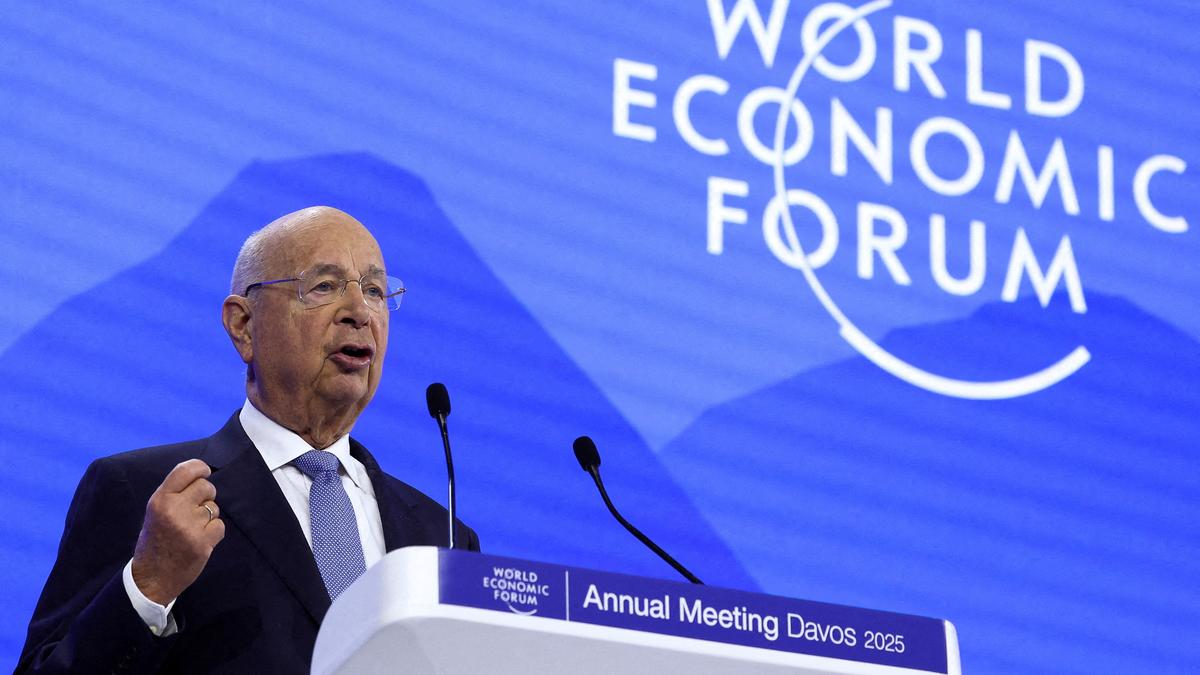
World Economic Forum founder Klaus Schwab. File

World Economic Forum founder Klaus Schwab. File
| Photo Credit: Reuters

World Economic Forum (WEF) founder Klaus Schwab has filed a criminal complaint against the whistleblowers who had anonymously alleged misconduct by him, the Financial Times reported on Thursday (May 29, 2025), citing an interview with Mr. Schwab.

The Forum had launched an investigation in April into Mr. Schwab following a whistleblower letter alleging misconduct by him, only a day after the 87-year-old Mr. Schwab said he was resigning as chairman without stating a reason. Mr. Schwab told the FT that he would fight the “stupid and constructed” allegations, adding that his lawyers had filed a complaint for defamation and coercion with the public prosecutor in Geneva.

WEF, whose annual gathering of business and political leaders in the Swiss mountain resort of Davos has become a symbol of globalisation, did not immediately respond to a Reuters request for comment. Mr. Schwab could not be immediately reached. There was no immediate response from the Geneva prosecutor’s office.

The FT report said the WEF had declined to comment on Mr. Schwab’s legal action, saying it was “a matter apparently directed privately against unknown whistleblowers”.

“We will have this public prosecutor investigation now, we don’t know how aggressive they will be,” Mr. Schwab said. “If they find a systemic attempt to undermine my reputation, this won’t be comfortable for the board.”

The Wall Street Journal, which first reported the probe in April, had said the anonymous letter raised concerns about WEF’s governance and workplace culture, including allegations that the Schwab family mixed their personal affairs with the Forum’s resources without proper oversight. The Schwab family denied all the allegations in the whistleblower complaint to the Journal. Mr. Schwab also denied all allegations against him to the Financial Times. The Forum has previously stated that it would wait for the outcome of the investigation to comment further.


Source link