Life & Style

Where matrimony ascends: The significance of weddings at Tirumala’s Kalyana Vedika


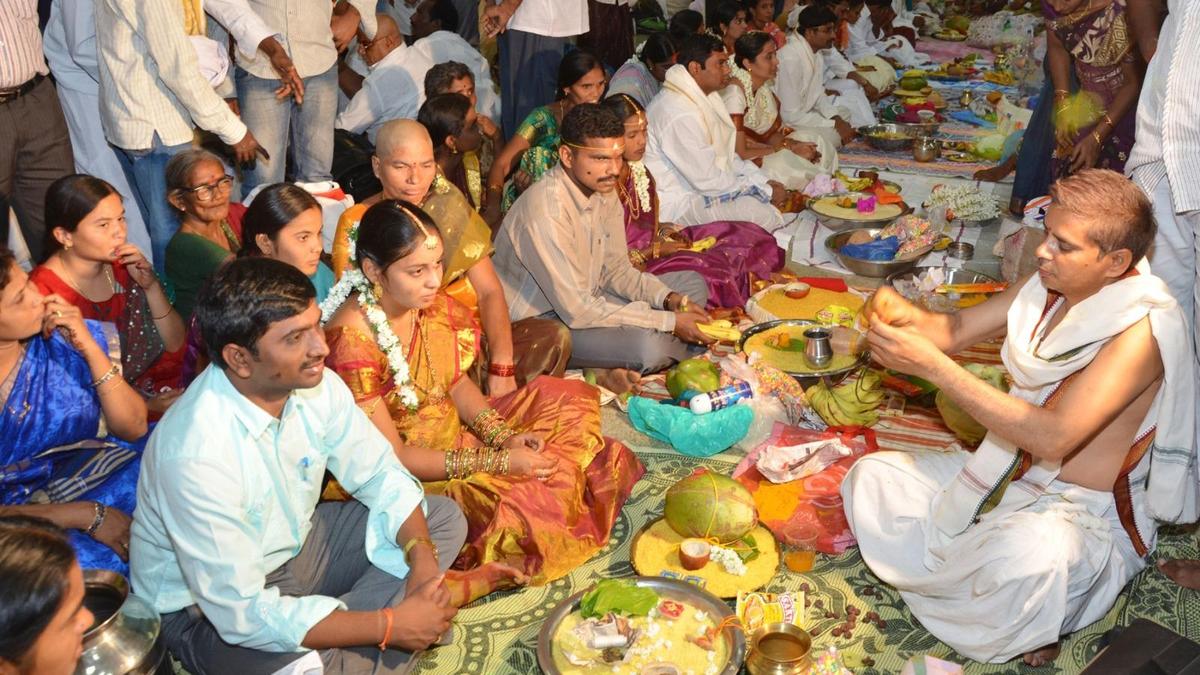
A file photo of priests performing marriages at the TTD’s Kalyana 
Vedika in Tirumala.

A file photo of priests performing marriages at the TTD’s Kalyana
Vedika in Tirumala.

With 26,777 marriages solemnised over nine years, including 3,871 in 2024-25 alone till December, Tirumala’s Kalyana Vedika has emerged as one of the most impactful, faith-driven social initiative, offering free, dignified weddings to thousands of Hindu couples under the aegis of the Tirumala Tirupati Devasthanams (TTD).

Launched on April 25, 2016, the Kalyana Vedika, located on the Papavinasanam Road, has steadily evolved into a powerful symbol of ‘Nitya Kalyanam’, blending sacred tradition with social outreach.

The annual statistics tell a compelling story — 2,731 weddings in 2016-17, which steady rose to 5,047 in 2018-19, showed resilience through the pandemic-hit year of 2020-21 with 91 weddings, and clocked a strong post-COVID recovery of 2,458 weddings in 2023-24.

TTD provides an end-to-end ceremonial framework free of cost, including the services of a priest, traditional ‘mangala vadyam’ and essential wedding materials such as turmeric, kumkum and sacred threads. While the couples bring other personal items, the institution ensures that the sanctity and simplicity of a traditional Hindu wedding are preserved.

Spiritual incentive

A unique spiritual incentive follows the ceremony: the bride, groom and their parents — up to six members — are granted darshan through a special queue, along with complimentary laddus matching the number of devotees listed on the marriage receipt.

Venue booking

To streamline access, the TTD has enabled online booking of Kalyana Vedika slots through its official website, where applicants must register bride and groom details, Aadhaar information, age proof and parental particulars, and select the date and time of wedding. Couples must also obtain certification from the tahsildars of their respective areas confirming that it is the first marriage.

Eligibility conditions stipulate that both individuals must be Hindus, the bride must have completed 18 years of age and the groom 21 years. Second marriages and love marriages are not permitted under the scheme. For further details, applicants may contact 0877-2263433 during office hours between 10.30 a.m. and 5 p.m.


Source link

Chennai’s residents connect with hidden art masterpieces in their homes


On Crescent Road behind Ethiraj College for Women lies a 49-year-old sprightly-looking bougainvillea tree, bearing hot pink blooms. These arresting flowers however, distract passers-by from witnessing a small yet significant piece of the city’s history. A few steps in, you enter Cambrae East, one of the city’s oldest apartment complexes.

Often mistaken for a hotel when it was first built, the building recently held its 50-year celebration, where residents, young and old, put up cultural shows and reminisced the times when the building felt and certainly looked younger.

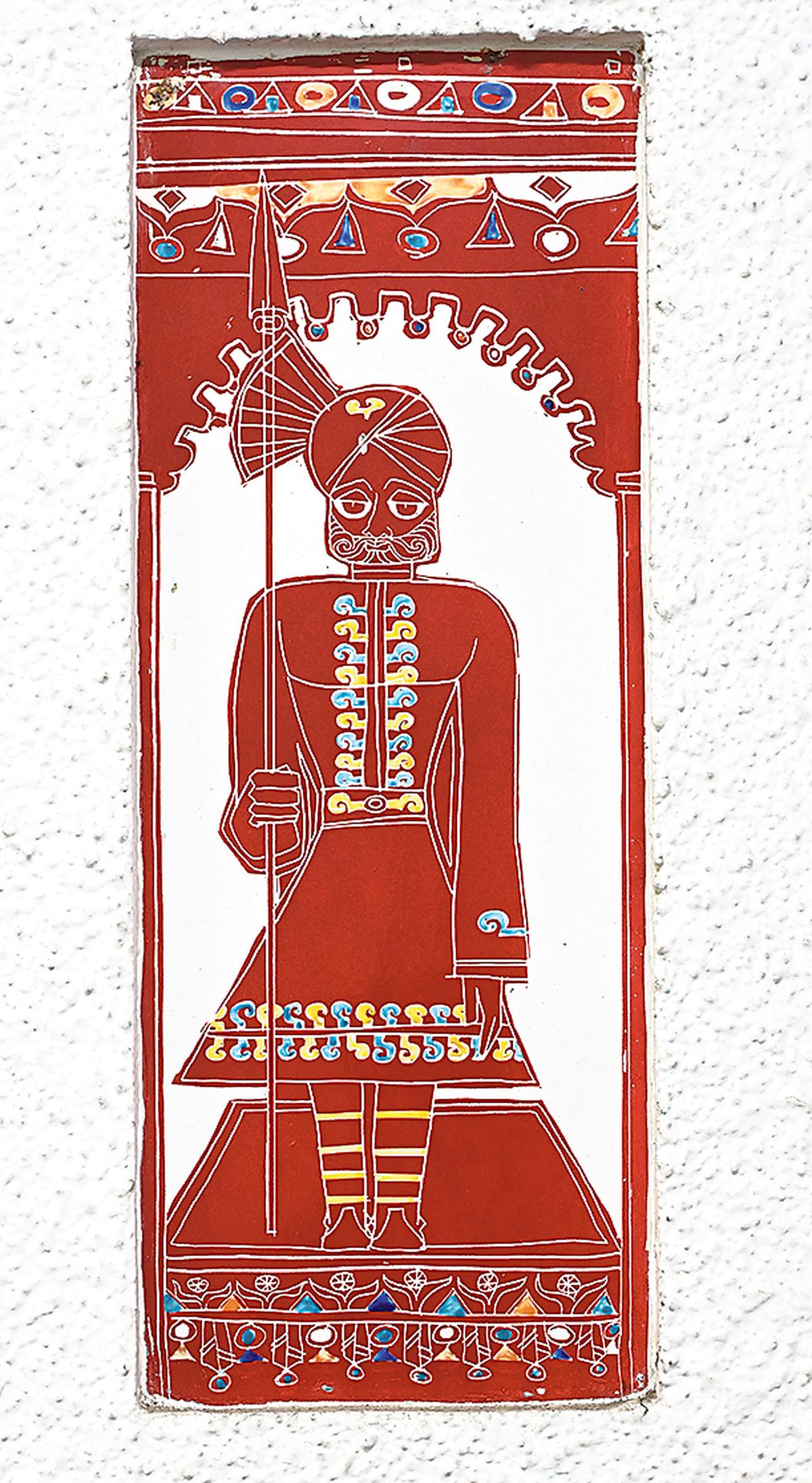
Art work depicting soldiers at Cambrae East Apartment on Crescent Road

Art work depicting soldiers at Cambrae East Apartment on Crescent Road
| Photo Credit:
R Ragu

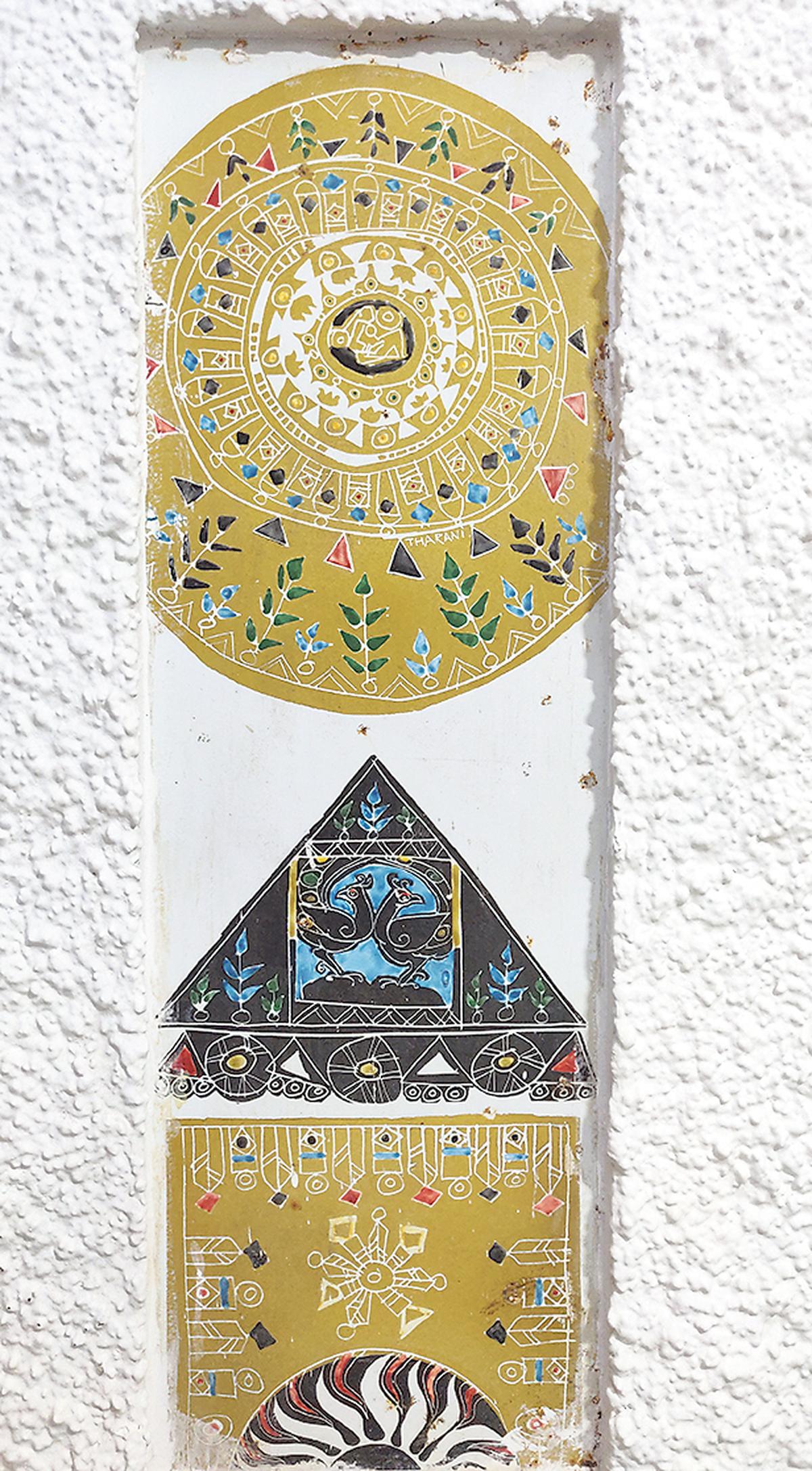
Shonali Muthalaly who lived in the apartment until five years ago, paid a visit that led to a discovery. “My parents bought Cambrae East from the builder [Southern Investments (SI)], and like all the other residents, just took the vivid art in the lobby for granted. When I heard the residents were celebrating the building turning 50, I went back to investigate the pieces I had walked past every day for decades, curious about their provenance. For the first time, I noticed how each one was unique, with subtle differences in colour and detail, though they all came together as a dramatic and cohesive set. Noting ‘Tharini’ worked into the enamel, I messaged the artist. To my surprise (and delight!), artist Thota Tharani recognised the work immediately, and over a call confirmed that he collaborated with the builder, “Abby” from SI, 50 years ago,” she says.

Lining the lobby are 11 guards with fierce moustaches in bright enamel red paint, scrutinising residents and guests who pass. No two paintings, laid out as panels on metal sheets, are alike. The details on the coats, pants, and spheres, have micro variations.

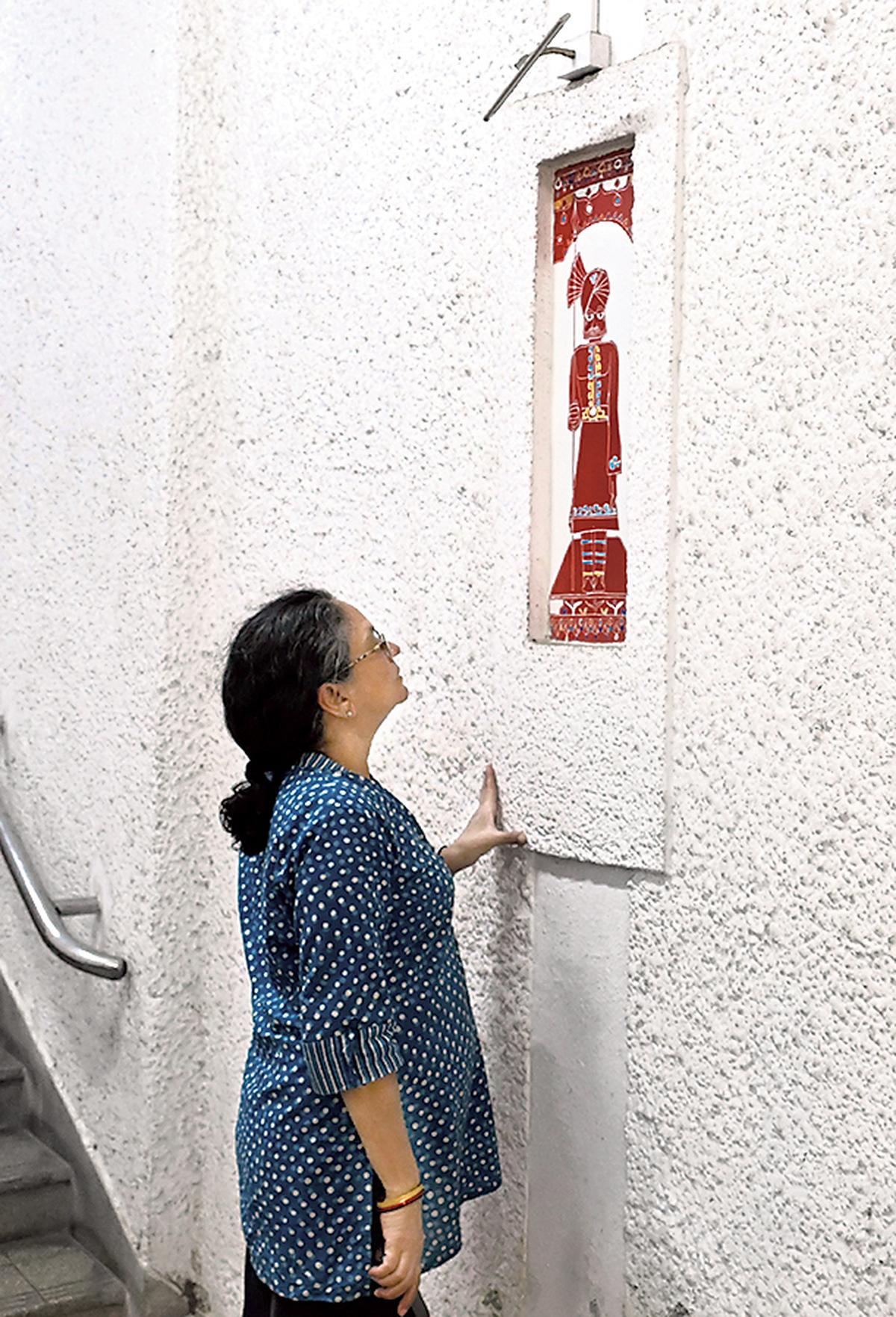
“We’d often jokingly scare children in the building saying that if they misbehaved, the guards would imprison them,” says Lakshmi (or Chelli as she is known in the apartment). As the second-oldest resident of the apartment, Chelli says that none the residents knew that the work was done by such a significant artist. “We had no idea. Back in the day, the builders made the effort, I think,” she says.

Resident Lakshmi admiring the painting at Cambrae East

Resident Lakshmi admiring the painting at Cambrae East
| Photo Credit:
R Ragu

Artist Thota Tharani, who painted the images 50 years ago and had them fired at the Madras Enamel Factory (earlier on Eldams Road), says that they were painted at a time when he was young and in search of a steady stream of jobs before his career as an art director in films.

“It’s interesting to work with enamel paints, and it’s rare to get a red as bright as this. I used a technique where I sprayed the paint using a stencil as base and scratched it off. The paint can’t be too dry or wet. Back in the day, the artists who created the stencils were from Calcutta and were exceptionally skilled and essential for the job. I’d wait until the paint baked every evening because I was impatient to see how the work turned out. I was paid ₹75 per square foot for these and ended up making other such paintings in different apartments too,” he says.

Art at Chesney Nilgiri

Art at Chesney Nilgiri
| Photo Credit:
R Ragu

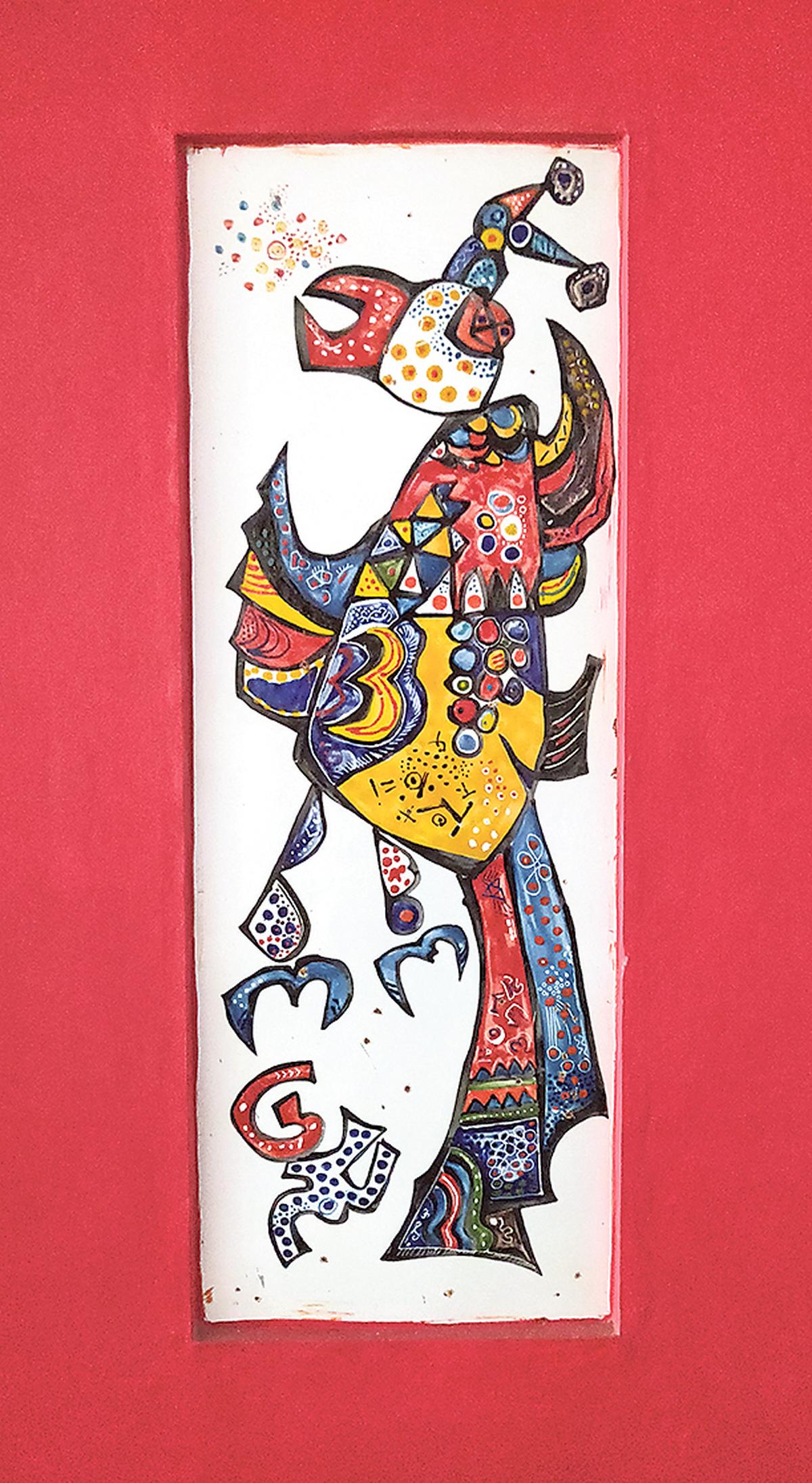
A search down this rabbit hole of paintings in everyday places led us to Chesney Nilgiri on Chesney Lane, where Indian abstracts by Thota Tharani were spotted. “I landed the job because SG Vasudev had already done this work with the builders before. It was through him that I did such work in some other buildings where the motifs included flowers, plants, and even horses,” he says.

All in the neighbourhood

Art work at Owner’s Court

Art work at Owner’s Court
| Photo Credit:
Special Arrangement

After walking down several lanes in Egmore, hunting for 50-year-old buildings with rare paintings by famous artists of the Madras Art Movement, we arrived at Owner’s Court on Monteith Lane, where we finally traced the panels painted by SG Vasudev, a famed artist from the city. “I was interested in doing ceramic work because I was commissioned to do small-size paintings by the builder, but they insisted on enamel and put me in touch with the people at the factory. They were making signs like the ones that say ‘danger’. Instead of sticking to one colour like the workers at the factory, I experimented with many. It came out well in the oven. Seeing this work, I was also called to make a 24ft by 84ft mural at Satyam Cinemas in Royapettah,” he says. Vasudev asks one not to question the meaning of his work. “Is it possible to understand Mahabalipuram? Or Picasso’s Guerenica, or the sound of a bird? It is part of one’s education. It’s all for enjoyment, not for understanding,” he says.

Although most of the paintings remain intact, some have corroded over time. Gallerist Sharan Apparao says that this is because the paintings were likely to have been done on copper metal sheets which, when exposed in a coastal city like Chennai, tend to experience rusting. “These works of art are experimental and rare. Builders who commission public art; and painters who engage in creating the art, need to make decisions regarding the material they use so that the paintings are long-lasting,” she says.

Sugumaran N, secretary, Chesney Nilgiri, says that now that they know its importance, they are committed to taking the work seriously. “We are looking forward to maintaining them,” he says. “Until now, it was just another painting on the wall.”

Published – January 21, 2026 05:48 pm IST


Source link

Quilt artists reflect through fabric


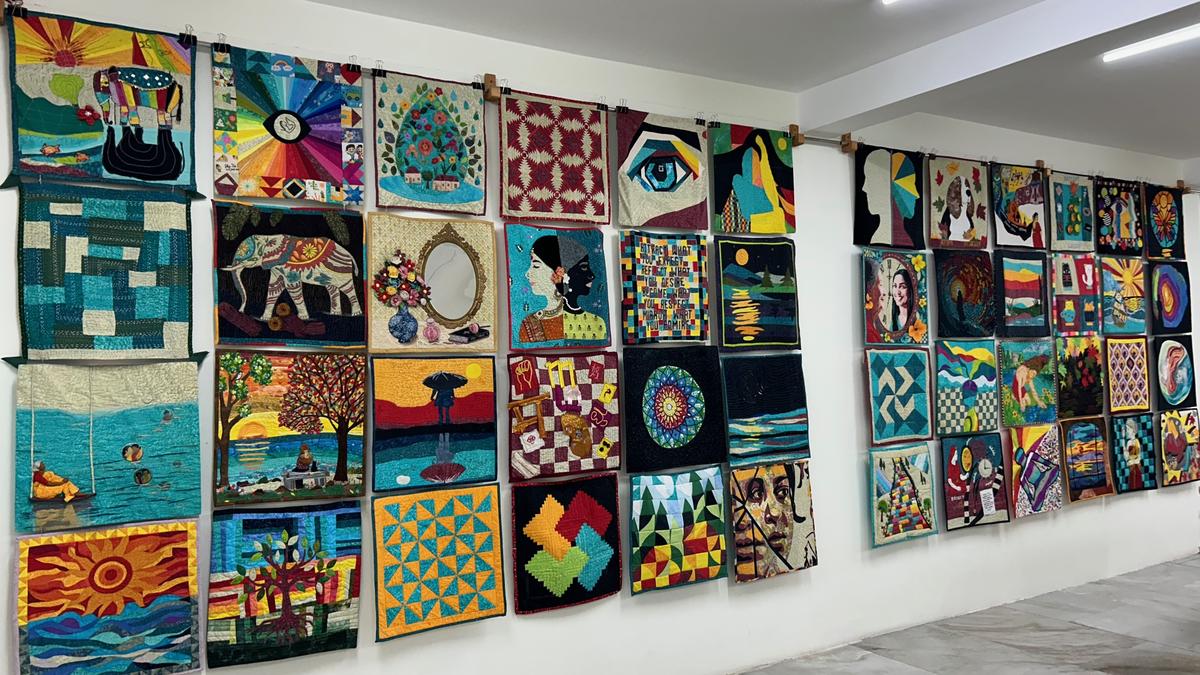
Contemporary quilt art on display at Reflect, presented by the Quilt India Foundation

Contemporary quilt art on display at Reflect, presented by the Quilt India Foundation
| Photo Credit: Special Arrangement

At The Square Inch, a one-stop destination for needlecraft enthusiasts since 2014, co-founders of the Quilt India Foundation, Tina Katwal and Varsha Sundararajan, are gearing up for their annual thematic quilt exhibition. This year’s showcase brings together 58 entries by participants aged between eight and 80. Located in Thiruvanmiyur, the centre is known for its bespoke quilts and its regular quilting workshops.

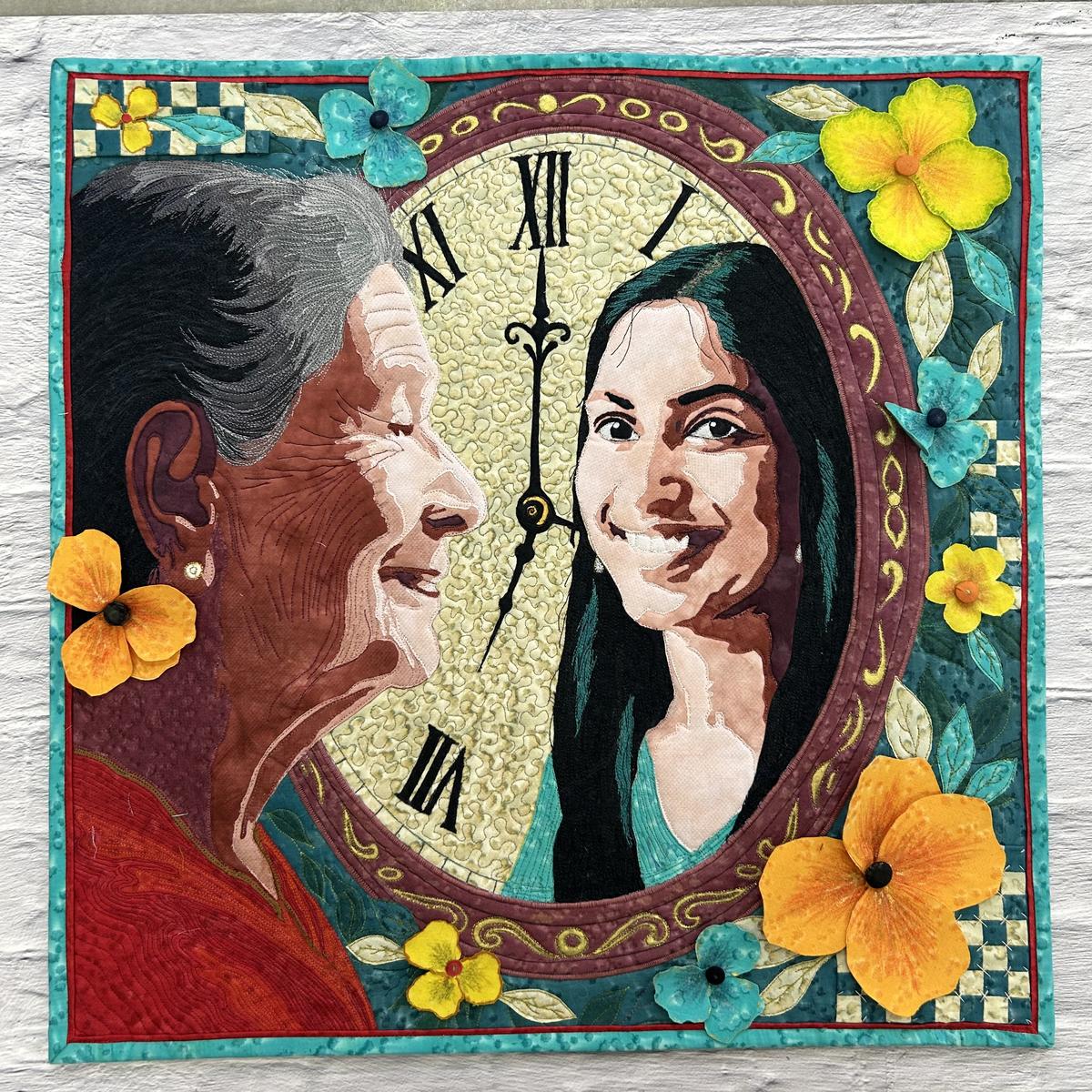
“This year, the entries were judged by Prabha Narasimhan, a Chennai-based textile designer, and the winners will be announced at the exhibition, which opens on January 23,” says Tina. Participants were given a bundle of eight differently coloured fabrics and 12 weeks to complete their work. “Each quilt had to measure 20 x 20 inches and use at least 50% of the fabric provided. Unified by the theme Reflect, the works explored reflection in its many forms, optical, emotional, psychological and social, offering viewers a visually rich and contemplative experience,” explains Varsha.

Art quilts on display  showcase diverse interpretations of  emotion and meaning.

Art quilts on display showcase diverse interpretations of emotion and meaning.
| Photo Credit:
Special Arrangement

A highlight of the exhibition is the display of Double Wedding Ring quilts and Rolling Waves quilts, shown in India for the first time. While the former draws on the symbolism of love and unity, the latter has an illusion of fluid movement, created entirely from straight-edged fabric pieces. As visitors move through the exhibition, they will be met with a range of emotions and artistic perspectives, with each quilt distinguished by its own pattern, mood and interpretation.

“The vision behind this exhibition is to create awareness, inspire and educate the public about quilting as an art form. It is fascinating to see the consistency and individuality with which artists have approached the theme,” says Varsha. She adds that quilting is a meditative practice and an immensely peaceful and fulfilling experience for its practitioners.

Following the four-day exhibition, the quilts will travel to other art quilt shows across India and overseas. Visitors can also browse and purchase a variety of quilted products, including bags, laptop cases, tote bags, blankets and table runners.

Art quilts exploring reflection and emotion

Art quilts exploring reflection and emotion
| Photo Credit:
Special Arrangement

@Sri Sankara Hall, Alwarpet. On January 23 , 4pm to 8pm, January 24 and 25 from 11am to 8pm, and January 26 from 11am to 6pm. Entry is free. For details, call 9551118323.


Source link

Biennale nights in Kochi: Discover vintage-styled bars to EDM pubs


As the Kochi Muziris Biennale comes into full swing, here is quick guide to the city’s watering holes — from a vintage British styled pub to a high-energy EDM dance floor, and warm, cosy bars offering rich menus and a space for conversation.  

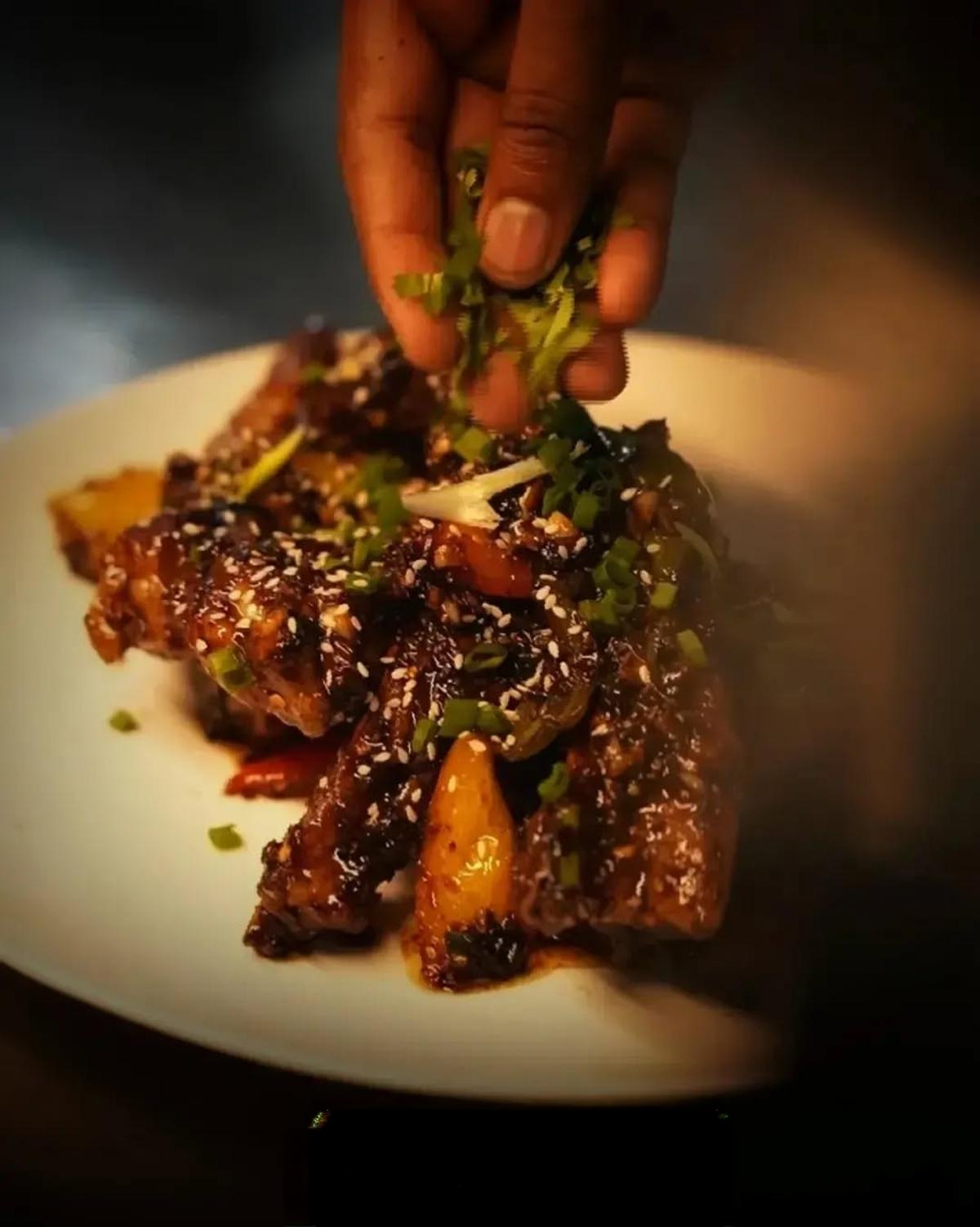
Pork ribs at Francis

Pork ribs at Francis
| Photo Credit:
Special Arrangement

Francis Fort Kochi
Squid rings, steak, soft lights and a storied past is a mix heady enough to put Francis on the to-do list. Housed in a 300-year-old Dutch house in Fort Kochi, Francis boasts a selection of spirits from cocktails to champagne that would pair well with a menu of slow-cooked chicken garlic steak and broasted pork. Appams with masala fried prawns, a crab lollipop or even pasta if you wish. But Francis is all about conversations and evenings filled with live music and laughter in a retro setting.

Order this: Pork ribs and Pepper Calamari

On Queiro Street, Fort Nagar, Fort Kochi.

₹1,500 for two

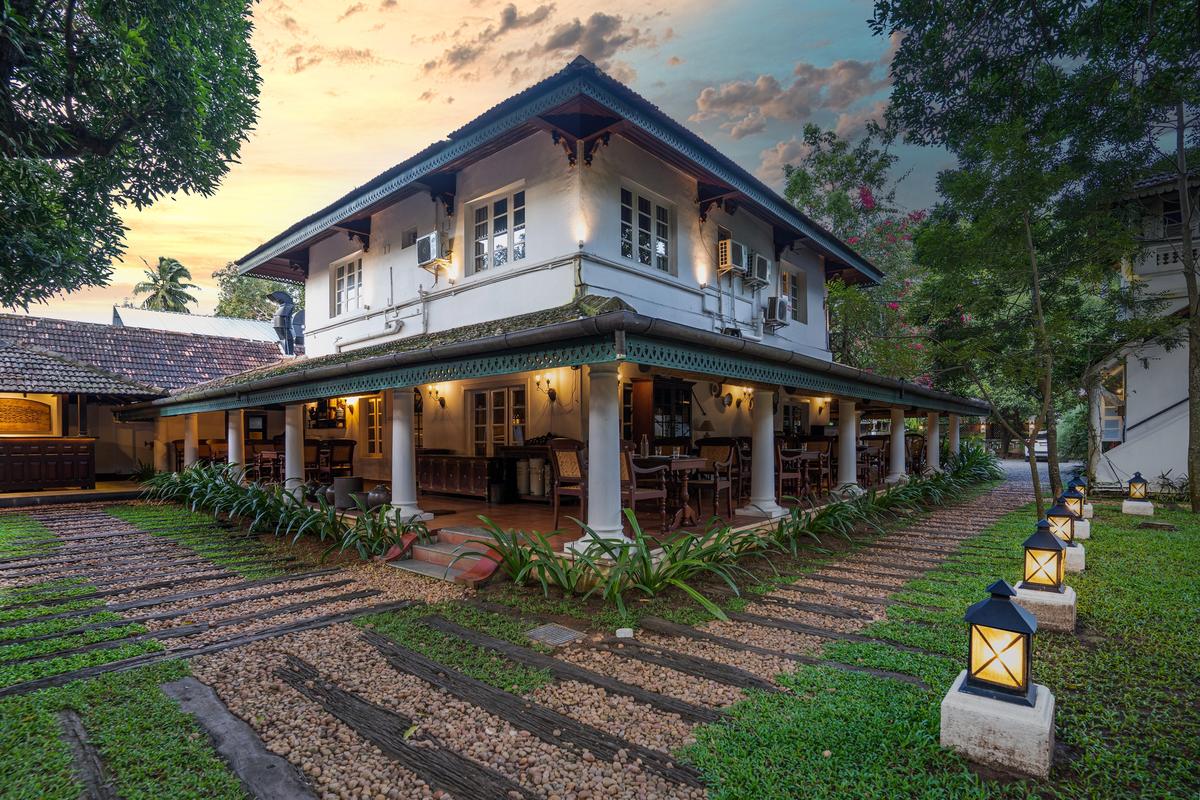
Mai House Heritage

Mai House Heritage
| Photo Credit:
Special Arrangement

O Porto, Mai House Heritage

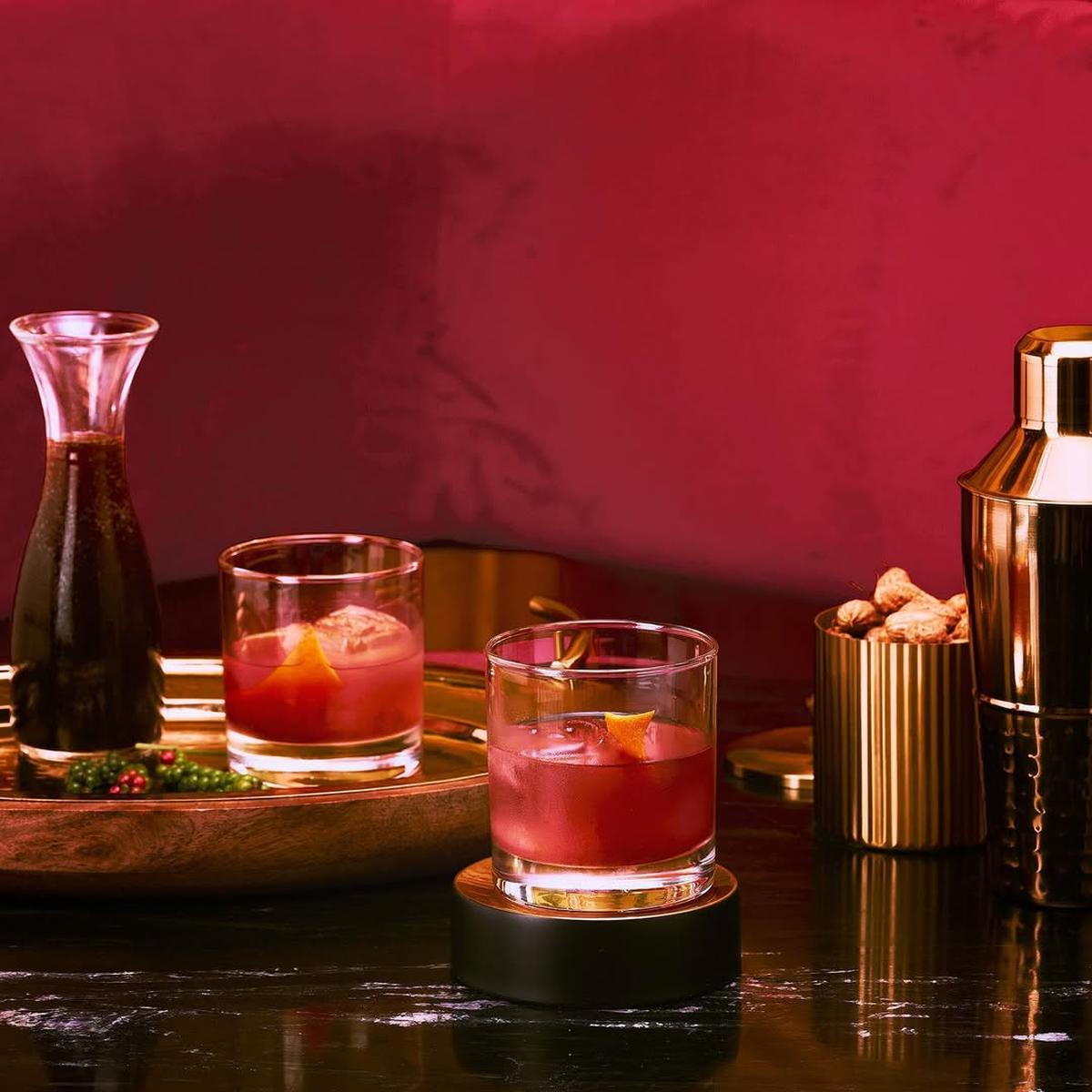
Set in an ancient Christian tharavaad, the tastefully designed O Porto bar offers a largely Keralan menu with the usual suspects such beef dry fry (BDF) and fish pollichthu on the top of the diners’ choices. Drinks include beers, wines and locally-inspired cocktails such as the curry leaf gin fizz, ginger-lemongrass vodka smash and Malabar negroni among others.

Order this: Fish moilee, prawn pepper fry and fish pollichathu. The fish moilee goes well with kallappam, while fish pollichathu works best with Kerala parotta.

At Kit Kat Junction, TM Muhammed Road, Fort Kochi.

₹1,600 for two

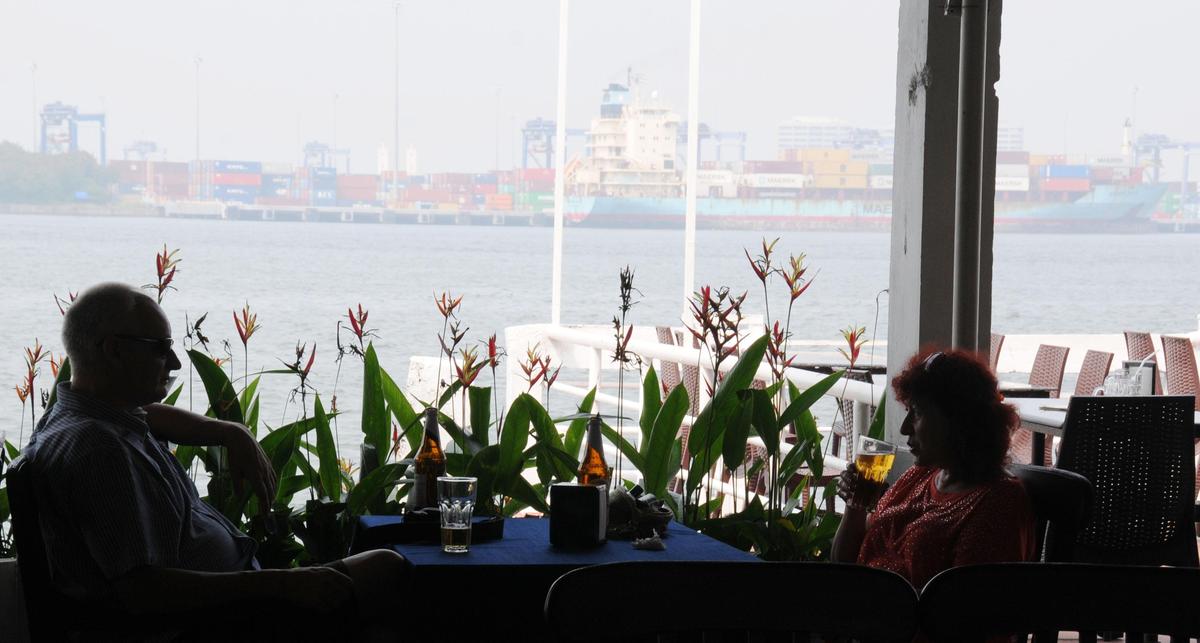
Seagull Restaurant, at Fort Kochi

Seagull Restaurant, at Fort Kochi
| Photo Credit:
VIBHU H

Seagull

This 45-year-old waterfront restaurant is everyone’s favourite in Kochi. Watch huge ships roll by as you dig into porotta and spicy fish curry or just plain rice, pappadam and the catch of the day. The menu has biryani to Chinese and everything in between. You can select the catch of the day yourself and get it fried or curried. All of this with chilled beer, wine or soft drinks. Seagull, after a recent revamp, looks brighter with pastel paint colours.

Order this: The Seagull Special grilled fish, fish mango curry and crab roast.

Calvathy Road, Fort Kochi.

₹1,500 for two

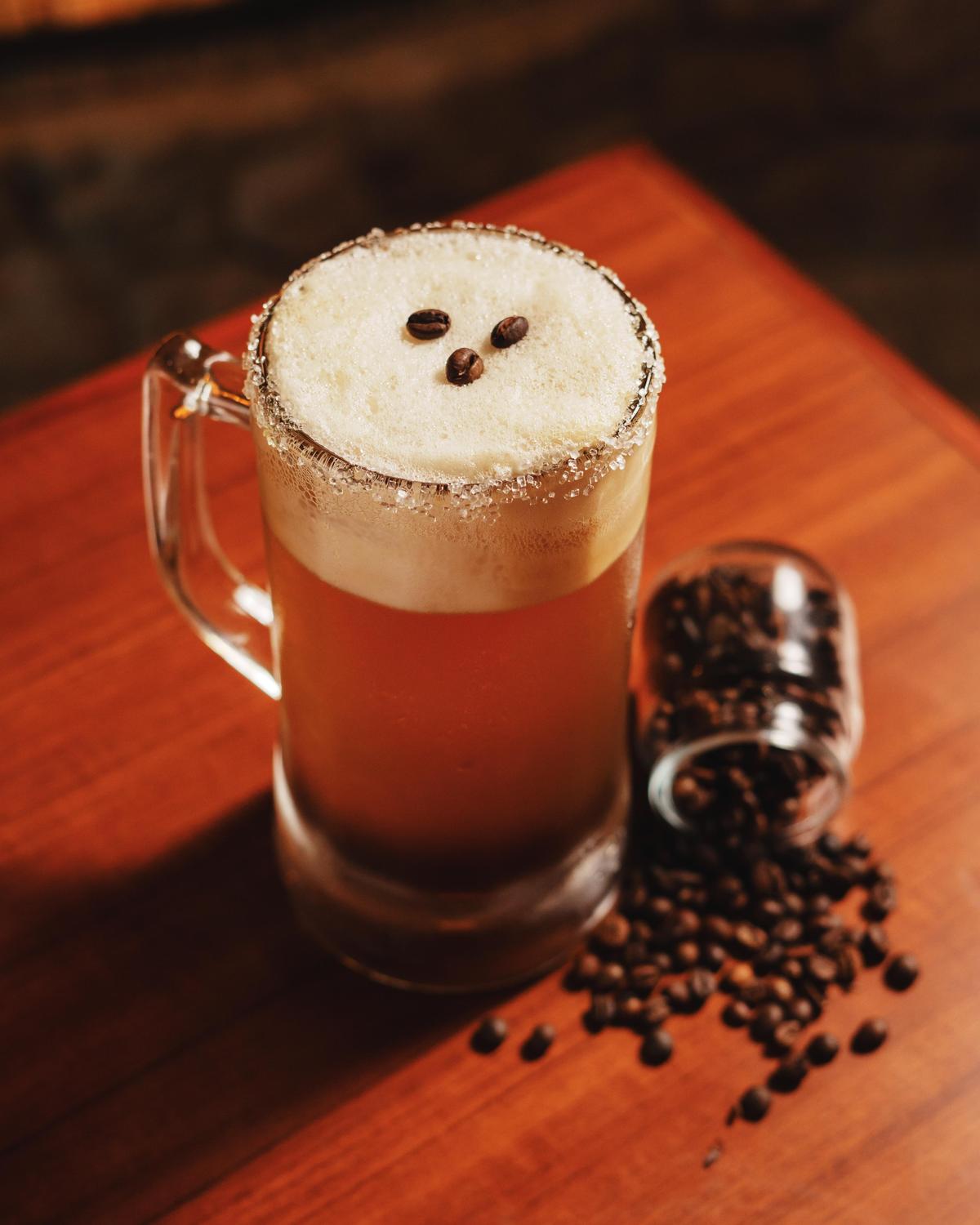
Budspresso at Wild Boar

Budspresso at Wild Boar
| Photo Credit:
Special Arrangement

Wild Boar

This gastropub is a recent entrant to Kochi’s bar scene — a quaint British-styled pub serving various iterations of beer and wine. Beside the backwaters, this bar, designed with a vintage touch, is for those who like a slow dinner with a glass of wine or two. It has a clutch of creative cocktails too. The budspresso, for instance, is an imaginative cocktail of beer, coffee, vanilla and a dash of apple juice. The classic sangria in red and white wine, too. Bring along an appetite, for there’s everything from pork sliders to calamari, tiger prawns and kebabs.

Order this: Pork kondattam and tiger prawns.

Kent Baywatch, Suites, Edakochi.

₹2,000 for two

Colony bar at Grand Hyatt Kochi

Colony bar at Grand Hyatt Kochi
| Photo Credit:
Special Arrangement

Colony Bar, Hyatt

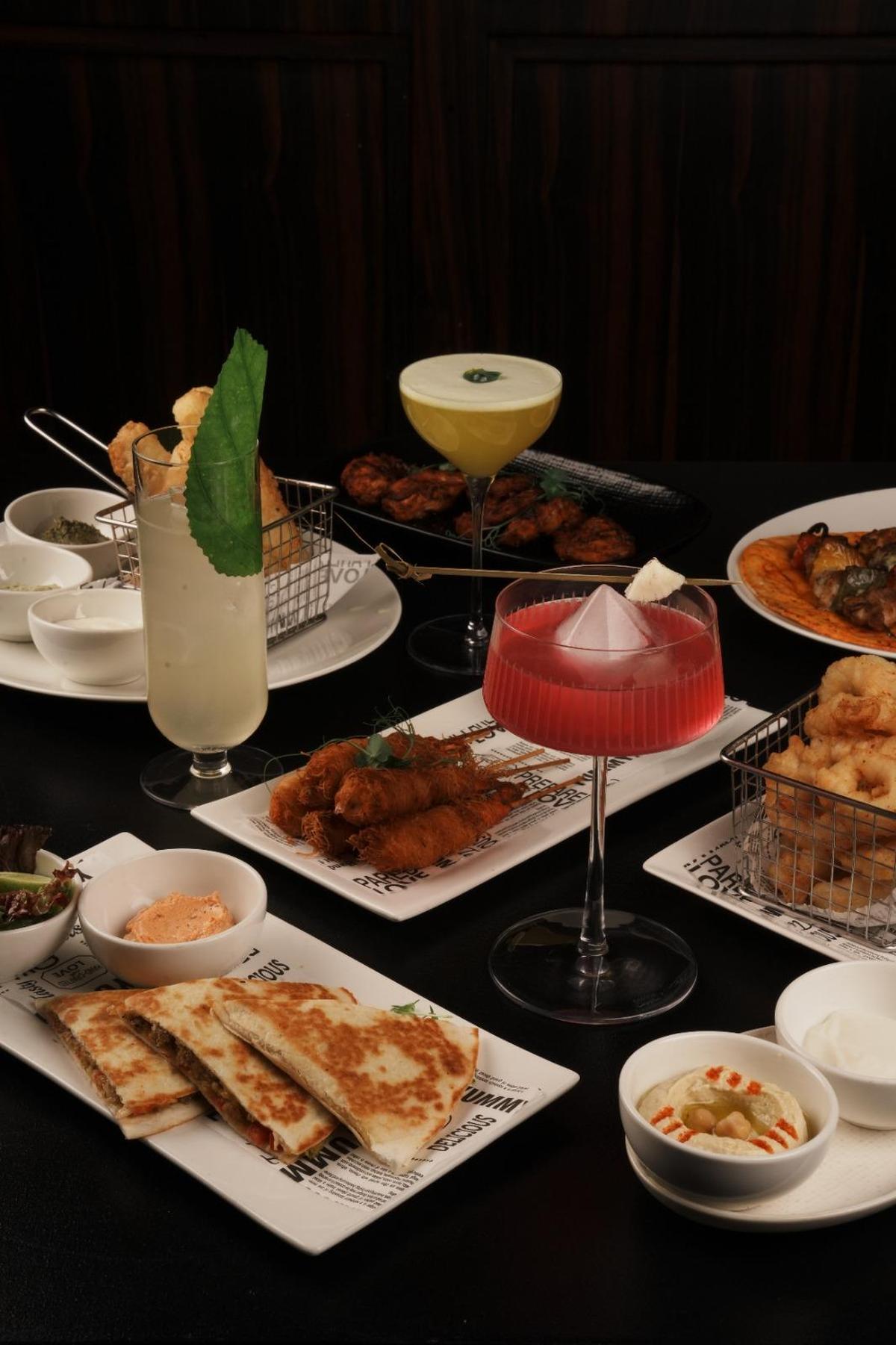
When in Kochi, go local. Grand Hyatt Kochi Bolgatty’s Colony Bar has a new and inspired cocktail menu infusing the Keralan essence into its drinks. From herbs to kanthari chillies, kallu (toddy) and spices, there’s an entire basket of ingredients that would transport you straight to the heart of a Kerala kitchen. The Malabar Ottamooli is vodka, infused with raw turmeric and kaffir lime, sweetened with honey. Kappa Kandhari is an ode to the ever-green Malayali staple of tapioca and bird’s eye chilli chutney in tequila form. Foodwise, start with their signature prawn kunafa and move on to kebabs and quesadillas, but don’t miss out on the Malabar chilli beef fry. 

At Mulavukad, Bolgatty.

₹2,500 for two

Merchant of Muziris drink at Hortus

Merchant of Muziris drink at Hortus
| Photo Credit:
Special Arrangement

Hortus

A tribute to the botanical heritage of Kerala, this bar is inspired by Hortus Malabaricus, a 17th century botanical treatise documenting the varieties and medicinal properties of the flora of the Malabar coast. The carefully curated cocktail menu has a lot to offer. It uses local botanicals, indegenous aromatics and seasonal produce to craft drinks that feel both familiar and exciting at the same time. The signature drink Esmeralda, for instance, is a gin-based clarified cocktail blending green apple and chamomile tea. The Zamorin, another signature, is tequila based and blends jaggery, a twist of fresh lime juice and tamarind. 

Order this: Pan-seared prawns, bacon-wrapped prawn

At Avenue Center, Panampilly Nagar.

₹2,500 for two

The Beerita at Lucid

The Beerita at Lucid
| Photo Credit:
Special Arrangement

 
Lucid

The cocktails get creative at this new groove bar at Park Residency, Lucid, are creative. The Beerita is the story of a beer that fell in love with a margerita, in a glass. Bullfrog in a bag is a pretty blue drink that comes in a glass shaped as a bag. While it functions as a restobar on weekdays, it transforms into an EDM and techno party floor on weekends. That does not mean weekdays are dull. Chromatic Weekdays promotes a colour for each day, with a cocktail to match it. Say you drop in on a Wednesday, when the colour is purple. The cocktail of the day is Zolo Maise, a delicious vodka, infused with lavender syrup, blue pea and garnished with blue pea flower.

Order this: Grilled green mussels

Seaport – Airport Road, Kakkanad

₹2,000 for two

Published – January 21, 2026 01:24 pm IST


Source link

The Hindu Lit For Life 2026 | Flipping the fashion page


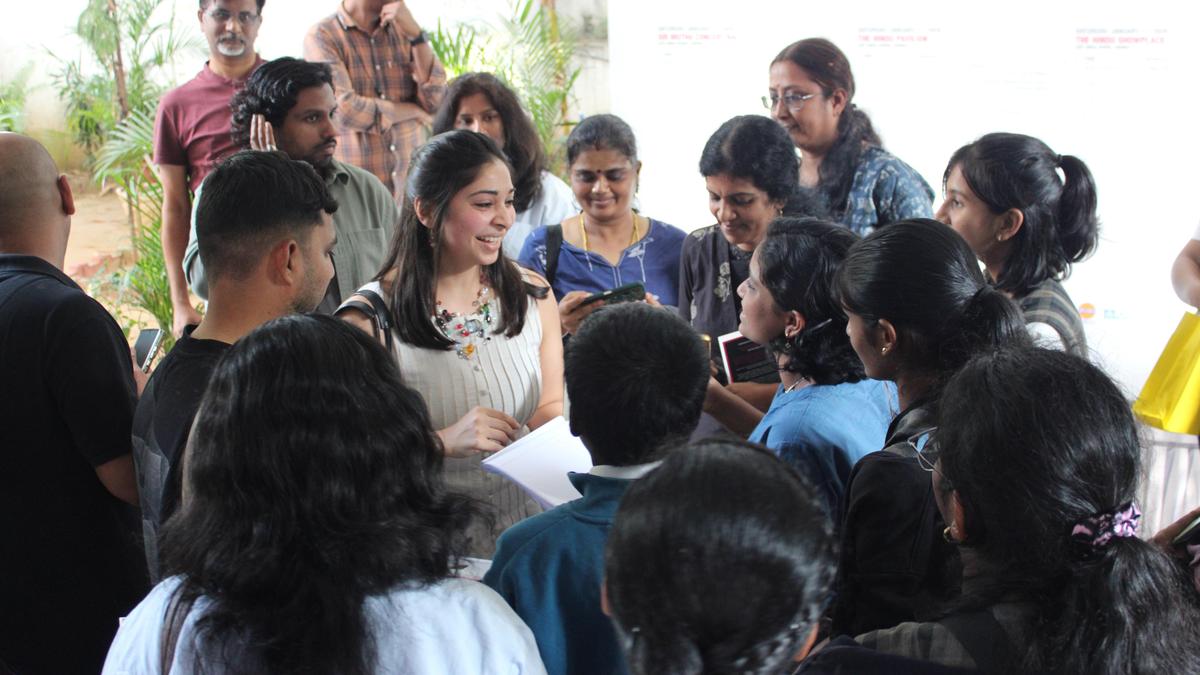
 Author Manasi Chaudhuri signs copies of her books for participants at The Hindu Lit for Life 2026 in Chennai on January 17, 2026. Photo: Umesh Kumar / Intern

Author Manasi Chaudhuri signs copies of her books for participants at The Hindu Lit for Life 2026 in Chennai on January 17, 2026. Photo: Umesh Kumar / Intern
| Photo Credit: UMESH KUMAR V

The recently concluded The Hindu Lit For Life, saw authors, speakers and book lovers converge to enjoy the written and the spoken word, all while putting their best foot forward fashion-wise. We speak to them, and discuss personal style, blending tradition with modern sensibilities and more.

Accent elevation

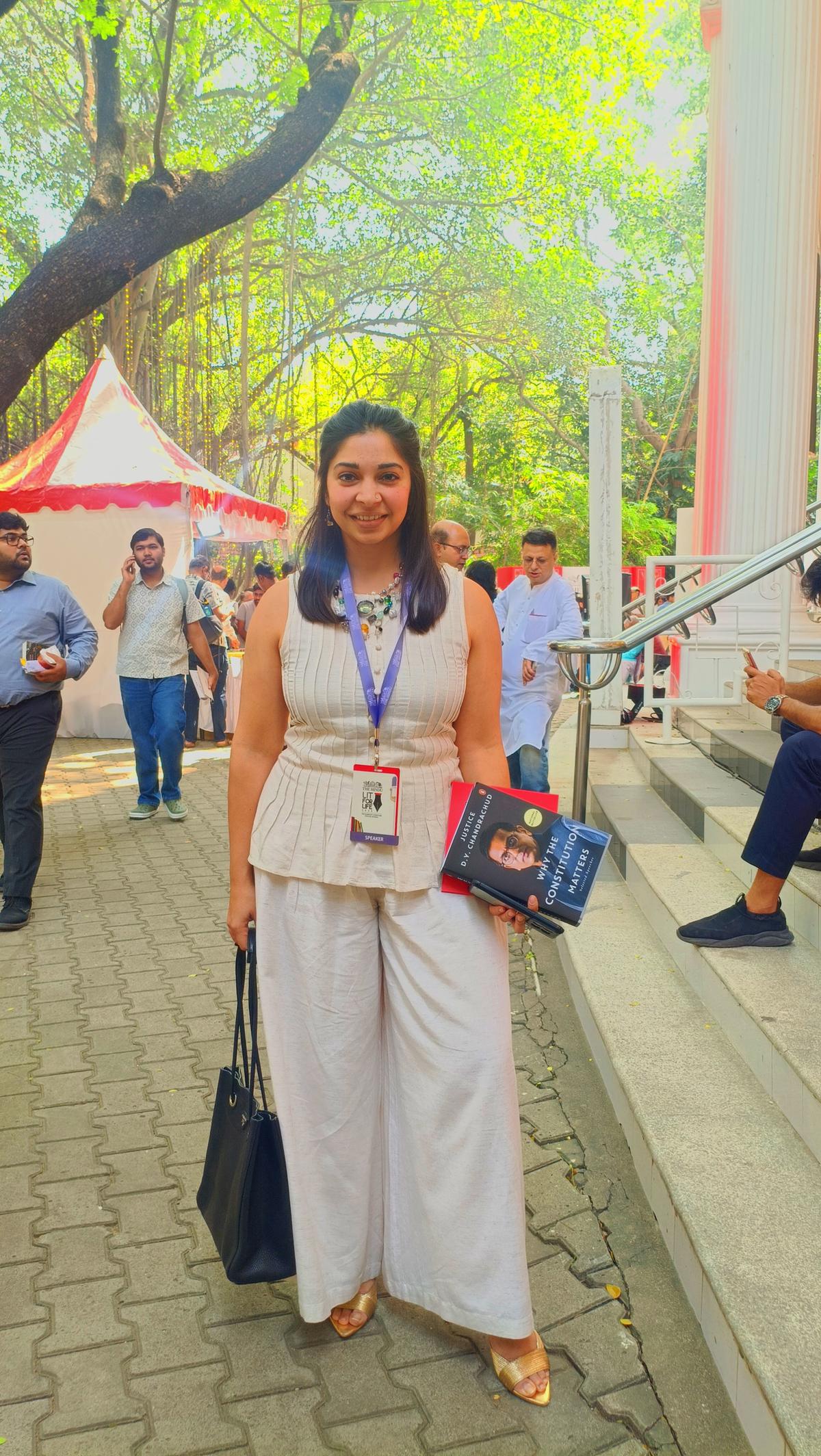
Minimalism with pops of colour seem to be catching on this year, with a vibrant accent elevating neutral colours. lawyer Manasi Chaudhari, founder, Pink Legal, who was a speaker at the fest, showed up in a monochromatic cream outfit. Wearing a peplum blouse and wide leg trousers from a boutique in Goa, she created a relaxed yet stylish look. She made a statement with a green and metallic necklace bought from a flea market, also in Goa. She says, “This gemstone necklace really stood out to me. It’s the kind of piece you just don’t find in mainstream stores.”

Handcrafted elegance

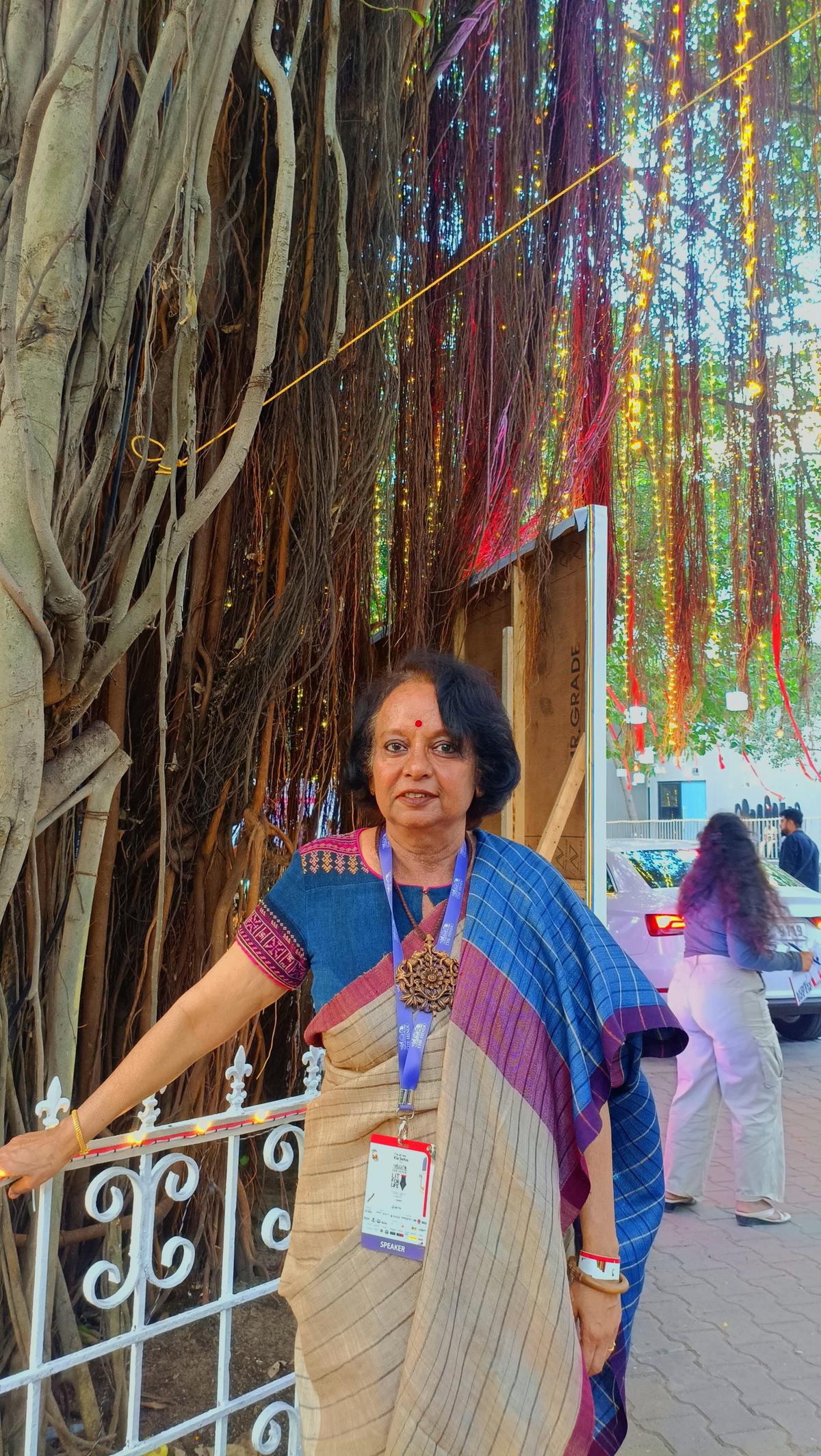
Sreemathi Ramnath, a polyglot consultant and writer who moderated a session at the fest wore a traditional saree in beige, purple and blue, sourced from an exhibition by the Crafts Council of India nearly 10 years ago. Her jewellery is from local artisans. However the true star of her outfit was her blouse made by the Sapa tribe, indigenous to northern Vietnam. “The print stood out to me. It was originally a jacket which I converted into a blouse,” said Sreemathi.

Desi maximalism

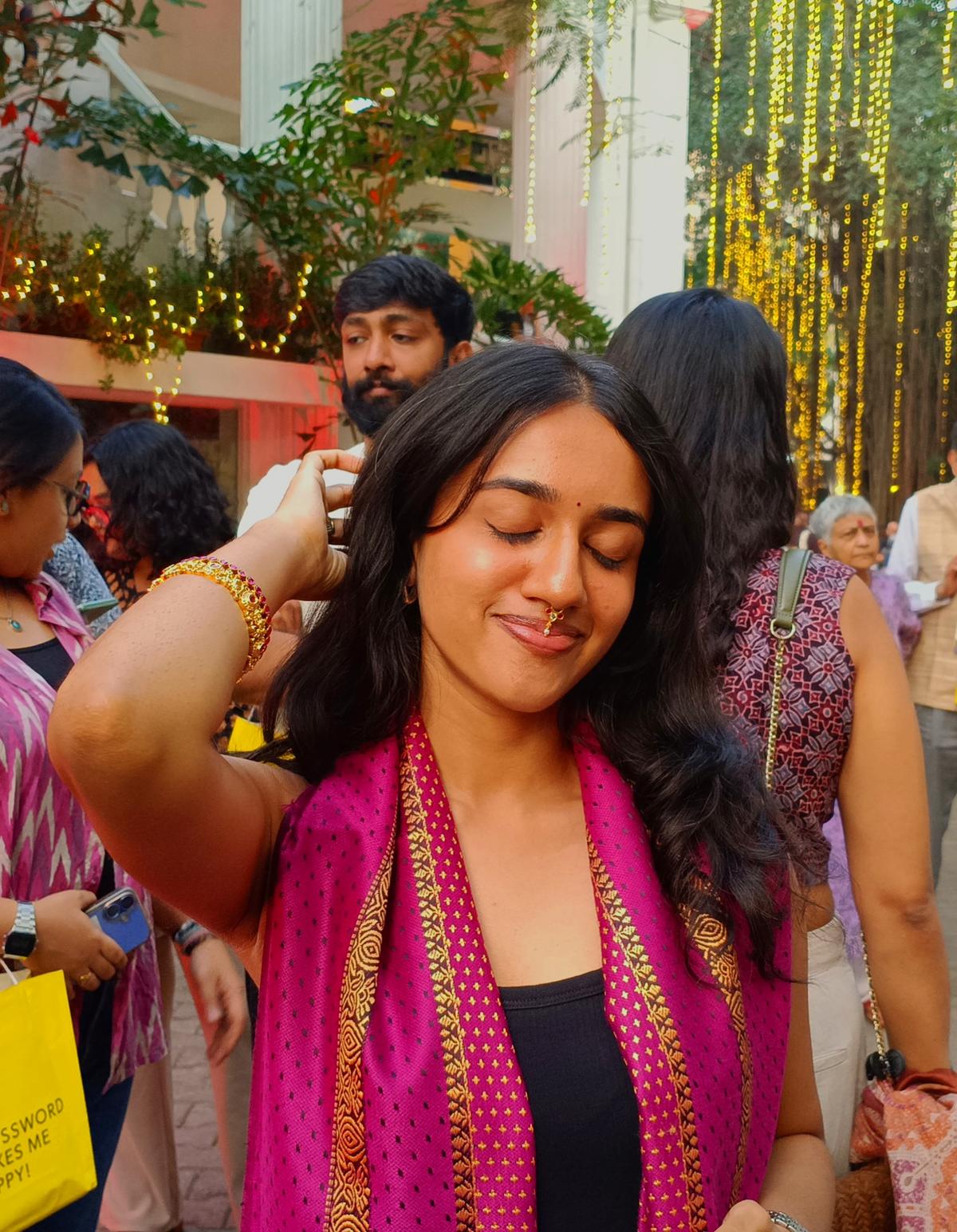
Janaki Sampath, an attendee at the fest, wore her grandmother’s rani pink dupatta made of Chanderi to add a pop of colour to her all black outfit. “When I was very sick, my grandmother wrapped a shawl around me to keep me warm. I remember being surprised that she chose something so beautiful for such a simple act of care. I can’t help but wonder how many quiet treasures she has tucked away” said Janaki. Along with that, she wore traditional dance jewellery, golden and rani pink bangles from Narayana Pearls and a septum ring to match from Sukra Jewellery.


Source link

The rise of bhajan clubbing: How young India is reimagining spirituality


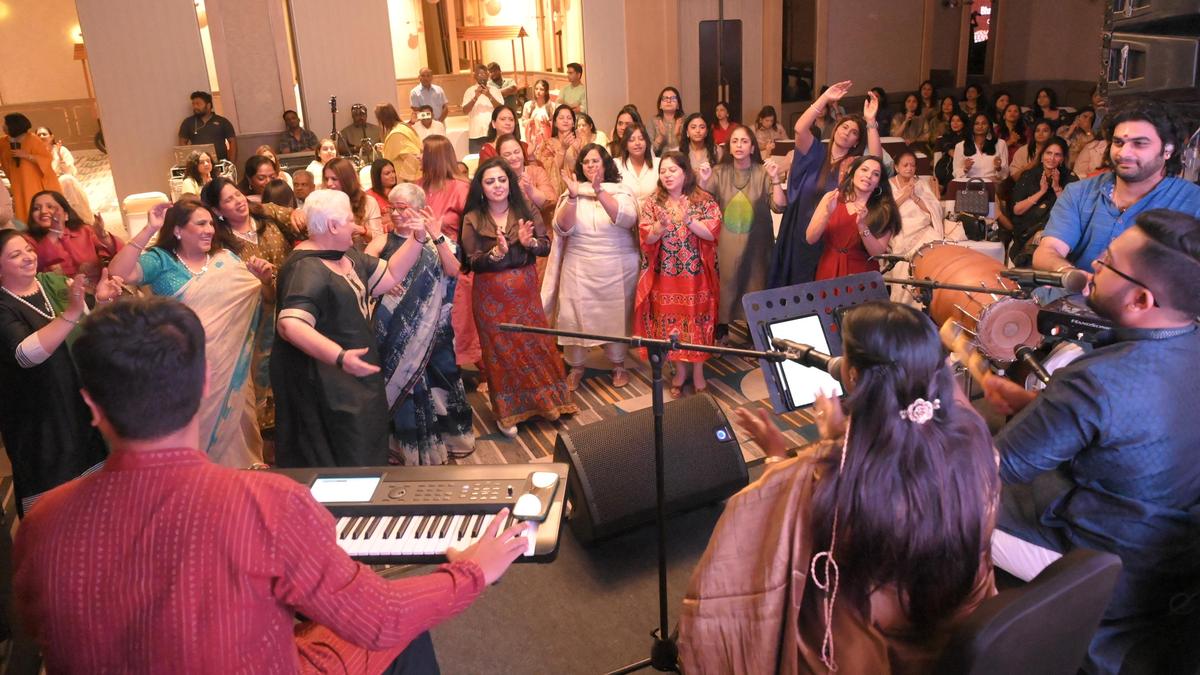
Singers Sai Vignesh and Saindhavi enthralling audiences with bhajan and sufi hits, during a recent ‘Bhajan clubbing’ event in Chennai

Singers Sai Vignesh and Saindhavi enthralling audiences with bhajan and sufi hits, during a recent ‘Bhajan clubbing’ event in Chennai
| Photo Credit: Thamodharan B

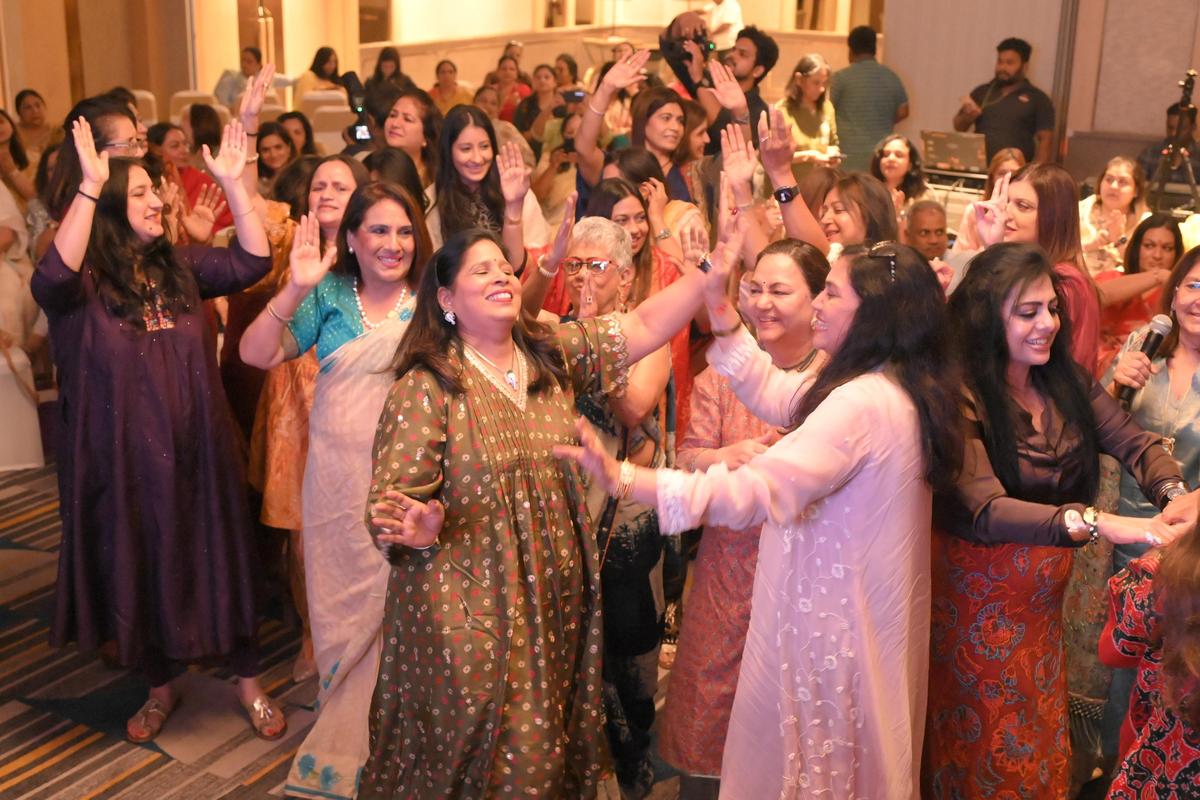
Rehmat Khubchandani’s hands are up. She lets out a delighted ‘oohoo’ as she emerges from the crowd. The music is upbeat, with a club-style energy, but the song is a bhajan. Around, some women dance, while the ones who stay seated clap, with their eyes closed.

“I have never experienced something like this,” gushes Rehmat, even as she catches her breath from the dancing, “It feels like a party, but with vibes that connect you with up there.” She points upwards towards the heavens. She – along with many members of the Good Deeds Club in Chennai, curated by Apsara Reddy – has just experienced the latest viral trend: ‘bhajan clubbing’.

Track record

Introducing a night club-like atmosphere, minus the alcohol, bhajan clubbing is catching on in many Indian cities, including Delhi, Kolkata and Bengaluru, as well as the US. Participants skew towards Gen-Z, who enjoy the sense of community it brings, a world away from the lonely endless scroll of social media.

At a ‘bhajan clubbing’ event in Chennai

At a ‘bhajan clubbing’ event in Chennai
| Photo Credit:
Thamodharan B

“It is like entering a world of trance,” explains Mandira Bansal, “It might be a Gen-Z concept, but it’s wonderful. Why else would we be swaying to such tracks?” Mandira has just shaken a leg to a high-energy performance of ‘Dama Dam Mast Qalandar’, a spiritual Sufi qawwali. There are many other spiritual tracks – including some celebrating gods like Shiva, Rama and Muruga – but the mood is very different from when these are traditionally sung in places of worship.

While bands like Backstage Siblings and Keshavam are getting popular for this style of concerts, Chennai singers are not far behind. Take Sai Vignesh, a classically-trained singer whose rendition of ‘Varaha Roopam’ (Kantara) is making an impact. Along with singer Saindhavi, Sai Vignesh’s renditions of bhajans and Sufi chants has the crowd on its feet. “I have been singing bhajans for years, but the word bhajan clubbing will take some time to get used to,” he smiles, “You don’t even need to know the full bhajan to enjoy this. The main motto is to make people come together.”

Here, spirituality is about connection and celebration. This is a new language of devotion, and it is amplified thanks to social media reels and posts – everyone enjoys spreading the word about a good party.

“We grew up listening to bhajans, but the current generation might not be too exposed to these tracks,” says Saindhavi, popular for both her hit film tracks and classical concerts, “Now, they are packaged within a different soundscape, but the divinity is still the same.”


Source link

What will India be eating in 2026? We look at upcoming restaurant trends


The Indian diner in 2026 is clear about what they want when they go out. They are well-informed thanks to social media, and their travels, and conscious about what they eat and where they spend their money. At the same time health, wellness and thinness has never been more in the forefront of the zeitgeist. What does that mean for the F&B industry? And what is in store for Indian restaurants and bars in 2026? We find out…

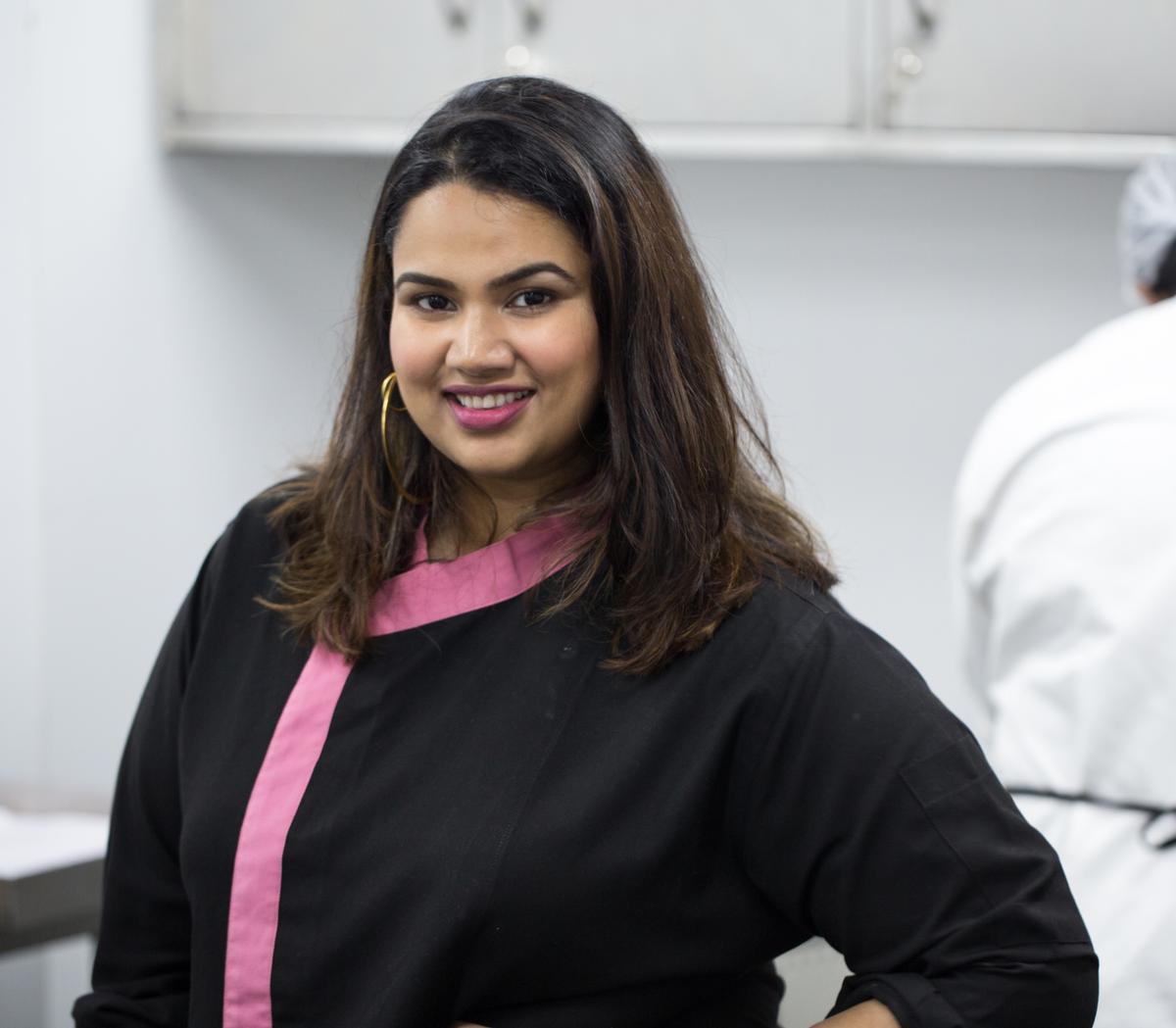
Pooja Dhingra, leading pastry chef says Indian diners are now more curious and confident. In her own industry she says, desserts are not limited to celebrations anymore. ”They are becoming part of daily rituals, for example, paired with coffee, enjoyed for breakfast, or shared casually. Small-format indulgences like warm cookies, madeleines, and coffee-friendly cakes are growing much faster than traditional, occasion desserts.”

How can we make healthier choices?

Pooja says, “People are moving away from excess as we have seen in the past, that means fewer layers, fewer components, and much better ingredients. Clean, well-balanced desserts are winning over dramatic, over-sweet ones. Most modern pastry recipes today have 15–30% less sugar than they did a decade ago, with flavour coming from bitterness, acidity, texture, and contrast instead. Ingredients like dark chocolate, coffee, citrus, nuts, and fermented dairy help create depth so desserts don’t rely purely on sweetness. Portion sizes are also becoming smaller.”

Pooja Dhingra, pastry chef

Pooja Dhingra, pastry chef
| Photo Credit:
Special arrangement

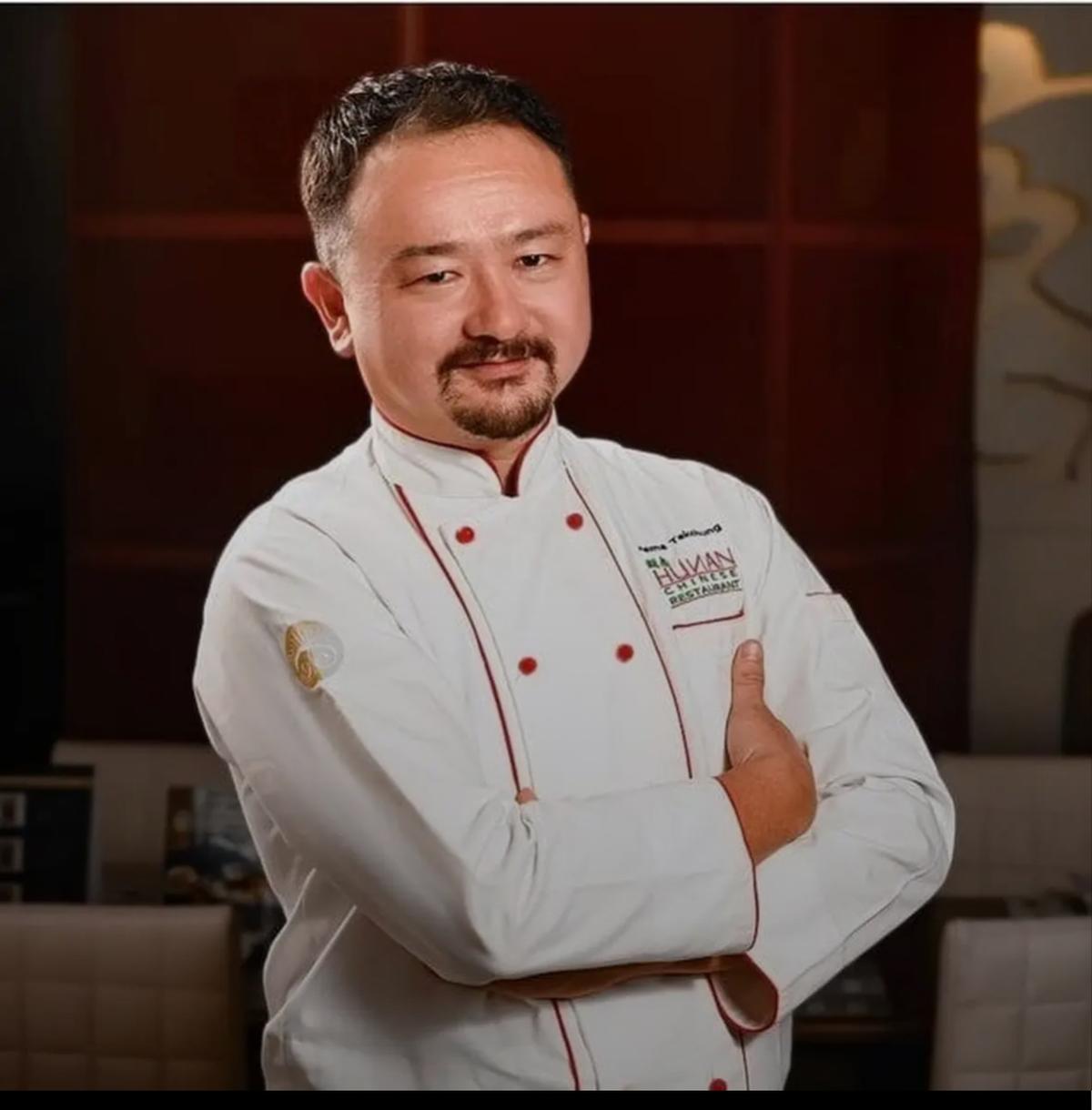
Chef Pema Takchung Lepcha, director and head chef of Hunaaan, has noticed this in Asian dining spaces as well. “People have become more health-conscious and want to be better informed about their food and ingredients. There has been a shift away from deep-fried dishes, along with increasing requests for ingredients like avocado and chia seeds. This is reflected in dishes such as our avocado garden sushi and silken tofu, and guests often ask for stir-fried, steamed, or generally healthier options.”

Not just pan Asian, it is time for regional dining

A decade ago, pan Asian restaurants took over the circuit. But the recent trend is geared towards more region-specific restaurants. While Pema still prefers Pan Asian due to the number of choices available, he has noticed a visible shift towards more region-specific cuisines. Just take Bengaluru as an example, we see restaurants focussing on Thai cuisines (Baan Phadthai), Cantonese food (Royal China), and of course Korean still remains a favourite (Seoul Dak).

“I’ve noticed more requests for Korean food. Dishes like bulgogi chicken, kimbap, which is requested frequently, and bokkum jjambbong, a stir-fried preparation of vegetables and noodles in a spicy Korean sauce, have seen growing interest,” says Pema.

And it is not only international. Regional Indian flavours are also having a moment. Local preferences are more evident in bar menus. In Goa’s Bar Outrigger, the Boondock Saints cocktail uses pasteis de nata (Portuguese custard tarts) from the legendary Padaria Prazeres infused into whiskey. The food menu in Boilermaker, also in Goa, sports dishes like balchao stuffed pickled cucumbers, prawn and chorizo in chilli oil and tambdi bhaji sourdough melt.

Chef Pema Takchung Lepcha, Director and Head Chef of Hunaaan

Chef Pema Takchung Lepcha, Director and Head Chef of Hunaaan

Premium experiential dining, but closer to home

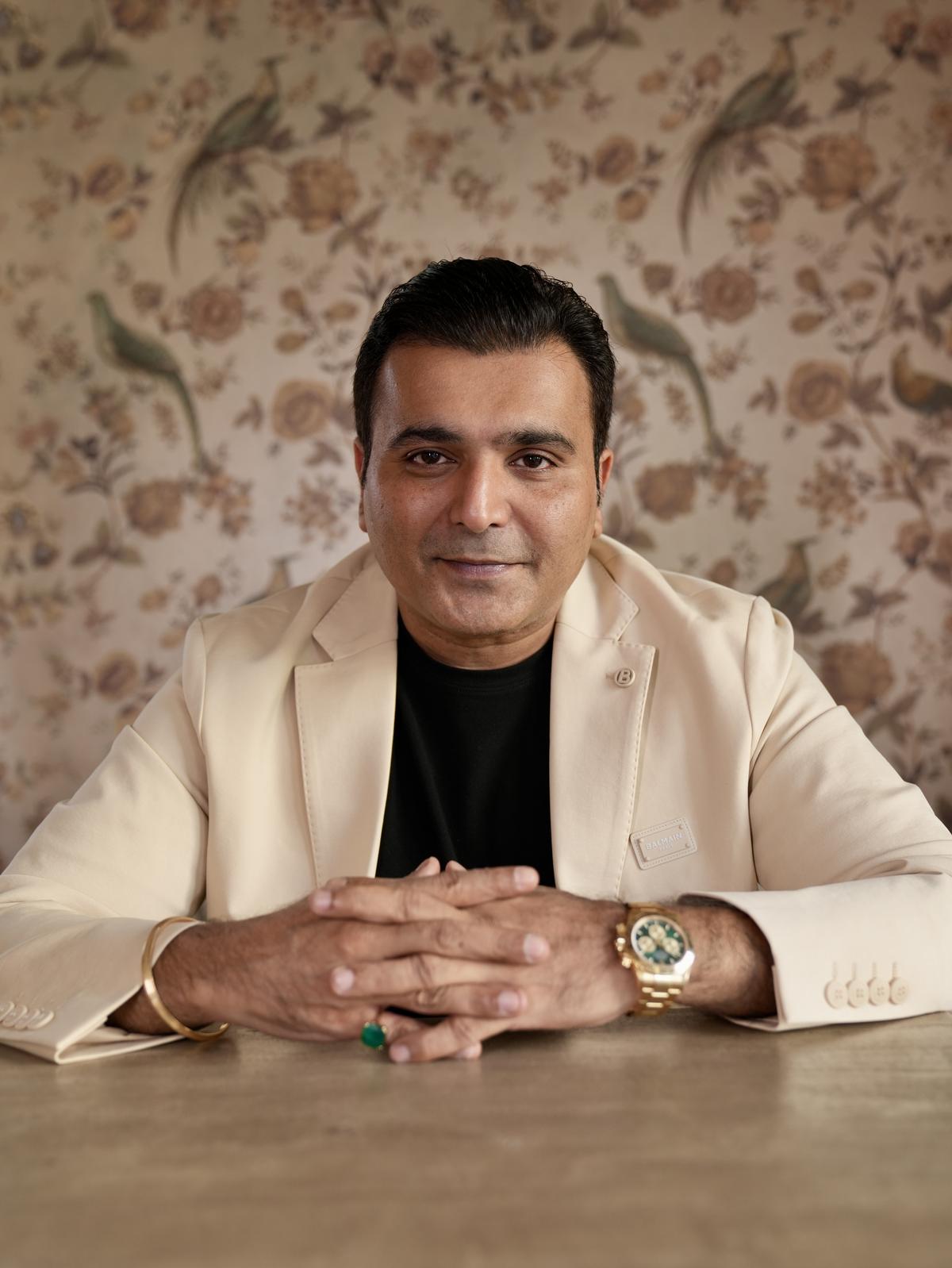
Ranjit Bindra, who is the founder of Bastian Hospitality, says premium dining is moving towards the experience as a whole. His restaurants include the premium space, Bastian, now in many cities across the country, as well as Inka, a Peruvian Asian luxury dining concept, and in the past, he ran Arth and A Bar Called Life. “Both the service and product need to be the hero. Diners are willing to spend, but only when the experience feels complete and personal. Menu-wise, global cuisine will continue to evolve, but always with a local touch. At Riviera (their latest outpost in Goa), for example, we have a Goan curry, while Ammakai is rooted in Karnataka cuisine. That balance of global sensibility with local flavours is where dining is heading.”

Ranjit Bindra, the founder of Bastian Hospitality

Ranjit Bindra, the founder of Bastian Hospitality

He adds that the scene is also moving out of the metros, a trend we noticed in 2025 as well. “We are expanding Bastian to GIFT City, and there’s Bastian Empire in Pune, which shows how strong the demand is in emerging cities. These markets now have well-travelled diners who are looking for premium, well-executed dining experiences closer to home, rather than say going to Dubai or another city.”

At the recently concluded 30 Best Bars India 2025 awards, we noticed a similar trends for cocktail bars and pubs as well. This year there were a number of new bars from Kolkata on the list. “What’s been particularly exciting to see is how cities like Kolkata have come into their own this year; not just with increased representation, but with quality and range,” says Vikram Achanta, founder and CEO of Tulleeho and the co-founder of 30BestBarsIndia.

“With multiple bars placing on the list, strong new entrants, and wins across categories like design and city honours, Kolkata has moved from being a one-bar city to a genuine bar cluster, signalling a more confident and mature phase of growth,” says Vikram.

So be it Kolkata, or Mumbai, the industry is booming and innovating day by day. Chefs and bartenders are pushing the boundaries of creativity to meet the demands of the new age Indian diner, who enjoys eating out, and loves to experiment.

Published – January 20, 2026 12:14 pm IST


Source link

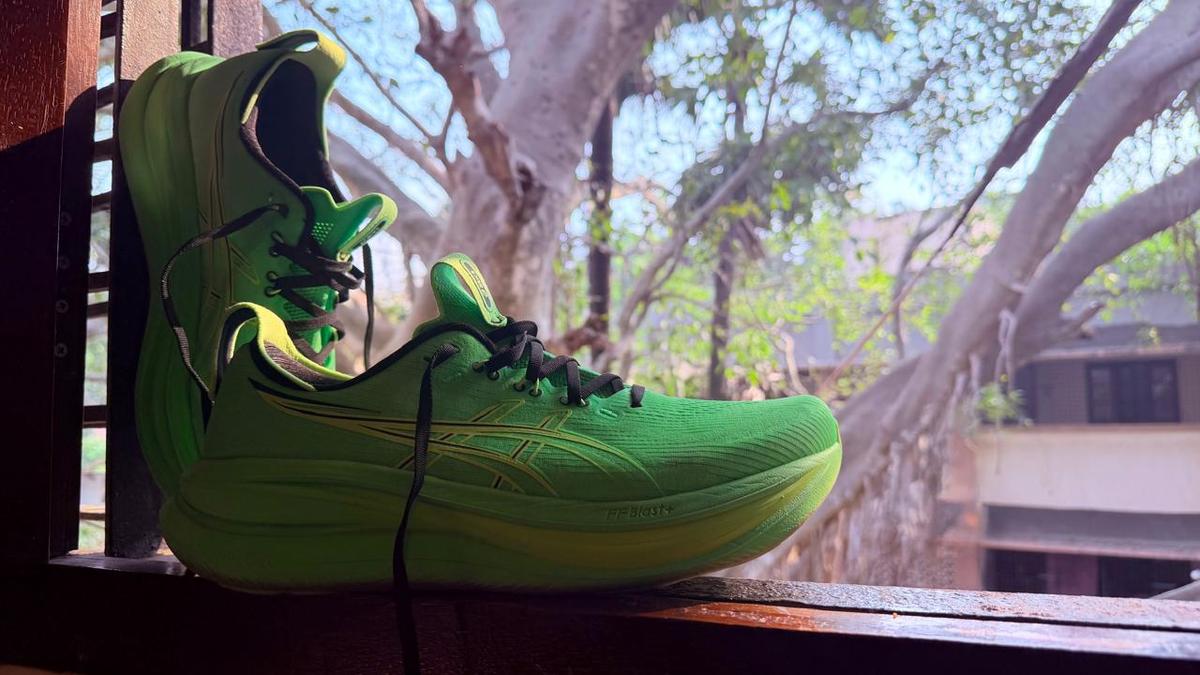
ASICS GEL-Nimbus 28 Review: A comfortable running shoe built for long runs, recovery days, and easy miles


On the road, the Nimbus 28 feels dependable and smooth, with good traction from the outsole, which holds up well even on wet surfaces

On the road, the Nimbus 28 feels dependable and smooth, with good traction from the outsole, which holds up well even on wet surfaces
| Photo Credit: John Xavier

The ASICS GEL-Nimbus 28 continues the legacy of one of ASICS’ most celebrated daily trainers by prioritising comfort and smooth cushioning over all else. From the moment you step into them, the Nimbus 28 feels soft, yet firm, underfoot thanks to the fusion of FF Blast Plus foam and PureGEL technology. Together, they enable the shoes to absorb shock better and create that signature cloud-like sensation many runners associate with the Nimbus line. ASICS has managed to trim weight in this iteration compared with its predecessor, making it noticeably lighter while preserving its plush ride — a welcome update for long runs and easy miles alike.

The upper of the Nimbus 28 employs a breathable engineered knit material that wraps the foot snugly without feeling overly tight, maintaining comfort across extended runs. This knit construction also enhances breathability and reduces the overall shoe weight. But airflow might not be as open as in some more performance-oriented trainers. Underneath, the stack height remains generous, placing the Nimbus firmly in the max-cushion category, but the ride leans toward being balanced rather than energetic or propulsive. That means while impact is softened perfectly, runners chasing a bouncy, spring-loaded feel may find the Nimbus 28 somewhat mellow in response.

On the road, the Nimbus 28 feels dependable and smooth, with good traction from the outsole, which holds up well even on wet surfaces. Its neutral profile makes it ideal for neutral runners and for those who use it as a recovery and long-distance shoe in their rotation. In fact, it was even good when I wore it for a long brisk walk (for about 70 minutes). Fit tends to run true to size, and the wider forefoot gives a relaxed fit that perfected suited my broad forefoot.

The main drawbacks centre on energy return: the cushioning system, while comfortable underfoot, doesn’t deliver the lively rebound of some competitors, and riders who like a very airy upper might find the knit less ventilated than expected.

For those who are new to ASICS, differentiating the lineup — Nimbus, Cumulus, and Kayano — is key. The sportswear maker structures its core road-running range around distinct needs. The Nimbus line sits at the top of ASICS’ neutral cushioning offerings: it’s built for runners who prioritise maximum shock absorption and plush comfort, making it ideal for long distances and recovery days without built-in stability features for pronation.

The Cumulus shoes are also neutral but sit a step below Nimbus in terms of cushioning intensity and price. They provide a balanced, versatile ride that’s slightly lighter and more responsive for everyday training, but they won’t feel as soft or protective on very long runs as the Nimbus.

Finally, the Kayano series is ASICS’ flagship stability shoe. While it shares plush cushioning with the Nimbus, the Kayano adds targeted structural elements designed to guide the foot and help control over-pronation — a common inward roll of the foot that can affect gait efficiency and injury risk. This makes the Kayano suited to runners who need that extra support or have biomechanical tendencies that benefit from guidance through the gait cycle.

If your priority is cushion and comfort on neutral runs, the Nimbus 28 is a refined choice that leans into its heritage of plushness and smooth ride quality, though it’s less dynamic than some newer competitors. If you want lighter, more versatile daily trainers, the Cumulus line might appeal more, and if you need stability and support for overpronation, the Kayano range is the go-to option.

After three weeks of regular use, the Nimbus 28 stands out as one of the most comfortable running shoes ASICS currently offers for long-distance running and daily training. It may not deliver the excitement or rebound of some newer competitors, but for runners who prioritise comfort, protection, and consistency, it remains a refined and reliable choice that excels at covering miles with minimal strain.


Source link

Valentino Garavani, fashion designer to jet set, dies aged 93 in Rome


Valentino Garavani, the jet-set Italian designer whose high-glamour gowns — often in his trademark shade of “Valentino red” — were fashion show staples for nearly half a century, has died at home in Rome, his foundation announced on Monday (January 19, 2026). He was 93.

“Valentino Garavani was not only a constant guide and inspiration for all of us, but a true source of light, creativity and vision,” the foundation said in a statement posted on social media.

His body will repose at the foundation’s headquarters in Rome on Wednesday (January 21) and Thursday (January 22). The funeral will be held on Friday (January 23) at the Basilica Santa Maria degli Angeli e dei Martiri in Rome’s Piazza della Repubblica.

Universally known by his first name, Valentino was adored by generations of royals, first ladies and movie stars, from Jackie Kennedy Onassis to Julia Roberts and Queen Rania of Jordan, who swore the designer always made them look and feel their best.

“I know what women want,” he once remarked. “They want to be beautiful.”

Never one for edginess or statement dressing, Valentino made precious few fashion faux-pas throughout his nearly half-century-long career, which stretched from his early days in Rome in the 1960s through to his retirement in 2008.

His fail-safe designs made Valentino the king of the red carpet, the go-to man for A-listers’ awards ceremony needs. His sumptuous gowns have graced countless Academy Awards, notably in 2001, when Ms. Roberts wore a vintage black and white column to accept her best actress statue.

Cate Blanchett also wore Valentino — a one-shouldered number in butter-yellow silk — when she won the Oscar for best supporting actress in 2004.

Valentino was also behind the long-sleeved lace dress Jacqueline Kennedy wore for her wedding to Greek shipping magnate Aristotle Onassis in 1968.

Kennedy and Valentino were close friends for decades, and for a spell the one-time U.S. First Lady wore almost exclusively Valentino.

He was also close to Diana, Princess of Wales, who often donned his sumptuous gowns.

Beyond his signature orange-tinged shade of red, other Valentino trademarks included bows, ruffles, lace and embroidery; in short, feminine, flirty embellishments that added to the dresses’ beauty and hence to that of the wearers.

Perpetually tanned and always impeccably dressed, Valentino shared the lifestyle of his jet-set patrons. In addition to his 152-foot yacht and an art collection including works by Picasso and Miro, the couturier owned a 17th-century chateau near Paris with a garden said to boast more than a million roses.

Valentino and his longtime partner Giancarlo Giammetti flitted among their homes — which also included places in New York, London, Rome, Capri and Gstaad, Switzerland — travelling with their pack of pugs. The pair regularly received A-list friends and patrons, including Madonna and Gwyneth Paltrow.

“When I see somebody and unfortunately she’s relaxed and running around in jogging trousers and without any makeup … I feel very sorry,” the designer told RTL television in a 2007 interview.

“For me, woman is like a beautiful, beautiful flower bouquet. She has always to be sensational, always to please, always to be perfect, always to please the husband, the lover, everybody. Because we are born to show ourselves always at our best.”

Valentino was born into a well-off family in the northern Italian town of Voghera on May 11, 1932. He said it was his childhood love of cinema that set him down the fashion path.

“I was crazy for silver screen, I was crazy for beauty, to see all those movie stars being sensation, well dressed, being always perfect,” he explained in the 2007 television interview.

After studying fashion in Milan and Paris, he spent much of the 1950s working for established Paris-based designer Jean Desses and later Guy Laroche before striking out on his own. He founded the house of Valentino on Rome’s Via Condotti in 1959.

From the beginning, Giammetti was by his side, handling the business aspect while Valentino used his natural charm to build a client base among the world’s rich and fabulous.

After some early financial setbacks — Valentino’s tastes were always lavish, and the company spent with abandon — the brand took off.

Early fans included Italian screen sirens Gina Lollobrigida and Sophia Loren, as well as Hollywood stars Elizabeth Taylor and Audrey Hepburn. Legendary American Vogue editor-in-chief Diana Vreeland also took the young designer under her wing.

Over the years, Valentino’s empire expanded as the designer added ready-to-wear, menswear and accessories lines to his stable. Valentino and Giammetti sold the label to an Italian holding company for an estimated $300 million in 1998. Valentino would remain in a design role for another decade.

In 2007, the couturier feted his 45th anniversary in fashion with a 3-day-long blowout in Rome, capped with a grand ball in the Villa Borghese gallery.

Valentino retired in 2008 and was briefly replaced by fellow Italian Alessandra Facchinetti, who had stepped into Tom Ford’s shoes at Gucci before being sacked after two seasons.

Ms. Facchinetti’s tenure at Valentino proved equally short. As early as her first show for the label, rumours swirled that she was already on her way out, and just about one year after she was hired, Facchinetti was indeed replaced by two longtime accessories designers at the brand, Maria Grazia Chiuri and Pier Paolo Piccioli.

Ms. Chiuri left to helm Dior in 2016, and Mr. Piccioli continued to lead the house through a golden period that drew on the launch of the Rockstud pump with Ms. Chiuri and his own signature colour, a shade of fuchsia called Pink PP. He left the house in 2024, later joining Balenciaga, and has been replaced by Alessandro Michele, who revived Gucci’s stars with romantic, genderless styles.

Valentino is owned by Qatar’s Mayhoola, which controls a 70% stake, and the French luxury conglomerate Kering, which owns 30% with an option to take full control in 2028 or 2029. Richard Bellini was named CEO last September.

Valentino has been the subject of several retrospectives, including one at the Musee des Arts Decoratifs, which is housed in a wing of Paris’ Louvre Museum. He was also the subject of a hit 2008 documentary, “Valentino: The Last Emperor,” that chronicled the end of his career in fashion.

In 2011, Valentino and Giammetti launched what they called a “virtual museum,” a free desktop application that allows viewers to feast their eyes on about 300 of the designer’s iconic pieces.

Source link

100 years of Winne-the-Pooh: What the cuddly teddy bear teaches us about the need to slow down and be gentle


Winnie-the-Pooh

Winnie-the-Pooh
| Photo Credit: SREEJITH R KUMAR

Can you imagine that Winnie-the-Pooh, the bear who loved honey, long naps and slow walks through the woods turned 100? The bear, who never grows old in our memories, quietly turns a century and this milestone strangely feels personal.

Created in 1920s by British author A A Milne, Winnie-the-Pooh began as a bedtime story Milne told his younger son, Christopher Robin. The characters were inspired by Robin’s stuffed toys. It was illustrator E H Shepard’s sketches that gave the Hundred Acre Wood (the fictional forest setting for Winnie-the-Pooh stories, inspired by Ashdown Forest in East Sussex, London), its timeless charm.

Even the name Winnie came from a black bear at the London Zoo, and Pooh from a swan that the family admired during their walks. The books Winnie-the-Pooh (1926) and The House at Pooh Corner (1928) soon became classics, cherished for their simplicity and warmth.

Unlike most children’s heroes, Pooh was never brave or clever in the usual way. He forgot things, moved slowly and often got confused. But Pooh, he was very kind. His friends also showed real emotions — Piglet’s nervousness, Eeyore’s quiet sadness, Tigger’s endless energy and Rabbit’s need to keep things in order. All together, they created a world that felt safe and familiar. The sight of a Winnie-the-Pooh soft toy in the racks of toy shops still carries nostalgia for those who once held the bear in their childhood.

A childhood with Pooh

For many, Pooh was not something read or watched, he simply existed in everyday childhood. Pooh appeared everywhere in the growing up years — on school bags, name cards and even on tiffin boxes, recalls Anushka Sasindran, a 22-year-old student from Mumbai. She remembers how deeply her friends claimed him as their own. “We even used to fight saying, ‘Pooh is my friend’,” she says, laughing. Now when she looks back, these small moments have turned into a beautiful memory, says Anushka.

Krishna Nair, 23, says: “I watched Winnie-the-Pooh as a kid, and what stayed with me the most was Tigger and Piglet since the characters themselves felt comforting.”

Fans of Winnie-the-Pooh may mostly relate to Eeyore more in their adulthood, observes Anushka. Eeyore is honest in a way most characters aren’t allowed to be. He doesn’t fake happiness, doesn’t pretend things are fine and does not spologise for feeling low. He shows up even when he is tired to everything. One could perhaps understand him more as an adult than one did as a child. Pooh’s slow pace makes sense today because now we understand the need to slow down, and maybe some days go back and want to relive the days as a kid,” says Krishna.

Pooh on film

The bear’s reach widened in 1961, when Walt Disney took Pooh to a global audience through animated films and television series. While the colours became brighter and the songs more playful, the spirit of the stories remained unchanged. Pooh’s world stayed slow, gentle and deeply human.

That quality set Pooh apart from other cartoons. Jeevan Baiju, 25, a student, who remembers watching the series on television, says what stayed with him was not any particular episode, but the feeling of calmness that the Hundred Acre Wood offered, at a time when most cartoons were loud and fast and action-driven.

The undying appeal of Pooh

The childhood we once cherished has quietly slipped away. School bags have been replaced, toys packed away. Life has moved forward without asking us if we were ready. In this fast changing world, Pooh’s charm remains unaltered. The bear reminds us that some stories do not need to be loud to stay relevant.


Source link