Life & Style

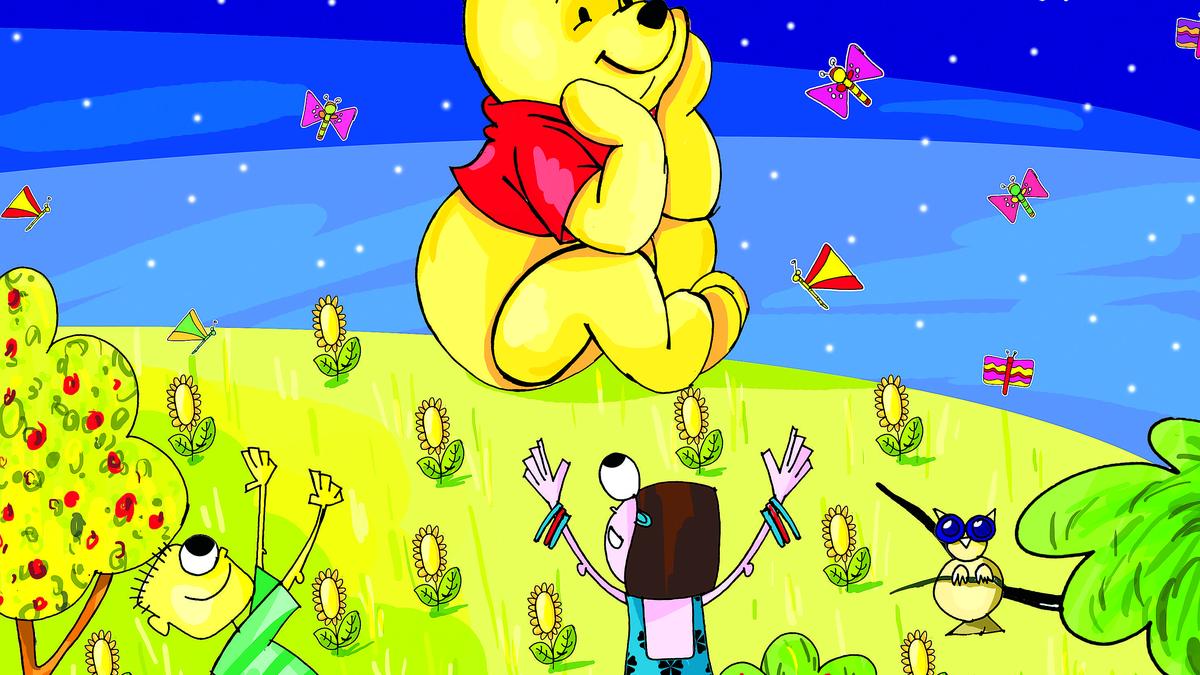
100 years of Winnie-the-Pooh: What the cuddly teddy bear teaches us about the need to slow down and be gentle


Winnie-the-Pooh

Winnie-the-Pooh
| Photo Credit: SREEJITH R KUMAR

Can you imagine that Winnie-the-Pooh, the bear who loved honey, long naps and slow walks through the woods turned 100? The bear, who never grows old in our memories, quietly turns a century and this milestone strangely feels personal.

Created in 1920s by British author A A Milne, Winnie-the-Pooh began as a bedtime story Milne told his younger son, Christopher Robin. The characters were inspired by Robin’s stuffed toys. It was illustrator E H Shepard’s sketches that gave the Hundred Acre Wood (the fictional forest setting for Winnie-the-Pooh stories, inspired by Ashdown Forest in East Sussex, London), its timeless charm.

Even the name Winnie came from a black bear at the London Zoo, and Pooh from a swan that the family admired during their walks. The books Winnie-the-Pooh (1926) and The House at Pooh Corner (1928) soon became classics, cherished for their simplicity and warmth.

Unlike most children’s heroes, Pooh was never brave or clever in the usual way. He forgot things, moved slowly and often got confused. But Pooh, he was very kind. His friends also showed real emotions — Piglet’s nervousness, Eeyore’s quiet sadness, Tigger’s endless energy and Rabbit’s need to keep things in order. All together, they created a world that felt safe and familiar. The sight of a Winnie-the-Pooh soft toy in the racks of toy shops still carries nostalgia for those who once held the bear in their childhood.

A childhood with Pooh

For many, Pooh was not something read or watched, he simply existed in everyday childhood. Pooh appeared everywhere in the growing up years — on school bags, name cards and even on tiffin boxes, recalls Anushka Sasindran, a 22-year-old student from Mumbai. She remembers how deeply her friends claimed him as their own. “We even used to fight saying, ‘Pooh is my friend’,” she says, laughing. Now when she looks back, these small moments have turned into a beautiful memory, says Anushka.

Krishna Nair, 23, says: “I watched Winnie-the-Pooh as a kid, and what stayed with me the most was Tigger and Piglet since the characters themselves felt comforting.”

Fans of Winnie-the-Pooh may mostly relate to Eeyore more in their adulthood, observes Anushka. Eeyore is honest in a way most characters aren’t allowed to be. He doesn’t fake happiness, doesn’t pretend things are fine and does not spologise for feeling low. He shows up even when he is tired to everything. One could perhaps understand him more as an adult than one did as a child. Pooh’s slow pace makes sense today because now we understand the need to slow down, and maybe some days go back and want to relive the days as a kid,” says Krishna.

Pooh on film

The bear’s reach widened in 1961, when Walt Disney took Pooh to a global audience through animated films and television series. While the colours became brighter and the songs more playful, the spirit of the stories remained unchanged. Pooh’s world stayed slow, gentle and deeply human.

That quality set Pooh apart from other cartoons. Jeevan Baiju, 25, a student, who remembers watching the series on television, says what stayed with him was not any particular episode, but the feeling of calmness that the Hundred Acre Wood offered, at a time when most cartoons were loud and fast and action-driven.

The undying appeal of Pooh

The childhood we once cherished has quietly slipped away. School bags have been replaced, toys packed away. Life has moved forward without asking us if we were ready. In this fast changing world, Pooh’s charm remains unaltered. The bear reminds us that some stories do not need to be loud to stay relevant.

Source link

The Hindu Lit For Life| Books as an escape, and a steadying presence for readers


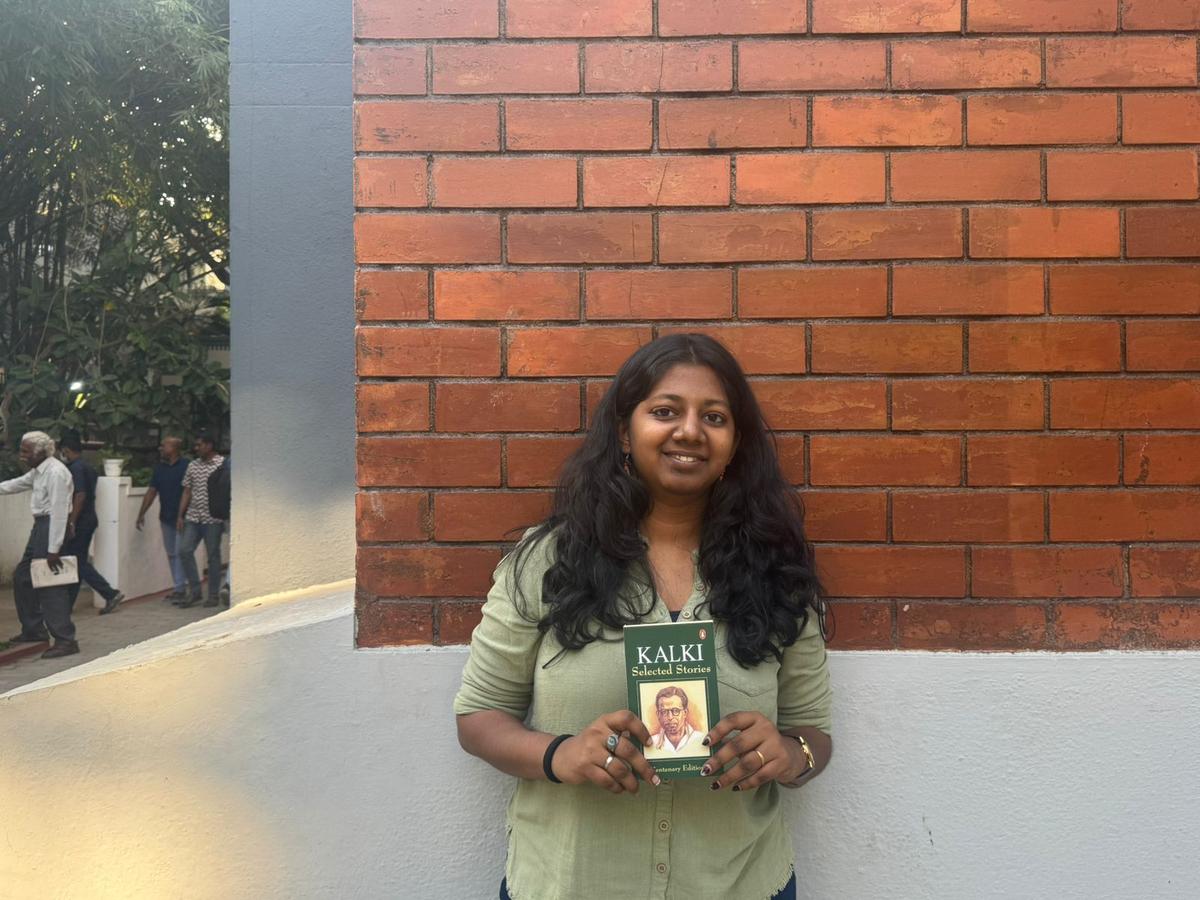
“I am human — I scroll for six hours a day,” said Subbu Karuppayee Bhavani, 21, with a laugh. “But the satisfaction I get after reading a chapter or two is far more.”

Subbu Karuppayee Bhavani

Subbu Karuppayee Bhavani
| Photo Credit:
Srijani Mukhopadhyay

At The Hindu Lit for Life this year, the tension between endless scrolling and the slow pull of books surfaced frequently in conversations with young readers. Across two days, attendees below the age of 30 spent their weekend rushing between sessions, bookstalls and long signing lines. Some were lit fest regulars, some were determined to make it through their checklists, and others arrived as reluctant recruits of enthusiastic friends or family, later spotted voluntarily queuing for panel discussions. Most were seen leaving with paperbacks, hardbacks and tote bags heavier, but spirits lighter, than when they arrived.

The centrality of stories and how they are told, kept coming up in conversations, even when reading choices were unplanned. Subbu’s introduction to James Baldwin began when her roommate borrowed a library book in her name and forgot to return it. “It was just lying around,” she said. “But I realised I hadn’t read engaging prose in a while because I’ve been buried in academic reading.” Baldwin’s essays, she says, have made her want to read more literary essays.

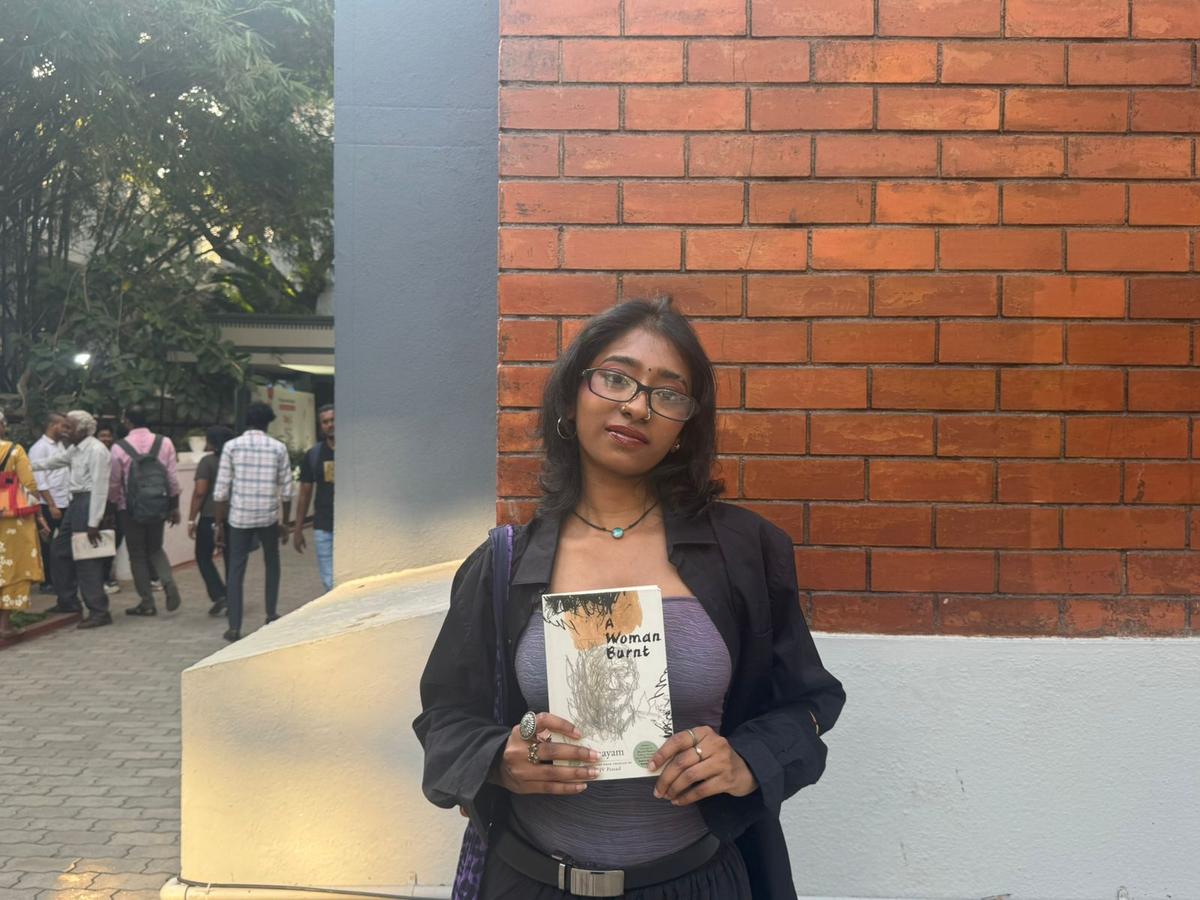
Radha Ragamalika

Radha Ragamalika
| Photo Credit:
Srijani Mukhopadhyay

For 21-year old literature student Radha Ragamalika, reading has meant steadying herself within the digital world, rather than escaping it. “We use social media as escapism,” she said, “but I also use books to escape. They exercise the mind in a different way.” She has been reading Audrey Lorde’s Sister Outsider slowly, often at night, while parallely tackling Albert Camus’ The Outsider. “I didn’t want to graduate college without having read Camus,” she chuckled.

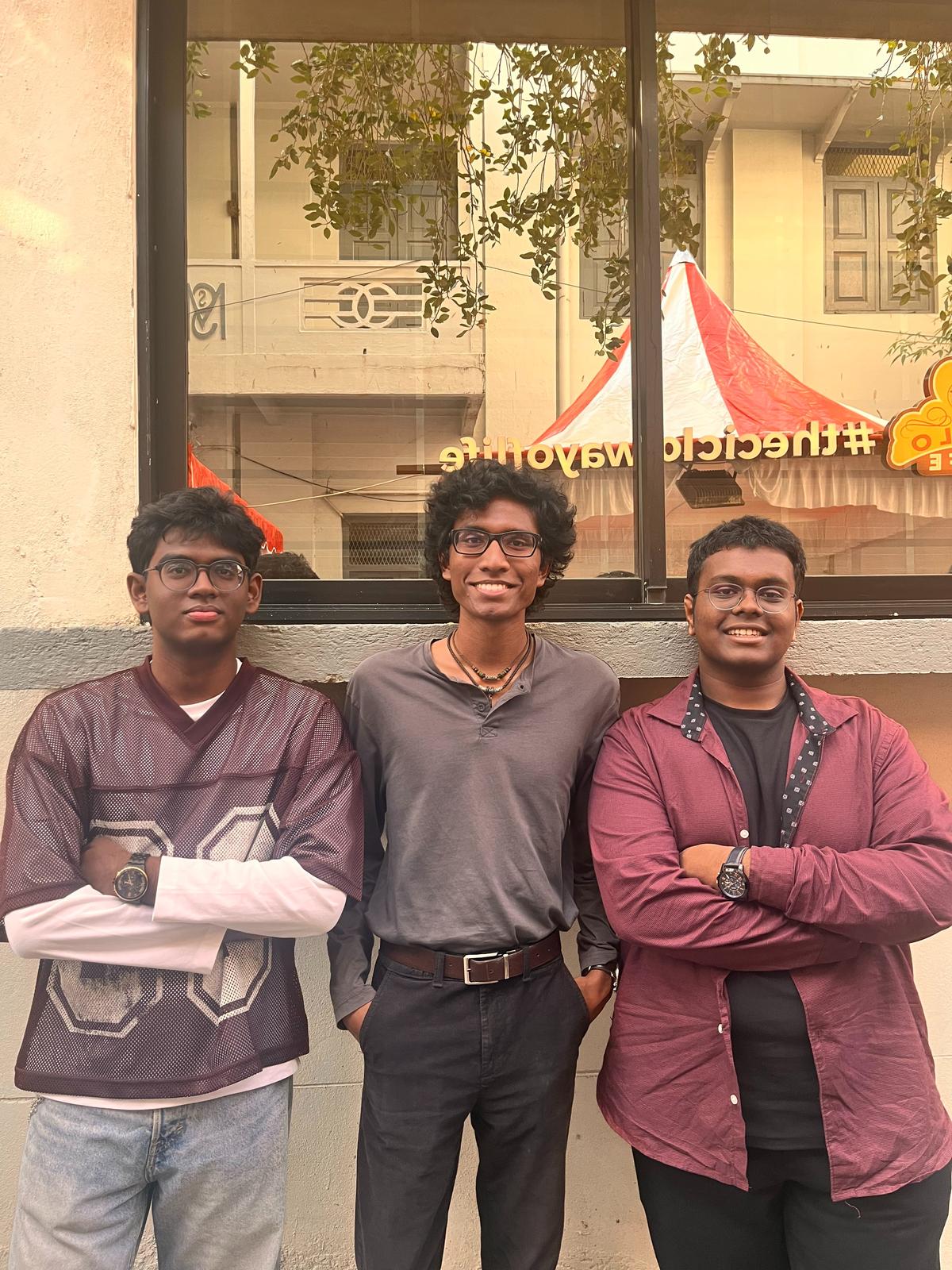
Others agreed that books demand a different kind of attention. “When you’re watching something, everything is already pre-made for you,” said Dinesh, 21, who has been reading James Clavell’s Shōgun. “With books, you imagine the entire scene yourself. You cast your own actors, choose their faces and colours. It’s more organic.”

Kiruthikesh, Dinesh and Varun V

Kiruthikesh, Dinesh and Varun V
| Photo Credit:
Srijani Mukhopadhyay

He was accompanied by friends Kiruthikesh and Varun V, all members of the Stanley Literary Society, a student led collective for literature lovers in Stanley Medical College, Chennai. While Kiruthikesh gravitates towards fantasy, Varun has been reading Osamu Dazai’s The Setting Sun for its bleakness. “I like tragedy,” he said simply.

Pranuthy, 20, a literature student, also felt that “a book is the actual art,” and “anything online or AI-generated cannot be equivalent to what you hold in your hand.” She had picked up Andaleeb Wajid’s Learning to Make Tea for One from the festival, drawn by its title. “It feels like it will hit,” she said, “and then heal.”

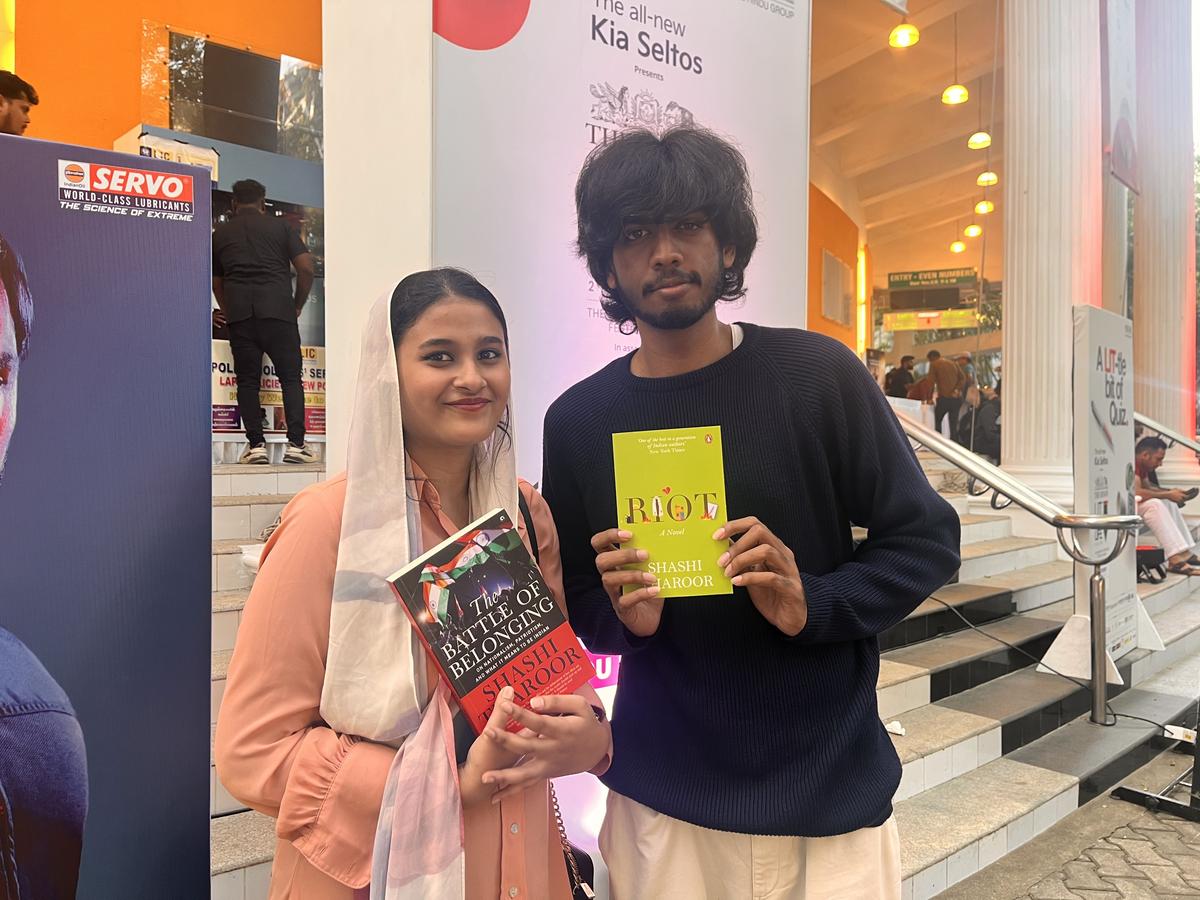
For most of these readers, reading is a default part of their academic lives, and also a way of surviving it. Maryum Ameen and Hari Roopan, both 21 year-old Law students, spoke about balancing their dense legal curriculum with books that widened their perspectives. Maryum, an avid Shashi Tharoor reader, had picked up his book The Battle of Belonging after attending his session.

“It connects with what we study, how laws are built around ideas and debates of nationalism and patriotism,” she said. Hari, meanwhile, chose to pick up a work of fiction, Tharoor’s murder-mystery novel Riot. “Law teaches you procedure,” he said. “But law is also about reading someone’s story and telling it better. Fiction helps you understand how the world works beyond just the law.”

Maryum and Hari

Maryum and Hari
| Photo Credit:
Srijani Mukhopadhyay

The festival also prompted young readers to pick up writers closer home. Browsing the bookshop in the festival grounds, Subbu picked up Kalki’s selected works, curious about his Tamil writing beyond the classic: Ponniyin Selvan. “I want to see what else he has written,” she said. Radha chose Imayam’s A Woman Burnt, translated by GJV Prasad, to look at Tamil literature in translation. 

As the festival drew to a close, Radha admitted that she drifts to her phone all the time. “But coming to places like this, where people are constantly talking about books and ideas, reminds me why I read,” she said.

Published – January 19, 2026 03:45 pm IST


Source link

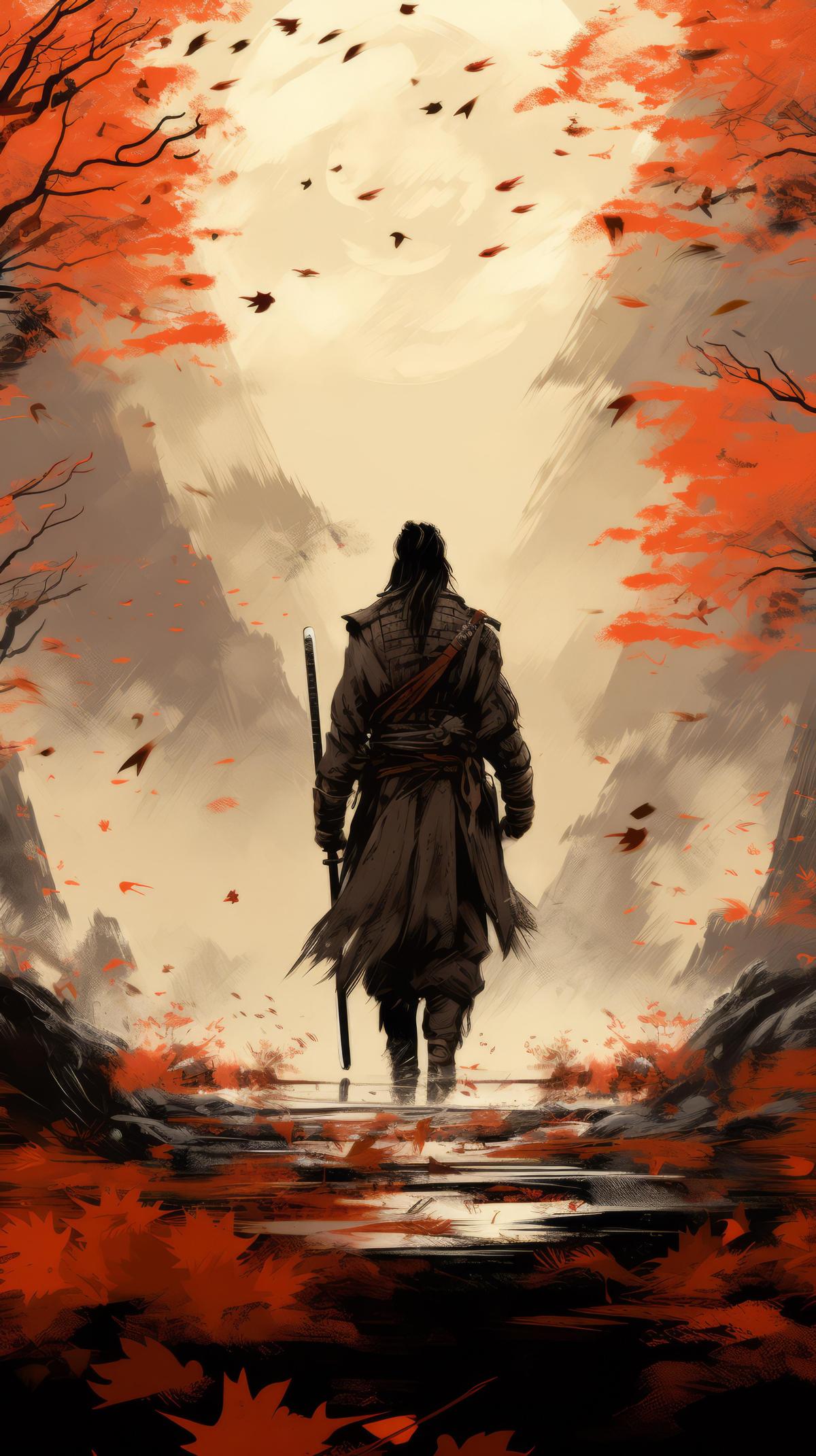
The bushido way: uncovering the nature of samurai


The word

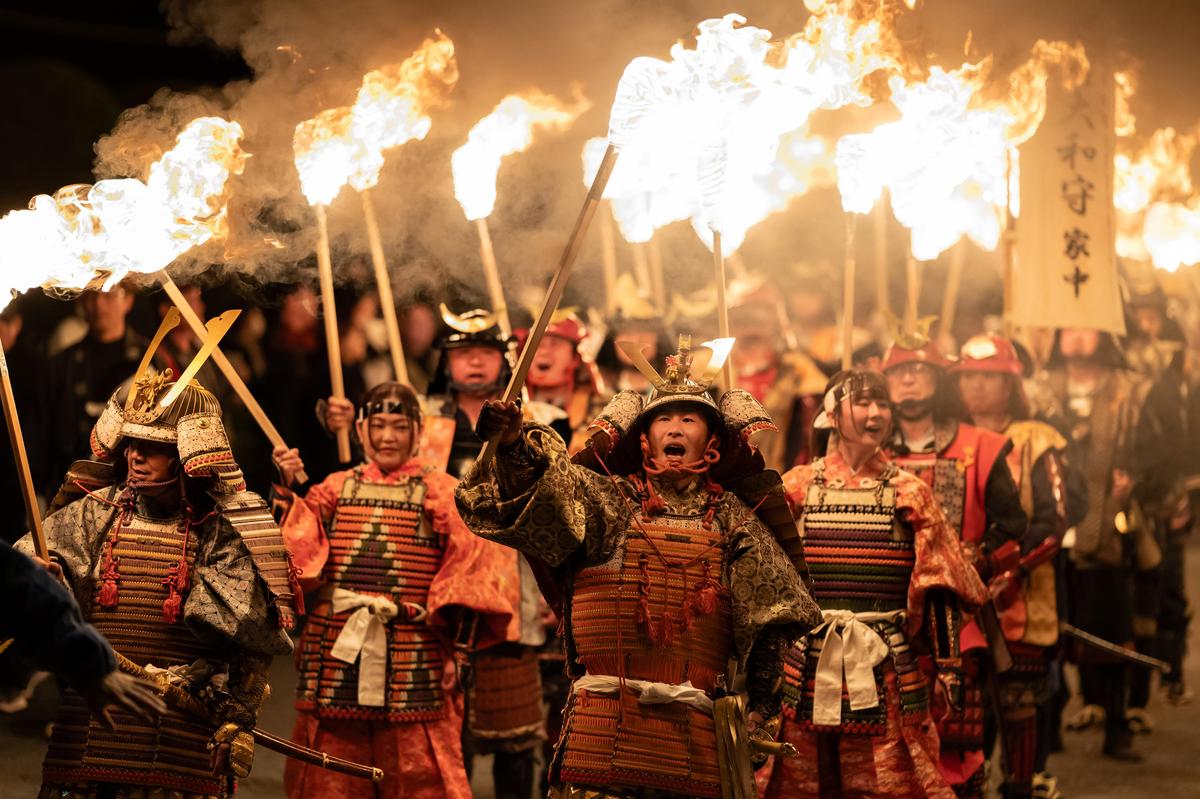
Bushi was the term used to refer to warriors, and a warrior family was called a buke. And it wasn’t used to refer to just any warrior. Those who called themselves bushi saw war and battle as their way of life (unlike those conscripted into the military). When the word ‘samurai’ first appeared, it was a colloquial term that held many meanings over time. Its original definition did not hold any military connection, and instead only referred to domestic servants. It was during the 12th Century that the word ‘samurai’ first held military association. Following this, it was used for foot soldiers who served the warrior vassals of the shogun. According to historian Michael Wert, “a warrior of elite stature in pre-seventeenth-century Japan would have been insulted to be called a samurai”. Soon, the term altered its meaning to refer to the retainers of a daimyo (feudal lords and vassals to the shogun). When usage of the term spread, common folk started calling every man holding a sword a samurai.

The armour

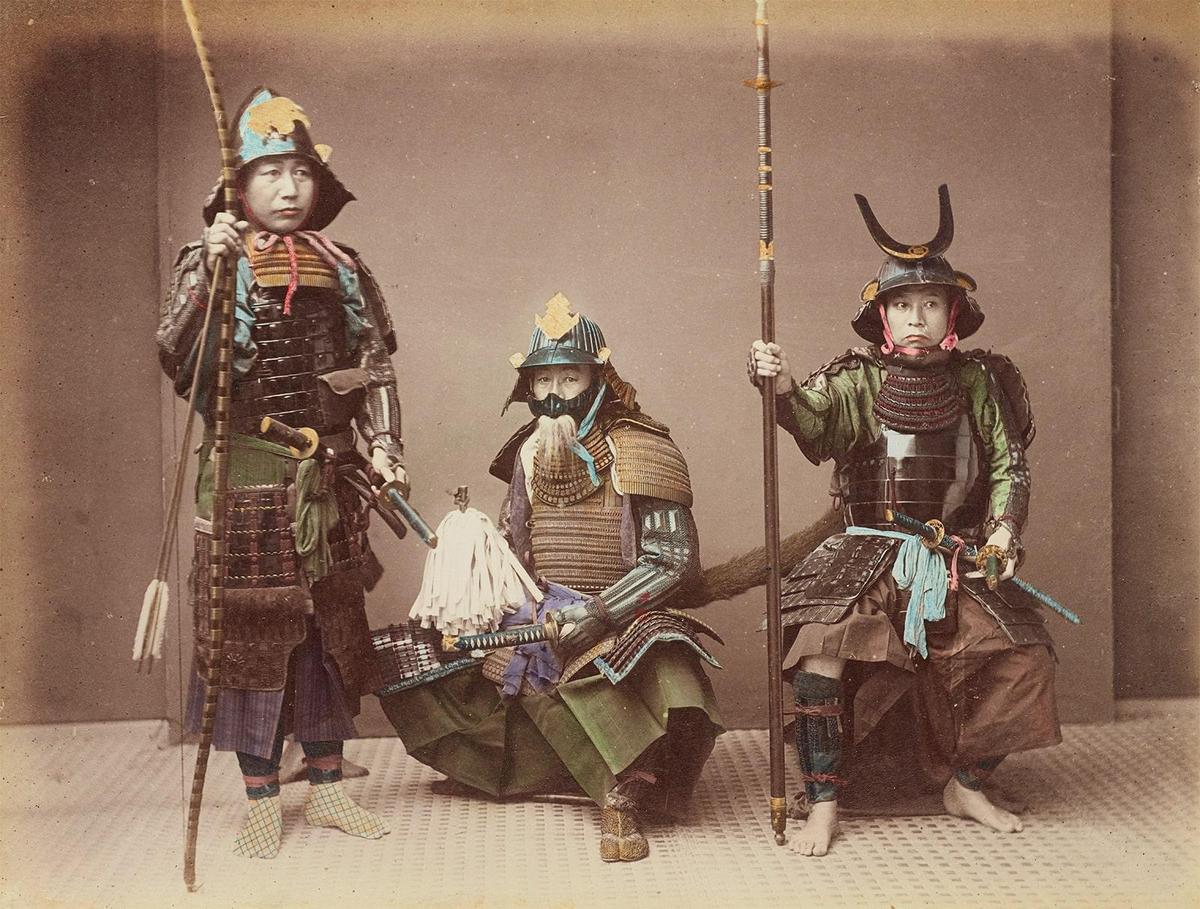
The first known samurai armour was called ō-yoroi (great armour). It was intended only for samurai of high rank who rode on horseback. The armour had a large plate on its left side that protected the samurai from arrows since that was where enemies mainly targeted. Samurai who were not of high class wore what was known as Dō-maru, which was much lighter. However, its design made it heavy and hard to move freely in. During the Kamakura period, a simple and lighter armour emerged, called hara-ate, which protected the front of the torso and the abdomen. Then came the haramaki, a chest armour, to which helmets (kabuto) and gauntlets (kote) were added. The last utilisation of samurai armour occurred in the year 1877.

The weapons

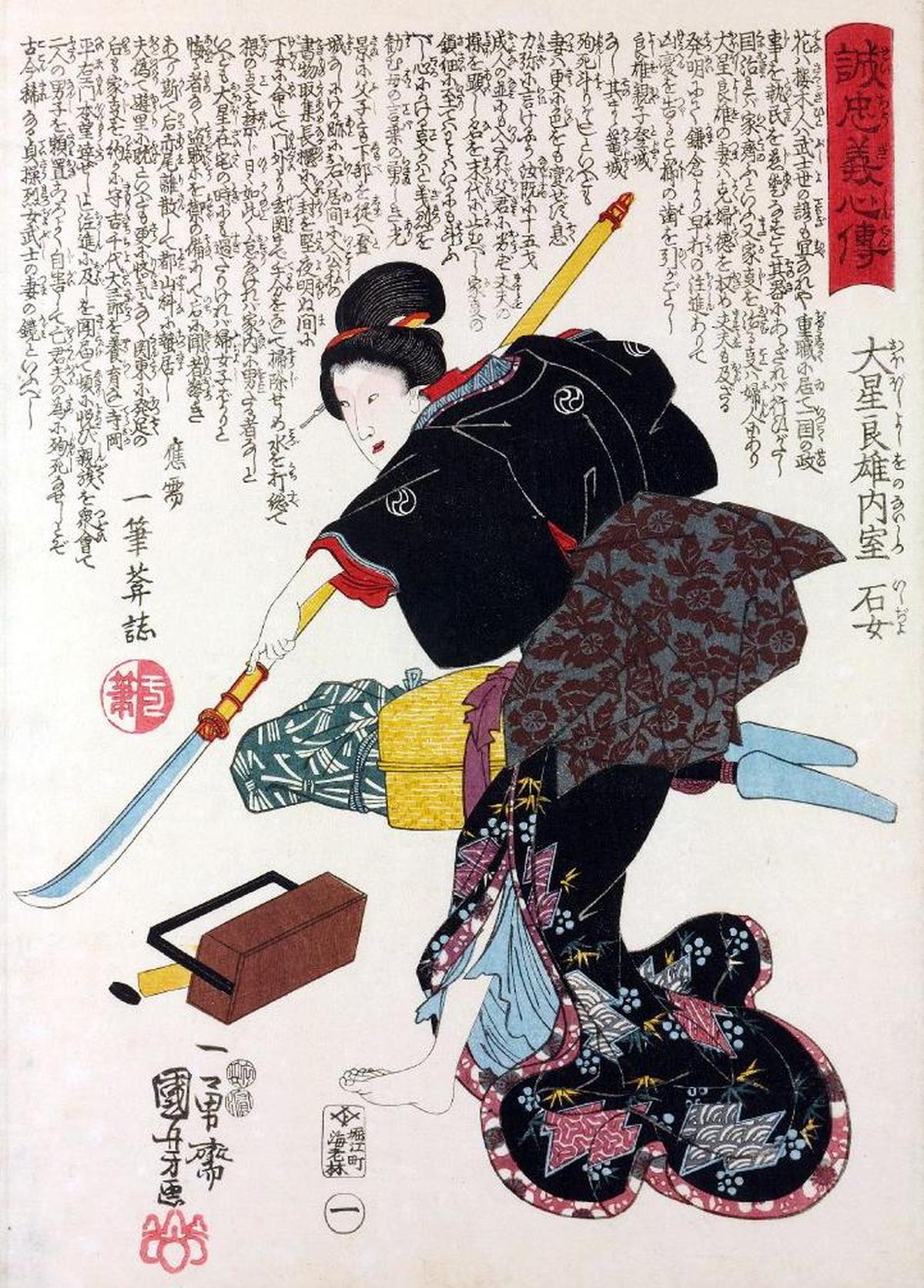
When you think of samurai, what do you picture? A warrior with a katana strapped to him? While a katana, or a one-sided blade, is a weapon used by samurai of Japan, it wasn’t the only one. The yumi, or longbow, was used for distance attacks. The naginata, a polearm, fell out of use due to its lack of manoeuvrability, and was replaced by the nagamaki. In 1586, the grand minister of that time, Toyotomi Hideyoshi, enforced a law which stated that those who weren’t samurai were not permitted to wield these weapons. Centuries later, when the borders of Japan were forced open for trade, imports of American and European weaponry came in – modern rifles – which were much easier to use than the traditional ones.

Bushido

Bushido is a term that is closely connected with ‘samurai’. But what exactly is it? Well, to put it simply, it is a code that is followed by samurai, and emphasises honour and other virtues that the warriors are made to embody. While the origin of this code dates back to the Kamakura period, it was officially formalised only during the Edo period. There were honour codes that pre-dated bushido, but the norms weren’t followed by many warriors during duels. In 1642,  the Kashoki, a five-scroll text that provided explanations for the theoretical aspects of bushido and was written by samurai Saito Chikamori in a language that could be accessed by the commoners. There were many types of bushido throughout history. The Sengoku bushido placed importance on honour, war, and weapon mastery (not many moral values). Edo bushido saw duty and obedience as the main focus. 

Education

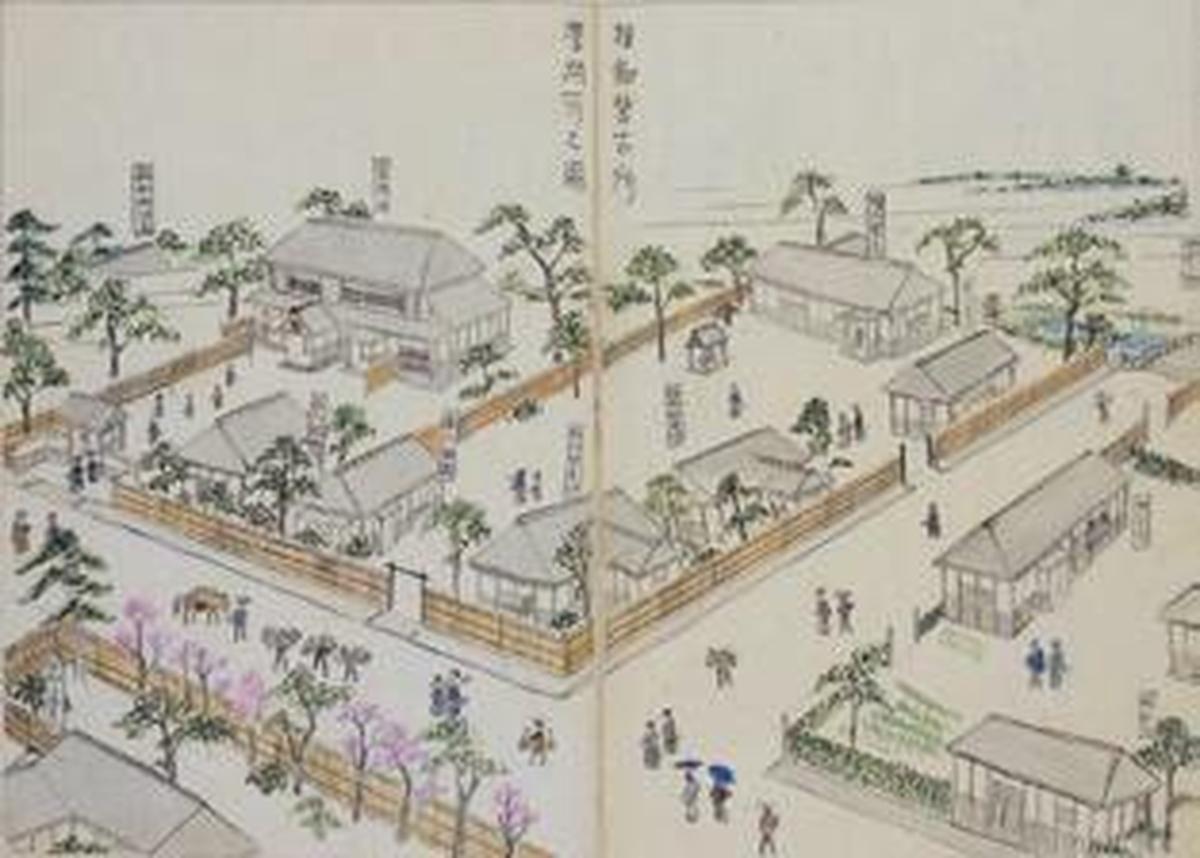
Samurai are known to have trained in many forms of combat skills like kenjutsu (swordsmanship), kyujutsu (archery), and tantojutsu (knife fighting). There were specific schools and institutes that trained students to become samurai. These were known as Han schools, or hankō. The lessons include calligraphy, Western sciences, math, samurai etiquette, military arts, etc. These schools were established by daimyos. While it started out teaching only adults, the students soon became younger boys. Military training normally began when students reached the age of 15. 
There are also libraries that are specifically meant for samurai, singularly called a buke bunko, or a “warrior library” that held texts and books that covered military strategy, and lessons on warfare.

Names

Yes, a samurai’s name is something of great importance because there are many factors that go into addressing a man who is seen as one. A samurai was given a name that combined a single kanji from the name of either his father or grandfather, which is attached to another new kanji. One could be referred to by their family name or their formal nickname (yobina). But a samurai had the privilege to choose their own nanori (adult name), which was a private name that could only be used by a few certain people, one of whom was the emperor. They also had samurai surnames that differentiated them from common folk.

Women

Women in the samurai class were also trained in weaponry, specifically the naginata and the combat skills of knife-wielding. Samurai women were referred to as Onna-musha. Their main duties were to look after the household duties, take care of the children, and defend the house in case of any attack. But while the biggest duty of women from samurai families was to secure diplomatic relations with enemy clans through political marriages, history shows many samurai women who had actively fought on the battlefield as warriors. One famous example would be Empress Jingū, born as Okinaga-Tarashi, who ruled as a regent following her husband’s death at the hands of rebel forces. Other samurai women from history include Tomoe Gozen, Lady Ichikawa, Miyohime, etc.

Ronin

Now, here is another Japanese term many may know. But who exactly is a ronin? That would be a samurai with no master or lord to serve. When the master of a samurai (typically a daimyo) passed away, that samurai became a ronin right then and there. This also happens when their master removes their favour. Ronin were normally seen with two swords and were also occasionally seen with other weapons like bo staffs and bows. Even in modern Japan, the term ‘ronin’ was used to refer to an unemployed salaryman. 

Published – January 19, 2026 03:29 pm IST


Source link

Dishes from Mumbai’s Bhendi Bazaar find a home in this Bengaluru restaurant


Bombay chicken farcha

Bombay chicken farcha
| Photo Credit: Special arrangement

Arpitha Rai and Rehana Contractor started the new restaurant The Bombay Chapter 003 as an ode to the streets of Bhendi Bazaar and Mohammed Ali Road in Mumbai. These historic streets, which come alive during ramzan, are home to street food from the Bohri Muslim community, that live in the area. The Bombay Chapter 003 (named after the pin code of the area) is a casual dining restaurant, bringing that iconic cuisine to Bengaluru. The duo says it is not a reinvention. They are not here to elevate or refine the cuisine, but they want to simply translate it to a new city.

Mutton baida roti

Mutton baida roti

The restaurant is located inside the premises of Uru Brewpark and Thelagram. The ambience is straightforward and plain, in an open-air setting. We take seats and pore over the menu, that has sections such as tawa specials, small plates, large plates and biryanis. The duo has brought ustad karigars (masterchefs) from Mumbai to design the menu. Although it is meat heavy, there is a decent selection for vegetarians as well.

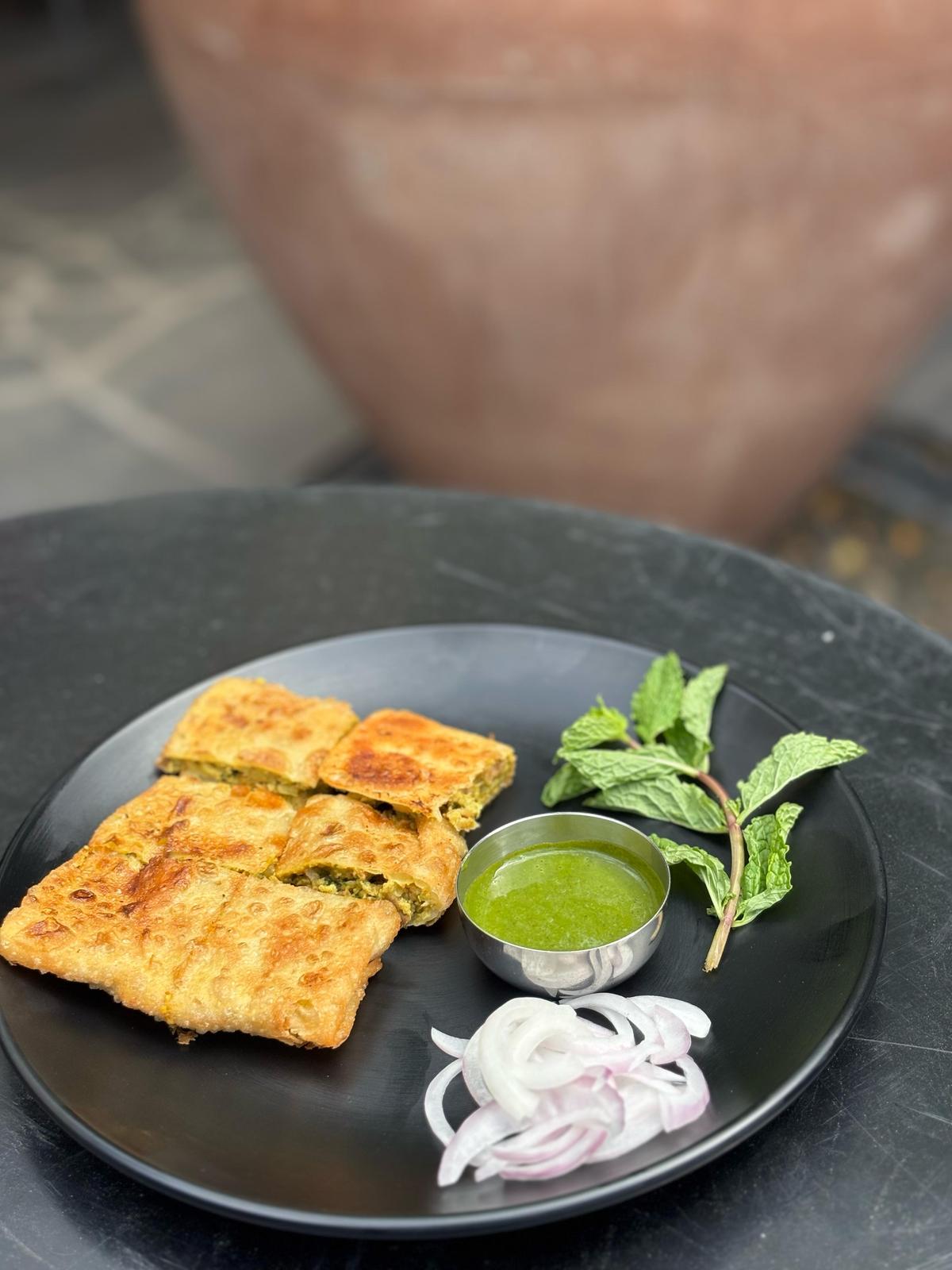
A number of the appetisers are brought to the table. The presentation is simple, par for course for the casual ambience. We have the famous baida roti. An egg paratha stuffed with slow cooked mutton and spices, which is then tawa fried. The paratha is golden brown and flakey, and the stuffing is flavourful.

Next, we have the mushroom galouti kebab, one for the vegetarians. The kebabs are melt-in-the-mouth, and mildly spiced. The hungama kebab is made of spicy chicken kheema, which is shaped like a lollipop and then deep fried. It is fun and textural. We wash all these down with Mumbai’s famous Pallonji soda, in flavours of raspberry, lemonade (my pick from the lot), and ice cream.

Bohri mutton dumm biryani

Bohri mutton dumm biryani

Main course is another round of classic dishes. We have a mutton biryani, and the nalli nihari. The nihari is silky. It is cooked overnight in a marrow-rich broth. The dish is served with sheermal pav, a soft saffron-infused flatbread. The Bombay-style dum biryani is made of long-grain basmati rice and mutton marinated in Kacchi style spices. The Bohri masalas are key to the flavour.

We round off the meal with a light caramel custard.

The Bombay Chapter 003 does justice to the cuisine of the iconic area. Good for a quick bite, especially if you are in the area.

Cost for two ₹1,100. At JP Nagar. For more details, call 9353562796


Source link

Why dieting made us fat: On weight loss, metabolism and why food is not the enemy


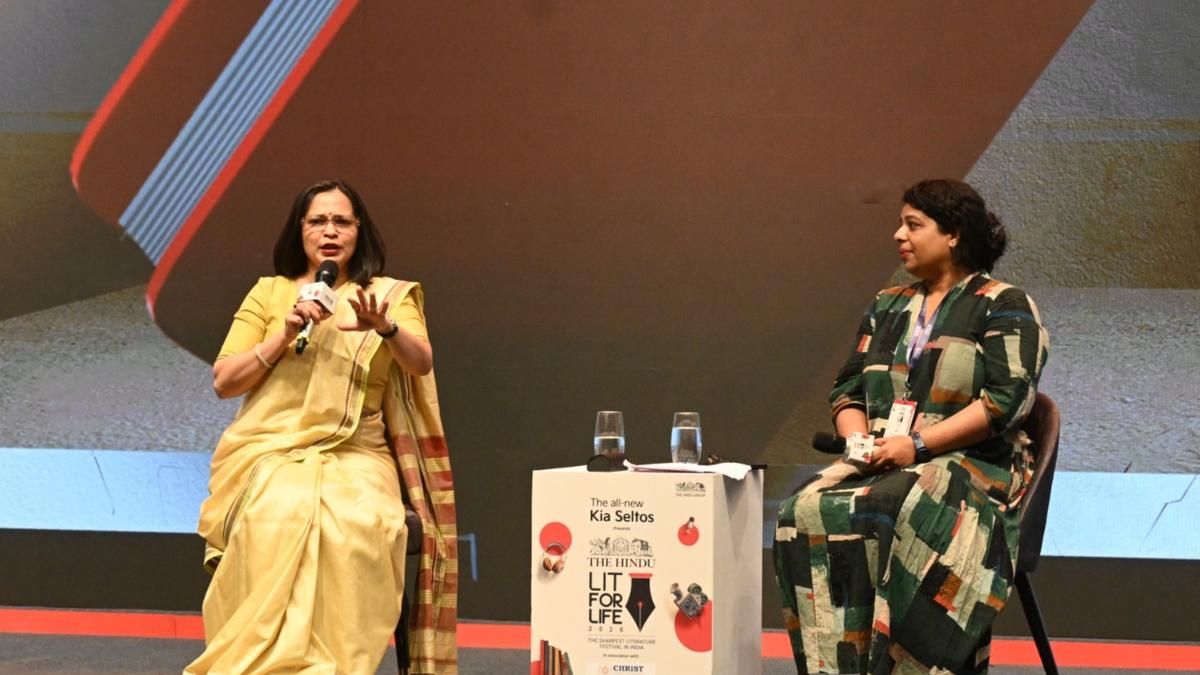
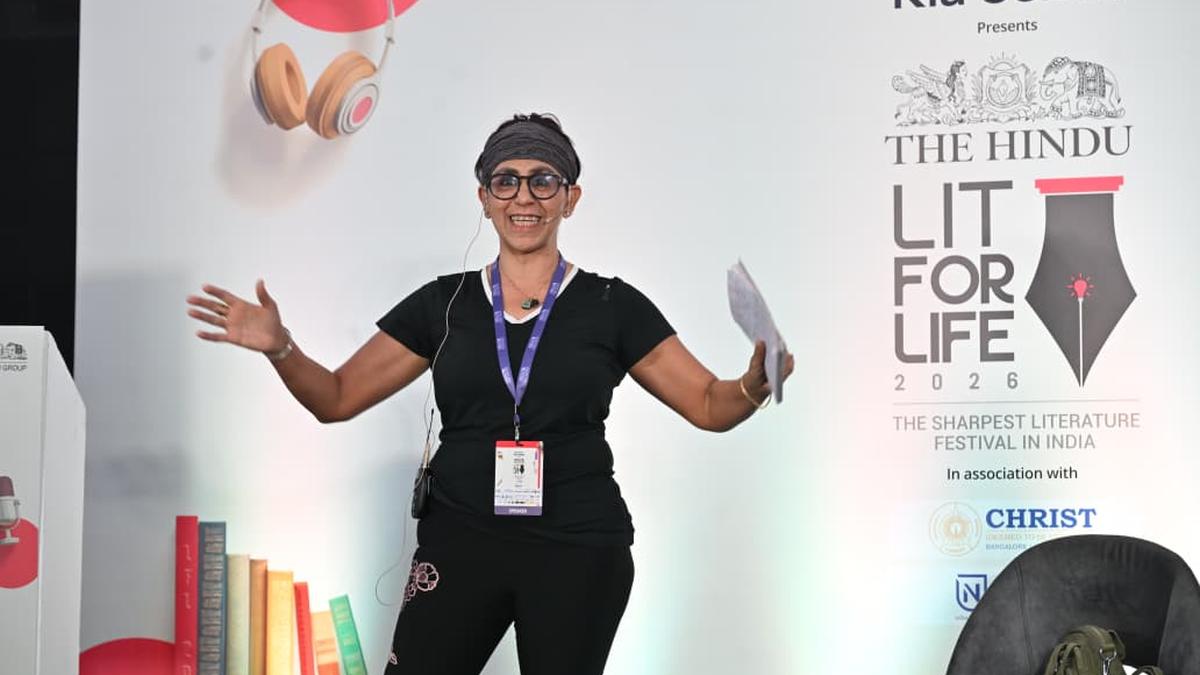
Rujuta Diwekar in conversation with Shonali Muthalaly at The Hindu Lit for Life Festival 2026 at Sir Mutha Concert Hall in Chennai on Sunday.

Rujuta Diwekar in conversation with Shonali Muthalaly at The Hindu Lit for Life Festival 2026 at Sir Mutha Concert Hall in Chennai on Sunday.
| Photo Credit: B. Jothi Ramalingam

In the last three decades, trends in health have come and gone, but Rujuta Diwekar’s advice remains unchanged: eat local, traditional, whole foods, exercise regularly, and get to bed on time. “We have known each other for 15 years since your first book. And I admire the fact that your messaging hasn’t changed at all,” says Shonali Muthalaly, Editor of The Hindu MetroPlus, The Hindu Weekend, The Hindu Cinema, who was in conversation with the celebrity nutritionist and writer, at a session titled hy Dieting Made Us Fat: On Weight Loss, Metabolism and Why Food is not the Enemy

In response, Diwekar says that it is more important than ever before to “speak about local, seasonal, traditional, because everyone can see that time and again, the messaging of the weight loss industry, the food industry and now even the pharma industry and beauty industry keeps changing. They want us to adhere to a new standard every single day,” she says, pointing out that this has left us more confused than ever before. Also, less healthy. Part of the problem, she strongly believes, is social media, which is filled with Instagram influencers “who have no clue” offering health advice. “And we are like cattle, being fooled by a herd mentality. We are just following one trend and another, and as the title of this talk says, getting fatter.” 

The session also saw a discussion on other aspects of health: Instagram filters warping the way we see ourselves, the influx of videos about skincare routines (something Diwekar clearly doesn’t think much of), how the quest for thinness often shrinks our minds and lives, the issue with the ongoing protein craze, the continued relevance of age-old cultural practices around food and why it is more important to ask big questions about health rather than worry about just weight loss.

“This whole belief that we have that it takes discipline and willpower to get fit is a misunderstood one, coming out of privilege and not really understanding,” she insists, adding that real health comes when there are better policies, such as those that help protect everyone from air pollution, improve maternal health, ensure gender equality and regulate junk food, alcohol and tobacco. “That is the stuff that improves the health of a nation, and not gyms, protein shakes and probiotics,” she says. 

The Hindu Lit For Life is presented by The all-new Kia Seltos. In association with: Christ University and NITTE, Associate Partners: Orchids- The International School, Hindustan Group of Institutions, State Bank of India, IndianOil, Indian Overseas Bank, New India Assurance, Akshayakalpa, United India Insurance, ICFAI Group, Chennai Port Authority and Kamarajar Port Limited, Vajiram & Sons, Life Insurance Corporation of India, Mahindra University, Realty Partner: Casagrand, Education Partner: SSVM Institutions, State Partner: Government of Sikkim & Uttarakhand Government

Official Timekeeping Partner: Citizen, Regional Partner: DBS Bank India Ltd, Tourism Partner: Bihar Tourism, Bookstore Partner: Crossword and Water Partner: Repute Radio partner: Big FM


Source link

Wild Tamil Nadu screened at The Hindu Lit for Life


Wildlife photographer and filmmaker Kalyan Varma directed Wild Tamil Nadu

Wildlife photographer and filmmaker Kalyan Varma directed Wild Tamil Nadu
| Photo Credit: Special Arrangement

Wild Tamil Nadu begins with the soothing bass voice of Arvind Swamy, who introduces the film’s concept to the audience. “More than 2000 years ago, scholars wrote poems about a land where the natural world intertwined with the human spirit,” he says in the film, which was screened at The Hindu Lit for Life 2026. These ancient writings, known as Sangam literature, classified land into five realms: kurinji (hills), mullai (forests), marutham (croplands), neithal (coastal areas) and palai (arid land), he adds. “This is the story of these realms,” we hear him explain in this documentary, produced by Sundram Fasteners and directed by wildlife photographer and filmmaker Kalyan Varma.

Over the course of a little under an hour, viewers are introduced to a variety of animals, both great and small, who inhabit this land. Using breathtaking footage of the Great Hornbill whirring through endless skies, scattering seeds far and wide, herds of elephants cavorting through tea estates, an energetic family of dholes, scuttering ants, the mating flight of winged termites, and duelling rock agama lizards, Wild Tamil Nadu offers a peek into an incredibly diverse landscape.

In an earlier interview with The Hindu, filmmaker Kalyan Varma noted that the state has a staggering diversity of landscapes, ranging from mountain peaks as high as 2700 metres to marine ecosystems that support an incredibly rich and productive underwater life.

In that same interview, he also spoke about the film’s origin, his process as a film maker, the creative choices he made and why actor Arvind Swamy was chosen to do the voiceover “Tamil Nadu is proud of its language and heritage, which go back thousands of years. So, we wanted a voice that would do justice to it,” he said.

But Wild Tamil Nadu is far more than stunning shots of wildlife in various landscapes. It also offers insights into the interconnectedness of various ecosystems, discusses human-wildlife coexistence and conflict, and serves as a rallying cry for conservation. More than anything, however, it is “a story of resilience and hope..a delicate balance that has survived since the Sangam era,” as Swamy says in the film. “Now the future of this land rests in our hands.”


Source link

Movement is medicine: Priti Chawla


Are Your Gadgets Bringing You Down?: Priti Chawla discusses 'Back Health in the Workspace' at the The Hindu Showplace on Sunday.

Are Your Gadgets Bringing You Down?: Priti Chawla discusses ‘Back Health in the Workspace’ at the The Hindu Showplace on Sunday.
| Photo Credit: M. Srinath

Technology has become an inseparable part of everyday life, and avoiding it is no longer possible. As dependence on screens increases, it has repercussions for health, on both the body and mind, said fitness coach Priti Chawla at the Lit for Life 2026 on Sunday.

At a session on ‘Are Your Gadgets Bringing You Down?: Back Health in the Workplace’, Ms. Chawla said that sitting in front of a screen for long periods significantly reduces muscle activation, by nearly 90% compared to standing or walking. Prolonged sitting also causes joints to become stiff due to lack of movement, while slower blood circulation can lead to swelling in the ankles. Reduced circulation may affect concentration and energy levels, she said. 

Click here to read the live updates of Day 2 of The Hindu Lit for Life

Ms. Chawla said that when the head is tilted forward while using phones or laptops, extra pressure is placed on the neck muscles and nerves, disrupting the natural cervical curve. The lumbar spine, which carries much of the body’s weight and absorbs impact, becomes vulnerable when people remain seated for long periods without movement.

Demonstrating the right sitting postures, Ms. Chawla explained that it begins with simple adjustments: feet planted flat on the floor, hips and knees at right angles, and proper support for the lower back using a cushion or rolled towel. Screens should be positioned closer to eye level to prevent the neck from bending forward. Maintaining a neutral spine during sleep is also important, with pillows placed under or between the knees for support.

Even people who exercise daily are not immune if they remain seated for long hours. Building regular movement into the workday, Ms. Chawla said, is important to preventing long-term pain and spinal strain.

Closing the session, Ms. Chawla said, “Movement is medicine. Small changes matter, and the body adapts quickly and positively when given the chance. Bring the screen up to eye level, do not bring your head down to the screen.”

The Hindu Lit For Life is presented by The all-new Kia Seltos. In association with: Christ University and NITTE, Associate Partners: Orchids- The International School, Hindustan Group of Institutions, State Bank of India, IndianOil, Indian Overseas Bank, New India Assurance, Akshayakalpa, United India Insurance, ICFAI Group, Chennai Port Authority and Kamarajar Port Limited, Vajiram & Sons, Life Insurance Corporation of India, Mahindra University, Realty Partner: Casagrand, Education Partner: SSVM Institutions, State Partner: Government of Sikkim & Uttarakhand Government

Official Timekeeping Partner: Citizen, Regional Partner: DBS Bank India Ltd, Tourism Partner: Bihar Tourism, Bookstore Partner: Crossword and Water Partner: Repute Radio partner: Big FM


Source link

What is Point Nemo, the most isolated place on Earth?


Point Nemo lies in the South Pacific Ocean, at 48°52.6′ south latitude and 123°23.6′ west longitude to be exact. It is about 2,700 kilometres away from the nearest land in all directions. Also known as ‘pole of inaccessibility’ which is used to describe locations that are harder to reach than any other point on Earth and Point Nemo is the most extreme example of this.

Interestingly, Point Nemo wasn’t discovered by a sailor or an explorer. In 1992, it was identified by Hrvoje Lukatela, a Croatian-Canadian survey engineer—using a computer. Lukatela ran a specialised program to calculate the exact point in the ocean that was farthest from any landmass. The result was a location surrounded by emptiness in every direction.

The name “Nemo” comes from Latin, meaning “no one”, and also references Captain Nemo, the fictional explorer from Jules Verne’s 20,000 Leagues Under the Sea—a fitting name for a place no one truly reaches.

Why the ocean here Is almost lifeless

Point Nemo lies within the South Pacific Gyre, a massive system of slow-moving, rotating ocean currents formed by the Antarctic Circumpolar Current, the Humboldt Current, and the West Wind Drift. The gyre is enormous—twice the size of North America—and is often described as the most barren part of the world’s oceans.

But why is it so empty?

The region is so far from land that winds carry almost no nutrients or organic matter into the water. At the same time, the circular currents act like a barrier, preventing nutrient-rich deep water from rising to the surface. With no food supply to support plankton, very little marine life can survive here. As a result, Point Nemo sits in what scientists call a biological desert.

The nearest land is still very far away

If you were somehow floating at Point Nemo, the nearest landmasses would still be around 2,700 km away. These include Ducie Island in the Pitcairn Islands, Maher Island near Antarctica, and Motu Nui, a small rocky islet off Easter Island. To find inhabited land, you would need to travel thousands of kilometres west to New Zealand’s Chatham Islands, or east toward Chile.

Closer to space than to people

Here’s a surprising fact: the closest humans to Point Nemo are often astronauts aboard the International Space Station. Orbiting roughly 400 km above Earth, astronauts can be physically closer to this point than any person standing on land.

Earth’s space cemetery

Because of its extreme isolation, Point Nemo serves another unusual purpose. Space agencies use it as a controlled “space cemetery”, officially called an orbital graveyard. Decommissioned spacecraft are guided to crash into this part of the ocean to minimise risk to populated areas.

More than 300 spacecraft have ended their journey here, including the Soviet space station Mir, which was deliberately de-orbited in 2001. NASA and its partners currently plan to de-orbit the International Space Station around 2031, with Point Nemo designated as its final resting place.

Mystery of “The Bloop”

Point Nemo is also linked to one of the ocean’s most famous mysteries. In 1997, underwater microphones called hydrophones detected an extremely loud, ultra-low-frequency sound near this region. The signal, nicknamed “The Bloop,” was so powerful that it was recorded by sensors thousands of kilometres apart.

For years, speculation ran wild. Some even joked it was the call of a giant sea creature—drawing comparisons to H.P. Lovecraft’s fictional monster Cthulhu, which was imagined to dwell near similar coordinates. Scientists later solved the mystery: the sound was caused by a massive icequake, produced when a huge Antarctic iceberg cracked and melted.

Even here, plastic finds a way

Even Point Nemo is not free from plastic pollution. During the 2017–18 Volvo Ocean Race, two yachts—Turn the Tide on Plastic and Team AkzoNobel — collected water samples near Point Nemo using advanced sensors. The samples revealed the presence of microplastics, with scientists finding between 9 and 26 plastic particles per cubic metre of seawater, showing that human pollution has reached even the most isolated place on Earth.

Fun Fact: A Human Finally Reached Point Nemo
For decades, Point Nemo existed only as a set of coordinates on a map. That changed on March 20, 2024, when British explorer and tech entrepreneur Chris Brown (L), along with his son Mika (R), made history. After an arduous 10-day voyage aboard an expedition ship from Chile, they reached the exact “pole of inaccessibility.” To celebrate, they jumped into the freezing, 4-kilometer-deep water, becoming the first recorded people to ever swim at Point Nemo.

Fun Fact: A Human Finally Reached Point Nemo
For decades, Point Nemo existed only as a set of coordinates on a map. That changed on March 20, 2024, when British explorer and tech entrepreneur Chris Brown (L), along with his son Mika (R), made history. After an arduous 10-day voyage aboard an expedition ship from Chile, they reached the exact “pole of inaccessibility.” To celebrate, they jumped into the freezing, 4-kilometer-deep water, becoming the first recorded people to ever swim at Point Nemo.
| Photo Credit:
Photo: Wikimedia Commons

A place almost untouched

No regular ships pass through Point Nemo. No flight paths cross overhead. Life struggles to exist in its waters. Yet this silent spot plays a role in both ocean science and space exploration. Point Nemo remains a reminder that even on an increasingly crowded planet, there are still places where Earth feels completely empty.

Published – January 18, 2026 11:54 am IST


Source link

Amphibian Aesthetics, an art show parallel to the Kochi Muziris Biennale, inspires new ways of seeing


‘The Free Space’, which occupies the central hall at Ishara House (Kashi Hallegua House), is an imposing steel cage with no doors or openings. It is likely to stop you in your tracks, and make you wonder a little about the work and the artist, perhaps. 

Michelangelo Pistoletto, the artist, was nominated for the Nobel Peace Prize in 2025, and this work was realised in 1999 through a collaboration with the inmates of San Vittore prison in Milan, Italy. Over his lifetime in art, the 93-year-old Italian artist has been seeking to break down the walls between art and common things. 

The placement of Pistoletto’s work at Amphibian Aesthetics, an exhibition at Kashi Hallegua House, is significant. The work juxtaposes ideas of containment and freedom while situated in a heritage building, a Jewish synagogue to be precise, which has lived through times of conflict, migration, and coexistence. Built in 1568, by the Paradesi Jewish community of Kochi, the building and the art work interact on multiple levels, egging viewers to try different ways of viewing, different ways of thinking.  

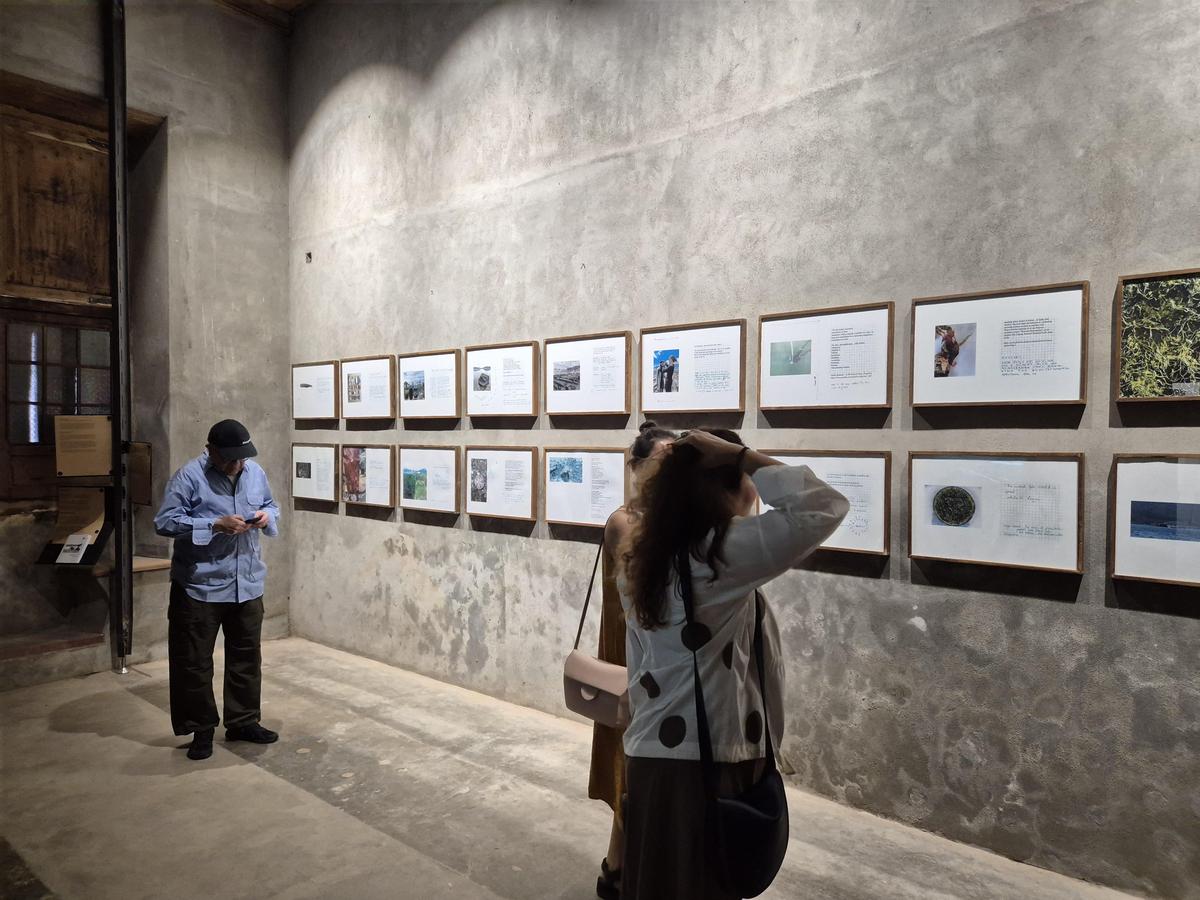
Amphibian Aesthetics is the inaugural show of Ishara House, which made its debut as a centre for contemporary art. Launched by the Ishara Art Foundation (located in Dubai), the Ishara House showcases the works of 12 artists and collectives from South Asia, West Asia and Europe. 

The show Amphibian Aesthetics

The show Amphibian Aesthetics
| Photo Credit:
Anuj Daga

Amphibian Aesthetics runs parallel to the Kochi Muziris Biennale and is held in collaboration with Aazhi Archives, a collective of artists, writers, scholars and thinkers doing collaborative research on Kerala’s maritime history and evolving artistic practices. This is an extension of its multidisciplinary project, Sea A Boiling Vessel, which used the ocean as a metaphor to trace Kerala’s history. 

Riyas Komu, artistic director of Ishara House and co-founder of Aazhi Archives

Riyas Komu, artistic director of Ishara House and co-founder of Aazhi Archives
| Photo Credit:
Special Arrangement

Amphibian Aesthetics considers multiple realities — climate and humanitarian crisis, geopolitical shifts, and the fluid nature of human existence. “A world where binaries no longer work. Where the amphibian works better,” says Riyas Komu, artistic director of Ishara House and co-founder of Aazhi Archives. “Art has to provide a space to contemplate and evolve. We are looking at multiple things here, and among them is how Kochi is emerging as an art production site. There is an art ecosystem here now and an important part of the discourse is also about how art came here and started working with the history of the space. What does art give back to the space?” asks Riyas. 

Inside one of the gallery rooms is a giant hull (of a ship), a work that treads the space between art and commerce. Shanvin Sixtous, proprietor of Vinton Engineering, an architectural metalworks firm based in Kochi, presents a mixed-media installation, using steel and multiscreen videos to explore the hull as both material and metaphor. ‘In Between’, analyses the hull that is constantly negotiating between land and water. 

‘In Between’ by Shanvin Sixtous at Ishara House

‘In Between’ by Shanvin Sixtous at Ishara House
| Photo Credit:
Biju Ibrahim

Visual artist and graphic novelist Appuppen’s satirical wit shines through in ‘The World of Amfy BN’, a series of print, online and graffiti interventions.

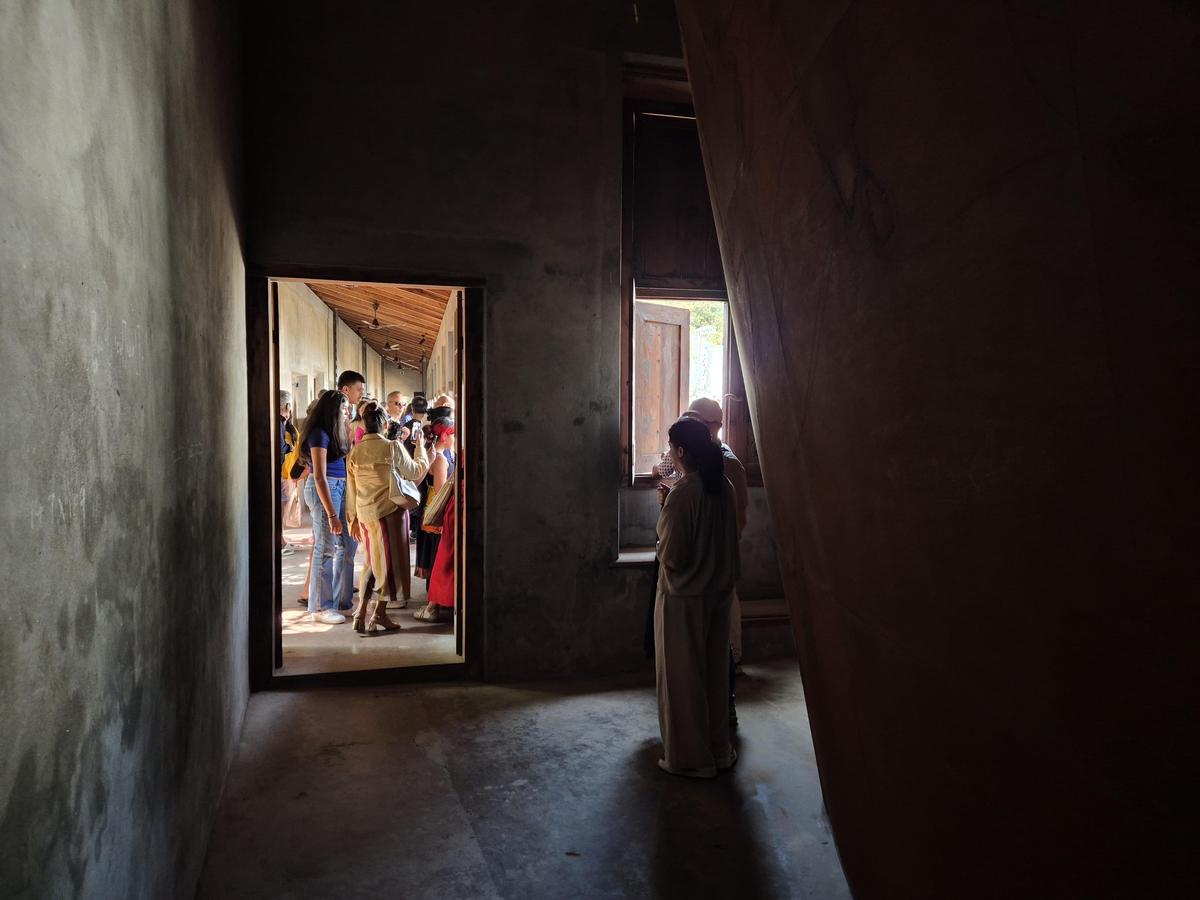
The unpainted walls of Ishara House and the minimal use of lighting, except for the open corridor that lets lavish sunlight in, add depth and drama to the works.

The doors to a few rooms are shut, intentionally, keeping them as intimate spaces for video and site-specific installations. Shilpa Gupta’s ‘When the Stone Sang to the Glass’, is one such, which invites viewers into two small darkened rooms, where found furniture pieces have been combined with drinking glasses collected from the neighbourhood, to create musical resonances. The installation came together, when Shilpa, on a site visit was reminded of Pakistani poet Faiz Ahmad Faiz’s song of resistance, ‘Hum Dekhenge’, while tapping the surfaces of these objects. 

Ishara House

Ishara House
| Photo Credit:
Anuj Daga

Since its very first edition in 2012, the Kochi Muziris Biennale has aimed to take art to the masses, break down the walls and engage with the local ecosystem. Five editions later, it is fascinating to see how the biennale season weaves itself into the fabric of the city, especially in Fort Kochi and Mattancherry, where residents, shop owners, visitors and tourists turn into artists themselves. Parallel shows and satellite events, pop ups and performances are all part of this vibrant art climate. It is an example of what art can do as a soft power and generate more interesting offshoots, says Riyas. “This place has residue of colonial histories; we are repurposing these ancient warehouses. The site provides to the art…half the work is done by the location,” he adds. Amphibian Aesthetics, in that sense, adds Riyas, “is opening conversations about ecology, migration, culture and infratructure … a very fluid state of being.”

Amphibian Aesthetics is on at Ishara House till March 31.

Aazhi Archives is organizing two more shows at Uru Art Harbour in Mattancherry and Kara in Fort Kochi.

Figure, Field and Fact

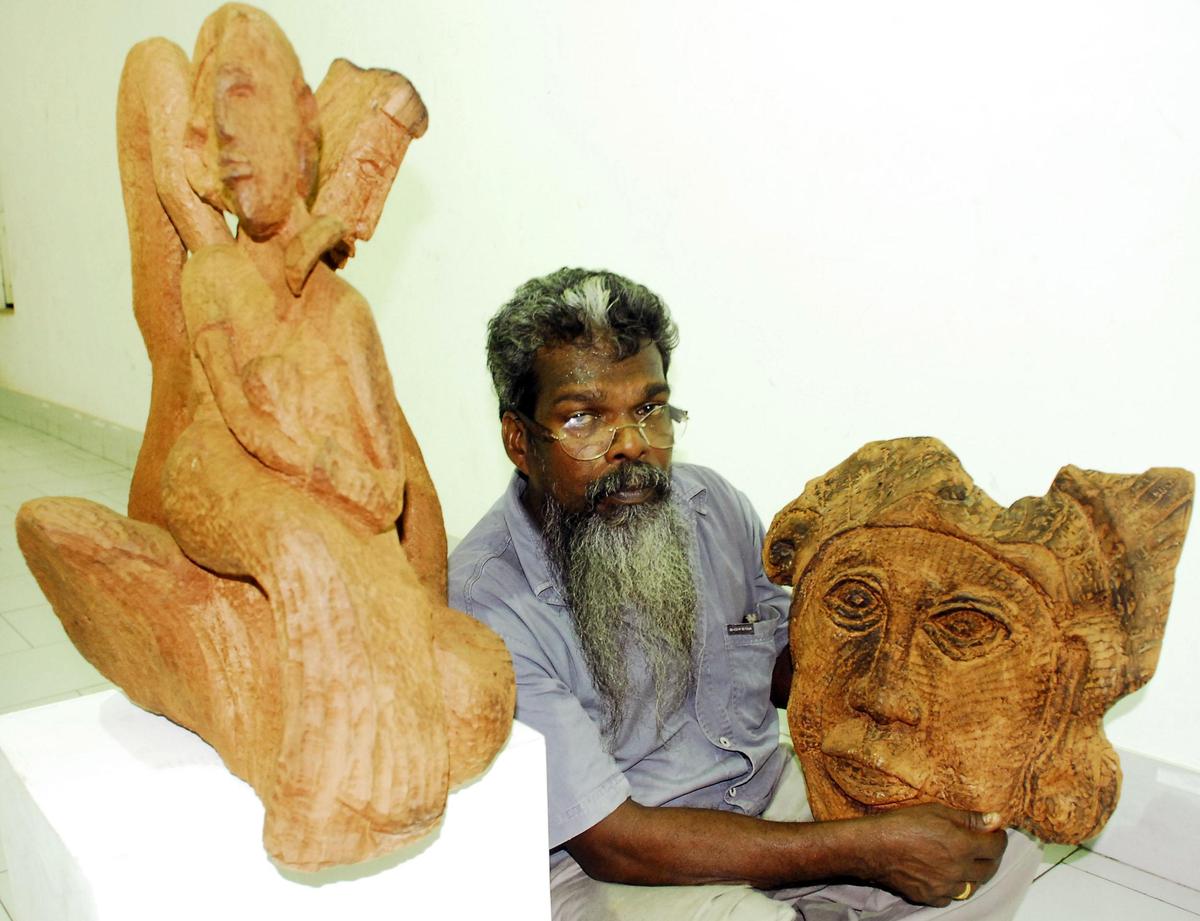
Shilpi Rajan

Shilpi Rajan
| Photo Credit:
Special Arrangement

Self-taught sculptor and artist Shilpi Rajan’s retrospective, ‘Figure, Field and Fact’, encapsulates over 40 years of his life in art. Sculptures in varying sizes, in clay, cement, wood, bamboo and laterite fill up the gallery spaces at Uru Art Harbour, in Mattancherry. Rajan, who began his journey as a mechanic in Thrissur, was driven by his instinctive flair for art. Not bound by academic constraints, Rajan’s creative oeuvre reflects his distinctive style shaped by life’s experiences. 

At Uru Art Harbour

On till March 31. 

Archeo Logical Camera

A series of photographs and samples from archeological sites from across Kerala opens a window to the prehistoric period. Mohamed A in his Archeological photography explores the cultural dynamics of the past. From the rock engravings at Edakkal and Towari to the microlithic artifacts at Anakkara and the excavations at Muziris-Pattanam, Mohamed history into a compelling visual experience. At Kara, the photographs, in varying shades of ochre and specimen take you on a journey you least expect.

At Kara, Fort Kochi. 

On till January 30.


Published – January 17, 2026 05:53 pm IST


Source link

The alter universe of a housewife


Kalpana Karunakaran’s grandmother, Pankajam, was, by her own definition, ‘a woman of no consequence’. Not allowed to complete schooling—she had just six years of formal education before being pulled out—and confined to domestic duties within a marriage marked by little love, she nevertheless cultivated a ‘kingdom of the mind’, an alter universe that she built through extensive reading, friendships that defied boundaries and an ability to see the world through the eyes of others, even as she remained conscious that, consequential or not, she was still a subject of the history that was unfolding around her.

Her life and her story formed the subject of discussion between Ms. Karunakaran, who teaches in the Humanities and Social Sciences Department at IIT Madras, and Sreemathi Ramnath, a polyglot consultant and writer, at The Hindu Lit for Life on Saturday (January 17, 2026). Ms. Karunakaran’s book, A Woman of No Consequence: Memory, Letters and Resistance in Madras, was published in 2025.

How much to reveal was one issue, Ms. Karunakaran says, she grappled with. Pankajam, she says, had written her life story in bits and pieces from 1939 to 1995 in the “school essay notebooks of her children and grandchildren”, but she had also turned to autofiction—fictionalised autobiographies—using three characters, Kamala, Lakshmi and Meena, to portray the unsavoury, unsayable parts of conjugal life. These raw, intense stories were perhaps a way of distancing herself, Ms. Karunakaran reflects, and wonders, “Do I really reveal the skeletons in the family closet?” How much should be revealed? And then, she says, she realised that through the autofiction, Pankajam had herself said everything and then some. “If she dared, how could I not?” Ms. Karunakaran says.

On the subject of marriage and the ways men treated the women in their lives and the many ways of looking at this, including through the lens of gender and community, Ms. Karunkaran says that nobody is a villain in the story. The same men who wanted to crush their wives under their feet, she points out, also wanted their daughters to soar. Pankajam, however, wanted her daughter Mythili Sivaraman— a well-known social activist, trade unionist and Communist leader— to find a man very different from the one she had landed, Ms. Karunakaran says.

Pankajam’s story plays out in the backdrop of India’s freedom struggle, and though she referred to herself as a ‘mere housewife’, her writings, Ms. Karunakaran says, were self-reflexive; she witnessed the anti-colonial freedom movement, she witnessed changes in the city of Madras. Ms. Karunakaran says she herself was conscious to pull all of these elements into her story and this is seen in her writing of the book: the idealism and optimism of the Nehru (India’s first Prime Minister Jawaharlal Nehru) years, for instance, seems to evaporate in the 1960s, amid many movements that defined the country: workers’, peasants’ and women’s. Pankajam’s household was not untouched by these events, as witnessed by Mythili’s ‘explosion’.

Ms. Karunakaran stressed that she could not claim that this was the entire truth about her grandmother — she’d relied on different sources alongside Pankajam’s writing, including her memories as well as letters Pankajam had written to Mythili — she says she had attempted to provide an interpretation but gave an open invitation to readers to agree or disagree. 

There are many such stories out there to be written, she says — stories of ‘housewives only’ who were much more. “That resurrection, recovery of their voices and agency is a project that is still waiting to happen in many cases,” she says, adding that if readers felt inspired to write about one of their female ancestors after reading her book, it would be well worth it.  

The Hindu Lit For Life is presented by The all-new Kia Seltos. In association with: Christ University and NITTE, Associate Partners: Orchids- The International School, Hindustan Group of Institutions, State Bank of India, IndianOil, Indian Overseas Bank, New India Assurance, Akshayakalpa, United India Insurance, ICFAI Group, Chennai Port Authority and Kamarajar Port Limited, Vajiram & Sons, Life Insurance Corporation of India, Mahindra University, Realty Partner: Casagrand, Education Partner: SSVM Institutions, State Partner: Government of Sikkim & Uttarakhand Government

Official Timekeeping Partner: Citizen, Regional Partner: DBS Bank India Ltd, Tourism Partner: Bihar Tourism, Bookstore Partner: Crossword and Water Partner: Repute Radio partner: Big FM

Published – January 17, 2026 05:18 pm IST


Source link