Life & Style

Why are school buses yellow


Back to school

Back to school
| Photo Credit: Si-Gal

A school bus approaches, and even from far away, its bright yellow coat catches your eye, gleaming in the sunlight. There’s a reason you rarely see school buses in red, blue, or green.

And it’s all yellow

In the VIBGYOR spectrum, yellow falls in the mid-to-long wavelength range (approximately 570-590 nm), which makes it one of the easiest colours for the human eye to detect. Because it scatters less than blue or violet light, which are easily scattered by moisture droplets and dust (the reason the sky appears blue), yellow remains clear and bright even in fog, rain, or low light.

But it’s not just the wavelength that helps. Yellow also stands out strongly in our lateral peripheral vision, the part of our sight that notices things from the corners of our eyes. This means drivers can spot a yellow bus more quickly than most other colours. And when bold black lettering is added, the high contrast makes names and signs easy to read from far away, enhancing safety on the road.

The day safety got colour

The story goes back to 1939, when education expert Dr. Frank W. Cyr, now known as the “Father of the Yellow School Bus,” organised a national conference at Columbia University in the United States to standardize school transportation (like size, capacity, and color) across the US.

Experts studied different colours and decided that yellow was the easiest to spot on the road. They even created a specific shade for school buses, called “National School Bus Glossy Yellow.” The colour soon became the official standard, and its popularity spread around the world.

Fun facts
The “Chrome” Confusion

The specific shade is officially registered as Federal Standard No. 595a, Color 13432. It used to be commonly known as “School Bus Chrome Yellow” because it historically contained the pigment lead chromate. Due to health concerns about lead, manufacturers shifted to safer, lead-free pigments, but the color standard remains the same highly visible shade.

Red vs. Yellow

While it’s true that red light has the longest visible wavelength (around 620 to 750 nm) and is used for danger signs and stop lights because it is scattered least by air, yellow ( around 575–585 nm) wins the battle in your side vision. The lateral peripheral vision of yellow is approximately 1.24 times greater than red, meaning your brain registers that flash of yellow much faster when you are not looking directly at it. This makes it superior for an object that is constantly moving and entering drivers’ fields of view.


Source link

Why do some countries drive on the left and others on the right?


Have you ever sat in a car and assumed the driver should be sitting on the right side? In India, that feels normal. But travel to countries like the United States, France, or Japan, and you’ll notice something surprising, either the driving seat or the side of the road changes!

So why does this happen?

Believe it or not, the answer goes back hundreds of years back, long before cars even existed. It has to do with swords, horses, and later colonial rule and global influence.

Medieval habits that shaped traffic

This behaviour goes back to the time when there were horses and people walking. Most people were right handed, especially knights and soldiers. They preferred to stay on the left side of the road so their sword arm faced anyone coming from the opposite direction. This made it easier to defend themselves and also kept their right hand free to greet someone or shake hands.

Riders also mounted and dismounted their horses from the left, as horses were trained that way. Staying on the left made this safer and more convenient.

Over time, this habit turned into a common practice, then an unwritten rule, and later an official law in many places. This early tradition is a major reason why some countries still drive on the left today.

The shift: How right side came into practice

Before the French Revolution in the late 1700s, nobles in France travelled on the left side of the road. After the revolution, ordinary people wanted to distance themselves from anything associated with the nobility, so they gradually began walking and riding on the right side. Later, Napoleon made right-side travel a law in the territories he controlled. His influence spread across the regions he conquered, and countries like Spain, Italy, Belgium, Poland, and the Netherlands adopted the right-side rule. Meanwhile, places not conquered by Napoleon (like Britain) continued driving on the left.

America’s wagon problem

In the USA, large freight wagons were pulled by multiple horses, and the drivers sat on the left rear horse rather than inside the carriage. To better see oncoming traffic and avoid collisions, they kept to the right side of the road. Industrialisation strengthened this habit—mass production of cars placed the steering wheel on the left side, making right-side driving more practical. This design choice helped spread right-side driving worldwide.

Why India stayed left

India, being a major British colony, adopted the left-side driving rule. From the early days, railways, road rules, and imported vehicles followed British standards. This system became deeply established, and switching sides later would have been expensive and dangerous.

Because of this, many former British colonies, such as Australia, New Zealand, and South Africa, continued driving on the left as well.

Fun Facts

About 65% of the world drives on the right, while 35% drive on the left.

Countries that follow left-side driving include India, the UK, Australia, Japan, New Zealand, much of Southeast Asia, and parts of Southern Africa.

Japan drives on the left not because of British influence, but due to old samurai traditions — samurai also preferred keeping their sword arm toward oncoming people.

Only one country pulled off a complete side-switch smoothly: Sweden in 1967, on “H-Day,” when the nation changed from left-side to right-side driving in a single morning!


Source link

Salt, Sun, Season: Exploring the Rann of Kutch


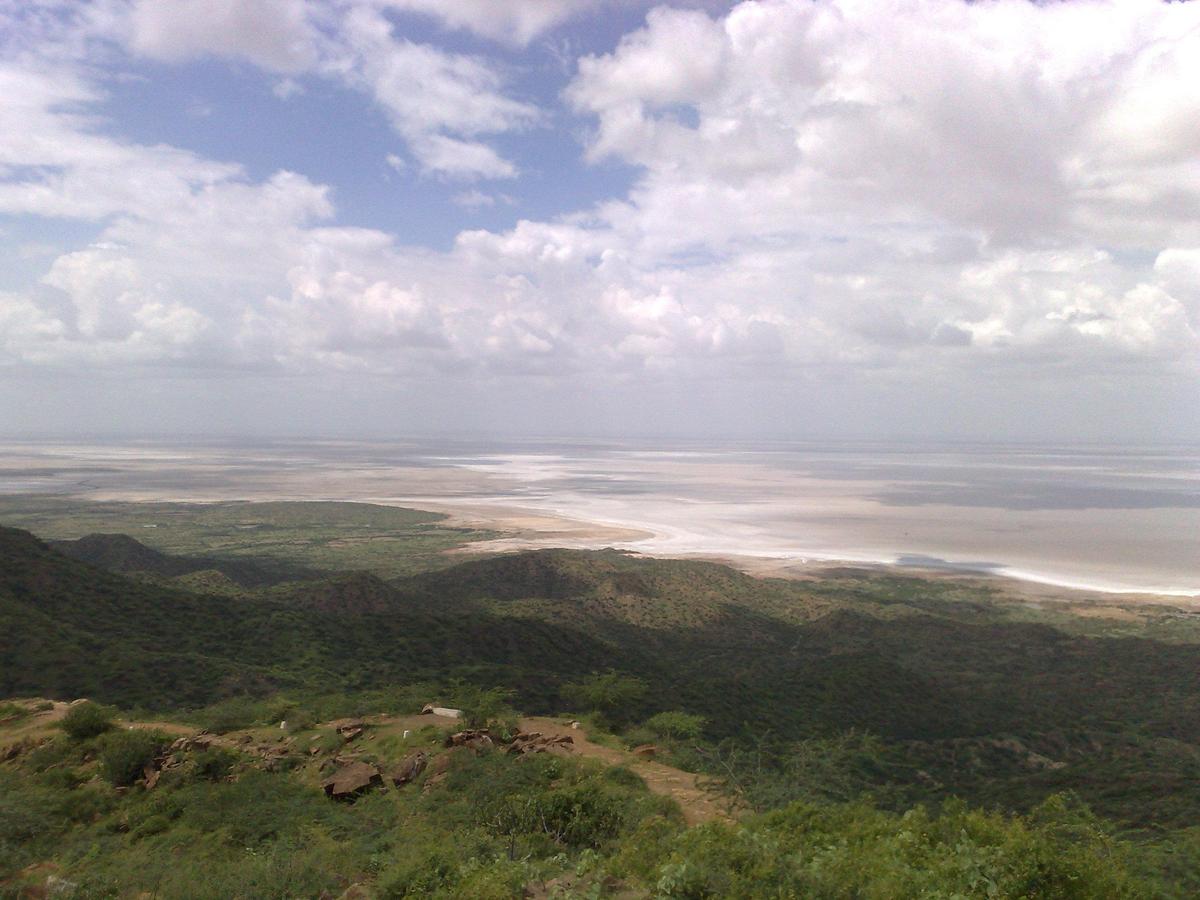
The Rann of Kutch is a salt marsh in the Thar desert, bordering Pakistan. Located in the Kutch district of Gujarat, and is 7,500 km2 , making it one of the largest salt marshes in the world. With a size that big, it is divided into two sub areas: The Great Rann and the Little Rann.

A salty formation

Nature has its own special way of creating things, no matter how strange they may seem. And that’s just how this marsh was formed.

Earlier, it was a shallow part of the Arabian Sea, which eventually became a salt-filled basin due to tectonic upliftment that eventually disconnected it from the Sea.

Every rainy season, the water from the sea and rivers (like the Luni river, Thar desert’s largest river) would fill up the basin. That’s also where the salt comes from. Intense heat in the desert would further evaporate the water, leaving salty deposits behind. This repeated filling and drying up of the basin over millions of years is what led to the formation of Rann of Kutch.

The many colours of the Rann

With each passing season, the Rann of Kutch changes drastically. Monsoons from July to October bring about rains that turn it into a shallow sea. Dry weather, like in winters (November – February), evaporates the water leaving behind sparkling salt crusts perfect for festivals like Rann Utsav. Summers from March to June are the same, only difference between the scorching heat.

The area also sees extreme weather conditions, getting extremely cold as snow during winters. Summers see extreme heat with temperatures soaring over 40℃. If you would like to visit, we would recommend the winters, as in spite of the biting cold, the view is rather beautiful and the salt underneath your shoes will feel crisp and fresh.

Life in salt

In spite of the harsh climates and less than favourable vegetation, the Rann supports diverse life and gets visits from migratory birds. Flamingoes, pelicans, and cranes are common visitors to the wetlands of the Kutch during winters.

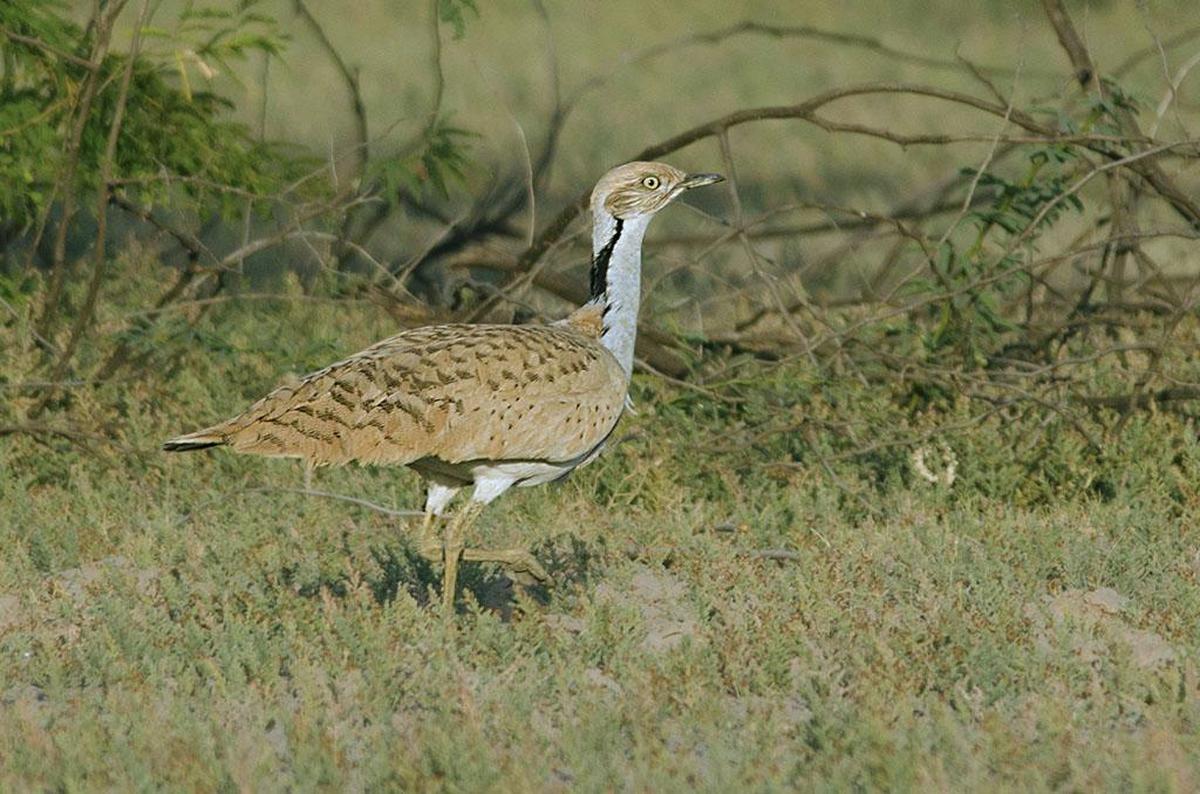
As for the native fauna, birds like the cream coloured courser, MacQueen’s bustard and various species of pelicans are a part of the ecosystem. Animals include desert foxes, wolves, and wild asses — which are particularly seen in the Little Rann of Kutch.

The Rann of Kutch Wildlife Sanctuary is the largest Ramsar site (wetlands preserved under the Ramsar Convention of 1971) in Bandi district, Sindh, Pakistan. Here, bird species such as common teal, shell duck, mallard, pochard, flamingo and pelican are found in the habitat. Striped hyenas are also part of this unique biodiversity. The flora mostly sees dry, thorny shrubs, considering it is a desert area.

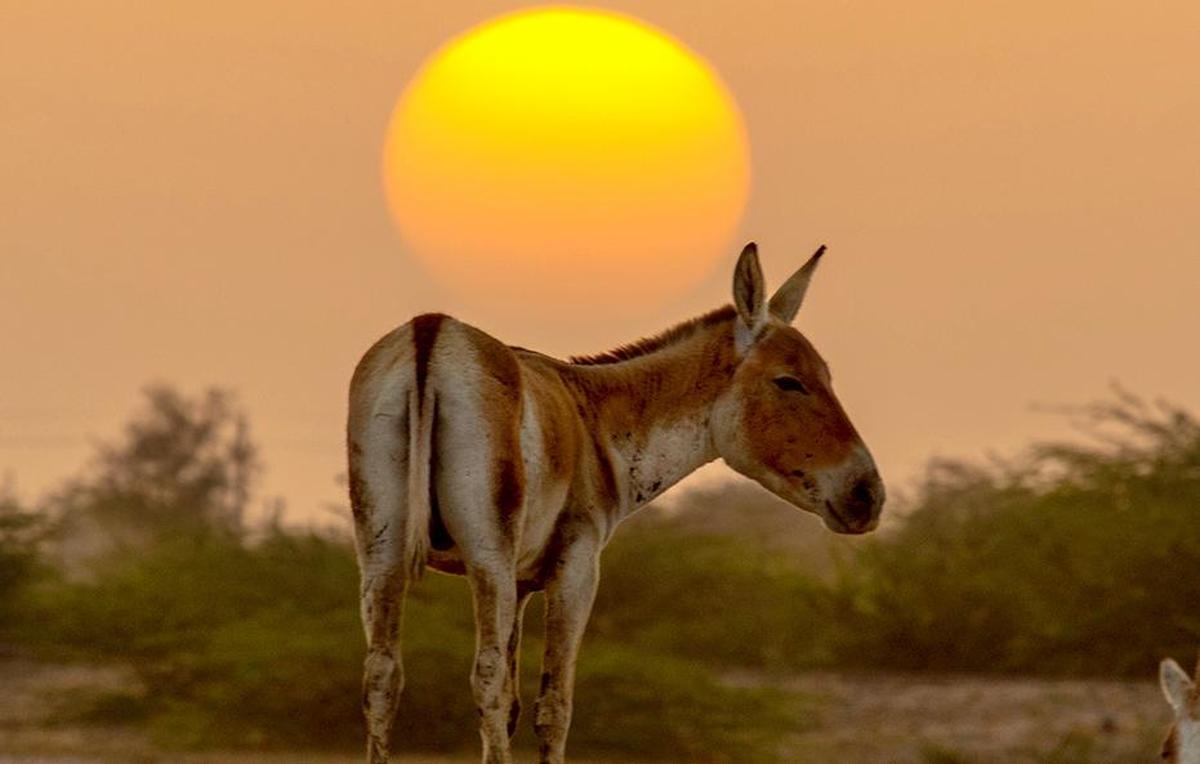
Another such sanctuary is the Indian Wild Ass Sanctuary, which is situated in the Little Rann of Kutch. It was established under the Wildlife Protection Act of 1972, as one of the last bastions for the endangered Indian wild ass, also called the khur or the godhkhur in the Gujarati language.

MacQueen’s bustard in the Greater Rann of Kutch.

MacQueen’s bustard in the Greater Rann of Kutch.
| Photo Credit:
WIKIMEDIA COMMONS

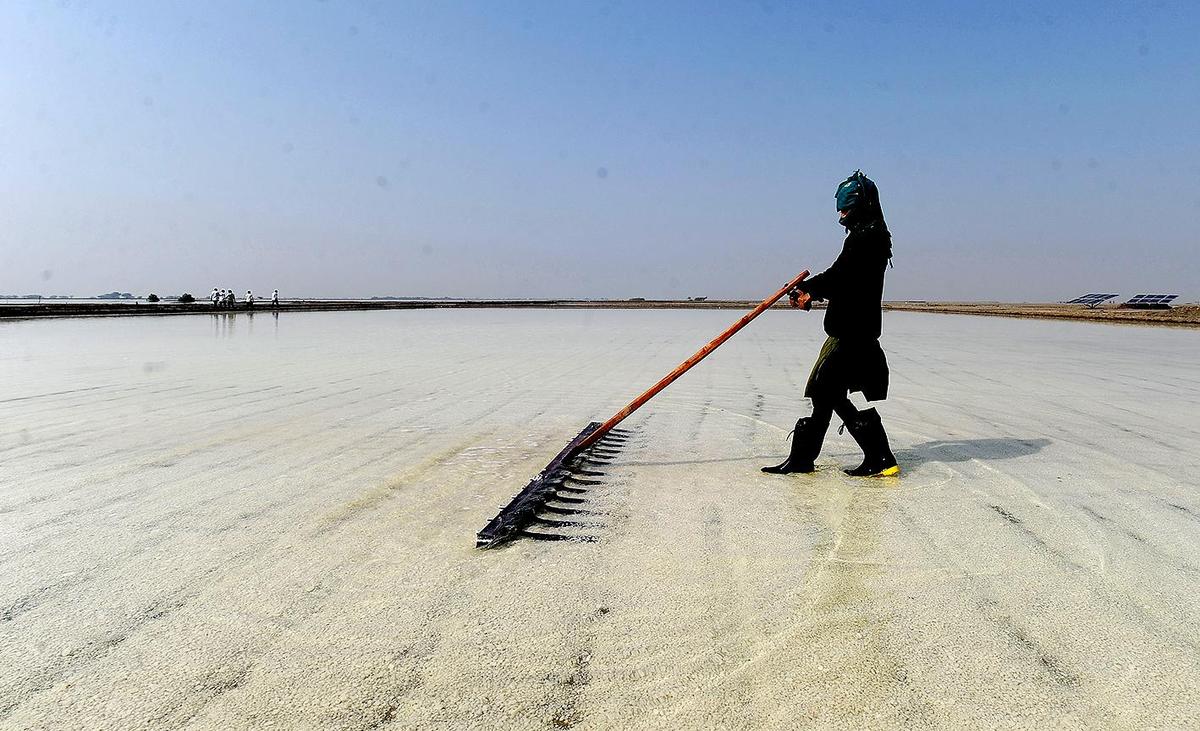
And it’s not just plants and animals, people are able to make a life here too. Communities like the Agariyas who are salt farmers by profession make a living by the Rann. The community also sees nomadic pastoral groups like Maldharis, and various other ethnic groups such as Rabaris, Meghwals, and Harijans. People make a livelihood here by farming salt, involving in pastoralism, and making handicrafts.

Indian Wild Ass enjoying sunset time with calf and family at Little Rann of Kutch.

Indian Wild Ass enjoying sunset time with calf and family at Little Rann of Kutch.
| Photo Credit:
Getty Images/iStockphoto

The white gold of Gujarat

With all the salt in the Rann, it’s no surprise when you learn that Gujarat produces the majority of the country’s salt, measuring up to about 75% to 80% of the total output, with figures even reaching 87%! The salt is produced under intense heat, and hardcore manual labour.

Salt was so precious here, that at one point, the British made attempts to control or ban local salt production.

A Salt Farmer busy in her Salt farm at Little Rann of Kutch.

A Salt Farmer busy in her Salt farm at Little Rann of Kutch.
| Photo Credit:
VIJAY SONEJI/THE HINDU

Quake zone

Don’t let the beauty of the salt desert faze you. As stunning as it is, it is a seismically active zone. In other words, it is very prone to earthquakes. These earthquakes also contribute to the already drastically changing landscape. The 1819 earthquake is a tragic example of how dangerous a zone it is. The magnitude was said to have been between 7.7 and 8.2 on the Richter scale, killed over 1,500 people, and even triggered a tsunami that flooded the area.

The infamous 2001 Bhuj earthquake also led to soil liquefaction (weakening of the soil in response to an applied stress) in the Rann.

‘Rann’-ing trade

Little do you know, the Rann also has a fascinating history in trade, dating back to the Indus Valley Civilisation. Its lagoons functioned like a maritime zone, helping connect inland settlements to overseas trade in the Arabian Sea. It is also said that there were ports connecting to other districts like Dholavira and Lothal, facilitating trade both inland and overseas. Maritime trade here began to flourish even more as trade expanded in the western Indian Ocean.

It is still a popular trade route today, with modern infrastructure making it an even stronger hotspot.

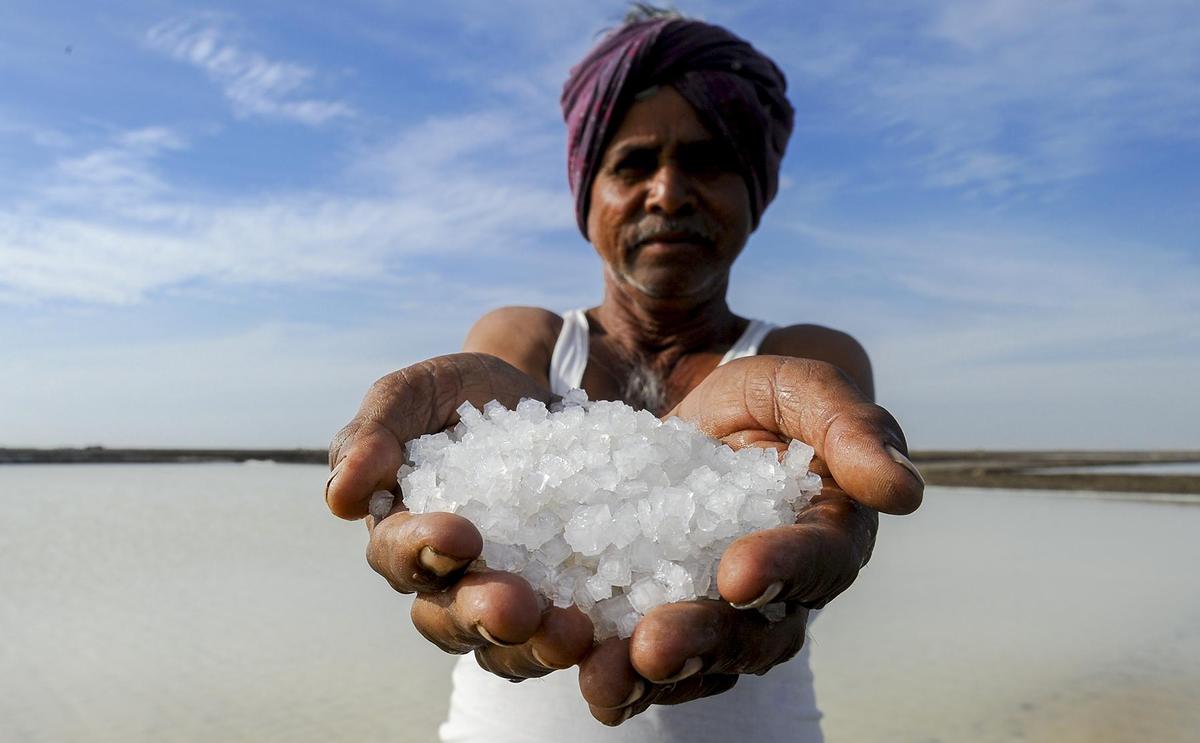
A traditional salt pan farmer showing crystallised salt. People make a living here on salt farming.

A traditional salt pan farmer showing crystallised salt. People make a living here on salt farming.
| Photo Credit:
THE HINDU

Environmental concerns

But amid all this saline glory, lie some valid environmental concerns including habitat loss, industrial and agricultural pollution, and climate change. Overextraction of salt can often lead to damaging the quality of land as it increases its salt content. Expansion of salt pans affect habitats severely, causing bird collisions and impacting movement patterns of mammals.

White salt desert at Rann of Kutch

White salt desert at Rann of Kutch
| Photo Credit:
WIKIMEDIA COMMONS

All in all, the Rann is not just a white desert, it is a living landscape shaped by water, heat, and time. It is a marshland that has history and science written in it. If you ever visit Kutch in Gujarat and happen to see the Rann, you’ll know just how beautiful and unique nature’s balance is.

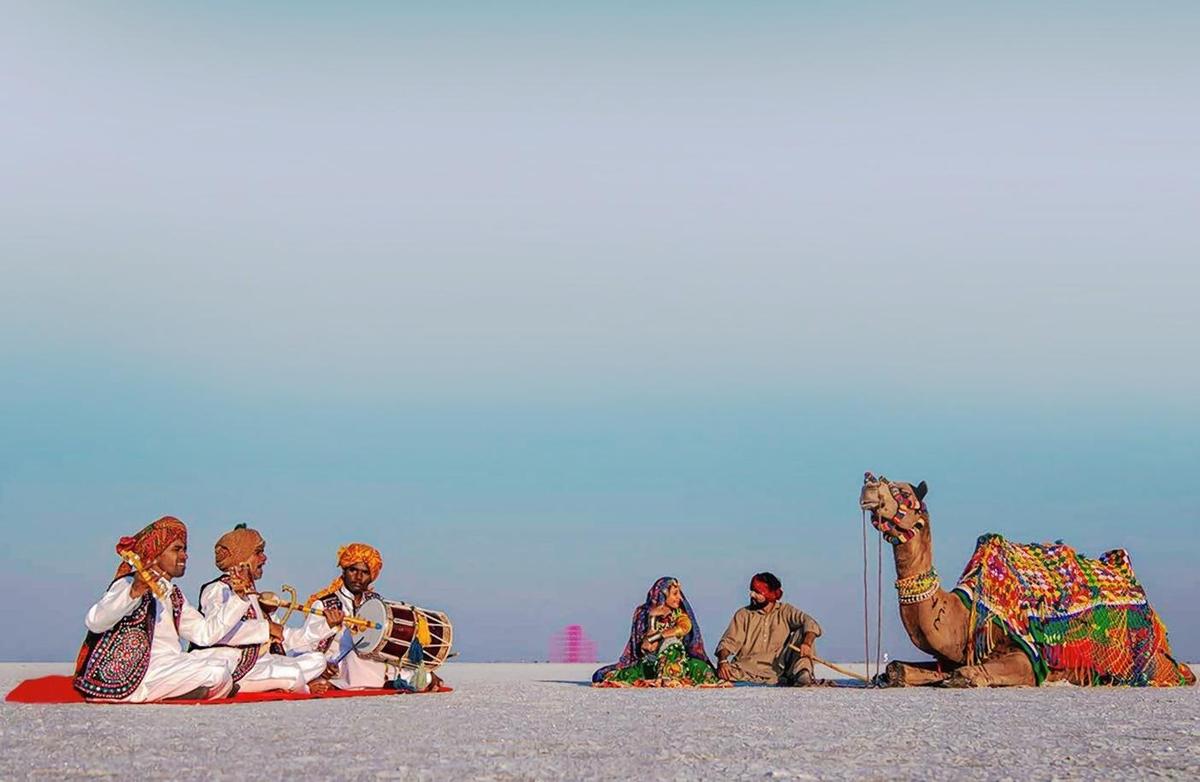
A scene from Rann Utsav.

A scene from Rann Utsav.
| Photo Credit:
SPECIAL ARRANGEMENT

RANN UTSAV

A yearly event called the Rann Utsav takes place at the Rann. This year, it is happening from 23rd November 2025 to 20th February 2026. The event brings together folk musicians, dancers, and artisans for a three month-long cultural festival, showcasing the state’s rich heritage. You can also shop for handicrafts and clothes featuring mirror work, Banhani sarees, Rogan art, and leather footwear. And if you’re feeling adventurous, there are opportunities for biking and camel rides.


Source link

Kantha Hubba to bring myriad melodies to the city


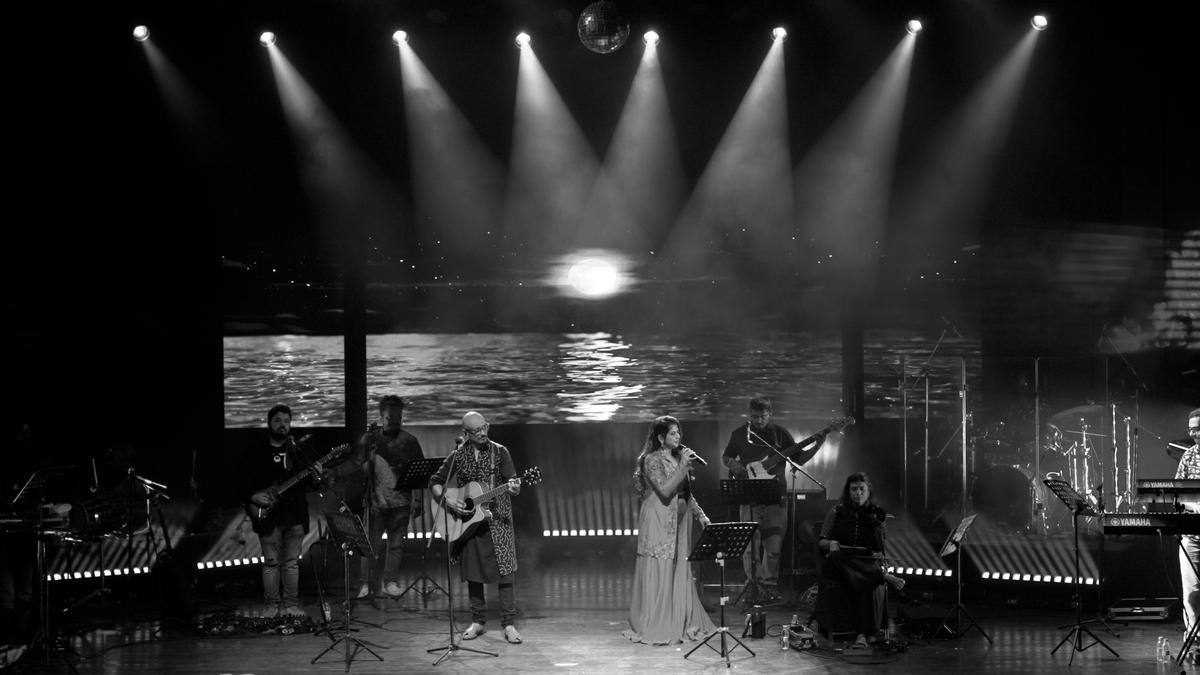
Shantanu Moitra and Kaushiki Charaborty

Shantanu Moitra and Kaushiki Charaborty
| Photo Credit: Special Arrangement

“Kantha is the traditional art of patchwork quilting from Bengal; we choose it for this festival as it shows how different things can come together in unexpected, new ways,” says Abhijit Nath, curator of Kantha Hubba, the musical sub-festival of the BLR Hubba.

Abhijit says their vision is to make Kantha Hubba a premier world music festival with a focus on Asia. “The subtitle for Kantha Hubba is Sounds of Asia, and it is reflected in our lineup,” he adds.

Now in its second edition, Kantha Hubba will see artistes such as Tajdar Junaid, Sudan, The Down Troddence and others perform alongside the likes of Marty Friedman, long-time guitarist for Megadeth, Roysten Abel’s The Manganiyar Seduction and Pankh, a musical about life’s journey featuring Shantanu Moitra and Kaushiki Charaborty.

Marty, who relocated to Tokyo over 20 years ago, comes to Kantha with Japanese artistes he has been working with over there, says Abhijit, adding that is the Asian connect bringing him to the festival.

Marty Friedman

Marty Friedman
| Photo Credit:
Special Arrangement

Much like that patchwork quilt, the lineup this year is as eclectic as it is melodious. Talking about the curation of musical acts, Abhijit says, “Our priority was to get some familiar faces, so audiences would know who they were coming for, as well as those acts they would find unexpected and interesting.”

He says two interesting acts to look out for are Echoes of Shakti, a fusion band formed as tribute to the original Shakti established in 1973. “Four youngsters — one from New York and three from India, have been endorsed by original members of the troupe who believe the torch must be carried forward following the passing of Zakir Hussain.”

The other ensemble to catch is the Freak Audio Lab comprising artistes from Sweden, Israel, the United States and India, which includes mridangist BC Manjunath and Mattias Ia Eklundh. The Hubba will be Freak Audio Lab’s world premiere following the release of their album Resist the Erosion four months ago.

“Moving forward we hope to commission other premieres as well,” says Abhijit, adding with acts such as Mother Jane, Indian Ocean, and Swarathma, as well as bands from Norway and Thailand, “the festival is full of sounds both familiar and new.”

“With free entry to the festival, one needn’t worry about catching acts they haven’t heard of before as there is no money to lose, just an experience to enjoy.”

Kantha Hubba will take place from January 16 to 25 at Freedom Park. Schedule of events available on blrhubba.in


Source link

BTS announces schedule for world tour ahead of album release


 Korean pop band BTS appears at the 2019 Variety's Hitmakers Brunch in West Hollywood, Calif., on Dec. 7, 2019. (Photo by Richard Shotwell/Invision/AP, File)

Korean pop band BTS appears at the 2019 Variety’s Hitmakers Brunch in West Hollywood, Calif., on Dec. 7, 2019. (Photo by Richard Shotwell/Invision/AP, File)
| Photo Credit: RICHARD SHOTWELL

Global sensation K-pop group BTS, comprising RM, Jin, SUGA, J-hope, Jimin, V and Jungkook, will embark on an extensive world tour in April this year following the release of their album, and will perform in several cities including Tokyo, Busan, Las Vegas, London, Toronto, Chicago, Sydney, Bangkok and Kuala Lumpur.

India, which was hotly anticipated to be a pitstop for their tour, does not feature on their current tour schedule, which has concert dates and venues scheduled till March 2027. The group however is expected to announce more cities that they will be performing at next year, sometime in the future.

Over the last three years, the members were on a hiatus as a group, as they completed their mandatory military enlistment in South Korea and worked on solo projects including albums and concerts. In July 2025, on a Weverse live broadcast, the group made its first public appearance since 2022, stating that they would reunite and work on music together. 

Fans have since then eagerly awaited news of their music reunion. Earlier this month, BTS announced their comeback with their fifth full length album, set to release on March 20 and an extensive world tour in support of this album. 

The group has worked on their new album, which has 14 tracks, through the second half of 2025.

A statement from HYBE, the entertainment company that manages BTS says the album is driven by each member’s honest introspection, and they collectively shaped its direction by weaving individual perspectives into the music.

As five-time GRAMMY nominees, BTS has seen a meteoric rise in popularity in the last decade and is considered among the most impactful pop music icons, breaking several world records and staying on top of music charts globally. 

For members of the group’s vast fanbase (referred to as ARMY) who have memberships on the global fan platform Weverse, BTS sent handwritten letters earlier this month expressing their gratitude and sharing the news of their comeback. 

India had its first official BTS-related event from December through January this year with GOLDEN: The Moments, an immersive exhibition exploring Jungkook’s artistry and debut solo album, Golden. The exhibition came close on the heels of HYBE setting up an office in Mumbai, which had further added to aniticipation of the country possibly playing host to the group for their world tour.


Source link

Taking on the Dubai Run 2025: 5K finish


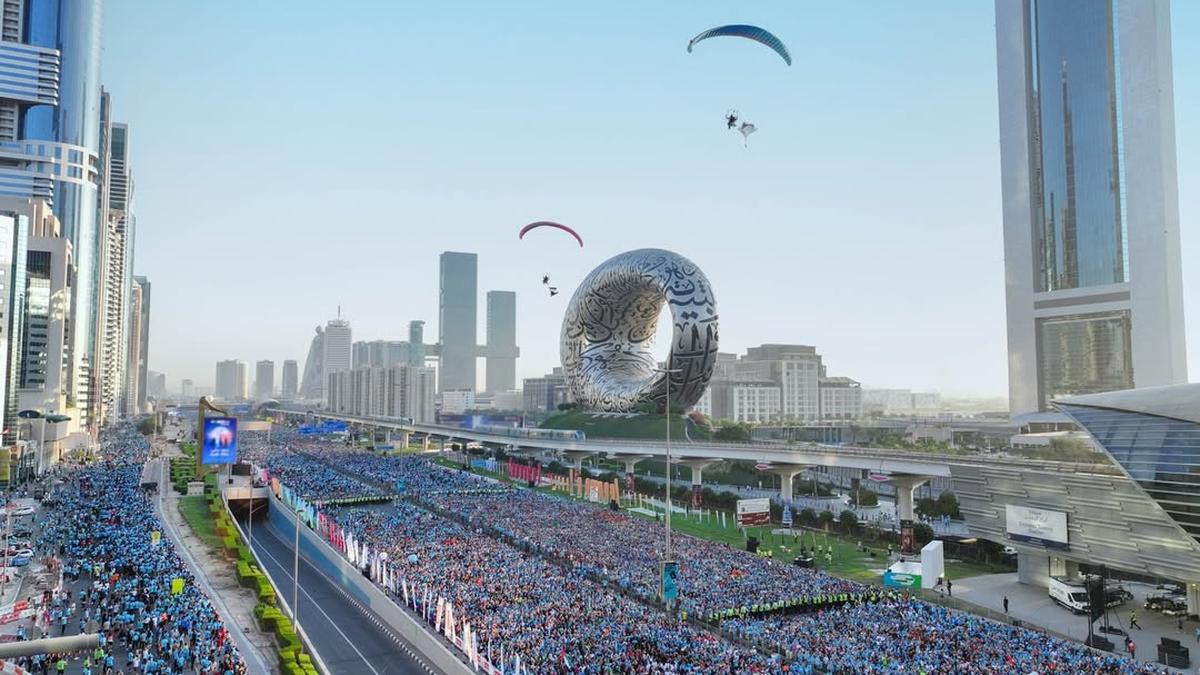
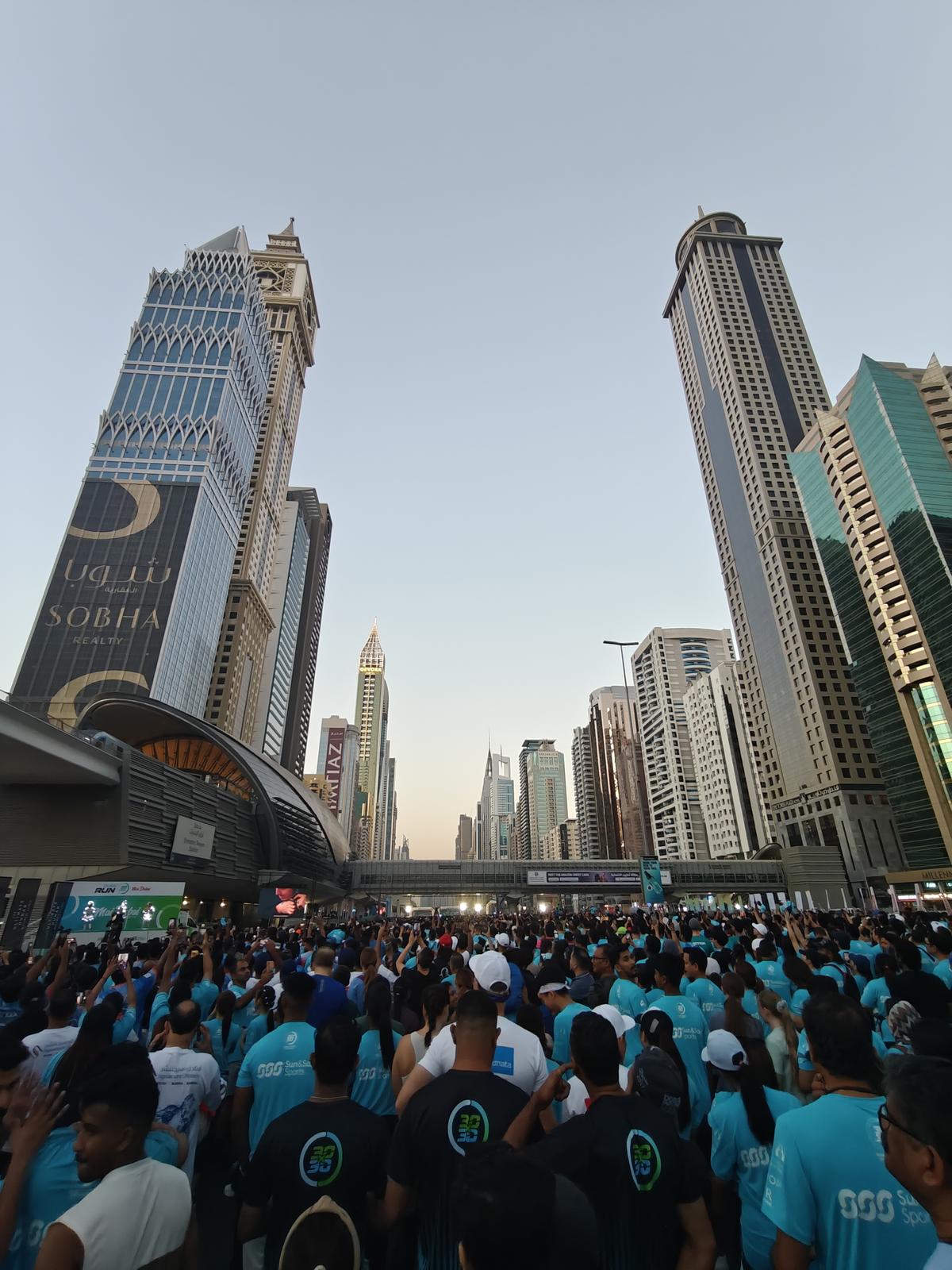
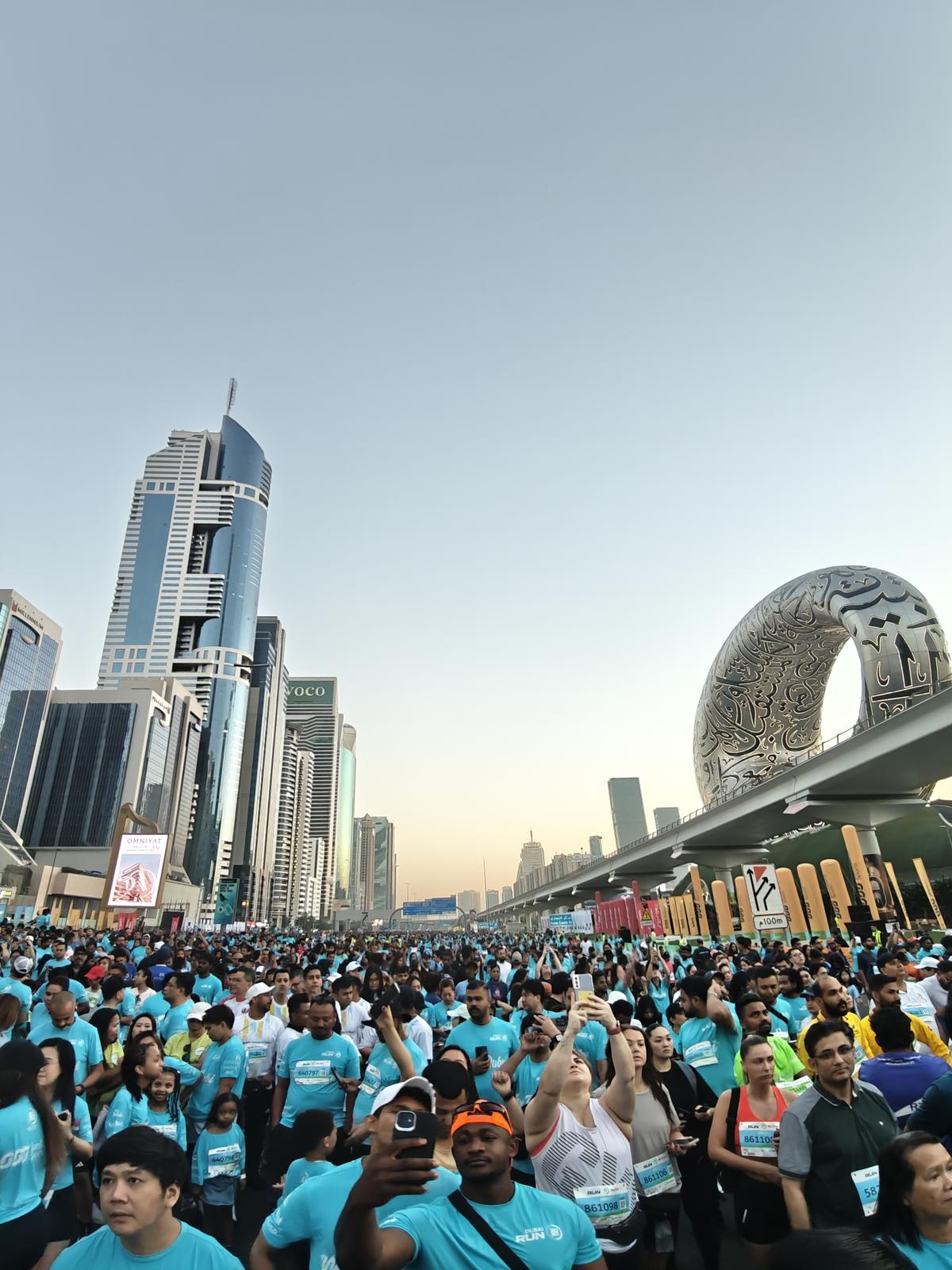
Runners on Sheikh Zayed Road at the Dubai Fitness Challenge’s flagship event.

Runners on Sheikh Zayed Road at the Dubai Fitness Challenge’s flagship event.
| Photo Credit: SPECIAL ARRANGEMENT

Sitting down to write about finishing my first 5K feels as exciting as lacing up my running shoes for the Dubai Run 2025. The journalist in me wondered how so many of us had descended upon Sheikh Zayed Road for the world’s largest free community run.

There were 3,07,000 of us (yes, you read that right!).

Families, fitness enthusiasts, and runners of all ages and abilities turned the Dubai Fitness Challenge’s flagship event into a spectacle on a chilly Sunday morning in November last year. A parade of police supercars led the way for the 5K (through Downtown Dubai before finishing near Dubai Mall) and 10K (passing the Museum of the Future, Dubai Water Canal, and Burj Khalifa before finishing at Dubai International Financial Centre Gate Building) runs.

The aerial paramotors doing the rounds in perfect synchrony had the crowd point their mobile phones towards the sky to capture a picture or two.

The DJ’s groovy beats and celebrity MCs Kris Fade and Katie Overy kept spirits high as we arrived at the starting line.

Just as doubt crept in whether my two-week training regime was going to be enough, a reassuring voice echoed from a nearby speaker: “A big round of applause… pat yourself on the back for coming out for the run this morning.”

After leaving my hotel at 6am and ambling towards the starting line for around an hour, it was finally time to walk the talk and begin running. A metro train — brimming with more runners, most of them in their sponsored blue jerseys, waiting to join the fun — zoomed past as I started the run near the Museum of the Future.

The run had 3,07,000 people participating

The run had 3,07,000 people participating
| Photo Credit:
Sankar Narayanan E H

Countless metro trains passed by me the same way and I can safely say that my steady running pace didn’t alarm the speed cameras at Sheikh Zayed Road one bit.

I should have also thought twice before choosing to record a running commentary on my phone. For I could hardly string two sentences together with all the gasping and sweating. I’m quite proud of the Instagram reel I managed to edit out of that raw footage though.

I had made up my mind to alternate between “excuse me” and “on your left” for every overtake I managed (yes, I was attempting to emulate Steve Rogers, aka Captain America, running past Sam Wilson).

It definitely helped me — and many others, I presume — that there was no dearth of encouragement along the way, as volunteers, fellow runners, live performers (in the form of marching bands, stilt walkers and circus acts) cheered one and all.

The DJ’s groovy beats and celebrity MCs Kris Fade and Katie Overy  added to the experience

The DJ’s groovy beats and celebrity MCs Kris Fade and Katie Overy added to the experience
| Photo Credit:
Sankar Narayanan E H

The dopamine rush trounced the exhaustion of roaming around Dubai for the past three days; my tired feet found new energy for the final leg as I sprinted the last 100m to finish the race on a mental and physical high.

Hugs were exchanged, pictures were clicked, and happiness was the overwhelming theme as I took a moment to soak in my small yet proud achievement. Just like how I didn’t write this piece in one sitting, I took a couple of breathers while completing my first 5K in around 40 minutes.

Maybe I wouldn’t take as many water breaks and selfie pitstops on my first 10K. That’s for another day!

The writer was in Dubai at the invitation of the Dubai Department of Economy and Tourism.


Source link

Hyderabad designer Shravan Kummar commemorates 25 years of his design journey with Margazhi


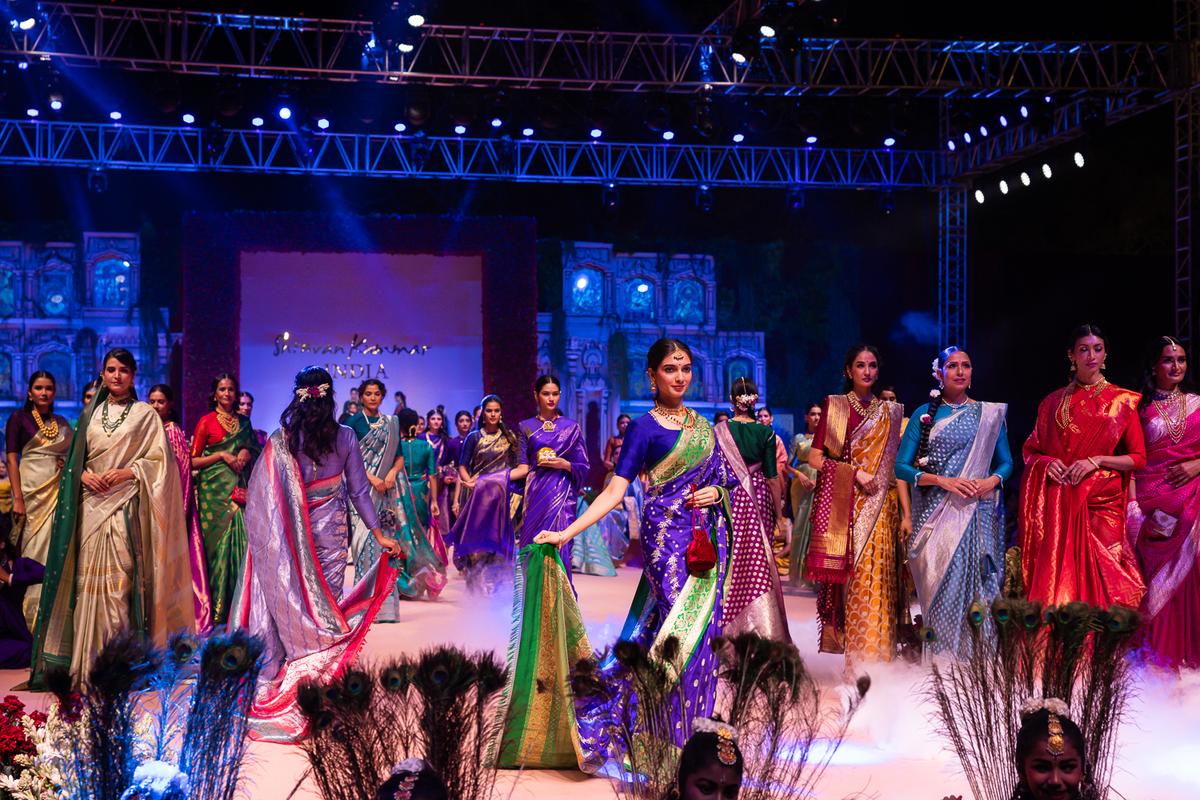
Margazhi celebrated Shravan Kummar’s journey as a designer

Margazhi celebrated Shravan Kummar’s journey as a designer
| Photo Credit: Special Arrangement

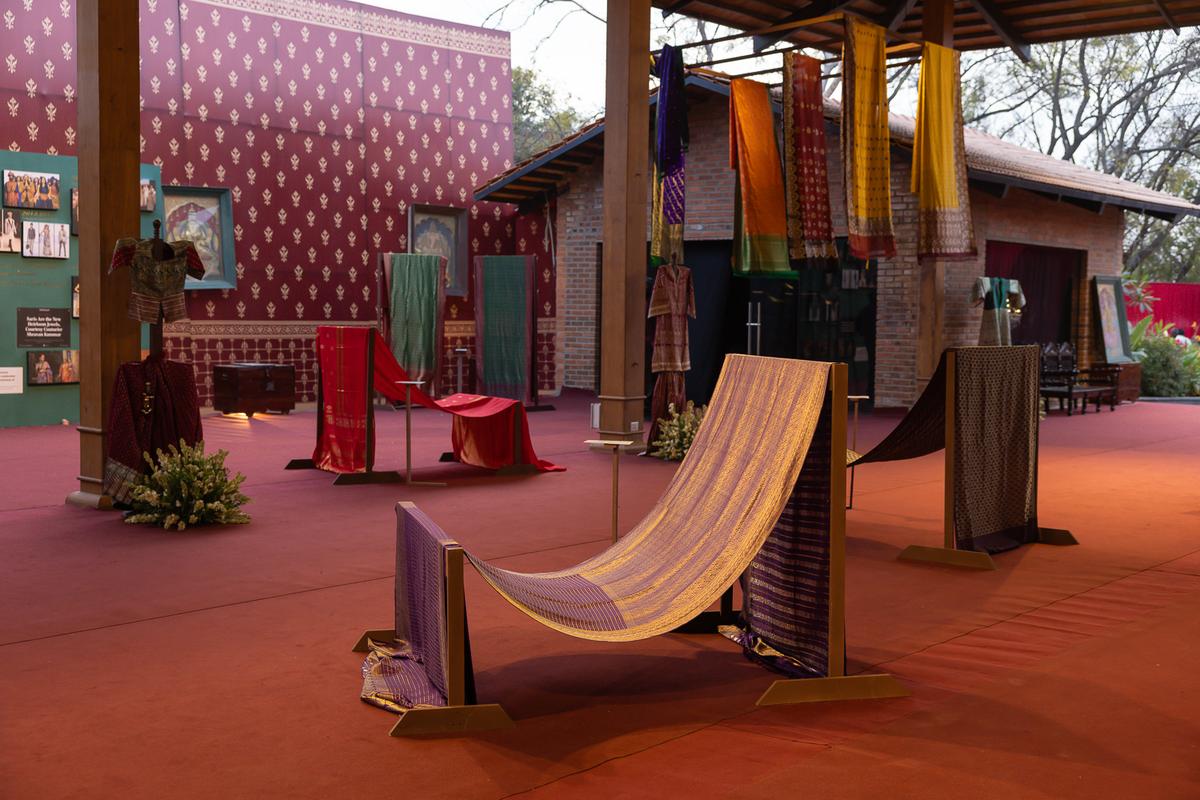
When Hyderabad-based Shravan Kummar decided to commemorate 25 years of his journey as a designer, he did not settle for a regular fashion show that will have the city’s who’s who in attendance. Staying true to the ethos of his work that focuses on handlooms, in particular heritage weaves, he made sure that all his guests who arrived at the new events space named Utsavam, at Gandipet, observed the installations of looms and the display of Benarsi and Kanjeevaram saris.

Titled Margazhi, the event held over the weekend resonated with the spiritual leanings of the month. The day began with the rendition of hymns from Thiruppavai. Shravan says, “I wanted Margazhi to be a celebration of our tradition and culture. After all, my weaves are rooted in heritage.”

Some of the installations featuring handwoven Kanchi and Benares saris

Some of the installations featuring handwoven Kanchi and Benares saris
| Photo Credit:
Special Arrangement

Designed like a museum style experience, one section of the installations at Utsavam featured his mother Parvathy Devi’s personal collection of handloom saris, reflecting how his early interest in handwoven textiles emerged. 

Over the years, Shravan’s line of saris, while reviving vintage motifs and weaving techniques, uses a colour palette that appeals to the young and mature clientele, from pastel pinks and mint greens to golden yellows and deep maroons.

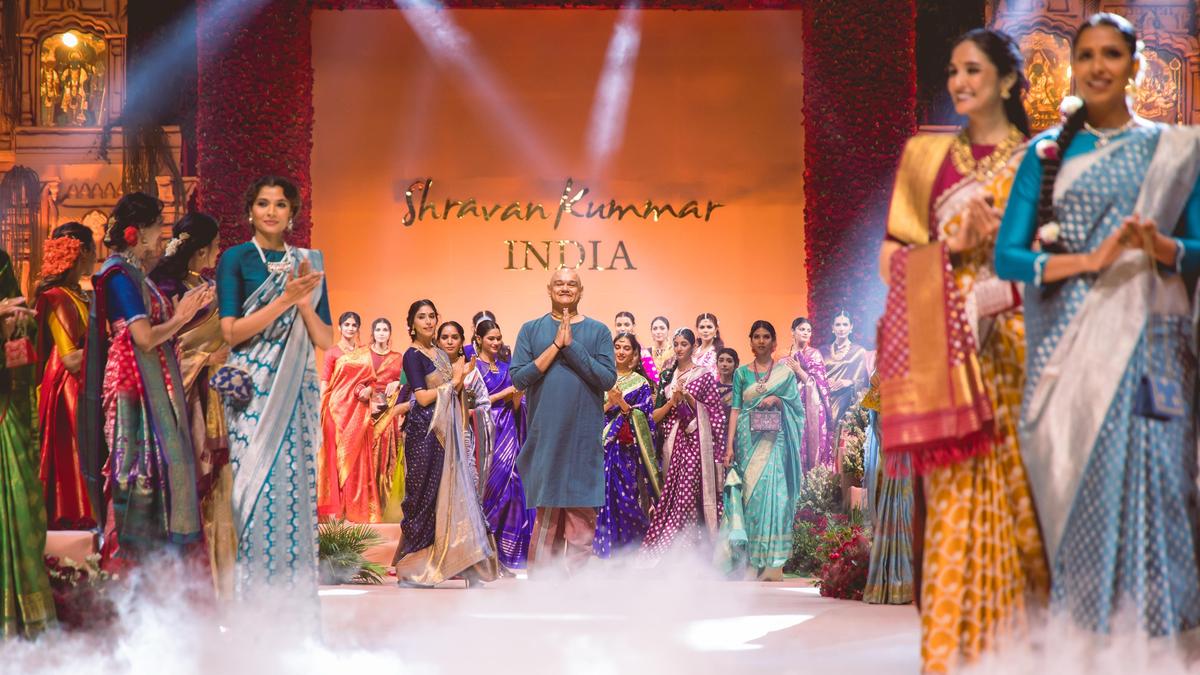
Models sport handwoven silks

Models sport handwoven silks
| Photo Credit:
Special Arrangement

Margazhi concluded with a fashion presentation featuring models sporting handwoven silk saris and ensembles. Guests were also treated to a food spread that was an extension of the culturally-rooted ethos. Imagine grazing platters featuring thatte (a variety of flat deep-fried savoury) and avocado mash, or small portions of venn pongal and appalam. “It had to be that way, I wouldn’t have gone for a grazing table with cheese for such an event,” Shravan laughs heartily.


Source link

Bachpan Manao launches BM in a Box, a city-wide movement to reclaim childhood


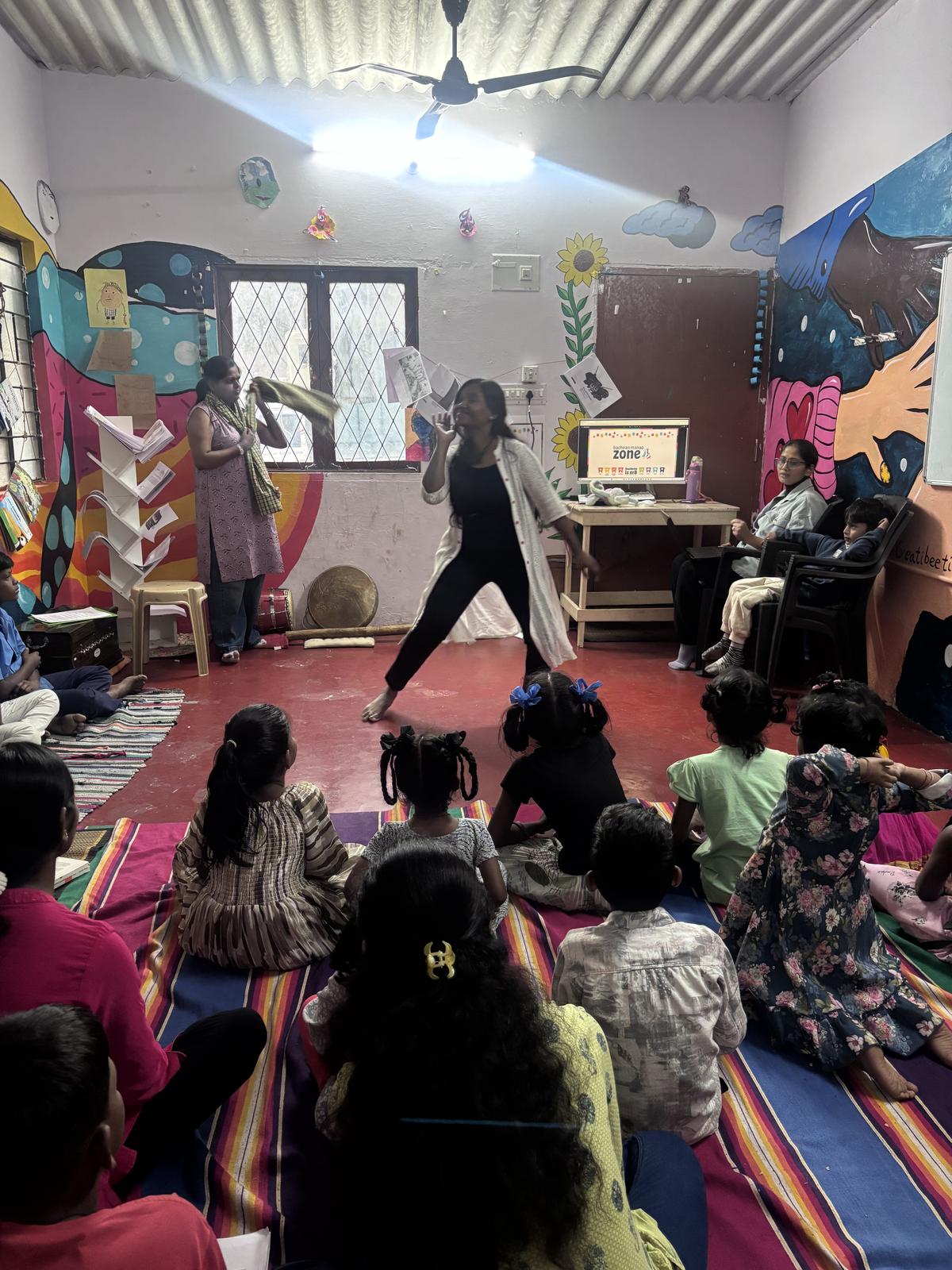
A storytelling session is about to commence at Bengaluru’s Buguri Community Library in Banashankari, a space created by the not-for-profit Hasiru Dala for the children of waste pickers and waste workers. Around 20 bright-eyed children, ages five to mid-teens, sit cross-legged on a jamakkalam, giggling and chatting among themselves while Gomathi J, Pushpalatha S, and Lathasha, all associated with this library, flit around the cheery mural-and-book-filled room, preparing for this session.

Gomathi begins with an icebreaker, asking all participants to close their eyes and listen as the other two facilitators introduce various sounds: a squeak, a bird’s chirp, clapping hands, and stomping feet. “Can you identify these?” she asks, with a smile, as a stream of enthusiastic responses comes in. This is followed by a dramatised story about Chintu, a little boy with musical abilities, which ends with an interactive session with the children.

“Through storytelling, we can explore so many things: creativity, music, theatre,” explains Pushpalatha S, who believes that children enjoy a good story, especially one buoyed by all these various elements. “These children are passionate about music, which is why we picked up this story,” agrees Lathasha.

At the storytelling session at the Buguri Community Library in Banashankari

At the storytelling session at the Buguri Community Library in Banashankari
| Photo Credit:
Special Arrangement

The importance of play

This storytelling session is part of a city-wide movement to reclaim childhood by Bachpan Manao, an EkStep Foundation initiative titled BM in a Box. According to Deepika Mogilishetty, Chief of Policy and Partnerships, EkStep Foundation, Bachpan Manao was started over two years ago, as a “collective creative articulation of the idea of bringing attention to the first eight years of childhood, a unique window of opportunity for every child.”

During this phase of life, learning and living are the same for children, Deepika says, because their brains are developing at a rapid pace. She adds that it is important to ensure that children get to experience the elements of joy, curiosity and wonder in this critical period of growth and development, regardless of the child’s background, something Bachpan Manao and its collab-actors from across the country strive to do “If, as caring adults, we don’t fuel it with nurturing environments, we are shortchanging our youngest.”

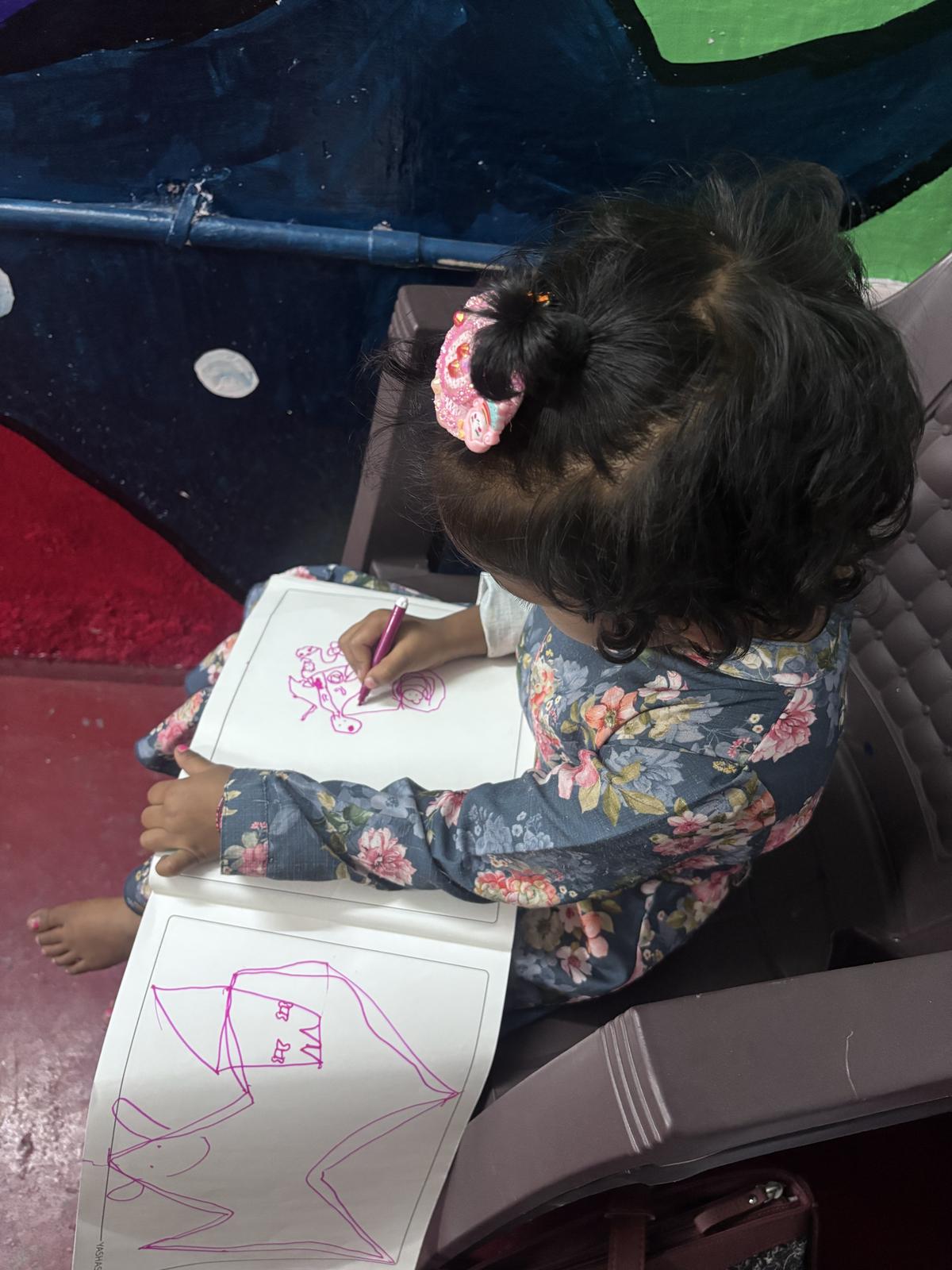
Play is an essential activity for children to explore these feelings and emotions. Play should be abundant in childhood – something that happens “in exploration, storytelling, running, climbing, imagining, and reading and even when children are doing nothing,” says Deepika.

In an effort to ensure support structures that enable play, Bachpan Manao seeks to create more child-friendly, welcoming early childhood care spaces. “Bachpan Manao’s 100-plus collab-actors are part of this conversation, and they seek to do this in their own way,” she says, pointing out that a range of events, both online and in-person have been organised across the country, which celebrate and make visible early childhood, “in our homes, in our conversations, in our anganwadis, kindergartens, schools, parks, libraries and in other public spaces.”

Play happens in multiple ways, including exploration, storytelling, running, climbing, imagining, and reading

Play happens in multiple ways, including exploration, storytelling, running, climbing, imagining, and reading
| Photo Credit:
Special Arrangement

A collaborative effort

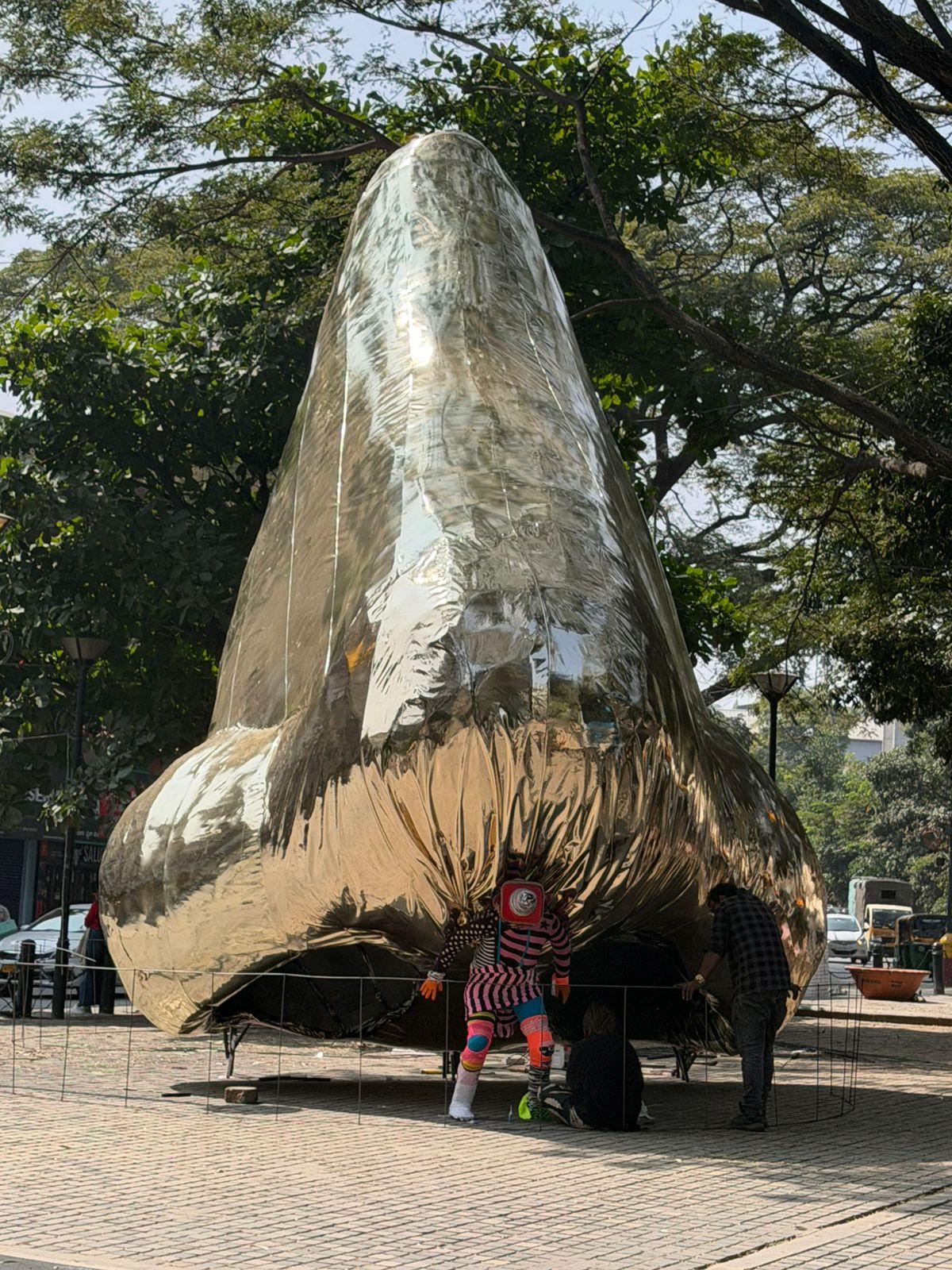
BM in a Box emerged out of a collaboration between Bachpan Manao and Makkala Hubba, which is part of the upcoming BLR Hubba, a Bengaluru-based arts and culture festival, which will be held in the city between January 16 and 25.

Bhawna Jaimini, the curator of Makkala Hubba, described in the BLR Hubba website as “a sensorial world in the heart of Freedom Park that restores wonder, play, and discovery”, expands on the reason behind it.

“There are fewer and fewer spaces in cities for children to explore beyond the confines of their homes and schools,” she says. And while Bengaluru is no exception, it does have an extensive network of parks and open spaces, which its citizens continue to occupy and reclaim imaginatively.

“Makkala Hubba is another way of reclaiming the city for childhood in creative, joyful ways, where artists, educators, and creative practitioners lead the way in making Bengaluru the city of, by, and for children,” says Bhawna.

Makkala Hubba with Bachpan Manao transforms Bengaluru’s Freedom Park’s historic grounds into a landscape of curiosity, connection, and wonder, where “learning doesn’t happen in rows of desks but through touch, sound, movement, storytelling and quiet time”.

In the process of this co-creation between Makkala Hubba and Bachpan Manao, another idea emerged, says Deepika. While looking at what would be presented through the lens of play and learning at Makkala Hubba to make it inviting to younger children, they also began to explore ways to create something that could happen in any space in the city.

An installation from Makkala Hubba, Nose Squats

An installation from Makkala Hubba, Nose Squats
| Photo Credit:
Special Arrangement

“This is not just about one event or one park. It’s about fundamentally reimagining Bengaluru as a city that prioritises its youngest residents, where every neighbourhood has safe spaces for play, where we invest in our anganwadis and libraries, where public planning considers children, and where childhood is not just protected but actively celebrated and eventually becomes a national conversation and movement,” she says

Creating more child-friendly spaces

This led them to conceptualise the BM in a Box toolkit, a “metaphorical box” that offers ways to bring early childhood to life across various spaces and communities. This co-created digital playbook, available for download from the Bachpan Manao website, offers resources to help anyone host a BM in a Box event.

These include a simple guide, eight childhood themes such as play, social bonding, nature and stories, over 32 activity ideas—including lagori, pictionary, sock puppets, scavenger hunts, clowning and story circles, to further explore these themes, a directory of artists, storytellers, musicians, and resource persons, printable décor, materials, and giveaways to make spaces vibrant and pointers to ensure safety, inclusion, and care for every child.

“BM in a Box is an invitation to anyone, saying that – here are a few ways of bringing childhood alive in your community and neighbourhood,” says Deepika, who sees it as a way of empowering communities across Bengaluru to create space for and celebrate childhood in their own neighbourhoods.

Buguri Library’s Lathasha agrees saying, creating spaces like this enables children to open up and express themselves more fully. “Many of the children here face social challenges in their everyday life, and don’t have a platform to express themselves.”

These activities, she feels, also offer them an opportunity to talk about their suppressed thoughts and feelings. “When Pushpa does read aloud, for instance, children say that this happened to me that day. And when we assign tasks like writing to them, they do it beautifully,” says Lathasha, who says creating safe spaces for children to be themselves is extremely important.

The BM in a box toolkit can be downloaded at the bachpanmanao.org/playground_bm/bm-in-a-box-a-series-of-micro-events-celebrating-childhood


Source link

Where to eat out in Bengaluru this January 2026


Kickstart 2026 on a high with several new culinary offerings that have opened doors. A Southeast Asian hawker-inspired restaurant, a pub that draws from Bali’s tropical locales, and Ishaara’s second outlet in the city are just a few of the many experiences on offer.

NEW IN THE HOOD

In-house brews @ Tropika

The latest entrant to Marathahalli’s dining scene is Tropika, a tropical-inspired dining and craft brewery. Inspired by Baliesque interiors and island vibes, the outpost has been designed by city-based WDA Architecture and features “greenery, earthy textures, and breezy open areas”. 

As for the culinary offerings, the menu features over 200 globally inspired dishes including  international plates, as well as vegan and Jain options. Offerings include paneer jakhas bao, walnut cream cheese dumplings, jalapeño poppers, leaf-grilled lamb, among others. The highlight, however, is the in-house craft brewery, guided by the philosophy, “Good Beer Doesn’t Hurry.”

On offer are eight signature brews including Belgian wit, chocolate stout, tropical coconut cream ale, and sparkling strawberry cider that are complemented by premium spirits, cocktails, and mocktails.

At37/1, Outer Ring Road, Panathur, Marathahalli, Bengaluru – 560103

Sector 144 

Sector 144 
| Photo Credit:
Special Arrangement

Coastal meets continental @ Sector 144 

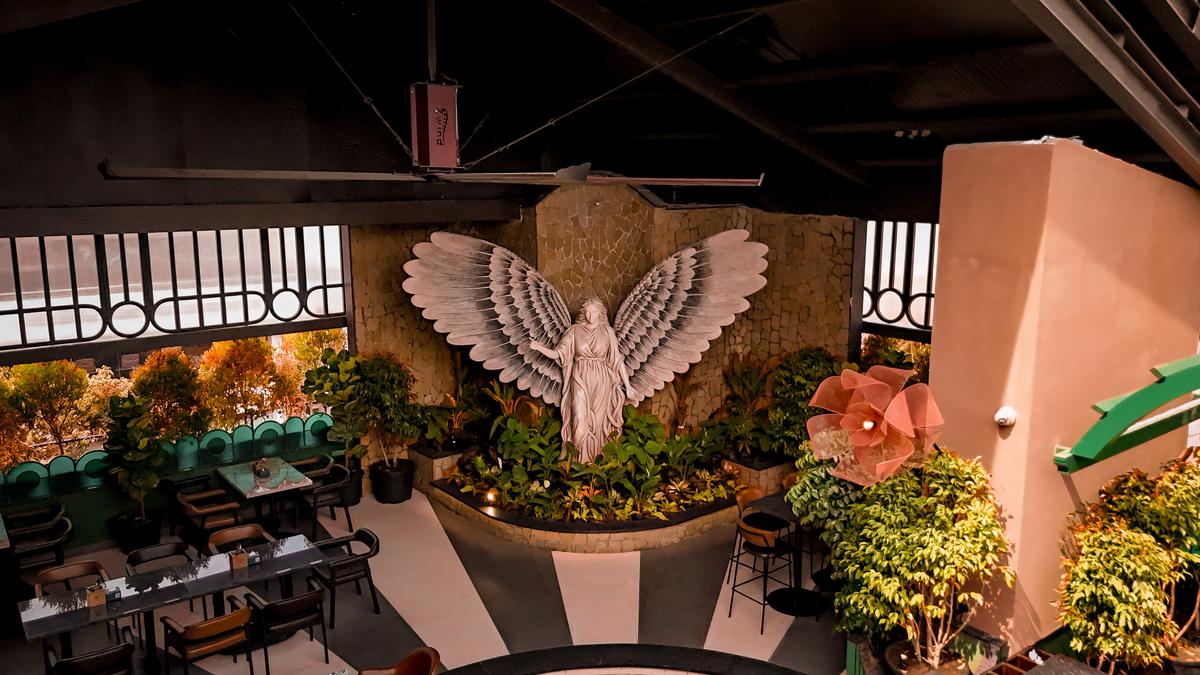
The multi-cuisine pub’s second outlet offers diners a rooftop dining experience on the fourth floor with a terrace. An all-day dining venue by day and rooftop bar by night, it is designed in warm, earthy hues, Aztec-inspired design elements, and intimate seating pockets.

The menu features 120+ dishes spanning Karavalli coastal, Chinese, and continental cuisines. Highlights include truffle parmesan fries, Korean fried chicken, spiced cottage cheese skewers, lamb seekh kebabs, butter garlic prawns, and slow-cooked chicken mains, among others.

The beverage menu features cocktails and mocktails that draw inspiration from ‘birds, trains, card games, rock bands, global currencies, and cult characters’. Indulge in a whiskey sour, gin basil smash, vodka watermelon cooler, tropical rum punch, a virgin passion fruit mojito, etc. 

At 4th Floor, Above Style Union, Santrupthi Nagar, JP Nagar 7th Phase

 The Wine Studio has been curated by CUR8

The Wine Studio has been curated by CUR8
| Photo Credit:
Special Arrangement

Wine Studio @ Four Seasons Hotel Bengaluru

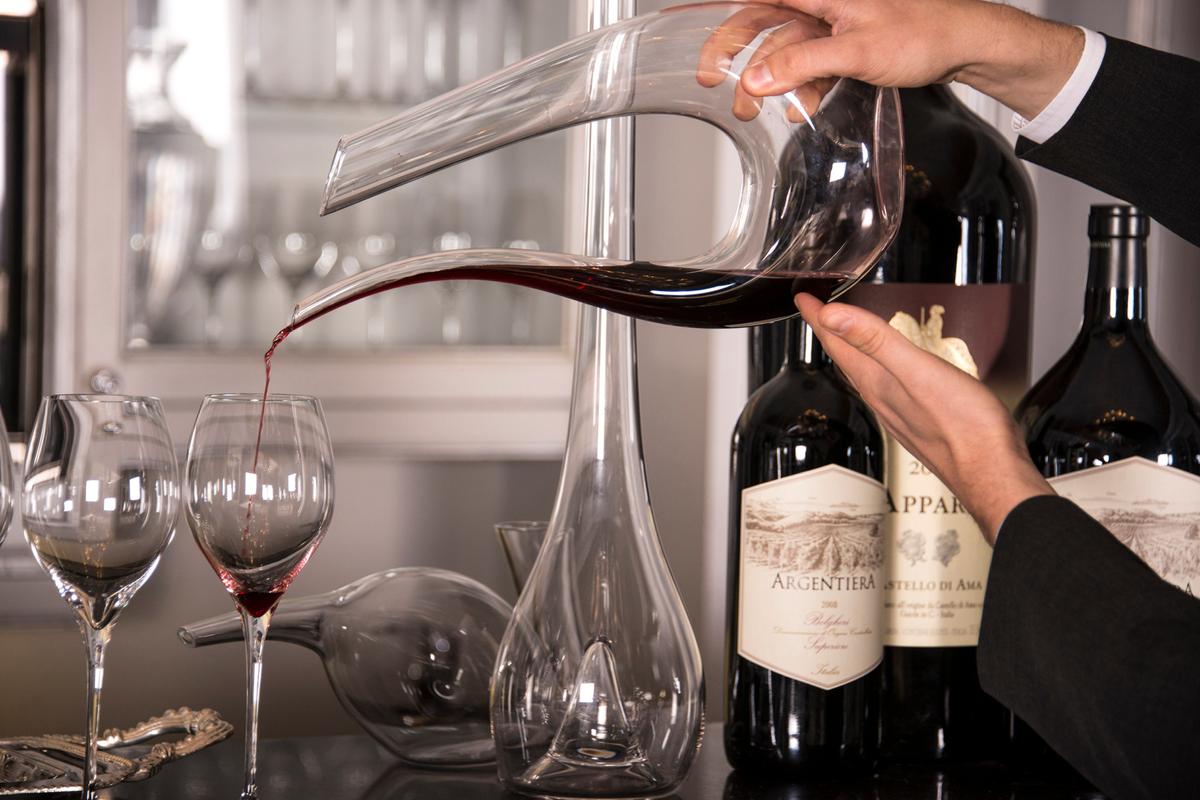
Upping their cocktail game, the hotel’s newly launched The Wine Studio has been curated by CUR8. Aimed at offering a more immersive, elevated wine culture in the city, the studio offers a range of tactile experiences for diners. Guests can assemble their own cheese boards, discover boutique Indian labels, and more. 

Highlights include Indian Chenin Blanc, Burgundys, and more. The studio also features a ‘rotating menu of curated journeys that bring regional wine traditions to life through thoughtful pairings and guided tastings’.

The Grand Tour de France, for instance, features wines, live baguette slicing and artisanal cheese carving from Bordeaux to Burgundy, the Italian Wine and Cheese Soirée covers the Alps, Tuscany, and Sicily with bold reds and hand-sliced Prosciutto di Parma. 

At 8, Bellary Rd, Dena Bank Colony, Ganganagar

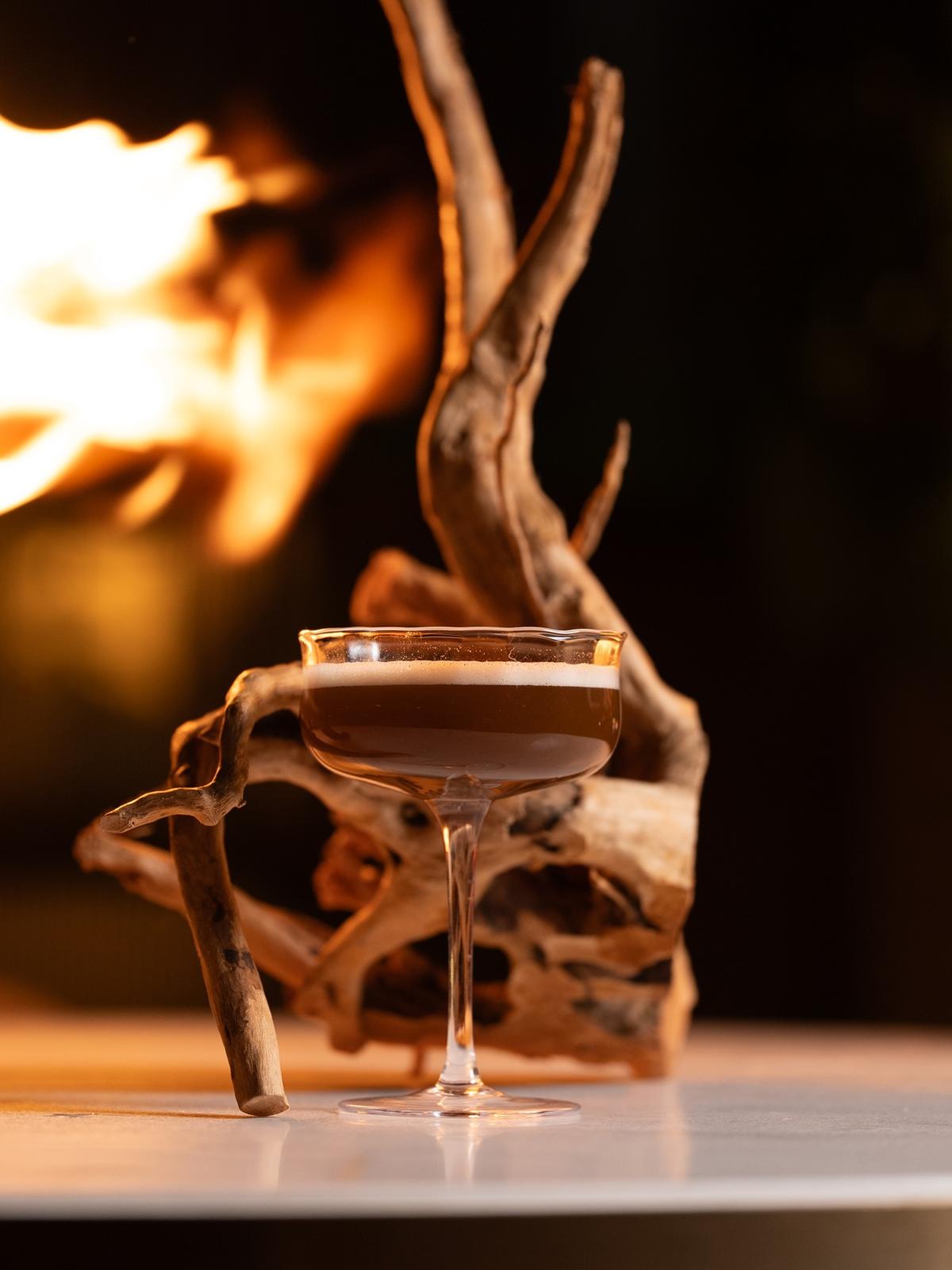
A cocktail at Ishaara

A cocktail at Ishaara
| Photo Credit:
Special Arrangement

Memory-led dining @ Ishaara 

Bellona Hospitality has brought its ‘purpose-led’ diner to Church Street. Created on the philosophy of giving back, Ishaara is helmed by a team of hearing and speech-impaired service professionals. 

With their food philosophy leaning towards familiarity, the menu is rooted in memory — ‘by the kitchens, lanes, and lived experiences that define Indian cooking, from the bylanes of Old Delhi to coastal homes and clay pots in Bihar;. Highlights include Dilli waale dahi bhalle, oyster moilee, tandoori broccoli, Chandni Chowk chicken kebab, kathal kakori, paneer palak shyam savera, Ishaara butter chicken, Champaran mutton, Kashmiri gucchi biryani, Sufiyani chicken biryani, Amritsari Halwa, and more. 

At 1 Sobha, Church Street

Dishes at Yoichi

Dishes at Yoichi
| Photo Credit:
Special Arrangement

Hawker-inspired @ Yoichi

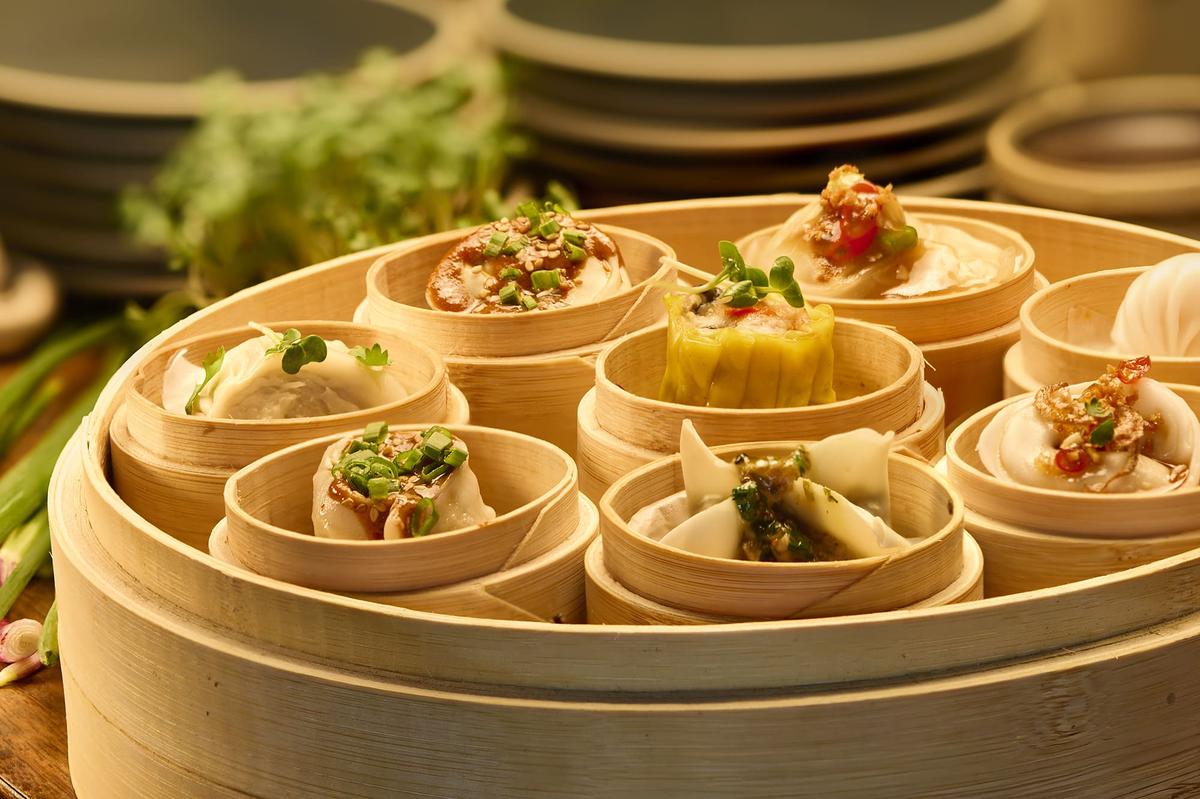
The team behind Shiro and Hard Rock Café brings to the city a restaurant that draws from the food carts in the narrow alleys of Bangkok and Tokyo. Yoichi, meaning ‘street market’ in Japanese, is located in the heart of Manyata Tech Park and is a Southeast Asia-inspired culinary offering. Complete with stalls and carts, the restaurant features an Izakaya live section lined with bottles of sake and Japanese whiskey; a Tuk Tuk Bar; a Claypot Corner; Salad Cart; The Grill; and a Vegetable House. There are also live experiences like a dim sum counter, a parata ichiban stall, a satay cart, and a sushi station. The highlight is an Asian Thali that comprises a ‘mix of several Asian dishes with bites of South East Asian favourites’. 

Top dishes include Thai glass noodles, Korean kimchi ramen, Cantonese hot pots, Japanese classics like hamachi carpaccio and tsukune, and Vietnamese hotpots, to name a few. 

At Block U, 1st Floor, Manyata Tech Park – 1, MS Ramaiah North City, Nagavara, Bengaluru 560045

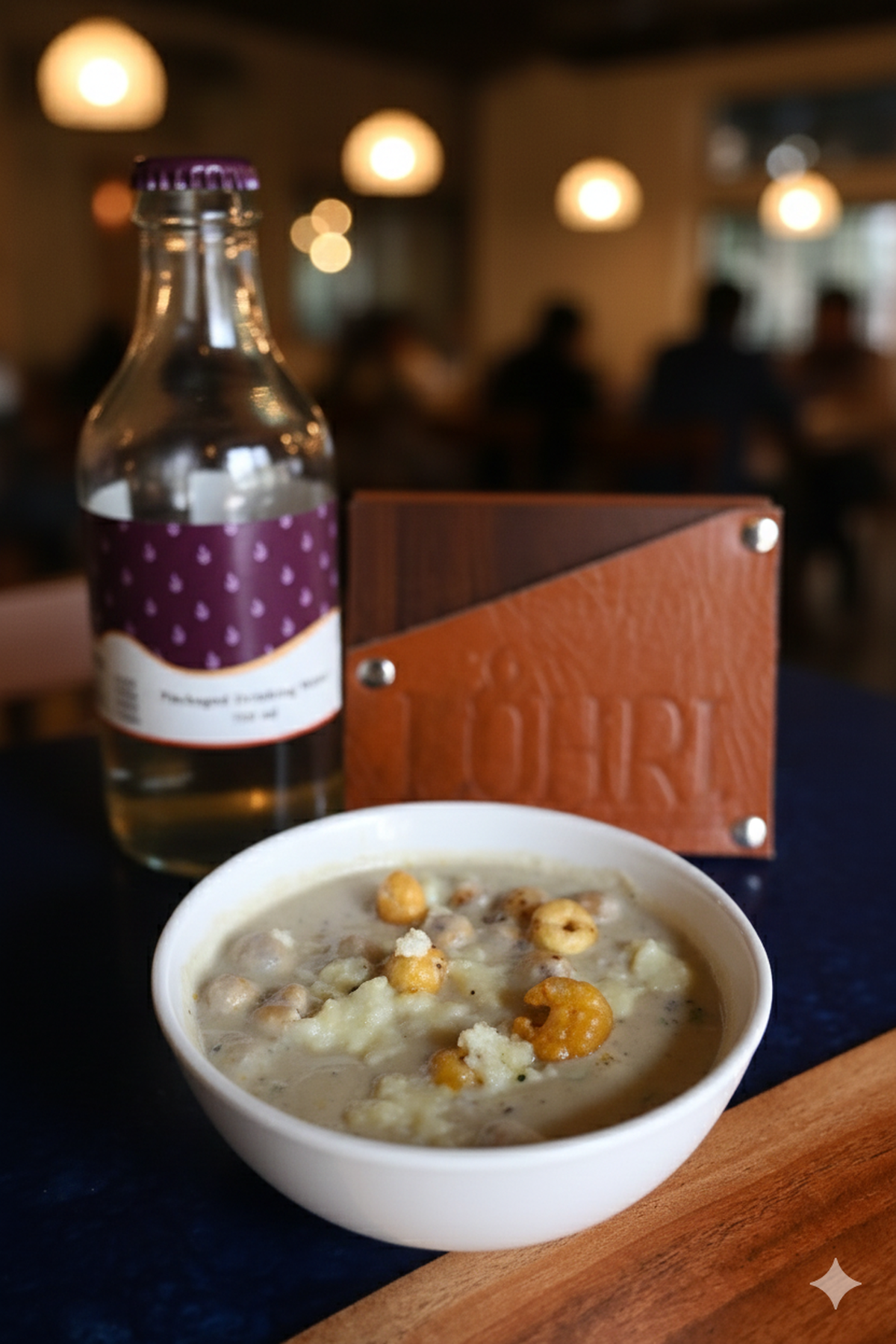
Khoya Mutter Makhana at Lohri

Khoya Mutter Makhana at Lohri
| Photo Credit:
Special Arrangement

FESTIVE EDIT

Harvest specials @ Lohri 

Commermorating North India’s harvest festival, Lohri has launched a new menu to spotlight Punjab’s winter kitchens. It begins with festive drinks like the peeli phasal, a blend of ripe mango, sugarcane juice, roasted cumin, and fizzy soda; mirchi te ganna da ras, a mix of fresh sugarcane juice, ginger, lime, and red chilli. 

As you move to mains, savour sarson da gosht, murgh lababdar, khoya mutter makhana with breads like palak aur lasun naan, beetroot and roasted jeera naan. Alongside are hearty soups such as makki da shorba and paya shorba. The breakfast section features a rabdi paratha, while the desserts include atte ka halwa and gajar ka halwa.

Until January 18 at Ground Floor, Trinity Circle

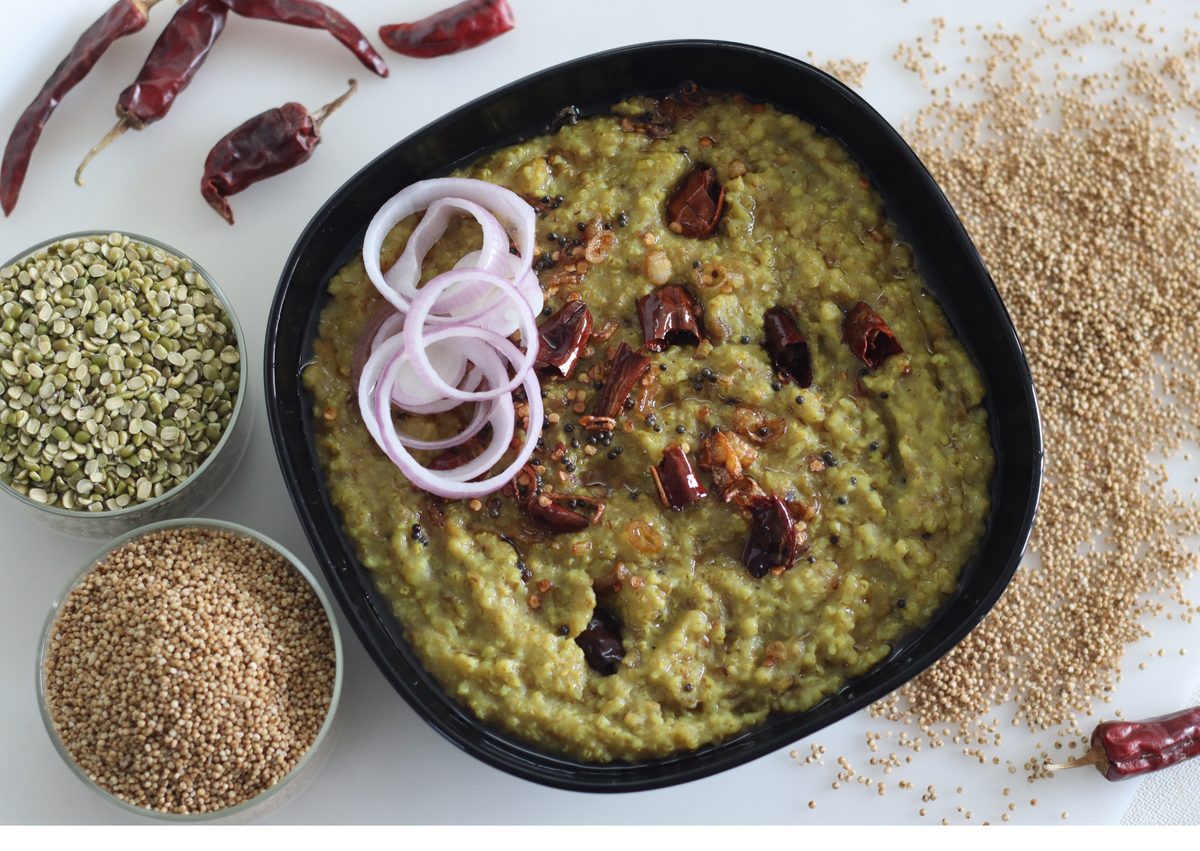
A dish from the millet menu

A dish from the millet menu
| Photo Credit:
Special Arrangement

Millet menu @ Radisson Blu 

This harvest season, the hotel has collaborated with health food brand Bakahu to curate a millet menu. Coinciding with Makar Sankranti, the menu spotlights indigenous and seasonal produce, and is ‘rooted in mindful eating and the goodness of native grains’.

The menu features foxtail millet vegetable hakka noodles, ragi millet uttapams with veg sago, and a sorghum millet halwa. There is also a section for millet-based drinks that includes heritage highball with toasted bajra water; and bhoomi breeze with ragi water, among others. 

Until January 14 at 90/4, Outer Ring Rd, Marathahalli Village, Marathahalli



Source link

Beyond butter chicken: A menu that challenges the stereotypes of Punjabi cuisine, in Hyderabad


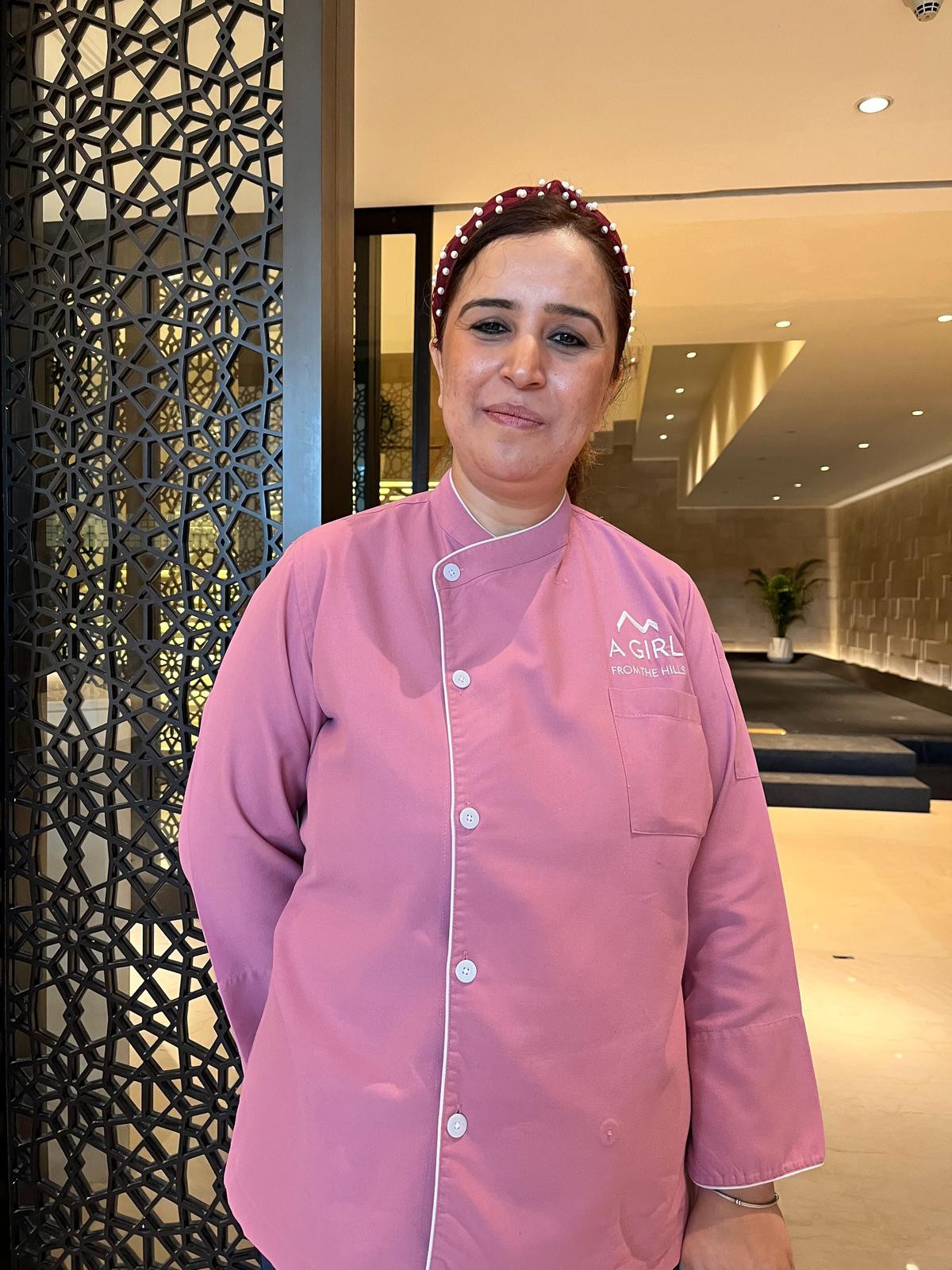
Good food needs no drama or backstory to entice the eater. And yet, when doli ki roti was served to me for lunch by Sherry Mehta, hails from Shimla and is an authority on Himachali and Punjabi cooking at Kanak, Trident Hyderabad, I found myself curious. Without context, it looked very much like a puri that was part of ‘A culinary tale of unchronicled Punjab.’

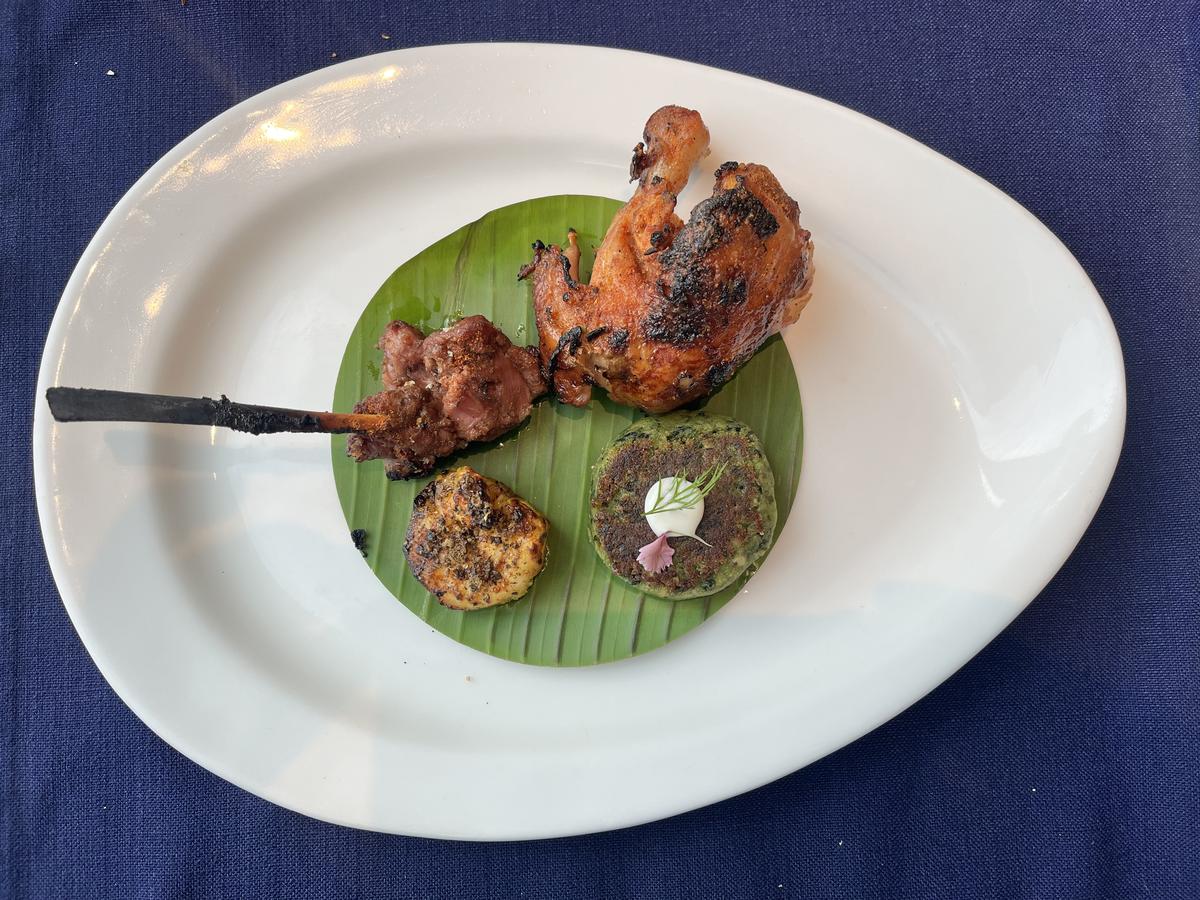
Sheen sajji by Sherry Mehta

Sheen sajji by Sherry Mehta
| Photo Credit:
Special Arrangement

“No, it’s not a puri. Break a piece, taste it, then let’s talk,” says Sherry.

I did—and the doli ki roti surprised me. Simply put, it is a thoughtful hybrid of a bhatura and a dal puri. Unlike a bhatura, doli ki roti is made with wheat flour that undergoes a 24-hour fermentation. It is stuffed with roasted, coarsely ground yellow moong dal, rolled out to puri size, and fried in oil. The result is soft and slightly stretchy, never chewy, with the moong dal adding an occasional bite.

“These rotis were made for the bride’s journey from her mother’s home to her sasural in the olden days in the region of Multan i,” Sherry explains. “The fermented dough ensured the food wouldn’t spoil, while the moong filling provided protein. The name ‘doli ki roti’ literally means bread for the palanquin.”

Some of the starters by Sherry Mehta

Some of the starters by Sherry Mehta
| Photo Credit:
Prabalika M Borah

Next came the Peshawari naan, gently sweet and stuffed with mawa. After these two breads, there was little temptation to reach for something as plain as the kesari ki paronthi.

What stood out was the menu Sherry had put together — one that foregrounded lesser-known gems from the region like a mixed vegetable kadhi, green tomato butter chicken, Lahori tadka daal, panjratni daal, pani phal ke kofte and so on). The starters included babugoshe ka shorba (a pear-based soup), parat ki paneer (paneer stuffed with prunes), bathuwa aur nyoje ke kebab (tikkis made with bathua greens and pine nuts), sheen sajji (whole meat slow-roasted over coal), and bhang jeeri jheenga (prawns cooked with hemp seeds).

“There are two parts to this menu,” says Sherry. “One comes from research and the digging up of old recipes. The other, dishes made with green leafy vegetables and pulses, is my way of breaking the mindset that Punjabi food is only about paneer and butter masala.”

The bathuwa aur nyoje ke kebab, for instance, highlights an overlooked use of bathua (which grows as a weed during winter season and consumed as leafy vegetable). Punjabi cuisine is often reduced to familiar pairings like sarson ka saag and makki ki roti, but, as Sherry points out, “we also eat bathuwe ka paratha and bathuwe ka raita.”

Sherry Mehta

Sherry Mehta
| Photo Credit:
Prabalika M Borah

Surprisingly, the starters were devoid of the usual curd-and-spice marinades. The batyr ka shorba (peppery quail soup), for instance, relied solely on pepper for heat. The sheen sajji — marinated with nothing more than salt and pepper — proved that flavour often lies in restraint and simplicity. The bathuwa aur nyoje ke kebab, meanwhile, leaves you guessing its ingredients.

So how does this food differ from what is commonly commercialised as Punjabi cuisine? Sherry explains, “We’ve been made to believe that Punjabi food is all about ghee, paneer and butter chicken. As a result, many everyday dishes and seasonal greens have been ignored. I also make butter chicken—mine is green because I use green tomatoes. Kebabs and curries aren’t always prepared with curd-based gravies.”

Staying with the idea of seasonality, Sherry served two dips — one made with green shallots, the other with radish and sesame. Dessert followed in the form of panjiri ice cream, kali gajar ka halwa, and seb ki phirni.

The fest at Kanak, Trident Hyderabad is on till January 17 (lunch and dinner )

Published – January 13, 2026 01:59 pm IST


Source link