Life & Style

Bengaluru’s Bar Spirit Forward wins the best bar in India. Here is list of the 30 Best Bars India 2025


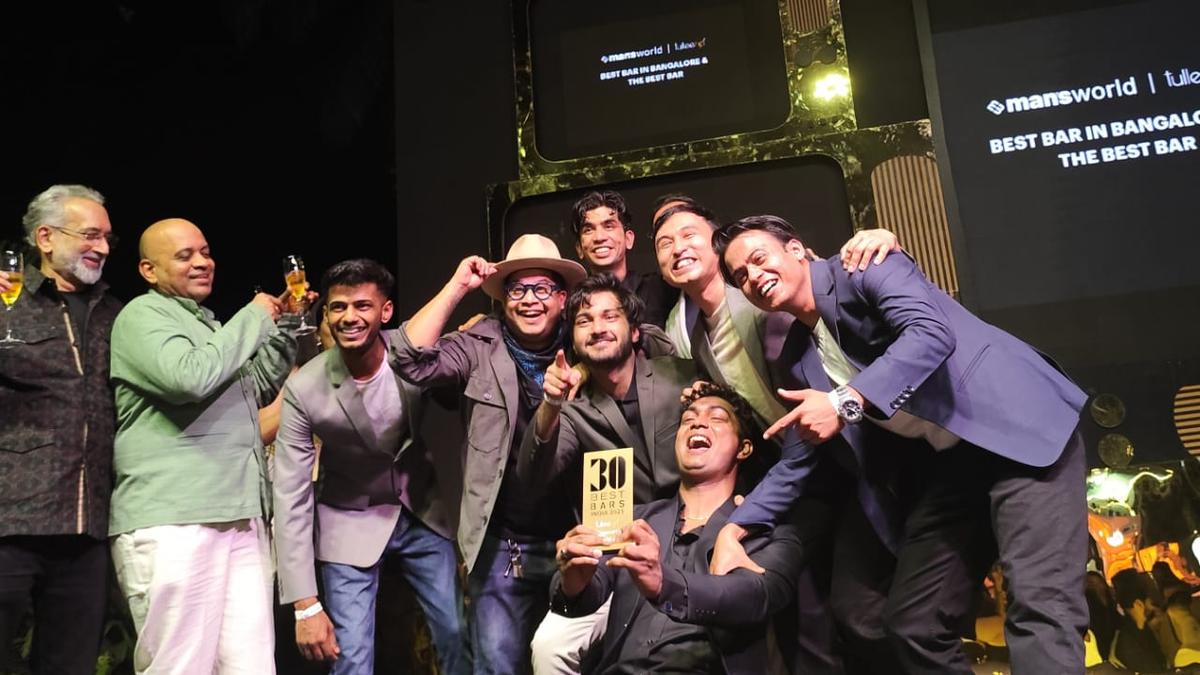
Bengaluru’s Bar Spirit Forward wins the number one spot at the 30 Best Bars India 2025.

Bengaluru’s Bar Spirit Forward wins the number one spot at the 30 Best Bars India 2025.

Goa is abuzz. India’s bartending community came together for the 30 Best Bars India 2025. Taj Cidade (Heritage) in Goa played host to the 6th edition of event. Bengaluru’s Bar Spirit Forward took the number one spot on the list. Bars from Goa, New Delhi, Bengaluru, Kolkata won big.

As the evening unfolded the list of awards were announced by industry experts and insiders. On the number two spot was also a Bengaluru favourite, SOKA. On number three was Goa’s Bar Outrigger, Boilermaker also from Goa took the number four spot. And on number five was Lair from New Delhi.

Here is the full list of 30 Best Bars India 2025

1. Bar Spirit Forward, Bengaluru

2. Soka, Bengaluru

3. Bar Outrigger, Goa

4. Boilermaker, Goa

5. Lair, New Delhi

6. Hideaway, Goa

7. ZLB23, The Leela Palace, Bengaluru

8. Sidecar, New Delhi

9. Dali & Gala, Bengaluru

10. Americano, Mumbai

11. PCO, New Delhi

12. Hoots’, New Delhi

13. AM PM, Kolkata

14. Muro, Bengaluru

15. Nutcase Etc., Kolkata

16. The Library Bar, The Leela Palace, New Delhi

17. Bandra Born, Mumbai

18. HOME, New Delhi

19. Cobbler & Crew, Pune

20. Slow Tide, Goa

21. Comorin, Gurgaon

22. Bar Kin-Rü, Hyderabad

23. Japonico, Gurgaon

24. Lair, Gurgaon

25. Native Cocktail Room, Jaipur

26. Conversation Room, Kolkata

27. Little Bit Sober, Kolkata

28. Papa’s, Mumbai

29. The Bombay Canteen, Mumbai

30. Copitas, Four Seasons Hotel, Bengaluru


Source link

This ‘Ulta Pulta’ school in Uttarakhand is rethinking rural education


Having grown up in Vikasnagar, a small town in Dehradun district, Shrey Rawat began noticing how the educational system in the hills was not helping students connect to their surroundings. 

As a child, he witnessed his grandfather lead several social movements in the area and he was inclined to follow suit. In 2023, Shrey and his wife Jyoti Rawat, also an educator, launched Suraah, a ‘living school’ in the valley.

“The idea started taking shape around 2020 when I kept seeing the same story repeat in our villages: children studied to escape the hills rather than feel rooted here. Most ended up in low-paying jobs in cities,” says Shrey, 33, who began his career in education as a Teach For India Fellow in Ahmedabad, and went on to be a part of non-profits such as Central Square Foundation, the NIPUN Bharat Mission, etc. 

Jyoti Rawat and Shrey with the children at Suraah

Jyoti Rawat and Shrey with the children at Suraah
| Photo Credit:
Special Arrangement

When the pandemic hit, Shrey spent more time in his village and started speaking to families, teachers, and local leaders. “What I heard again and again was that children needed an education that made sense in the life of the hills. That’s where the seed came from, wanting to build a school model that brings together thinking, feeling, and doing,” he says over a call from the school, adding how they started the pilot in 2023 with one school.

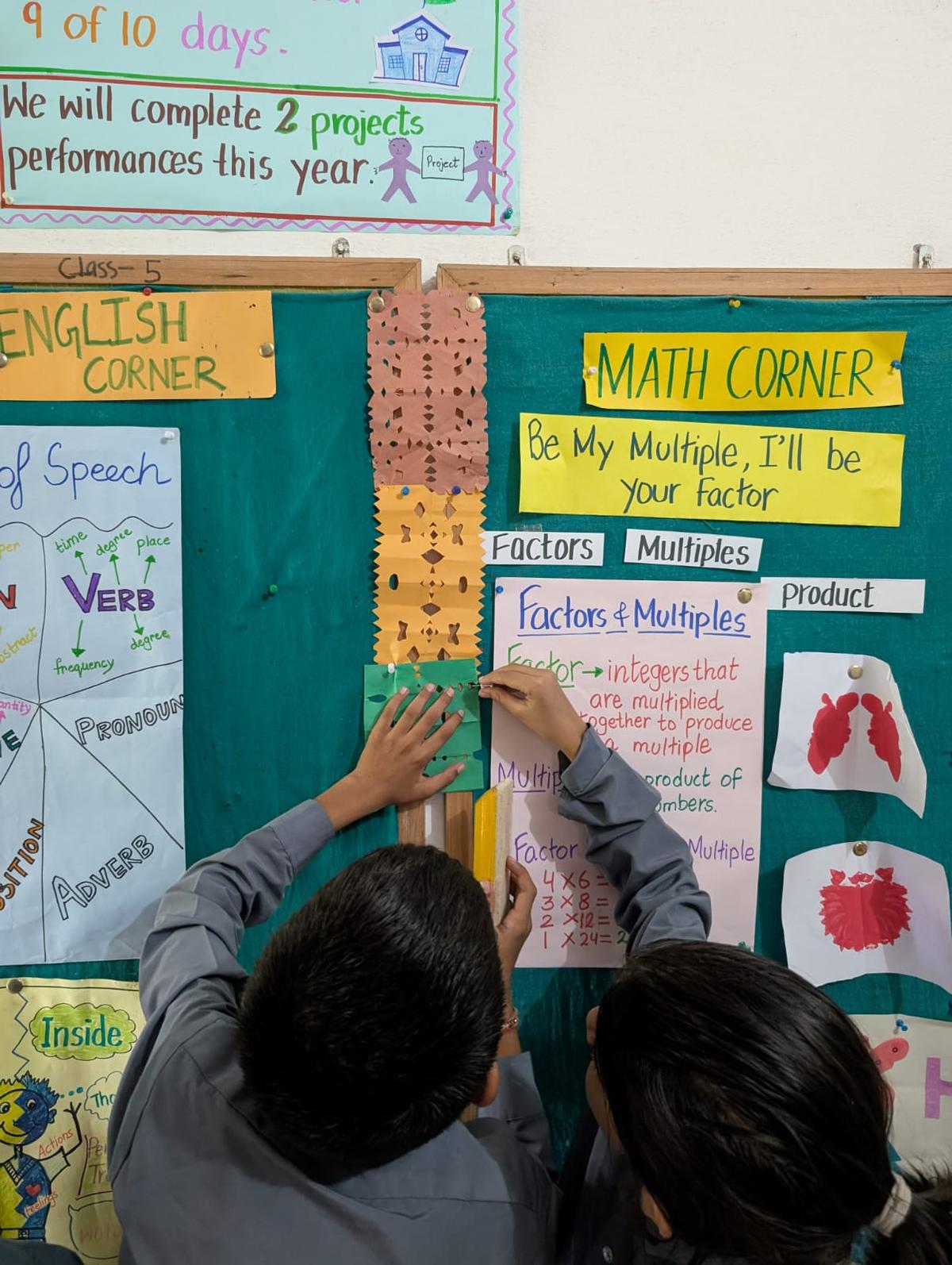
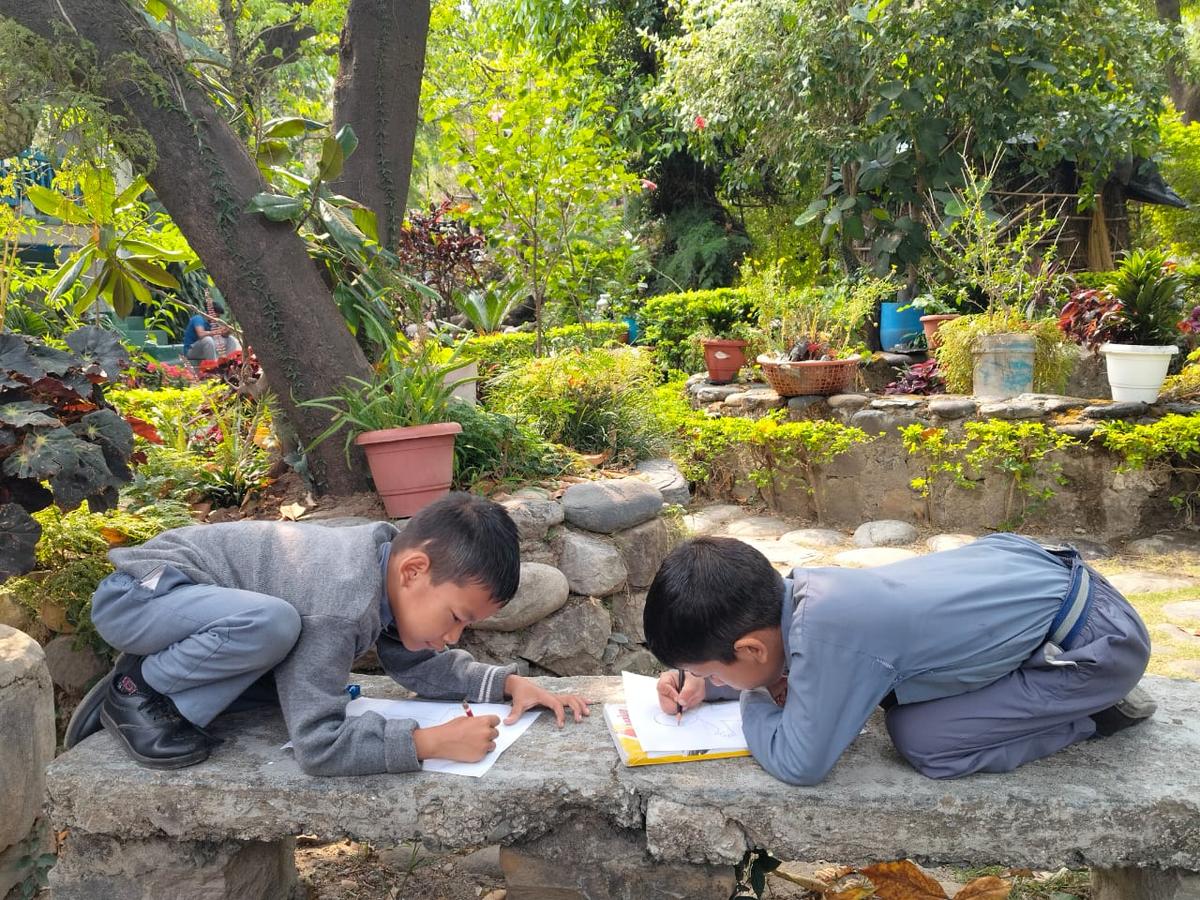
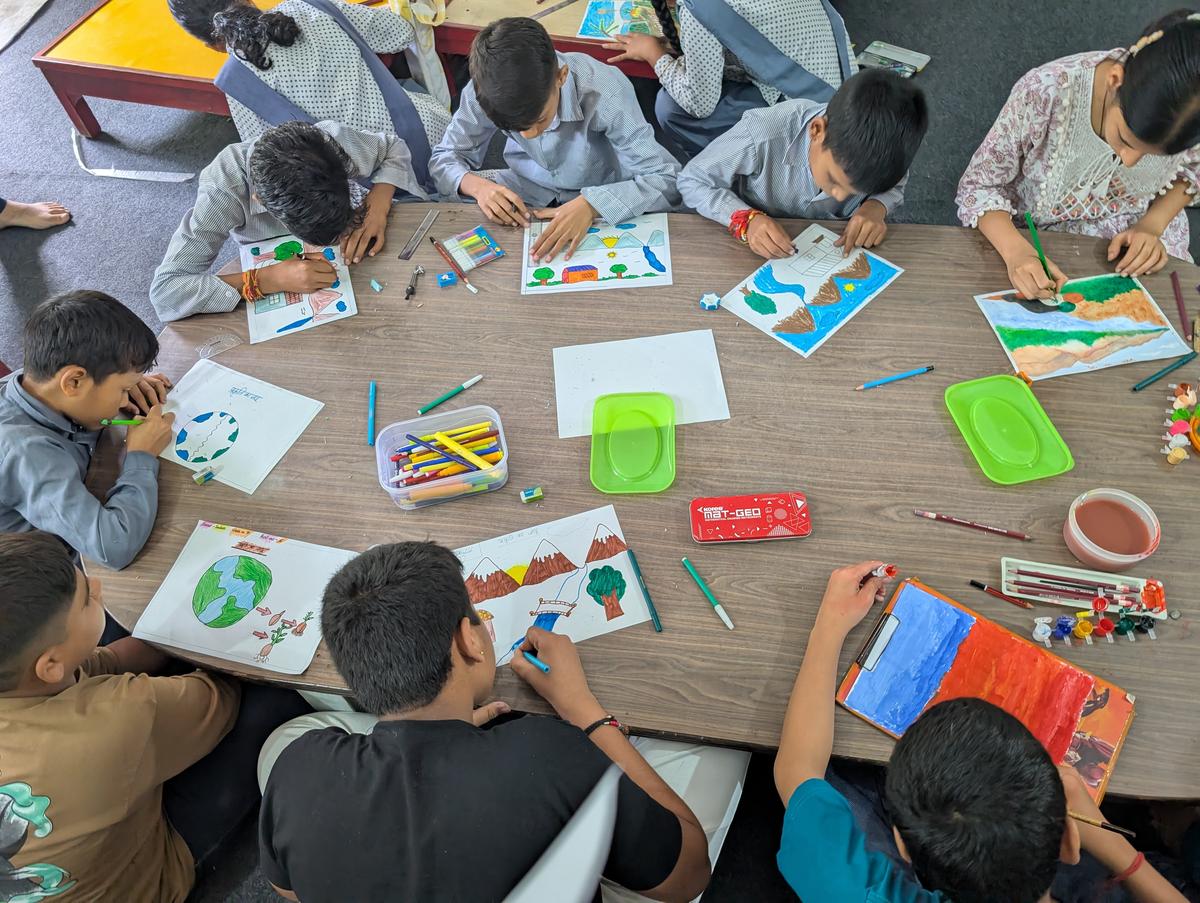
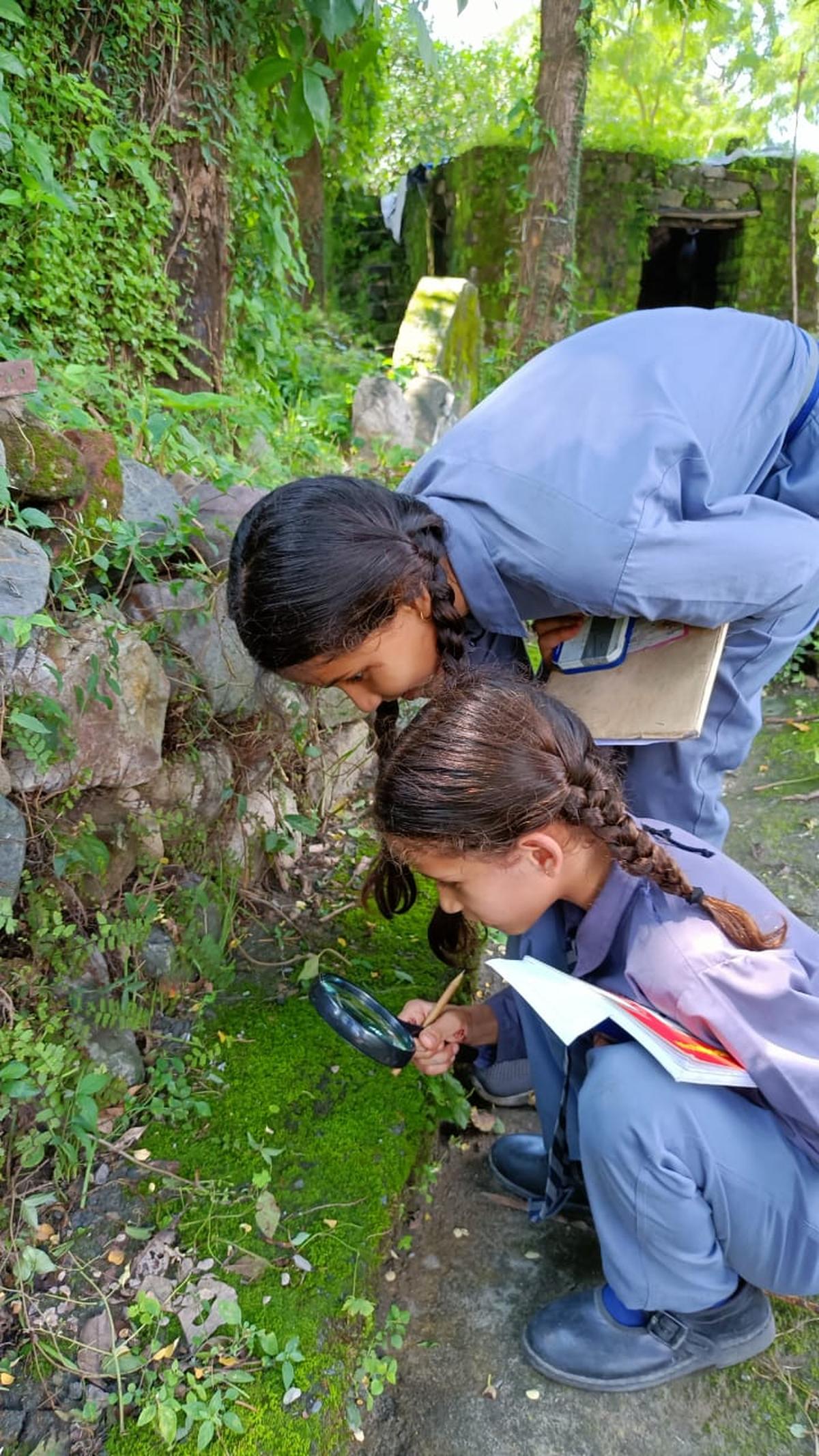
Suraah (meaning an auspicious path in Hindi) is also referred to as the ‘Ulta Pulta’ school and Shrey says this name came about because the classrooms “look the exact opposite of what they expect from a typical school”. Kids learn math outdoors using leaves and stones, understand history by visiting canals, forests, and old community sites, and they paint on walls, not just notebooks. “They ask questions more than they answer them,” says Shrey.

“For the community, this is wonderfully upside-down. So the name stuck.” On a more personal level, he says the name also carries a family legacy. “My grandfather, Surendra Singh Rawat, spent his life in public service and grassroots social movements in the hills in the 70s and 80s. In the region, he is remembered as Suraah-ji.” 

Kids learn math outdoors using leaves and stones, understand history by visiting canals, forests, and old community sites

Kids learn math outdoors using leaves and stones, understand history by visiting canals, forests, and old community sites
| Photo Credit:
Special Arrangement

At present, Suraah has around 70 children from Nursery to Grade 5, with eight full-time local teachers, and a few Teach For India fellows who support planning. “Since the school works by adopting and strengthening existing schools, we inherited a school with its own long-standing practices and a committed local teacher team. What we introduced was a clearer structure for how learning and teaching could flow every day. This includes weekly coaching, lesson debriefs, detailed planning routines, and regular observation cycles.”

Suraah (an auspicious path in Hindi) is also referred to as the ‘Ulta Pulta’ school

Suraah (an auspicious path in Hindi) is also referred to as the ‘Ulta Pulta’ school
| Photo Credit:
Special Arrangement

Shrey explains that a big part of their growth has come through a partnership with non-profit The Circle India. “Our teachers travel to Pune twice a year for a year-long professional training programme and participate in regular Nature-based learning sessions, rehearsal spaces, and collaborative planning meetings.” 

As for the syllabus, every part of the learning connects back to the hills. “Children study rivers, forests, farming cycles, village professions, and migration in Jagatgyan; Nature trails, leaf symmetry walks, and farming observations through Mauj; and in Yogdaan, they identify real village challenges, water scarcity, waste, tourism, and design small impact projects,” says Shrey outlining their modules.

Other branches include Khoj where local materials are used as science tools, Abhivyakti that uses mud, pine needles, stones, and local colours. “The goal is simple: learning should make sense in the world the child lives in.”

A math session in progress

A math session in progress
| Photo Credit:
Special Arrangement

A great teaching methodology, no doubt, but for most people, especially those in the cities, this seems like a utopian scenario given how most mainstream schools function. Shrey believes that a few things are easily replicable across schools.

“First, Nature and community integration. You don’t need forests for that; even neighbourhood walks work. Second, observation-based assessments that include continuous, small, behaviour-focussed notes, not just tests. Schools can incorporate slower classrooms as children learn better with fewer concepts and deeper experiences,” he says, adding that weekly planning clinics for teachers are also important. “You don’t need to overhaul the system to do this.” 

The methodology comprises Nature-based learning sessions, rehearsal spaces, and collaborative planning meetings

The methodology comprises Nature-based learning sessions, rehearsal spaces, and collaborative planning meetings
| Photo Credit:
Special Arrangement

Having said that, Shrey admits the challenges of running an alternative school. Some of the biggest, he says, were convincing parents that learning without pressure and punishment actually works, and training local teachers for a pedagogy they never experienced themselves. “One common belief is that progressive schooling is slow, or not serious. The reality is the opposite. It requires stronger planning, deeper teacher training, and a lot more consistency.”

A classroom session in progress at Suraah

A classroom session in progress at Suraah
| Photo Credit:
Special Arrangement

So far, children who have moved from Suraah to mainstream schools have adapted “surprisingly well.” Shrey adds, “They sometimes find the initial lack of creativity in mainstream settings a bit dull, but academically, they settle in smoothly because their conceptual foundations are strong and they can make sense of new ideas quickly.”

To ensure children can stay on longer, the team is now expanding up to Grade 8, and also setting up a second school site (15 kilometres from the existing school) by April 2026. “Long term, the aim is to build a replicable rural school model for Uttarakhand that is rooted in context and strong in academics,” he concludes.

Details on suraah.org


Source link

At this restaurant in Goa, culinary memory finds a new address


There is a stretch in Panjim where the road loosens its grip, the river widens, and you find yourself glancing sideways without fully meaning to. Hotel Mandovi sits there with studied indifference — the kind of building you pass often enough to stop seeing, until one day it returns your gaze with questions. It feels paused rather than abandoned, as though it has simply stepped out of the present for a moment.

Inside Sabores

Inside Sabores
| Photo Credit:
Special arrangement

That feeling followed me this December, when I was in Goa for the launch of Sabores, run by Akshay Quenim, of Tataki and Shoyu, whose family history is entangled with the now-defunct hotel. Over meals and casual conversations with locals, after my visit to Sabores, Mandovi surfaced instinctively. “That’s where we took visitors,” a local told me, as if reciting an old rule. “If you wanted crab done properly, you went to Rio Rico.” The name of the restaurant carried the weight of old cinemas and clubs — spoken with affection, and the understanding that something formative had once taken place there.

Hotel as social infrastructure

The reverence makes sense when you look back. Conceived in the early 1950s for the exposition of the relics of St Francis Xavier, the Mandovi was Goa’s first starred hotel. It welcomed dignitaries, including Jawaharlal Nehru, alongside waves of clergy, pilgrims and officials moving through Panjim at a moment when the city was learning how to host without spectacle.

Listening to people talk about it, another Panjim begins to take shape. A slower, civic Goa anchored to the Mandovi river. Bureaucrats and journalists lingering over drinks. Families dressing up for Sunday lunches that slid gently into evening. Plates of prawn curry, pork vindaloo, crab xec-xec arriving with confidence.

Walking past it now is a reminder that Goa has always offered more than one way in. Beyond beaches and shacks lie caves, petroglyphs, village museums, old palaces and riverfront hotels that once shaped its rhythm. Places like the Mandovi sit at that intersection — easy to overlook but impossible to replace.

Sabores: legacy without reverence

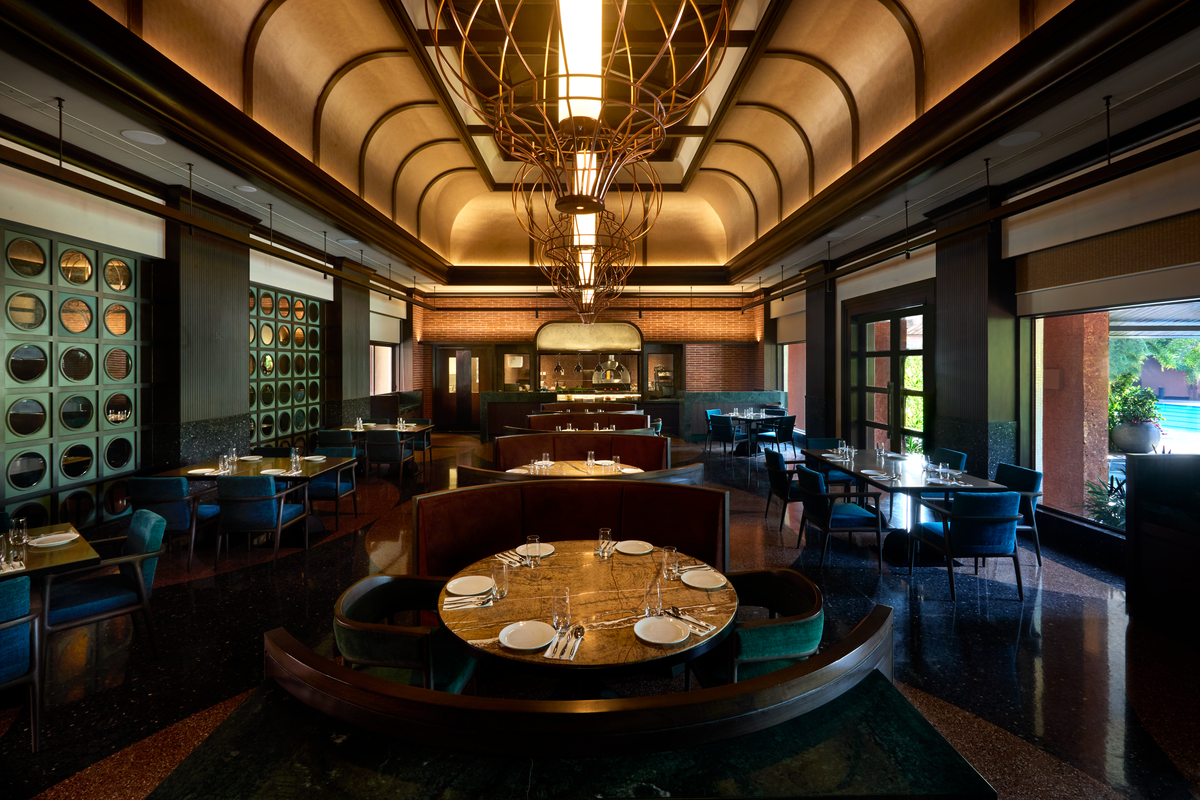
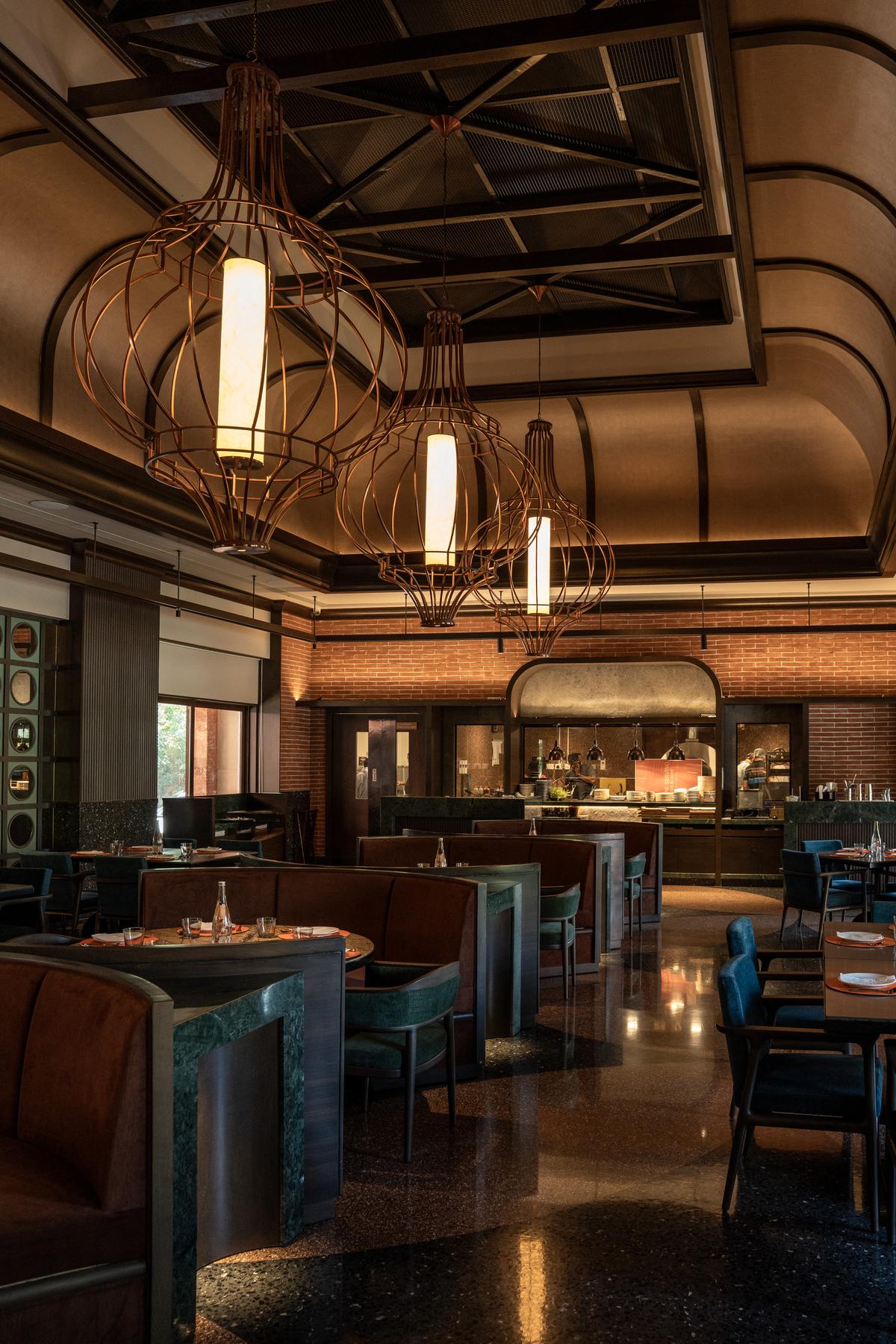
Akshay is clear that while that legacy follows him, Sabores is not an attempt to recreate it. “We’re putting our spin on food this region is known for, but often diluted,” he says. Located within Clube de Palma, a private residents’ club in Bambolim, the 60-seater restaurant leans into Goan-Portuguese architectural cues without slipping into pastiche. Laterite walls remain exposed, contemporary chandeliers hover overhead, and booth-style seating allows for intimate, unhurried meals.

Inside Sabores

Inside Sabores
| Photo Credit:
Cleto Fernandes

The culinary programme draws from Goa’s Hindu and Christian traditions, with Portuguese influence running quietly through it. As with any new restaurant, there is an adjustment period — a kitchen learning to handle the ferocity of orders, seasoning finding its footing, and proteins settling into consistency. That said, several dishes already show a clear point of view.

Inside Sabores

Inside Sabores
| Photo Credit:
Cleto Fernandes

The chicken corrado, a house interpretation of Goan chilli fry, is confident and well-balanced, heat held in check by restraint rather than dilution. Rissóis de camarão, served with a smoky tomato aioli, are crisp, correctly filled, and unshowy — done the way they should be. The charred pork belly with amsol glaze is tender and deeply flavoured, the kokum lending acidity without sharpness, while the slow-cooked pork roast is smoky, comforting, and quietly indulgent.

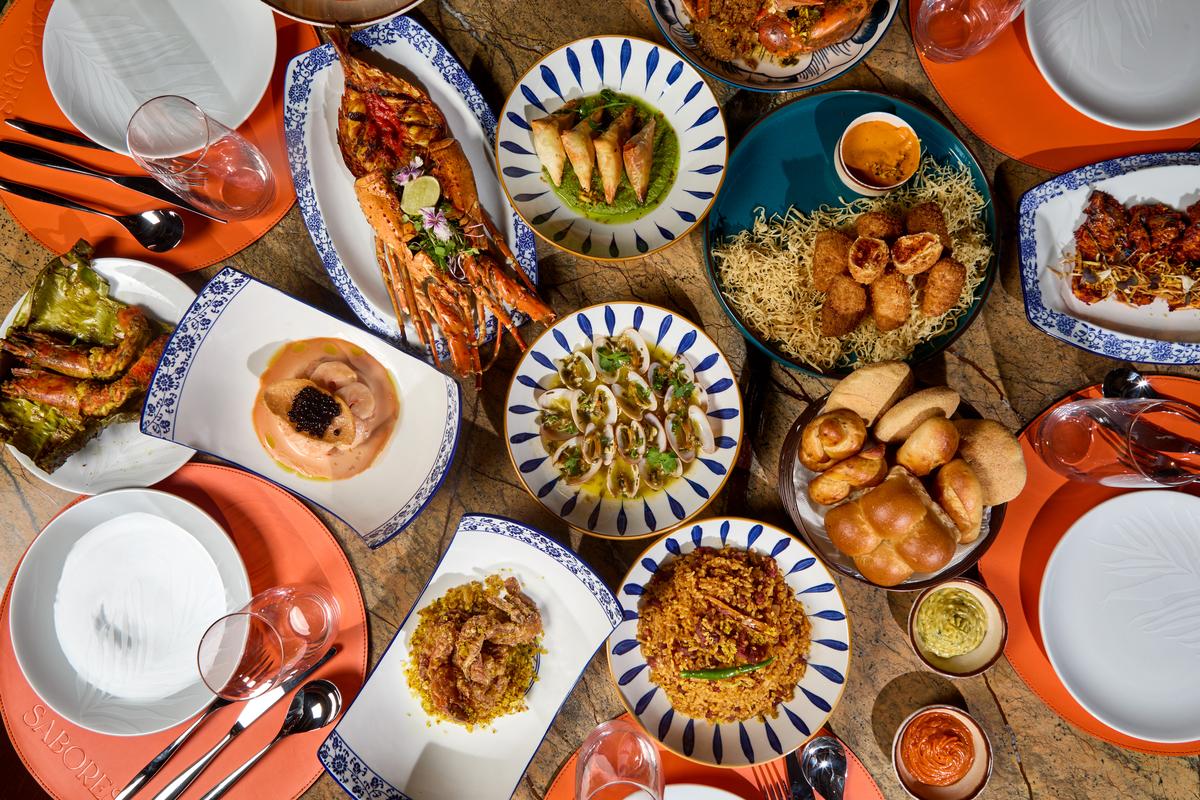
The spread

The spread

Clam bullhao rissois lobster

Clam bullhao rissois lobster

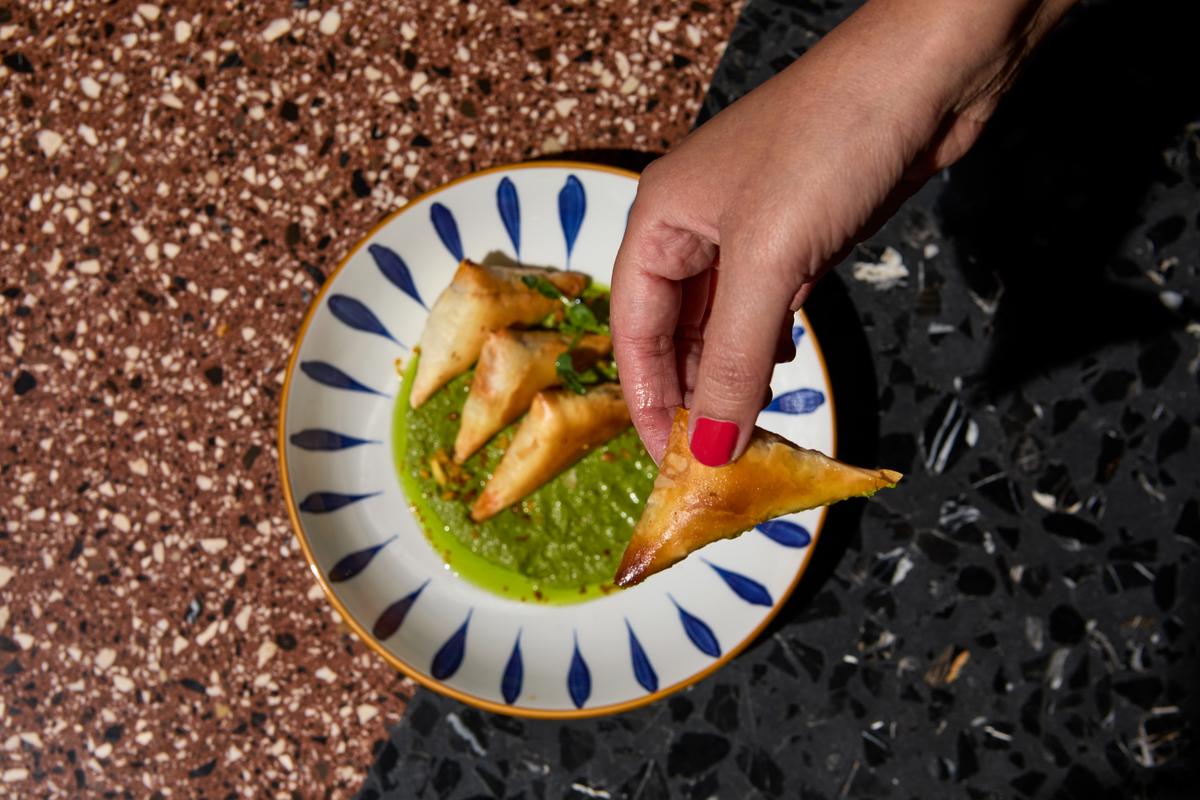
Divar mutton samosa

Divar mutton samosa

The bread programme — poie, onde, pão and celebratory dinner rolls — is thoughtful rather than ornamental, especially when paired with house-made butters ranging from a subtle choriso note to a classic café de Paris.

Not everything lands, however. The Goan green beef curry, though hearty, feels muddled where it should be precise, its freshness dulled by excess weight. The Chapora, a Rio Rico classic reimagined — a coconut-forward curry meant to deliver soft tang and coastal comfort — lacks the depth and clarity.

The cocktails

The cocktail programme, developed with Pankaj Balachandran of Countertop India, is disciplined and largely assured. The Flor de Palma, built on frangipani-infused vodka, is effervescent — a drink that knows when to stop. Ain’t No Sol-shine, a tequila cocktail with kokum and plum, carries tang, soft sweetness and a refined sour finish, like a tropical monsoon held neatly in a glass.

The standout is Vindaloo — pork-fat-washed gin, Cointreau, chilli-garlic honey and citrus, finished with egg white. It is bold, refined and quietly explosive, the kind of cocktail that lingers in memory rather than demanding attention. Mango Verde, however, disappoints: a highball that promises brightness but falls flat, its raw mango note failing to cut through as expected.

What stands out at Sabores is that it offers proportion — an understanding that heritage does not need to be replicated to be respected. Between the plates, the drinks, and the small gestures — postcard-style comment cards, and the promise of regular Fado nights — there is an attempt to keep memory active rather than embalmed.

Address: Clube de Palma, Phase 2, Aldeia de Goa, Bambolim, Goa; meal for two costs ₹3,000 (inclusive of alcohol)

Published – January 11, 2026 02:38 pm IST


Source link

How India’s young is rethinking ageing


Karthic Rathinam is 26 and, by most traditional measures, healthy. The Chennai-based product designer has no chronic illnesses, no dramatic warning signs, nothing that would have sent an earlier generation rushing to a clinic. Yet he has undergone a battery of medical tests: blood markers, metabolic panels, sleep analysis. He tracks his body continuously through a ring on his finger and an app on his phone. Each morning, he checks the data — how long he slept, how much of it was deep, and whether his heart-rate variability suggests recovery or strain.

“The numbers do not merely describe my body; they shape my understanding of it. A good score brings reassurance. A bad one lingers through the day, even if nothing feels wrong,” says Rathinam, who is trying to slow a future he cannot yet see. The tests, the tracking, the constant feedback are less about today’s body than about tomorrow’s.

Karthic Rathinam tracks his body continuously through a ring on his finger and an app on his phone.

Karthic Rathinam tracks his body continuously through a ring on his finger and an app on his phone.

For this generation, longevity is not a distant concern but a way of managing uncertainty in the present. Many young Indians entered adulthood amid economic volatility, delayed milestones, and a constant sense that the future is fragile and contingent. Health, unlike careers or the climate, appears measurable and improvable. Tracking sleep, glucose, or recovery offers a feeling of control in lives otherwise shaped by forces beyond individual command. In fact, in urban households, the flow of health expertise is often reversed today: children introduce parents to protein intake, wearables, and preventive tests.

The body has become a visible project

“Kids today are so much more conscious about what they put into their mouths,” says author and podcaster Shunali Shroff. “I can definitely speak for my daughters. After 16, they started looking at food in terms of groups, thinking about protein versus carbs, making choices with intention.” And it’s not just them; many of the younger generation are the same.

Shunali Shroff’s daughters look at food in terms of groups, making choices with intention.

Shunali Shroff’s daughters look at food in terms of groups, making choices with intention.

“Teenagers and young adults aren’t waiting to feel unwell. They are treating wellness as a practice, not a remedy. It’s a shift in behaviour, but it tells you something profound about how this generation thinks about health,” she says. Cryotherapy, red-light therapy, Ayurvedic detox protocols, naturopathy cleanses, autophagy diets, urban ashrams, collagen formulas, PRP injections: all are part of their toolkits. Shroff describes the pursuit as a form of signalling, a way of showing that one has the time and resources to invest in living longer. She notes, “The body, once a private concern, has become a visible project.”

Aditya Palod, 30, works in private equity, a world built on long hours and constant mental strain. He has tried ice baths, yoga, the gym — the now-familiar rituals of modern self-optimisation. He emphasises, “how ordinary this sounds. These practices, once fringe, have become water-cooler conversations, shorthand for how a generation is trying to manage the cost of the way it lives”.

Aditya Palod has tried ice baths, yoga, and the gym.

Aditya Palod has tried ice baths, yoga, and the gym.

Who gets to age well?

Longevity does not arrive evenly. Versions that play out in public often begin at the top and move outward. Surinder S. Jodhka, professor of sociology at Jawaharlal Nehru University, argues that longer life is fast becoming another marker of inequality. “Who gets to age well increasingly reflects who has access to education, nutrition, healthcare, and time over a lifetime,” he states. What makes this divide sharper is the limited role of the state in preparing for an ageing population. “India’s public systems were built around scarcity, survival, and youth, not longevity. Healthcare capacity is strained, pensions remain thin, and there is little coordinated policy thinking around how older citizens will live, move, and be cared for,” says Jodhka. “As family structures loosen and informal care weakens, the responsibility for ageing has quietly shifted from the public realm to private households and markets. Thus longevity, in this context, risks becoming less a collective achievement and more a personal privilege.”

“The country already has more than 140 million people over the age of 60. By 2050, that number is expected to exceed 350 million. This will give rise to a senior citizen economy estimated to cross $1 trillion dollars. An economy built for youth and speed will be forced to adapt to endurance, care, and ageing.”Aryan KhaitanInvestment associate, Whiteboard Capital

Aryan Khaitan

Aryan Khaitan

Beyond western templates

India’s longevity story, however, cannot simply borrow from western templates. “In India, people often live long enough to grow old, but not well enough to remain independent,” says Rishi Pardal, co-founder of the longevity clinic Biopeak. He argues that the real question should be about functional survival — much like the younger generation is increasingly trying to address. “The gap between lifespan and healthspan is wide, and it appears early. Indians tend to develop cardiometabolic risks at younger ages and lower thresholds than western populations. Muscle loss, reduced mobility, and chronic inflammation set in sooner.” Many interventions popular in global longevity circles are designed for very different biological and social conditions.

Rishi Parda says the real question should be about functional survival.

Rishi Parda says the real question should be about functional survival.

Meanwhile, Prashanth Prakash, founding patron of Longevity India, a multi-disciplinary initiative by The Indian Institute of Science, believes that India’s historical links with practices such as Ayurveda and meditation could stand us in good stead. He states the country can be a hub of longevity innovation. “We can leapfrog legacy sick-care systems directly to predictive health, and our history is a massive asset here,” he explains. “Ayurveda is essentially the original ‘systems biology’ — viewing the body as an interconnected network rather than isolated parts. This cultural familiarity with holistic balance [like gut-brain axes] accelerates the acceptance of modern, AI-driven interventions.”

“The need of the hour is to converge ancient wisdom with modern medicine in an evidence-based way. Scaling longevity services will require collaboration between the public and private sectors. Insurers could tie policies to preventive health metrics [like wellness scores] to reward healthy behaviour. Public health systems could partner with longevity researchers to bring data-driven, preventive programmes into communities. High-touch clinics could serve as innovation labs, but a more affordable layer will consist of AI-led digital coaches that deliver 80% of the value at a fraction of the cost.”Prashanth PrakashFounding patron, Longevity India

New financial products

The shift in ‘longevity thinking’ is already visible in finance. Srinivas Balasubramanian, Chief of Product and Marketing at ICICI Prudential, says: “Most retirement planning was designed for a world in which lifespans followed a reasonably predictable arc. You worked, you retired, and you planned for a known horizon.” That world is slipping away. People are living longer, and the uncertainty of how long retirement might last has forced insurers to rethink what risk actually means. In response, a new category of financial products, such as annuities, has emerged, built around the concept of longevity — designed to pay out for as long as a person lives, however long that turns out to be. These products, Balasubramanian notes, are drawing intense interest and are growing 10%-20% faster than traditional retirement offerings.

Srinivas Balasubramanian

Srinivas Balasubramanian

A collective recalibration

A decade from now, Rathinam will not remember most of his numbers. The sleep scores and charts will blur with time. But his health, tended to early and deliberately, will hopefully stand him in good stead.

Awareness is spreading, too. A whole generation is beginning to think about ageing before it arrives, to treat strength, mobility, and mental clarity as assets worth protecting. Longevity need not be a race to live forever or a privilege reserved for a few. At its best, it could be a collective recalibration, a society learning to value staying capable, connected, and independent for longer.

The author works in consulting by day and writes about culture, business, and modern life.


Source link

Is 2026 the year of the Queenager?


 In 2025, Kareena Kapoor Khan returned as the face of Lakmé and 50-something Bollywood icons Kajol and Twinkle Khanna anchored a show on Amazon Prime

 In 2025, Kareena Kapoor Khan returned as the face of Lakmé and 50-something Bollywood icons Kajol and Twinkle Khanna anchored a show on Amazon Prime

Last year saw a greater awareness of older women in fashion and beauty. But 2026 marks a milestone: the first wave of millennials in India will turn 45. And this shift is set to reshape how fashion and beauty brands look at age, representation, and aspiration.

According to a Morgan Stanley report, India is home to over 400 million millennials, making it the largest millennial cohort in the world. This generation not only witnessed women entering the workforce in unprecedented numbers, but also wields significant spending power, particularly for the fashion and beauty industries. With that comes an expectation: they want to see themselves, and older women, represented in campaigns and on screens.

Some early signals are promising. Kareena Kapoor Khan, now 45, returned as the face of Lakmé. 50-something Bollywood icons Kajol and Twinkle Khanna anchored a show on Amazon Prime, while 60-year-old Kim Cattrall (of Sex and the City) became the face of Charlotte Tilbury and featured in London-based Indian designer Ashish Gupta’s collaboration campaign with British department store Debenhams.

Kim Cattrall in London-based designer Ashish’s campaign with Debenhams

Kim Cattrall in London-based designer Ashish’s campaign with Debenhams

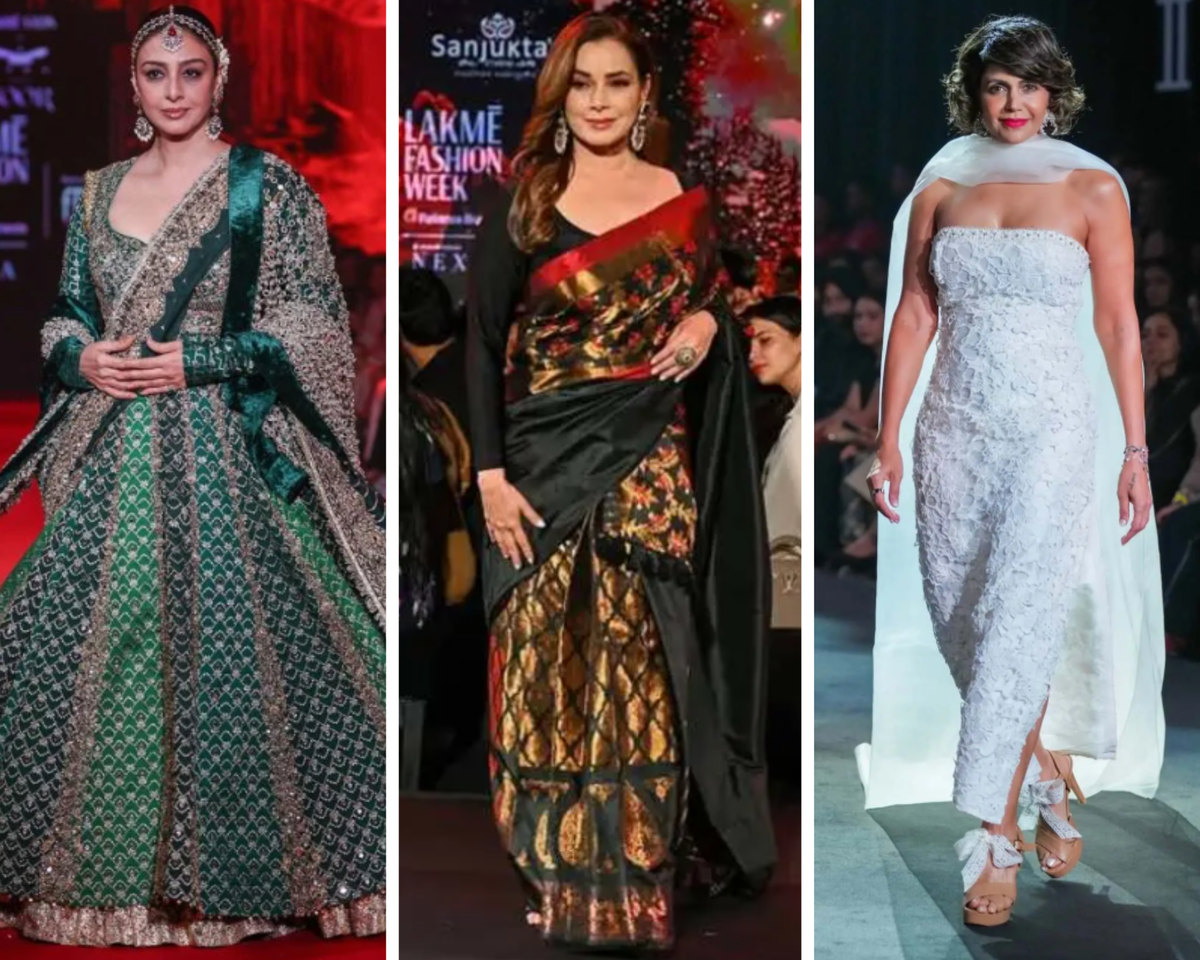
At Lakmé Fashion Week, industry veterans Tabu, Neelam, and Madira Bedi (all women all in their 50s) walked the ramp. Clearly, a “maturity quake” is underway.

Tabu, Neelam, and Madira Bedi at LFW 2025

Tabu, Neelam, and Madira Bedi at LFW 2025

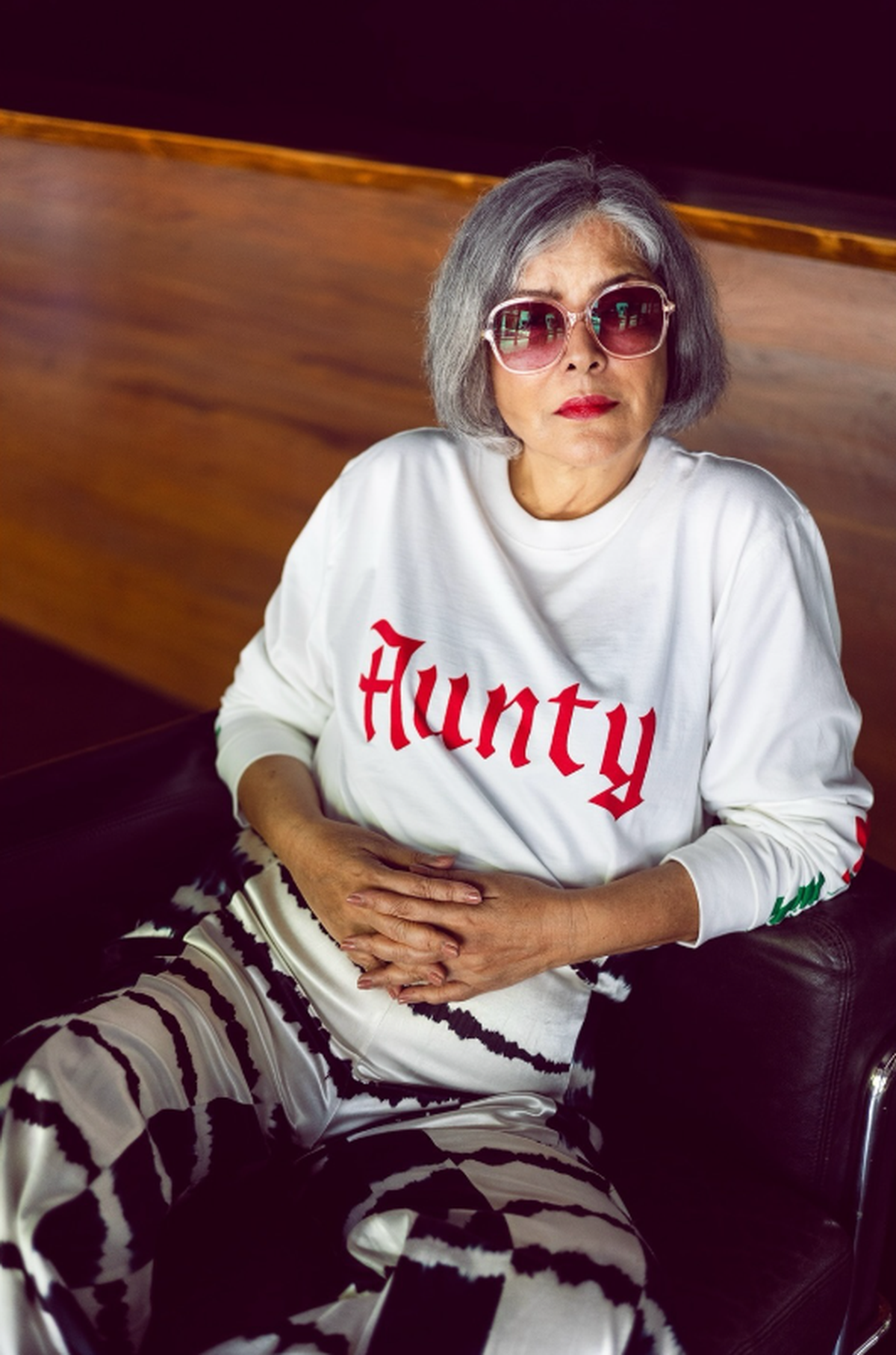
‘Aunty’, a badge of style

Being called an “aunty” was once considered dismissive or even insulting. Today, it’s being reclaimed as a badge of experience and style. Designer label Nor Black Nor White even launched a slogan T-shirt celebrating the term, turning the once-ageist term into a symbol of empowerment and playfulness. It has been worn by actors Alia Bhatt and Zeenat Aman.

‘Which genius decided that “aunty” is a derogatory term? It certainly wasn’t me,’ asks Zeenat Aman on social media

‘Which genius decided that “aunty” is a derogatory term? It certainly wasn’t me,’ asks Zeenat Aman on social media
| Photo Credit:
Courtesy @thezeenataman

Campaigns featuring older women are receiving positive feedback, too. And fashion magazines are increasingly turning to celebrities from the 1990s for their covers. Yet, despite nostalgia becoming a key driver of fashion storytelling, such inclusions are still the exception rather than the rule.

Representation remains uneven. Even when fashion stores feature older women in their campaigns, the products themselves are largely designed for the tastes and lifestyles of those in their 30s and younger — showing that inclusion has often been about marketing optics. Terms such as “anti-ageing” and “age-defying” continue to dominate marketing and fashion lexicon, signalling that the industry’s mindset has a long way to go.

Fun is ageless

Culturally, not much has changed in how India views women once they pass 40. Society celebrates men as they grow older — becoming distinguished, charismatic, or even “foxy” — while women are expected to age “gracefully”, according to rigid standards. Age-positive advocates, from Delhi-based artist Mukta Singh to actress-author Lisa Ray, frequently challenge this on social media, asking to be called Queenagers. They believe having fun with fashion is ageless.

You still see ageist comments on social media about Aishwarya Rai. Just a few weeks ago, actor Dia Mirza called out the double standard where older male actors continue to be cast opposite much younger female leads, even as older women are seldom shown as romantic equals.

No expiry date for self-expression

Perhaps change will accelerate now that millennials, the generation that shaped culture significantly, are moving into their 40s. These are the women and men now occupying leadership roles in fashion and beauty companies. They understand first-hand that aspiration, style, and self-expression do not have an expiry date.

With women living longer and taking better care of themselves than ever before, it would be wise for beauty and fashion to embrace age-inclusive representation as a way of future-proofing their brands. 2026 could therefore and (hopefully does) mark a turning point.

The fashion journalist and author is based in Dubai.


Source link

What to expect at The Gathering’s second edition in Mumbai


There is a certain gravity to the idea that a plate can be a sentence and a meal a short novel. Over the past year, the world has offered a string of experiments in which restaurants, fairs, and festivals deliberately blurred the line between culinary craft and contemporary art. Some of these gestures have the modesty of a small biennial commission — a single dish staged under gallery lights — while others are full-blown theatrical propositions that demand from their audiences a new vocabulary of taste, scent, and mise-en-scène.

In Somerset, a Michelin-adjacent restaurant, Osip, mounted an exhibition-in-residence programme that integrated ceramics, sculpture, and photography into the dining room as an ongoing conversation with seasonal produce and local materials; the effect felt less like decoration and more like an extended essay. The artist’s objects were not just backdrop but instruments that altered how the food touched the plate, how it cooled, how it was held — small physical contingencies that changed experience.

Likewise, festivals such as Serendipity Arts have commissioned multisensory installations in which sound, scent, and curated tastings cohere into speculative fictions — for instance, staged tastings imagining future ecologies and the flavours that might survive in an uncertain climate. When the premise is not merely spectacle but research — when it asks, “What does cultural memory taste like?” or “How does displacement change a spice profile?” — the work acquires intellectual and ethical weight.

From the first edition of The Gathering, in Delhi

From the first edition of The Gathering, in Delhi
| Photo Credit:
Special arrangement

There is an unavoidable market dynamic underneath much of this activity. Galleries and fairs have long relied on hospitality as a tool for longer dwell times and higher price thresholds; restaurants have used art partnerships to create distinct identities in a crowded market. Sometimes those mutual needs produce genuinely inventive work; at other times they generate a loop of mutual legitimisation where art lends cachet to a chef and the chef supplies photographs for a gallery’s feed. The line between cultural dialogue and commercial theatre is porous, and that very porosity is a political argument we are all, often uncomfortably, complicit in.

Yet the impulse itself feels worth taking seriously: an attempt to give food cultural ballast beyond novelty, to let it operate as a medium of meaning rather than mere consumption.

One of the clearest manifestations of this ambition arrives this January, when The Gathering returns with its second edition, transforming Mumbai’s Mukesh Mills into what its organisers describe as an immersive stage for food, art, ideas, and performance. After its debut in Delhi, Edition 02 unfolds across three days (January 16–18), positioning itself less as a food festival than as a tightly curated cultural encounter — one that borrows as much from the grammar of exhibitions and salons as it does from tasting menus.

At the centre of the festival are five chef × artist–led pop-up restaurants, each offering multi-course tasting menus limited to 20 guests per seating. These collaborations are anchored around three curatorial impulses: conservation, exploration, and innovation. Textile histories are translated into sensory experiences where fabric, flavour, and memory intersect; cross-border culinary identities trace highland ingredients and diasporic nostalgia; contemporary menus reflect on belonging — not as inheritance, but as something assembled through movement, adaptation, and choice. Each collaboration exists only for this moment, never to be repeated, leaning heavily on the rhetoric of ephemerality that has become central to food-as-art practice.

The explorers: memory as material

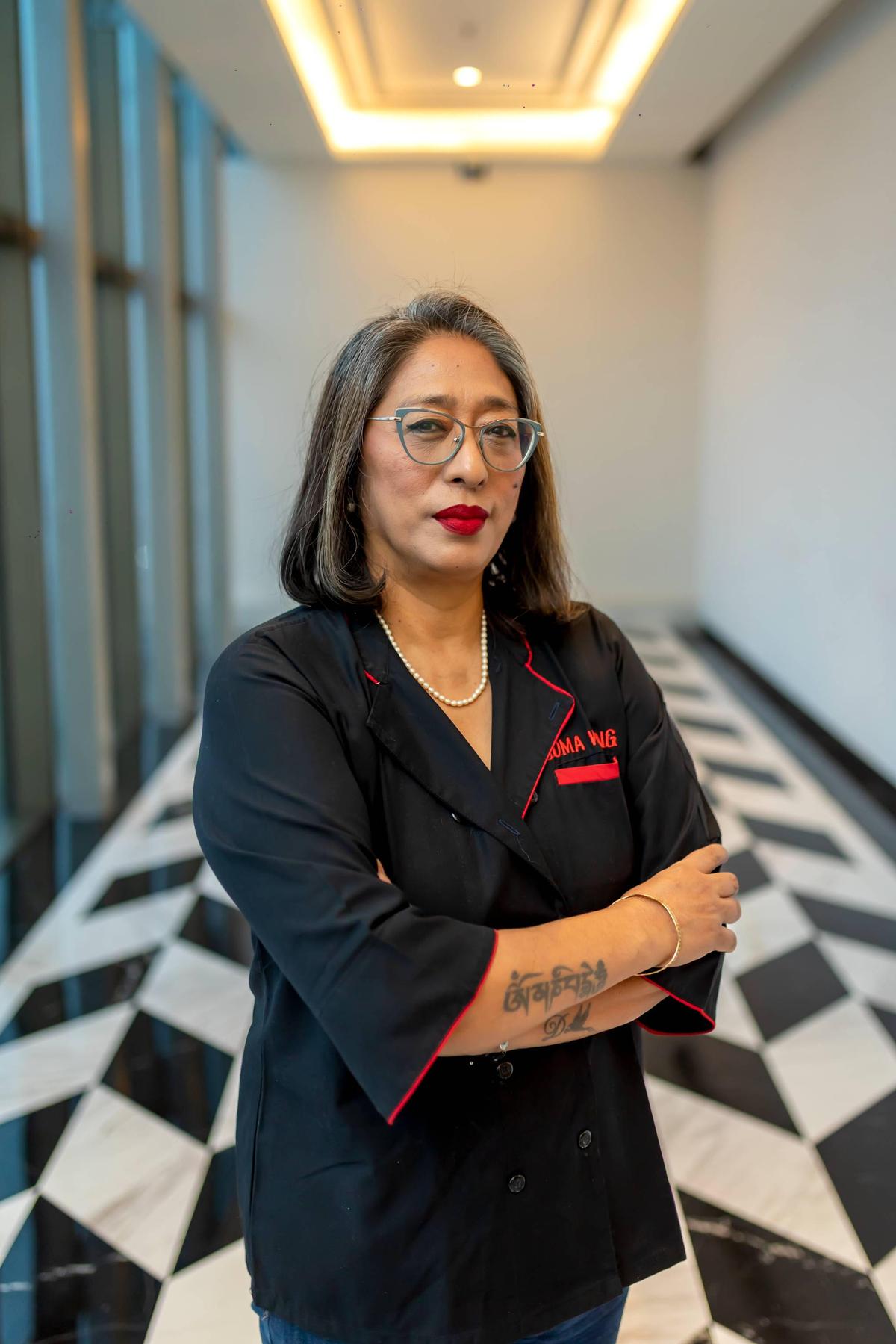
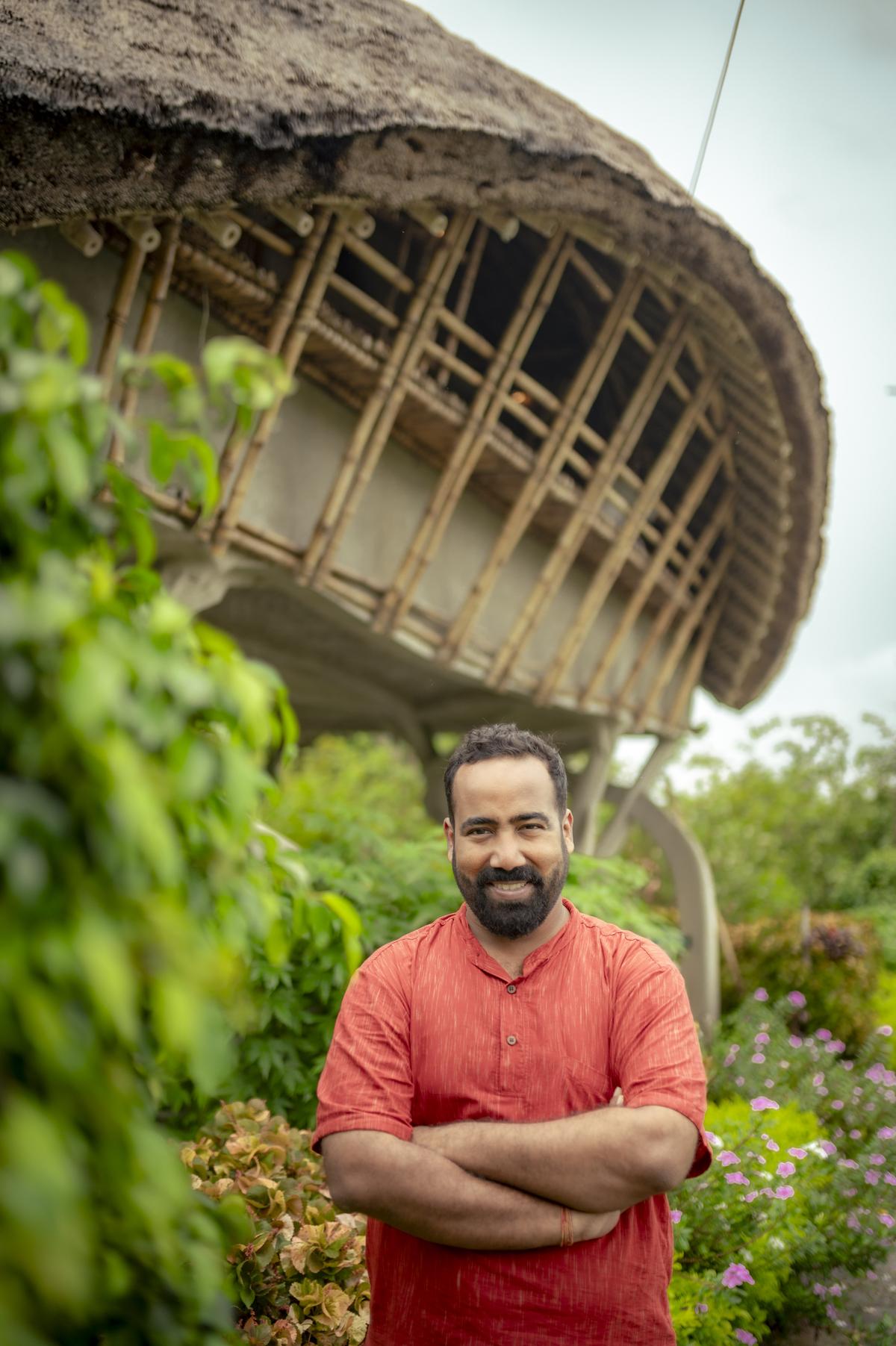
For Kolkata-based Doma Wang, whose collaboration with Sachiko Seth and architect Udit Mittal traces cross-border culinary identities, the surprise was not difference but familiarity. “We come from different disciplines, perhaps,” she says, “but the core is the same. The work ethic is the same.” What created alignment, she notes, was not aesthetics but values — the shared understanding of what it means to build something with care, especially within family-run practices. “Udit really got our vision of what we had in mind,” she recalls. “We bonded over food and it just flowed seamlessly into the design language.” Their collective imaginations have given birth to The Noodle Factory, a return to where Doma’s story began, a noodle shed in Kalimpong where dough was mixed by hand, bamboo poles doubled as tools of labour, and noodles hung overhead like constellations.

Doma Wang

Doma Wang

Udit Mitall in front of the noodle factory

Udit Mitall in front of the noodle factory
| Photo Credit:
SNEHADEEPDASPHOTOGRAPHY

That flow crystallised early. “It was during the first meal we shared,” Doman says, recalling a moment when ideas stopped needing translation. An image proposed across the table — noodles made from cane, physically flowing through the table — became a kind of conceptual anchor. “That got us really excited to see what else he would come up with.” The excitement was not about spectacle, but about permission: the sense that memory, material, and imagination could coexist without hierarchy.

The innovators: when form learns from flavour

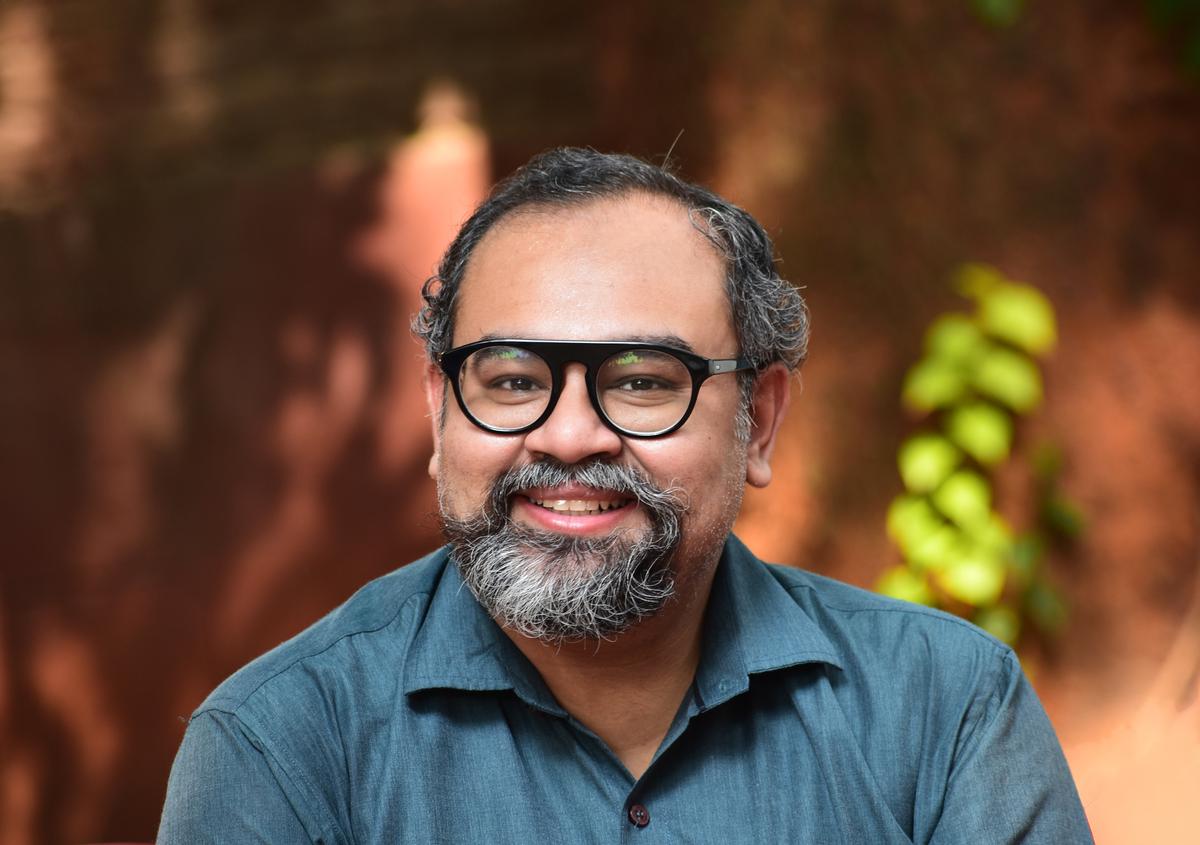
Designer Ankon Mitra describes his collaboration with chef Ralph Prazeres not as a surprise, but as an escalation of long-held curiosity. Having designed restaurant spaces for over two decades, Ankon was drawn to what he calls the “five-dimensional artistry” of chefs — their instinctive engagement with all five senses. “For someone designing the space where people sit down to a special meal,” he explains, “this is a beautiful opportunity to aspire to that same multi-dimensionality.”

Ankon Mitra

Ankon Mitra

The connection clicked through hybridity. Ralph’s culinary identity — Goan heritage shaped by French and European technique — mirrored Ankon’s own artistic language, which combines Indian forms with the precision of Japanese origami. “It felt like stories melding between two worlds and two forms of art effortlessly,” Ankon says. What diners will experience, as a result, is not thematic mimicry but structural resonance: the lushness of the Konkan coast rendered in glowing whites, where light and shadow do the work of colour.

The conservators: suggestion over spectacle

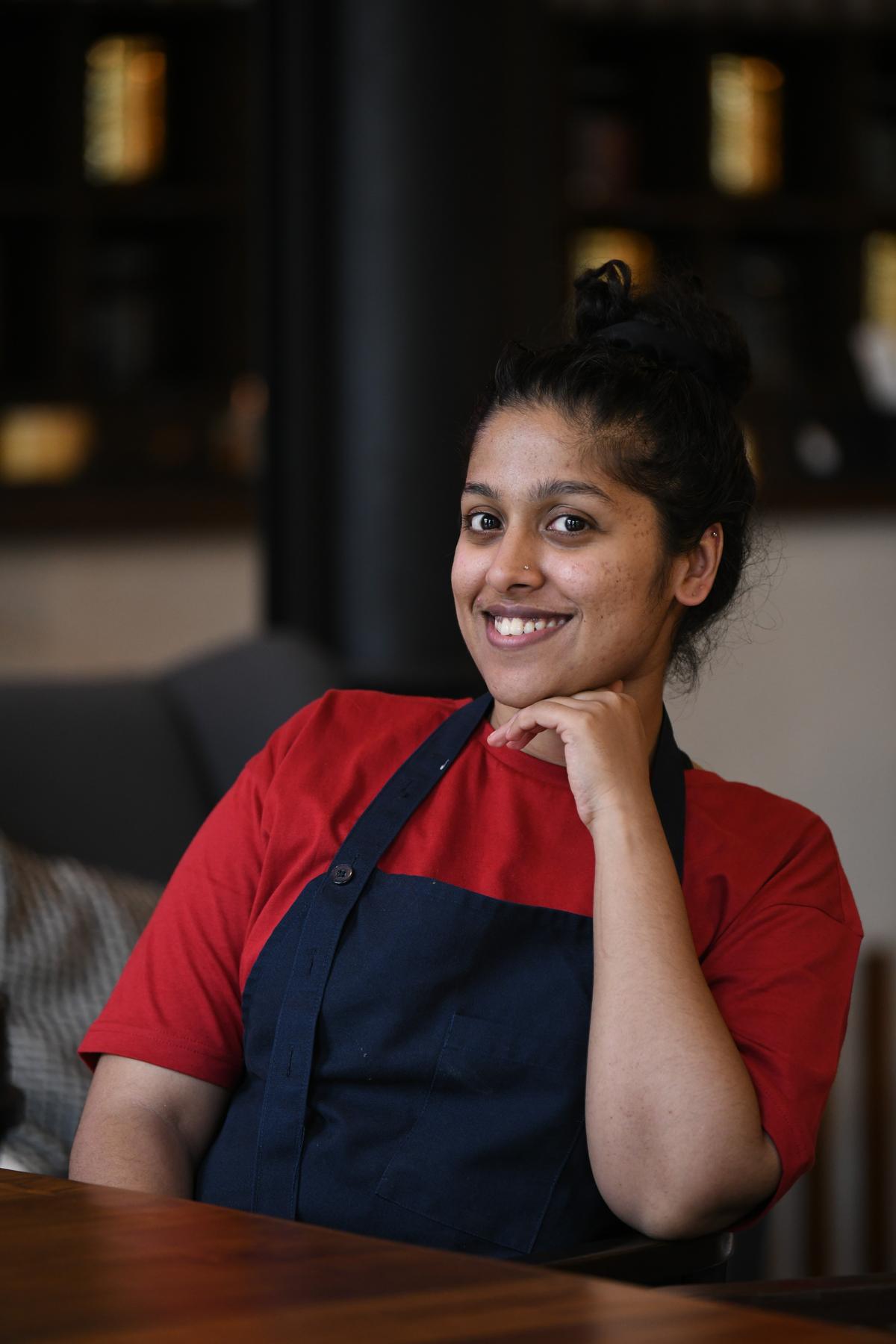
If any collaboration embodies the festival’s resistance to overt symbolism, it is the conversation between Mumbai’s chef Niyati Rao and designers Abraham & Thakore from Delhi. Niyati speaks of an immediate alignment of instincts. “Abraham & Thakore work with restraint, structure, and deep respect for origin — and that’s exactly how I approach food,” she says. “There was no need to make things loud.”

Niyati Rao

Niyati Rao

The turning point came when metaphor fell away. “When we stopped translating and started responding,” Niyati explains. Fabrics ceased to be visual references and became terrains — climates, ways of living. At that moment, dishes were no longer inspired by textiles; they were in conversation with them. What Niyati discovered in the process was how deeply her cooking was already tied to place and materiality. The collaboration reaffirmed her faith in minimalism — in allowing ingredients to carry history without explanation. “Food doesn’t always need narration,” she says. “Sometimes presence is enough.”

That philosophy is echoed by David Abraham, who initially found Niyati’s textile references surprising, only to recognise their conceptual alignment. Indian textiles, he notes, function as analogies for cultural diversity — multiple traditions coexisting, intersecting, and reshaping one another. This, he realised, mirrors Abraham & Thakore’s own design approach. The shared symbol of warp and weft — disparate threads brought together into a single fabric — becomes a quiet metaphor for the festival itself: different voices held in tension, creating coherence without uniformity.

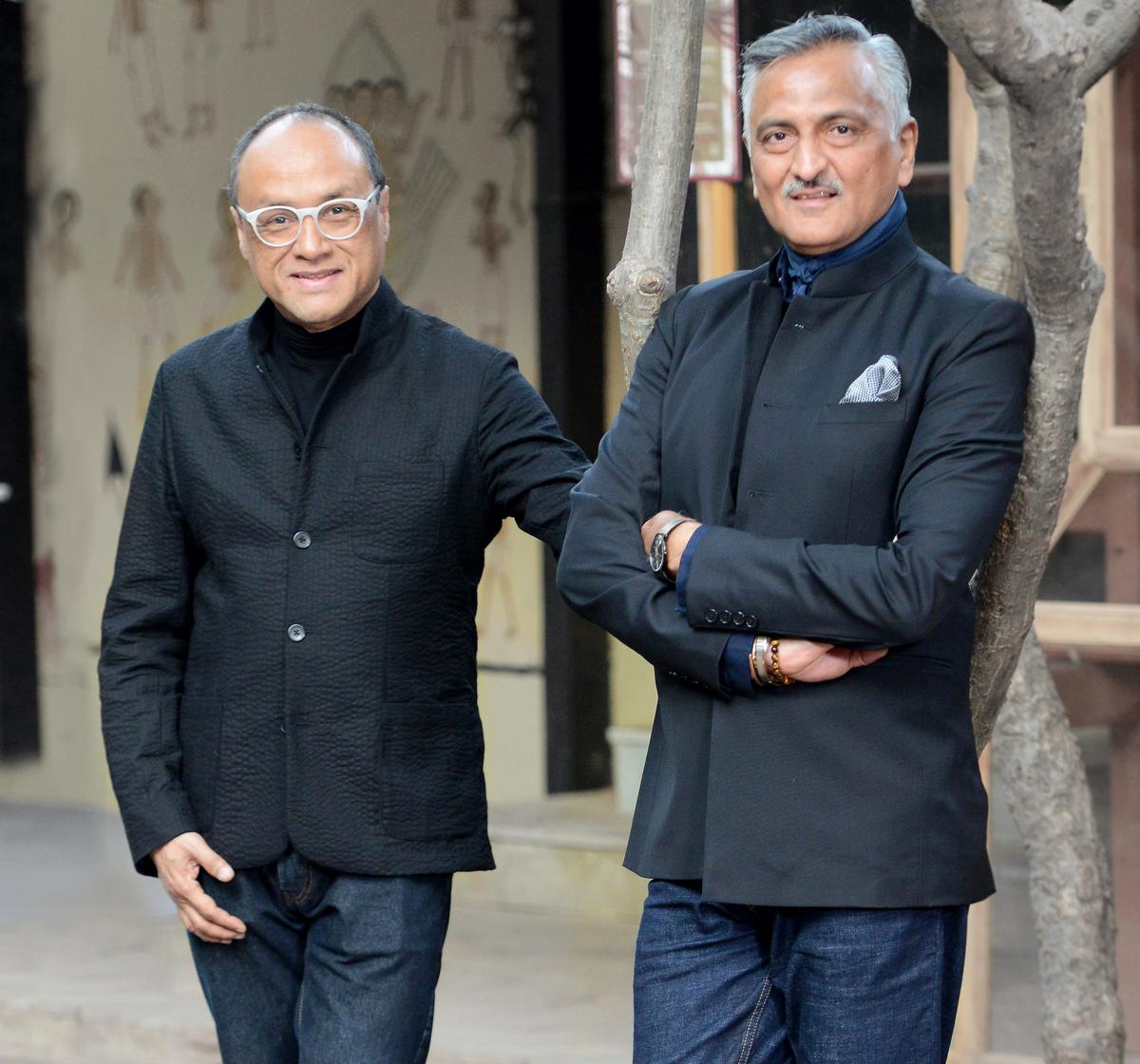
David Abraham and Rakesh Thakore

David Abraham and Rakesh Thakore

For diners, this means encountering stories that are suggested rather than spelled out. Niyati and David speak of deliberately leaving certain narratives in the background, allowing guests to bring their own memories to the table. Nostalgia is not performed; it is activated.

Beyond spectacle

What emerges from these conversations is a more nuanced understanding of food-as-art — one that resists easy spectacle. The most compelling collaborations here are not about elevating food into art, but about allowing food to think alongside it. In that sense, The Gathering does not claim to have resolved the question of food’s artistic value. Instead, it stages the question publicly — and with intention — inviting diners not just to consume, but to participate in a conversation still very much in the making.

The Gathering: Edition 02 will be held from January 16-18 at Mukesh Mills, Mumbai; tickets are available on District by Zomato (starting from ₹2,000)


Source link

How renting designer wear is the smart wedding choice in India


An unexpected storm erupted online when New York’s new democratic socialist Mayor, Zohran Mamdani, was sworn in. Rama Duwaji wore trendy lace-up Shelly boots from London-based Miista to the ceremony, and a wave of critics pointed out that the $630 price tag was at odds with her husband’s campaign, which pivoted on affordability. They were quickly silenced. The boots were on rent, along with the rest of her look. Her vintage funnel-neck wool Balenciaga coat was from Albright Fashion Library, and her wide-leg shorts from The Frankie Shop.

 Rama Duwaji (right) at the swearing in ceremony of Zohran Mamdani at the former City Hall subway station in New York City. She is sporting a rented vintage Balenciaga coat and borrowed boots by Miista

Rama Duwaji (right) at the swearing in ceremony of Zohran Mamdani at the former City Hall subway station in New York City. She is sporting a rented vintage Balenciaga coat and borrowed boots by Miista

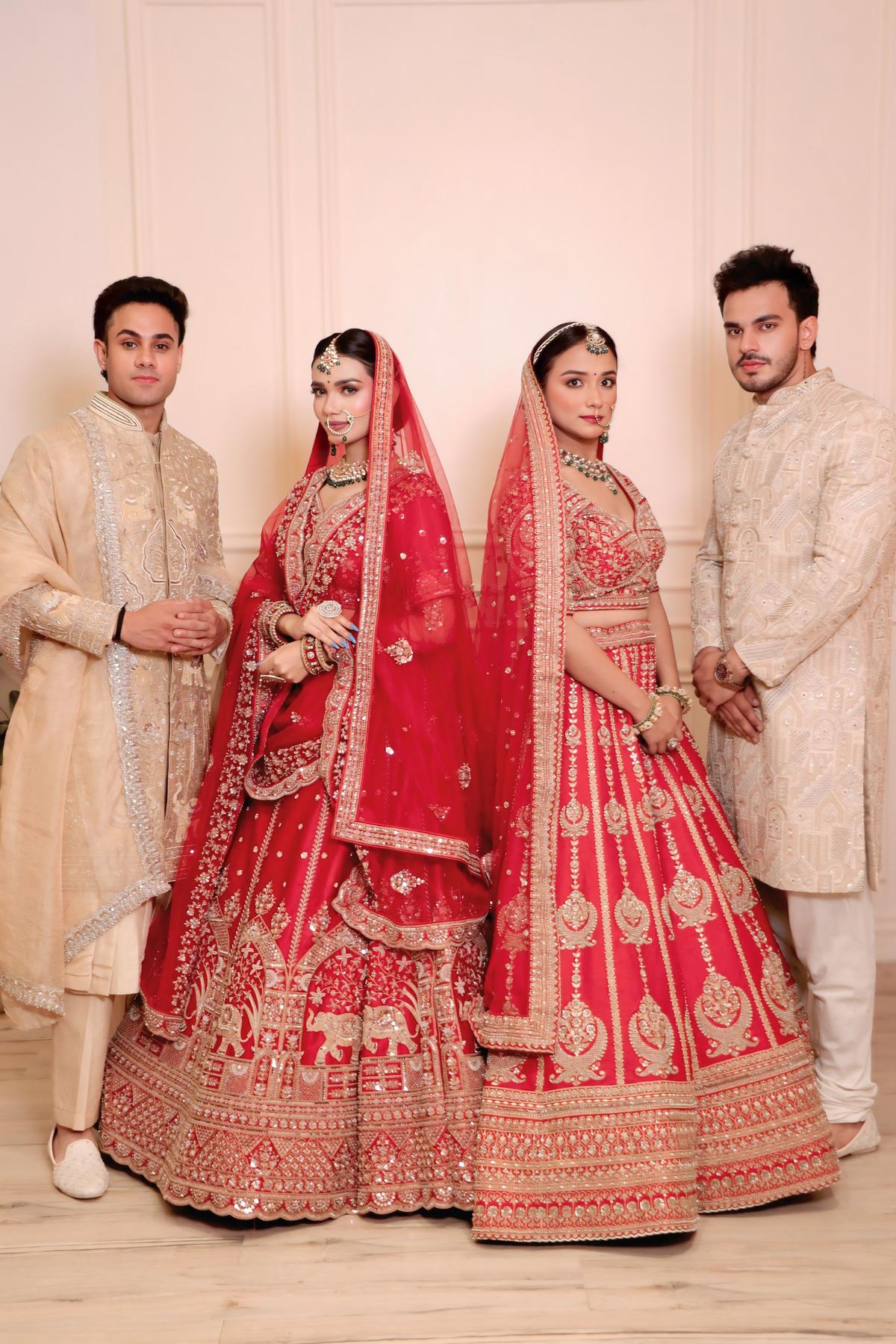
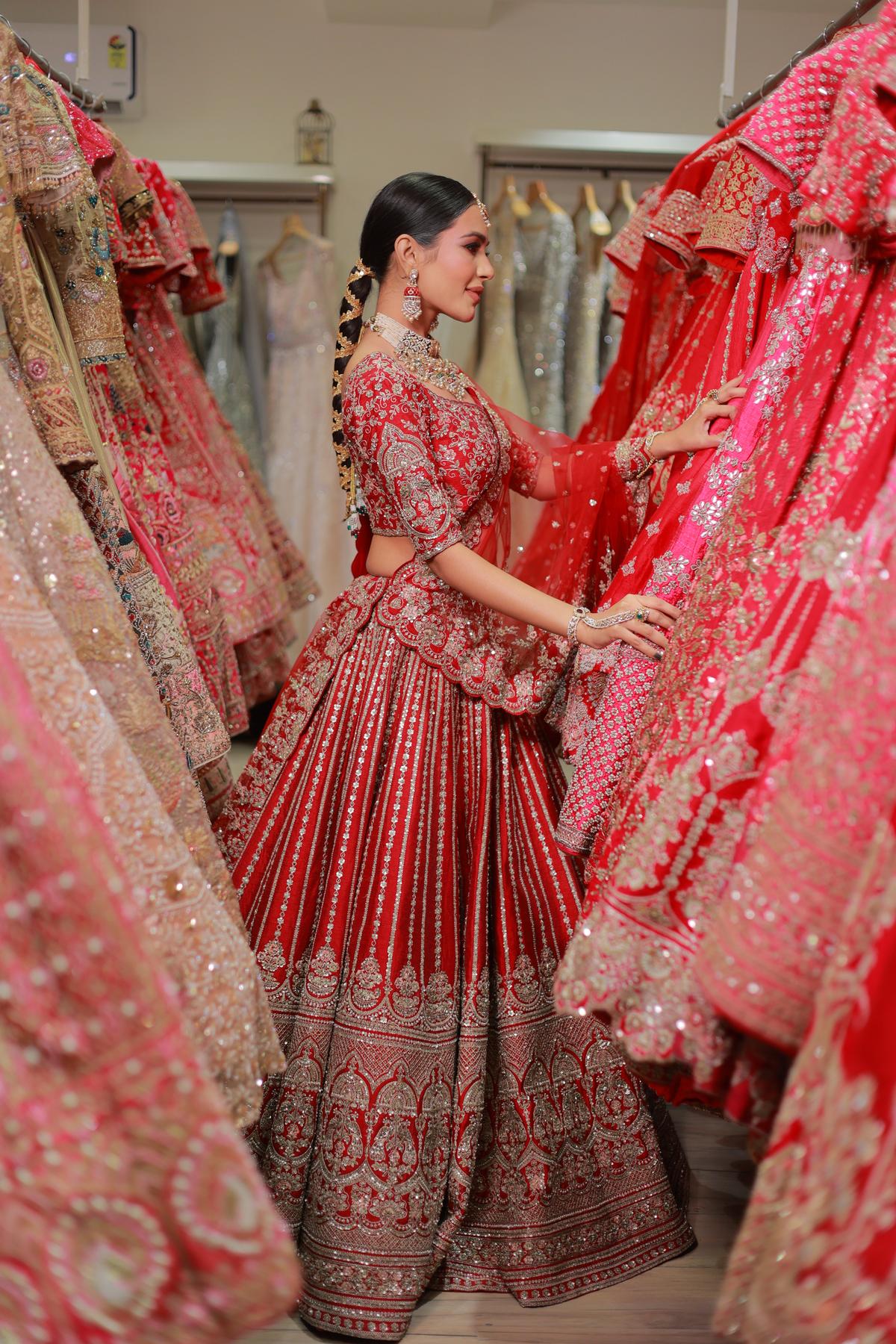
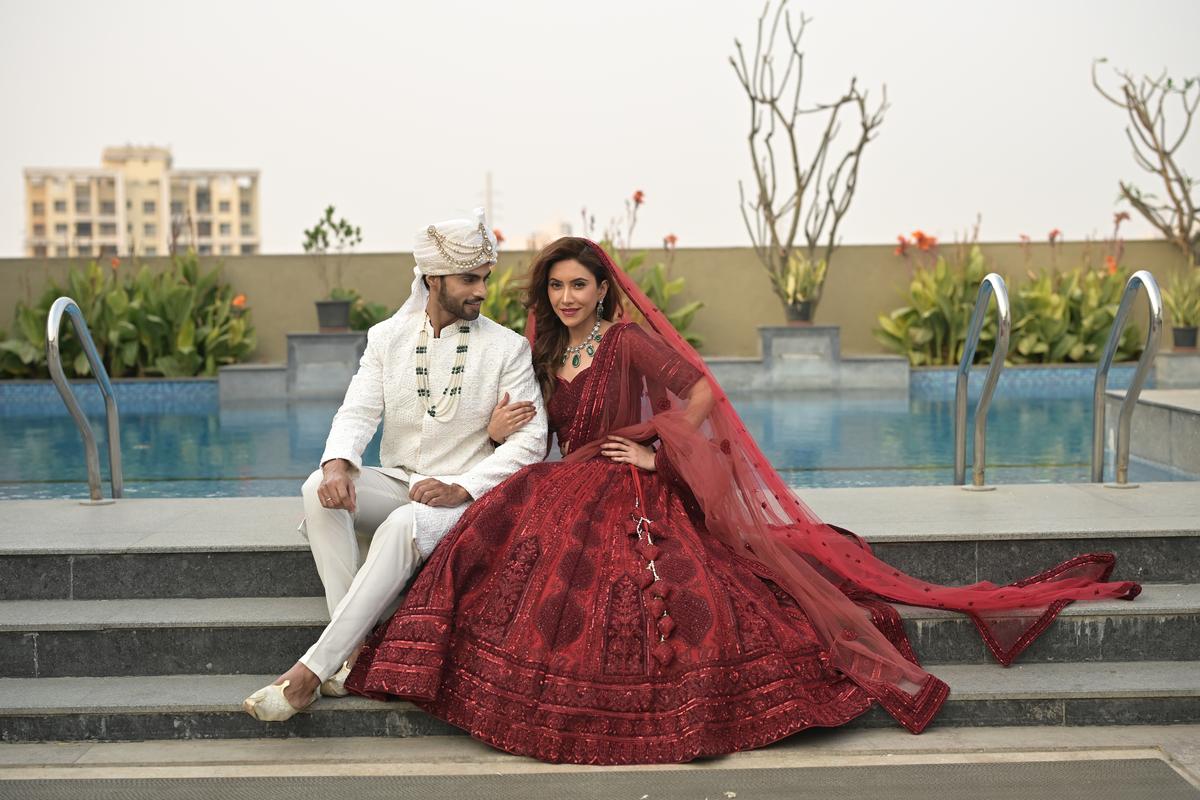
In India too, famously home to the big, fat, extravagant Bollywood weddings, brides and guests are discovering the advantages of rented wardrobes. After all, if the iconic Sabyasachi bridal lehenga costs you upwards of ₹4 lakh, renting it is just ₹30,000-₹40,000. Which makes better financial sense for a young couple, especially since many of these outfits are rarely worn after the wedding, if at all.

Three years ago, in the brief period the COVID-19 lockdown was lifted, Delhi-based Anaisha Singhvee received six wedding invites, which she realised meant readying over 18 outfits. “I kept thinking about what I was going to do about it as the average cost of a wedding guest outfit that matched my style was about ₹20,000,” says the 29-year-old. “I spent close to ₹3 lakh on all the outfits for these weddings, which were spread across a few months.”

Wedding apparel at Flyrobe

Wedding apparel at Flyrobe
| Photo Credit:
Special Arrangement

While researching fashion rentals, Anaisha learnt that “India doesn’t have quality premium rentals for designer Indian couture” and that was the seed for Kuro, which she launched in 2021. “A friend, who was a retailer in Ludhiana, helped with our initial inventory and we started off as an Instagram page. We later launched the website,” she says of her fashion rental that now has retail outposts in Delhi and Hyderabad, and she sees 200+ rental orders a month in peak wedding season. 

At Kuro, Anaisha says one can rent apparel by Amit Aggarwal, Seema Gujral, Harpreet Narula for 1/10th the price, as well as purchase pre-owned designer outfits at up to 60% off. They also encourage customers to cash in on their closets. “We started off as a fashion rental platform but in 2024 we launched our pre-owned couture vertical,” she says, adding that their most popular category is rental and pre-owned bridal wear. 

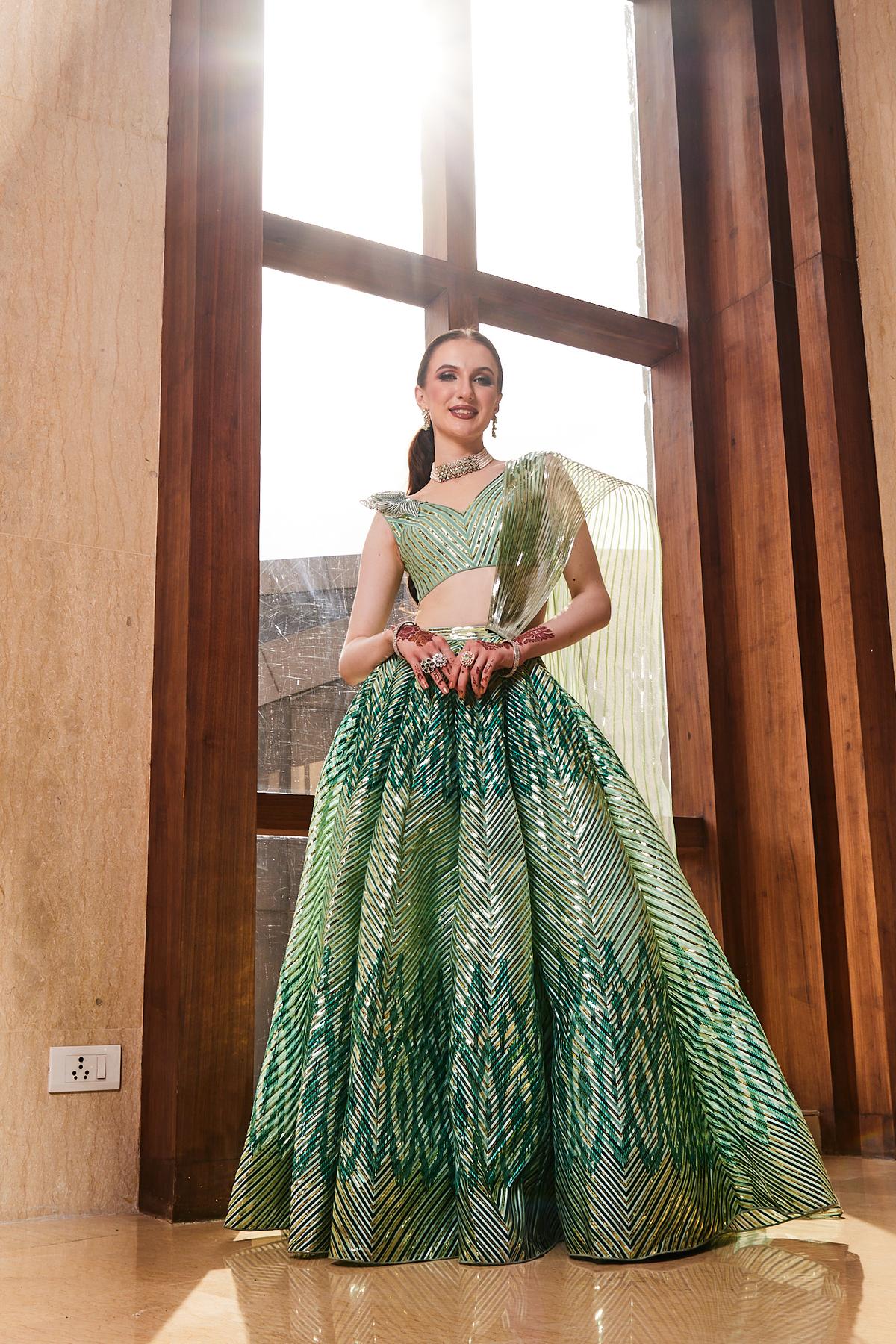
A rented Anita Dongre lehenga from Kuro

A rented Anita Dongre lehenga from Kuro
| Photo Credit:
Special Arrangement

Meanwhile in Bengaluru, Aanchal Saini launched Flyrobe a decade ago when the concept was pretty much unheard of. “Heavy investments were made in branding and marketing to introduce this new category and over ₹100 crore has gone into building Flyrobe so far,” says the CEO-director of the rental fashion service that offers wedding apparel for brides, grooms, and guests. “You can wear your favourite designer — Sabyasachi, Amit Aggarwal, Tarun Tahiliani, Gaurav Gupta — at roughly 15% of the MRP.” While Flyrobe began with renting women’s western wear online through the app, the start-up grew as over “90% of those early western-wear users eventually moved to renting ethnic wear.” They have a retail store in the city as well.

Aanchal says urban consumers now see renting as a smart choice, not second-best. “The category has expanded to ethnic, bridal, and luxury wear, with both online and offline touchpoints scaling quickly. Demand spikes during wedding seasons and festivals,” she says, adding that the industry is now entering the next decade with value-focussed, sustainability-aware Gen Z brides.

Bridal wear at Flyrobe

Bridal wear at Flyrobe
| Photo Credit:
Special Arrangement

Young brides driving growth 

Anaisha says young brides are leading the game with people in the 24-38 age bracket from Delhi NCR, Hyderabad, Mumbai, Indore and Ahmedabad driving maximum demand. “Brides end up spending anywhere between ₹4 to ₹30 lakh on wedding outfits, which are often locked away in storage after the wedding. Younger brides are inclined towards sustainable and mindful shopping. We have a 30% repeat rate in the wedding guest rental category,” she says. 

A Sabyasachi lehenga at Flyrobe

A Sabyasachi lehenga at Flyrobe
| Photo Credit:
Special Arrangement

These factors are also the driving force behind Laveena Laitonjam’s Rent an Attire, a brand she launched in 2015 in Pune. “It started from a personal place. I found myself buying expensive outfits for weddings and special occasions, wearing them once, and then leaving them unused in my wardrobe. At the same time, I was becoming more aware of how much textile waste this creates.” She began by offering curated occasion wear and soon grew into a multi-city fashion rental platform that offers designer occasion wear. “Most of our demand comes from wedding-related requirements but over time, we’ve also seen strong interest from make-up artists, stylists, and event professionals, who rent outfits to build their digital portfolios and create styled content for shoots,” adds Laveena, whose inventory has grown from 300 outfits to 1,500.

Bridal wear rented from Rent An Attire

Bridal wear rented from Rent An Attire
| Photo Credit:
Special Arrangement

A conscious choice

“People are no longer renting just to save money; many are consciously choosing rentals to reduce waste and make more responsible fashion choices. This awareness is especially strong among younger clients,” explains Laveena, adding that there is now demand from tier-II cities such as Nagpur, Jaipur, Dehradun, Lucknow, Indore, and Nashik. Down south, several rental services are operating in Chennai (Rent to Ramp, Kosha, etc.) and smaller cities like Coimbatore and Madurai.

Social media has also played a big role in the segment’s growth. “With reels and pictures being shared widely on platforms like Instagram, people don’t want to repeat outfits they’ve already posted. Renting allows them to experiment with different looks for different occasions,” she adds.

A pre-owned Hermes bag at Kuro

A pre-owned Hermes bag at Kuro
| Photo Credit:
Special Arrangement

Swetha Poddar, CEO, CandidMen says the increase in market players has created more demand. She launched the brand in 2017 with collections for women and men, but pivoted to menswear within six months of the launch. “Women are emotional buyers and men are more logical buyers. While we launched as an online model, we realised customers wanted trials. Initially, I created three trial rooms in my back office and today we have six stores across Bengaluru, Hyderabad and Delhi.” On rent are suits, tuxedos, sherwanis, Indo-western outfits, and more. 

Scaling up

Aanchal says the biggest challenge has always been changing consumer mindset and next scaling a rental business. “Every outfit must be delivered perfectly, returned, repaired, cleaned, and re-circulated. Inventory management in rentals is far more demanding than retail. After years of educating the market and refining operations, the shift is clear and consumers now understand the value.”

Rama Duwali wearing a faux-fir trimmed coat by Renaissance Rennaisance at Zohran Mamdani’s inauguration

Rama Duwali wearing a faux-fir trimmed coat by Renaissance Rennaisance at Zohran Mamdani’s inauguration
| Photo Credit:
Spencer Platt

At Rent an Attire, Laveena says a lot of time goes into reassuring customers that rental fashion can be “hygienic, well-maintained, and premium”. Another challenge comes from the rise of fast fashion. “Low-cost, low-quality occasion wear has made people more comfortable with disposable clothing. We have to constantly educate customers on the long-term value of renting well-made outfits,” says the founder who also offers an annual membership programme (starting at ₹999). Laveena is now looking at adding new categories of designer handbags and accessories on the platform, in addition to launching an AI stylist.

Quality checks

Mumbai-based Khyati Gupta started ‘sisterhoodofrerack’ as an experimental community on Instagram and eventually launched ReRack in 2023 “to create awareness about the problematic supply chain and how it symbiotically fuels consumption”. For her, bringing in a behavioural change among consumers and also educating them about the process has been key.

She says, “users have preset notions about the rental process being long and tiring where upfront deposits are required or they need to take care of returns or damages. We have made this process simple and users just need to order from our website and choose the duration of the rental sans a deposit.” She offers contemporary fashion, demi-fine jewellery sourced from homegrown brands like Lola by Suman, Essgee, Button Masala, Arthmod, Lafaani, and Arrasa. “We provide home deliveries for pick and drop, dry cleaning services, and also cover minor damages and stains,” adds Khyati, 34. 

A rented Amit Aggarwal lehenga from Kuro

A rented Amit Aggarwal lehenga from Kuro
| Photo Credit:
Special Arrangement

Swetha charges clients a deposit (same value of the rental) but does not charge for minor stains, lose stitches etc. “We take care of such issues that can be repaired from our end. But in the case of a permanent stain, burnt or torn garment that cannot be fixed, we do not return the deposit. These cases are rare, maybe 1 in 1,000 orders.” 

Given that most garments such rental platforms deal with are designer, utmost care is taken when handing them over. At CandidMen, Swetha ensures all outfits are dry cleaned and steam ironed before delivery. At ReRack, Khyati too has a pre-delivery sanitation process where the garment is steam ironed, UV sanitised and cleaned. “All garments are dispatched in reusable compostable packaging, covered in breathable jute dustbags to ensure they arrive fresh.

An outfit on Rent An Attire

An outfit on Rent An Attire
| Photo Credit:
Special Arrangement

The 2026 forecast

This year, Khyati predicts the online fashion rental industry “will go through an S curve, where demand will start to rise as more and more users adopt or switch to rentals and ditch fast fashion for good as a result of fatigue”.

This is the year of “conscious glamour”, shares Laveena. She adds, “People will become more intentional about what they wear and fashion will also become far more personal and individual-led, moving away from standardised trends. Instead of owning many outfits, there will be a clear preference for fewer, well-chosen pieces that feel special.”

Pune-based real estate professional Harshal Ravindra Baisane started renting occasion wear a year ago and now there is no going back. He chanced upon the trend on Instagram and now rents blazers for meetings, and outfits for weddings and festivals. “For a recent wedding in the family, I rented clothes for ₹10,000 over five days. If I had purchased outfits it would have cost me close to ₹50,000. Renting apparel is a budget-friendly option that gives users better quality clothes. It also ensures no repeats.” Now an enthusiastic promoter of rented wardrobes, he adds, “I tell everyone that my clothes are borrowed.”

Source link

From SuperYou to Wild Date, here are a few homegrown brands that galvanised the protein-rich-gourmet-snack cult in India


Whether you are a voluntary member of the diet-conscious brigade or a gym bunny, chances are that you have “whey-d” your options for healthy snacks, given the growing buzz around protein-based savouries. The humble protein shake has mutated into all things edible — from protein water to bars and spreads. It should be no surprise then that American media personality Khloé Kardashian launched Khloud Protein Popcorn, and, closer home, Bollywood’s Ranveer Singh co-founded SuperYou which offers protein-packed wafers and chips.

According to Grand View Research, an India-and-US-based market research and consulting company, “The healthy snacks market in India is expected to reach a projected revenue of US $6,427.5 million by 2030. A compound annual growth rate of 7.6% is expected of India healthy snacks market from 2024 to 2030.”

We speak to a few homegrown brands that have galvanised the protein-rich-gourmet-snack cult in India, and how they continue to walk the tightrope between taste and health.

Wafers and chips: SuperYou

Hot on the heels of the success with the launch of Protein Wafers, SuperYou, co-founded by actor Ranveer Singh, launched Multigrain Chips with 10 grams of protein and protein powder last year. Nikunj Biyani, co-founder, SuperYou, says, “Our vision has always been to disrupt traditional snacking with healthier alternatives through purposeful innovations. We’ve focussed on delivering a better-for-you option that doesn’t compromise on flavour or quality.”
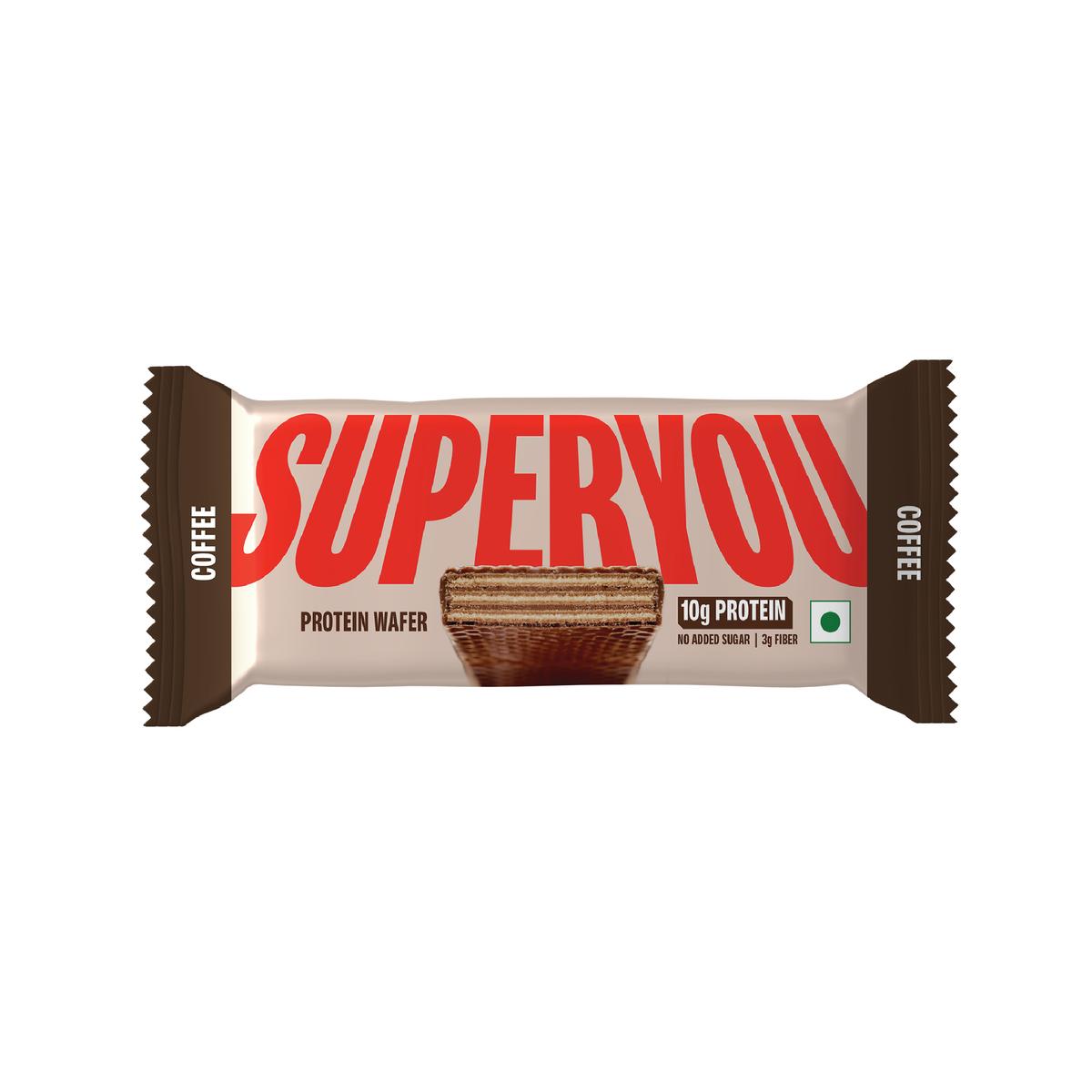
SuperYou protein wafer bars come in many flavours, including chocolate, choco peanut butter, strawberry crème, cheese and coffee

SuperYou protein wafer bars come in many flavours, including chocolate, choco peanut butter, strawberry crème, cheese and coffee
| Photo Credit:
Special arrangement

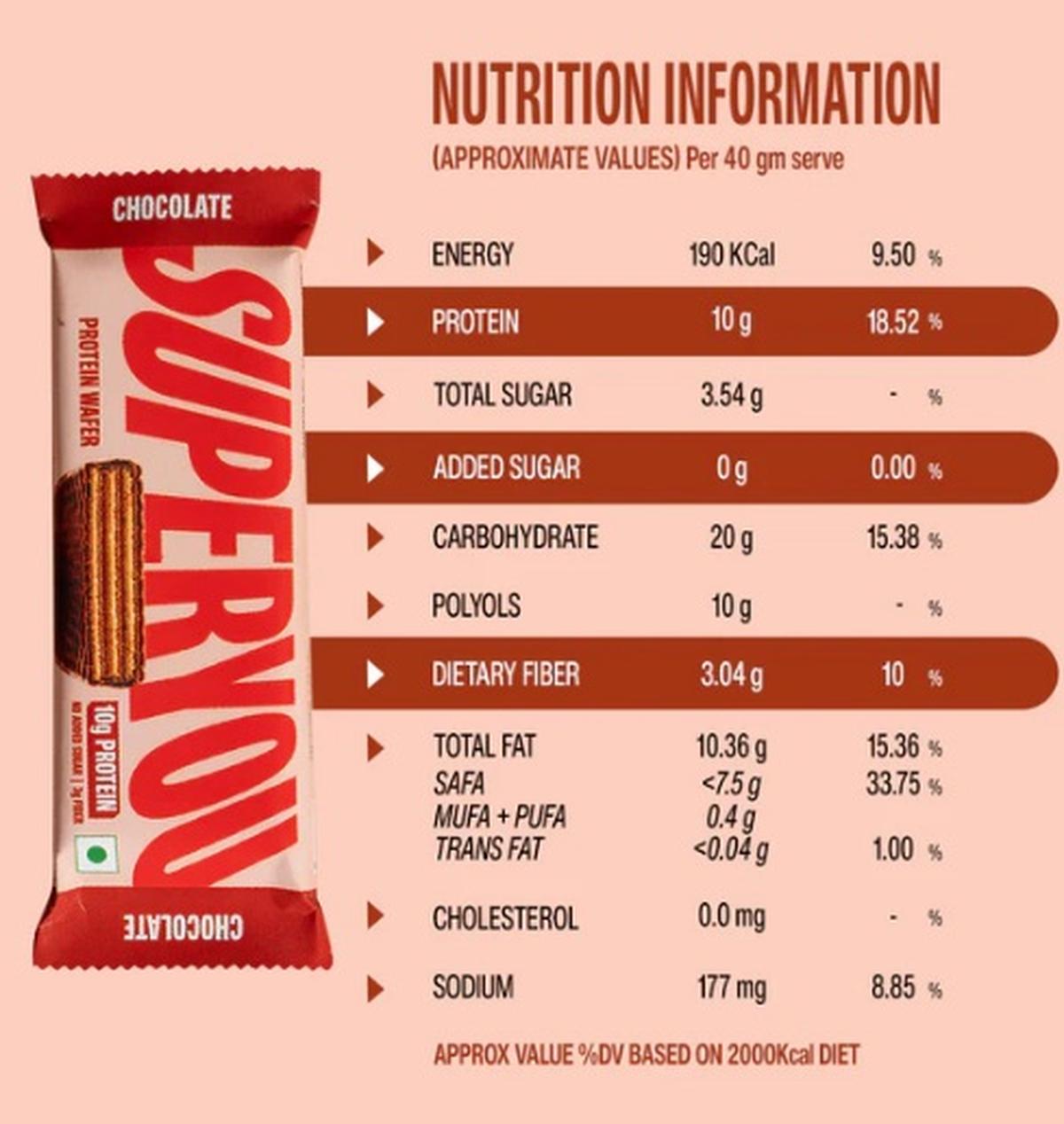
The ingredients of chips include urad dal, rice flour, jowar, chickpea, soya protein isolate and tapioca starch. The Mumbai-based brand’s protein wafer bars too come in many flavours, including chocolate, choco peanut butter, strawberry crème, cheese, and they have recently launched coffee. They contain 10g protein per 40g wafer.  “We use an innovative source of protein called fermented yeast, which is a revolutionary new technology that is scientifically advanced to give the best efficacy, all while being super gut friendly,” adds Nikunj. The brand has also introduced protein powder now.

Nutritional value of SuperYou protein wafers

Nutritional value of SuperYou protein wafers
| Photo Credit:
Special arrangement

The chips start at ₹50, while the wafers are priced upwards of ₹60.

Water whey: Aquatein

 Aquatein’s 10g and 21g protein water 

 Aquatein’s 10g and 21g protein water 
| Photo Credit:
Special arrangement

Co-founded by Ananth B Prabhala and Mitisha Mehta, Aquatein launched 10g and 21g protein water in May 2019, but was available marketwide in 2021. The duo was prompted to dabble in the protein space back in 2016-17, when there were not so many discussions about protein. “With Aquatein, our idea was to seamlessly inculcate protein into someone’s life without trying to replace meals or regular food. Aquatein protein water makes protein intake easier for all age groups, and functional hydration was the key idea,” says Ananth.

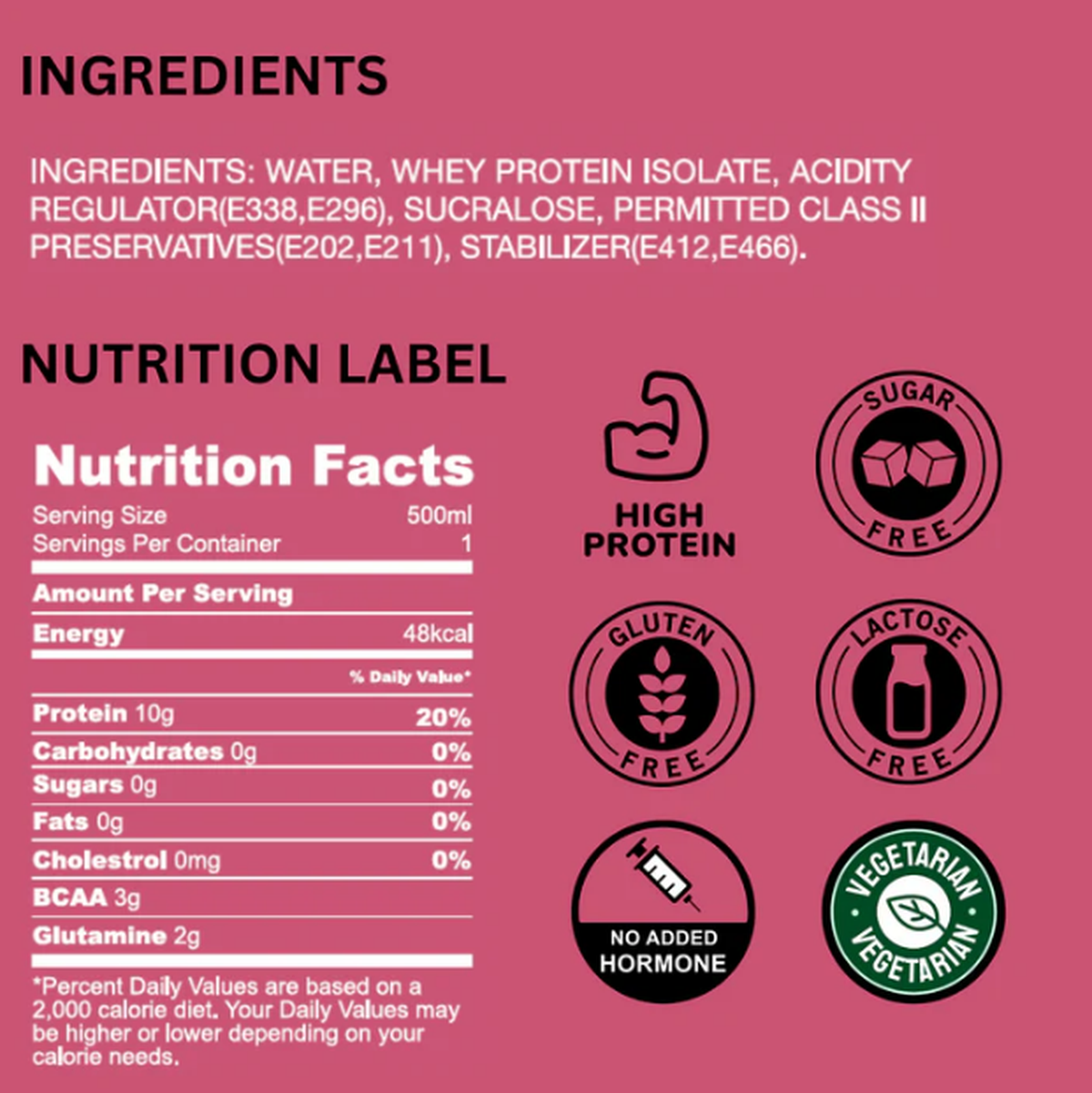
Nutritional value of  Aquatein protein water 

Nutritional value of  Aquatein protein water 
| Photo Credit:
Special arrangement

About the kind of protein used, Mitisha says: “We use whey protein isolate. Whey is a dairy-based and globular protein. What makes Aquatein different is that our protein is lactose-free. Our whey protein is actually treated in such a way that it dissolves in water and stays stable. The general process is with whey water, which is spray-dried and converted into the powder format. So the first thing any food product, or anything that is spray-dried, does is try to get back to the natural form. For this reason, at Aquatein, we pre-hydrate the protein so that it does not absorb water from your intestinal lining immediately.” The brand has reintroduced Aquatein with no artificial flavours last year.

The Mumbai-based Aquatein prices its 10g protein water at ₹396 for a box of four, and 21g protein water at ₹600 for a box of four across flavours (mango, strawberry, mix berry, green apple and orange).

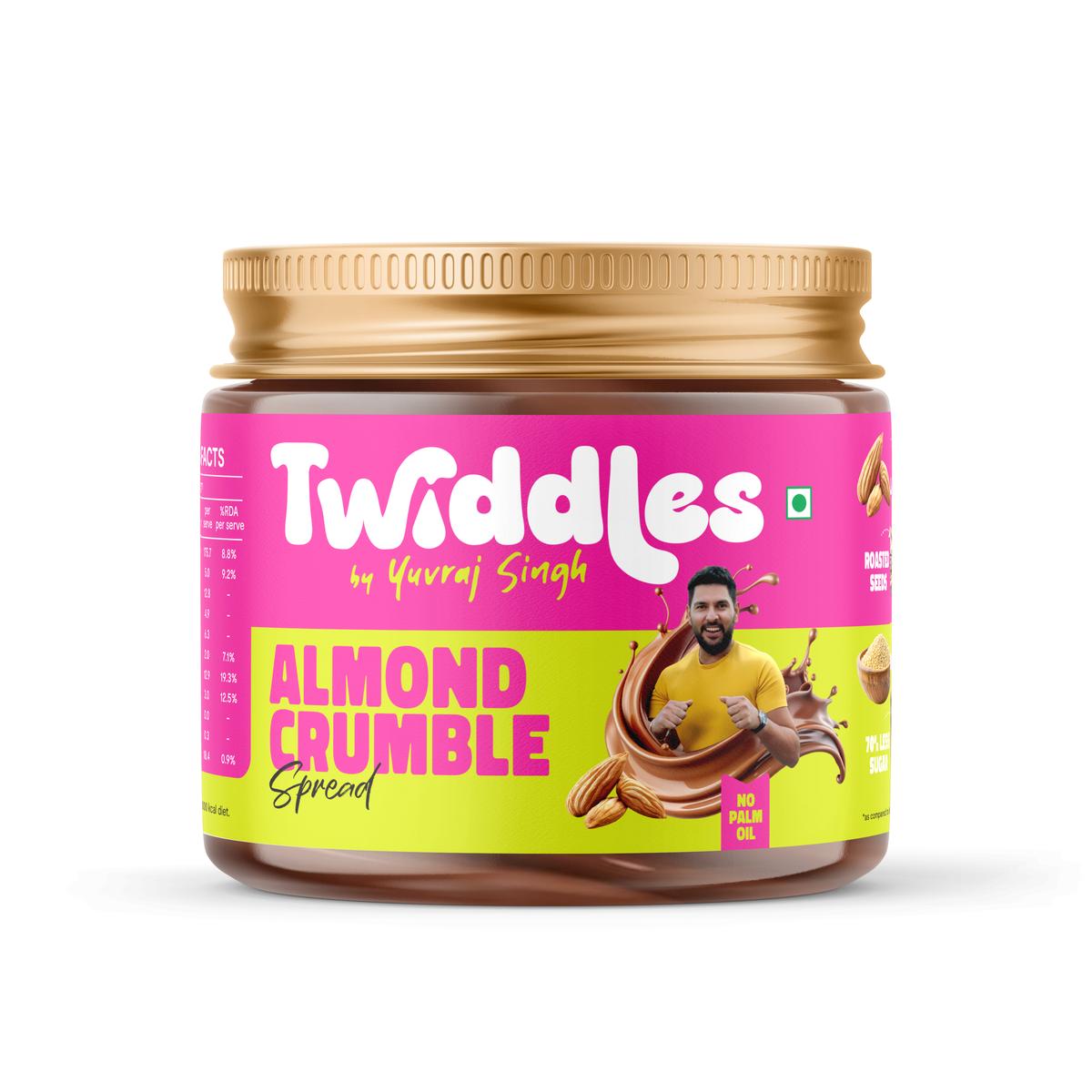
Spreads and bites: Twiddles by Yuvraj Singh

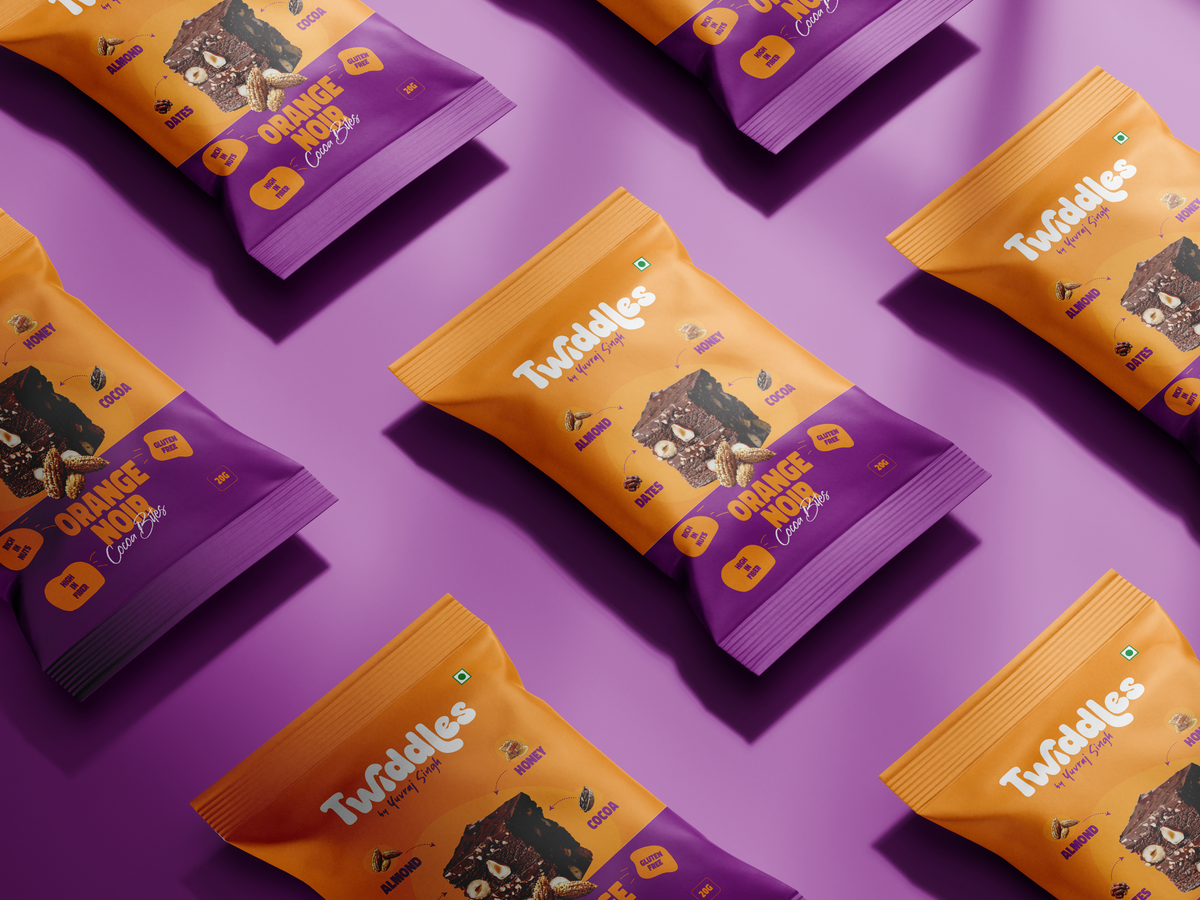
Twiddles offers chocolate spreads and snackable energy bites by using 60–70% real nuts

Twiddles offers chocolate spreads and snackable energy bites by using 60–70% real nuts
| Photo Credit:
Special arrangement

Ace cricketer Yuvraj Singh is batting for protein too. Co-founded by him, Twiddles offers chocolate spreads and snackable energy bites by using 60–70% real nuts, cutting out palm oil and preservatives, and slashing sugar content by over 70%. Kumar Gaurav, co-founder, Twiddles, which is based in Gurugram, Haryana, says, “Most snacks on the shelf today are either loaded with sugar or overly processed in the name of health. With Twiddles, we wanted to strike the balance. The goal: to make protein-first, guilt-free indulgence the new norm in snacking.”

Twiddles products are powered by natural protein, primarily from nuts like almonds, walnuts & cashews, which make up 60–70% of the brand’s spreads and bites. 

Twiddles products are powered by natural protein, primarily from nuts like almonds, walnuts & cashews, which make up 60–70% of the brand’s spreads and bites. 
| Photo Credit:
Special arrangement

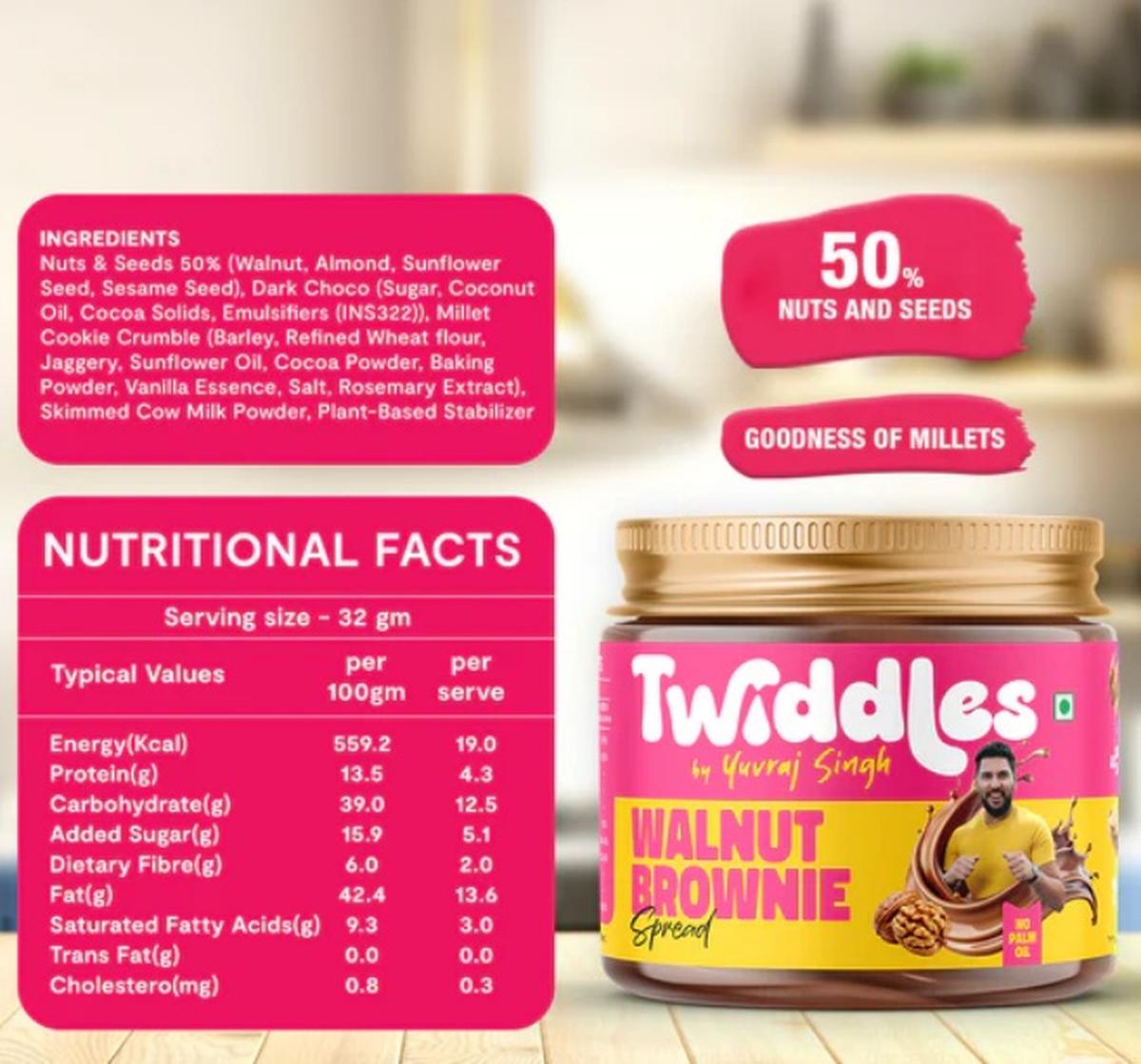
Twiddles products are powered by natural protein, primarily from nuts like almonds, walnuts & cashews, which make up 60–70% of the brand’s spreads and bites. “Our spreads are made with a high percentage of real nuts (like almonds and walnuts), along with seeds, cocoa, and millets, delivering a rich taste with no palm oil or preservatives. Our bites include the same core ingredients, with the addition of dates for natural sweetness and binding. Across all products, we’ve cut refined sugar to a minimum and avoided artificial additives entirely.”

Nutritional value of Twiddles spread

Nutritional value of Twiddles spread
| Photo Credit:
Special arrangement

The products by Twiddles start at ₹220

Cookies and granola: Wild Date

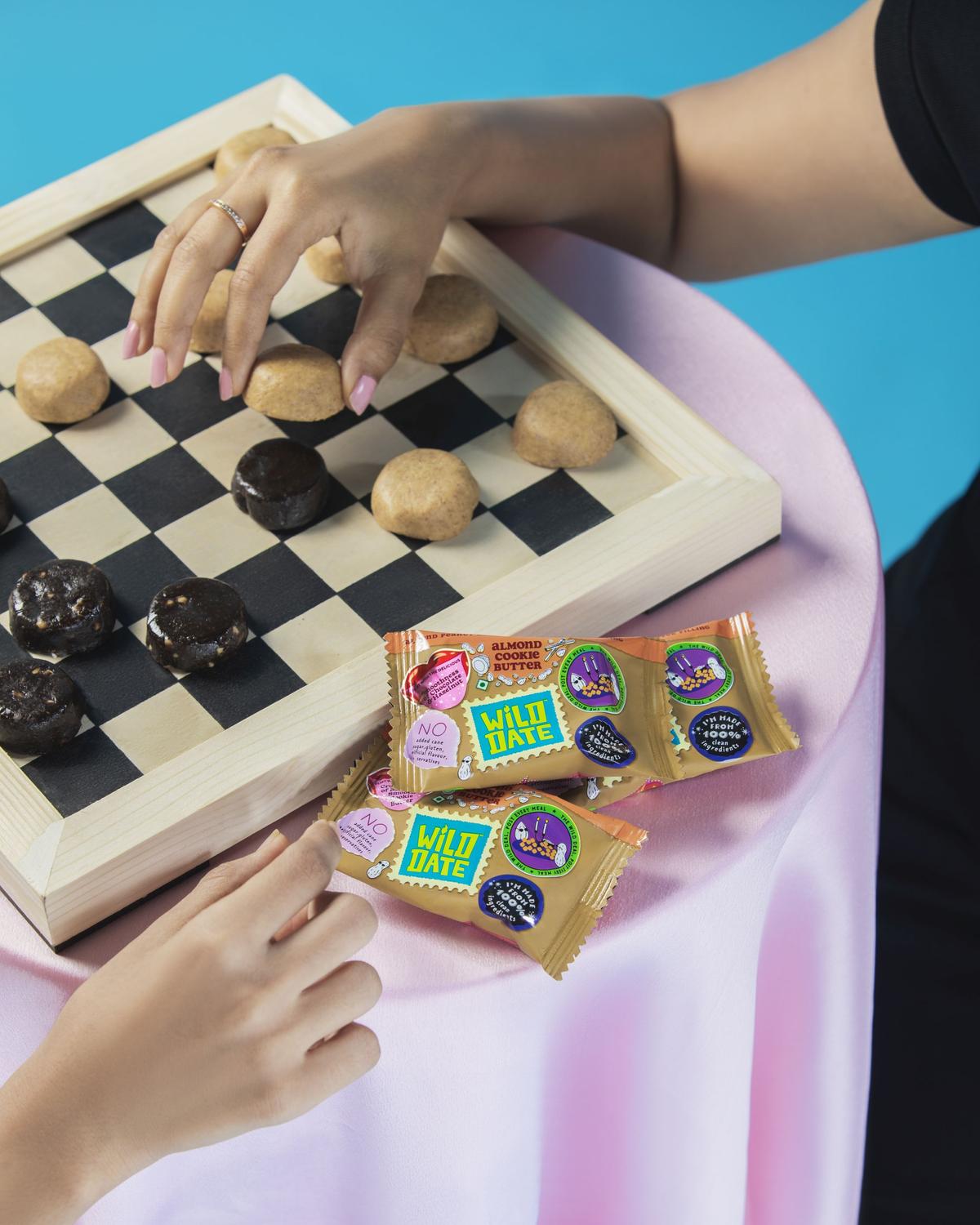
Wild Date offers a wide range of healthy snacks

Wild Date offers a wide range of healthy snacks
| Photo Credit:
Special arrangement

From hunger busters to vegan protein bars, Wild Date offers a wide range of healthy snacks. The ones that intrigue us are the protein-based cookies and granola. CS Siddharth, founder of Wild Date, says that his journey as an endurance athlete taught him that what we put into our bodies matters just as much as how we move them. “During training for Ironman races, I struggled to find clean, performance-supporting snacks that were both functional and genuinely tasty. That gap inspired me to create more products for Wild Date, a brand born from lived experience, clean eating and also blending athletic discipline with real-food nutrition. However, I wanted to create something that supported not just athletes, but anyone navigating busy, active lives,” he says.

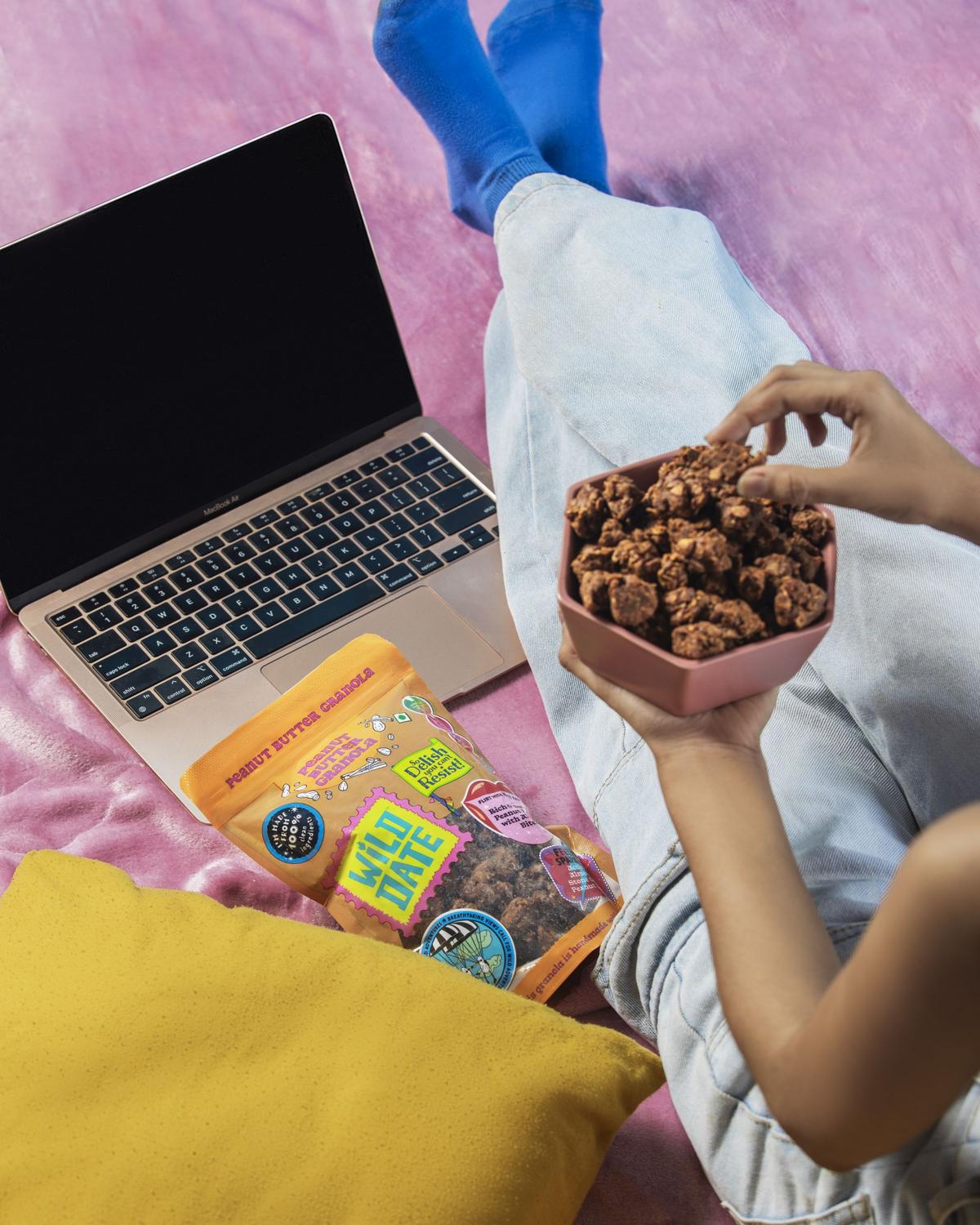
Key ingredients: The brand’s granola comes in two variants — Hazelnut Chocolate Granola and Peanut Butter Granola; the former has protein content of 5.2g in 40g and the latter has 7.6g in 40g. They contain hazelnut chocolate 48% (hazelnut butter, peanut butter, cocoa, unprocessed cane sugar, salt), rolled oats, wild-honey, coconut flakes, natural vanilla extract, peanut butter 40% and cinnamon powder. The cookies too come in two flavours — Chocolate Cookie (3.6g protein in 40g) with Almond Bits and Caramel Chocolate Cookie (3.10g protein in 40g). The cookies contain rolled oats flour 21%, water chestnut flour 14%, unsalted milk butter, coconut sugar, table salt, chocolate 36% (coconut sugar, cocoa butter and cocoa powder), almond bits 9% and caramel powder 13%.

The 250g granola and 40g of five-cookie box start at ₹300

Doc talk

Yes, protein is very important for body building and muscle repair, but excess of it is of no use, says Dr Nancy Sahni, chief dietician and head, Department of Dietetics at PGIMER, Chandigarh. “In case, there is high protein intake but low carbohydrate intake, the body will utilise the protein as an energy source rather than a protein source. So balance is the key. All macro and micro nutrients play a pivotal role in maintaining our metabolism and homeostasis, so we can’t go bonkers over just one nutrient,” she adds. She lists a few points to keep in mind while purchasing any diet supplement in bar/chips/powder form:

1.    Check the portion size you will consume and the amount of nutrients you will ingest. May be it is high in fat too or has saturated fats beyond the recommended limit. It can be that it’s high in sodium and if one is prone to hypertension and is salt sensitive, then one needs to take care.

3.    Check the number codes. For example, INS 995 refers to artificial sweeteners; although these are given a green signal to be used but the quantity matters. Mostly the amount of artificial sweetener used is not mentioned, which is a matter of concern.

4.    Usually ingredients are listed in descending order of the quantity used, meaning that first ingredient listed will be used in maximum quantity in that product. For example, if it’s written whole wheat atta biscuits and the first ingredient listed is maida, then one needs to be careful.

5.    Check for any ‘masked ingredients’. For example, use of maltodextrin in sugar-free items. Although it’s not sugar, but it’s a refined carbohydrate that has high glycemic index similar to sugar and can spike blood glucose level.

6.    Check if ‘natural food’ is indeed natural. For example, dairy crème ice-crem versus frozen desert ice-cream. The latest is analogue paneer versus dairy paneer.

Homemade alternatives

A 25 grams of dairy cottage cheese provides five grams of protein. A glass of milk/a cup of curd (200g)/one egg provides more than six grams protein. Nuts/oil seeds can be enjoyed in their natural form rather than laced with butter. 100 grams of these provide 21 grams of protein. Lentils/pulses/soya are excellent protein sources and become complete protein when mixed with cereals like wheat and rice. The ingredients in processed foods may be positive but if they have undergone ultra processing to be made into chips/bar form, then they can turn into negative nutrients, informs Dr. Nancy.


Source link

Smarter workforce models to reshape general trade


Anjana Ghosh

As fast-moving consumer goods (FMCG) and retail move towards 2026, a quiet but decisive shift is underway in how general trade (GT) execution is being approached. While people will always remain central to on-ground sales and distribution, traditional manpower-heavy models are increasingly showing their limits. Rising costs, fragmented retail formats, and faster shifts in demand are forcing organisations to rethink not only how many people they deploy, but how well execution is managed.

The next phase of FMCG growth will not be driven by adding more feet on the street. It will be driven by smarter workforce execution where human effort is supported by better structure, coordination, and intelligence.

FMCG and retail have always been people-intensive businesses. From sales representatives and merchandisers to promoters and supervisors, success in general trade has traditionally depended on disciplined coverage, beat adherence, and sustained presence across markets. Human effort continues to be the backbone of reach, visibility, and conversion.

The big challenges

The challenge today, however, lies not in deploying manpower, but in extracting consistent productivity from it. Feet-on-street teams are often low-paid, placed on third-party payrolls, and operate at the edges of the brand ecosystem. The work is repetitive, incentives are transactional, recognition is limited, and career visibility is low. Over time, this results in weak ownership, disengagement, and high attrition.

For sales leadership, this reality translates into an excessive focus on supervision, retraining, and enforcing basic discipline. Time that should be spent on market development, outlet productivity, and growth strategy gets consumed by people management. As a result, GT remains people-driven but structurally low on efficiency, and difficult to scale.

If GT increasingly demands leadership time just to keep the engine running, the solution lies in changing the execution model itself. Growth will not come from adding more supervisory layers, but from reducing the burden of day-to-day manpower management.

A clear shift is emerging towards execution-led models where brands collaborate, share field infrastructure, and work with specialised partners who take ownership of manpower planning, deployment, productivity, and performance management.

When recruitment, training, supervision, and attrition are handled within a structured execution framework, brand leadership is freed to focus on what truly drives growth: market expansion, portfolio strategy, and revenue acceleration. In this transition, what changes is not who is present in the market, but how responsibility is structured. Execution becomes a managed outcome rather than a daily leadership task.

Role of technology

Technology plays a critical role in enabling this shift but not as a control mechanism. The real value of business intelligence lies in its ability to simplify complexity and create clarity.

When route planning, outlet prioritisation, attendance, productivity, and performance feedback are integrated into a single framework, brands gain real-time visibility without increasing managerial overhead. Decisions become faster, interventions more targeted, and performance reviews more meaningful.

Importantly, technology does not replace people. It enables better deployment and utilisation of people, ensuring consistency on ground while allowing leadership to step away from micromanagement and back into growth.

Several structural shifts make 2026 a defining year for workforce execution in FMCG. First, consumer journeys are increasingly fragmented across general trade, modern trade, and emerging hybrid formats. Consistent execution across these touchpoints requires tighter coordination and faster redeployment of resources.

Second, margin pressures are intensifying. Inflation, logistics costs, and competitive intensity are forcing organisations to extract more value from existing resources rather than expanding headcount.

Third, workforce expectations are evolving. Field teams today expect clarity, transparency, and systems that make their work easier. Manual oversight and informal structures are becoming barriers to both productivity and retention.

Viewed through an execution lens, smarter workforce models become strategic enablers rather than operational necessities. They allow leadership intent to translate into consistent on-ground action, with greater predictability and control. Over time, the workforce shifts from being seen as a fixed cost to a flexible growth lever. Brands that can deploy people intelligently, respond faster to market signals, and optimise field effort will be better positioned to grow sustainably.

As FMCG organisations navigate 2026 and beyond, success will depend less on scale alone and more on collaborations. The future of general trade execution lies in models that combine human effort with shared workforce structures, agile deployment, and execution intelligence.

Brands that recognise and adopt this shift early will scale more efficiently — not by adding complexity, but by enabling their people to perform with greater clarity, consistency, and confidence.

The writer is managing director of Scale Sherpas.

Published – January 09, 2026 04:58 pm IST


Source link

The great Indian protein spin


Like many vegetarians, Arihant Kumar, CEO, Accredo Pharma Science, struggled to get an adequate amount of protein in his daily diet. It was only when he consciously began planning his meals to include both high-protein vegetarian options, such as paneer, dal, and yoghurt, as well as a supplement, did he consistently began meeting his protein target of around 90-100 grams a day. This decision, however, has been transformational, enabling him to lose fat, gain muscle and recover more effectively. After all, “muscle needs protein to grow,” says Arihant. 

Unlike Arihant, a vast majority of Indians do not consume the recommended 0.8-1.2 grams of protein per kilogram of body weight per day, due to cultural preferences, the steep cost of protein-rich foods, personal taste, or simply a lack of awareness about the importance of protein. “Around 73% of Indians are protein-deficient,” agrees Aditi Mammen Gupta, who co-founded the plant-based protein powder brand Origin Nutrition with her husband Chirag Gupta. “Even if someone says they are non-vegetarian, if you actually get into the details, they’re only eating meat twice a week. They’re not actually getting enough protein.”

On the positive side, however, the awareness about this critical macronutrient has been slowly growing in India. “We have a long way to go, but definitely the mindset is changing,” she says, pointing out that more and more players are now entering the market.“ Going by a recent report published by market research firm, Mordor Intelligence, she could be right. According to this report, India’s protein industry is estimated to be worth $1.52 billion in 2025 and is projected to grow to $2.08 billion by 2030. “The protein industry in India is experiencing a significant transformation driven by changing consumer preferences and dietary habits,” the report claims, pointing out that this change is being driven by a lot of innovation. 

If you’ve not been living under a rock the last few years, you must have spotted at least a few of these protein-boosted products, of course, whether it be cereal, dosa batter, fried snacks, bread, flour, kulfi, and pasta. The latest addition to a constantly growing list is McDonald’s new India Protein Plus Range, which allows you to enhance your meal with a plant-based protein slice made from soy and pea protein, adding approximately five extra grams of the macronutrient to your diet. According to the spokesperson of McDonald’s, who prefers not to be named, the product was inspired by consumers being more aware of the importance of protein than ever before. “We have observed that people of all ages are thinking about it,” they say.

Nutritionist and wellness coach Gayatri Chona, co-founder, Phab, a Mumbai-headquartered company that offers a range of high-protein products, including whey, protein bars, pre-mixed protein shakes, and even a savoury bhel bar, agrees. “Today, families are reading labels, comparing protein per serving, and asking for balanced macros,” she says, a sentiment echoed by Richa Kumar, operations head, Skyrrup, a functional dairy brand that offers high-protein cottage cheese, instant protein premixes, Greek yoghurt, and Icelandic Skyr. “People are realising that we often fall short on protein in our daily diets, especially vegetarians. There’s more awareness now that protein isn’t just for bodybuilders — it’s for everyday strength, immunity, and even clearer thinking,” she feels. 

This is certainly a positive trend. According to a new study by the Indian Council of Medical Research (ICMR), the average Indian diet is heavily tilted towards carbohydrates and worryingly low in protein, contributing to the growing prevalence of metabolic disorders and obesity in the country. Mahalakshmi S is one among millions of Indians whose diet appears to have adversely affected her physiology. After a routine blood test this year, she discovered that her thyroid levels were off the charts. “I was already 75 kgs and didn’t want to be more than that,” says the Bengaluru-based IT professional, who managed to lose around 11 kgs by overhauling her diet, cutting back on carbs and eating foods rich in proteins. 

While the growth of protein-supplemented FMCG and nutraceutical products is a welcome way to plug the protein gap in the country, questions around quality, consistency, and accessibility still need to be addressed. To begin with, not all products that contain added protein are particularly beneficial from a health perspective. Prateek Rastogi, co-founder, Better Nutrition, a brand specialising in the bio-fortification of staples, believes that while protein products are highly profitable for companies, they are often somewhat gimmicky. “You are adding protein to something like wafers and chocolate and calling it healthy,” he points out wryly. 

Another issue — and this is a significant one — is the lack of quality control, especially in the protein supplement space.  The Citizens protein project, a self-funded, report on analysis of popular protein supplements sold in the Indian market, spearheaded by Dr Cyriac Abby Philips, popularly known as The Liver Doc on social media, reads: “Many supplements did not have the labelled protein content; some brands had suspected protein spiking and reputable brands contained fungal toxins, pesticide residues, heavy metals such as lead and arsenic, and potentially toxic organic and inorganic compounds, specifically those manufactured by India-based companies.”

Aditi, whose Origin Nutrition was deemed the Best Vegan Plant-Protein in the report, is not surprised. “The market is honestly very unregulated. Everyone says that their protein is third-party certified, but that term is used so loosely,” adds Aditi, who believes that consumers should also do their own research before they settle on a brand they can trust. 

And, yes, as with anything else in life, it could just be too much of a good thing. Prashanti Ganesh, a Chennai-based strength coach, for instance, believes that overemphasising protein can compromise overall nutrition. As someone who works mainly with women, she believes that “one of the trends I’ve seen is that people are so obsessed with protein that they’re not even meeting their daily calorie demands, forget fibre or micronutrients.”  Instead, she advocates a more holistic approach. “I don’t think we need to worry about protein as much as health on a larger scale,” says the founder, Ladies Club, who insists that we also need to ensure that the food we consume is easily accessible, sustainable and convenient to make or procure. “The protein recommendation I make is what you can achieve consistently for the next two years,” she firmly believes. 

Mahalakshmi, who lost considerable weight by altering her diet, must agree. For the most part, she stays away from “gimmicky” protein products and turns to natural, readily available sources like homemade Greek yoghurt, sprouted chickpeas, and paneer, as well as a scoop of a plant-based protein from a brand she trusts. “I stick to sources, which are pretty simple to consume regularly,” she says. 


Source link