





Life & Style

5 benefits of doing 25 pull-ups every day


There is no direct answer to this. Yes, pull-ups are great to be incorporated into your fitness routine, but you need to take certain factors into account to ensure safety and effectiveness. It is considered a ‘challenge routine’, but if your goal is to maximize improvements to the many different aspects of fitness, everyday pull-ups won’t be the best choice. High daily volume without adequate recovery can strain tendons and joints, particularly in the shoulders and elbows. Muscles need stress and recovery to grow, and if this balance is affected, it can affect your fitness goals and health. Many advanced athletes may be able to handle pull-ups every day, but for amateurs, it may not be a good idea. Before jumping on any trend, it is important to talk to your doctor and fitness expert.


Source link

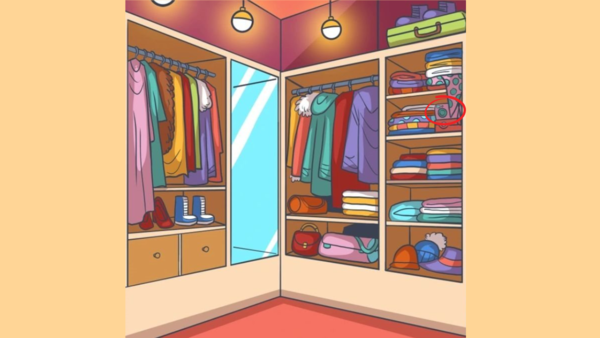
Optical Illusion: Only a visual ninja can spot a camera in this wardrobe


Optical Illusion: Only a visual ninja can spot a camera in this wardrobe

Exciting challenges that put your brain and eyesight to the test are optical illusions that require you to detect hidden things under time pressure. In these puzzles, you have to locate a hidden object in a complicated image, frequently in a matter of seconds.They exercise your cognitive faculties, honing your ability to observe and pay attention to details.In addition to being enjoyable, these exercises improve mental agility. They demonstrate how our brains process visual information and emphasize the value of concentration and fast thinking. Quickly identifying the hidden objects is a sign of high intelligence and superior visual processing abilities.Can you handle a real challenge? Now let’s test your ability to observe. In eight seconds, can you find the pink camera concealed in this closet?This optical deception can only be mastered by the most brilliant minds. This requires acute attention to detail in addition to having rapid vision. These visual puzzles are frequently mastered by high IQ people. They are exceptionally focused and have a talent for identifying the odd.There is more to optical illusions like this one than just amusement. They are a fantastic method to sharpen your mind and increase your level of concentrate. Are you prepared to demonstrate your exceptional ability to observe? Many people are blind to what is directly in front of them.Breathe deeply, concentrate, and begin the countdown. In eight seconds, can you locate that elusive pink camera? Now is the beginning of your time!Quick tip: Pay attention to the specifics. The elusive pink camera could be hiding in every nook and cranny. People who perform well on these kinds of optical illusion tests are frequently very perceptive, meticulous, and have outstanding visual processing abilities. Do you possess the skills necessary to succeed in this challenge?You are one of the best watchers if you can identify it fast. High-IQ people frequently pick up on details that others miss. Are you prepared to take on a challenge?

Answer to this optical illusion

Are you still unable to locate the pink camera in this image? Check out the solution below if you’re still looking.

hh (1938)

Visit our de-stress department for more thrilling optical illusions and cognitive games. Spread the word about this optical illusion to your loved ones. Give them eight seconds or fewer to identify the pink camera in this image!

Optical illusion: This art will confuse your senses


Source link

Post-menopause and heart health: What mothers over 50 need to know |


Post-menopause and heart health: What mothers over 50 need to know
Turning 50 brings freedom but also increased heart disease risk due to declining oestrogen. Post-menopausal women in India face this leading cause of death, often unaware of hormonal impacts on arteries and cholesterol. Early screening, lifestyle changes like diet, exercise, stress management, and medical guidance are crucial for protecting heart health and ensuring a longer, healthier life.

For many women, turning 50 marks a phase of greater freedom—children are grown, careers have stabilised, and personal time finally seems possible. But this milestone also brings a major biological transition: menopause.While most women are prepared for the visible signs—hot flashes, mood swings, and changes in menstrual patterns—what’s often overlooked is the invisible and more serious risk: the increased threat toheart health.Heart disease is the leading cause of death among post-menopausal women in India, yet awareness remains low. Many women don’t realise that the drop in oestrogen levels after menopause has a direct impact on the heart and blood vessels. Oestrogen helps protect the inner layer of artery walls, so when its levels decline, arteries become stiffer, blood pressure may rise, and cholesterol levels can fluctuate—creating a perfect storm for cardiovascular problems.

The link between menopause and heart health: Why it matters

Before menopause, women enjoy a natural protective benefit thanks to oestrogen, which helps regulate cholesterol and keeps blood vessels flexible. But after menopause, LDL (bad cholesterol) tends to rise, while HDL (good cholesterol) may fall. This makes atherosclerosis, or the hardening of arteries, more likely—raising the risk of heart attacks and strokes.In addition to hormonal changes, age-related weight gain, reduced physical activity, and rising blood sugar levels contribute further to cardiovascular risk. Post-menopausal women are also more prone to high blood pressure and type 2 diabetes, both of which are known heart disease accelerators.

ELDERLYWOMAN

One of the biggest challenges in post-menopausal heart health is that symptoms often go unnoticed or are misinterpreted. Unlike the textbook chest pain described in men, women may experience unusual signs like persistent fatigue, jaw pain, indigestion, shortness of breath, or dizziness. Many women assume these are part of “normal ageing” or menopausal discomfort, delaying timely diagnosis.Regular screening becomes vital. Women over 50 should get their blood pressure, blood sugar, cholesterol levels, ECG, and thyroid function tested annually. If there’s a family history of heart disease, or if they had gestational diabetes or high blood pressure during pregnancy, the risk is even higher and needs close monitoring.Lifestyle shifts that protect the heart

Boosts heart health

Fortunately, the risks associated with post-menopausal heart health can be reduced with simple but consistent lifestyle changes. A balanced, heart-friendly diet plays a major role. Including whole grains, fibre-rich vegetables, fresh fruits, and healthy fats from nuts, seeds, and oils like mustard or olive helps maintain cholesterol and blood sugar levels.Physical activity is non-negotiable. A daily 30-minute walk, light yoga, or swimming can improve circulation, reduce blood pressure, and support a healthy weight. Even household chores, when done actively, can contribute to cardiovascular fitness.Stress management is equally crucial. With many women navigating “empty nest” feelings or caregiving for ageing parents, emotional stress often peaks after 50. Breathing exercises, hobbies, music, or joining community groups can help maintain emotional balance.Sleep also has a direct impact on heart health. Poor sleep, which is common post-menopause due to hormonal shifts, can raise the risk of hypertension and irregular heartbeat. Sleep hygiene—fixed timings, limiting caffeine, and reducing screen exposure—can help improve rest quality.The role of medical guidancePost-menopausal hormone replacement therapy (HRT) is sometimes considered to reduce symptoms like hot flashes, but its role in heart protection remains debated. It is not recommended solely for heart disease prevention and should only be used under strict medical supervision after weighing the risks and benefits.

Millena Brandão’s Mystery Illness Turns Fatal; Child Star Dies After Multiple Heart Attacks

Final thoughtMenopause marks a new chapter—not the end, but a shift. It’s a time to re-prioritise health, especially heart health, which supports everything else a woman continues to do for herself and her family. The key lies in awareness, timely screening, and everyday self-care. Because a strong heart after 50 means a longer, healthier life filled with energy, confidence, and peace of mind.By Dr Niranjan Hiremath, senior consultant, cardiovascular and aortic surgeon and surgical lead, Indraprastha Apollo Hospital, New Delhi.


Source link

Mother’s Day special: 10 famous literary quotes that honour moms


Mother’s Day special: 10 famous literary quotes that honour moms
Image credits: Getty Images

Many countries around the world are celebrating Mother’s Day today on May 11th, 2025. While a mother should be respected, appreciated and loved throughout the year, Mother’s Day allows children and mothers to spend a day that is just for them, where they can spend time together and enjoy one of the most unique bonds of life.

Mother’s Day: A celebration of love

Mother's Day: A celebration of love

Image credits: Getty Images

Mother’s Day is not just a day to honour a woman for being a mother and doing all she does in that role. It also recognises her sacrifices and her decision to brave pain and challenges in order to give birth. This day honours a woman’s choice to become a mother and bring life into the world.Becoming a mother is a choice, not merely a responsibility and when a woman makes that decision, she commits to dedicating her life to others beyond herself. Life changes after becoming a mom for the better, yes, but it does change. A mother takes on not just her own well-being, but the emotions, needs, and lives of her children.That’s why Mother’s Day carries with it a deep and well-deserved message of gratitude to moms across the world. The day came into being because of a devoted daughter, Anna Jarvis, who first celebrated Mother’s Day in 1908 in West Virginia to honour her late mother and the love and dedication mothers show to their children.In 1914, US President Woodrow Wilson officially declared Mother’s Day a national holiday, to be observed on the second Sunday of May each year.

10 famous literary quotes that honour moms

10 famous literary quotes that honour moms

Image credits: Getty Images

When you sit to write or express, who better to dedicate your words to than your own mom, who taught you the basics of holding a pen or pencil? Many famous people across time have written and spoken some deeply felt and emotional quotes about moms and their love. Below are 10 literary quotes that you can share with your mom to wish her a happy Mother’s Day.“My mother… she is beautiful, softened at the edges and tempered with a spine of steel. I want to grow old and be like her.” — Jodi Picoult.“Because I feel that, in the Heavens above, The angels, whispering to one another, Can find, among their burning terms of love, None so devotional as that of “Mother,” Therefore by that dear name I long have called you— You who are more than mother unto me, And fill my heart of hearts” — Edgar Allan Poe, To My Mother.“If I was damned of body and soul, I know whose prayers would make me whole, Mother o’ mine, O mother o’mine.” — Rudyard Kipling, Mother O’Mine.“Mother is the name for God in the lips and hearts of little children.” — William Makepeace Thackeray, Vanity Fair.“Motherhood is a choice you make everyday, to put someone else’s happiness and well-being ahead of your own, to teach the hard lessons, to do the right thing even when you’re not sure what the right thing is…and to forgive yourself, over and over again, for doing everything wrong.” ― Donna Ball, At Home on Ladybug Farm.“He didn’t realize that love as powerful as your mother’s for you leaves its own mark.” ― J.K. Rowling, Harry Potter and the Sorcerer’s Stone.“We are born of love; love is our mother.” — Rumi.“A mother’s arms are more comforting than anyone else’s.” — Princess Diana.“All that I am, or hope to be, I owe to my angel mother.” —Abraham Lincoln.“The loveliest masterpiece of the heart of God is the heart of a mother.” —St. Therese of Lisieux


Source link

10 habits that prevent children from performing well in exams


Motivation is great when it shows up. But discipline is what shows up every day, regardless of whether you feel like it or not. Students who rely solely on fleeting inspiration often struggle to maintain consistent study habits. Help your child to establish daily routines, such as setting aside specific times for review, to build long-term success. The small, boring things you do consistently will lead to big, exciting wins.


Source link

5 sleep postures and which is the best one


According to Dr. Waseem Ud Din, consultant pulmonologist, Ujala Cygnus Group of Hospitals, “Back sleeping has some advantages, such as supporting spinal alignment and relieving lower back pain. However, it can increase snoring and the risk of airway blockage in people prone to sleep apnea, making it less ideal for those with breathing difficulties.”


Source link

Experts say THESE simple, daily habits can boost mental health; here’s how |


Experts say THESE simple, daily habits can boost mental health; here's how
A recent Curtin University study reveals that simple, cost-free daily activities significantly boost mental well-being. Engaging in regular chats with friends and spending time in nature are linked to improved mental health scores. The research emphasizes the importance of accessible, everyday actions in maintaining psychological wellness and preventing mental health crises, advocating for public health campaigns that promote these behaviors.

Mental healthis as important as your physical health, but often we tend to put it on the back burner. Many people only start paying attention to their mental well-being when they’re already feeling overwhelmed or burned out.But that’s not how it should be. A study suggests that incorporating simple activities and habits in your daily routine can have a significant impact on your mental well being.A study by researchers from Curtin University found that everyday actions and behaviours are linked to better mental well-being. The study is published in SSM Mental Health. The study revealed that nurturing mental health doesn’t always require professional intervention; in fact, simple, everyday actions might make all the difference. And the best part is, you don’t even have to spend a penny for it! These activities include regular chats with friends and spending time in nature, among other things.

Take care of your mental health

For the study, the researchers surveyed more than 600 Western Australian adults. They found that the participants who chatted with others daily scored 10 points higher on a standard mental well-being scale than those who did so less than once a week.The study also found that spending time in nature every day is associated with a five-point increase. Activities such as frequent catch-ups with friends, physical activity, practising spirituality and helping others are also linked to improved mental well-being.

Do not ignore your physical and mental health

The lead author Prof. Christina Pollard from Curtin’s School of Population Health noted that such activities provide clear evidence that low-cost, accessible actions can play a meaningful role in maintaining good mental health and well-being.“These aren’t expensive programs or clinical interventions – they’re behaviours that are already part of many people’s lives and can be easily encouraged through public health messaging. Regular connection with others, even a daily chat, can make a measurable difference to how people feel. Similarly, spending time outdoors or doing something that requires thinking and concentrating, like doing crosswords, reading, or learning a new language, provides an important mental reset,” Prof.Pollard said.

walk

The study was conducted during the COVID-19 pandemic; however, despite the gloomy period, 93% of participants were unaffected by the psychological distress.

Prince Harry BLASTED For ‘Deadly’ Claims About Royal Family – Friends OUTRAGED Over King Charles Health Reveal

Prof. Pollard noted that the study provides a strong case for long-term investment in population-wide mental health promotion campaigns that go beyond awareness and empower people to take meaningful action. “This research confirms that when people are supported and encouraged to engage in mentally healthy behaviours, the benefits can be felt across the community. It’s about prevention, not just treatment – helping people stay mentally well before they reach crisis point,” Prof.Pollard added.


Source link

Measles cases in the US cross 1,000: Early symptoms, prevention tips to know


Measles cases in the US cross 1,000: Early symptoms, prevention tips to know

As the US is currently witnessing one of the worst outbreaks of measles, the number of cases has climbed to 1,000, the US Centers for Disease Control and Prevention (CDC) has confirmed.“As of May 8, 2025, a total of 1,001 confirmed measles cases were reported by 31 jurisdictions: Alaska, Arkansas, California, Colorado, Florida, Georgia, Hawaii, Illinois, Indiana, Kansas, Kentucky, Louisiana, Maryland, Michigan, Minnesota, Missouri, Montana, New Jersey, New Mexico, New York City, New York State, North Dakota, Ohio, Oklahoma, Pennsylvania, Rhode Island, Tennessee, Texas, Vermont, Virginia, and Washington,” the US CDC confirmed in a press release.About 30% of the cases are seen in children upto 19 years of age. 96% of the infected individuals are not vaccinated, the CDC has confirmed. 13% of cases required hospitalization. There have been 3 confirmed deaths from measles.Measles is one of those illnesses we’ve all heard about, but many of us think it’s a thing of the past. For example, in the US measles was thought to have been eliminated in 2000 until it made a comeback in 2025. Sadly, it’s still very much around and can get serious if not spotted early.

So, what does measles look like in the beginning?

It usually starts off just like a regular viral infection. You might feel like you’re coming down with the flu—fever, tiredness, and that annoying dry cough. Along with that, there’s often a runny nose and red, watery eyes that can make you feel like you’re having a bad allergy day. But here’s a tell-tale sign that really gives measles away: tiny white spots inside the mouth, especially on the inside of the cheeks. These are called Koplik spots and they usually show up a couple of days before the infamous rash.Then comes the rash—usually 3 to 5 days after the first symptoms show up. It often starts on the face and spreads downward to the rest of the body. It looks like flat red spots that may merge into each other, and in some people, it can get itchy or even a bit bumpy.Here’s what to watch out for:

  • Fever (can spike pretty high)
  • Dry cough
  • Runny nose
  • Red, watery eyes (like conjunctivitis)
  • White spots in the mouth (Koplik spots)
  • A red rash that spreads from face to body

Prevention tips

First and foremost: vaccination. If there’s one superhero in this story, it’s the MMR vaccine (that’s Measles, Mumps, and Rubella). It’s usually given to kids in two doses—once around 9 to 12 months, and then again around 15 to 18 months. And guess what? It’s super effective. Adults who missed their shots as kids should definitely talk to a doctor about getting vaccinated too.Good hygiene also helps—wash your hands often, avoid touching your face, and if someone in your circle has measles, it’s best to stay away until they’ve fully recovered. Measles is super contagious—it spreads through coughs, sneezes, and even just breathing the same air. So if someone’s infected, the virus can linger in the air for up to two hours. Also, keep your immune system in shape. A healthy diet, enough sleep, and staying hydrated can’t prevent measles outright, but it can help your body deal with infections better. And if someone close to you gets it, alert your doctor—especially if you’re pregnant, have a weak immune system, or are caring for young kids.


Source link

tiny humans big decisions pros and cons of designing a nursery


When Abhishek Parmar brought his newborn home from the hospital, the baby was welcomed in a room meticulously designed by his parents. A small but warm space that sported a modern, minimalistic theme, and pastel walls.

What the now two-year-old didn’t know is just how much work his parents put into creating the space. The Singapore-based couple went the do-it-yourself (DIY) way, which came with its fair share of challenges.

During the pandemic, a small room in their house became a home-office. This was then earmarked to be the nursery. Since it wasn’t spacious, accommodating everything was not easy. “We had to keep the furniture and décor minimalistic. So, finding the right things that would meet our needs, both functional and aesthetic, was key. With plenty of options available, it took us a while to narrow things down and a couple of iterations to get it all right.” Labour being expensive in Singapore, the 30-year-old parents “had to assemble pretty much everything ourselves — bed, changing station, shelves and storage, and artwork”.

Keeping it simple

When celebrities announce the arrival of a baby, the news is often accompanied by details of a plush baby nursery — be it Ram Charan, Karan Johar, Allu Arjun, Soha Ali Khan, Lindsay Lohan, or Anushka Sharma, to name a few. While these glimpses serve as inspiration for some parents like Parmar, others prefer to keep it simple.
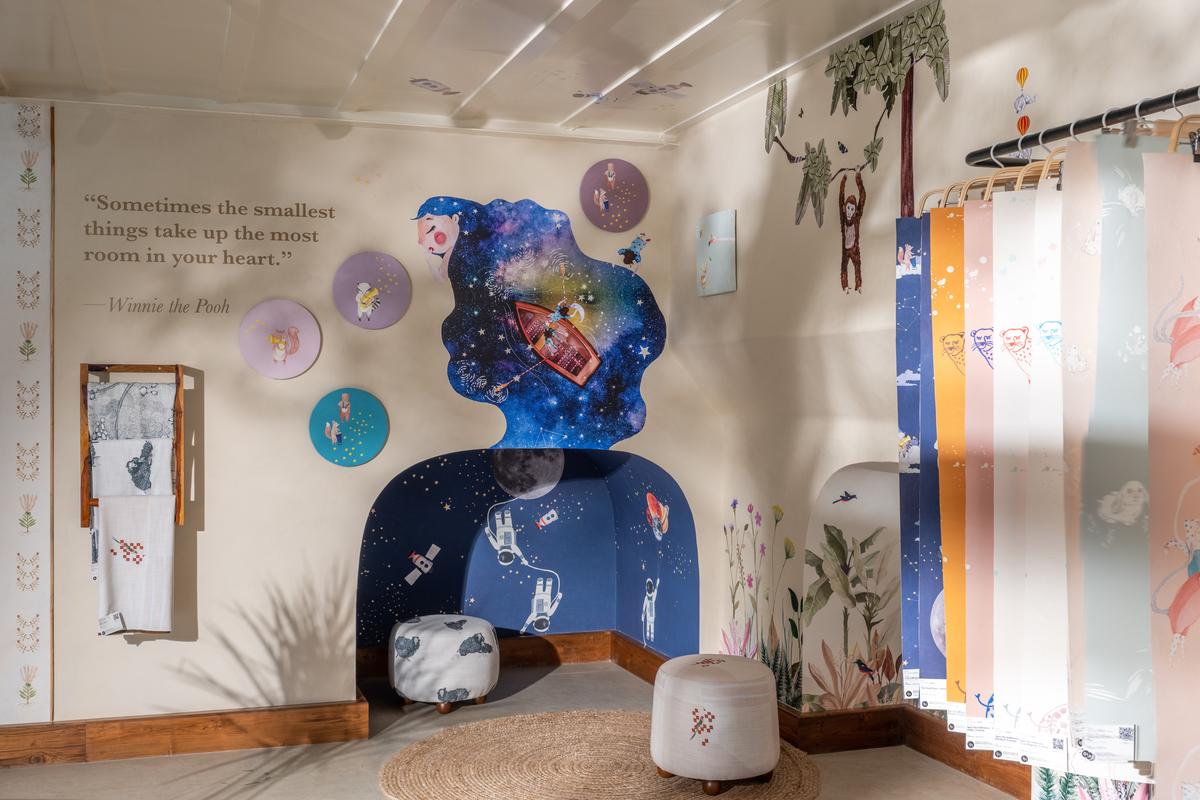
The wall art designed by Sahiba Madan.

The wall art designed by Sahiba Madan.
| Photo Credit:
Special arrangement

Some new parents focus time and energy on building a dedicated space for a baby’s arrival, but just a few years ago, this was not the norm.

Amrita Bose is a parent to a 10-year-old. But a nursery was nowhere on her list of concerns. “We couldn’t really afford one,” she recalls. At the time, a 35-year-old Bose was living with her husband, then 39, in a 2-BHK. “Having a baby alone is so expensive. We set up a cot in our bedroom — baby used to co-sleep and we would play on the bed.”

Unlike designers who tell you to accommodate the many initial life stages of a baby, Bose chose to make the best use of whatever was available. “When she grew up a bit, a mat on the floor of the living room was enough.”
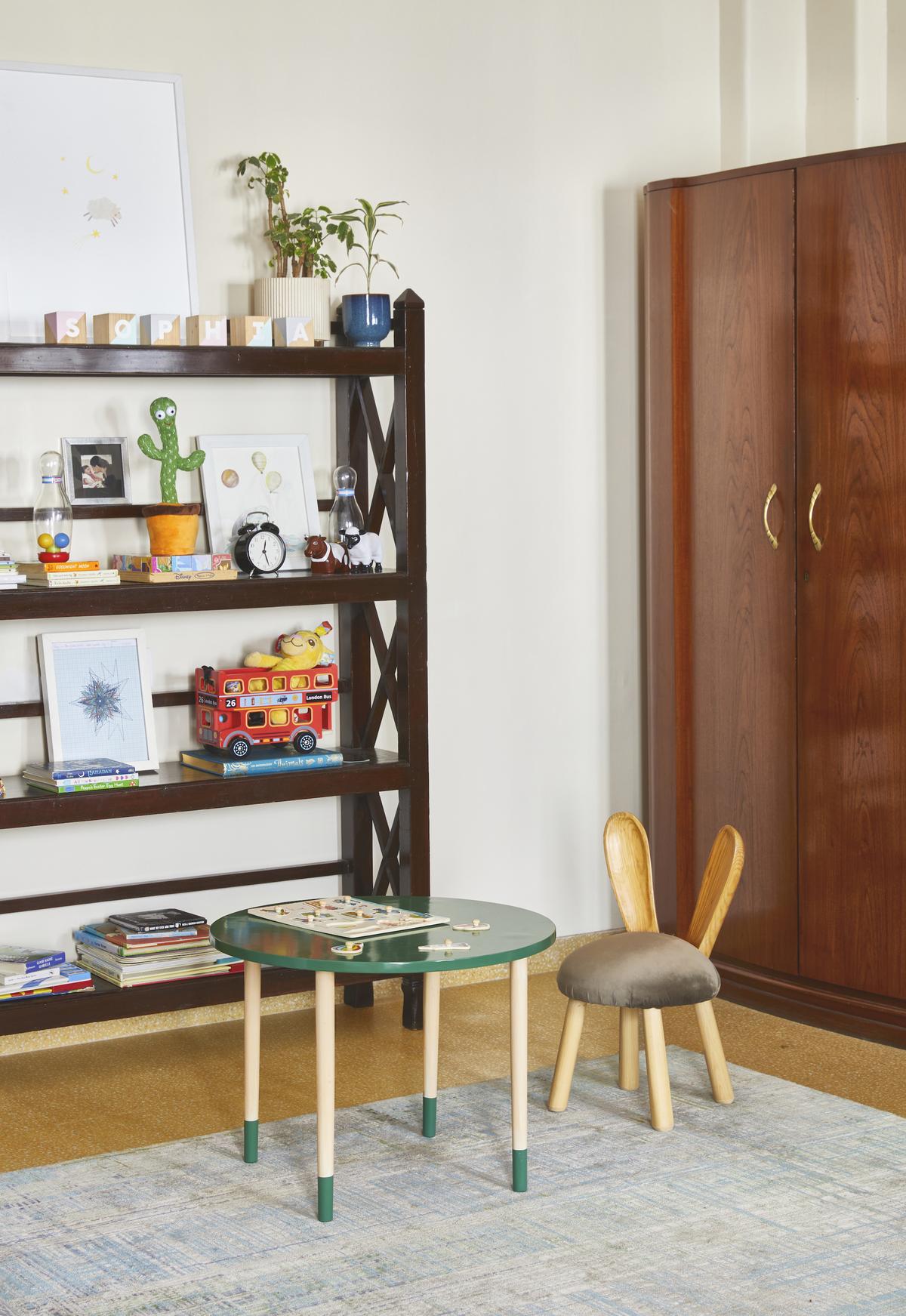
The toddler room designed and styled by Sarah Sham.

The toddler room designed and styled by Sarah Sham.
| Photo Credit:
Special arrangement

The media professional from Bengaluru is not the only one. Rohini Varma and her partner became parents at 25 and 28; and were more focused on their baby. “[A nursery] is not common in our circle. People [we know] don’t think that having separate themes or furniture impacts a child’s growth. We knew the child wasn’t going to remain in a single room anyway,” the Kerala native says, adding that their daughter used to sleep in their bed till she turned five.

Storage woes

Storage needs addressing even before a new member enters the house. Especially in cities such as Mumbai where space is always an issue. While parents often make do with resources they have at hand — like Varma, who says that the couple allocated a separate cupboard in the house to store their daughter’s belongings — designers urge new parents to focus on accessibility and a storage investment that will grow along with the baby.

“As a parent, my primary focus was accessibility,” says designer Sarah Sham, parent of a four-and-a-half-year-old. Having everything within easy reach was important. “Whether it was diapers, baby cream, or a comfortable spot to sit and feed my baby.” Hence, investing in a sturdy chest of drawers is a top tip she offers. “It’s an item you’ll use for years to come. I’m still using the same one we bought when she was born,” says the principal designer at Essajees Atelier and co-founder of Jea Interiors.

Storage and accessibility were top priorities for another Mumbai-based designer. Sahiba Madan, principal architect and founder at Insitu by Kalakaarihaath, designed a nursery for her firstborn herself. “Babies’ requirements evolve so quickly that one can never really keep up. I wanted to develop more storage solutions that worked in the long term.”

The wall art designed by Sahiba Madan.

The wall art designed by Sahiba Madan.
| Photo Credit:
Special arrangement

Functionality trumps aesthetics

This was a concern for Parmar, too. “It’s very likely that the room will require re-designing and upgrades as he outgrows some of the stuff.” In the last two years, they have already had to make changes to the nursery — a bigger bed, swapping the changing table for toys, books and running around.

Dual purpose furniture come in handy here — like Sham’s recommendation of cribs that can be converted into beds as the baby grows. “Another product we’ve continued to use is a sofa bed with built-in storage that was originally in the nursery when our baby was small. It has since become a regular sofa in my child’s room,” she says.

Creating a safety net

Sham wouldn’t compromise on safety when building the nursery. “I wanted to ensure that the items my baby might need were accessible, but more importantly I wanted to keep potentially harmful objects out of reach. Especially avoiding sharp edges.”

Babyproofing can be done in the simplest of ways. “Wood flooring is a great choice for nurseries, as it’s softer and warmer than tile or stone. Adding a plush rug on top is essential, as both parents and kids spend a lot of time on the floor. A quality rug adds comfort and warmth to the space.”

Building a nursery is a fun activity for new parents — balancing functionality with aesthetics to create a space that is filled with love and care, regardless of fancy furniture and plush décor.

Since babies spend so much time on their backs, adding a design element on the ceiling could make for a fun addition. Like Madan, who has brought such concepts to life, says, “We’ve put together an artwork that starts from the ceiling and comes down the wall. It looks straight out of a dream.”

The writer is a features journalist exploring culture, people, and urban life across Bengaluru and Mumbai. 

Evolving trends

No more ‘kiddy’ themes: Nursery design trends are moving away from overly ‘kiddy’ themes. “Parents are opting for a more contemporary, sophisticated approach, often drawing inspiration from nature and landscapes,” Sham says. She suggests choosing a single-color palette for the room, such as white with yellow, white with blue, or white with peach accents, rather than a mix of many colours. “This creates a clean, cohesive look that feels modern and soothing.”

Keep it personal: As dog parents, Madan chose warmer, earth-toned themes for the nursery of her baby boy. “I feel like when kids grow up around animals they develop a sense of empathy. The entire wallpaper has like different types of animals, almost like a deep forest scene. There are animals at different heights, so as he grows also, he discovers new things.”


Source link