Life & Style

Top 10 foods Americans love eating that are banned in other countries


Mountain Dew, which is a popular drink in many countries, including America, is banned by European countries and Japan. This is because the drink contains Brominated Vegetable Oil (BVO), which has been related to health concerns such as memory and skin issues. Also, the drink’s unique colour is derived from a dye called Yellow 5, which is linked to hyperactivity in children.


Source link

7 psychological tactics manipulators use in relationships (How to spot them and what to do)


Ever been insulted and then told you’re “too sensitive”? Negative humour is when someone uses sarcasm or “jokes” to undermine your confidence, then hides behind laughter. These aren’t harmless quips, they’re meant to make you feel small while giving the manipulator room to deny responsibility. “Lighten up,” they’ll say, after mocking your looks, choices, or intelligence.

How to outsmart: Smile, but turn the spotlight back. Ask calmly, “Why do you think that’s funny?” or “What did you mean by that?” Making them explain removes their mask and often exposes their real intentions.


Source link

7 common diseases caused by vitamin C deficiency


Vitamin C, is one of the most important compounds that our body needs, and plays a big role in our overall health. When it comes to specific jobs, Vitamin C is crucial in healing wounds, fighting infections, and making collagen, a protein that supports skin, bones, and blood vessels. Vitamin C is largely found in citrus fruits, and its deficiency can cause a host of health issues. We take a look…


Source link

Optical illusion: Can you spot the squirrel’s tail in under 5 seconds?


Optical illusion: Can you spot the squirrel's tail in under 5 seconds?

Optical illusions get our brain to exercise, and they are also a way to reveal our innermost personality and hidden traits. An optical illusion is a visual phenomenon where the brain misinterprets what the eyes perceive.It occurs when the information sent by the eyes conflicts with how the brain processes and understands what it sees. These illusions often trick us into seeing things that are not there, or perceiving objects differently from reality. For example, a still image might appear to move, or two shapes may seem unequal in size even though they are identical.Can you spot a tiny tail?In this picture, we see a flock of chicken, all in the same yellow, pink and red color. However a squirrel seemed to have entered the brood, and is somewhere hiding sneakily. However, since all the chickens are same in color, it is quite difficult to spot the squirrel, but it’s tiny tail can be seen somewhere. Can you spot it? Take a look, but you just have five seconds!The revealTime’s up! While this one was not too difficult to spot, we still have marked it for you. Take a look…

2

Types of optical illusionsThere are three main types of optical illusions:Literal Illusions: These occur when the brain combines elements of an image to create something that doesn’t exist. For example, an image might look like two faces or a vase depending on how you interpret it.Physiological Illusions: These are caused by overstimulation of the visual system, such as excessive exposure to light, movement, or color. They can create effects like afterimages or motion illusions.Cognitive Illusions: These rely on how the brain subconsciously interprets information. Examples include illusions like the Müller-Lyer illusion, where lines appear longer or shorter due to surrounding shapes.


Source link

Visit Oya’s Umami, a new restaurant in Goa that serves authentic Naga food


“Food, for all of us, is a memory,” says Ati Aier with a smile, as I bite into a fluffy, cloud-like mushroom bao. “For me, it was my grandmother’s amrusu, a hearty rice gruel with bamboo shoot juice, laced with the sharpness of chillies.”

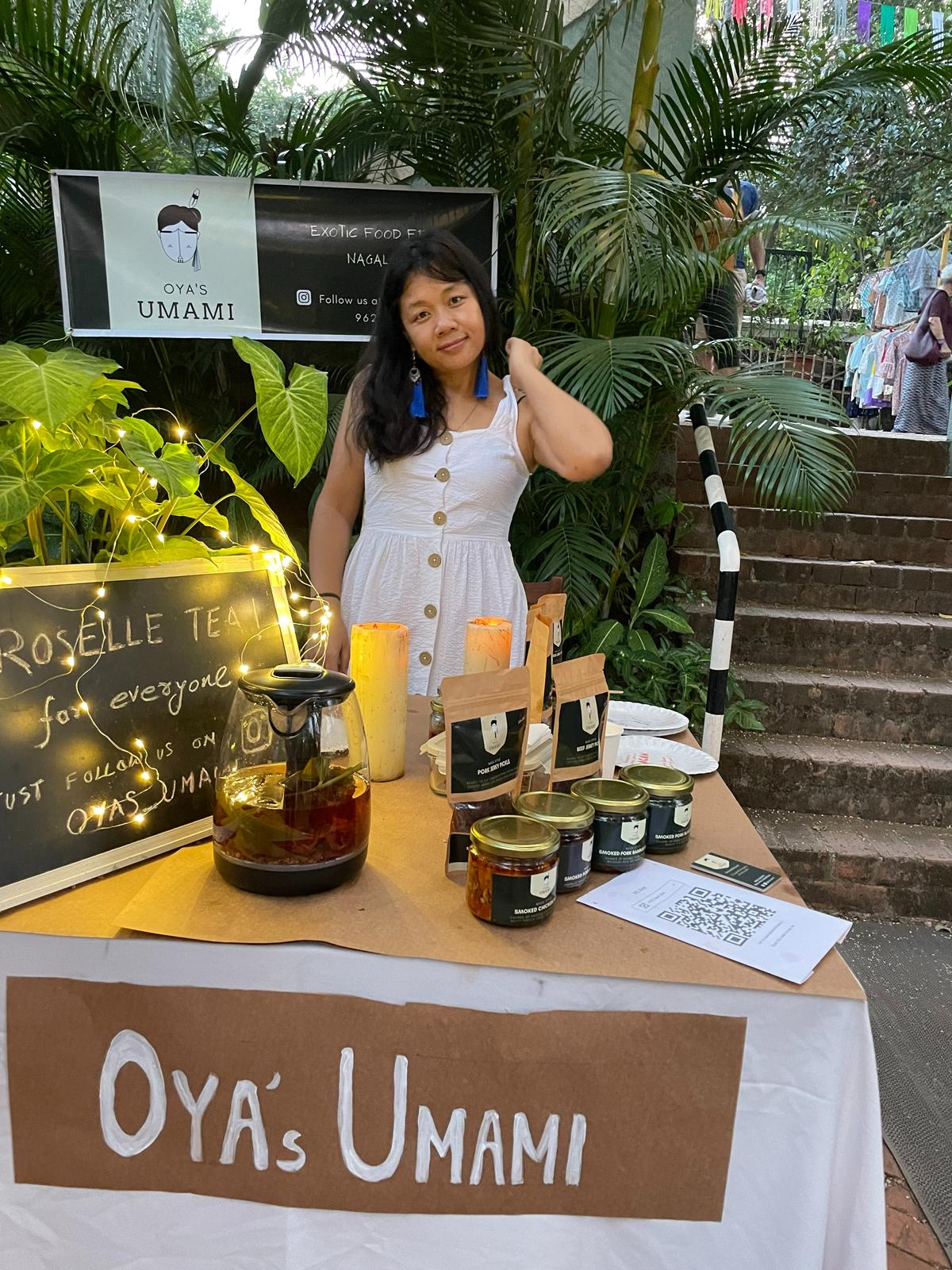
Ati at one of her pop-ups

Ati at one of her pop-ups
| Photo Credit:
Special arrangement

We are in Miramar at Ati’s newly opened restaurant, Oya’s Umami. Ati has been hosting supper clubs at her home for a few years now, as well as popups at several events, where her attempts to simplify Naga flavours for the uninitiated have not gone unnoticed. Along with her husband Abhijit, Ati runs Goa Meat Company, which supplies smoked meats, jerkies, spicy pickled liver and chillies to chefs and notable restaurants in Goa, including Grumps, Elephant and Co., Grind Bar, Larder & Folk and Goodfellas. The couple’s backyard is where the meats are smoked. Locally sourced coconut wood, fibre, coir and husk are used, lending a unique, self-contained, sustainable angle to the enterprise.

Back to the start

Ati belongs to Nagaland’s vibrant Ao tribe of Mokokchung village. Having served as a Japanese interpreter in New Delhi before moving to Goa in 2018, she claims to have gravitated towards the language and culture via anime and the simplicity of Japanese food, especially the play of umami. She could immediately relate it with Naga cuisine, connecting the depth of flavours and the pleasing savoriness to ingredients such as axone, which is a fermented soybean paste.

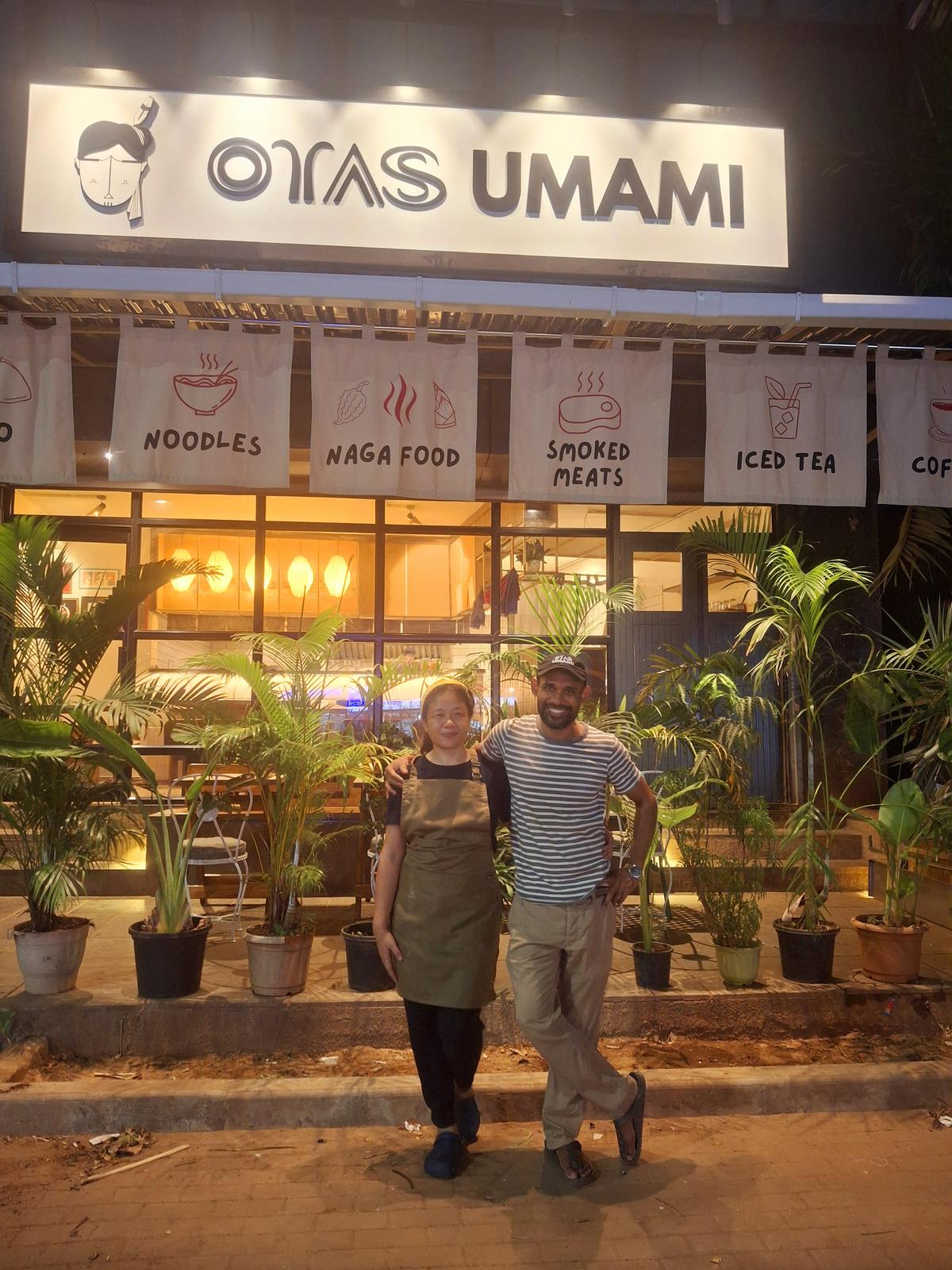
Ati and Abhijit before the opening

Ati and Abhijit before the opening
| Photo Credit:
Special arrangement

In the Ao tribe, Oya refers to a doting elder sister, a symbol of love and warmth, a role that Ati assumed when she opened the doors of her home in 2021 to diners looking for hearty Naga inspired meals. Thus, the name Oya’s Umami.

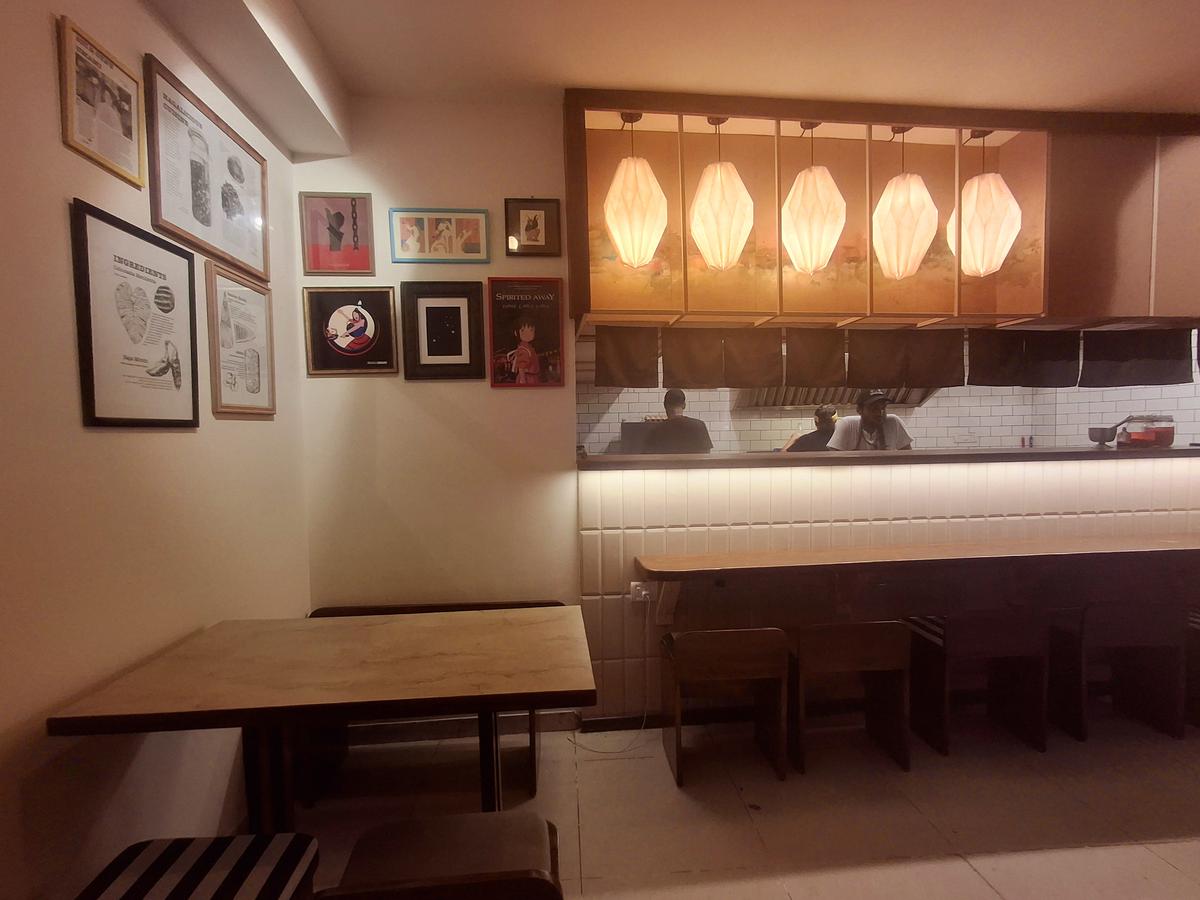
Inside Oya’s Umami

Inside Oya’s Umami
| Photo Credit:
Special arrangement

Food forward

Oya’s Umami is now open with 28 covers. The interiors are simple and inspired by a Japanese ramen shop. There is a little al fresco area surrounded by greenery from potted plants. The menu is Naga-inspired Asian street food with appetisers and small plates like momos, baos, and baked chicken wings.

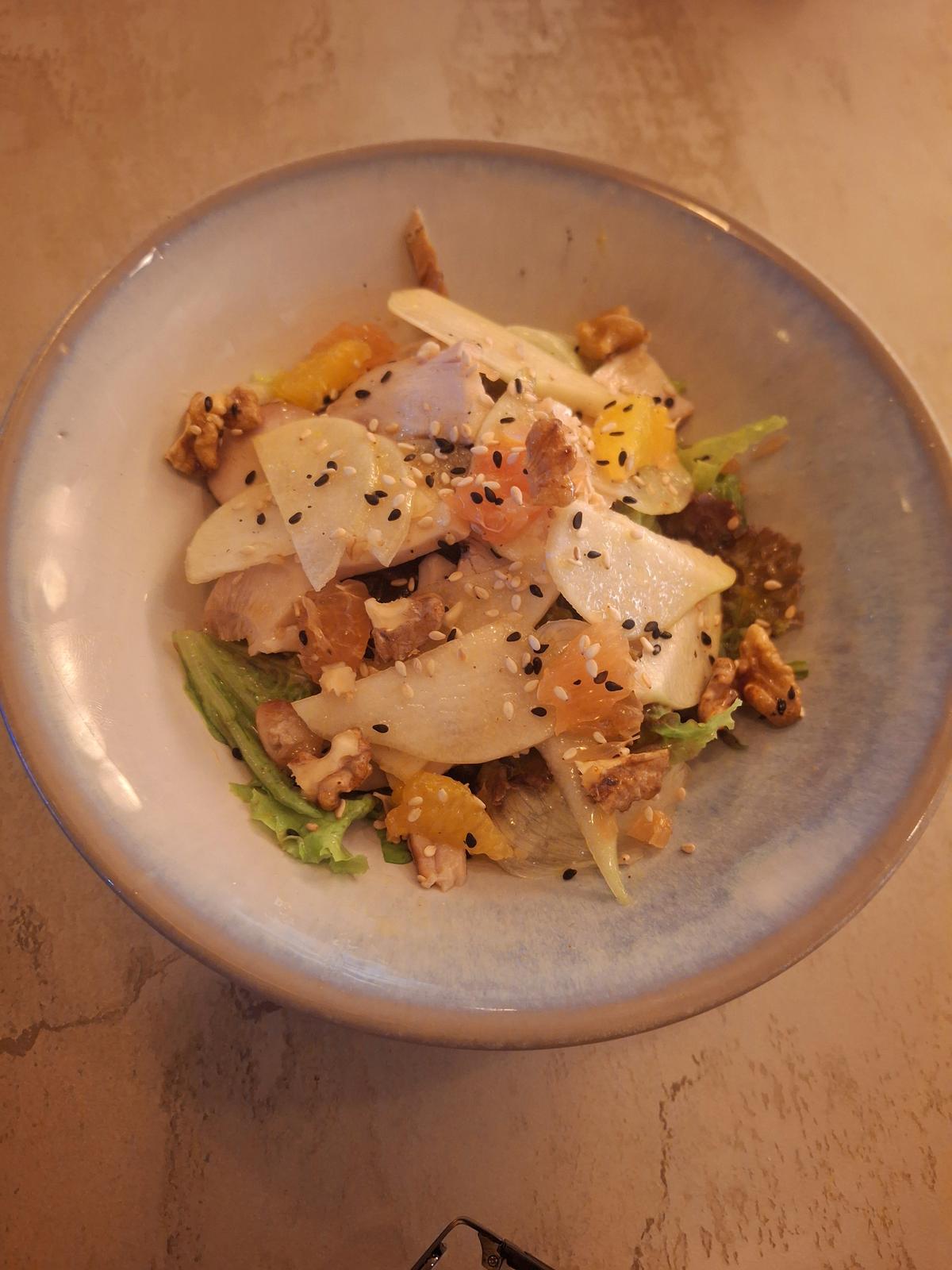
Citrus Salad with smoked chicken

Citrus Salad with smoked chicken
| Photo Credit:
Special arrangement

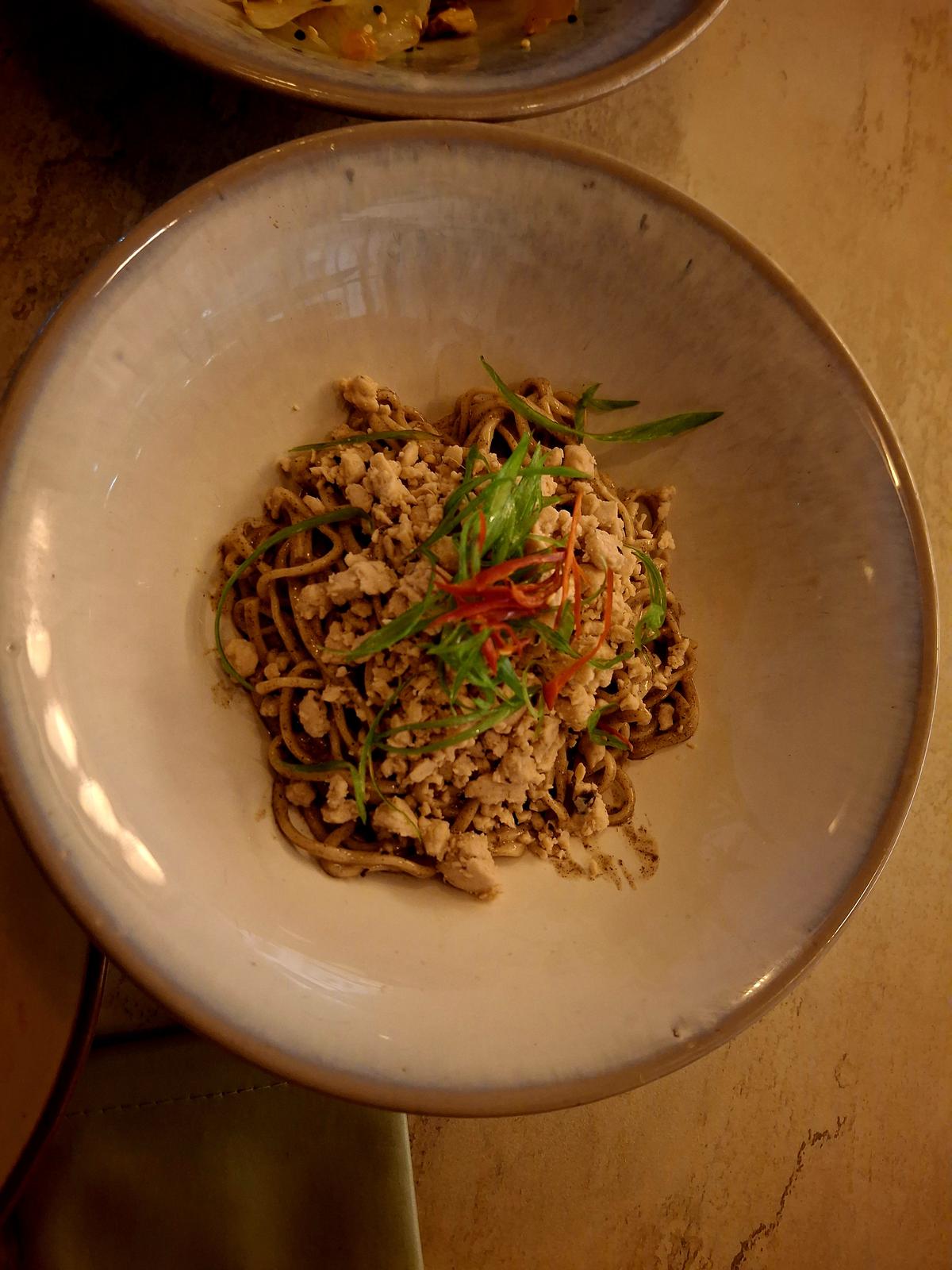
I tried the citrus salad with slices of smoked chicken, a perfectly zesty opening to a meal. The toasty meat adds an unexpected dimension to the taste. Next, the cold homemade egg noodles with black sesame paste, which lends a nutty creaminess to the dish, served with shredded chicken on top. It is easy to get lost in this delicious mound of silky strands, until you are jolted by the fierce sharpness of mountain pepper punctuating the dish; strangely its scent is quite like kaffir lime. The baos are soft as clouds. I had the mushroom bao, with chewy, meaty shiitake and the boldness of the three-chilli sauce with bird’s eye chilli, ghost pepper and red bell peppers.

Cold Noodles

Cold Noodles
| Photo Credit:
Special arrangement

“Your mushroom bao has anishi in it. Did you know?” says Ati. I know that fermentation is a common practice in Naga cuisine and had earlier asked her about anishi, made from taro leaves; often smoked or dried and used with pork. 

So, does she get the leaves in Goa? “Yes, we get it in plenty during monsoons. But it’s a slightly different variant,” she says, elaborating how the leaves are gathered, rolled, and left above the fireplace to naturally ferment in the gentle heat. “We pound it to a paste, make patties and store away to use later. It can be cooked with anything like meats or vegetables and it also acts as a tenderiser. At Oya’s, we even make a powder to sprinkle on top of dishes like togorashi used in Japanese cuisine.”

Main point

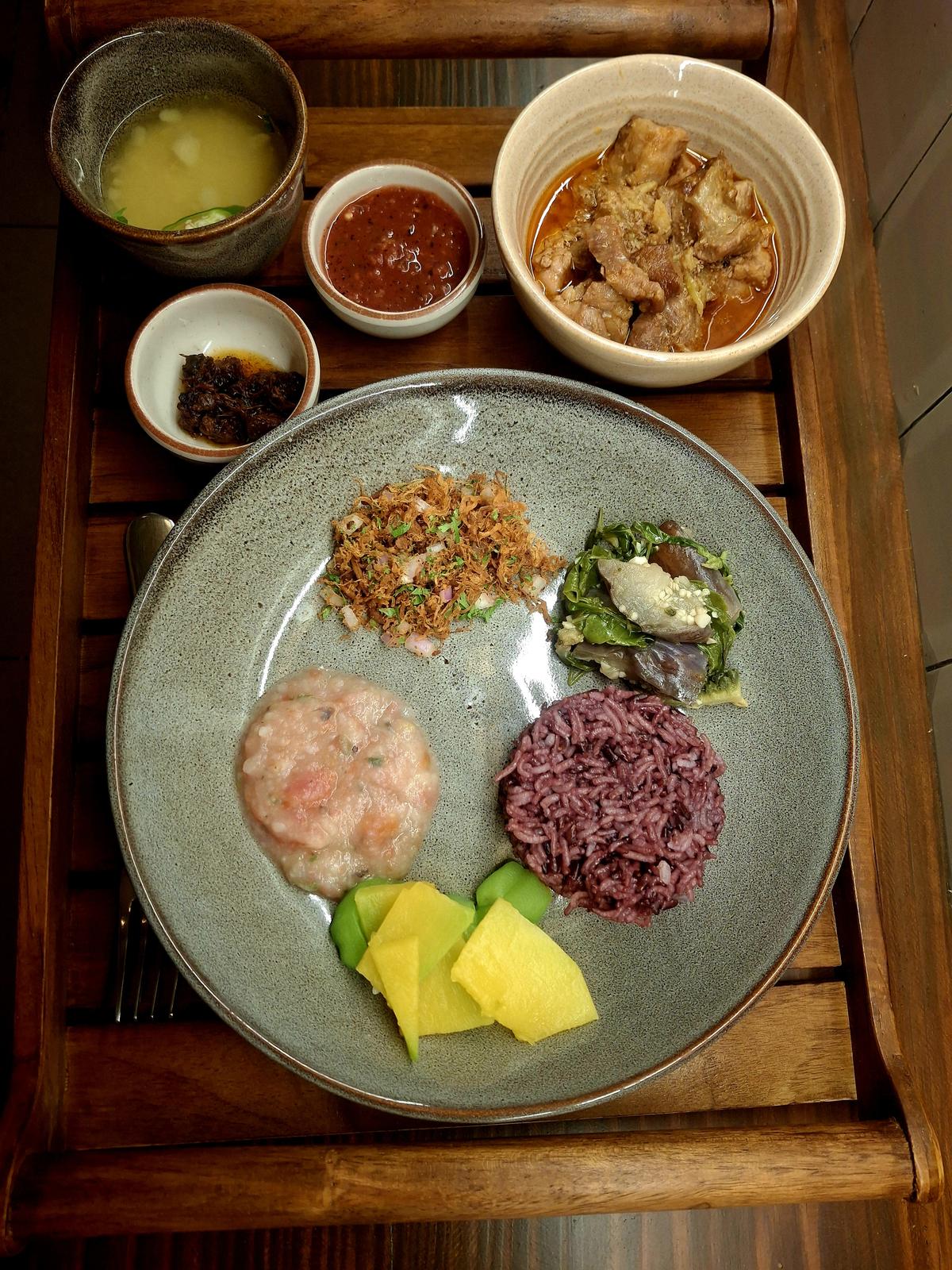
The pièce de resistance on the menu, though, is the Naga thali, served for lunch and available in two variants; pork bamboo shoot and chicken black sesame. Priced at ₹750, the thali is a smorgasbord of flavours and is as close as it comes to the actual food of Ati’s tribe. “You see, food in Nagaland is for sustenance. Hence, thalis are the kind of meals one would get to enjoy there. Other dishes on our menu are simply our interpretations, and have become the carrier for the flavours,” explains Ati as we start to demolish the carefully plated thali.

Pork Naga Thali 2

Pork Naga Thali 2
| Photo Credit:
Special arrangement

Oya’s will soon start their slow coffee with single-estate coffee beans sourced from Nagaland. They are also serving a passion fruit picante with ghost pepper, and a hibiscus and Naga sumac drink, which compliments the food. The long Goan monsoon will be a time to enjoy their soupy noodles and ramens, which will soon feature on the menu.

“Years ago, I watched the movie Axone, where there was a certain ‘othering’, when some Naga students in Delhi wanted to cook a pungent-smelling dish with this fermented soyabean paste,” she says, adding, “It nudged me to think deeply about how we perceive food, especially the embracing or rebuffing of it. And, here I was Ati of Oya’s Umami, having demystified the audacious Naga flavours, serving them with warmth, until one had no option but to fall in love.”

Oya’s Umami, located in Risara House, Miramar, Panaji, Goa, is open from 7pm to 11pm on all days except Tuesdays, and a meal for two may cost nearly ₹1,200.


Source link

Taste Idukki with Chennai’s Yura gelato by ITC Grand Chola


Yura Artisanal Scoops

Yura Artisanal Scoops
| Photo Credit: Special Arrangement

Brightly lit and thoughtfully designed, ITC Grand Chola’s gelato bar, named Yura – Artisanal Scoops, is inspired by the Japanese word that literally means ‘beautiful dream’, and offers an imaginative selection of gelatos, frozen yoghurt, sugar-free options and sorbets.

Pastry chefs at ITC Grand Chola, Chef Sridhar Manickam and Chef Deepthi Joji who curated the menu, explain that the 10 flavours were the result of extensive experimentation, trial and error. “We wanted to create desserts that resonate with all age groups, including international guests,” says Chef Deepthi, adding that they will be launching softies next.

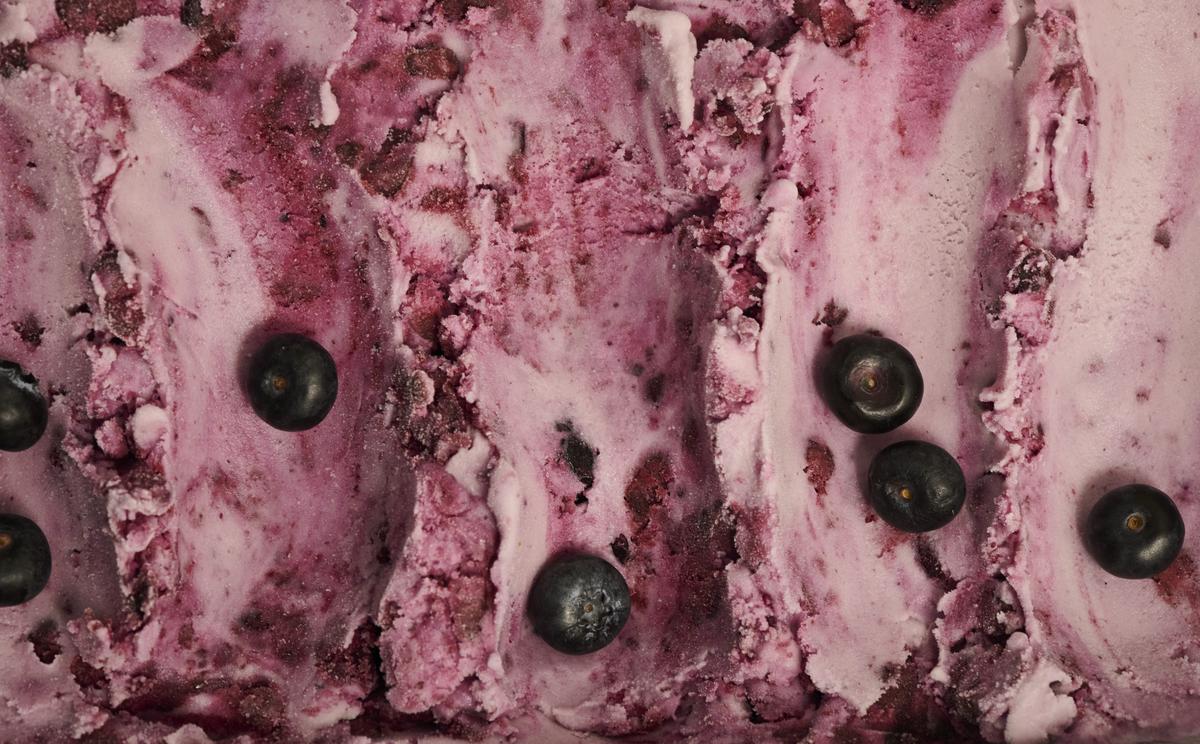
Blueberry yogurt

Blueberry yogurt
| Photo Credit:
Special Arrangement

To support this vision, ITC has brought in state-of-the-art equipment from Italy. “The stages of pasteurisation, mixing, homogenisation and ageing, are completely automated and precisely controlled. We take great care to ensure we use only the best ingredients, while consciously supporting local produce wherever possible. For example, in our Idukki vanilla flavour, the vanilla is directly sourced from farmers in the Idukki region of Kerala,” says Chef Sridhar.

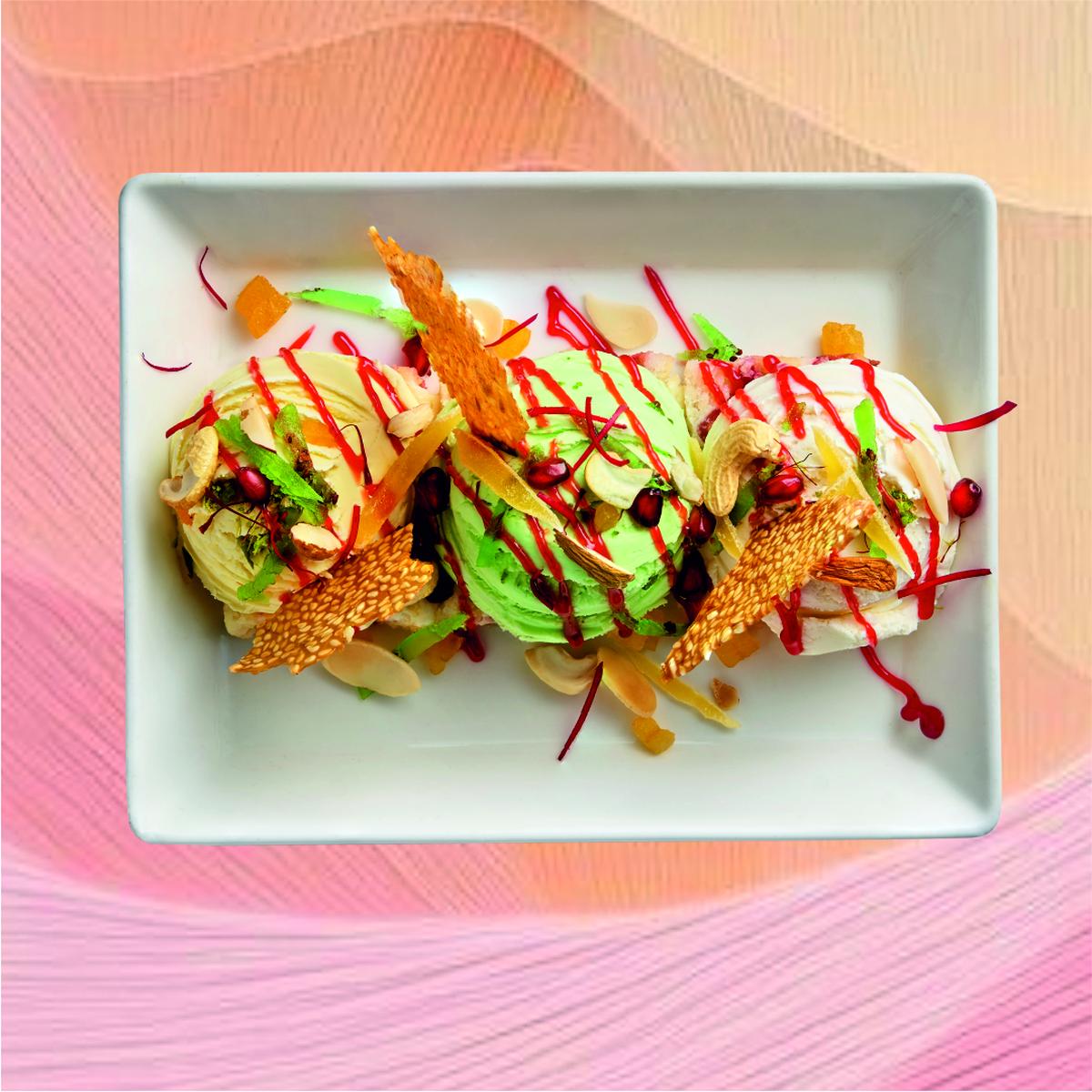
Sicilian pistachios

Sicilian pistachios
| Photo Credit:
Special Arrangement

Yura’s current offering includes Alphonso mango sorbet, French raspberry sorbet, blueberry yogurt, filter kaapi, miso caramel, chocolate (64% dark), Idukki vanilla gold, cookie and toffee, saffron and apricot and Sicilian pistachio. The sugar-free category features vanilla and chocolate. “We have adapted the Japanese miso flavour, which traditionally uses fermented soy bean and ensured the salty flavour lends itself well to the gelato texture and taste. Blueberries are slow-cooked for over three hours before they go into our yoghurt. All our gelatos are vegetarian and we do not use additives or preservatives,” says Chef Sridhar.

Chocolate gelato

Chocolate gelato
| Photo Credit:
Special Arrangement

After sampling the range, cookie and toffee emerged as the personal favourite, instantly evoking a sense of childhood nostalgia. A close second was the saffron and apricot, which delivered a rich and wholesome experience, and the filter coffee which carried a warm, familiar appeal. Among the sorbets, the mango stood out with its bright, refreshing flavour.

Yura – Artisanal Scoops is at ITC Grand Chola, Guindy. Call on 9840486009. The range of artisanal gelatos and sorbets are available for dine-in, takeaway, and delivery via Swiggy and Zomato.


Source link

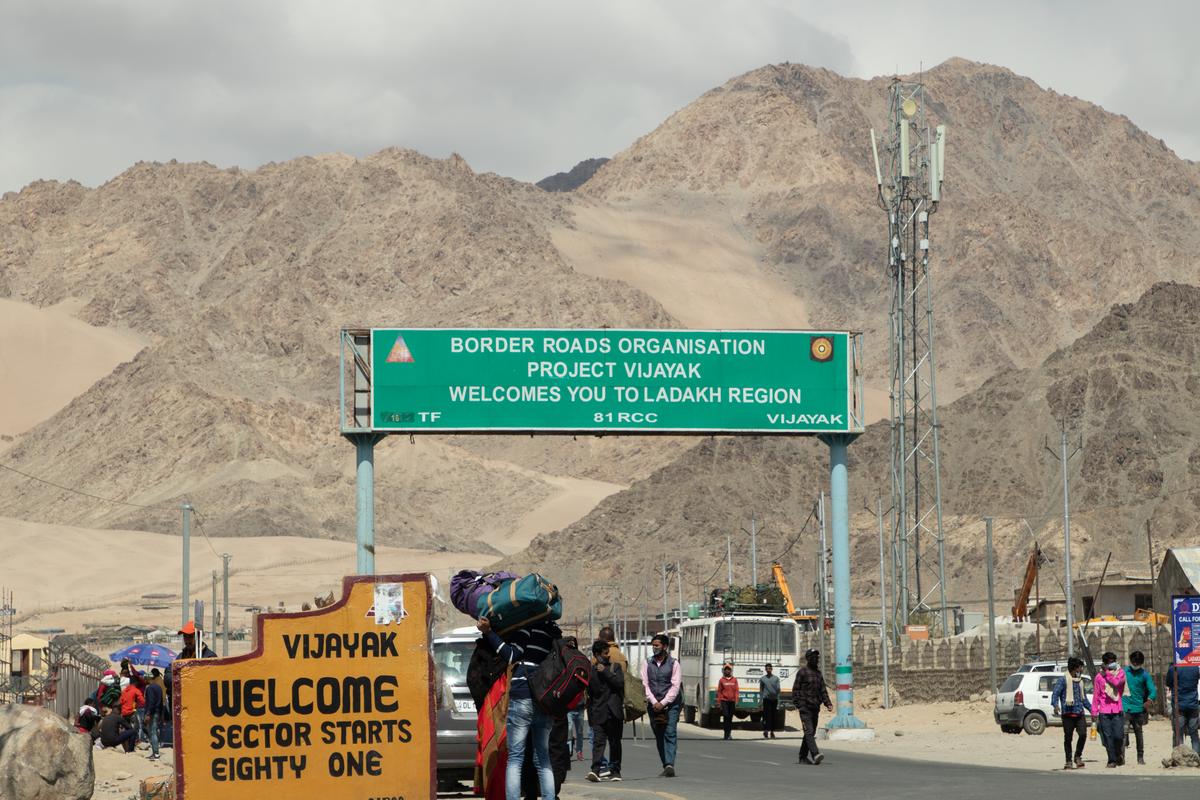
Stranded tourists in Ladakh and Kashmir receive free accommodation and kindness from hospitality industry 


Seventy two year-old Sushama Davar spends half her time in India and the rest in the US. When she arrived for a short trip during the summer months this year, her husband and she decided to flee the heat of Mumbai (where she is based), and planned a trip to Ladakh and Kashmir. “We were travelling on April 29. Because of the terror attack [in Kashmir’s Pahalgam on April 22], we cancelled our Kashmir plans and added days to our Ladakh itinerary,” she says.

The first few days were spent hiking, trekking and exploring this new, stunning topography. “It’s a once in a lifetime place,” she says. On May 6 though, the news of the airport in Leh shutting down for border security, caused some concern. “We were on our way to the Pangong Tso lake and our connectivity was not great but we had already heard chatter about the airport being shut down and were a bit disappointed,” she says.

In the days since the airport has been shut though, Sushama has been the recipient of unconditional hospitality from her hotel in Leh. On May 7, Rigzin Wangmo Lachic, president, All Ladakh Hotel and Guest House Association and founder of Dolkhar, a boutique hotel, announced that all hotels in Ladakh would accommodate stranded guests for free until flights begin taking off again. “Nobody must have seen this coming. It is hence our duty to our guests to extend this hospitality,” Lachic says.

The Dal Lake at Srinagar, Jammu and Kashmir

The Dal Lake at Srinagar, Jammu and Kashmir

Ladakh is not the only place in North India which has accommodated travellers. Javed Burza, president of the Pahalgam Restaurant and Hotel Owners Association, said that stranded tourists who were looking to go home after the news of the attack on April 22, were allowed to stay in various hotels and guest houses across Jammu and Kashmir, particularly in Srinagar for the subsequent days. “There are no tourists here now. The truth is that we feel like scapegoats,” he says.

Considering it is peak season in places like Leh, Kashmir and Dharamshala, the economy here, heavily dependent on tourism, has deeply suffered losses. The pinch has been felt in an all-pervasive manner, affecting not just hoteliers, but also shopkeepers, vegetable vendors, markets, business owners and transport businesses. “Nearly 70% of Ladakh depends on tourism to run the show for the year. It is going to be a difficult time for us, especially for those of us who have taken loans for repair works and construction,” says Nawang Tashi, vice president, Guest House Representative, All Ladakh Hotel and Guest House Association.

Lachic says that tourism opened in Ladakh in 1974. Until then, the stray trekker made their way to this underexplored region in the 1920s and 1930s. “The harsh winters and the lack of road access made it difficult for people to visit. By 2008 and 2009 though, we had an influx of domestic tourists. By this time, low cost operational flights landed in Leh and the release of the film 3 Idiots helped popularise the destination. The economy saw a boom,” she says.

When the phenomenon of ‘revenge travelling’ entered as part of the post-COVID lexicon, Ladakh became a preferred destination for not just trekkers but also for those who wanted to go on self-driving holidays and luxury camps. “In 2024 though, we saw quite a dip that we were unable to explain. The economy went down by about 30%. We were hoping to make up for losses this year because the bookings in March and April seemed encouraging. We were hoping it would sustain till July but unfortunate circumstances happened,” Lachic says. There are currently around 1,500 stay options ranging from guest houses that charge ₹800 a night to premium properties that charge ₹50,000 for the day.

Passengers wait outside at Jinnah International airport after all domestic and international flights were cancelled in Karachi on May 7, 2025.

Passengers wait outside at Jinnah International airport after all domestic and international flights were cancelled in Karachi on May 7, 2025.

Javed agrees. He states that though horticulture is said to have contributed most to Kashmir’s economy, tourism in the last few years has made quite the difference to people’s lives. “There is not much hysteria now but it is going to be a while until we can recover and rebuild. Terror attacks have happened in other parts of the country too like Mumbai. We have to bounce back but it is a time of bad luck for everyone,” he says.

Currently, Tsewang Dorjey, president All Ladakh Tour Operators Association, says that they have been arranging tempos to transport tourists to other parts of the country by road. The preferred destination for flights back home is Delhi. Although Innovas usually ply in the region, tempos, which can seat 12 individuals, is currently a more effective form of travel. “We are taking travellers through the one road that is open, the new Nimmu-Padam-Darcha (NPD) road, also known as the Zanskar Highway. “Instead of charging ₹5,500 per person as we would, usually, we are charging ₹2,000. This is just to cover basic costs,” he says.

Rahul Dhiman, president of the Hotel Owners Association in Dharamshala, and Ankit Gupta, president, Chandigarh Hospitality Association, and joint secretary, Hotel and Restaurant Association of Northern India, says that though flights have been grounded, tourists in these regions have not been affected extensively as road and railway options still exist as travel options. “Currently, we are hand holding through the mock drills and blackouts but that is about it. If the situation worsens, we will be happy to step in and provide free stay,” Rahul says. Occupancy in Dharamshala is at about 40% in the 400 hotels part of the association. This is pretty standard for the time, he adds.

People waiting at baggage claim conveyor belts in the arrival area of Kushok Bakula Rimpochee Airport lead

People waiting at baggage claim conveyor belts in the arrival area of Kushok Bakula Rimpochee Airport lead

Lachic says that despite the panic, those who are in Ladakh, have continued with their itinerary and made the most of their extended days. “There is no restriction of movement within the territory,” she says. She adds that waivers from the Government on repayment of loans and electricity bills would aid the community massively and help them continue their work in the long run. Losses otherwise, would not be sustainable, she says.

Hospitality in the region now requires more support than ever, Sushma says, adding “The place is beyond wonderful and more people need to see it. I do not regret making the trip one bit. I just hope to make my flight back home soon though.”

At the entrance of Kushok Bakula Rimpochee Airport.

At the entrance of Kushok Bakula Rimpochee Airport.


Source link

Adidas Samba vs Nike Killshot, which is the better sneaker?


Adidas Samba

Originally released in the 1950s, the adidas Samba was designed as an indoor soccer shoe. Its low profile, leather upper, suede T-toe overlay, and gum sole have remained virtually unchanged, making it a staple in both sport and streetwear. Over the decades, the Samba has transcended its athletic roots, becoming a symbol of casual cool embraced by skaters, football fans, and fashion enthusiasts.

Nike Killshot

The Nike Killshot 2, most widely recognized today, is actually a retro release inspired by a court shoe from the 1970s. Made famous through its collaboration with J.Crew, the Killshot boasts a sleek, clean look featuring suede overlays, mesh or leather uppers (depending on the version), and a distinctive gum sole. Its minimalist aesthetic makes it a go-to for those seeking understated style.

Winner: Adidas Samba

While both have iconic heritage, the Samba’s long-standing legacy and recognizable silhouette give it a slight edge in design history.


Source link

5 anti-ageing drinks that help you stay youthful


If there’s one drink that deserves a spot on every anti-ageing list, it’s green tea. This centuries-old beverage is loaded with catechins, a type of antioxidant that helps fight free radicals in the body. These unstable molecules are responsible for damaging skin cells, leading to premature ageing, wrinkles, and dullness.

Why it works:

Rich in polyphenols that protect collagen and improve skin elasticity

Reduces inflammation and prevents oxidative stress

Boosts metabolism and supports detoxification

How to drink it:

2–3 cups a day is ideal. Avoid adding sugar, and consider a squeeze of lemon for an extra vitamin C kick, which also supports collagen production. If there’s one drink that deserves a spot on every anti-ageing list, it’s green tea. This centuries-old beverage is loaded with catechins, a type of antioxidant that helps fight free radicals in the body. These unstable molecules are responsible for damaging skin cells, leading to premature ageing, wrinkles, and dullness.

Why it works:

Rich in polyphenols that protect collagen and improve skin elasticity

Reduces inflammation and prevents oxidative stress

Boosts metabolism and supports detoxification

How to drink it:

2–3 cups a day is ideal. Avoid adding sugar, and consider a squeeze of lemon for an extra vitamin C kick, which also supports collagen production.


Source link

Indian designer Vino Supraja named Global Sustainable Fashion Trailblazer at the British Parliament


Vino Supraja with the award

Vino Supraja with the award
| Photo Credit: special arrangement

“For somebody who is from the small town of Vandavasi; who did her schooling in a Government school; and had a lot of insecurities about speaking English; to go to the British Parliament and talk about our culture, was a surreal, happy moment,” says designer Vino Supraja. She was recently honoured with the title of Global Sustainable Fashion Trailblazer award at the House of Commons, British Parliament. 

The 45-year-old designer, now based in Dubai, has had a long, fragmented sojourn in the world of fashion. She says that it is not one single moment that led her here. Instead it is simply a series of things that kept shooting at her. “I am still observing where it is going to take me,” she says. 

A piece from Vino’s Therukoothu collection

A piece from Vino’s Therukoothu collection
| Photo Credit:
special arrangement

For a long time, Vino dabbled in media studies. “I did my architecture degree in Chennai and then I learnt animation, and I joined an electronic media course in Anna University.” After a brief stint in radio, Vino shifted base to China. In China, while scouring websites for possible study or job opportunities, she chanced upon only two sites in English. The rest were all in Chinese. “One was a business school and the other, a fashion school. I somehow associated numbers with business so I opted for the other option! That’s my official entry into the world of fashion,” she recalls, laughing. Vino’s graduation collection went on to receive two international awards, and made its appearance in the 2014 Shanghai Fashion Week. 

Then life moved to Detroit — where her collection was walked in New York Fashion Week, and then Brooklyn Fashion Week where she featured a line that came out of the Chennai floods of 2018. It was only five years in. After moving to Dubai, where she is based now, she realised “the dark side of the fashion industry”, as she calls it. “It was a moment of realisation. I wanted my brand to adopt a sustainable path. That is when we started working with the Chennimalai weavers. That slowly led me to London Fashion Week.” 

The ancient Tamil folk art form of Therukoothu has always inspired Vino, especially as she hails from Purisai, one of the main, still-thriving centres of the folk form. “When London Fashion Week came up, I decided that this is the time I should platform Therukoothu,” says Vino. “I went to Purisai and there I met someone who I have admired from my childhood days — Purisai Kannappa Thambiran Ayya. They were very happy to collaborate. I learnt how to dress a character and do their makeup. We came to Chennai to record the audio, and showcased a one-minute presentation at the London Fashion Week before the models walked the ramp. The western world was shocked to see so many colours on one person,” recalls Vino. All these collections are available on the website. 

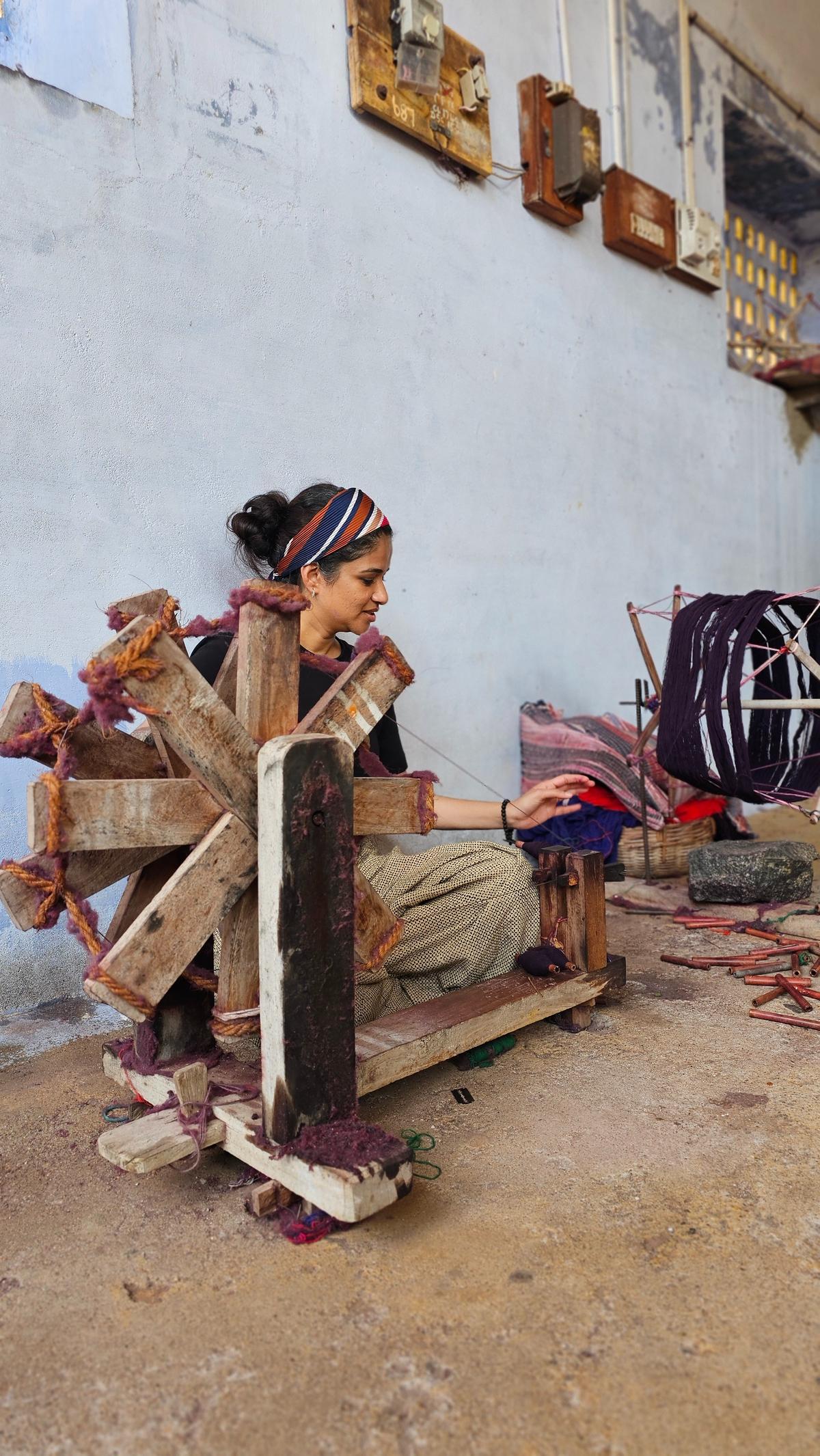
Her next visit was to Bhavani in Erode district to understand the crafting of the famed jamakkalam fabric. “I could see that the craft was diminishing and many weaving looms were left unattended. Small businesses were suffering. This made me wonder what I can do with my brand.” 

Stripes, solid colours, very minimal — the jammakalam’s aesthetic was decidedly global. “The stripes of the Bhavani jamakkalam are at par with the Gucci stripes! This year we launched the J collection, with bags.”   

A piece from the J collection

A piece from the J collection
| Photo Credit:
special arrangement

With the new, rather heavy moniker of Global Sustainable Fashion Trailblazer, the responsibilities increase. While sustainability has been a buzz word in the fashion industry for the last five years, it is now being overtaken by AI, says Vino. “Now, the dialogue is around incorporating AI in fashion and the chatter about sustainability is taking a backseat. Ultimately, moving to sustainability should be taken as a responsibility by the big brands first.”

Vino is now working on reimagining the Bhavani jamakkalam to make products other than bags. “I want to give prompts to the world, which anyone can adopt and enhance their creativity with.” With fabrics and techniques that deserve global attention, Vino crusades to bring the world to South India, one jamakkalam at a time. 

Vino Supraja

Vino Supraja


Source link