

Life & Style

Roshni Devi: 70-year-old overcame arthritis by doing these exercises in the gym |


70-year-old overcame arthritis by doing these exercises in the gym
Image credit: Instagram/weightliftermummy

For most people, knee arthritis at 70 means painkillers, walking sticks, and cautious movements. But for Roshni Devi, it meant something different: the beginning of a new chapter. As per reports, when she was diagnosed with arthritis in both knees, her mobility was getting worse by the day. Standing became a task, walking felt like a punishment, and stairs were almost impossible. But something changed when she turned 68—and it wasn’t just her mindset.
With her son’s encouragement, she stepped inside a gym for the first time. Two years later, she now performs 60 kg deadlifts, 40 kg squats, and 100 kg leg presses daily. Her story is not about defying age—it’s about rediscovering life with every lift.

It all began with struggle, not strength

There’s a common belief that gym workouts are unsafe for seniors, especially those dealing with arthritis. But Roshni’s first few days at the gym had nothing to do with lifting weights. She started small—learning how to sit down properly, use bodyweight for simple squats, and build balance. At first, even stepping onto the treadmill was tough. But progress didn’t come overnight. How her body started responding made her stick with it—less stiffness, slightly better posture, and a growing sense of confidence.

arthritis

This phase is often skipped in stories, but it was the most important part for Roshni.

The truth about heavy weights at 70

At 70, Roshni’s weightlifting numbers seem unbelievable. But here’s the fact: Muscles and bones don’t stop responding just because of age. Lifting weights, especially for the first time at 70, stimulates muscle growth and increases bone density. The stronger the muscles around the joints, the less pressure on the actual joint.
So when Roshni began lifting heavier, it wasn’t harming her knees—it was protecting them.

Consistency, not intensity, did the magic

Many assume that it’s the heavy weights that brought her transformation. But the truth? It was the consistency. Every single day, she showed up. Whether it was a light session or a strength day, her body learned the rhythm. Her trainers say she never misses a session—even on rainy days or low-energy mornings. This regularity built her resilience and rewired how her body responded to pain.
Her story proves something powerful: Discipline outlives discomfort.

Nicknamed ‘weightlifter mummy’: What keeps her going?

Those who watch her now often call her ‘Weightlifter Mummy’—a name she wears proudly. But what keeps her going isn’t vanity or record-breaking lifts. It’s the fact that she no longer wakes up with joint pain. She can walk without fear of falling, sit cross-legged again, and even play with her grandchildren. In her own words, “I feel younger than I did at 60.”
More than the weights, it’s her regained independence and dignity that matter most.

26-year-old Janhvi Kapoor sweats it out in gym; CHECK out!

What doctors want others to learn from her journey

Exercise is not just safe, but essential for those with arthritis, provided it’s introduced carefully. He emphasises the need for medical guidance, proper supervision, and the right progression. For some, pain management is needed before starting a workout plan. But the goal is always the same—to reach a point where the body is strong enough to move without painkillers.
This isn’t about becoming a bodybuilder. It’s about reclaiming control over one’s body.


Source link

What is Elon Musk’s five-minute rule for guaranteed success in any field


What is Elon Musk’s five-minute rule for guaranteed success in any field

One of the richest persons in the world, Elon Musk is known for many things— heading DOGE under Donald Trump’s administration in the US, sending rockets to space, building electric cars, and shaking up the tech world almost daily with his wacky ideas. But how is Elon Musk able to do so much more than others, considering he too has just 24 hours in a day? Well, Musk’s secret habit for intense productivity is something surprisingly simple: the Five-Minute Rule. So, what is Elon Musk’s five-minute rule and can it make you successful too? Read on to know all about it here:
Elon Musk’s 5-minute rule is not about changing your life in five minutes or achieving success overnight. It’s about how Musk organises his day— not hour by hour, but in smaller five-minute blocks. While most of us plan our day in vague chunks or goals (like “work on emails” or “attend meetings”), Elon Musk breaks his entire schedule into little five-minute slots, each with a clear task.
Sounds intense? It is. But it also works— and there are a few reasons why.

Why Elon Musk gives only 5 minutes to each task?

Think about how easily we lose time during the day– especially in the fast-paced and digital world that we live in where there are too many distractions to lose focus. A quick scroll on your phone, a long coffee break, or chatting with a colleague can stretch from 5 minutes to 30 without realizing it. On the contrary, Elon Musk’s five-minute scheduling forces extreme clarity and accountability. Every block is intentional. There’s no space for vague time-wasting.
It may sound rigid, but it actually gives you a lot of freedom— because when you know exactly what you’re doing and for how long, you’re free from the stress of drifting aimlessly through the day.

How Elon Musk uses the 5-minute rule

Elon Musk

Elon Musk has publicly stated that he uses this method to manage his companies— be it Tesla, SpaceX, Neuralink, and The Boring Company— all at once. Each day is planned in five-minute chunks, starting early in the morning. Every meeting, email session, brainstorming block, and even lunch break is mapped out.
If you wish to follow it, the 5-minute rule might feel a bit overwhelming at first. But the idea isn’t to copy Musk’s schedule minute for minute. The takeaway is that time is your most valuable currency, and treating it that way can dramatically increase your focus and productivity, thus making you more successful than others.

How to use the 5-minute rule

To incorporate Elon Musk’s high productivity formula, simply do the following steps:
– Write down your top 3 priorities for the day.
– Break them into five-minute tasks or steps.
– Use a timer to stick to each block.
– Allow a few five-minute breaks to breathe, scroll, or snack guilt-free.
You’ll be surprised how much you get done when your mind knows there’s exactly a five-minute boundary and a clear goal.
In the end, the Five-Minute Rule is a reminder that productivity isn’t about doing more—it’s about doing what matters, with intention. And when you use your time wisely, you open the door to bigger things— just like Elon Musk.

How to decide how much you should eat with Nutritionist Anupama Menon


Source link

This is Sadhguru’s most recommended practice to increase brain power


This is Sadhguru's most recommended practice to increase brain power

Like all organs of the body, our brain too needs exercise to get sharper, and fitter. While intelligence is a broad concept and can be genetic (you will most likely be intelligent if your parents are), it can also be cultivated through learning, reading, meeting people, and even traveling! Yes, our brain is a wonderful organ, and apart from the habits mentioned above, do you know that Yoga too, can increase brain power? Yes that is true…

2

The power of squatting in Yoga
According to Sadhguru, Yoga is a simple, yet powerful yoga practice that can boost brain power. According to him, squatting exercises the spine, which is crucial for enhancing mental clarity and intelligence. This ancient posture is more than just physical-it activates the lumbar region of the spine and strengthens the muscles along it, supporting overall brain function.
Relation of spine with intelligence
The spine is not just a support structure; it is a complex assembly that plays a vital role in communication within the body. When the spine is flexible and healthy, it improves the flow of energy and signals, which sharpens the intellect. Sadhguru explains that as people age, the spine tends to collapse and pinch nerves, which can dull mental clarity. Regular squatting helps prevent this by reinforcing the spine and keeping it active and strong.
How to practice squatting for brain power
Sadhguru recommends a specific way to squat for maximum benefit. Ideally, you should keep your feet together and squat down fully, but many people find this difficult at first. The alternative is to keep your feet shoulder-width apart. Start by doing seven squats and gradually increase the number by one every two days until you reach 21 squats. This gradual approach helps build strength and flexibility in the spine safely.

3

More benefits
Besides boosting intelligence, squatting improves posture, ankle mobility, and digestion. It also brings a natural surge of energy, contributing to overall well-being. This simple practice, often called Yoga Namaskar, is accessible and can be done anywhere-at home, in the office, or even at the gym. It strengthens the back, reduces pain, and enhances the body’s communication system.

Choose clarity
Sadhguru emphasizes that clarity is the foundation of all success and intelligence. Without clarity, people rely on confidence, which he calls a poor substitute. Squatting and activating the spine help clear the mind, making decisions sharper and more precise. This clarity, he says, is the real measure of intelligence and brain power.


Source link

5 reasons kids should consume it in summer


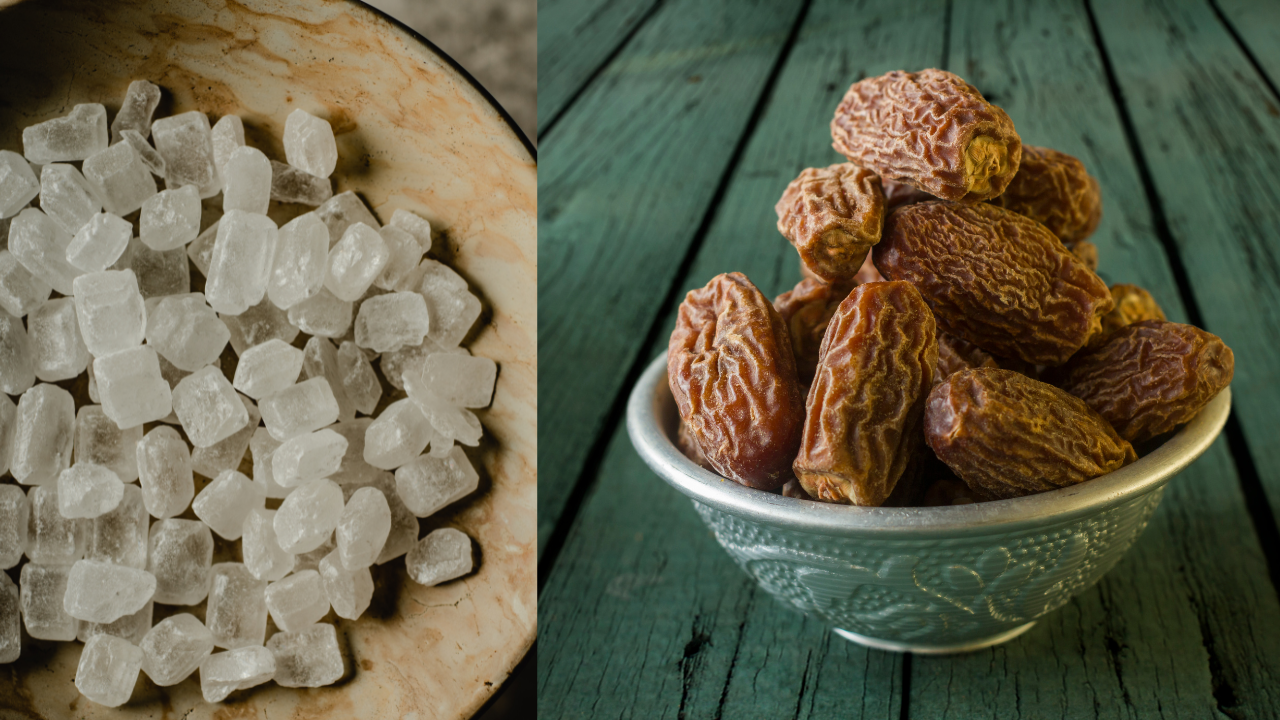
Back in the days when packaged health drinks weren’t the norm, simple home remedies ruled the kitchen shelf. One such age-old combination is chhuhara (dried dates) and mishri (rock sugar). Loved by grandparents and quietly slipping into lunchboxes of many Indian homes, this pair is often considered a magical mix, especially for children in the sweltering heat.
It’s easy to assume this duo is just a traditional sweet treat, but it actually hides several health secrets under its sugary skin. Here are five reasons why this dry fruit and sugar crystal combination deserves a place in every child’s summer diet.


Source link

Special buffets for festive season in Coimbatore: With butterfly pea fried rice, tikkas and keema kebabs


Easter egg cookies

Easter egg cookies
| Photo Credit: Special Arrangement

There’s a festive buzz in the air as you step into Urban Bar-B-Que on a Sunday afternoon. While an Easter bunny stares out of a watermelon carving, a live one in a costume distributes colourful Easter eggs to children, smiling ear to ear. As we settle down, it’s a platter of colourful, juicy and delicious kebabs, arranged in a live skewer at the table that grabs our attention.

Festive decor

Festive decor
| Photo Credit:
Special Arrangement

In basil heaven

While meat lovers dive into grilled fish, prawns in gochujang sauce, and mutton keema kebabs, vegetarians relish succulent mushroom chimichurri and basil paneer tikka that is crisp and has flavours of fresh basil. A live counter doles out fluffy appam and stew and there is also roasted chicken with accompaniments like mashed potatoes and cranberry sauce to ring in the festive cheer. “Most of our festive buffets feature as many as 60 items. It is multi-cuisine starting with a welcome drink and served course by course. Vegetarian and non-vegetarian starters are served at the table. Buffet begins with two soups, salads, main course, and gravies,” explains A Swaminathan, F & B Manager. At the dessert counter, there are chocolate fountain and ice golas, and silky elaneer payasam, a big draw among children.

A live bunny cheering up children

A live bunny cheering up children
| Photo Credit:
Special Arrangement

Season’s special

Be it Halloween, thanksgiving, Tamil New Year or Holi, the restaurant whips up a festive buffet spread with preparations now underway for the upcoming mango mania.

“As mangoes are in season, we want to offer mango treats to our diners. There will be a line up of mango cham cham, mango sandwiches, and traditional Malabar mango curry and more,” says Swaminathan adding that there’s a festive menu every two months as we being our meal with the spicy mutton bone soup that is light on the tummy.

Sous chef P Chandrahasan talks fondly of chicken cafreal. Chicken is marinated in a green cafreal masala that is aromatic, spicy, delicious and tangy all at once. “It’s a Goan dish and fresh coriander leaves give it a special edge. Our Kentucky fried egg is a play on devilled eggs,” he says as we try the beautifully-coloured butterfly pea fried rice. “We distil blue pea flowers and use the water to boil the rice to get the colour,” says Chandrahasan adding that his signature dishes are biryani varieties including the flavourful jackfruit biryani that is on the menu. While paneer nawabi is rich and creamy, the saiva kolaurundai kuzhambu is lip-smakcing curry that goes well with white rice.

Flavourful kebabs

While the Anglo-Indian beef curry and rose rasamalai flavoured with distilled rose petals are added particularly to the festive menu, the regular buffet menu has a limited number of items. However, kebabs are a constant. Also, the amchur pudina and grilled pineapple dips. Chef Jayakumar Bhuyan, barbecue in-charge, talks of the mutton sheek and chapli kebabs, his speciality.

A live counter doling out roasted chicken with cranberry sauce

A live counter doling out roasted chicken with cranberry sauce
| Photo Credit:
Special Arrangement

“Made with beaten ground mutton, this simple and easy to make kebab tastes like it’s from an Afghani restaurant,” says Bhuyan, smiling as he talks of his another speciality, the juicy cilantro chicken. “We use a variety of sauces including barbecue, Cajun, oyster, and the Korean gochujang sauce to bring in the flavours. We source our meat fresh which gives the dish an edge,” explains Bhuyan. The chicken drumstick with peri peri sauce, is a case in point when it comes to packing a punch. So is honey-glazed pineapple.

Urban Bar-B-Que is located at Jenney’s Residency, Avinashi Road. The buffet costs ₹1000 approximately. Prices vary over the weekends. For reservations, call 9500529333.


Source link

UK woman becomes oldest living person at 115; says her SECRET is neither diet nor exercise; “I never….”


UK woman becomes oldest living person at 115; says her SECRET is neither diet nor exercise; "I never...."

We all want to live long; our desire usually stems out of love (seeing your children settled, grandchildren flourishing, and if you are lucky, even great grandchildren!) Now, even though medical science has made major headway in the last few decades leading to longer lifespans, those who reach 100 years of age are still only a handful, and hence, attract attention from all over the world. Now, Ethel Caterham has become the oldest living woman in the world, touching the remarkable age of 115 this year. But what is her secret to longevity? Let’s dig deeper…

2

Ethel Caterham: Turning the clock back
Ethel was born on August 21, 1909, in Shipton Bellinger, Hampshire, England. She worked as a nanny in India in her youth and later married a British army major. She moved around the world, in places like Hong Kong and Gibraltar before relocating to the UK. Now, she resides in a care home in Surrey, England, where she celebrated her 115th birthday recently, receiving congratulations from King Charles III.
Secret to longevity
Ethel credits her longevity to a peaceful mindset. She famously said, “Never argue with anyone, I listen and I do what I like.” She believes avoiding stress and conflict has helped her live a long, happy life, since she does not fret over the small things.
What About Her Diet?
Though Ethel’s specific diet (if any), is not public, experts suggest that many supercentenarians tend to eat simple, balanced meals without going overboard, while practising portion control. Since they were born at a time when there was no processed food, and the air was cleaner, their immunity was strong, and could fight off infections easily. Staying hydrated and eating moderate portions are common traits among those who live long lives. Given Ethel’s era and background, it’s likely her diet included traditional British meals, along with some Indian staples, including plenty of vegetables, lean proteins, and wholesome ingredients.

3

Lessons to take from her longevity
Stay Calm and Avoid Stress: Ethel’s main advice is to avoid arguments and stress, which can harm health over time.
Do What You Like: Enjoy life on your own terms and maintain a positive attitude.
Keep Active Mentally and Socially: Staying engaged with family, friends, and new experiences helps keep the mind sharp and spirits high.

Value Family and Relationships: Ethel emphasizes that family is the most important thing in life, offering love and memories that enrich your years.
Lessons for a Healthy Life
While most of us won’t reach 115, Ethel Caterham’s life teaches us valuable lessons: live peacefully, enjoy what you do, and cherish relationships. Combined with a balanced diet and gentle activity, these habits can support a longer, happier life.


Source link

5 exercises to get rid of the ‘mommy pooch’, as prescribed by doctors


Giving birth to a baby is an overwhelming, yet one of the most difficult things a woman has to go through. If the labour pain is not enough, women, after giving birth, also suffer from post pregnancy weight, fluctuating hormones, hair fall, mood swings, sleepless nights and more. A lot of times, women also suffer from post partum depression, that makes them feel insecure about their own body, especially if they have a ‘mommy pooch’ that is a bulging stomach after having a baby. Here are some doctor approved exercises that can help, though it is perfectly okay not to push your body and take all the time you need after giving birth..


Source link

Dog Bark: Why is my dog barking too much — And how to fix it? |


Why is my dog barking too much — And how to fix it?

Dogs bark, and it’s one of the main ways they communicate. But when their barking becomes unusually excessive or almost nonstop, it can be frustrating, confusing, and even a sign of worry for many pet owners. Dogs have a much larger range of hearing frequency than humans do, so what sounds like just “noise” to us often carries meaning for them. A dog’s bark might be a sign of excitement, anxiety, boredom, or a response to stimuli in their environment. The exact reason lies in looking for the ‘why’.
Understanding excessive barking isn’t about getting the dog to be silent, it’s about identifying what’s causing the behaviour and looking for a solution for it in a healthy and supportive way. Just like humans, dogs have emotional and physical needs, and their sounds tell us what’s going on inside them or around them. Ignoring it or trying to suppress barking without getting to the root of the issue may not only fail the efforts, but it could make the behaviour worse or cause new problems.
Once you understand why your dog is barking so much, it becomes easier to create a peaceful and more balanced home for you and your adorable pet. Here are some of the most common causes why your dog might be barking continuously.

Your pet might be seeking attention

One of the most common reasons why dogs bark excessively is that they’ve learned it gets them attention. Whether it’s a walk, a treat, or just eye contact, dogs quickly get hooked on it when barking brings a reaction. Over time, this turns into a habit. If your dog barks and you immediately respond, even to scold them, you may be unknowingly giving leverage to this behaviour. Dogs, especially puppies, crave interaction and will often try anything to get the focus back on them.

They might be bored

Dogs are intelligent and active creatures. When they don’t get enough mental or physical exercise, they might become restless. Barking becomes a way to release that pent-up energy or express frustration. Breeds with high energy or working backgrounds, like Border Collies or Huskies, are especially prone to this habit. Regular play, exercise, and puzzle toys can reduce barking caused by boredom.

Why is my dog barking too much

Your furry friend could be anxious

Dogs that bark out of fear often do so as a defensive tactic. This could be caused by loud noises, strangers, or unknown environments. Separation anxiety is another considerable factor, due to which some dogs bark excessively when left alone. This sometimes comes along with destructive behaviours such as damaging household objects, digging mud out of plant pots, or tearing stuff. These dogs need reassurance, training, and even behavioural therapy to feel secure in some cases.

Their territorial instincts might be kicking in!

Dogs are naturally territorial. Barking is their way of alerting you to something they see as a threat. It can come in the form of a stranger walking by, a car pulling into the driveway, or another animal near your house. While this type of barking can be helpful, it can also get out of hand if your dog becomes overly reactive or highly aggressive. Training and desensitisation can help to reduce this type of barking.

Why is my dog barking too much

Your dog might be sick or uncomfortable

Sometimes, when a dog won’t stop barking, it’s their way of telling you something’s not right physically. This is especially true in the case of older dogs who might be dealing with confusion, discomfort, or even age-related issues like cognitive decline. Pain, illness, or hearing loss can also cause sudden changes in how often a dog barks. If your dog isn’t usually vocal and suddenly starts barking a lot, don’t ignore it. It’s not just “bad behavior”, it could be a cry for help. A visit to the vet can help rule out or address any health problems behind the barking.

Cute: This dog is so pleased with himself


Source link

Sculpted with earth: a home for saris


There was a time when mud homes were limited to villages. Over the last few years, designers and consumers have found fancy in the simple material and its many structural qualities. Be it Mumbai’s latest bistro Zeki, the 2,000 sq.ft. home built by Bhoomija Creations in Kerala, or the more recent, Tiny Farm Lab in Uttarakhand. The latest addition to this list is sari brand Kalga Banaras’ showroom in Varanasi built using the age-old wattle and daub technique wherein bamboo strips are woven together and the gaps filled with cob (a mix of mud, sand, and straw). 

The design of the 1,300 square foot showroom — helmed by interior-product designer Aishwarya Lakhani, founder of Brown Dot Collaborative, and Raghav Kumar, co-founder of rural design studio Tiny Farm Lab — was completed in five months by November 2024. “A lot of our inspiration came from observing the day-to-day life and culture in Varanasi: the people, the city’s winding gullies (streets), and the sunsets at the ghats. The mood of the space, as a result, also reflected that through soft edges, elemental colours (a warm, earthy palette) and finishes that felt alive; mud lime plasters in varied tones, textures, and some, in the form of an abstraction on the wall,” says Lakhani, who looked at slowness and imperfection as a design quality, “embracing asymmetry, organically shaped niches, and rustic art sculpted with layers of mud-lime plaster”.

“A lot of our inspiration came from observing the day-to-day life and culture in Varanasi: the people, the city’s winding gullies (streets), and the sunsets at the ghats. The mood of the space, as a result, also reflected that through soft edges, elemental colours (a warm, earthy palette) and finishes that felt alive; mud lime plasters in varied tones, textures, and some, in the form of an abstraction on the wall”Aishwarya Lakhanifounder of Brown Dot Collaborative

Locally sourced material

As one enters the store, and walks through the narrow passage — inspired by Varanasi’s unfolding landscape where narrow lanes open to the vastness of the ghats — they are met with an installation crafted from punch cards used in the jacquard loom system. “The main display space of the store is carved from natural materials, including mud and lime plasters, and hand-sculpted curves. We also designed tactile inserts like a large mural, an abstraction of Varanasi’s sunset in the ghats and display units made using lime and cow dung plasters infused with natural oxides,” says Lakhani, adding that 90% of the materials and artefacts were sourced locally. The store has also revived the gaddi (floor mattress) tradition, “inviting visitors to sit, pause, and engage with the saris in an intimate way”.

Detailing the techniques championed in the project, Kumar says the walls were shaped by hand, built slowly one layer at a time using cob. “We mixed the cob by stomping it with our feet and rolled it into place, which gave the walls their smooth, flowing curves. To finish, we used natural plasters made from mud, lime, and cow dung, for the larger sculpted elements, and included natural oxides for the decorative ones,” he says. These safe, chemical-free coatings add beautiful texture, keep the air fresh, and help control the moisture inside the space, adds the architect.

“These hand-formed details were a quiet way of rooting the space in nature and offering visitors moments of discovery as they moved through it. Each one was shaped intuitively on-site, making the walls feel not just built, but touched”Raghav Kumarco-founder of rural design studio Tiny Farm Lab

The team — comprising local masons whom the duo had to train — also sculpted smaller, rustic motifs and protrusions directly into the wet mud plaster. “These hand-formed details were a quiet way of rooting the space in nature and offering visitors moments of discovery as they moved through it. Each one was shaped intuitively on-site, making the walls feel not just built, but touched,” he says, adding that traditional crafts such as metal repoussé and wood-turned figurines were embedded thoughtfully into the design.

Trust local hands

Kumar explains that one of the biggest concerns in natural building is finding skilled labour. “The simple answer? You train them. It’s not rocket science. If someone has experience in cement work, they already have the right tools, muscle memory, and hands-on building skills, and they just need to learn the materials,” he says, “We started with what they know: swapping cement and sand for clay, sand, and fibre. Then drawing analogies between binders, i.e., cement and clay, and broke techniques down into stages.” He says the artisans took those skills and “even found better techniques”. “We learned more from them than they learned from us. By trusting local hands, we’re creating sustainable livelihoods, and decentralising the knowledge of natural building to make the process richer and more meaningful.”

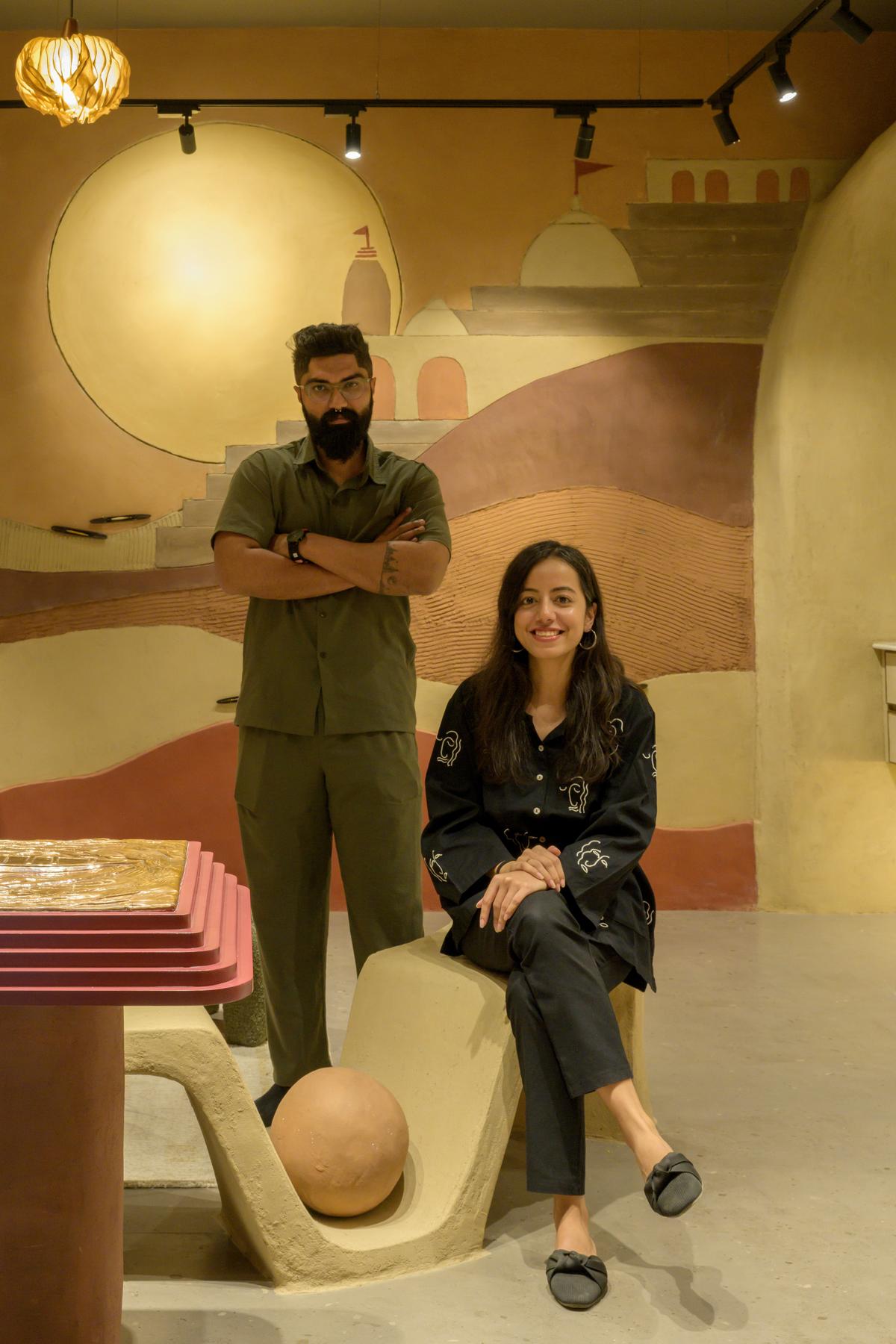
Aishwarya Lakhani and Raghav Kumar.

Aishwarya Lakhani and Raghav Kumar.

While Kumar and Lakhani see a rise in the interest to build such structures and vouch for the potential they hold, building with mud “takes time”. “It can’t be rushed. Mud needs to dry, lime needs to be slaked. It also requires the workers to learn new, but ancient, skills,” says Lakhani. Two aspects that the duo were challenged with for Kalga Banaras. “Our clients onboarded us mid-way through the project; they saw more value in building with mud. But this also meant we had to jump in halfway and make sense of the chaos,” says Kumar, adding how the client wanted it complete in five months. “It was a tight deadline for any build, let alone one with natural materials. And the monsoon had just begun which meant high humidity, and slow drying times. But, we loved the challenge, and were able to finish the project within the timeline by making drier mixes and building strategically,” he says.

As designers building with earth, Kumar says they have a dual responsibility. “Working with local materials, context, and labour is not enough. We need to craft beautiful spaces that are technically sound. Spaces that evoke emotions and a sense of desirability,” he concludes.


Source link