Life & Style

Anju Modi’s new collection Virasat is an ode to Madras


A model in a creation by Anju Modi

A model in a creation by Anju Modi

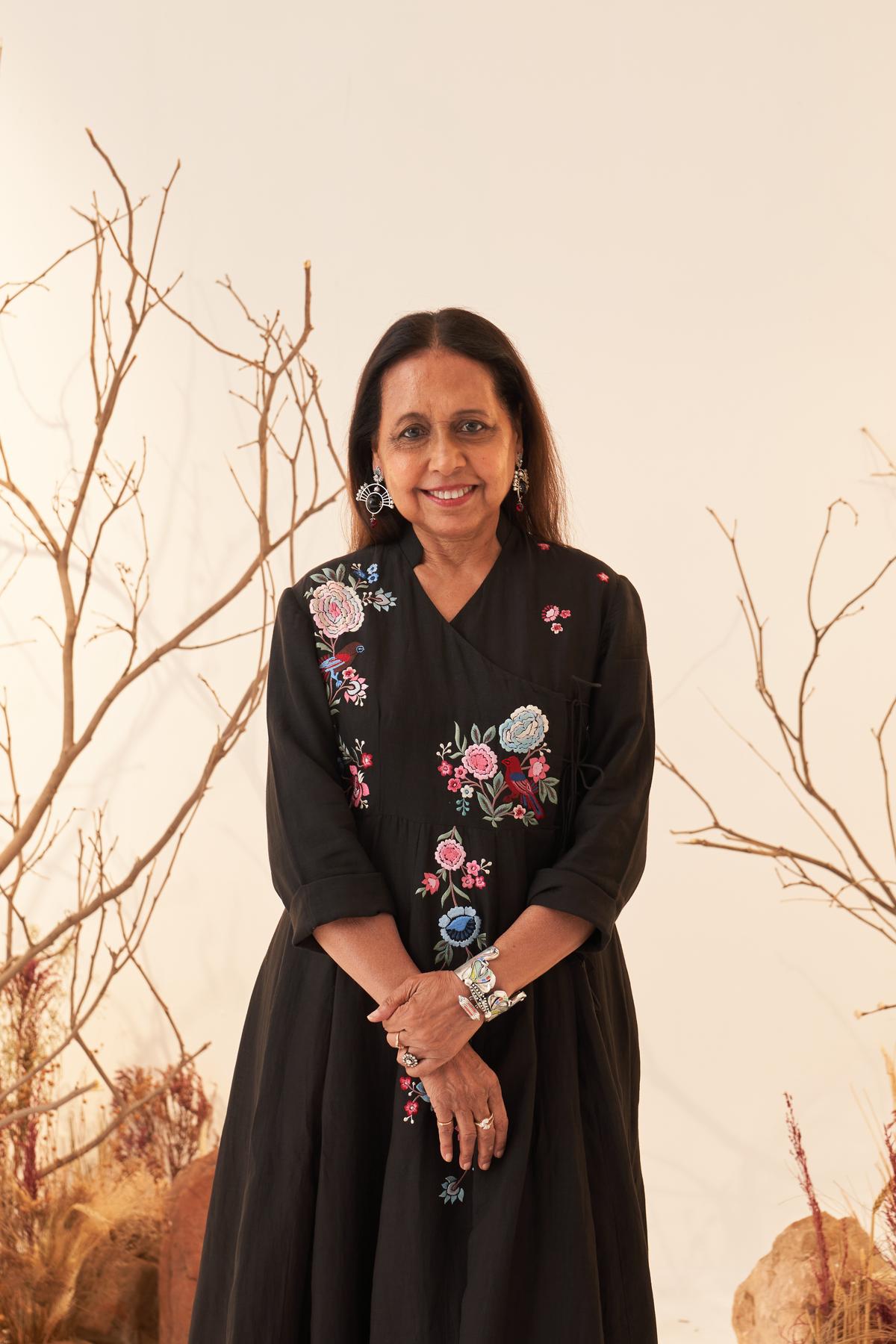
For designer Anju Modi, every time she visits Chennai, it feels like homecoming. When she started her eponymous label in 1990, Madras was her “epicentre” for all things fabric-related. “This was my base when I used to go to nearby villages, towns and cities like Salem, Coimbatore, Kanchipuram, and Venkatagiri (Andhra Pradesh), and stay with weavers in their homes. Their culture, temples, and even things like the kolam that they draw every morning, reflect in the fabric they weave. And these have stayed with me,” says Modi, whose new collection Virasat is an ode to Chennai. Virasat, which translates to legacy, was launched, over the weekend, in collaboration with city-based legacy jewellery brand Vummidi Bangaru Jewellers, at an event at the Leela Palace Chennai.

“VBJ is a 125-year-old brand. For this collaboration, they were looking for a designer who understands the heritage of the South, especially Tamil Nadu. And I have been working with clusters of weavers in the region, so the whole thing vibed well with our ethos,” she says.

While Vummidi showcases the jewellery at their stores, Modi’s garments are on display at Evoluzione. “I have been coming to Evoluzione for 30 years. I am also very much in love with the people of Chennai. They are value- oriented and evolved. They don’t get influenced by the glam factor, they are classic in their choice,” she says.

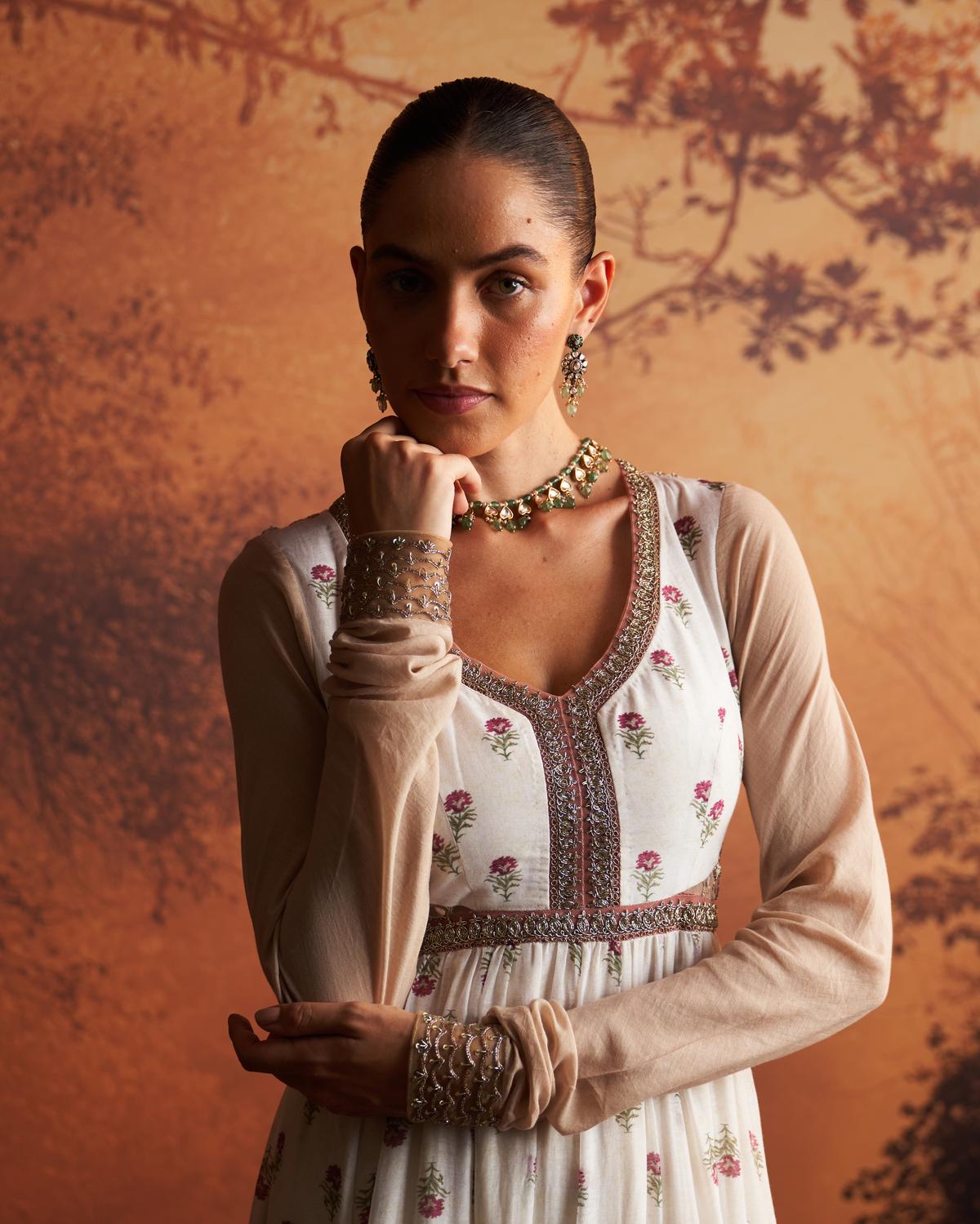
The collection features saris, lehengas, anarkalis, jackets and lehenga saris (a fusion of the two) in Kanjeevaram silk, georgette, tussar, mashroo silk, Kota tissue, Chanderi, crinkle tissue, brocade, and velvet. Craftsmanship shines through in the form of zardozi embroidery, and traditional adda work. Vummidi does temple jewellery, and keeping that in mind, the designer has used intricate embroidery that draw inspiration from temples. Tones of emerald and gold have been used in the garments to match the temple jewellery pieces. There is bridal wear in red and gold, and rose colour drapes to go with rose cut diamonds. “They also designed the jewellery line with my colour scheme. So it was collaboration in the real sense and we took over two months to complete it,” says the doyenne of couture.
Anju Modi

Anju Modi

Thirty five years in the industry and Modi is still passionate about her craft, and working with weavers. From Gujarat and Madhya Pradesh to Uttar Pradesh, she has been working with 25 clusters and in many cases with three generations. There is an endearing tone in her voice when she talks about the weaving communities. “You see, initially the weavers were disillusioned. People had forgotten about woven treasures and were going for mill-made fabric and clothes. I helped revive this handwoven legacy. Now consumers have started understanding the beauty of it,” she says.

After a prolonged episode of weavers’ children leaving their family business and moving to other cities in search of jobs, Modi says she is finally seeing a reversal happening. There is a certain pride about being self-employed and taking up a family business and this is what many of them have realised. “Now, the children of weavers are going to NIFT (National Institute of Fashion Technology) and learning fresh trends and getting equipped with the latest technology. Design inputs are coming from the younger generation. They work on computers, have email IDs, can work out the warp and weft on computers and implement them on looms. From Delhi I can email weavers in Bhuj and other cities and villages,” she smiles.

Even though these technological advancements were unthinkable in the 90s, Modi reminisces travelling back and forth on buses, trains, and cars to meet and work with weavers. “But that was another level of experience; I enjoyed it,” she says, adding, “That way, you could see a country at the ground level, people’s living habits, the rains, the heat…, and one needs to absorb it all to be part of that culture.”


Source link

This aviation enthusiast creates wooden propellers and furniture made of aircraft parts


An aircraft in the living room? Fans of aviation would argue that there is something satisfying about drinking their coffee at a table made of an Antonov 12 engine. Or perhaps, entertaining guests on a leather sofa made of an 18-feet long MIG 21 Drop Tank — even if it occupies a large chunk of the room.

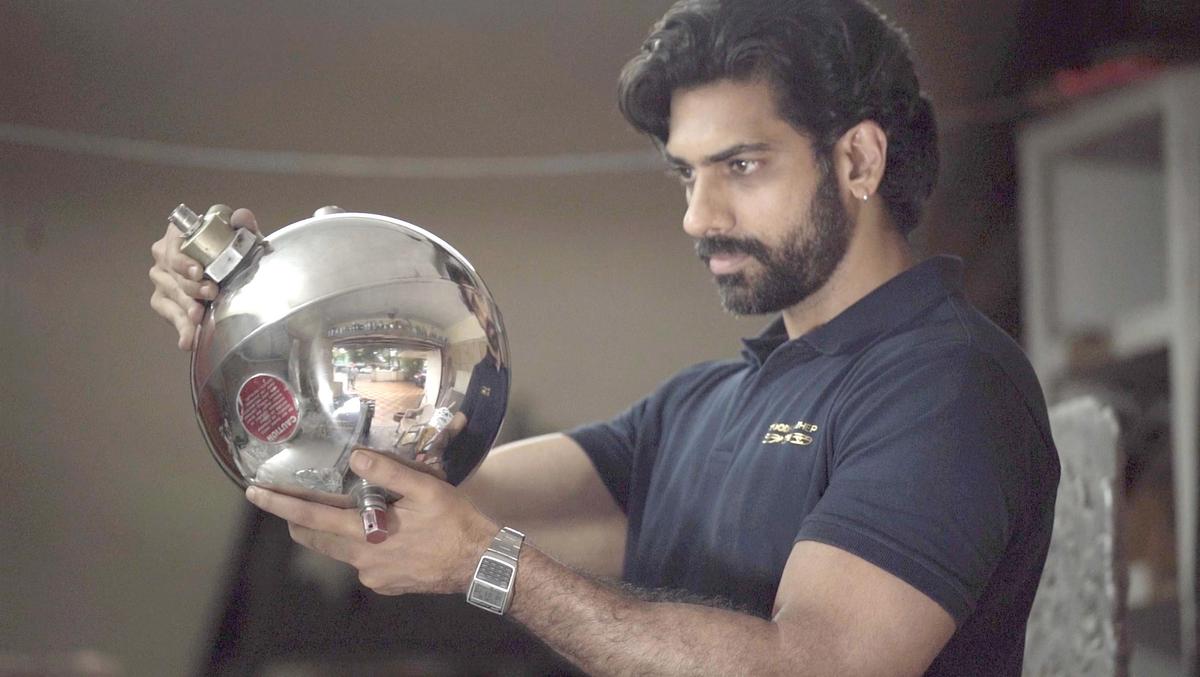
Aircraft are beautiful things, says Akshay Sharma, founder, Woodfeather and Airborn. The former offers handcrafted wooden propellers, while the latter has furniture made of aircraft components. Here, retired commercial planes and fighter jets assume a new life. Wings become tables, windows become clocks, Air India galley carts are transformed into plush trolley bars wrapped in Napa leather…

Wall clock

Wall clock
| Photo Credit:
SPECIAL ARRANGEMENT

With a clientele including pilots, aviation geeks, and celebrities like Gauri Khan, Mahesh Babu, Ranveer Singh, Ratan Tata, Vijay Kirloskar, and Niranjan Hiranandani among others, Akshay says, “India has been a great story for us”. And now 60% of his propellers are being exported outside India.

Air India galley carts transformed into plush trolley bars

Air India galley carts transformed into plush trolley bars
| Photo Credit:
SPECIAL ARRANGEMENT

Interestingly, atleast 75% of his clients are not connected to aviation. “Which goes to show that people want something that looks good and starts a conversation. Clients want something hatke (different),” he says.

An aviation enthusiast, Akshay wanted to become a pilot but his eyesight forced him to take up a different career. He got into media marketing but was always driven by his childhood passion. He earned himself a Private Pilot License from the US. While setting up his home in Mumbai, he wanted aviation-inspired decor for his living room. “I ordered a propeller off a website in the US but the shipment got lost in transit. I was heartbroken. I tried to find something similar in this part of the world but could not find anything. So, I decided to make one. Got a log of wood, and everyday before going to work I would sand it, polish it and experiment with it,” says Akshay, adding that he reached out to craftsmen and learnt the nitty gritty of woodwork.

Akshay Sharma

Akshay Sharma
| Photo Credit:
SPECIAL ARRANGEMENT

Eventually, Woodfeather was born in 2017. Starting with seven to eight pieces, the brand then created annual collections. The first one was four feet. The sizes are bigger now ranging from six to 10 feet. “A client from Riyadh ordered a 10 feet, three blade propeller; that was a challenge I enjoyed,” he adds. The propellers are made with Burma teak as the base. “We use reclaimed wood; some of these logs are 60-80 years old,” informs Akshay, .

The biggest fillip came when we got the Top Gun deal. “I kept watching the trailer on loop and wanted to make propellers inspired by the helmet, patches etc that you see in the movie,” he says. After a lot of obsessively asking around, Akshay found someone who was acquaintances with an employee at Paramount Pictures. After four months of back and forth, he sent them four fresh designs which the team liked and one day, Akshay woke up to a confirmation contract in his inbox. “I wept like a child. I am not a big brand. But to have my logo sit side by side with Top Gun was unbelievable. I made the official Top Gun propellers and it opened up international markets for me,” he says over a video call from Mumbai.

Boeing 737 wheel coffee table chrome edition

Boeing 737 wheel coffee table chrome edition
| Photo Credit:
SPECIAL ARRANGEMENT

Soon, Akshay wanted to move beyond propellers and use aircraft parts to make furniture. Accessing these parts were a challenge but with his contacts in aviation and the air force, he says he managed to source a lot of parts — “after paying a bomb for them” — and stored them in a godown five years ago. “On these aircraft parts you cannot use the usual tools, cutters, polishers etc. There’s so much tech that goes into even a simple rivet in an aircraft, its mind boggling. It took me years to refurbish. That’s how Airborn took shape. Everything here, is something that has flown, spent its lifetime in the sky, done 20-30 years of service,” he adds.

The burgeoning collection includes fire extinguisher table lamps, oxygen bottle floor lamps, combustion chamber chandelier, flap desk, Boeing wheel coffee tables, spinning compressor rotor tables, aircraft skin tags, bullions… He is constantly scouring for more parts, and says, “This is my way of bringing these iconic planes to life again.”

Prices start at ₹2.5 lakh. Available on woodfeather.com

A handmade wooden propeller

A handmade wooden propeller
| Photo Credit:
SPECIAL ARRANGEMENT

Antonov AN-12  engine block table

Antonov AN-12 engine block table
| Photo Credit:
SPECIAL ARRANGEMENT


Source link

Column | Carry on, KimAppa


Robin Uthappa (left) and Jarrod Kimber

Robin Uthappa (left) and Jarrod Kimber

It’s that time of the year again, when the Indian Premier League (IPL) dominates sports pages in India across a couple of months. When it comes to sports broadcasting — and increasingly, podcasting — fans are divided into two groups. One group, old-school, likes former players sharing anecdotes from their playing days, stories about contemporary cricketers and how they were ‘discovered’, et cetera. A newer generation of fans prefers a more scientific approach, listening to analysts, people who crunch the numbers and come up with the most crucial factors and phases that defined the gameplay that day.

The all-new KimAppa podcast seeks to combine these two aspects and so far, has delivered the best of both worlds. The podcast features writer and cricket analyst Jarrod Kimber alongside former Team India batter Robin Uthappa, who was part of MS Dhoni’s T20 World Cup-winning team from 2007, and represented India in one-day international cricket as well (the name of the podcast is, of course, a portmanteau of their names). KimAppa is hosted on Kimber’s ‘Good Areas’ YouTube page as well as on Uthappa’s own channel. There have been four episodes of about 70-80 minutes apiece so far, and new episodes are recorded live on the weekend, covering the entire week’s IPL action.

Breaking down the power game

From the first episode itself, it was obvious that Kimber and Uthappa enjoy an easygoing rapport. They’re both deep thinkers of the game, they’ve both worked with IPL teams and other franchises around the world. And they’re good sports, generally speaking.

In the second episode, Kimber introduced himself by saying, “I’m Jarrod Kimber, a writer and podcaster and other things that no one cares about, and with me is Robin Uthappa, former Team India opener who in the 2007 ODI World Cup scored 3 against the mighty Bermuda team”. To his credit, Uthappa laughed at the reference, arguably the most-photographed moment of his career, because his dismissal against Bermuda involved a spectacular one-handed catch by Dwayne “Sluggo” Leverock, a potbellied Bermuda policeman who somehow glided a fair way to his right like a gazelle for this one play.

Jarrod Kimber (left) with freelance writer Sam Collins

Jarrod Kimber (left) with freelance writer Sam Collins
| Photo Credit:
Special Arrangement

So much of T20 cricket these days revolves around the power game practised by the batters, and Uthappa does a great job of breaking down hitting technique. During the second episode, Uthappa talks about his own game against spinners, and the importance of reading length correctly — and early. This is high-quality analysis that draws from other sports such as baseball as well, in its biomechanical antecedents. The inevitable sense of machismo associated with prolific six-hitters like M.S. Dhoni and Andre Russell is also alluded to in a tongue-in-cheek way, when Kimber asks Uthappa, “How does it make you feel as a man when you see M.S. Dhoni coming in to bat as low as number 9?”

Mental health and finishing schools

If like me you enjoy looking at the bigger picture when it comes to sports and geopolitics, KimAppa has you covered. There’s an excellent analysis of the recently-revealed Saudi Arabia’s plans to make major investments in cricket. We learned last month that the kingdom is planning a multi-billion-dollar franchise tournament, that negotiations around the same have been underway for a while now. What would this Saudi league look like, and what would that mean for the cricketing landscape in general? Does such a massive and time-consuming league signal the beginning of the end for international cricket’s primacy on the calendar? The podcast offers insightful answers to questions like these.

Robin Uthappa takes a bow after hitting the stumps in a bowl off

Robin Uthappa takes a bow after hitting the stumps in a bowl off
| Photo Credit:
Getty Images

For me, however, the most impressive segment so far was the one where Kimber and Uthappa talk about the mental health of pro cricketers, especially those thrust into the limelight during their teenage years. Uthappa won the World Cup while still 20, and as he puts it himself on the podcast, he was “lost” for a good four to five years. At one point, he whips out an old photograph and shows it to Kimber — an unrecognisable Uthappa is at least 30-40 pounds heavier than usual, with haunted eyes trying his best to fake a smile. Uthappa also speaks poignantly about rebounding from a suicide attempt. I think the episode should be required listening/watching for very young cricketers.

In a similar vein Kimber and Uthappa also talk about the latter’s ideas for a “finishing school” for young cricketers. “Table manners, how to talk to the press, how to handle investments, how to read contracts, what skills they are developing outside of cricket,” said Uthappa, “all of this stuff should be taught to youngsters so that when they eventually stop playing professionally, they have something to move towards, something that will set them up for life after the game.”

For diehard cricket fans, I cannot recommend KimAppa highly enough. And even if you are more of a casual fan and don’t follow the game particularly closely, I think you’ll find plenty to interest you in this podcast.

The writer and journalist is working on his first book of non-fiction.


Source link

In Hyderabad, art workshops to spotlight on master artists all this month


Art workshop for children and young adults

If you are seeking artistic activities for children this summer, here’s some news. Hyderabad-based M Eshwariah Art Gallery will be conducting the third edition of Bala Kala Vikas, featuring an exhibition and a workshop focusing on various art techniques for children and young adults aged between 6 and 18, from May 10 to May 14 at its gallery in Madhuranagar, Ameerpet.

Learning the nuances

Learning the nuances
| Photo Credit:
Special Arrangement

Sanjay Kumar of Eshwariah gallery explains that the idea is to let young art enthusiasts learn new techniques from experts in the field and also exhibit their works.

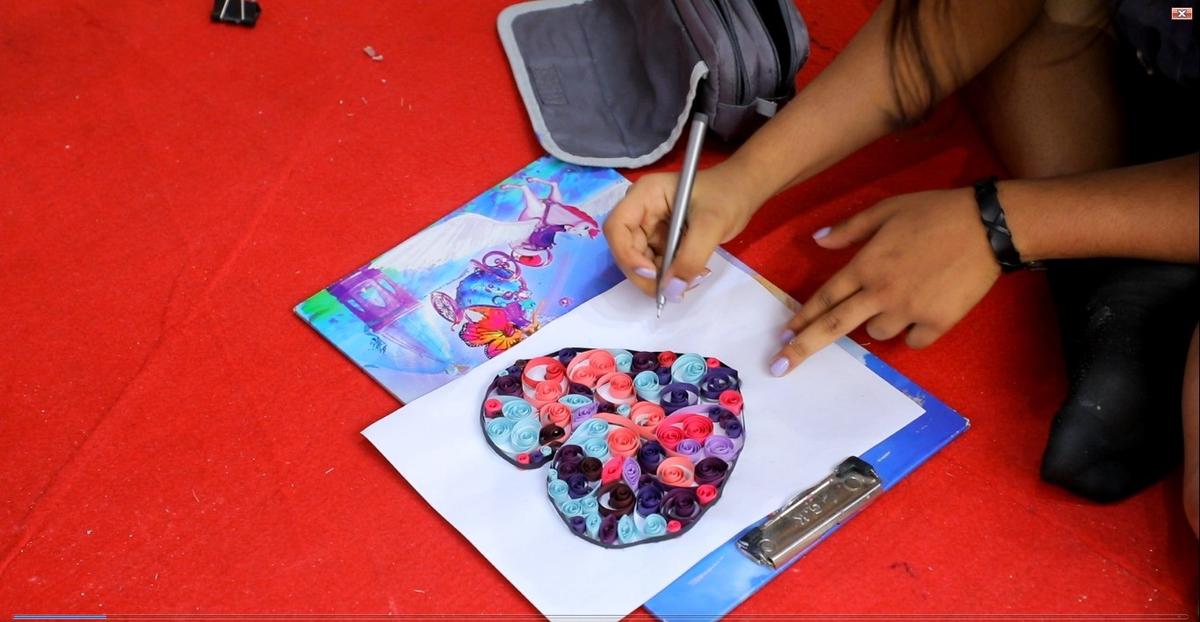
Through the annual event, the gallery hopes to create a platform for art enthusiasts to interact with artists. The four-day workshop will teach donut photo frame, pencil sketching, calligraphy, origami, Jaipur blue pottery style art and glass painting. The workshop will culminate in a sale-cum exhibition in which participants can display their works created during the workshop.

Fee: ̥₹500 per session; participants will be given certificates and mementoes. Register by May 5; contact 9391355110 / 8978782075.

Fluidity of materials

An artwork by Shanti Dave at Srishti art gallery

An artwork by Shanti Dave at Srishti art gallery
| Photo Credit:
Special Arrangement

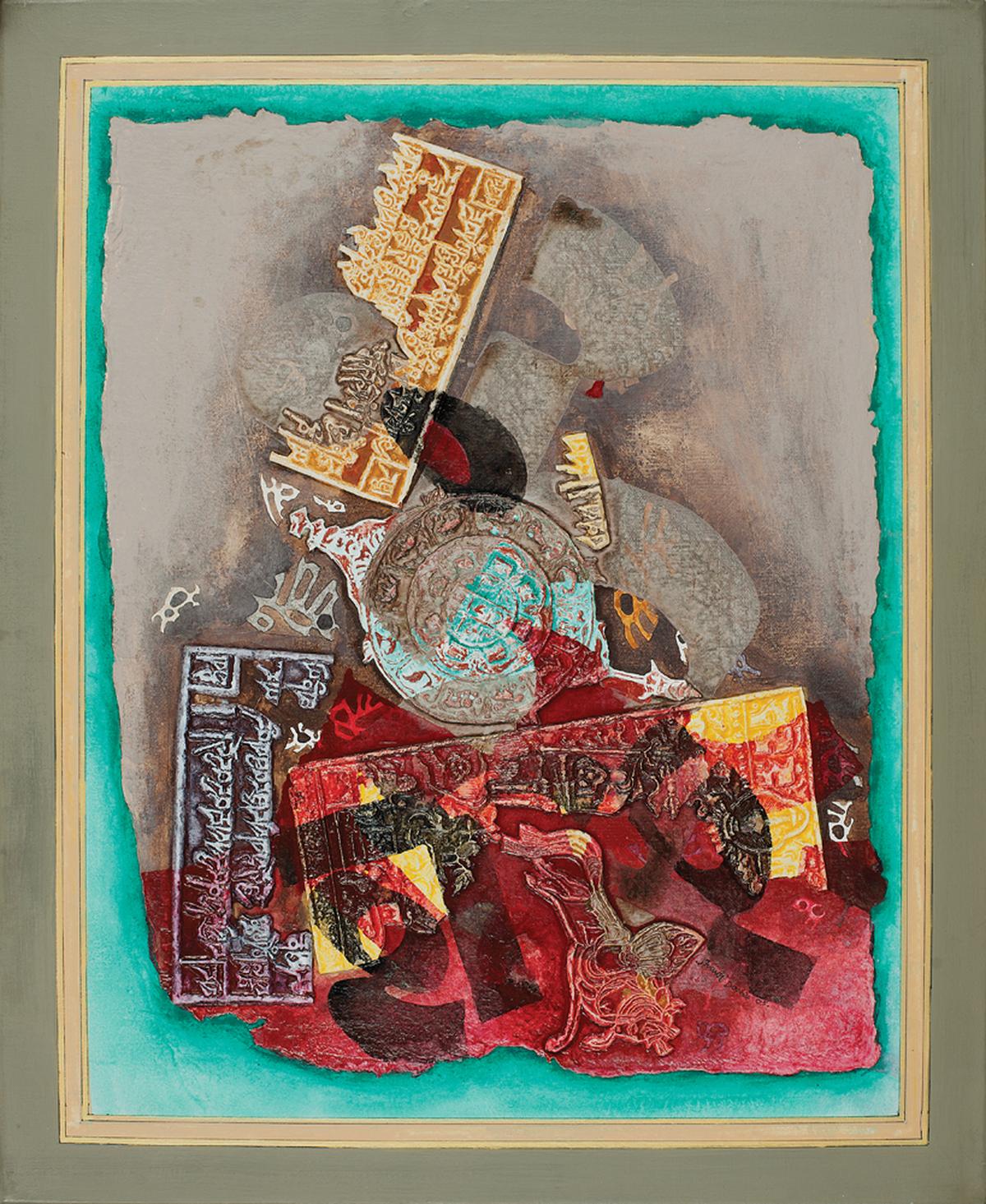
Imagine materials that are an integral part of folklore and murals being used in the context of contemporary installations, sculptures and paintings. A few artworks even blur the lines between sculpture, relief and paintings, encouraging viewers to look beyond the conventional boundaries of art. Material Stories, featuring works by 16 eminent artists, is a study of the evolution of contemporary Indian art. 

Hosted by Srishti art gallery, celebrating its 25th year in the city, the exhibition features artworks by Balan Nambiar, C Douglas, Dattatraya Apte, Jyoti Bhatt, K Laxma Goud, K S Kulkarni, K S Radhakrishnan, Latika Katt, Manu Parekh, Piraji Sagara, R N Pasricha, Rabin Mondal, S Dhanapal, Satish Gujral, Shanti Dave, and Shobha Broota.

The exhibition aims to highlight how these artists experimented with materials — terracotta, papier mache, stone, bronze, wood, thread — to create a visual language that bridges traditional and contemporary art.

For instance, Balan Nambiar’s sculptures use steel to design fluid, contemporary forms named Cactus and Mirror Idol of Mother Goddess. The exhibits show how Nambiar, a research scholar on ritual art forms of the western coast of south India, embraced contemporary art techniques. Known to have worked with wood, clay, stainless steel, bronze, and enamel, among other materials, he used computer-aided design for some of his artworks.

On view at Srishti art gallery, Jubilee Hills, till June first week.

Playful Krishna on canvas

Govind Cowherd, a mixed media work by Narender Reddy

Govind Cowherd, a mixed media work by Narender Reddy
| Photo Credit:
Special Arrangement

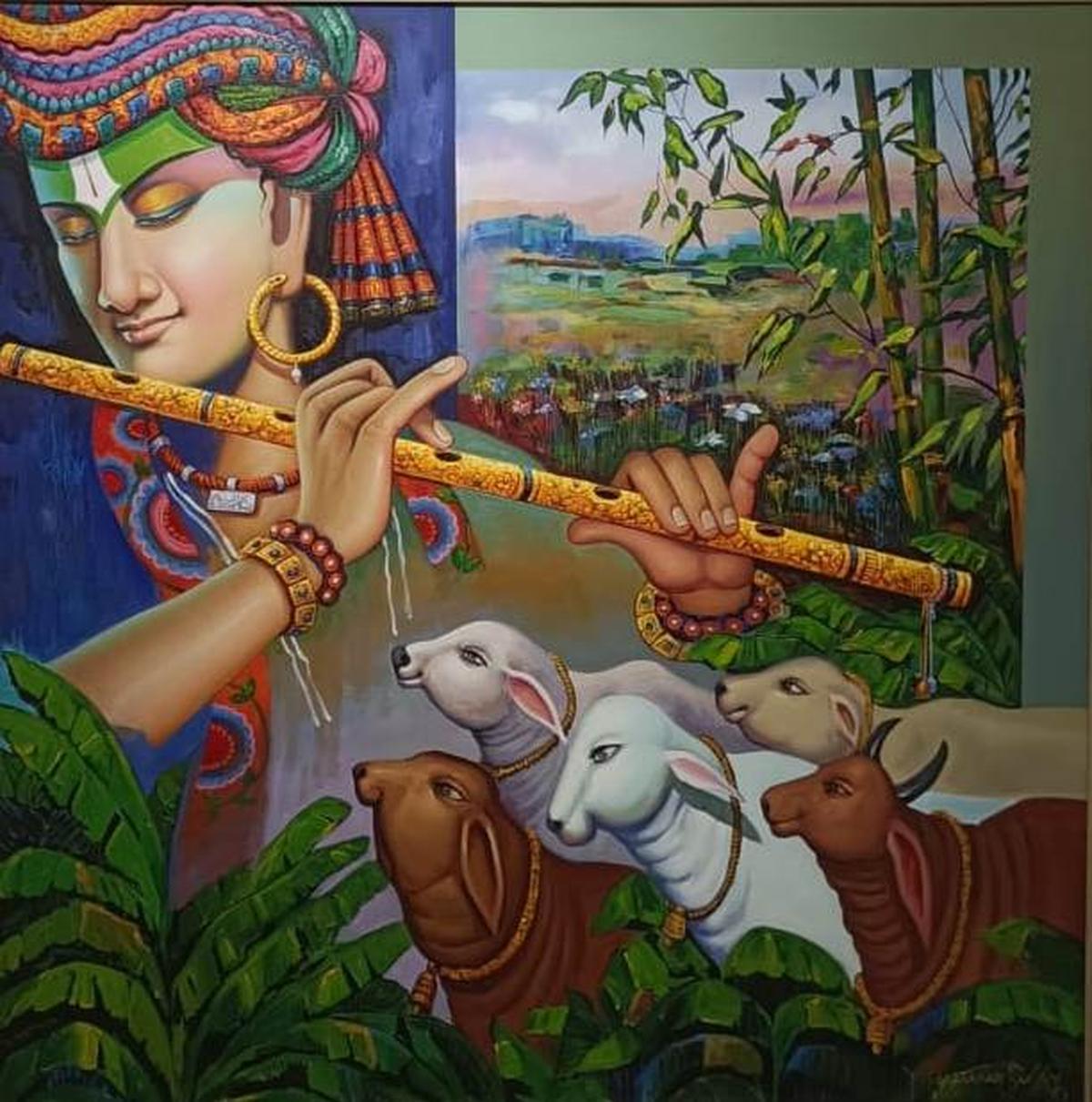
Full of life is a word to describe artist Narendar Reddy’s works that celebrate Krishna. His new show, The Eternal Mesmeriser, on display at State Art Gallery, showcases mixed-media paintings. The works capture a playful Krishna in several flute-wielding poses in a natural world surrounded by flora and fauna.

The aesthetic paintings are in a mix of resplendent colours. Be it the intricately adorned crown, attire or jewellery, the works reflect the grandeur and divine splendour.

Narendar has carved a niche for himself in the art circuit. Trained in art, Narendar did his research in art in Aichi in Japan. Inspired by the works of great masters during his international trips, the artist developed a style of his own. According to Narendar, a painting is complete only when his heart tells it is. “When there is complete peace within me, I know I have done what the painting expected me to do.”

He believes, “Nature lovers speak to trees and even understand them.” The artist adds that an an understanding should develop between the artist and the painting he creates.

On view at State Gallery of Art, Madhapur, till May 4.

Rocks, the Deccan legacy

A photograph by Vishwender Reddy

A photograph by Vishwender Reddy
| Photo Credit:
Special Arrangement

Iconart, which showcased site-specific art installations at Forestrek park in Hyderabad recently, will exhibit photographs and installations at its gallery in Banjara Hills. Whispering Rocks – the Deccan Legacy, will feature images by photographers from the Telangana Photographic Society, focusing on ecology and heritage of Deccan rocks.

Beyond documenting the importance of rocks, the exhibition attempts to pay an ode to the bond between human creativity and the natural world. At Forestrek park, the photographs were interspersed with ikebana, stone-carved poetry, handloom weaves and performances.

Among the photographs that will be a part of the exhibition at Iconart, curated by Avani Rao Gandra, look out for images by Vishwender Reddy Komidi, L Viswanatham, Srikanth Nippatla, Madhugopal Rao R, and Ashok Vootla.

Vishwender Reddy has photographed rocks of the Deccan plateau for a decade. The monochromatic frames document rocks that resemble ducks, mushrooms, and even tombstones, and in turn become metaphors for resilience in the times of encroachment. And Madhugopal’s photographs show the co-existence of humans and the rocks. In an image, he captures a woman who pauses in the shadow of a boulder, her demeanour almost reflecting the rock’s stillness.

At Iconart gallery, Banjara Hills, May 3 to 20.


Source link

From fallout with her own family to cutting ties with UK Royals


Meghan Markle and Prince Harry reportedly had a major fallout with David and Victoria Beckham, once considered close friends. Tensions rose after Harry and Meghan allegedly accused the Beckhams of leaking stories to the press— a claim that deeply upset David Beckham. The confrontation, described as tense, reportedly ended their friendship. While neither couple has publicly commented, insiders suggest the accusation was a turning point. Once supportive allies, the Sussexes and Beckhams now appear to have gone their separate ways socially.


Source link

Kylie Jenner and Timothée Chalamet give courtside outfits a Gen-Z spin: Here’s how


Kylie Jenner and Timothée Chalamet give courtside outfits a Gen-Z spin: Here's how
Image credits: Getty Images

Kylie Jenner and Timothée Chalamet might be one of the most popular couples of the Gen Z era. The popular duo is adored by men and women alike due to Chalamet being a fan-favourite when it comes to acting and Jenner having set a high bar for females billionaires.
Both Kylie and Timothée have been dating for over two years, after they went official in a Beyonce concert in September 2023. The duo was last seen together at the Coachella and during the awards season when Chalamet was nominated for his celebrated role in ‘A Complete Unknown’ for which he received an Oscar nomination along with the Screen Actors Guild Award for Outstanding Performance by a Male Actor in a Leading Role.
Recently, the much-loved Gen-Z couple made an appearance at the Los Angeles Lakers vs Minnesota Timberwolves game where they sat courtside, just like other celebrity couples and painted quite a picture of a young couple in love and having fun. People have been loving how instead of opting for some extravagant fits, Kylie and Timothée kept it cool and casual in more Gen-Z-like attires.

Kylie Jenner and Timothée Chalamet's OOTD

Image credits: Getty Images

Timothée looked uber cool in a Kobe Bryant T-shirt and Chanel tweed jacket that he paired with black white-washed denim and a pair of Timberland boots. Kylie accompanied him in a classic white tank top, paired with black leather trousers and a pair of boots. The famous duo could be seen enjoying the game with a lot of excitement and tension at various moments.
While the outfit may have been an expected one from Chalamet, Jenner has usually followed the Kardashian clan rule of always dressing up for the occasion and thus, this pared-back look of hers comes as a welcomed surprise for her fans who think that she has finally got to let down and be herself with her new beau.
One must note that this was not the first time that Kylie and Timothée have aced the dressing game. Be it their Golden Globes designer ensembles or their Beyonce concert fits, the rising couple has made a fashionable statement at every public outing throughout the course of their relationship.


Source link

How Coimbatore’s trees tell tales of time, travel and belonging


These trees came as immigrants, made friends with the locals and now are upstanding inhabitants of Coimbatore providing priceless service to the city and its people.

Architect, Jayashree Raman says trees offer a wealth of natural solutions to various design challenges. “They provide insights into structural strength, energy efficiency, and biomimicry, leading to more sustainable and aesthetically pleasing designs.”

For example, Spanish architect Santiago Calatrava created spaces that were as enduring as the trees that had inspired his designs. Calatrava learnt from the wisdom of Nature and his design philosophy served human needs as well as the environment’s.

But design is not just the business of architects; it concerns everyone, says Jayashree. “So why can’t we look at trees in our neighbourhood and see what lessons we can take away from them,” she asks during a tree walk curated by her and fellow architects Sai Vivek, Udhaya Vauhini and Cibi Veeramani, in association with The Indian Institute of architects, Coimbatore Centre. The walk was part of an initiative called The Design Mill.

“The Design Mill wants to create a community in Coimbatore that meets and has conversations about design in everyday life,” says Jayashree, who wants to learn about and document Coimbatore’s trees.

For the walk, the Design Mill team selected trees that have been part of the landscape for at least 200 years, including ones that have been around for thousands of years.

Home and away

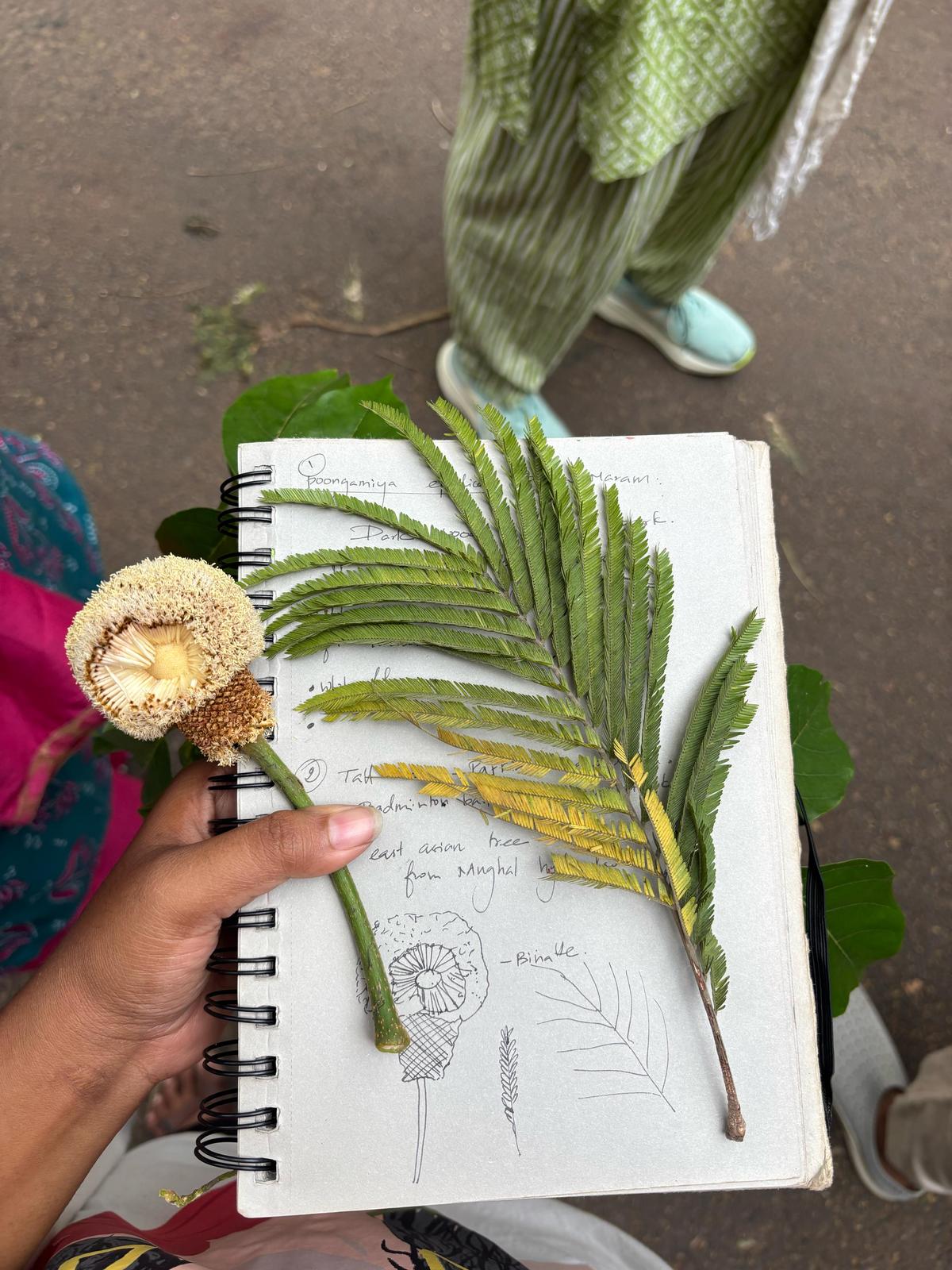
The endemic Pongai tree (Pongamia glabra) is a familiar fixture in the Tamil landscape, and finds mention in the ancient Sangam literature. “Its leaves are often kept along with grains to repel insects, and oil from its seeds is used to light lamps,” says Jayashree. A hardy, erosion-preventing tree with a broad canopy, Pongai is well-suited to arid, saline environments and is often found lining roads and villages

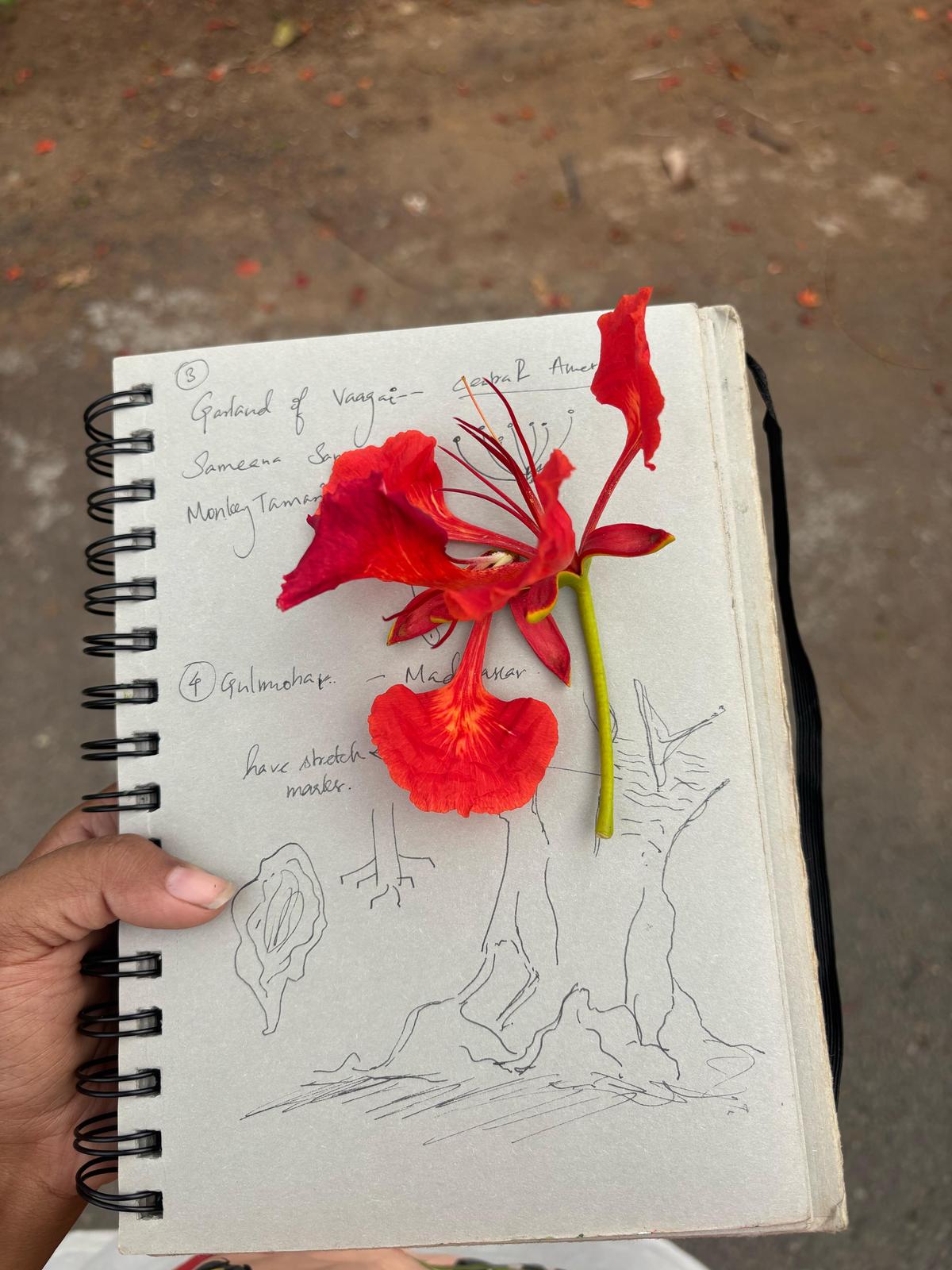
Like people from time immemorial, many of the trees have also travelled from faraway lands. The Gulmohar tree (Delonix regia), for instance, was confined to Madagascar until the 19th Century. Now it is a firm favourite with its flaming orange flowers. Madagascar may be its birth place, but the Tamils have embraced it as their own and even given it a local name, Mayil Kondrai (peacock’s crown).

The Design Mill’s tree walk in Coimbatore

The Design Mill’s tree walk in Coimbatore
| Photo Credit:
Special Arrangement

The Cannon Ball tree (Couroupita guianensis) has also become part of local lore. The tree, locally called Nagalingam, is sacred and represents Lord Shiva, though it came to India from the tropical rainforests of Central America. Its large, flamboyant flower, which grows directly on the bark, has petals with a centre that resembles a lingam (a short cylindrical pillar-like symbol of Shiva)

Another guest that decided to stay on is the Brazilwood tree, (Guaiacum Officinale) also known as the Lignum Vitae or wood of life as it was believed to cure syphilis that ravaged Europe in the 16th Century. Incidentally the wood of the tree is considered to be one of the densest in the world and it sinks in water.

The Design Mill’s book recommends

Trees of Delhi: A Field Guide by Pradip Krishen

Iconic Trees of India by S Natesh with illustrations by Sagar Bhowmic

Pillars of Life: Magnificent Trees of the Western Ghats by Divya Mudappa and TS Shankar Raman with Botanical illustrations by Nirupa Rao and sketches by Sartaj Ghuman

Next, we walk straight into the heady fragrance of the Plumeria or the Frangipani. The smooth, elegant tree with its white, pink and yellow flowers is also from Central America and has been around for a few hundred years in India. Not too far is the Autograph tree (Clusia Rosea) and everyone rushes to scribble their initials on its waxy leaves.

The Badminton Ball tree (Parkia Biglandulosa) travelled here in the 16th century from East Asia. “It is like a pollinator cafe,” says Jayashree because it nourishes birds and bees during the day and bats at night.

We admire the romantically named raintree that has a rather unromantic Tamil name. It is called Thungumoonji maram or the sleepy-faced tree as its leaves close in on themselves when it rains and in the evenings.

Making connections

For all those who had forfeited the Sunday morning sleep in, it was a couple of hours well spent. What could be more therapeutic than walking under the shade of trees, standing under the fantastically wrought branches and staring at the fruits and flowers and breathing in their woody smells.

“I know that these kinds of public engagements definitely help in improving the general awareness of the bounty of Nature,” says tree walker Padmaja Sundar, who recently moved to Coimbatore from Chennai. She describes herself as a foot soldier of Nizhal, a Chennai-based NGO that is involved in urban greening with trees that are indigenous to the region. Padmaja is looking forward to involving herself in greening initiatives in Coimbatore.

The Design Mill’s tree walk in Coimbatore

The Design Mill’s tree walk in Coimbatore
| Photo Credit:
Special Arrangement

The Design Mill has set out to do just this, says Jayashree.

“The idea is to collaborate with other studios, organisations and resource people. It is a great opportunity for us to meet and learn from experts from other disciplines and get inspired,” adds Udhaya.

As the group moves from tree to tree, ideas flow. Most of those present confess that the opportunities to meet people face to face, engage in conversations and learn from each other are shrinking alarmingly. And the tree walk is one way of keeping human interactions alive and keeping in touch with the city spaces.


Source link