
Life & Style

5 reasons why walking is a better option than jogging or running (and for whom)


When it comes to fitness, we often hear this one-size-fits-all kind of advice—“Run to lose weight,” “Jog every morning for better stamina,” or “Hit the track to stay fit.” But here’s the thing: not everyone’s body, lifestyle, or health goals are cut out for running or jogging. In fact, for a surprising number of people, plain old walking can be the better, smarter, and more sustainable option.
Walking doesn’t get the flashy Instagram posts or the “runner’s high” reputation, but it’s underrated in the best way. It’s gentle on your body, easy on your joints, and kind to your mind. While running has its place in fitness (especially for those chasing speed or endurance), walking wins the long game for people looking to stay consistent, avoid injury, and build lifelong habits.


Source link

Flu can kill: Heartbreaking stories that show it’s more than just a fever


Flu can kill: Heartbreaking stories that show it's more than just a fever
Image credits: Getty Images

Flu is such a common disease, that most people carry on with their daily lives without thinking much about it. While flu may seem harmless, it can take a dangerous turn anytime, especially for little ones, elderly and other vulnerable populations.
According to the Centers for Disease Control and Prevention, this flu season has been especially severe for America. As per a National Institutes of Health study, influenza or flu kills more than 36,000 people in the United States each year, hospitalising 200,000 more.

From flu to death

From flu to death

Image credits: Getty Images

What’s shocking the people whose loved ones have been dying after being diagnosed with flu is the fact that they were otherwise healthy before the infections. Thus, losing their life to the flu comes as an unexpected shock. Brandon Salgado who lost his 49-year-old mother, a paralegal to flu, revealed to the New York Times that she was completely healthy before she fell ill. He received a call from her doctor who told him that his mother had a 50% shot at survival. In the hospital, her heart stopped multiple times and she had to be resuscitated. “We have shocked her about as many times as we can,” said the doctor to Salgado.
Salgado’s mother’s health had deteriorated so much that she needed dialysis for her kidneys, her brain showed little activity, her limbs lost circulation and her arms and legs would have to be amputated if she survived. Upon hearing all this, Salgado made the decision to take her away from the ventilator after which she died within minutes.
There have been others who have faced the grave loss of loved ones. Ca’Myiah Simmons, 16, tested positive for flu but died due to loss of oxygen reaching her brain. Mr Walsh began struggling with breath one night and tested negative for flu, Covid or strep. However, soon he went into cardiac arrest thrice and needed intubation to breathe. He also tested positive for strep and flu, which developed into sepsis and led to his death.

Flu is not just an infection

Flu is not just an infection

Image credits: Getty Images

What confuses family members is how a simple flu diagnosis has sometimes led to the discovery of serious diseases and, tragically, the eventual loss of their loved ones.
According to Dr Sean Liu, associate professor of infectious diseases at the Icahn School of Medicine at Mount Sinai, the flu can swiftly turn from a mild illness to a serious infection. The virus with overlapping infections can be lethal for the young, the old and those with underlying health conditions.
While the flu shot can lower the chances of contracting the virus, when the lungs are too damaged, people can develop other deadly infections and face difficulty recovering.
According to CDC, flu can have various symptoms such as fever, cough, sore throat, body aches and muscle stiffness, and fatigue. While most of those diagnosed with the disease recover from a few days to less than two weeks, others can develop complications such as pneumonia and more, leading to death.


Source link

Virat Kohli’s Hanuman bag charm is the unexpected star of IPL 2025


Virat Kohli's Hanuman bag charm is the unexpected star of IPL 2025

When it comes to making a statement, Virat Kohli doesn’t just do it with his bat – he does it with his style too. Known for his fearless game and electric presence on the field, Kohli has evolved into more than just a cricketer; he’s a full-blown icon. And lately, there’s a refreshing new layer to his style game: a spiritual twist that fans are absolutely loving.

dsd (29)

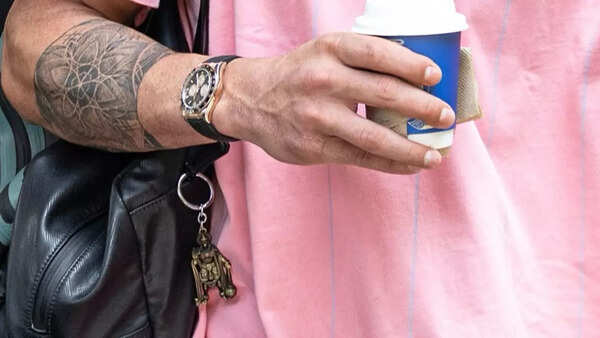
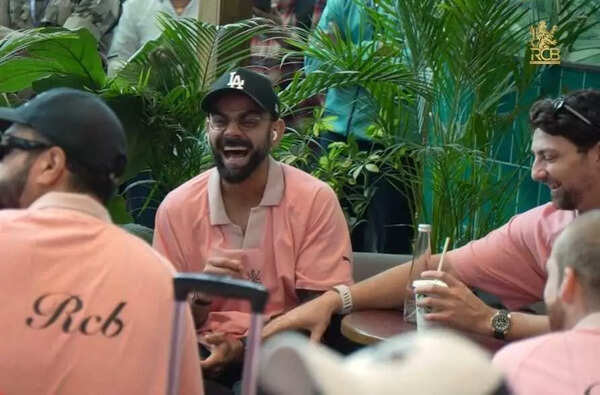
While leading Royal Challengers Bengaluru’s charge in the IPL this season, Kohli has been blending his powerhouse performances with subtle nods to his spiritual journey. The latest buzz? A tiny, powerful detail spotted on the strap of his travel bag – a small Hanuman idol charm.
Spotted as he jetted off to Delhi for RCB’s crucial match against the Capitals at the Arun Jaitley Stadium, Kohli’s look was understated but full of intention. Dressed in his signature laid-back airport style – think luxe athleisure and minimal accessories – it was the Hanuman charm that truly stole the show.
This small yet powerful detail is no accident. Kohli’s deep faith in Lord Hanuman has become an essential part of his personal brand of positivity and mental strength. The cricketing legend often credits spirituality for the calm, composed version of himself we’re seeing both on and off the pitch.

WhatsApp Image 2025-04-26 at 20.08.42.

It’s not the first time we’ve seen Kohli let his spiritual side shine through his style. Whether it’s a visit to Neem Karoli Baba’s ashram or quiet trips to meet Premanand Maharaj, the spiritual dimension has seamlessly become part of his off-field persona. But now, it’s even showing up as a chic, meaningful fashion statement.
This is the new era of celebrity style – not just about what you wear, but what you carry with you. And if Virat Kohli’s latest look is anything to go by, it’s clear that 2025’s biggest style flex isn’t just designer sneakers or luxe luggage – it’s personal, purposeful, and powerful accessories that tell your story without saying a word.

What’s inside Virat Kohli’s kit bag?

As fans gear up to watch him smash records in Delhi, one thing’s for sure – Virat Kohli isn’t just playing to win matches anymore. He’s playing to inspire, to evolve, and to redefine what it means to be an icon, one subtle, stylish detail at a time.


Source link

Who was JD Vance’s unofficial advisor during his visit to India? You would be surprised to know


Who was JD Vance's unofficial advisor during his visit to India? You would be surprised to know
Image credits: Getty Images

American Vice President JD Vance recently concluded a four-day official visit to India from April 21-24, 2025. On the trip, he was accompanied by his Indian-origin wife, Usha Chilikuri Vance and their three children. As per reports, he was accompanied by at least five senior US officials including representatives from the Pentagon and the State Department.

JD Vance’s Indian trip itinerary

JD Vance's Indian trip itinerary

Image credits: Getty Images

After landing at the Air Force Station in Palam on Monday, April 21st, the Vance family visited the Swaminarayan Akshardham Temple. Later in the day, they flew to Jaipur where they toured the Amer Fort on April 22nd along with other popular tourist spots such as Jantar Mantar. On April 23rd, JD Vance along with his family travelled to Agra to visit the Taj Mahal and they departed back to the US on April 24th. Vance’s visit to India was mainly aimed at bilateral talks on economic, trade and geopolitical ties hoping to increase the trade between the nations to $500 billion by 2030.

Who was JD Vance’s trusted advisor during the India visit?

Who was JD Vance's trusted advisor during India visit?

Image credits: Getty Images

While JD Vance’s visit to India may have been targeting the trade relations between the countries, all eyes were specifically on his relationship with his Indian-origin American wife, Usha Chilikuri Vance. The two painted quite a perfect picture of a marital couple in bliss, considering the fact that they had been dating since college.
However, what really caught the eyes of many and made them light up was the way Usha was her husband’s unofficial advisor on the trip. Vance completely relied on his wife for socio-cultural cues such as the pronunciation of certain Indian terms during a press conference where he was addressing the media.
Yes, during his speech in Jaipur, where he was talking about his visit to the Akshardham Temple, he turned to his wife, second lady Usha Vance seated in the front row and asked her, “Did I pronounce that right, honey? I did OK?”
It was apparent throughout the visit that Usha was her husband’s sounding board and guiding light when it came to questions of policy and politics. “She’s a bit of a celebrity, it turns out, in India. I think more so than her husband,” said Vance during his speech.
According to a report by the Wall Street Journal, people close to the couple state that Usha is JD’s most trusted adviser and is committed to his political future which could lead to her having her own in the White House. The couple is known to frequently ask for each other’s opinions and Usha is the one to give Vance feedback on his speeches before he delivers them. “JD really listens to Usha,” said Charlie Kirk, a friend of Vance, to WSJ.
When asked if she was an advisor to her husband during her first-ever interview after becoming the second lady of America, Usha said, “I don’t know that he’s asking me for advice so much as it can be a very lonely, lonely world not to share with someone.” Her comment was considered to be more or less an approval of the fact that her husband ensured everything went through her.


Source link

Virginia Giuffre, Jeffrey Epstein accuser dies by suicide: How many children did the she leave behind? All about her family life


Virginia Giuffre, Jeffrey Epstein accuser dies by suicide: How many children did the she leave behind? All about her family life
Image credits: Getty Images

Virginia Giuffre, an American-Australian woman was known worldwide for being one of the most prominent victims of the convicted paedophile Jeffrey Epstein. She had alleged that she was sexually assaulted by Prince Andrew on three different occasions at the mere age of 17 in a civil lawsuit she filed against the prince in 2021.
On April 26th, 2025, Saturday, Giuffre’s family issued a statement confirming that she took her own life at her farm in Western Australia, where she had been residing for the last several years.
“It is with utterly broken hearts that we announce that Virginia passed away last night at her farm in Western Australia. She lost her life to suicide, after being a lifelong victim of sexual abuse and sex trafficking,” read the statement. “In the end, the toll of abuse is so heavy that it became unbearable for Virginia to handle its weight” it continued.
While the Western Australia police did not confirm Giuffre’s death, they shared that the emergency services had responded to reports of a 41-year-old woman being unresponsive at a home in Neergabby, about 75km north of Perth, on Friday around 9:50 pm.
A month prior to her death, Giuffre had shared on social media that she had faced an accident with a school bus crashing into her car and thus had “just days to live.”

Who was Virginia Giuffre?

Who was Virginia Giuffre?

Image credits: Getty Images

Giuffre was one of the most vocal victims of Epstein and had alleged that she had been groomed and sexually abused by him and his associate Ghislaine Maxwell. She shared that she met Maxwell in 2000 when she was working as a locker-room assistant at Donald Trump’s Mar-a-Lago resort in Florida. He offered her the role of a massage therapist to Epstein and it was during her time there that she was allegedly trafficked to the financier’s friends and clients.
It was nine years later in 2009 that Giuffre filed a civil lawsuit against Epstein under the pseudonym “Jane Doe 102” alleging that she had been “sexually exploited by Epstein’s adult male peers including royalty”. However, before the case could reach trial, she reached a settlement with Epstein.

How many children did Virginia Giuffre have?

Virginia Giuffre's husband and children

Image credits: Instagram/virginiarobertsrising11

Virginia Giuffre was born Virginia Louise Roberts on August 9, 1983, in Sacramento, California. She got married to Robert Giuffre in 2022 with whom she shared three children Christian, Noah and Emily who as per her family were the “light of her life.”
In a statement regarding her death, her family also added “It was when she held her newborn daughter in her arms that Virginia realised she had to fight back against those who had abused her and so many others.”
While there are no reports to confirm so, Giuffre’s recent Instagram post indicated that she has been separated from her husband. Additionally, on March 22nd, 2025 she took to Instagram to share that she missed her children and claimed that they had been “poisoned with lies.”
Giuffre also had two brothers Danny Wilson and Sky, the former of which paid tribute to her on Facebook by sharing an image of her during happier times where she could be seen sitting alongside them.


Source link

Madly in love with Usha, why JD Vance learned Indian cooking from her mother


Madly in love with Usha, why JD Vance learned Indian cooking from her mother

US Vice President JD Vance and her wife, Usha Bala Chilukuri, received a warm and enthusiastic welcome during their four-day visit to India that concluded on Thursday, April 24. Usha, the daughter of Radhakrishna Chilukuri and Lakshmi Chilukuri, who migrated to the USA from India decades back, received a ‘celebrity’ treatment in India, in the land of her roots. “She’s a bit of a celebrity, it turns out, in India. I think more so than her husband,” Vance said in Jaipur about his wife.
The couple visited Akshardham Temple in New Delhi and went on sightseeing tours across Jaipur and Agra. In Jaipur, they explored the historic Amer Fort, while in Agra, they visited the Taj Mahal and the traditional crafts village of Shilpgram.

A very special love story

JD and Usha, who came together from different backgrounds, shared a deep connection from the word go. The daughter of Telugu Indian immigrants and the son of a drug-addicted mother met at Yale University and despite their different backgrounds and personalities, started to bond well, first as friends.

usha and jd 3

Poll

Do you believe interfaith marriages can strengthen cultural connections?

At the university, Usha guided JD about the subtle aspects of being at an elite institution. In his bestselling 2016 memoir, Hillbilly Elegy: A Memoir of a Family and Culture in Crisis, JD Vance called his wife a ‘spirit guide’ and how she helped him adjust to life at the top law college. Enamoured by her, he called her a “genetic anomaly, a combination of every positive quality a human being should have.”
Chilukuri and Vance married in 2014 in Kentucky, in an interfaith marriage ceremony. Their life took a turn when Vance was elected a Senate from Ohio in 2022. During the 2024 presidential campaign at the Republican National Convention, Usha lovingly introduced her husband as a meat and potatoes guy, who also cooks Indian food for her. She noted that her husband learned how to cook Indian food from her mother.

usha and jd 2

Why JD learned Indian cooking from Usha’s mother

“When JD met me, he approached our differences with curiosity and enthusiasm. He wanted to know everything about me, where I came from, what my life had been like. Although he’s a meat-and-potatoes kind of guy, he adapted to my vegetarian diet and learned to cook food from my mother, Indian food. Before I knew it, he’d become an integral part of my family, a person I could not imagine living without,” she said during her RNC speech.

An experimental cook

In an interview, Usha said Vance was an experimental cook and would cook anything from chana masala to dessert, to various lamb dishes.
Vance, too, is in love with his wife’s cooking skills. In a podcast with Joe Rogan, he raved about Indian food, calling lab meats ‘highly processed garbage’. He shared how his wife makes really delicious Indian food and recommended “paneer and rice and delicious chickpeas” to all vegetarians.
Vance has admitted that his association with Usha influenced his life deeply. She not only brought him closer to his religion but also instilled in him a deeper appreciation for family, tradition, and the values of hard work and perseverance that shaped both their lives.

Musk Defends Usha Vance As First Hindu U.S. Second Lady Faces Racist Attacks; ‘3 Words Define…’


Source link

What is the difference between lime and lemon?


What is the difference between lime and lemon?

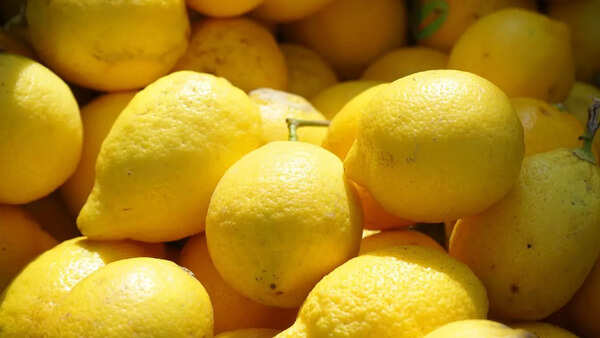
Lemon or lime, which one are you consuming? While most of us buy lemons randomly from the market without even knowing much about the variety, do you know what exactly you are buying: a lime or a lemon? While both varieties are yellow to green in color, aromatic and round in shape, and appear almost similar, they have a lot of differences that make these little lemons different from each other. Read on to know more about it…

Ultimate 30 Super Foods for Healthy Living Lemons and limes

Have you been spending a fortune on treating dull skin, hair loss, low immunity and gimmicks to get rid of the excess kilos? Well, if you just looked inside your refrigerator and kitchen cabinets, you will find them packed with superfoods, which will give you thick, beautiful hair, radiant looking skin and make you fit and healthy.

What makes them different?
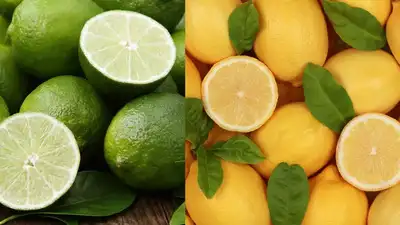
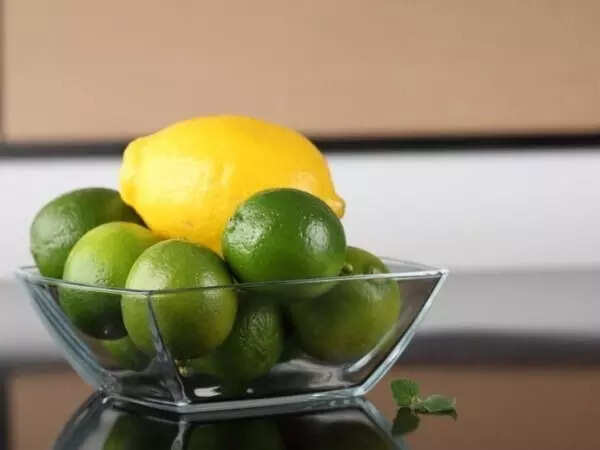
In India there are several unique varieties of lemons and limes; however, here are a few facts about these lemon varieties that make them different. Lemons are usually larger, bright yellow, and oval-shaped, while limes are smaller, round or oval, and green, sometimes turning yellow as they ripen. Lemons have a sweeter, slightly floral tartness, whereas limes are more intensely sour with a sharper, more bitter edge.

ugukg

Nutritional differences
Both are excellent sources of vitamin C, but limes generally have slightly less vitamin C than lemons. However, limes often have more antioxidants like flavonoids. Both are low in calories and offer minerals like potassium and magnesium, making them health powerhouses in small packages.

Poll

Do you think lemons are better suited for baked goods than limes?

Best culinary uses for lemon
Lemons shine in recipes where a gentler, aromatic acidity is needed. They are perfect for salad dressings, baked goods, marinades for delicate meats like chicken and fish, and refreshing drinks like lemonade. Lemon zest is also widely used for adding a citrusy fragrance to cakes and desserts.

rfvv

Culinary uses for lime
Limes are bolder and perfect for spicing things up! Use them in Mexican, Thai, and Indian dishes to add brightness; think tacos, guacamole, pad Thai, or chaats. Lime juice is a key ingredient in cocktails like margaritas and mojitos, and lime zest can elevate spicy curries and tangy sauces.
Storage tips
Lemons tend to last longer than limes. Both should be stored in the refrigerator to maintain their juiciness. You can also freeze their juice in ice trays for later use, especially handy for summer drinks and quick cooking.


Source link

Square roots: Lambadi artisans stitch the ordinary into the extraordinary


At Home in Sittilingi is an exhibition of embroidered textile art created by 10 women artisans from the Lambadi community. The works are stitched on organic cotton and draw from memory and immediate surroundings — trees that surround them, stories heard from elders, birds marking seasonal change, millets grown in their fields, and the intricacies of domestic life.

Held at Sabha, a thoughtfully restored 160-year-old home in Bengaluru with quiet floors and sunlit corridors, the open, home-like setting lends the show a sense of intimacy. Visitors leave their shoes at the threshold, entering barefoot — an unspoken gesture of reverence and groundedness. This simple act changes the way we engage. We step softly. We pause longer. We meet the works not as distant observers, but as listeners in a room full of stories. The anecdotal texts accompanying each embroidery, written by the women themselves, add texture and voice, making the gallery feel less like a display and more like a gathering.
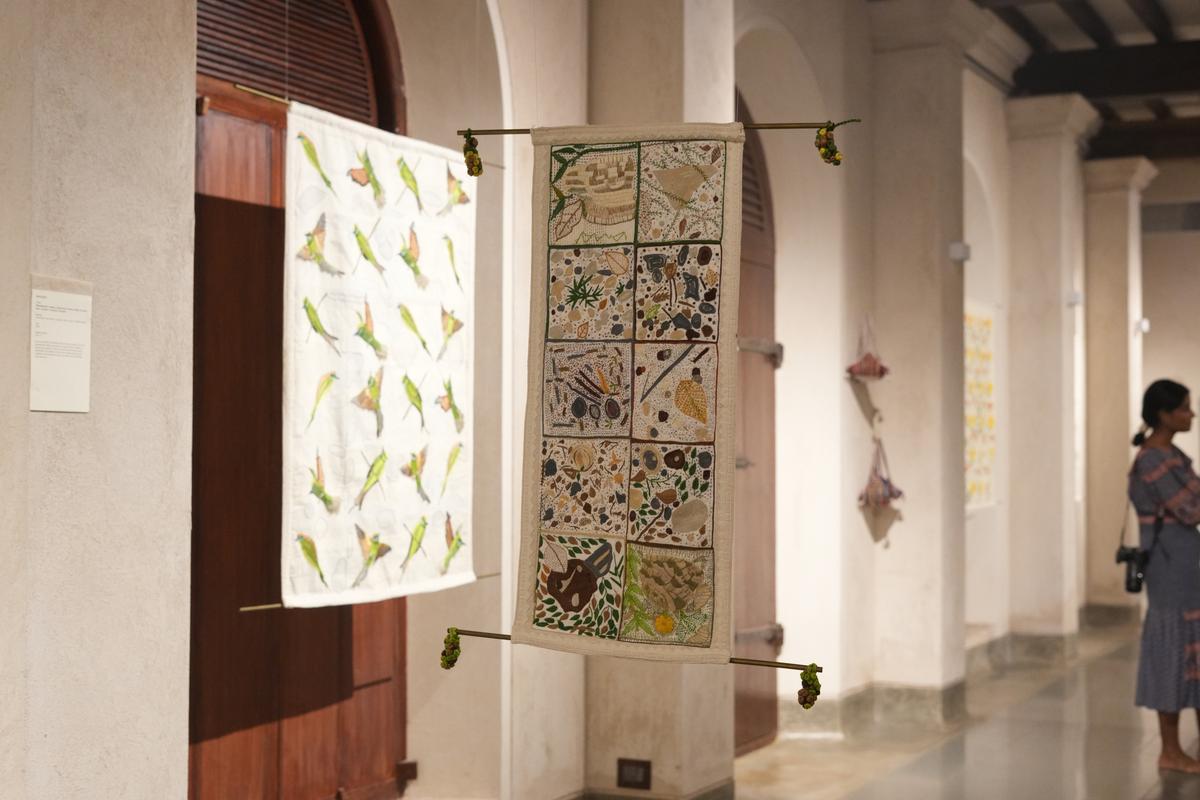
Sabha’s open, home-like setting lends the show a sense of intimacy

Sabha’s open, home-like setting lends the show a sense of intimacy
| Photo Credit:
R Kishore Kumaar
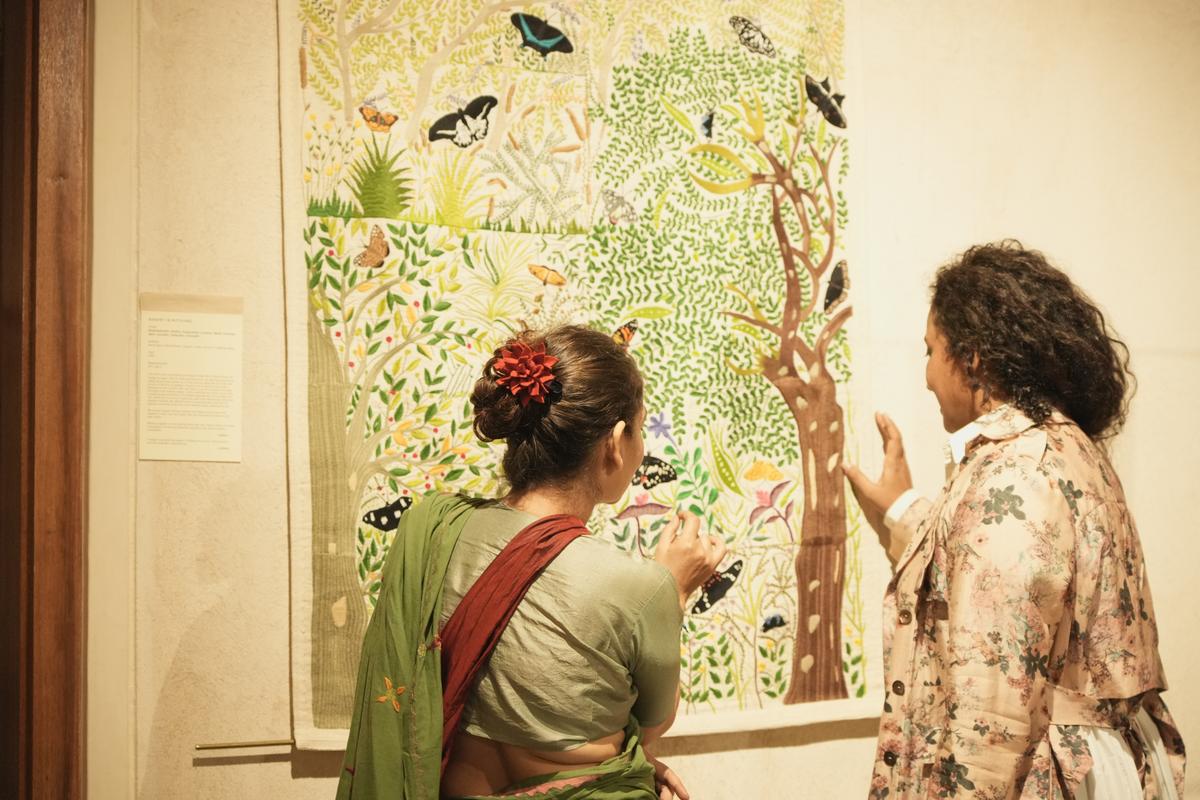
At Home in Sittilingi at Sabha

At Home in Sittilingi at Sabha
| Photo Credit:
R Kishore Kumaar

An ‘at home’ residency

The works were developed through a four-month artist residency hosted by the Porgai Artisans Association during an “at-home” residency, an artist support model where the women continued to live and work within their own context (at a studio at the Porgai centre) rather than being displaced into unfamiliar institutional settings. Curated by designer Anshu Arora, the residency invited the women to reflect, remember, and reimagine from within their own ground.
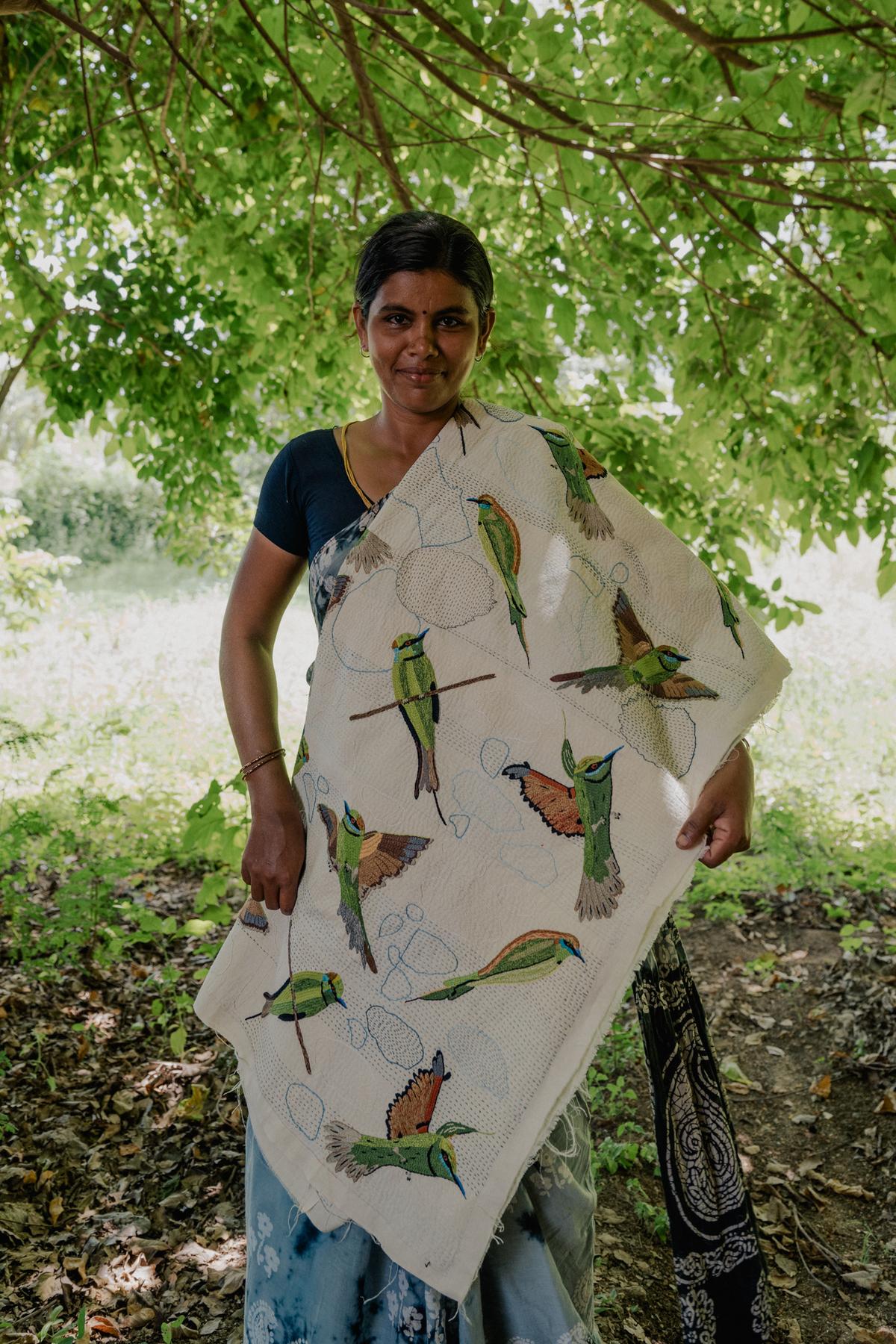
Geetha, one of the 10 artisans, holds up her artwork embroidered with green bee-eaters

Geetha, one of the 10 artisans, holds up her artwork embroidered with green bee-eaters
| Photo Credit:
Melanie Hinds

Lalitha Regi, co-founder of Porgai, meaning pride and dignity in the Lambadi dialect, and a senior doctor at the Tribal Health Initiative, offers insight into the complexity of participation: “The women had to make many choices in their domestic lives before committing to the residency. It required them to travel 12 kilometres — an unremarkable distance for us, but a world of variables for them. Catching the one bus, ensuring people at home are fed, children taken care of, chores and farm labour attended to… each of their lives holds its own intricate challenges. Once they were made to feel safe, financially and emotionally, and given ownership over their work and creativity, we saw magic.”

That atmosphere of trust and co-creation shaped the work itself. Over the months, hesitation gave way to confidence, and the familiar grammar of Lambadi embroidery transformed into something layered, narrative, and imaginative.

Many of the embroideries carry a playfulness that feels both deliberate and deeply personal: a crooked-beaked bird, a smiling cow, a parrot with twinkling eyes, a bee-eater offering a subtle wink. These are not naive embellishments, but visual signatures of a relationship with the natural world that is familial, reciprocal, and full of mirth. The flora and fauna in these textiles are not passive scenery. They are kin. There is humour, memory, and mischief sewn into the leaves and wings — suggesting a way of being with nature that is less about dominance and more about camaraderie.
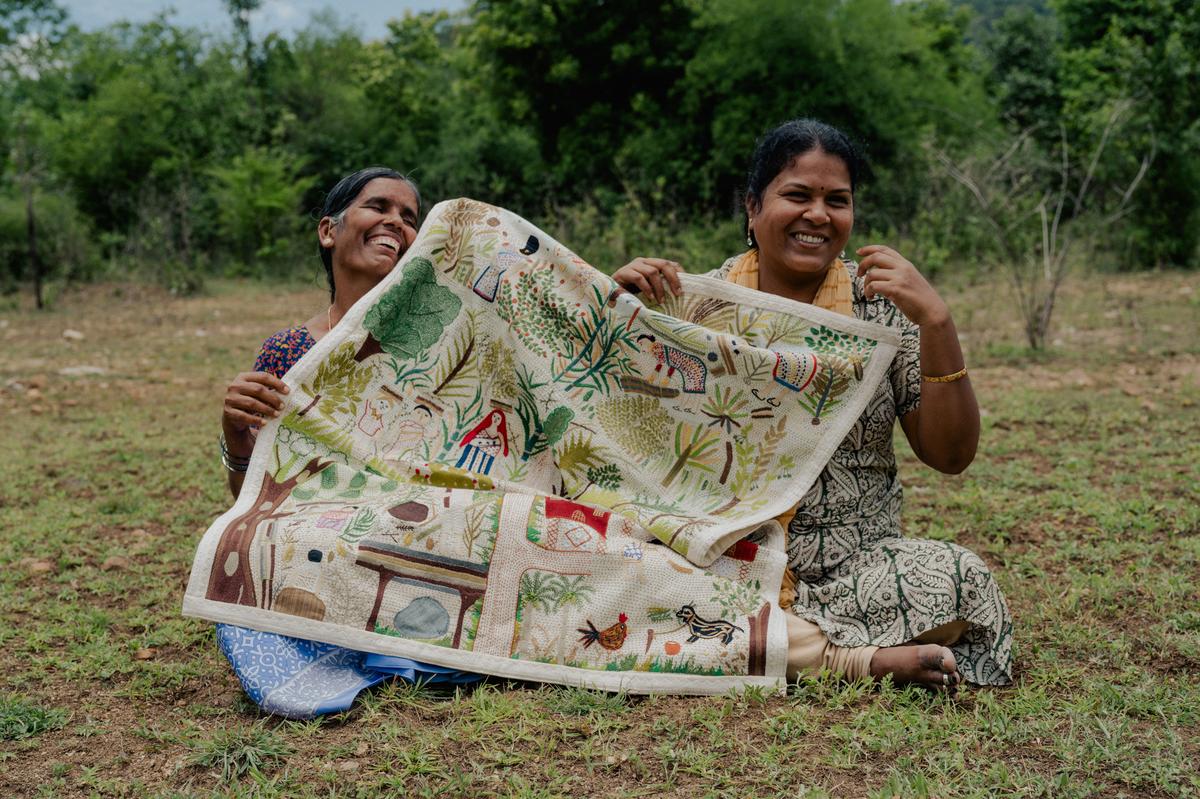
Two of the Lambadi women with their artwork

Two of the Lambadi women with their artwork
| Photo Credit:
Melanie Hinds

Rejecting curation as an act of control

The Association has been active in Sittilingi for over 18 years. It began with the revival of Lambadi embroidery and has grown into a cooperative model that centres the artisan not as labourer, but as knowledge holder, designer, and cultural custodian. Today, the collective has 60 women. They are paid fairly, retain control of their process, and make decisions as a group.

The curation of this exhibition reflects that ethos. “Too often, curation becomes an act of control — an exercise in authoriality,” says Arora. “With Porgai, I wanted to hold space without shaping it. The artists already know what they want to say.”

Firewood collection 

Firewood collection 
| Photo Credit:
Vandita Bajpai

Each artist began with a six-inch square. The modest frame served as scaffold and possibility. From there, they embroidered both independently and together, shaping works that were at once singular and collective, a total of 26 pieces — the smallest being 21” x 11.5” and the largest being 50” x 36.5”. In some cases, they stitched their imaginations side by side: 10 interpretations of the sky, each in a different hue, texture, and mood, were sewn together into a larger tapestry of atmosphere.
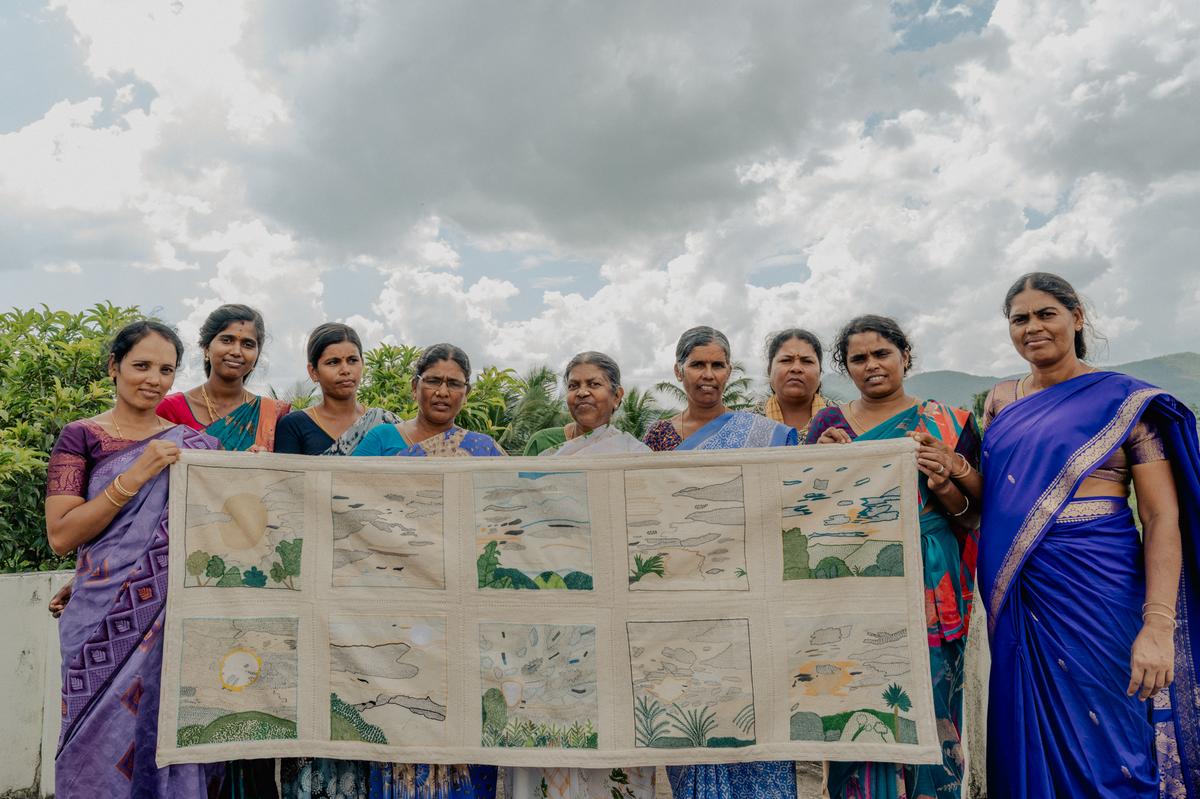
10 interpretations of the sky

10 interpretations of the sky
| Photo Credit:
Melanie Hinds

In another, they explored the ground beneath their feet, rendering stones, shadows, leaves, and soil with a sensitivity to texture and light. Other works emerged through collaborative storyboarding: large pieces of fabric were mapped and divided among them to depict scenes of daily life — a wedding, an agricultural routine, the choreography of water collection. They used more than 21 traditional Lambadi stitches (such as the maki and bhurai) and some newly invented ones by the artisans.

Each work is accompanied by a note from its maker. Neela speaks of ancestors. Lavanya dreams of bees. Parimala embroiders the Porgai centre so her grandchildren might remember it. Selvi’s stream flows with layered fabric mimicking rock undulations.
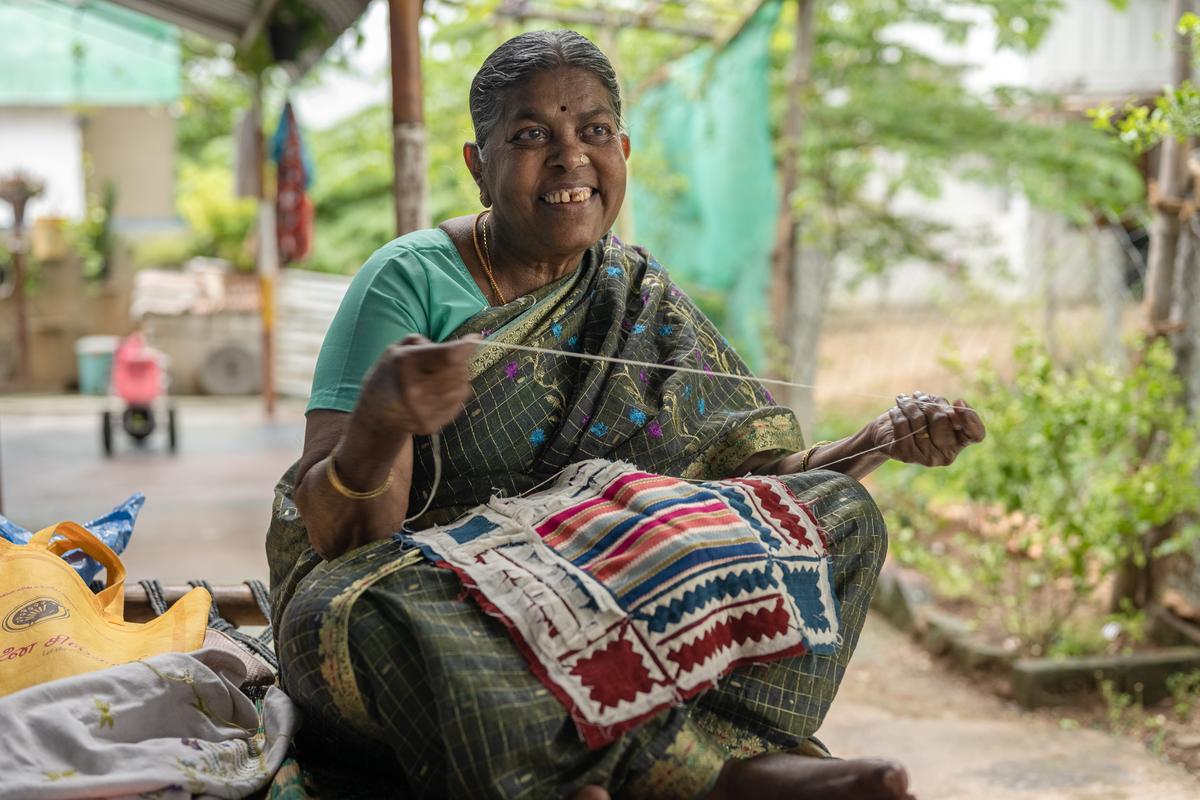
 Neela, who speaks of ancestors

 Neela, who speaks of ancestors
| Photo Credit:
Himanshu Dimri

Arora also situates this ethos within a broader design discourse. “The definition of luxury is changing. It now is about objects with a story and human connection — handcrafted, speaking of the person behind the item, made slowly and deliberately, with care, ethics, and non-exploitative systems in place. The rich textiles and crafts of our subcontinent are coming alive beautifully in this light.”

Beyond revival

In India, the art world continues to reflect caste and class divides. “Art” is gallery-validated, urban, and elite. “Craft” is rural, feminine, lower-caste — and systemically undervalued. Porgai rejects this binary not through argument but through assertion. These are embroidered works with conceptual clarity, formal integrity, and cultural density. They are art. They are testimony. They are systems of knowing.
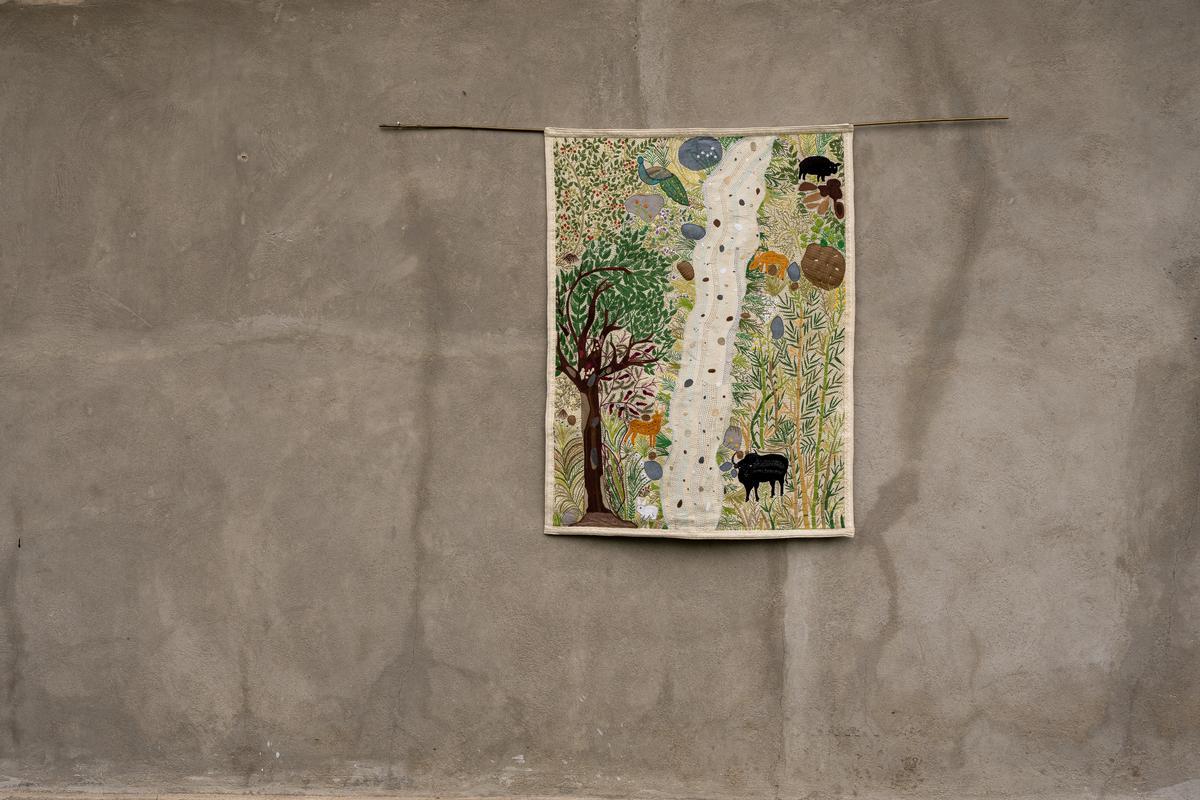
Artworks with conceptual clarity and cultural density

Artworks with conceptual clarity and cultural density
| Photo Credit:
Himanshu Dimri

As Arora notes, “A lot of textile designers and professionals in allied fields are doing revival work. I hope we all keep up with nourishing these communities in ways that make them self-sustaining. As designers and facilitators, the success of our work is when it is temporary — when we can step out eventually, and what we started has a life of its own, runs itself, and blooms and prospers by the people at its core.”

Porgai holds precisely that promise. It is a body of work where process and product align, where care is not an afterthought but the method. It reveals that aesthetics need not be detached from ethics. That making can be mutual, and beautiful things can be made without violence.

At Home in Sittilingi is on view at Sabha till tomorrow.

The essayist and educator writes on design and culture.


Source link