Life & Style

Step into Pongal with a village-style harvest spread


Pongal Thiruvizha Virundhu celebrates Tamil harvest with farm-to-table feast

Pongal Thiruvizha Virundhu celebrates Tamil harvest with farm-to-table feast
| Photo Credit: BALACHANDAR L

This Pongal, independent chef, food researcher and culinary storyteller Gokul Kumar Mohit, popularly known as Chef Goku, collaborates with Molasses to celebrate Tamil Nadu’s harvest heritage through a thoughtfully curated farm-to-table experience rooted in tradition, gratitude and community.

Titled Pongal Thiruvizha Virundhu, the event is envisioned as more than a festive meal. It is a journey back to the fields.

“Every grain carries the memory of the soil. For this farm-to-table event, we are sourcing ingredients directly from farms in villages across Thanjavur, Palakkad, Coimbatore, Madurai and the Thindivanam region. The menu is curated around authentic village harvest recipes,” says Chef Goku.

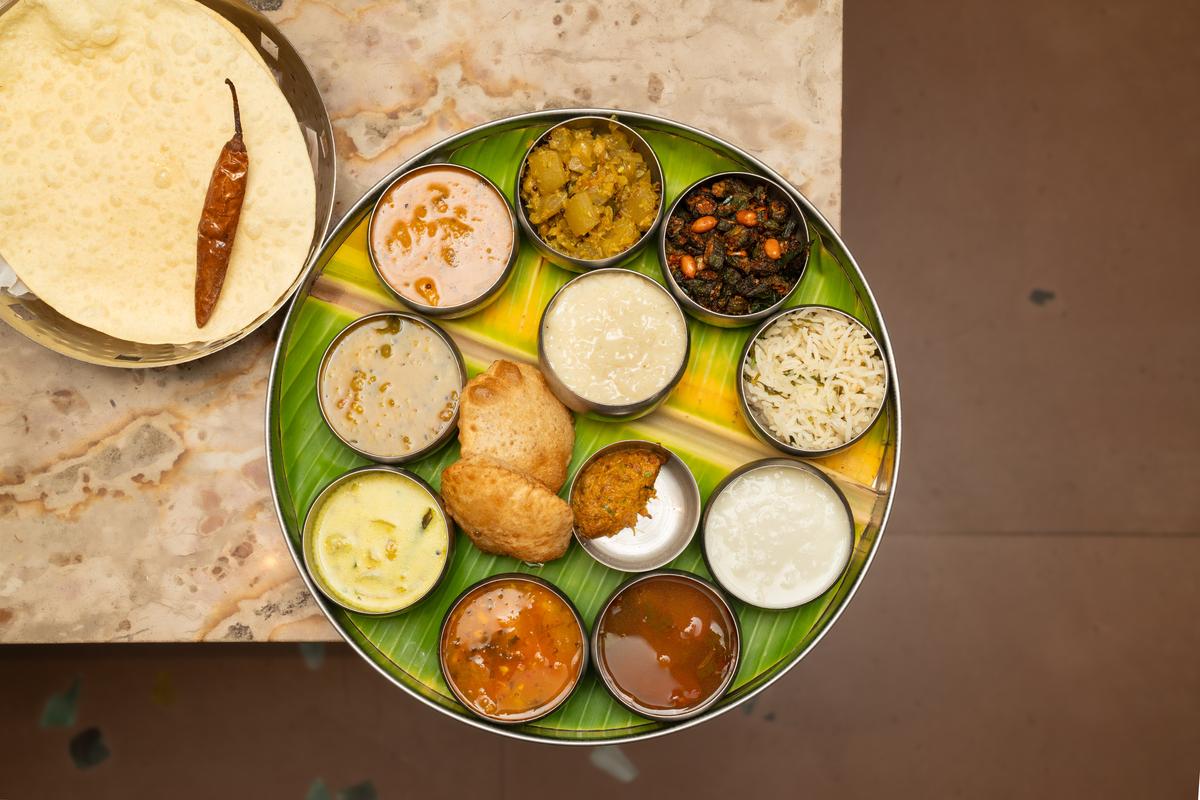
Planned in the traditional ela sappad, or banana leaf feast, format, the spread is predominantly vegetarian, with two non-vegetarian dishes—nattu kozhi kuzhambu and eral thokku. “Koottan choru is traditionally prepared in villages during the harvest festival, and we are serving poovan samba koottan choru cooked with rice, toor dal and native vegetables. We also have kuru milagu ven pongal, served with thalagam, a rustic dish prepared using seven different native vegetables,” explains the chef.

Guests will be welcomed with panakam, a drink made with jaggery and dry ginger. The feast includes ilam manjal pirandai thuvayal, payaru sundal, venkakka varuval, kathirikka gothsu, thandu keerai milagu kootal, avarai poriyal, vazhathandu thayir pachadi, medhu vadai and mahali kizhangu pickle. Desserts include payasam and kavuni arisi sakkara pongal, prepared with karupatti.

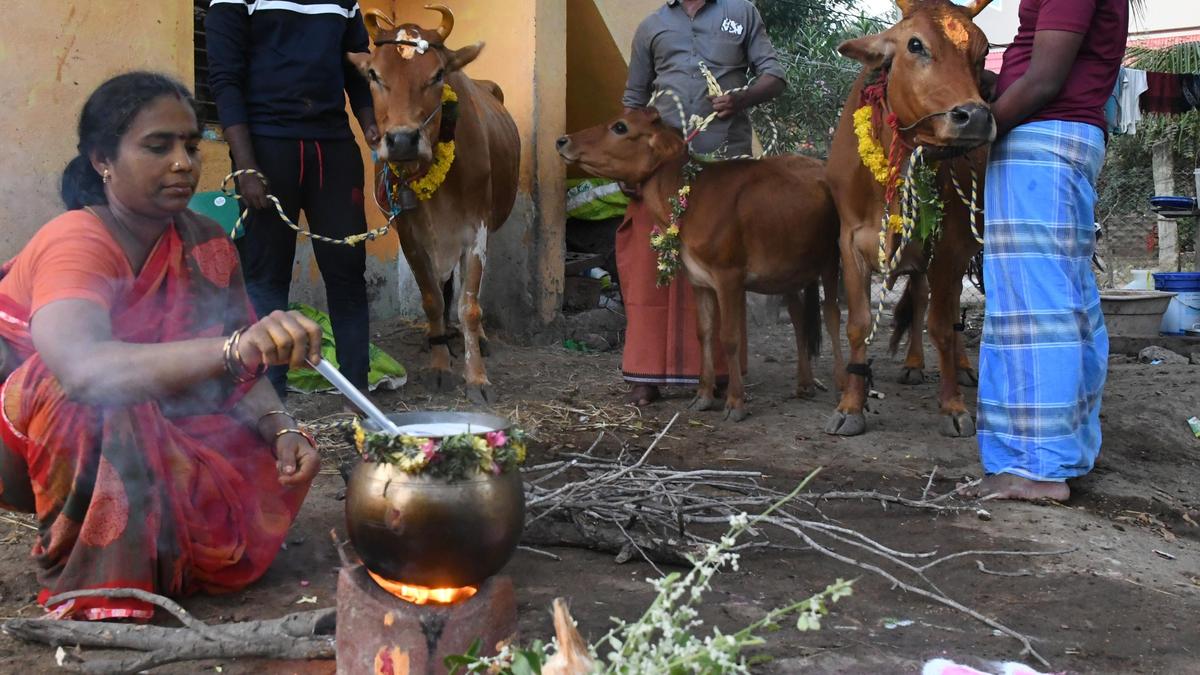
Beyond the food, the celebration invites guests to participate in a community Pongal at the farm. Visitors can take part in traditional Pongal activities, feed and decorate cows, paint the pongal pot, walk around the farm and gain a deeper understanding of the farm-to-table philosophy.

The heritage banana leaf feast, says Chef Goku, is a celebration of the sun, soil, rice and resilience; the enduring spirit of the Tamil harvest.

@Molasses, Thindivanam. January 16. 12 noon to 5 pm. Entry is ₹1800 which includes meals and activities. To register, call:


Source link

Naukuchital: A nine-cornered escape into the Kumaon Hills


Delhi has been particularly difficult to live in, of late. We are now in the thick of winter and the air still moves past your face with an insidious something it shouldn’t be carrying. Each morning, the same grey insistence of pulverising smoke pressed against my throat made the privileged indulgence of an exit feel practical. The urge to escape to somewhere close, somewhere uncomplicated and somewhere my lungs could remember why they exist, had never been stronger.

The mountains were the obvious thought, and go-to getaways like Nainital, Bhimtal and the like, felt like the natural detour for city-dwellers who craved a lake-side view with fewer people in the frame. Both also fell neatly into the pattern of a Delhi escape, with a brisk five to six hour drive and the promise of cooler air. Yet the closer I drew to them, the more it felt as if the city had followed us uphill. The roads thickened with traffic, and the usually languid alpine promenades looked oddly crowded. Everyone seemed to have the same idea. Even the breeze had a faint drag to it that made me check my chest out of reflex. The hills were still beautiful, though the quiet seemed to arrive in sporadic intervals.

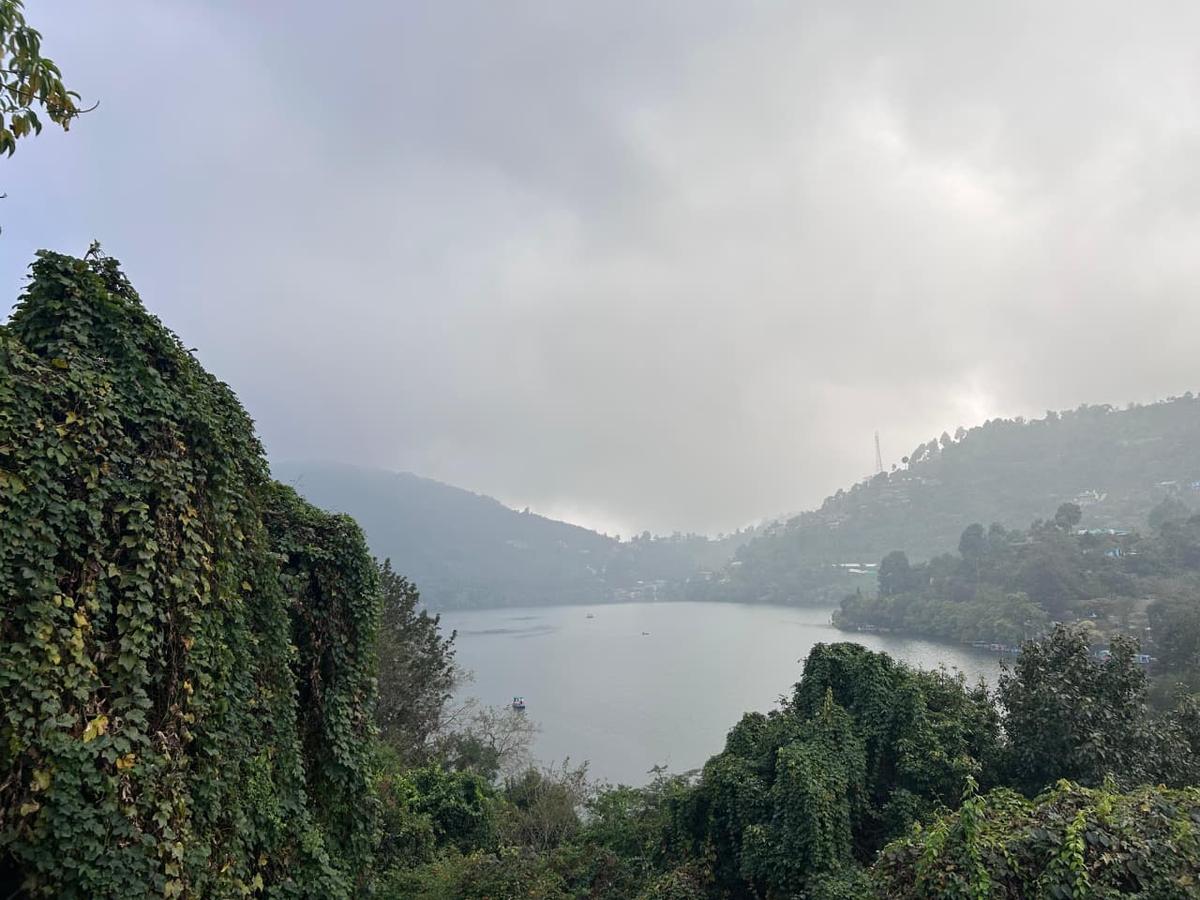
A few extra bends ahead, a third, lesser-thought-of lake town beckoned, as if it had been waiting for the road to empty out first. The forest deepened, and the air picked up a temperate clarity that sharpened the edges of everything around me. High in these Kumaon foothills, nestled at around 4,000 ft above sea level, Naukuchiatal or the “nine-cornered lake”, came into view. It is the deepest lake in the Nainital region. Locals say its nine-corners were created through deep penance, and legend has it that sighting all nine corners at once would lead to enlightenment. You hear versions of the story in different parts of the valley, and the region carries this folklore without any theatricality, which is the defining charm of the place.

A view of the Naukuchital lake

A view of the Naukuchital lake
| Photo Credit:
Samiksha Singh

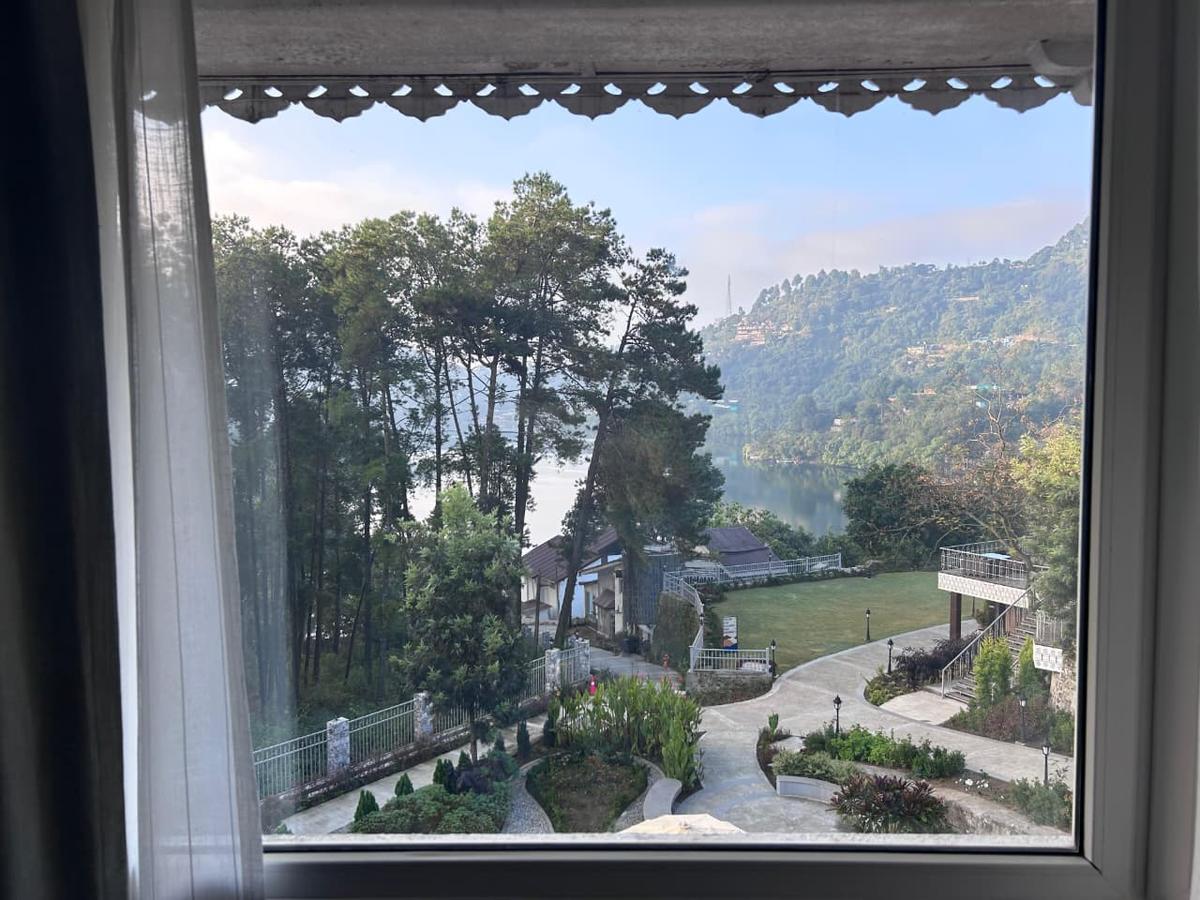
Perched above the lake, Naukuchia House is the only proper hotel in the area, though nothing about it feels intrusive. It’s designed in a Palladian architectural idiom, but its clean lines and graceful proportions echo the soothing geometry of the lake below, and the forest beyond. There are 42 rooms, ranging from garden-facing alcoves to premium lake-view rooms and executive suites. Each space is warm yet spacious, the service is discreet, intuitive and makes you feel welcomed into a carefully tended home.

One of the strongest strands of the experience here is wellness grounded in Nature. As Sanjeev Kumar, general manager, put it, “We honour the mystique through rituals like forest bathing, yoga and sound healing, letting folklore shape the soul of the experience, while modern hospitality shapes its ease.” The restaurant and dining patio — named ‘Ija’, after the Kumaoni word for mother — is built on a hyperlocal philosophy. Produce, herbs and foraged items are sourced within a 20-mile radius, and the menu shifts with the seasons. “Sourcing hyperlocal ingredients requires deep partnerships with farmers, artisans, and foragers,” Kumar explained.

A view of the lake from a room at Naukuchia House

A view of the lake from a room at Naukuchia House
| Photo Credit:
Samiksha Singh

Stepping outside the property dissolved the faint boundary between estate and forest. It was easy to see why wellness in this valley felt native. The air sat clean on my skin, the soundscape steady, and the water clear enough that the lake’s nine corners seemed believable even if I couldn’t spot them. 

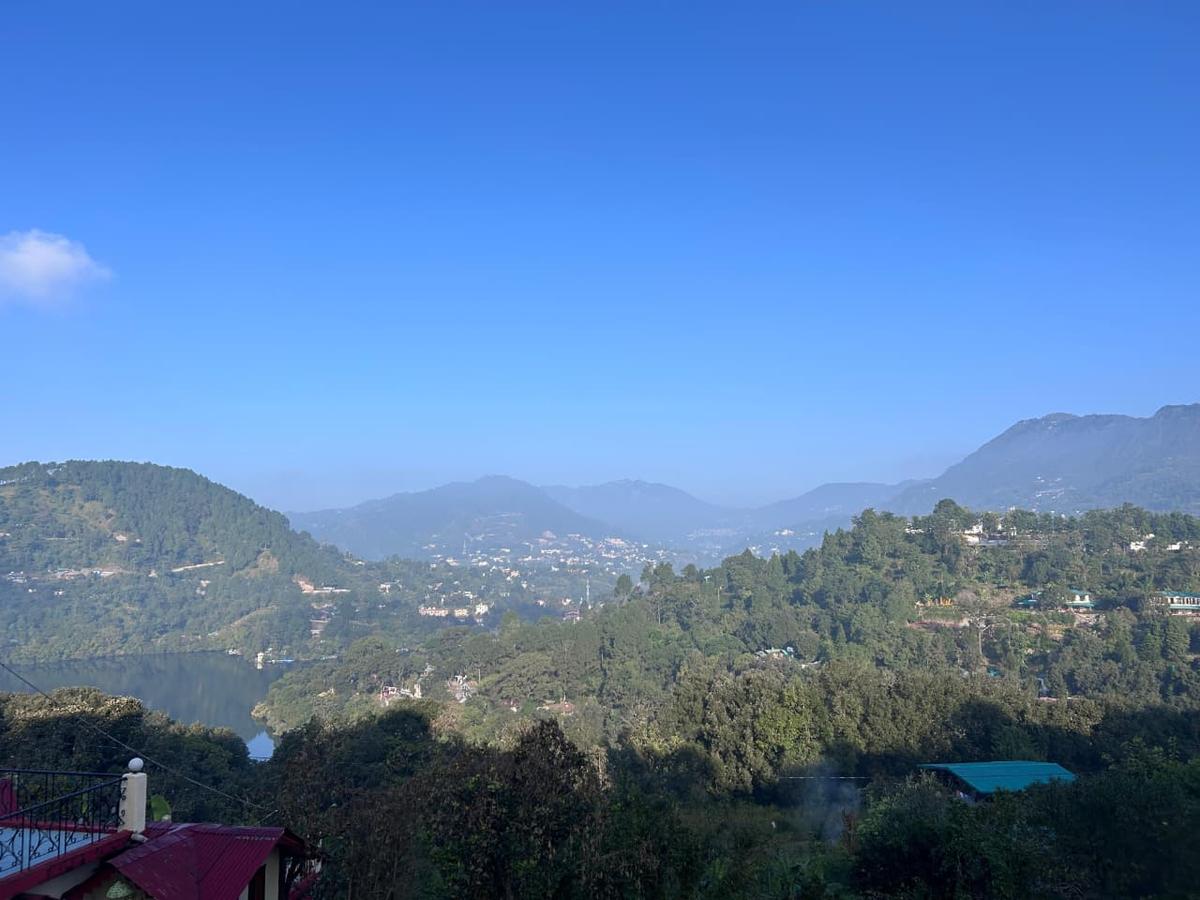
The bowl of green around the lake seemed to hold the water in a careful grip, letting very little spill into the world beyond. The shoreline is rocky in places, and the scree sloped gently into the lake. The lake is fed by underwater springs, giving its waters a perennial clarity and a slow-motion stillness. Walking here shifted my sense of scale. The hills are modest in height but varied in relief, so every few minutes I gained or lost perspective. The air carried a mix of pine resin, cool moisture, and earth. Birdlife was abundant; migratory species visit in winter, and locals often spoke of kingfishers and barbets darting over the water.

A view of the valley from Naukuchiatal

A view of the valley from Naukuchiatal
| Photo Credit:
Samiksha Singh

Walking in the adjoining fir-pine forests, the ground felt soft underfoot, layered with needles and leaves. Sunlight filtered in latticework, and the air smelt of something primordial. These trails sloped gently, opening up to ridgelines or tucked glades where you might rest, listen to the forest, or sit in silence. Kumar emphasised that every experience here was “curated to reflect the essence of Kumaon.”

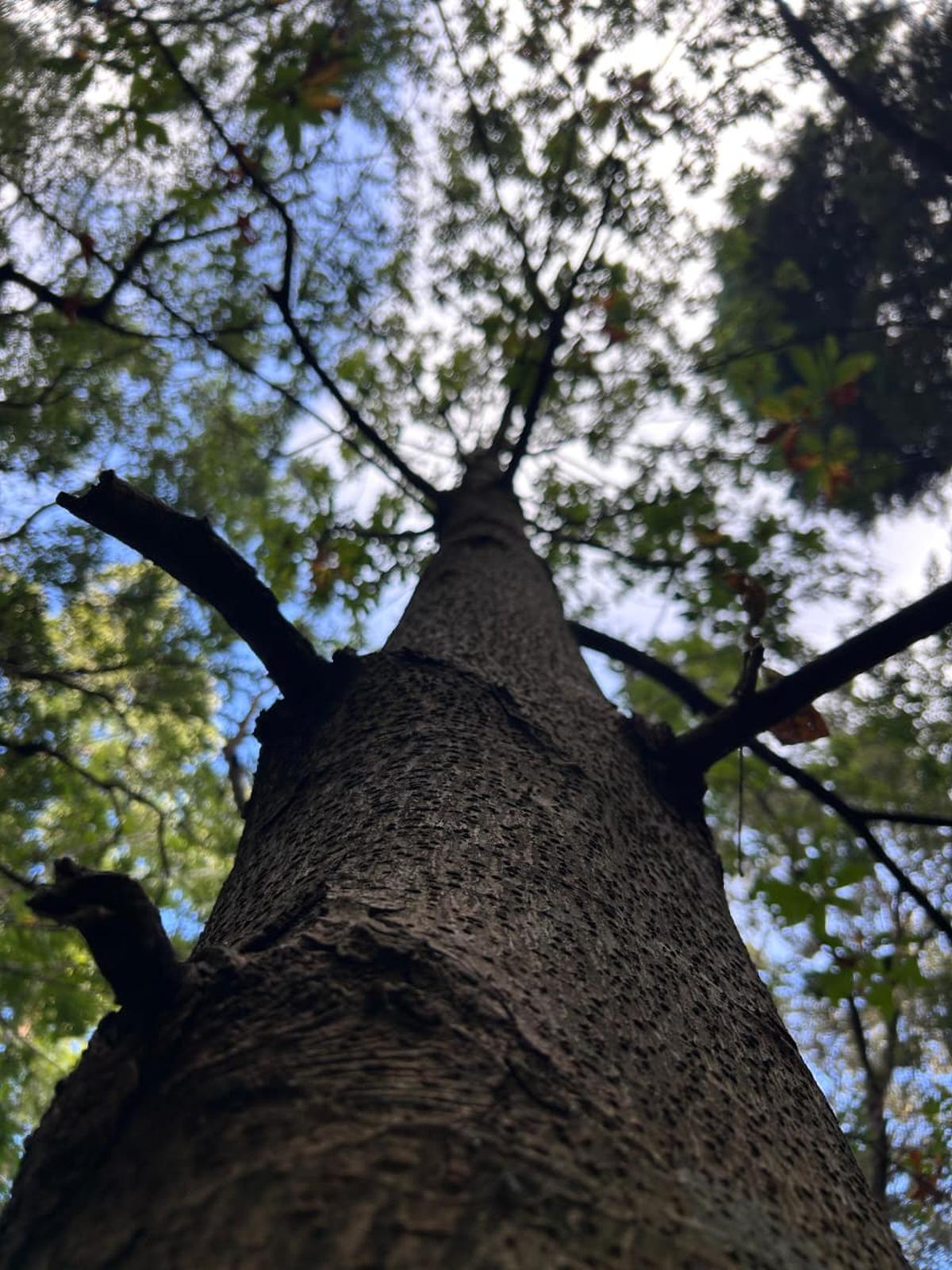
The oak tree I embraced during the forest bathing experience

The oak tree I embraced during the forest bathing experience
| Photo Credit:
Ayaan Paul Chowdhury

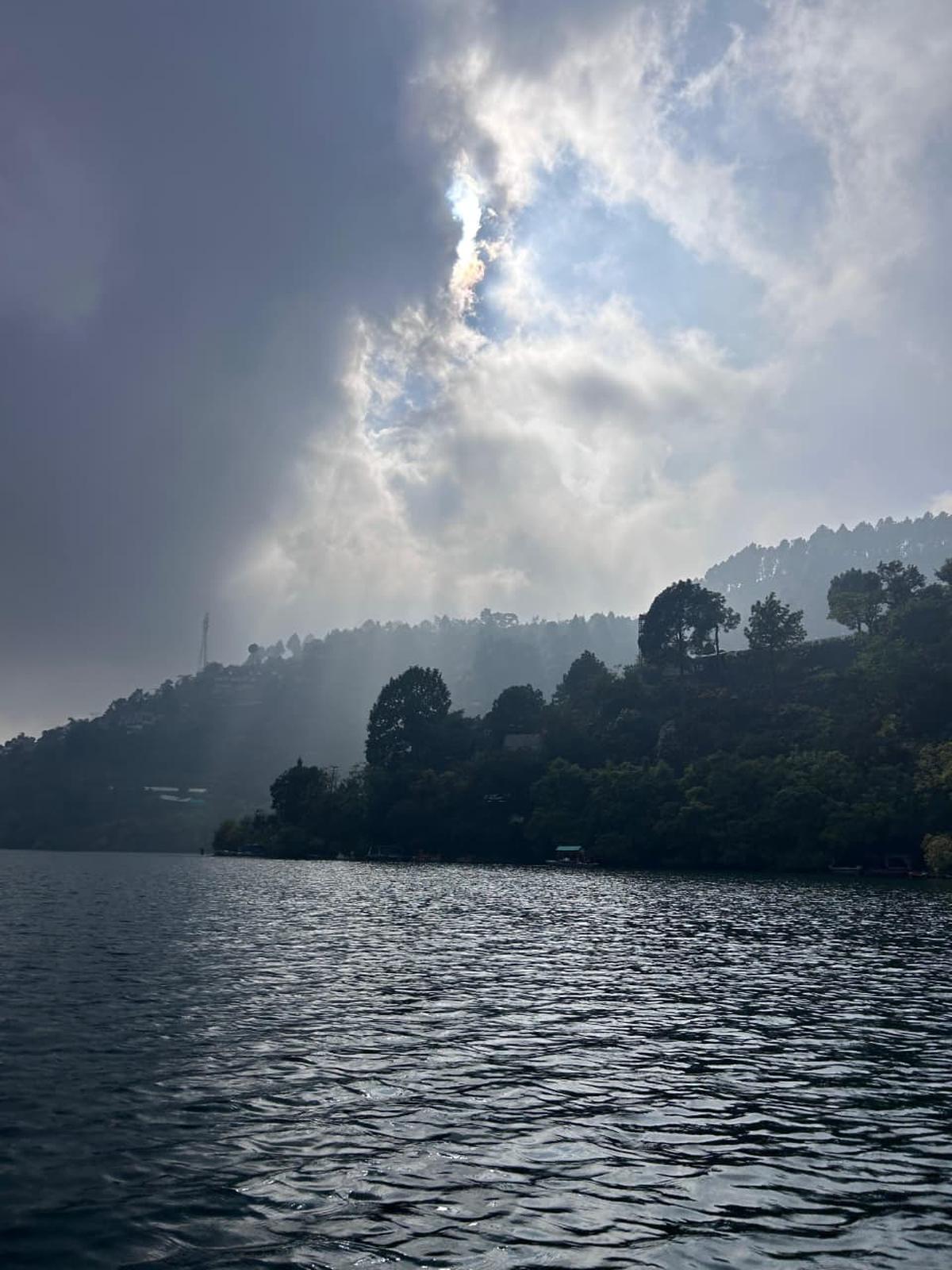
One of the most unforgettable moments during my stay here came from the forest-bathing ritual, when I leaned into a towering pine and felt a slow wave of calm flood through me — 10 minutes of closing my eyes, breathing in crisp air and moss, and letting the world fall away. The ground beneath me was a tapestry of lichens and ferns, delicate shrubs and saplings, all painted in layered greens that felt mildly delirious in their richness. On the Ghanta Devi trail, as dusk settled, fog curled through wildflowers and giant spider-webs draped across pine canopies; the slope softened until a lookout opened up, cliffside, and grey mist stood guard around the valley below. It was tactile in its mystery as the damp bark under my palms, the hush of needles underfoot and the softness of petals trembled in the breeze. Later, paddling in a small boat across the lake itself, the sun filtered through mist, scattering light into silver motes on the water, each ripple catching diamonds. 

Paddling across the Naukuchiatal lake

Paddling across the Naukuchiatal lake
| Photo Credit:
Samiksha Singh

All these scenes carried an odd familiarity. They reminded me of those early Twin Peaks moments when Dale Cooper first drives through David Lynch’s fictional small town, noting the serenity of the Douglas firs and the gentleness of the people who live among them. That sense of community is one of the town’s greatest gifts for Cooper — a “way of living I thought had vanished from this earth” — and in Naukuchiatal, I felt that same softness in the way Nature, tradition, and modern living overlapped without discord.

It was also clear that preserving this atmosphere was a priority. “The greatest challenge is ensuring that its soul remains untouched by over commercialisation,” Kumar said. He added that one of their fears was “unchecked development or insensitive tourism could erode the very qualities that make Naukuchia House special”. Future plans follow the same direction. “In the coming months, we will be introducing experiences that are even more rooted in the land, including curated Nature-binding rituals, expanded forest trails, and village interactions,” he said. 

After months of breathing in Delhi’s noxious fumes, the simple act of standing by Naukuchiatal felt like a balm. My time here was a return to slower shapes and ancient impulses. In the indescribable calm of around this furtive lake town, I think I might just have discovered something close to what Cooper had been fawning over in Twin Peaks after all.

Better yet, as the late, great David Lynch puts it, “an ocean of pure vibrant consciousness”.

This writer was in Naukuchiatal at the invitation of Naukuchia House

Published – January 06, 2026 09:11 pm IST


Source link

Naukuchiatal: A nine-cornered escape into the Kumaon Hills


Delhi has been particularly difficult to live in, of late. We are now in the thick of winter and the air still moves past your face with an insidious something it shouldn’t be carrying. Each morning, the same grey insistence of pulverising smoke pressed against my throat made the privileged indulgence of an exit feel practical. The urge to escape to somewhere close, somewhere uncomplicated and somewhere my lungs could remember why they exist, had never been stronger.

The mountains were the obvious thought, and go-to getaways like Nainital, Bhimtal and the like, felt like the natural detour for city-dwellers who craved a lake-side view with fewer people in the frame. Both also fell neatly into the pattern of a Delhi escape, with a brisk five to six hour drive and the promise of cooler air. Yet the closer I drew to them, the more it felt as if the city had followed us uphill. The roads thickened with traffic, and the usually languid alpine promenades looked oddly crowded. Everyone seemed to have the same idea. Even the breeze had a faint drag to it that made me check my chest out of reflex. The hills were still beautiful, though the quiet seemed to arrive in sporadic intervals.

A few extra bends ahead, a third, lesser-thought-of lake town beckoned, as if it had been waiting for the road to empty out first. The forest deepened, and the air picked up a temperate clarity that sharpened the edges of everything around me. High in these Kumaon foothills, nestled at around 4,000 ft above sea level, Naukuchiatal or the “nine-cornered lake”, came into view. It is the deepest lake in the Nainital region. Locals say its nine-corners were created through deep penance, and legend has it that sighting all nine corners at once would lead to enlightenment. You hear versions of the story in different parts of the valley, and the region carries this folklore without any theatricality, which is the defining charm of the place.

A view of the Naukuchiatal lake

A view of the Naukuchiatal lake
| Photo Credit:
Samiksha Singh

Perched above the lake, Naukuchia House is the only proper hotel in the area, though nothing about it feels intrusive. It’s designed in a Palladian architectural idiom, but its clean lines and graceful proportions echo the soothing geometry of the lake below, and the forest beyond. There are 42 rooms, ranging from garden-facing alcoves to premium lake-view rooms and executive suites. Each space is warm yet spacious, the service is discreet, intuitive and makes you feel welcomed into a carefully tended home.

One of the strongest strands of the experience here is wellness grounded in Nature. As Sanjeev Kumar, general manager, put it, “We honour the mystique through rituals like forest bathing, yoga and sound healing, letting folklore shape the soul of the experience, while modern hospitality shapes its ease.” The restaurant and dining patio — named ‘Ija’, after the Kumaoni word for mother — is built on a hyperlocal philosophy. Produce, herbs and foraged items are sourced within a 20-mile radius, and the menu shifts with the seasons. “Sourcing hyperlocal ingredients requires deep partnerships with farmers, artisans, and foragers,” Kumar explained.

A view of the lake from a room at Naukuchia House

A view of the lake from a room at Naukuchia House
| Photo Credit:
Samiksha Singh

Stepping outside the property dissolved the faint boundary between estate and forest. It was easy to see why wellness in this valley felt native. The air sat clean on my skin, the soundscape steady, and the water clear enough that the lake’s nine corners seemed believable even if I couldn’t spot them. 

The bowl of green around the lake seemed to hold the water in a careful grip, letting very little spill into the world beyond. The shoreline is rocky in places, and the scree sloped gently into the lake. The lake is fed by underwater springs, giving its waters a perennial clarity and a slow-motion stillness. Walking here shifted my sense of scale. The hills are modest in height but varied in relief, so every few minutes I gained or lost perspective. The air carried a mix of pine resin, cool moisture, and earth. Birdlife was abundant; migratory species visit in winter, and locals often spoke of kingfishers and barbets darting over the water.

A view of the valley from Naukuchiatal

A view of the valley from Naukuchiatal
| Photo Credit:
Samiksha Singh

Walking in the adjoining fir-pine forests, the ground felt soft underfoot, layered with needles and leaves. Sunlight filtered in latticework, and the air smelt of something primordial. These trails sloped gently, opening up to ridgelines or tucked glades where you might rest, listen to the forest, or sit in silence. Kumar emphasised that every experience here was “curated to reflect the essence of Kumaon.”

The oak tree I embraced during the forest bathing experience

The oak tree I embraced during the forest bathing experience
| Photo Credit:
Ayaan Paul Chowdhury

One of the most unforgettable moments during my stay here came from the forest-bathing ritual, when I leaned into a towering pine and felt a slow wave of calm flood through me — 10 minutes of closing my eyes, breathing in crisp air and moss, and letting the world fall away. The ground beneath me was a tapestry of lichens and ferns, delicate shrubs and saplings, all painted in layered greens that felt mildly delirious in their richness. On the Ghanta Devi trail, as dusk settled, fog curled through wildflowers and giant spider-webs draped across pine canopies; the slope softened until a lookout opened up, cliffside, and grey mist stood guard around the valley below. It was tactile in its mystery as the damp bark under my palms, the hush of needles underfoot and the softness of petals trembled in the breeze. Later, paddling in a small boat across the lake itself, the sun filtered through mist, scattering light into silver motes on the water, each ripple catching diamonds. 

Paddling across the Naukuchiatal lake

Paddling across the Naukuchiatal lake
| Photo Credit:
Samiksha Singh

All these scenes carried an odd familiarity. They reminded me of those early Twin Peaks moments when Dale Cooper first drives through David Lynch’s fictional small town, noting the serenity of the Douglas firs and the gentleness of the people who live among them. That sense of community is one of the town’s greatest gifts for Cooper — a “way of living I thought had vanished from this earth” — and in Naukuchiatal, I felt that same softness in the way Nature, tradition, and modern living overlapped without discord.

It was also clear that preserving this atmosphere was a priority. “The greatest challenge is ensuring that its soul remains untouched by over commercialisation,” Kumar said. He added that one of their fears was “unchecked development or insensitive tourism could erode the very qualities that make Naukuchia House special”. Future plans follow the same direction. “In the coming months, we will be introducing experiences that are even more rooted in the land, including curated Nature-binding rituals, expanded forest trails, and village interactions,” he said. 

After months of breathing in Delhi’s noxious fumes, the simple act of standing by Naukuchiatal felt like a balm. My time here was a return to slower shapes and ancient impulses. In the indescribable calm of around this furtive lake town, I think I might just have discovered something close to what Cooper had been fawning over in Twin Peaks after all.

Better yet, as the late, great David Lynch puts it, “an ocean of pure vibrant consciousness”.

This writer was in Naukuchiatal at the invitation of Naukuchia House

Published – January 06, 2026 09:11 pm IST


Source link

Comedian Abish Mathew on his latest one-hour special, ‘Finish’


Nearly two decades into his career as a stand-up comedian, Abish Mathew, is releasing his second one-hour special, Finish, following Whoop!, which has been streaming on Amazon Prime since 2018. However, Abish considers Finish to be a product of personal and comedic reinvention. “Whoop! is from someone in his 20s trying to impress an audience. This is from one in his 30s, trying to impress parents,” he comments.

“The special was about growth. Since 2018, I have dedicated more time to writing. Performance comes to me naturally. But now, I get more excited by the idea of writing a joke as opposed to having an idea, taking it to the stage and seeing where it goes, which is what the previous special was about. Now that I am on tour, I am trying to lean more into being in the moment and seeing what happens.”

Finish, currently streaming on YouTube, is an amalgamation of Abish’s jokes from the past three years, since he put his celebrated talk show, Son of Abish, on hold. One half of the show was thematically made last year, when he went on tour. “The show finally came together when my parents came to see it. I realised that I was talking about them. It became a show about my perspective as the youngest child in a Mallu Catholic family from Delhi, their story of why my name is Abish. And Finish is a joke my father did,” says Abish.

Abish Mathew

Abish Mathew
| Photo Credit:
SPECIAL ARRANGEMENT

The comedian credits his family for his long career in comedy. “Before I did standup, I was working at a radio station and was in a band. My parents were supportive of that. They supported me in school when I was into theatre and emceeing. My eldest brother came to my every show, whether it was music or hosting a gig at a mall, or recording at church. The three of them crafted me into who I am today. Moving to Mumbai from Delhi was never a conversation. I felt like, instead of a smooth take off, I got a boost from their end.”

Abish says humour is part of their family with his father cracking jokes, his mother’s laugh, and her savage retorts. “For instance, my father will say jokes like me, while my mother brings out hard-hitting, political jokes like that of (Gursimran) Khamba, (Kunal) Kamra and Varun Grover, and we will be shocked.”

Taking a break

While he took a break from stand-up, he lauds the number of comedians who entered the scene during that time, each with their own perspective. “With so many open mics happening, there is queer comedy, shows with all-women lineups, alt comedy (Alternative comedy) and improv comedy groups.” He also points out that more comics are confident about releasing shows in different formats and podcasts. “I am introduced to new comics daily. I immediately reach out to them, saying it’s a great set.”

Abish adds, “I recently finished Varun Grover’s special, Nothing Makes Sense. It was so good. It was light. I have always enjoyed Kanan Gill’s specials; it is something I aspire to do. I love anything Anirban Dasgupta and Tarang Hardikar put up. I must give a special shoutout to Gurleen Pannu; her last video made me laugh consistently. Same with Shreeja Chaturvedi and Prashasti Singh, it’s effortless and authentic.”

Abish Mathew

Abish Mathew
| Photo Credit:
SPECIAL ARRANGEMENT

Looking back

Abish fondly remembers Son of Abish, which ran for nine seasons and shot him into fame. “When people recognise you for the work you paused three years ago, it feels so awesome. It is done by an Abish, in his early 20s. I look back, and I say, ‘Good job, Abish. ’ I enjoyed making that show, and it was my dream to make it.I have always enjoyed the process of building a show with writers, directors, and producers.”

What tip does Abish have for aspiring comics? “There is no one tip; find your nearest open mic and go there a few times. Then reach out to the comics there, say I want to try. Try to understand what a good joke is. Sometimes people laugh at an interesting premise, and we think people have laughed, so we move on to the next premise. But your objective is, you got a chuckle, that means the audience is interested, now you need a great payoff. If you write with that objective in mind, you can take weeks to write one joke, but figure out a good enjoyable process for it.”

Finish is now streaming on Son Of Abish YouTube Channel

Published – January 06, 2026 05:08 pm IST


Source link

Where to eat in Hyderabad this January


At the start of the year, there is often a collective urge to slow down — to eat with a little more intention, choose flavours that comfort rather than overwhelm, and return to dishes that feel familiar without being heavy. If that is the mood you are in, here are a few options worth trying.

Pizza check

Si Nonna, the world’s largest AVPN (Associazione Verace Pizza Napoletana)-certified pizzeria network, has opened two outlets in Hyderabad, at Film Nagar and Khajaguda. The brand uses a 24-hour fermented heritage sourdough and traditional Italian techniques.

In keeping with Neapolitan tradition, the pizzas are numbered rather than named. Pizza No. 3 features garlic, olives, capers, fresh basil and fior di latte, while Pizza No. 6 is built on a pelati tomato base with fior di latte mozzarella, slow-cooked herb-garlic chicken, Mt. Vesuvius sun-dried tomatoes, spicy house-made chilli oil, basil pesto and extra-virgin olive oil.

The menu also includes panuozzo sandwiches, kombuchas, coolers, fresh gelatos and a classic tiramisu, along with vegetarian, vegan and Jain-friendly options. An interactive open kitchen allows diners to customise and make their own sourdough pizza with a chef’s guidance.

Price for two is ₹1,500 (approx.)

Coffee run

Maple Iced Latte

Maple Iced Latte
| Photo Credit:
Special Arrangement

Roastery Coffee House at Banjara Hills and Kokapet has introduced a few seasonal additions worth noting. The spiced pour-over, infused with cinnamon, cardamom and pepper, offers a warm, comforting profile — ideal for cooler days. The maple iced latte, meanwhile, leans towards a lighter, festive flavour, making it a good pick for a late-afternoon coffee.

Price for two is ₹600 (approx.)

Vegetarian meals and one pot dishes

The thali at Cafe Kaadhale

The thali at Cafe Kaadhale
| Photo Credit:
Special Arrangement

Cafe Kaadhale, near the Clock Tower, has introduced South Indian vegetarian thalis for lunch. Designed to suit both quick working lunches and relaxed family meals, the thalis stand out for their variety, balanced flavours and generous accompaniments. As expected, they come with puris and a traditional sweet.

The menu ranges from mini meals to executive thalis. If a full thali feels too familiar, opt for their one-pot dishes instead — sambar rice, muddapappu avakaya annam, or pulaos flavoured with gongura and avakaya.

Thalis and pulaos are available for both lunch and dinner.

Price for two is ₹700 (approx.)

Traditional flavours

Thali by Swati at Mazzo

Thali by Swati at Mazzo
| Photo Credit:
Special Arrangement

How about starting the year with a Maharashtrian food pop-up at Mazzo, Marriott Executive Apartments Hyderabad? The limited-time pop-up is led by home cook Swati Mawlankar from Ratnagiri in Maharashtra’s Konkan region.

Swati, who regularly visits Hyderabad during Ganesh Chaturthi to prepare modaks, makes her city debut with this special showcase of home-style Maharashtrian cooking.

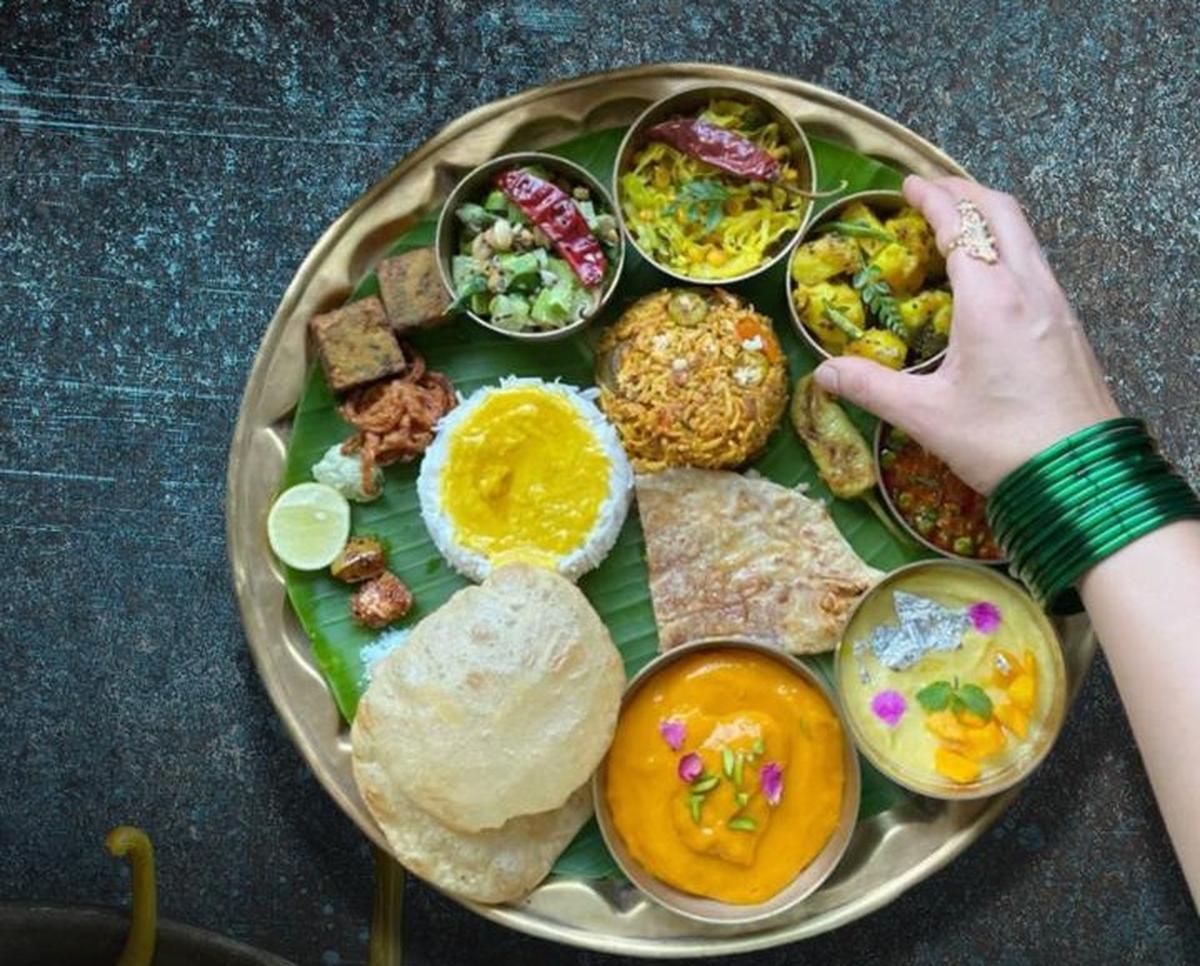
Expect a curated spread of classics such as bharli vangi, pitla bhakri, sabudana wada and Kolhapuri mutton, alongside traditional desserts including modak, puran poli, shrikhand with poori, and orange burfi.

The pop-up is on from January 7–10 (dinner only) at Mazzo, Marriott Executive Apartments Hyderabad

Published – January 06, 2026 12:24 pm IST


Source link

A forecast for 2026: What lies in the year ahead


Illustration by Sai

Illustration by Sai
| Photo Credit: The Hindu

As 2026 draws near, we turn our gaze to what the year holds across culture, technology, wellness, and style. Indian cinema readies itself for a glittering run at the box office. Shah Rukh Khan, returns after a two-year hiatus, Salman Khan dons the army uniform, and star power once again takes centre stage.

Artificial intelligence is already woven into daily life, and this year, it is set to mature rather than multiply. The automobile sector moves towards smarter, more intuitive technologies. Wellness experts say that new priorities like sexual literacy, women’s lifecycle care and community healing are emerging.

Fashion, meanwhile, looks poised for reinvention, blending corsets with fluid silhouettes to reshape personal style. Beauty follows suit, with a renewed focus on makeup and skincare essentials — from masks to mascaras — designed to refine everyday rituals as the year begins.

This is our curated series on 2026: diverse, forward-looking, and grounded in the changes already taking shape.


Source link

Celebrating history: Through New Year’s past into New Year’s present!


The morning of December 31 can feel quite weird. A mix of grief, restlesness, and euphoric anticipation. It is New Year’s Eve. Cakes, gifts, fireworks are set and people prepare to count down the final seconds in one final act of bidding grand adieu. That night running into day lacks ordinariness. It is the official spectacle and stimulus of a new beginning.

Welcoming the new year is an exhilarating process every time. January 1 is revered and held special as the date leading the new year. Yet, this hasn’t always been the case. The idea of the “New Year” is tied to two planes — psychological and material. In the psychological plane, new year is treated like a temporal checkpoint whereas in the material plane, its movement is dictated by the calendar.

Welcoming the new year is an exhilarating process every time.

Welcoming the new year is an exhilarating process every time.
| Photo Credit:
Getty Images

The widespread calendar we are so naturally used to now never existed once in time. In its place were a plethora of local charts of time and each of them had different new year dates.

We follow the Gregorian Calendar where Jan 1st is New Year’s Day.

By the rivers of Babylon

We have recorded the earliest proper New Years celebration in Ancient Babylon. We are talking more than four millennia ago here. Cosmos and astronomy ruled time then, lunar and solar systems the norm. The New Year festival for the Babylonians was called “Akitu” and it was celebrated for 11 days. In our calendar, the date usually falls around April 1 (spring). Another neighbouring Mesopotamian civilisation called Assyria also celebrated New year then. Akitu celebrates the sowing of barley (the word itself means barley in Sumerian).

The flood brings the new year!

Ancient Egyptians marked the new year when the Nile river flooded. Yes. For them, the arrival of the flood was like an annual rebirth of their land. It was celebrated and considered a divine beginning. The flooding coincided with the heliacal rising of the brightest star in the night sky, Sirius.

Then again, the flooding date varied every year and was even different in different parts of Egypt. In this manner, most ancient calendars that depended on lunar and solar cycles, agriculture, nature events, etc. frequently had differences in the date and time of the celebration of New Year. While in our calendar, the differences are merely a matter of hours in the same day, the differences by these ancient calendars were a matter of many days.

Egyptian calendar was divided into three seasons – Inundation, Germination, and Warmth

Ancient Inca of Peru celebrated New Years day in June. It was based on their solar calendar where June 21 -24 coincided with the winter solstice.

Inti Raymi festival, the beginning of the Inca year (Inca New Year) was the most important festival of the Inca Empire. Today it is the second largest festival in South America.

Rome wasn’t built in a day

The modern Gregorian calendar we follow is a direct refinement of the Julian calendar that was instituted by Roman General Julius Caesar. Here, January 1 officially takes birth as the New Year’s Day.

Julius Caesar.

Julius Caesar.
| Photo Credit:
Wikimedia Commons

The route all the way here wasn’t easy. It was slow, full of change, and developed massively from older dating systems. The chaotic confusions and differences caused by the solar and lunar systems and unrefined alterations made the ancient calendar systems unreliable. By the time of Caesar, the early Roman calendar that depended on the cycle of the Moon, fell so out of sync that Caesar decided to cure the issue. Astronomy and mathematics had also reached new heights of improvement. Calculations were more accurate than ever before and in no time, brought the genesis of the popular Julian calendar.

Did you know?

The Julian calendar first came into effect in the year 45 BCE. It is a 365 day calendar with a leap year every four years. So, Jan 1 was celebrated as New Year’s Day for the first time in 45 BCE.

The earliest Roman calendar (attributed to Romulus) had March as the beginning of the new year.

Romans celebrated the new year by giving gifts to others as well as offering sacrifices to their God Janus who is considered as the God of Beginnings.

Modern Times

The Julian calendar wasn’t error-free. It overestimated the length of the solar year by 11 minutes and 14 seconds. Pope Gregory XIII fixed this error in 1582. The new refined calendar became known as the Gregorian calendar which is what we follow today.

“Happy New Year!”

At exactly 12 AM or 00:00, not a millisecond more and not one less, people collectively scream out this phrase. If we add the innumerous local calendars of ancient civilisations alongside the ones we have discussed herein, then it is safe to say that in the history of time, we have locally said this phrase innumerous times at innumerous dates.

America, who is known for its grandiose traditional New Year celebrations, helped commercialise the event into how we celebrate it today. By the twentieth century, New Year’s Day and New Year’s Eve celebrations were fully commercial and broadcast in nature. Rituals and time itself were seen in commercial light.

By the twentieth century, New Year’s Day and New Year’s Eve celebrations were fully commercial and broadcast in nature.

By the twentieth century, New Year’s Day and New Year’s Eve celebrations were fully commercial and broadcast in nature.
| Photo Credit:
Getty Images

New Year’s Present

On the larger timelessness of time, January 1 somehow successfully finds itself pinned. Sun, moon, agriculture, March, April, June — the New Year has created diverse meanings for us. Today, the hope it instils is universally rich and powerful. Wait, this does not mean that the older calendars have faded to black. The reason why we have festivals like Nowruz (Iranian Persian New Year), Chinese Lunar New Year, Vishu (Kerala’s New Year), and so on are because these calendars are still respected despite following the Gregorian one.

Lunar New Year.

Lunar New Year.
| Photo Credit:
Getty Images

Published – January 05, 2026 10:00 am IST


Source link

The Festival of India in Coonoor: A month-long curated exhibition in Coonoor, celebrates timeless crafts and textiles from across the country


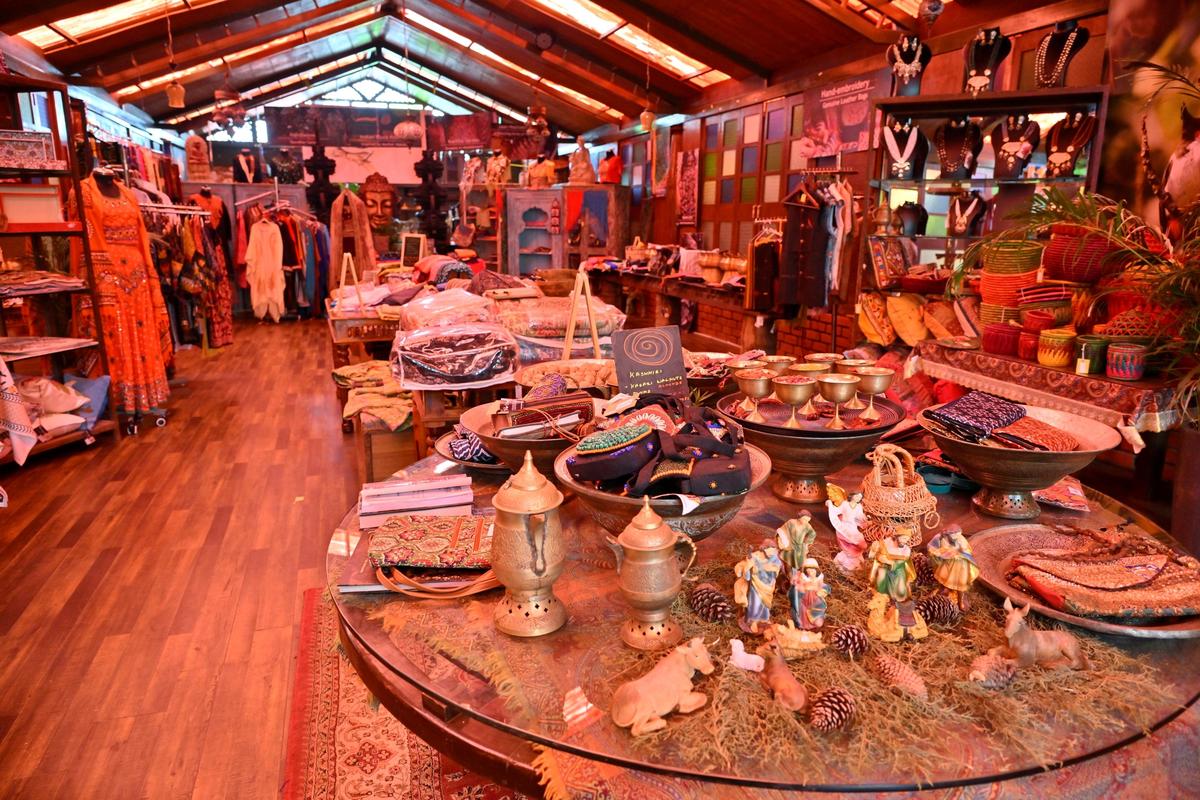
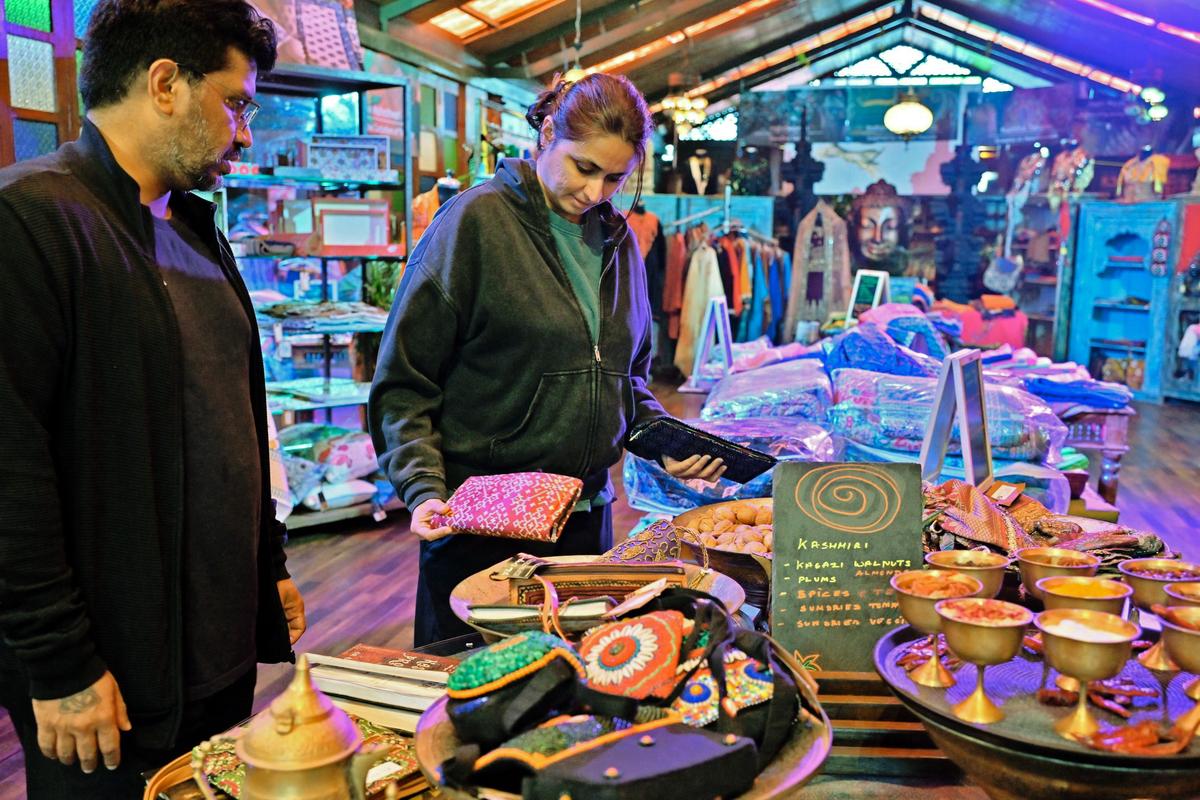
On a misty evening at Coonoor, in the heart of the Nilgiris, I step into Respect Origins’ Crafts Bazaar for an exclusive preview of The Festival of India, a curated showcase of timeless crafts and textiles from across the country. As the doors open, a profusion of colours and textures floods the senses. As I move past a collection of Kashmiri Kani suits adorned with intricate Kashida and Kani embroidery, Kantha work from West Bengal, the traditional hand-embroidering craft that uses simple running stitches to create historical and cultural motifs, commands attention. Nearby are pure wool and Pashmina from Ladakh, Manipur baskets made from razor-sharp grasses, terracotta and pottery from Tamil Nadu and Kerala, and Ajrak block prints rendered in natural dyes. Each piece is a celebration of history and traditions.

A little further away, rows of elegant tops and saris come into view with delicate Chikankari sharing space with Kasuti, Karnataka’s folk embroidery. Alongside are Lambani tribal jewellery, hand-beaten brass coasters from Gujarat, and a thoughtfully chosen selection of food-grade stainless steel kitchenware from Uttar Pradesh.

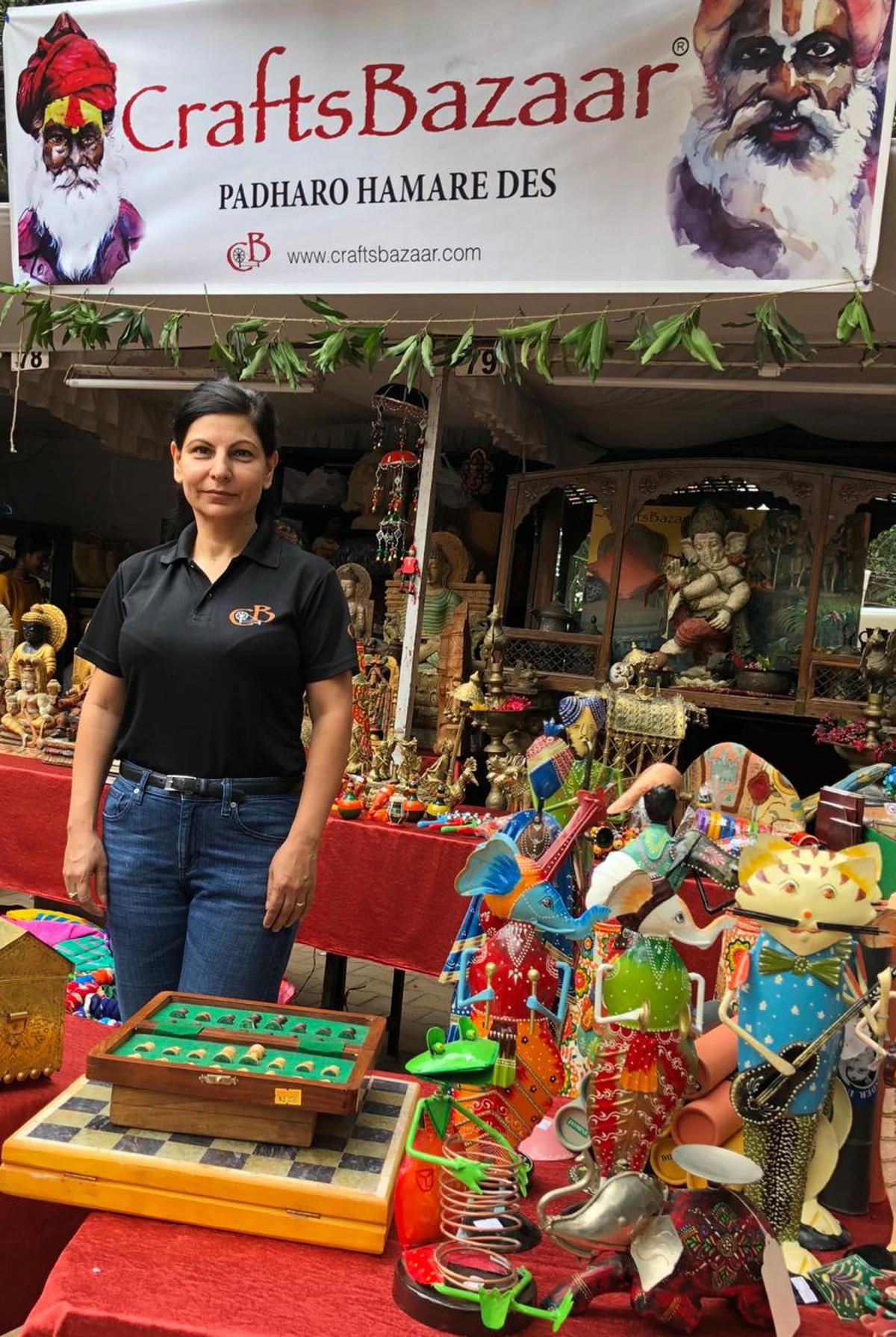
Aparna Challu, entrepreneur and founder of CraftsBazaar, The Festival of India, and Respect Origins

Aparna Challu, entrepreneur and founder of CraftsBazaar, The Festival of India, and Respect Origins
| Photo Credit:
Special Arrangement

“I want people to walk in and say — wow, this is India,” says Aparna Challu, entrepreneur and founder of CraftsBazaar, The Festival of India, a platform dedicated to empowering rural artisans in India by connecting them with global consumers. Respect Origins is its online platform, a marketplace for rural artisans.

Based in Bengaluru, Aparna has a global career background, which includes launching successful green trade operations in the UK and Europe before returning to India. She has been awarded with the Mahatma Gandhi Samman, the Priyadarshini Award, the Amazon Sambhav, and MSME Entrepreneur to name a few for her work in rural inclusivity, sustainability, creating equal economic and gender opportunities, and preserving India’s rich arts and crafts traditions in a model global context. “Winning awards is gratifying, but recognition has never been the goal. This kind of work can never be driven by commercial gain alone,” she says, adding, “It has to come from the heart.”

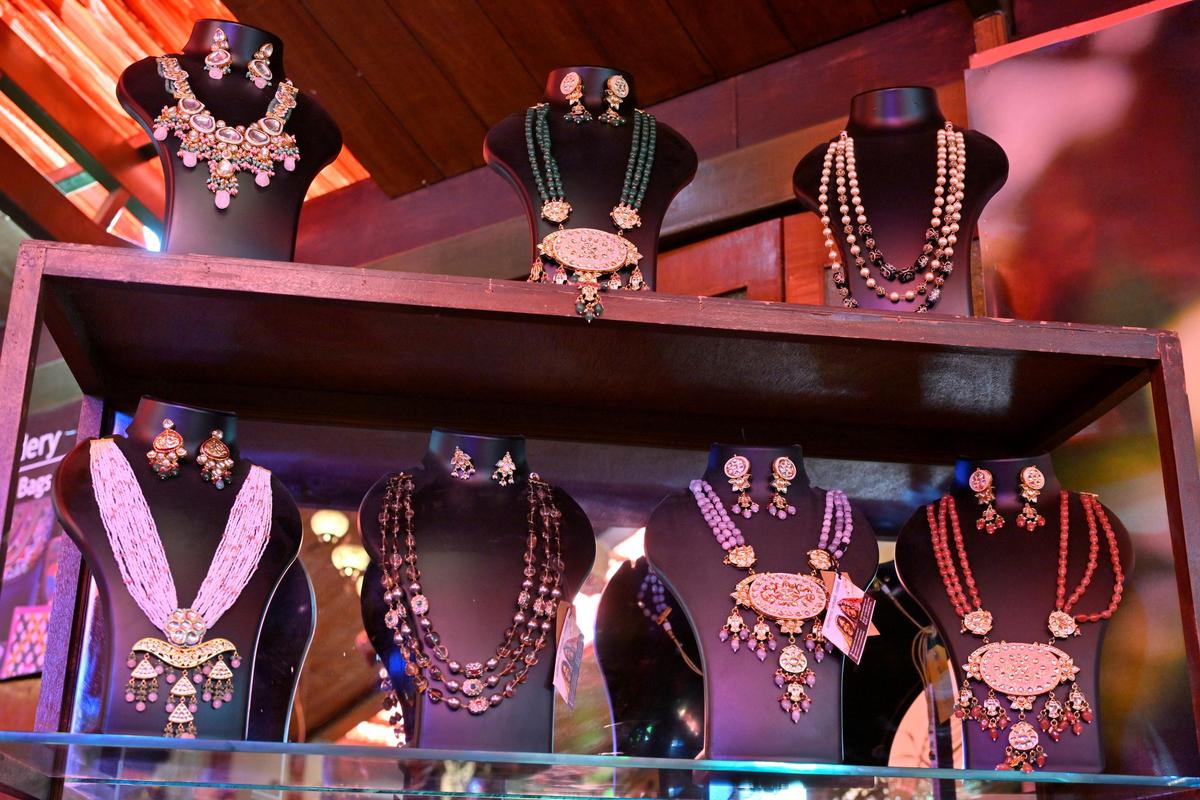
A curated collection of jewellery at the showcase

A curated collection of jewellery at the showcase
| Photo Credit:
SATHYAMOORTHY M

The idea of rural inclusivity began much earlier, shaped by a childhood spent moving across India due to an armed forces background. “Every year or year-and-a-half, we moved. Sometimes to small towns like Ozar, places nobody even knew how to reach then. There were no highways. You travelled by buses and trains. You became part of the local culture.” That connection became the foundation of Respect Origins. “Back then, there was no concept of rural and urban. There was just India,” she says and pauses to add, “ People farmed, wove baskets, made pottery, stitched garments, often seasonally while farming. Craft was a way of life. Knowledge passed on through observation, repetition, and memory.”

She started Respect Origins informally in 2015, originally as CraftsBazaar. For over a year, she travelled across India documenting crafts, long before information was readily available online. Her background in technology, combined with years spent working abroad, sparked a critical insight. “In the West, indigenous work is respected. Be it the farmer’s markets, handwoven textiles or needlepoint, people treasure these things. Somewhere along our development journey, we stopped valuing what came from our own soil. Our platform became a bridge, not a marketplace alone, but an ecosystem, where artisans are supported from start to finish.”

Respect Origin platform is an ecosystem, where artisans are supported from start to finish

Respect Origin platform is an ecosystem, where artisans are supported from start to finish
| Photo Credit:
SATHYAMOORTHY M

It offers help in product innovations without diluting authenticity, setting up bank accounts, GST compliance, sustainable packaging, logistics, and quality control in addition to access to buyers, retailers, and exporters. “The ownership must remain with those who produce, not those who sell,” she explains, adding that a newly migrated technology platform is being tested for international currencies, signalling the next phase of global access, without compromising artisan ownership.

Globalisation, she says, shut out millions of artisans who did not speak English, use computers, or navigate digital platforms, despite being skilled and deeply knowledgeable. “Today, if you want to buy an earthen pot, you can’t easily find one unless you’re travelling through interior roads. Imagine how difficult it is for the people who make them to sell. That dialogue between maker and buyer disappeared. And when that exchange goes, memory goes. Culture flows through memory,” says Aparna.

The collection includes tribal thread-and-metal jewellery to semi-precious stone pieces nfluenced by European aesthetics during the Maharaja era

The collection includes tribal thread-and-metal jewellery to semi-precious stone pieces nfluenced by European aesthetics during the Maharaja era
| Photo Credit:
SATHYAMOORTHY M

Back to The Festival of India, a curated celebration in the Nilgiris which is intentionally different. Heavily commercialised crafts are deliberately avoided. From tribal thread-and-metal jewellery to semi-precious stone pieces influenced by European aesthetics during the Maharaja era, the collection reflects migration, history, and exchange. “It’s about showcasing the finest, what is timeless. Nothing here is buy-and-throw. Every piece carries thought, time, and memory. What people wore every day once.”

Heavily commercialised crafts are deliberately avoided

Heavily commercialised crafts are deliberately avoided
| Photo Credit:
SATHYAMOORTHY M

The next edition will focus on Indian painting traditions with artists working live, creating murals, and accepting commissioned work. She adds, “We want patrons, not just consumers. And when value is created for everyone, the maker, the buyer, the culture, you know you’re doing something right.”

The exhibition runs till January 28 at Habba Kadal, 38, Coonoor-Kattabettu-Kotagiri Road, Yedapalli,Coonoor. For more details, call 7603821537

Published – January 03, 2026 07:58 pm IST


Source link

Keeping buildings alive | 4 conservation architects on continuity, repair, and responsibility


Buildings age the way cultures do: unevenly, politically, selectively. And cultures do not endure by clinging to form, but by carrying forward the spirit. Few practices make this distinction as tangible as conservation architecture. At its best, conservation is not about embalming buildings or sealing them off as relics. It is about keeping structures alive — socially, materially, and culturally — while acknowledging that time leaves marks, and that those marks matter.

In India, where cities grow as much by erasure as by expansion, conservation architecture sits at an uneasy crossroads. It is often reduced to sentiment, nostalgia, or elite indulgence. But speak to practitioners working in this field, and a different picture emerges: conservation as a way of thinking about continuity, repair, labour, and responsibility. Less about freezing history, more about negotiating with it.

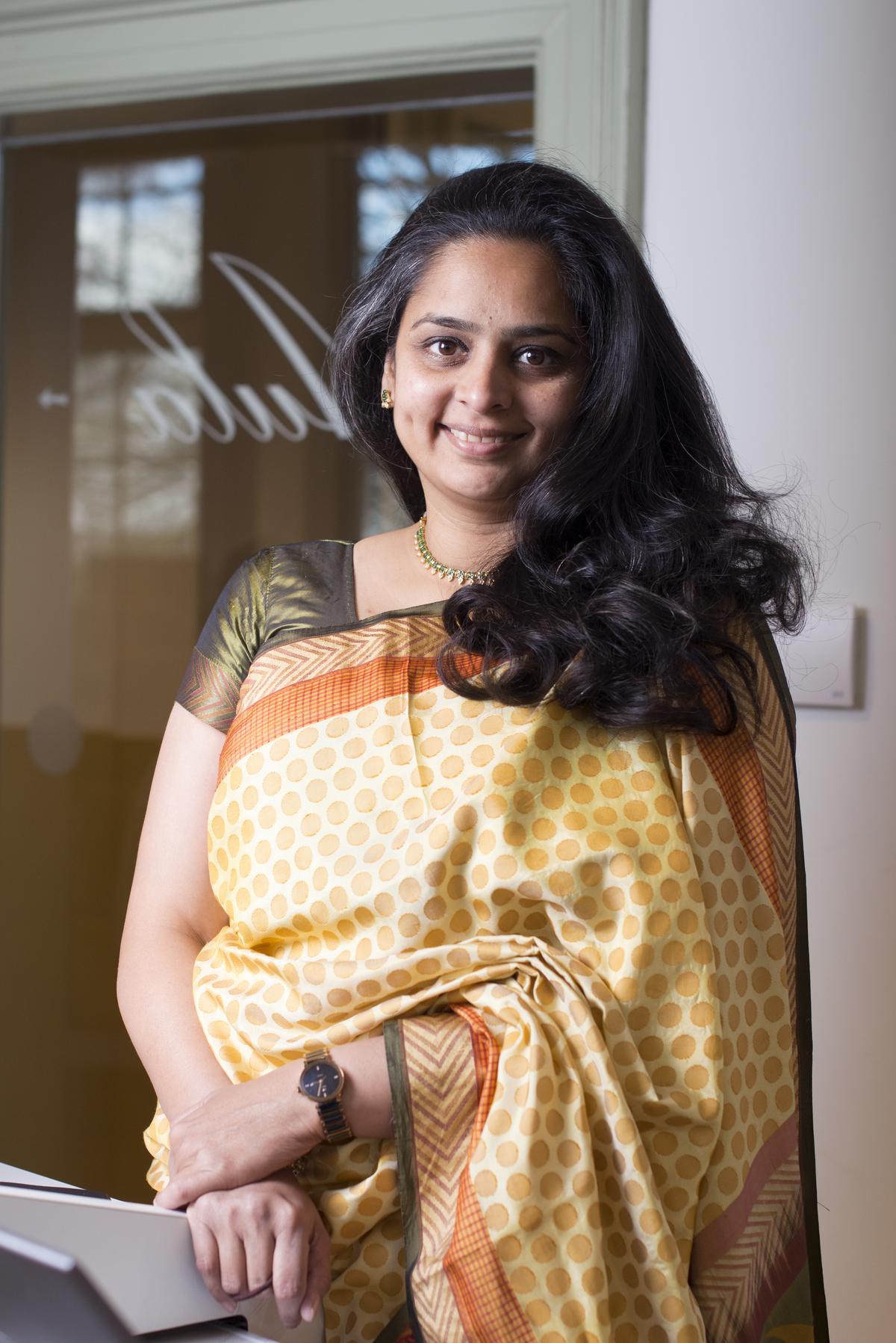
Abha Narain Lambah, Mumbai

Buildings cannot survive as static objects’

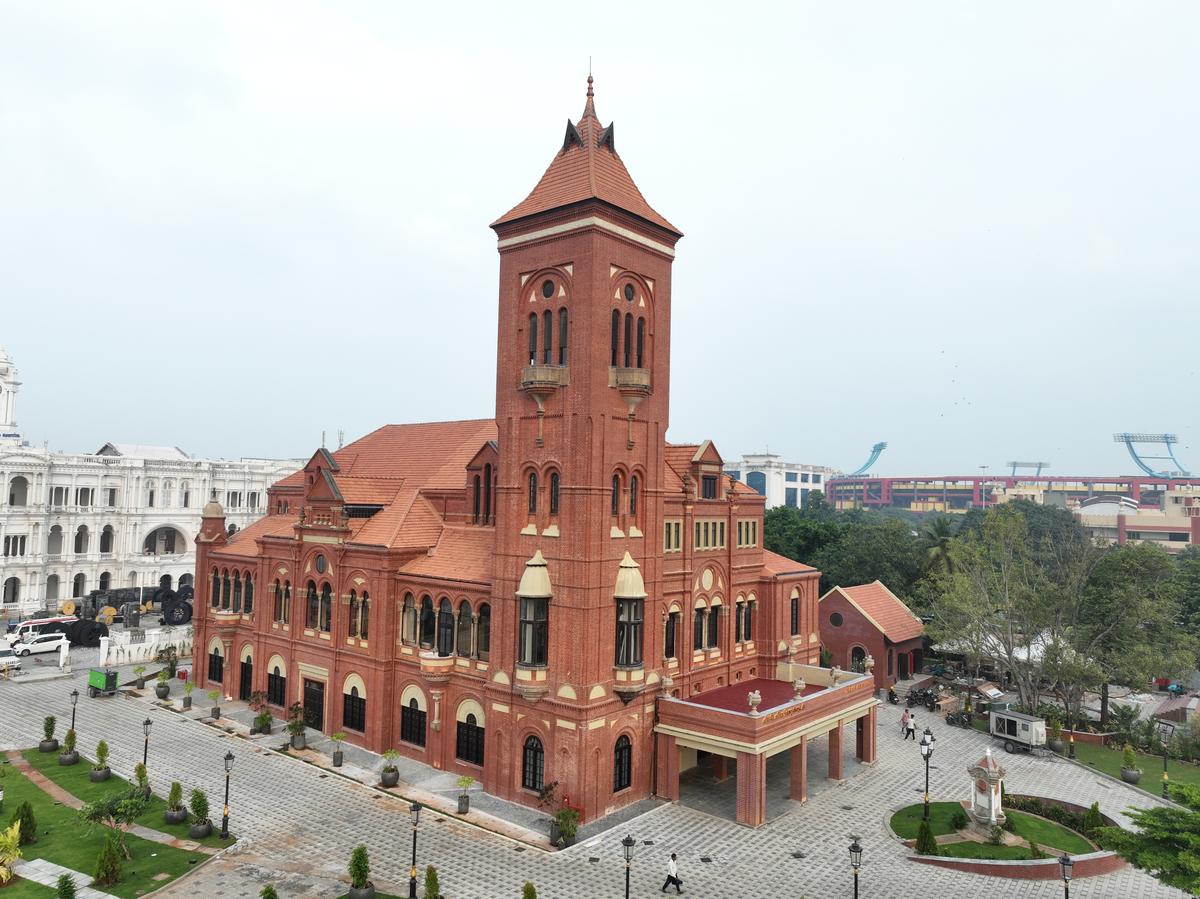
Recent project: Completed the restoration of the long-shuttered Victoria Public Hall in Chennai, reimagining the 19th-century landmark as a public museum and cultural space. For her, such projects are not endpoints but catalysts. “What makes it meaningful,” she notes, “is when people begin to imagine what else could be restored.”

Some structures are celebrated, restored; others are left to crumble quietly. Lambah, who has worked across monumental heritage and dense urban precincts for over three decades, recalls that when she began her practice in the mid-1990s, conservation in India was narrowly focused on a small, official list of monuments protected under the Ancient Monuments and Archaeological Sites and Remains Act. Streets, markets, neighbourhoods, vernacular buildings — the everyday fabric of cities — simply did not count.

Abha Narain Lambah

Abha Narain Lambah

That absence shaped her approach early on. “Conservation,” she argues, “cannot be limited to isolated buildings standing apart from social life. It must be understood as an urban, lived, and collective practice.” One of her earliest projects on Dadabhai Naoroji Road in Mumbai illustrates this ethos. Rather than treating the historic arterial street as a government-led beautification exercise, she worked directly with shopkeepers and residents, showing up week after week, talking through facades, materials, and identity. Over time, trust replaced suspicion. Eventually, 75 shopkeepers contributed from their own pockets towards restoring cobblestones, signage, and street character. It was conservation built not through authority, but through conversation — over many cups of chai.

The restored Victoria Public Hall in Chennai

The restored Victoria Public Hall in Chennai

“Most buildings cannot survive as static objects,” explains Lambah. “They need use.” Locked buildings deteriorate faster than inhabited ones: small cracks go unnoticed, water seeps in, roofs sag, pigeons and bats take over, and neglect compounds quietly. Occupied buildings, whether cultural centres or homes — are observed, maintained, and repaired. Their relevance extends their life.

Needs intervention: She often receives unsolicited messages from citizens suggesting future sites — “buildings waiting to be restored,” as one message put it, pointing to the Bharat Insurance Building on Mount Road. For Lambah, this quiet public yearning is the true measure of conservation’s success.

Aishwarya Tipnis, New Delhi

Family homes carry cultural value, too’

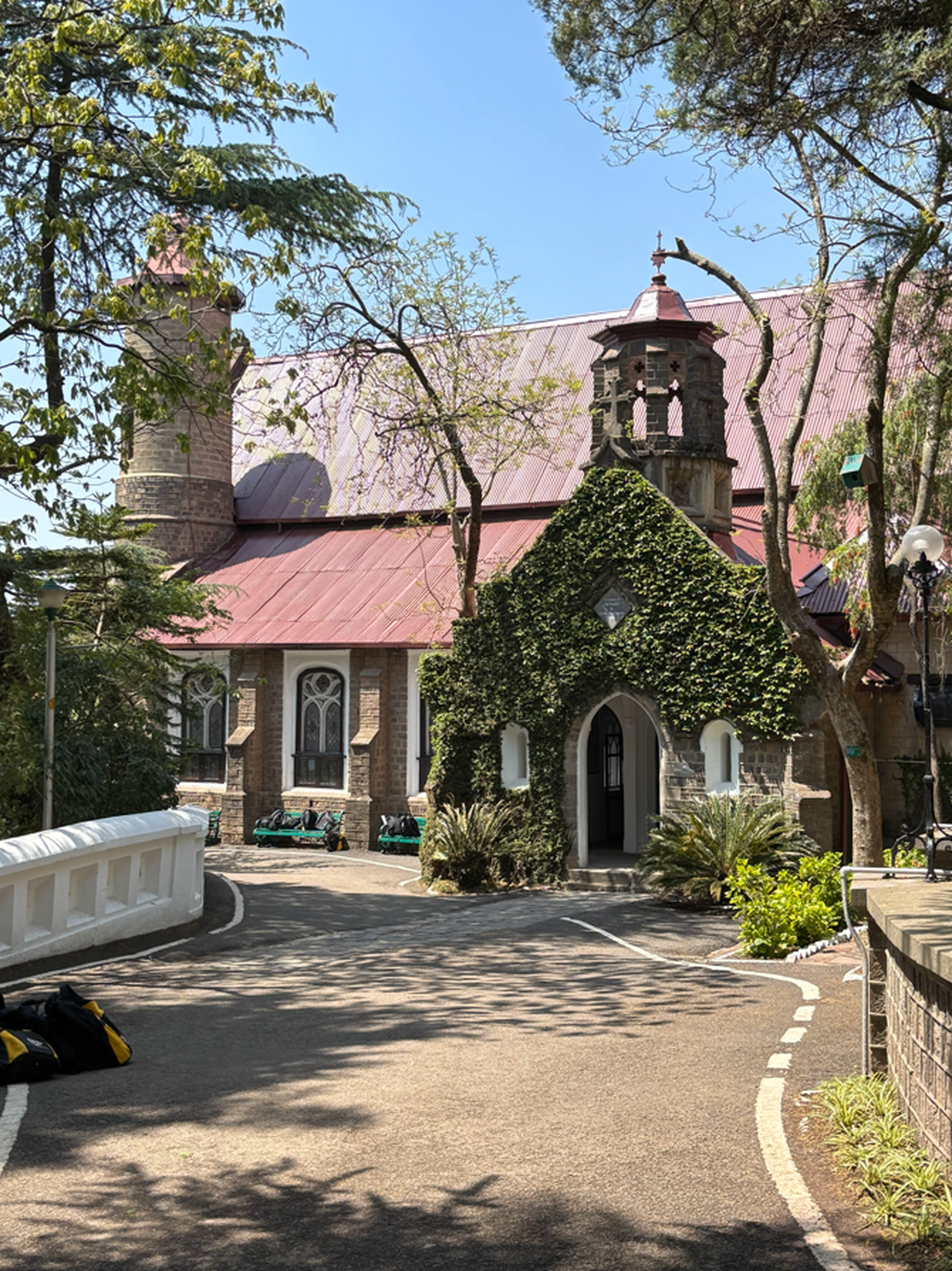
Recent project: Currently engaged in a conservation-led master plan for The Lawrence School, Sanawar, a historic hill-campus where heritage buildings, landscapes, and everyday student life are being treated as a continuous living system.

Once conservation moves beyond monuments, uncomfortable questions surface. Whose history is deemed worthy of protection? Who has access to conserved spaces? Who pays for upkeep — and who benefits from a building’s renewed visibility?

Tipnis, whose work often focuses on domestic and everyday heritage, argues that “heritage should not be restricted to royal lineages” or grand narratives. “Everyone has heritage,” she insists. “A middle-class family home, altered over generations, carries cultural value, too.” The problem is not lack of attachment — most people want to keep what they inherit — but lack of resources, time, and guidance.

Aishwarya Tipnis

Aishwarya Tipnis

Her approach emphasises care at an intimate scale. In projects such as the careful repair of a modest house in Old Delhi, working within tight budgets and with fragile Mughal-era bricks, Tipnis’ intervention is deliberately restrained. Cracks are stabilised, materials respected, and contemporary needs accommodated without visual drama. “When my design is invisible, conservation has succeeded,” she says. It is slow work: spending time with residents, understanding how people live now, and allowing the building to respond without pretending it belongs to another class, another century, or another imagination.

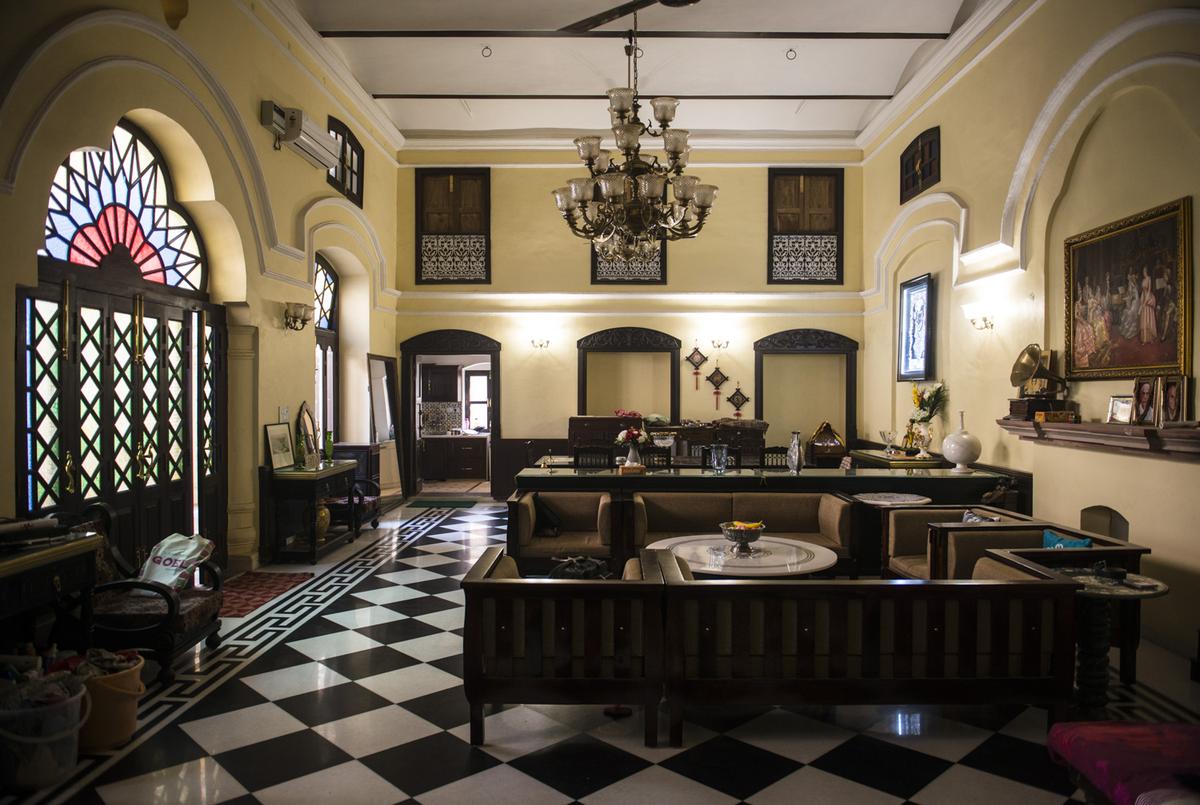
The drawing room of Seth Ramlal Khemka Haveli in Old Delhi after restoration

The drawing room of Seth Ramlal Khemka Haveli in Old Delhi after restoration

The Lawrence School, Sanawar

The Lawrence School, Sanawar

This ethos stands in contrast to both demolition-driven redevelopment and cosmetic heritage makeovers. It also foregrounds labour — craft knowledge, local skill, and long-term maintenance — as central to conservation’s ethics.

Needs intervention: Siliguri Town Station that’s a starting point for the Darjeeling Himalayan Railway. “It’s dilapidated and abandoned, and actually a UNESCO World Heritage Site.”

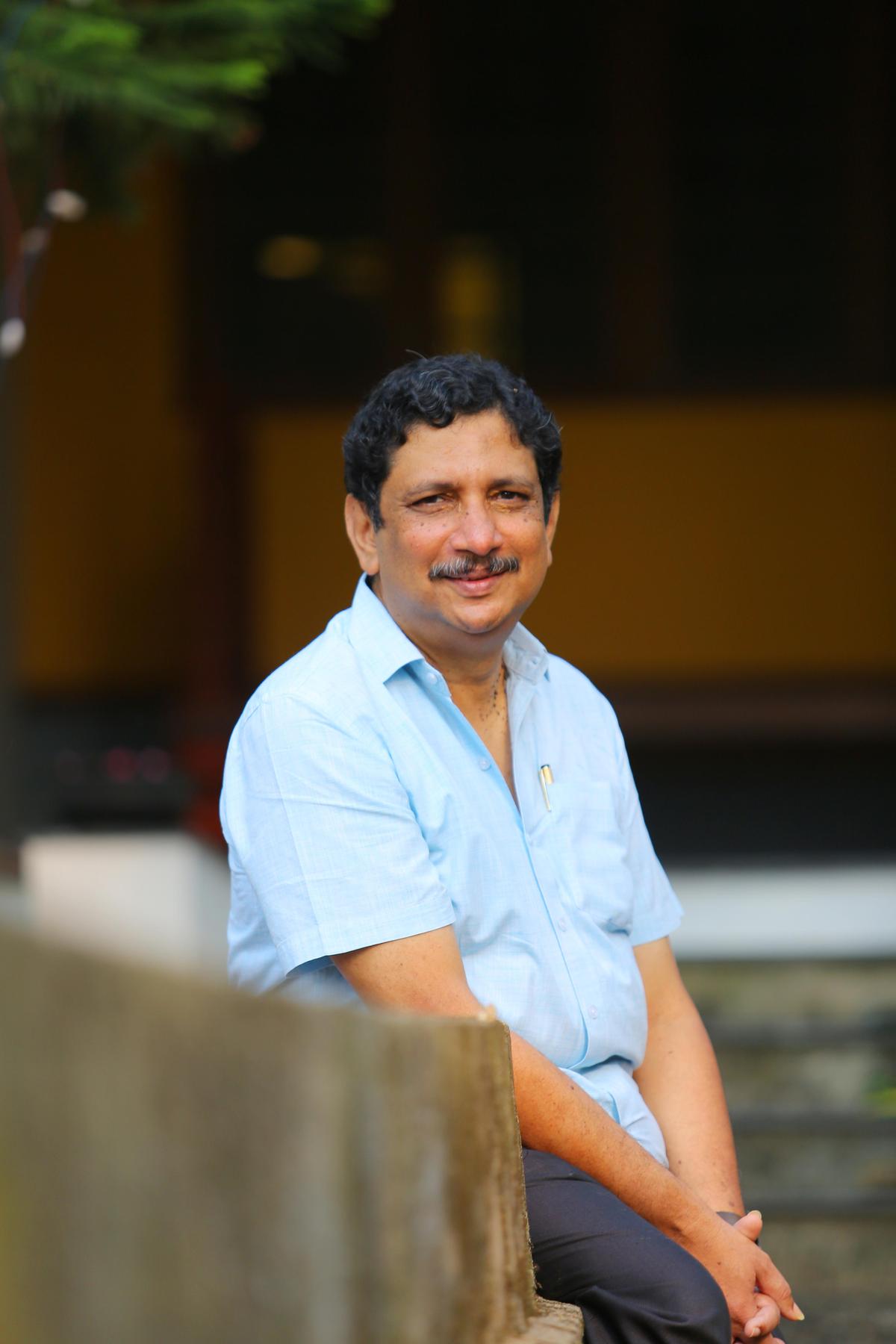
Benny Kuriakose, Chennai

Tap into India’s living craft tradition’

Recent project: An over 200-year-old property in Ayyavandlapalle village, Andhra Pradesh. “It’s an interesting case study. The person restoring the jointly owned ancestral house has ‘first right to buy’ if one of the family members wants to sell their share. It’s a good model for heritage houses in places like Chettinad.”

For Kuriakose, whose practice draws deeply from vernacular traditions and the legacy of architect Laurie Baker, conservation is inseparable from living systems. Vernacular buildings were never meant to last untouched for centuries; they were designed to be repaired, altered, and rebuilt. That cyclical understanding of time challenges modern obsessions with permanence and novelty.

Benny Kuriakose

Benny Kuriakose

“India still has a living craft tradition — masons, carpenters, tile-makers — whose knowledge is embodied rather than codified,” he says. “Conservation that relies solely on imported materials or technological fixes sidelines this intelligence.” Kuriakose’s work prioritises principles over style: climate responsiveness, local materials, skilled labour, and human comfort, while remaining pragmatic about contemporary needs. This is evident in projects such as The Bird at Your Window in Coimbatore, a residential development that draws from vernacular ideas of light, ventilation, verandahs, and landscape to create homes that reduce energy dependence.

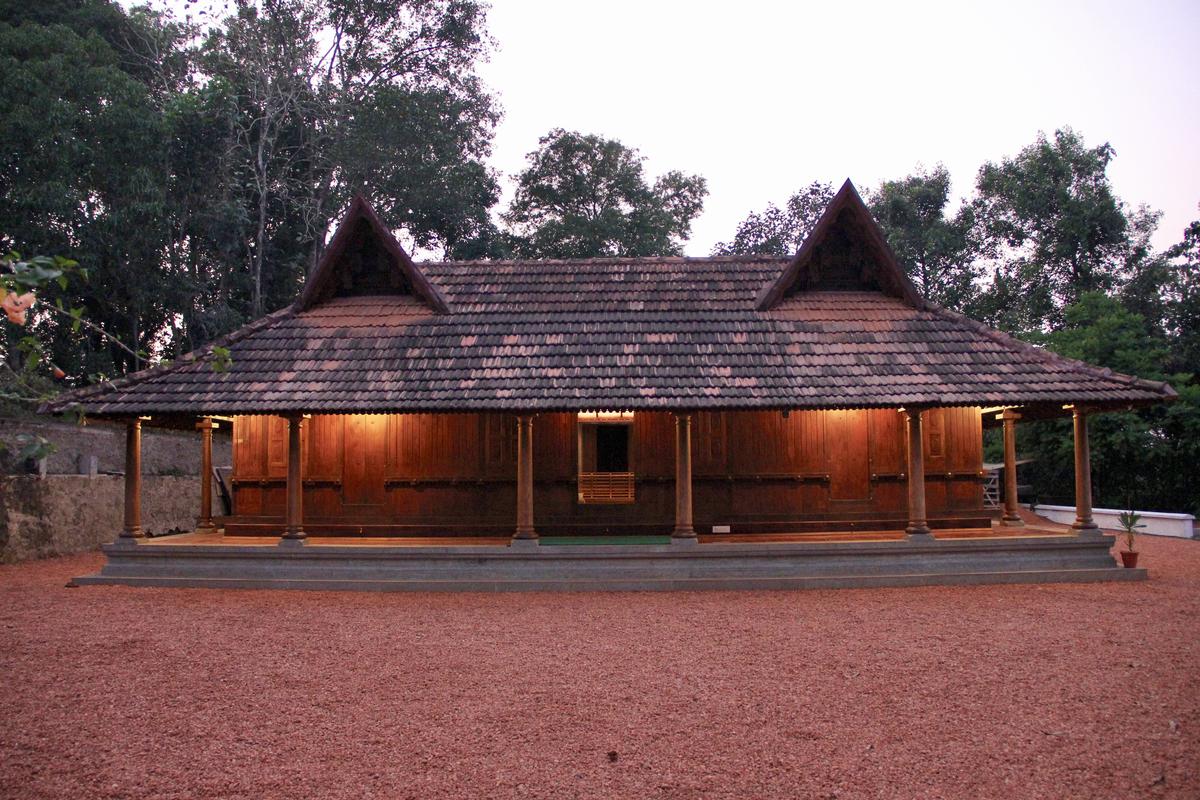
Panicker House, an over 300-year-old house building with timber walls in Thiruvalla, Kerala, which was conserved.

Panicker House, an over 300-year-old house building with timber walls in Thiruvalla, Kerala, which was conserved.

This also reframes sustainability, and justice. Paying craftspeople fairly, valuing how work is done rather than how quickly it is completed, and designing buildings that reduce long-term energy dependence are political choices — even when they appear modest.

Needs intervention: “I’d like to see ordinary old buildings being conserved for the future. I have seen so many disappear in Mylapore and George Town in Chennai.”

Why should the public care?

This goes far beyond cultivating heritage pride as sentiment. It is about architectural literacy (learning to read materials and spaces), environmental intelligence (recognising that reuse is often more sustainable than replacement), and cultural humility (accepting that not everything new is better). When restored buildings are opened to the public — railway stations lit sensitively, theatres reopened after decades of closure — something shifts. The restoration of Mumbai’s Royal Opera House by Lambah is a case in point. Once shuttered and fading from public memory, its reopening allowed older generations to reconnect with a shared cultural landmark, while introducing younger audiences to a space they had never known. Conservation succeeds not when a building looks pristine, but when it becomes part of everyday life again.

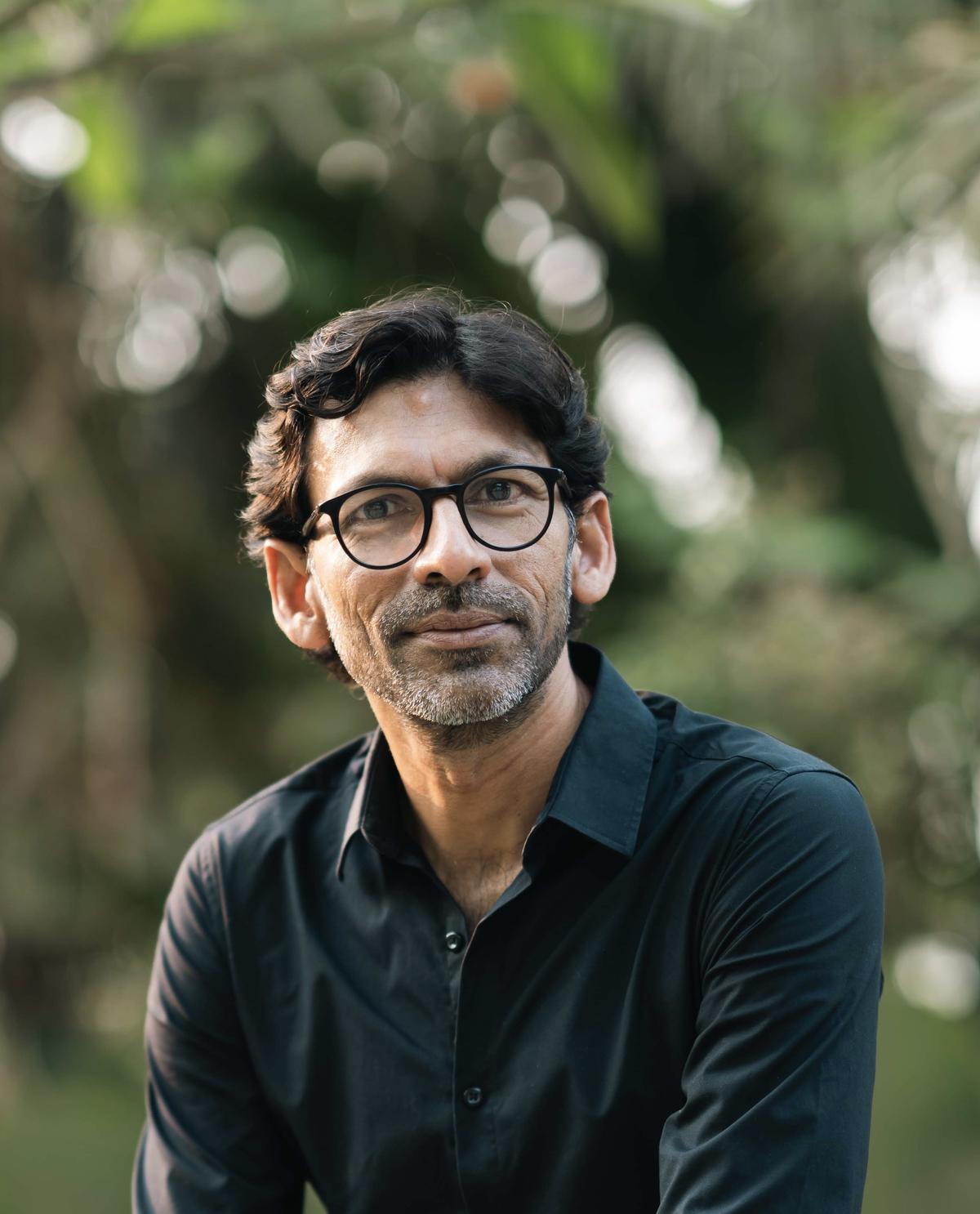
Raya Shankhwalker, Goa

See modern heritage as meaningful’

Recent project: “In Puducherry, we completed the conservation and adaptive reuse of a Franco-Tamil villa [into a café-garden bar]. By re-establishing its relationship with the street, it sets a precedent that could encourage neighbouring owners to follow suit.”

Urban conservation rarely advances on expertise alone. It requires public pressure. Shankhwalker, known for his work in Goa and his role in heritage advocacy, emphasises that legislation often follows activism, not the other way around. Cities like Panjim benefited from early designation of conservation zones, but many Indian towns still lack basic frameworks to protect even significant modern heritage.

Raya Shankhwalker

Raya Shankhwalker

“The recognition of Mumbai’s Art Deco precinct as a UNESCO World Heritage Site marked a shift not because the buildings were ancient, but because they forced a rethinking of value,” he says. “Modern heritage — cinemas, apartment blocks, civic buildings — does not wear the aura of antiquity. Its survival depends on people learning to see it as meaningful.”

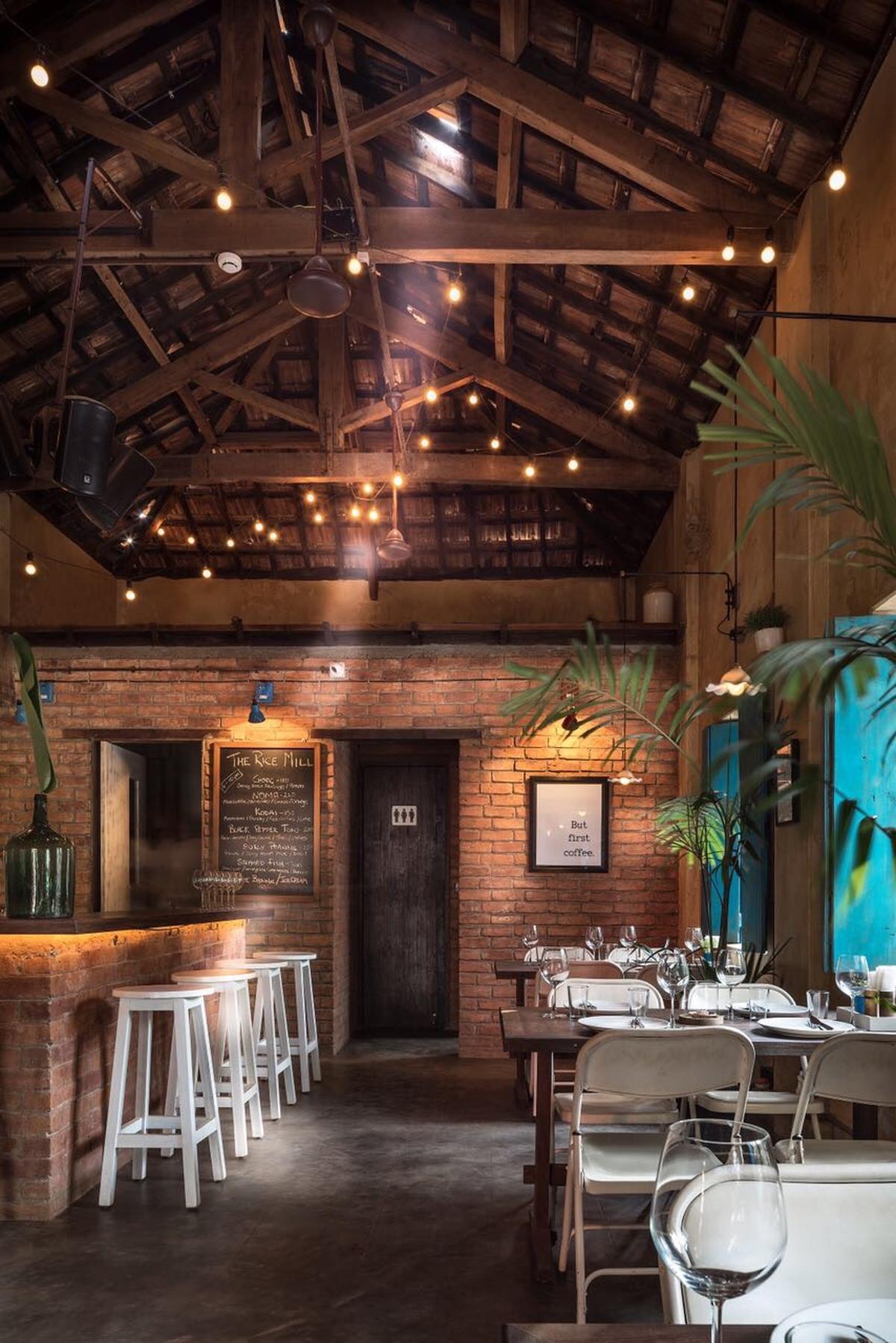
Small interventions can have disproportionate impact. A restored rice mill in Morjim, completed in 2024, exemplifies this approach. Originally built in the 1950s, the mill was adaptively reused as a café-bar, with its architectural elements carefully restored. Glass inserts in the Mangalore-tiled roof allow natural light to filter in; everyday objects from the mill’s past were repurposed as elements of décor. Now functioning as a café and jazz venue, it demonstrates how a modest structure can retain its spatial essence while becoming a contemporary gathering place.

Hacienda de Bastora

Hacienda de Bastora

The restored rice mill

The restored rice mill

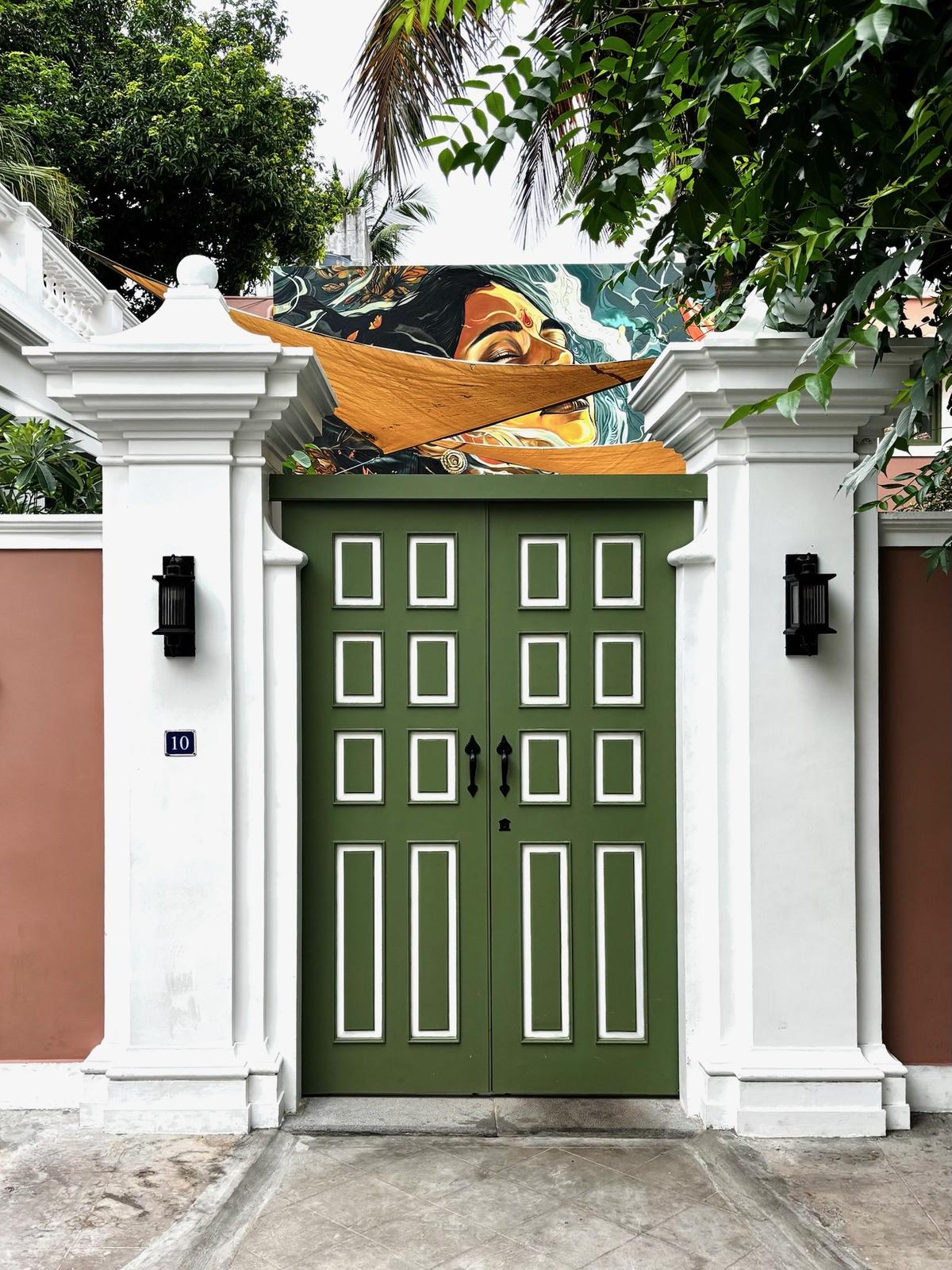
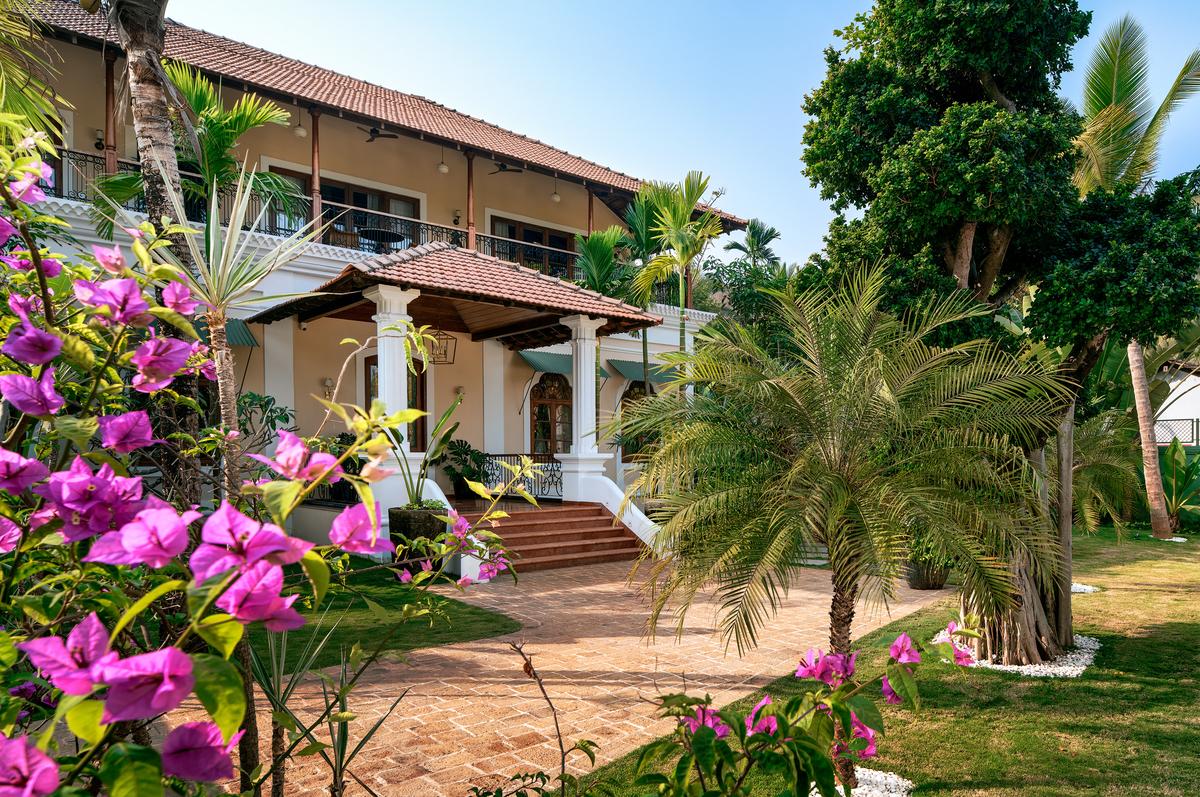
In Puducherry, his careful undoing of insensitive renovations in a Franco-Tamil villa — such as restoring the characteristic pillars integral to the architectural style — re-established its relationship with the street, setting a precedent that encouraged neighbouring owners to follow suit. Conservation here works contagiously: one repaired building changes how others are perceived.

Entrance to the Franco-Tamil villa

Entrance to the Franco-Tamil villa

Needs intervention: “The Massano De Amorim building in Panjim. Built around a large open ground, it needs urgent restoration as much for its architectural character as for its importance to the streetscape.”

The essayist-educator writes on culture, and is founding editor of Proseterity — a literary arts magazine.

Source link

Five ways in which technology will rewire life in 2026


Every year, technology asks us to look ahead. It rarely changes life in the way keynotes promise. But, lived experiences tell a different story. Technology that reshapes life seldom announces itself. It becomes a habit, then turns into dependency. As 2026 approaches, the most meaningful shifts are already underway. This year, technological advances will not look like breakthroughs. They will appear to be rather normal.

Following thus are five tech trends that will shape the year ahead:

McDonald’s has begun deploying artificial intelligence systems across hundreds of its Indian outlets to verify orders before they reach customers

McDonald’s has begun deploying artificial intelligence systems across hundreds of its Indian outlets to verify orders before they reach customers
| Photo Credit:
Special arrangement

Artificial intelligence

Artificial intelligence (AI) is set to remain widespread in 2026, but it will blend into the background rather than grab headlines. AI is turning from a feature to an infrastructure. Instead of being a flashy feature, AI will work behind the scenes power everything, from logistics and credit checks to customer support and fraud detection, often without users even realising it.

In India, this shift is most visible in large service businesses, where efficiency matters more than storytelling. McDonald’s has deployed AI across hundreds of its Indian outlets to verify orders before they reach customers. McDonald’s has also expanded its global AI development presence in Hyderabad, positioning India as a back-end hub for operational intelligence rather than a test market for flashy features.

Other large food chains in India operate with a similar, quiet dependence on a particular software. At Domino’s Pizza India, operated by Jubilant FoodWorks, operates a centrally managed, vertically integrated supply chains in which inventory levels across outlets are monitored through point-of-sale systems and regional commissaries. The planning is software-driven, built to reduce disruption and keep consistency at scale.

The same pattern appears across Indian enterprise software. Companies route customer support requests automatically, prioritise them based on urgency, and present them to human agents already sorted. Users get faster fixes. The intelligence stays out of sight.

By 2026, phones will increasingly serve as gateways to larger digital environments rather than standalone devices.

By 2026, phones will increasingly serve as gateways to larger digital environments rather than standalone devices.
| Photo Credit:
Special arrangement

Reconnecting with smartphone

For over ten years, smartphones have been at the heart of consumer tech, with annual advances in processors, cameras, and designs. By 2026, upgrades will feel incremental.

What matters is continuity across ecosystems. Phones will increasingly serve as gateways to larger digital environments rather than stand-alone devices. Some integrations count more than raw specifications. Meanwhile, software continuity and ongoing support will quietly replace novelty as indicators of quality.

Camera manufacturers signal this shift clearly. Sony’s Alpha cameras, including models sold in India, are built around workflows that assume the presence of a smartphone. Images are transferred wirelessly to mobile apps, synced to cloud services, and edited or shared on phones before reaching larger screens. In hospitality, a similar consolidation is visible. Taj Hotels offers a mobile application that brings together bookings, loyalty benefits, payments, and service requests within a single interface. The device matters less than the continuity it enables.
By 2026, the smartphone will still be indispensable. It will just not surprise anyone. Its value will lie in how quietly it holds everything else together.

In 2026 privacy will shift from being a company’s claim to a feature that products are designed to support

In 2026 privacy will shift from being a company’s claim to a feature that products are designed to support
| Photo Credit:
Special arrangement

The privacy promise

For years, privacy existed mainly in policy documents and disclaimers that few users read. By 2026, this gap will close. Privacy will shift from being a company’s claim to a feature that products are designed to support.

In India, this change is driven more by infrastructure than by rhetoric. Digital payments platforms exemplify this: PhonePe and Google Pay function within a regulatory framework that mandates explicit, purpose-specific consent for transactions. Permissions are action-specific, limiting unnecessary data collection and compliance risk. This approach reflects the intent of the Digital Personal Data Protection Act, even as its implementation remains contested. The now-revoked mandatory Sanchar Saathi app, along with broader debates about surveillance, has kept location data and app permissions in view.

Travel platforms have adapted similarly. Companies like MakeMyTrip publicly specify data retention and usage policies that limit how long personal and location information is stored once a trip concludes. Data is collected to complete a booking, then dismissed.

Indian software firms take a more precise and more deliberate stance. Zoho, an enterprise software company, has repeatedly emphasised avoiding advertising-centric models and limiting data collection by design.

Restaurants send a quieter signal. QR menus remember for the visit, then forget.

These examples lead to one conclusion: In India, privacy survives when it is engineered into systems rather than promised in statements.

Hospitality operators also prioritise practicality, with hotel chains like ITC Hotels providing electric vehicle charging as a convenience rather than a feature, emphasising reliability over scale

Hospitality operators also prioritise practicality, with hotel chains like ITC Hotels providing electric vehicle charging as a convenience rather than a feature, emphasising reliability over scale
| Photo Credit:
Special arrangement

Pragmatic transition

For years, electric mobility in India was seen as aspirational, symbolising cleaner cities, futuristic vehicles, and progress. The fleet, delivery route, and bus depot all play a key role in building a strong persuasive case.

Delivery services like Zomato and Swiggy have discussed deploying electric two-wheelers, with vehicle choices driven by uptime, maintenance, and charging reliability, rather than environmental impact. Public transport reflects this trend, with agencies like BEST highlighting the importance of depot charging and battery performance over range claims. Hospitality chains, like ITC Hotels provide electric vehicle charging as a convenience rather than a feature.

Employee code

Workplace technology used to promise efficiency, but it often meant longer days and busier schedules. By 2026, this tension becomes too significant to ignore. The next turn is quieter: tools that reduce interruption, protect focus, and keep decisions legible. In India’s services sector, large employers such as Infosys and Tata Consultancy Services have acknowledged churn, changing expectations, and have expanded hybrid work with asynchronous collaboration.

Meetings are still happening, but more work now moves through written context, with decisions recorded once instead of repeated endlessly. Globally, GitLab treats documentation as the default, with meetings optional rather than inevitable.

What links these transformations is not speed but stability, as technology transitions from just a spectacle to a fundamental part of everyday infrastructure. By 2026, the importance of progress will shift from its appearance to its reliability.


Source link