





Life & Style

Brews and beverages shine at Pandhal Coffee & Brew in Thiruvananthapuram


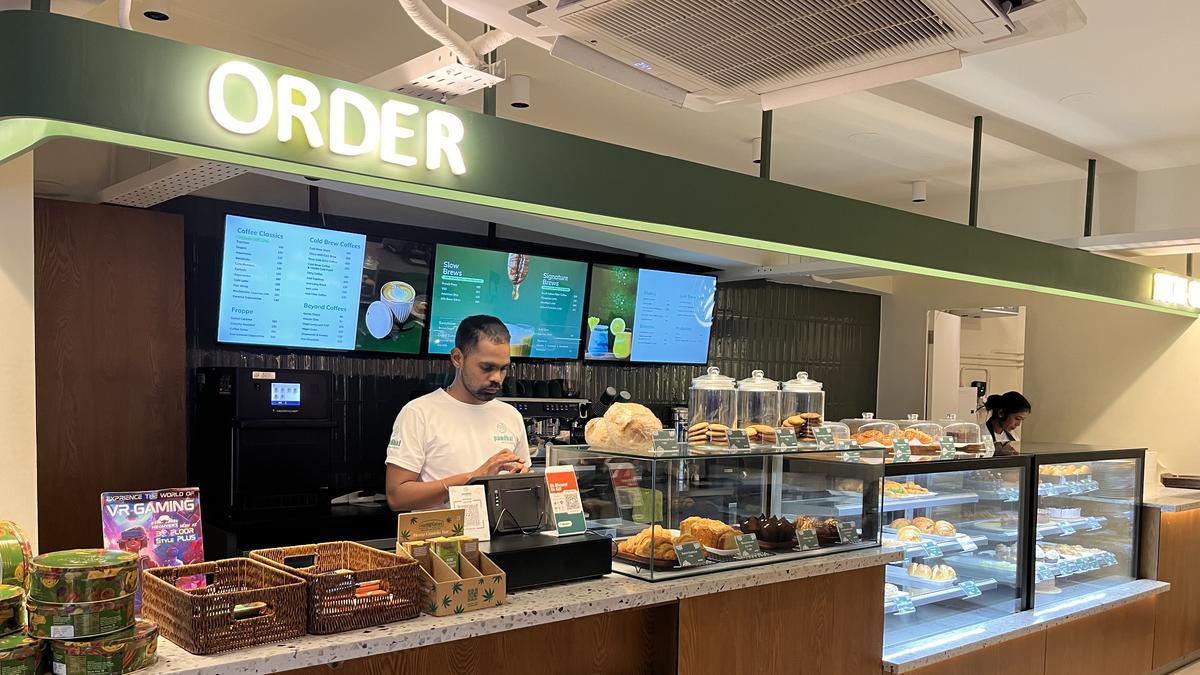
Pandhal Coffee & Brews in Kowdiar, Thiruvananthapuram

Pandhal Coffee & Brews in Kowdiar, Thiruvananthapuram
| Photo Credit: SPECIAL ARRANGEMENT

Against the backdrop of overlapping coffee fragrances, blended with a sound track of grinding, whistles of steam and keyboards clicking, barista Afeef is calmly preparing a slow brew coffee called V60 tableside at Pandhal Coffee & Brews at Kowdiar, Thiruvananthapuram.

Cakes, pastries and other sweets inside the illuminated glass shelf overlook as Afeef wets a folded filter paper, placed inside a funnel. Coincidentally, it is the angle at which the filter paper is folded and kept that gives the coffee its name.

This contraption is then placed atop a glass coffee pot, set on a weighing scale for accuracy.

Hot water being poured into the ground coffee while preparing the V60

Hot water being poured into the ground coffee while preparing the V60
| Photo Credit:
SPECIAL ARRANGEMENT

“Four things are important while making a V60— temperature of the water, grain size, pour timing and the ratio between ground coffee and hot water,” Afeef says, putting 18 grams of medium coarse ground coffee from medium dark roasted Arabica beans on the filter paper. He slowly pours around 40 ml of water, 85 degrees Celsius hot, on the ground coffee and waits for a few seconds. This is called the blooming period as the coffee releases carbon dioxide making it more flavourful. Water is poured three or four times at regular intervals leaving around 270 ml of coffee in the pot, before being served.

V60 coffee being made

V60 coffee being made
| Photo Credit:
SPECIAL ARRANGEMENT

It is important to rinse your palette with hot water before you taste this manually brewed beverage that is ideally consumed without any sugar. The rising steam carries an earthy fragrance, which disappears almost instantly. The first sip of the V60 has a mellow bitter taste that does not overstay its welcome on your palette, as a hint of sweetness slowly comes through. A sip of water and the sweet note sings sweeter, leaving your palette clean. Even if you are not a “coffee lover”, the V60 is worth a try at ₹200.

The menu at Pandhal Coffee & Brew also features other slow brews such as French press, American drip and a 24-hour milk brew, all exclusively available at this outlet. This lone branch in the State capital is the Kochi-based brand’s sole outlet focusing on coffee and beverages. “We wanted to do something beyond cafes and cake shops, which brought us to this concept,” says the branch’s assistant manager Giby Varghese.

Their menu also has plant-based and non-plant-based shakes, exclusive to the branch. These include salted caramel, cheesecake, banana foster (available in both options) and blue spirulina and pineapple, with rates starting from ₹250.

The Blue spirulina and pineapple shake is a plant-based shake containing spirulina, a type of blue-green algae, rich in protein, vitamins, minerals, carotenoids, and antioxidants. It also has pineapple, coconut milk and coconut puree, which act as a base for the beverage. Served on a glass rimmed with sugar crystals and a pineapple wedge, the drink is not a typical milkshake. It comes off as a cross between a slushie and a smoothie. The blue spirulina used in powdered form does not add any flavour to the food, allowing tropical fruits like pineapple and coconut to shine. The shake is refreshing and can even be a meal on its own.

Blue spirulina and pineapple shake from Pandhal Coffee & Brew

Blue spirulina and pineapple shake from Pandhal Coffee & Brew
| Photo Credit:
SPECIAL ARRANGEMENT

Their signature brews also include South Indian filter coffee, cinnamon latte, hazelnut latte, and salted pistachio latte, starting from ₹120, and are available with dairy substitutes like coconut milk and oats milk.

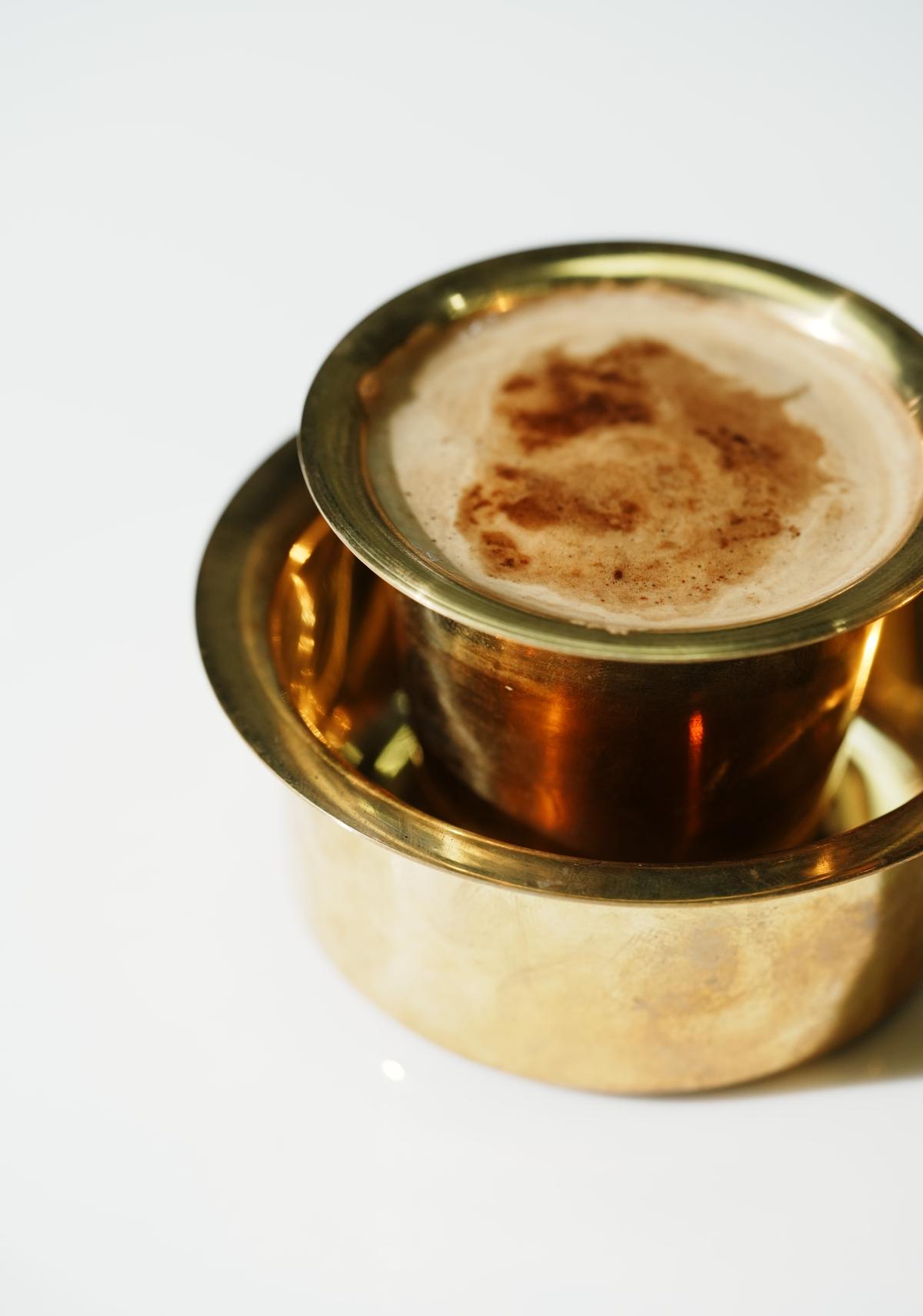
South Indian filter coffee from Pandhal Coffee & Brew

South Indian filter coffee from Pandhal Coffee & Brew
| Photo Credit:
SPECIAL ARRANGEMENT

“One of our most popular coffees recently is the South Indian filter coffee made with coconut milk,” says Giby. The filter coffee is served in the typical metal filter coffee tumbler set and has a thinner consistency compared to its classic version. However, the coffee is stronger and does not need any additional sweetener. It has 20 ml of decoction and 100 ml of coconut milk, resulting in an unfamiliar, yet welcome fragrance from the hot beverage.

A fudge tart with a caramel filling containing peanuts and raisins and a buttery, biscuity, flaky crust can be a good combination with the beverages.


Source link

How this 8-ingredient bedtime drink helped her in weight loss


To make this drink, you need cardamom, fennel seeds, asafoetida, cucumber, lemon slices, ginger juice, and chia seeds. Roast cardamom, fennel seeds, and hing for about 10 minutes on low heat. Grind this mixture into a coarse powder. In a bottle, add this powder, chopped cucumber, lemon slices, ginger juice, and pre-soaked chia seeds. Fill the bottle with water, shake well, and your bedtime drink is ready.


Source link

Prince Harry-Meghan Markle call for stricter social media laws, unveil memorial for kids lost to online harm


Prince Harry-Meghan Markle call for stricter social media laws, unveil memorial for kids lost to online harm

Of the many causes they support, Prince Harry and Meghan Markle have been vocal about stronger social media protection especially for kids to save them from online harm. Speaking on these lines, the Duke and Duchess recently urged the need for stronger protections for children online, saying that “not enough is being done” to address the growing dangers of social media.
During a heartfelt event in New York City on April 24, Harry and Meghan unveiled the Lost Screen Memorial — which is a powerful installation made up of 50 glowing, smartphone-shaped boxes, as per reports. Each box features the photo of a child whose life was tragically lost, with families believing social media played a role in their deaths.
Talking about the idea behind the memorial, Harry told BBC Breakfast, “We want to make sure things change, so no more kids are lost to social media.”
“Life is better off social media,” he added, sharing how grateful he is that his own children– Archie and Lilibet– are still too young to be online.
At an Archewell Foundation event, Harry opened up about the complex reality parents face these days. “The easiest advice is to keep your kids away from social media — but the sad truth is, kids who aren’t online often get bullied because they’re left out,” said Prince Harry.
The memorial, open to the public for 24 hours, was created with the help of grieving parents from the Archewell Foundation’s Parents’ Network. For the unversed, it is a support group for families affected by social media harm. These brave parents shared their children’s stories in hopes of bringing a positive change in the society and preventing more kids from being harmed by social media.
Harry and Meghan have been strong advocates for those families, also backing a push for tech companies to give grieving parents access to their child’s phone data — a move some firms have resisted, citing privacy laws. Talking about it, Prince Harry further said, “You’re telling a mum or dad they can’t know what their child was doing online — because of privacy? That’s just wrong.”
Meghan too echoed Prince Harry’s sentiments, calling this a global issue that affects every parent. “If there’s one thing we should all agree on, it’s that children deserve to be safe… These parents are speaking out not just from grief, but from hope — hope that no one else has to go through what they’ve faced,” she said.
Meghan also posted a video about the NYC Lost Screen Memorial on her social media. Her post read, “An important and emotional evening last night in NY as we unveiled #NoChildLostToSocialMedia with parents and families who have lost their children to online harms. My husband and I have worked with many of these families for the last several years, and through The Archewell Foundation and our program The Parents’ Network, we support them in their grief and stand with them in their call for action.”
It further read, “No matter how divided the world may be, we can all agree that we want our children to be safe from harm. That is a universal truth. If you choose to be on social media, let’s be the example for our youth, sharing goodness and kindness and positivity. Let’s tell our children that they are enough, and that this life is worth living. And let’s ensure that no child is lost to social media. With your support, we can effect change.”
What are your views on the negative effects of social media? Do you think there’s a need for stricter laws to safeguard kids online? Tell us in the comments section below.

Prince Harry DESPERATE, Charles UNMOVED; The Royal Reason Behind King’s Silence REVEALED


Source link

No Agenda Space: a movement of silent companionship growing across India


In late March, Rakshitha A., 32, went to a stranger’s house to read a book. She settled on a sofa next to a sleepy dog, only getting up to make herself a cup of tea. Soon, she was joined by another unfamiliar woman who positioned herself at the desk in the cosy living room. The women occasionally smiled or nodded at each other but rarely spoke. While this may seem strange to most, it is a glimpse into a silent movement where women are creating safe spaces for each other.

It was in January this year that 36-year-old Meghna Chaudhury, training to be a therapist, decided to open up her home in Indiranagar, Bengaluru, to women and non-binary people, to work, paint, sleep, read, and more importantly, do nothing, if they so wished. Her post about this ‘No Agenda Space’ blew up on social media, and in just a day, 20-30 women had reached out to Chaudhury asking if they could use the space.

The idea for this initiative sparked from an unexpected afternoon of “non-talking companionship” between three of her friends, who were strangers to each other, and happened to come over on the same day in mid-January. Women existing in each other’s company without any expectations, or labour demands, made Chaudhury aware of the lack of such spaces. So, she created one.

“I named it No Agenda Space because it’s just that — a third space that isn’t their home or workplace and doesn’t demand anything, not even a conversation, from anyone who identifies as a woman,” she says. “This space is completely anti-performative small talk. But it’s often expected of women. I wanted to create a space where they can just exist.” Chaudhury’s two-bedroom apartment is open to strangers five days a week from noon to 4:30 p.m., after prior registration online. People are free to use her WiFi, grab snacks from the kitchen or even prepare something for themselves.
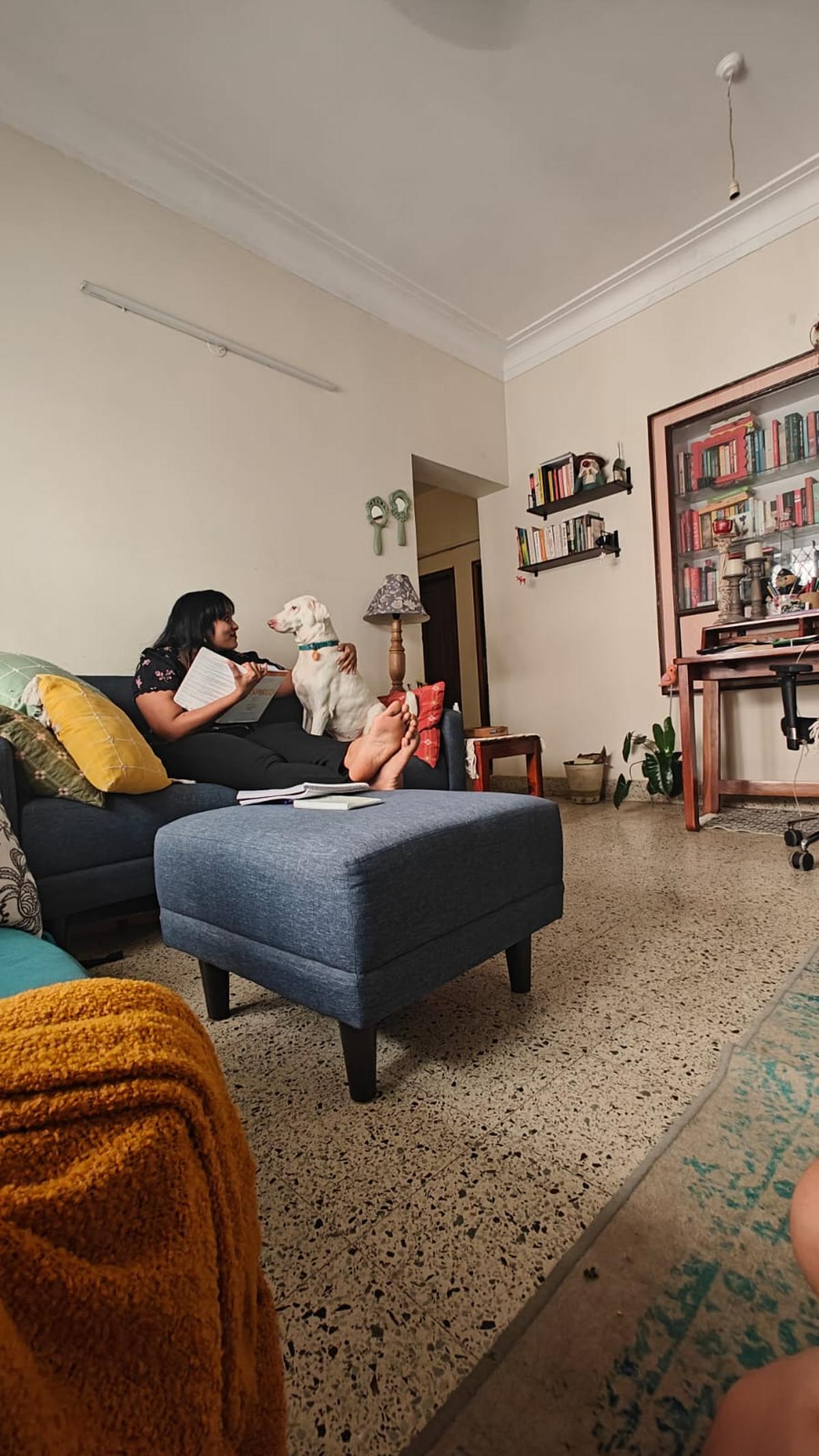
A visitor in Meghna Chaudhury’s No Agenda Space.

A visitor in Meghna Chaudhury’s No Agenda Space.
| Photo Credit:
Meghna Chaudhury

Starting this month, she is asking for a contribution of ₹80 per head to cover costs like electricity, water and so on. For safety reasons, Chaudhury has made it mandatory for people to bring an identity proof. She also ensures there are two or three women visiting at the same time. Her dog, Millie, is often a participant at these sessions and can be found cuddling up with a stranger or taking a snooze with another.

One thing Chaudhury is clear about: there will be no hosting. “It’s my rejection of the idea of a woman having to host. I don’t want the responsibility of catering to other people’s needs in my own home. I am tired of that,” she explains.

The need for a third space

Increasingly, across India, many people like Chaudhury live in the shadows of urban loneliness and find it exhausting to maintain adult friendships. There is also the constant labour that women, especially, have to do in any space. Be it physical or emotional, something is always asked of their presence. “Among all these responsibilities, you don’t get time for yourself. So, sometimes leisure is just sleeping without answering five phone calls from your children, partner or colleague,” says Chaudhury.

For the women who have used Chaudhury’s place in the last three months, it has been about not having to perform an identity and freeing themselves of clingy gendered impositions. For instance, while one woman came to take a nap, another painted, and two others who had lost their pets hung out with Millie. Interestingly, one woman was recommended the space by her therapist, while another came there to attend an online therapy session. “It made me think about how women often don’t feel safe enough to do that in their own homes,” says Chaudhury.

For people with ADHD (attention deficit hyperactivity disorder) or for those on the autism spectrum, such third spaces are helpful and nurturing, says Rinkle Jain, a neurodivergent psychologist and psychotherapist based in Mumbai. “Often, they can’t just exist the way they want. They can’t constantly get up and walk around in their workspace, or expect a quiet environment at home. So, having a third space gives them a sense of agency. It’s almost like they can breathe better,” she explains.

A refuge during the pandemic

However, the idea of providing a third space for women “to do nothing” is not entirely new. Back in 2021, at the height of the pandemic, Indu Antony set up Namma Katte in Bengaluru because she wanted to offer a safe space for women in view of the rising number of domestic violence cases.
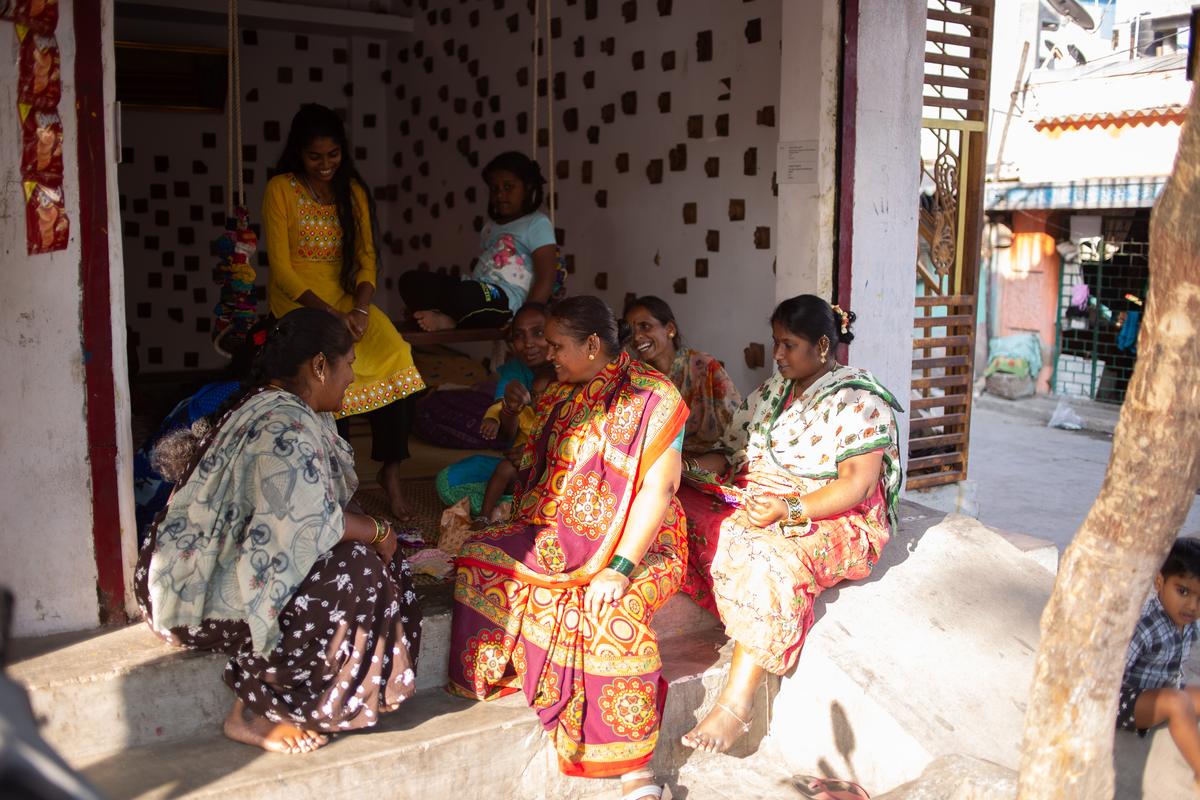
Women take a pause at Namma Katte in Bengaluru.

Women take a pause at Namma Katte in Bengaluru.
| Photo Credit:
Indu Antony

“There was no third space where women could go without having to spend money. Namma Katte [meaning ‘our place’ in Kannada] gives them a place to exist without any questions from morning to evening,” says Antony. Since Namma Katte is situated in a public area with no doors — it used to be a shop once — Antony hopes that the next generation will see women simply resting in full visibility, something she had never witnessed growing up.

Antony points out the socio-economic disparity that exists between the people who visit Namma Katte and No Agenda Space. “When someone from the upper class starts a space like this, it garners a lot of attention but it’s not the same for people from underprivileged sections,” she says. But Antony is happy to see more women creating safe spaces for each other and hopes social barriers of caste and class can be eliminated someday.
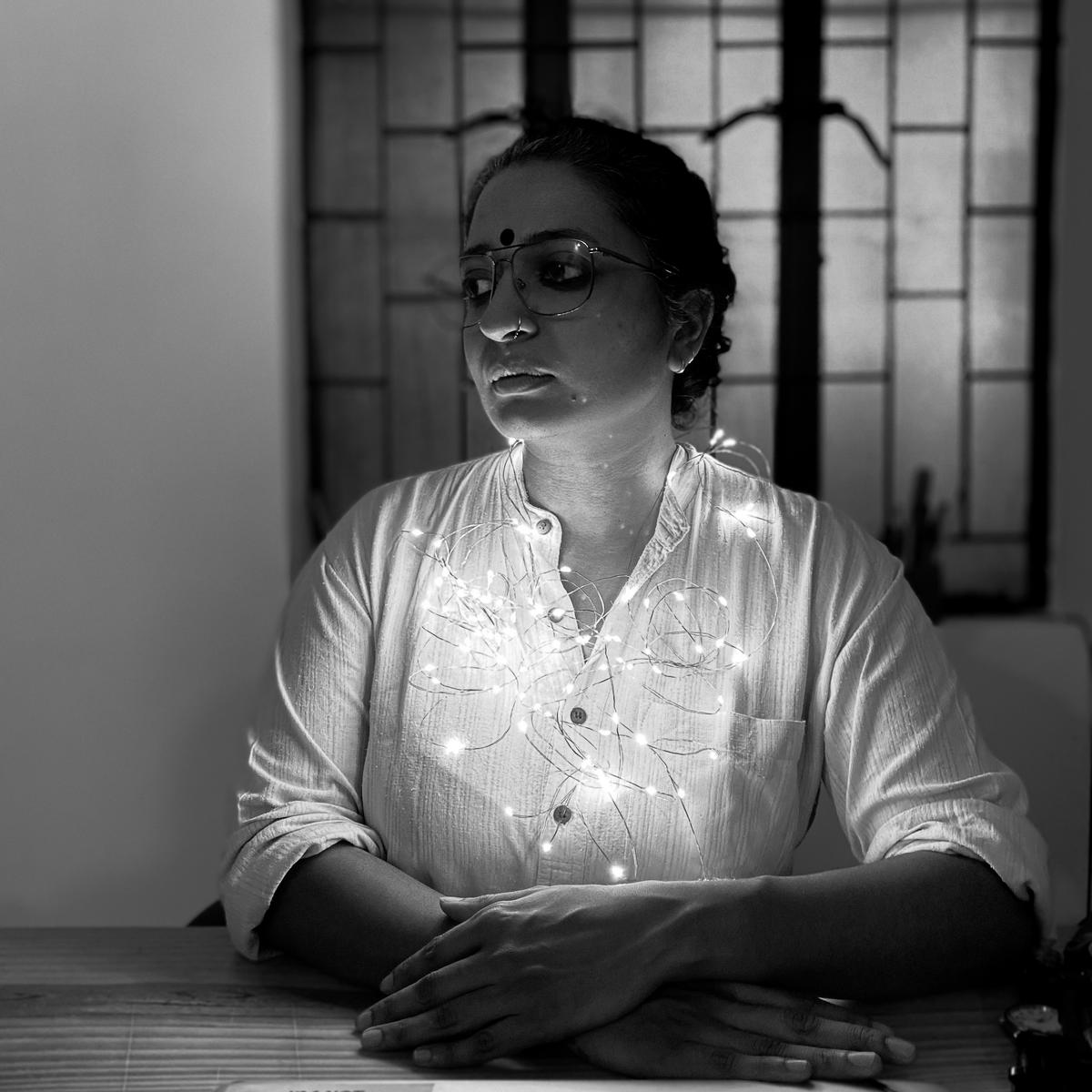
 Indu Antony, founder of Namma Katte in Bengaluru.

 Indu Antony, founder of Namma Katte in Bengaluru.
| Photo Credit:
Vivek Muthuramalingam

A growing movement

Inspired by Chaudhury, women across Bengaluru and a few in other cities have decided to create No Agenda Spaces. For instance, Vidhu Vinod who lives in Kaggadasapura, Bengaluru, is inviting people to use her home a few days a week to “come chill”. “Women, especially, don’t have enough safe third spaces like men do, to just be themselves. The fact that this idea has picked up and we are creating a network of such spaces for each other shows how big a need this was,” says Vinod. 

In Mumbai, women can go to Shruthi Jahagirdar’s home one Sunday every month for four hours to work on their dreams. “I know how expensive the city is and working on your startup or idea in cafes is not something many can afford. Since I live by myself, the least I can give other women is four hours in my house to do whatever they want in a no-judgment zone,” she explains.

Arundhati Gaddala, who lives in Hyderabad, hopes to offer silent companionship to women through a No Agenda Space. “I want to just be there when someone needs help to get through something they might be struggling with,” she says.

Seeing how quickly and eagerly women have shown up for each other, Chaudhury feels overwhelmed. “This space has made me realise that even without words, there can be sisterhood,” she says.

The independent journalist specialises in gender, culture, and social justice.


Source link

‘ChatGPT saved my life’: Woman says AI detected cancer before doctors did |


‘ChatGPT saved my life’: Woman says AI detected cancer before doctors did

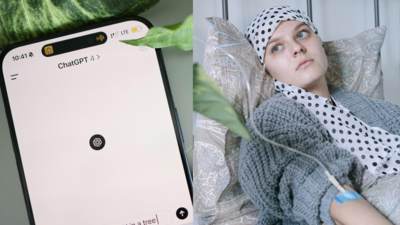
A 40-year-old woman who splits her time between North Carolina and the US Virgin Islands claims ChatGPT helped detect her hidden cancer after doctors initially misdiagnosed her symptoms as rheumatoid arthritis and acid reflux. Lauren Bannon turned to the AI chatbot when doctors dismissed her rapid weight loss and severe stomach pains, leading to the discovery of thyroid cancer.
Bannon, who owns a marketing company, decided to consult ChatGPT after becoming frustrated with her medical care. The AI platform suggested she might have Hashimoto’s disease and recommended specific thyroid tests.
Despite her doctor’s skepticism about the possibility of Hashimoto’s disease due to no family history, Bannon insisted on getting tested. The subsequent thyroid scans revealed two small cancerous lumps in her neck.

hh (1610)

“I felt let down by doctors. It was almost like they were just trying to give out medication for anything to get you in and out the door… I needed to find out what was happening to me, I just felt so desperate. I just wasn’t getting the answers I needed,” Bannon told Mirror.

“So that’s when I pulled up ChatGPT. I already used it for work. I started typing what mimics rheumatoid arthritis and it popped up saying ‘you may have Hashimoto’s disease, ask your doctor to check your thyroid peroxidase antibody (TPO) levels’. So I went to my doctors and she told me ‘I couldn’t have that, there was no family history of it’ but I said ‘just amuse me’.”
“I didn’t have the typical symptoms of Hashimoto’s disease, I wasn’t tired or feeling exhausted. If I hadn’t looked on ChatGPT, I would’ve just taken the rheumatoid arthritis medication and the cancer would’ve spread from my neck to everywhere else.”

“The doctor said I was very lucky to have caught it so early. I know for sure that cancer would’ve spread without using ChatGPT. It saved my life. I just knew that something was wrong with me. I would’ve never discovered this without ChatGPT. All my tests were perfect.”
Bannon now advocates for others to use AI platforms for health concerns while exercising caution. “I would encourage others to use Chat GPT with their health concerns, act with caution but if it gives you something to look into, ask your doctors to test you. It can’t do any harm. I feel lucky to be alive.”
The early detection of her cancer through ChatGPT’s suggestion allowed for timely medical intervention, potentially preventing the spread of the disease to other parts of her body.

When Manisha Koirala shocked everyone with her post saying ”My husband has become my enemy’


Source link

DC visits Raichur fort to assess infrastructure needed to attract tourists


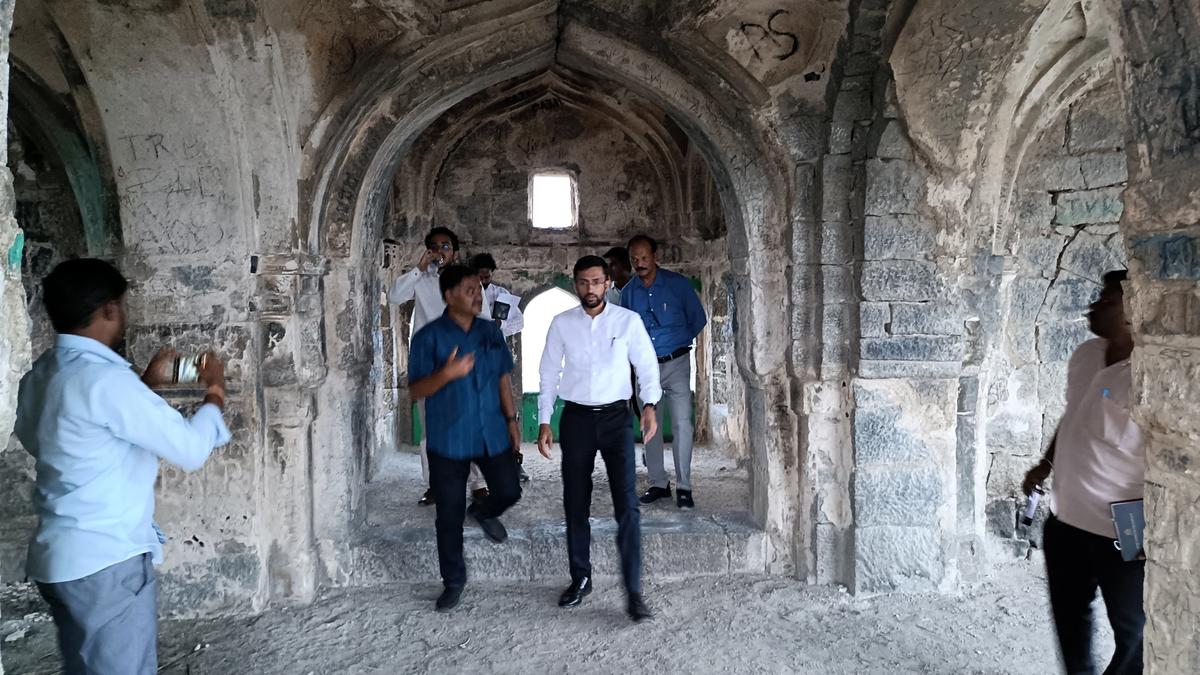
Deputy Commissioner Nitish K. visited the fort in Raichur to assess the steps needed for conservation and improvement of basic amenities at the historic site, on April 22, 2025.

Deputy Commissioner Nitish K. visited the fort in Raichur to assess the steps needed for conservation and improvement of basic amenities at the historic site, on April 22, 2025.
| Photo Credit: SPECIAL ARRANGEMENT

Deputy Commissioner Nitish K. inspected key heritage sites in Raichur on April 22, focusing on improving basic infrastructure at the historic Mecca Darwaza and the hilltop fort area near the city bus stand.

The Deputy Commissioner first visited Makka Darwaza to assess the possibilities for preservation and development. During the visit, he asked officials from the Raichur city corporation and the Planning Director of the Urban Development Cell to prepare a comprehensive report outlining the measures needed to enhance basic amenities and protect the site.

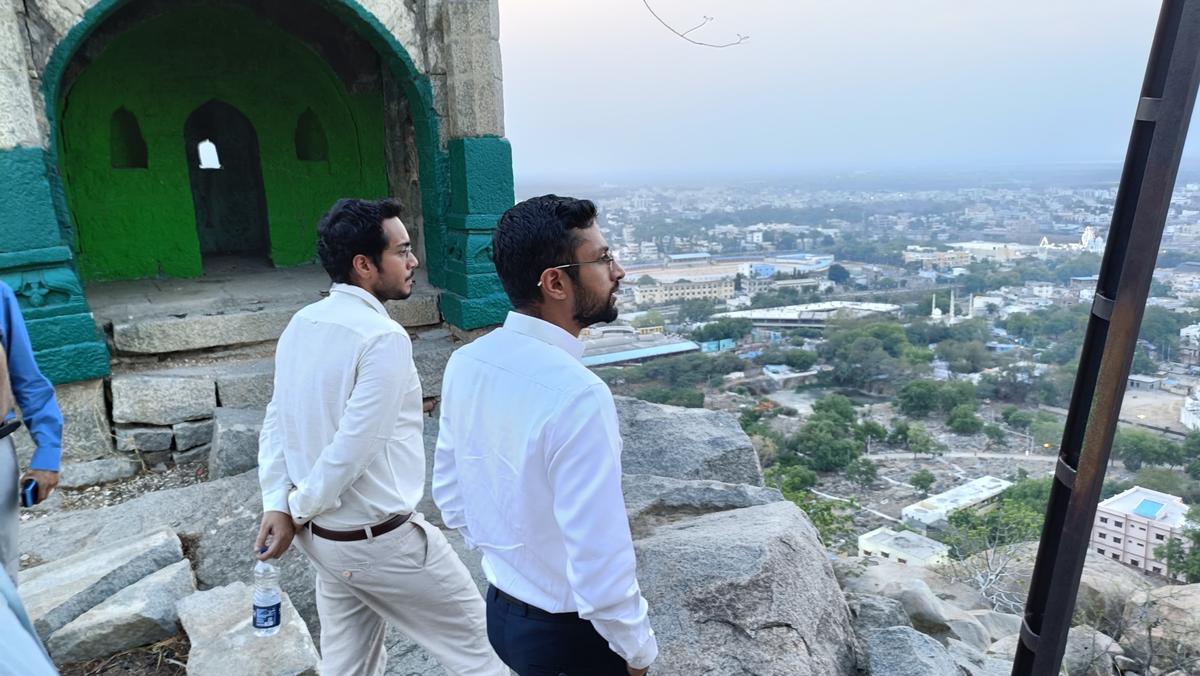
Deputy Commissioner Nitish K. (right) at the historic hilltop fort in Raichur on April 22, 2025.

Deputy Commissioner Nitish K. (right) at the historic hilltop fort in Raichur on April 22, 2025.
| Photo Credit:
SPECIAL ARRANGEMENT

Deputy Commissioner Nitish K. takes a look at the moat outside Raichur fort on April 22, 2025.

Deputy Commissioner Nitish K. takes a look at the moat outside Raichur fort on April 22, 2025.
| Photo Credit:
SPECIAL ARRANGEMENT

Then, he inspected the nearby moat, which was found to be heavily silted. He instructed officials to remove the accumulated silt and carry out proper finishing work to restore the area.

Later, the Deputy Commissioner visited the hilltop fort area adjacent to the bus stand. He emphasised the need to develop the area to attract tourists by installing street lights, benches, and other visitor-friendly infrastructure. He directed officials to prepare a separate proposal to repair scattered stone structures, install safety railings, and ensure easy access for tourists.

He instructed engineers from the Mysuru Department of Archaeology, Museums, and Heritage to prepare and submit a formal proposal for these improvements, in line with heritage regulations.

Additionally, he directed to dredge and preserve the khas bavi (well used by royal family) of the Nizam era, located near Aam Talab (water body for the common man), by giving necessary finishing touches.

The DC was accompanied by Raichur City Corporation Commissioner Jubin Mohapatra, Urban Development Cell Planning Director Eranna Biradar, engineers from the Mysuru Department of Archaeology and Heritage, including Tarakesh, Assistant Engineer from the Public Works Department Mahesh, and Assistant Director of the Tourism Department Rajendra Jaldar.


Source link