Life & Style

Looking to reverse the microplastic damage? THESE common fruits and vegetables are your best ally
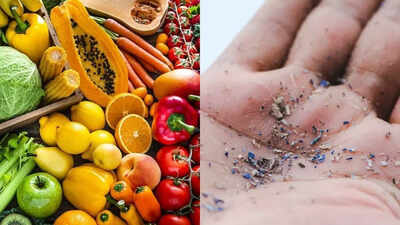

Looking to reverse the microplastic damage? THESE common fruits and vegetables are your best ally

Microplastics-driven health concerns are growing by the day, with several studies showing how harmful they are – both for the environment and the living organisms. Despite the growing concern, it’s hard to avoid these tiny toxic particles in everyday essentials like tea bags, lipstick, dishwasher detergent, and gum (among many other things).
Microplastics are absorbed into the body primarily through ingestion, inhalation, and dermal contact. These particles can be ingested through contaminated food and water, inhaled as airborne particles, or absorbed through the skin.
Microplastics are even poisoning the water we drink, and one has to be careful before taking a sip without going through the due process of removing those toxic particles from the glass of water.
However, recent research has shown some hope on how we can fight the microplastic damage with some simple ingredients.
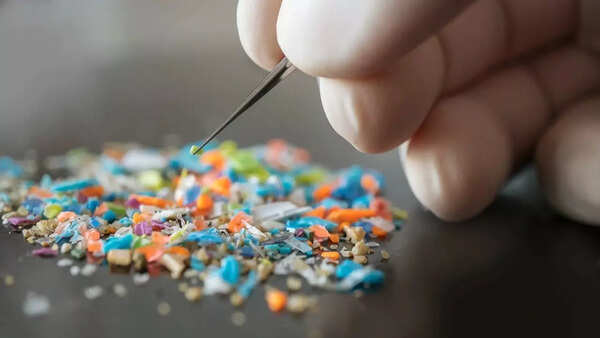
Microplastics

To everyone’s surprise, most of these ingredients are easily available in the grocery store or even in our kitchen!

What does the study say?

A study published in the Journal of Pharmaceutical Analysis found that colorful fruits and vegetables may combat the negative effects of microplastics in the body.
Fruits and vegetables are widely recognized for their rich vitamin and mineral content, but recent studies have focused on anthocyanins—natural compounds found in brightly colored fruits and vegetables—and their potential role in protecting the reproductive system from damage caused by microplastics. Researchers investigated how these compounds interact with steroid receptors, which are protein molecules within cells that bind to hormones like estrogen, progesterone, and testosterone, all of which are crucial for reproductive health.
According to Angelo Falcone, MD, an integrative medicine physician and founder of Dignity Integrative Health and Wellness, the recent research is a comprehensive review of existing literature that addresses how microplastics disrupt the endocrine system and adversely affect reproductive health. The study also considers whether anthocyanins might counteract these negative effects due to their antioxidant and anti-inflammatory properties.
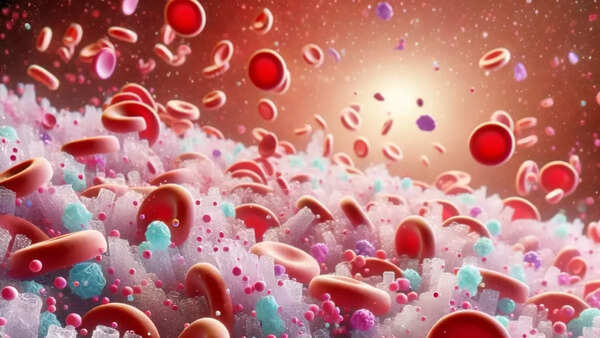
Microplastics (2)

What makes this research particularly noteworthy is its intersection of environmental and nutritional medicine. With microplastic exposure now a common challenge—as these particles are present in our food, water, and air—Falcone emphasizes the importance of incorporating protective colorful plant foods into our diets as a defense strategy.

Which fruits and vegetables can combat microplastics?

Anthocyanins are natural pigments responsible for the vibrant red, purple, and blue hues found in many fruits and vegetables. There are over 700 varieties of anthocyanins, which are a subgroup of flavonoids known for their antioxidant effects. Foods rich in these compounds include blueberries, blackberries, red cabbage, and purple corn.
These pigments not only contribute to visual appeal but also play significant biological roles. They are some of the most powerful natural antioxidants, helping to neutralize harmful free radicals in the body and reduce oxidative stress that could lead to cellular damage, diseases, and even cancer. Nicholas Church, MD, a family medicine physician and founder of Somerset Medical, notes that anthocyanins are particularly recognized for their ability to mitigate inflammation and stress-related conditions.
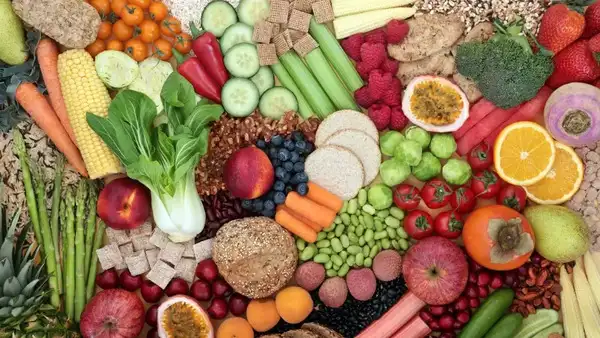
Microplastics (6)

How does anthocyanin work to combat microplastics?

Microplastics are still being studied for their exact effects on the human body, but they have been shown to induce inflammation and oxidative stress, which can damage cells and tissues. They can also act as endocrine disruptors, interfering with the hormonal systems that govern reproduction, metabolism, and development, and have the ability to cross protective barriers such as the blood-testis and placental barriers. This raises concerns about their accumulation in reproductive organs, potentially damaging reproductive cells and affecting fertility.
Anthocyanins offer multiple mechanisms of protection against the damage caused by microplastics. As potent antioxidants, they help to neutralize oxidative stress resulting from microplastic exposure, thereby safeguarding cellular integrity. They also diminish microplastic-induced inflammation, reducing the risk of gastrointestinal issues, cancer, and organ damage. Additionally, anthocyanins may interact with steroid receptors to help regulate hormone functions disrupted by microplastics, thereby providing a layered defense.

Microplastics (5)

Source of anthocyanin:

Foods that are high in anthocyanins tend to be those with deep colors. Berries such as blueberries, blackberries, cranberries, raspberries, and bilberries are particularly rich in these compounds. Other excellent sources include black rice, purple corn, red cabbage, purple sweet potatoes, red grapes, pomegranates, and açai berries. Generally, the deeper and more vibrant the color, the higher the anthocyanin content.
Every colorful fruit and vegetable contains different types of anthocyanins, each offering unique health benefits, making it important to consume a variety of them—often referred to as eating the rainbow. While there is no standardized recommendation for the amount of anthocyanins to consume, research suggests that aiming for around 50 milligrams per day may help reduce oxidative stress. This amount is roughly equivalent to one cup of anthocyanin-rich foods.

More about anthocyanins:

Anthocyanins are water-soluble plant pigments responsible for the red, blue, and purple colors in fruits, vegetables, and flowers. They belong to a larger group of compounds called flavonoids, which are known for their antioxidant properties. These compounds are thought to play a role in protecting plants from stress and attracting pollinators.
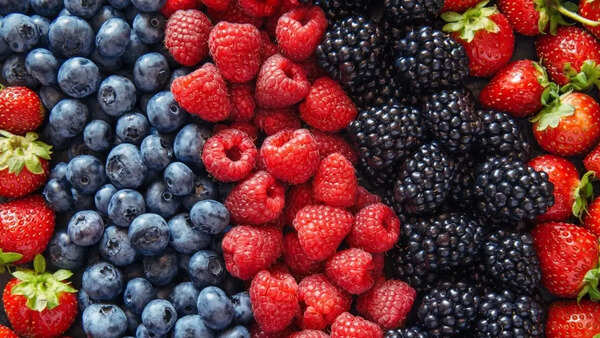
Microplastics (7)

Here’s a more detailed look:
Plant pigments: Anthocyanins are the primary pigments responsible for the vibrant colors of many fruits and vegetables, particularly those with red, blue, and purple hues.
Flavonoids: They are a type of flavonoid, a broad class of plant-based chemicals with antioxidant properties.
Antioxidant properties: Anthocyanins can help neutralize free radicals, which are unstable molecules that can damage cells.
Plant protection: Anthocyanins help plants protect themselves from environmental stressors like UV light, drought, and cold, according to Cleveland Clinic.
Human health: Research suggests that consuming anthocyanin-rich foods may be beneficial for heart health, brain function, and may help reduce the risk of certain cancers, according to Cleveland Clinic and type 2 diabetes, according to Cleveland Clinic.
Food sources: Excellent sources of anthocyanins include berries (blueberries, strawberries, raspberries), red grapes, plums, apples, and certain vegetables like red cabbage.


10 best foods to control diabetes


Source link

6 hymns and mantras to recite for the different problems in life


Life is not just about good moments, achievements, celebrations, roses and daisies, and all things beautiful. Sometimes, it is also depressing, sad, and makes people feel left out and unprotected. It feels as if the Universe is conspiring to bring obstacles in our path, and the helplessness one feels at this moment is simply miserable.
But in between this all, certain hymns and stotras are believed to change the way a person feels, and give them the strength to persevere through the different problems of life. These sacred hymns, written in Sanskrit, are known for their deep energy and vibrations that make people feel better. And here we mention 6 hymns and mantras to recite for the different problems in life.


Source link

Why all the rich people wear this colour?


Why all the rich people wear this colour?
This colour has emerged as the unofficial uniform of the elite, symbolizing quiet luxury and timelessness. The ultra-wealthy use this neutral palette to signal their status, prioritizing quality fabrics and understated elegance over fleeting trends. Anyone can emulate this aesthetic by focusing on clean silhouettes, well-fitted basics, and textural variety, proving that a sophisticated look is attainable on any budget. Find out more about the colour.

Ever noticed how the super-rich seem to have a thing for beige? Whether it’s at a luxury fashion show, a yacht party, or just a paparazzi snap outside a Michelin-starred restaurant, the wealthiest folks are almost always draped in shades of cream, tan, camel, or oat milk latte (yes, that’s basically a colour now). But it’s not just a coincidence- there’s a quiet, deliberate reason why beige has become the unofficial uniform of the elite. Let’s decode this luxe, low-key obsession.

The power of subtlety: Less is more

In the world of ultra-wealthy style, subtlety is king. Beige represents quiet luxury, an aesthetic that exudes elegance without the need to shout for attention. Rich people don’t need to prove they’re rich. Their wealth isn’t hanging on one oversized logo or a designer bag with screaming hardware. Instead, it’s reflected in the cut, quality, and craftsmanship of their clothing.

istockphoto-1018293976-612x612

Beige blends in, but never disappears. It’s the soft-spoken shade that commands attention by not asking for it. Think about Sofia Richie’s wedding looks, Gwyneth Paltrow’s courtroom wardrobe, or even royals like Kate Middleton. The palette stays soft and neutral, but the message is clear: confident, calm, and classy.

It screams “I have nothing to prove”

The ultra-wealthy don’t need trends, they set them. Beige isn’t just a colour; it’s a flex. It shows that you’re above the noise of fashion fads. While the rest of the world chases the newest it-shade or bold patterns, beige wearers remain serene in their refined simplicity.
This aligns with the “old money” aesthetic that’s taken over TikTok and Instagram. The trend celebrates heritage, tradition, and polished looks. Think camel coats, linen trousers, crisp white shirts, and soft cashmere, all in the realm of beige, ivory, and taupe. These are pieces you buy once, wear forever, and pass down. That’s real wealth.

Timelessness = Wealth

Beige is timeless. While colours like neon green or millennial pink come and go, beige remains. It never feels outdated or overdone. And that’s exactly what makes it feel expensive. The truly wealthy invest in longevity, not novelty. They want wardrobes that evolve with time, not expire with seasons.
Wearing beige means you’re not chasing relevance. You are relevant. A beige trench coat or a cream cashmere sweater never feels out of place. That kind of sartorial staying power is what defines true luxury.

The fabric game: Texture talks

When it comes to beige, texture becomes the star. In this minimal colour, the quality of the fabric takes centre stage. Silk, linen, wool, suede, each material shows its richness more vividly in a neutral tone. That’s why designers love beige for luxurious items. It gives fabrics a chance to shine without competition from bright hues.

istockphoto-1272668841-612x612

The rich know that a buttery beige suede jacket or a perfectly tailored oatmeal coat can say more about their status than a bedazzled outfit ever could. It’s about investing in feel-good fabrics that look even better.

Cultural signalling: Who you align with

Beige is also a kind of social currency. It signals that you belong to a particular elite club of people who “just get it.” In wealthy circles, dressing in neutrals is a way to signal you understand the code, understated but expensive. Think of it like an unspoken language of affluence.
In contrast, flashy logos or loud prints often signal new money or someone trying too hard to prove something. Beige is for the seasoned players who’ve been rich long enough to not care about proving it. It’s sophistication without self-promotion.

Rich on a budget: You can fake it

Here’s the good news, beige isn’t only for billionaires. Anyone can tap into its quiet-luxury vibe and look rich on a budget. The key is to focus on clean silhouettes, quality-looking fabrics (even if they’re high street), and well-fitted basics.
A monochrome beige outfit instantly looks put-together. Pair a tan blouse with wide-leg cream trousers, minimal gold jewellery, and a nude bag, and suddenly, you look like you brunch in Paris and summer in the Hamptons.

istockphoto-2159557717-612x612

Second-hand and vintage shops are gold mines for finding good quality neutrals. Stick to earthy tones and mix fabrics for dimension. Think linen with knit, or cotton with faux suede. You don’t need millions to look like you have them.

The rich colour with a soft voice

Beige is not boring, it’s strategic. It’s the colour of calm confidence, elevated taste, and a life lived in comfort. The next time you see someone in a perfectly curated beige outfit, remember: that’s not just style. That’s status.

BK Shivani on Life’s Struggles: Why Both the Rich & Poor Face Their Own Battles

In a world that increasingly equates noise with success, beige is a quiet reminder that sometimes, the most powerful statement is the one made without saying a word. So whether you’re building a capsule wardrobe, trying to embody old-money elegance, or just want to look more expensive—beige is your best-kept secret.


Source link

Scientists reveal how THIS weekly habit can fight depression


Scientists reveal how THIS weekly habit can fight depression

Mental health is one of the most concerning issues all around the world nowadays, with depression being the most common and prevalent of them all. While not universally agreed upon, the rise in depression and its global impact have led many to consider it an epidemic. The World Health Organization (WHO) has described depression as an epidemic, noting its significant contribution to global disease burden, while estimating that 5% of adults globally experience depression, which translates to about 280 million people.
This includes 4% of men and 6% of women, with 5.7% of adults older than 60 years also experiencing depression. While the global prevalence has remained relatively stable, the burden of depression, including the number of cases and impact on lives, has not been significantly reduced despite evidence of effective interventions.

Depression (2)

In the United States of America alone – as per the National Institutes of Health (NIH) – an estimated 21 million adults experience at least one major depressive episode annually, with women being more affected than men. The prevalence of depression is higher among certain demographics, including young adults, individuals with lower family income, and those with less than a high school education.
Although these statistics might sound somewhat terrifying, depression is not beyond cure.
In fact, as per a new research – scientists have revealed how a simple weekly practice helps fight depression.
Read on to know more.

What does the study say?

While factors such as outdoor activities, regular exercise, a balanced diet, and robust social connections are widely recognized for enhancing mental well-being, recent research has revealed that sexual activity is also gaining attention as a potential contributor. As per the research, there may be an optimal frequency for sexual activity that contributes to improved mental health.

Depression (6)

A study conducted by experts at Shantou University Medical College in China examined the sexual habits of 15,794 adults in the United States, aged 20 to 59. The study aimed to explore the relationship between sexual activity and psychological well-being, specifically investigating how lower self-reported sexual frequency might correlate with higher chances of depression, as assessed by the Patient Health Questionnaire-9 (PHQ-9).

What are the findings?

The findings suggest that engaging in sexual activity once or twice a week may help reduce the risk of depression, particularly among participants in the younger age group of 20 to 30 years. The researchers believe that the mental health benefits derived from sexual activity may be linked to the release of hormones such as endorphins and dopamine during the experience. The study concluded: “A sexual frequency of 1-2 times per week showed the greatest protective effects on psychological well-being and may serve as a reference standard for mental health evaluation and monitoring during depression treatment.”

Depression (9)

However, the authors also noted the need for further research to clarify the direction of this relationship and identify any potential modifiers.
Professor Mutong Chen, one of the co-authors of the study, highlighted that sexual activity offers numerous advantages to overall well-being and quality of life, regardless of sexual orientation, thereby significantly influencing mental health.

What is depression?

Depression, also known as major depressive disorder or clinical depression, is a common mental disorder characterized by persistent feelings of sadness and loss of interest in activities. It affects how a person feels, thinks, and behaves, potentially leading to various emotional and physical problems.

Depression (1)

Key characteristics:
Persistent sadness: Depression is characterized by a prolonged period of feeling sad, low, or empty.
Loss of interest: Individuals with depression often lose interest or pleasure in activities they once enjoyed.
Impact on daily life: Depression can significantly disrupt daily activities, such as work, school, or social interactions.
Variety of symptoms: Symptoms can include changes in appetite, sleep patterns, energy levels, concentration, and self-esteem.
Underlying factors: Depression results from a complex interplay of genetic, biological, psychological, and environmental factors.

Deepika looks fierce in this video on how to fight ‘depression’


Source link

6 ways to know you need to see a doctor for eyeglasses


Our eyes are quite an essential part of our daily lives, but it’s easy to overlook when something isn’t quite right. It could be that squinting, straining, or frequent headaches are simply seen as part of the routine. However, these could be signs that eyeglasses are needed. Knowing when to visit a doctor for an eye exam can prevent unnecessary strain and improve overall eye health. Here are 5 signs to look for that can indicate it’s time to see a doctor about getting eyeglasses.


Source link

5 smart ways to deal with office politics, as per psychology


Office politics– you like it or hate it, but you can’t ignore it. For most people, office politics is just another source of stress and negativity; however, no matter how much you try to stay away from it, it is an important aspect of your professional journey. Whether subtle or overt, political dynamics can influence promotions, project opportunities, and daily interactions. According to psychology, understanding and navigating these undercurrents doesn’t mean compromising your integrity — it means being strategic, emotionally intelligent, and aware. Here we list some psychology-backed ways to handle office politics tactfully:


Source link

Fake Mango in Indian market: How to identify it at home and serious side effects it can cause


Fake Mango in Indian market: How to identify it at home and serious side effects it can cause

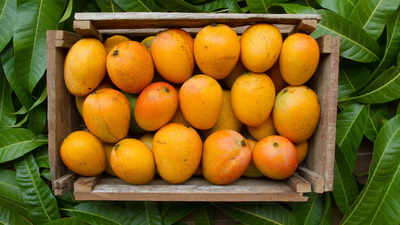
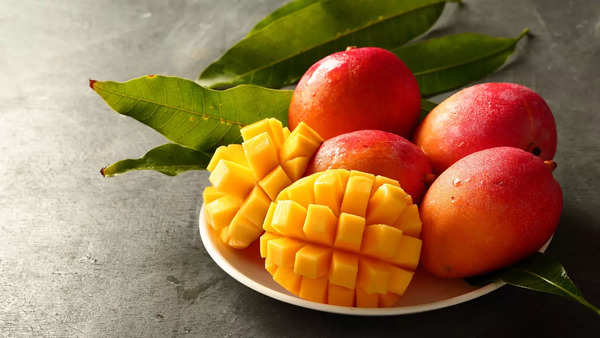
Fake mango, also called artificially ripened mango, refers to ripening real mangoes using harmful chemicals like calcium carbide or ethephon instead of natural methods. As per experts, every year hundreds of kilograms of mangoes are artificially ripened and sent to the market to meet the demand before the season begins. As per the Food Safety and Standards Authority of India (FSSAI), it is important for buyers to pay attention to the look, feel, smell, and quality of mangoes before buying and avoid purchasing chemically ripened mangoes. Take a look at the most common chemicals used for ripening mangoes.
Also Read: 8 ways to identify artificially treated ones
As per experts, the most commonly used ripening agent is calcium carbide. It contains impurities like arsenic and phosphorus, making it extremely harmful. It can cause headaches, dizziness, nausea, and even long-term health issues like cancer. Another chemical that is commonly used is ethylene gas. It is a natural ripening hormone used in a controlled manner. Its overuse or impure form can pose a serious threat to the human body. Ethephon is a chloroethylphosphonic acid that is used for ripening mangoes and is commonly used to release ethylene and can be toxic in high dose and lead to liver or kidney damage. Market players also use acetylene gas released from calcium carbide, and it is highly explosive and harmful when inhaled or ingested in residual form.

2 (27)

Poll

Do you think artificially ripened mangoes should be banned in the market?

One can follow any of these 8 ways to identify fake mangoes.
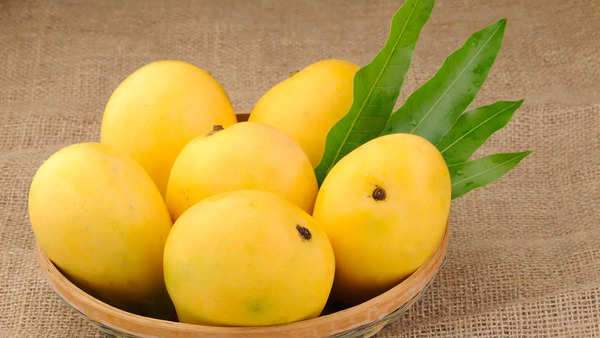
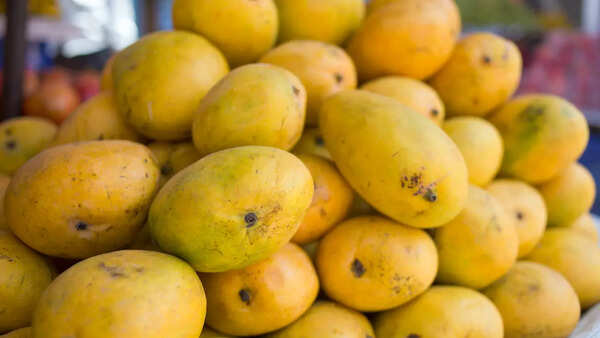
Check the skin color: Artificially ripened mangoes tend to have a uniform color and may appear more yellow or orange than naturally ripened mangoes. They may also have a slightly shiny appearance.
Smell the mango: Naturally ripened mangoes have a sweet, fruity smell, while artificially ripened mangoes may have a chemical or a different odour.
Check the firmness: Artificially ripened mangoes may feel softer or mushier than naturally ripened mangoes. It happens because the chemicals used in the ripening process can break down the cell walls in the fruit, making them softer.
Look for external damage: If the mangoes have external damage, such as bruises or spots, due to the injection of chemicals, avoid them. Natural mangoes are less likely to have these types of external blemishes.

2 (28)

Conduct a taste test: As per experts, artificially ripened mangoes may have a bland or strange taste. If the mango tastes off or has an unpleasant aftertaste, it may have been artificially ripened.
Soaking method: Put the mangoes in a bucket of water. If the mangoes sink, they are naturally ripened. If they float, they are harvested artificially.
Use baking soda: Add some baking soda to the water, and then soak the mangoes in the mixture for 15-20 minutes. After soaking, once you wash the mangoes, and if the color of the mango changes, there are chances that they are chemically treated or polished.
Match stick test: As per the Alphonso Mango website, one can use this test as well. All you need to do is light a match stick and bring it near the box of mangoes, and if it is chemically treated, it may catch fire or leave sparkle traces on the food’s surface. This method is very risky; hence, one should avoid trying it at home without taking any preventive measures or in the absence of adults and guardians at home.

2 (25)

Side effects of eating chemical-ripened mango
Chemical-ripened mangoes, especially those ripened artificially using chemicals like calcium carbide, can pose serious health risks. It can cause nausea, vomiting, abdominal pain, and diarrhea. And it is also said to cause neurological disorders like headache, dizziness, confusion, and even mood swings. For those with respiratory issues and asthma or allergies, it can irritate the respiratory tract. Contact with adulterated mangoes may lead to rashes, itching, or allergic flare-ups in sensitive individuals. Also, long-term exposure to certain ripening agents like arsenic and phosphorus (impurities in calcium carbide) may increase the risk of serious conditions, including cancer. It is also found that chemical residues found in artificially ripened mangoes can interfere with endocrine functions, leading to hormonal imbalances over time.

Thumb and Embed Images Courtesy: istock


Source link

3 years after divorce from Bill Gates, Melinda French Gates still gets tears in her eyes watching their wedding video— Here’s why


3 years after divorce from Bill Gates, Melinda French Gates still gets tears in her eyes watching their wedding video— Here’s why
Image credits: Getty Images

Melinda French Gates, the former wife of American billionaire and philanthropist Bill Gates, has recently been in the news for a variety of reasons. From finally opening up on her divorce from her husband of 27 years Bill agates to being spotted with her new boyfriend Philip Vaughn, Melinda has been actively making headlines one after another.
Currently, Melinda, 60, is in the news due to the launch of her new book ‘The Next Day: Transitions, Change and Moving Forward’ which was released on April 15th, 2025. “There’s a lot that’s happened in my life over the last few years that I didn’t see coming,” she wrote at the start of her book.
In the book, Melinda has revealed various personal details that the world was not privy to until now. From the trip to Mexico where she told Bill that she wanted to start living separately to the panic attacks she faced after the divorce, she seems to have written a tell-all that is making new headlines by the minute.
While writing about her life post-divorce in the book, Melinda shared an interesting and emotional anecdote about her wedding video. She shared that she used to watch her wedding video every year around her wedding anniversary with Bill Gates, which was on January 1st, 1994.
In the clip, the couple is standing in front of a tiered wedding cake but “Bill doesn’t know what he’s supposed to do” wrote Melinda.
“Instead of cutting one piece and feeding me a single bite like every other groom in history, he thought he was supposed to cut a piece for everyone. When I figured out what he was doing, I burst out laughing so hard I couldn’t talk,” she continued.
Although he initially appeared confused “because he can tell he’s gotten something wrong,” eventually he started laughing as well, just because she was.
“It captures so many of the things I loved about him,” she wrote, noting that “watching it now brings me to tears.”

Why did Bill and Melinda Gates get divorced?

Why did Bill and Melinda Gates get divorced?

Image credits: Getty Images

Recently, in an interview, Bill Gates shared that his divorce was the “biggest regret” of his life. However, for Melinda, the divorce was “something that was necessary.” “If you can’t live your values out inside your most intimate relationship, it was necessary,” she told The Times.
The couple’s divorce was finalised in 2021 with the reason being that they could no longer “grow together as a couple in this next phase of life.” Bill later admitted to causing “pain” in his family whereas Melinda hinted in an interview with CBS Mornings that Bill’s meetings with convicted sex offender Jeffrey Epstein were a factor in her decision to leave.
Bill is now rumoured to be dating Paula Hurd, widow of the former Oracle CEO Mark Hurd. Meanwhile, Melinda too has moved on in life and she has been spotted with Philip Vaughn, a tech entrepreneur and founder of Tavour, a craft beer delivery company.


Source link

From a humble background to Vice President of the USA: JD Vance’s rise is remarkable — here’s a look at his family and where they are now


From a humble background to Vice President of the USA: JD Vance’s rise is remarkable — here’s a look at his family and where they are now

U.S. Vice President J.D. Vance, along with his wife Usha Vance and their three children, returned to Washington on Thursday, April 24, 2025, marking the conclusion of his three-day official visit to India. The Vance family quickly captured the internet’s attention with their warm demeanor and visible bond, drawing admiration both in India and abroad.
This visit held particular significance for Usha Vance, who has Indian roots. Her connection to the country added a personal dimension to the trip, making it especially meaningful for the entire family.
But beyond the polished public image lies a deeply personal story—especially for Vice President Vance. Before reaching the second-highest office in the United States, he endured a difficult childhood marked by instability and trauma, which he chronicled in his widely acclaimed memoir, Hillbilly Elegy. He has often spoken openly about how his family and upbringing shaped him, and how his journey—from a troubled past to holding national office—reflects resilience and transformation.
As Vice President, J.D. Vance frequently acknowledges the role his family plays in keeping him grounded. His wife, Usha, a former law clerk and Yale Law School graduate, has been a pillar of strength and stability. Their children, though kept largely out of the public eye, are at the heart of his motivation and personal life.
Let’s take a closer look at each member of the Vance family—and how together, they’ve formed a strong, supportive unit that continues to inspire many.

Beverly Aikins (formerly Beverly Vance)

2

Credit: X

Born in 1961, JDmother now goes by Beverley “Bev” Aikins. Her life has been turbulent, and her struggles with addiction and multiple marriages deeply impacted her children. When J.D. was six years old, Beverly’s third husband, Bob Hamel, adopted him. At that point, his name was legally changed from James Donald Bowman to James David Hamel.
“Until then, I’d borne my father’s first name as my middle name, and Mom used the adoption to erase any memory of his existence,” Vance wrote in Hillbilly Elegy. “She kept the D to preserve what had by then become a universal nickname — JD. Mom told me that I was now named after Uncle David, Mamaw’s older, pot-smoking brother. This seemed a bit of a stretch even when I was 6. Any old D name would have done, so long as it wasn’t Donald.”
The marriage to Bob Hamel eventually ended, and as Beverly’s addiction worsened, J.D. was placed in foster care at age 12. From then on, he was primarily raised by his maternal grandparents, Bonnie Blanton and James Vance—figures who played a central role in his life. It was from them that he later took the surname “Vance.”

Donald Bowman

3

Credit: X/@JackPosobiec

JD’s biological father, Donald Bowman (1959–2023), was largely absent from his early life. In Hillbilly Elegy, Vance recalls, “Dad gave me up for adoption when I was 6. After the adoption, he became kind of a phantom for the next six years.” Despite the distance, Vance held onto fragmented, bittersweet memories of him: “I knew that he loved Kentucky, its beautiful mountains, and its rolling green horse country. He drank RC Cola and had a clear Southern accent. He drank, but he stopped after he converted to Pentecostal Christianity. I always felt loved when I spent time with him, which was why I found it so shocking that he ‘didn’t want me anymore,’ as Mom and Mamaw told me.”

Lindsay Vance

4

Credit: X

JD’s older half-sister, Lindsay Vance, born in 1979, is the only sibling he discusses in his memoir. She played a protective, almost maternal role during their unstable upbringing. In an interview with the Dayton Daily News in 2016, she said, “The kid has never done wrong in my eyes. J.D. has a part of my soul that nobody will ever have and I’ll protect him until the day I die.” According to People magazine, Lindsay is married and has three children of her own.

Usha Chilukuri Vance

5

Credit: X/ JD Vance

JD. met his wife, Usha Chilukuri, in 2013 while they were both students at Yale Law School. Usha, born in 1986, is the daughter of Indian immigrant professors Krish and Lakshmi Chilukuri. A high-achieving legal mind in her own right, Usha has clerked for Chief Justice John Roberts and built a respected career. Together, she and JD form a partnership grounded in shared ambition, contrasting childhoods, and mutual respect.

The Vance Children

6

Credit: X/ JD Vance

JD and Usha have three young children: Ewan (born 2017), Vivek (born 2020), and Mirabel (born 2021). The couple keeps their children out of the spotlight, but J.D. has often emphasized the importance of fatherhood in his life. Speaking at the Republican National Convention, he said, “My most important American dream was becoming a good husband and a good dad. I wanted to give my kids the things that I didn’t have when I was growing up.”


Source link

Optical illusion: Only a person with excellent creative skills can spot the odd one out in just 6 seconds |


Optical illusion: Only a person with excellent creative skills can spot the odd one out in just 6 seconds

Optical illusions are a fun way to challenge our brains, pushing us to see things beyond their usual interpretation. They can be a great exercise for improving concentration, perception, and, most importantly, creativity. Today, we’ve got a fun challenge that will test your creative thinking! But here’s the twist: You only have six seconds to spot the odd one out!
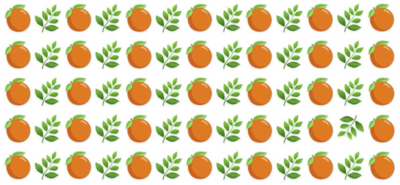
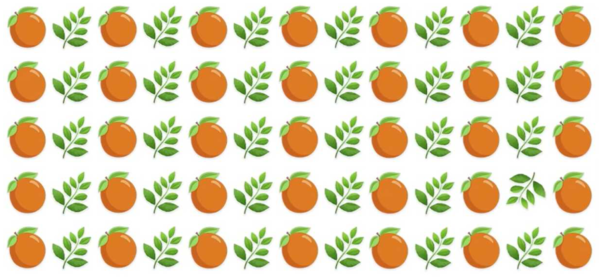
In this optical illusion, you’ll see an image filled with oranges and leaves. It seems pretty straightforward at first, doesn’t it? But take a closer look, especially at the left side of the image. Among the oranges and leaves, there’s one item that doesn’t quite belong. It’s cleverly camouflaged, so only those with an excellent eye for detail and creativity will spot it quickly. Ready? You have just six seconds to find it!

Optical illusion

Image: Jagran Josh

Before you dive into the image, let’s talk about how to approach this challenge. It’s easy to rush into it and start scanning every corner of the picture. But if you slow down a bit and think outside the box, you’ll be able to use your creative skills to spot the odd one out faster.
The trick here is to train your brain to see things from different angles. Optical illusions rely on your brain’s ability to process and interpret information in multiple ways. Sometimes, the odd one out can be hidden in plain sight, and only by thinking creatively can you find it.
Remember, you have only six seconds to find the odd one out! Test your creativity and see how quickly you can spot it.
Now, let’s break it down: the image you’re about to examine has several oranges and leaves placed in a pattern. But there’s something about the arrangement that doesn’t quite add up. It’s not just about the colour or shape. It’s about finding something that doesn’t blend well with the overall theme. So, take a deep breath, focus on the left side of the image, and let your creative mind do the work.
In this optical illusion, you’ll notice that one orange or leaf is slightly different from the others. It could be the shape, size, or position—it’s often something subtle that doesn’t immediately catch the eye. But once you tune in to the details, your brain will begin to notice the little discrepancies that make the odd one stand out.
Being creative in these types of challenges means thinking beyond the obvious. It’s not always about finding the biggest difference—it’s about noticing the tiny details that disrupt the pattern. So, don’t just focus on the oranges or leaves as individual objects, but think about how they interact with one another. It’s this type of creative thinking that will help you spot the odd one out in just six seconds.
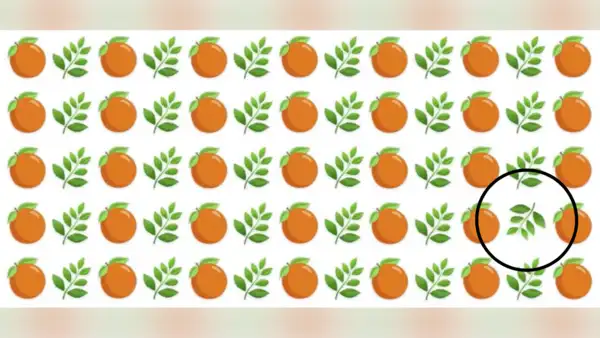
Did you find it?

optical illusion (54)

Image: Jagran Josh

Now that you’ve learned a bit about how to approach optical illusions, did you also find out the odd item?


Source link