Life & Style

Who is this year’s UPSC topper Shakti Dubey? 5 things that every kid should learn from her

Who is this year’s UPSC topper Shakti Dubey? 5 things that every kid should learn from her
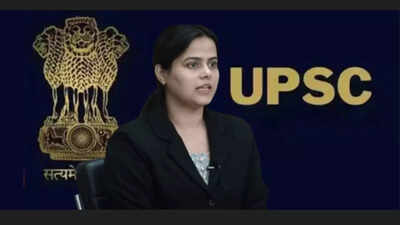
Who is Shakti Dubey, the IAS topper of UPSC CSE 2024?

In a country where lakhs of students dream of cracking the UPSC Civil Services Examination, one name has stood out – Shakti Dubey, the All India Rank 1 (AIR 1) holder of 2024. Hailing from Prayagraj, Uttar Pradesh, Shakti’s journey wasn’t just about academics, it was about patience, focus, and a strong sense of purpose.
From a science graduate to an educator and now the country’s top civil services candidate, Shakti’s story has many valuable lessons, especially for children growing up with dreams of their own. Here’s what truly stands out about her life and what youngsters can take away from her inspiring path.

Patience is not weakness – it’s strength

Shakti began her UPSC journey in 2018 and succeeded in 2025, taking 7 years to reach her goal.
In an age of instant results, it’s important to understand that success sometimes takes time. Shakti’s efforts over 7 long years are proof that real achievement isn’t rushed—it’s built, one day at a time. This teaches children that delayed success is still success, and staying patient is more powerful than quick wins.

UPSC IAS Toppers List

UPSC IAS रिजल्ट 2025

Be rooted, but think big

Great dreams aren’t limited to metro cities. Shakti studied in Prayagraj and then moved on to study at the University of Allahabad and Banaras Hindu University (BHU). Her story is a reminder that big cities don’t always guarantee success; it is the environment that we create around us that should encourage learning and ambition. Being rooted in one’s background can be a source of inner strength.

Knowledge is power – but curiosity is the key

Shakti completed her post-graduation in Biochemistry, a subject in the field of science. Studying science sharpened her analytical mind, but it was her curiosity about governance and public administration that led her to choose Political Science as her optional subject in UPSC. Children can learn from this that curiosity can open new doors. It’s not just about scoring marks but about asking “why” and “how” that brings real understanding.

upsc nda na examination ii 2024 final result out check on upsc gov in

UPSC

Teaching builds leaders

Shakti briefly worked as a teacher after completing her studies. Teaching is not just about sharing knowledge, it’s about learning how to communicate, lead, and mentor others. Even though details about her teaching journey are limited, this phase of her life helped her develop skills that were crucial for the UPSC Personality Test. Children can learn that helping others learn can also shape their own growth.

Preparation needs planning, not panic

Shakti chose Political Science and International Relations as her optional subject, showing a strategic shift from science to social science. Her preparation wasn’t random—it was planned, focused, and aligned with her growing interest in administration. Children can understand from this that good planning beats blind hard work. Instead of cramming everything, understanding what works and sticking to it consistently can be far more effective.




Source link

5 best sneakers for Millennials


The Adidas Samba is having a serious moment. Originally designed for indoor football, the Samba has stormed the style charts, seen on the feet of fashion editors, models, and millennial tastemakers alike. With its gum sole, leather upper, and three-stripe design, it blends sporty roots with city-style edge.

Why millennials love it:

It’s the perfect mix of heritage and hype. Sambas offer a bit of Euro flair with a fashion-forward twist, making them easy to dress up or down. Plus, their slightly unexpected profile brings freshness to even the most basic outfit.

Style tip: Rock with wide-leg cargos, a cropped sweatshirt, and statement shades for a luxe-sporty vibe.


Source link

Why Prince Al-Waleed is known as Saudi Arabia’s ‘Sleeping Prince’


Why Prince Al-Waleed is known as Saudi Arabia’s 'Sleeping Prince'

Why Prince Al-Waleed is known as Saudi Arabia’s ‘Sleeping Prince’
Photo: X

Despite the world moving towards modernity and equality in most countries, people are still fascinated by the extraordinary lives of royals. Be it the UK royals or the Saudi Arabia royal family, they continue to gain people’s attention even today. Their lives often seem full of luxury and privilege, yet behind the gilded walls of their palaces, some royal stories are written in unimaginable sorrow. And one of the most heartbreaking among them is that of Prince Al-Waleed bin Khaled bin Talal of Saudi Arabia, now tenderly known as the ‘Sleeping Prince.’

Meet Saudi Arabia’s ‘Sleeping Prince’

Prince Al-Waleed marked his 36th birthday on April 18, 2025 — but he remains unaware of the years passing by and is popularly known as the ‘Sleeping Prince’. Why? For the past 20 years, he has been trapped in a coma, a silent world he entered after a devastating road accident in 2005 while he was pursuing his dreams at a military college.
Today, he lies and is taken care in the King Abdulaziz Medical City in Riyadh, where he is tethered to life through machines. According to Roya News, Prince Al-Waleed is on a ventilator for the past 20 years, and is fed through a feeding tube. “The prince remains on life support, relying on mechanical ventilation and a feeding tube. The last documented movements occurred in 2019, when he reportedly showed signs of limited awareness through small gestures, such as lifting a finger or slightly moving his head—though these moments did not indicate a return to full consciousness,” as per Roya News.
While this offered brief glimmers of hope to his family, but full consciousness remains heartbreakingly out of reach.
When doctors once advised ending life support, his father, Prince Khaled bin Talal Al Saud didn’t agree and instead decided to fight for his beloved son’s life. “If God had wanted him to die in the accident, he would have been in his grave now,” his father had said.

How is Prince Al-Waleed related to the King of Saudi Arabia?

Prince Al-Waleed bin Khaled bin Talal is part of the Saudi royal family, but he is not a direct son or brother of the current King.
Here’s how he is related:
– Prince Al-Waleed’s grandfather, Prince Talal bin Abdulaziz Al Saud, was one of the many sons of King Abdulaziz Al Saud (the founder and first King of Saudi Arabia).
– That means Prince Al-Waleed is a great-grandson of King Abdulaziz.
– The current King of Saudi Arabia, King Salman bin Abdulaziz Al Saud, is also a son of King Abdulaziz — making him the great-uncle of Prince Al-Waleed.
Yet no title, no fortune, could shield his family from the anguish of watching their beloved prince remain suspended between life and death, year after year, clinging to the faintest threads of hope.

Prince Harry & Meghan Markle In New Trouble? Royal Author Drops Bombshell Claims Of Conflict


Source link

6 fears people have today and how they could be linked to past life experiences


In countries and cultures around the world, there are different views about the past life. Some believe that every soul has had a past life, and the experiences from those lives shape the person, while others believe that past life is a myth forwarded by cons to mint money.
But for believers, past life experiences shape their current personalities, and some memories, especially painful or traumatic ones, leave a deep mark on the soul, which carries over into the next life.


Source link

Unearth the world’s wealthiest diamond mine hidden in an ancient volcano crater in Botswana |


Unearth the world’s wealthiest diamond mine hidden in an ancient volcano crater in Botswana

Diamonds have fascinated the human imagination for centuries. Apart from being valued for their beauty, they were believed to possess spiritual powers that would bring good fortune and keep bad spirits away. Have you ever wondered where the place behind this fascination of diamonds lies? This place holds the nickname ‘Prince of Mines’ where the world’s richest mine is found.
The same constant fascination continues unchecked to this day, with men and women pursuing the biggest, the most uncommon, and costliest gems. Know more about diamonds, its fascination and the place where the richest diamond mine in the world is found.

World’s wealthiest diamond mine also called ‘Prince of Mines’

At the heart of this contemporary search is the Jwaneng Diamond Mine in Botswana, the world’s wealthiest diamond mine. Nicknamed the “Prince of Mines,” Jwaneng rests in an ancient volcanic crater some 170 kilometers southwest of the capital city, Gaborone. It belongs to Debswana, a 50-50 joint venture between the government of Botswana and De Beers, one of the most recognizable names in the diamond industry.
Jwaneng, or “a gem place” in Setswana, is a name that says it all—a name that the operation richly deserves for living up to its name time and time again. Since operations began in 1982, Jwaneng has produced millions of carats of diamonds. Three giant kimberlite pipes, volcanic rock structures known to be diamondiferous, dominate its production.
In 2023, Jwaneng mined a record 13.3 million carats of diamonds, solidifying its reputation as the world’s richest diamond mine, valued at an estimated £1 billion.

Background of Jwaneng Diamond Mine, Botswana

The background of Jwaneng dates from the 1970s when geologists at De Beers discovered the kimberlite-bearing zone. The initial geological discovery soon turned out to be a world-class mining venture. There have been various developments to the mine over the years in order to make it more productive and lengthen the years it has to operate.
One of such significant developments is the Cut-9 project, which is a £1.5 billion project to add more years to the life of the mine to a minimum of 2035. The project is expected to produce an extra 53 million carats of diamonds. In January 2024, a project to extend the underground was officially sanctioned. The expensive but visionary plan would not only increase diamond production but also generate approximately £20 billion of profit in the next decades. Other than this, the plan will create thousands of jobs that will enhance the economic resilience both at the national and local community level.
Jwaneng is vital to the economy of the nation, contributing 60 to 70 percent of Debswana’s overall revenue. Its prosperity reconfirms Botswana as one of the dominant players in the international diamond market.

Jwaneng: Technological powerhouse in diamond mining

The mineral extraction in Jwaneng is technologically sophisticated and extremely efficient. Bulk drilling begins the process to grind rock that travels to the plant by massive vehicles. In the plant, the sophisticated equipment includes X-ray fluorescence and laser sorters—which are housed in advanced units called CARP (Completely Automated Recovery Plant) and FISH (Fully Integrated Sort House)—and they precisely pinpoint diamonds from ore.
In spite of its mammoth size, Jwaneng has also started to undertake environmentally friendly mining. Like all big mines, it struggles with dealing with waste rock and ecological footprint. It was, however, the first mine operation to be ISO 14001 certified in Botswana in 2000 as a reward for its initiatives towards environmentally friendly practices.
Also Read | This broken flower pot from a UK garden turns out to be a $66,000 masterpiece


Source link

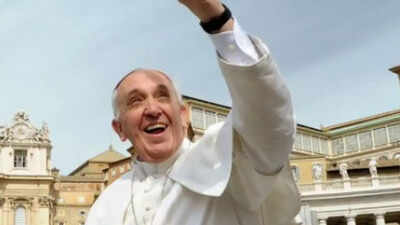
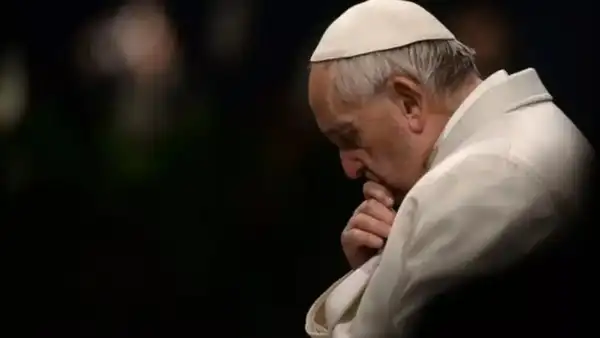
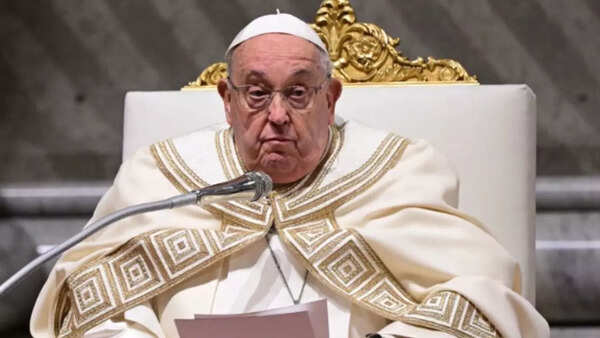
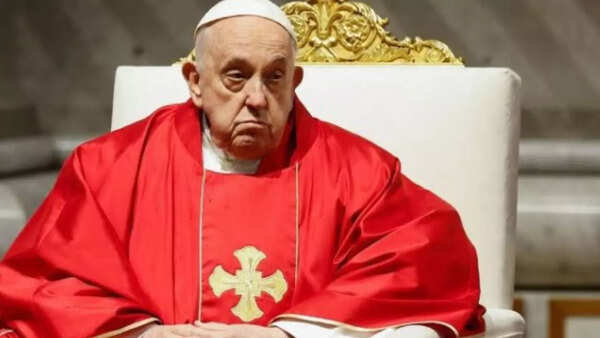
Pope Francis: How much was his net worth, and who will inherit his wealth?


Pope Francis: How much was his net worth, and who will inherit his wealth?

The world is mourning the loss of Pope Francis, the 88-year-old head of the Roman Catholic Church, who passed away on Monday morning, April 21, at 7:35 a.m. local time. The Vatican confirmed his death following a period of worsening health. Francis, who was born Jorge Mario Bergoglio, had long been battling a respiratory infection, chronic bronchitis, and pneumonia in both lungs. He also suffered from mild kidney failure.
Although there was hope he was recovering after being released from hospital earlier this month, his condition took a sudden turn.
The announcement was delivered by Camerlengo Cardinal Kevin Farrell, who shared the news with solemn words: “Dearest brothers and sisters, with deep sorrow I must announce the death of our Holy Father Francis. At 7.35 this morning, the Bishop of Rome, Francis, returned to the home of the Father.”

2

Credit: X/@jarvis

His entire life was dedicated to the service of the Lord and of his Church. He taught us to live the values of the Gospel with faithfulness, courage, and universal love, especially for the poorest and most marginalised. With immense gratitude for his example as a true disciple of the Lord Jesus, we commend the soul of Pope Francis to the infinite, merciful love of God, One and Tribune,” he continued.
Despite his reputation for modesty and simplicity, Pope Francis leaves behind a surprising personal net worth. According to The Mirror, his net worth at the time of his death was nearly $16 million—even though he had not received a salary since becoming Pope in 2013. The revelation has left many wondering how a man who famously turned away from luxury managed to quietly accumulate such wealth.

A life of simplicity—and quiet wealth

Francis made headlines throughout his papacy for rejecting the grand trappings of the role. Rather than live in the Papal Palace, he chose to stay in modest guest house accommodations. He wore simple vestments, drove a humble Ford Focus around Vatican City, and never wavered in his advocacy for the poor, the migrant, and the forgotten.

3

Source: X/@mitchellvii

Yet behind his ascetic lifestyle, Francis still had access to significant resources. As per some Vatican insiders, his net worth was largely the result of royalties, private donations, and a discretionary fund of $385,000 annually allotted to him as head of the Roman Catholic Church. Much of this was believed to be redirected toward charitable and religious causes rather than personal use.

Who will inherit Pope Francis’s fortune?

Now that Pope Francis has passed, attention is turning to what will happen to his wealth. The discretionary fund of $385,000 per year, for instance, could now be redirected to a foundation, left to a relative, or gifted back to the Church.

4

Source: X/@WWNHost

As per usual traditions, Popes do not leave personal fortunes to heirs. Their belongings and assets are often donated to religious charities, entrusted to Vatican foundations, or absorbed by the Church itself. Final wills and testaments are typically revealed in the days following a Pope’s death.
In the case of Francis, however, some speculate that his will may contain a few surprises. Known for his deep compassion and frequent departures from papal tradition, he may have made different choices, perhaps directing funds to support the poor or specific humanitarian causes close to his heart.


Source link

5 habits that destroy your reputation— And you may not even know it


Punctuality signals respect, reliability, and professionalism. However, people who are always late unknowingly send the message that they don’t value other people’s time— or worse, that they’re disorganised. If you are one such person, then to improve your reputation, start planning your schedule more realistically, allowing buffer time for unexpected delays. This will make you appear as a reliable and trustworthy person.


Source link

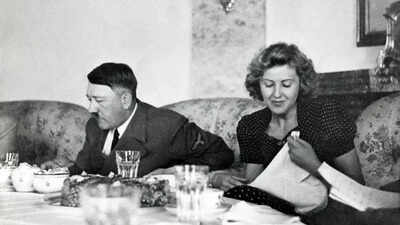
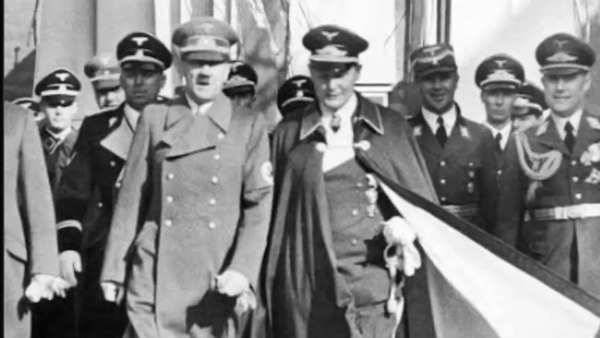
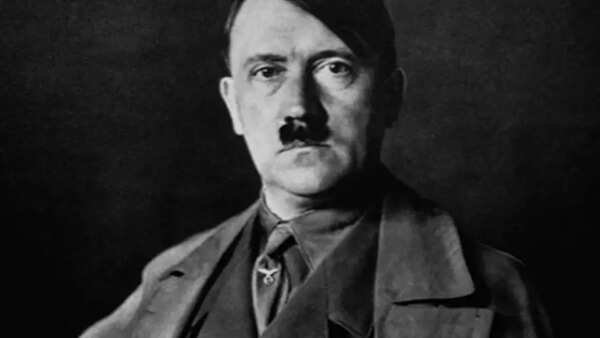
Hitler Fake Death Theory: Did Hitler fake his own death? Former CIA agents make shocking claims


Did Hitler fake his own death? Former CIA agents make shocking claims

A former CIA operative is renewing one of the most controversial theories of the postwar era: that Adolf Hitler did not die in his Berlin bunker, but instead escaped to South America with help from the Argentinian government.
Bob Baer, a 72-year-old former intelligence officer with 21 years of espionage experience, told The Daily Mail that he expects new evidence from Argentine archives to support claims that the Nazi dictator faked his death and fled to Argentina.
According to Baer, the forthcoming documents could reveal that the South American country not only provided sanctuary for fleeing Nazis but may have actively participated in plans to build a “Fourth Reich” in the region. He also believes the records will implicate Argentine officials in shielding high-ranking Nazi fugitives and facilitating the construction of hidden compounds, including one discovered during a 2015 archaeological excavation in the Misiones province.
“Lots of money was spent on a compound with plumbing and electricity in the middle of nowhere,” Baer told The Daily Mail, referencing the 2015 dig that uncovered German WWII-era coins and other Nazi memorabilia.
“If you were going to hide Hitler, that’s where you’d do it.”

2

Credit: X/@HeinrichPoster

The claim that Hitler escaped and lived in exile is not new — but it has long stood in direct opposition to the accepted historical account. Historians maintain that Hitler and his wife, Eva Braun, died by suicide in April 1945 inside the Führerbunker in Berlin. Their remains, partially burned and buried, were identified by Soviet authorities through dental records.
Still, conspiracy theories have endured for decades, alleging Hitler may have used tunnels to flee the bunker, or escaped via submarine after a detour through the Canary Islands. Those claims gained renewed attention in 2009, when a DNA analysis revealed that a skull fragment preserved for decades in Moscow — long believed to be Hitler’s — actually belonged to a woman between 20 and 40 years old.
Baer referred to that finding as “one of those great mysteries in history that we’ll never get a complete answer for.”

3

Credit: X/@Apolitical3678

Despite the speculation, the CIA has declassified documents affirming that Hitler died in the bunker. Baer, however, emphasized that the agency’s interest in postwar escape reports suggests the possibility was at least seriously considered.
“The CIA is not run by the curiosity of officers in the field,” he said.
“If 10 years after the end of the war the CIA is considering these reports, whether people believe them or not, it shows there was a belief in the executive branch of the US government that Hitler may have gotten away.”
Baer is now awaiting the release of the Argentine archives, which he hopes will shed new light on what he calls a persistent and unanswered historical question.


Source link