Life & Style

The Festival of India in Coonoor: A month-long curated exhibition in Coonoor, celebrates timeless crafts and textiles from across the country


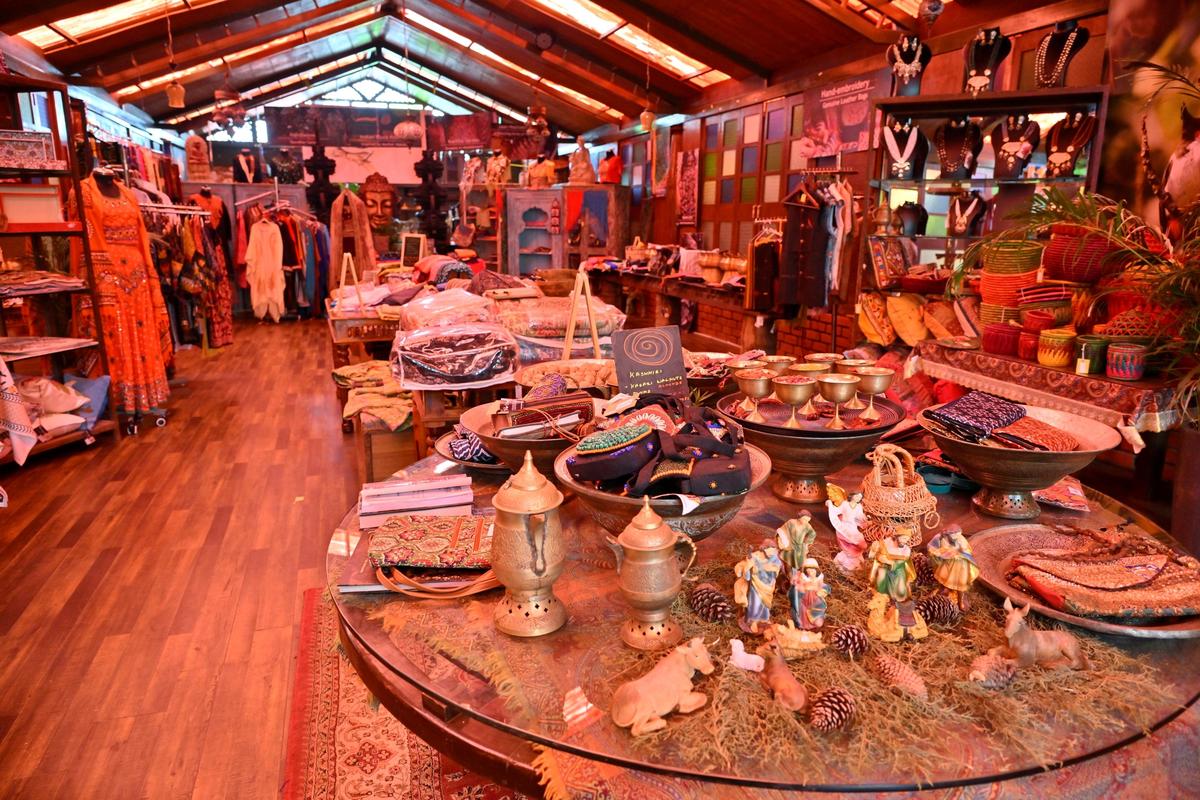
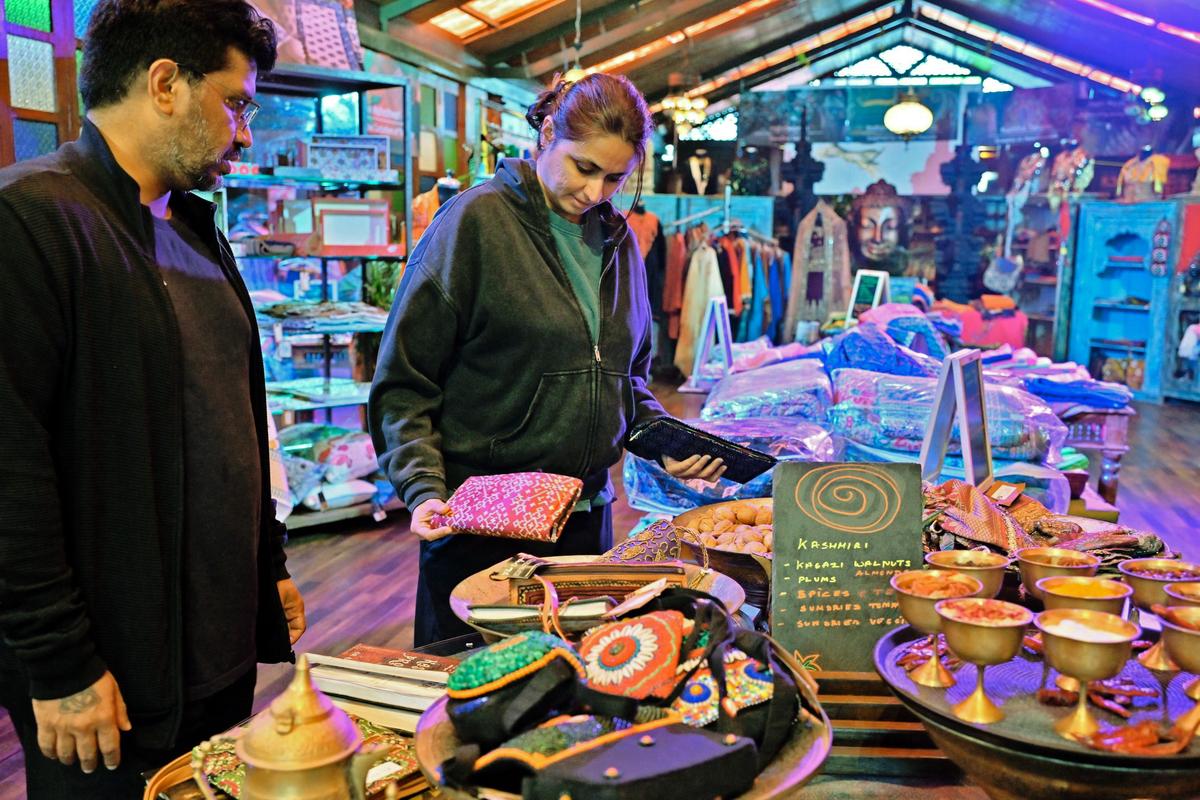
On a misty evening at Coonoor, in the heart of the Nilgiris, I step into Respect Origins’ Crafts Bazaar for an exclusive preview of The Festival of India, a curated showcase of timeless crafts and textiles from across the country. As the doors open, a profusion of colours and textures floods the senses. As I move past a collection of Kashmiri Kani suits adorned with intricate Kashida and Kani embroidery, Kantha work from West Bengal, the traditional hand-embroidering craft that uses simple running stitches to create historical and cultural motifs, commands attention. Nearby are pure wool and Pashmina from Ladakh, Manipur baskets made from razor-sharp grasses, terracotta and pottery from Tamil Nadu and Kerala, and Ajrak block prints rendered in natural dyes. Each piece is a celebration of history and traditions.

A little further away, rows of elegant tops and saris come into view with delicate Chikankari sharing space with Kasuti, Karnataka’s folk embroidery. Alongside are Lambani tribal jewellery, hand-beaten brass coasters from Gujarat, and a thoughtfully chosen selection of food-grade stainless steel kitchenware from Uttar Pradesh.

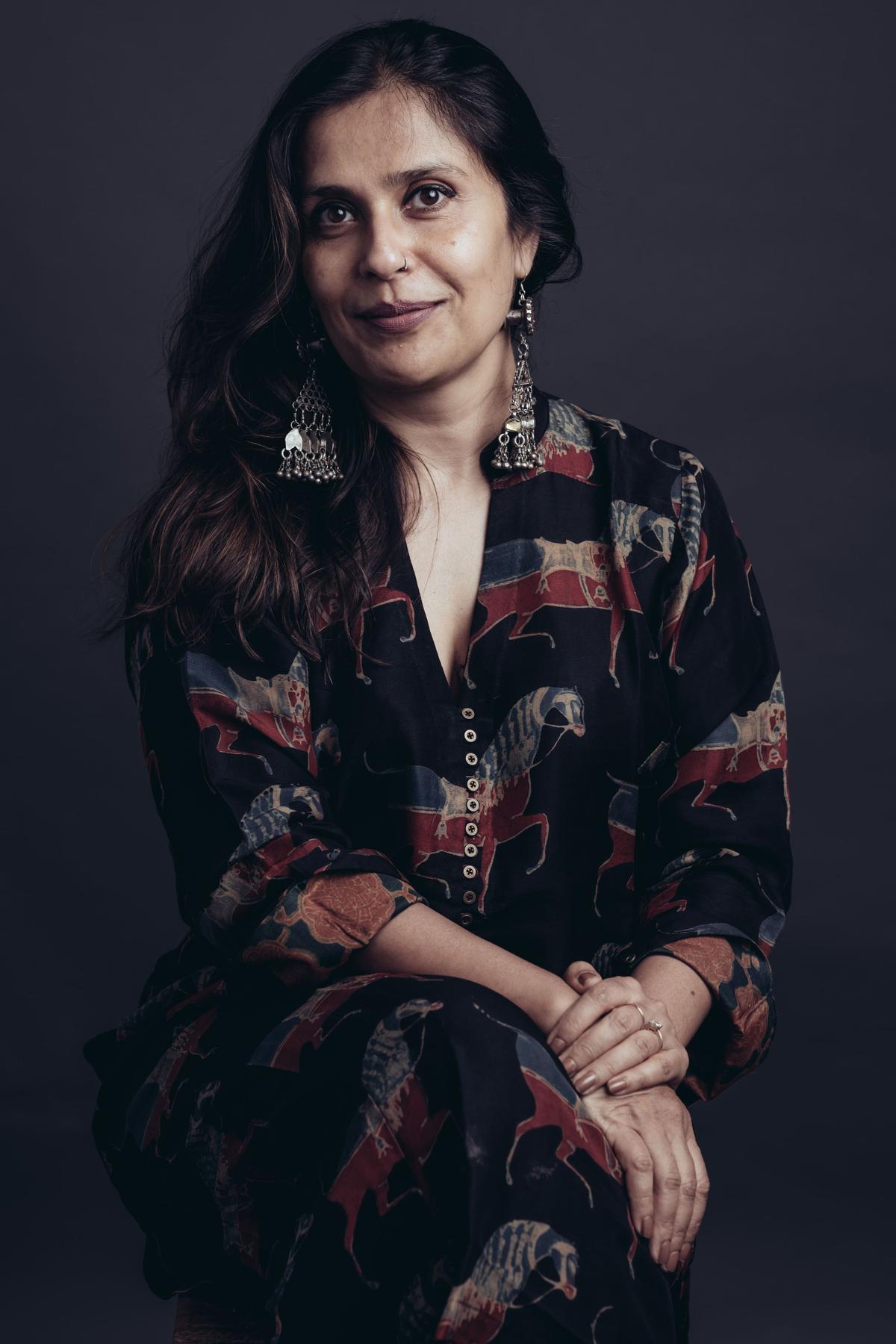
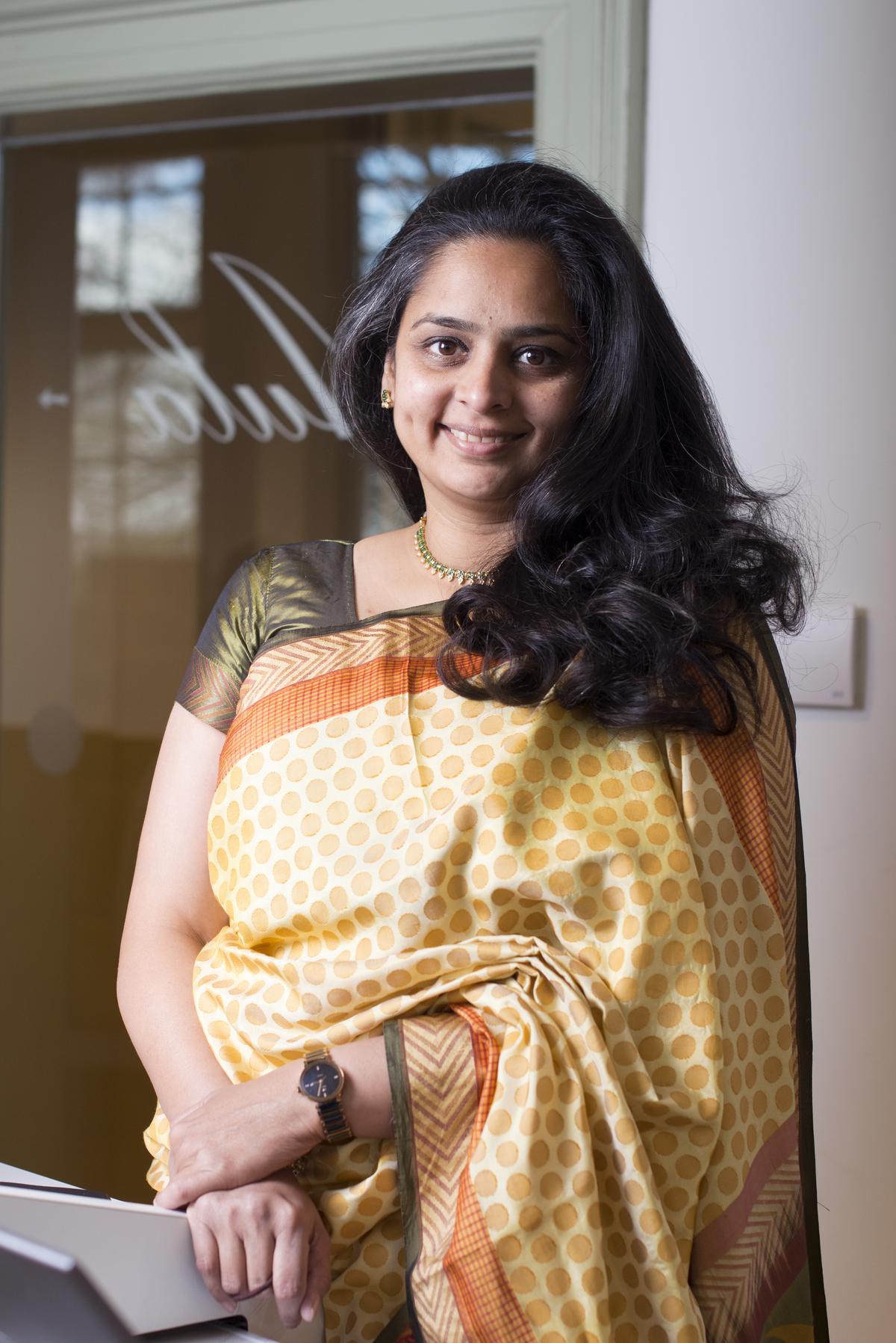
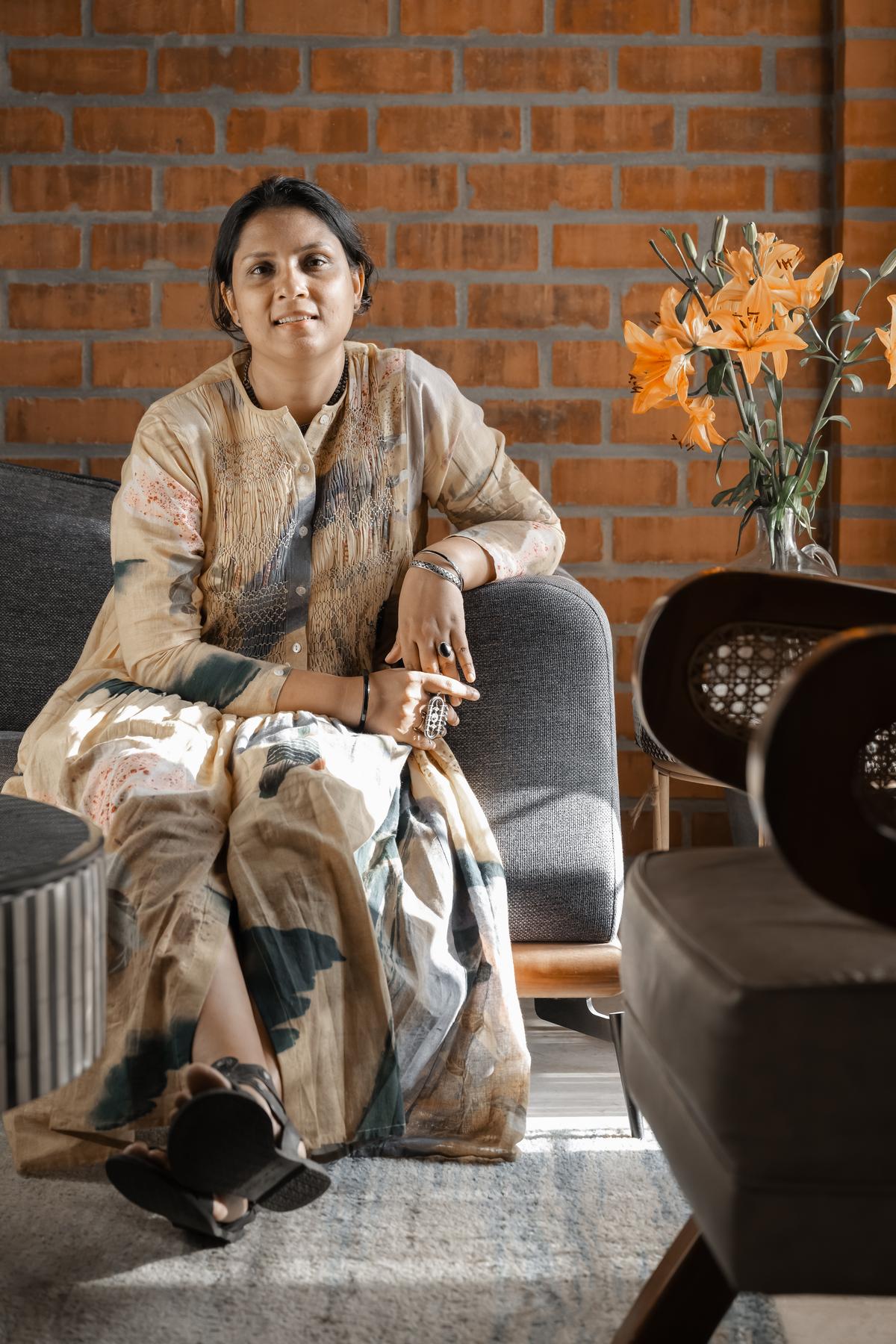
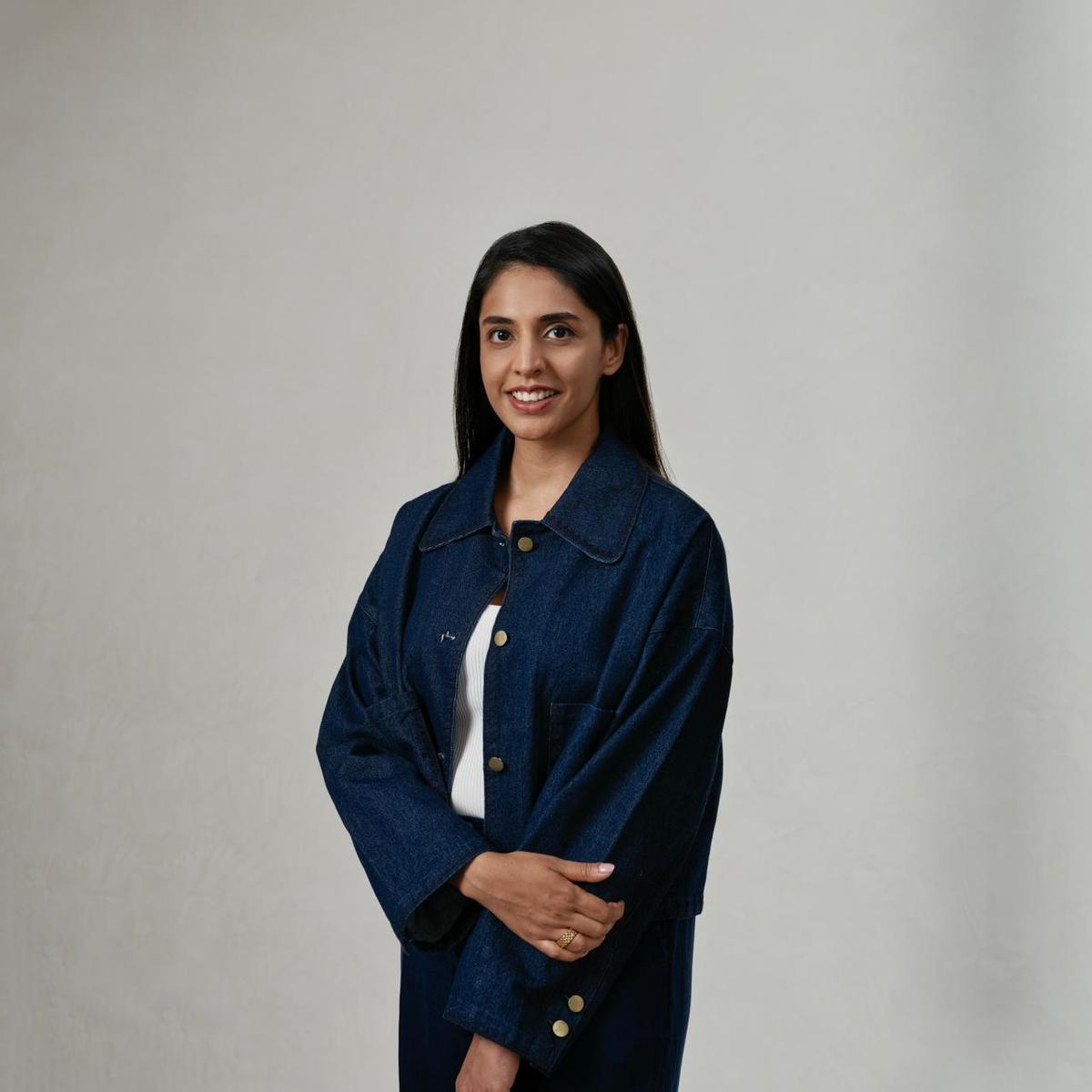
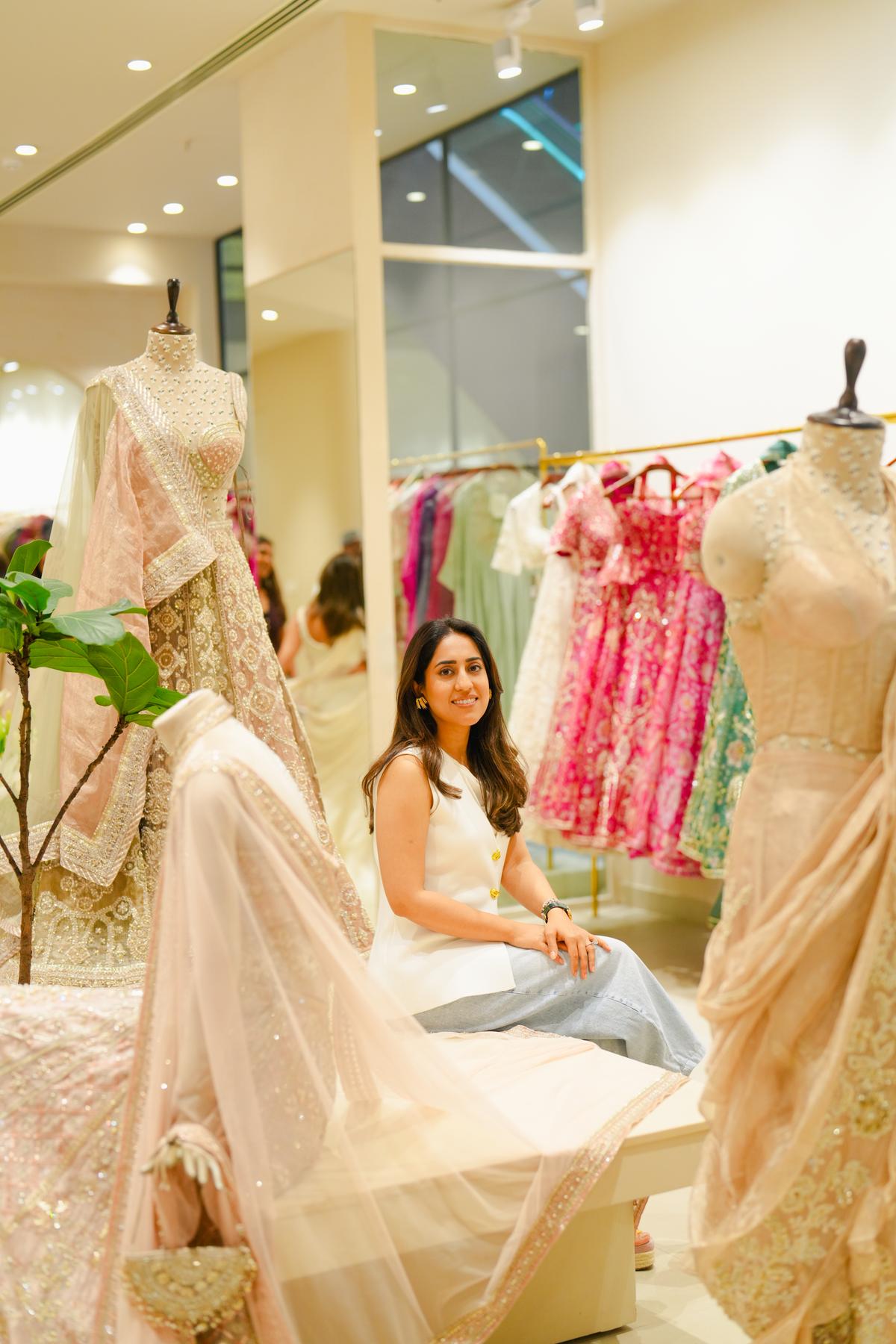
Aparna Challu, entrepreneur and founder of CraftsBazaar, The Festival of India, and Respect Origins

Aparna Challu, entrepreneur and founder of CraftsBazaar, The Festival of India, and Respect Origins
| Photo Credit:
Special Arrangement

“I want people to walk in and say — wow, this is India,” says Aparna Challu, entrepreneur and founder of CraftsBazaar, The Festival of India, a platform dedicated to empowering rural artisans in India by connecting them with global consumers. Respect Origins is its online platform, a marketplace for rural artisans.

Based in Bengaluru, Aparna has a global career background, which includes launching successful green trade operations in the UK and Europe before returning to India. She has been awarded with the Mahatma Gandhi Samman, the Priyadarshini Award, the Amazon Sambhav, and MSME Entrepreneur to name a few for her work in rural inclusivity, sustainability, creating equal economic and gender opportunities, and preserving India’s rich arts and crafts traditions in a model global context. “Winning awards is gratifying, but recognition has never been the goal. This kind of work can never be driven by commercial gain alone,” she says, adding, “It has to come from the heart.”

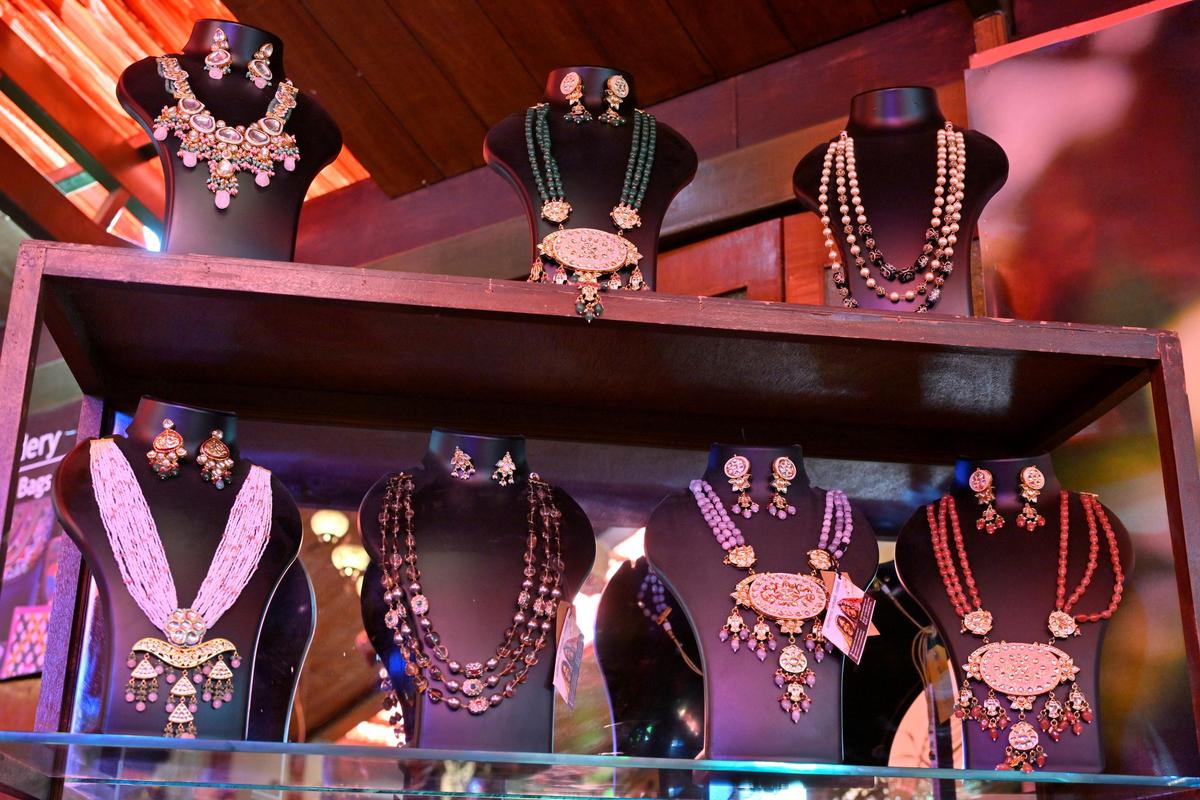
A curated collection of jewellery at the showcase

A curated collection of jewellery at the showcase
| Photo Credit:
SATHYAMOORTHY M

The idea of rural inclusivity began much earlier, shaped by a childhood spent moving across India due to an armed forces background. “Every year or year-and-a-half, we moved. Sometimes to small towns like Ozar, places nobody even knew how to reach then. There were no highways. You travelled by buses and trains. You became part of the local culture.” That connection became the foundation of Respect Origins. “Back then, there was no concept of rural and urban. There was just India,” she says and pauses to add, “ People farmed, wove baskets, made pottery, stitched garments, often seasonally while farming. Craft was a way of life. Knowledge passed on through observation, repetition, and memory.”

She started Respect Origins informally in 2015, originally as CraftsBazaar. For over a year, she travelled across India documenting crafts, long before information was readily available online. Her background in technology, combined with years spent working abroad, sparked a critical insight. “In the West, indigenous work is respected. Be it the farmer’s markets, handwoven textiles or needlepoint, people treasure these things. Somewhere along our development journey, we stopped valuing what came from our own soil. Our platform became a bridge, not a marketplace alone, but an ecosystem, where artisans are supported from start to finish.”

Respect Origin platform is an ecosystem, where artisans are supported from start to finish

Respect Origin platform is an ecosystem, where artisans are supported from start to finish
| Photo Credit:
SATHYAMOORTHY M

It offers help in product innovations without diluting authenticity, setting up bank accounts, GST compliance, sustainable packaging, logistics, and quality control in addition to access to buyers, retailers, and exporters. “The ownership must remain with those who produce, not those who sell,” she explains, adding that a newly migrated technology platform is being tested for international currencies, signalling the next phase of global access, without compromising artisan ownership.

Globalisation, she says, shut out millions of artisans who did not speak English, use computers, or navigate digital platforms, despite being skilled and deeply knowledgeable. “Today, if you want to buy an earthen pot, you can’t easily find one unless you’re travelling through interior roads. Imagine how difficult it is for the people who make them to sell. That dialogue between maker and buyer disappeared. And when that exchange goes, memory goes. Culture flows through memory,” says Aparna.

The collection includes tribal thread-and-metal jewellery to semi-precious stone pieces nfluenced by European aesthetics during the Maharaja era

The collection includes tribal thread-and-metal jewellery to semi-precious stone pieces nfluenced by European aesthetics during the Maharaja era
| Photo Credit:
SATHYAMOORTHY M

Back to The Festival of India, a curated celebration in the Nilgiris which is intentionally different. Heavily commercialised crafts are deliberately avoided. From tribal thread-and-metal jewellery to semi-precious stone pieces influenced by European aesthetics during the Maharaja era, the collection reflects migration, history, and exchange. “It’s about showcasing the finest, what is timeless. Nothing here is buy-and-throw. Every piece carries thought, time, and memory. What people wore every day once.”

Heavily commercialised crafts are deliberately avoided

Heavily commercialised crafts are deliberately avoided
| Photo Credit:
SATHYAMOORTHY M

The next edition will focus on Indian painting traditions with artists working live, creating murals, and accepting commissioned work. She adds, “We want patrons, not just consumers. And when value is created for everyone, the maker, the buyer, the culture, you know you’re doing something right.”

The exhibition runs till January 28 at Habba Kadal, 38, Coonoor-Kattabettu-Kotagiri Road, Yedapalli,Coonoor. For more details, call 7603821537

Published – January 03, 2026 07:58 pm IST


Source link

Keeping buildings alive | 4 conservation architects on continuity, repair, and responsibility


Buildings age the way cultures do: unevenly, politically, selectively. And cultures do not endure by clinging to form, but by carrying forward the spirit. Few practices make this distinction as tangible as conservation architecture. At its best, conservation is not about embalming buildings or sealing them off as relics. It is about keeping structures alive — socially, materially, and culturally — while acknowledging that time leaves marks, and that those marks matter.

In India, where cities grow as much by erasure as by expansion, conservation architecture sits at an uneasy crossroads. It is often reduced to sentiment, nostalgia, or elite indulgence. But speak to practitioners working in this field, and a different picture emerges: conservation as a way of thinking about continuity, repair, labour, and responsibility. Less about freezing history, more about negotiating with it.

Abha Narain Lambah, Mumbai

Buildings cannot survive as static objects’

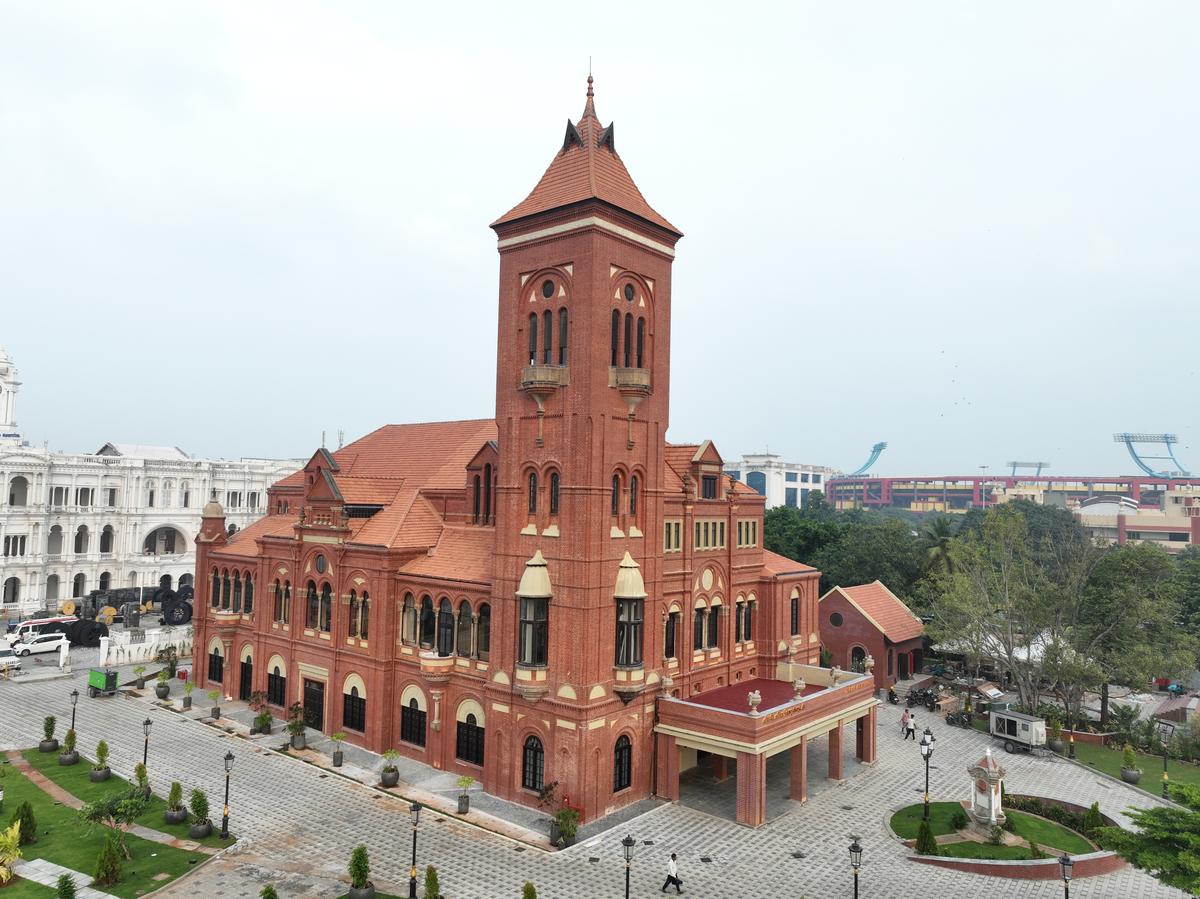
Recent project: Completed the restoration of the long-shuttered Victoria Public Hall in Chennai, reimagining the 19th-century landmark as a public museum and cultural space. For her, such projects are not endpoints but catalysts. “What makes it meaningful,” she notes, “is when people begin to imagine what else could be restored.”

Some structures are celebrated, restored; others are left to crumble quietly. Lambah, who has worked across monumental heritage and dense urban precincts for over three decades, recalls that when she began her practice in the mid-1990s, conservation in India was narrowly focused on a small, official list of monuments protected under the Ancient Monuments and Archaeological Sites and Remains Act. Streets, markets, neighbourhoods, vernacular buildings — the everyday fabric of cities — simply did not count.

Abha Narain Lambah

Abha Narain Lambah

That absence shaped her approach early on. “Conservation,” she argues, “cannot be limited to isolated buildings standing apart from social life. It must be understood as an urban, lived, and collective practice.” One of her earliest projects on Dadabhai Naoroji Road in Mumbai illustrates this ethos. Rather than treating the historic arterial street as a government-led beautification exercise, she worked directly with shopkeepers and residents, showing up week after week, talking through facades, materials, and identity. Over time, trust replaced suspicion. Eventually, 75 shopkeepers contributed from their own pockets towards restoring cobblestones, signage, and street character. It was conservation built not through authority, but through conversation — over many cups of chai.

The restored Victoria Public Hall in Chennai

The restored Victoria Public Hall in Chennai

“Most buildings cannot survive as static objects,” explains Lambah. “They need use.” Locked buildings deteriorate faster than inhabited ones: small cracks go unnoticed, water seeps in, roofs sag, pigeons and bats take over, and neglect compounds quietly. Occupied buildings, whether cultural centres or homes — are observed, maintained, and repaired. Their relevance extends their life.

Needs intervention: She often receives unsolicited messages from citizens suggesting future sites — “buildings waiting to be restored,” as one message put it, pointing to the Bharat Insurance Building on Mount Road. For Lambah, this quiet public yearning is the true measure of conservation’s success.

Aishwarya Tipnis, New Delhi

Family homes carry cultural value, too’

Recent project: Currently engaged in a conservation-led master plan for The Lawrence School, Sanawar, a historic hill-campus where heritage buildings, landscapes, and everyday student life are being treated as a continuous living system.

Once conservation moves beyond monuments, uncomfortable questions surface. Whose history is deemed worthy of protection? Who has access to conserved spaces? Who pays for upkeep — and who benefits from a building’s renewed visibility?

Tipnis, whose work often focuses on domestic and everyday heritage, argues that “heritage should not be restricted to royal lineages” or grand narratives. “Everyone has heritage,” she insists. “A middle-class family home, altered over generations, carries cultural value, too.” The problem is not lack of attachment — most people want to keep what they inherit — but lack of resources, time, and guidance.

Aishwarya Tipnis

Aishwarya Tipnis

Her approach emphasises care at an intimate scale. In projects such as the careful repair of a modest house in Old Delhi, working within tight budgets and with fragile Mughal-era bricks, Tipnis’ intervention is deliberately restrained. Cracks are stabilised, materials respected, and contemporary needs accommodated without visual drama. “When my design is invisible, conservation has succeeded,” she says. It is slow work: spending time with residents, understanding how people live now, and allowing the building to respond without pretending it belongs to another class, another century, or another imagination.

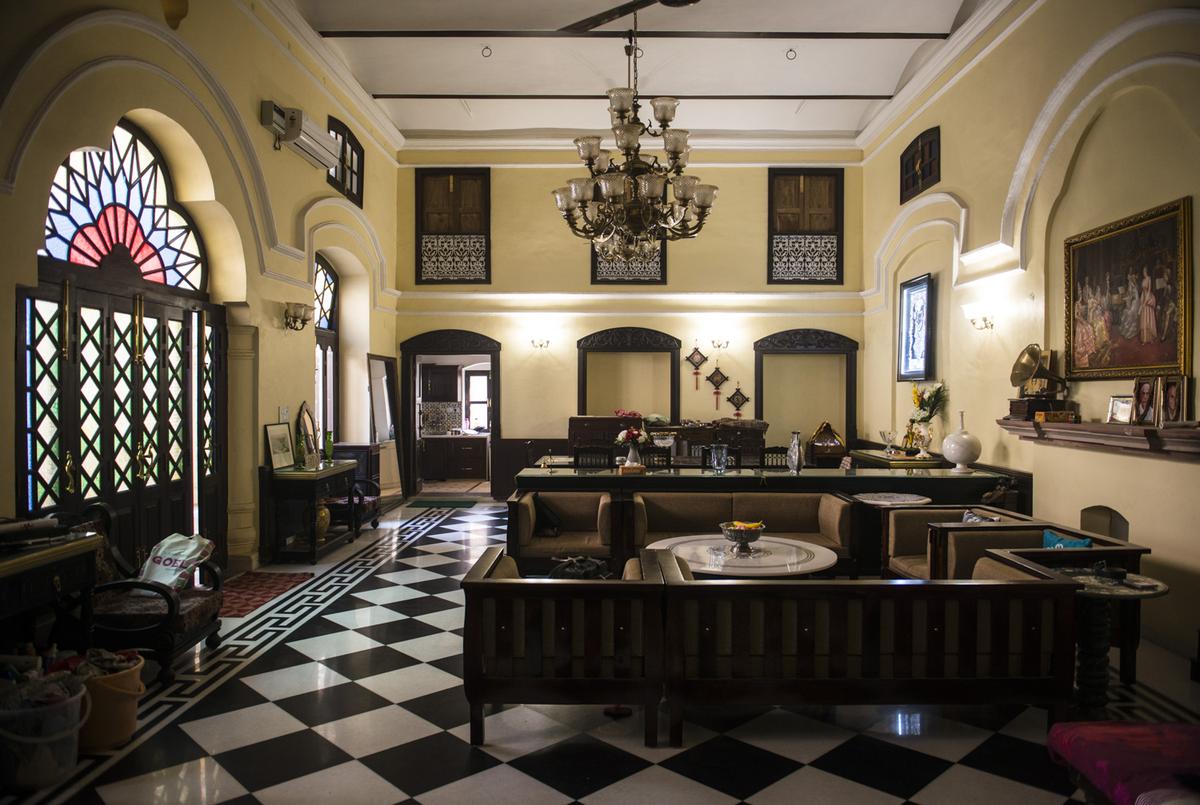
The drawing room of Seth Ramlal Khemka Haveli in Old Delhi after restoration

The drawing room of Seth Ramlal Khemka Haveli in Old Delhi after restoration

The Lawrence School, Sanawar

The Lawrence School, Sanawar

This ethos stands in contrast to both demolition-driven redevelopment and cosmetic heritage makeovers. It also foregrounds labour — craft knowledge, local skill, and long-term maintenance — as central to conservation’s ethics.

Needs intervention: Siliguri Town Station that’s a starting point for the Darjeeling Himalayan Railway. “It’s dilapidated and abandoned, and actually a UNESCO World Heritage Site.”

Benny Kuriakose, Chennai

Tap into India’s living craft tradition’

Recent project: An over 200-year-old property in Ayyavandlapalle village, Andhra Pradesh. “It’s an interesting case study. The person restoring the jointly owned ancestral house has ‘first right to buy’ if one of the family members wants to sell their share. It’s a good model for heritage houses in places like Chettinad.”

For Kuriakose, whose practice draws deeply from vernacular traditions and the legacy of architect Laurie Baker, conservation is inseparable from living systems. Vernacular buildings were never meant to last untouched for centuries; they were designed to be repaired, altered, and rebuilt. That cyclical understanding of time challenges modern obsessions with permanence and novelty.

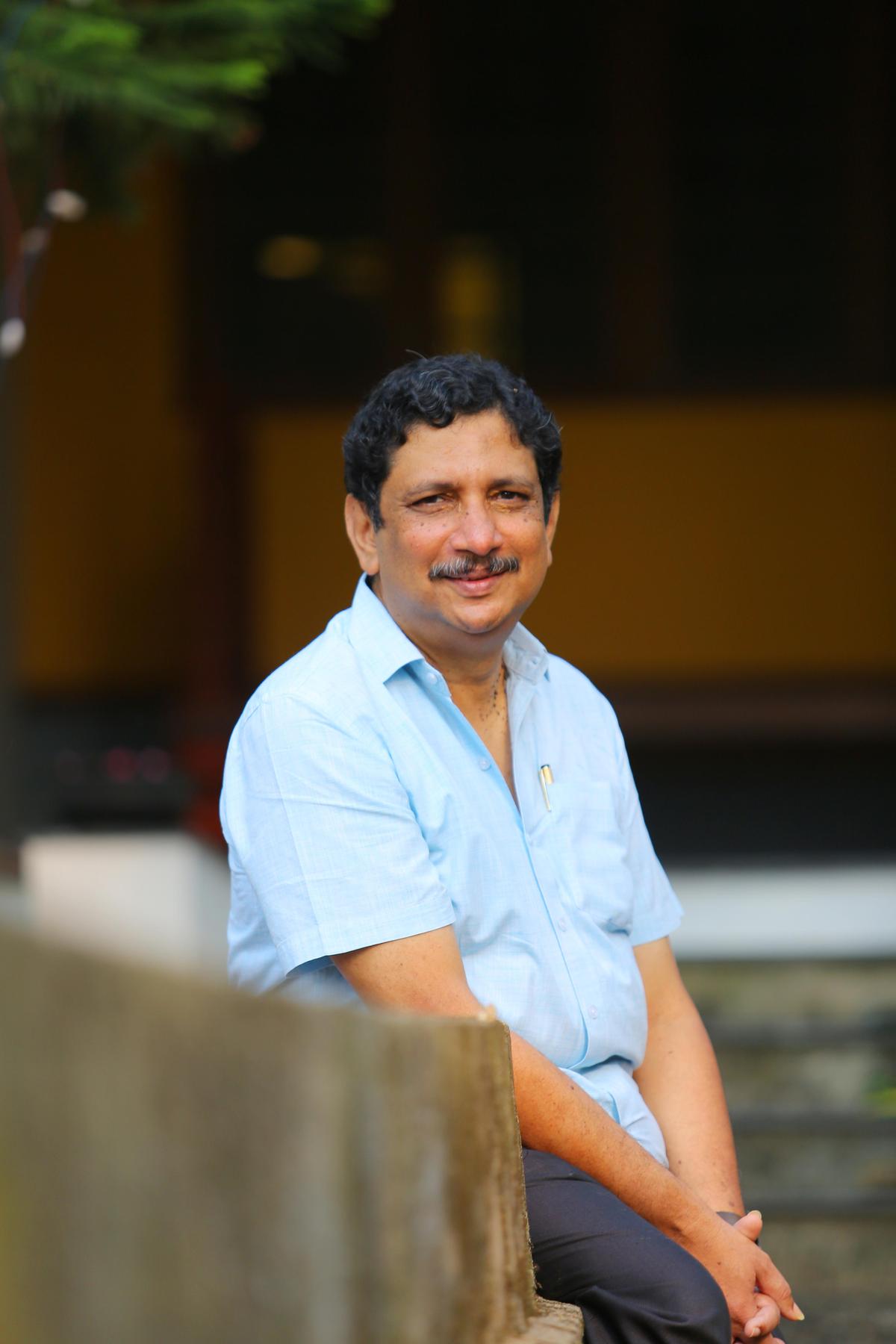
Benny Kuriakose

Benny Kuriakose

“India still has a living craft tradition — masons, carpenters, tile-makers — whose knowledge is embodied rather than codified,” he says. “Conservation that relies solely on imported materials or technological fixes sidelines this intelligence.” Kuriakose’s work prioritises principles over style: climate responsiveness, local materials, skilled labour, and human comfort, while remaining pragmatic about contemporary needs. This is evident in projects such as The Bird at Your Window in Coimbatore, a residential development that draws from vernacular ideas of light, ventilation, verandahs, and landscape to create homes that reduce energy dependence.

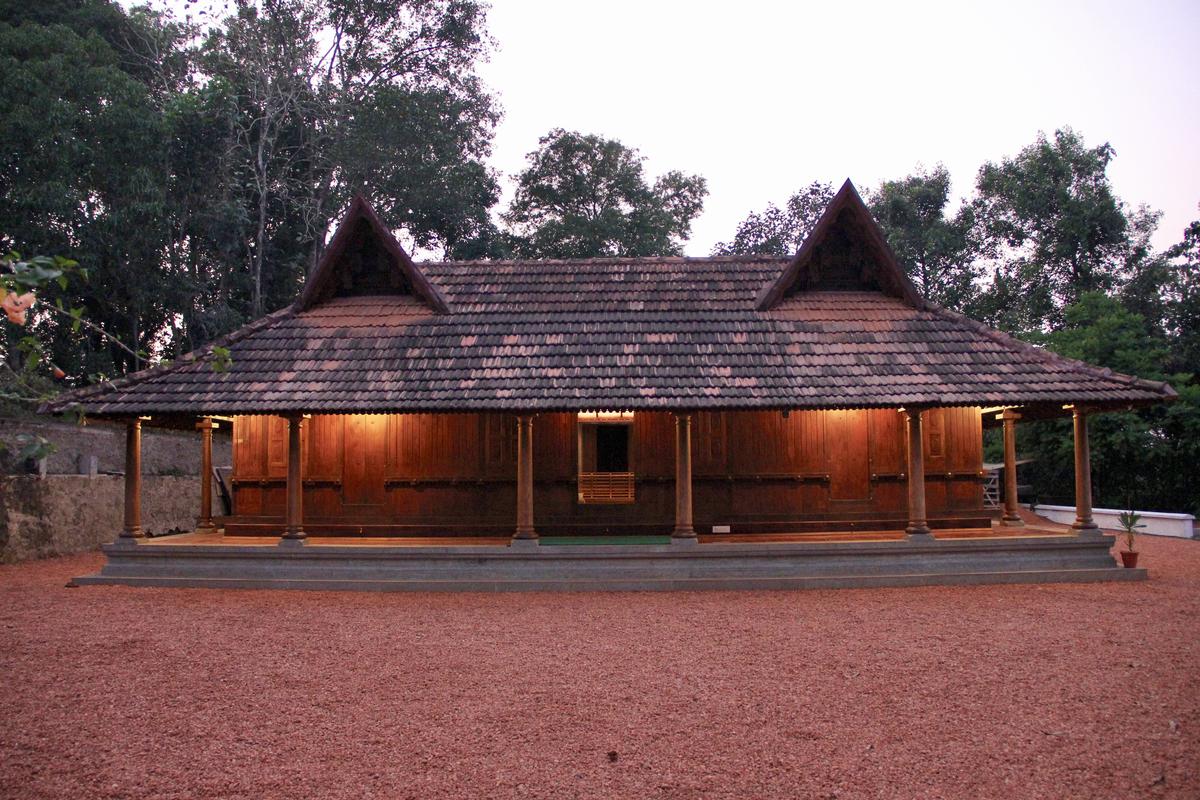
Panicker House, an over 300-year-old house building with timber walls in Thiruvalla, Kerala, which was conserved.

Panicker House, an over 300-year-old house building with timber walls in Thiruvalla, Kerala, which was conserved.

This also reframes sustainability, and justice. Paying craftspeople fairly, valuing how work is done rather than how quickly it is completed, and designing buildings that reduce long-term energy dependence are political choices — even when they appear modest.

Needs intervention: “I’d like to see ordinary old buildings being conserved for the future. I have seen so many disappear in Mylapore and George Town in Chennai.”

Why should the public care?

This goes far beyond cultivating heritage pride as sentiment. It is about architectural literacy (learning to read materials and spaces), environmental intelligence (recognising that reuse is often more sustainable than replacement), and cultural humility (accepting that not everything new is better). When restored buildings are opened to the public — railway stations lit sensitively, theatres reopened after decades of closure — something shifts. The restoration of Mumbai’s Royal Opera House by Lambah is a case in point. Once shuttered and fading from public memory, its reopening allowed older generations to reconnect with a shared cultural landmark, while introducing younger audiences to a space they had never known. Conservation succeeds not when a building looks pristine, but when it becomes part of everyday life again.

Raya Shankhwalker, Goa

See modern heritage as meaningful’

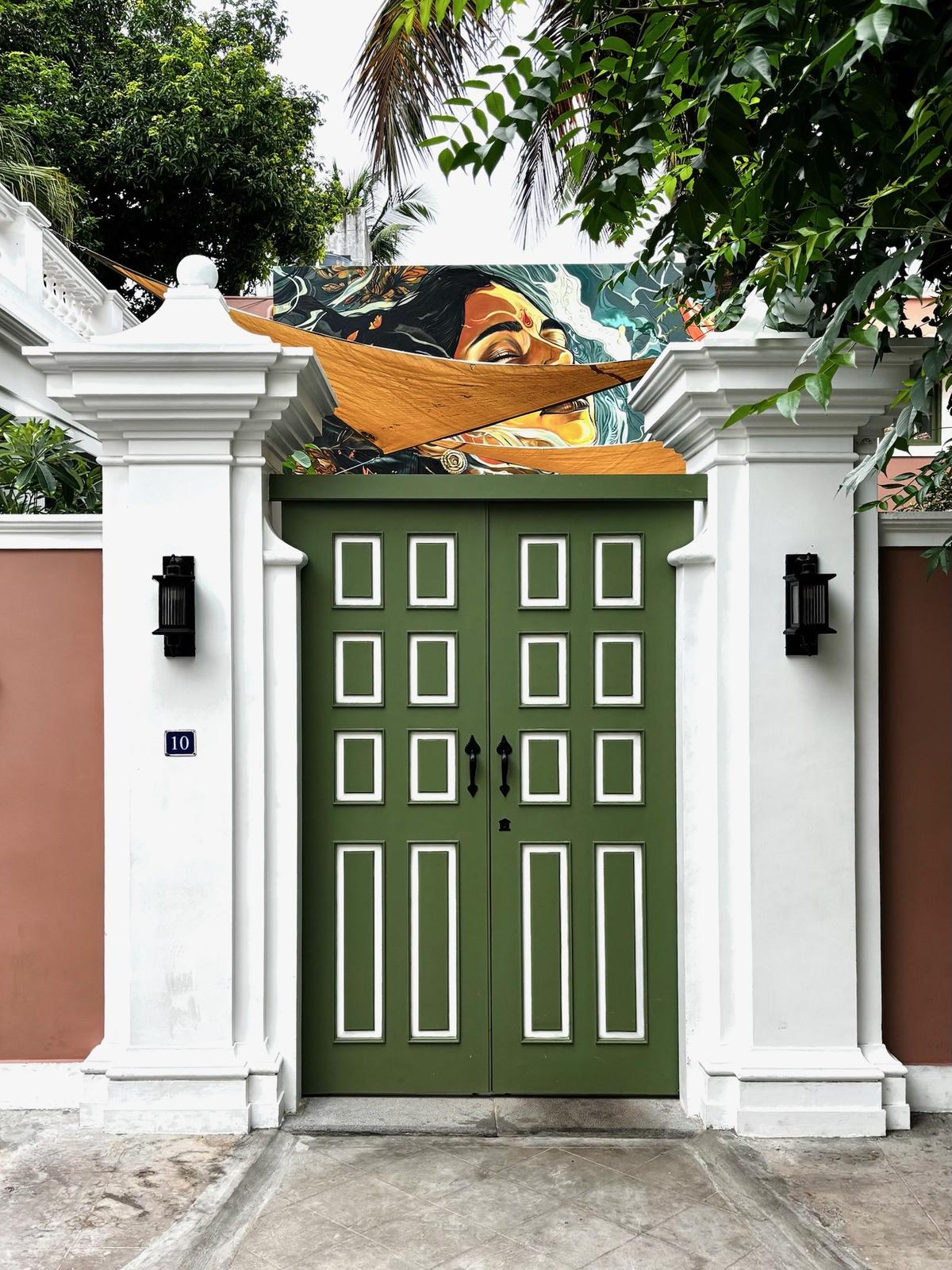
Recent project: “In Puducherry, we completed the conservation and adaptive reuse of a Franco-Tamil villa [into a café-garden bar]. By re-establishing its relationship with the street, it sets a precedent that could encourage neighbouring owners to follow suit.”

Urban conservation rarely advances on expertise alone. It requires public pressure. Shankhwalker, known for his work in Goa and his role in heritage advocacy, emphasises that legislation often follows activism, not the other way around. Cities like Panjim benefited from early designation of conservation zones, but many Indian towns still lack basic frameworks to protect even significant modern heritage.

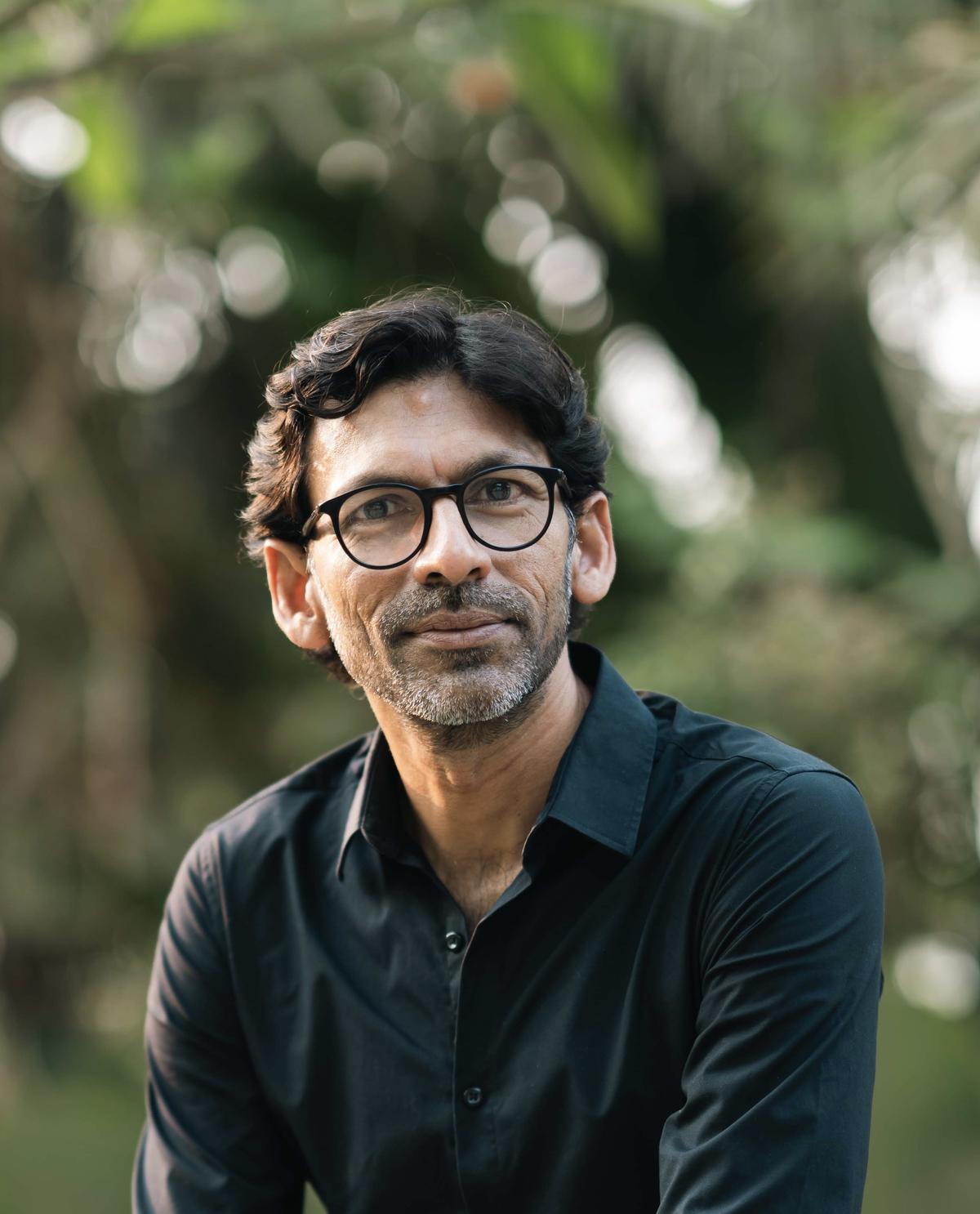
Raya Shankhwalker

Raya Shankhwalker

“The recognition of Mumbai’s Art Deco precinct as a UNESCO World Heritage Site marked a shift not because the buildings were ancient, but because they forced a rethinking of value,” he says. “Modern heritage — cinemas, apartment blocks, civic buildings — does not wear the aura of antiquity. Its survival depends on people learning to see it as meaningful.”

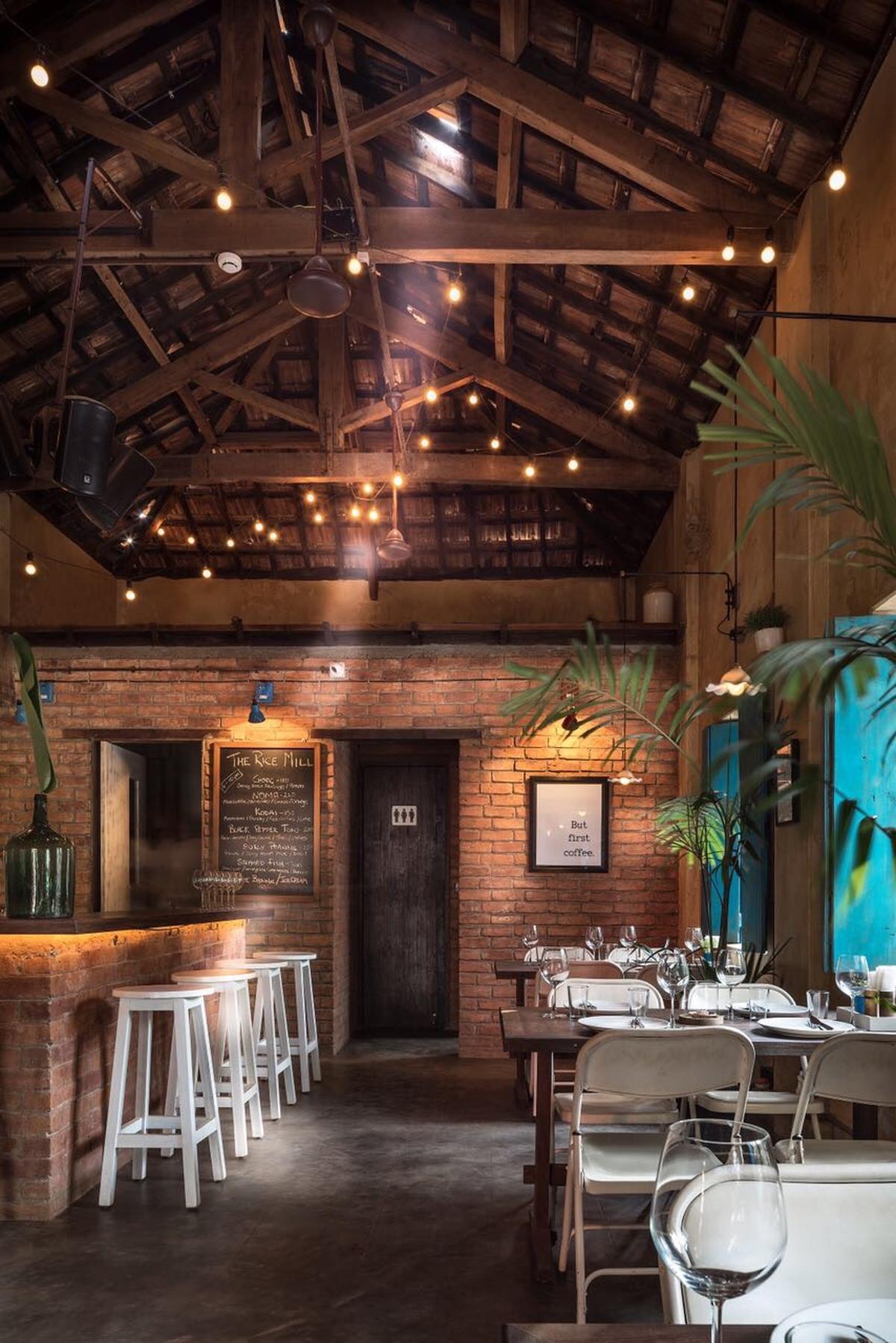
Small interventions can have disproportionate impact. A restored rice mill in Morjim, completed in 2024, exemplifies this approach. Originally built in the 1950s, the mill was adaptively reused as a café-bar, with its architectural elements carefully restored. Glass inserts in the Mangalore-tiled roof allow natural light to filter in; everyday objects from the mill’s past were repurposed as elements of décor. Now functioning as a café and jazz venue, it demonstrates how a modest structure can retain its spatial essence while becoming a contemporary gathering place.

Hacienda de Bastora

Hacienda de Bastora

The restored rice mill

The restored rice mill

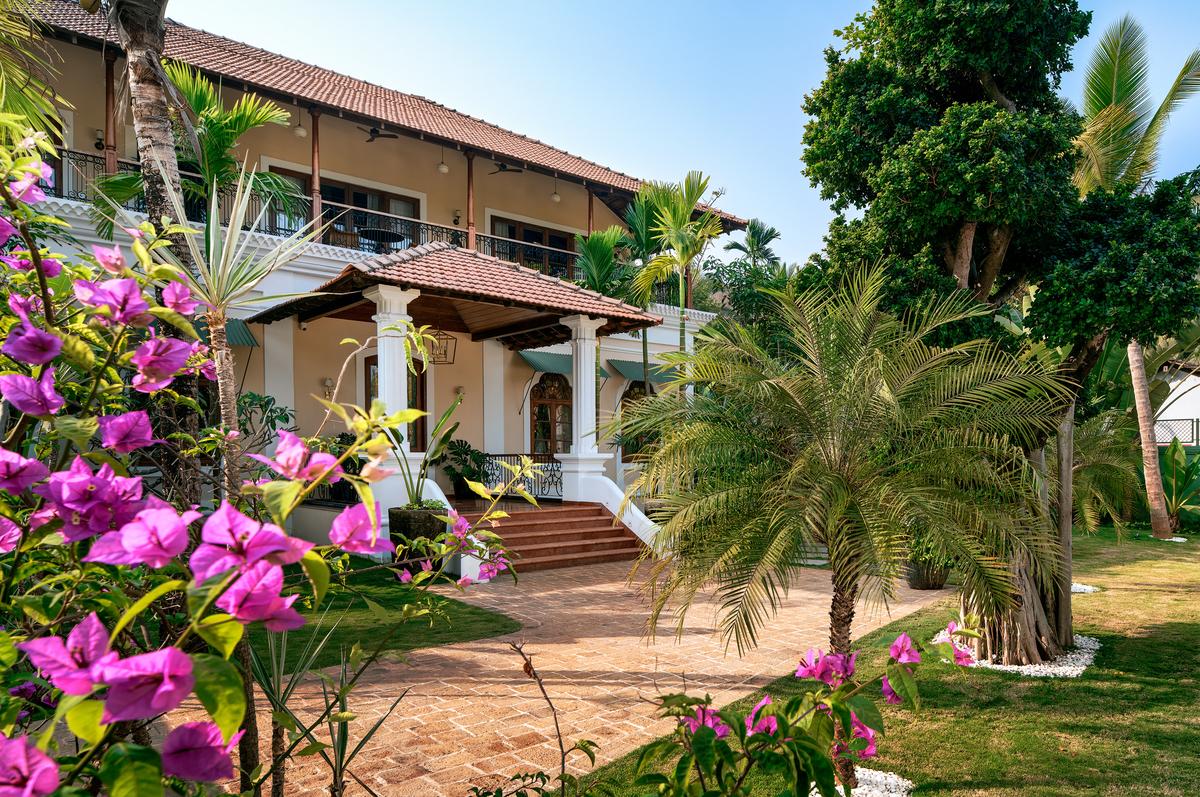
In Puducherry, his careful undoing of insensitive renovations in a Franco-Tamil villa — such as restoring the characteristic pillars integral to the architectural style — re-established its relationship with the street, setting a precedent that encouraged neighbouring owners to follow suit. Conservation here works contagiously: one repaired building changes how others are perceived.

Entrance to the Franco-Tamil villa

Entrance to the Franco-Tamil villa

Needs intervention: “The Massano De Amorim building in Panjim. Built around a large open ground, it needs urgent restoration as much for its architectural character as for its importance to the streetscape.”

The essayist-educator writes on culture, and is founding editor of Proseterity — a literary arts magazine.


Source link

Five ways in which technology will rewire life in 2026


Every year, technology asks us to look ahead. It rarely changes life in the way keynotes promise. But, lived experiences tell a different story. Technology that reshapes life seldom announces itself. It becomes a habit, then turns into dependency. As 2026 approaches, the most meaningful shifts are already underway. This year, technological advances will not look like breakthroughs. They will appear to be rather normal.

Following thus are five tech trends that will shape the year ahead:

McDonald’s has begun deploying artificial intelligence systems across hundreds of its Indian outlets to verify orders before they reach customers

McDonald’s has begun deploying artificial intelligence systems across hundreds of its Indian outlets to verify orders before they reach customers
| Photo Credit:
Special arrangement

Artificial intelligence

Artificial intelligence (AI) is set to remain widespread in 2026, but it will blend into the background rather than grab headlines. AI is turning from a feature to an infrastructure. Instead of being a flashy feature, AI will work behind the scenes power everything, from logistics and credit checks to customer support and fraud detection, often without users even realising it.

In India, this shift is most visible in large service businesses, where efficiency matters more than storytelling. McDonald’s has deployed AI across hundreds of its Indian outlets to verify orders before they reach customers. McDonald’s has also expanded its global AI development presence in Hyderabad, positioning India as a back-end hub for operational intelligence rather than a test market for flashy features.

Other large food chains in India operate with a similar, quiet dependence on a particular software. At Domino’s Pizza India, operated by Jubilant FoodWorks, operates a centrally managed, vertically integrated supply chains in which inventory levels across outlets are monitored through point-of-sale systems and regional commissaries. The planning is software-driven, built to reduce disruption and keep consistency at scale.

The same pattern appears across Indian enterprise software. Companies route customer support requests automatically, prioritise them based on urgency, and present them to human agents already sorted. Users get faster fixes. The intelligence stays out of sight.

By 2026, phones will increasingly serve as gateways to larger digital environments rather than standalone devices.

By 2026, phones will increasingly serve as gateways to larger digital environments rather than standalone devices.
| Photo Credit:
Special arrangement

Reconnecting with smartphone

For over ten years, smartphones have been at the heart of consumer tech, with annual advances in processors, cameras, and designs. By 2026, upgrades will feel incremental.

What matters is continuity across ecosystems. Phones will increasingly serve as gateways to larger digital environments rather than stand-alone devices. Some integrations count more than raw specifications. Meanwhile, software continuity and ongoing support will quietly replace novelty as indicators of quality.

Camera manufacturers signal this shift clearly. Sony’s Alpha cameras, including models sold in India, are built around workflows that assume the presence of a smartphone. Images are transferred wirelessly to mobile apps, synced to cloud services, and edited or shared on phones before reaching larger screens. In hospitality, a similar consolidation is visible. Taj Hotels offers a mobile application that brings together bookings, loyalty benefits, payments, and service requests within a single interface. The device matters less than the continuity it enables.

By 2026, the smartphone will still be indispensable. It will just not surprise anyone. Its value will lie in how quietly it holds everything else together.

In 2026 privacy will shift from being a company’s claim to a feature that products are designed to support

In 2026 privacy will shift from being a company’s claim to a feature that products are designed to support
| Photo Credit:
Special arrangement

The privacy promise

For years, privacy existed mainly in policy documents and disclaimers that few users read. By 2026, this gap will close. Privacy will shift from being a company’s claim to a feature that products are designed to support.

In India, this change is driven more by infrastructure than by rhetoric. Digital payments platforms exemplify this: PhonePe and Google Pay function within a regulatory framework that mandates explicit, purpose-specific consent for transactions. Permissions are action-specific, limiting unnecessary data collection and compliance risk. This approach reflects the intent of the Digital Personal Data Protection Act, even as its implementation remains contested. The now-revoked mandatory Sanchar Saathi app, along with broader debates about surveillance, has kept location data and app permissions in view.

Travel platforms have adapted similarly. Companies like MakeMyTrip publicly specify data retention and usage policies that limit how long personal and location information is stored once a trip concludes. Data is collected to complete a booking, then dismissed.

Indian software firms take a more precise and more deliberate stance. Zoho, an enterprise software company, has repeatedly emphasised avoiding advertising-centric models and limiting data collection by design.

Restaurants send a quieter signal. QR menus remember for the visit, then forget.

These examples lead to one conclusion: In India, privacy survives when it is engineered into systems rather than promised in statements.

Hospitality operators also prioritise practicality, with hotel chains like ITC Hotels providing electric vehicle charging as a convenience rather than a feature, emphasising reliability over scale

Hospitality operators also prioritise practicality, with hotel chains like ITC Hotels providing electric vehicle charging as a convenience rather than a feature, emphasising reliability over scale
| Photo Credit:
Special arrangement

Pragmatic transition

For years, electric mobility in India was seen as aspirational, symbolising cleaner cities, futuristic vehicles, and progress. The fleet, delivery route, and bus depot all play a key role in building a strong persuasive case.

Delivery services like Zomato and Swiggy have discussed deploying electric two-wheelers, with vehicle choices driven by uptime, maintenance, and charging reliability, rather than environmental impact. Public transport reflects this trend, with agencies like BEST highlighting the importance of depot charging and battery performance over range claims. Hospitality chains, like ITC Hotels provide electric vehicle charging as a convenience rather than a feature.

Employee code

Workplace technology used to promise efficiency, but it often meant longer days and busier schedules. By 2026, this tension becomes too significant to ignore. The next turn is quieter: tools that reduce interruption, protect focus, and keep decisions legible. In India’s services sector, large employers such as Infosys and Tata Consultancy Services have acknowledged churn, changing expectations, and have expanded hybrid work with asynchronous collaboration.

Meetings are still happening, but more work now moves through written context, with decisions recorded once instead of repeated endlessly. Globally, GitLab treats documentation as the default, with meetings optional rather than inevitable.

What links these transformations is not speed but stability, as technology transitions from just a spectacle to a fundamental part of everyday infrastructure. By 2026, the importance of progress will shift from its appearance to its reliability.


Source link

The future of dating in 2026: Why travel, casual connections and offline meetings are redefining relationships


A friend of mine recently told me, quite casually, that she had travelled to Bengaluru, Goa and even Kerala in 2025 to meet three different men she had matched with after switching her Tinder to Passport mode. She said it almost cheerfully, as though she were talking about weekend plans rather than dating logistics.

“I’ve never even been to these places before,” she laughed, “and suddenly I have memories in all of them.” The dates, she added, were genuinely good — long walks, easy conversations, and meals that stretched late into the evening — and the best part was that none of it felt heavy. The boys she met are all planning to visit her in Mumbai soon, not under pressure but with a sense of pleasant continuity. “I’m great,” she said, and she meant it.

I have been thinking about that conversation a lot, partly because it feels like a pretty accurate snapshot of where dating might be headed this year — not towards grand resolutions, but towards lighter and more mobile forms of connection. Territorial dating, if you want to call it that, seems to be growing, not because people are afraid of commitment, but because distance keeps things breathable. As another friend put it later, “Everyone behaves better when there is a return flight booked.” There is something about knowing that the encounter has edges that makes people kinder, more present, and less inclined towards building fantasy kitchens before dessert.

Keeping it light

This sense of keeping things light seems to extend well beyond travel. Dating apps, for instance, are still very much around, but no one speaks about them with reverence anymore. It has lost its promise of destiny and settled comfortably into the role of logistics. “The app is just the corridor,” someone told me. “The date is the room.” Another friend shrugged and said she uses them the way she uses Google Maps — helpful, occasionally irritating, and not something she expects to fall in love with. Romance, if it happens, is treated as a bonus rather than a deliverable.

What has shifted, though, is where people seem to expect connection to actually unfold. There is a noticeable pull back towards physical spaces, not in a dramatic offline rebellion, but in a gentler way. Book launches, where people stay longer than necessary; reading clubs, where half the group has not finished the book and no one is particularly apologetic about it; or movie screenings that turn into dinner because the conversation feels unfinished. “I miss meeting people without context,” someone said to me. “No bio, no algorithm — just one thing they say that makes you look up.”

At some point, inevitably, run clubs enter the conversation. They always do now, slightly sheepishly, as though no one intended them to become relevant to dating. But they are. “If you still want to see someone after running next to them, that’s not chemistry — that’s compatibility,” said a regular. There is an honesty about meeting people when your body has already done the emotional work for you.

Mumbai, of course, is experimenting. Curated dinners with strangers, already popular, feel less like matchmaking initiatives and more like social reset buttons. There is also a subtle change in how people are choosing. “I’m done putting all my eggs in the first interesting basket,” a friend said. Another paused and added, more thoughtfully, “I’m not confused. I’m just watching myself more closely.” Dating, in this version, becomes less about intensity and more about information — about noticing how you feel before, during and after.

Someone else summed it up in a way that has stayed with me: “Dating now is about protecting your future self, not impressing your current one.” The question has shifted slightly, from can I fall for them to how do I feel when I leave?

So, where is dating headed in 2026? It is hard to say. It may remain messy and circular, full of revisions and soft exits. But perhaps it also becomes a little lighter, funnier, and less invested in spectacle. It is less about predicting outcomes, more about collecting experiences that do not exhaust us. We still want love — of course we do. We are just learning to let it arrive without a dramatic monologue, a five-year plan, or the urgent need to decide what it all means.

A fortnightly guide to love in the age of bare minimum

Published – January 02, 2026 04:15 pm IST


Source link

Design’s next chapter: 2026 forecast


A new year is more of a mosaic versus a stark, clean slate, each piece shaped by what came before. From layered maximalism to nuanced minimalism, material-forward thinking to quieter takes on luxury, 2026 ushers in an evolution that confirms there’s ample room for diverse sensibilities to coexist.

“There’s such power in personality — the focus is now on spaces that feel like ours, designed to reflect their people and not an editorial look,” says Mehek Malhotra, art director, Giggling Monkey Studio. The tides seem to drift homewards, observes Farah Ahmed, co-founder at FADD Studio, “Indian kaarigari and creations are omnipresent at global fairs. The world seeks their inclusion in architecture and interior design with more enthusiasm than ever before.” Curated with expert insights, this forecast maps what’s next for the design landscape.

Colour rules the canvas

Arun Shekar Gowda and Mohammed Afnan – Humming Tree, Kozhikode and Muscat

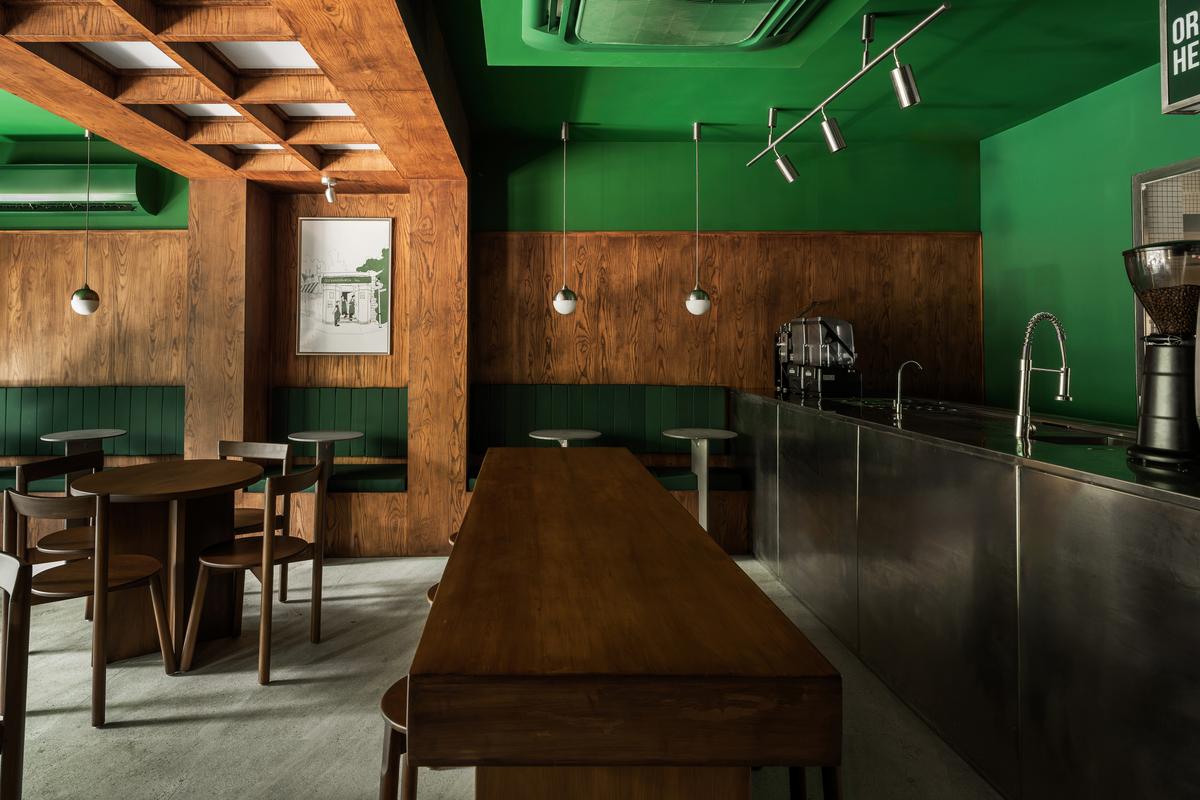
A deep forest green hue dramatically washes over the walls and booths at Beyondburg inc.

A deep forest green hue dramatically washes over the walls and booths at Beyondburg inc.
| Photo Credit:
Studio f/8

There is an indelible quality to the spaces created by the principal architects at Humming Tree, Arun Shekar Gowda and Mohammed Afnan. “Homes and hospitality projects are driven by experience. And colour is the most evocative medium to express this,” Gowda shares. Their chameleonic approach is a testament to their seasoned art of decoding a client’s brief — all while employing colour with the confidence of an artist meeting canvas.

Mohammed Afnan and Arun Shekar Gowda.

Mohammed Afnan and Arun Shekar Gowda.
| Photo Credit:
Gokull Rao Kadam

Within this Kochi residence, colour makes an omnipresent debut in art, textiles, and focal furniture.

Within this Kochi residence, colour makes an omnipresent debut in art, textiles, and focal furniture.
| Photo Credit:
Muhammed Hani and Shijo

“We see a striking shift in the direction of colour and rich pigments — think burgundy, teal, olive, and browns. They’re moody, experimental hues that form colour palettes that work across surfaces, objects of interest, and spatial features,” notes Afnan.

Shine, reimagined

Amirah Ahamed – Bodhi Design Studio, Bengaluru

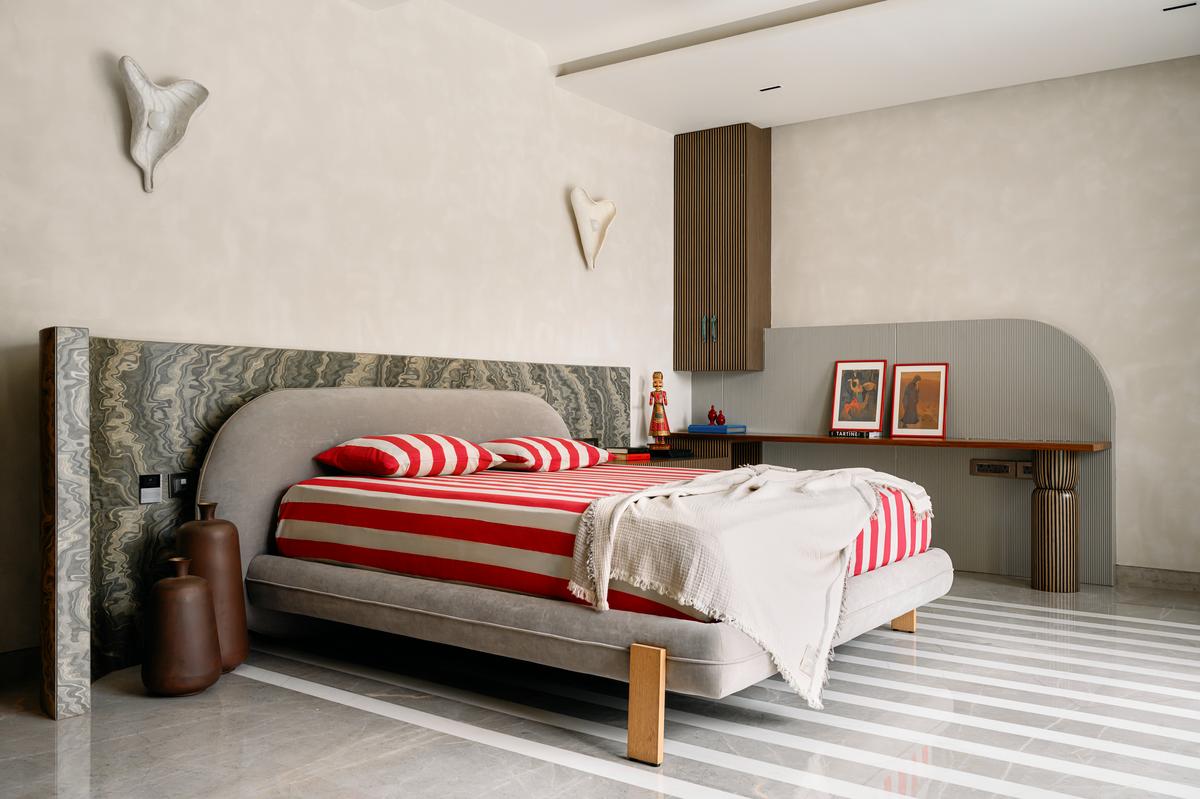
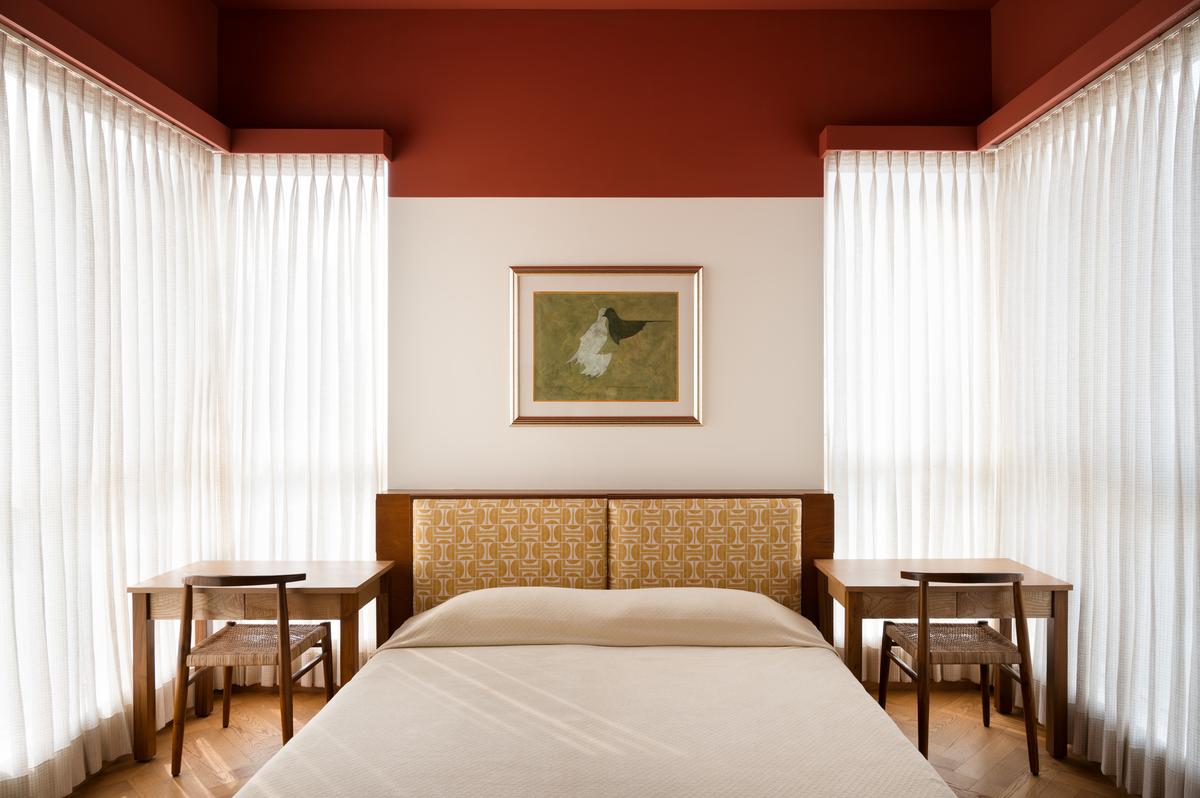
In one of the bedrooms, a medley of stripes intersects with the veining of burl veneer. Styling: Fymin Naif and Nimitha Harith.

In one of the bedrooms, a medley of stripes intersects with the veining of burl veneer. Styling: Fymin Naif and Nimitha Harith.
| Photo Credit:
Justin Sebastian

Materials don a more sentient role: tactile, textured, and here to make a statement. Imagery within spaces leans toward balance rather than excess, and architect Amirah Ahamed’s work is a fitting testament. Her practice, Bodhi Design Studio, is synonymous with a rooted ethos, albeit with a modernist spin.

Amirah Ahamed

Amirah Ahamed
| Photo Credit:
Arjun Krishna

Vyōmam’s home office is immersed in green, with a stainless-steel ripple sheet that creates an illusion of speckled distortion. Styling: Fymin Naif and Nimitha Harith.

Vyōmam’s home office is immersed in green, with a stainless-steel ripple sheet that creates an illusion of speckled distortion. Styling: Fymin Naif and Nimitha Harith.
| Photo Credit:
Justin Sebastian

“Metallic finishes are truly having a moment. Ripple and ombré metal sheets are here to stay. They work beautifully across large surfaces that crave character and depth,” Ahamed avers. Glass blocks, burl veneers, and the use of mild steel have marked their presence within projects, straddling restraint and versatile design sensibilities.

Design goes dramatic

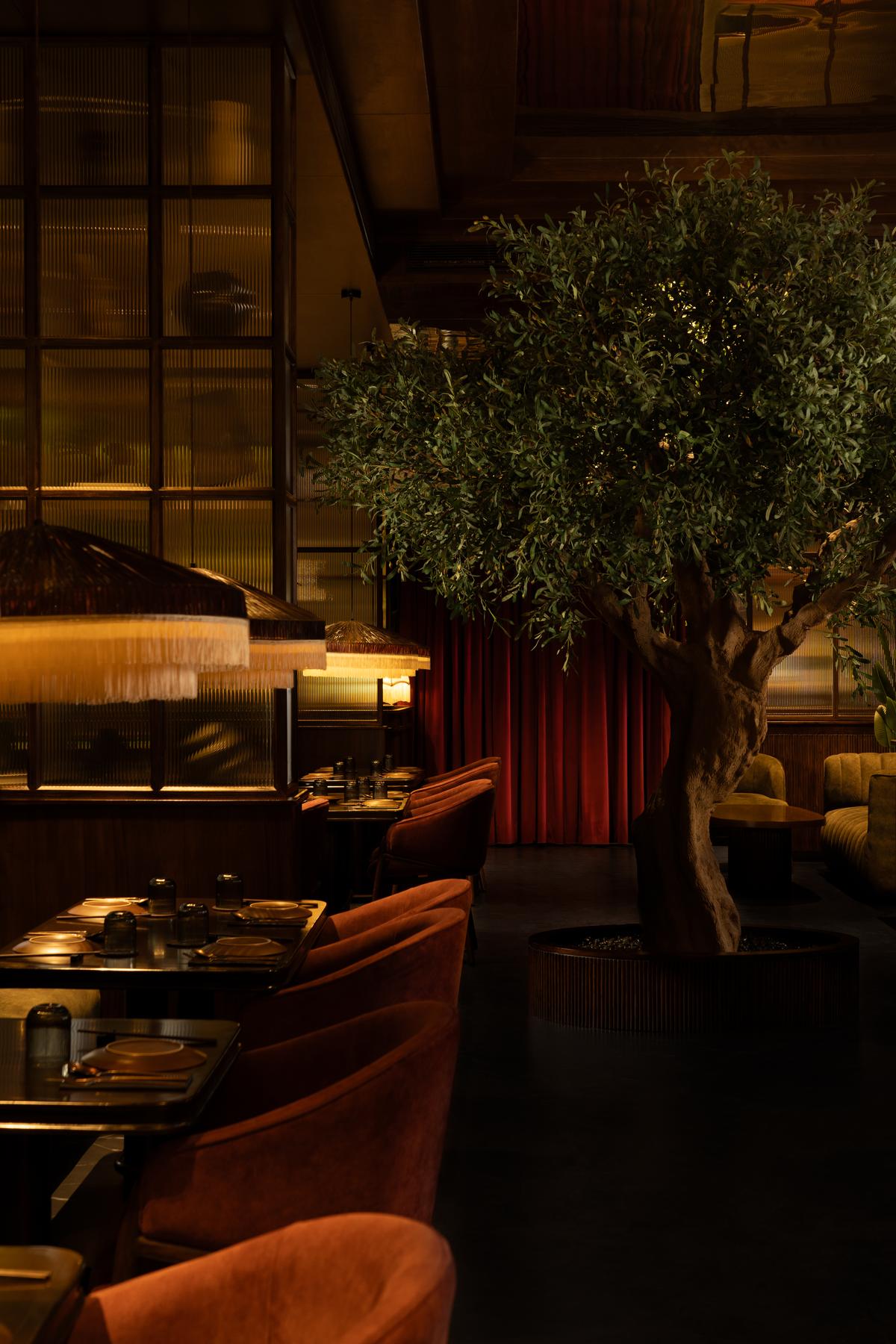
Sanchit Arora – RENESĀ Architecture Studio, New Delhi

Lair Gurgaon’s suave sensibilities stem from the use of unadulterated textures, shaping the identity of a modern speakeasy.

Lair Gurgaon’s suave sensibilities stem from the use of unadulterated textures, shaping the identity of a modern speakeasy.
| Photo Credit:
Avesh Gaur

At the helm of RENESĀ Architecture Studio, Sanjay and Sanchit Arora shape some top-table hospitality, transportive retail, and curated residential endeavours. “Our practice perpetually melds the old and new. Every space is an opportunity to do something unique. And I like to bet on those chances,” Sanchit quips.

Sanchit Arora

Sanchit Arora

At Hikki, the studio employs Mid-Century nostalgia and neo-decadence, the layout accented by deep hues, textured surfaces, and vintage lighting.

At Hikki, the studio employs Mid-Century nostalgia and neo-decadence, the layout accented by deep hues, textured surfaces, and vintage lighting.
| Photo Credit:
Avesh Gaur

“Something I resonate with is maximal minimalism, especially in hospitality and retail spaces. Nostalgia and retrofuturism play a big role in this. While the shell may be pared down, the elements we introduce within — focal furniture, deep palettes, and proportions swung in the direction of maximalism and elements that reminded one of eras that felt familiar,” recalls Sanchit.

Flooring as statement

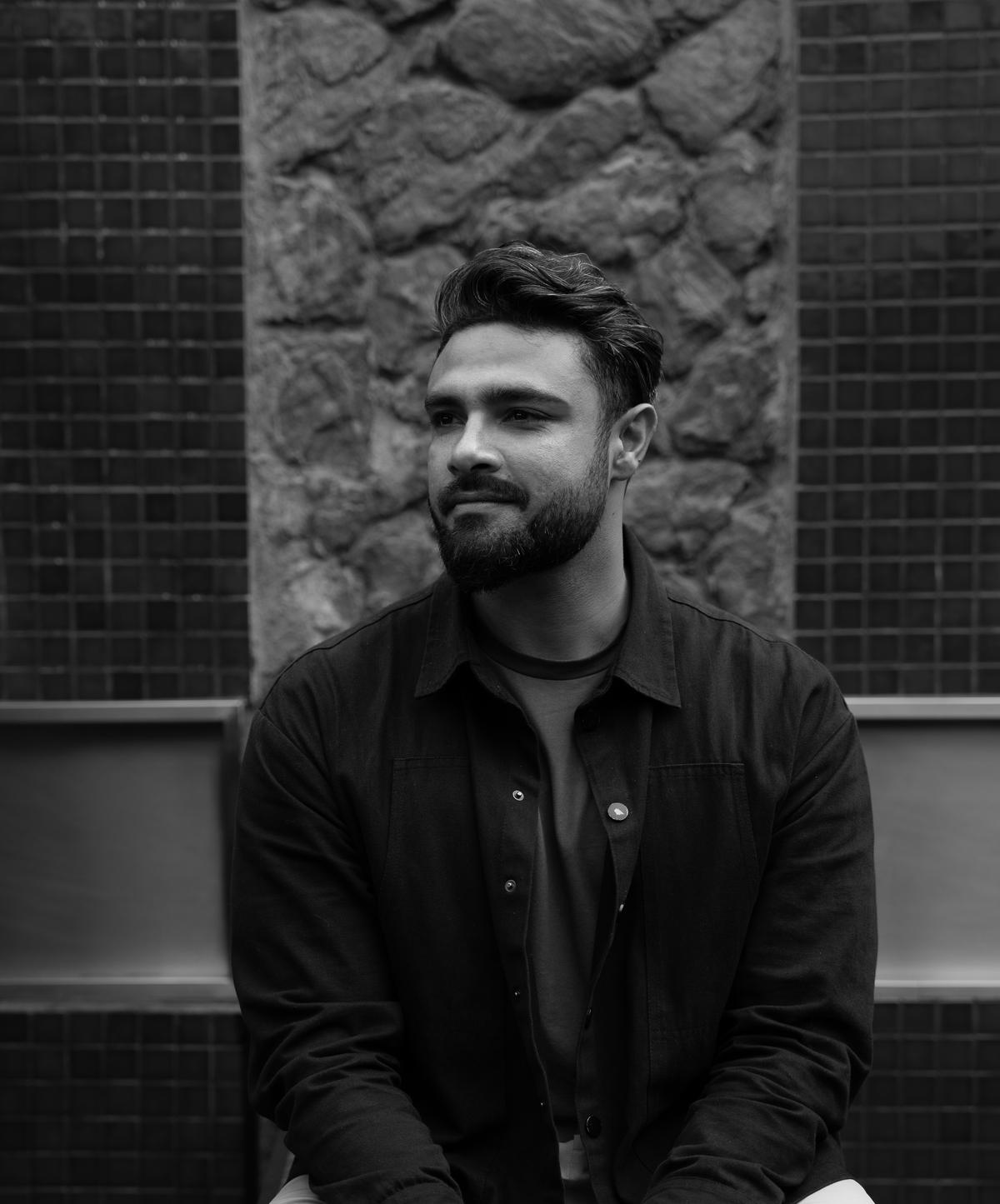
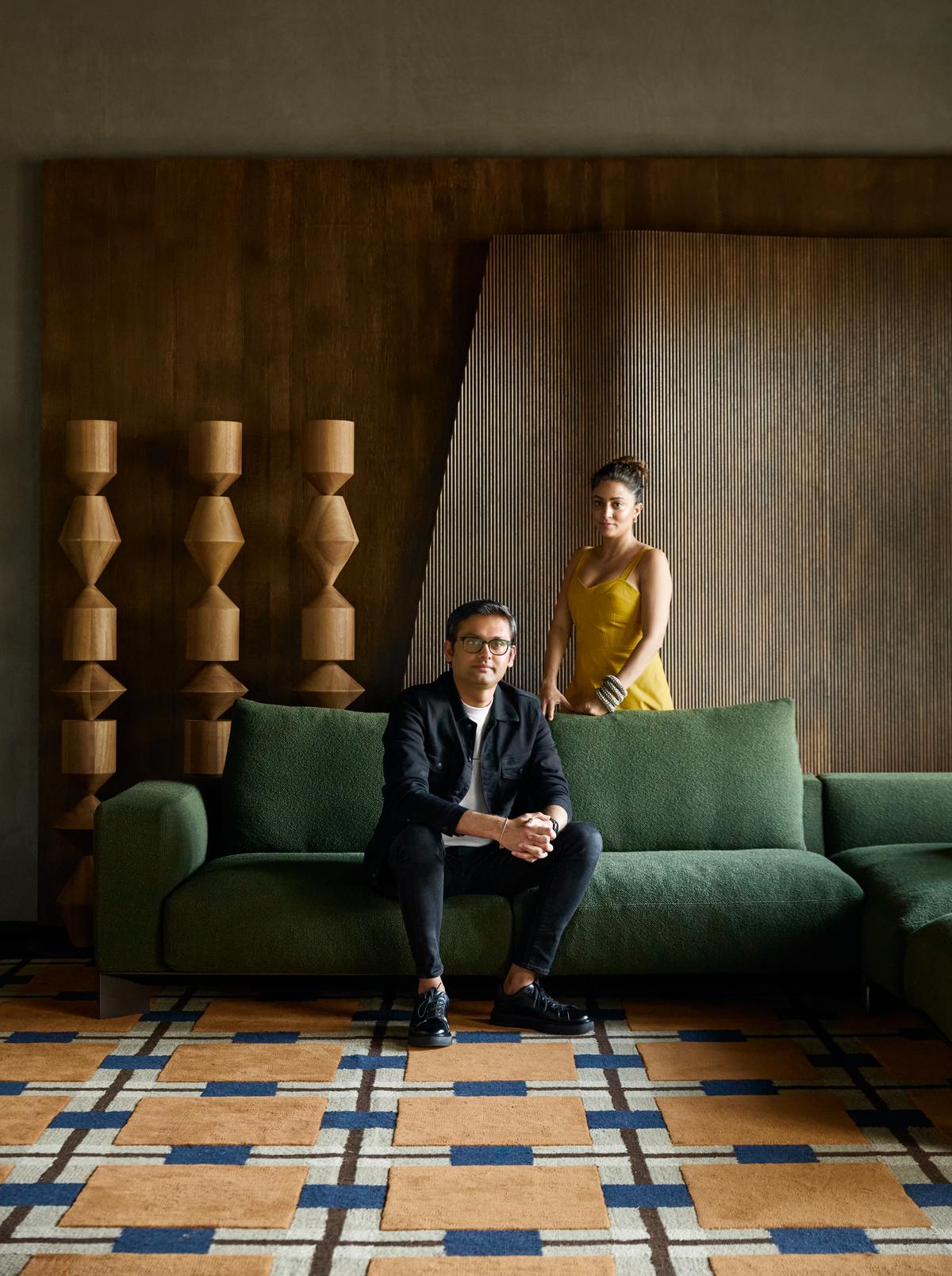
Farah Ahmed and Dhaval Shellugar – FADD Studio, Bengaluru

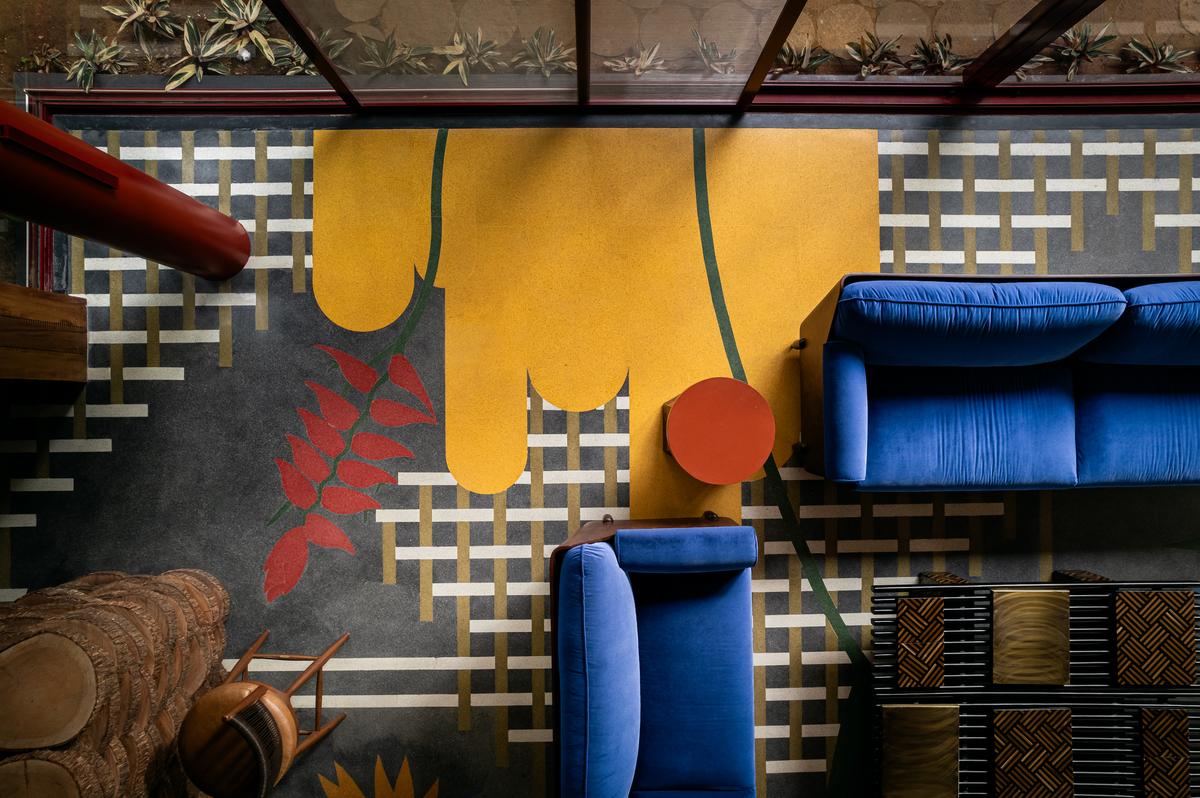
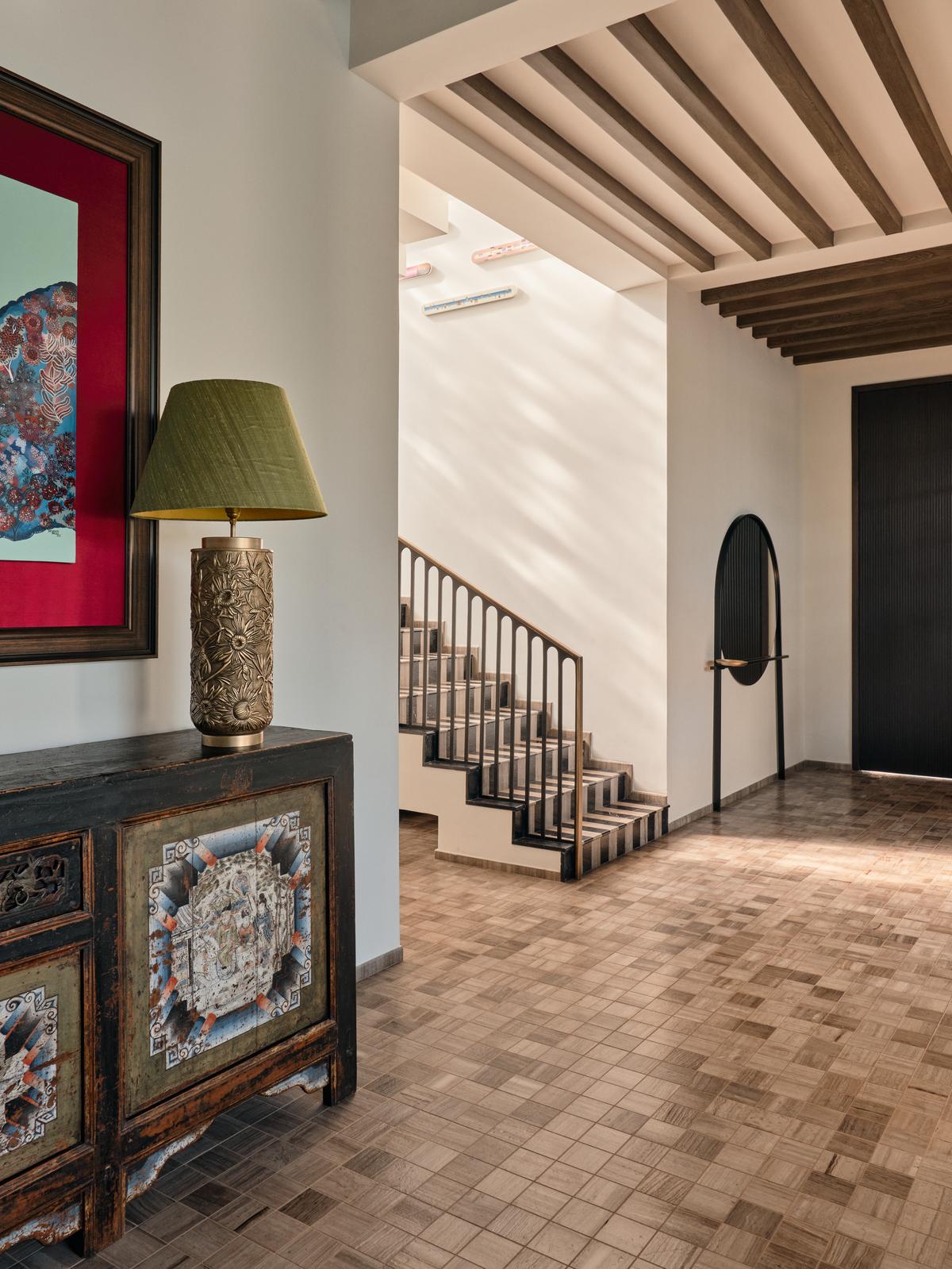
Designed as a collaboration between FADD Studio and Bharat Floorings & Tiles, this private residence’s floors come alive as an art installation.

Designed as a collaboration between FADD Studio and Bharat Floorings & Tiles, this private residence’s floors come alive as an art installation.
| Photo Credit:
nareshandnayan

Natural stones, terrazzo, and mixed media have magicked floors into storytelling mediums, replacing the lacklustre vitrified tile. Farah Ahmed and Dhaval Shellugar’s compelling vision demonstrates that.

Farah Ahmed and Dhaval Shellugar.

Farah Ahmed and Dhaval Shellugar.
| Photo Credit:
Talib Chitalwala

At Hermitage, the studio celebrates tactile materiality, the monochrome stone pairing on the stairs giving way to a matrix of sepia. Styling: Samir Wadekar.

At Hermitage, the studio celebrates tactile materiality, the monochrome stone pairing on the stairs giving way to a matrix of sepia. Styling: Samir Wadekar.
| Photo Credit:
Gokull Rao Kadam

A hybrid cut-and-casted floor injects new life into a home that FADD Studio worked on with Firdaus Variava of Bharat Floorings & Tiles. The result is a mirrored reflection of the conceptualised render; an art installation of sorts embedded seamlessly across the floors. “We created intricate motifs out of coloured cement sheets. These pre-cut pieces were carefully laid out on the unfinished but prepared floor in our desired composition,” Shellugar narrates. “Then we poured self-levelling cement terrazzo into the negative spaces. Once dried, the entire floor was buffed and polished to reveal a unified surface free of any metal or glass,” explains Ahmed.

The custom code

Shreya Mantri – Altrove, Pune | Aishaa Nensey – Venjara Carpets, Mumbai

Team Altrove senses an overlap between artisanship and interior design ruling the roost. Styling: Altrove.

Team Altrove senses an overlap between artisanship and interior design ruling the roost. Styling: Altrove.
| Photo Credit:
Kuber Shah

Homeowners today desire customisation: something that signals exclusivity and serves as a conversation-starter for their spaces.

Altrove’s founder, Shreya Mantri, suggests craft and interior design overlap, “I think rich minimalism is here to stay. The predictable whites are giving way to deeper pigments, textured woods, and thoughtful layering. Influences of Tangaliya and Bhujodi weaving may enter soft furnishings, but from a recontextualised lens.”

Shreya Mantri.

Shreya Mantri.
| Photo Credit:
Kuber Shah

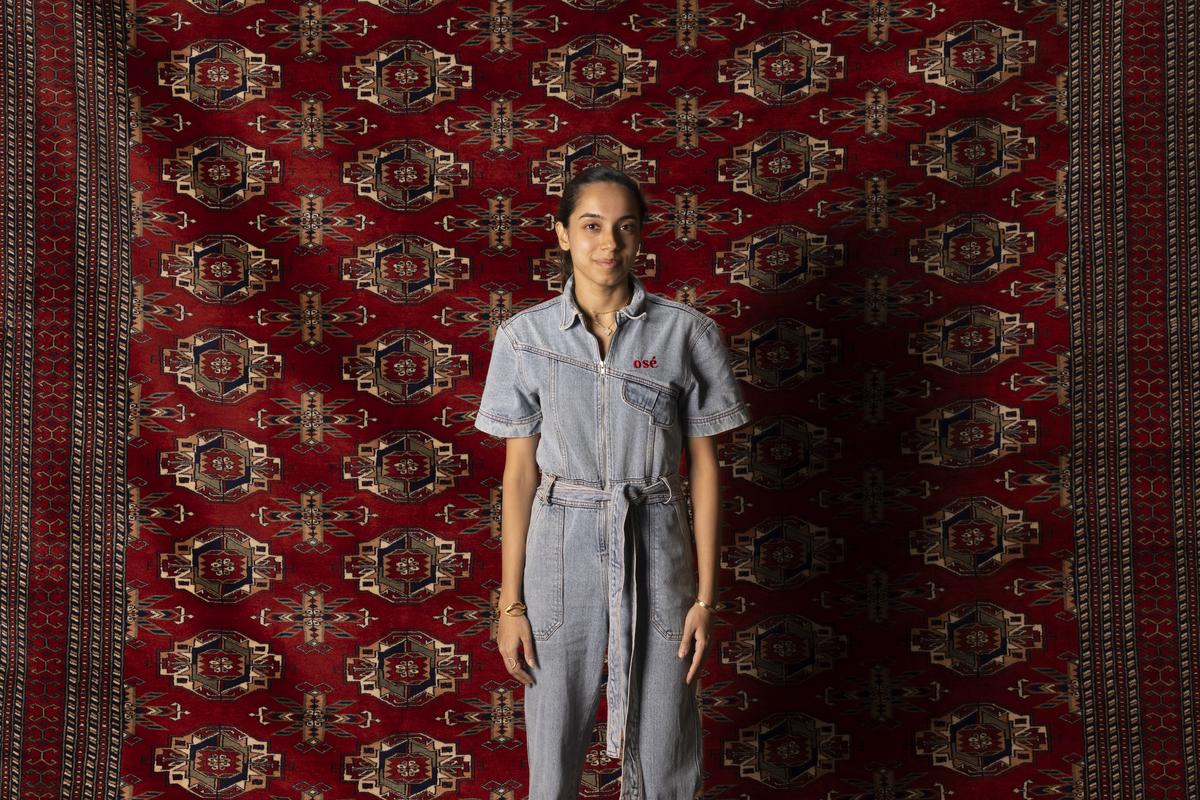
Aishaa Nensey.

Aishaa Nensey.
| Photo Credit:
Manan Sheth

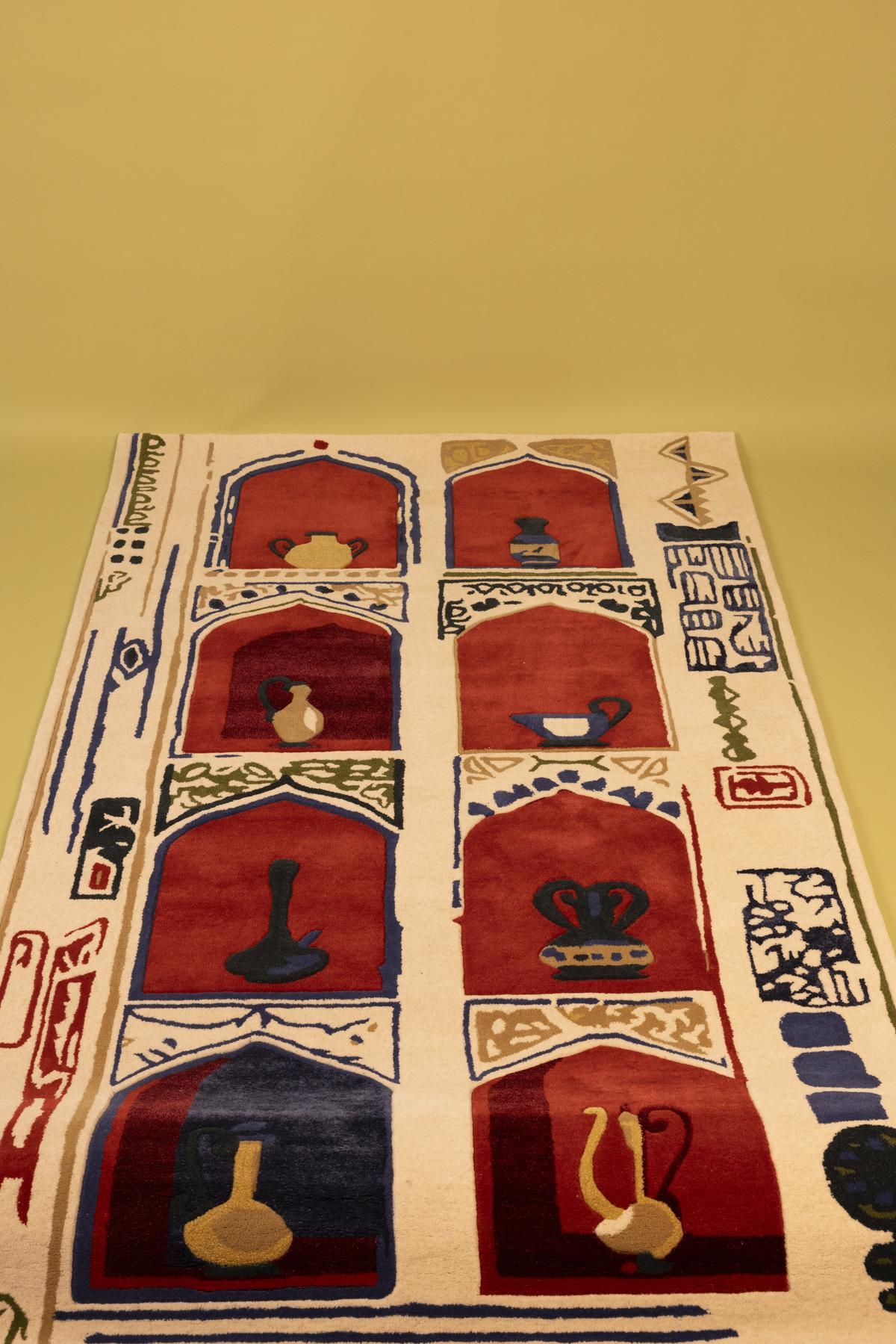
Venjara Carpets melds rich imagery and textiles to create pieces that double as art installations.

Venjara Carpets melds rich imagery and textiles to create pieces that double as art installations.
| Photo Credit:
MANAN SHETH

The world of carpets mirrors this thought, Aishaa Nensey, a fourth-generation entrepreneur at Venjara Carpets, says. “Carpets have evolved into expressive art forms. Customisation has become central to meaningful collaborations. At Venjara, the intent is for a bespoke rug to allow for a more nuanced and considered outcome,” Nensey says.

Honesty of materials

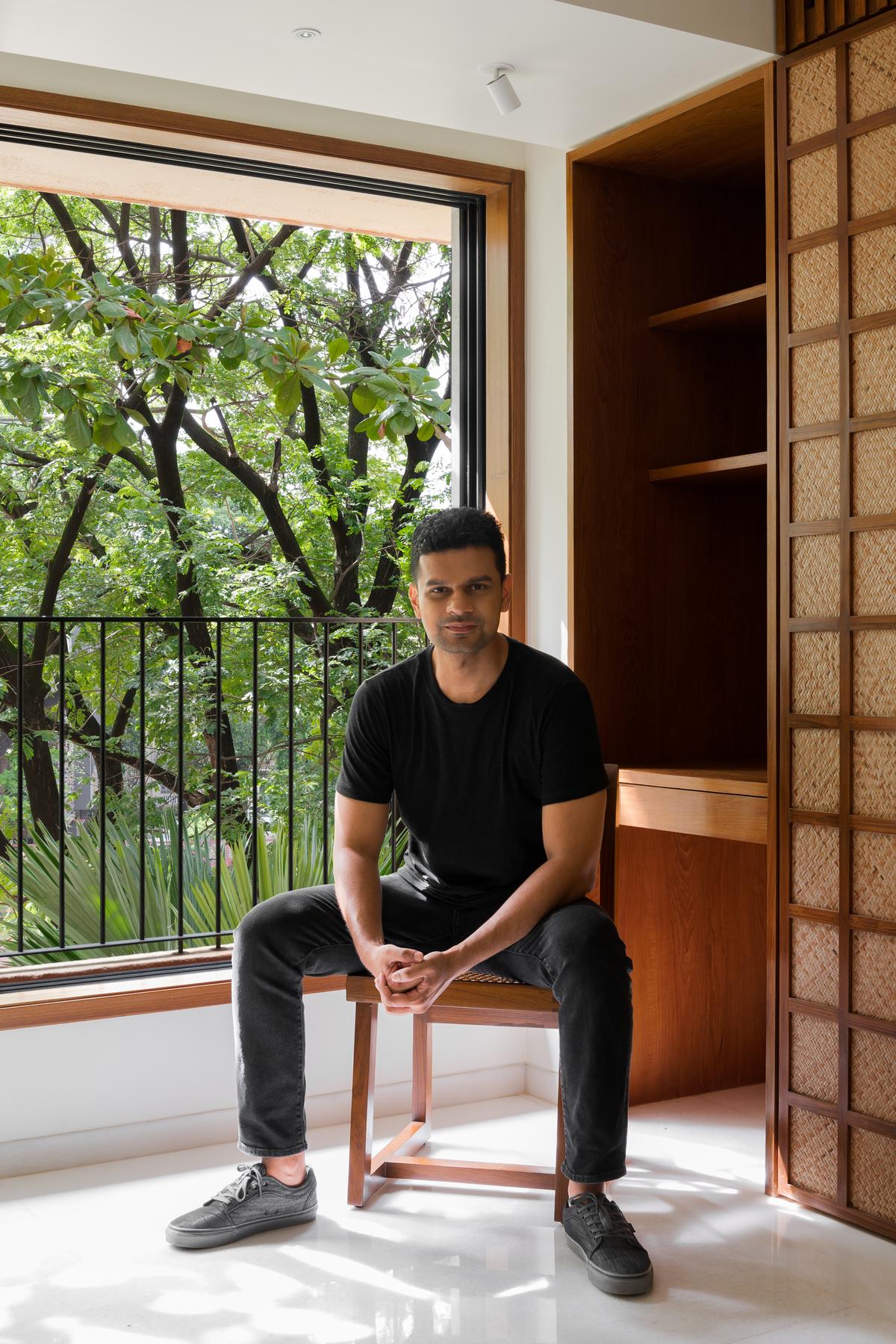
Mahek Lalan – SML Architects, Mumbai

The rich grain of wood varieties, a canopy of earthy hues, and daylight script the milieu at Collectors House.

The rich grain of wood varieties, a canopy of earthy hues, and daylight script the milieu at Collectors House.
| Photo Credit:
Neelanjana Chitrabanu

Projects at SML Architects are celebrated for their honest, texturally rich narratives, in which materials in their native state relish the spotlight. Principal architect Mahek Lalan’s top picks include solid wood, brass, and natural stones. “Natural materials like stone will continue to be dominant in 2026 but used with greater intention and context rather than merely as surface finishes,” Lalan suggests.

Mahek Lalan.

Mahek Lalan.
| Photo Credit:
Neelanjana Chitraban

A devotion to raw textures and natural materials is apparent in SML Architect’s Pink Marble House.

A devotion to raw textures and natural materials is apparent in SML Architect’s Pink Marble House.
| Photo Credit:
Saurabh Suryan and Lokesh Dang

The demeanour of natural materials is further enriched by their ability to age gracefully. Lalan adds, “I pick wood for its tactility, warmth and adaptability, and brass for its subtle richness and evolving patina. Together, they add a sense of craftsmanship and quiet character to spaces.”

Illuminated intent

Harshita Jhamtani – Harshita Jhamtani Designs, Mumbai

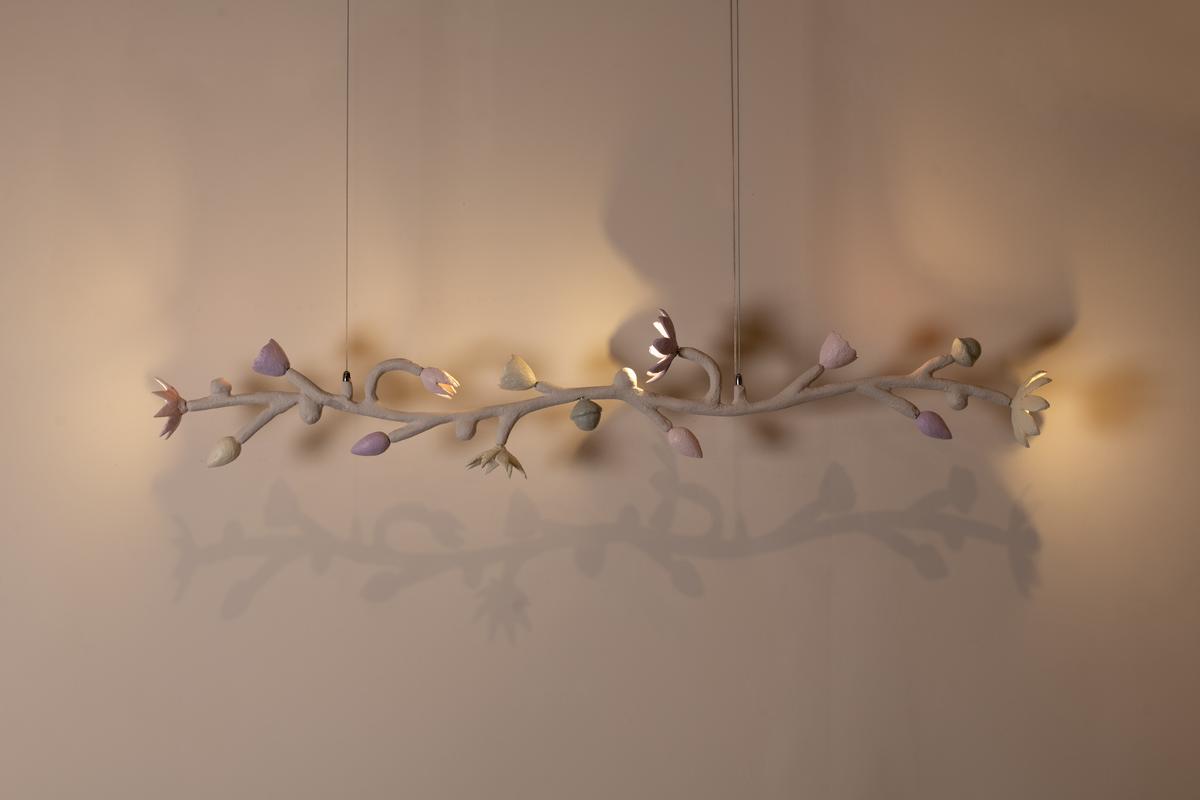
Harshita’s design language leans toward lighting that echoes a personal sentiment through its forms and making.

Harshita’s design language leans toward lighting that echoes a personal sentiment through its forms and making.
| Photo Credit:
Prathamesh Reddy

Sculptural silhouettes, whimsical forms, and pieces that read like installations rather than fixtures — the year visualises lighting from a renewed lens. Harshita Jhamtani, creative head at her eponymous studio, attests that lighting, especially bespoke, should say something about the person who lives with it.

Harshita Jhamtani.

Harshita Jhamtani.
| Photo Credit:
Prathamesh Reddy

Natural stones, soft metals, and honest materials reign in Harshita’s realm of lighting design.

Natural stones, soft metals, and honest materials reign in Harshita’s realm of lighting design.
| Photo Credit:
Prathamesh Reddy

“I think in 2026, it will be about design that feels more human and emotionally connected. There will be a clear move towards pieces that age well, both aesthetically and ethically,” Jhamtani expresses. The studio’s arsenal of standout materials includes clay, stone textures, and softer metals. “Customisation has become important. There is also more playfulness in forms while keeping functionality in mind,” notes Jhamtani.

Quiet luxury prevails

Noorein Kapoor – Noorein Kapoor Design, Mumbai

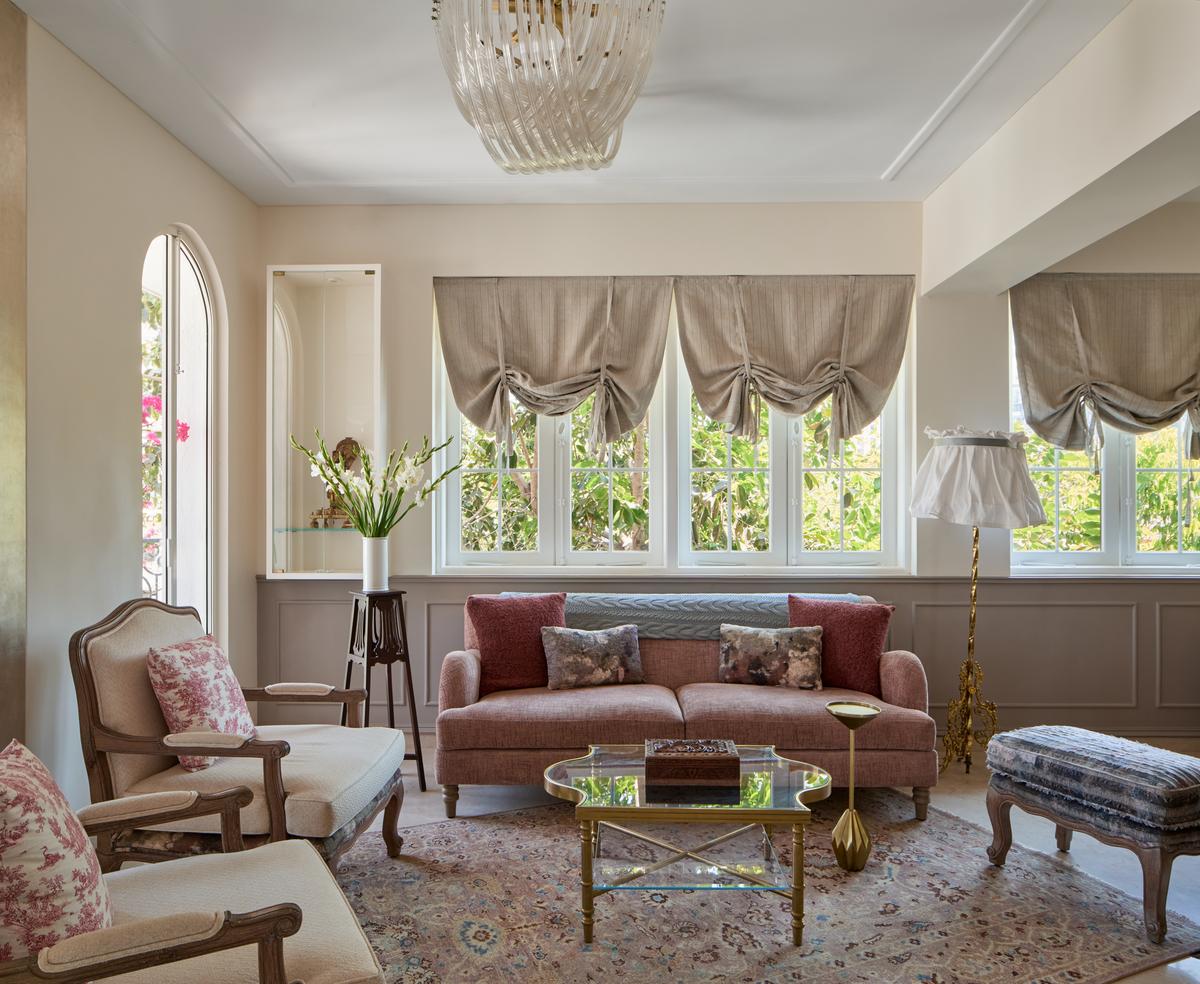
At Les Trois, the studio conjures quiet luxury through muted tones, floral accents, and a vintage-esque demeanour. Styling: Samir Wadekar.

At Les Trois, the studio conjures quiet luxury through muted tones, floral accents, and a vintage-esque demeanour. Styling: Samir Wadekar.
| Photo Credit:
Talib Chitalwala

The vision ahead focuses on softness, nuance, and the power of atmosphere. Noorein Kapoor, of her namesake studio, understands this all too well, known for her ability to weave thoughtful simplicity and expressive sophistication into the spaces she designs.

Noorein Kapoor.

Noorein Kapoor.
| Photo Credit:
Pulkit Sehgal

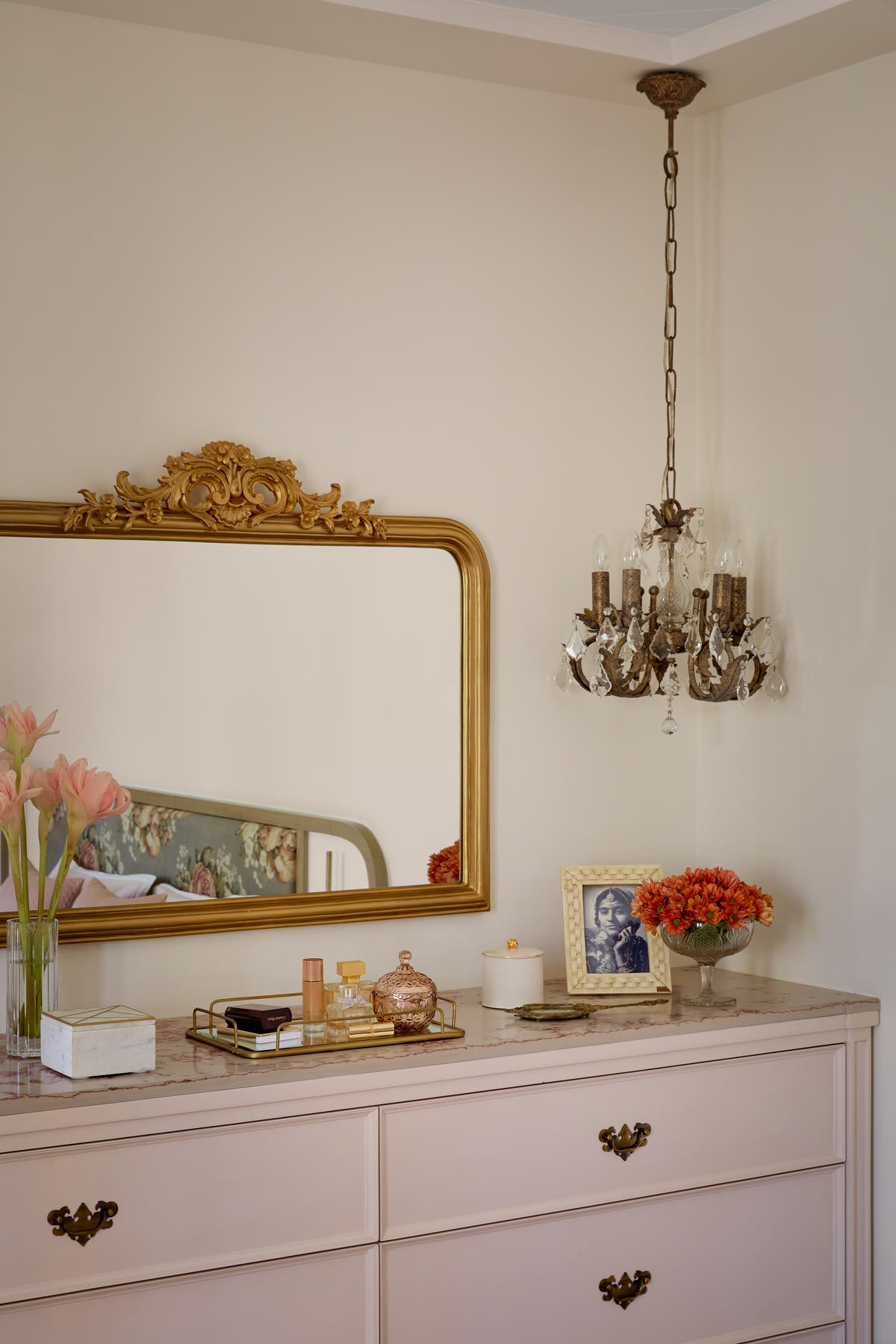
Objects play a sentient role in Kapoor’s take on restraint, creating a transportive visual. Styling: Samir Wadekar.

Objects play a sentient role in Kapoor’s take on restraint, creating a transportive visual. Styling: Samir Wadekar.
| Photo Credit:
Talib Chitalwala

Kapoor states, “For me, quiet luxury in 2026 is about restraint and intention. It’s the kind of luxury you feel rather than immediately notice — understated craftsmanship, well-considered proportions, and details that sit effortlessly within a space. Nothing feels performative.” Kapoor achieves this in the spatial realm through tonal layering, keen detailing, and a balance between ornamentation and comfort.

Personal by design

Mehek Malhotra – Giggling Monkey Studio, Mumbai and Dehradun

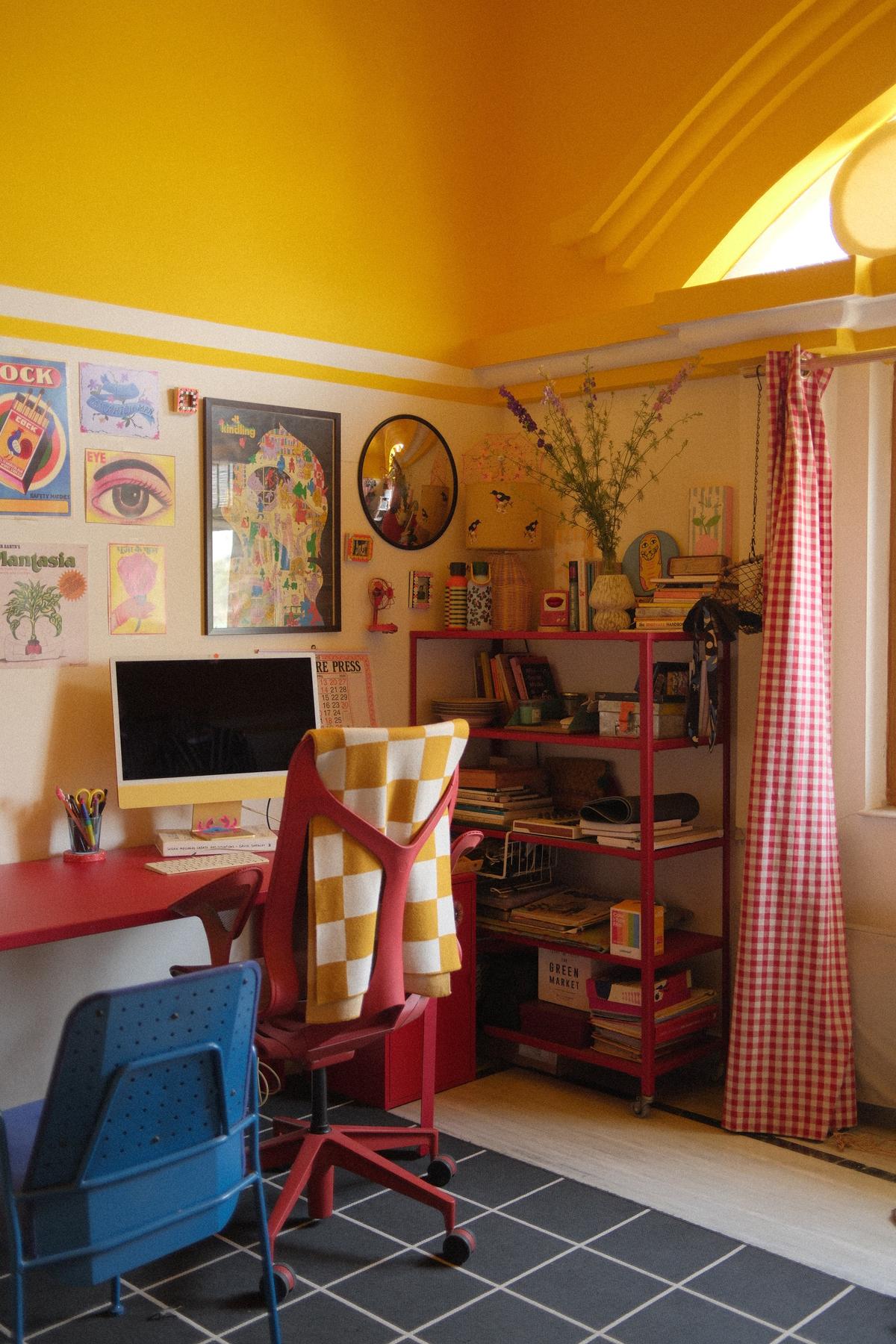
A sunny, canary-hued ceiling energises the interiors of Mehek’s home office, doubling the presence of light within.

A sunny, canary-hued ceiling energises the interiors of Mehek’s home office, doubling the presence of light within.
| Photo Credit:
Giggling Monkey Studio

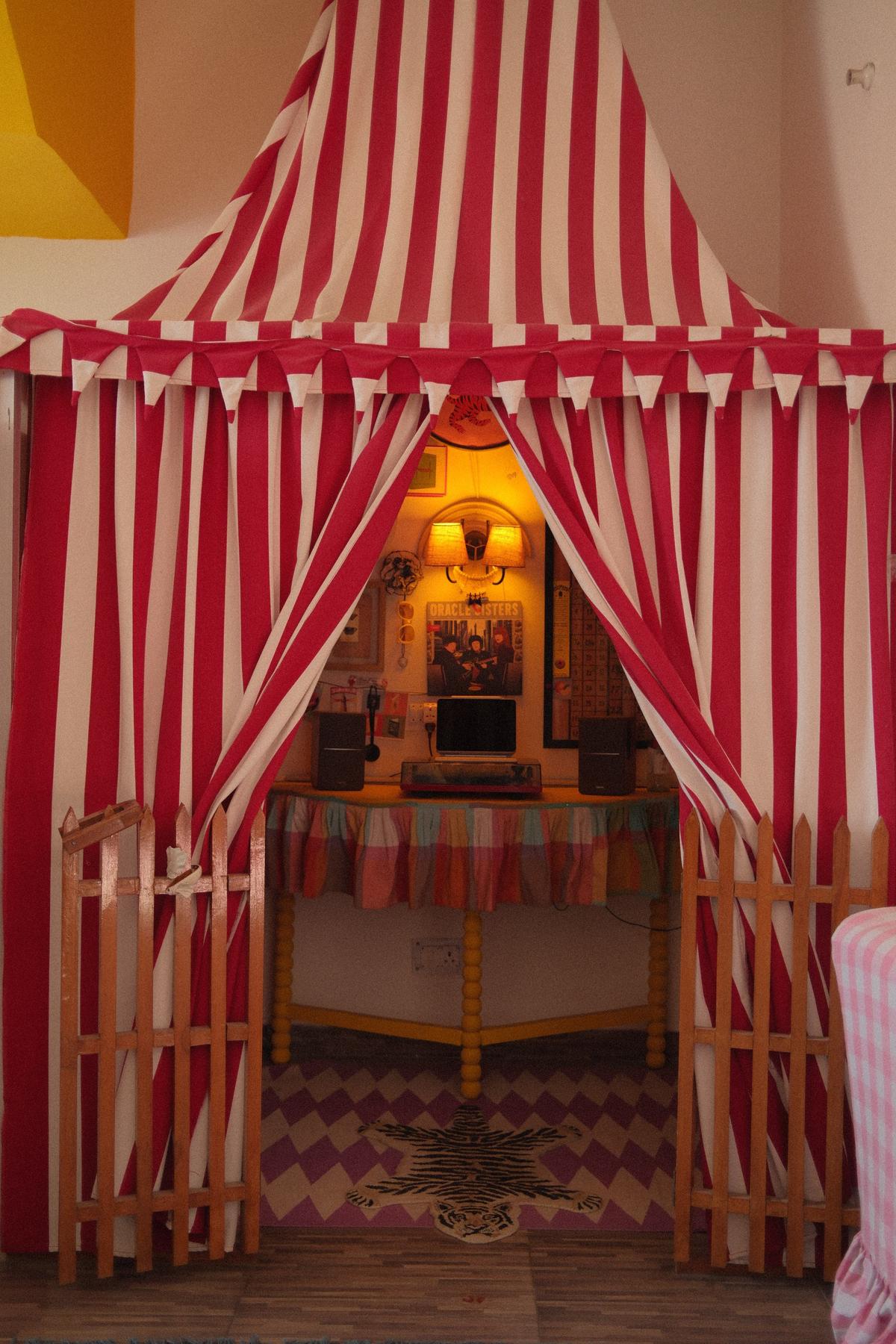
A candy cane-esque vinyl tent, canary ceilings that bottle the warmth of a dozen suns, and a tiger chair where her cats perch — art director Mehek Malhotra’s Dehradun rental will make you question whether you have truly let colour into your life. “With a family dedicated to service in the Army, we moved often. Reimagining the things we owned in new contexts was hardwired into our mindset. Lean into what may be your version of clutter: thrifted objects, collected trinkets, fabrics, the works,” Malhotra avers.

Mehek Malhotra.

Mehek Malhotra.
| Photo Credit:
Giggling Monkey Studio

A whimsical, striped vinyl tent blurs the typical boundary between inside and outside at Malhotra’s Dehradun rental.

A whimsical, striped vinyl tent blurs the typical boundary between inside and outside at Malhotra’s Dehradun rental.
| Photo Credit:
Giggling Monkey Studio

“Owning a home is a distant dream for most young Indians. Live the best you can and while you can! Bring out the good dinner plates, or whatever your version of small pleasures is. Mine is probably a giant tent inside my home,” chimes Malhotra.

Pantone tints

Aashni Kumar – Aashni Kumar, Mumbai

A Home in the Clouds is Aashni’s take on the elevated omnipresence of white tones. Styling: Samir Wadekar.

A Home in the Clouds is Aashni’s take on the elevated omnipresence of white tones. Styling: Samir Wadekar.
| Photo Credit:
Suleiman Merchant

On the heels of its announcement as Pantone’s Colour of the Year, Cloud Dancer has sparked divergent reactions. Aashni Kumar, founder of her self-titled design practice, sees promise in this choice, and her portfolio of minimalist and immersive projects makes the case.

Aashni Kumar.

Aashni Kumar.
| Photo Credit:
Suleiman Merchant

“I think this is a colour that demands careful consideration in terms of creating a space. You walk that fine line of ensuring that the room is not left without a soul, but in fact is given a sense of softness,” Kumar highlights.

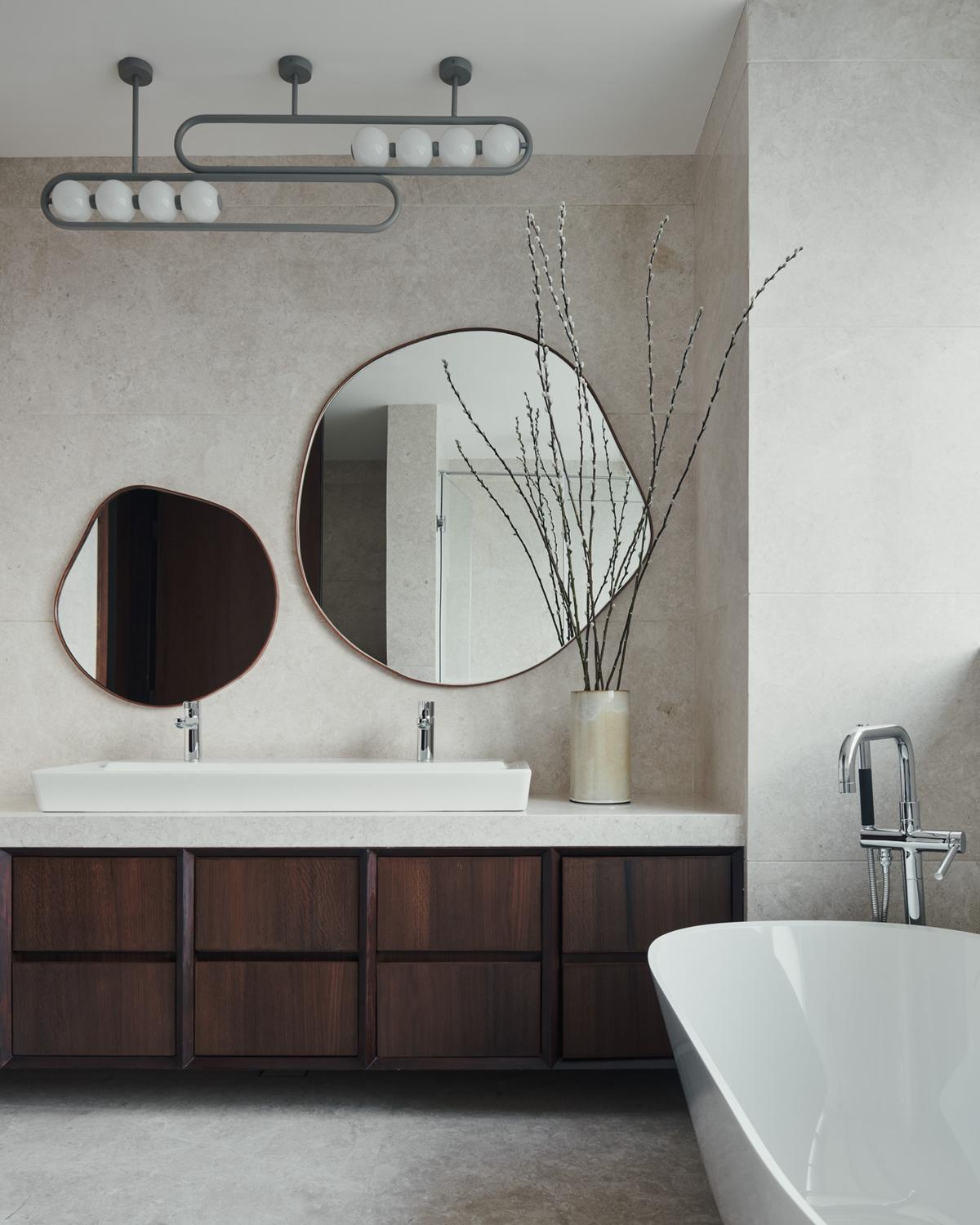
The bathrooms in the residence serve as sanctuaries of zen, revelling in the versatility of white. Styling: Samir Wadekar.

The bathrooms in the residence serve as sanctuaries of zen, revelling in the versatility of white. Styling: Samir Wadekar.
| Photo Credit:
Suleiman Merchant

She sees the colour harbouring the potential to drastically transform the mood of spaces. Kumar illustrates, “I find it exciting to use across various material choices, whether it be wood, metal or marble, since a colour like this will reflect differently across many textures.”

The writer is a trained architect and design specialist working across architecture, interiors, and the built environment.


Source link

Five auto trends that will redefine the Indian car market in 2025


The Indian automotive landscape has evolved as rapidly, in recent times. Once driven largely by price sensitivity, the automobile market is now being shaped by safety, awareness, sustainability, and feature expectations.

By 2026, several trends that began as experiments or niche offerings will firmly establish themselves as mainstream realities. Automakers are aligning their product strategies to meet an informed and demanding customer base, while policymakers and infrastructure development continue to influence the direction of mobility.

Here are the five trends that offer a clear snapshot of how India’s car market will look and feel in 2026.

EVs go mainstream

By 2026, electric vehicles in India will no longer sit on the fringes. The most significant development in this space will be Maruti Suzuki’s full-scale entry into EVs with the e VITARA, its first all-electric offering. Positioned as an affordable and practical electric SUV, e VITARA is expected to combine sharp styling with a claimed driving range of up to 543 kilometres. More importantly, it will leverage Maruti’s expansive service footprint and charging network, addressing long-standing concerns around EV ownership.

Hyundai is also expected to strengthen its EV presence with a smaller, mass-market electric car aimed at urban buyers, while Tata Motors and Mahindra will continue to expand their EV portfolios in the mid-size SUV space. Tata’s steady approach and Mahindra’s focus on performance ensure a broader spread of options across price points in the EV segment.

What sets 2026 apart is accessibility. EVs will increasingly be positioned as primary household vehicles rather than secondary city commuters. Improved charging infrastructure, better real-world range, and growing consumer confidence will push electric mobility closer to the mainstream than ever before, marking a decisive shift in buying behaviour.

Wanted mid-size SUVs

Kia Seltos

Kia Seltos
| Photo Credit:
SPECIAL ARRANGEMENT

The rise of mid-size SUVs has been one of the defining automotive stories of the past few years, and by 2026, this segment is expected to officially dominate Indian car sales. Tata, Mahindra, and Kia are all heavily invested here, recognising it as the most profitable and fastest-growing category in the market.

Tata has already relaunched Sierra, which is expected to reach showrooms in 2026, while Kia is working on the next-generation Seltos, a model that has consistently set benchmarks in design and features. Mahindra, meanwhile, could expand its SUV lineup further, starting the year with the XUV 7XO, a three-row SUV designed to offer space and presence.

The appeal of mid-size SUVs lies in their versatility. They offer strong road presence, generous interior space, and increasingly premium features, while remaining usable in everyday urban conditions. For many buyers, this segment represents the perfect upgrade from hatchbacks and compact SUVs, ensuring sustained demand well into 2026 and beyond.

Bio-fuels gain momentum

Bio-Fuel

Bio-Fuel
| Photo Credit:
SPECIAL ARRANGEMENT

While electrification continues to gather pace, 2026 will also see increased momentum behind bio-fuels as India pursues multiple pathways towards cleaner mobility. With E20 petrol already widely available, discussions around introducing E27 blends signal the government’s intent to push ethanol adoption further.

Diesel, however, is expected to see a gradual shift in its role, particularly in metro cities where environmental regulations are becoming stricter. At the same time, an ethanol-blended diesel is likely to be introduced, offering a cleaner alternative while retaining the efficiency benefits diesel users value. India is currently looking at a 5% ethanol blend diesel that will be compatible with BS6 diesel engines.

For manufacturers, this transition requires recalibrated engines capable of handling higher ethanol content without compromising performance or durability. For consumers, bio-fuels offer a familiar and relatively seamless route towards lower emissions, especially in regions where EV infrastructure may take time to develop. In 2026, bio-fuels will act as an important bridge — supporting India’s sustainability goals without forcing an abrupt departure from internal combustion engines.

Make way for ADAS

ADAS (Advanced Driver Assistance Systems) features are steadily gaining acceptance among Indian buyers

ADAS (Advanced Driver Assistance Systems) features are steadily gaining acceptance among Indian buyers
| Photo Credit:
SPECIAL ARRANGEMENT

By 2026, advanced safety will no longer be seen as luxury. ADAS (Advanced Driver Assistance Systems) features are steadily gaining acceptance among Indian buyers, and manufacturers are responding by making them widely available. Honda has already set a precedent by offering ADAS on the Amaze, making it one of the most affordable cars in the country with this technology.

As awareness grows, features such as adaptive cruise control, lane-keeping assist, and autonomous emergency braking are becoming genuine purchase considerations rather than novelty additions. Several manufacturers are working towards offering Level 2 ADAS either as standard or across more variants, especially in the mid-size SUV and premium hatchback segments.

By 2026, ADAS is expected to be viewed not as a differentiator, but as an expected feature — reshaping how safety is integrated into mainstream vehicles.

Car power

Feature-rich vehicles are emerging as the new starting point for car ownership

Feature-rich vehicles are emerging as the new starting point for car ownership
| Photo Credit:
SPECIAL ARRNGEMENT

One of the most telling changes in 2026 will be the gradual disappearance of the traditional “cheap car”. Stricter safety regulations, rising material costs, and changing customer priorities are redefining what entry-level mobility means in India. Buyers are increasingly unwilling to compromise on essentials such as airbags, electronic stability control, and structural safety.

As a result, bare-bone variants are steadily losing relevance. Feature-rich vehicles are emerging as the new starting point for car ownership. Models like the Tata Punch, Renault Kiger, and Nissan Magnite are well positioned to benefit, offering SUV-like design, improved safety, and modern features at accessible price points.

Taken together, these trends point to a clear shift in the Indian automotive market by 2026 — one that is less about chasing the lowest price and more about delivering meaningful value. Electrification is becoming accessible rather than aspirational, SUVs are evolving into the default body style for Indian families, and alternative fuels are ensuring that sustainability is not limited to EVs alone. At the same time, safety and technology are no longer optional extras, but core expectations across segments.

Perhaps the most significant trend is the change in the mindset of the buyer. Indian consumers are more informed, more demanding, and far more conscious of long-term ownership than ever before.

Motorscribes, in association with The Hindu, brings you the latest in cars and bikes. Follow them on Instagram on @motorscribes


Source link

The runway of 2026 will unveil a blend of corsets and silhouettes that redefine personal style


With fashion becoming expressive, celebratory, and deeply personal, 2026 flips the script on 2025’s season-less dressing. It’s time to cultivate a personal style — informed by individuality. From fluid dresses and relaxed tailoring to practical layering — the overarching vibe will be polished, yet undone. Preppy chic will continue to have a moment, and craft-led styles steeped in heritage will enjoy the spotlight. We get noteworthy designers to predict some distinctive trends which are likely to dominate most of 2026. 

Gems and stones

Nikhil’s collection, titled NAIA: Rebirth of a Goddess, features intricate kundan-inspired beadwork

Nikhil’s collection, titled NAIA: Rebirth of a Goddess, features intricate kundan-inspired beadwork

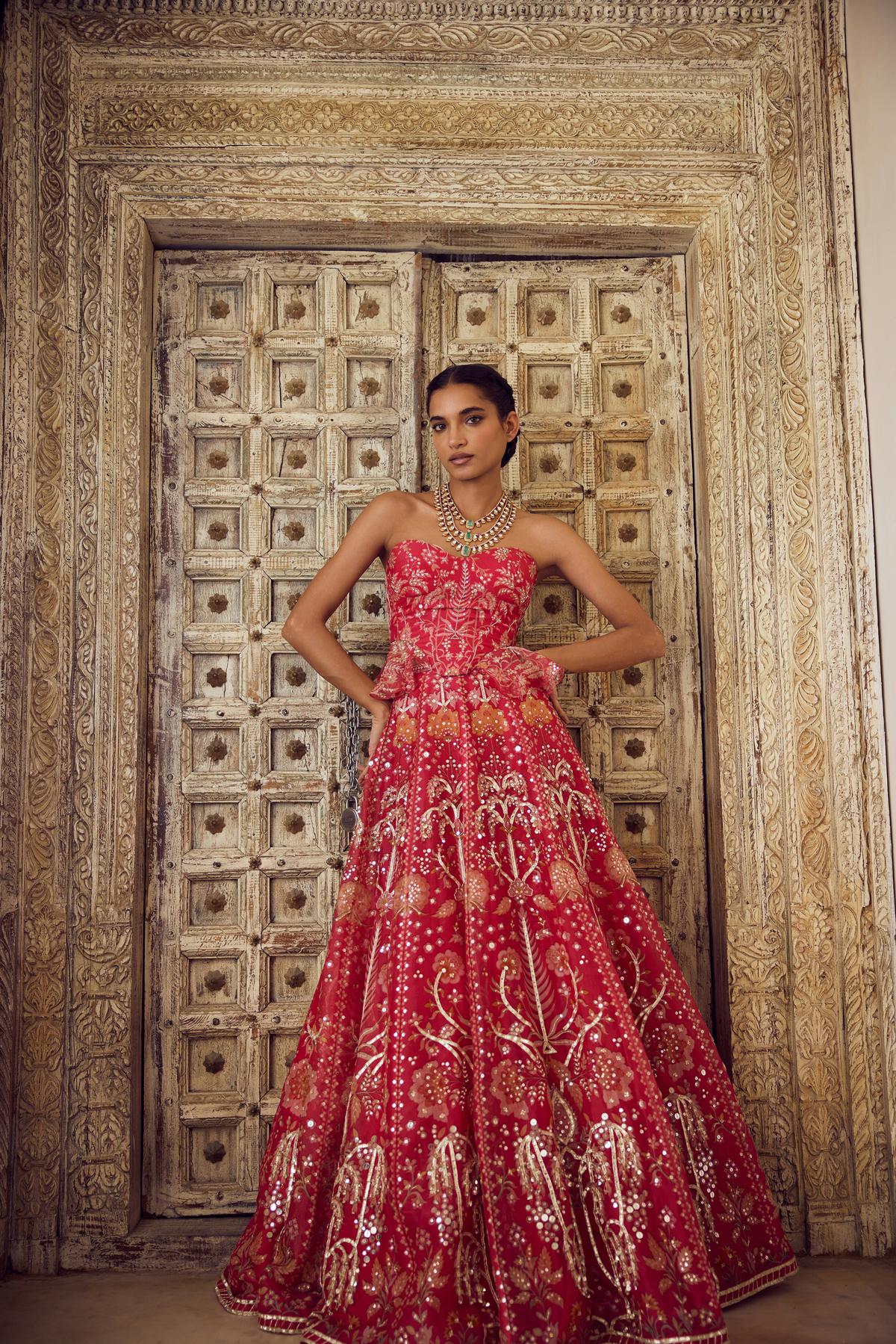
Jewellery, which has enjoyed the limelight as an accessory, will take centre stage as an outfit. “We’re seeing a decisive shift towards jewellery-integrated silhouettes, like in my collection NAIA, too where metal, stones, engineered directly into garments, blurring the line between couture and adornment,” says designer Nikhil Thampi. Nikhil’s collection, titled NAIA: Rebirth of a Goddess, features intricate kundan-inspired beadwork. Embellished gloved sleeves, beaded pallus, and a signature ear cuff that doubles as a strap elevates the pieces into sculptural expressions. Clever multi-way necklines offer versatility, eliminating the need for additional jewellery.

Embellished gloved sleeves, beaded pallus, and a signature ear cuff that doubles as a strap elevates the pieces into sculptural expressions

Embellished gloved sleeves, beaded pallus, and a signature ear cuff that doubles as a strap elevates the pieces into sculptural expressions

Metallic accents, jewellery-inspired, armour-like detailing have been seen across board. Another example is of AK|OK Anamika Khanna’s showcase at Blenders Pride Fashion Tour 2025. Anamika’s signature, soft-grunge-inspired pieces peaked with powerful chainmail looks presented as a unified statement, followed by sculptural silhouettes in motion.

For a generation that values individuality over excess, jewellery as clothing offers permanence, drama, and emotion in one statement. As Nikhil puts it: “It’s not about wearing more, but about wearing meaning, where every piece becomes architectural, wearable art.”

All set for corset?

Corsets had quite a run in 2025 and looks like they will continue to dominate the runways in 2026 too.

Evoto

Evoto

Designer Ridhi Mehra shares, “I’ve been seeing some really exciting trends lately, but the corset has stood out the most, for me. It’s blending seamlessly into modern Indian wear, styled as corset blouses with saris or paired with lehengas, bringing structure while still feeling fluid and wearable. What I love is how it enhances the silhouette without overpowering the look, making it feel confident, contemporary, and still deeply rooted in Indian craftsmanship.”

Designer Ridhi Mehra

Designer Ridhi Mehra
| Photo Credit:
PRAMOD

Corsets were prominent on runways at India Couture Week held in New Delhi recently, especially as designers like Suneet Varma and Roseroom by Isha Jajodia styled them with voluminous lehenga, skirts and capes. Bollywood actress Ananya Panday was seen cutting a fine figure in an ornate embroidered corset by designers Abu Jani Sandeep Khosla.

Weaving stories

In 2026, couture will be more instinctive. Designer Abhishek Sharma says, “We’ll see a stronger focus on sculptural silhouettes, organic textures and hand-built surfaces. The future of fashion lies in craft-led storytelling — where emotion, technique and form come together to create pieces that are intimate, intentional and enduring.”

Designers, both in India and globally, went back to the essence of craft, sharing their stories, emotions and thoughts through the power of their instinctual design process. Aseem Kapoor’s collection Akaar, showcased at Lakmé Fashion Week in Mumbai last year in October, drew inspiration from the spiritual and artistic traditions of ancient Peru, particularly the Nazca geoglyphs.

Clear cut

Designer Hemant Sagar of label Genes Lecoanet Hemant observes that there will be a return to clarity. “More intuitive, less noise; that thinking shapes how we imagine Summer ’26. For Genes, it shows up in colour: deeper blues, these watery teals and mints, set against sandier, earthier tones. Everything feels instinctive and direct, rather than decorative,” he quips.

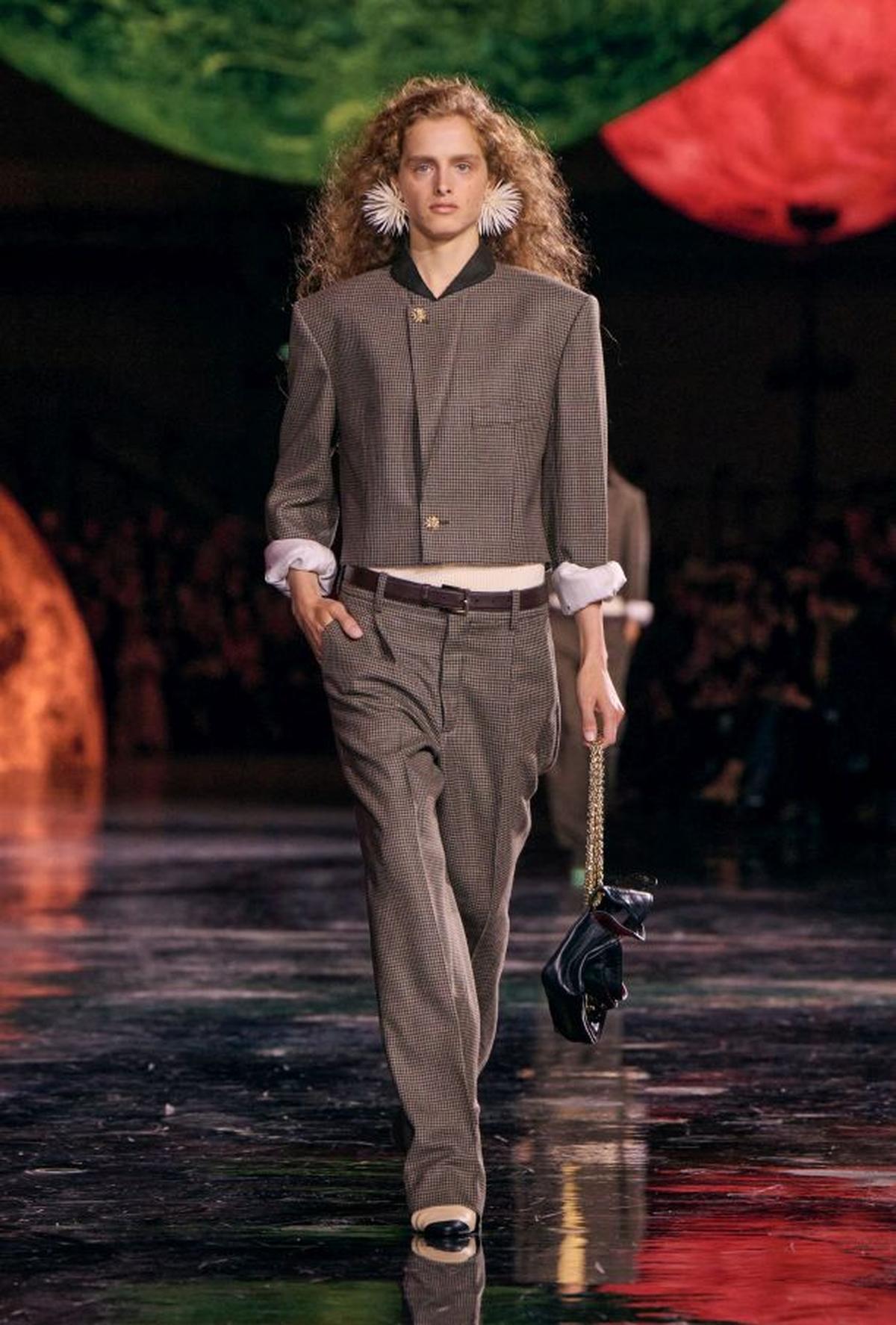
At Chanel, Matthieu Blazy opened the show with a cropped trouser suit jacket

At Chanel, Matthieu Blazy opened the show with a cropped trouser suit jacket

A wave of clarity and a style detox was also seen at Paris Fashion Week with heritage brands like Chanel, Dior, Mugler, Loewe and Balenciaga embarking on a palate-cleansing direction under the aegis of the newly hired artistic directors. At Chanel, Matthieu Blazy opened the show with a cropped trouser suit jacket, which was inspired by one of his jackets that was sliced off at the waist.

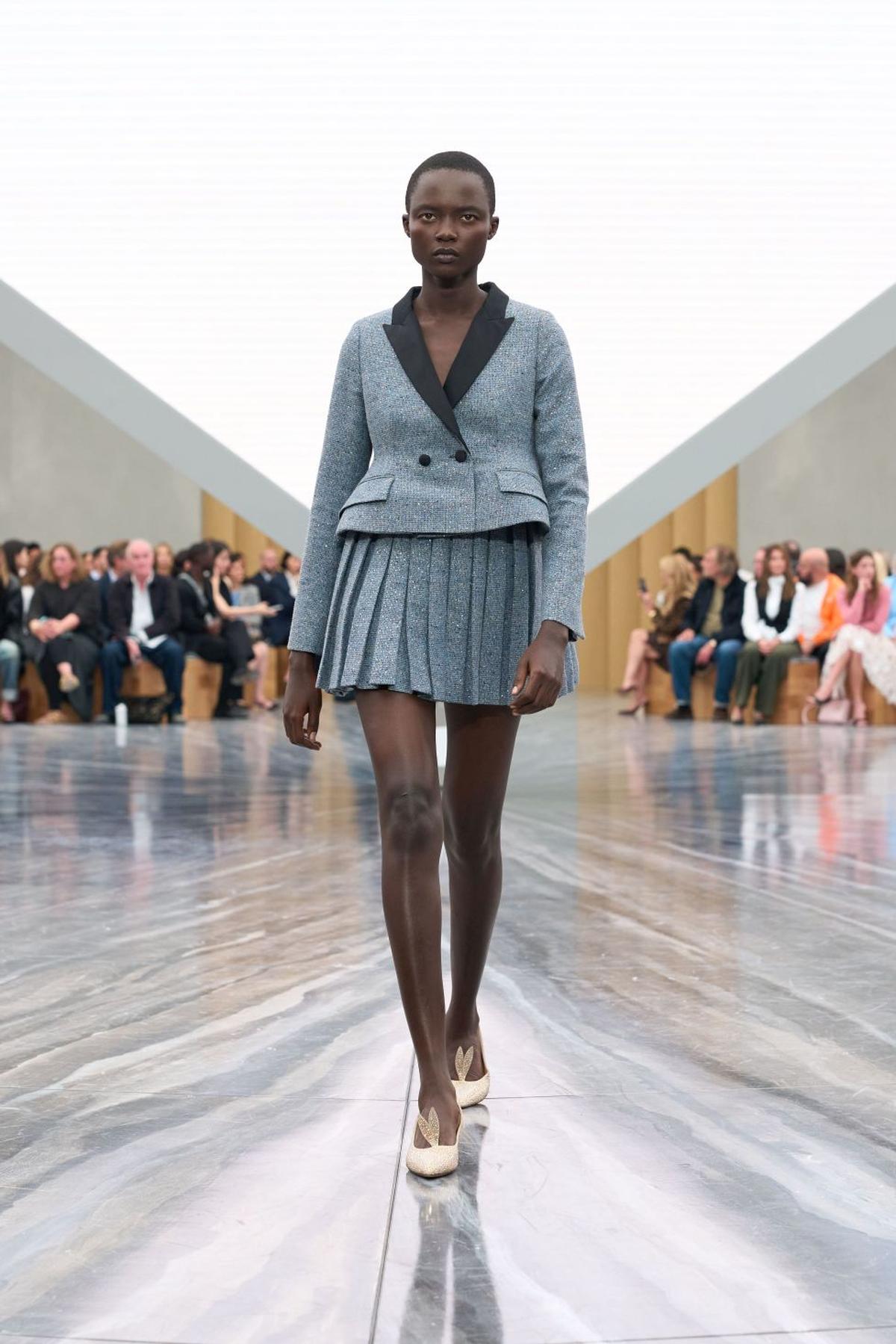
Jonathan Anderson’s first Dior prêt-à-porter womenswear SS 26 collection reimagined the house’s distinctive Bar jacket

Jonathan Anderson’s first Dior prêt-à-porter womenswear SS 26 collection reimagined the house’s distinctive Bar jacket
| Photo Credit:
Alessandro Lucioni

After his successful sophomore menswear showcase, earlier this year, Jonathan Anderson’s first Dior prêt-à-porter womenswear SS 26 collection reimagined the house’s distinctive Bar jacket rendered in shrunken proportions styled with a preppy pleated skirt. Moreover, at Balenciaga, the newly appointed Pierpaolo Piccioli was inspired by a Cristobal Balenciaga couture dress: the Sack Dress of 1957. The designer was moved by its simplicity and radical modernism.

Structured silhouettes

In 2026, gowns and dresses will become expressions of form and intent. Designer Ranna Gill says, “We’re seeing a shift towards silhouettes that hold their shape while still feeling fluid on the body, with sharper cuts, thoughtful draping, and prints that feel purposeful rather than decorative.”

A red carpet staple, the peplum silhouette saw a major revival in 2025, evolving from its 2010s avatar into a more chic, refined, and edited style seen on Hollywood stars like Elle Fanning, who wore a custom black Loewe peplum gown to the 2025 Screen Actors Guild Awards. Even Kim Kardashian wore a vintage John Galliano peplum skirt suit for her Paris robbery trial. Be it structured blazers or button-down tops cinched at the waist with subtle flares, the current iteration of peplum favours the 1950s version a bit more than the aughts’ version.

Another structured silhouette which came to the forefront was the breastplate seen on stars, from Kiara Advani’s Met Gala debut in Bravehearts by Gaurav Gupta to Zendaya’s Critics’ Choice Awards appearance in a fuschia metallic Tom Ford bodice. According to Zendaya’s stylist Law Roach, her armour was customised according to the 3D scan of the actress’ body.

Occasion wear is no longer reserved for grand moments — it is about pieces that carry presence, translate across settings, and feel relevant to how women dress today.


Source link

This intimate art exhibition celebrates accessibility and community at Forum Art Gallery


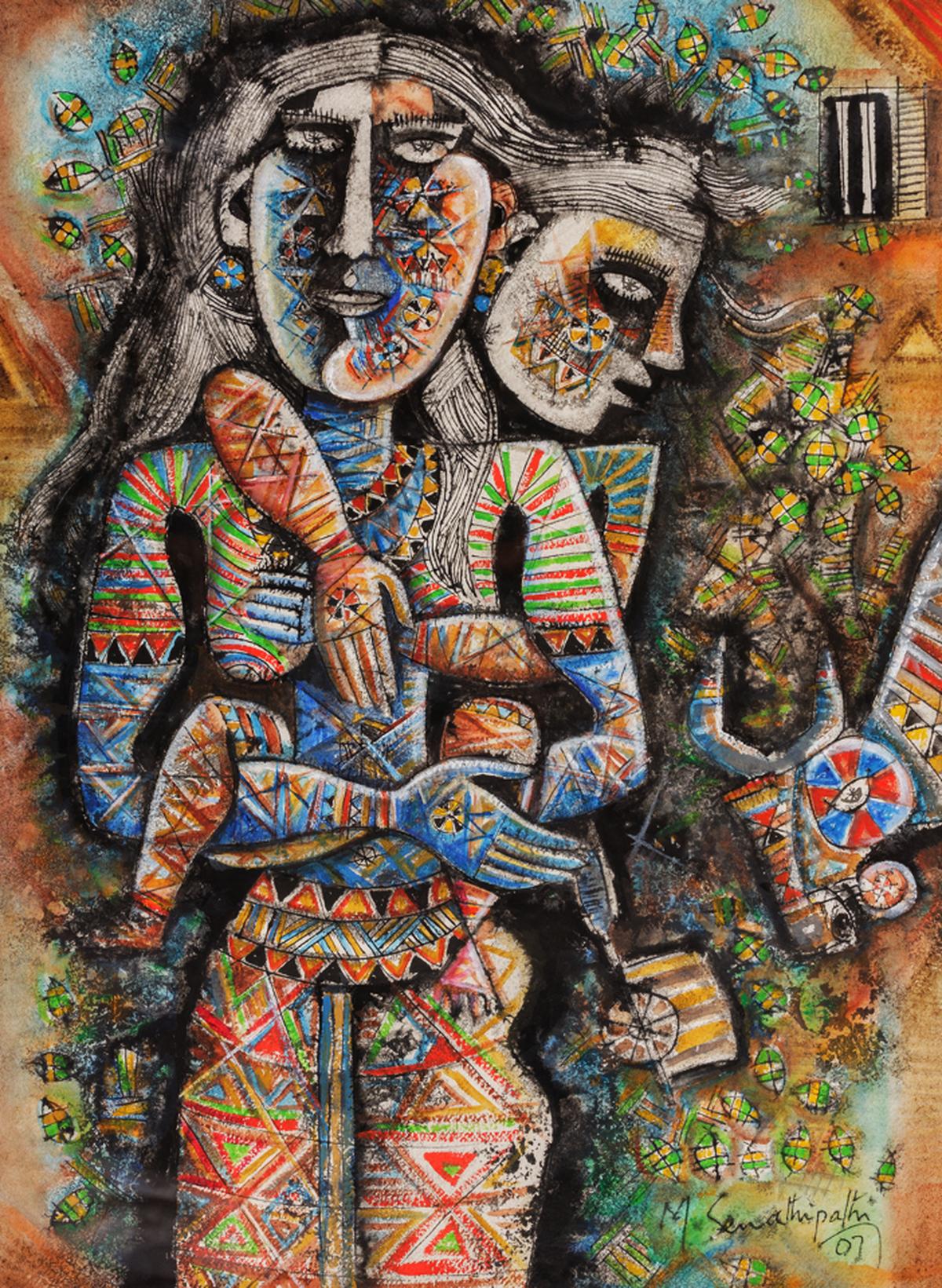
SG Vasudev

SG Vasudev
| Photo Credit: Special Arrangement

At Forum Art Gallery, a deliberate proposition unfolds: 1 × 1 of a Kind – Edition II brings together 23 artists from the Progressive Painters Association (PPA) in a small-format exhibition that resists spectacle in favour of intent. 

Rooted in the legacy of the Madras Art Movement and the Cholamandal Artists’ Village, the show revisits an idea first championed in the 1970s: that art, when scaled down, can travel further into homes, hands, and everyday lives. Paintings, sculptures, metal reliefs and drawings appear here at an intimate size, without diluting the seriousness of the practice behind them. The first edition of 1 × 1 of a Kind was held in 2018. 

Dedicated to the memory of late artist M Senathipathi, founder member of Cholamandal and a long-serving pillar of the PPA, this edition of the exhibition is a memorial in art. It reflects a collective belief that art should remain accessible, sustained by community, and shaped by shared responsibility rather than market excess. “My father always believed that art should meet people where they are,” says Saravanan Senathipathi, the current president of PPA. “Dedicating this exhibition to him felt natural, because the idea behind it comes from the same belief,” he says. 

M Senathipathi

M Senathipathi
| Photo Credit:
Special Arrangement

“Working in a small format changes the way you encounter the work,” says Shalini Biswajit, founder of Forum Art Gallery and curator of the exhibition. “It becomes more intimate. You spend more time with it, instead of being overwhelmed by scale.” That shift, she notes, also opens up the possibility of collecting, particularly for those encountering senior artists whose larger works often remain out of reach. By bringing together established figures and younger practitioners within the same dimensions, the exhibition levels the field, allowing practice and intent to take precedence over size. 

Established artists such as Akkitham Narayanan, C Douglas, P Gopinath, SG Vasudev, V Viswanadhan, Anila Jacob, and Maria Antony Raj adapt long-established visual languages to a reduced scale, working across painting, sculpture, metal relief and mixed media. Alongside them are artists from later generations, including Hemalatha Senathipathi, Saravanan Senathipathi, Brindha S, Priya Gopal, Jacob Jebaraj, and Suchithra Gopinath, whose works reflect personal, material and conceptual explorations shaped by the same collective environment. Seen together, the exhibition offers a compact but layered view of practices linked by shared histories, yet marked by distinct artistic trajectories.

Saravanan Senathipathi

Saravanan Senathipathi
| Photo Credit:
Special Arrangement

Works by M Senathipathi anchor the exhibition’s emotional centre, where mythological figures appear not as distant deities but as human presences. “Even when he worked with gods, he never treated them as gods. He always saw the human element first,” says Shalini. That sensibility carries into the works of his daughters, especially Hemalatha Senathipathi, whose small copper and brass sculptures echo her father’s early practice while clearly standing apart from it. Elsewhere, Akkitham Narayanan pares his meditative geometry down to its essentials to create works that reward stillness. In contrast, C. Douglas’s works gain a sense of closeness at this scale, asking the viewer to slow down and stay with them. 

Taken together, 1 × 1 of a Kind – Edition II resists the urge to perform. Instead, it asks for attention that is measured, patient, and personal. At Forum Art Gallery, the exhibition affirms a position long held by the Progressive Painters Association: that scale need not dictate seriousness, and that art’s value is not defined by spectacle or scarcity. 

1 × 1 of a Kind – Edition II is on display at the Forum Art Gallery until January 22. 


Source link

Wellness in India 2026: Why sexual health, women’s care and recovery are taking centre stage


Wellness in India is no longer limited to luxury retreats, spa holidays or aspirational lifestyles. In fact, wellbeing is becoming embedded in everyday life — shaping how people work, travel, recover, relate and rest. From longevity therapies in city hotels and urban sanctuaries focused on emotional regulation, to women-led health conversations, community-driven wellness festivals and a renewed interest in ecological, place-based healing, the country’s wellness landscape is expanding rapidly and deliberately.

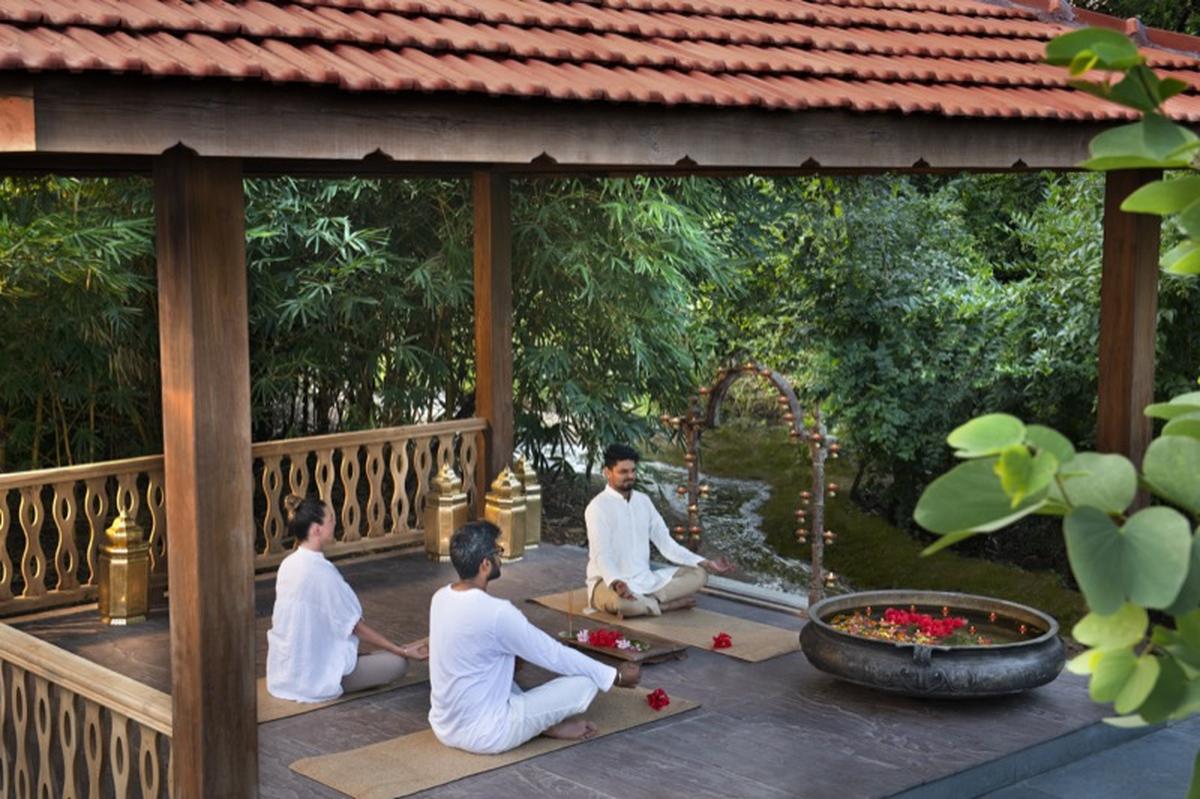
A mindfulness session at Aramness Gir

A mindfulness session at Aramness Gir
| Photo Credit:
Aramness

This shift is also reflected in how people choose where to stay and how to spend their time. The Global Wellness Institute predicts that by 2030, one in three travellers globally will select a hotel primarily for its wellness programming — a statistic that underscores how central wellbeing has become to decision-making across travel, hospitality and lifestyle. In India, that change is already visible, driven by rising stress levels, changing family structures, greater awareness around mental and sexual health, and a growing desire for practices that offer long-term resilience rather than temporary relief.

The sexual wellness shift

For decades, sexual wellness in India existed behind closed doors or was dismissed as something people should simply “figure out” on their own. Over the last few years, however, a cultural unsealing has occurred. People are speaking with an honesty; naming their desires, anxieties, kinks, insecurities and emotional struggles with startling clarity. Yet this surge in expression has not been matched by an equivalent rise in understanding.

Within sexuality coach and founder of sexual wellness platform Get Intimacy, Pallavi Barnwal’s community, people are asking questions that range from deeply vulnerable to technically practical. Men speak openly about erectile dysfunction, premature ejaculation, anxiety around performance, fear of rejection and the shame of “not knowing”. Women articulate confusion around desire, pain, emotional disconnect and the pressure to perform a version of sexuality they do not feel. Couples raise pragmatic questions about compatibility, pleasure, technique and the emotional gridlock that arrives quietly in long-term relationships. This is not a lack of willingness; it is a lack of tools.

As the Puducherry-based practitioner notes, “People are becoming more open, expressive, and curious but most still lack basic sexual literacy and resist seeking counselling.” The gap becomes most evident in people’s search for instant solutions. “People seek instant solutions instead of the therapeutic processes required for healthy, sustainable intimacy,” she says. Many arrive after trying everything else — advice from friends, online content, supplements and experimentation — without recognising that intimacy challenges, like any chronic pattern, require time, reflection and guided support.

Only a small percentage commit to long-term coaching, yet those who do often experience profound shifts: deeper emotional connection, reduced anxiety, increased body awareness and an entirely different relationship with pleasure. In 2026, sexual wellness is likely to move from curiosity to structure — from anonymous confessions to guided conversations, from improvisation to trauma-informed counselling, and from shame to skill-based intimacy education.

Women’s health, reclaimed

Perhaps the most culturally significant shift building on this intimacy conversation is how women are reframing their relationship with wellness. Historically, women have centred their lives around the wellbeing of others, often neglecting their own health until a crisis forced intervention. That pattern is now changing. Women are increasingly seeking support across the full spectrum of their lifecycle — from menstruation and fertility to perimenopause, menopause, emotional transitions and spiritual growth.

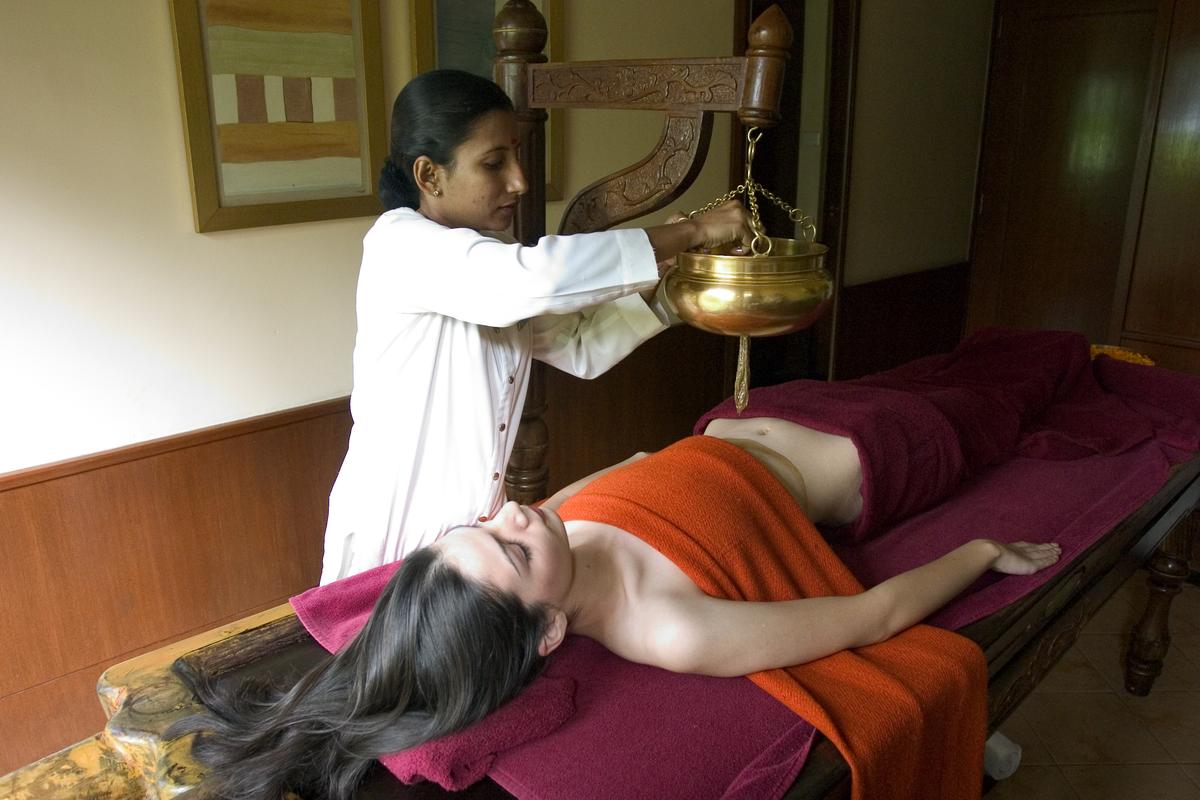
Dr Sreelal Sankar, Head of Ayurveda at Ananda in the Himalayas, explains that women’s wellbeing is inherently transitional, shaped by distinct biological and emotional phases. “Our programmes support hormonal balance, emotional resilience, metabolic health and personal growth,” he says.

Therapy session at Ananda in the Himalayas

Therapy session at Ananda in the Himalayas
| Photo Credit:
Ananda in the Himalayas

At Ananda, this care takes the form of structured Ayurvedic programmes such as hormonal rebalance, fertility enhancement and menstrual health. These programmes combine personalised nutrition plans, lifestyle corrections, therapeutic Ayurvedic treatments and massages, addressing not isolated symptoms but systemic balance across the body and mind, while also supporting emotional wellbeing.

This shift is now cultural. Women are no longer waiting for crises to prioritise their health. In 2026, they will continue to reclaim time, space and wellbeing without guilt, speaking more openly about menstruation, fertility, perimenopause and menopause. In doing so, they are driving a quiet but significant transformation within households and communities.

Longevity goes mainstream

The mainstreaming of longevity is perhaps the clearest sign that wellness is becoming a daily requirement rather than an occasional reset. As urban routines disrupt circadian rhythms, compromise sleep, overstimulate the nervous system and create a constant state of low-grade inflammation, people are turning to therapies designed to restore physiological balance efficiently.

Hyperbaric oxygen hterapy at Fairmont Spa & Longevity

Hyperbaric oxygen hterapy at Fairmont Spa & Longevity
| Photo Credit:
Fairmont Mumbai

At Fairmont Mumbai, a luxury hotel located near Chhatrapati Shivaji Maharaj International Airport, longevity therapies are designed to feel efficient rather than intimidating. Cryotherapy takes place inside a temperature-controlled cold chamber, where guests step in for a brief session lasting a few minutes. The exposure triggers a cold-induced hormonal response that cuts through inflammation and mental fog, delivering a sharp sense of alertness without the prolonged discomfort people often associate with ice baths.

Hyperbaric oxygen therapy is administered in a pressurised chamber where guests breathe oxygen at higher-than-normal atmospheric pressure. The experience is calm and restorative rather than clinical, increasing oxygen delivery to tissues and supporting cellular repair and cognitive clarity in a world where shallow breathing and disrupted sleep have become default states.

Infrared sauna with halotherapy

Infrared sauna with halotherapy
| Photo Credit:
Fairmont Mumbai

Red-light therapy is offered as a full-body experience, allowing light wavelengths to penetrate muscle tissue and skin more comprehensively, stimulating mitochondrial activity — the body’s energy centre — and helping with persistent fatigue. Intermittent vacuum therapy addresses poor circulation caused by long hours of sitting, using controlled pressure changes around the lower body to encourage blood flow and lymphatic drainage.

As Rashmi Ambastha, Director of Spa, Wellness and Recreation at Fairmont Mumbai, puts it, “Longevity-focused wellness is less about momentary comfort and more about improving biological resilience over time.” The future of this trend lies in continuity: memberships that support weekly recovery, staycation formats centred on restorative work, and programmes that position longevity as routine rather than reward.

Wellness as everyday practice: urban sanctuaries take root

Another major shift is the rise of urban wellness centres, especially in cities like Mumbai — intimate, contemplative spaces that help city-dwellers regulate their emotional lives. Mira Kapoor’s Dhun Wellness in Mumbai’s Bandra and the recently opened AUM Life in Worli are prime examples of this shift. Digital saturation, fractured families, dual-working households and relentless competitiveness have quietly reshaped mental health in India.

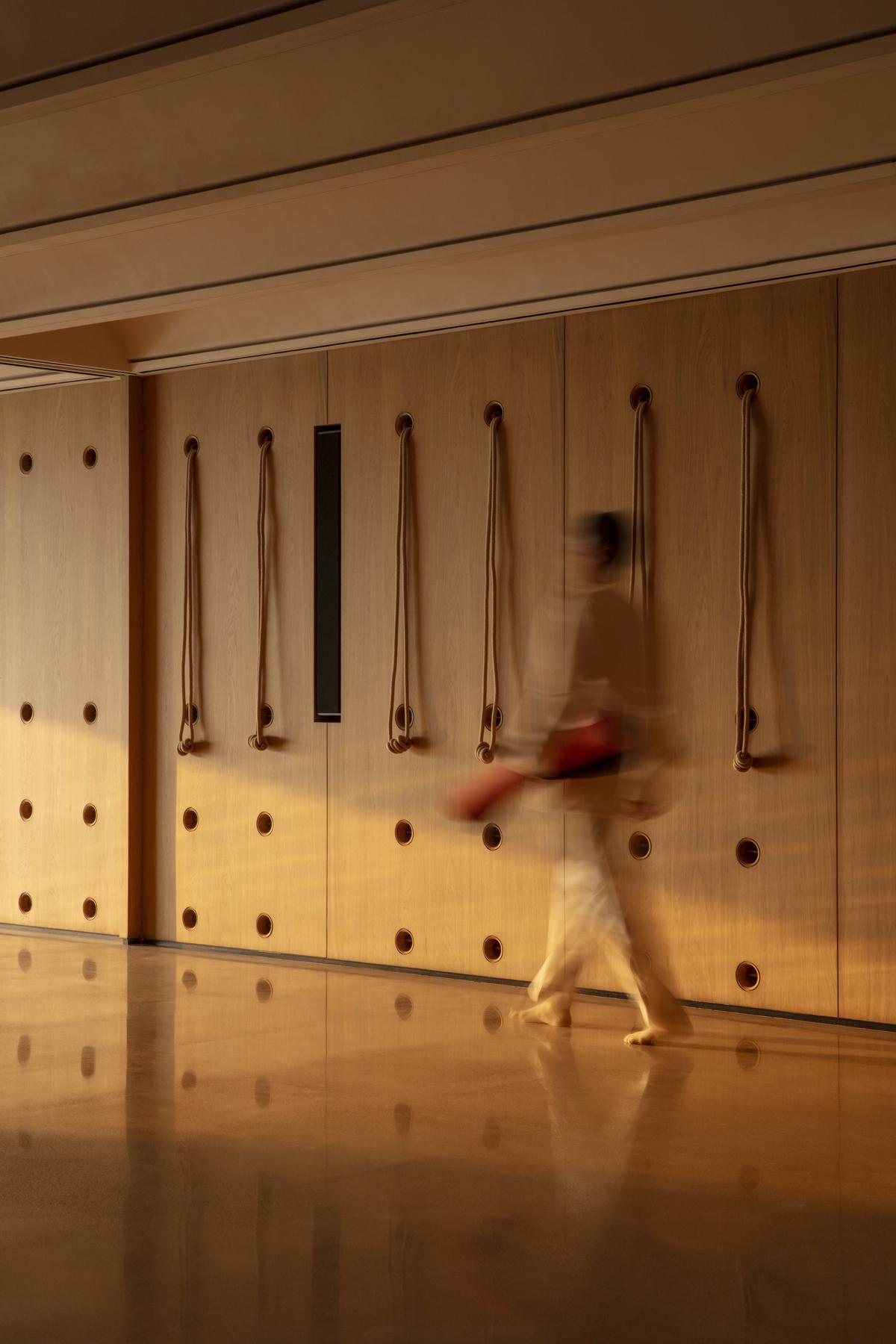
Inside AUM Life

Inside AUM Life
| Photo Credit:
Pankaj Anand

Inside AUM Life

Inside AUM Life
| Photo Credit:
Pankaj Anand

Richa Agrawal, founder of AUM Life, observes, “The rapid growth of urban wellness centres is being driven by a fundamental shift in how people are prioritising their lives. With increasing professional pressures, digital overload, and sustained mental fatigue, there is a growing need for spaces that support emotional, psychological, and holistic well-being.” Crucially, accessibility today is no longer just about cost or proximity. It is about translating ancient knowledge — breathwork, meditation, yoga and introspective practices — into forms that feel relatable and sustainable for everyday urban life. People are no longer drawn to intimidating philosophies; they want gentle, effective practices that help them feel less reactive, more self-aware and emotionally anchored.

Meera Shah, a communications professional who lives in Santacruz, visits Dhun Wellness twice a week before heading to her office in Bandra. “It’s become part of how I manage my week,” she says. “I come here early, do a yoga-and-meditation session, and then go straight to work. I’m not looking for a big spiritual experience. I just notice that I’m calmer. It’s subtle, but it changes how the rest of my day unfolds.”

Wellness festivals

Wellness today is no longer confined to solitude. While some still seek retreat-style isolation, others are gravitating towards communal formats that blend joy, connection and inner work. Wellbeing-led festivals are emerging as powerful spaces for social healing, particularly in a time marked by loneliness, digital fatigue and emotional disconnection.

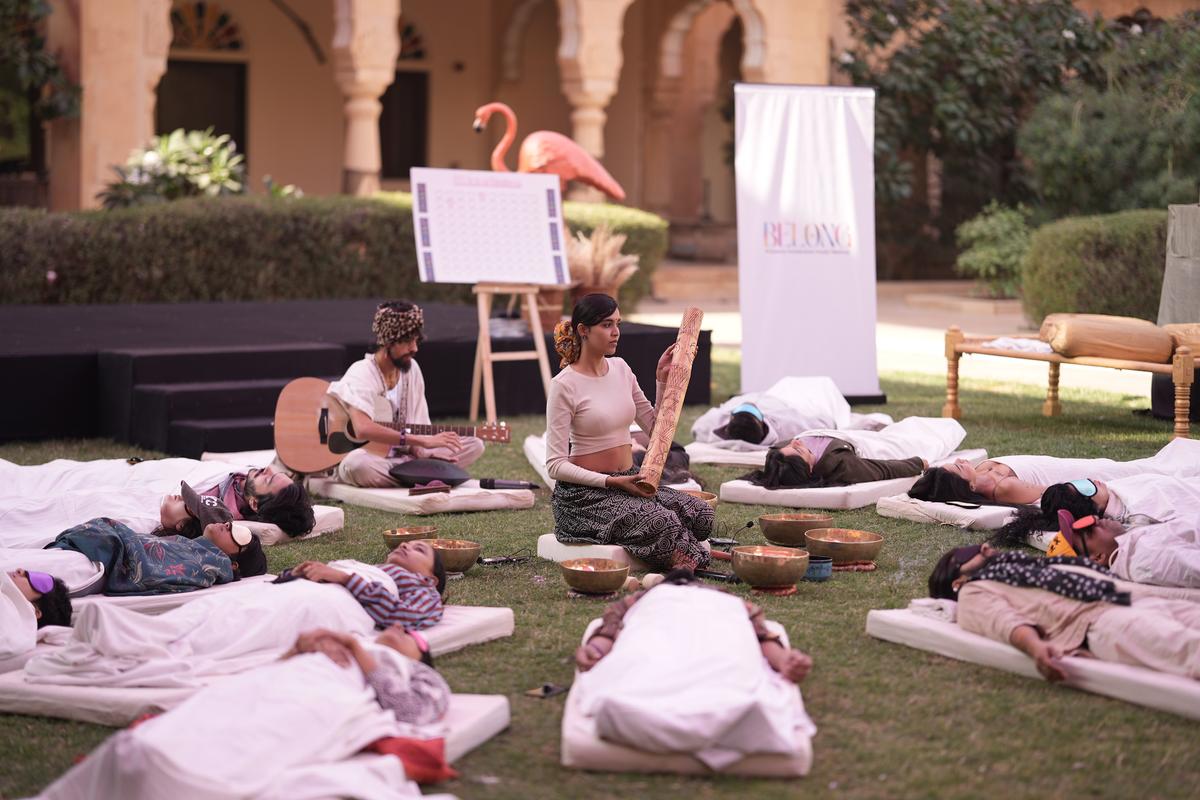
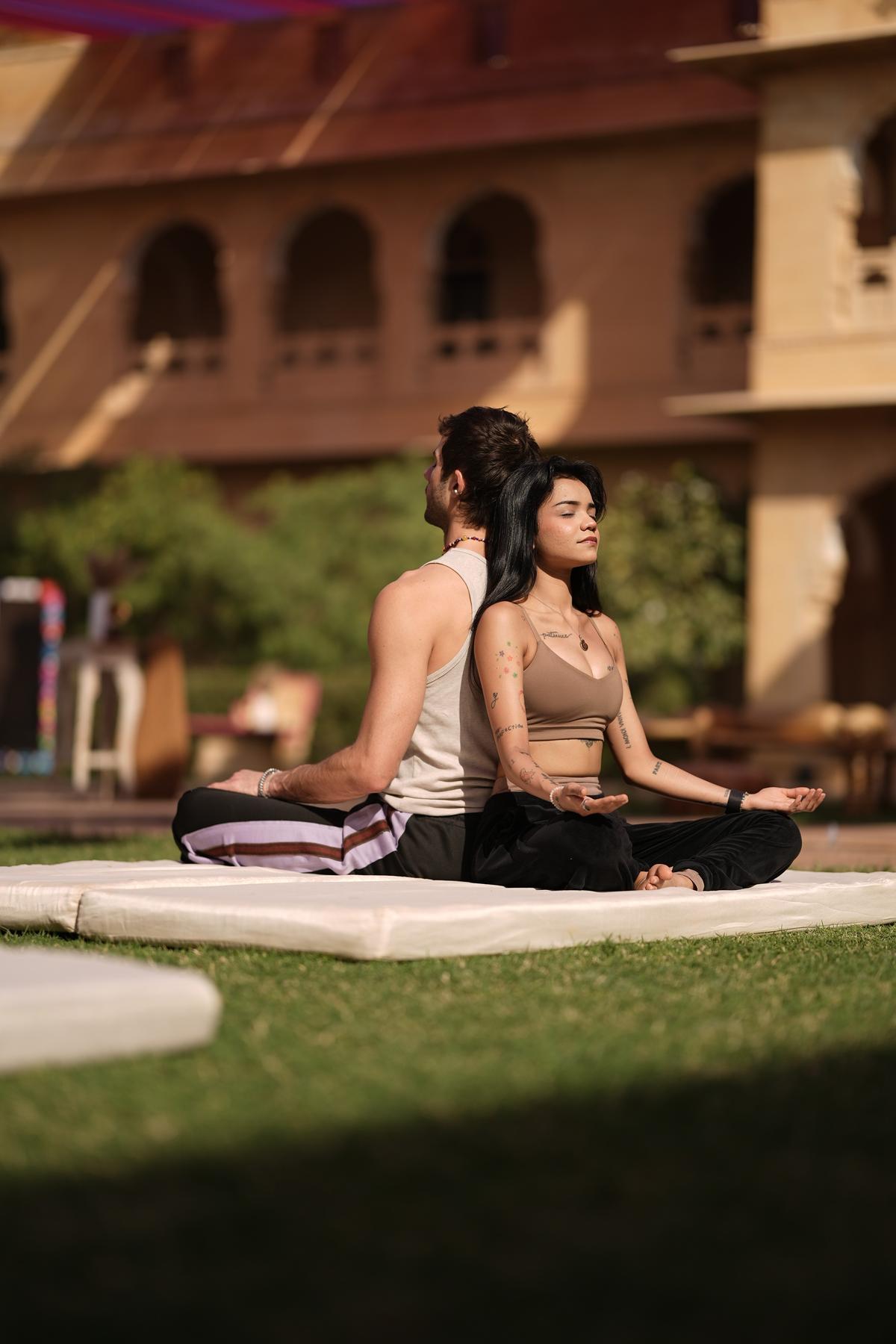
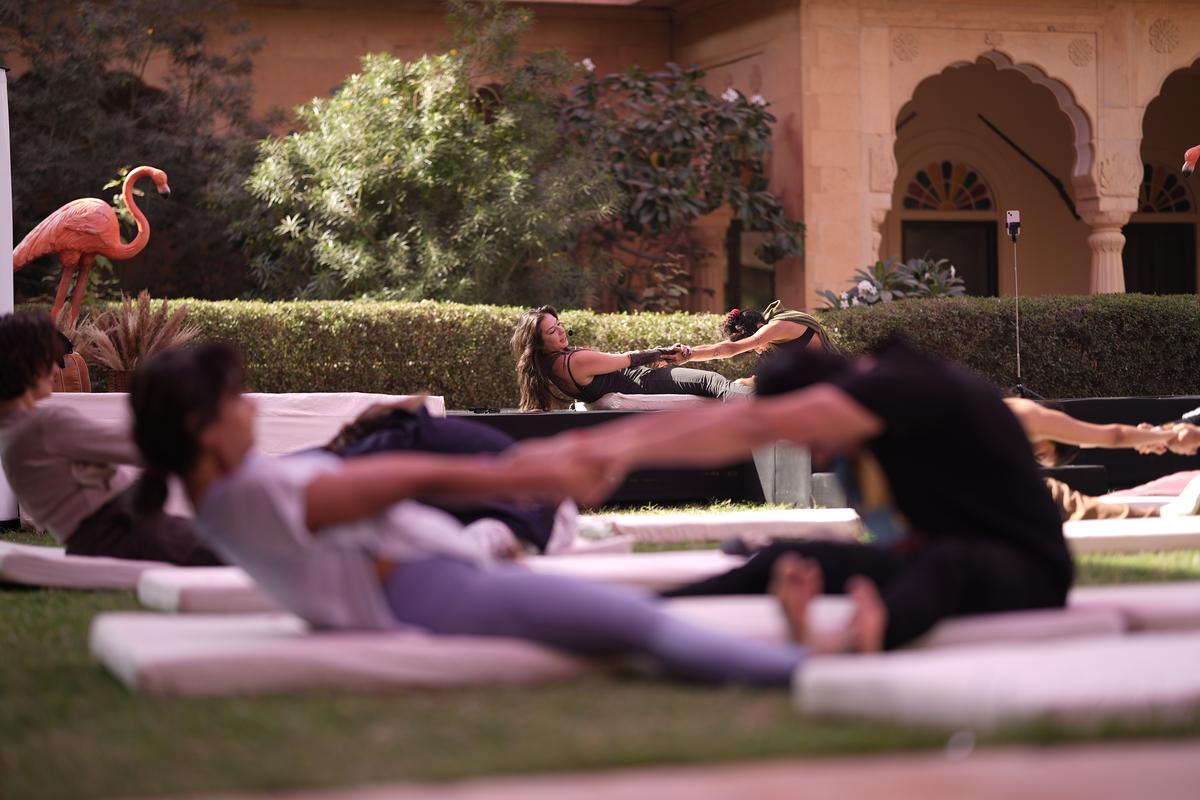
At the heart of this shift are thoughtfully curated programmes. As Himanshu Jakhar, founder of the Belong Festival, a three-day festival designed to celebrate the joys of friendship, personal growth, and wellbeing, and whose first edition was held in Jaisalmer in November, explains, the daytime schedule featured “a range of sessions and workshops — from breathwork and sound healing to yoga and movement. There were also acoustic sets and live bands, designed to help participants slow down and drop more deeply into their inward journey.” Several workshops focussed on connection, alongside practices centred on meditation and mindfulness, creating a rhythm that balanced introspection with shared experience.

Session in progress at Belong Festival

Session in progress at Belong Festival
| Photo Credit:
Belong Festival

Belong Festival

Belong Festival

The experience was intentionally intimate. While applications ran into the thousands, invitations were extended to just 100–110 participants, reinforcing the festival’s emphasis on curation and meaningful interaction. That sense of closeness was felt deeply by attendees. “I spent two days at the festival,” says Goa-based marketing professional Insia Lacewalla, “and experienced everything from an intense breathwork session that slipped me into a peaceful, alert trance, to workshops that invited childlike play, movement, surrender and reflection. Each experience steadily peeled away inhibition and control.” She adds that, as a facilitator, she found herself forming intimate micro-communities with strangers through shared voices, candid conversations and moments of collective vulnerability. “We smiled, spoke, and sometimes cried together.”

Community and wellness at Belong Festival

Community and wellness at Belong Festival

Music and wellness comes together at Belong Festival

Music and wellness comes together at Belong Festival
| Photo Credit:
Belong Festival

The rise of rituals: when the spa comes to you

A transformative trend emerging in hospitality is the shift toward deeply personal, in-room rituals that prioritise rest and nervous-system repair. This movement is gaining momentum because it recognises something fundamental: people increasingly crave private, unhurried forms of care that do not require navigating spa schedules, public spaces or social performance.

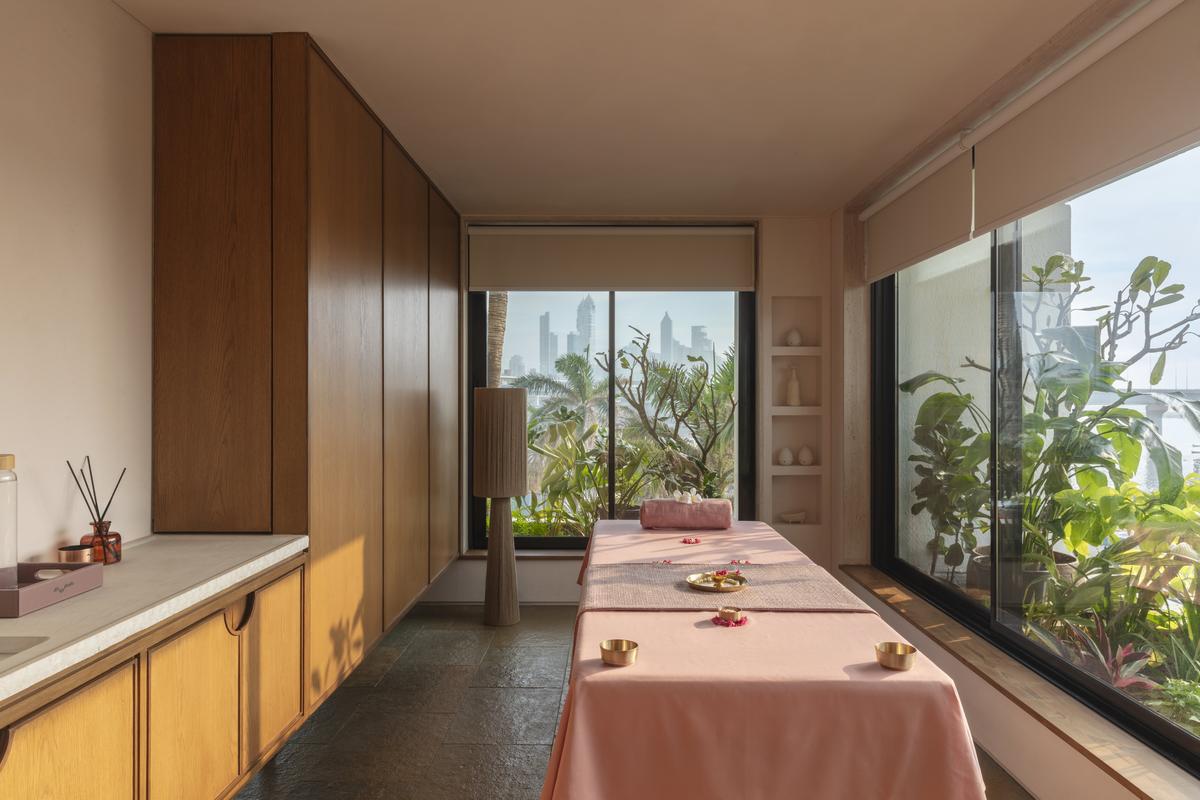
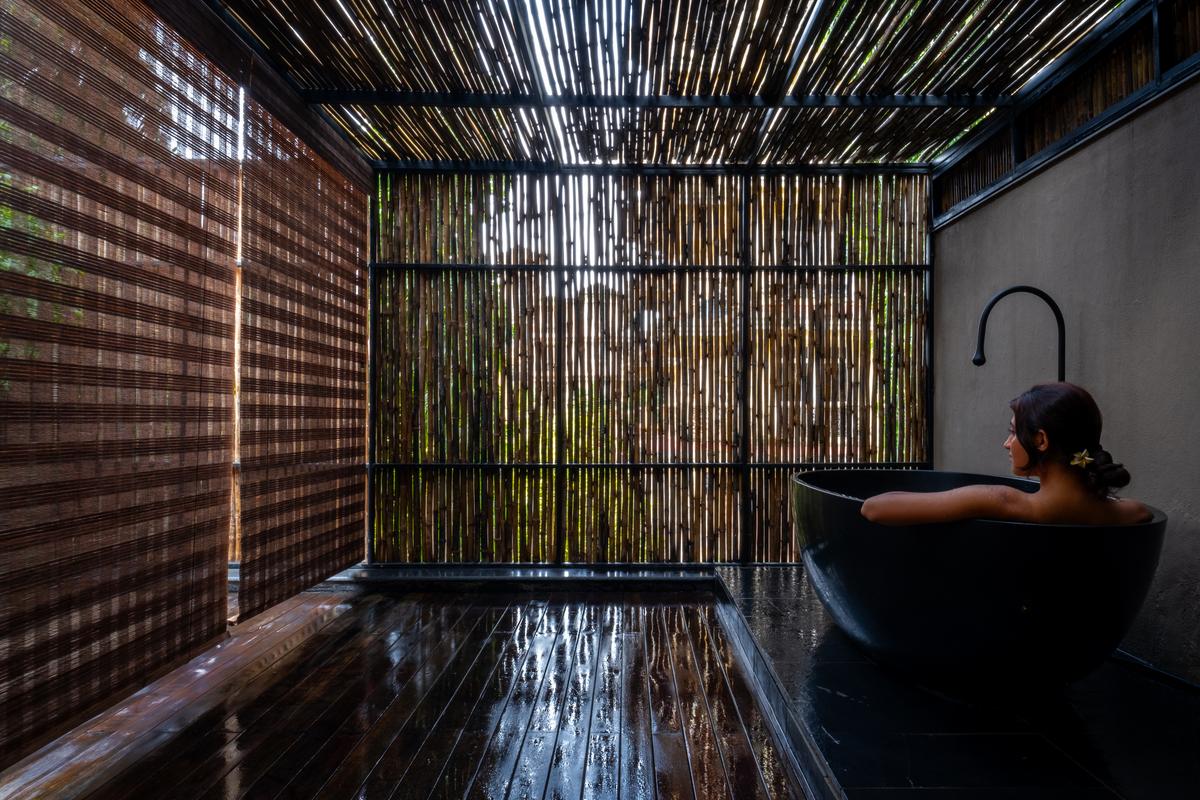
The bathing ritual at Amaraanth

The bathing ritual at Amaraanth

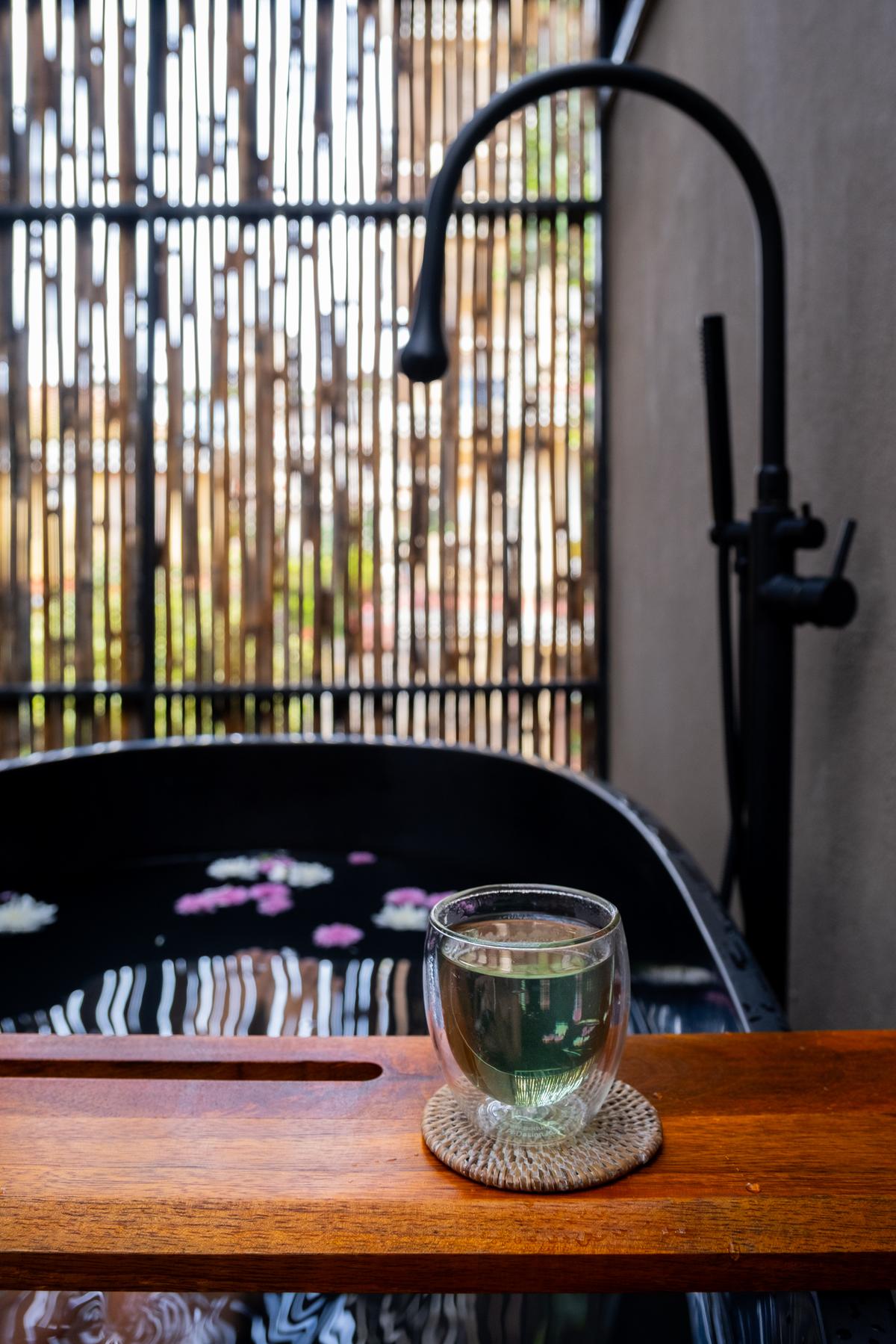
At Amaraanth in South Goa, this trend takes a distinct shape. For the first time, the spa experience is brought directly into the guest’s room — not as a convenience but as a deliberate reimagining of intimacy and restoration. What begins as a dry massage, done seated and tailored to the guest’s comfort, flows seamlessly into a bathing ritual set in an outdoor space surrounded by thick greenery. The setting itself becomes part of the treatment: a large stone bathtub, open skies, the quiet hum of plants, and the sensory privacy that hotels rarely offer.

The ritual is meticulously personalised. Guests are invited to choose their preferred bathing salts, essential oil blends and even the type of tea they would like to sip — usually from a set of three or four infusions. The therapist prepares the tub, infuses the salts, adjusts temperature, and builds an atmosphere where the body can soften and the mind can slow down without interruption.

This is where the collaboration with The HVN in Knightsbridge in London becomes important. Their grounding in Shinrin Yoku, or Japanese forest bathing, and their integrative wellness philosophy inform the structure of this ritual. The HVN’s emphasis on warm-water immersion, salt therapy and essential oils for nervous-system regulation is translated into a format that is quiet and contemplative. The result is a ritual that supports circulation, reduces inflammation, eases muscular tension and offers a deep emotional calm that many guests describe as the closest thing to a reset.

Return to roots: foraging, soil-to-skin and ecological intelligence

As global wellness pivots toward technology, India is seeing a counter-movement rooted in tactility, ecology and place. Hyper-local, foraged and seasonally aligned treatments are emerging as a marker of authenticity. This mirrors how foraging first reshaped food culture — from chefs seeking indigenous ingredients to mixologists creating forest-led cocktails. Now, that same curiosity about provenance is entering the world of wellness.

Yoga at Aramness Gir

Yoga at Aramness Gir
| Photo Credit:
Ankit Mavchi

Increasingly, guests want to know not just what goes into their treatment but where it comes from, how it was grown and why it supports the body in specific ways. They are asking deeper questions about hibiscus and its cooling properties, sesame and castor for grounding, or tulsi for stress regulation. The more fragmented modern life becomes, the more people seem to crave rituals anchored in the logic of landscape.

Aramness Gir, in Gujarat, has also opened the door to participatory forms of wellness. While not everyone will want to forage — and it is not feasible for every guest — there is a clear and growing segment seeking immersive, educational experiences that allow them to walk the land, identify botanicals and understand how seasonality affects potency. Just as food enthusiasts embraced farm-to-table dining, wellness seekers are beginning to pursue soil-to-skin therapies. The notion of customising a ritual based on herbs gathered from the property, even if guided, feels both intimate and empowering.

Outdoor spa

Outdoor spa
| Photo Credit:
Aramness

Rafeek Jabbar, wellness director at Aramness Gir, a boutique lodge bordering the Sasan Gir Park in Gujarat, observes: “The nature-led approach is resonating now because guests are seeking authenticity in an increasingly synthetic world. When you receive a treatment crafted from the very land beneath your feet, something ineffable happens.”

At Aramness

At Aramness
| Photo Credit:
Aramness

This movement is grounded in ecological respect: ethical harvesting, regenerative gardens and ingredient cycles aligned with local seasons. At Aramness, guests often join plant-identification walks, learning about the botanicals that later appear in their treatments. Understanding the soil, the climate and the life cycle of these plants creates a sense of relationship rather than consumption.

Pre-spa detox drink

Pre-spa detox drink
| Photo Credit:
Aramness

“Rootedness will define authentic wellness in 2026. When wellness is extracted from its place, it loses potency. When it’s rooted, it becomes transformative,” says Rafeek. As climate debates intensify, nature-led wellness is becoming a philosophy rather than a trend.

At its core, this moment in India’s wellness journey is not about doing more, but about remembering differently. Remembering that the body is not a machine to be optimised endlessly, but a system that needs rhythm, care and pause. Remembering that healing is not always visible, but often cumulative and deeply personal. And remembering that wellness, when stripped of aspiration, is simply the practice of paying attention — to breath, to land, to relationships, to the self. As these shifts take root, they suggest a future where wellbeing is no longer something we escape to, but something we return to, again and again, in the midst of everyday life.

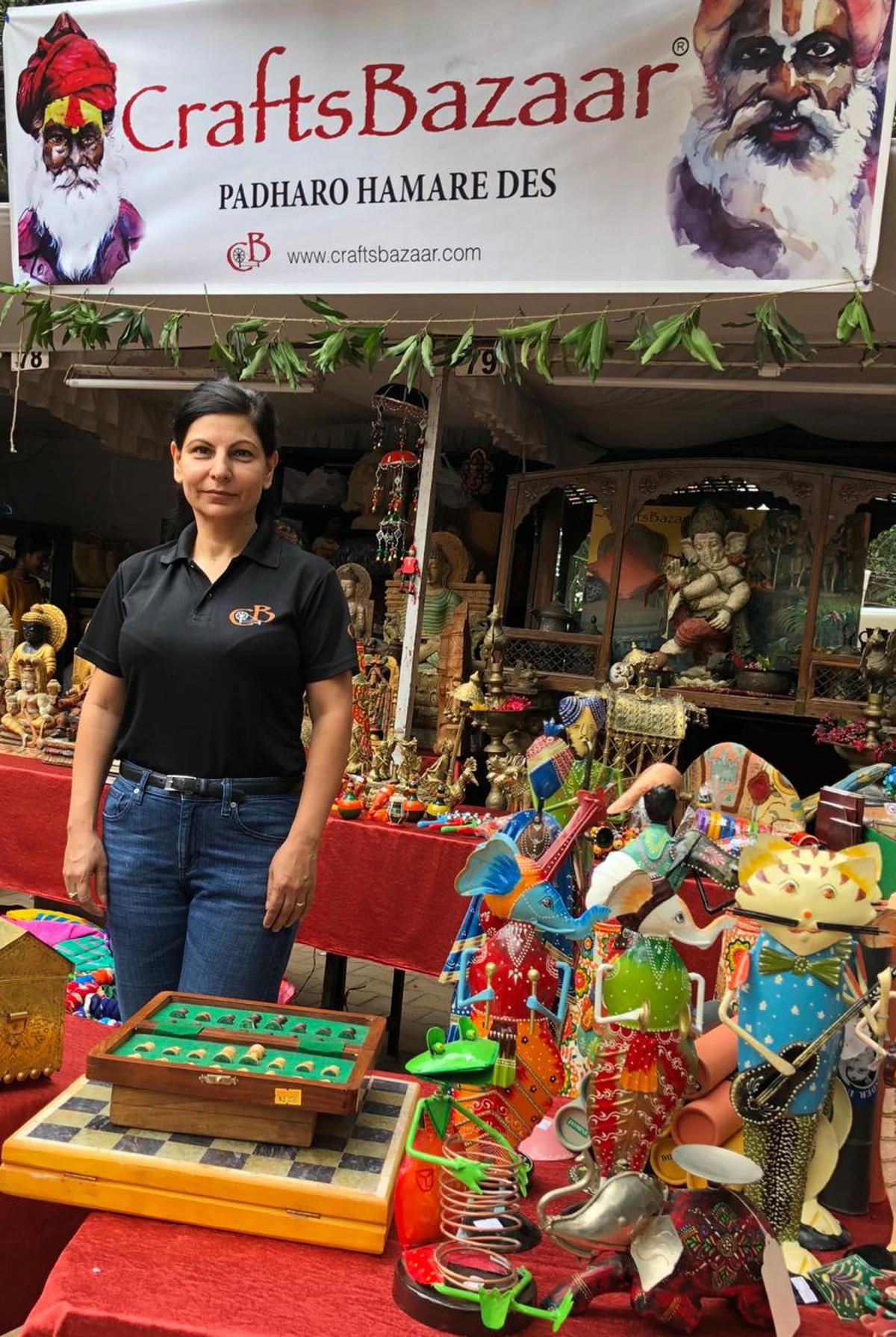

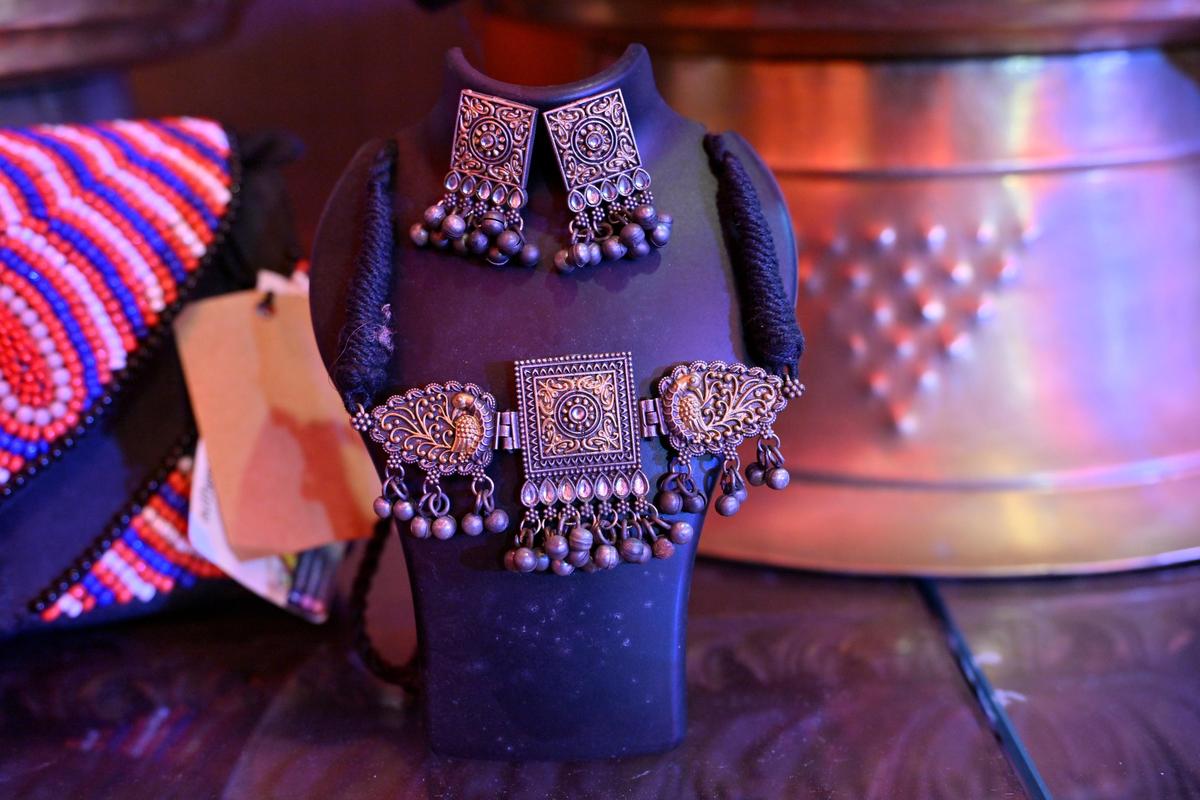
Source link

New Year 2026: Six make-up and skincare products that are perfect to start the year glowing


Facial treatment in spa salon. Skin care and massage. Cosmetologist at work
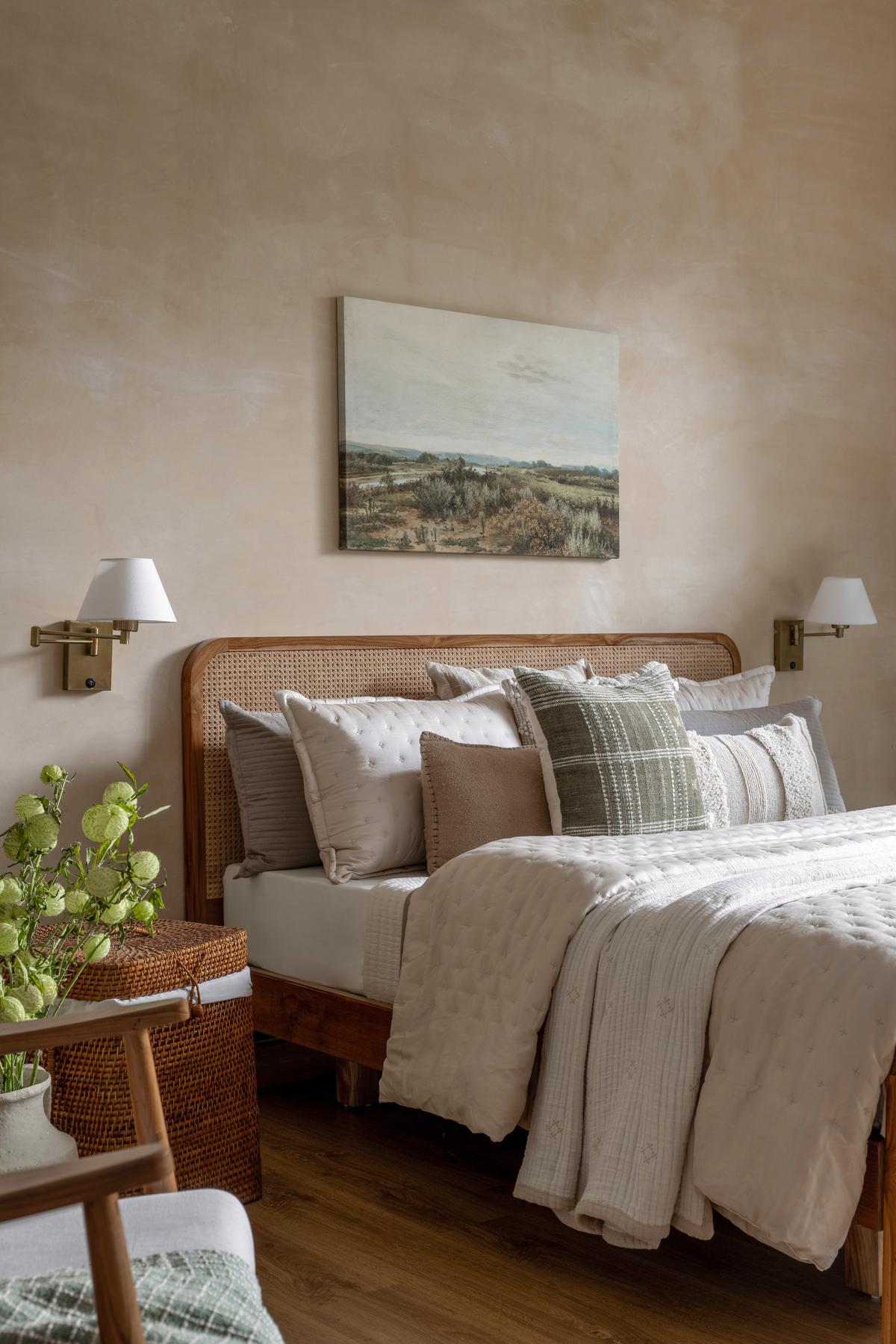
Facial treatment in spa salon. Skin care and massage. Cosmetologist at work
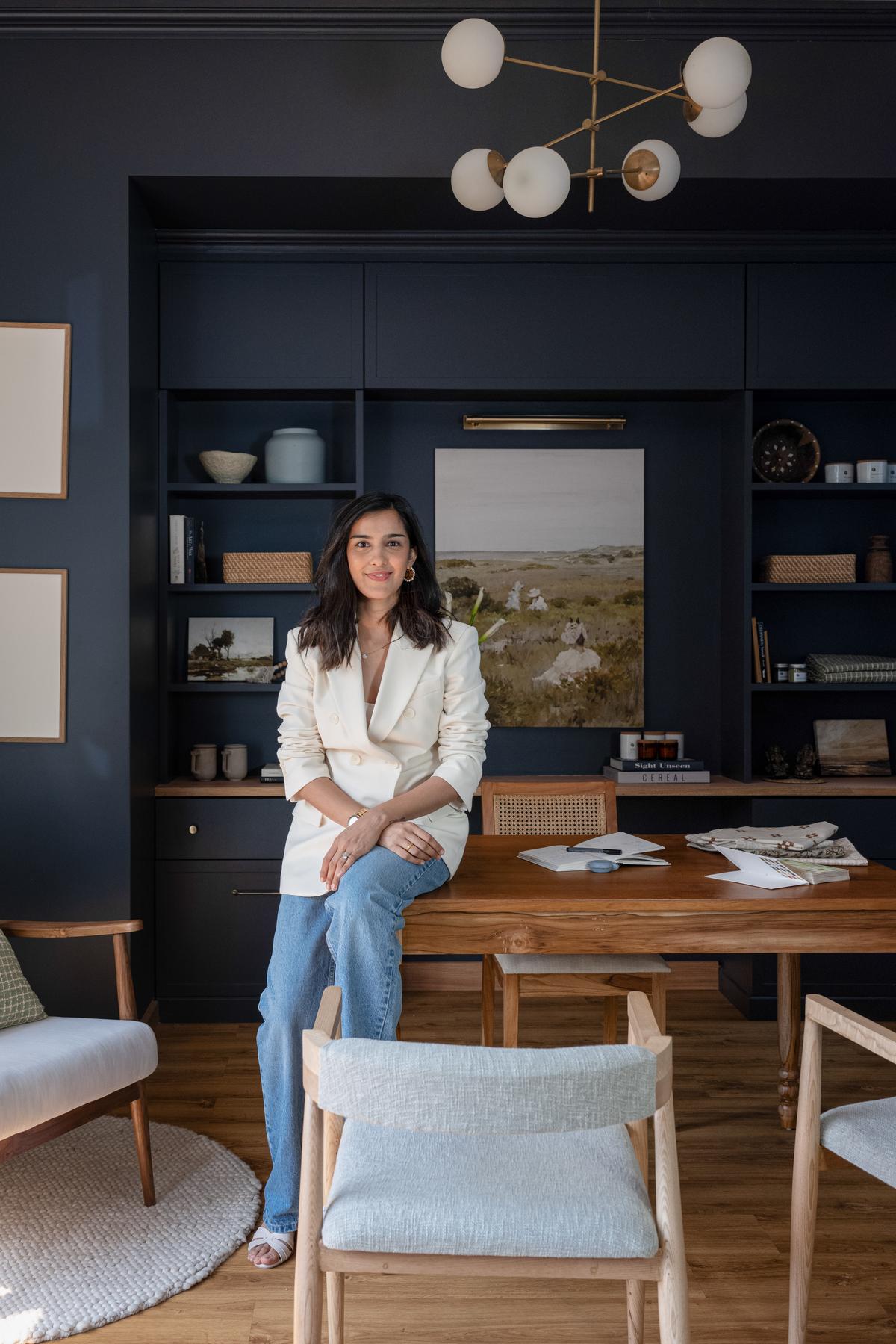
| Photo Credit: Choreograph

If a healthy, glowing skin is part of your New Year goals, then you should invest in a skincare wardrobe. Make-up and skincare tubs, palettes and tubes make for easy upgrades. Our wish list edit features six formulas to ensure that you start the year with a glowing skin.

Mary&May Tranexamic Acid + Glutathione Eye Cream

Mary&May Tranexamic Acid + Glutathione Eye Cream
| Photo Credit:
SPECIAL ARRANGEMENT

Eye for detail

Mary&May Tranexamic Acid + Glutathione Eye Cream works on fixing dark circles and fine lines. People have been dotting it around their mouth and other facial areas affected by pigmentation. It will not replace a messed up sleep cycle, but it will definitely reduce discolouration. Trust the combination of brightening tranexamic acid, glutathione and Vitamin C to work their (science-backed) magic.

Available for ₹2,180 on marynmay.com

Essence Lash Princess False Lash Effect Mascara

Essence Lash Princess False Lash Effect Mascara
| Photo Credit:
SPECIAL ARRANGEMENT

Flutter your eyelashes

Now that the brand Essence is finally in India, it is time to stock up on its incredible mascara that blew up on TikTok and for all the right reasons. Essence Lash Princess False Lash Effect Mascara is budget-friendly evenly coats lashes with a lift that legitimately gives you the false-lash effect without having to struggle with the lash glue.

Available for ₹400 on tirabeauty.com

VT Cosmetics Cica Daily Soothing Mask

VT Cosmetics Cica Daily Soothing Mask
| Photo Credit:
SPECIAL ARRANGEMENT

Unmasking glow

Irritated or angry skin, rosacea flare-ups, post-exfoliation hydration — VT Cosmetics Cica Daily Soothing Mask looks after your skin every time it is in need of some extra care. The box of 30 makes usage mess-free, comes with a pair of mini tongs to avoid contamination and is safe enough to use everyday. If you’ve heard of the brand’s viral at-home micro needling Reedle Shot serum, think of this as the finishing touch.

Available for ₹1,999 on tirabeauty.com

Etude Fixing Tint

Etude Fixing Tint
| Photo Credit:
SPECIAL ARRANGEMENT

Colour scheme

We love an India exclusive, and this time around, K-beauty powerhouse Etude has created three new shades specifically for Indian skin tones. Each of them being nude.

In shades Noor, Sufi Red and Mocha Mantra — Etude Fixing Tint is worth adding to the cart if you are after a lightweight, matte lip tint that will not budge.

Available for ₹950 on tirabeauty and nykaa.com

Beauty of Joseon Red Bean Refreshing Pore Mask

Beauty of Joseon Red Bean Refreshing Pore Mask
| Photo Credit:
SPECIAL ARRANGEMENT

Scrub it off!

Of course, you have seen the sunscreen by Beauty of Joseon all over your Instagram feeds and part of everyone’s recommendations. Take our word for it — this clay mask deserves a shot too. Beauty of Joseon Red Bean Refreshing Pore Mask refreshes and unclogs your pores without drying your skin; possibly one of the most gentle kaolin clay masks you will find, with gentle exfoliation courtesy of Korean red beans.

Available for ₹1,740 on tirabeauty and nykaa.com

Bright like a diamond

Fenty Beauty Diamond Bomb All-Over Diamond Veil

Fenty Beauty Diamond Bomb All-Over Diamond Veil
| Photo Credit:
SPECIAL ARRANGEMENT

Of course, Rihanna’s shimmer-bomb highlighters took over the Internet the minute they dropped. But the party season hack that we have been loving is using them as eyeshadow. The shades are super pigmented, so all you need is your fingertip to swipe some directly onto your lids — a single-step glitter eye look with zero fallout. The diamond-shaped casing is a treat to the eyes, too. Our pick? Fenty Beauty Diamond Bomb All-Over Diamond Veil.

Available for ₹4,375 on tirabeauty, nykaa, and fentybeauty.com


Source link