Life & Style

5 last-minute Eid makeup ideas to look beautiful in no time


If you want to look glowing and fresh in just a few minutes, focus on achieving dewy skin with a pop of colour for that vibrant, festive touch.

How to do it:

Use a liquid highlighter: A liquid highlighter adds a natural dewy finish. Dab it on the high points of your face, such as the tops of your cheekbones, brow bone, down the nose, and cupid’s bow. This instantly brightens up your face and gives you that radiant Eid glow.

Cream blush: Cream blushes blend easily into the skin, giving you a natural flush of colour. Apply a soft pink or peach shade onto the apples of your cheeks for a fresh, youthful look.

Highlight your features: You can even apply a small amount of highlighter on your eyelids for a subtle shimmer.

By focusing on glowy skin and soft, vibrant colour, you can create a fresh and youthful appearance that looks effortlessly put together.


Source link

Optical illusion personality test: Shark or man? What you notice first tells is you are straightforward or kind-hearted


Optical illusion personality test: Shark or man? What you notice first tells is you are straightforward or kind-hearted

Optical illusion personality tests, as the name suggests, are a fun and easy way to understand oneself or others better. These are psychology-based weird images that claim to tell about a person’s innermost thoughts and feelings based on what catches their attention first.
This particular image has two main elements: a shark and a man. But at first glance at the image, a person can see only one of the two elements, based on which a lot can be decoded about their true personality. This test claims to reveal if a person is straightforward or soft-hearted.
To take the test, simply look at the above image and notice what caught your attention. Now read what it means below:
1. If you saw the shark first…
Then it means that you are a confident and direct person, which makes it people to understand you. However, your straightforwardness might not be taken well with a lot of people, especially if there is an argument. In social settings, you like being in the limelight.
Whereas, in discussions you watch out before acting which helps you decide your views. However, sometimes when you focus on being right, you might appear to be too harsh to others. So, think before you speak.
2. If you saw a man first…
Then it shows that you are kind-hearted and sensitive as a person, which also makes you forgive others easily. People like this quality of yours and this makes them connect with you. However, since you are sensitive as a person, you might seem to be a bit reserved. You give much thought before trying new things. All in all, you are an easy-going person and you avoid having conflicts. But, because of this you should not avoid speaking up in situations where you should ideally stand up for yourself.
How true was this particular test result for you? Tell us about it in the comments section below. However, do note that these test results may not always be 100 percent true as they give generic results.
And if you liked this test, then do share it with your friends and family to know them at a deeper level.

Hollywood BETTING on Prince Harry & Meghan Markle’s Split; A SECRET Deal Already in Place?


Source link

Solo Leveling season 2 ends, fans get goosebumps after incredible finale


After an amazing finale, Solo Leveling Season 2 is now over, leaving anime lovers both excited for the upcoming season and with chills. With stunning animation, tough battles, and many aspects of Sung Jin-Woo’s journey, the season came to a close. Let’s say that the creators did not disappoint at all with the eagerly anticipated final episode. People on the internet have expressed that they “can’t believe that the anime peaked” and that the episode contained elements they will never forget.

Solo Leveling season 2 ends

A Solo Leveling updates page shared stills from the episode and captioned the post, “#SoloLeveling Season 2 has come to an END! One of the best seasons in Anime history!.”

Reacting to this, one wrote, “Just witnessed peak after peak. Kudos to A-1 animators.” Another added, “They really jumped up the quality for Season 2 greatly. Everything on point in terms of action, music, animation, and choreography. “

A third added, “It’s over. Saturday is not going to be the same anymore.”

A fourth went on to add, “Solo Leveling is more than an Anime or Manhwa it’s a lifestyle.”

The comments show us how the creators were able to captivate viewers and create a work that they don’t want to stop watching. Now, everyone is wondering if there will be a second season.

Additionally, Solo Leveling Season 2: Arise from the Shadow comes after the first season of 2024 and the recently released anime omnibus film Solo Leveling: ReAwakening. At A-1 Pictures, Shunsuke Nakashige directed the newest season. Chugong, H-goon, and DUBU (REDICE Studio) created the Korean webtoon series of the same name, which is adapted into the anime.

Where to watch Solo Leveling season 2?

You can stream Solo Leveling season 2 on Crunchyroll.

For more news and updates from the world of OTT, and celebrities from Bollywood and Hollywood, keep reading Indiatimes Entertainment.


Source link

Ibrahim Ali Khan’s Nawabi style on the ramp is quite a hit!


Ibrahim Ali Khan's Nawabi style on the ramp is quite a hit!

Ace designer duo Shantnu and Nikhil showcased their latest collection, Piazza Nova, at the ongoing fashion week in Mumbai. Known for their sharp aesthetics, this collection masterfully blended couture with contemporary fashion, creating a refined yet bold statement. The highlight of the show was actor Ibrahim Ali Khan, who stunned the audience with his impeccable style as he walked the ramp in a striking beige ensemble from the duo’s collection.

ds (11)

Ibrahim’s ensemble featured beige-hued pants that offered a comfortable, relaxed fit. Paired with a crisp white shirt, buttoned up to the collar, the look exuded understated elegance. A white tie added a sharp contrast, elevating the look even further. Over the shirt, Ibrahim wore a beige full-sleeved suit jacket, designed with dark-coloured buttons, functional pockets above the hem, and a classic dark motif on the front pocket, which added a subtle flair. He completed the look with brown shoes, offering a sophisticated and refined appeal.
The Piazza Nova collection was a celebration of Shantanu & Nikhil’s five-year journey with their Prestige-Pret brand. As India’s first Prestige-Pret brand, they have redefined modern luxury by offering accessible yet sophisticated designs. Piazza Nova paid homage to craftsmanship, culture, and storytelling, creating a perfect fusion of fashion and community. The collection embodied the brand’s ethos of personal expression and collective celebration, shaping the future of luxury consumption.

fd (10)

Among the highlights of the collection were sharp suits combining neutral tones with striking patterns and prints. The designs also catered to power-dressing for women, featuring structured blazers, jackets, shirts, and well-tailored pants. The entire collection showcased a seamless blend of formal wear with a modern twist, elevating traditional silhouettes and injecting them with fresh, contemporary appeal.


Source link

At the Lakmé Fashion Week 2025 x FDCI, artisans take the runway


Designers Zaid Khatri, Amruta Vankar, Mubbasirah Khatri, Muskan Khatri, and Shakil Ahmed during the Design Craft Presents Artisan Designers of Somaiya Kala Vidya show in the 25th year of Lakmé Fashion Week 2025 at Jio World Convention Centre in Mumbai

Designers Zaid Khatri, Amruta Vankar, Mubbasirah Khatri, Muskan Khatri, and Shakil Ahmed during the Design Craft Presents Artisan Designers of Somaiya Kala Vidya show in the 25th year of Lakmé Fashion Week 2025 at Jio World Convention Centre in Mumbai
| Photo Credit: Perfect Shadows / FDCI x Lakmé Fashion Week / RISE Worldwide

Indian fashion is entering an era of quiet reckoning — one where the silent hands behind couture’s most intricate weaves and prints are finally stepping into the light. For decades, artisans remained the invisible scaffolding of Indian fashion’s most-celebrated narratives. Now, the script is shifting. At Lakmé Fashion Week x FDCI’s March 2025 edition, this shift felt not only palpable but overdue too. In a special show, titled Design Craft Presents Artisan Designers of Somaiya Kala Vidya, master craftspeople emerged not as footnotes but as the headline.

Established in 2014, Somaiya Kala Vidya (SKV), situated in Anjar, Kutch, is a pioneering institution that flips the script on how we view artisans and design. Founded on the belief that the custodians of India’s textile legacy deserve more than just seasonal patronage, SKV empowers traditional artisans with the tools of modern design, branding, and entrepreneurship — without asking them to abandon their roots.

Unlike urban design schools that often view craft through an outsider’s lens, SKV is embedded within the artisan community. It offers structured, culturally sensitive education to master artisans — many of whom have inherited centuries-old techniques of weaving, dyeing, or embroidery. The curriculum, taught in the local language and tailored around the artisans’ calendars, balances aesthetics with market relevance.

A model takes the runway during the Zaid Khatri show

A model takes the runway during the Zaid Khatri show
| Photo Credit:
Perfect Shadows / FDCI x Lakmé Fashion Week / RISE Worldwide

The runway bore witness to a powerful confluence of tradition, technique and self-expression anchored by five artisan-led labels: Ajrakh Gharana by Zaid Khatri, Alaicha by Amruta Vankar, Elysian by Mubbasirah Khatri, Musk by Muskan Khatri, and Neel Batik by Shakil Ahmed. Each collection offered a distinct voice, rooted in heritage yet unafraid to play with silhouette, colour, and context.

With ajrakh as the centre of attraction, Zaid Khatri’s Eternal Ajrakh collection for his label Ajrakh Gharana was a journey from the past to the present and then into the future. It was a poetic reflection on time, layering ajrakh’s storied geometry with sleek, contemporary tailoring. His work asked a poignant question: Can tradition stretch into the future without losing its soul? Judging by his restrained yet evocative presentation — indigo jackets layered over fluid separates — the answer felt like a resounding yes.

Amruta Vankar’s Alaicha drew from her mashru weaving legacy, translating the tactile language of handloom into quiet luxury. Her palette was earthy, her cuts clean — each look paid an ode to rhythm and repetition, the two things every weaver knows intimately.

Amruta Vankar presents ‘Alaicha’ 

Amruta Vankar presents ‘Alaicha’ 
| Photo Credit:
Perfect Shadows / FDCI x Lakmé Fashion Week / RISE Worldwide

Mubbasirah Khatri (the only female ajrakh artisan and artisan designer in Kutch) designed the Anatomy collection for the label Elysian. Mubbasirah turned to ajrakh presenting a softer, dreamier take on the resist-dye technique. There was romance in her folds — fluid dresses in pastel tones, dotted with the signature clusters of tie-dye that whispered of patience and precision.

Muskan Khatri’s Mystery for the label Musk (spotlighting the tie and dye of the bandhani craft) brought youthful bravado to the runway, with cropped jackets, flared trousers, and a clever clash of patterns. Hers was a voice of defiance — proof that tradition does not have to mean restraint. It can flirt, rebel, and still hold on to its roots.

‘Elysian’ by Mubbasirah Khatri 

‘Elysian’ by Mubbasirah Khatri 
| Photo Credit:
Perfect Shadows / FDCI x Lakmé Fashion Week / RISE Worldwide

The beauty of the traditional batik craft was unveiled by Shakil Ahmed’s label Neel Batik for the collection Tradition to Modern. It was a striking interplay of bold hues and thoughtful silhouettes. Shades of vibrant red punctuated the timeless palette of black and white, moving together in fluid harmony across pieces titled Saadla and Bepota.

Saris anchored the Indian line-up with quiet strength, while the Western silhouettes carried a refined Indo-fusion sensibility. Textural play added depth to the collection, with abstract patterns drawn from Shakil’s own Instagram photographs — transforming digital inspiration into wearable art.

What united these five voices was not just their connection to Kutch or their training at Somaiya Kala Vidya (SKV), but their refusal to be boxed into categories of craft or costume. These were not artisans-turned-designers. They were designers — full stop — claiming space on their own terms.

Shakil Ahmed’s ‘Neel Batik’ 

Shakil Ahmed’s ‘Neel Batik’ 
| Photo Credit:
Perfect Shadows / FDCI x Lakmé Fashion Week / RISE Worldwide

At a time when fashion is eager to greenwash its image with buzzwords like ‘handmade’ and ‘sustainable,’ this showcase offered something rarer: authenticity without appropriation. It re-centred the narrative around the people who have always kept Indian fashion’s legacy alive — not in glossy lookbooks, but in dusty workshops, under the sun, dye-stained and dye-driven.

Muskan Khatri’s ‘Musk’

Muskan Khatri’s ‘Musk’
| Photo Credit:
Perfect Shadows / FDCI x Lakmé Fashion Week / RISE Worldwide

By giving these voices a runway, Lakmé Fashion Week was not just curating a show — it was correcting a long-standing omission. And as the applause rang out, it was clear: the future of Indian fashion is not about discovering the next trend. It is about returning to the roots, and finally, listening to the hands that have always known the way.


Source link

Celebrity nutritionist Rujuta Diwekar on her latest book Common Sense Diet


Fifteen years ago Rujuta Diwekar hit the headlines for her best selling diet book Don’t Lose Your Mind, Lose Your Weight. The fitness and nutrition expert famously put actor Kareena Kapoor on a diet that included rice, ghee, and parathas, proving that you can get into skinny jeans without giving up dal-chawal, or the occasional ladoo. Over the years, defiantly refusing to do any paid campaigns, collaborations or brand endorsements, Rujuta has created a loyal following. This includes 1.7 million people on Instagram and plenty of celebrity clients, enamoured by her practical advice and forgiving diet charts.

Now, she is back with her latest book, The Commonsense Diet, (published by Juggernaut) and she is not mincing words as she takes on some of today’s most popular fads, influencers, and ingredients. In a world noisy with wellness trends and weight loss advice, we ask her how to get fitter without giving up on the joy of food.

The book’s cover

The book’s cover
| Photo Credit:
Special Arrangement

Diets are getting nastier, and the people on them are getting angrier

Hanger is a real word and hangry a real phenomenon. Diets and dieters have become cultish and therefore I say, angrier than earlier. The reason why my messaging hasn’t changed is because eating right isn’t rocket science, it’s common sense.

Right from the beginning my diet advice has been rooted in science and has always been on the same page as our grandmothers. You have to see your diet in the context of climate and culture.

Watch: Rujuta Diwekar answers questions about your diet dilemmas

I think the shortfall is in health professionals not making diets local enough for their clientele — the people who come to us for diet advice are vulnerable, they are scared, no matter what they have achieved, and often fear that they are messing up with food or lack the discipline to eat correctly, hence must be whipped into shape.

Then you have the influencers weighing in, you have the doctors weighing in. Opinions are misconstrued as facts when reels go viral. On social media, especially now when you can buy reach, everything including following or even trolling is just business as usual. It is becoming more confusing than ever as everyone comes across as an expert.

I say diets are getting nasty because there is also a lot of cultural appropriation too. Turmeric is now a miracle food. But haldi was always used with fat, like a tadka, or with milk, not as haldi shots in water. If a little is good, a lot is not better.

We have made the simple pleasures of life, like food, complicated. If your diet has a name, it is bound to fail. All of us should eat differently — if we all wake up to a green smoothie, avocado on sourdough for lunch and chicken breast for dinner, that is not a world you want to be living in. 

Health is not about maintaining appearances. It’s not about the six-pack, the weight loss, the skinny jeans or sleep score. It is about living a kinder, gentler life. When people are shamed into getting ‘healthier’ it just doesn’t work.

The one diet you should be on is the one the social media influencers do not approve of. 

If your plate is full, your protein is adequate 

People now worry constantly about whether they are getting enough protein — but a shortage of protein doesn’t exist, and surely doesn’t exist in isolation. The ‘Politics of Protein’ report by the International Panel of Experts on Sustainable Food systems has shown that there is no such thing as a global protein gap. The only people who fall short on protein are the ones who fall below the poverty line and therefore short on access to adequate nutritious food.

An easy summer plan

On rising: Soaked raisins and nuts. Or a fresh fruit

Breakfast: Idli/ dosa/ upma/ egg

Mid-morning: Coconut water/ buttermilk/ ice apple

Lunch: Curd rice and some pickle

Snack: A handful of peanuts or homemade murukku

Dinner: Rasam, rice, poriyal and meat or fish (if applicable)

Bed time: milk (if hungry)

Tweak to your timings and personal preferences.

Removing carbs and consuming protein tries to fix what is not broken. It’s also expensive. What’s good for profits is often bad for people, and the planet.

You just need to eat normal regular meals. We ensure that clients have a diverse diet, we account for different seasons, for their lifestyles. We keep it local, seasonal and traditional. Eat dals and legumes, nuts, dairy-based protein like milk and dahi, and fish, meat and eggs if you are non-vegetarian. You are more than covered that way.

If you do more, you may get more protein but it is not going to accelerate weight loss or give you better skin and hair as quick as you think you deserve them. Physiological adaptation takes time. We want to get thin yesterday… But remember, we are living long lives, we need to look beyond that cousin’s wedding, beyond a new year’s party. We need to be on a plan we can live with for life.

There is no point in going off sugar, dairy and gluten. The sensible thing is to put them in context.

People say they are giving up maida and then buy an almond flour cake. People turn down the kokum sherbet because of the sugar and miss out on the micronutrients that it offers, the diversity, the taste….

We used to be good guests in India, now we go to people’s houses and say we are off sugar, gluten, carbs… it’s become some sort of a flex. But when you cut sugar, gluten and dairy out of your meals, and therefore your life, you cut your connect with culture, cuisine, and climate.

First check on the basics, Are you eating on time? Exercising too much, or nothing? Sleeping too late? Work on fixing that first. Because going #glutenfree and #dairyfree will not resolve the problems that these bring… if you address the underlying issues first, there is a good chance that your tolerance will improve. If you are intolerant, simply avoid them instead of replacing them with alternatives.

Millets are the new — and it breaks my heart to say this — maida. Because they are eaten out of context. Yes, they are rich in micronutrients, dense in fibre and can help with weight loss. They are our super food, a part of our rotis, our ladoos, our chutneys… But now they are being made into two-minute noodles, or junk food burgers. We are using them to virtue signal that this food is healthier, that is a reductionist approach to millets…. we need to go back to our old ways of cooking and eating them with the right combinations to optimise the benefits.

Now, the gut cleanse is the new way to detox the age-old guilt… Truth be told, that cleanse of yours is just as toxic as your weekend binge

The only thing that is useful is eating correctly, in a sustainable way, knowing that our bodies will change with time, knowing that sleeping and exercising also have a role to play. Things that don’t come with a hashtag will stay.

Now you have so many young people needing to take additional fibre supplement — if you need it in your 40s what is going to happen in your 60s and 70s? We should need lesser aids for day to day functions.

You don’t need to drink green potions to cleanse your system. You don’t need an external aid to clean your system barring bathing and brushing your teeth. Everything else is just full time-pass. And costly. Because going on a cleanse is like giving away your inheritance. We inherit good microbes from our parents, take a lifetime to build on it and then risk washing it away with this ‘cleansing’.

People are being health washed — where logic is put aside to accept a narrative as fact. Like cleanses. Misinformation is coming to you from all directions. There is a barrage of ads on your phone, and social media algorithms are monetising your anxieties, vulnerability and fear.

The only diet to get on is the one you will keep for life. And that diet is eating ghar ka khaana. Quick fixes just don’t work. Sustainability is crucial for success. 

I get many request for endorsements, but I don’t take them because it is a policy decision I made long ago. It is a clear conflict of interest. I am also careful about what talks I agree to participate in — because under the garb of awareness, there can be a spread of misinformation and fear. I care about transparency and am happy with the money I make with consulting.

One of the biggest things that dieting takes away from us is the ability to eat freely, and therefore share fearlessly and live fully

There’s a lot of conversation about ageing, menopause and perimenopause, which is good, but it can also become another trap for women to not accept their bodies. We need to accept that our waists may be two-three inches more than they were in our 20s. There is nothing wrong with that. Because that is how the body works, it is called the middle-age spread. We forget that growing old is a blessing.

A change in the body is not the same as deterioration. We need to make peace with that.

We all need love, kindness and empathy. We should enjoy our food. It is one of the primal pleasures of life. When we lose the joy of eating we don’t function well. None of us overeat chronically but once in a while if you are having an extra slice of cake or a larger piece of pizza it’s fine, food is our sense of sharing joy, love and security. Don’t reduce it to the sum total of calories.

In the end its about how fully I lived, not how skinny I looked.


Source link

Magician David Blaine exclusive interview | On discoveries in India, AI and magic, and living dangerously


David Blaine exclusive: On Indian mysticism, Ai & the art of living on the edge
| Video Credit:
The Hindu

Near brushes with death are his métier. Defying death, his hobby. 

He has held his breath underwater for 17 minutes, not eaten for 44 days, was buried under the earth for seven days, lived inside an ice block for 63 hours, stood atop a 100-feet pillar for 35 hours and of course, levitated more than once. Regurgitating frogs, sticking rods through his arm, and whipping out cards from his gut are a few of his pastimes.  “Just watch, do not attempt,” David Blaine reminds us.

The ‘extreme magician’ has lived dangerously his whole life. 

And this American’s feats have for long been the subject of obsession for millennials worldwide, televised and marketed for greedy consumption — few can forget the tense moments when he emerged from an ice cube, shivering, completely rattled, to be immediately rushed to the hospital. [He would later admit that it took him more than a month to recover, and vowed to never attempt something as dangerous as that]. But that was a lie, for by then, a ‘modern-day Houdini’ had been born. 

Today, at the age of 51, he still lives life on the edge.  

David Blaine on fire in Brazil. (credit: National Geographic/Dan Winters)

David Blaine on fire in Brazil. (credit: National Geographic/Dan Winters)
| Photo Credit:
Dan Winters

Over the last two years, David travelled the world in search of those like him or better than him; those who skirt the line between magic and learned skill. In his latest National Geographic reality-challenge show intentionally and aptly titled Do Not Attempt, the magician once again becomes a student, in the quest for feats that defy magic as he travels across Brazil, Southeast Asia, India, the Arctic, South Africa, and Japan.

It is once again a numbers game. Over the two years of filming the show, he has kissed a king cobra for three seconds, lay covered in 59 scorpions, lit his head on fire for 53 seconds, swam under three feet of ice, jumped 59 feet from a bridge while he was on fire, and meditated with six black mambas. 

In an India exclusive interview with The Hindu, the magician recalls testing the limits of human endurance over his quest through eight countries and three continents. “[Sam Dalal’s] Swami/ Mantra, a book that changed my life as a magician, and that which led me to the idea that you can combine magic with real feats and make them even more believable, was all created in India. But going to India and meeting people and seeing them do things that the book doesn’t even mention…” he trails off, nodding in disbelief.   

Fire Ramesh and David Blaine pick up burning rope together to put on their heads.  (credit: National Geographic/Aditya Kapoor)

Fire Ramesh and David Blaine pick up burning rope together to put on their heads. (credit: National Geographic/Aditya Kapoor)
| Photo Credit:
Aditya Kapoor

In India, there were one too many discoveries, he says. ‘Fire’ Ramesh, who David was obsessed with for a long time, lights his head on fire. “I didn’t even know that he did not use fire protectors! He just uses kerosene and water. To me, it was one of the coolest acts I have seen using fire.” Then, there is Deepak Mondal who is part of a cycling circus and jumps into a mound of broken glass, at least a 100 times a year —  “Seeing Deepak dive into broken glass, and then be perfectly fine, was so overwhelming that I actually stopped him at one point,” David recalls. 

One experience that “was over-the-top” and which he considers as “hard-core viewing” was at the Urs festival in Ajmer. “The fakirs honour the Sufi saints and show that the spirit is greater than the flesh literally by demonstrating impalements and at one point, even push their eyes out of their head. It was the craziest thing I have ever seen!” he says. While he did want to try doing it himself, his eye doctor back in New York stopped him in the nick of time. “I asked him, can I try this? He simply said, ‘you are going to degenerate your vision if you start now. They have probably worked on this for many years!’ and I said, never mind that one then,” he says laughing. 

David Blaine kisses a King Cobra on the head

David Blaine kisses a King Cobra on the head
| Photo Credit:
Sirachai “Shin” Arunrugstichai

David’s career is a shining testament to his incessant need to push the limits of human endurance through magic. Sure, it is a performance but it also demands extreme self-discipline. A young David’s curiosity was first piqued when he saw a magician perform on the subway. He shot to fame in 1997, with television special, David Blaine: Street Magic, that aired on ABC. In 2008, he attempted to break the Guinness World Record for breath holding. In the early 2000s, he was at his most popular, each extreme stunt better than the one before; each blow more sever than the one before.

Over a career spanning decades, is there a stunt that he thinks he should not have risked attempting? 

“The one that I think was not smart was eating glass. There are chemicals in the glass and even if you don’t cut yourself apart of rip your throat or whatever else, there are so many unknown dangers to it and I hope nobody tries it. It is very dangerous,” says David, pulling us back to the reason why he called this show, Do Not Attempt. He hopes to bring attention to the long-term effects that some of these extreme feats have on the human body.

Over the years and experiences, David’s understanding of magic and his relationship with it, has gone through many iterations. “Ultimately, the meaning of magic for me is giving people a moment of wonder, where you strip away their logic and leave them in a state of astonishment. The greatest gift as a magician is to be able to give people that feeling.”  Magicians — like PT Barnum and the vaudeville performers — historically have studied skills that are not trickery but seem impossible, and converted them into a presentation that defies sense, he adds. 

“My concept of magic has expanded from just doing simple card tricks to studying people like Harry Houdini or Hadji Ali who were able to hide a gallon of water in their stomach and bring it out like a dragon. I like to do things without big illusion props. You are the prop. You use your body, a deck of cards and simple objects to create that moment. I keep searching for more things that I can do to defy logic,” he continues.

David Blaine watches as a yogi has his head buried completely in the sand in India

David Blaine watches as a yogi has his head buried completely in the sand in India

The theatrics around magic too, has gone through inevitable shifts in the digital age. But David believes that it is imperative to shine a beacon of light on what is real, now more than ever. “The more AI and technology keep advancing, the more people return to the need to experience something that defies their logic in real time.”  

Does that mean he would never retire from living dangerously? David says, “I work with the masters, the best coaches and teachers who have put thousands of hours [into what they do]. They have a deep understanding of what you can endure and how you can do it. If I see something, and my heart isn’t into it, I won’t attempt it. But if it gets into my subconscious that I want to figure it out, I’ll do whatever it takes to get there.” So, the answer is a resounding ‘no’.

The six-part series David Blaine — Do Not Attempt is set to premiere on April 6, Sundays at 8pm on National Geographic Channel.

David with Karan Singh

David with Karan Singh
| Photo Credit:
special arrangement

The illusion arc

Mentalist Karan Singh was David’s close collaborator in India, while shooting for Do Not Attempt. He says, “One of the main reasons I got into magic was David [Blaine]. It was in 2002 when I first saw him. There was so much to learn from him. The fact that he was on the lookout to push his boundaries, to see where magic can be taken, and where the human body can go was just incredible. ‘Why are you doing this,’ I asked him at least 10 times, and every single time, he had an answer. He always questioned himself, and that has made me question why I am doing magic. This questioning completely changes what magic means.“

India has been a land of magic for centuries, Karan says, “Magic used to be, fakirs and sadhus lying on beds of nails and people levitating. [Digital intervention] and social media has helped make the magic economy bigger in India. People know what mentalism is now. The fact that there are multiple magicians that people can refer to is insane. That’s all down to the digital age, and access to information and videos.


Source link

5 things couples in healthy relationships avoid posting online, as per psychology


In today’s digital age, it’s easy to get caught up in sharing every little detail of our lives on social media, especially when it comes to relationships. Whether it’s a perfect vacation, an anniversary surprise, or a sweet gesture, we all love to post about the moments that make us smile. But the truth is, there are some things that are better left off our social media feeds. The happiest couples are the ones who understand the balance between sharing and keeping certain aspects of their relationship private. Let’s take a look at five things that truly content couples never feel the need to post about online, according to psychology.


Source link

Shared walls, cool interiors – The Hindu


Bengaluru recorded more than 35°C on March 14, 2025. Can’t bear the heat? Try shading your walls!

For a modern urban dweller, it may be unusual to see houses clustered closely together, like a herd of sheep, in older villages, hillside settlements, or medieval heritage towns. Similarly, take children to a zoo, and they may notice how several animal species sleep one over the other in a single mass. Any connection between these two phenomena — one human-made, the other an instinctive animal behaviour?

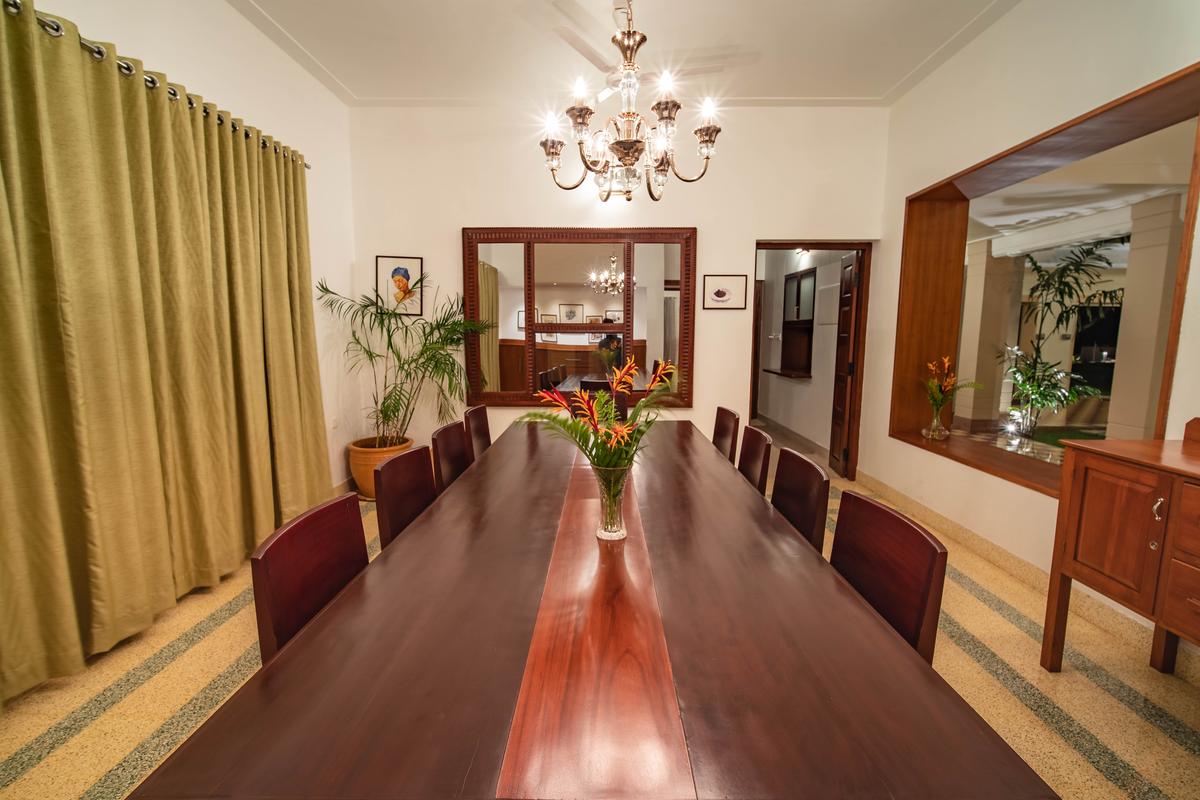
Yes, there is. Closely built structures mutually shade each other’s walls, keeping interiors cool. The shared walls act as thermal mass, further insulating the spaces inside. Similarly, animals that huddle together share body heat in colder climates while also gaining psychological comfort year-round. Ultimately, it’s all about walls and skins.

Window shading.

Window shading.

Walls form the largest surface area of a building, more than floors, roofs, or support structures. They define the visible elevation, accommodate windows, and house storage units, and invite varied decorations. With our frontal vision, humans tend to focus on walls more than any other building element, even though we also perceive entire interiors and external views.

What remains invisible to us is how much direct and diffused solar heat walls absorb — primarily through light but also via contact with hot air. The combined effects of convection and conduction gradually heat the building’s interiors, especially today, when setback rules prevent structures from being shaded by neighbouring buildings or trees.

Modern architecture has replaced small wooden windows, or even the tiny apertures of historic buildings, with large glass windows. While they provide expansive views, they are often covered with curtains, another modern trend! Glass, a high conductor of heat and light, turns our interiors into brightly lit, overheated spaces, akin to microwaves.

Chajjas to shade the wall.

Chajjas to shade the wall.

The problem itself suggests the solution: prevent direct sunlight from reaching the outer surface of walls. Planting trees near walls is one option, but they require space, may not provide dense foliage, could obstruct views, and might damage structures with their roots.

A simpler and more effective solution is to install continuous chajjas (sunshades) along walls, even where there are no windows. Just like traditional sloping tiled roofs that extend beyond exterior walls, these sunshades block direct sunlight, living up to their name. This small addition — applicable to both new and existing buildings — can offer protection for a lifetime.

Looking for a temporary fix to beat the summer heat? If outdoor space permits, shade windows from the outside by hanging a mat or thick curtain about two feet away from the window. This setup allows shutters to remain open while ensuring constant air movement between the shade and the window, reducing heat gain.

Complex construction problems often have simple, sustainable solutions.

(The author is an ecological architect, urban designer, and heritage conservationist in Bengaluru.)


Source link

Celebrating Ugadi in all its wholeness


There is far more to Ugadi or Yugadi as it is also called, than the customary offerings of sweet, sour, salt, pungent, and bitter flavours, to ring in the season. The meaning behind the culture and cuisine of Ugadi traces its origins to centuries-old sacred works, says Arathi VB, a vocalist, who holds an MA in Carnatic classical music and a PhD in Sanskrit. 

“Nature is never seen as just a resource in India, but rather a manifestation of the Divine. Therefore, we celebrate every cyclic transition or change in nature as a divine blessing and observe seasonal festivals such as Ugadi, Sharan-navaratra, Deepavali, Sankranti, Ratha Saptami and Holi, as well as the purnimas and amavasyas. They rejuvenate our spirits, strengthen our social bonds and remind us of the blessings that come through Nature,” says Arathi.

Arathi, born and brought up in Bengaluru, was exposed to these areas from a tender age. “My parents were active participants and volunteers in organising satsangs bhajans, discourses, cultural and literary activities and services to the needy. I grew up in an atmosphere of learning, yearning to discover the original kavya-shastras for a direct comprehension of our desha and dharma. Sanksrit became the tool for that,” she says.

Arathi, who pursued her learning of shastras, kavyas, agamas and Vedanta from scholars such as N Ranganatha Sharma, R Ganesh, Vijayalakshmi, KS Kannan, Tyagali R Sharma, and others, says, “I initially learnt classical music from my mother and later on, from Pankaja Ramachandra and TS Satyavathi.  Historical figures such as Chanakya, Vidyaranya, Vivekananda and Shivaji, apart from kings, queens, scholars, yogis and philanthropists have inspired me to work for the cause of desha and dharma.”

Arathi spoke on the relevance of Ugadi. Excerpts:

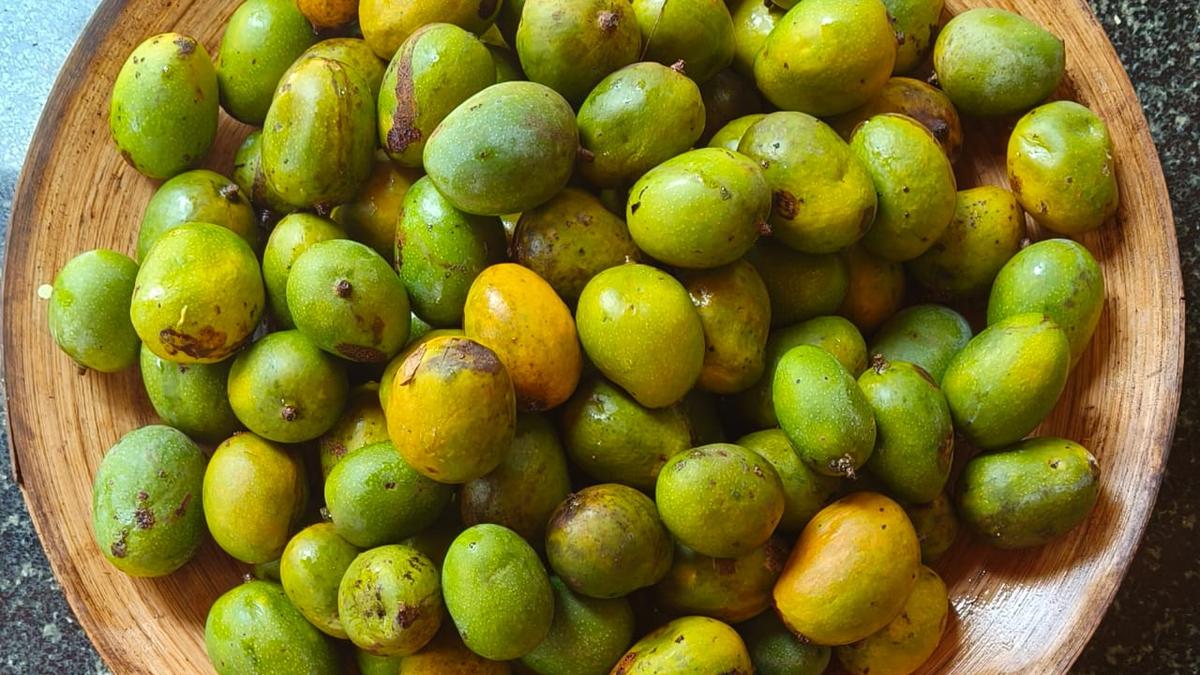
Neem leaves, raw mangoes, flowers, and fruits, being sold on the eve of Ugadi

Neem leaves, raw mangoes, flowers, and fruits, being sold on the eve of Ugadi
| Photo Credit:
MURALI KUMAR K


One sees Ugadi in connection to spring, a season which holds significance for many celebrations. Why?

Most Indian festivals are rututsavs (seasonal festivals). The foremost of them is Ugadi, the pan-Indian New Year. For Indians, the conclusion of the old year as well as the beginning of the new year, must both coincide with spring celebrations.

Hence, we celebrate two Ugadis — one is the souramanayugadi, based on the solar calendar that follows the cycle of the 27 nakshastras. The second is the Chandramanayugadi based on the lunar calendar and follows the cycle of the bright and dark fortnights created by the waxing and waning of the moon. The two calendars supplement each other to ascertain time and astronomical predictions. 

Arathi VB

Arathi VB
| Photo Credit:
Special Arrangement

Like most festivals, Ugadi too, has two dimensions — the vrata (vows) and utsava (celebrations). While vrata is for self-introspection, puja, charity and service to others. Utsava is about social bonding — greeting, exchanging gifts, feasting, music, dance, processions, games etc.

There are regional variations to Ugadi celebrations, though it is quite common to see the rising sun and seek blessings from Surya and Bhumi, followed by puja and the feeding of cattle. People conclude their vrata by consuming prasada. 

In southern Karnataka, a mixture of bevu-bella (neem and jaggery) is consumed. People prepare a variety of dishes as per regional customs and enjoy a Sahabhojana or feast with friends and family. Sesame and jaggery are the key ingredients in eatables or beverages, and a variety of dishes prepared with raw and ripe mangoes are quite common, all over the country.

The evenings are marked with song, dance, drama, harikatha, processions, native games and sports, and acts of charity. Panchangashravana or listening to the almanac being read aloud in the evening is one of the highlights of Ugadi.

In Karnataka, the day after Ugadi is celebrated as hosa-tadaku, where non-vegetarian dishes are consumed by those who wish to. In pre-colonial times, under royal patronage, Ugadi celebrations lasted for 15 days culminating with Chitra-Purnima.

How did Ugadi, the core of Vasanthotsava, become a platform for the arts? How do historical references touch upon this tradition?

Vasanthotsava was the grandest public celebration in India for ages, going on for three months at a stretch, till British rule put an end to it. Descriptions of Vasantotsava are seen in the Ramayana, Mahabharata and other classical literary works. The living traditions of folk and tribal traditions, all allude to Vasanthotsava in some way or the other. Despite restrictions and the discontinuation of royal patronage, Vasanthotsava celebrations continued with the support of common people.

Ugadi, a part of theVasanthotsava has long been a platform for fine arts. Many texts, sculptures and living traditions explicitly document this. The beautiful Vasanta-mantapa galleries in ancient temples and okali-hondas (huge stone tubs used for mass colour spraying) and sculptural depictions speak a lot about the great scale of celebrations.

Every year, poets and artists presented their latest  compositions during this season, and were duly honoured and rewarded by rulers, as well as the public. Texts such as the Kamasutram, Lalitavistara, Ratnavali and others, describe the crowds of men and women of all communities participating with joy, and the distribution of snacks and drinks for all.

What is the spiritual, social, cultural and Ayurvedic significance of consuming bevu-bella-maavu on Ugadi?

Bevu-bella comprises a mixture of jaggery and neem leaves, sometimes served with grated slivers of maavu (raw mango). The sweetness of jaggery and bitterness of neem leaves represent the joys and sorrows of life. The experiences of pleasure and sadness progressively make us tougher and wiser in our journey.

Consuming a mixture of bevu-bella symbolises one’s mental preparation to face life with optimism. For both worldly success and spiritual elevation, we need a balanced mind that can keep calm, strong and cheerful amidst turbulences that come our way.

Dandamudi Sumathi Rama Mohan Rao

Dandamudi Sumathi Rama Mohan Rao
| Photo Credit:
Neem leaves, raw mangoes, flowers, and fruits, being sold on the eve of Ugadi

Bengaluru specials for Ugadi

The Ugadi Special concert at the Indian Music Experience will see a performance by Padma Shri awardee Dandamudi Sumathi Rama Mohan Rao. Sumathi is All India Radio’s first A-grade woman mridanga artist.
On March 30, 5pm, IME Performance Theatre, JP Nagar. Entry by RSVP

A cultural-and-nature-based organic santhe organised by The Green Path in Malleswaram (opp Mantri Mall Metro Station) will host a talk on sustainable agricultural practices by renewable energy and earthen water filter expert Siddaramesh from Halebeedu. There will also be a musical event — Sangeeta Sudhe — by Mamata Bhaskar and team.
On March 30, 8am onwards. Breakfast and lunch served at the venue. Entry free.

Ugadi Sambrama at Bharatiya Vidya Bhavan on Race Course Road will feature Nava Samvatsara Sangeetothsava by Tirumale Srinivas and team, Panchanga Shravana – Sri Vishwavasu Nama Samvatsara by Veda expert Sudarshan Sharma and a Bharatanatyam performance by P Praveen Kumar and the Chithkala ensemble.
On March 31, 10 am onwards, followed by festive lunch. Entry free.

Neem leaves, raw mangoes, flowers, and fruits, being sold on the eve of Ugadi

Neem leaves, raw mangoes, flowers, and fruits, being sold on the eve of Ugadi
| Photo Credit:
MURALI KUMAR K


Source link