Life & Style

Divyam Mehta’s new collection features skirts inspired by South-Indian mundus


Delhi-based fashion designer Divyam Mehta’s new collection Still Waters

Delhi-based fashion designer Divyam Mehta’s new collection Still Waters
| Photo Credit: Special arrangement

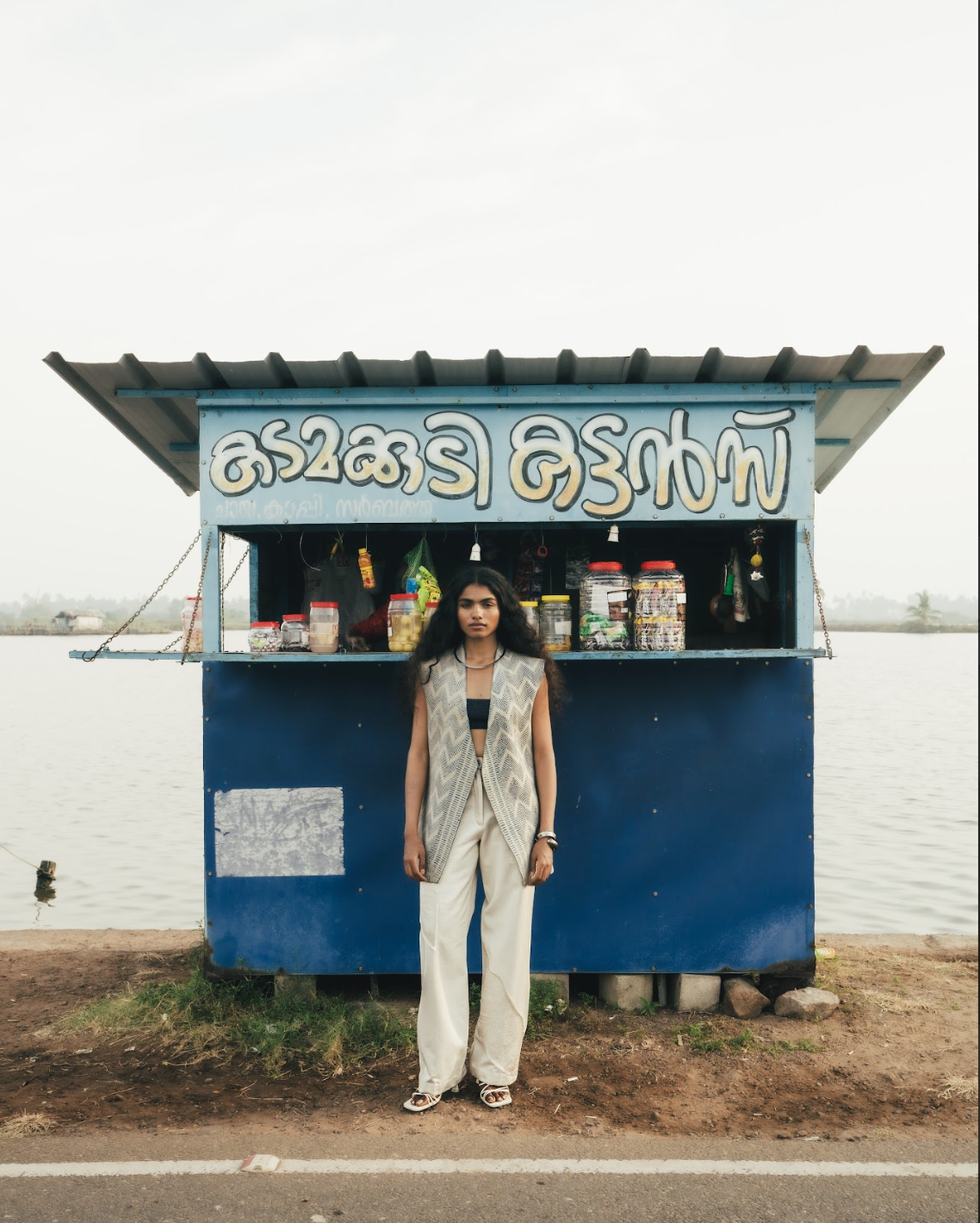
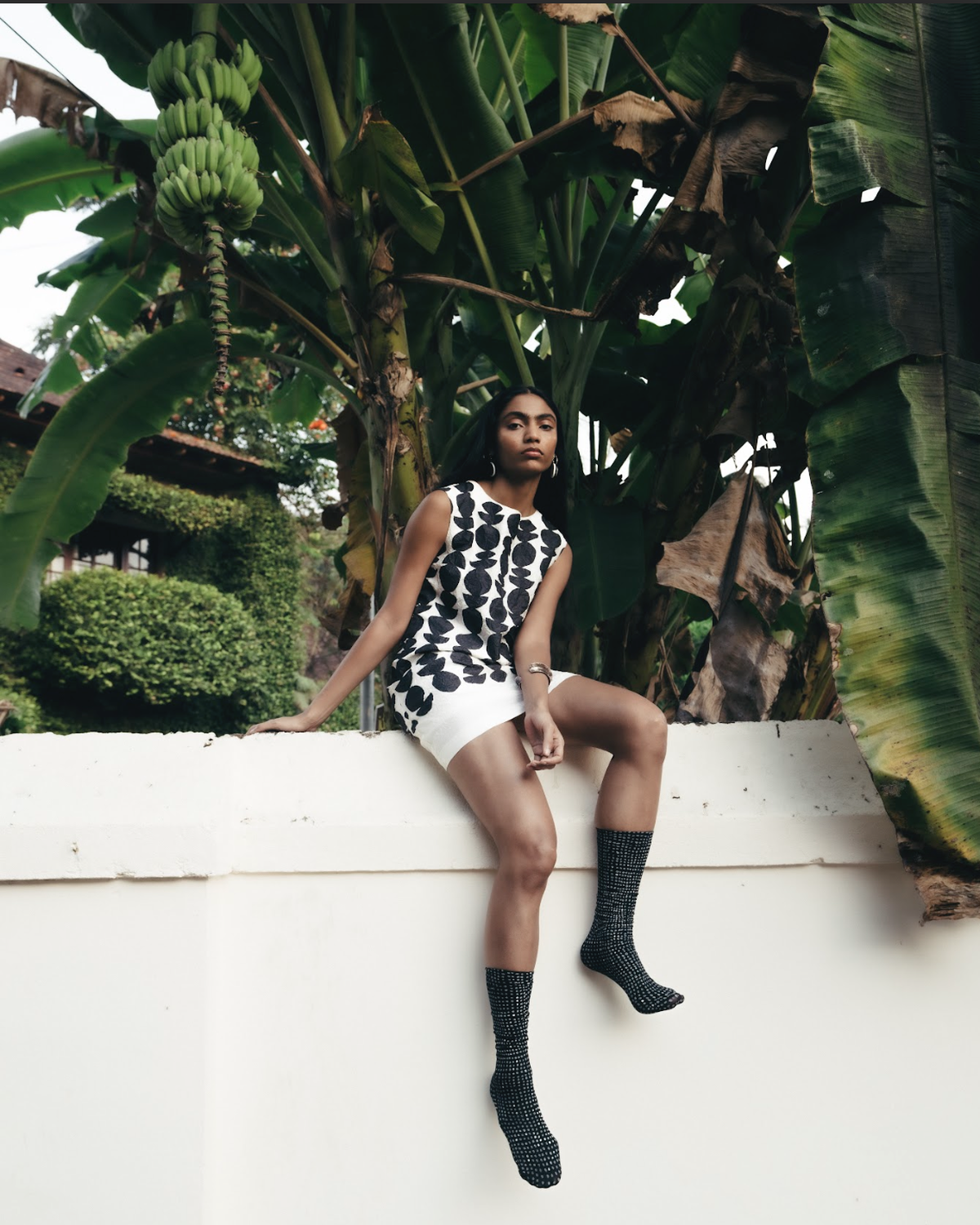
With deliberate, calculated precision, Delhi-based fashion designer Divyam Mehta defines the inspiration behind his newly launched summer collection Still Waters. He borrows the collection’s design language from South Asian contemporary art, tribal rugs and nautical stripes, but manipulates its grammar to create mundu skirts, oversized jackets paired with dresses, gilets, pyjama trousers, tops and layered tunics. “For the moodboard,” he explains, “we were mainly looking at modern art from Cambodia, Indonesia and South India, but these inspirations have been manipulated and edited to create something abstract, simple, bold and contemporary. Take, for example, South-Indian mundus. We made versions of that for our skirts, teaming them with tops”.

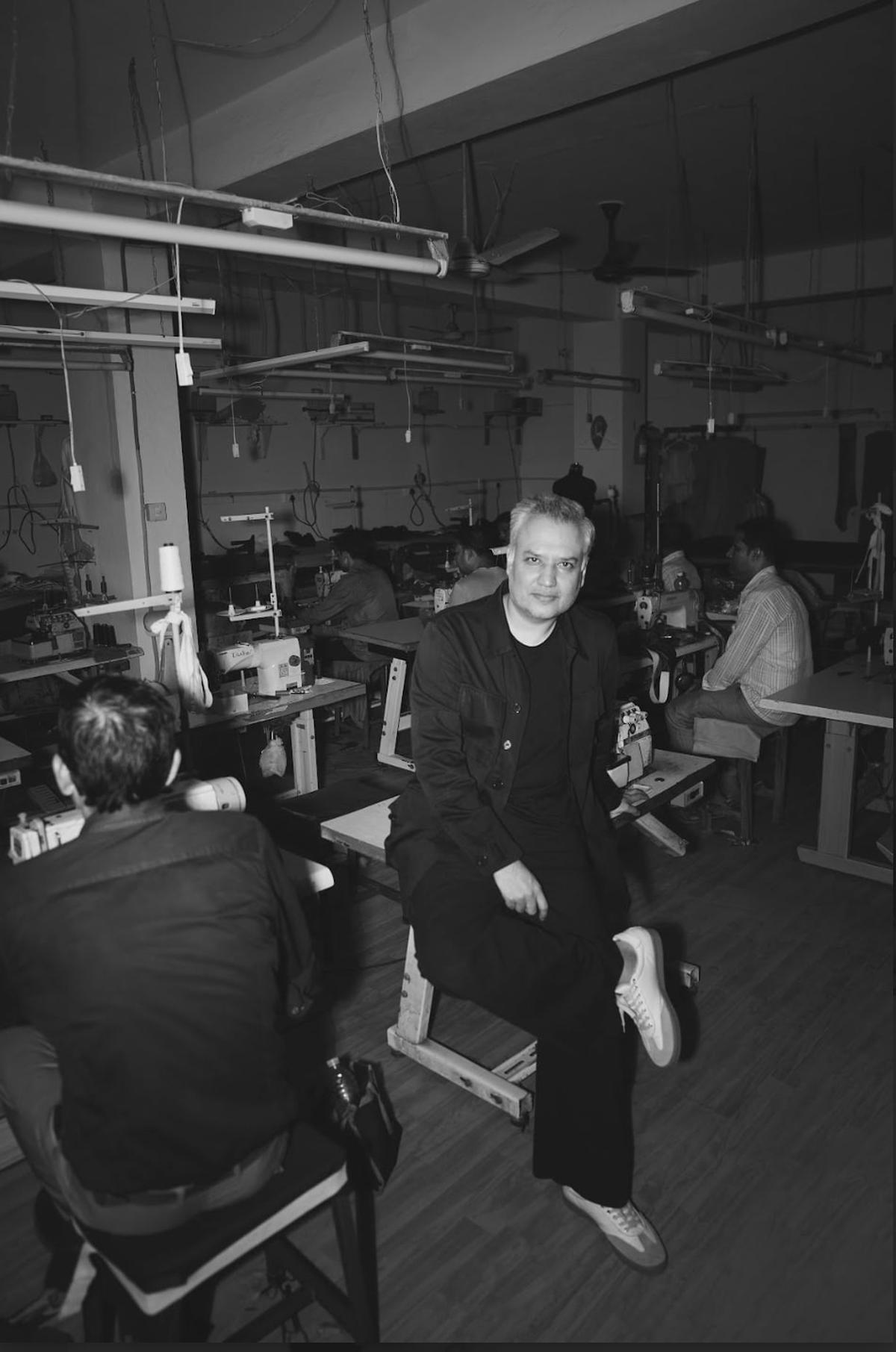
Delhi-based fashion designer Divyam Mehta 

Delhi-based fashion designer Divyam Mehta 
| Photo Credit:
Special arrangement

Design diary

Detailing on how this experimentation extends to chiffon gilets and toys with traditional drapes or crafts, Divyam, who launched his first menswear line in 2009 and his first women’s collection at the Wills India Fashion Week in 2010, navigates the modern-meets-traditional territory through his creations. With the kantha stitch as a trusted companion, Divyam’s muse for Still Waters is the pace, poise and peace of quaint, small towns across South Asia. The collection, made over six months (from September 2024 to February 2025), was conceived in Kerala. “I visited South India last year for rejuvenation, ayurveda, and was enamoured by the beauty of the States. We, in fact, shot the campaign at Fort Kochi because it has that quintessential charm of a small town with cobbled streets, beautiful backwaters,” shares Divyam.

The collection’s campaign was shot at Fort Kochi 

The collection’s campaign was shot at Fort Kochi 
| Photo Credit:
Special arrangement

Crafting drapes 

The edit champions textiles like silks (mulberry silk) from South India; linen, cotton and matka silk from West Bengal; and silk blends from Gujarat. Divyam’s brand has tied up with several crafts clusters across India. The label has a manufacturing-unit-cum-studio comprising a team of nealy 100 craftspersons, tailors and managers in Noida, Delhi, and an outlet in the city’s Defence Colony. “Our weaves and kantha work is from Phulia in West Bengal. We also work with some craft clusters in Kutch and Kumaon division in Uttrakhand from where we procure silk and cotton weaves,” he shares. Divyam has also used Kerala’s cotton handloom in his new collection. “We developed some textiles in collaboration with social impact organisation Save The Loom that’s been working with weavers in Kerala to revive and reform the handloom sector. Finding new idioms to traditional textiles is challenging and a process we love as a brand,” he adds.

The collection’s colour palette has a splash of pink sand, dull-black coal, ivory and sand

The collection’s colour palette has a splash of pink sand, dull-black coal, ivory and sand
| Photo Credit:
Special arrangement

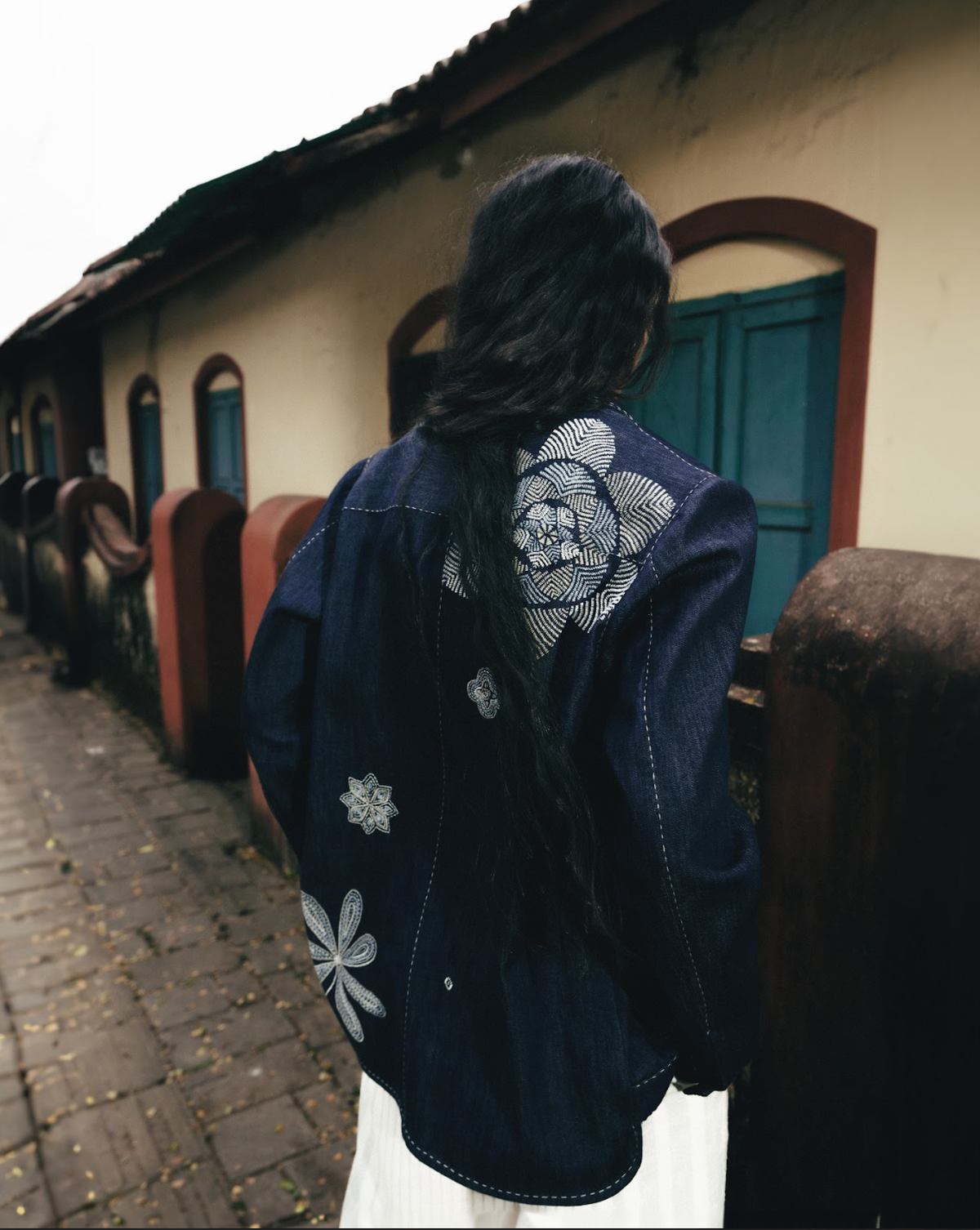
About the colours of Still Waters, one would imagine them to share some proximity with the water element; perhaps, tones of blue. But Divyam surprises with a splash of pink sand, dull-black coal, ivory, and sand. The colour blue comes through only in select denim pieces of the collection, but the turmeric yellow used as an accent in many of the garments tenders a certain edge to the edit. “We have also used ikat in this collection; the weave is procured from Hyderabad. I, however, have always incorporated kantha in most of my collections because it adds texture and weight to the silhouette,” says Divyam.

 The colour blue comes through only in select denim pieces of the collection

 The colour blue comes through only in select denim pieces of the collection
| Photo Credit:
Special arrangement

For now, Divyam is working on the brand’s autumn-winter 2025 edit, along with a collaborative project with pashmina weavers of Kashmir.

Still Waters comprises 45 styles and the garments start at ₹15,000 on divyammehta.com.


Source link

Quirkk India, a Varanasi-based fashion label, stands out with its quirky handpainted images


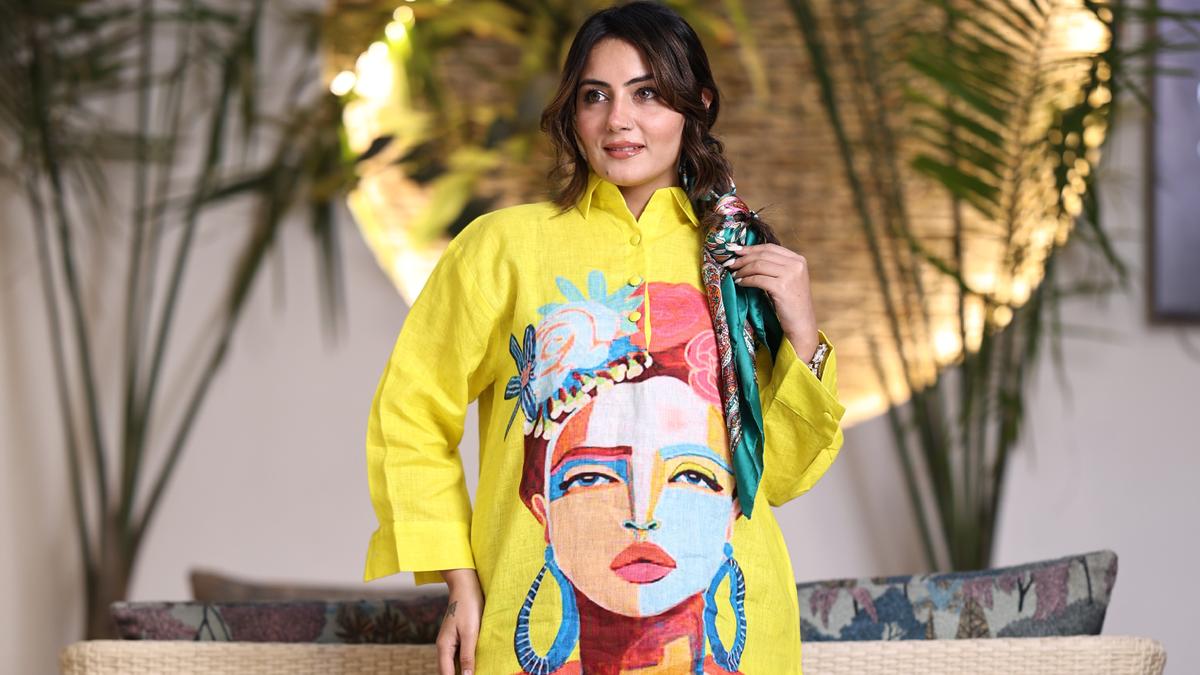
Art-inspired handpainted image on a Quirkk India ensemble

Art-inspired handpainted image on a Quirkk India ensemble
| Photo Credit: Special Arrangement

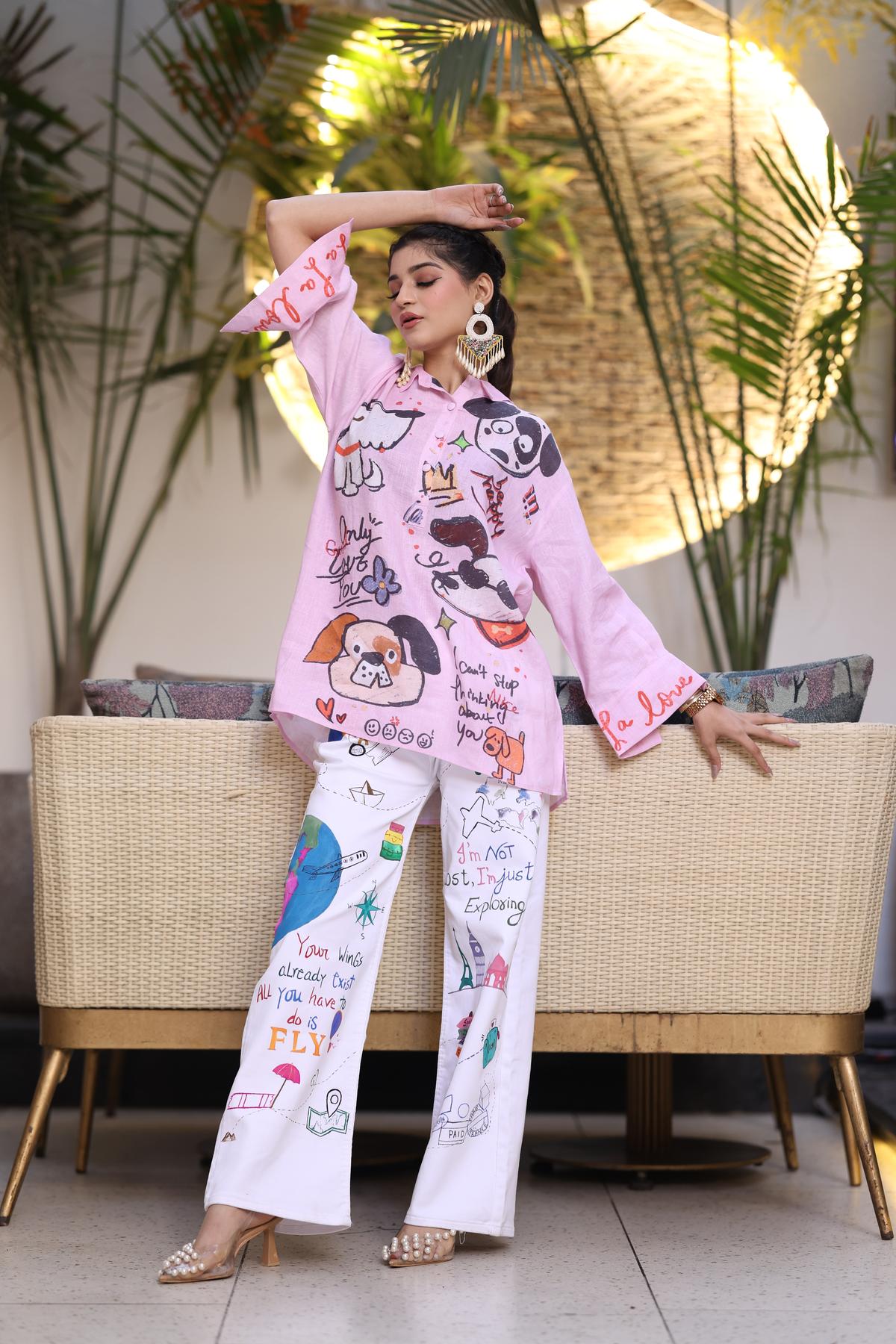
Mudit and Surbhi Kanoria’s fashion brand, Quirkk India, may be less than a year old, but it is already making waves with its eye-catching designs. Specialising in shirts, tunics, and trousers featuring a vibrant mix of hand-painted and printed imagery, the Varanasi-based label blends geometric patterns, flora, fauna, and pop-art aesthetics. Their designs — ranging from nods to Frida Kahlo and Van Gogh to playful pet portraits with a quirky twist — have intrigued buyers, as seen at a recent exhibition by the Crafts Council of Telangana in Hyderabad.

Launched in August 2024, with its debut collection rolling out in October, Quirkk India has steadily built a presence at select fashion exhibitions across India. On their Instagram page (@quirkk.india), they describe themselves as “fashion rebels on a mission,” using bold prints and eclectic designs to break the monotony of conventional fashion.

A model sports a Quirkk India ensemble

A model sports a Quirkk India ensemble
| Photo Credit:
Special Arrangement

Quirkk India caters to a clientele that is young at heart, but its foundation is deeply rooted in the traditional crafts and handlooms of Varanasi. Each piece in their collection — whether painted or printed — is the handiwork of Fine Arts students from Banaras Hindu University.

“More than 20 students work with us part-time,” says Mudit, crediting them for adding artistic flair to their designs. One of their early successes came when hand-painted denim pieces became a bestseller, reaffirming their belief in the concept.

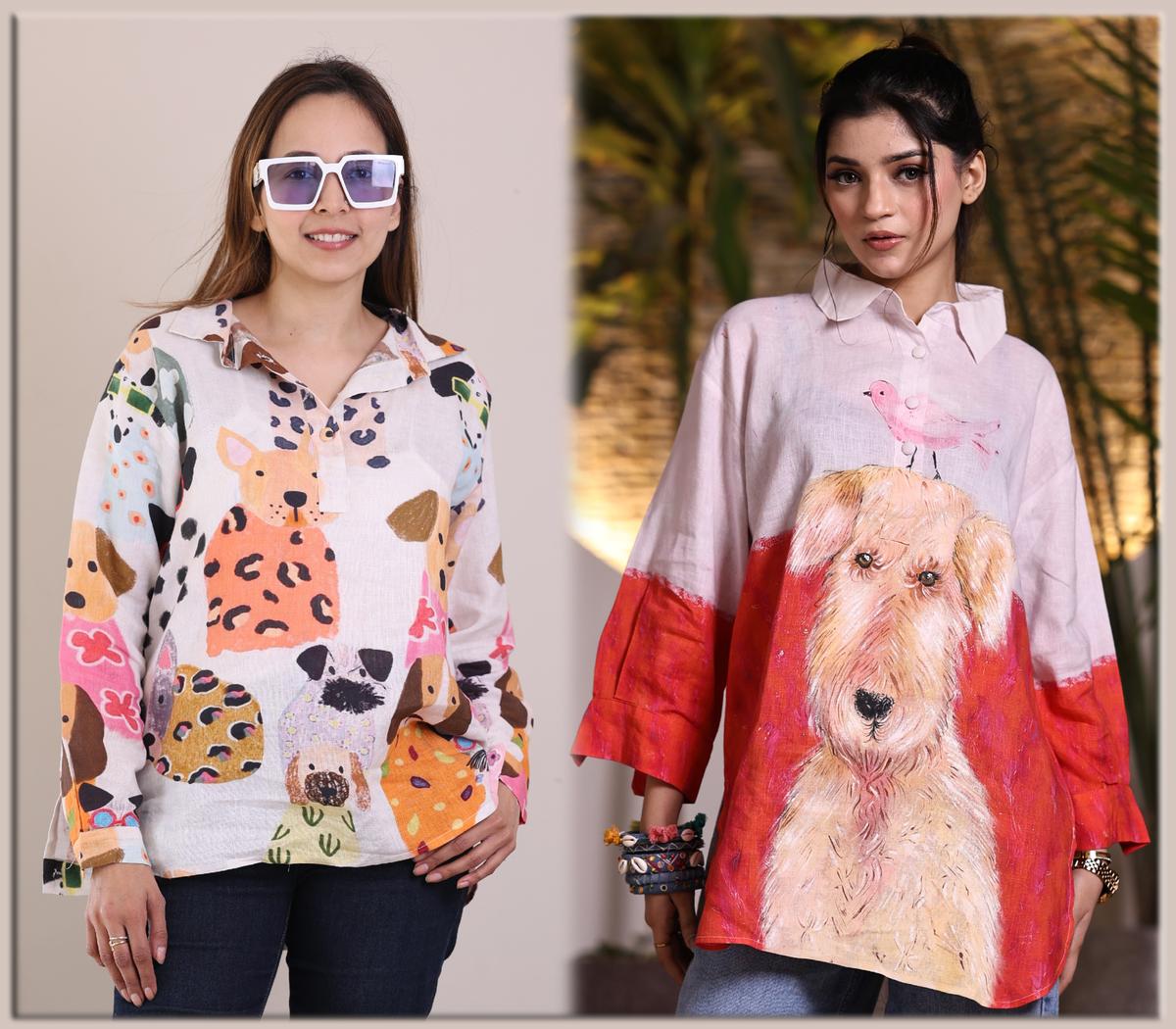
Their pet-themed clothing has also struck a chord with animal lovers. “We wanted to create a fashion label that resonates with people,” says Surbhi. “Many of our early customers sent in pictures of their pets, wanting personalised designs featuring their furry companions.”

In the last two months, Quirkk India has expanded into kidswear, tapping into the trend of coordinated outfits for parents and children. Their signature aesthetic is often accentuated with striking images of tigers and leopards. The colour palette, spanning aqua blues, lush greens, pinks, oranges, and lime yellow, is inspired by their travels. “Fashion labels in Bali played with unusual colours, and that sparked our creativity,” says Mudit. “We always envision the final look and collaborate closely with dyers to achieve the perfect shades,” adds Surbhi.

Mudith and Surbhi

Mudith and Surbhi
| Photo Credit:
Special Arrangement

Beyond their signature animal, plant, and geometric motifs as well as imagery inspired by Van Gogh and Frida Kahlo, the brand has also introduced a capsule collection influenced by the Maha Kumbh, incorporating motifs like trishuls and naga sadhus.

Mudit comes from a family with a legacy in Varanasi saris and textiles. When he and Surbhi, an MBA graduate in International Finance from Symbiosis International University, Pune, decided to venture into textiles, they aimed to create something distinctive. They first launched Ganga Banaras, a label focused on heirloom-worthy Benaresi saris with contemporary colours and design aesthetics.

“A few years later, we wanted to transition into something playful and unique for a younger clientele,” says Mudit. Their decade-long experience working closely with handloom and craft clusters in Varanasi helped them refine their sourcing process, selecting silks, cottons, linens, and muls. “For our recent collection, we used a fabric blend of linen and mul, which gives it a soft texture,” he explains.

Handpainted images of animals on Quirrk India ensembles

Handpainted images of animals on Quirrk India ensembles
| Photo Credit:
Special Arrangement

Though initially targeting a younger clientele, Quirkk India has found a strong customer base among those in their 30s and 40s as well. “It caters to anyone young at heart,” says Surbhi. The brand’s pricing falls between ₹6,000 and ₹10,000.

Unlike their heritage label, Ganga Banaras, which relied on in-store sales and direct buyer interactions, Quirkk India is gearing up for online expansion. “Our presence at select exhibitions has helped us market the brand both in India and abroad,” shares Mudit. “Now, our website is taking shape, and we’re ready to explore e-commerce opportunities.”


Source link

Meet Coimbatore’s attar sellers – The Hindu


The calm amidst the bustle

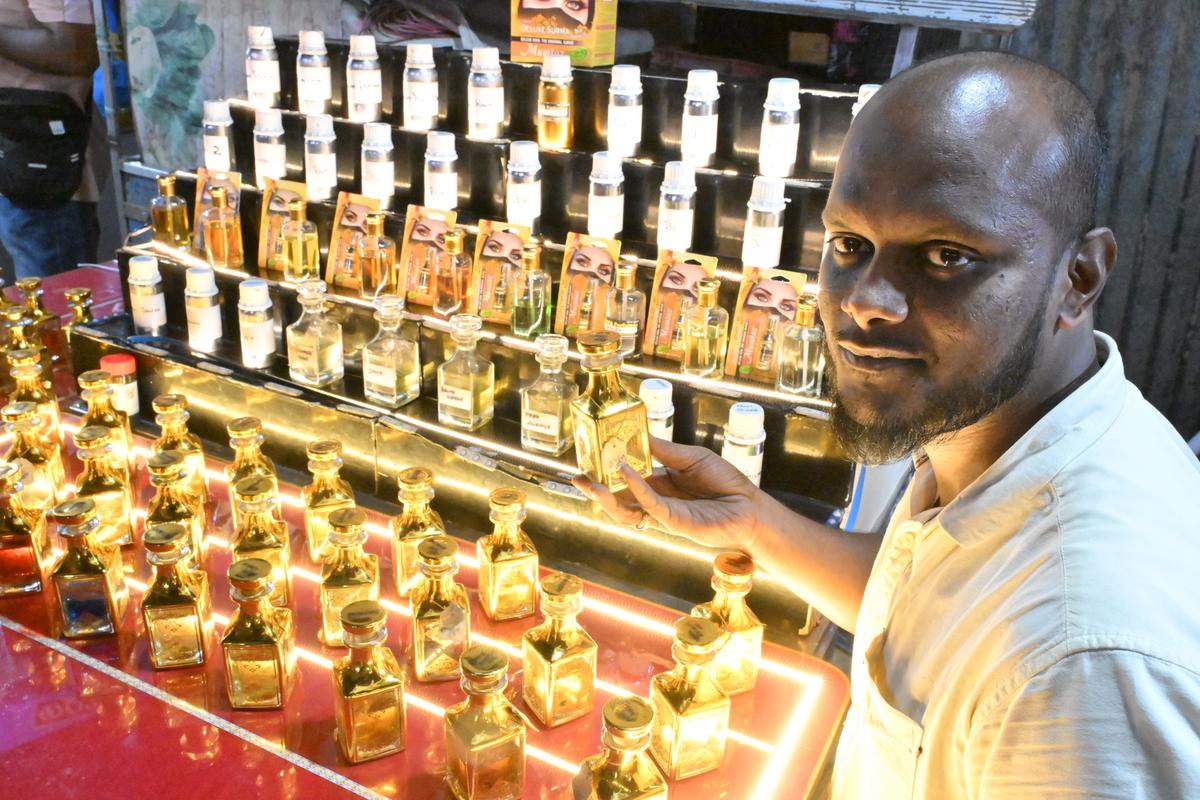
J Azarudheen has been selling attar for over six years at Karumbukkadai.

J Azarudheen has been selling attar for over six years at Karumbukkadai.
| Photo Credit:
SIVA SARAVANAN S

A gleam of gold amidst the evening bustle at Karumbukkadai instantly grabs our attention. A closer look reveals ornate glass bottles arranged in lit-up rows on a table on the pavement. J Azarudheen’s attar shop is enveloped in the heady fragrance of a medley of perfumes. He stocks around 200 fragrances that he packs in slender bottles as small volumes. The 31-year-old has been in the business of perfumes for almost 15 years, having worked at the popular The Standard Bottles & Perfumes at Five Corner.

“It’s been six years since I started my own shop,” says Azarudheen. His shop is among the most popular ones in Karumbukkadai, and Azarudheen ensures his regulars come back for his fragrances by offering variety. “I source perfumes from Mumbai,” he says, adding that during the day, he supplies to around eight stores in the city, setting up his shop in the evenings.

Attar, Azarudheen explains, is simply a fragrant essential oil. “We sell it in its purest form, without any additives such as alcohol,” he explains. “Perfume sprays may last only a few hours, but attar’s fragrance will last the whole day.” Azarudheen has a lot of regular customers who swear by his fragrances. He also has a knack for picking the best fragrance that suits a customer’s personality. His favourite kind? “I use something very strong,” he laughs. “Being surrounded by fragrances all day, my body does not take on anything mild.”

A fragrant corner at the mosque

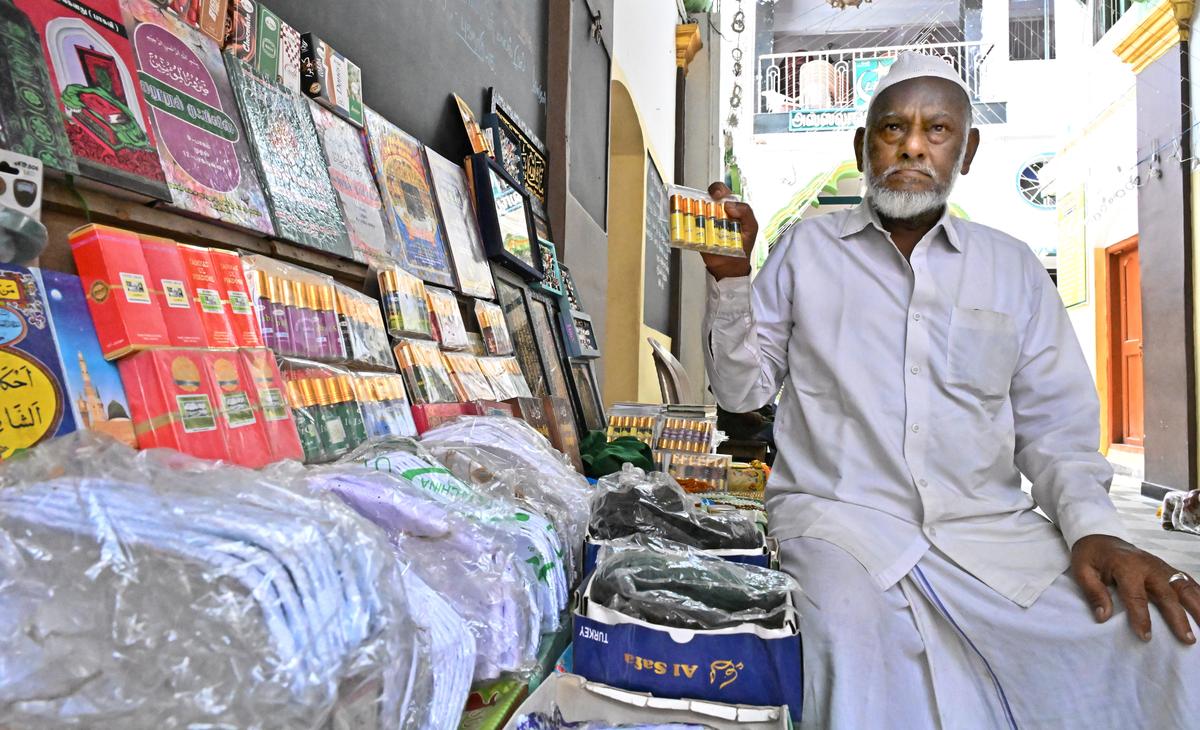
K Ibrahim has been selling attar (perfume) at Coimbatore’s Athar Jamath Masjid for over 40 years.

K Ibrahim has been selling attar (perfume) at Coimbatore’s Athar Jamath Masjid for over 40 years.
| Photo Credit:
Siva Saravanan S

The quaint insides of the historic Athar Jamaath Masjid is a stark contrast to the bustle of Oppanakara Street it is located in. K Ibrahim is seated at the entrance, a little beyond the gate in front of his collection of attar, watches, and books. The 81-year-old has been selling attar at the mosque for 40 years.

He has around 20 fragrances that include musk, jasmine, chocolate, marigold, and sandal. “I make trips to Chennai once in three months to buy attar,” says Ibrahim, adding that he gets them from a regular supplier at Mannadi. While he does brisk business during Ramzan, Ibrahim says that shoppers on Oppanakara Street stop by to buy from him through the year. “Deepavali and Christmas are also good seasons for me,” he explains.

Ibrahim says that a few decades ago, men would carry a wooden box lined with bottles of attar, selling it door-to-door. “They would know which customer preferred which fragrance, and would visit them regularly even before they ran out of attar,” he remembers. His favourite kind is jasmine attar, and there hasn’t been a day without him dabbing a little on himself. His wife Dunisha though, does not like perfumes. “She uses them only during he nombi,” he says. “That too very little.”

On his feet through the year

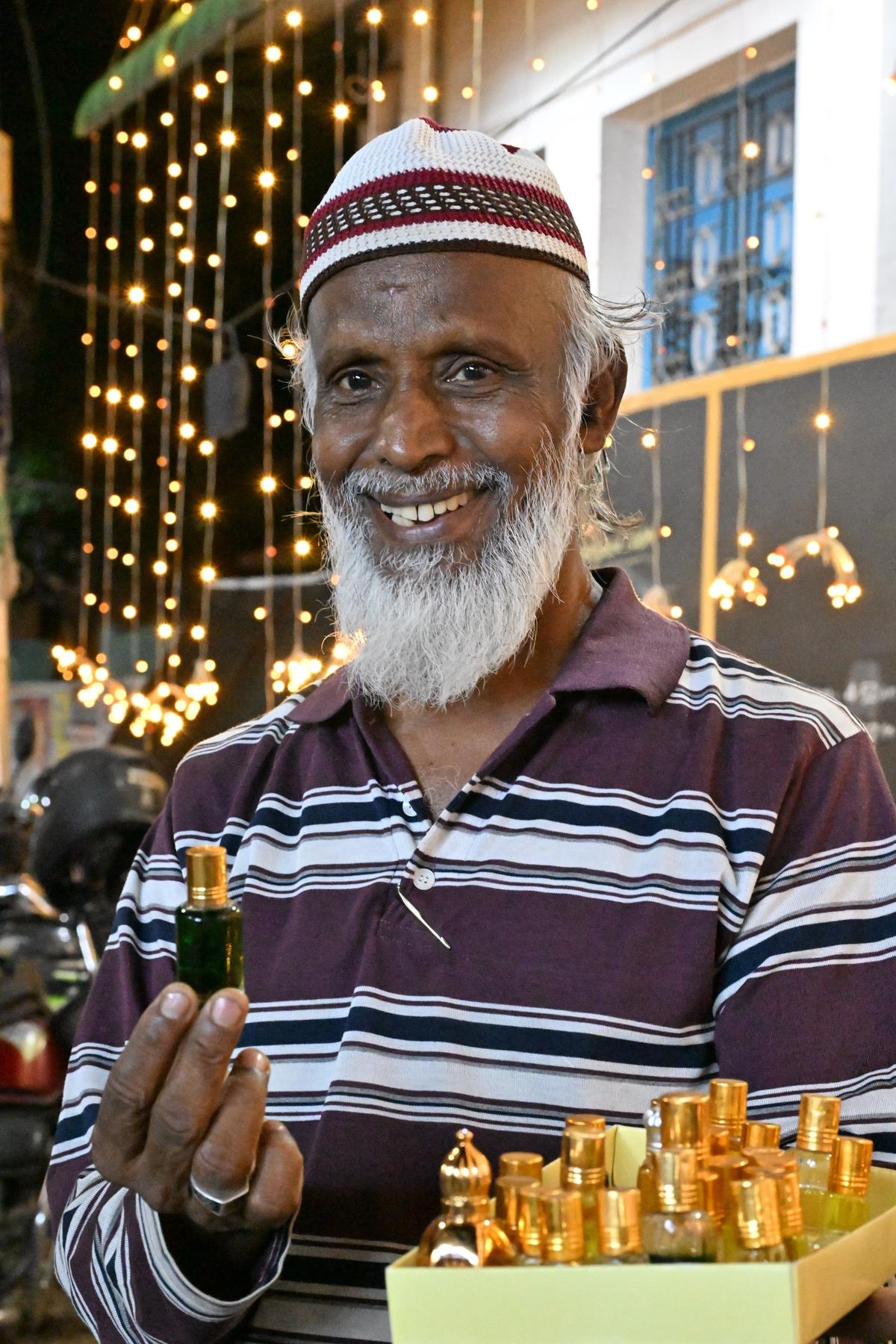
KH Sahabdeen, sells attar and clothes door to door in Coimbatore. During Ramzan, he puts up a stall near the mosque at Kottaimedu

KH Sahabdeen, sells attar and clothes door to door in Coimbatore. During Ramzan, he puts up a stall near the mosque at Kottaimedu
| Photo Credit:
SIVA SARAVANAN S

K H Sahabdeen has been walking door-to-door with his precious cargo of clothes and attar for 30 years now. He sells on the move, but during Ramzan, sets up a shop near the Kottai Thareekathul Islam Shafia Jamath Mosque. Among his limited fragrances, Jannatul Firdaus stands out, which Sahabdeen says is for special occasions. He has it in a gold-trimmed bottle that he still has not taken out of its box. “I have the same fragrance for ₹100 and ₹300 as well; the price changes depending on the quality and the brand,” he explains.

Sahabdeen lives in Ukkadam, and every morning, takes a bus to Ramanathapuram with his products. “Once I get off the bus, I walk up to Papanaickenpalayam stopping at my regular customers’ houses along the way,” he says, adding that he also sells at Selvapuram, Peelamedu, and Kempatty Colony. “I walk up to six kilometres at a stretch,” he adds.

Sahabdeen has a varied collection of attar he sources from sellers in places such as Nagore, Nagapattinam, and Muscat. “I approach sellers for specific varieties my customers ask for,” he explains, adding that among his best-sellers, are chocolate, jasmine, and javvadhu. Attar, he says, makes one feel good about oneself. “After a refreshing bath, a few dabs of one’s favourite fragrance will make one feel fresh, elevating our mood and that of our surroundings,” he says.  


Source link

When architects turn product designers, there is the interplay of form, function and context. A look at five such brands from across India


With rising disposable incomes, homeowners today desire unique art furniture pieces that can be a value addition to the home, going beyond utilitarian design. At India Design ID in New Delhi last month, 45 chairs were showcased, ranging from sensible to outrageous.

Charles Eames, Frank Lloyd Wright and Le Corbusier were all world-famous architects who designed furniture. India’s time has come. Where once the architect or designer aspiring to create a standout piece struggled for clientele and dedicated fabricators, today, multiple gallery sponsorships and craftsman partnerships has emerged. Many experiments become possible that reimagine crafts in contemporary materials, from luxe fabrics to Corian, also applying 3D printing and technology. This collaborative spirit characterises NY-based Indian architect’s Suchi Reddy’s teaming with Ekaya Banaras for the collection Nine.5.

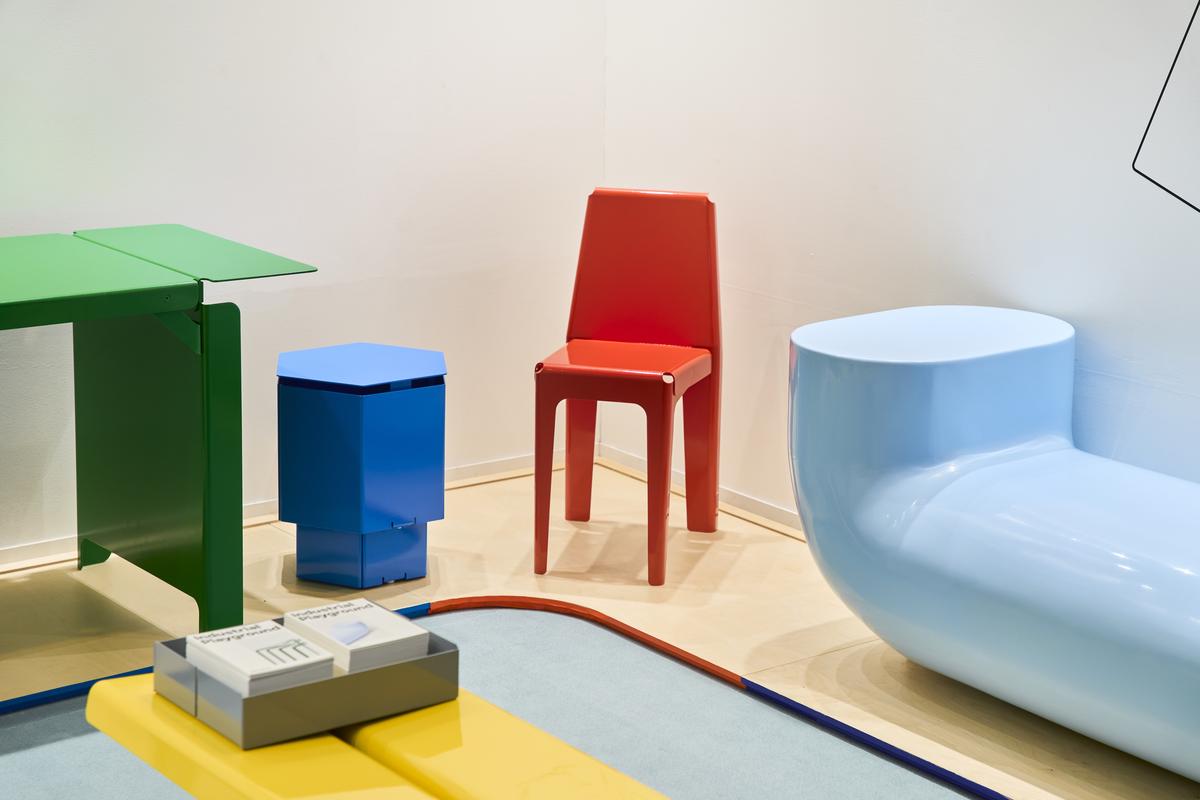
Products by Industrial Playground at Design Mumbai 2024.

Products by Industrial Playground at Design Mumbai 2024.
| Photo Credit:
Vihan Shah

Free from the constraints of mass manufacturing, practitioners have creative freedom to make statement pieces and limited editions, giving them a prime spot. Rooshad Shroff, with a practice spanning architecture, interior design and custom furniture, opened his new gallery in January at Mumbai’s Ballard Estate, for his furniture and accent lines with an emphasis on craft. Architect Ashiesh Shah’s practice extends to his Atelier range of furniture, lighting and rugs, often inspired by a project he is working on. Architects, spatial designers and even brand designers are now exploring the emotive and experiential power of furniture to transform a space. Here are five designers from across India.

Solai by Urban Workshop, Chennai

Solachi Ramanathan

Solachi Ramanathan
| Photo Credit:
Special arrangement

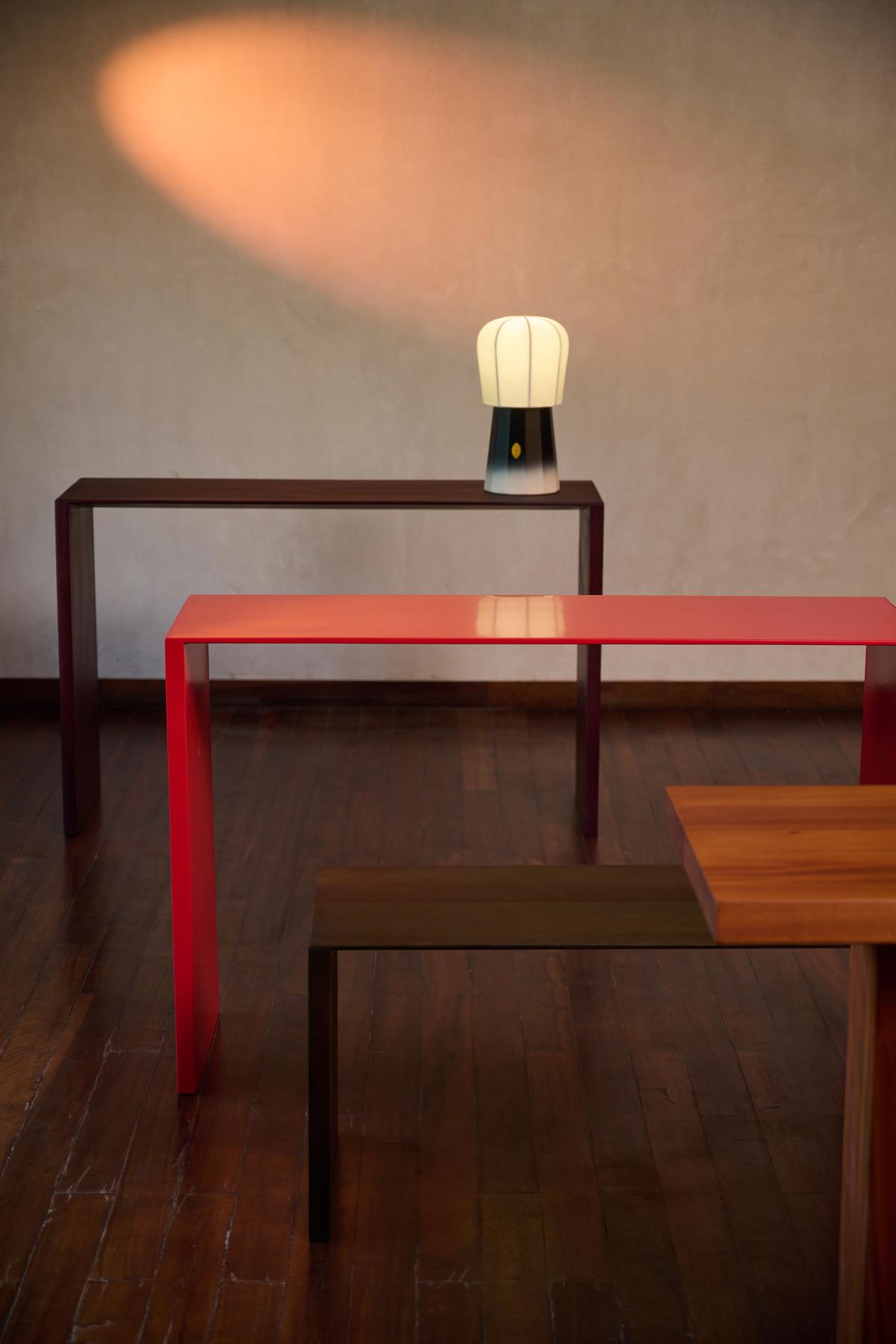
“Two ‘M’s — memory and material — play an important role in my work,” says Solachi Ramanathan, who began her architectural practice Urban Workshop in Chennai 10 years ago. Solai, her brand launched in December 2024, is a testament to how everyday rituals can transform into objects. ‘Percolator’, a table lamp inspired by a coffee machine has an octagonal shade of wire and fabric, which deftly snaps on via a magnetic catch. Its 12-faceted lamp base of mahogany is painted in gradations such as green to yellow, purple to lavender, a nod to Impressionism. Ramanathan’s interest in touch-sensitive features has found its way in the lamp as a tiny diamond-shaped brass touch button.

Solai console made of Indian mahogany. Price: ₹57,000 upwards

Solai console made of Indian mahogany. Price: ₹57,000 upwards
| Photo Credit:
Special arrangement

Her love affair with mahogany began when a guitar factory approached her to design furniture with the hardwood. ‘Console’, a table, is light in appearance with a bevelled edge that makes the 60mm top appear deceptively thin. Her fascination for structure and minimalism is evident in the ‘Ananya’ table, which has a slim inset drawer. The splayed side supports were inspired by her yoga instructor’s teaching her a balanced posture during pregnancy. Ramanathan’s human-centric orientation using sparse materials exploring their tactile nature sums up her central concern: “I like to discover the essence of things.”

sales@solaistudio.co

Industrial Playground by ASDS (Ajay Shah Design Studio), Mumbai 

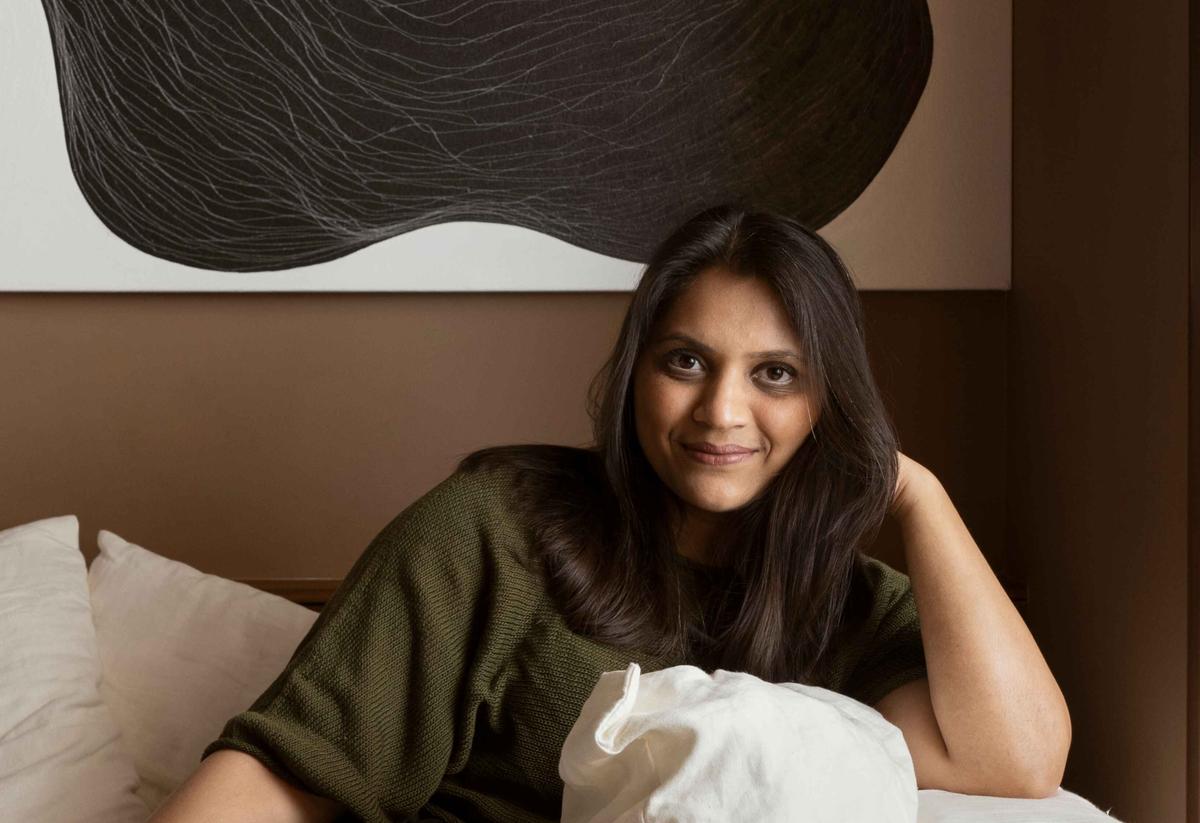
Ajay Shah

Ajay Shah
| Photo Credit:
Special arrangement

Industrial designer Ajay Shah, who designed Crossword Bookstore at Kemps Corner, Mumbai, says, “My furniture should fulfil a sense of personality and character going beyond function. I like to bring a certain atmosphere to the space with furniture — ideally happy, friendly, not serious or over-detailed.” Looking back to mid-century developments, when furniture design was poetic, flamboyant and extremely stylish, Shah says, “I’m looking at more monolithic forms and shapes, where an overall shape and colour does not come across as standard furniture.” His products have kinship with early design canons such as the Panton chair of the 1960s by progressive Danish designer Verner Panton, a one-piece chair of laminated FRP, a huge success after many trials.

Poppins side table made of fibre-reinforced plastic. Price: ₹35,000 upwards

Poppins side table made of fibre-reinforced plastic. Price: ₹35,000 upwards
| Photo Credit:
Vihan Shah

‘Float’ bench made of fibre-reinforced plastic and teakwood. Price: ₹1,60,000 upwards

‘Float’ bench made of fibre-reinforced plastic and teakwood. Price: ₹1,60,000 upwards
| Photo Credit:
Vihan Shah

Shah’s ‘Float’ bench is a novel tubular form with an upward bend at one end. Made of fibreglass, using a complex pattern mould, its beauty is that joint lines are completely concealed. Its pale blue cool shade is unexpected. “When you place Float in a space, it has its own charm,” says Shah, who wants users to engage by impulse, to feel like touching the surface. ‘Poppins’, a playful-looking side table shaped like a bobbin, finds multiple functions. “It’s nice when furniture does not dictate how we should use it,” says Shah.

asdswow.com

WANAS by The Nouveau Studio, Surat 

Shrishhti Agarwal and Punit Jain

Shrishhti Agarwal and Punit Jain

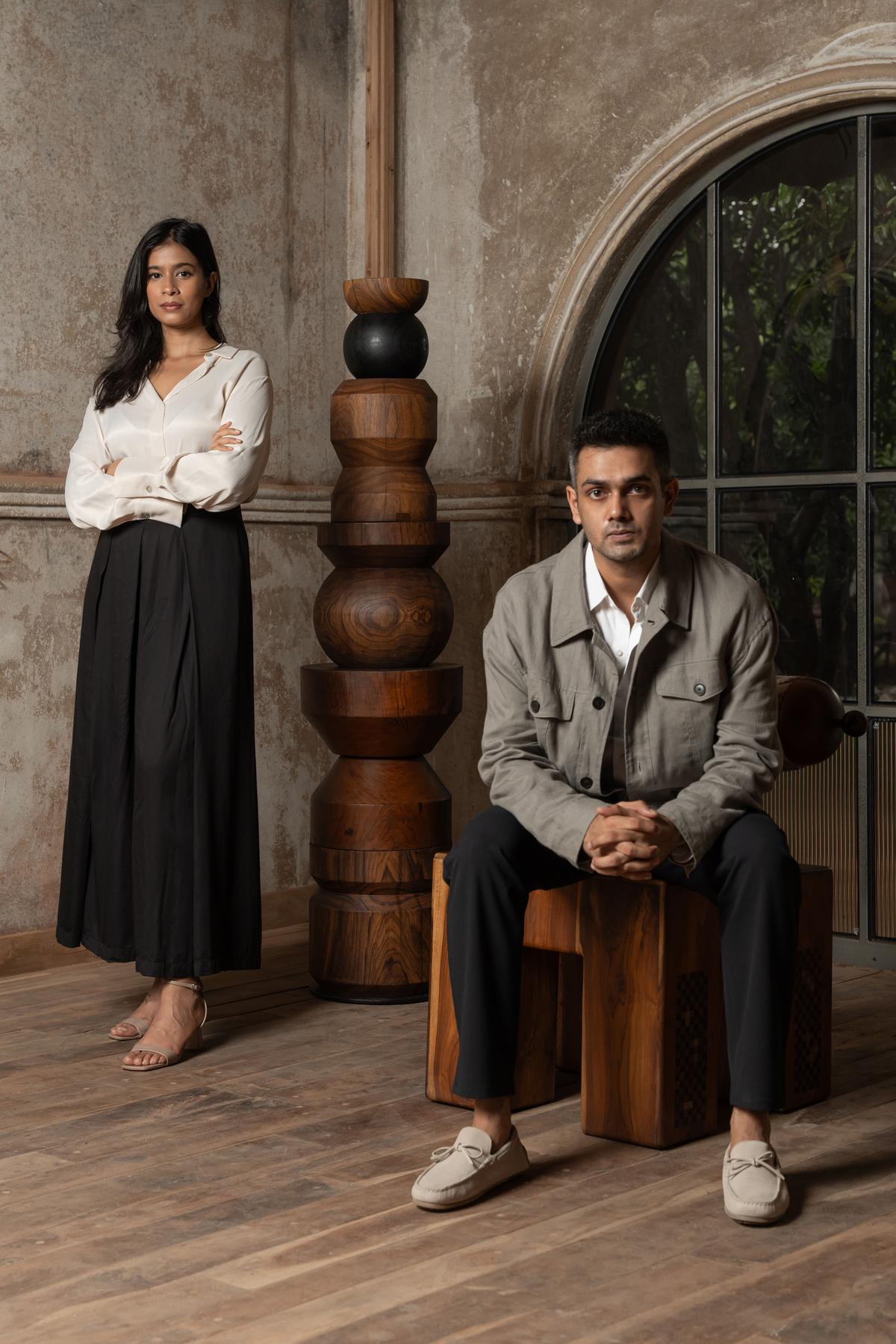
In Surat, design agency The Nouveau Studio (TNS) is a partnership between Shrishhti Agarwal and Punit Jain for brand visual design systems. Three years ago, the two found themselves drawn to design a multipurpose object — “A paper weight that could be used as a chopstick or cutlery holder,” says Agarwal. Organically, they were led to start their label WANAS — ‘we are now a store’. The duo works in aluminium, stainless steel, brass, marble, stone, wood and ceramic and even Black Manipur pottery.

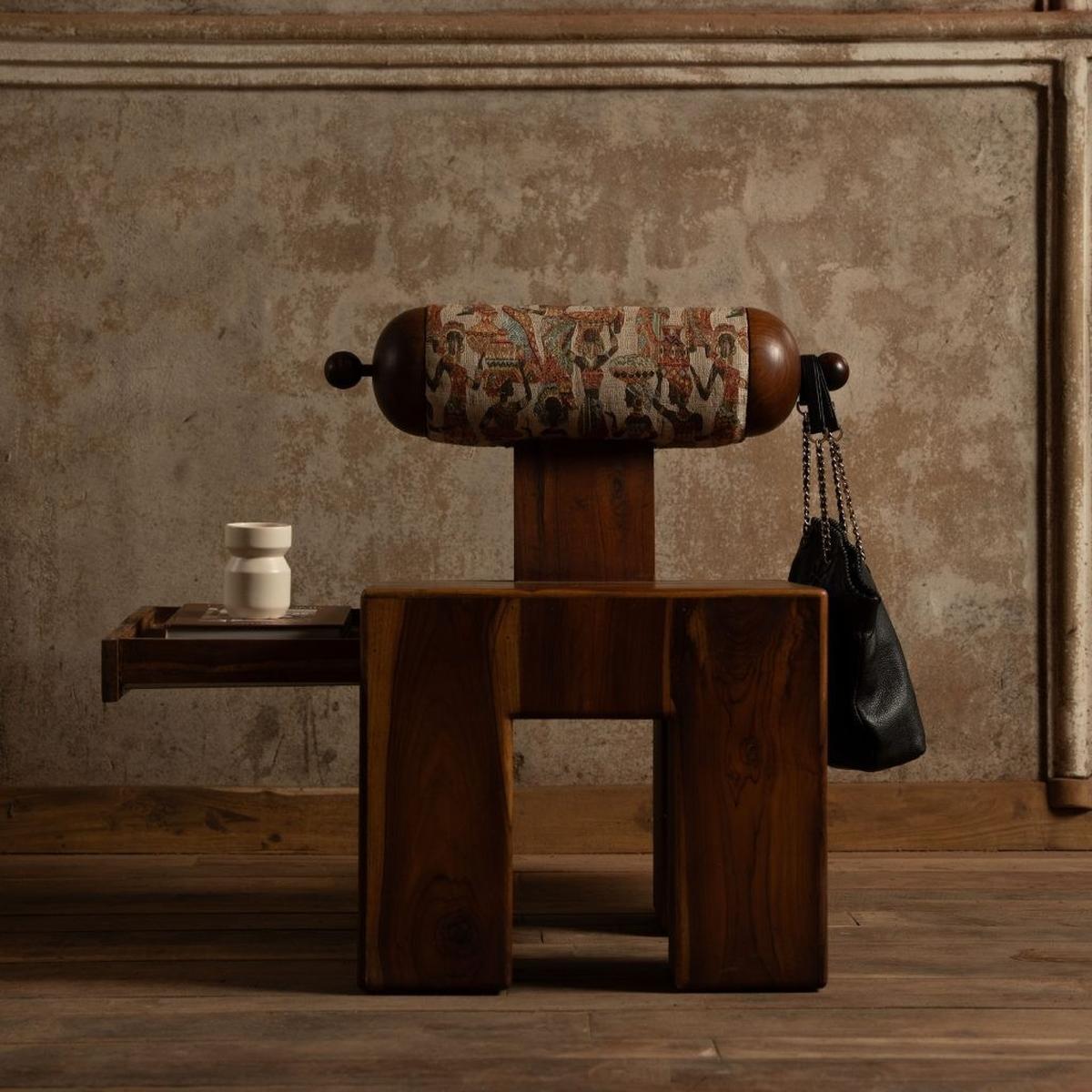
Akeru chair made of teakwood and brass.

Akeru chair made of teakwood and brass.
| Photo Credit:
Special arrangement

Akeru chair was about reimagining an everyday object. “Akeru in Japanese means open or empty,” explains Agarwal. The brief also became open. The teakwood chair with rosewood inlay can be many things: a piece of art; a bag holder as there are two knobs at the backrest. The limited edition (10) accent piece offers customised inlays — animals, pets, any inlay of emotional value.

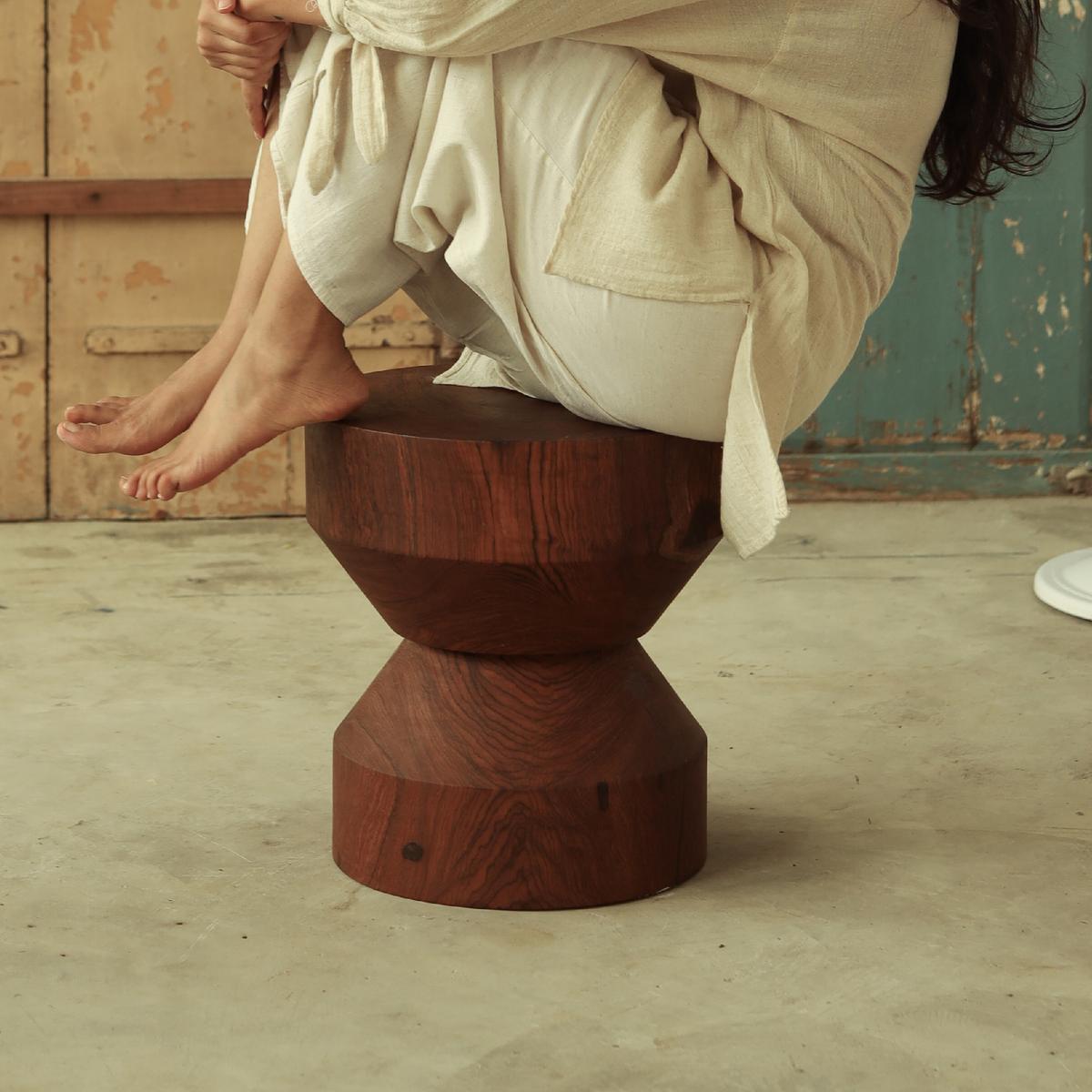
WANAS stool made of hardwood.

WANAS stool made of hardwood.
| Photo Credit:
Special arrangement

“The design ecosystem in India has only recently started appreciating more sculptural forms,” says Agarwal. This is certainly true of WANAS’ Recreational Verbs, a totem that stacks up, giving the user optional ways to use the parts. Their WANAS stool is a by-product of this exercise: it appears like two pieces joined together, but is actually carved out of one chunk of hardwood. “It’s a ‘flip junket’ — you can flip it and use it as a side table,” she says.

wearenowastore.com

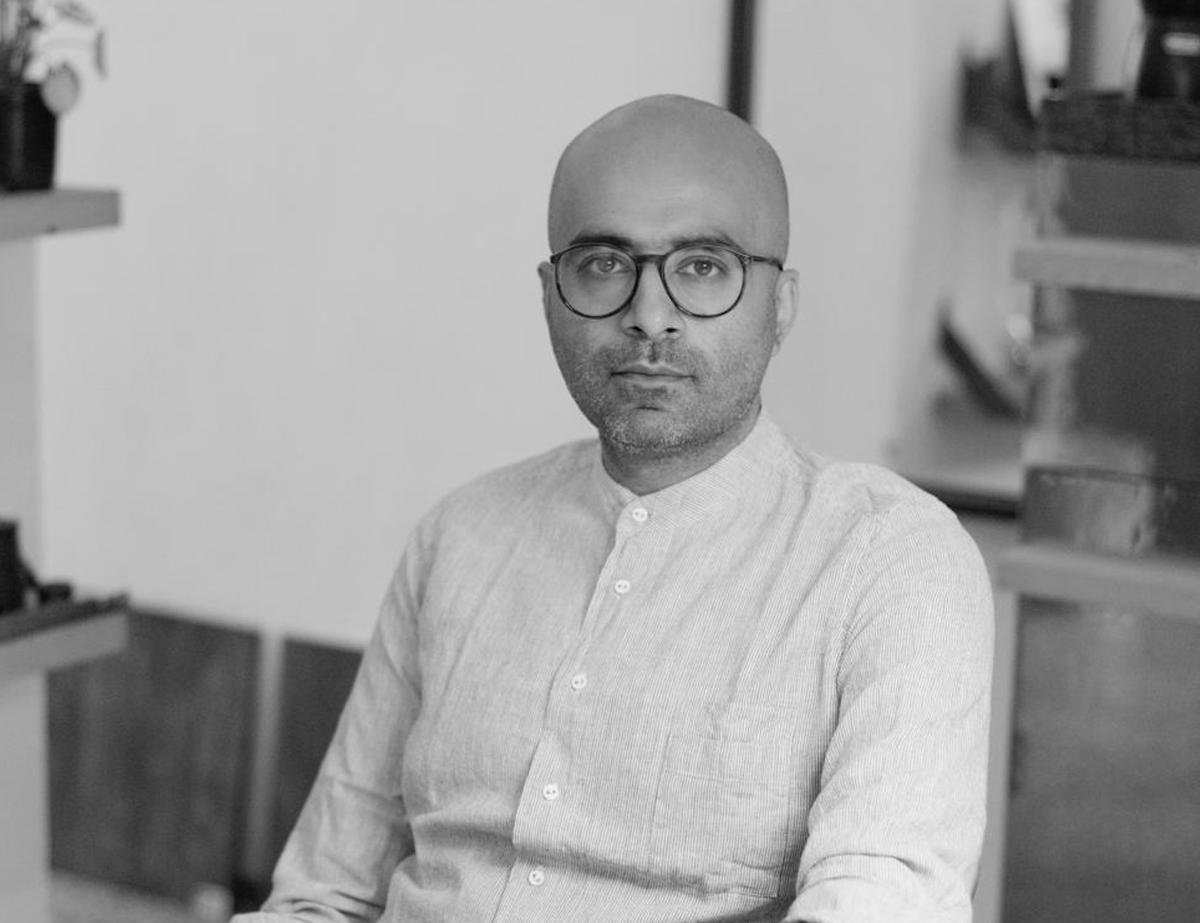
ALPHA & BETA by Studio Organon, New Delhi  

Saurabh Dakshini

Saurabh Dakshini
| Photo Credit:
Special arrangement

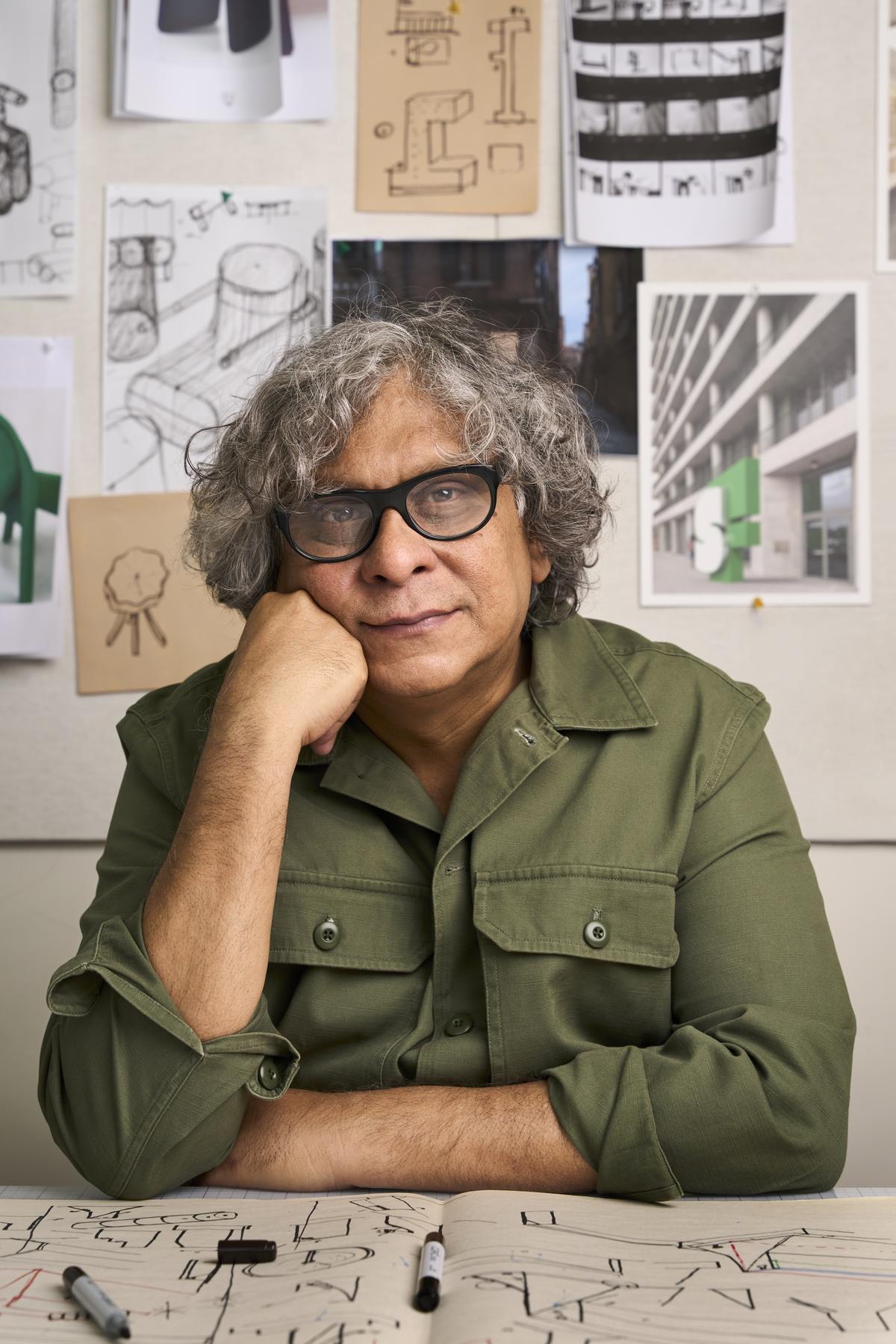
2024 Emerging Design Firm winner at India ID, Studio Organon (established in 2006) has been listed on AD100 for six consecutive years. Founder-architect Saurabh Dakshini is grounded in a practical feasible outlook. “Most of the furniture I’ve designed, revive utilitarian pieces — something I’ve used at home. They always have a backstory or a childhood memory: my grandfather’s desk, a tea cabinet.” Dakshini’s design philosophy is centred on sustainability and longevity: solid wood, quality craftsmanship, natural oil finishes instead of polymers, and environmentally friendly German adhesives. He favours simple, high-quality materials like well-seasoned American oak to create furniture that ages gracefully.

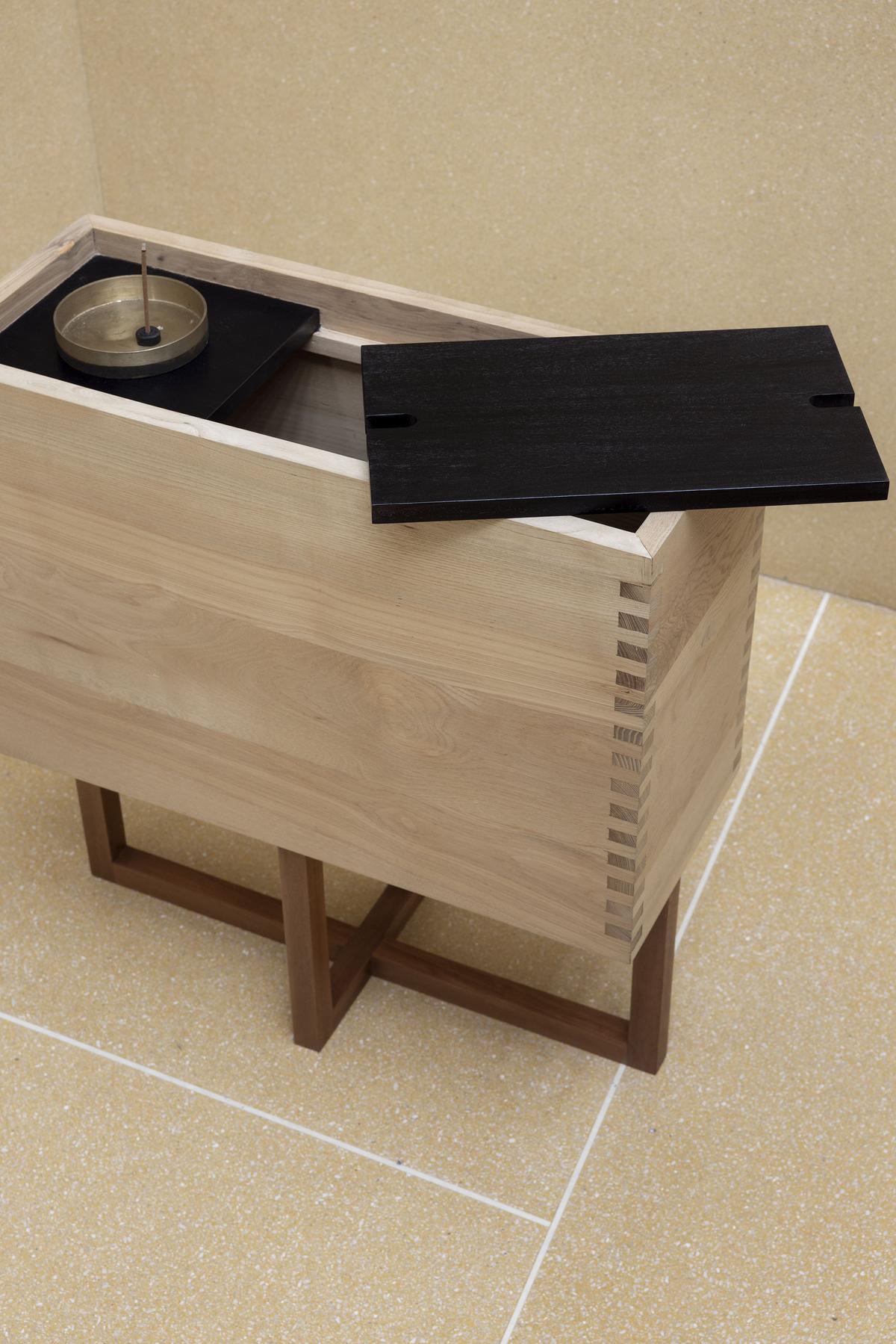
Alpha 02 Storage Box made of white ash, sapele and stained sapele. Price: ₹40,000 upwards.

Alpha 02 Storage Box made of white ash, sapele and stained sapele. Price: ₹40,000 upwards.
| Photo Credit:
Special arrangement

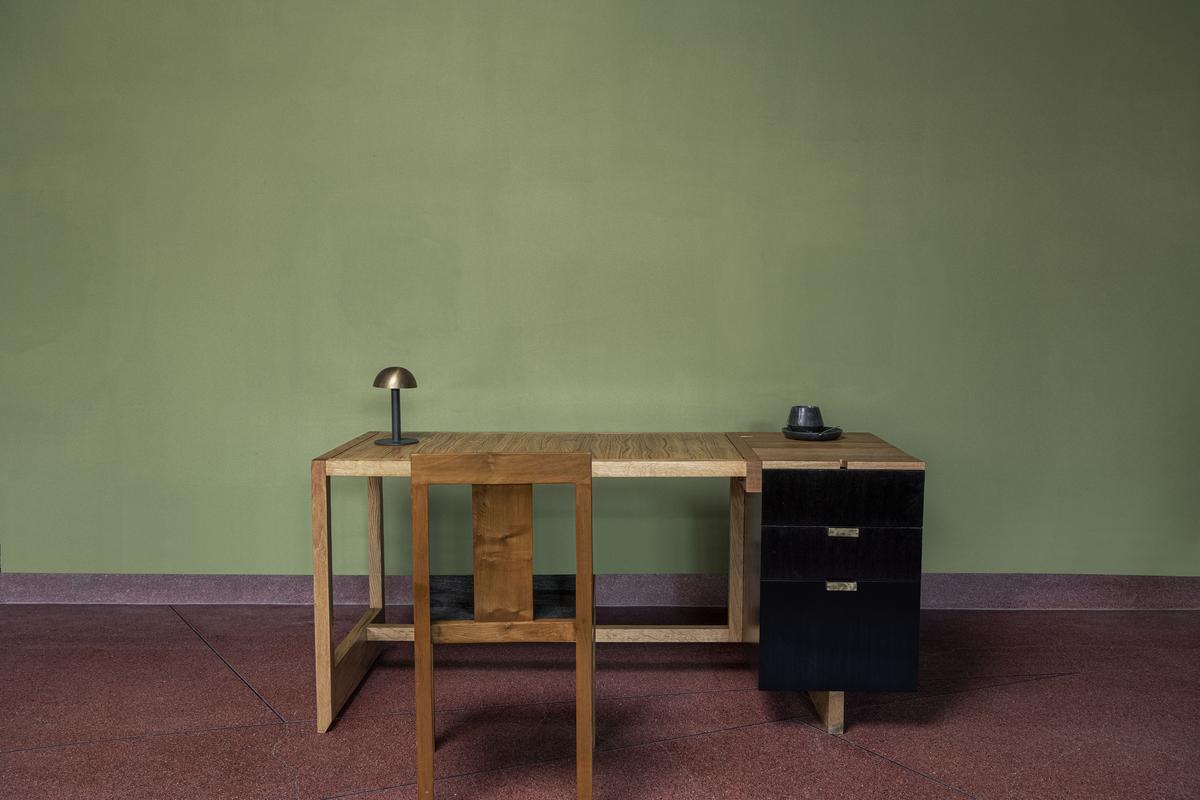
Studio Organon’s collection, Alpha & Beta (launched 2021) has well-crafted pieces with hidden joinery. The desk design has two partial flip tops, helping to keep the desktop clutter-free. The rear cubby can store chargers. The drawer fronts are stained black with AIR-INK (a company that makes ink gathered out of pollutants) and later sealed with natural oil. Dakshini’s storage box is meant for all the extra stuff that doesn’t have a place — bottles, bags, and courier deliveries. The box joints along the edge display his love for wood-crafting. The container can hold A3 objects and its solid top has a designated space for an incense holder: details that affirm his natural need for organisation.

Beta 07: Desk made of oak, plywood and brass. Price: ₹1.25 lakh upwards.

Beta 07: Desk made of oak, plywood and brass. Price: ₹1.25 lakh upwards.
| Photo Credit:
Special arrangement

studioorganon.org

P.O.D (Pieces of Desire) by Studio Nishita Kamdar, Mumbai

Nishita Kamdar

Nishita Kamdar
| Photo Credit:
Special arrangement

Studio Nishita Kamdar was begun in 2014 and Pieces of Desire evolved as an artisan-based studio ‘challenging how we perceive functional objects of everyday use and making the mundane, extraordinary’. For founder-architect Nishita Kamdar, P.O.D had its roots in reviving objects in India that are lost, looking at: What emotions do furniture pieces evoke? From Gujarati to South Indian clients, Kamdar found a commonality — everyone loved swings. “Everything we design, sways — swings, day bed, cradle, rocker.” Over time, P.O.D has garnered a reputation ‘as the only brand that does only one thing’.

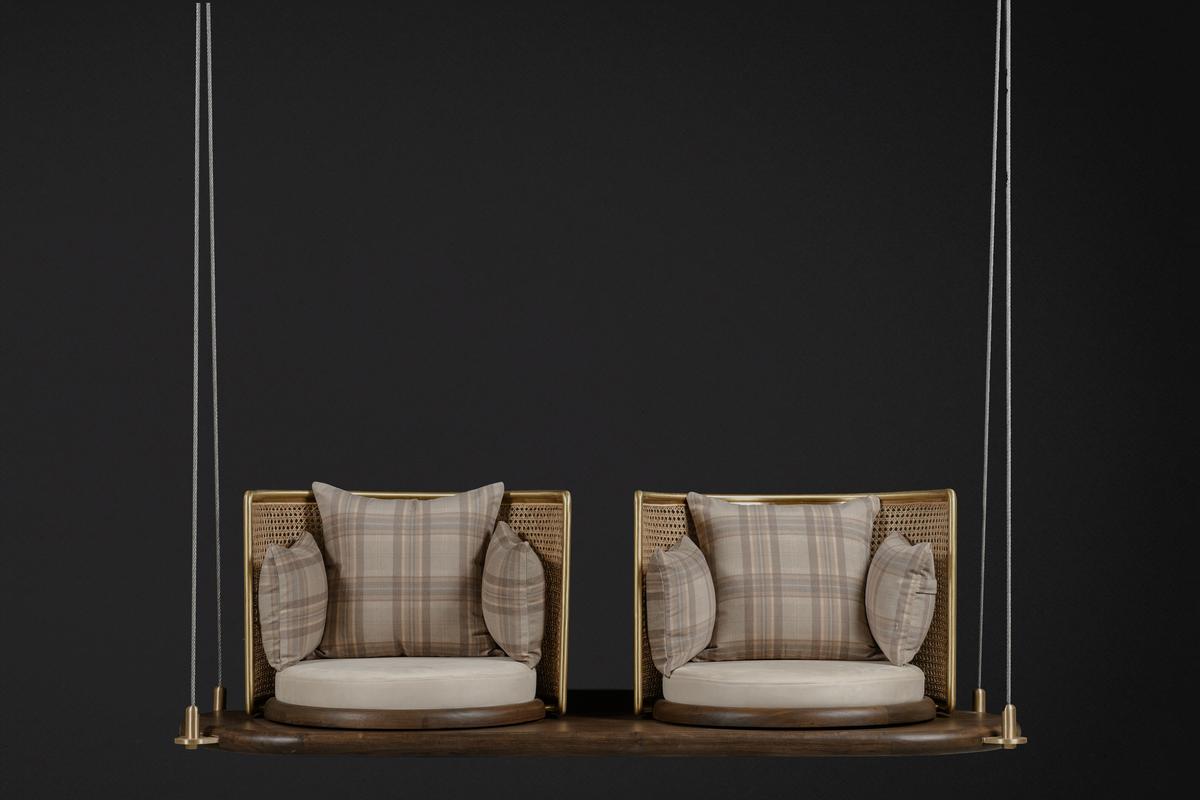
Spin two-seater swing made of teakwood, brass and rattan. Price: ₹65,000 upwards.

Spin two-seater swing made of teakwood, brass and rattan. Price: ₹65,000 upwards.
| Photo Credit:
Special arrangement

Swings had to be contemporary, Kamdar realised, and ‘Spin’ was the first spin-off. “Spin is our bestseller. Swings are so much fun, why don’t we also let it rotate?” This interactive piece allows a couple to rotate as well as face each other, and look out of the window. ‘Ferris’, meanwhile, is P.O.D’s first outdoor piece: teakwood is replaced with aluminium and brass with outdoor wicker (synthetic rope). “Furniture in India needs to become multipurpose,” says Kamdar, who extends this belief by attaching a table surface to a swing.

P.O.D is the winner of EDIDA awards for ‘Nest’ and IIID Awards 2019 for ‘Spin’.

www.needapod.com

Dune two-seater swing made of HDF and microtopping. Price: ₹65,000 upwards

Dune two-seater swing made of HDF and microtopping. Price: ₹65,000 upwards
| Photo Credit:
Special arrangement

The writer is a brand strategist with a background in design from SAIC and NID.


Source link

Tourists now flock to Thailand to learn Muay Thai


With its classical architecture, magnificent Buddhist pilgrimage sites, and pulsating night markets, the island town of Phuket on the Southwestern coast of Thailand is always busy with tourists.

Scores of visitors from Europe, South Asia, and Australia often travel to the island to swim, and sunbathe, but now, they are heading to Phuket to throw in a few punches.

ClubMed Phuket

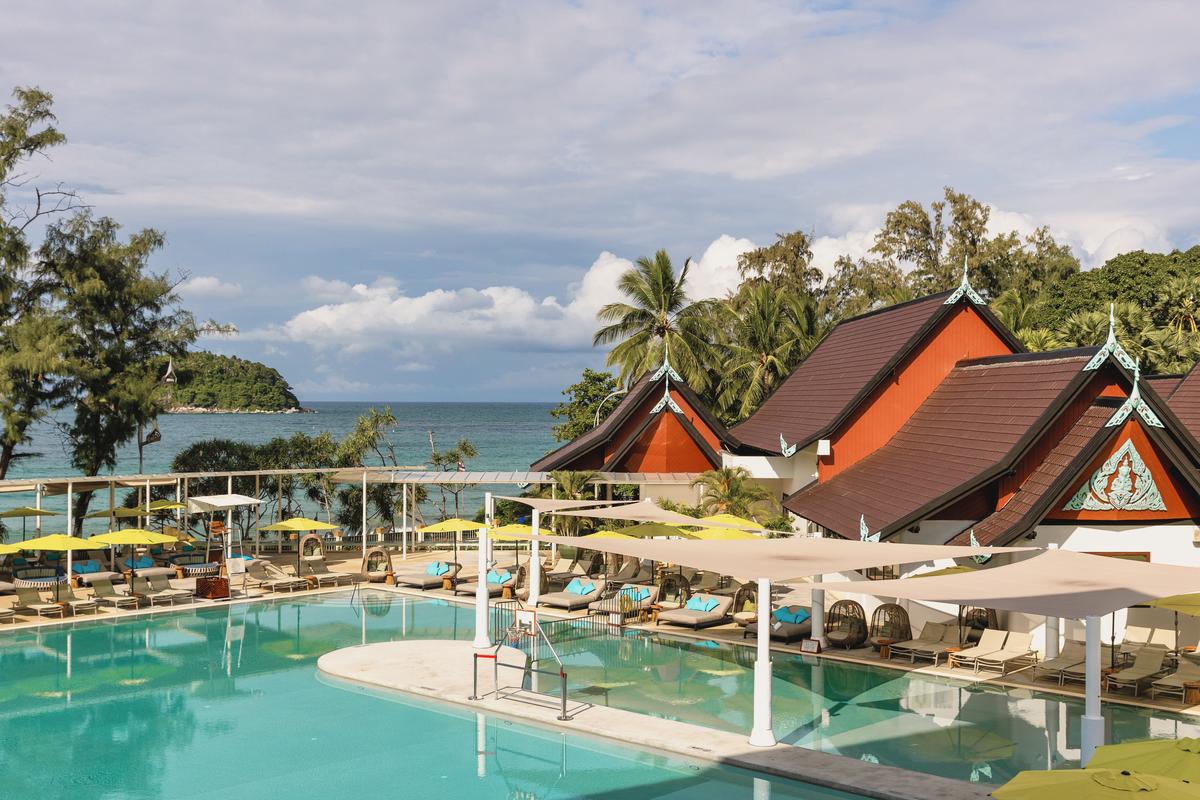
Nestled on the coast of sandy Kata Beach at Karon, ClubMed Phuket is undoubtedly a dream destination for holiday lovers across age groups. The 16-hectare property with swaying palm trees offers several activities, including flying trapeze, family yoga, archery, Thai boxing, live entertainment shows, culture-packed experiences, and water sports such as snorkelling and thrilling water slides. The resort offers scintillating views of the crystal blue sea and Ko Pu islet on one side and a 45-metre tall marble statue of Great Buddha of Phuket sitting atop Nakkerd Hill on the other side. The Thai culture resonates through the property and its charming bungalows and beach-view restaurants.

For Eric Jason, a marketing professional from Singapore, his maiden trip to Phuket is more than relaxing at beaches in the afternoon, paragliding across the evening sky, or visiting night markets. “The first thing which struck my mind after landing in Phuket for my holidays was to experience Muay Thai (Thai boxing). This is my first time trying a martial art. Having heard about Thai boxing from some of my friends here, I thought of giving it a try,” says Eric.

Tourists at Kata beach in Phuket in Thailand.

Tourists at Kata beach in Phuket in Thailand.
| Photo Credit:
N. Sai Charan

A tourist enjoying water sports at Kata beach in Phuket in Thailand.

A tourist enjoying water sports at Kata beach in Phuket in Thailand.
| Photo Credit:
N. Sai Charan

Eric is at Club Med Phuket, an all-inclusive beach resort at Karon in Mueang Phuket District, which offers wide-ranging entertainment activities. These include traditional Thai cooking, entry-level training in Muay Thai, wall climbing, snorkelling, music, archery, trampoline, flying trapeze, among others.

The swimming pool at Club Med Phuket, a beach resort at Karon in Phuket in Thailand.

The swimming pool at Club Med Phuket, a beach resort at Karon in Phuket in Thailand.
| Photo Credit:
Special Arrangement

Muay Thai, meaning ‘Art of Eight Limbs’, is a highly popular combat sport believed to have originated several centuries ago in Thailand. It involves the combined usage of fists, knees, shins and elbows for kicking, punching and striking. In recent years, the sport has grown in popularity among tourists visiting Thailand.

Meanwhile, Lewi Sydney, a 49-year-old software professional from Perth in Australia, and his family head to the Thai boxing arena at the entrance of Club Med Phuket. Muay Thai coach Seksan Chukliang, known by his nickname San, switches on Sarama, the traditional music that accompanies the pre-fight ritual. This may be a touristy space, but San takes training seriously: anyone who comes late for the practice session has to do 20 push-ups.

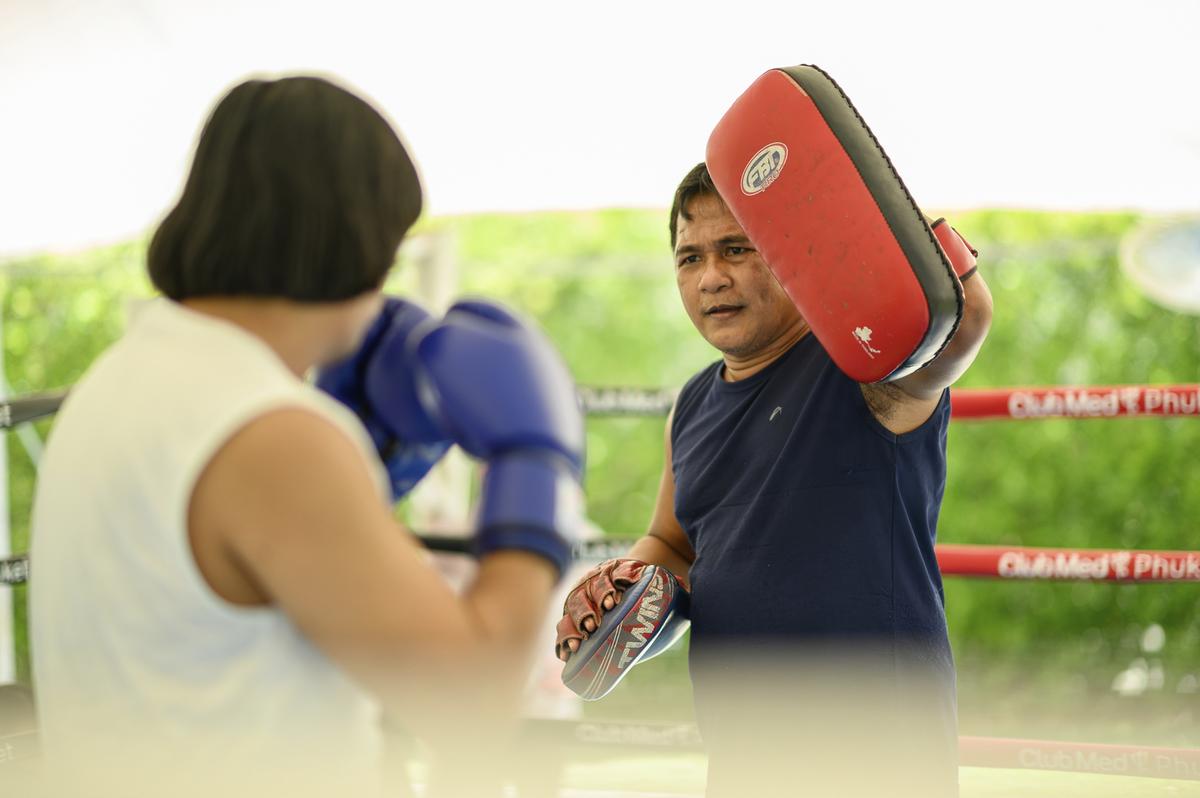
San teaching a trainee on punching on Thai pads at Muay Thai training arena at Club Med Phuket.

San teaching a trainee on punching on Thai pads at Muay Thai training arena at Club Med Phuket.
| Photo Credit:
Special Arrangement

However, San has a bright smile on his face when welcoming trainees. He has been giving entry-level training in Thai boxing to tourists at the resort for the past 15 years, apart from training professional fighters. The 50-year-old says, “I was in real combat matches on 335 occasions in my three-decade-long Thai boxing career. As a teenager, though I was poor, I never missed Muay Thai training. Now, I have a few championships to my name.”

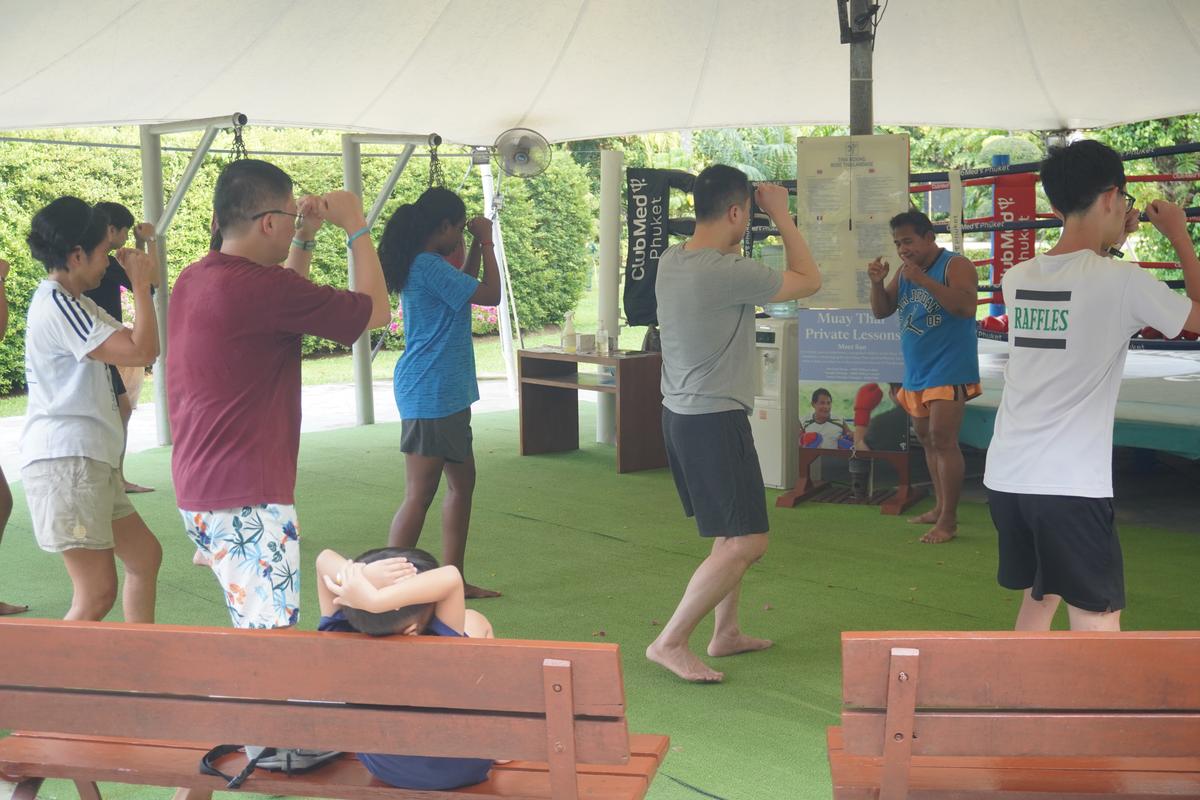
He starts the one-hour practice session with a warm-up round for 15 minutes, which typically includes stretching, running, and shadow boxing. San counts numbers during shadow boxing to monitor the movement of fists, footwork, and elbow work of trainees.

It is tiring without being too challenging. San says he has adapted the training routine for guests. “Traditional Muay Thai practitioners undergo tiring workout sessions for several hours, sometimes a whole day, which include jogging, stretching, shadowboxing, several rounds of pad work, bag work, sparring and much more,” he says.

San teaches shadow boxing during a warm session at Club Med Phuket.

San teaches shadow boxing during a warm session at Club Med Phuket.
| Photo Credit:
N. Sai Charan

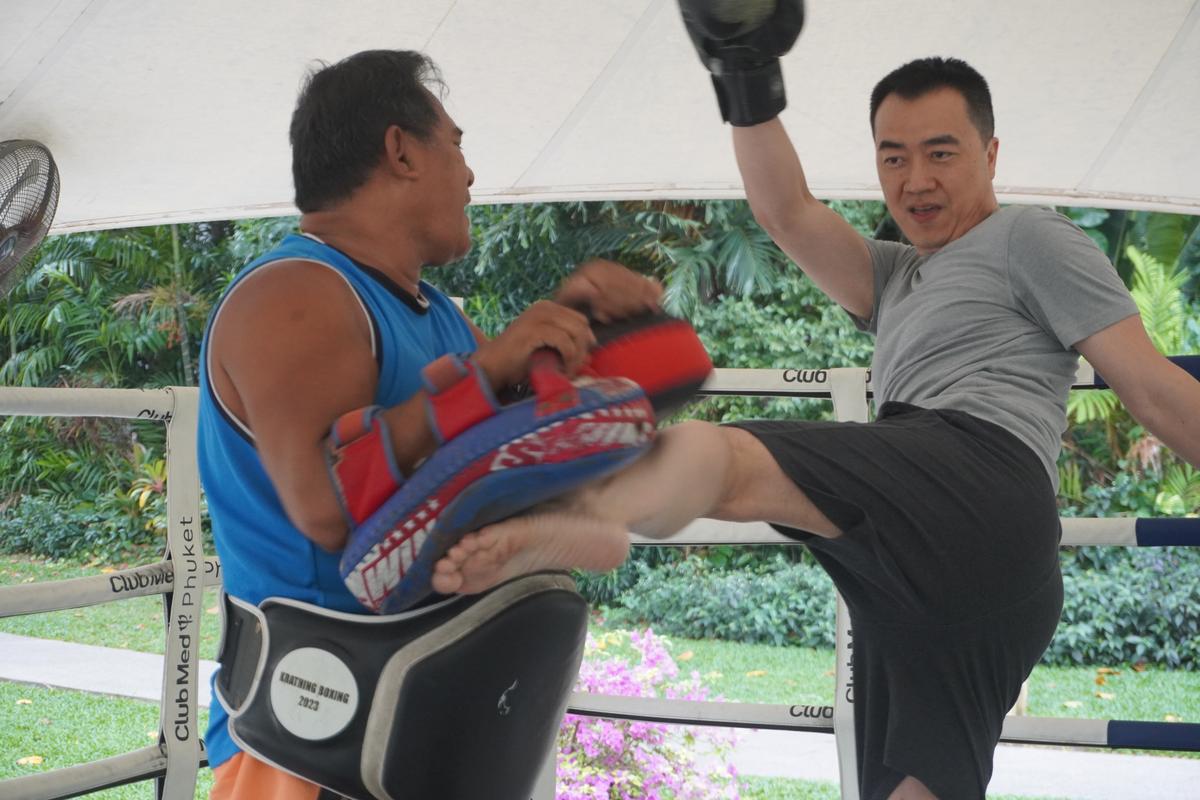
After the warm-up session and a short break, San calls each participant to enter the ring one at a time for pad work training. Inside the ring, the training lasts 45 minutes, during which trainees use a combination of moves using their fists, elbows, knees, and shins to kick, punch, and strike.

San first picks Lewi, who seems like a natural as he manages to land some powerful punches and kicks on San’s boxing pads, setting the bar high. Stepping out of the ring he says, “It was tiring, but I am excited to learn these techniques.”

A tourist kicking the Thai pad during Muay Thai practice session at Club Med Phuket.

A tourist kicking the Thai pad during Muay Thai practice session at Club Med Phuket.
| Photo Credit:
N. Sai Charan

Eric, who goes in next, highlights the difficulties. “You need a lot of energy to stay focussed otherwise you will burn out. That is what I have learnt. Instead of going to the gym and dealing with machines, learning this cultural sport gives me immense happiness,” he adds.

The writer was in Phuket on the invitation of Club Med.


Source link

2025’s biggest wellness trends: From ice baths to gut health


Health and overall wellness are interconnected. From the food we eat to digital dependence, everything impacts our life expectancy and quality.

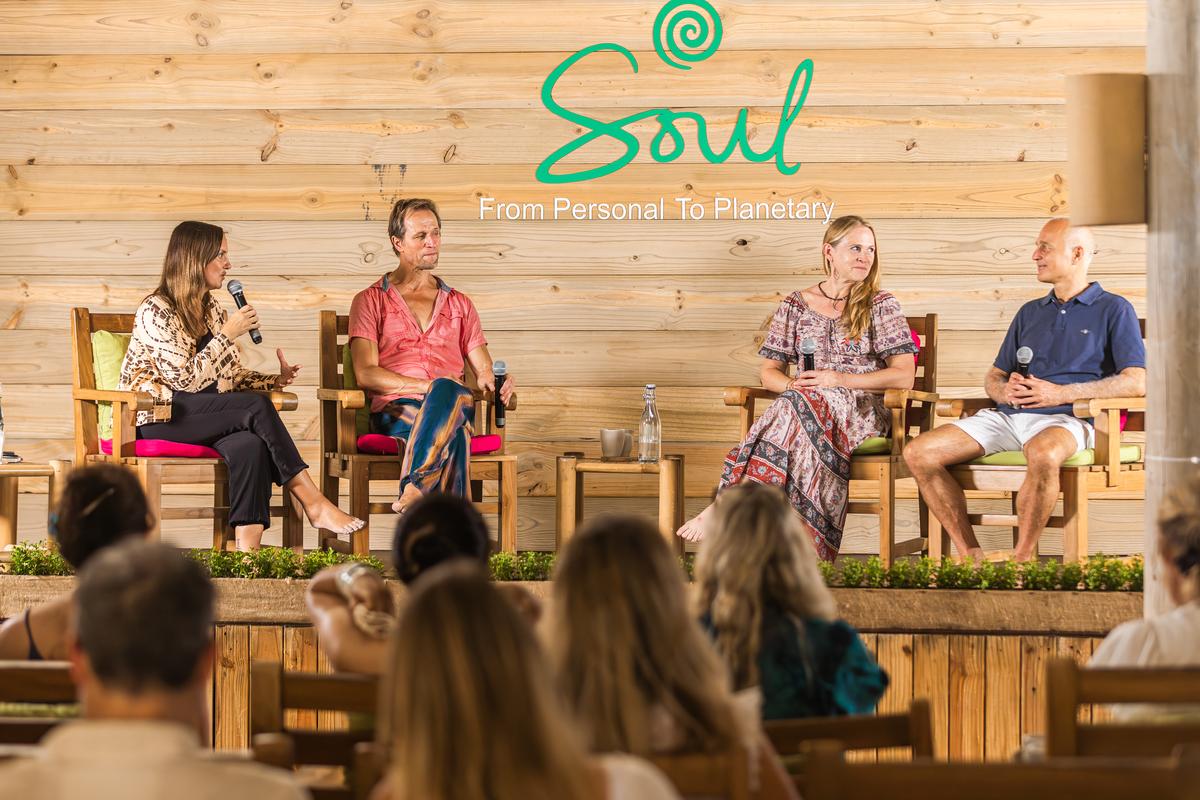
Participants at SOUL Festival

Participants at SOUL Festival
| Photo Credit:
Special arrangement

At Soneva Fushi in the Maldives, an annual wellness festival called SOUL Festival brings together influential health and wellness experts from around the world. Here are our key takeaways from the four-day retreat with actionable advice from the experts.

Gut feeling

Dr Zach Bush, a Virginia-based internal medicine and endocrine physician, and speaker at the festival, assigns your health’s responsibility to your gut. He believes in looking at chronic diseases beyond pharma and understanding the signals a person’s core energy sends their way to comprehend what the body wants — coming down to the basics and listening to the body.

Dr Zach Bush, a Virginia-based internal medicine and endocrine physician, and speaker at the festival, assigns your health’s responsibility to your gut

Dr Zach Bush, a Virginia-based internal medicine and endocrine physician, and speaker at the festival, assigns your health’s responsibility to your gut
| Photo Credit:
Special arrangement

“The first thing I recommend is to slow down and notice what your body wants and needs and this begins with mindful eating — shopping for food, cooking or being part of the cooking process, and even meditating on eating,” says Dr Lilly-Marie Blecher, chief medical officer, Soneva, explaining Dr Zach’s philosophy. Gut health signifies your overall health. “Symptoms can include brain fog, skin conditions, fatigue, or even weakened muscle strength. Observing and responding to these signs can be a decisive step toward better health,” she says.

On a cellular level

“Cellular health is the foundation of overall health, and nurturing it requires a holistic approach that integrates lifestyle, nutrition, and mindset,” says Dr Nasha Winters, an oncology specialist, author and fellow of the American Board of Naturopathic Oncology from Colorado, who is a key speaker and participant at the wellness festival. Ice baths may be all the rage today, but they are far from a passing fad and have significant impact on health at a cellular level.

She considers ice baths, fasting and breathwork as essentials for healthy living because they create hormetic stress. She adds, “This is a type of ‘good stress’ that challenges the body and builds resilience at the cellular level. Exposure to cold stimulates mitochondrial health, enhances circulation, and reduces inflammation. Intermittent fasting or time-restricted eating gives your body time to repair and regenerate. It activates autophagy, the body’s natural cellular recycling system, which clears out damaged cells and supports mitochondrial health. Intentional breathing techniques can reduce stress, improve oxygenation, and balance the nervous system.”

Ice baths, fasting and breathwork as essentials for healthy living because they create hormetic stress

Ice baths, fasting and breathwork as essentials for healthy living because they create hormetic stress
| Photo Credit:
Special arrangement

She advocates for these practices because they strengthen the body’s ability to adapt, repair, and thrive, all key ingredients for a longer, healthier life. For practices like ice baths that put your body in an extreme state, it is important to reach out to a medical professional before signing up, especially if you suffer from high blood pressure or heart conditions.

Prioritise emotional health

“Emotions are deeply tied to our physical health. Suppressed emotions can manifest as chronic stress, inflammation, or even illness,” says Dr Nasha. “Emotional release isn’t about erasing pain but creating space for it to move through you so it doesn’t take residence in your body.”

Take time out for emotional release 

Take time out for emotional release 
| Photo Credit:
Special arrangement

She recommends taking the time out for emotional release by partaking in activities that allow the mind to be at ease. “Try deep breathing or vocal expressions like humming or chanting via breathwork and sound therapy… Spending time outdoors can help you feel grounded and connected, allowing for emotional release in a serene and supportive environment. Also, therapies like massages, acupuncture, or craniosacral therapy can release physical tension tied to emotional stress.”

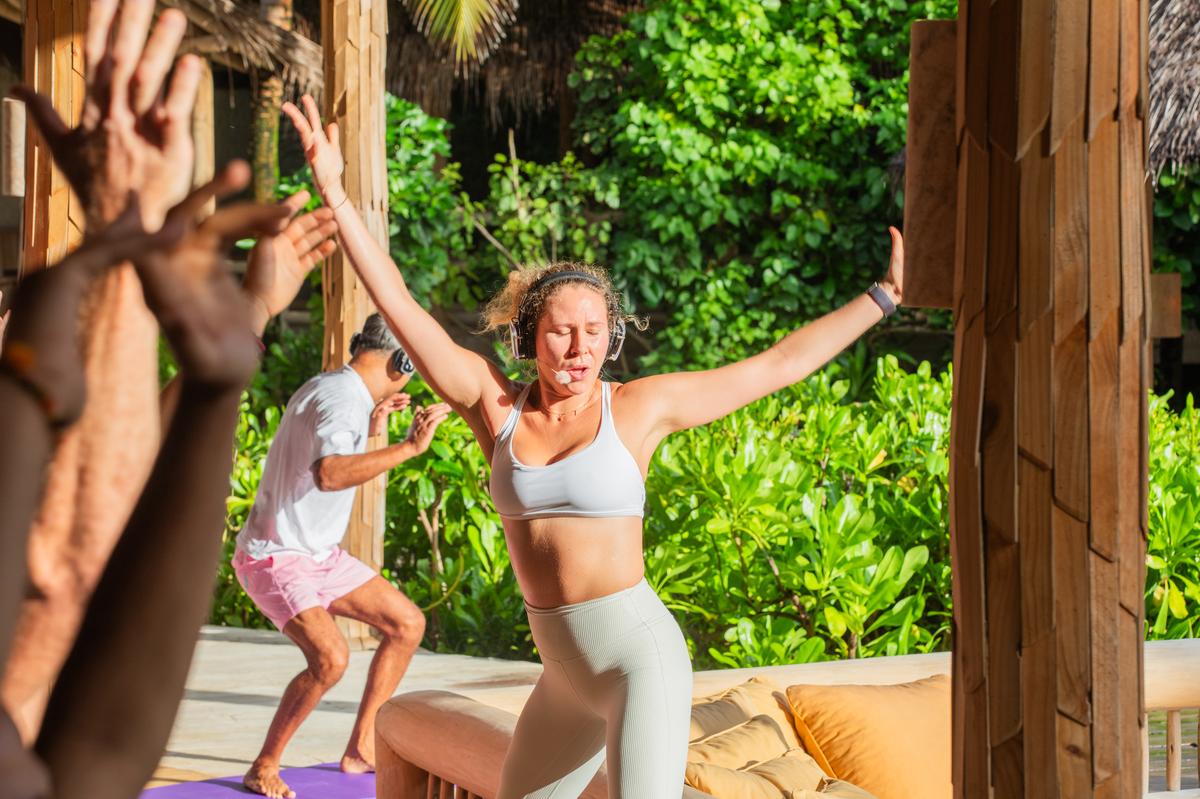
Experts host sessions on wellness at Soneva Fushi

Experts host sessions on wellness at Soneva Fushi
| Photo Credit:
Special arrangement

Marcel Hof, a breathwork and ice bath specialist at the festival, spoke about how simply breathing right can add immense value to life and why biofeedback and neurofeedback can be game changers. Dr Lilly encourages keeping track of your heart rate variability if you’re using one of the many fitness trackers available today. “Tools like wearables that track heart rate variability (HRV) are invaluable because HRV is an excellent indicator of your nervous system’s state — whether in fight-or-flight or rest-and-digest mode. When HRV is low, you can use breathwork or mindfulness to regain balance. Awareness itself can be a transformative tool for well-being,” she says.

Slow down

Eric Edmeads, wellness entrepreneur and author, spoke about the importance of slowing down, bridging the disconnect — the evolution gap — between what life used to look like and what it is today, and consciously building habits, even stacking them onto existing daily activities, for a better life. “Building a sustainable habit starts with relevance and realism — it has to align with your top health priorities,” Dr Lilly adds. “For instance, if posture is your focus, build habits around it rather than overwhelming yourself with a long list of goals. Next, dedicate time and space — say 40-45 days — to establish the habit and address barriers. Linking habits to existing actions is a great way to reinforce them.”

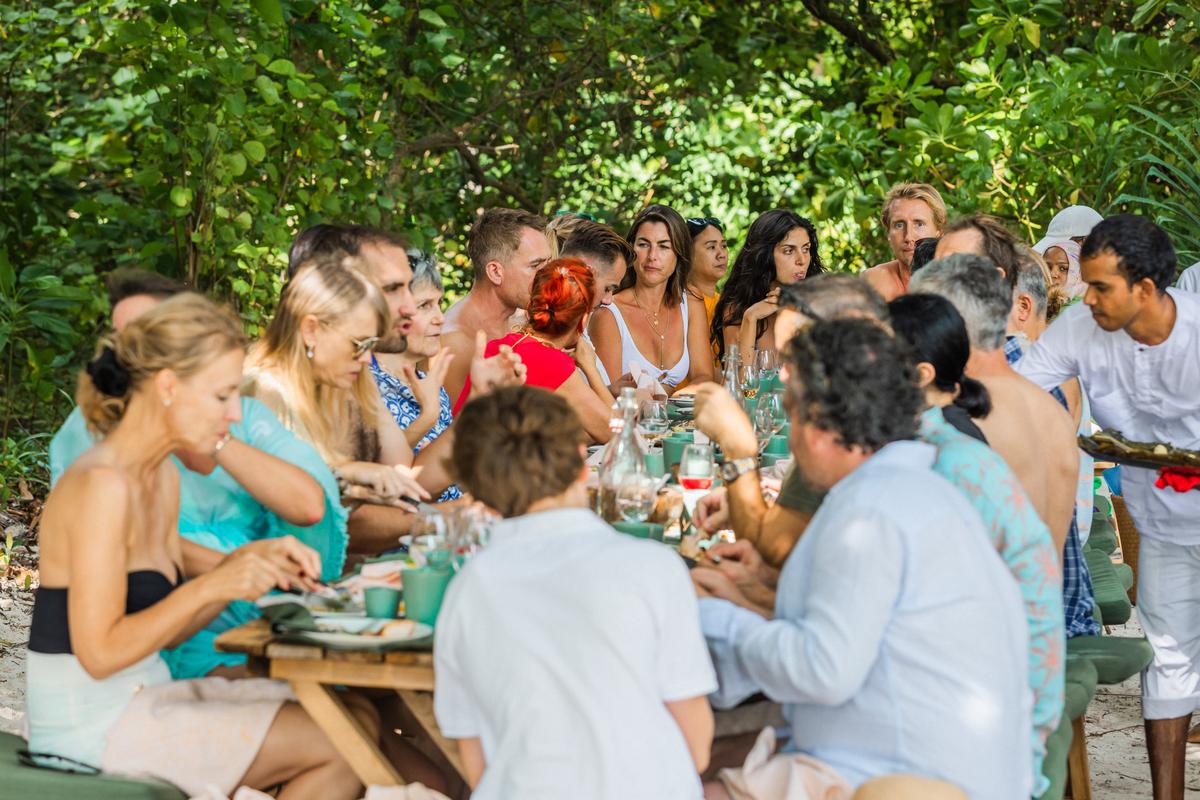
Participants enjoy a floating meal on the beach

Participants enjoy a floating meal on the beach
| Photo Credit:
Special arrangement

Peak body performance

Jamie Wheal, author, peak performance expert and founder, Flow Genome Project  — a series of training programmes on peak performance, optimal psychology and leadership — believes in, simply put, going back to the basics. “The most impactful lifestyle changes today that are harming us include the digital narcissism and autism that we are inflicting upon ourselves and our children via lives mediated almost entirely by screens and the artificial worlds and identities within them, [along with] the transition to salt, sweet and fat, ultra-processed foods, and our collapse in functional movement and time in Nature.” According to him, disconnecting from digital aids as much as possible, especially at the beginning and end of the day, are key to ensuring your body performs well independently.

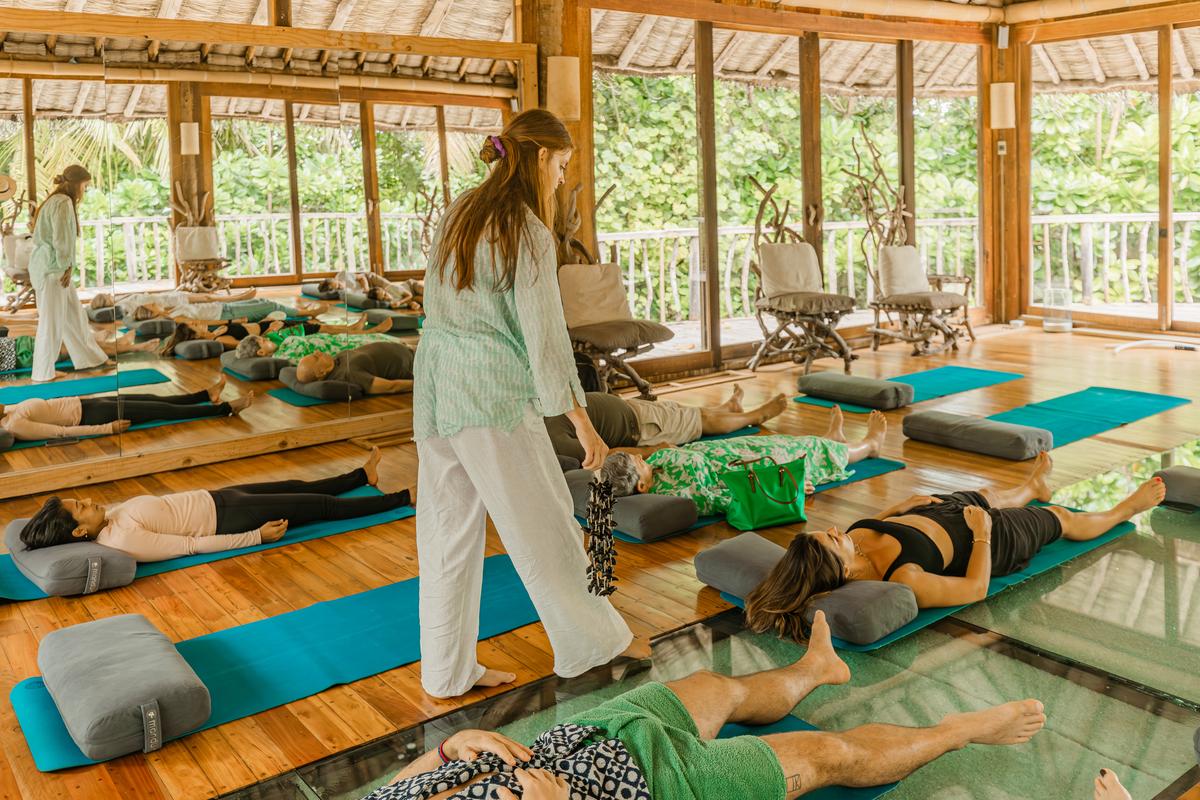
Workshops at SOUL Festival

Workshops at SOUL Festival
| Photo Credit:
Special arrangement

“Turn off all notifications on your phone. Ensure that the first hour (tea, coffee, movement) and last hour (reading in bed, meditation, etc) of your day are phone-free. Eat real food, mostly plants, not too much, don’t waste money on supplements, spend it on clean foods instead, and finally, move your body in multi-planar — not just straight lines — functional ways, starting from your bare feet up.”


Source link

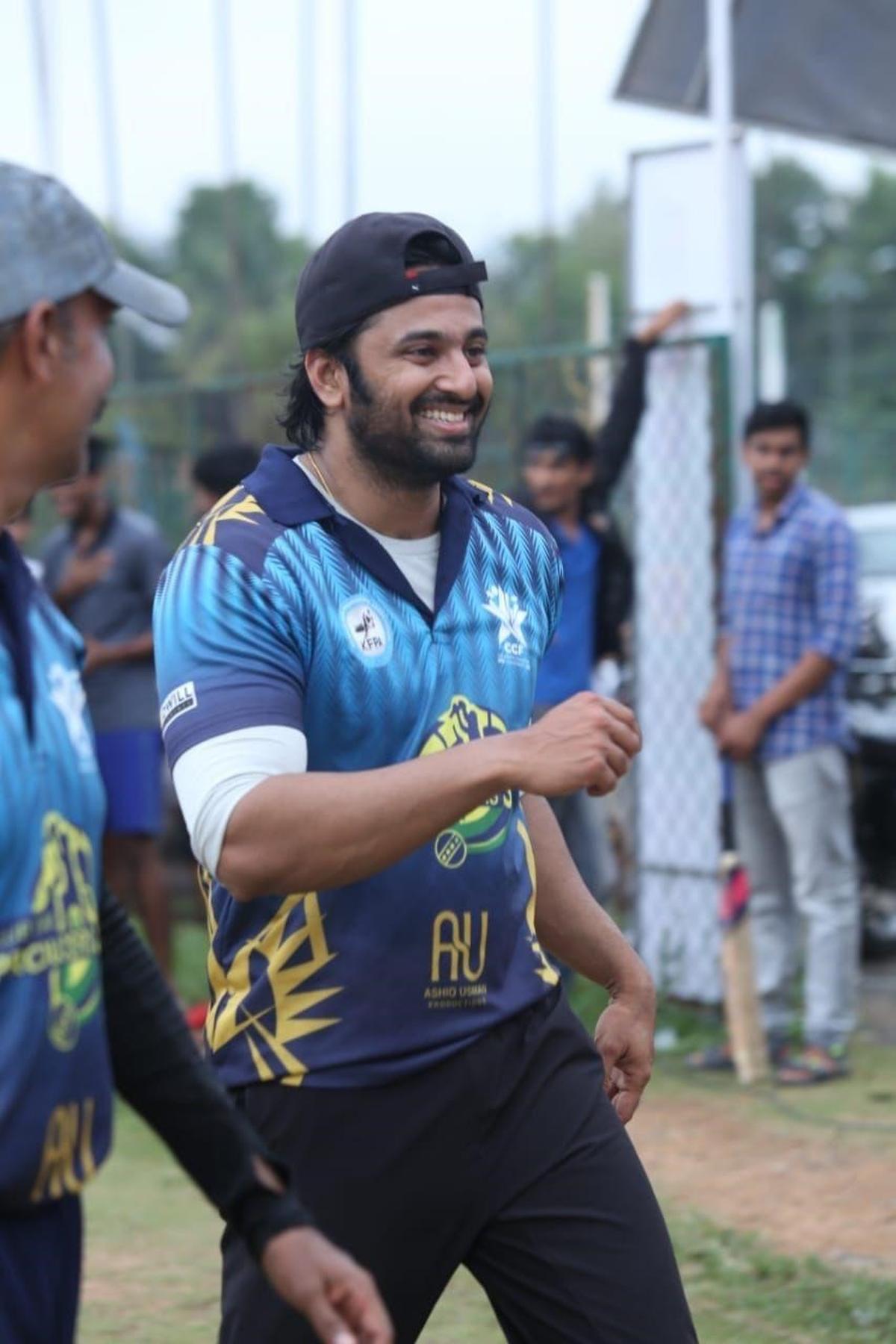
Kerala’s Celebrity Cricketers Fraternity will showcase the Last Man Stands format in a tournament that begins on April 19


Celebrity Cricketers Fraternity (CCF) is possibly the only one of its kind in India with 17-odd teams comprising film and television industry and media professionals. An insider, who prefers to stay unnamed says, “I think it has to do with the broad mindedness of the Malayali. I don’t think this could be easily done in any other language film industries in India as they tend to have clearly defined hierarchies.” The league, formed in 2011 and registered in 2018-19 as CCF, is all set for another first. It has launched the Celebrity Cricketer’s Fraternity Tournament in the Last Man Stands (LMS) format, which kicks off on April 19. 

Played in the two hour, eight-a-side T20 format; LMS, founded in 2005, is said to be the largest amateur cricket league in the world. Blue Tigers holds the Indian franchise. 

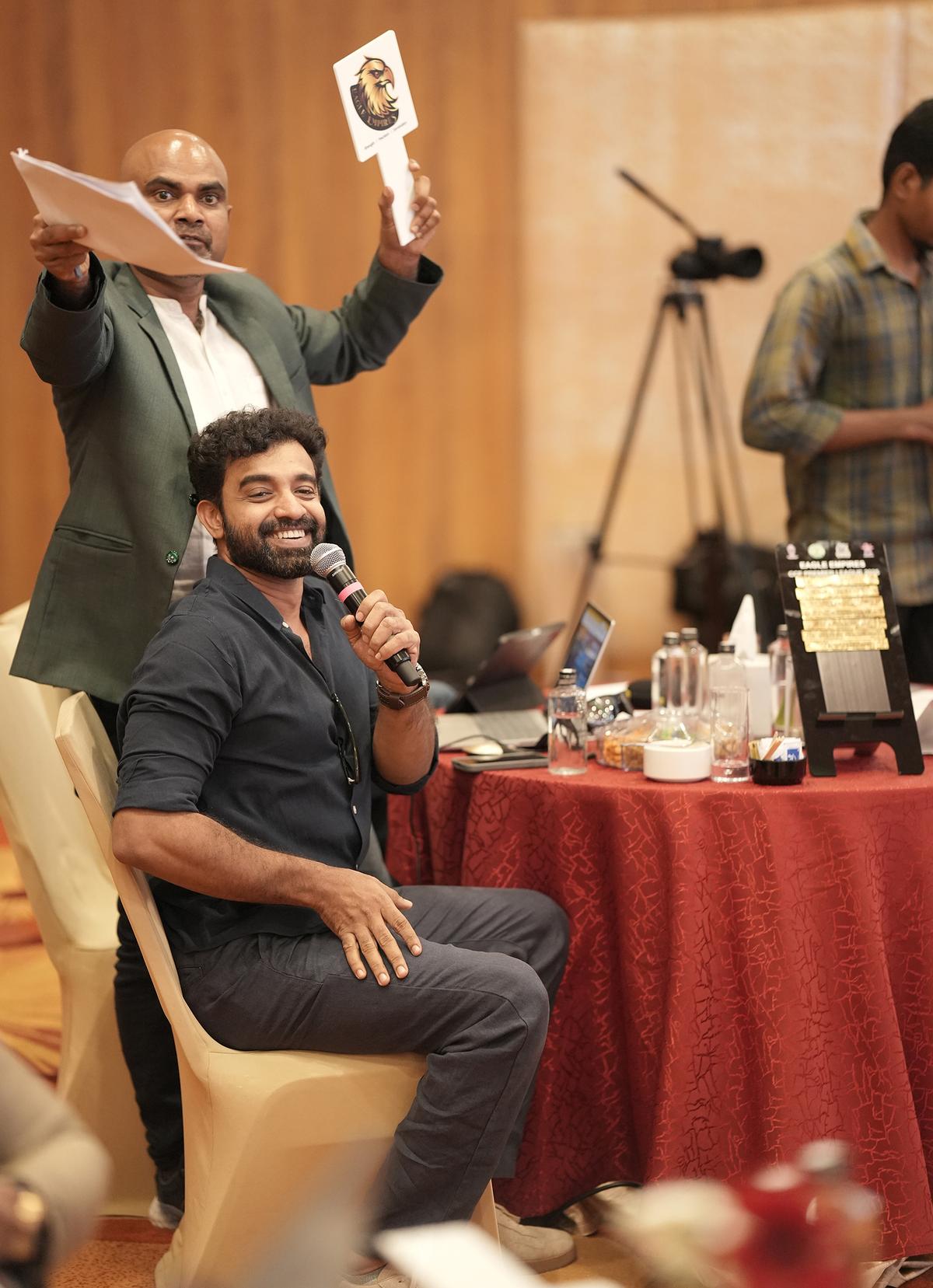
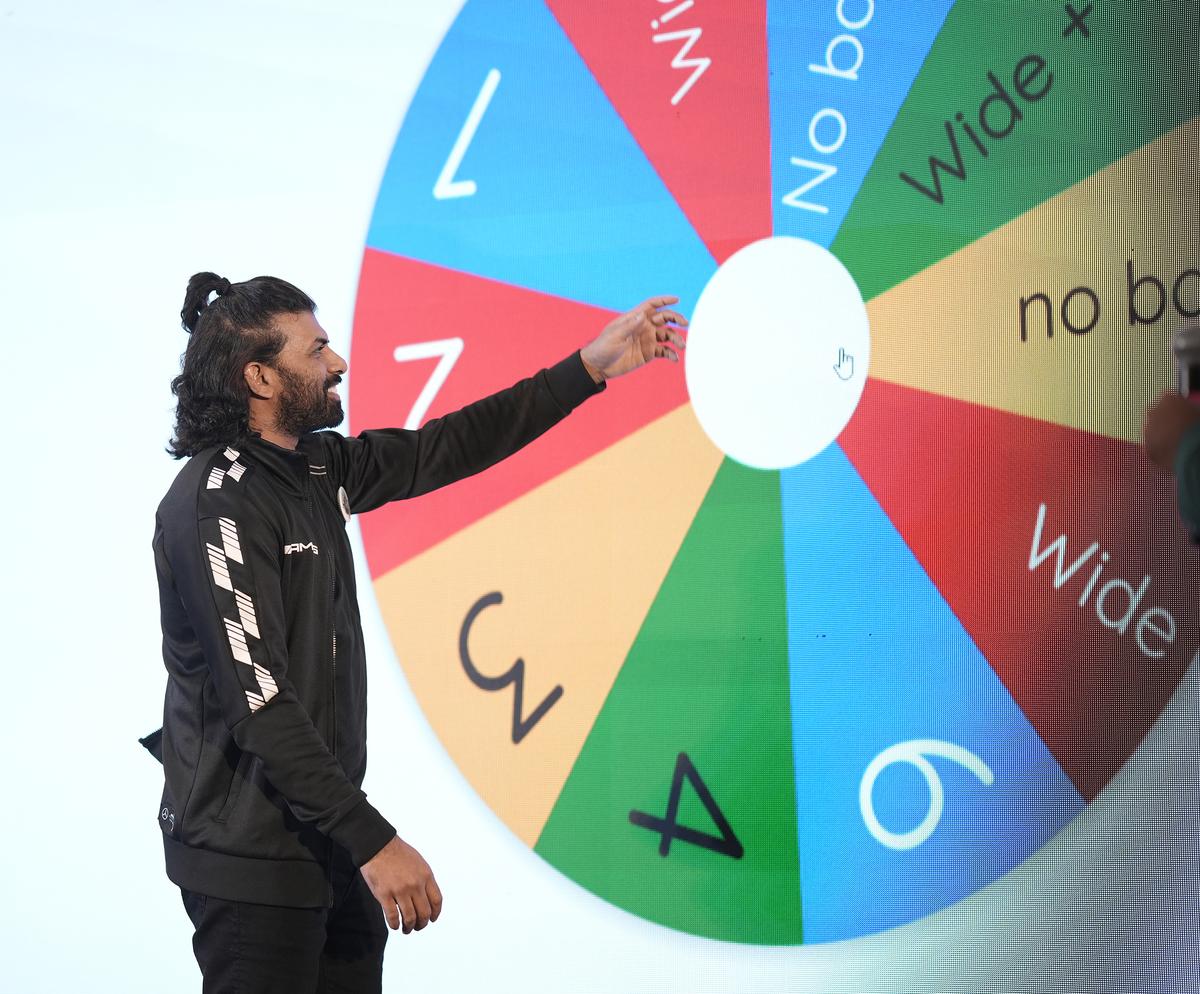
Siju Wilson at the CCF auction for the LMS tournament

Siju Wilson at the CCF auction for the LMS tournament
| Photo Credit:
Special Arrangement

Although it is cricket, with its vastly different rules it sounds like an altogether different game. “It is a new format, but it is still cricket with all the elements. We were thinking of what to do differently when we came across with LMS.  This is the biggest tournament for amateurs in the world,” says filmmaker Anil Thomas, president of the CCF. Tying up with Blue Tigers, he hopes, will lead to greater achievements for CCF. 

It is a hope producer-actor and owner of the team Seahorse Sailors, Sudeep Karakkat echoes. “We have 12 top-notch teams, with 12 celebrity owners and brand ambassadors. Bringing LMS to Kerala for the first time and the tie-up are an achievement for the CCF, which is a one-of-its-kind cricket league in India.”Among the team owners are actors Unni Mukundan, Anthony Pepe, Suraj Venjaramoodu, Vishnu Unnikrishnan, Akhil Marar, Lukman Avran, Naren, Sunny Wayne, Johny Antony, Siju Wilson, Saju Navodaya and Vijay Yesudas.

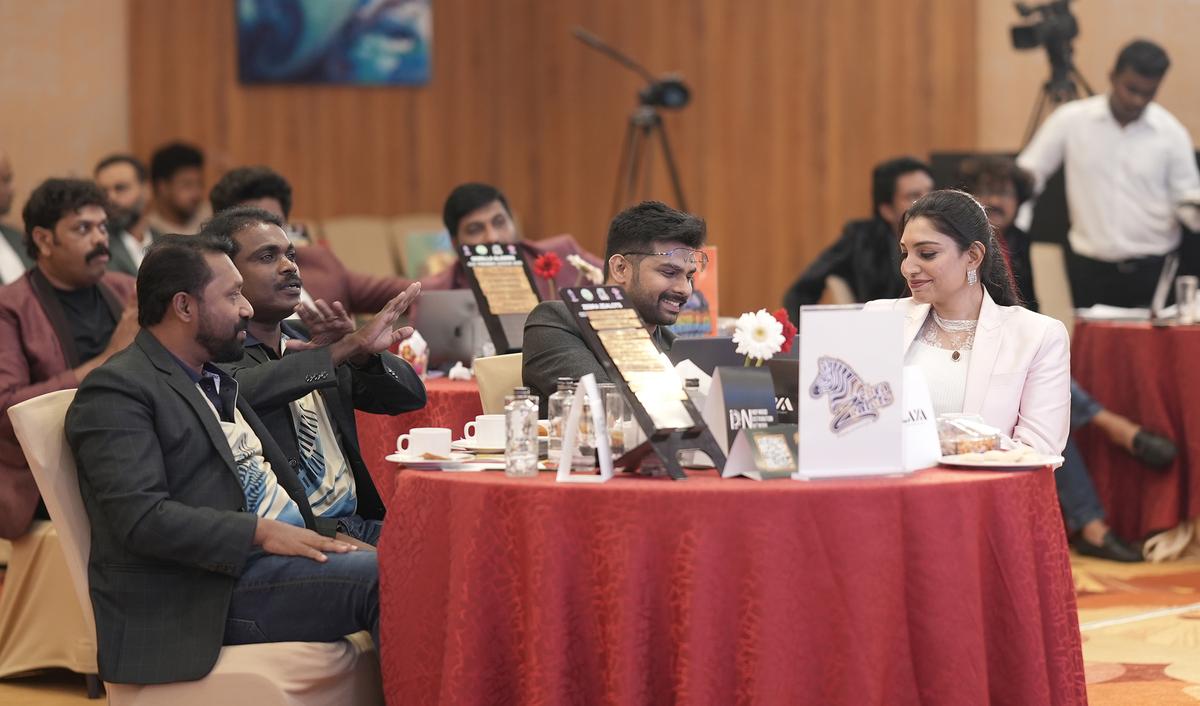
The CCF Tournament auction

The CCF Tournament auction
| Photo Credit:
Special Arrangement

Unlike the Celebrity Cricket League, which comprises actors primarily, the CCF includes everybody from the film, television and media industries interested in the sport. 

Celebrities at play

A consortium of 17 teams, CCF is composed of players from different departments of filmmaking such as producers, directors, singers, choreographers etc. The CCF LMS tournament meanwhile has 12 teams and the 120-odd players, for the tournament, have been chosen from around 400 amateur cricketers who are members of the CCF. 

The CCF LMS teams have been culled from these teams, a mix of five A category and an equal number of B category players. Each team has 11 players — the player – 8, reserve – 3 and a celebrity player.

“The competition to find the final 120 was tough. We conducted a player auction, based on which the teams were constituted,” says Sleeba Varghese, ad filmmaker-producer and secretary of CCF. 

Unni Mukundan

Unni Mukundan
| Photo Credit:
Special Arrangement

The seven-day tournament will see the team play three matches each. Interestingly, the last man standing at the crease can bat unlike the traditional format where two players are needed at the crease. Since the format is new, the tournament is being played for the first time in Kerala, players and team owners are learning the rules of the game. “It is confusing at first, but once you get the hang of it, it will not be as hard,” says one of the players. The practice sessions will begin after Id so as to not interfere with Ramzan fasting.  

The Last Man Stands format

“This format requires players to be in top physical form because it is more vigorous!” says film director Syamdhar, player and owner of the team Kangaroo Knockers. The games will be intense, with each innings being an hour long with 100 balls (five per over) bowled and in two hours one match would be done. 

Actor Unni Mukundan, co-owner of Seahorse Sailors and celebrity player of the team, says, “LMS is something that I haven’t experienced yet as a player. But being someone who is open to exploration, I’m keen to participate. I feel it will make the game a bit more dynamic. Players and owners are excited. I’m equally thrilled, because apart from films, cricket is something that has always taken my attention. So owning a team feels exciting. I’ll be participating as a player as well!” The celebrity players are exempt from the A and B grading. 

Sunny Wayne at the CCF Tournament auctions  

Sunny Wayne at the CCF Tournament auctions  
| Photo Credit:
Special Arrangement

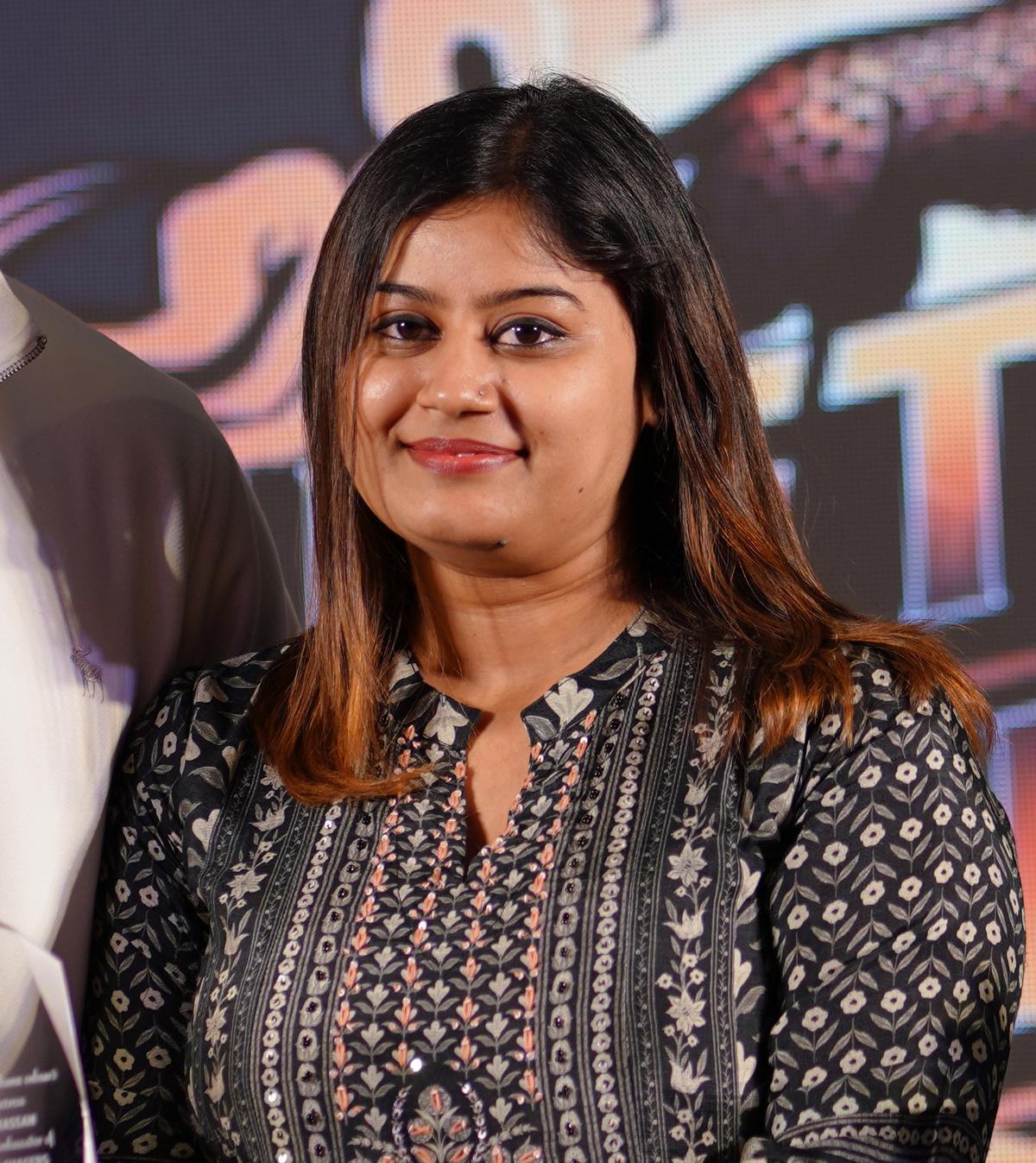
Although this time, there are no women’s teams, the plan is to have at least a couple of teams in the future, hopefully by the next edition. Women actors are team brand ambassadors. Actor Anziba Hassan of team Cheetah Chasers says, “Cricket is one game that can be played by a mixed team…as long as the players are physically fit. There is no space for gender discrimination in terms of participation. I brought up this point at the launch event of the tournament and it was met with enthusiastic applause. Everyone was on board with the idea.” 

Ansiba Hassan

Ansiba Hassan

Mahima Nambiar, brand ambassador of Seahorse Sailors, adds, “For now, we [women] may not be players or have our own team, but we have a definite role to play — take the game to the audience. When a celebrity is associated with something, in this case the tournament, it generates more curiosity and brings in viewers.”   

The team winning the tournament will get an opportunity to head to the United States to play the US Premier League for a friendly match. That is not all, the organisers hope that a win at the CCF Tournament could possibly qualify the team for national level tournament and then, as Anil Thomas says, “Who knows? Head to the UK for the international LMS tournament!” 

The tournament will played from April 19 to 25 at St Paul’s College, Kalamasserry, grounds. It will be open to the public


Source link

Ageing in India’s LGBTQIA+ community: a silent struggle


The first time I meet Archana Trasy and her partner Pooja Chaudhri is via a beautiful pride advocacy short film on Instagram. “I always say this to Archu, you really brought colour into my life,” Chaudhri, a media consultant, says in the film, walking into an open windy terrace overlooking the Arabian Sea, perhaps hinting at the openness of their own identities. “We are in a same-sex relationship and we wear this love with a lot of pride,” says Trasy.

“I feel privileged to have a partner,” she tells me later. “We’ve been together for five years.” Trasy, 53, founder of an entertainment design company in Mumbai, came out at 18. Her parents were supportive though many others were not.

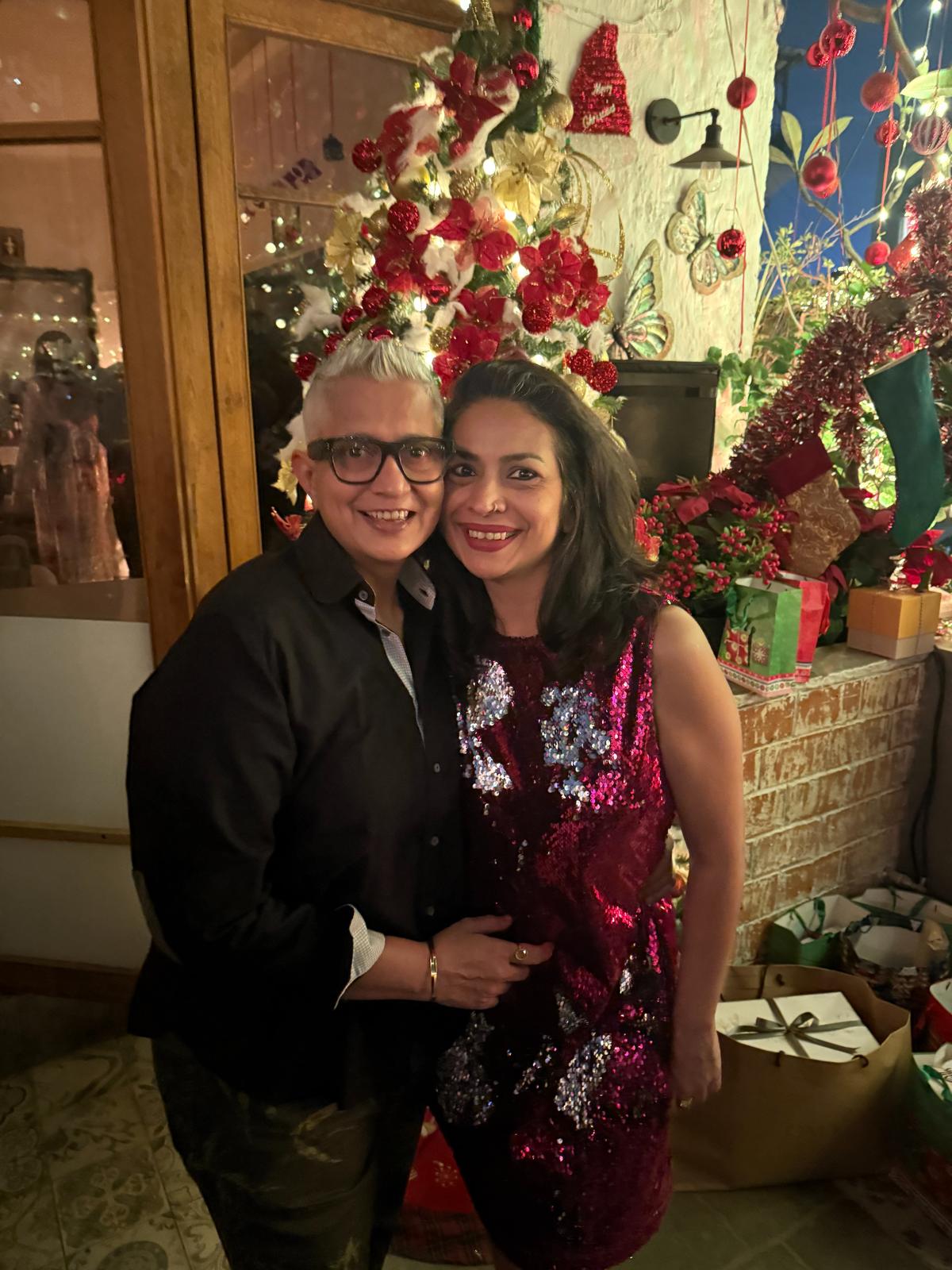
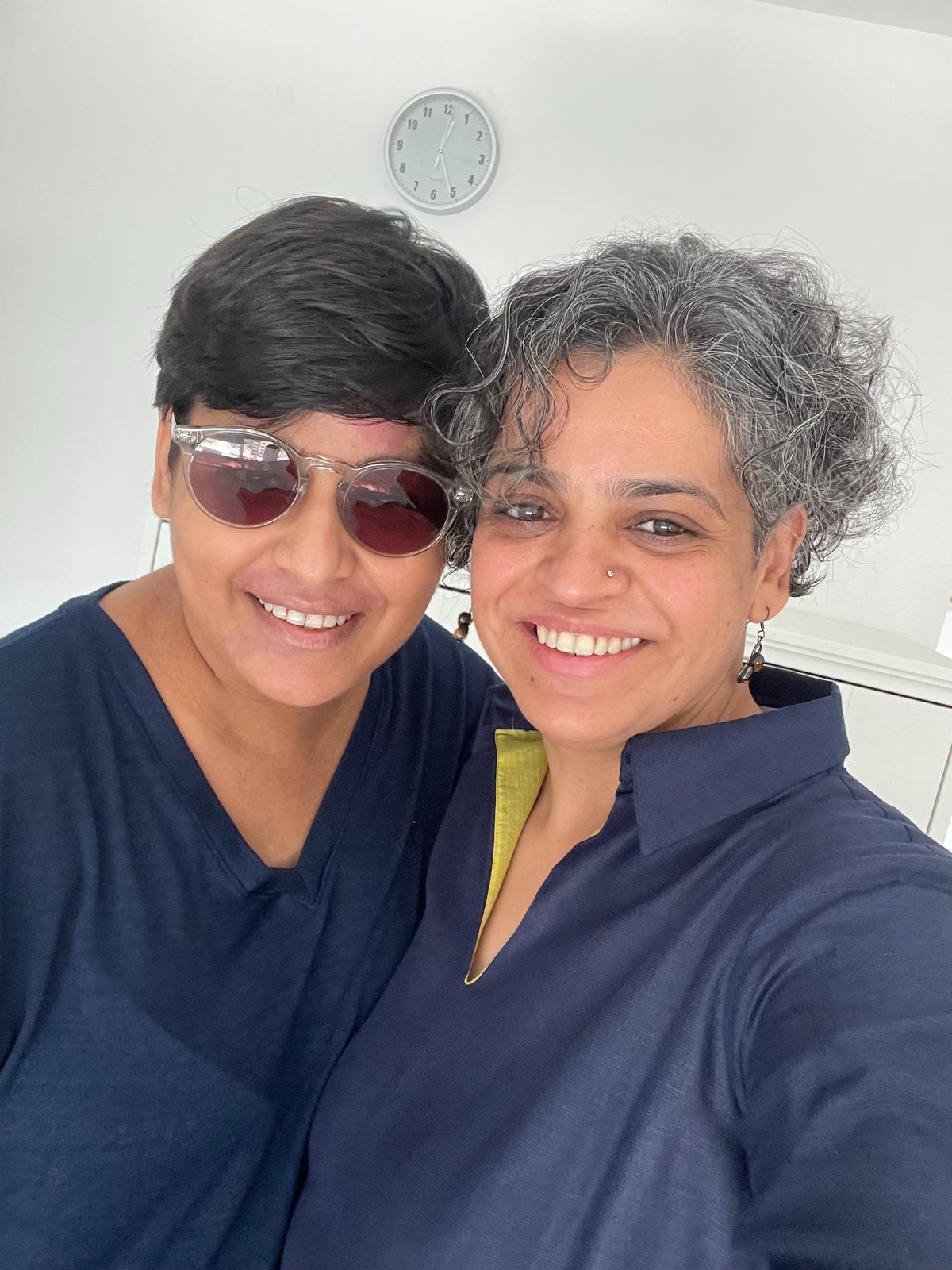
Archana Trasy (left) and Pooja Chaudhri

Archana Trasy (left) and Pooja Chaudhri

Down south in Tamil Nadu, Gita, 67, has recently moved into a senior living community with her 77-year-old partner. “Everyone thinks we are cousins and it’s best kept that way,” she says over a video call. Gita looks visibly exhausted from caring for her ailing partner. Moving here took up much of her savings, she says. “I have no support from my family because I choose to live with her. Keeping our identity hidden works best.” Gita and her partner initially lived in an apartment in a different South Indian city but the latter’s failing health made a senior living set-up with medical assistance on hand a practical choice.

Gita’s decision to hide her truth, unlike the openness celebrated by Trasy and Chaudhri, is the lived experience of many older queer persons in India, who grew up in the shadow of Section 377. Despite long battles for equal rights, they struggle to carve out a secure life without legal or institutional support.

In a landmark judgment in 2018, the Supreme Court of India decriminalised consensual same-sex relations by striking down Section 377 of the Indian Penal Code. While that opened a big door for the LGBTQIA+ community, which constitutes roughly 10% of the population, another one was shut a few years down the line when the court rejected the community’s plea for marriage equality in October 2023. Same-sex couples in India also do not have the legal right to jointly adopt children as they are not recognised as eligible adoptive parents.

Marriage as a framework provides legal security in inheritance, housing and medical decisions, apart from social recognition and acceptance, the key factors behind the push for marriage equality. But it remains a contested demand among some queer activists who believe the focus should instead be on implementing existing directives and fighting to remove discrimination.

Some rights exist — such as opening a joint bank account or adding a queer partner’s name in the family ration card — but enforcement remains a challenge, say activists. The denial of these basic rights often has repercussions as people grow older or start planning their future in their late 40s and 50s. It impacts decisions around parenting, financial security, healthcare access, social inclusion, caregiving and dignity in death. Growing older as a queer person in India is fraught with problems that many take for granted in a heteronormative framework.

Finding data on the number of older queer persons in India is difficult. Surveys are hard to come by. “An online survey of more than a million queer participants in India showed that almost 40% of the participants were aged 45 years or older, with almost 30% of this group married to women and 20% hiding their gay/bisexual identities from their spouses,” notes ‘Psychological well-being of middle-aged and older queer men in India: A mixed-methods approach’, a rare study on the group by Sharma A.J. and Subramanyam M.A., published in PLOS One (2020), a peer-reviewed journal.

Hope in legislation
• Under the Mental Healthcare Act, 2017, queer persons can make a living will/advanced directive to state who can make medical decisions on their behalf.
• Devu G. Nair vs. State of Kerala case (March 2024) has extensive guidelines on police protection and habeas corpus cases involving queer couples.
• The Ministry of Home Affairs has issued advisories that give queer couples joint ration cards and rights to joint bank accounts.
• The Insurance Regulatory and Development Authority of India has encouraged insurance companies to offer inclusive health plans.

(Inputs from lawyer Rohin Bhatt, author of The Urban Elite v. Union Of India)

A fragile revelation

Girish, 58, a doctor’s assistant from Chennai, speaks to me on a WhatsApp audio call from a friend’s office because at home his conservative brother still doesn’t accept his sexuality. He doesn’t want to switch to video though he shares his first name. For years, his family took him to “counsellors” to cure his sexual orientation. “Now they don’t ask as long as I stay quiet; I also don’t force them to accept anything, as long as I have a place in their house,” he says. Girish would like to live independently but cannot afford it. “I no longer have a partner or the resources to be active in gay circles. I’ve accepted my life and live quietly,” he says.

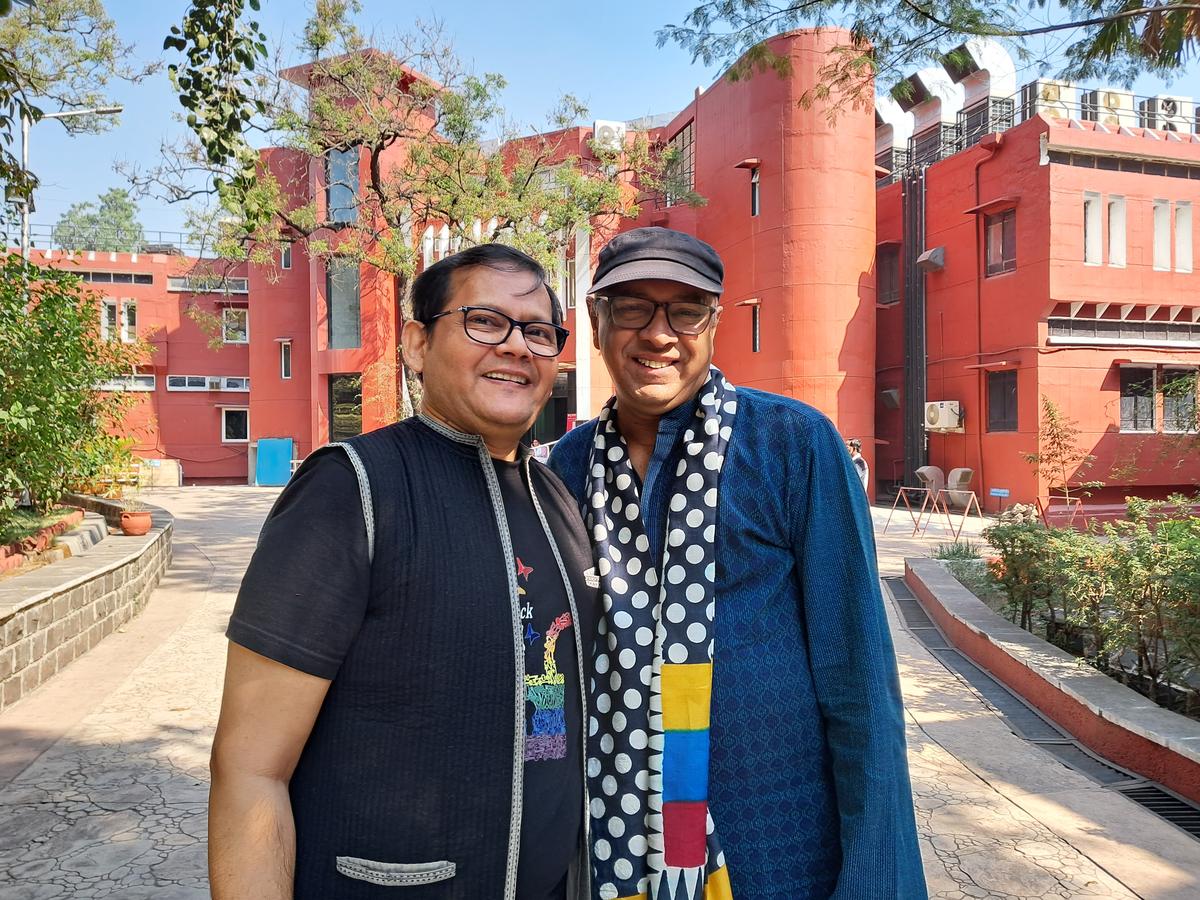
For many older members of the LGBTQIA+ community, coming out remains the biggest issue. Those who manage to do so, often talk about the lack of reference points growing up. Filmmaker Sridhar Rangayan refers to that era’s impact as “permanent scars”. “Our generation has always lived under the cloud of criminality… Even now, when greater freedom is there in the cities, and the youth feel liberated, most elderly gay men live in the shadows. Hardly a few are partnered and even in these partnerships, they have to tread with caution, since there is so much pulling them apart.” Rangayan, 62, a marriage equality petitioner with his partner Saagar Gupta, 56, is co-founder of The Humsafar Trust and the annual Kashish Pride Film Festival in Mumbai.

Queer activists Saagar Gupta (left) and Sridhar Rangayan

Queer activists Saagar Gupta (left) and Sridhar Rangayan

The Seenagers, a Mumbai-based group of gay men over the age of 55, has many closeted married members. The group introduces itself as an initiative that gives “elderly gay men a safe space to connect over cups of chai”. Founder Ashok Row Kavi, among the first to openly talk about homosexuality and gay rights in India back in the 80s, says, “Many use pseudonyms at first. Once they feel safer, they share their true identities.” He warns that secrecy can lead to risky behaviours and even blackmail. “Older gay men in India often find themselves vulnerable,” says the 78-year-old.

Mental health concerns are also prevalent among the older group. “Anxiety, depression, and stress are significantly higher in the LGBTQIA+ population,” says Delhi-based psychologist and marriage equality petitioner Ankita Khanna. “For those in their 50s and 60s, these struggles are chronic, shaped by decades of secrecy. Mental health stigma intersects with the taboo around sexuality and gender, making it even harder for older individuals to seek help.”

The dearth of queer affirmative mental health specialists in India further complicates care. “When you think in terms of those catering to the ageing population, then it becomes even more of a rarity,” says Amit, 47, an LGBTQIA+ rights activist in Kolkata. He has seen a recent disturbing trend that may increase chances of elder abuse, he says.

“When the Supreme Court read down Section 377, it made it clear that only consensual acts were decriminalised, while non-consensual acts remained punishable. However, with the Bharatiya Nyaya Samhita replacing the Indian Penal Code, the government has left out any direct mention of non-consensual same-sex acts, creating a legal vacuum,” says Amit. In both online and offline spaces, he thinks this has contributed to an increase in abusive behaviour. The lack of prosecution makes the elderly more vulnerable.

“The concerns of older queer individuals were not part of the LGBTQIA+ agenda, likely because most queer activists back then weren’t older. Until one personally experiences ageing-related vulnerabilities, they may not act on them. Research on these issues is increasing, and the Varta Trust is planning a year-long qualitative study on the concerns of elderly trans and queer persons. In Varta’s mental health peer counsellor support group, for instance, efforts are being made to ensure at least 30%–40% of counsellors are over 40 or 50. For ageing queer people seeking safe spaces to live, there are the metro cities, but emerging queer networks in places like Kerala, Odisha, and Assam provide alternative options. These are places where the queer networks are young, active and thriving. However, much remains to be done to ensure that older LGBTQIA+ individuals are not forgotten, both in community initiatives and policy frameworks.”Pawan DhallQueer archivist, writer and founding member of Varta Trust

Legal hurdles with death and adoption

Even for those in secure partnerships or families, love comes with roadblocks. Dignity in death often crosses Trasy’s mind. “In medical situations, the lack of legal recognition scares me. I often worry that if I were to die, my partner wouldn’t have the legal right to make decisions for me or to claim my body. I want to live and die with dignity, and I’d prefer my partner to have the authority to act on my wishes,” she says.

Documentary filmmaker Pracheta Sharma, 44, is parent to a six-year-old girl she adopted in 2020, around the same time she met her partner Mamta Saraf. She talks about how India’s adoption laws and the lack of marriage equality adversely impacts their family structure. “Within the adoption laws, you are not allowed to declare anybody else as a legal guardian if they’re not from your family [blood relation]. One parent has to adopt and the other remains in the shadows. I think it’s a highly discriminatory space in a setup that has decided to be progressive. If I was with a man in this equation and I wanted a family, a civil marriage is all it would take, and he would automatically become the other parent. But with a same-sex partner I can’t do that,” says Sharma.

Among the small changes that Pracheta Sharma (left) and Mamta Saraf have managed to make around them is the introduction of gender-neutral ‘parent’ ID cards in their daughter’s school in Mumbai, replacing the traditional ‘father’ and ‘mother’ cards.

Among the small changes that Pracheta Sharma (left) and Mamta Saraf have managed to make around them is the introduction of gender-neutral ‘parent’ ID cards in their daughter’s school in Mumbai, replacing the traditional ‘father’ and ‘mother’ cards.

Not being a legal guardian in the adoption papers translates into several problems for Saraf, 46, who has no rights beyond social acceptance. Travelling alone with the child can create issues and even making an investment or insurance in her name needs to be done through circuitous routes, setting up problems for the future. Saraf and Sharma are open about their relationship (it helps to live in cosmopolitan Mumbai) with their families, housing society, and their child’s school. But challenges remain. The couple is currently working on options to secure their child’s future.

In the absence of marriage equality, some queer couples create a living will, or insurance nominations, or social contracts with family and friends to ensure their wishes are respected. “Since the system doesn’t give us rights, queer people must constantly safeguard their own,” says Saraf. “Making a will in your 40s isn’t enough; you have to ensure your partner isn’t sidelined later.”

There are couples who find protection through business partnerships. “Our production company, Solaris Pictures, ensures shared assets,” says Rangayan.

There is a constant need for jugaad if you are a queer person, says Khanna, 41, who lives with her partner, psychiatrist Kavita Arora, 51. In their eight years of living together, the mental health practitioners have faced several “minor dents”, be it in the process of opening a joint bank account or applying for a swimming pass in their apartment.

Maya Sharma, 70, says she and her older queer female friends often think of finding places to stay together instead of having to fit into heteronormative spaces. Unlike in western countries, where there is a push towards senior living communities catering to queer people or more acceptance within regular senior communities, India has a long way to go.

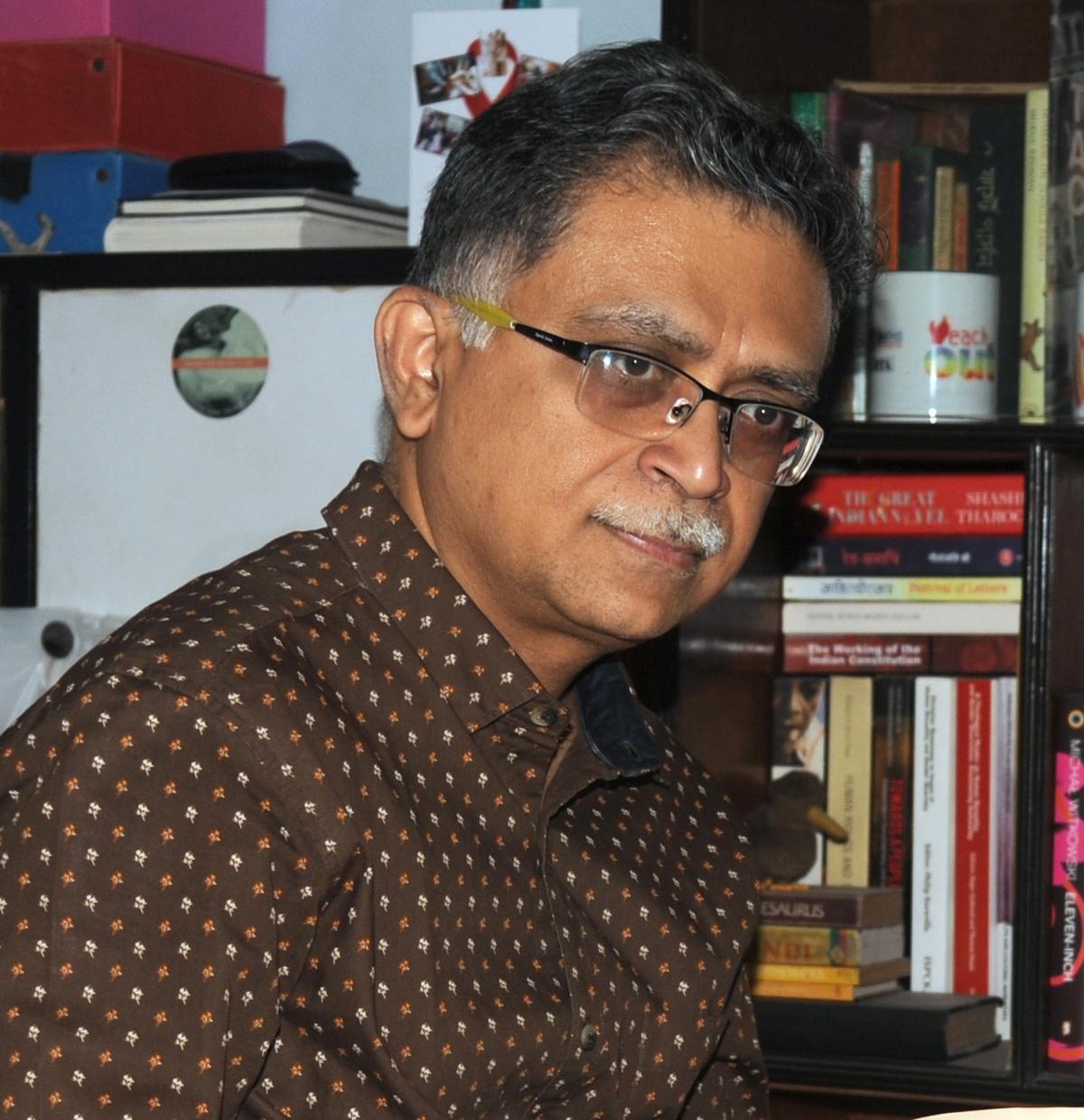
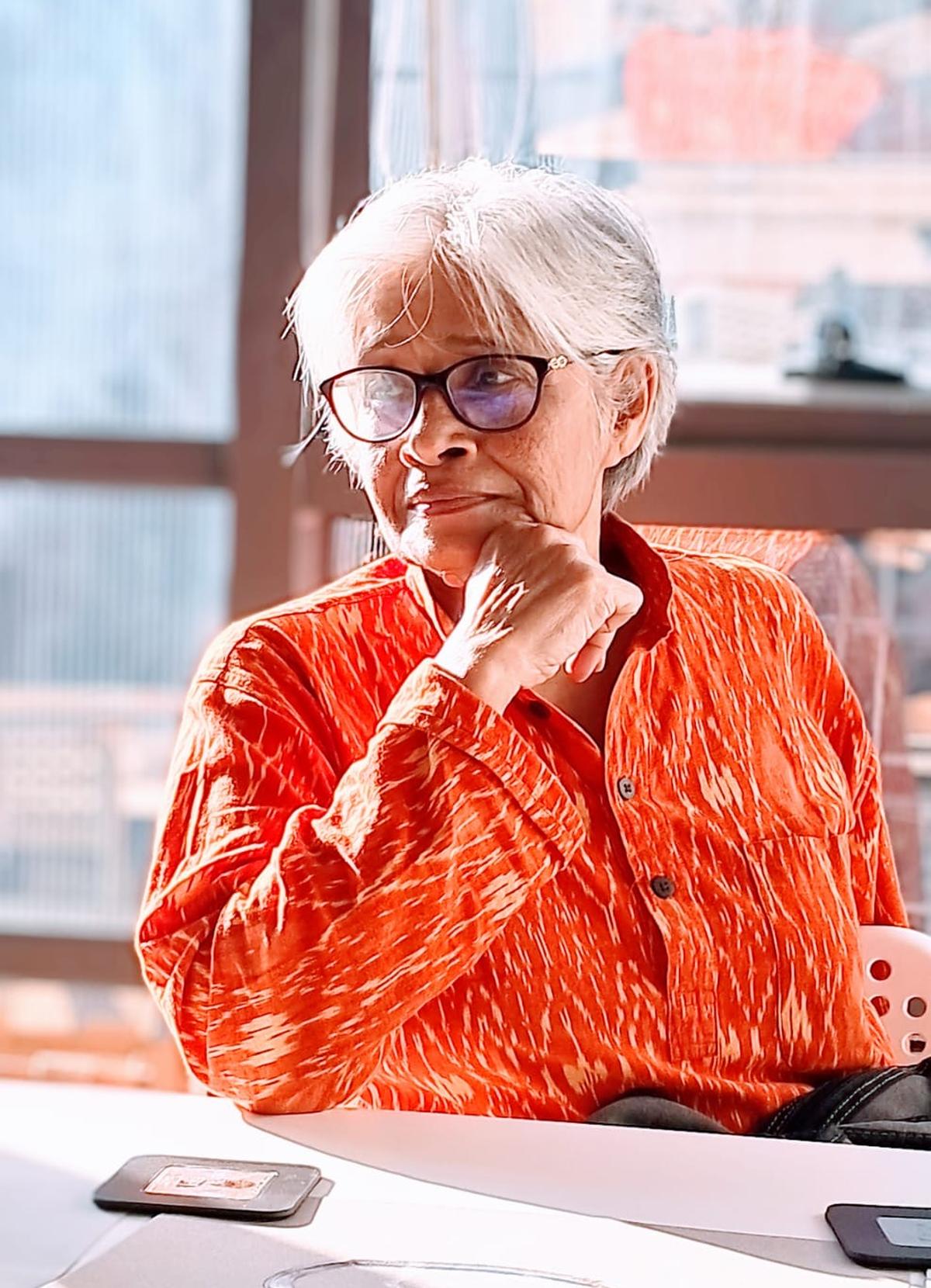
Writer and queer activist Maya Sharma

Writer and queer activist Maya Sharma

Sharma, who runs the Vadodara-based Vikalp, which works with marginalised queer women and transpersons, says she finds the senior living communities in Gujarat limiting. “The way we have been moulded because of our queer identities makes it hard for us to fit into the heteronormative environment of an old-age home. Secondly, many of these places are religion-oriented and many of us have friends and lovers from different religions and castes. So these religion-centric old-age homes are frightening to us,” she says.

Finding chosen families

In the absence of formal support structures, many depend on chosen families. “I have a network of friends who have been with me since college. They are my family,” says Iggy, 51, a production designer in Mumbai. Iggy recently moved from Goa with her partner of 12 years to give her dogs better medical care. She tells me how, while coming out in her 30s, she discovered a “whole new world” of queer individuals. There were groups such as Labia and Gay Bombay in the early 2000s; the queer-run store Azad Bazaar, where the balcony became a community hub, with free coffee; and Gulabi Adda, which held monthly meetup parties that brought a sense of belonging and lifelong friendships.

“It was almost like a renaissance where more queers were out to me visually than they are today,” Iggy says. It helped to create a community that Iggy feels has shifted to online spaces for younger queer people today. Activists believe this may leave out the older lot that is not digitally savvy and unable to access information on resources such as support groups, therapists, sexual health services or simply finding spaces to hang out.

Ageing and transgender persons
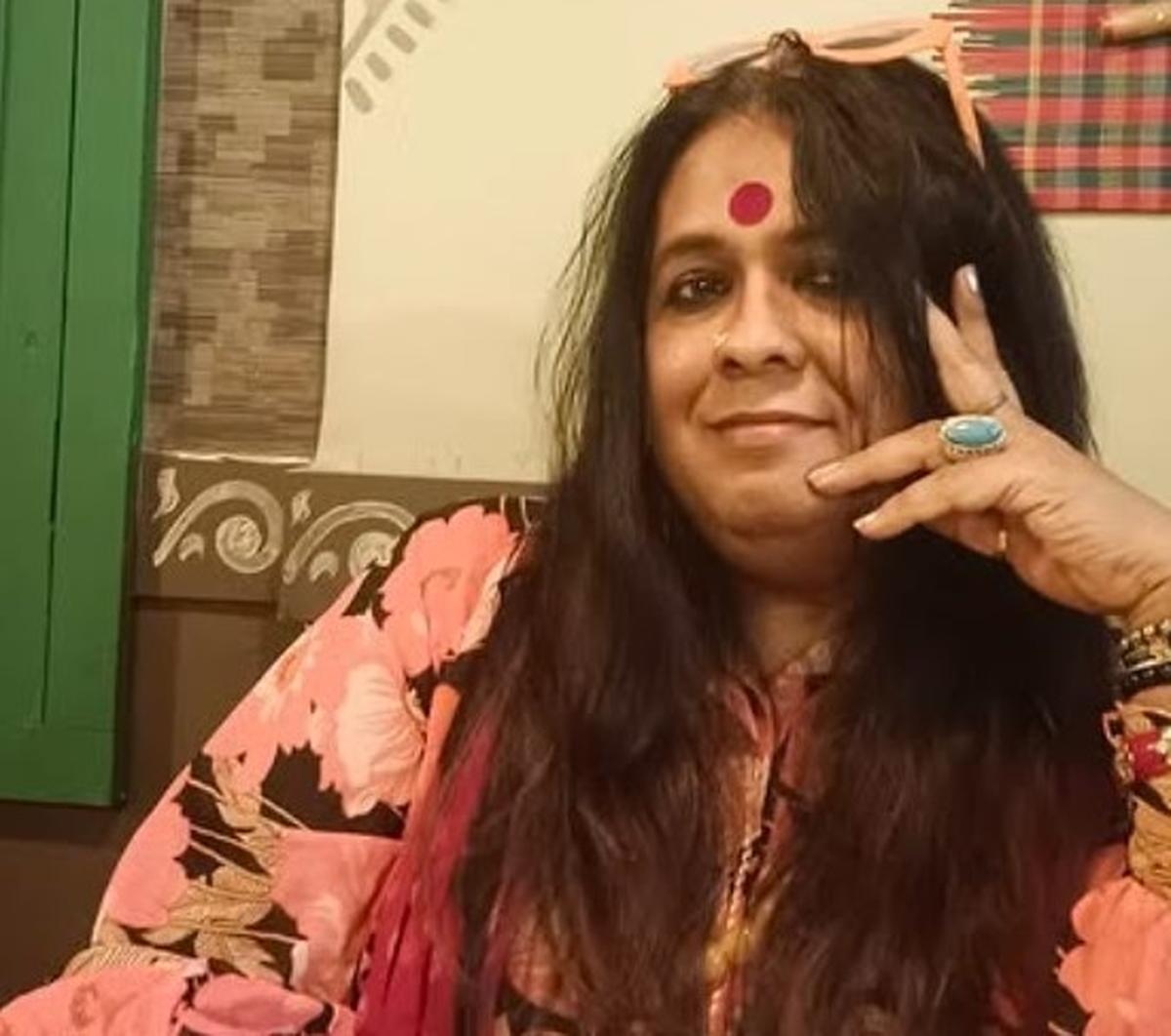
With her big bindi, gorgeously draped saris and bold voice, Ranjita Sinha is a fiery presence in Kolkata’s transgender community. She runs South Asia’s first government-run trans shelter home, Garima Grih. “Transgender individuals face unique medical, social, and legal challenges that cannot be conflated with those of the wider LGBTQIA+ community,” she asserts. Despite the Transgender Persons (Protection of Rights) Act, 2019, and the Ayushman Bharat TG Plus card which promises medical aid, Sinha says access to healthcare remains tough. “No one wants to go to government hospitals. There is no mindset change in the doctors there. Trained doctors are only in the big hospitals, and how many older transgenders can afford the ₹1,000-₹2,000 fees in those facilities?”
There have been promises from the government to establish old-age homes for transgender individuals but nothing has materialised yet. “There needs to be an ecosystem for older trans people. They face huge issues — mental health, post-sex reassignment surgery complications, and sometimes complications from quack treatments. But lack of access to healthcare or family support leaves them in a tough situation,” says Sinha.

That said, Maya Sharma points to the strong support among female queer collectives that are different from the worlds gay men inhabit, perhaps because women’s concerns are different when it comes to stigma and HIV-related issues. They often help trans-masculine and lesbian women from smaller towns who have fled to escape persecution or forced marriages. “A lot of us older women have created advocacy collectives such as Vikalp, Nazariya, or Sappho, and we help them out. But we can’t always help in day-to-day living. That kind of acceptance requires institutional support, which is lacking,” she says.

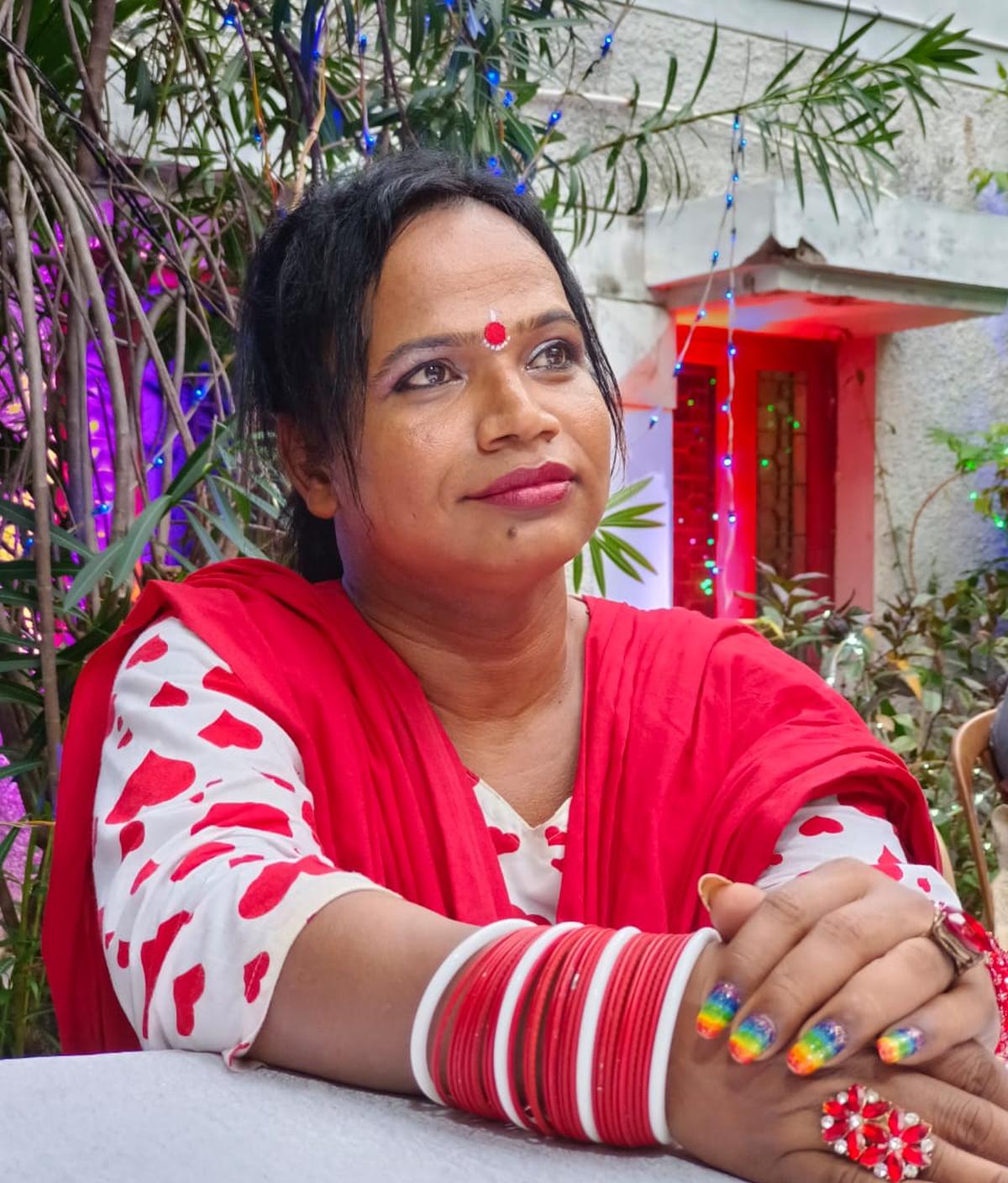
When it comes to older transwomen, the ‘jamaat’ takes care of them. “It’s their chosen family,” says Jaya, transwoman, trans-rights activist and general manager at Sahodaran, a queer rights NGO in Chennai. “The ‘jamaat’ system is a beautiful tradition in Indian transgender communities, where younger transwomen are adopted by older transwomen into a chosen family. As a result, very few older transwomen are homeless or in shelters as most are part of a ‘jamaat’. But even then problems persist,” she says.

Jaya, trans-rights activist and general manager at Sahodaran, a queer rights NGO in Chennai.

Jaya, trans-rights activist and general manager at Sahodaran, a queer rights NGO in Chennai.

Healthcare needs become more pronounced with age. Jaya says that older transgender individuals, aged 70 and above, are hardly visible in the community. She hints at a lack of medical care and good health habits as many fall into alcohol abuse. “Many post-operative trans people report health issues such as back ache and knee pain, likely due to weight issues,” she adds. The lack of doctors trained and sensitised in transgender healthcare is a big worry. Sahodaran is working to change this through awareness programmes among doctors, says Jaya.

In Tamil Nadu, the Chief Minister’s Comprehensive Health Insurance Scheme offers partial cover for medical treatment of transgenders but it works in only a few hospitals such as the Aadhi Parasakthi Hospital in Chennai, says Jaya. The Tamil Nadu government also has a pension scheme that provides a monthly allowance of ₹1,000 to transgender people over the age of 40, who are unable to earn a livelihood.

Many activists agree that the landscape is evolving. Khanna says that a number of people “came out to their families during the marriage equality fight” as it was being livestreamed on national television, resulting in these conversations coming into the mainstream. She admires how courts have provided support and protection to marginalised queer couples across India in the last couple of years. “People with privilege, and banks, organisations and authorities, need to come up with such explicit support to help those without privilege access it. Then, it can be truly empowering.”

The writer is a freelance journalist and the co-author of ‘Rethink Ageing’ (2022).


Source link

When South India spoke Arabic | Trade interactions with Arabs led to the growth of hybrid languages


Languages have become a hot topic in India today, with a battle for linguistic supremacy raging across the country. But to constrain the nation’s linguistic diversity into monolithic grids is an impossible, and ill-advised task. With what would you replace words such as tahsildarjama-bandiasalkhaaliwasool, or jilla?

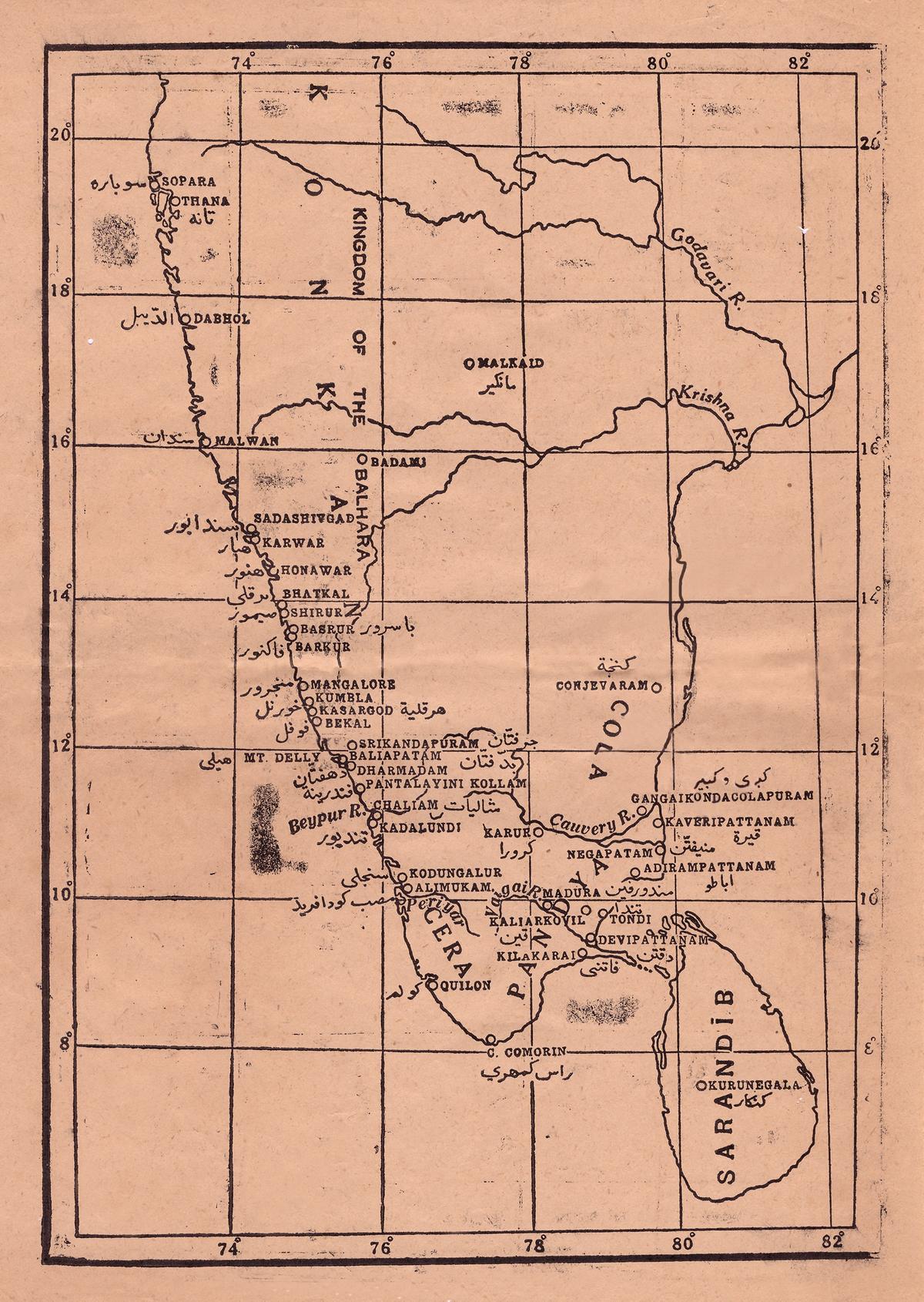
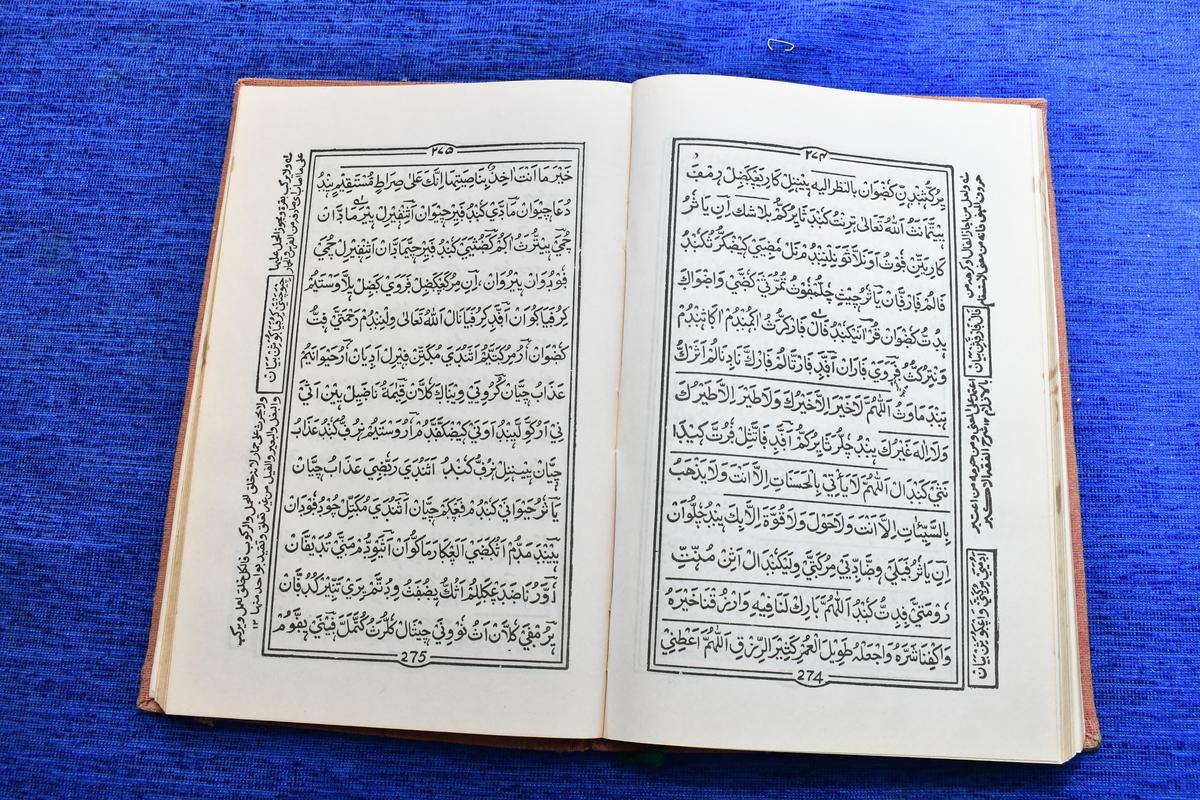
Long before the English language imprinted itself on South Asia’s collective consciousness, there were other tongues that held that position of high esteem. Arabic, Persian and Urdu co-existed and were assimilated into Indian languages in a more intimate way. Interestingly, interactions with Arabs through trade and religious dissemination also led to the growth of hybrid languages such as ‘Lisan ul-Arwi’ or ‘Arabi-Tamil’ (also referred to as ‘Arabu-Tamil’) and ‘Arabi-Malayalam’ — with a canon of published literature and daily correspondence that supported a multicultural society up until the 19th century in southern India. Arabic-influenced vernacular can be seen in Sindhi, Gujarati, Arabu-Telugu and Arabu-Bengali too, to name just a few.

Maritime heritage and flower-shaped poems

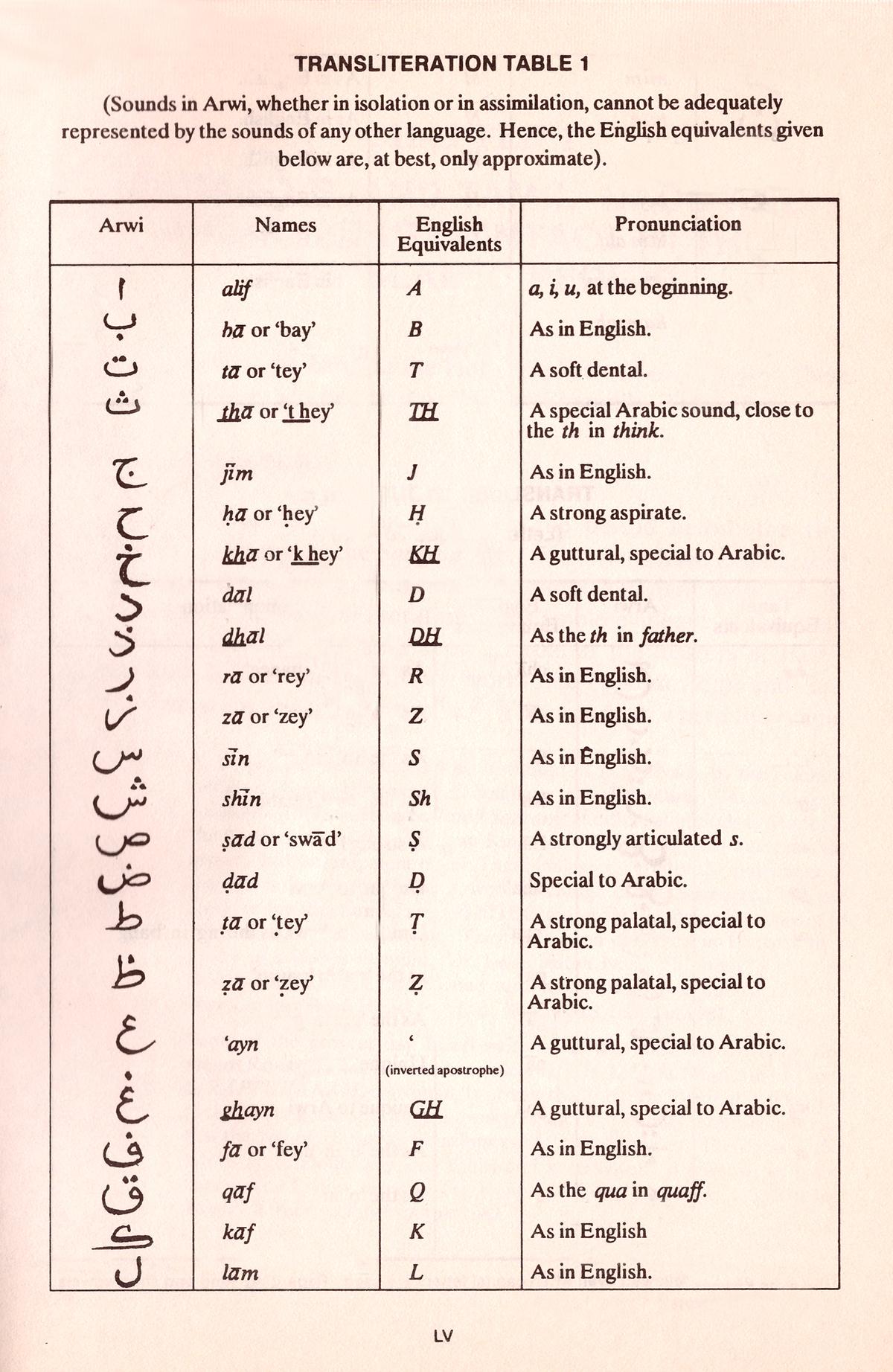
Arwi consists of 40 letters, of which 28 are from Arabic, and 12 are devised by adding diacritical marks that allow Arabic letters to express sounds particular to Tamil. Similarly, the Arabi-Malayalam alphabet has 56 letters.

In its heyday, publications in Arwi covered a wide range of subjects, including architecture, arithmetic, astronomy, fiction, horticulture, medicine, sports, sexology, war manuals, yoga and general literature. Madinattun-Nuhas (Copper Town, 1858), a historical novel in Arwi by Imamul Aras, published in 1858, is credited as being the first work of fiction produced by the Tamil-speaking people. And as scholar Tayka Shu’ayb Alim — the first Tamil Muslim to receive the National Award for Outstanding Arabic Scholar — notes in his book Arabic, Arwi and Persian in Sarandib and Tamil Nadu, Arwi Muslims wrote poems in the shapes of flowers, leaves and geometric figures, known as ‘Mushajjarah’ and ‘Mudawwarah.’ They were inspired by the ‘Nagabandanam’ and ‘Ashtabandanam’ genres of Tamil poetry, which were written in the shape of serpents.

A page from Arabic, Arwi and Persian in Sarandib and Tamil Nadu

A page from Arabic, Arwi and Persian in Sarandib and Tamil Nadu

Over time, these languages became the lingua franca for many Muslim settlements, and as recently as the 1950s, Arabu-Tamil was taught at home to girls and in Arabic colleges as an allied subject. Arabi-Tamil and Arabi-Malayalam played a key role in educating women from conservative Muslim families, at a time when they lived in seclusion.

Retracing a layered past

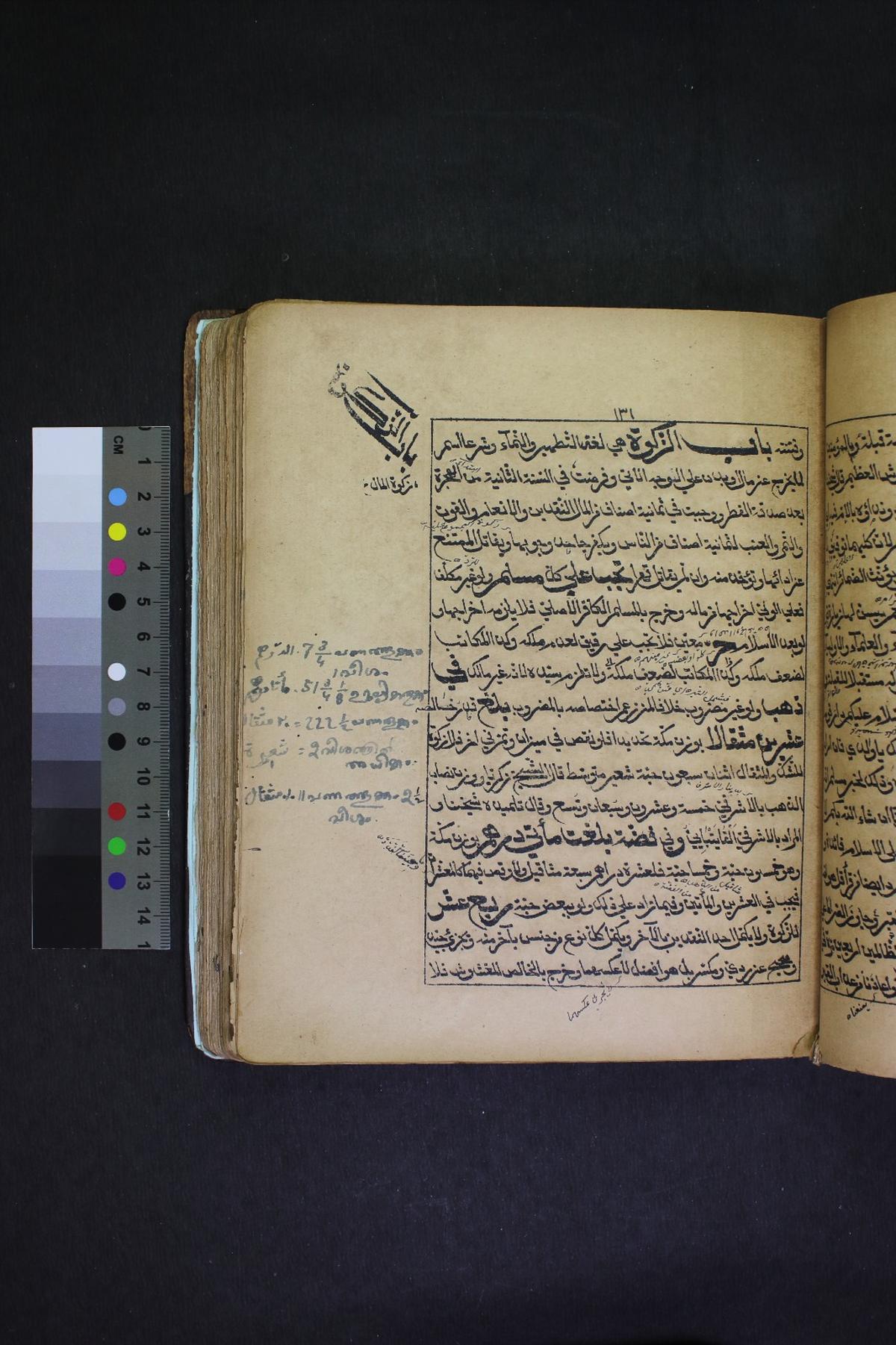
Publications in these languages have become rare today, and can only be found in libraries, seminaries and family collections — where, sadly, many of the owners do not know how to read them. Now, scholars have begun to scientifically document and preserve surviving literature.

Most recent among these efforts is a project for the British Library’s Endangered Archives Programme (EAP) titled ‘Mathematical Practices of the Indian Ocean World in Coastal Islamic Communities of the Coromandel and Malabar, South India’. It was executed by the Centre for Islamic Tamil Cultural Research (CITCR), affiliated to Jamal Mohamed College in Tiruchi, and in collaboration with Kerala’s Mahatma Gandhi University.

Text in Arabi-Malayalam

Text in Arabi-Malayalam

Supported by a grant of £14,926 (approximately ₹16 lakh), the year-long project surveyed and digitised notes, theological texts, printed manuals, marriage registers, publications and textbooks from the 18th century. The documents — sourced from personal collections, religious and social institutions, and Arabic college libraries in the states’ Coromandel and Malabar regions — focus on non-European learning and mathematical practices that are unique to the subcontinent. They are also a repository of ethnic medical knowledge, recorded in the form of songs for easy memorisation.

“You cannot write the history of a community with just stories,” says J. Raja Mohamed, director of CITCR and co-principal researcher of the EAP project (along with professor M.H. Ilias of Mahatma Gandhi University’s School of Gandhian Thought and Development Studies). “You need facts too, because these documents show how our ancestors lived.”

A book in Arabi-Tamil

A book in Arabi-Tamil

Minutiae of the everyday

At a time when there’s a general lack of interest in record keeping and preservation in India, the project is a significant achievement.

Mohamed delved into the Coromandel region, while Ilias looked at Malabar, and their teams, with training from the French Institute of Pondicherry, the project’s archival partner, fanned out along the coastal towns. They retraced 62 printed books, 25 manuscripts, seven notebooks, six documents and four booklets in Arabi-Tamil and Arabi-Malayalam. The digitised versions — EAP 1457 — are available now on the British Library’s website.

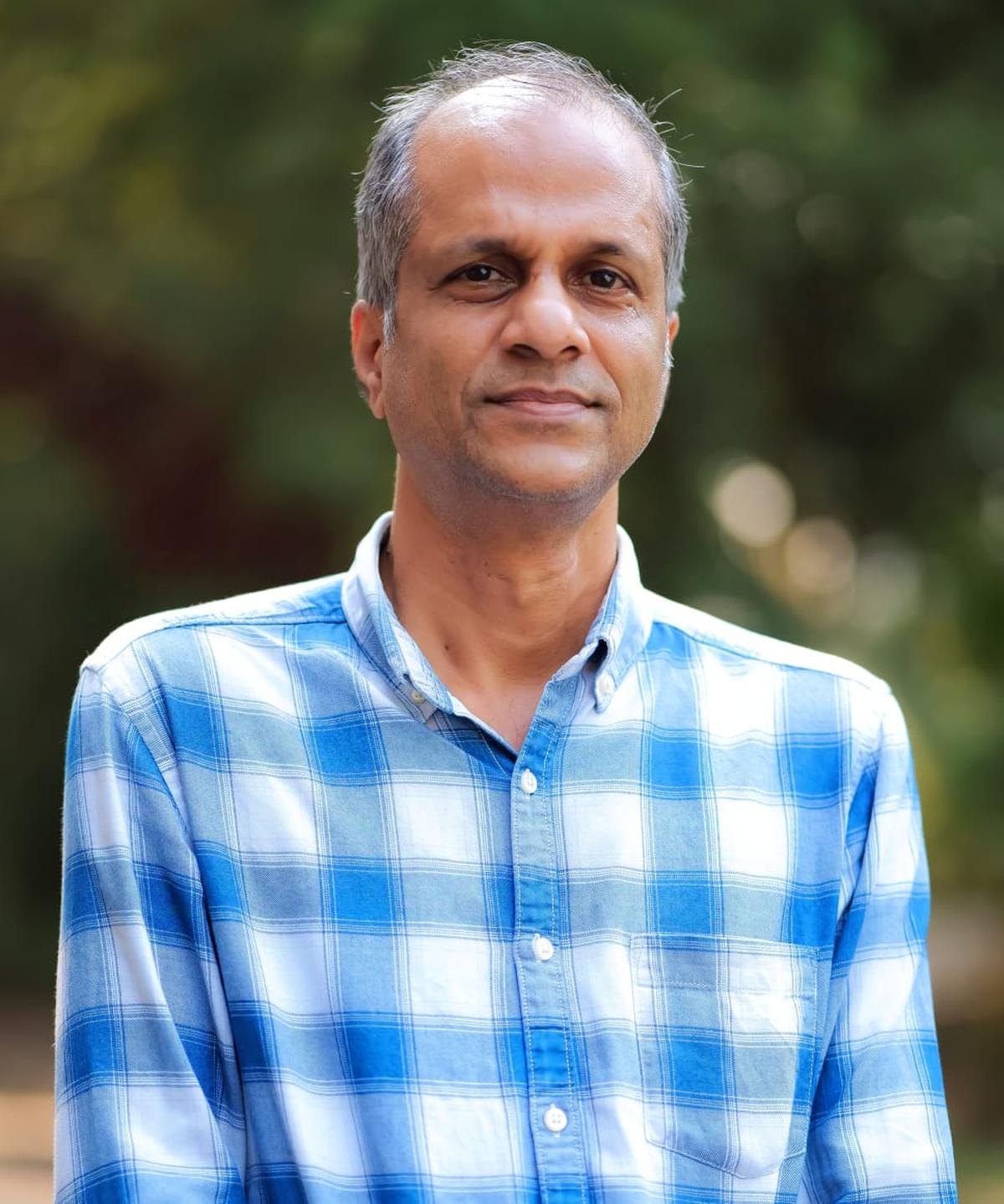
M.H. Ilias

M.H. Ilias

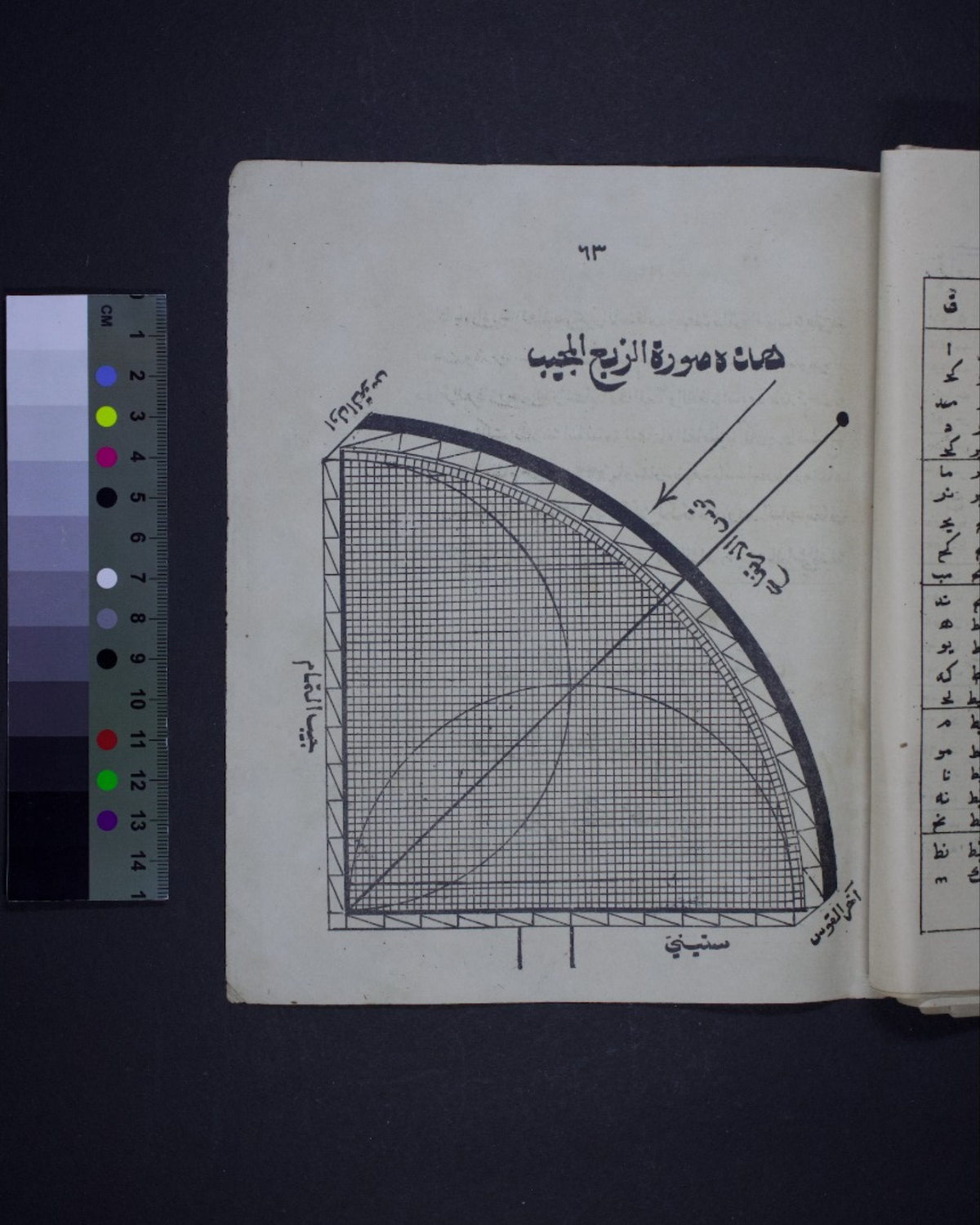
“We found several texts detailing non-European ways of measuring and weighing. They were possibly brought to India by Arab travellers, scholars, and trade-based diaspora,” says Ilias, explaining how the project helped them learn more about the way Muslim communities in these coastal areas lived and worked. “It is an eye-opener to realise that activities like boatbuilding and mosque construction relied on these measurements, and are still in use in certain regions.” As examples, he cites ‘kullam’, which is still used to calculate liquid measures, and amshik, the five-stroke method of counting, prevalent in local markets. In Malabar, boatbuilding continues to use the calculation system of marakanakku (measure of wood).

Measurements in Arabi-Malayalam

Measurements in Arabi-Malayalam

The widespread usage of Arabi-Tamil, especially among Muslim women, could be seen, too. “We found various guidance booklets, and a collection of poems and folk songs on Islamic themes, indicating that the language was being taught to and read by Muslim women,” adds Raja.

Ilias remembers his grandmother being a prolific writer of Arabi-Malayalam poems. “Whenever she prepared Ayurvedic home cures, she would sing the Arabi-Malayalam recipes. Literacy in the language was a mark of prestige for Muslim women in Kerala, just as Arwi was for Tamil Muslim women,” he shares. “Sadly, when the Kerala government began its campaign for total literacy in 1990, my grandmother was assessed as ‘illiterate’ because she knew only Arabi-Malayalam.”

Quran in Tamil

There were some serendipitous finds too, such as a copy of the first volume of the Tamil translation of the Quran by A.K. Abdul Hameed Baqavi. Published in 1929 (volume 1) — its printing backed by the founders of Jamal Mohamed College in Tiruchi — the Tamil Islamic scholar’s effort, titled Tarjumat-ul-Quran bi Altaf-ilbayan (Translation of the Quran with a Glorious Exposition) was eventually completed in 1949, in a marathon effort that took two decades. “We had heard about the book, but this was the first time that we saw a physical copy and read the translator’s foreword, which gives details about the pioneering effort,” says Mohamed.

For Ilias and his team, the Malabar region also yielded several intriguing documents in Arabic, Malayalam, Arabi-Malayalam and Persian. “Our most interesting discoveries were the weighing and measuring techniques. They are still used extensively in Kerala, especially by the Mapilla Muslims,” says Ilias. 

Hope for rare publications

Despite the wealth of documentation unearthed, the project also proved to be arduous. “Quite a few books, especially in the libraries of educational institutions, were disintegrating because they had been stored haphazardly in musty rooms,” says Mohamed.

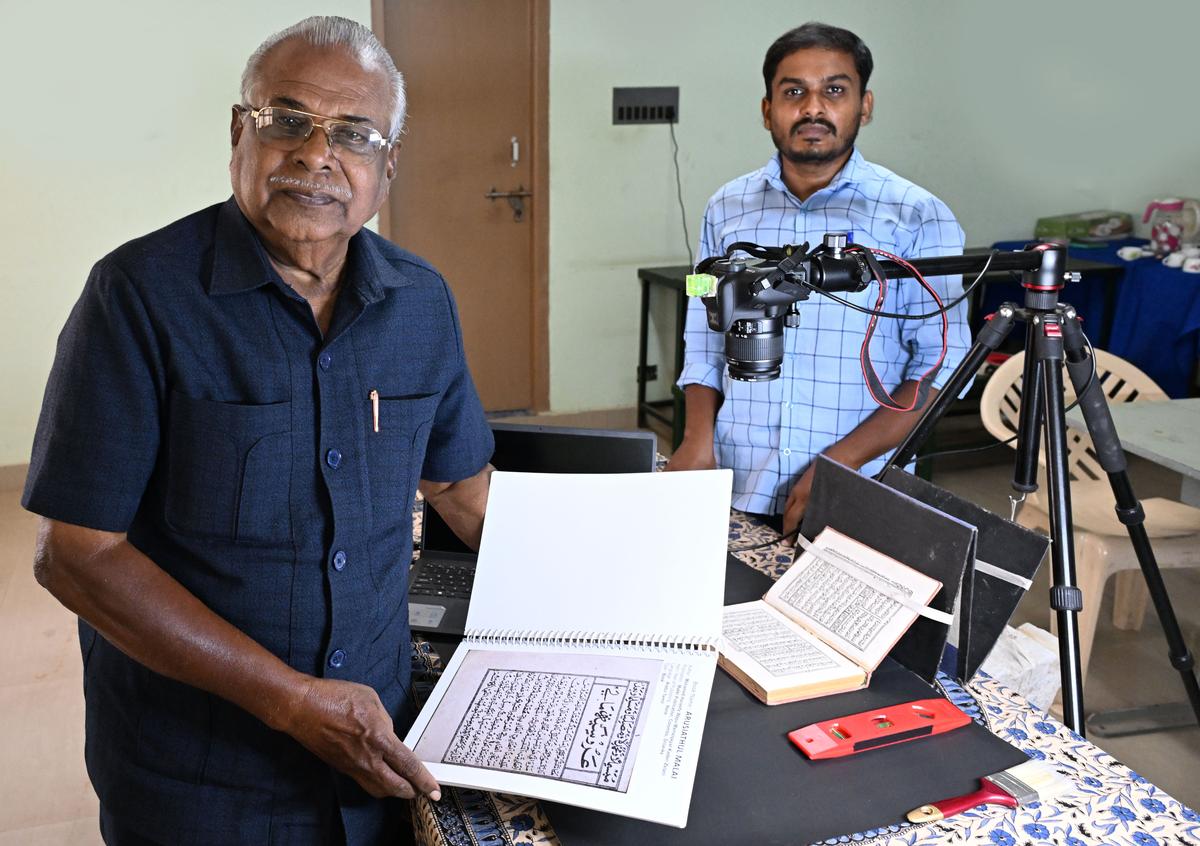
Raja Mohamed and his assistant working on the digitisation of Arabi-Tamil manuscripts

Raja Mohamed and his assistant working on the digitisation of Arabi-Tamil manuscripts
| Photo Credit:
M. Moorthy

In the case of personal collections, lack of knowledge about their own antecedents proved to be problematic. “Myths of origin and hearsay cannot be treated as historical fact, but that is what most people recounted. This is one of the reasons why it has become difficult to write an accurate history of Tamil Muslims today,” he adds. Some also developed cold feet, rescheduling viewing appointments umpteen times or flatly refusing to show their documents.

While similar problems were prevalent in the Malabar region too, Ilias is encouraged by initiatives to bring the outmoded Arabi-Malayalam into the modern era. “The University of Calicut’s C.H. Mohammed Koya Chair for Studies on Developing Societies has recently introduced a Unicode for Arabi-Malayalam that could help us recover more documents through computerisation. It gives us hope that rare publications in other dialects like Hebrew-Malayalam and Syriac-Malayalam will also get preserved eventually,” he concludes.

nahla.nainar@thehindu.co.in


Source link

How community staples are inspiring Mumbai menus


“It’s written in the wind.” The saying holds significance to the Kolis. This ancient fishing community, endemic to Mumbai and its neighbouring coastal villages, calibrates the various characteristics of the sea breeze — its speed and direction to even its smell and salty taste — as harbingers. Crucial decisions are made based on it: when to head out into the Arabian sea in their colourful wooden boats; and when to return to shore, fishing nets laden with a bounty of lobsters, tiger prawns, squids, and, if lucky, iridescent silver pomfrets. The last one is the star of the Koli mejwani (feast).

With Kolis as their inspiration

You’ll find Kolis around Worli Fort. Historical conjecture has always shrouded the origins of this central Mumbai landmark overlooking Mahim Bay. It is often erroneously assumed to be a vestige of the island city’s Portuguese colonial past, but it was built around 1675 by the British. Today, the fort is flanked on either side by a sizeable hamlet made up mainly of fisherfolk.

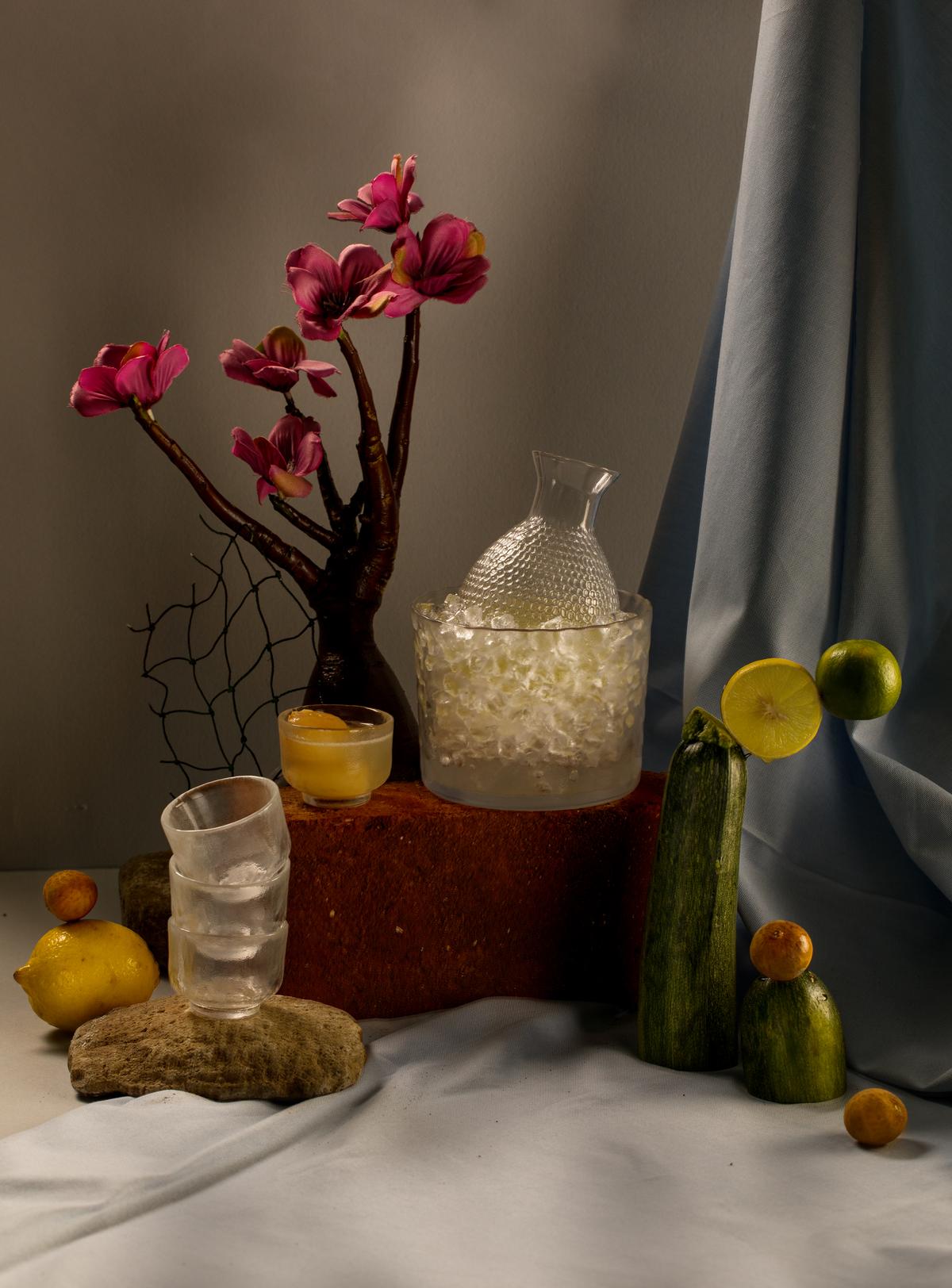
Called Koliwada, it is also where one can find Slink & Bardot. The restobar sits cheek-by-jowl to every possible fishing accoutrement, from beached trawlers to yardages of nets. Inside, perfectly augmenting this seemingly incongruous, yet harmonious coexistence, is Koli Echoes, one of their signature cocktails. Made with sake, vodka and green botanicals, it is a refined riff on the Koli community’s penchant for a tipple of toddy.

Koli Echoes

Koli Echoes
| Photo Credit:
Assad Dadan

The cocktail shares bar top space with other neighbourhood-inspired libations such as Sunset at Slink, and Coast Guard’s Brew. The latter is a vodka-based, milk-washed coffee and ghee cocktail that’s named in honour of the nearby Coast Guard station and the bar team’s interactions with the hardworking men who are always drinking coffee to stay awake.

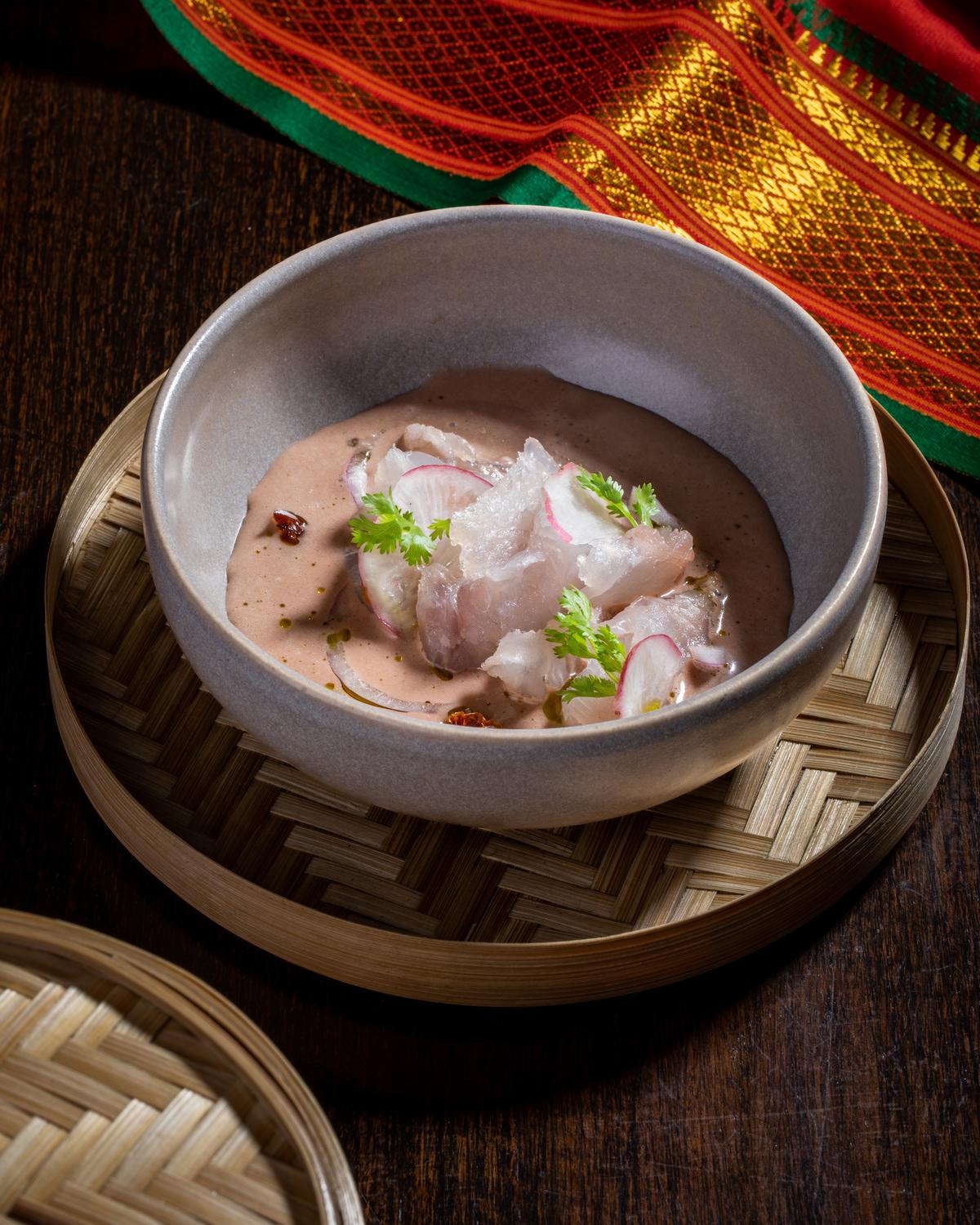
The cocktail menu serves as a corollary precursor to the restobar’s seven-course tasting menu. It features a seafood heavy procession of dishes, including a Barramundi Ceviche with Solkadhi. Executive chef AliAkbar Baldiwala shares that it is an ode to the Koli community’s fondness for the fish and the blushing pink solkadhi sauce with tart kokum.

Barramundi Ceviche with Solkadhi

Barramundi Ceviche with Solkadhi

Nauvaris [nine yard saris], fish and colourful boats — we took inspiration from it all, but mostly from the Koli fish thali,” he adds. “There are courses inspired by traditional rawa-crusted fish fry, besides a curry [called an akha mhawra kalvan] where we use the whole fish, which is very intrinsic to Koli weddings.” The close proximity to Koliwada home kitchens helped the team infuse some authenticity into the dishes.

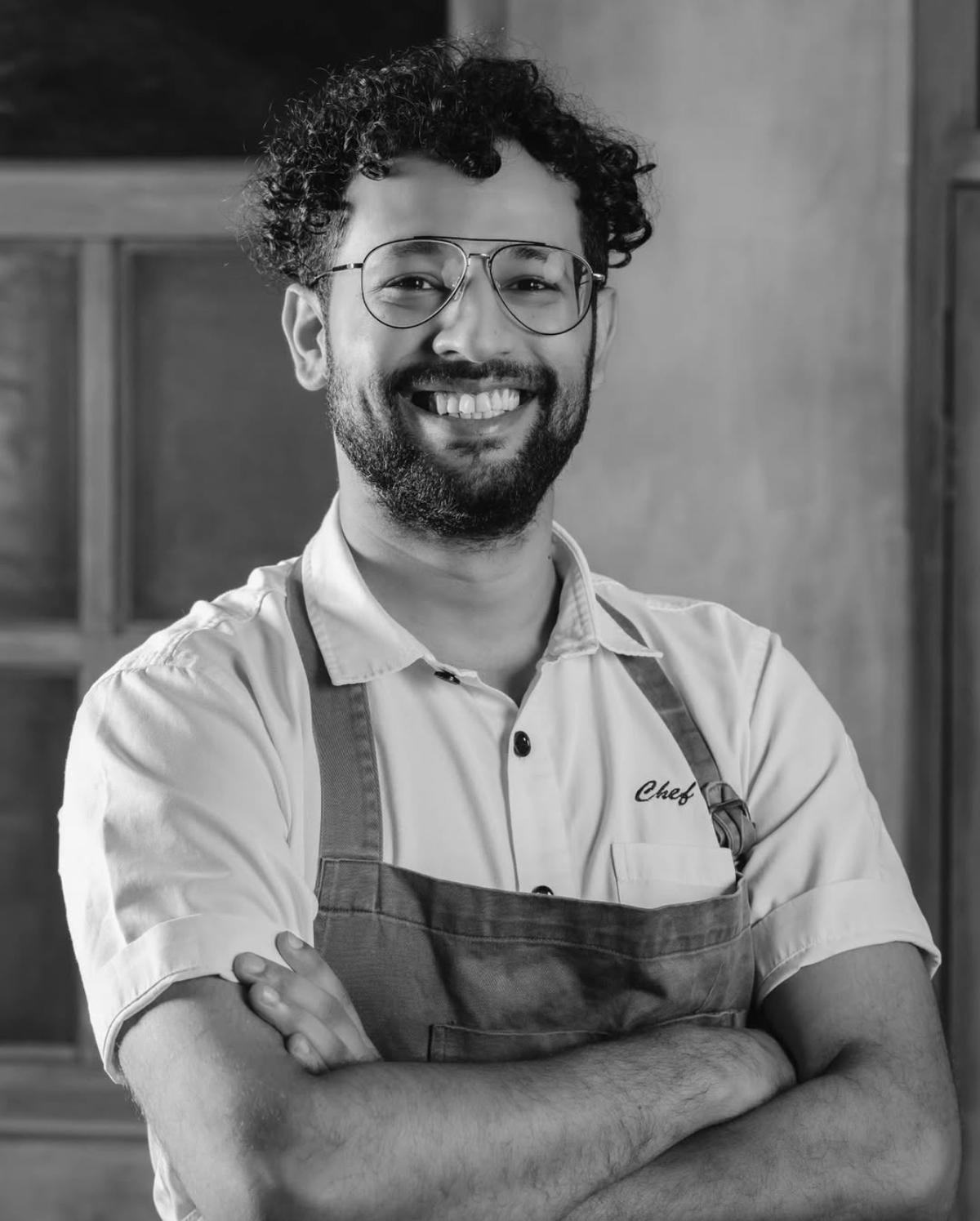
Chef AliAkbar Baldiwala

Chef AliAkbar Baldiwala

Breaking bread in Bandra

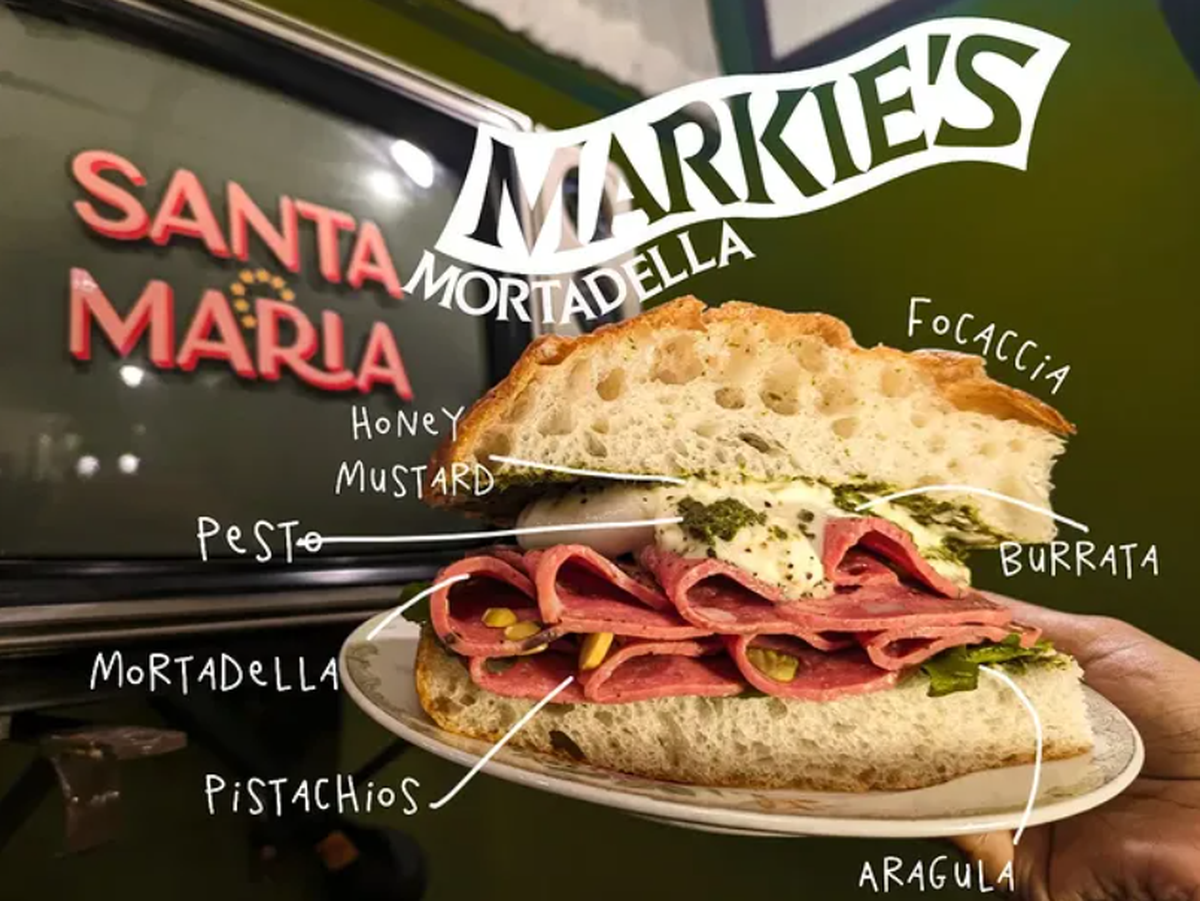
Just like Slink & Bardot, there’s a spurt in restaurants across Mumbai paying homage to everything from micro communities and local neighbourhoods to iconic street food. As one of Mumbai’s newest sandwich shops, Santa Maria in Ranwar is a tribute to the village (one of nine original Bandra villages). The menu also pays homage to local athletes and residents. For instance, the Markie’s Mortadella, a pesto-slathered focaccia bread sandwich with pistachio nut-studded pork mortadella, is named in honour of international para badminton player and local “Bandra boy’ Mark Dharmai.

Markie’s Mortadella

Markie’s Mortadella

For more meat, there’s Ranwar Square, with a bounty of sliced salami, mortadella, pepperoni, and bacon — and a tribute to the many Christian family-run cold cut stores that dot the area. The meat is used as part of the stuffing for typically East Indian dishes such as whole roast suckling pig, a celebratory dish in local Catholic homes.

Another iconic food landmark here is Elco Pani Puri. Morphing over the years from a pavement-side kiosk to a multi level restaurant, this chaat shop now finds its famous samosa chaat and patti samosa a part of Taj Lands End hotel’s ‘The Bandra Trails’ high tea. Curated by chef Rohit Sangwan at Atrium, the afternoon tea service features a cornucopia of Bandra-centric street food, such as the flaky lamb mince-stuffed patties found at old Catholic bakeries such as Cafe Andora and J. Hearsch & Co. Sangwan says he visited a number of his “favourite eateries and bakeries in the locality to scope out ingredients and techniques”.

The Bandra Trail

The Bandra Trail

Hat-tip to Baghdadi Jews

Bringing to the city plaited challah bread slathered in a butter flavoured with a Baghdadi Jewish-style saluna sauce is the Jazz & Sassoon pop-up menu at Smoke House Deli’s Colaba branch. Inspired by the bustling Jewish community-established Sassoon Docks, it features several homage dishes. “Each dish boasts the day’s catch, prepared to reflect Baghdadi and Jewish culinary traditions that have influenced Colaba’s historic palate,” says executive chef Rollin Lasrado.

Challah bread slathered in a butter flavoured with saluna sauce

Challah bread slathered in a butter flavoured with saluna sauce

He distilled this into his capsule menu by speaking with Jewish chefs both in and out of India, and sending his team to meet local Jewish people who still live in places like Kala Ghoda. “We were particularly intrigued by how they make the dough for traditional Jewish breads such as challah, which is only made for the Jewish New Year called Rosh Hashanah as it is a leavened bread. We adapted the recipe to make the loaf softer and more pliable to appeal to a larger diner base,” he says.

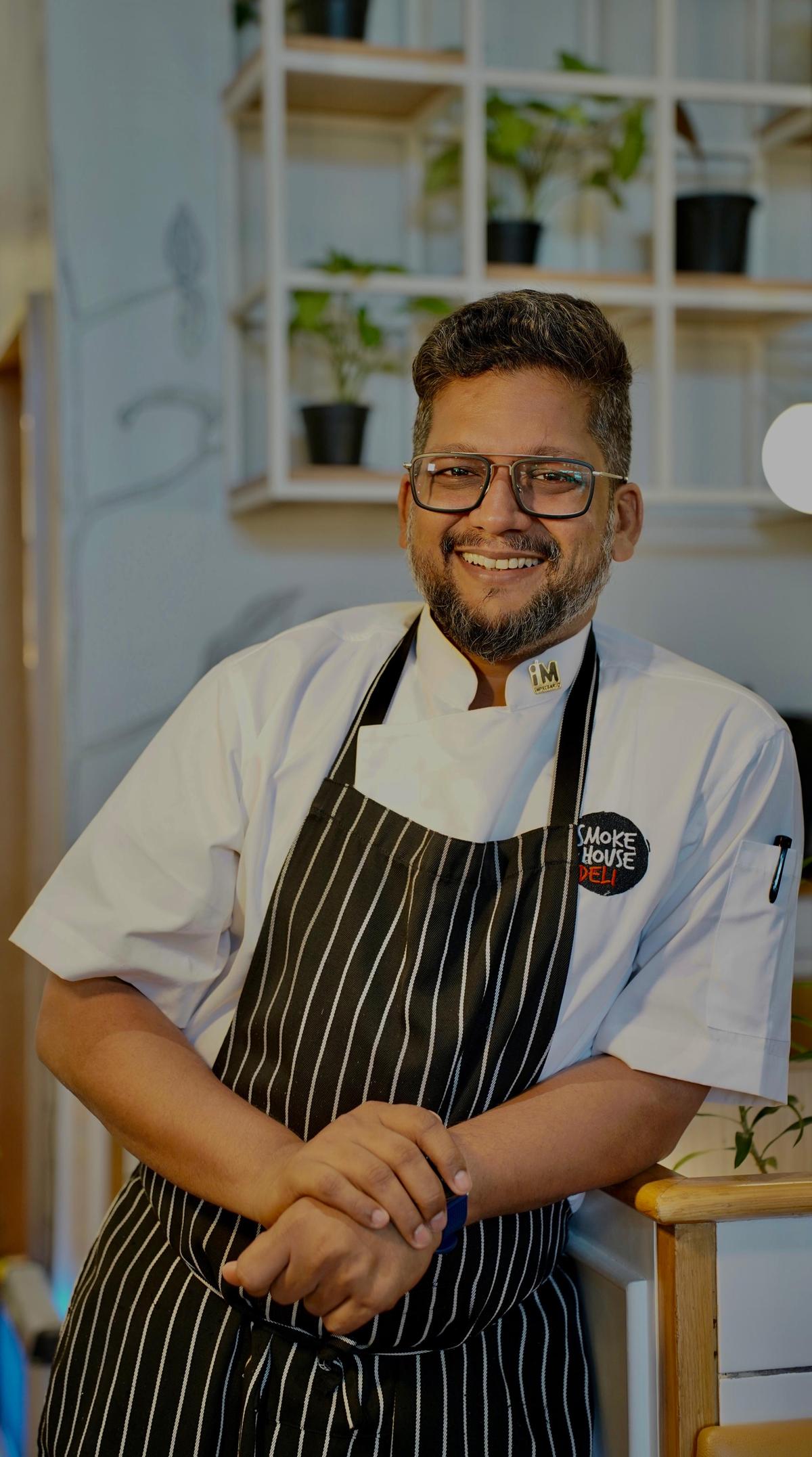
Chef Rollin Lasrado

Chef Rollin Lasrado

The nearby Baghdadi restaurant, too, was a source of inspiration, especially for getting the saluna sauce right, he adds.

Dadar’s seafood market

Cirqa circles back to the Kolis. Housed in the repurposed Todi Mills — one of the many former working mills that once dotted Lower Parel — the menu features a number of seafood dishes. Each referencing, not just the Koli community, but also the nearby seafood market in Dadar. A warren of alleys that is transformed during the monsoon into a market selling dried fish.

B.F.F.

B.F.F.

“At Cirqa, we love to play around with flavours and cooking styles drawn from the city’s various communities,” says owner Pankaj Gupta. “For B.F.F. [Bombay Fried Fish], we primarily use bombil, which can be found at the market.”

Pankaj Gupta

Pankaj Gupta

Interestingly, a non-seafood dish, Miya Bhai Bolognese is the perfect reflection of Mumbai’s syncretic spirit. Influenced by the Muslim community dominated neighbourhood of Bhendi Bazaar, this one sees spaghetti topped with a local touch of the unctuous mutton kheema sauce. The dish is served with nigella seed-speckled khamiri bread, which is a staple at scores of bakeries in and around the Bhendi Bazaar area.

Miya Bhai Bolognese

Miya Bhai Bolognese

Imitation, they say, is the ultimate form of flattery and one that finds itself manifesting as inspiration for dishes and drinks that hope to recreate the magic of Mumbai’s past. One sip or bite at a time.

The Mumbai-based writer is passionate about food, travel and luxury, not necessarily in that order.


Source link