






Life & Style

FICCI FLO works on contemporary reimagining of Toda embroidery and jamakkalams


The Toda threads and jamakalam revowen showcase by FICCI FLO

The Toda threads and jamakalam revowen showcase by FICCI FLO
| Photo Credit: R Ravindran

India’s rich array of crafts and the artisans behind it all  have countless stories to weave. 

Take P Sakthivel from Bhavani near Erode, for instance. He is the third generation from his family to be engaged in the art of weaving jamalakkalams but today, the circumstances of his business have changed, he says. “Powerlooms have taken over and there are fewer people now who are making jamakkalams the traditional way,” he says.

Anuradha Halan, who has been working with Toda artisans from the Nilgiris, has much to say about about watching the pioneering work of her mentor Evam Piljen Wiedemann, and how she popularised the Toda embroidery. 

Vharsha Raheja, Arti Bagdy and Nabila Avais

Vharsha Raheja, Arti Bagdy and Nabila Avais
| Photo Credit:
R Ravindran

In a bid to honour these crafts, as well as work on a contemporary revival of their artistry through design interventions, the handloom and textile vertical of the FICCI Ladies Organisation (FLO), has been working for over a year now with two projects focussed on Toda embroidery and jamakkalams. The initiative aims to take it to a larger audience. 

Cushion covers and potli bags with Toda embroidery

Cushion covers and potli bags with Toda embroidery
| Photo Credit:
R Ravindran

“We began these projects, Toda Threads and Jamakkalam Rewoven, by understanding what the challenges faced by the communities working on creating the textiles were,” says Arti Bagdy, head of the textile and handloom vertical of FICCI FLO. Arti and committee members Vharsha Raheja and Nabila Avais, have been working on empowering these artisans through design interventions to suit evolving contemporary tastes and styles. 

“While Toda embroidery is featured predominantly on shawls, we have created an entire range of home furnishings with their distinct red and black embroidery on white. This includes cushion covers, table runners and coasters,” Arti says. The large jamakkalam, a traditional hand-woven carpet often in dark red, green and blue has taken shape as smaller, more contemporary rugs that can be used in homes as opposed to larger spaces. The distinct jamakkalam stripes also feature on cushion covers and coasters as a part of this capsule collection. 

“The Toda community is extremely small and among them, less than 350 women in the Nilgiris work on this unique embroidery. Despite the craft having a GI certification, we are seeing outsiders trying to replicate this without engaging with the Toda artisans,” Anuradha says. The Toda Threads project however, she says, has engaged directly with the women artisans who are extremely enthused by the response to these design interventions, she adds.  

Cushion covers and jamakkalam rugs

Cushion covers and jamakkalam rugs
| Photo Credit:
R Ravindran

Sakthivel, who has been working on the jamakkalam project agrees that the newer designs and colours seem to have international appeal. “People have always loved the old-school jamakkalam patterns so it is no surprise that they want a version of this in their homes today,” he says. 

As part of the Toda Threads initiative, FICCI FLO also collaborated with designer Tarun Tahiliani, to showcase the versatility of Toda embroidery in contemporary fashion last July. 

Divya Abhishek, chairperson of FLO Chennai describes this initiative as the perfect blend of tradition, innovation, and empowerment. “With a dedicated team and the artistry of our craftspeople, we are showcasing Tamil Nadu’s textile heritage to the world in a way that is both meaningful and relevant,” she says. 

Arti says that it is important to underscore the significance of these crafts, and for the global community to embrace the rich legacy of textile heritage this contributes to. “While these designs have been showcased at our meets and have found favour among our members across the country, we have bigger plans as well. We hope to set up dedicated channels to take these directly to the customers — through a website as well as in stores,” she says. 


Source link

Aston Martin Vanquish makes its India debut


Aston Martin Vanquish

Aston Martin Vanquish
| Photo Credit: Special Arrangement

The Aston Martin Vanquish stands as a pinnacle of automotive craftsmanship, blending breathtaking design with exhilarating performance. Limited to just 1,000 units globally, this exclusive grand tourer is a statement of luxury and power. While the exact number allocated for India remains unknown, it is expected to be in single digits, given its significant price tag.

The exterior of the Vanquish is a seamless blend of artistry and aerodynamics. Aston Martin’s signature design language is evident in its sculpted lines. A lightweight yet strong chassis and bespoke finishes elevate its exclusivity. The vehicle exudes timeless elegance while maintaining an unmistakable sporting character.

Interiors of Aston Martin Vanquish

Interiors of Aston Martin Vanquish
| Photo Credit:
Special Arrangement

Under the hood, the Vanquish houses a formidable 5.2-litre twin-turbo V12 engine with water-to-air charge cooling, delivering an astonishing 835PS at 6,500rpm and 1,000Nm of torque at 2,500 – 5,000rpm. This powerhouse is paired with an advanced eight-speed automatic transmission, ensuring rapid yet smooth gear shifts. The Vanquish is capable of sprinting from 0-100 km/h in 3.3 seconds, with a top speed of 345kmph. Precision engineering ensures that every aspect, from acceleration to handling, is finely tuned for performance enthusiasts. The advanced suspension system and state-of-the-art transmission provide a balance between comfort and high-speed agility, making it a true grand tourer.

Step inside, and the Vanquish reveals an interior that embodies luxury and sophistication. The cabin is a masterclass in opulence, featuring premium hand-stitched leather, carbon fibre accents, and an intuitive driver-focused cockpit. The infotainment system is equipped with a high-resolution touchscreen, offering seamless smartphone connectivity via Apple CarPlay and Android Auto. A premium sound system, customisable ambient lighting, and advanced driver assistance features further enhance the experience. The ergonomic seats, crafted for both comfort and support, ensure long-distance journeys remain effortless. The Vanquish also offers advanced climate control, digital instrumentation, and a suite of connectivity features, making every drive an immersive experience.

Aston Martin Vanquish

Aston Martin Vanquish
| Photo Credit:
Special Arrangement

With only 1,000 units available worldwide, the Aston Martin Vanquish is more than just a car — it is a collector’s dream, a rare fusion of art and engineering that exemplifies the brand’s storied legacy. For Indian enthusiasts, securing one will be an extraordinary feat, making each unit in the country an ultra-rare automotive treasure.

The Aston Martin Vanquish is an extraordinary machine that represents the pinnacle of British automotive excellence. With its breathtaking design, exhilarating performance, and ultra-exclusive status, it stands as a testament to the brand’s commitment to craftsmanship and innovation. Whether admired from afar or experienced on the road, the Vanquish remains a symbol of luxury and performance that few will ever have the privilege to own.

The Aston Martin Vanquish carries a hefty price tag of ₹8.85 crore, making it one exclusive purchase!

Motorscribes, in association with The Hindu, brings you the latest in cars and bikes. Follow them on Instagram on @motorscribes


Source link

Viraj Sheth on his hunt for India’s next big creators, and what will make you tick online in 2025


It has been weeks since Viraj Sheth posted a clarion call of sorts on Instagram, announcing his search for the next big creator in India. His team has still been going through the responses they received. 

The announcement by the CEO and co-founder of Monk Entertainment — a creative digital media organisation, started in 2017, which represents a host of familiar faces you might have seen online including creators Niharika NM, Komal Pandey, Nancy Tyagi and Yashraj Mukhate — received over 49,000 responses. These were from beauty content creators, crochet enthusiasts, nutritionists, food vloggers, architects, photographers, singers, parenting experts, and more.

His motivation, Viraj tells us, is very simple. “We have been doing this for seven years and I feel like now is the time to start giving back. While we always sign on popular talent we can groom and take to the next level, we have not really worked with content creators from scratch,” Viraj explains. 

Over the last few years, influencers or content creators with an engaged following on social media have taken over the our mobile screens. They might talk about anything; food, fashion, politics, sports or tech, but are most importantly, an essential part of marketing, given their solid, sizable audiences. 

Amidst constant chatter about the relevance of influencers, and if the influencer economy is dying, the need to become ‘someone’ on the Internet seems to be well and truly alive. Viraj recalls how companies were wholly unfamiliar with terms such as influencers and the creator economy, when he started in 2017, but says times have now certainly changed. In his announcement, Viraj declares that the influencer marketing industry is going to be worth ₹7,000 crore in 2025. 

Fashion, beauty, podcasting, food, and technology are Viraj’s top five genres that he says are highly rewarding given how most consumer brands exist in these spaces. “These brands are the ones actively spending on marketing through influencers,” he says.

“I don’t think this market is saturated by any means,” Viraj adds. And he is preaching to a generation that is well and truly addicted to the endless stream of reels. “We are a country of a billion people, and there is always more room for creators, and there are millions of brands that actively want to work with these creators. Which creators will flourish, however, depends on who is authentic and creating the right kind of content,” he says. 

A virtual hit

So what should you be doing to be that ‘someone’ on the Internet in 2025? Viraj firstly has some news for us, that lays to rest some cloying trends. “This is going to be the year of people abstaining from creating over-the-top videos with trending and dramatic music. This next big wave will have people only strictly wanting to connect with accounts that truly resonate with what they are thinking,” he says. 

He also predicts that it will be time for actual skill and subject experts, who are often camera shy, to finally get in front of the camera. “There will be a focus on people who have done or built interesting things offline or have a certain kind of expertise. Earlier, people became creators first and subject experts later. Now there will be a flip of the same, and these people will take over, and build communities around their expertise,” Viraj explains.

The AI conundrum

With AI influencers now becoming a thing, Viraj emphatically states that there is no way he sees AI influencers and creators replacing humans online anytime soon. 

As someone who is chronically online, Viraj says it has become quite easy to spot these profiles as well. “There is a classic dead-eye stare, or even blurry movements,” he says. 

“Our basic physiological needs include the need for human connection, and to engage with people who have similar thought processes, likes and dislikes — an experience that only humans can provide. Having AI take over the creator space is dangerous, and I hope that online platforms come up with the right kind of safety measures to protect its users,” he says. 

For India’s next big creators, they are hoping to discover and mentor three creators. “We have stipulated a minimum time frame of one year that they need to work with us. We want to give them the right resources, and give them wings to grow and solidify their online presence,” he adds. 

So while dramatic declarations are made quite periodically by people about how creator culture will soon be dead, Viraj begs to differ. “The influencer marketing industry cannot die overnight especially given the economics of it all,” he says. “People are not going to instantly stop doom scrolling, and if Instagram does disappear, there is definitely going to be a new platform that will take over.”


Source link

Boating launched in Sanna Kere in Yadgir


Visitors taking a boat ride after the launch of the service at Sanna Kere in Lumbini Garden of Yadgir on Monday.

Visitors taking a boat ride after the launch of the service at Sanna Kere in Lumbini Garden of Yadgir on Monday.
| Photo Credit: SPECIAL ARRANGEMENT

The district administration, the Zilla Panchayat, the Tourism Department and Bengaluru-based Vinyog Ventures Private Limited have jointly launched boating facility at Sanna Kere, located in Lumbini Garden in Yadgir city.

MLA Channareddy Patil Tunnur inaugurated the facility on Monday.

“There are four types of water boat facilities in which visitors can travel. One each of kayaking, bumping, general and rafting boats are available for visitors. Visitors of all ages will find something to their liking,” Mr. Tunnur said.

Yadgir CMC Chairperson Lalita Anapur has said that it was the dream of citizens to travel in boats. “The dream has come true. The citizens should make use of the facility,” she said.

Assistant Director in the Tourism Department Ramachandra said that a tender will be floated to develop boat facilities in Mavinakere at Shahapur, Ibrahimpur Kere, Narayanpur Reservoir and Minaspur Kere.

Additional Deputy Commissioner Sharanabasappa Koteppagol was among those who participated in the inauguration ceremony.


Source link

Nail art is Thiruvananthapuram’s latest fashion fix


Nail art has become Thiruvananthapuram’s latest fashion fix, and the trend shows no signs of fading. The city is home to several dedicated nail art studios. Many beauty salons have also introduced specialised nail makeover sections, catering to the growing demand.

The customer base spans all ages, from teenagers to people in their seventies. 

The customer base spans all ages, from teenagers to people in their seventies. 
| Photo Credit:
SPECIAL ARRANGEMENT

It was a slow start for Thara Devi when she opened her studio, D Artistry, at Vazhuthacaud in July 2020. “The market for nail art was sparse at best, with only the occasional bride as a client,” she recalls.

But within a year, things changed. Social media fuelled a surge in demand, bringing more people in search of quality nail services. “In the last few months, the demand for good nail studios has only grown. Our studio has seen over a 50% increase in the average number of customers per day,” Thara says.

Nail art done at Fingertips: The Nail Studio

Nail art done at Fingertips: The Nail Studio
| Photo Credit:
SPECIAL ARRANGEMENT

Finger Tips: The Nail Studio, a premium nail salon, opened its franchise at Pattoor a few months ago. Mamta Pillai, owner of the franchise, recalls how, while living abroad, she would get her nails done before visiting the city for weddings. However, by the time the events arrived, her nails would begin to fade or chip.

Despite this, her manicured nails always sparked curiosity, and she noticed a growing enthusiasm for nail art. At the time, Kochi was the nearest hub for such services. “When I moved to Thiruvananthapuram, I wanted to bridge this gap by opening a nail studio — partly for the city, and partly for myself,” Mamta says.

Nail art done at D Artistry

Nail art done at D Artistry
| Photo Credit:
SPECIAL ARRANGEMENT

She adds, “The city has surprised me. I was told there wasn’t a market for a dedicated nail studio, as people were too conservative to spend on it. But I’ve met clients who know exactly what they want.”

Caught red handed

“The market here loves reds,” Mamta notes. Reds, maroons and pinks are staples for customers whereas shades of blues and greens are less popular. Actress Parvathy Krishna, a nail art enthusiast, has stayed loyal to a single shade of red since 2019. “I have explored various designs, but haven’t changed the shade all these years,” she says.

Nail art works at D Artistry. Nail shapes range from ovals and squares to almonds and stilettos.

Nail art works at D Artistry. Nail shapes range from ovals and squares to almonds and stilettos.
| Photo Credit:
Nirmal Harindran

However, the variety of shapes, designs and accessories keeps things exciting. Nail shapes range from ovals and squares to almonds and stilettos, each customisable with embellishments like bows, pearls and gems. Thara adds that she is particular about the quality of gems being used.

Nail art at D Artistry. Reds, maroons and pinks are staples for customers whereas shades of blues and greens are less popular. 

Nail art at D Artistry. Reds, maroons and pinks are staples for customers whereas shades of blues and greens are less popular. 
| Photo Credit:
SPECIAL ARRANGEMENT

The current demand is for cat eye and chrome nails, the nail artists say. The shiny, metallic chrome polish comes in a range of colours and can also be used as a top coat over other shades. Some clients opt for a neon base coat with chrome layered on top for an extra gleaming effect.

Nail art done at Fingertips: The Nail Studio.  The shiny, metallic chrome polish comes in a range of colours.

Nail art done at Fingertips: The Nail Studio.  The shiny, metallic chrome polish comes in a range of colours.
| Photo Credit:
SPECIAL ARRANGEMENT

Cat eye polish is a glittery formula that adds depth to nails, with the colour appearing to shift depending on the angle. Chameleon cat eye, a variation of this style, enhances the effect with dual-toned polish for a dramatic colour change. “The illusion of the cat eye is extraordinary in the chameleon version,” says Mamta.

The signature shine of cat eye nails comes from tiny iron particles in the polish, which can be manipulated into patterns using a magnet.

However, glitter remains a bridal favourite. While some brides opt for nudes or soft pinks to complement their range of wedding outfits, others bring their sarees to match the polish perfectly. French tips and ombré designs continue to be timeless classics.

Nailing the experience

Nail art is a time-consuming process, with each appointment lasting more than an hour. Mamta shares that at Fingertips, the goal is to make the experience as relaxing as possible. The serene atmosphere allows clients to read a book, listen to a podcast, or watch Netflix while getting their nails done.

Thara Devi

Thara Devi
| Photo Credit:
Nirmal Harindran

People also take it as an opportunity to spend time with their loved ones. Mothers and daughters book sessions together as do brides and grooms, getting matching designs or doing manicures and pedicures.

While most clients at nail studios are women, men have also begun to take an interest. The customer base spans all ages, from teenagers to people in their seventies.

According to Vinod Hari of Nailed It at Mall of Travancore, 80% of their customers are first-timers. “With nail art now done using machines, the process is much faster. It takes under a minute, and with over 350 designs available, people can also customise their choices.”

Older clients and working women tend to prefer simple designs, while kids and teenagers draw inspiration from anime and K-pop idols, he says. “Many want to replicate Korean nail art. Since children under 13 typically don’t get their nails done, we offer press-on nails, charms, and jewels for them.”

Nail art done at Fingertips: The Nail Studio. Older clients and working women tend to prefer simple designs, while kids and teenagers draw inspiration from anime and K-pop idols

Nail art done at Fingertips: The Nail Studio. Older clients and working women tend to prefer simple designs, while kids and teenagers draw inspiration from anime and K-pop idols
| Photo Credit:
SPECIAL ARRANGEMENT

Nail art studios rely on imported products to meet global standards. “Thiruvananthapuram is exposed to international trends, so we have to stay ahead,” says Mamta. With social media as inspiration, clients are increasingly exploring nail art on a global scale. When they request a specific design, technicians are expected to have the skills and tools to execute it flawlessly.

The cost of nail extensions ranges from ₹1,700 to ₹4,000 for the whole set, while nail art pricing varies by design, starting at ₹100 per nail. “Most of our designs are hand-painted and fully customised,” says Thara, adding, “We cater to brides, professionals, and those preparing for special events. If our work is subpar, we risk ruining their big day — there’s no room for compromise on quality.”

Mastering nail art is an ongoing process. “There is no substitute for practice,” says Thara, who also runs D Academy, a nail art training centre, since 2021. It offers a three-day crash course to month-long professional course. There has been an increase in number of people who turn up to learn the art, she says.


Source link

Kampot restaurant review: Some hits, some misses, but options aplenty and a pleasant vibe


Kampot in Haralur Road

Kampot in Haralur Road
| Photo Credit: Special Arrangement

After its debut at Ecoworld, Kampot has opened its second outlet on Haralur Road, just off Sarjapur Road. The restaurant brings together Vietnamese, Cambodian, and Korean cuisines with a live ramen, sushi, and dim sum bar, curated wine cocktails, and an ambiance that balances chic modernity with a relaxed, airy vibe.

We arrived on a sultry afternoon and opted for the alfresco seating. With a wave-patterned ceiling and pastel tones, the place felt bright and inviting. It was not particularly crowded, which was a bonus — there is something mildly liberating about having space to enjoy a meal without the usual din of a bustling restaurant.

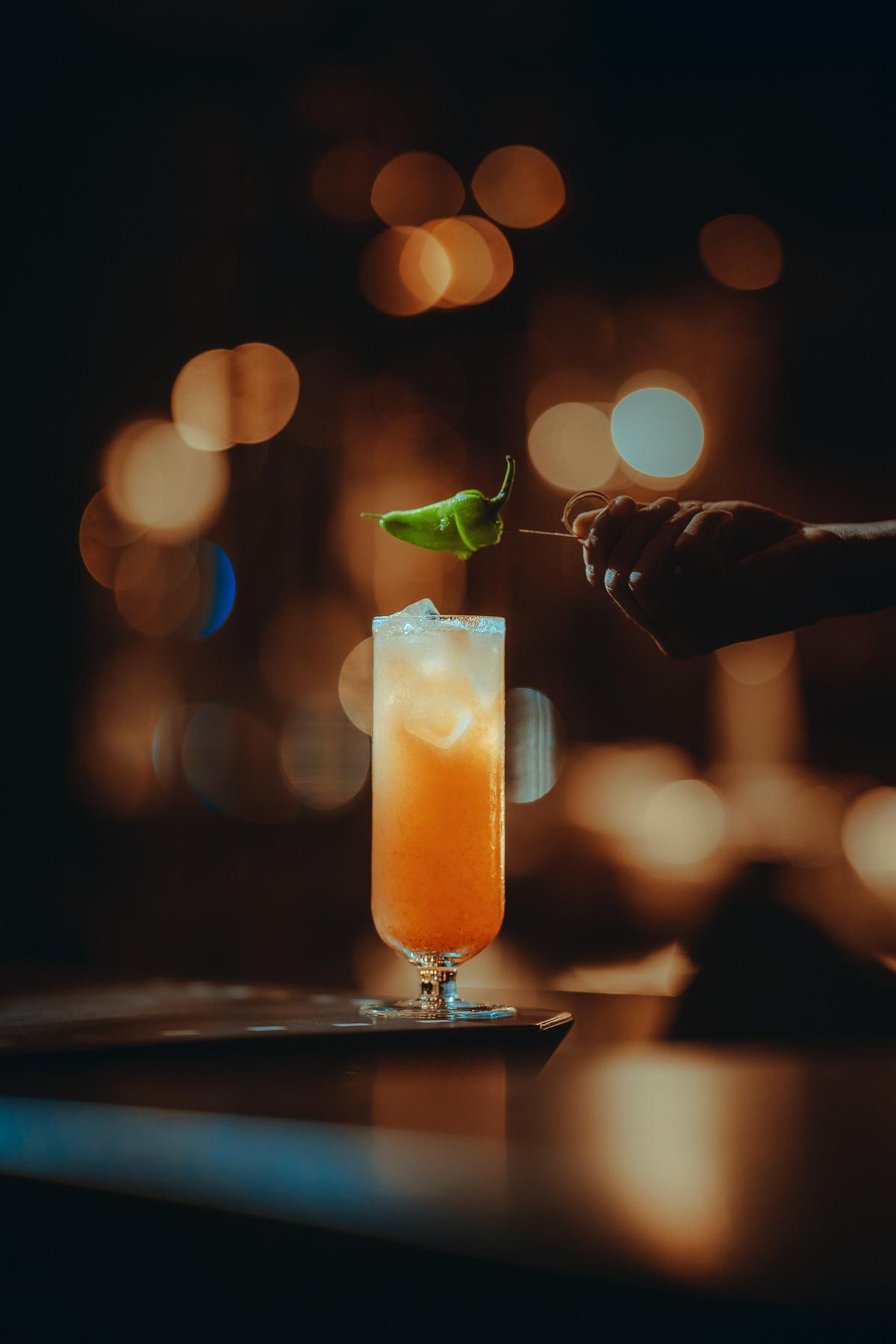
Our initiation into Vietnamese and Cambodian cuisine started with drinks. The Kampot cooler, an orange-based drink with a jalapeño kick, was refreshing and just spicy enough to wake up our taste buds. The Vietnamese cold coffee, made with condensed milk and ice, was pleasant but not quite the thick, rich brew we were expecting.

Kampot Cooler

Kampot Cooler
| Photo Credit:
Special Arrangement

The katsu chicken maki roll looked promising but turned out a bit chewy and tough. The scallion prawns siu mai, while delicately crafted, was a little too mild for our liking. Then came the jiangs chilli chicken, which, despite its fiery-sounding name, surprised us with a subtle, well-balanced flavour — unexpected, but welcome. The Taipei chicken, on the other hand, was a little too salty.

By this point, we were deep into the meal, but there was more to come. The Vietnamese caramelised pork with rice, made with sugar, soy, and garlic, was just a touch too sweet for our palates. And then there was the much-hyped mango sticky rice — our first time trying it. Maybe it was the weight of expectations, but it did not quite blow us away.

The Taipei Chicken

The Taipei Chicken
| Photo Credit:
Special Arrangement

Kampot is an ambitious venture, offering a variety of lesser-explored Southeast Asian dishes to Bengaluru’s ever-curious foodies. There is no denying the effort that restaurateur Priyanka Bonick has put into curating the menu. A chartered accountant and IIM Bengaluru alum, she first fell in love with Khmer cuisine back in 2012 and spent years researching and perfecting the concept before launching Kampot. “I realised that to create a unique menu, I needed to deeply understand the cuisine. I wanted people to choose my restaurant over others. To build a strong brand, I knew I had to immerse myself in the cuisine,” she says, explaining how she has trained in Vietnamese and Khmer cuisines and continues to refresh her knowledge with annual trips to Vietnam and Cambodia.

Her dedication shows in Kampot’s approach to authenticity. The pho is made using a recipe she learned from a chef in Ho Chi Minh City, and the Vietnamese coconut curry is positioned as a Southeast Asian alternative to the much-loved Thai curry. The restaurant has also embraced gluten-free options, with 90% of its dim sums being made without gluten — a choice, Priyanka says, has proven popular.

Mango sticky rice

Mango sticky rice
| Photo Credit:
Special Arrangement

But here is the thing: not every dish hit the mark for us. Some felt a bit too mild, others too salty or sweet. That said, there is enough variety to make a return visit worth considering, especially if you are someone who enjoys exploring new flavours. The vibe is airy and inviting. It is great for dates, casual catch-ups, and even work lunches. For its price range, Kampot offers good value, and while not every dish will be a winner for every diner, there is enough here to keep things interesting.

Would we come back? Probably, but next time, we will stick to the bestsellers — maybe the Vietnamese pho, bun cha, or that famous coconut curry. And, of course, another Kampot cooler to beat the Bengaluru heat.


Source link

Now stay at Mammootty’s house in Kochi’s Panampilly Nagar


The living room in Mammootty’s house in Panampilly Nagar

The living room in Mammootty’s house in Panampilly Nagar
| Photo Credit: SPECIAL ARRANGEMENT

Imagine spending a day or two at actor Mammootty’s house? Or a staycation perhaps? Well, this is your chance thanks to Vkation Experiences, a Kochi-based company that curates luxury stays in South India. This may not be what Mannath is to Mumbai, but there are people who drive past the house peeking for a glimpse of the evergreen thespian or Dulquer Salman.

The company did not anticipate the response when it announced, on their Instagram handle, that bookings to, what is popularly known as, ‘Mammootty House’ in Kochi’s KC Joseph Road, in Panampilly Nagar, Kochi, were open. Guests will be welcomed on the property from April 2 onwards for the ‘boutique villa’ experience at the actor’s house. Vkation Experiences will provide personalised services to the guests. The company, which does not want to share more details at the time, runs similar boutique villas in the other parts of Kerala. 

Call 97784 65700 for details


Source link

Chennai-based artist Lakshmi Srinath’s latest collection at Tvam Art and Design Studio is a fusion of art, heritage, and fashion


The Gwalior Fort inspired stole

The Gwalior Fort inspired stole
| Photo Credit: Special Arrangement


At Tvam Art and Design Studio, the latest line of saris, blouses, and Western wear designed by artist and designer Lakshmi Srinath showcases her perspective of colours, Nature, and heritage.

Among her creations, a wrap and a shirt inspired by the Raneh Falls stand out. Located on the Ken River in Khajuraho, Madhya Pradesh, the falls has carved a deep canyon of pure crystalline granite in varying shades, juxtaposed against blue-green waters. The ochre granite and shimmering water are reflected in Lakshmi’s design.

Lakshmi’s work for the Sanskrit film Sakuntalam, directed by Dushyanth Sridhar, is a testament to this vision. Shot across heritage sites such as Lepakshi, the Badami Caves, Aihole and Pattadakal, the film allowed Lakshmi to document these locations through her photography. She further deepened her understanding by travelling extensively with historian and art critic Ashrafi S Bhagat, who provided academic insights into sites such as the Puri Jagannath Temple, Raneh falls, Gwalior Fort, Ajanta and Ellora caves and the Sanchi Stupa.

This sari was inspired by the Gwalior Fort

This sari was inspired by the Gwalior Fort
| Photo Credit:
Special Arrangement

In her latest collection, Lakshmi integrates heritage themes with a distinct colour palette. Ochre, terracotta, black, orange, yellow, red, pink, blue, and grey dominate her designs. She works around a central theme, creating motifs and patterns that reflect the essence of each heritage site.

One of her saris, inspired by the Konark Sun Temple, features a pallu embroidered in black, grey, and gold to represent the sun, while the body is a rich earthy brown. Her Gwalior Fort sari in resplendent turquoise blue and pale yellow is striking, while the Le Pakshi-inspired design highlights geometric patterns on the pallu and border.

To mark the launch of her new line, a musical concert by Gurupriya Atreya, curated by Alaap, was organised at her studio. Traversing the landscape of the country, the music was an ode to befitting ode to the collection. It navigated languages and ideas through the lens of a woman reiterating Lakshmi’s own story in visual art, design and fashion.

Beyond textiles, Lakshmi has designed jewellery inspired by bidri inlay work from north-eastern Karnataka, dhokra metal craft from Odisha and Chhattisgarh, and pattachitra art from Odisha. She has also created an array of thematic blouses and potlis.

The Raneh falls inspired oufit.

The Raneh falls inspired oufit.
| Photo Credit:
Special Arrangement

With a preference for Chanderi fabric, Lakshmi’s designs are a testament to the enduring influence of history, reimagined through contemporary fashion.

See the collection at Tvam Art and Design Studio, RA Puram from 10am to 6pm. Monday to Saturday.


Source link

World Water Day: PM Modi says it is important to protect water for future generations


 The United Nations observes the World Water Day annually to highlight the importance of fresh water.

The United Nations observes the World Water Day annually to highlight the importance of fresh water.
| Photo Credit: Special Arrangement

Prime Minister Narendra Modi on Saturday (March 22, 2025) underlined his government’s commitment to conserve water and promote sustainable development to mark the World Water Day.

“Water has been the lifeline of civilisations and thus it is more important to protect it for the future generations,” he said on X.

The United Nations observes the World Water Day annually to highlight the importance of fresh water.


Source link

Groundwater, the invisible gift – The Hindu


Groundwater is a crucial but often overlooked resource that sustains India’s agriculture, industries, and drinking water supply. Stored in underground aquifers—porous rock formations that hold water like a sponge—it serves as the lifeblood of the nation. The monsoon plays a key role in replenishing these aquifers, but the delicate balance between extraction and recharge is increasingly under threat.

India is the world’s largest extractor of groundwater, accounting for 25% of global usage. Millions rely on it for irrigation and daily needs, yet unsustainable withdrawal, pollution, and climate change have led to alarming depletion rates. Regions like Punjab, Haryana, and Rajasthan face severe groundwater stress due to over-extraction for farming. Managing this invisible yet vital resource is essential to ensuring long-term water security for future generations.

Status and Atlas

The National Groundwater Atlas provides a comprehensive assessment of groundwater availability across India, revealing stark regional disparities. While states like West Bengal and Bihar benefit from fertile alluvial aquifers and river-fed reserves, excessive withdrawal—especially in Punjab for water-intensive crops like rice—has led to significant depletion.

Groundwater availability in India: The map highlights regional disparities, with red-marked states (Rajasthan, Gujarat, and Tamil Nadu) experiencing severe water stress due to low recharge rates and over-extraction, while yellow-marked states (Punjab, Bihar, and West Bengal) have better groundwater reserves but face depletion risks due to excessive withdrawal for agriculture.

Groundwater availability in India: The map highlights regional disparities, with red-marked states (Rajasthan, Gujarat, and Tamil Nadu) experiencing severe water stress due to low recharge rates and over-extraction, while yellow-marked states (Punjab, Bihar, and West Bengal) have better groundwater reserves but face depletion risks due to excessive withdrawal for agriculture.

Conversely, Rajasthan and Tamil Nadu face severe water stress due to low rainfall, hard rock aquifers, and slow recharge rates. Gujarat presents a mixed picture, with some regions experiencing acute shortages while others benefit from river-fed reserves. The Atlas highlights these contrasts, offering crucial insights for policymakers to develop targeted groundwater management strategies. As over-extraction continues to outpace natural replenishment in many regions, sustainable conservation efforts are essential to ensure long-term groundwater security.

Key concepts:

Aquifer: Underground rock/sediment layers that hold water.

Water Table: The upper level of groundwater in an aquifer.

Infiltration: Water entering the soil.

Percolation: Water moving downward through soil layers.

Treasure underneath

Groundwater is a crucial but often overlooked resource that sustains India’s agriculture, industries, and drinking water supply. Stored in underground aquifers—porous rock formations that hold water like a sponge—it serves as the lifeblood of the nation. The monsoon plays a key role in replenishing these aquifers, but the delicate balance between extraction and recharge is increasingly under threat.

A well at a farmer’s field near Humnabad Industrial Area filled with chemically contaminated groundwater.

A well at a farmer’s field near Humnabad Industrial Area filled with chemically contaminated groundwater.
| Photo Credit:
KUMAR BURADIKATTI

Threats

India’s groundwater is under increasing pressure due to over-extraction, contamination, and climate change, making sustainable management crucial for long-term water security.

Over-extraction: Excessive groundwater withdrawal for irrigation, industries, and urban consumption is rapidly depleting aquifers, especially in Punjab, Haryana, and Tamil Nadu. The unchecked use of borewells is pushing water tables to dangerously low levels.

Salinity and contamination: Natural and human-induced pollution is rendering groundwater unsafe for drinking and agriculture. West Bengal and Bihar face high arsenic contamination, while Rajasthan struggles with fluoride contamination, posing severe health risks.

Climate change impact: Unpredictable monsoons, prolonged droughts, and rising temperatures are reducing groundwater recharge rates. Regions like Gujarat and Maharashtra are particularly vulnerable, with erratic rainfall worsening the crisis.

Groundwater contamination

Groundwater contamination

Urban groundwater crisis

Cities like Delhi, Bengaluru, and Hyderabad face severe depletion due to unregulated borewell drilling and rapid urbanization.

Bengaluru water crisis (2024): Bengaluru suddenly became the centre of national attention as the city’s acute water shortage made headlines. Borewells ran dry, lakes shrank due to over-extraction and erratic rainfall, and residents in many areas were left scrambling for expensive private water tankers. The crisis sparked widespread discussions on social media and in policy circles, with experts calling for urgent action. Industries and IT hubs faced disruptions, forcing businesses to rethink their water dependency. The situation underscored the urgent need for rainwater harvesting, stricter groundwater regulations, and sustainable urban planning to prevent future crises.

Residents collect free water from a tanker amid water crisis, in Bengaluru.

Residents collect free water from a tanker amid water crisis, in Bengaluru.
| Photo Credit:
SHAILENDRA BHOJAK

Chennai’s Water Crisis (2019): Showcased the dangers of over-extraction, prompting greater focus on rainwater harvesting and artificial recharge.

The first special ‘water’ train with 2.5 million litres of water from Jolarpet to Chennai arrived at Villivakkam to help the city tide over the severe water shortage. The Tamil Nadu Government requested the Southern Railway to transport water from Jolarpettai to Villivakkam to supply 10 million litres per day of drinking water to the city.

How is groundwater recharged?

Groundwater recharging is a process of refilling underground water reserves (aquifers) through natural and artificial means.

Natural recharge

  • Precipitation: Rain and snowmelt infiltrate the soil and percolate down into aquifers.

  • Surface water: Rivers, lakes, and wetlands contribute to recharge as water seeps into underground layers.

  • Interflow & baseflow: Some water moves laterally through soil layers before reaching deeper aquifers, maintaining river flow in dry seasons.

  • Factors affecting recharge: Soil type (permeable vs. clayey), vegetation (roots create infiltration pathways), topography (gentle slopes retain water), and climate (rainfall patterns).

Artificial recharge

Humans actively assist groundwater recharge through methods like:

  • Check dams & percolation ponds: These slow down water flow, allowing more time for seepage.

  • Recharge wells: Specially designed wells directly inject water into aquifers.

  • Rainwater harvesting: Collecting and storing rainwater in tanks or directing it into the ground through recharge pits.

  • Canal irrigation: Water from canals seeps underground, replenishing local water tables.

  • Aquifer Storage and Recovery (ASR): In cities like Chennai, Rajasthan, and Maharashtra, treated water or excess monsoon runoff is injected into aquifers for later use.

  • Floodwater management: In flood-prone states like Bihar, West Bengal, and Uttar Pradesh, excess river water from the Ganga and Brahmaputra is diverted into recharge structures such as artificial wetlands and retention basins.

Traditional water conservation systems:

Baolis (Stepwells): Used in Rajasthan and Gujarat to collect and store rainwater.

Eri System (Tamil Nadu): Ancient tanks built for water conservation and groundwater recharge, still in use today.

Zabo System (Nagaland): Indigenous water harvesting method that integrates agriculture and livestock farming.

Why is groundwater recharge important?

  • Maintains water availability during droughts

  • Prevents over-extraction and depletion of aquifers

  • Supports rivers, lakes, and wetlands by maintaining underground flow

  • Reduces soil erosion and land subsidence

Revival of wells in Rajasthan: A success story

In Rajasthan’s Alwar district, the revival of traditional johads (check dams) has transformed barren lands into fertile fields. Led by community efforts, these structures helped recharge groundwater, restoring dried-up wells and ensuring water security. This success story has inspired similar conservation projects across India’s water-stressed regions.


Source link