




Life & Style

Sadhguru recommends doing these 2 things daily to remove risk of 90% diseases


Sadhguru recommends doing these 2 things daily to remove risk of 90% diseases

The modern lifestyle has made our lives more sedentary than ever, and falling sick seems almost inevitable. But is it really that complicated to stay healthy? According to spiritual leader Sadhguru, the answer lies in going back to basics. He firmly believes that nearly 90% of health issues can be prevented or reversed with just two simple, daily practices – something accessible to almost everyone.
Here’s what Sadhguru’s approach is to prevent illnesses.

Use the body every single day

Sadhguru emphasizes a simple truth: “The more the body is used, the better it gets.” In today’s comfort-driven world, physical movement has been drastically reduced. But this lack of activity, he says, is a major reason behind rising health issues. Just a couple of centuries ago, daily life involved walking long distances, lifting, climbing, and physically engaging with the world. Today, chairs, screens, and vehicles have taken over.
Sadhguru shares an example of army personnel walking 20–30 kilometers a day – something they do as a duty. Yet, this very effort unknowingly keeps them fit and energetic. Movement isn’t a punishment; it’s the body’s natural way to thrive. Using the body regularly, through walking, stretching, climbing stairs, or even household chores, activates every system in the body and helps it self-heal.
He goes as far as saying that 80% of ailments can vanish if the body is used properly and consistently. Not through intense gym routines but through daily movement.

Healthy

Eat the right kind of food

The second pillar in Sadhguru’s health philosophy is food—not just what is eaten but how and when. According to him, 10% of diseases stem directly from wrong eating habits. Overeating, processed foods, eating without hunger, and unnatural food combinations create toxicity and imbalance in the system.
Sadhguru recommends seasonal, local, plant-based meals that are light and nourishing. He encourages eating consciously and in alignment with the body’s natural cycles. When food is chosen wisely, digestion becomes smoother, energy levels rise, and inflammation is reduced—contributing to long-term health.
This doesn’t mean deprivation. It means eating to support life, not just to satisfy taste buds.

Healthy lifestyle

Balance of body, mind, and energy is true health

True health, Sadhguru explains, is not just about physical fitness. It’s about harmony between the body, mind, and one’s energy system. When physical movement becomes part of daily life and food is handled wisely, these two acts start aligning internal systems.
Even simple mental or breath-based practices—like being still for a few minutes, deep breathing, or chanting—can stimulate the energy body. When these three pillars are exercised—body, mind, and prana (life energy)—the human system works like a well-oiled machine.

The 5 to 7 kilometer rule

For someone aiming for visible weight loss, walking between 5 to 7 kilometers daily works well. That’s about 7,000 to 10,000 steps — a number that’s often recommended by fitness experts worldwide.

Health is not a luxury; It’s life’s natural state

“Health is life’s way,” Sadhguru says. Illness isn’t something that strikes from outside. In most cases, it is created internally due to lack of balance, awareness, and natural rhythm. When life is allowed to happen in full flow, health is a natural outcome.
According to him, health is not a medical concept. It is the byproduct of life functioning fully. Medical systems have gained prominence because lifestyles have moved away from natural living. But reversing this is still possible. Bringing back movement, conscious eating, and mental clarity helps the body become self-regenerative.

Mothers’ activity levels may depend on number and ages of children: Research

Even 10% of diseases can be managed better

Sadhguru acknowledges that not all diseases can be prevented with lifestyle changes. Some illnesses are karmic, environmental, or caused by complex factors. But once 90% of the burden is cleared by lifestyle corrections, the remaining 10% becomes much easier to handle—both by individuals and healthcare systems.


Source link

Charcoal dust to cement: Common adulterants used in fake Jeera (Cumin) and how to do purity check


Charcoal dust to cement: Common adulterants used in fake Jeera (Cumin) and how to do purity check

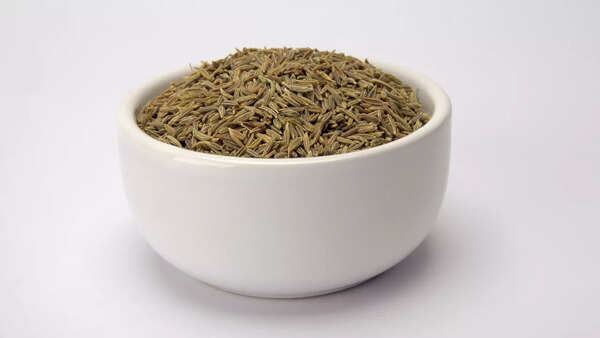
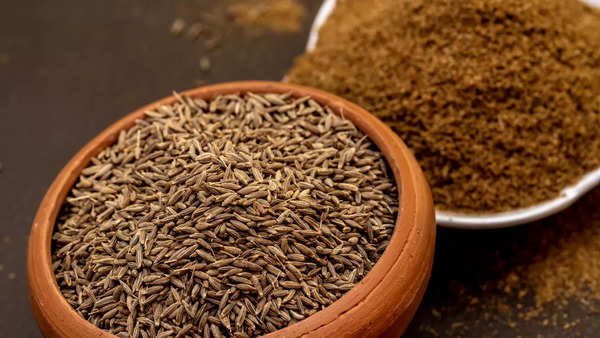
In 2022, a total of 30,260 kilograms of spurious cumin seeds and raw materials were seized from a godown in Unjha, a well-known hub, by the Food and Drugs Control Administration (FDCA). And in January 2024, the police in Maharashtra’s Thane district seized 2,399 kg of adulterated cumin seeds. These are a few instances that indicate the scale at which spice adulteration is going on, and cumin seeds, commonly known as jeera, which are one of the most common spices used in Indian cooking, are being subjected to adulteration, which can cause serious health issues in the long run.
Why cumin adulteration?
As per experts, the sole motive of such adulteration is to maximise the profile, increase the volume of supply in the market and minimise the cost.

2 (189)

Common adulterants used in cumin seeds
Cumin seeds, though rich in flavor and nutrition, are often adulterated to cut costs and increase volume. The common adulterants used for adulteration include:
Grass seeds: These seeds are coated with lead chromate or charcoal powder to mimic cumin’s color and shape, which can be toxic for the human body.

Stone powder or dirt particles: These are added to increase weight and can harm digestion, metabolism, and oral health.
Colored coriander seeds: These are used as a look alike but lack cumin’s flavor and quality.
Starch or husk powder: This is commonly used in cumin powder which reduces purity and may be unsafe if contaminated with other chemicals.
Cement: It is also a common adulterant used in adulteration. It is a cheap, fine gray powder that resembles cumin powder in texture, making it a tempting adulterant.
Artificial coloring agents: These are used to enhance appearance and may contain harmful chemicals.

2 (187)

Cumin adulteration tests at home
Take a look at these 5 simple and easy tests one can implement at home to do purity check of cumin seeds
Water Test: This test can be used to check colored grass seeds. Put a spoonful of cumin seeds in a glass of water. If you notice yellowish color or seeds floating with unnatural color, it may be lead chromate–coated grass seeds.
Rubbing Test: This test can be implemented for charcoal dust. Simply rub some seeds between your palms. If your hands turn black, they may be adulterated with charcoal powder to mimic cumin’s natural color.

Magnifying Glass Test: or this test, use a magnifying glass to closely inspect the seeds.Look for different shapes or textures — adulterants like coriander or grass seeds will often look slightly different from real cumin.
Sedimentation Test: For this test, crush the seeds into powder and mix with water. If stone powder or earthy matter is present, it will settle at the bottom quickly.
Taste & Aroma Test: As per experts, pure cumin has a distinct warm, nutty flavor and strong aroma. If the flavor is flat or off, it may be diluted or mixed with stale/substitute seeds.

2 (188)

Side effects of adulterated cumin
As per experts, adulterants like lead chromate (used to color grass seeds) can cause serious damage to the kidneys, liver, and nervous system over time. And when it comes to stone powder or dust particles, they can lead to indigestion, constipation, or stomach pain, especially with regular consumption. It is also found that inhaling fine adulterants like charcoal powder while cooking or handling cumin can trigger cough, asthma, or breathing discomfort. And use of chemical colorants may lead to skin rashes, itching, or allergic reactions, particularly in sensitive individuals. When all these adulterants are continuously consumed, they may increase the risk of chronic diseases, weakened immunity, or hormonal imbalances.

Thumb and Embed Images Courtesy: istock


Source link

Sharing tables and tales in Sikkim Shalini Philip


You know how you sometimes hear of a place, and even before you have been there, you are already in love? I vividly remember hearing the name Gangtok in school, when we were learning capital cities, and knowing instinctively that I would find my way there some day. And I have been lucky to travel to Sikkim several times over the last decade.

Late last year, I co-hosted a Food Trail through Sikkim. Ten people — across age groups and countries, from India to Mexico and Columbia — all motivated by food and new experiences, travelled together for 10 days, eating and drinking their way through this tiny state that has an incredibly surprising diversity. We stayed with local families and lived their lives for a short while.
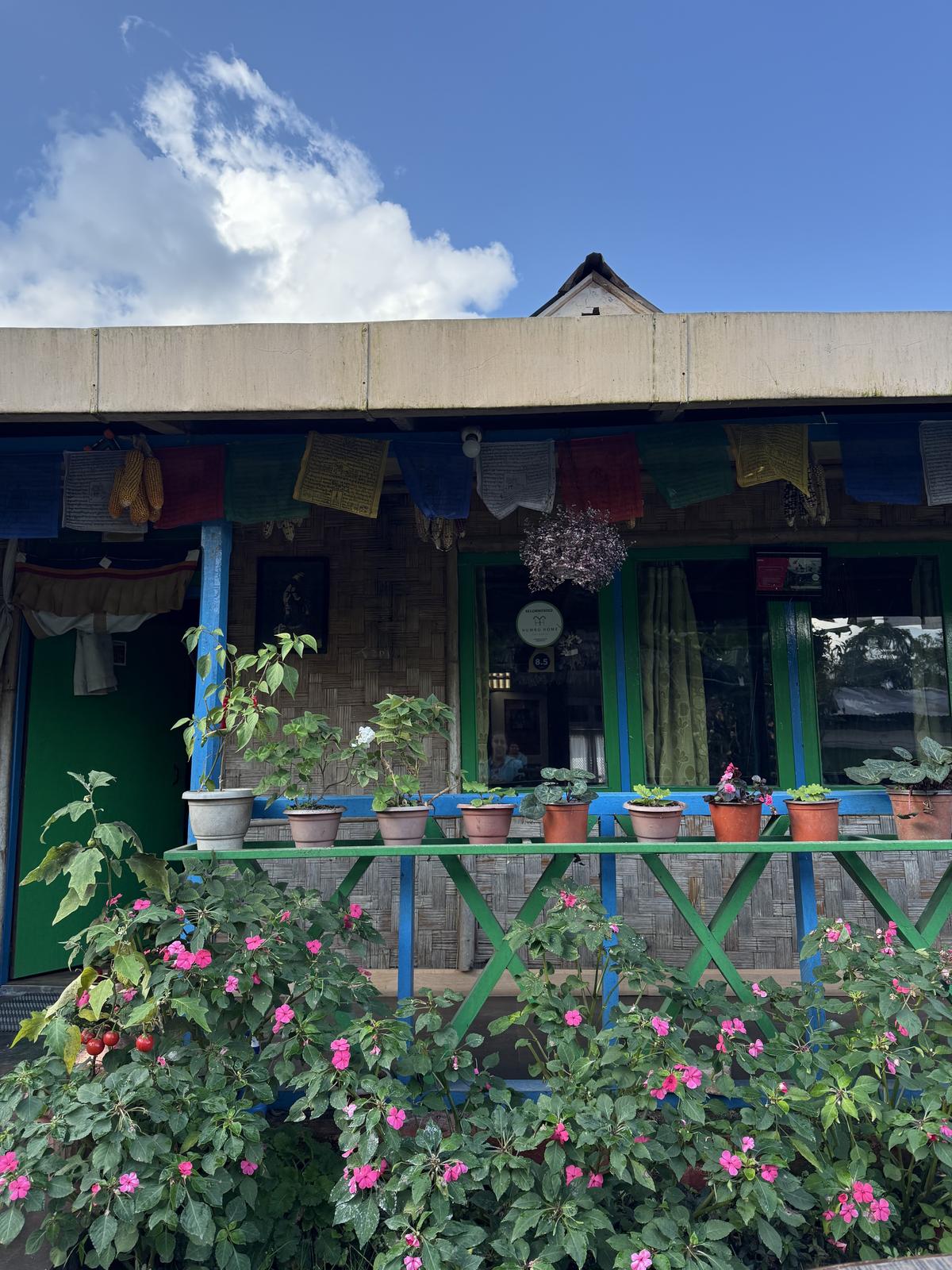
The family at our homestay in Darap welcomed us into their home and into their kitchen. We cooked along with them using many ingredients from their garden and the surrounding fields.  

The family at our homestay in Darap welcomed us into their home and into their kitchen. We cooked along with them using many ingredients from their garden and the surrounding fields.  
| Photo Credit:
Shalini Philip

I often say that food is our greatest common factor. It is such a personal and inherent part of a culture — one that sings of family, kinship, friendship, love and respect. It doesn’t matter if you don’t know a culture or its people; all it takes is one meal together for the beginnings of a relationship to be established. Someone willing to take the time and effort to make a meal for you. How can that not mean something?

The food trail started off with us as strangers travelling together, bound by a common interest. That changed quickly. Morning chai in our pyjamas, shared excitement over trying something new, and a willingness to experience a culture for what it is without any biases; it was special to be a part of such a group. I absolutely love that everyone stayed enthusiastic about everything. Only iskus (chayote/chow chow) as a vegetable for three meals in a row — no problem. Beef served by a host that two couldn’t eat — there’s always dalle and ghee. Help the hosts to cook the meal — always. Take a million photographs of every meal — most definitely. This is what makes for the best sort of travel.
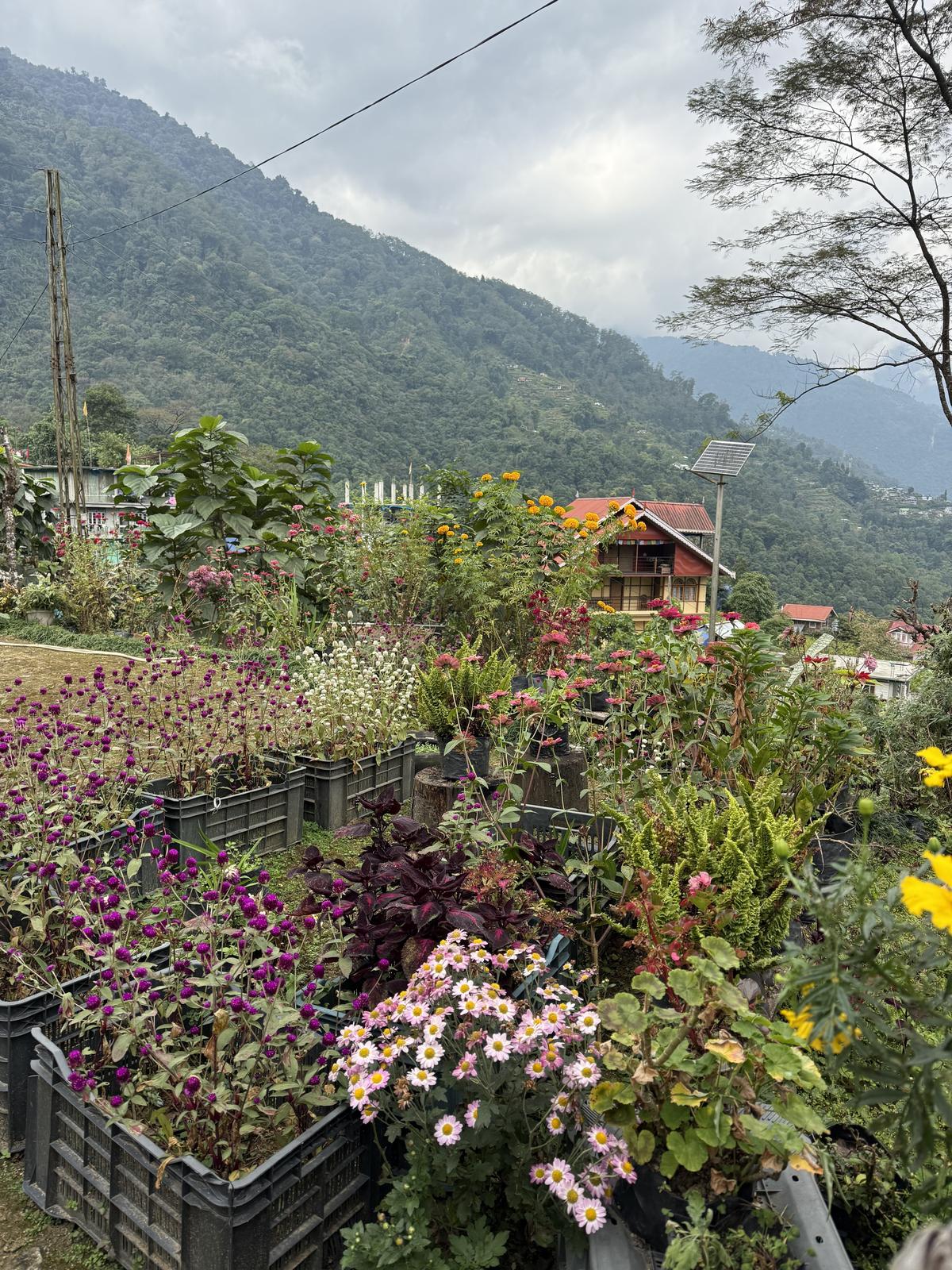
Every single household had crates, drums, boxes and pots of flowers in every conceivable colour.  

Every single household had crates, drums, boxes and pots of flowers in every conceivable colour.  
| Photo Credit:
Shalini Philip

What follows is a photographic meander through those days.

A Nepali home in West Sikkim

The little village of Darap is not really on the tourist map. Nestled in the mountains, it is straight out of a story book with stone stairways leading up and through the village, fields of black cardamom, and gardens bursting with dahlias, marigolds, ferns and poinsettias.
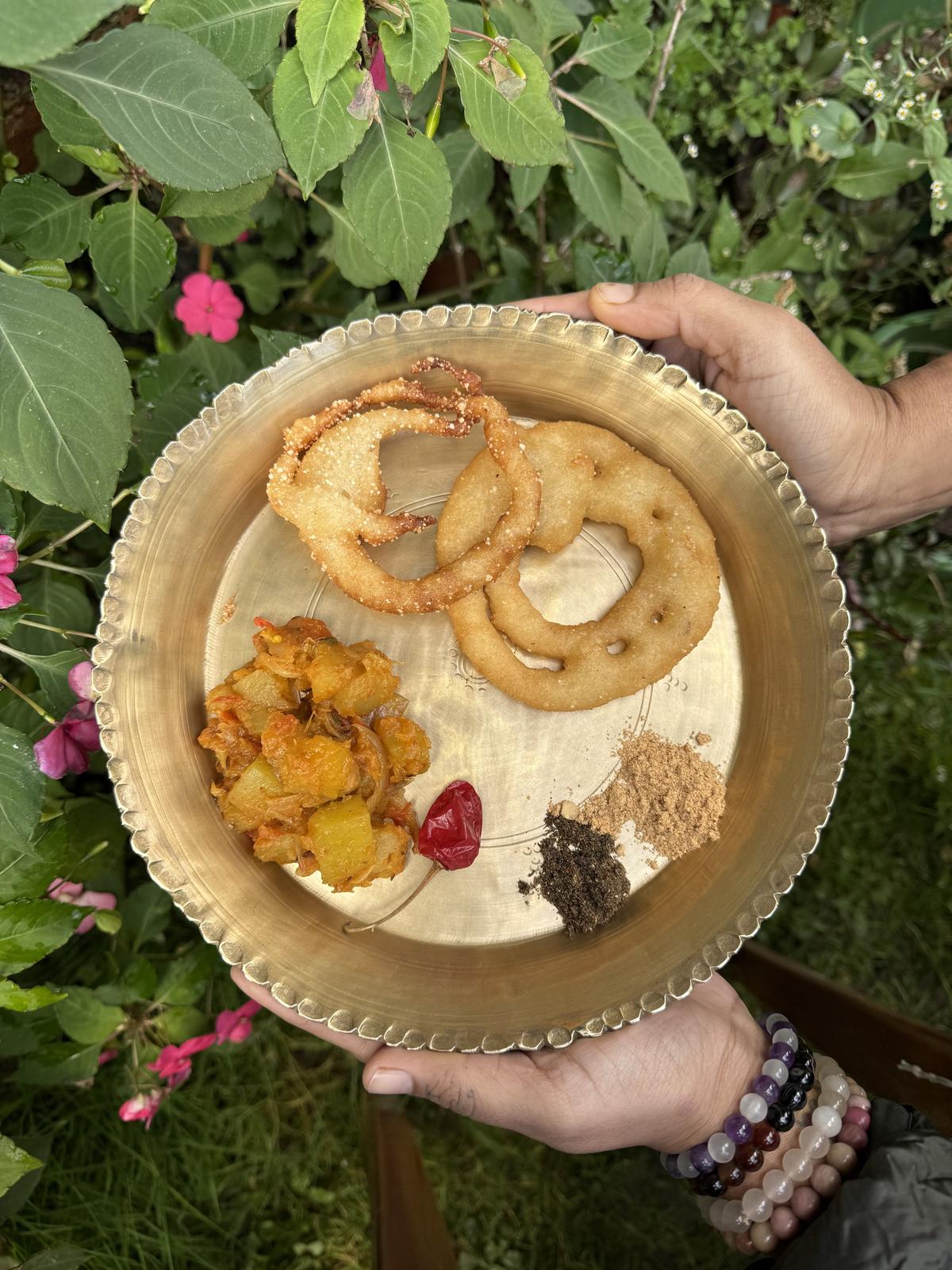
Sel roti, a Nepali classic, is served with iskus that grows wild. There are preserved or fresh dalle chillies on the table at every single meal.  

Sel roti, a Nepali classic, is served with iskus that grows wild. There are preserved or fresh dalle chillies on the table at every single meal.  
| Photo Credit:
Shalini Philip
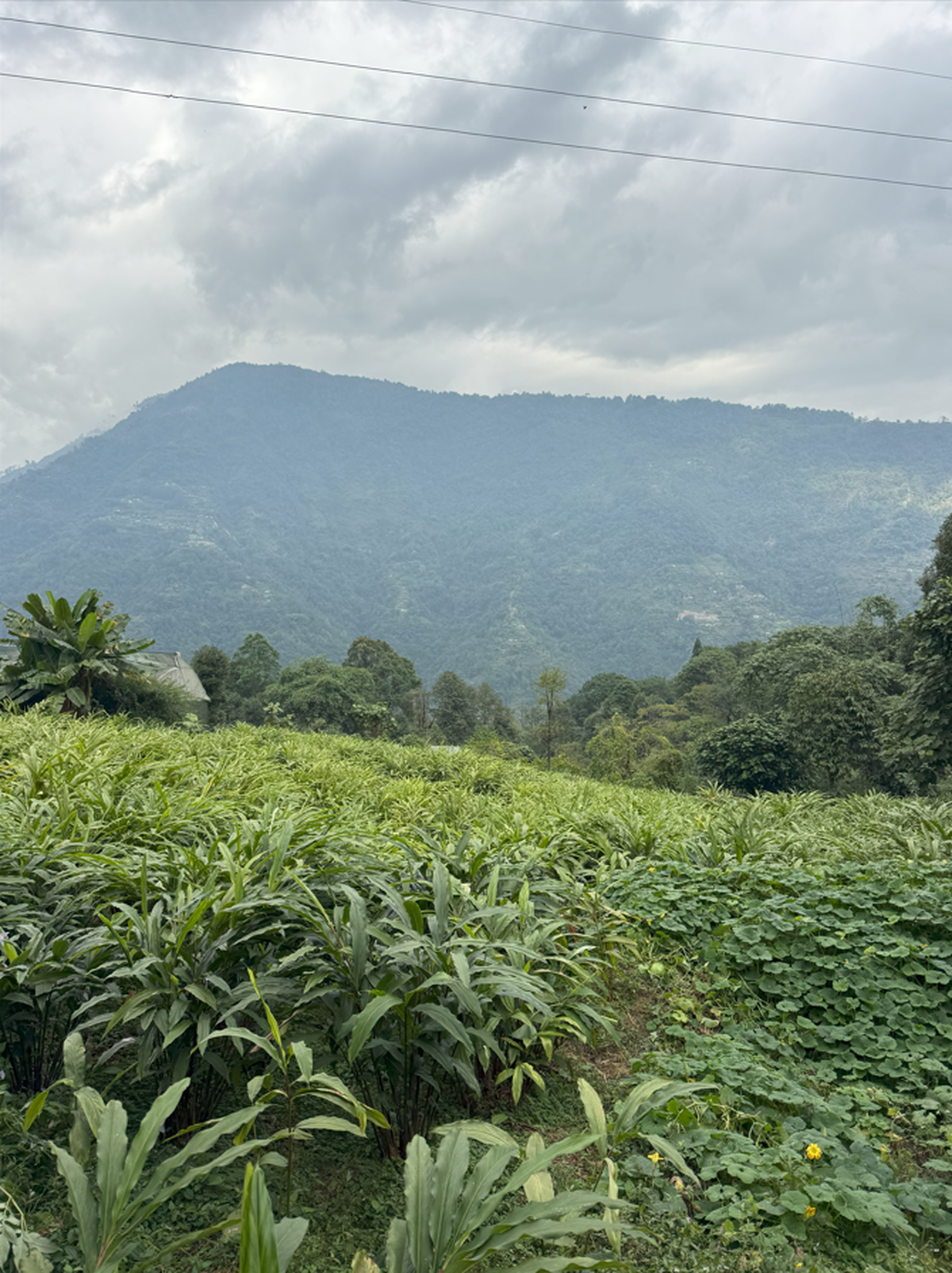
Fields of green cardamom on the mountainside of Darap. This is their cash crop.  

Fields of green cardamom on the mountainside of Darap. This is their cash crop.  
| Photo Credit:
Shalini Philip

The Nepali families here are warm, welcoming and always happy to have you come into their kitchen and help with the daily meals. The food is served on gorgeous hammered brass plates that seem to make it taste even better. And, as is common in most villages, all meals are made from scratch, using local ingredients that change with the season. Late November gave us fiddlehead ferns, wild avocados, a small and precious quantity of nakima (a wild flower-vegetable) and lots of fresh chhurpi.

The food in a Nepali household is primarily vegetarian, with chicken offered at some meals. Dairy plays an important role, with fresh chhurpi made in every household. This radish salad with chhurpi and dalle chillies was the highlight of our meals in Darap.  

The food in a Nepali household is primarily vegetarian, with chicken offered at some meals. Dairy plays an important role, with fresh chhurpi made in every household. This radish salad with chhurpi and dalle chillies was the highlight of our meals in Darap.  
| Photo Credit:
Shalini Philip

South Sikkim and the Bhutias

Several hours down a bumpy road took us to another part of Sikkim — the south, to a Bhutia home. Of Tibetan origin, these households make the kitchen the central room of their homes. Wood-fired cooking, smoking racks hung from the ceiling, and meals that involve the entire family; I have a special place in my heart for the little settlement of Kewsing that offers spectacular views of the mighty Kangchenjunga.
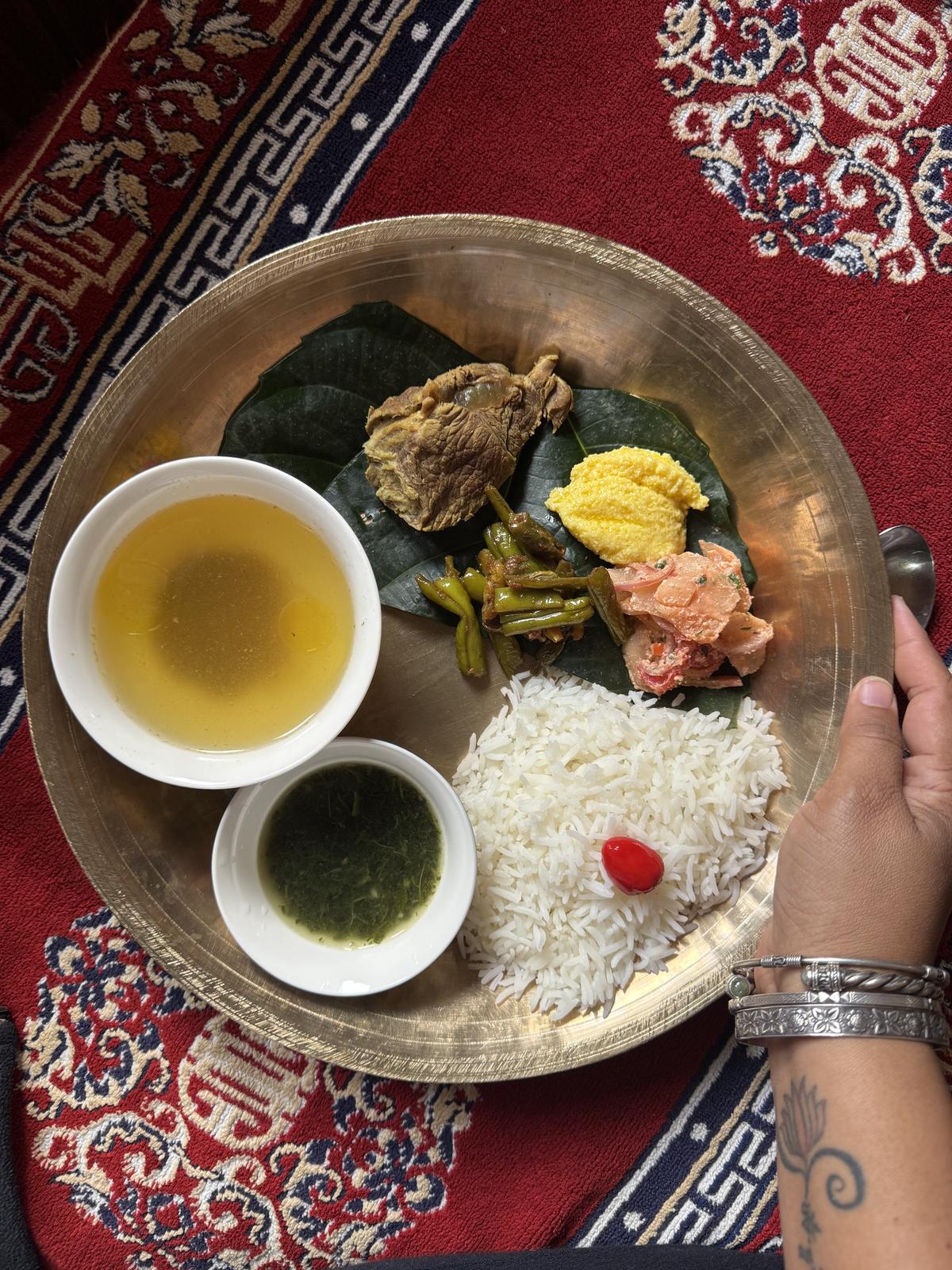
Beef and pork feature on the plates in a Bhutia household. Broth, stinging nettle soup, the now familiar radish salad, and a spoonful of rich chhurpi, which is always freshly churned. And a dalle chilli, of course!

Beef and pork feature on the plates in a Bhutia household. Broth, stinging nettle soup, the now familiar radish salad, and a spoonful of rich chhurpi, which is always freshly churned. And a dalle chilli, of course!
| Photo Credit:
Shalini Philip

Tingmo is a steamed bread, often eaten at breakfast with a side of vegetable or meat.
Tingmo is a steamed bread, often eaten at breakfast with a side of vegetable or meat.

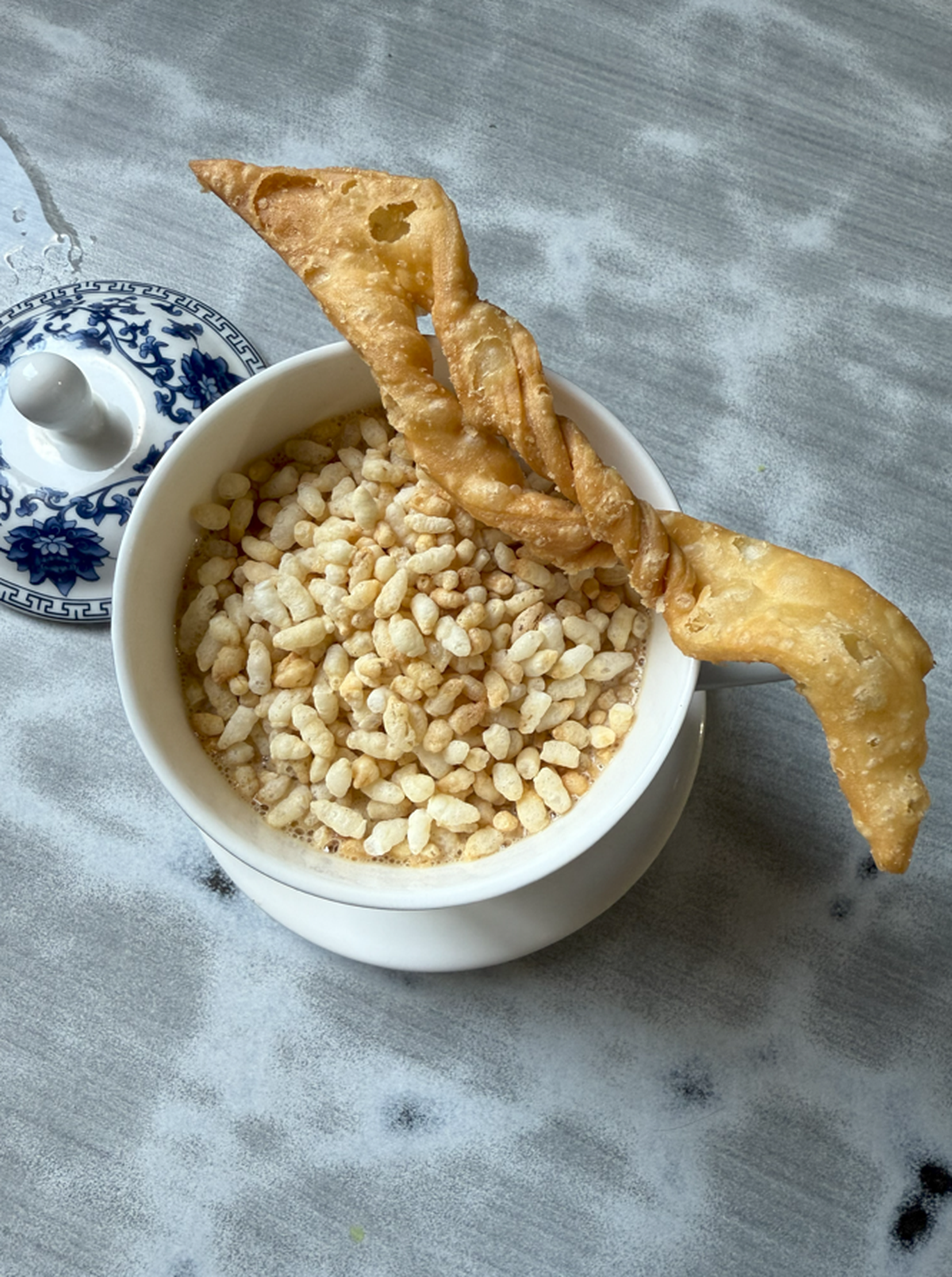
Endless cups of tea are drunk while one goes about everyday tasks. I always enjoy the chai because it comes with a chance to sit down and talk. Seen here is chai with puffed rice and khabsey, a lightly sweetened, fried snack.  

Endless cups of tea are drunk while one goes about everyday tasks. I always enjoy the chai because it comes with a chance to sit down and talk. Seen here is chai with puffed rice and khabsey, a lightly sweetened, fried snack.  

With no taboos around pork and beef, the Bhutia kitchens offered us an opportunity to sample and make out-of-the-ordinary things such as blood sausages, bone broth soup, and slabs of smoked pork. The meats are mildly seasoned, to let the taste of the meat itself shine through.

One of the many meals that involves the entire family in its preparation is momos. Served with a smashing dalle chutney.  
One of the many meals that involves the entire family in its preparation is momos. Served with a smashing dalle chutney.  

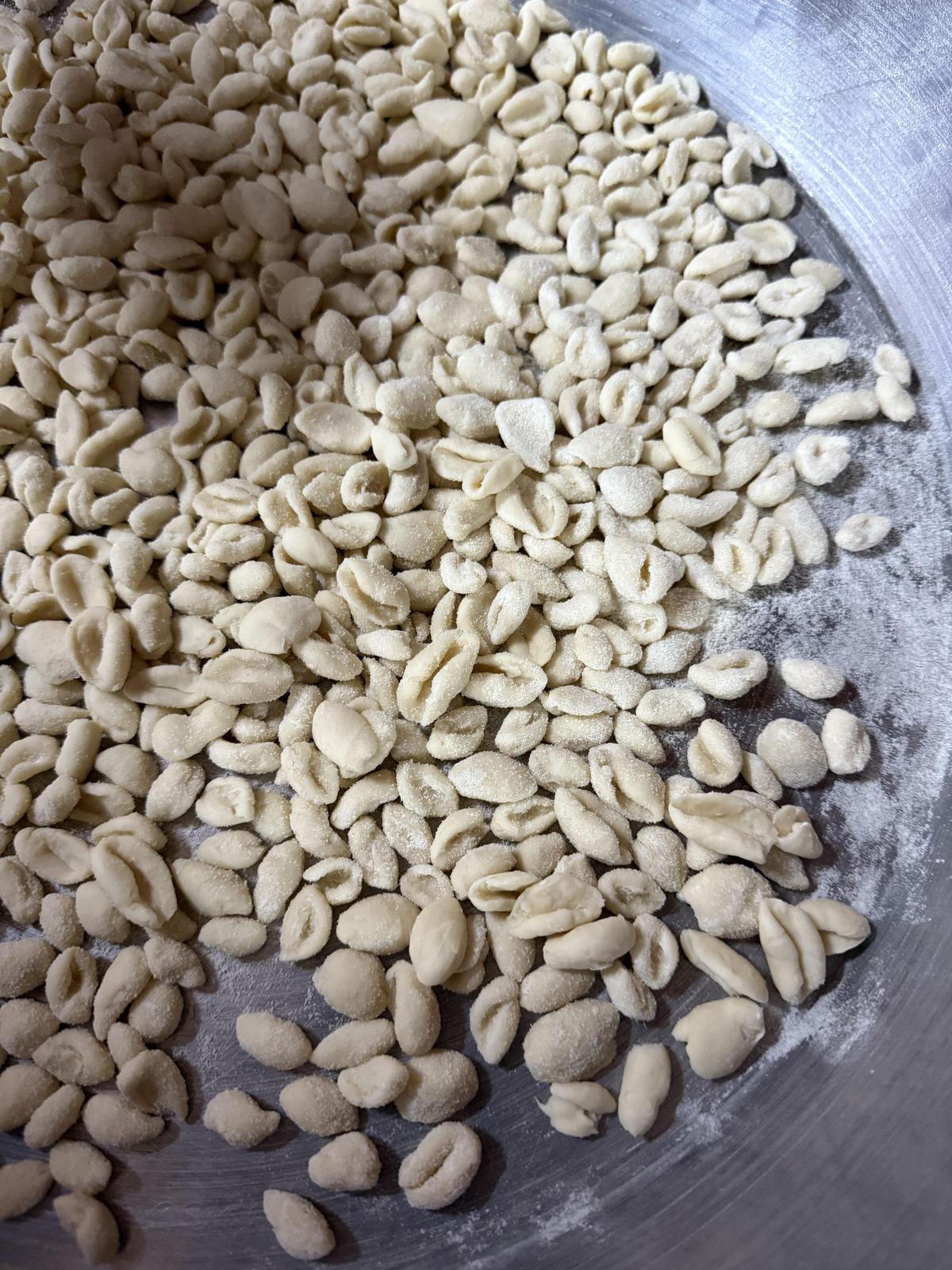
Hand-rolled pasta called cowri (shell) are made for breakfast to go along with a hearty beef broth.  

Hand-rolled pasta called cowri (shell) are made for breakfast to go along with a hearty beef broth.  

Nose to tail is the way things work. And so, blood sausages — a classic in a Bhutia kitchen.  

Nose to tail is the way things work. And so, blood sausages — a classic in a Bhutia kitchen.  

Chang and the Lepchas in North Sikkim

The most magical of all places in Sikkim (and mind you, there are many) is Dzongu. Home to the original inhabitants of the state, the Lepchas, it is nature at its most abundant. Crystal blue streams, skies that match, and pathways that lead through beautiful forests.
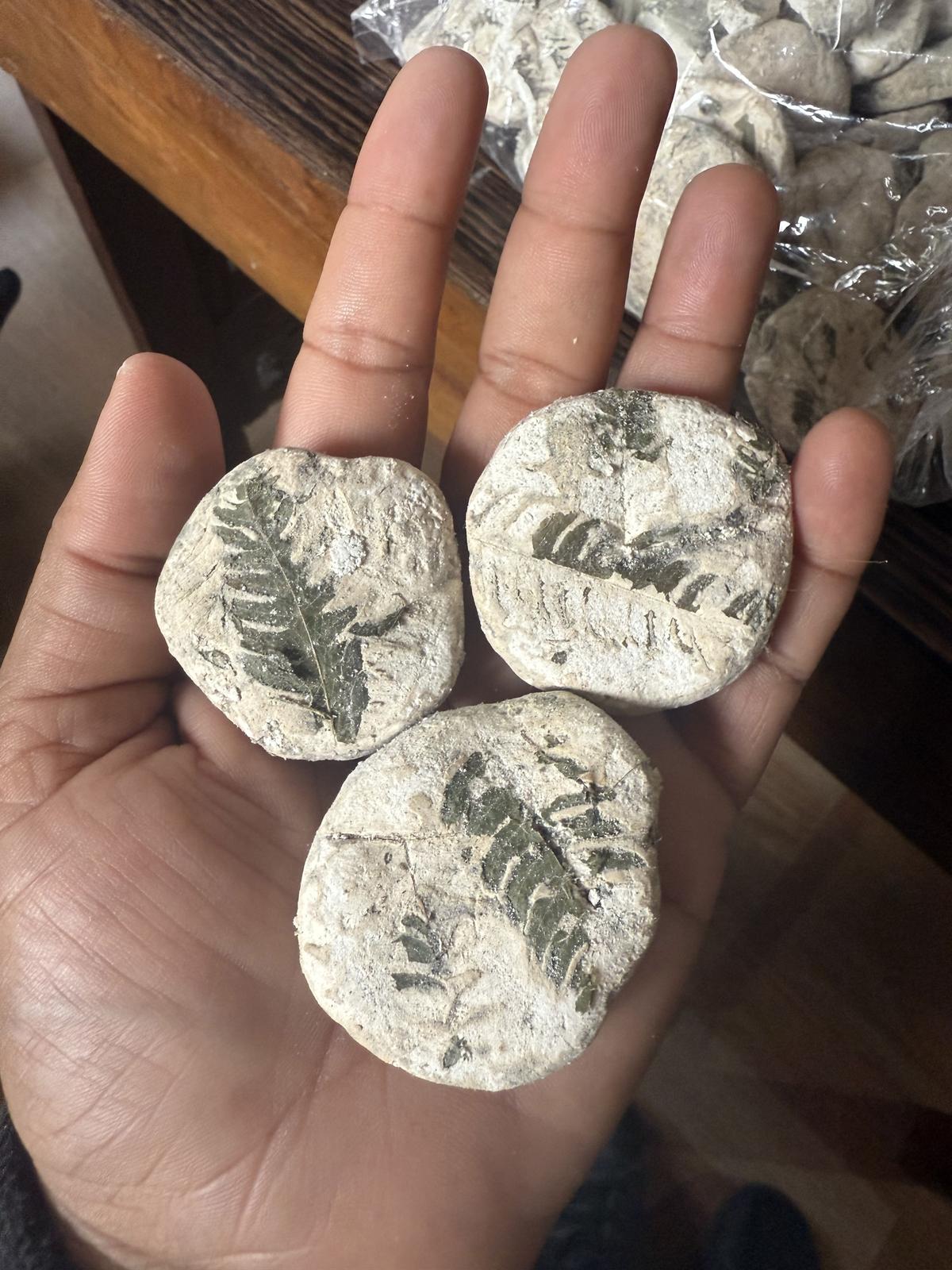
The natural yeast starter used to make the local alcohol chang. The plants are collected in the forest and set into these rice cakes.  
The natural yeast starter used to make the local alcohol chang. The plants are collected in the forest and set into these rice cakes.  

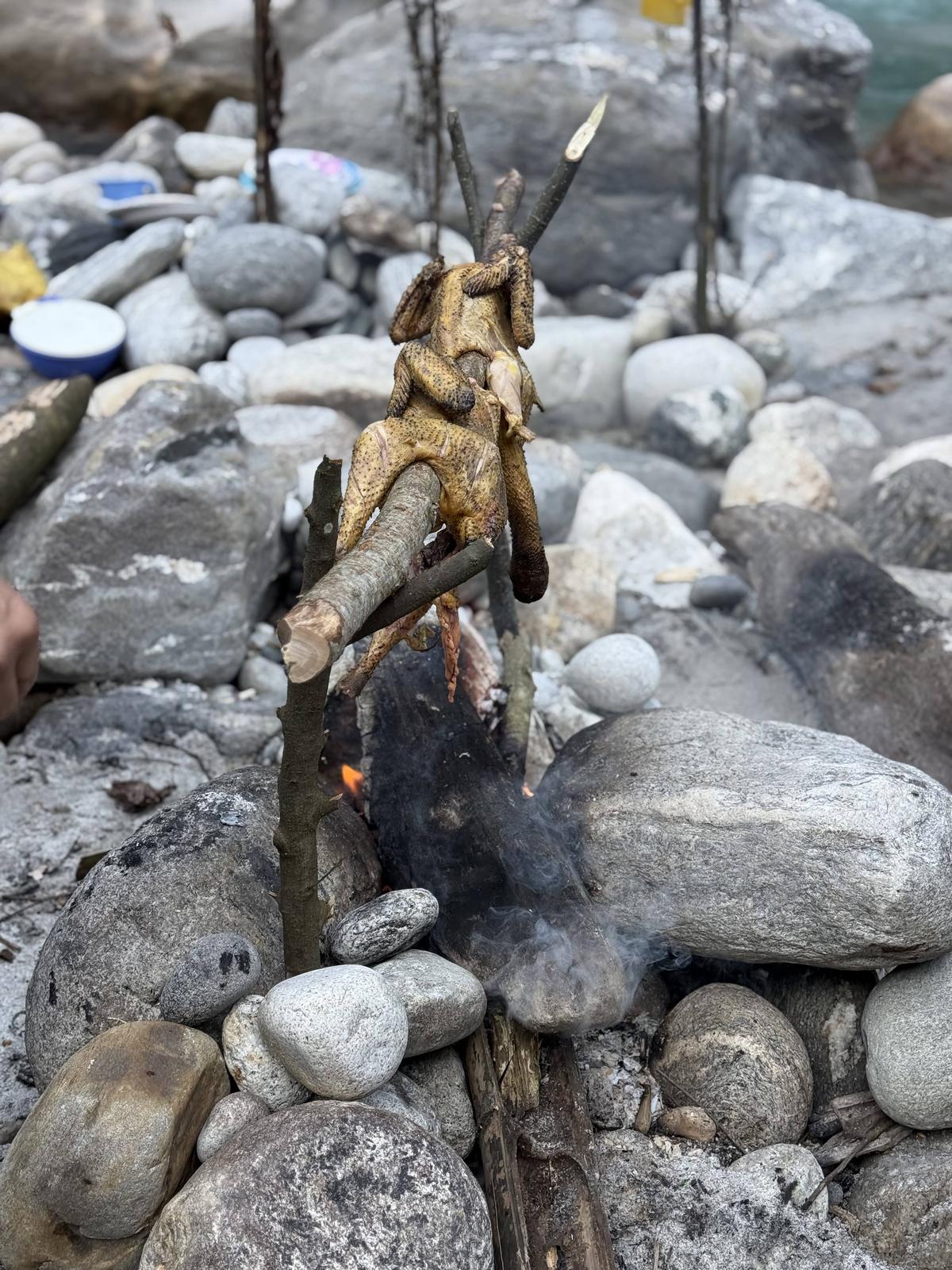
A picnic by the river in Dzongu with whole roast chicken cooked over a rustic rotisserie made of sticks.

A picnic by the river in Dzongu with whole roast chicken cooked over a rustic rotisserie made of sticks.

The giant tree ferns in the forests of Dzongu.  
The giant tree ferns in the forests of Dzongu.  

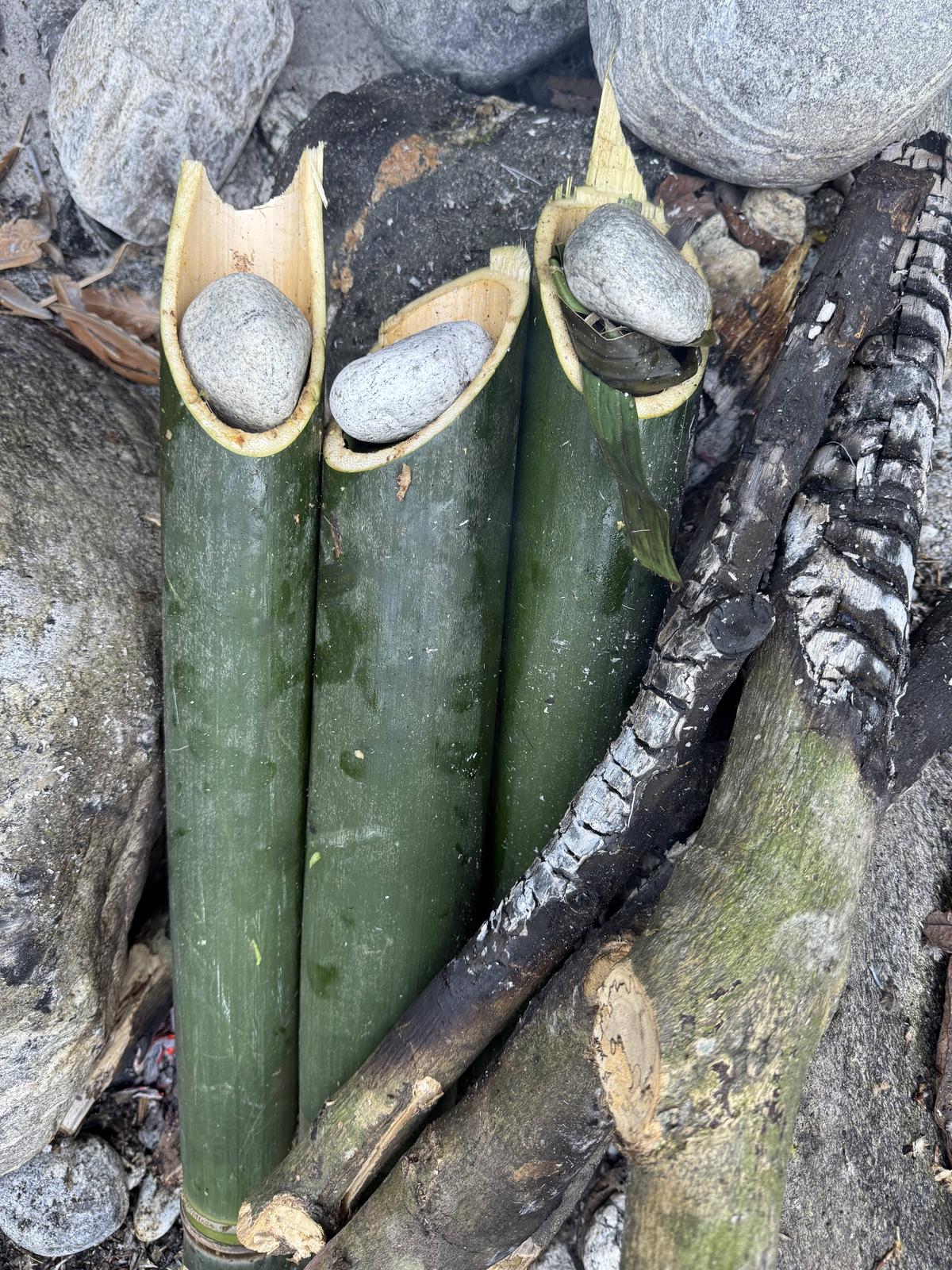
Cooking pork in bamboo segments over an open fire. River stones were used to close the tops and trap the heat.  

Cooking pork in bamboo segments over an open fire. River stones were used to close the tops and trap the heat.  

The Lepchas are known to make the best chang, a local drink made by fermenting rice or ragi grains. It is cool, light and refreshing, and can really pack a punch because one tends to drink a fair amount rather easily.

One night in Gangtok

The ideal end of many days of slow village life is to get to Gangtok and enjoy the bustle of the capital that is bursting with produce. As always, I have a list. Places to eat at  — there was no way we were leaving without enjoying some meaty shaphalay (bread stuffed with meat), more momos, laphing (a cold noodle dish) and the now famous dalle fries — and more importantly, shops in the market to buy produce and take home. And as always, I know I will buy an extra bag or three to pack all the things I simply must have.
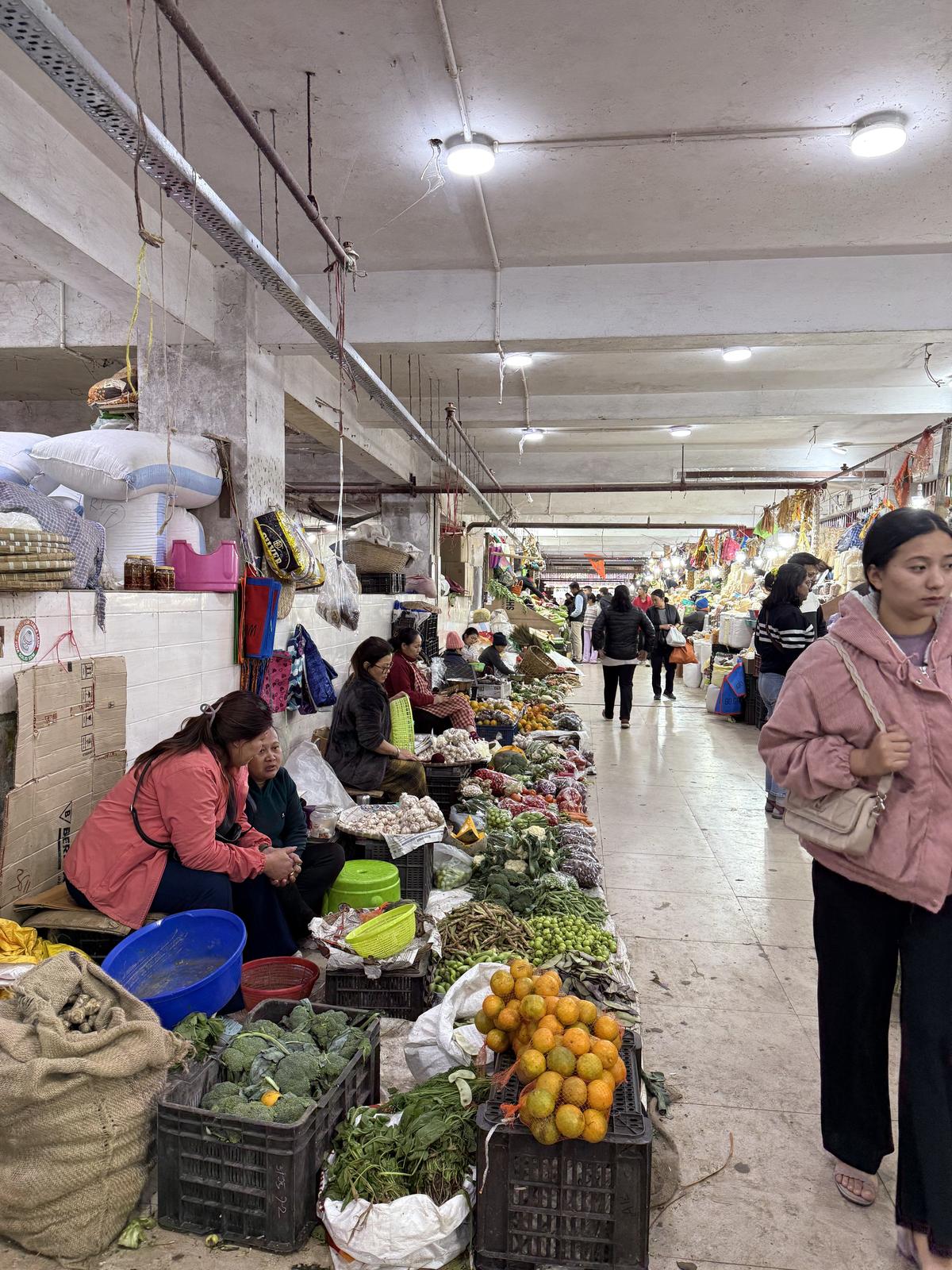
 Bara Bazaar, with its mountains of fresh, dried, fermented and preserved produce.

 Bara Bazaar, with its mountains of fresh, dried, fermented and preserved produce.

The day after I returned, as I unpacked my bags, I couldn’t help but liken the food with the people of Sikkim: simple yet so unique, warm and immediately likeable, colourful and quite unforgettable. With every visit to this beautiful mountain state in the eastern Himalayas I realise all over again how apt the Sikkimese name for this place is — Demazong. Hidden paradise.

Dalle and chhurpi in my suitcase

Bara Bazaar, as the main market is known, blows open on the weekends with people coming from all the smaller towns and villages to sell their produce. Organic by default, it is fascinating to walk through the mountains of fresh, dried, fermented and preserved produce sold by fashionably dressed women who seem to constantly be snacking while they go about business.

I picked up bouquets of chimping (hogweed), a spice that bring a citrusy tang to chutneys, hard chhurpi (fermented cottage cheese) that one can chew on for hours, bitter lemons, dried dalle chillies, black cardamom, and yeast starter for the local alcohol (because the cakes are just so pretty).
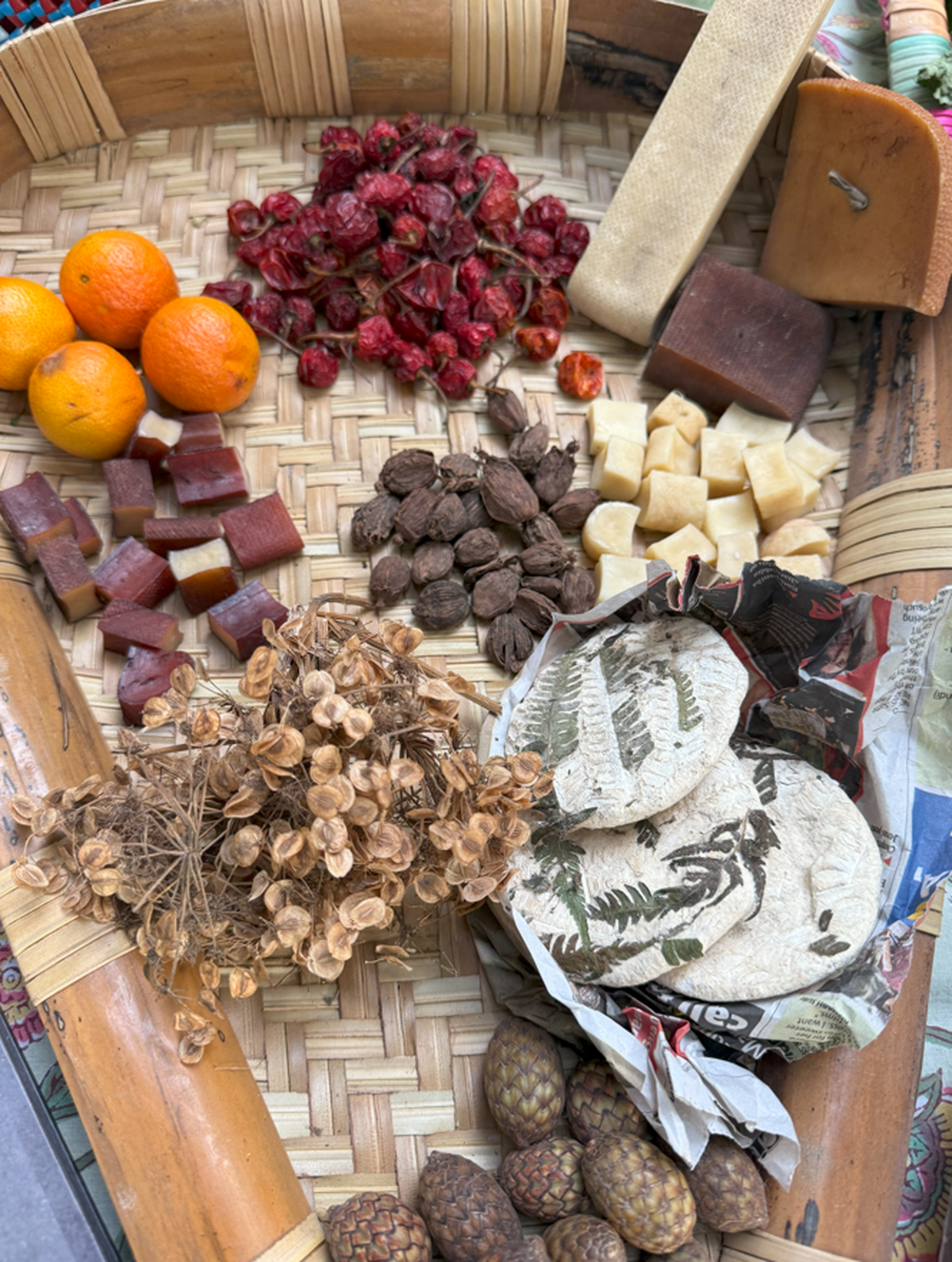
Chimping, hard chhurpi, bitter lemons that masquerade as oranges, dried dalle chillies, more chhurpi in all shapes and sizes, some black cardamom, yeast starters, and a fruit that I am yet to identify.
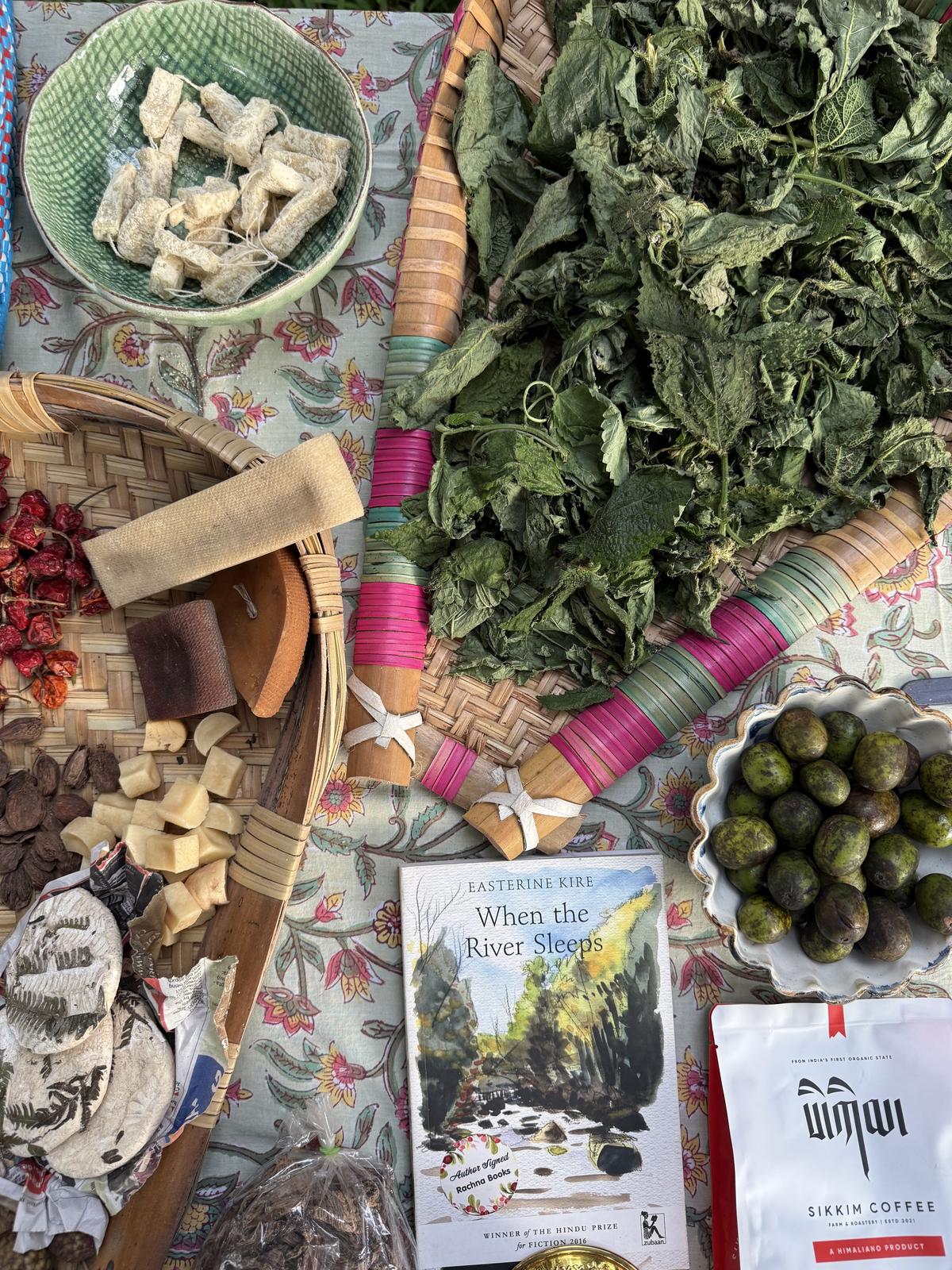
Chimping, hard chhurpi, bitter lemons that masquerade as oranges, dried dalle chillies, more chhurpi in all shapes and sizes, some black cardamom, yeast starters, and a fruit that I am yet to identify.

More chhurpi, stinging nettle, hog plums, Sikkimese coffee, and books from Rachna Books.  
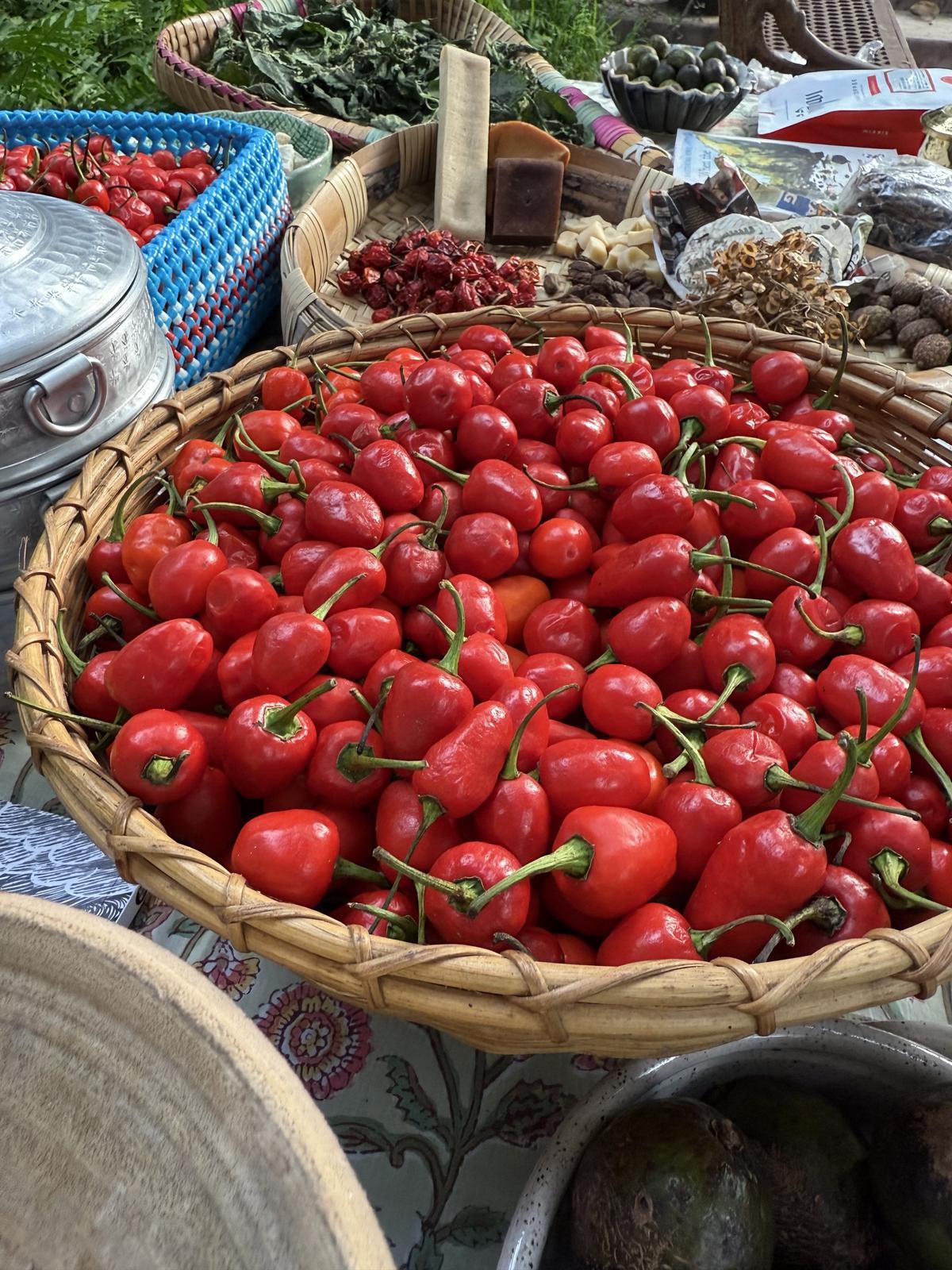
More chhurpi, stinging nettle, hog plums, Sikkimese coffee, and books from Rachna Books.  

I love the piles of dalle chillies one can find in markets across Sikkim, and the numerous bottles of preserved, fresh or dried chillies in every kitchen. No meal is complete without a dalle or three smashed into the rice, with a dollop of homemade ghee.  

I love the piles of dalle chillies one can find in markets across Sikkim, and the numerous bottles of preserved, fresh or dried chillies in every kitchen. No meal is complete without a dalle or three smashed into the rice, with a dollop of homemade ghee.  

I also packed stinging nettle that can be used in soups, hog plums to make a pickle, Sikkimese coffee, which seems to be all the rage in Gangtok, and books from my favourite bookstore in the city, Rachna Books.

The writer is co-owner of The Farm in Chennai.


Source link

Ruchika Sachdeva and a Tokyo winter


I started my label Bodice in 2011 as a young designer but I have always been conscious about the depletion of natural resources, and am constantly on the lookout for alternative materials. The spring-summer collection we launched in Delhi last month was a collaboration with Bemberg, an eco-friendly textile produced by the Japan-based Asahi Kasei. It is a 100% regenerated cellulose fibre processed from cotton linter that is biodegradable and soft.

Before I started work on the collection, I wanted to inspect their process myself. It wasn’t the first time I had used Bemberg or my first visit to Japan. But last November, I travelled to the plant in Nobeoka, a city known for its vintage vibe but rarely visited by tourists. Thanks to the Bemberg team and my many cool hipster friends in Tokyo, I was in and out of so many izakayas (informal bars), sampling everything from the raw chicken — tender and a delicacy, but not an experience I will repeat — to the umibudo or sea grapes, a seaweed that is an Okinawan speciality. People drink a lot here and it’s loud and fun.

Ruchika Sachdeva

Ruchika Sachdeva

Here are some of the stops I recommend if you are in Japan:

Shimada, Tokyo

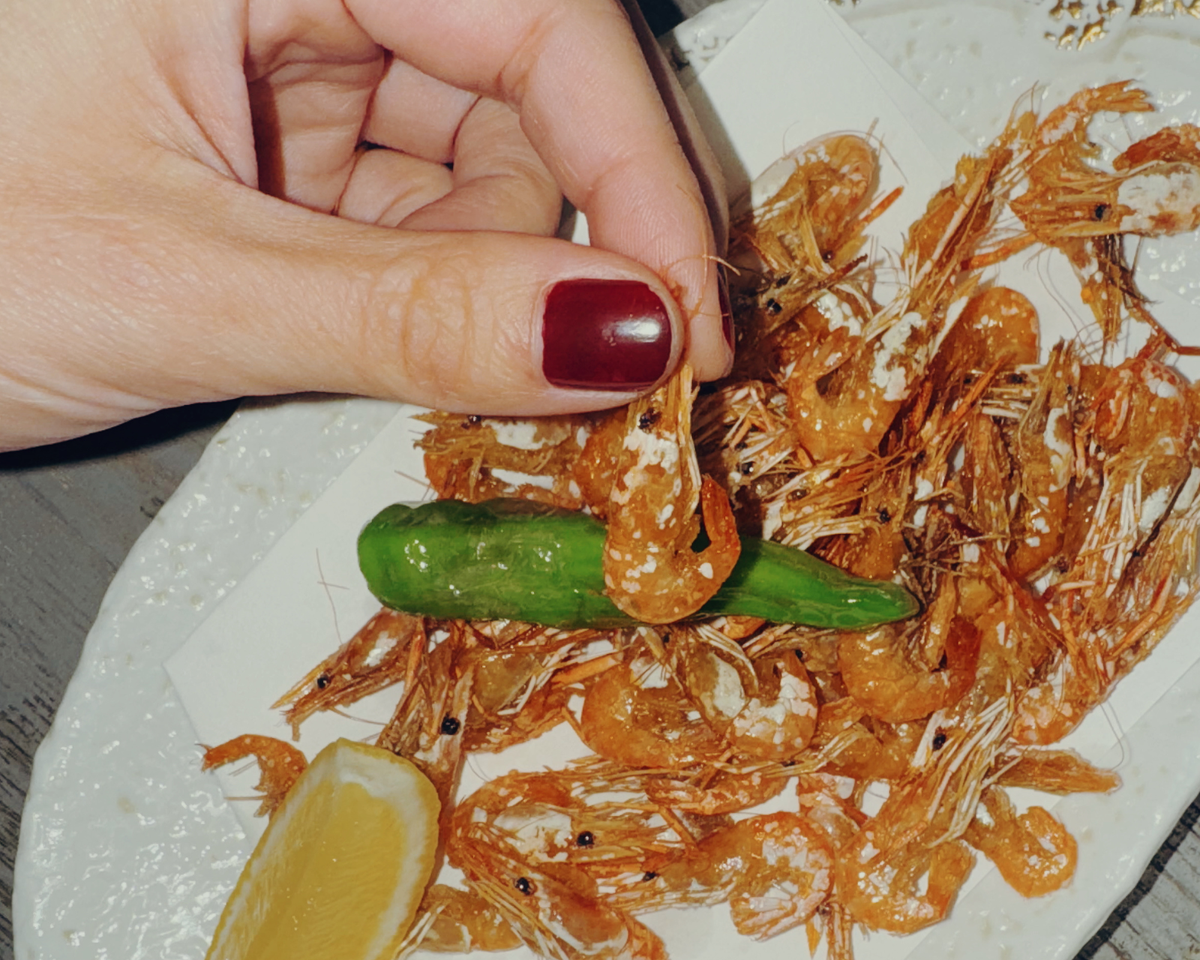
Tucked away in the Shinbashi district, Shimada is a quintessential izakaya where locals slip in after work — no fuss, just good food, drinks, and that unspoken rhythm of everyday Tokyo. When you’re in the city, you must go to a neighbourhood izakaya. The menu will probably be all in Japanese, so have Google Translate ready or take a chance and order what looks good. The grilled mackerel is simple but kind of perfect. Regulars have their own bottles stashed behind the counter with their names on them. It’s that kind of place.

Meguro, Tokyo

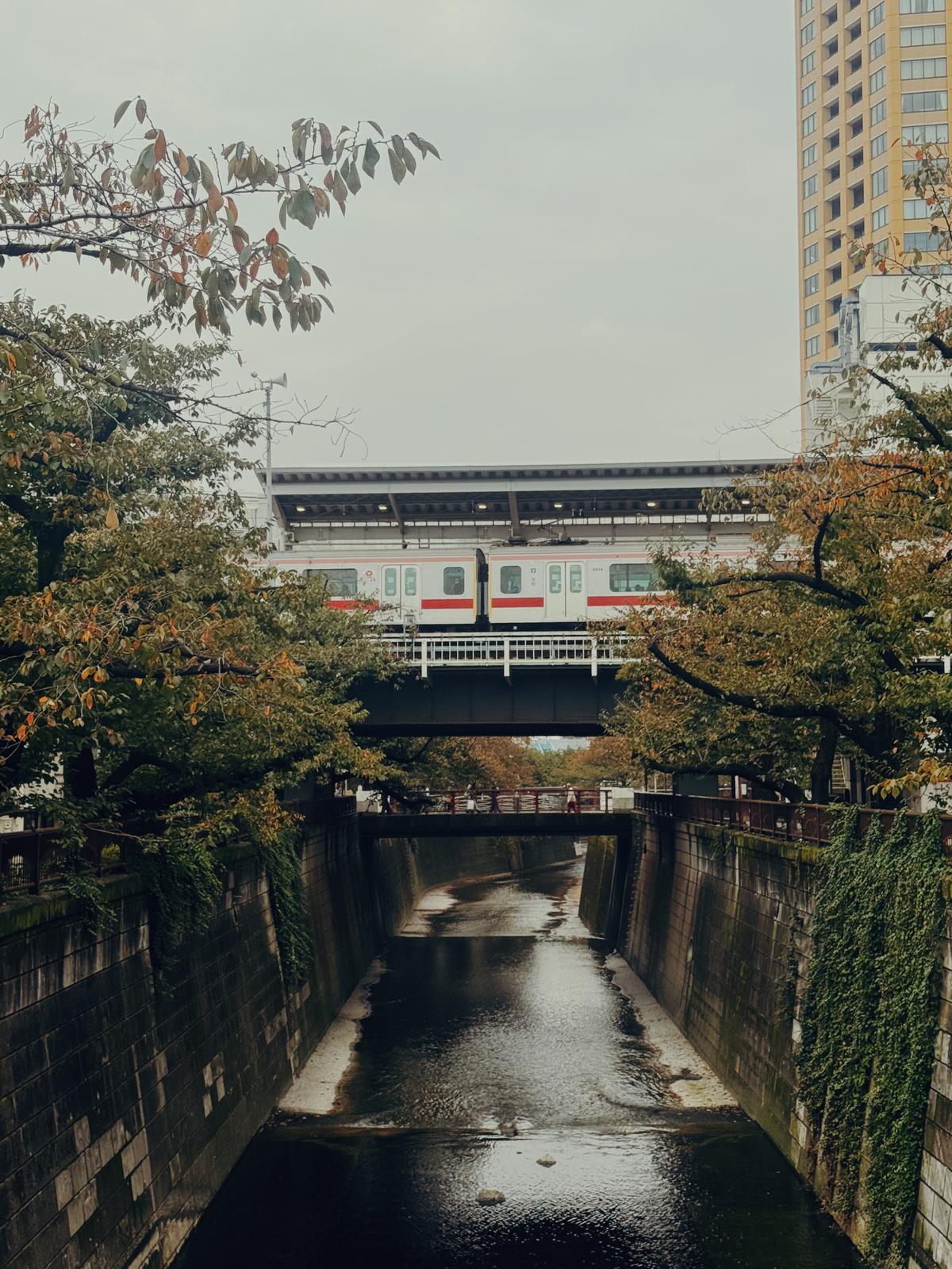
This part of the city ward, especially around Nakameguro and Aobadai, has a quiet confidence to it. Nothing screams for attention, but everything feels considered. The Visvim General Store is tucked into a residential street, almost like a secret you’re supposed to find. It’s part gallery, part shop, and each item inside feels like it’s been chosen with care. After you’ve wandered through the store, take a slow walk along the Meguro River. Even when it’s not sakura season, the path is peaceful and dotted with tiny cafes and shops that feel more like someone’s passion project than a business. It’s one of those neighbourhoods where you want to move slower, look closer.

Nishiki Market, Kyoto

This isn’t a ‘market’ in the usual sense — it’s more like a long, narrow alley packed with generations of small shops, each focused on just one thing and doing it really, really well. You’ll find everything from pickled plums and yuba (tofu skin) to tiny skewers of grilled squid, and knives so sharp they’re basically artwork. It’s busy, but not in a touristy way. Go hungry, be curious, and don’t worry if you don’t know what something is. Half the fun is figuring it out as you go.

Nishiki Market

Nishiki Market

Meiji Shrine, Tokyo

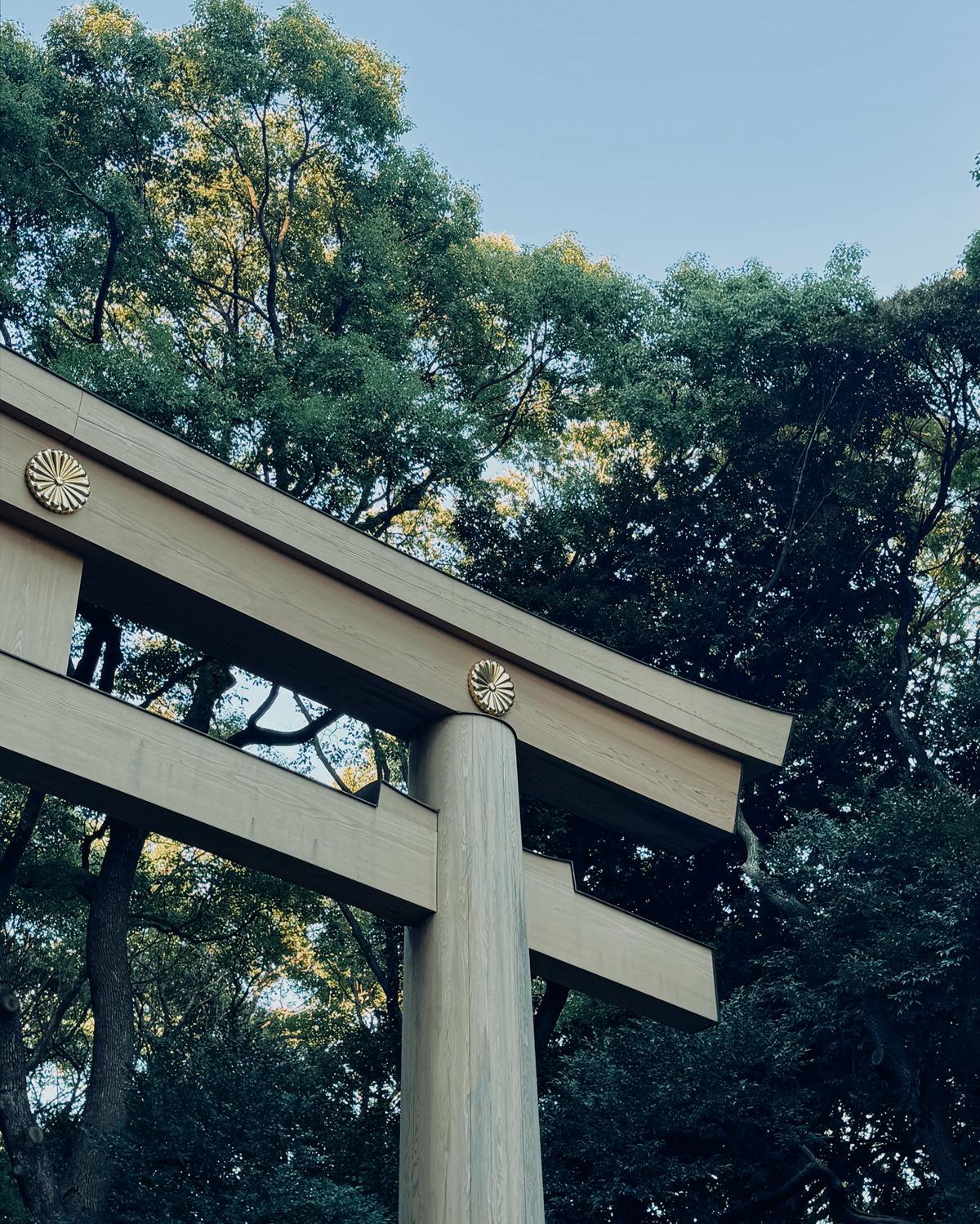
Tucked behind the chaos of Harajuku, the shrine feels like a portal. One minute you’re surrounded by noise and neon, the next you’re walking through towering torii gates into a forest that somehow muffles the whole city. The gravel crunches under your feet, and everything slows down. It’s not just a tourist spot — it’s where people come to pray, get married, breathe. The scale of it is quietly humbling. Take your time, maybe write a wish on one of the wooden ema plaques. Even if you’re not spiritual, it’s hard not to feel something here. Go early in the morning if you can, when it’s just you, the trees, and the sound of wind through leaves.

Lanterne Hanare, Tokyo

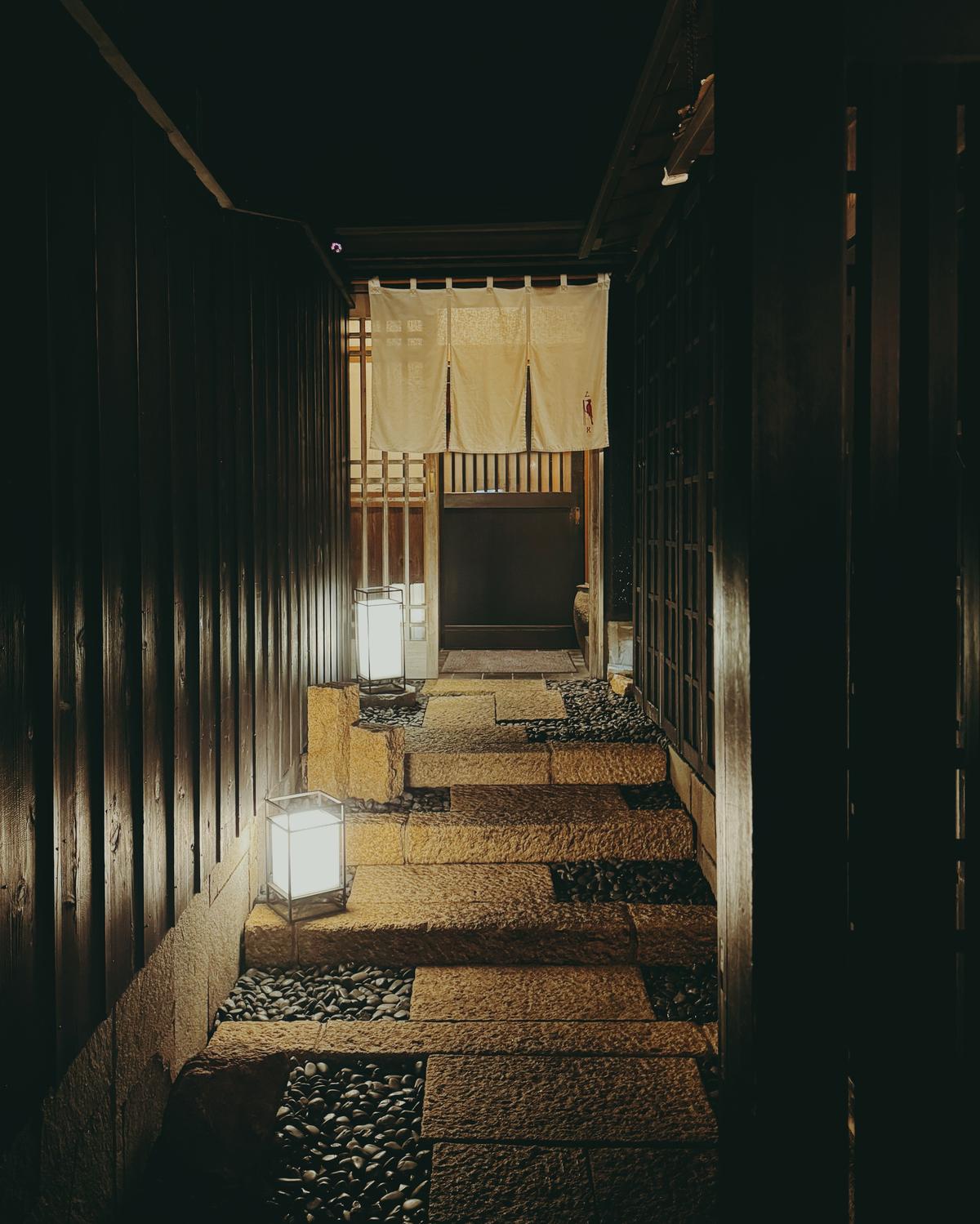
Down a quiet street in Higashi-Kitazawa, Lanterne Hanare sits behind a wooden facade that’s easy to miss if you’re not paying attention — which is kind of the point. It feels more like someone’s beautifully restored home than a restaurant. They do set meals here, you can’t really walk in. You have to make a reservation and let them know your preferences in advance.

Shimokitazawa, Tokyo

Walking through Shimokitazawa feels a bit like flipping through a very curated zine — vintage shops, record stores, small cafés tucked into alleyways, all layered together without trying too hard. The streets are narrow and easy to wander without a plan. People dress well here, but not to impress. Grab a coffee, poke around for old band tees or worn-in denim, and don’t be surprised if you end up staying longer than you meant to.

Kamo River, Kyoto

Right across from the opera house in Kyoto, the stretch of the Kamo River is a good place to take a walk. Locals hang out on the steps and, in good weather, nearby restaurants pull out tables so you can eat right by the water. There is something about the openness and rhythm of people passing by, you don’t have to do much here. Just sit, and let Kyoto move gently around you.

Tama, Tokyo

Tama is the kind of place that feels like a bit of a secret, even though it’s right in Shibuya. The space is small, with an open kitchen and shelves lined with natural wine. It pulls a cool, mixed crowd. Here you can try Okinawa cuisine which is different to the Japanese cuisine we know of, but nothing feels forced. It’s relaxed, stylish without trying.

The writer is founder and creative director of contemporary fashion label Bodice.


Source link

Regenerative travel | Vacations that give back


A wide gate opens into a four-acre forest farm, where flaming orange blooms of a palash tree greet guests at the entrance. It’s late evening in Gujarat’s Gir region, and the sun dips towards the horizon, giving way to a crisp February breeze. On one side, rows of 50 heirloom tomato varieties are fenced off to keep spotted deer from breaking in; on the other, tall sorghum shoots attract birds such as yellow-throated sparrows.

“It took two years of trial and error to shape this food forest, but we’re finally approaching an ecological model where diverse flora and fauna thrive within the landscape,” says Saniya Malhotra, an ecology architect and permaculture designer who trains local farmers to maximise yields. “The goal is a self-sustaining system inspired by natural forests. We’ve seen about 52 bird species such as the black kite, long-billed vulture, and purple sunbird return to the area.”

Woods at Sasan

Woods at Sasan

With 1,000 trees across 150 species, including custard apple and sweet neem, alongside rotational crops such as turmeric and fenugreek, the farm yields 700 kilos of vegetables annually.  Its produce sustains the kitchens of the abutting Woods at Sasan, India’s first regenerative hotel certified by Regenerative Travel, a New York-based booking agency that evaluates its 35+ members on employee well-being, carbon footprint, local sourcing, and immersive guest experiences. The online platform co-founded by Chinese-American entrepreneur Amanda Ho curates independently owned, eco-luxury hotels with a strong commitment to social and environmental impact — three of which are located in India.

Regenerative travel has been around for years, but the COVID-19 pandemic amplified the need for greener, smarter, and less crowded tourism. “Through our network, education programmes, and regional events [summits focused on using tourism as a tool to combat climate change], we’re driving a shift where tourism restores ecosystems, empowers communities, and celebrates heritage,” says Ho, who recently hosted a regenerative retreat for international creatives at the property.

Amanda Ho

Amanda Ho

Stringent checklists include commitment to environmental stewardship, social equity, and cultural integrity. Properties are measured on efforts to reduce environmental impact, adopt circular economy practices, and transparently reduce carbon footprints. A standout example is Alladale Wilderness Reserve in Scotland. Spanning 23,000 hectares, the property leads rewilding efforts in the Highlands, having planted nearly one million trees, restored peatlands, reintroduced red squirrels, and launched education programmes for local youth.

When tourists turn conservationists

India’s sustainable tourism market, valued at USD $26.01 million in 2022, is projected to reach $151.88 million by 2032, according to the Federation of Hotel and Restaurant Associations of India. Unlike sustainable travel, which minimises harm, regenerative travel actively improves destinations for lasting impact.

“In green travel, you’re still a tourist, but in regenerative travel, you become a participant,” says Vijay Dhasmana, an environmentalist and self-taught ecologist specialising in rewilding work that restores indigenous flora and fauna to degraded landscapes. His most significant project is transforming a 380-acre abandoned mining site on the outskirts of Gurugram into the Aravalli Biodiversity Park. Dhasmana points to the Thar Desert as an example. People visit for its sandy landscapes but often overlook the local species of flaura and fauna threatened by windmill projects. “Awareness isn’t enough to move the needle. Travellers must find ways to get involved, to become conservationists,” he adds.

Vijay Dhasmana

Vijay Dhasmana

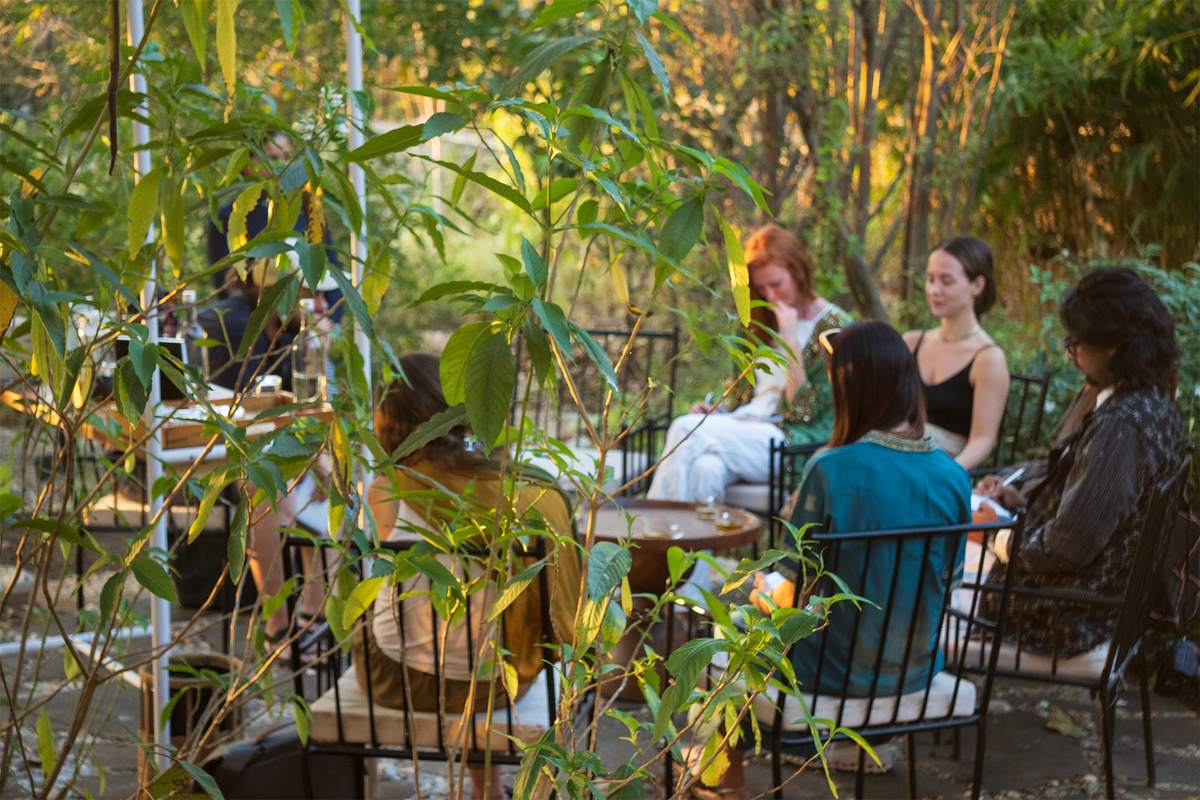
When the 38-key Woods at Sasan opened in 2018, its 16-acre mango orchard remained intact, and today, 280 trees dot the property. “Biophilic design [which incorporates natural elements into the built environment] guided our architecture,” says founder Maulik Bhagat. Guests are encouraged to participate in farming and planting trees, while also learning about the agricultural practices from an onsite horticulturist. The resort’s Community Development team has planted over 4,000 trees across 21 villages to conserve wild forest species such as peepul, teak, moringa, palash, and Indian gooseberry. A standout initiative is the mobile community library, which travels to 13 villages with over 2,300 books, fostering literacy.

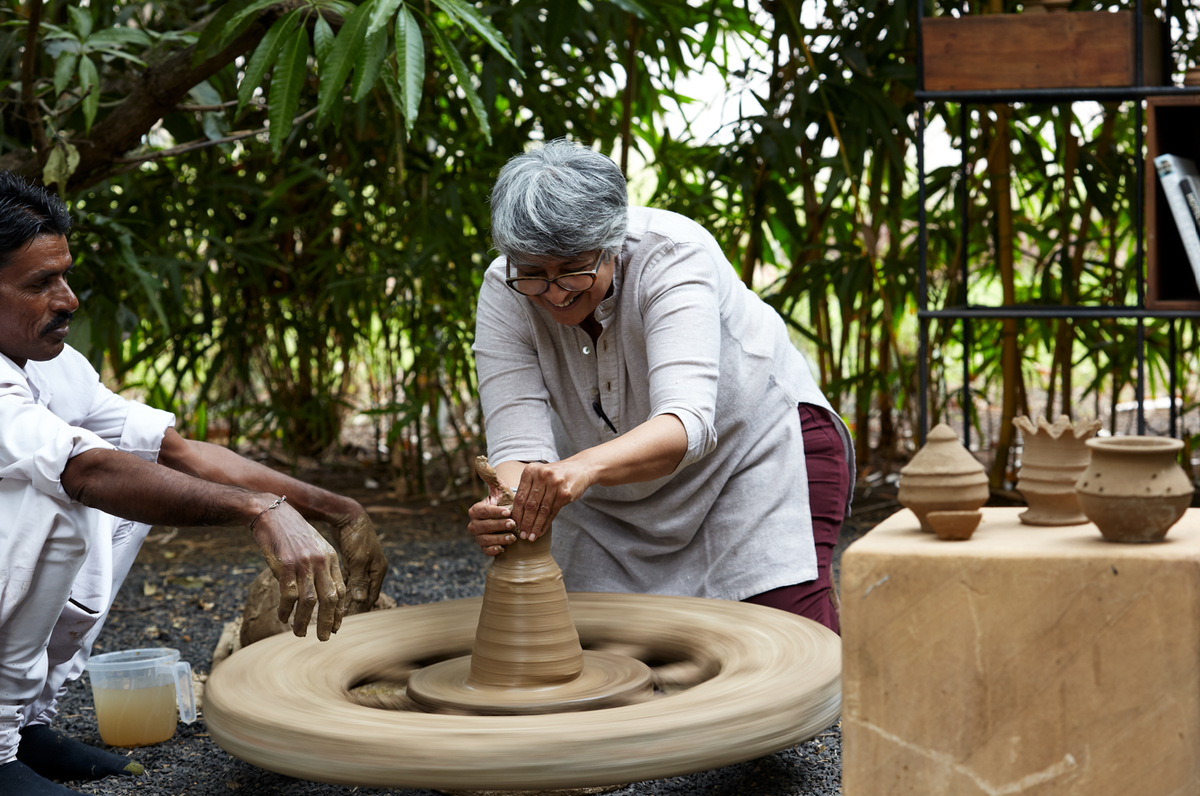
Guests interact with local artisans at Woods at Sasan

Guests interact with local artisans at Woods at Sasan

“Regenerative travel is a relatively new term, but it has existed for years in India. Earlier, people lacked funds to maintain heritage homes, and the only way to keep these structures from crumbling was to renew and regenerate them as tourism entities. And much of it happened unconsciously.”Shoba RudraFounder of RARE India, a consultancy that partners with concept hotels with a strong focus on conscious travel

Shoba Rudra

Shoba Rudra

Where leopards are king

While Woods at Sasan has gained global recognition for its regenerative efforts, it is part of a broader movement across India. In Rajasthan’s Jawai, Varawal Leopard Camp exemplifies community-driven conservation. Unlike other wildlife zones, Jawai is governed by its locals. Conservationists patrol the area, tracking the big cats and sharing data with the forest department.  Owner Pushpendra Singh Ranawat, whose family pioneered leopard safaris in 1997, has introduced quieter jeeps, banned guests from leaving vehicles or approaching leopard rocks (where the animals reside), enforced silent phone modes, and implemented strict no-littering policies.

Pushpendra Singh Ranawa

Pushpendra Singh Ranawa
| Photo Credit:
Rahul Takshak

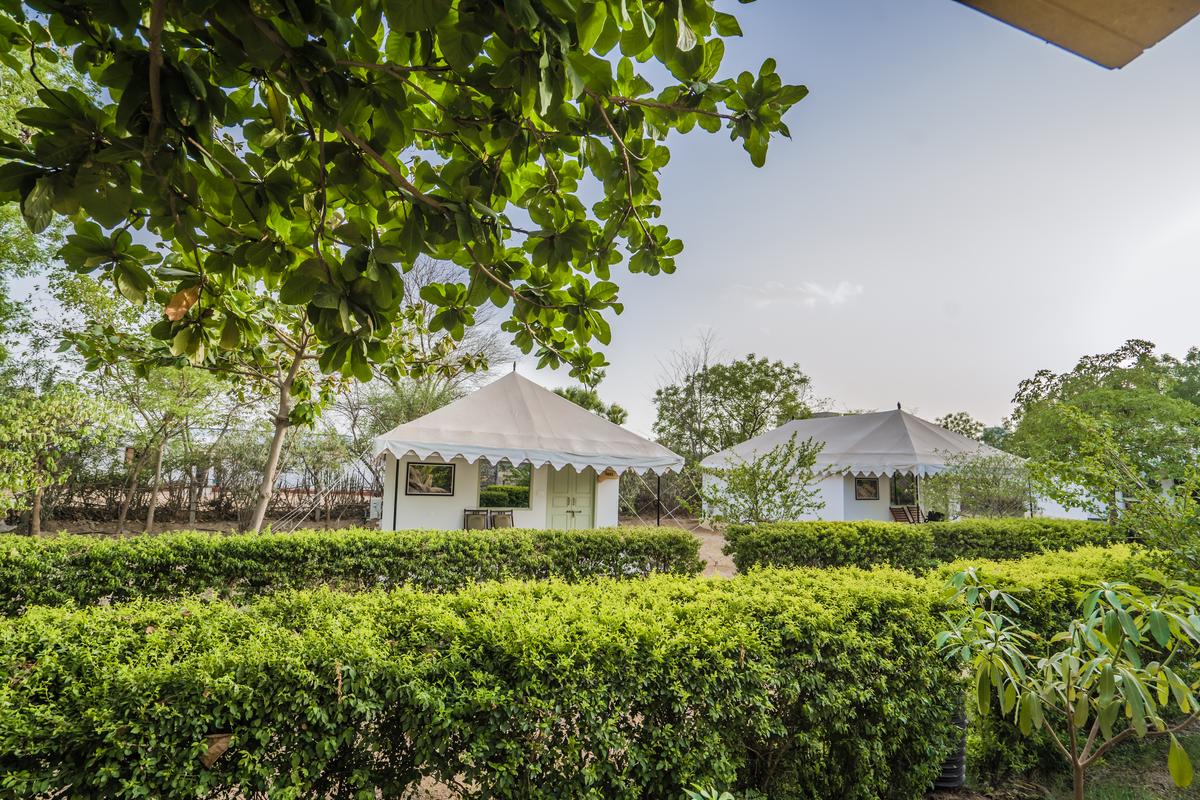
The 100-acre property maintains a low footprint with just four tents, set away from leopard territories. “Post-pandemic, we added 10 rooms but removed them in 2023 to attract only those seeking Jawai’s quietude and genuinely interested in wildlife,” he says, pointing to a move that echoes regenerative practices. Safaris run year-round but are strictly regulated, with night activities banned as leopards descend to prowl the lowlands.

Varawal Leopard Camp

Varawal Leopard Camp

Over-tourism remains a concern in regenerative travel, notes Ranawat. “Despite 11 safari zones, most vehicles crowd into just five or six for the best sightings.” In response, villages have begun charging fees and capping vehicle numbers. “Hotels must follow suit,” he insists. “Panchayats should restrict NOC [no objection certificates] in Varawal village and guide investors to other areas.” Currently, there are 65 NOCs in Jawai, with 65 more issued across its 11 zones. Ranawat believes each zone should ideally have no more than 10 NOCs.

Tourists at the leopard rocks

Tourists at the leopard rocks

In the Western Ghats

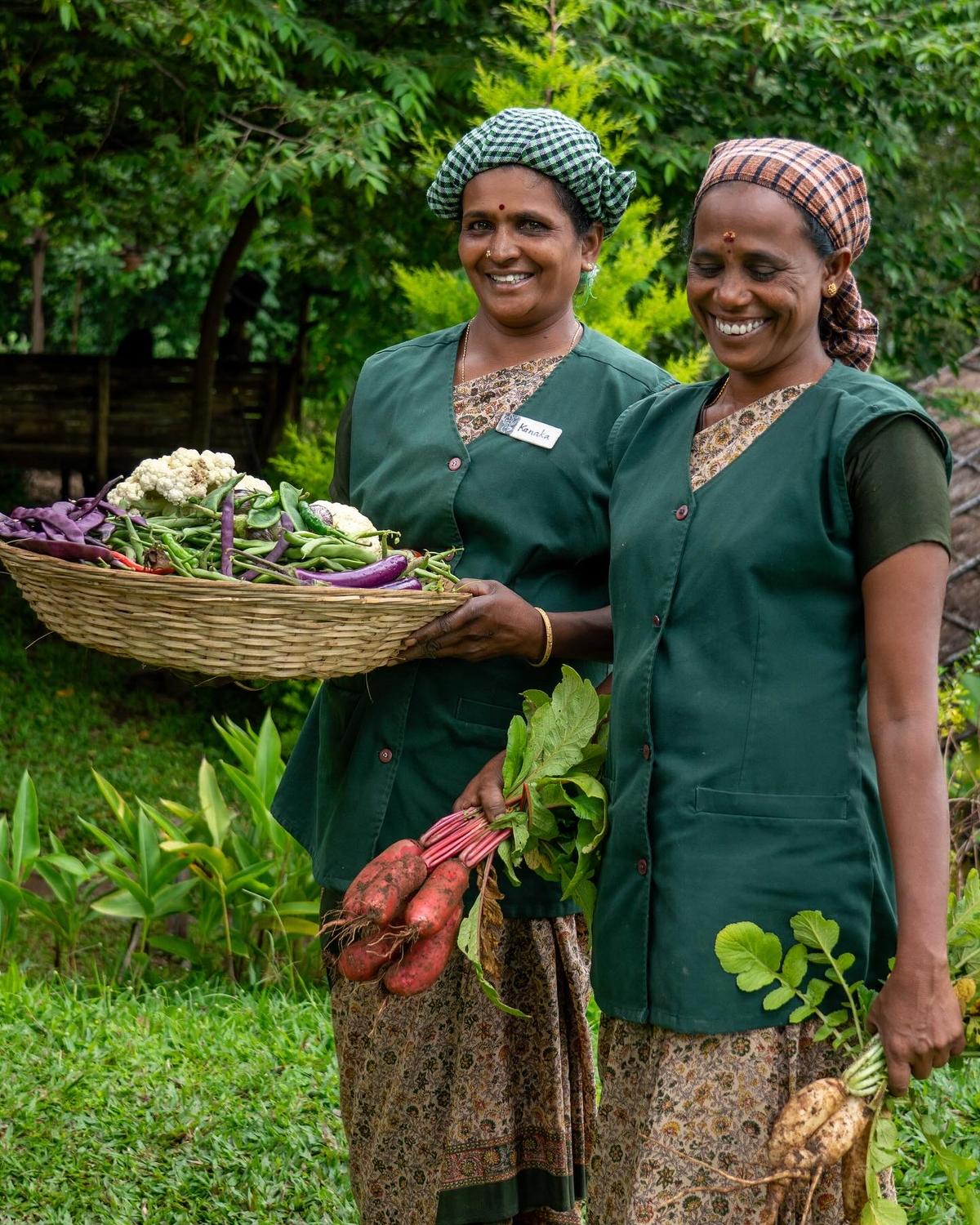
In Kerala’s Marayoor region, lush forests of the Western Ghats shelter The Mudhouse Marayoor, a boutique resort pioneering barefoot luxury. Its traditional mud cottages and tree house, built with locally sourced materials from a 15-kilometre radius, reflect regional architectural styles. “Our structures are a collaborative effort between the native tribal community and our team,” says co-founder Deepak Suresh. Nearly 90% of employees are locals, mostly single and elderly women — many gaining financial independence for the first time.

Employees at The Mudhouse Marayoor

Employees at The Mudhouse Marayoor

Mindful of the dolphins

Beyond land conservation, responsible tourism is reshaping waterways, too. Floating hotels have long struggled with sustainability, but Antara Cruises — also recognised by Regenerative Travel — is setting new standards. Sailing along the Ganga through Bhitarkanika National Park, India’s second-largest mangrove forest, it works with local stakeholders along the cruise’s route to preserve cultural heritage. 

An Antara cruise ship sailing along the Ganga

An Antara cruise ship sailing along the Ganga

Specialising in low-impact, low-volume sailing, Antara’s largest vessel accommodates just 56 guests. “We prioritise minimising our environmental footprint, especially for marine life,” says founder and chairman Raj Singh. Advanced onboard systems ensure zero discharge, with oil separators preventing river contamination. To protect aquatic ecosystems, particularly the endangered Gangetic dolphins, all ships are fitted with electronic deterrents and hospital-grade silencers to reduce noise pollution.

With travellers embracing more purpose-driven holidays and experiences tailored to support local communities and wildlife in the places they visit, it’s time to expand the scope of regenerative travel in India. Especially in the country’s many biodiversity hotspots.

The Mumbai-based journalist writes on food, art, culture, and travel.


Source link

Scientist shares 15 effective anti-inflammatory habits he swears by |


Scientist shares 15 effective anti-inflammatory habits he swears by

Inflammation is a double-edged sword. It’s the body’s natural defense mechanism, which helps to heal injuries and fight infections. However, when inflammation becomes chronic, without an invader or infection, it can silently wreak havoc, by accelerating aging and increasing the risk of serious illness.
Ollie Whitby, a health scientist, with a background in biomedical research, and specialising in the molecular mechanisms of chronic diseases like cancer and dementia, has now shared some easy and effective anti-inflammatory habits. From morning walks to a good diet, these habits can ease up inflammation and also benefit your overall health.

Reduces inflammation

“Inflammation is our body’s natural defense. It helps heal injuries and fight infections. But in today’s world, many of us live in a chronic state of inflammation, which can quietly accelerate ageing and raise the risk of diseases like heart disease, Alzheimer’s, and cancer. This happens because the immune system stays switched on — meaning the body keeps releasing pro-inflammatory cytokines like IL-6, TNF-α, and IL-1β, long after the original threat is gone,” Whitby says in his Instagram post.

World Health Day: Most Important Health Tests for Women- Doctor Explains

  1. Morning walk: The scientist notes that a morning walk or light exercise boosts lymphatic flow, circulates immune cells, increases anti-inflammatory cytokines, and lowers cortisol, the stress hormone.
  2. Load up on nutrient-rich food: Whitby swears by berries for their antioxidant properties. He also suggests to add leafy greens (rich in folate and magnesium), and cruciferous vegetables like broccoli (high in sulforaphane) into daily meals.
  3. Cut back on added sugars and refined carbohydrates: Limiting added sugars and refined carbohydrates—think white bread and pastries—helps prevent blood sugar spikes that fuel inflammation.
  4. Manage stress: Practices like breathwork, meditation, and spending time with loved ones reduce cortisol, which can otherwise promote pro-inflammatory cytokines.
  5. Resistance training FTW: Resistance training two to three times a week releases myokines, and anti-inflammatory compounds like IL-6, IL-10, and irisin, while improve glucose control.
  6. Maintain a healthy body fat: Excess fat, especially visceral fat around organs, releases inflammatory molecules. Keeping body fat in check is key.
  7. Eat your fish: Eating fatty fish like salmon or mackerel two to three times weekly provides omega-3s (EPA and DHA), which lower pro-inflammatory cytokines and boost inflammation-resolving compounds like resolvins and protectins, according to the scientist.
  8. Use better cooking fats: The health scientist recommends to cook with extra virgin olive oil, butter, or coconut oil instead of refined seed oils.
  9. Sleep adequately: Aim for seven to nine hours of quality sleep nightly. He notes that poor sleep elevates inflammatory markers like IL-6, CRP, and TNF-alpha.
  10. Turmeric and black pepper: “Regularly cook with turmeric and black pepper paired together to enhance curcumin absorption (anti-inflammatory),” he adds.
  11. Stay active: Get 150 minutes of moderate cardio each week to lower inflammatory cytokines and improve blood flow, aiding immune cells in clearing inflammation.
  12. Embrace nature: According to the scientist, spending time outdoors daily exposes the body to phytoncides from trees and negative ions from moving water, both of which reduce inflammation and stress.
  13. Limit screen time before bed: The scientist also agrees with the popular science-backed opinion that avoiding screens 1 hour before bed will protect melatonin (antioxidant) and reduce inflammation from circadian disruption.
  14. Oral health matters: He adds that prioritizing oral health is important. According to him, regular brushing, flossing, and tongue scraping reduce harmful bacteria that can enter the bloodstream and trigger low-grade inflammation.
  15. Limit exposure to toxins: Reduce your exposure to tobacco, alcohol, and microplastics, which cause oxidative stress and cause inflammation.


Source link

Behind the scenes of India’s 73-year-old travelling Gemini circus


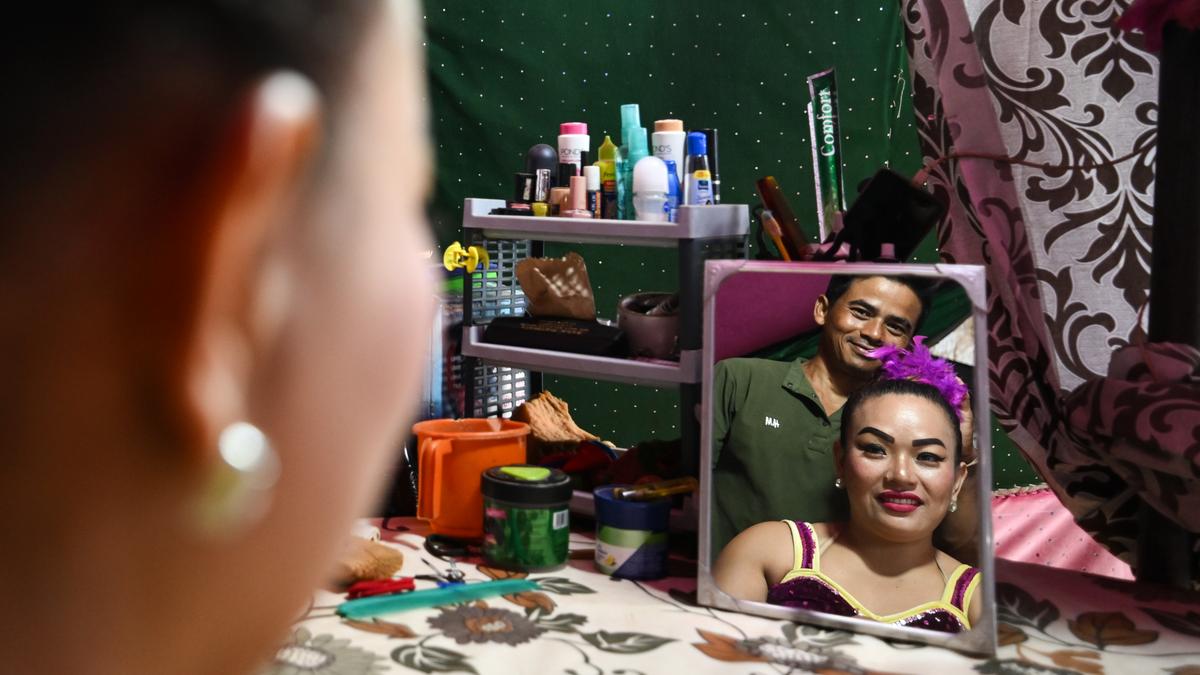
“Do you know the Kamal film Apoorva Sagodharargal? He shot it at our theatre. With us. It was magical,” says Lakshmanan Chakyiath, the 77-year-old production manager of Gemini Circus. Referencing this 1989 tragic Tamil classic set in the contrastingly exuberant world of a circus, Lakshmanan launches into a long conversation about the history of one of India’s oldest modern circuses which began in Billimoria, Gujarat in 1951. But this story of the likes of former Prime Ministers Jawaharlal Nehru, Indira Gandhi and Atal Bihari Vajpayee having watched the performances is one that has been oft-repeated.

Gemini Circus begins in Chennai, on Monday. Photo: Johan Sathya Das

Gemini Circus begins in Chennai, on Monday. Photo: Johan Sathya Das
| Photo Credit:
Johan Sathya Das Jai

The more fascinating tale is that of its people. Composed of many different physical attributes, the circus folks of Gemini have worked and trained with this company for years, beginning usually as little clowns and working their way up the ladder, sometimes quite literally, to perform stunts and become heroes of wide-eyed young children who watch the two-hour long shows in utter rapture.

We meet artists who hang from the pinnacle of the circus tents, form human pyramids and pedal cycles with their hands, to tell you their story.

Asmani Macca and Yaseen Harum

Gemini Circus begins in Chennai, on Monday. Photo: Johan Sathya Das

Gemini Circus begins in Chennai, on Monday. Photo: Johan Sathya Das
| Photo Credit:
Johan Sathya Das Jai

The popular phrase ‘joint at the hip’ needs to be modified to fit Asmani (30) and Yaseen (25), two Swahili-speaking Tanzanians who have been part of the Gemini circus for a year now. These two acrobats who stun audiences with audacious stunts are joint at the head instead.

“I joined the circus when I was seven,” says Asmani who is from Kilimanjaro. “I was 10,” chimes in Yaseen from Zanzibar. Both these young acrobats would do flips and gymnastics to elicit claps from friends and neighbours. When the call to join a touring circus company arrived, the two jumped at the opportunity as it meant helping the family out financially.

“Tanzania did not have these big circuses. We would instead go as a group, performing fire dances, bamboo dances and other conventional acts at hotels to entertain tourists who’d arrive from different parts of the world. We learnt to do acrobatics by experimenting around each other. It was fun in the beginning. Now, it is a job like any other,” says Yaseen who is more comfortable speaking in English than Asmani is.

Gemini Circus begins in Chennai, on Monday. Photo: Johan Sathya Das

Gemini Circus begins in Chennai, on Monday. Photo: Johan Sathya Das
| Photo Credit:
Johan Sathya Das Jai

As part of its six member crew that continues to do fire dances and pyramids at the circus, Asmani says that it is the joy they see on people’s faces that keeps them going. They have travelled to England, Scotland and India for their performances and enjoy being in London and Liverpool the most because they find pockets of home in the land of their colonisers. “Many come up to us and want to take selfies. They want to touch our hair. It is amusing,” says Yaseen.

Asmani wants to go home and begin a hardware store. Yaseen is into fashion and would like to set up a business selling “beautiful shoes to the ladies”. Until then, the selfies will have to do.

Arthi Matho

Gemini Circus begins in Chennai, on Monday. Photo: Johan Sathya Das

Gemini Circus begins in Chennai, on Monday. Photo: Johan Sathya Das
| Photo Credit:
Johan Sathya Das Jai

Arthi Matho, a 40-year-old cycle stunt artiste from West Bengal is one of the senior-most woman performers in Gemini circus and is well-respected for her politeness.

“When I joined the circus, I was five. I was reluctant to leave my home and parents. But circumstances were dire at home and I had no choice. When I saw my father leave, I was actually sad. But five minutes later, I encountered lions and monkeys at the circus. I completely forgot everything else. The circus has been my life since,” she says.

Gemini Circus begins in Chennai, on Monday. Photo: Johan Sathya Das

Gemini Circus begins in Chennai, on Monday. Photo: Johan Sathya Das
| Photo Credit:
Johan Sathya Das Jai

Arthi does not intend to make these statements seem grand. She is just as sincere about them as she is about the cycle she performs tricks on. When she is on stage, she says that she feels a firecracker burst inside her. The energy of the stage is something she truly cherishes.

Arthi has travelled across India for her performances but is in love with Kerala as she likes the greenery. It is also very walkable and the crowds are sweet, she says.

She says that her son who has just finished his Class X exams is in Chennai for his break and to watch his mother perform. “Life has been on the road so he must travel to me. It is difficult but I know no other life,” she says.

Bikram Thapa and Sania Thapa

Gemini Circus begins in Chennai, on Monday. Photo: Johan Sathya Das

Gemini Circus begins in Chennai, on Monday. Photo: Johan Sathya Das
| Photo Credit:
Johan Sathya Das Jai

This loving couple that met at the circus, is up at 6am each day to ensure that the dangerous stunts they do land well. “I am concerned for both our safety so practice is key,” says Bikram (40) from Assam’s Mojai region.

This flying trapeze artiste spends much of his time high up by the ‘big top’ of the cylindrical tent jumping from bars suspended at the top and being caught mid-air. No single performance scares him though as he has been training since he was 10 years old. “When I was young, the circus was a whole world of possibilities. The lights, music, the public and animals. What more could a child want? I was in wonderland,” he says. “It is also where I met my wife,” he adds.

A chatty Sania, a ring trapeze artiste, goes over their routine. After waking up, the two head straight to the performance ring and get stretches out of the way. Right after, they practise new tricks for an hour. “We begin rehearsing the act for the evening and are very conscious about getting it right. Then, there is the standard Indian breakfast with some focus on protein — eggs, fish and chicken. Circus artistes need to look good and do great tricks. It is an art,” she says.

Gemini Circus begins in Chennai, on Monday. Photo: Johan Sathya Das

Gemini Circus begins in Chennai, on Monday. Photo: Johan Sathya Das
| Photo Credit:
Johan Sathya Das Jai

Sania also joined the circus when she was young. They met during a performance in West Bengal and the rest, she says, is history. When asked if they get bored of doing the same routine over and over again, Sania says that it is akin to going to office and sitting at a desk to do a task. Except here, she contorts her body to fit through hoops suspended in the air.

“People used to come in hordes when the animals were around but now, the focus has shifted to artistry and innovation. That is why we want more people to come and watch us. It is a performance like any other song or dance concert,” Bikram says.

Gemini Circus begins in Chennai, on Monday. Photo: Johan Sathya Das

Gemini Circus begins in Chennai, on Monday. Photo: Johan Sathya Das
| Photo Credit:
Johan Sathya Das Jai

The Gemini Circus performs two shows everyday between Monday and Friday at 4.30pm and 7.30pm. Three shows are performed every weekend and on public holidays at 1.30pm, 4.30pm and 7.30pm. Tickets are priced at ₹500 each and can be purchased on BookMyShow or at YMCA ground in Perungudi, OMR.


Source link

Meet Tamil Nadu headmaster who rebuilt a government school and the lives of its students


Xavier Chandra Kumar

Xavier Chandra Kumar
| Photo Credit: Special arrangement

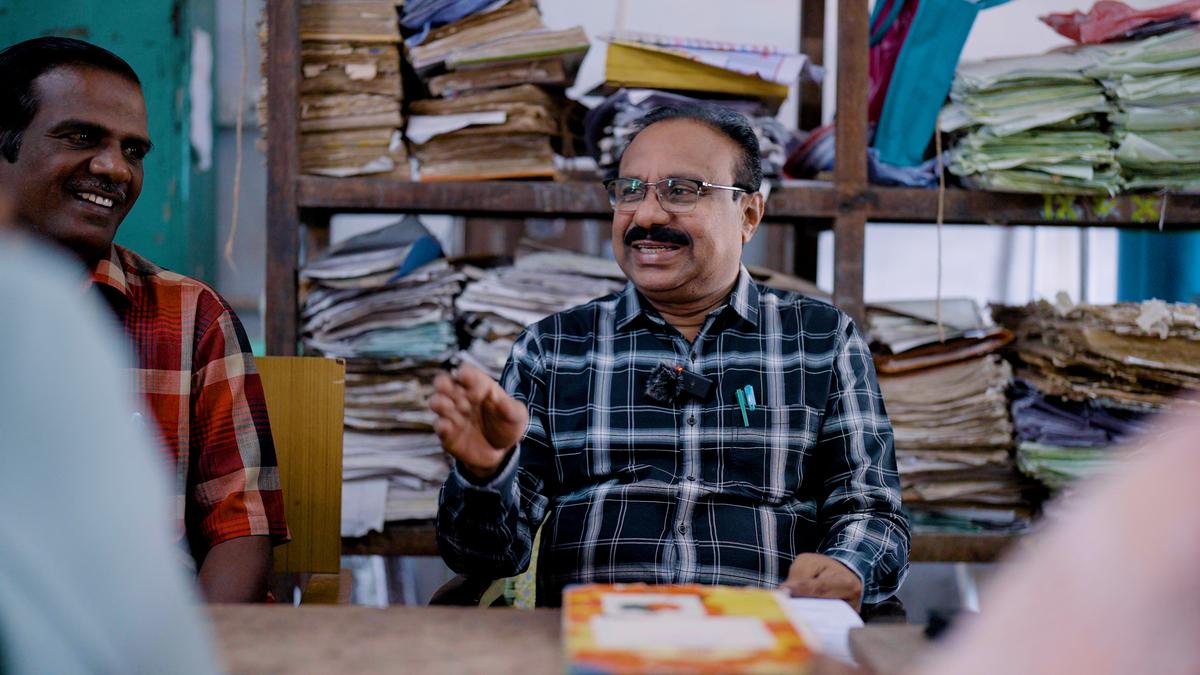
When Xavier Chandra Kumar first stepped into Vallalar Government Higher Secondary School in Kandamangalam, Viluppuram district as its principal, he knew he had his task cut out. “It was not a school,” he recalls. This was in January 2022. “Due to a road expansion project nearby, ten buildings were destroyed and there was no compound wall for the school,” recalls the 58-year-old. Anti-social elements used it at night to drink, while during the day, he found students roaming outside during school hours. Xavier got to work, taking on one issue at a time. Today, the school is not what it used to be thanks to his efforts, for which he recently won the Shikshagraha award 2025.

When Xavier, a stickler for discipline, graduated from teacher to headmaster, he decided to first get the building in order.

“I got the compound wall constructed, on which we painted works of art that also conveyed a message,” he says. Once the wall was spruced up, he invited parents of students from private schools who came in for admission, to contribute paint for its walls. “We collected a total of 540 litres,” he says, adding that gradually, the building came to life. “Teachers too pooled in money to improve its infrastructure.”

Once the building was as good as new, students started coming in. “I identified 14 problematic students who would jump over walls and bunk classes, also involving in substance abuse,” says Xavier. Communicating with them, he realised, was not going to be easy. “These children came from either broken families or were going through trauma at home themselves,” he notes. Their behaviour — right from their refusal to groom themselves to not sitting through classes — was their response to what they were experiencing back at home.

Xavier approached them through affection, and when that didn’t work, he used enforcement. “Once, I announced that boys cannot appear for their exams if they did not cut their hair,” he recalls. “I had taken a pair of scissors and comb to school then, telling them that they will have to go past me if they wanted to write exams.” That day alone, 64 boys got their hair cut.

For boys who involved in substance abuse, Xavier got them to attend therapy, with some of them giving up the habit after a few months. “Of those 14 students, eight are in college now,” he says. One of his students, during an agitated state, hit Xavier on the head, for which he needed stitches. “This became a huge issue that garnered media attention, with teachers demanding he be sent out of school,” he says.

Xavier, though, helped enrol him at a school in a nearby village. “The student eventually went on to do his Bachelor’s in Computer Science,” he says. “During his first year in college, he came visit me.” For Xavier, it was among his life’s best moments.


Source link

Nicole Wallace and Gabriel Guevara’s Spanish romance saga sets release window for ‘final chapter’; watch teaser


After breaking streaming records with their almost too-hot-to-handle tangled romance, Nick and Noah will return for what has been teased as ‘The Final Chapter’ in the Culpables trilogy. Our Fault (Culpa Nuestra)—the third and final instalment in the Spanish film series starring Nicole Wallace and Gabriel Guevara—now has a release window, and yes, Prime Video has dropped a brand-new teaser trailer to offer a sneak peek into the firestorm that is coming to you sooner than you’d expect.

Our Fault (Culpa Nuestra) teaser trailer is out now!

Nicole Wallace (Noah) and Gabriel Guevara (Nick) are back to finish what they started, and they welcome you back to their ‘Wicked Game’. The teaser trailer, dropped by Prime Video, doesn’t give too much away—but it doesn’t have to.

The teaser opens with a moment that says everything without a single word. Noah spots Nick across the room at a party. Her eyes linger after spotting the familiar face. But Nick walks right past her, cold and unreadable. After everything that unravelled in Your Fault (Culpa Tuya), it’s no surprise, but it doesn’t make it easier for Noah, does it?

Still, with Noah and Nick, it’s never that simple. They’re step-siblings, but their history runs deeper than just family ties. Despite heartbreak and betrayal, there’s unfinished business they can’t just walk away from even if they tried.

The teaser then cuts to Noah sitting in the passenger seat of Nick’s car. She’s stealing glances at him, clearly tempted by his mere presence.

And in the next shot, we see them at their home, with Nick gripping Noah’s arm, holding on just long enough to hint he’s not ready to let her go.

Our Fault (Culpa Nuestra) release window: When to watch the final part of the Spanish romance?

While there’s no exact date yet, Prime Video has confirmed that Our Fault is slated for October, 2025. That gives fans a few more months to go through the precious instalments—My Fault (Culpa Mía) and Your Fault (Culpa Tuya)—if they haven’t already.

What to expect from Our Fault (Culpa Nuestra)?

The final chapter is coming—and fans aren’t ready to say goodbye.
Credit: Prime Video

The final film picks up after the heartbreaking ending of Culpa Tuya, where trust was shattered and loyalties questioned. After Nick feels betrayed by Noah, he hurts her enough to take a step back. Misunderstood and misguided, Noah, though unwillingly, ends up damaging her relationship with Nick beyond repair.The new part is expected to see them confront and address the differences that harmed their relationship. Will they ever be able to look past the hurt they have caused each other? And if yes, will their parents finally admit it was “our fault”? Well, October can’t come any sooner!

For more news and updates from the world of OTT, and celebrities from Bollywood and Hollywood, keep reading Indiatimes Entertainment.


Source link

7 parenting tips by Sadhguru that can be life changing


7 parenting tips by Sadhguru that can be life changing

Sadhguru, known the world over for his life-changing ideologies, has often spoken about parenting your children in the right manner. While most experts believe that when it comes to parenting, there is no one size fits all, however, there are some key tenets to parenting, which according to Sadhguru, can completely transform your parenting style. Here they are…

Create a home that is free from stress, anger and anxiety
Parenting is a difficult task, and one that requires immense patience, and perseverance. Hence, most parents, at some point, have had a meltdown, and lost patience with their children. However, to raise gentle children, one has to create, or rather nurture a loving environment at home – one that is free from stress, anger, and anxiety. This is the primary responsibility of parenting.

4

Children don’t need a ‘boss’, they need parents
As a parent, your primary responsibility is to be there for your child – and not act as his/her boss. While it is true that your child should take your opinion on everything and anything that he/she does, it is equally true that you have to give them the freedom to make his/her own decisions too. Children do not appreciate someone hovering on their heads, rather they need someone they can go to for advice.
Lead by example
Want your child to stop watching the Television, and start reading books? Then start by doing it yourself. You can’t expect your child to start doing anything you want him/her to do, without displaying it yourself first, according to Sadhguru. Learn to lead by example – it is okay to tweak your schedule a little here and there to accommodate your child’s growing needs, and inculcate good habits in his formative years.
Do not put them in a box
Sadhguru says that restricting children to a certain sort of life, replete with rigid timeframes, ideologies and deadlines stunt their growth. While a certain amount of discipline is always needed, children need space to grow, and a space to actually understand and differentiate their rights from wrongs. Do not box your child into what you think is right, at least not always.

Relook their education system
Sadhguru believes that the sole purpose of education is not just bookish knowledge, but also worldly knowledge, global affairs, etc. For this, it is important that one should invest in a curriculum that moulds them into well structured individuals with wings to fly, rather than someone who only knows what the books teach him/her. An academic institution should be able to expand your child’s horizons, not clip it.

22

Let them experience nature
It is extremely imperative for kids to experience nature, says Sadhguru. For this, it is important that apart from the tech-laden world they live in, kids are exposed to greenery for a couple of hours each day, whether it is activity based or simply walking around, reading a book, or having a picnic. Nature has the power to heal, not to forget, it is good for your child’s immunity as well.
Do not burden your child
There will always be someone better than your child. While this might be a tough pill to swallow, it is the universal truth, and one that every parent has to accept. However, that does not mean that you can burden your child with your expectations, says Sadhguru. Remember, each child is unique, and the benchmark for success is different for everyone, so do not get tied down by only one definition of success, when it comes to your child.


Source link