Life & Style

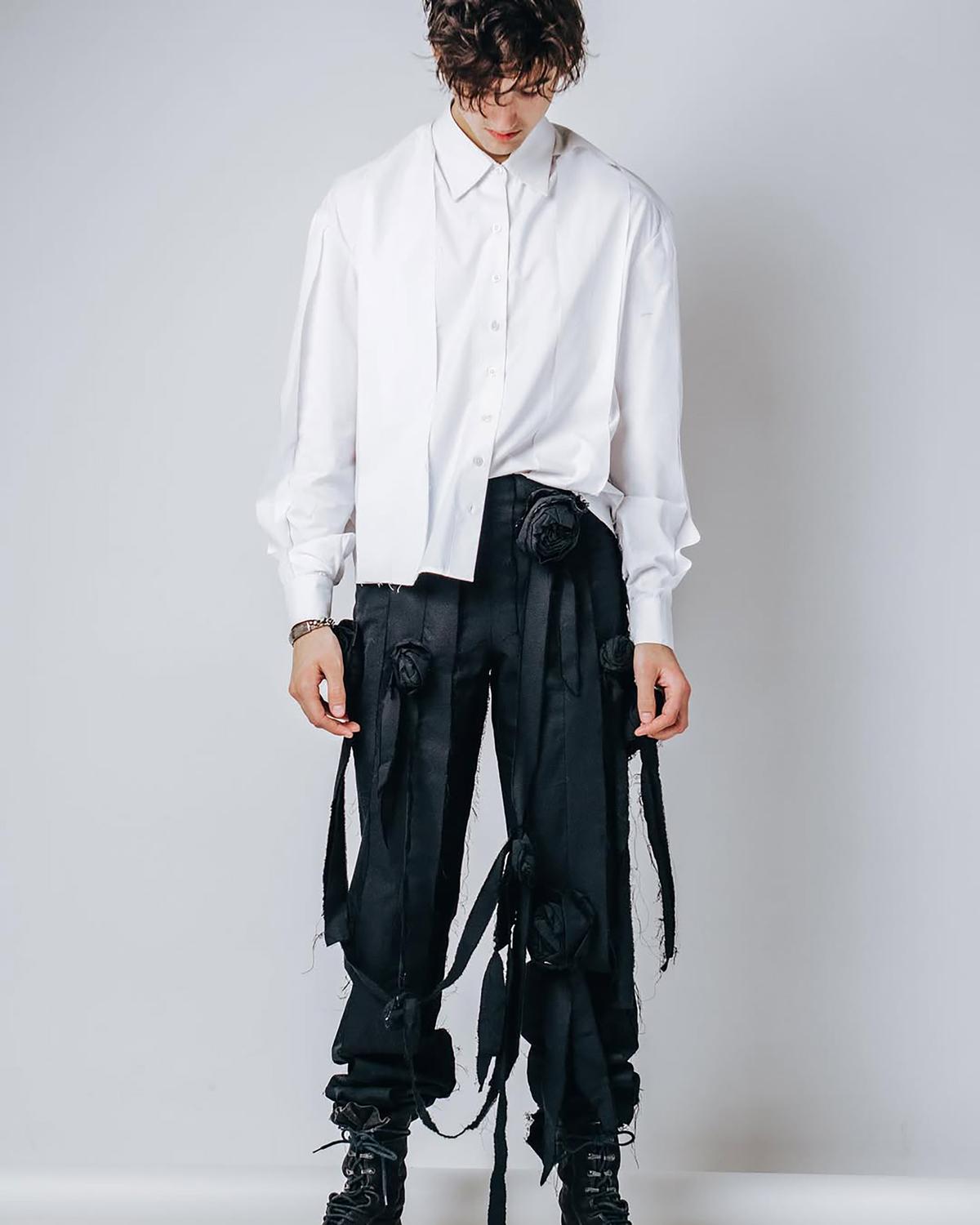
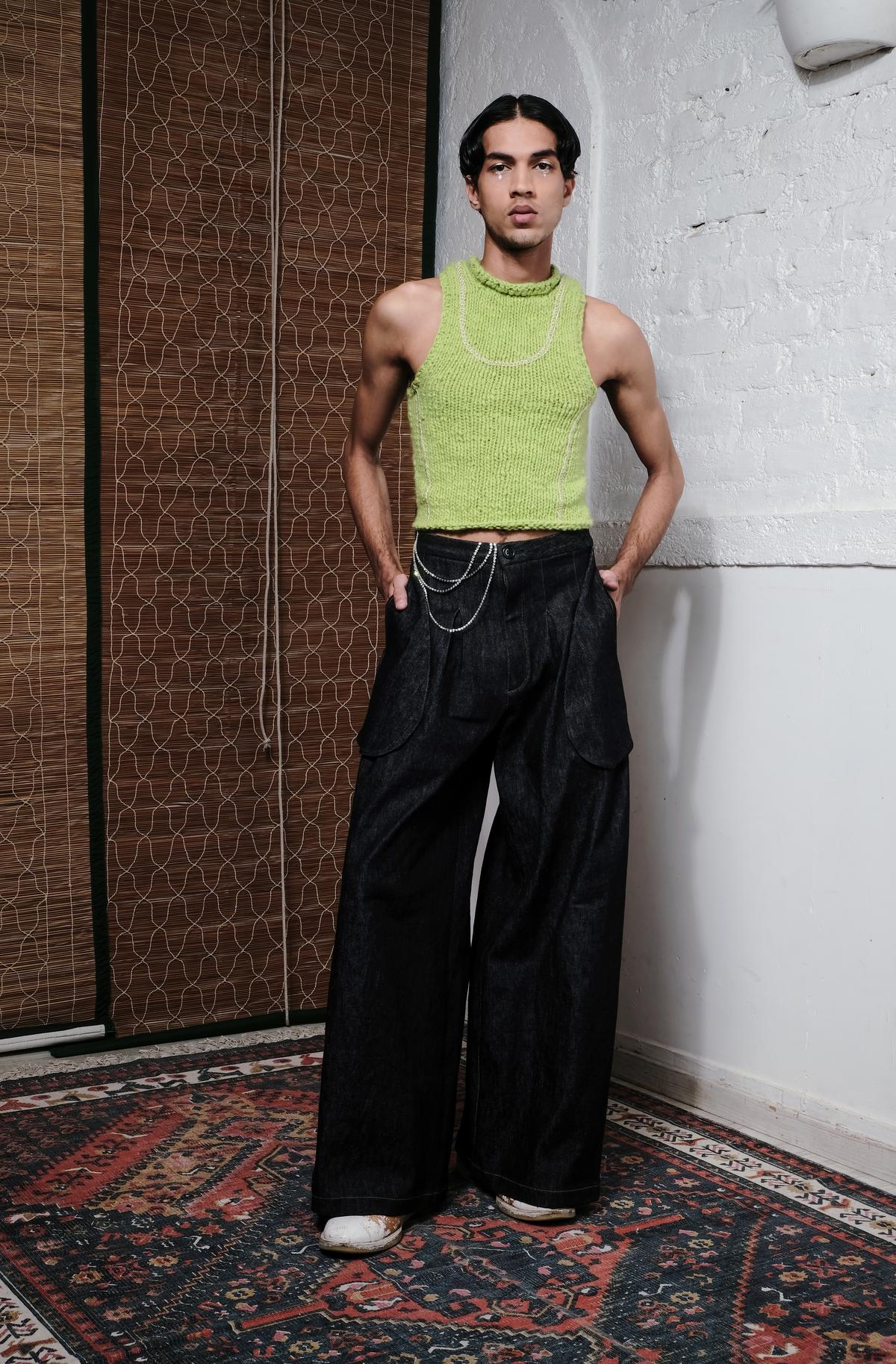
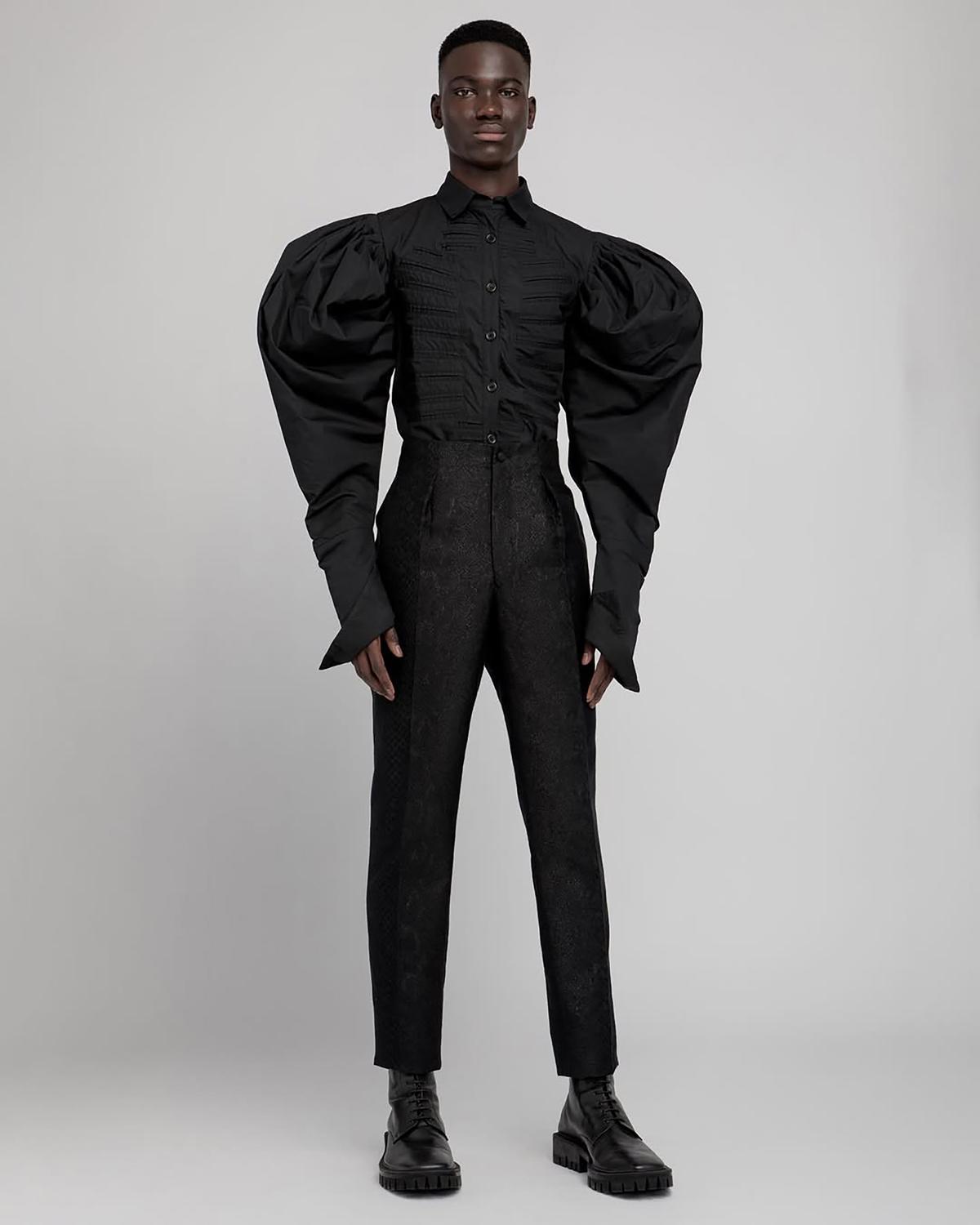
Craft-focused jackets to invest in next year


“The jacket is the first thing people notice and the last thing they forget.” Tom Ford, one of fashion’s most formidable forces, isn’t wrong. In the colder months up north, or as the festive season takes over in the south, outerwear does far more than keep the chill out.

Good coats are conversation starters, punctuation marks of a whole look. While a classic Burberry or Barbour trench may often be touted as a capsule wardrobe essential, in a country as craft-rich as ours, it makes sense to go several steps further and invest in pieces that could one day be classified as heirlooms. After all, you may not want to repeat a shirt every week, but wearing the same jacket through an entire season can still feel striking.

Be it coats that lean into folklore or jackets with woven flowers and lubu beads, here are six fits for the new year.

Boito

The Tara and Tarini Coats

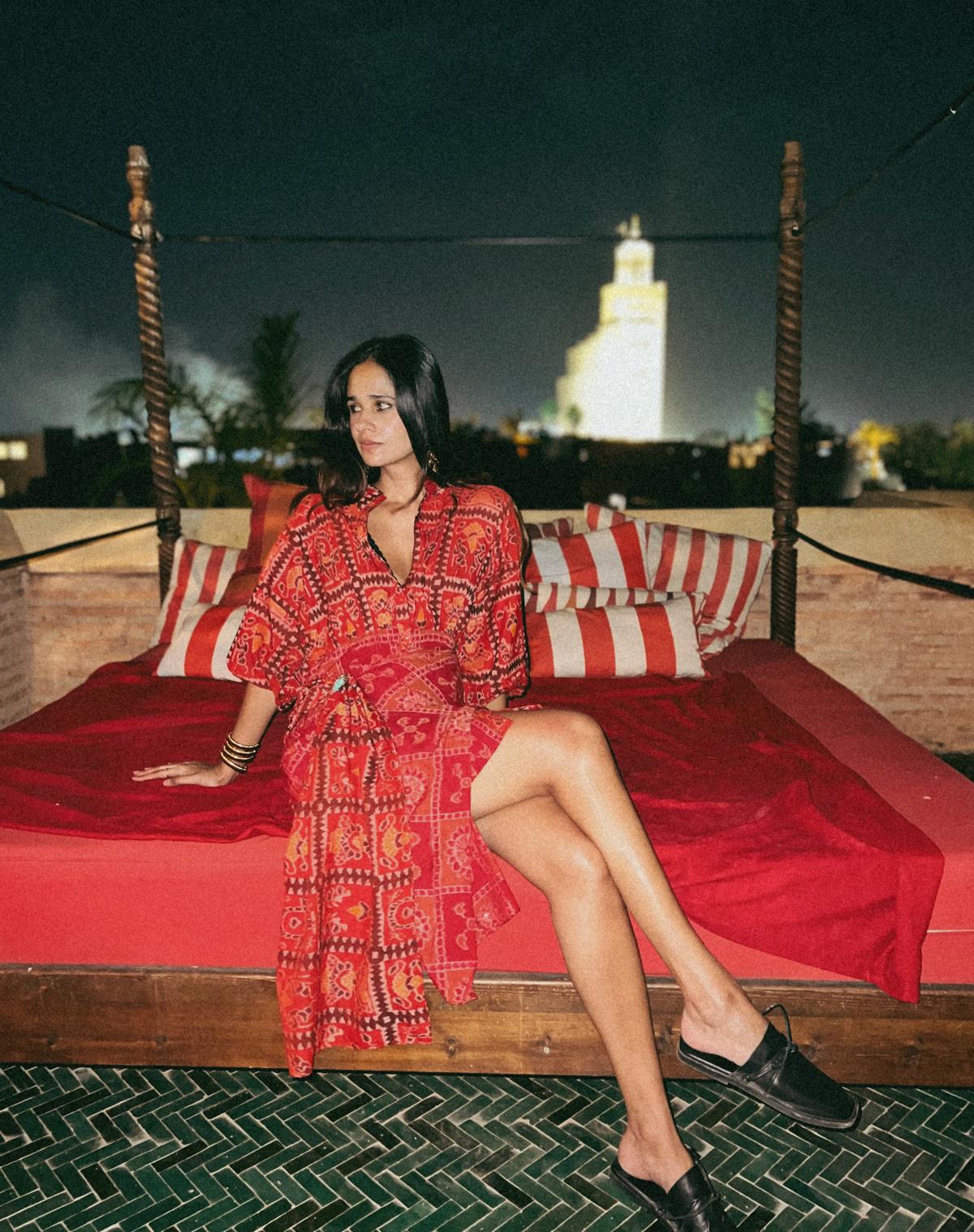
The slow fashion label’s focus on Odisha’s tribal textiles and ikats has quickly established it as a brand to watch closely. Its engagement with mythological narratives is evident in the Tara Tarini Coat, inspired by the fierce sister goddesses of Odia folklore. In Tara, tailored in crimson Sambalpuri ikat silk, white motifs depict the goddess in her mountain abode. A dhokra metal belt, cast using the ancient lost wax technique, adds sculptural strength, echoing ritual armour.
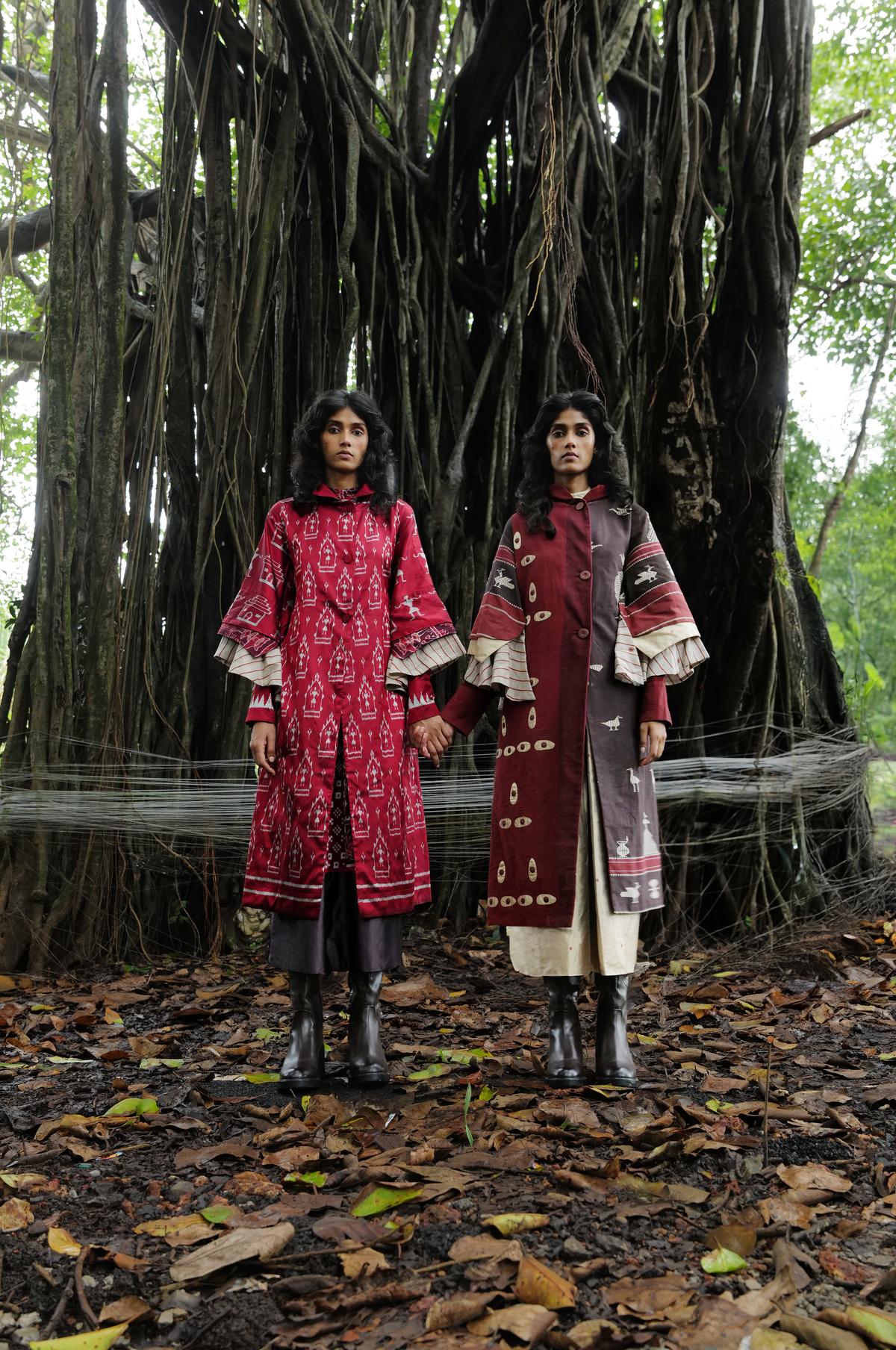
It’s twin, the Tarini, is a long ensemble crafted in organic, handwoven Kotpad cotton, dyed in shades reminiscent of fertile riverbeds. Traditional motifs reference tribal customs and rituals, with the goddess’ eyes offering a protective gaze over extra weft birds, peacocks, temples, and trees. The belt is strung with colourful lubu beads, traditionally worn by women of the Bonda community.

Jodi

Kala Cotton Jackets

Made in Kala cotton, hand dyed and hand embroidered, Jodi, the young brand founded by two magazine stylists, has come into its own. Known for its playful approach to block printing from Jaipur and whimsical embroidery finished in Pune — think local flora, folk dancers, and fantastical creatures — the jackets allow for a lightness of expression without losing craft depth.
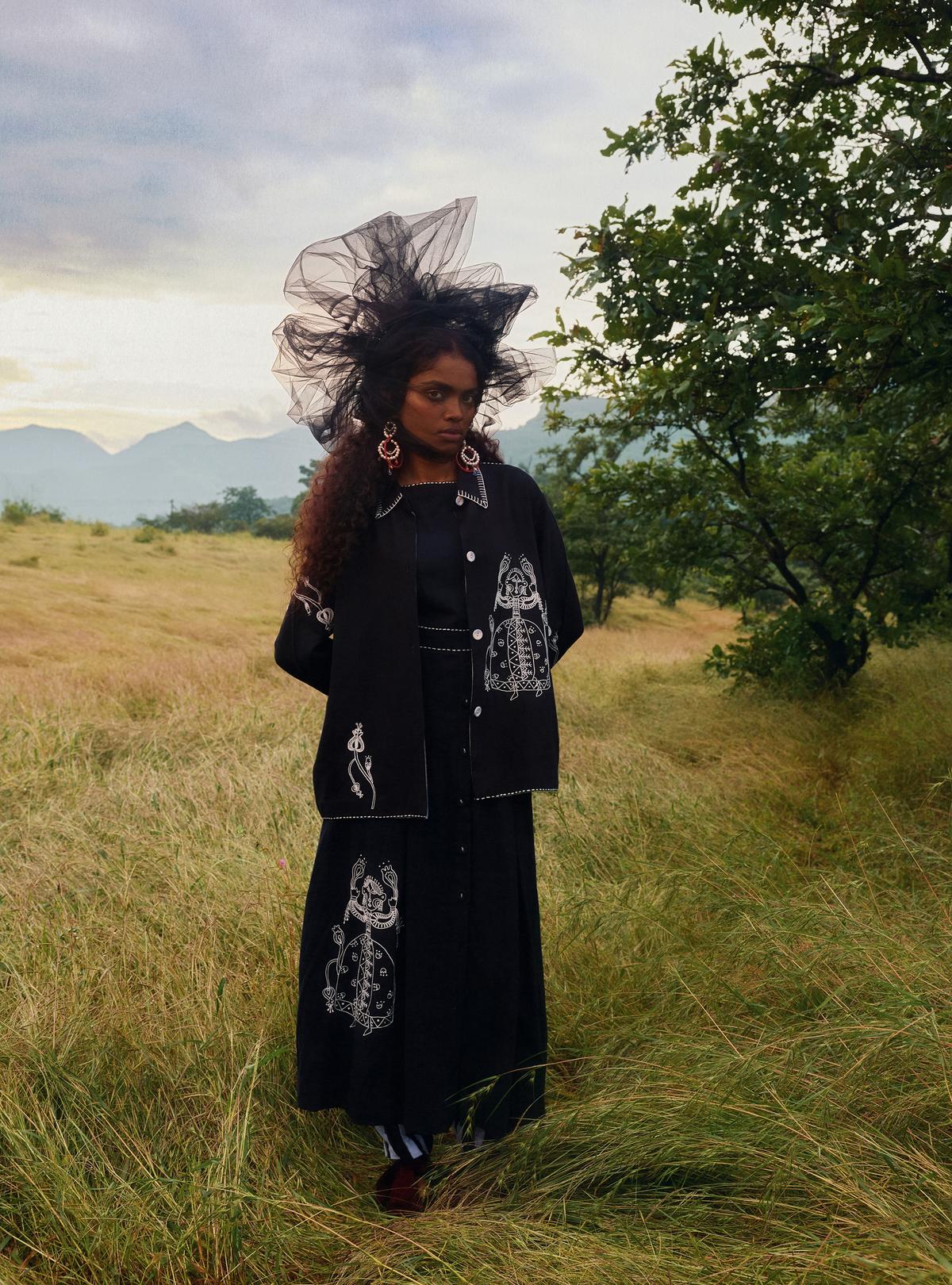
The coarser style of cotton makes everyday pieces that need to survive on-the-go days. Pair them with voluminous skirts or matching handloom trousers for a relaxed yet intentional look. Bonus: the brand’s take on beaded scrunchies, playful bags, and mix and match from the brand language’s repertoire.

péro

Kadua Weave Jacket

After years of careful world-building, péro’s pieces carry a signature that feels familiar to long-time followers and new buyers alike. From the quilted pink Hello Kitty coat to its much-loved Kullu weaves, the brand creates garments that feel as good as they look. For this list, we recommend the handwoven chequered silk reversible jacket in a kadua weave from Banaras.
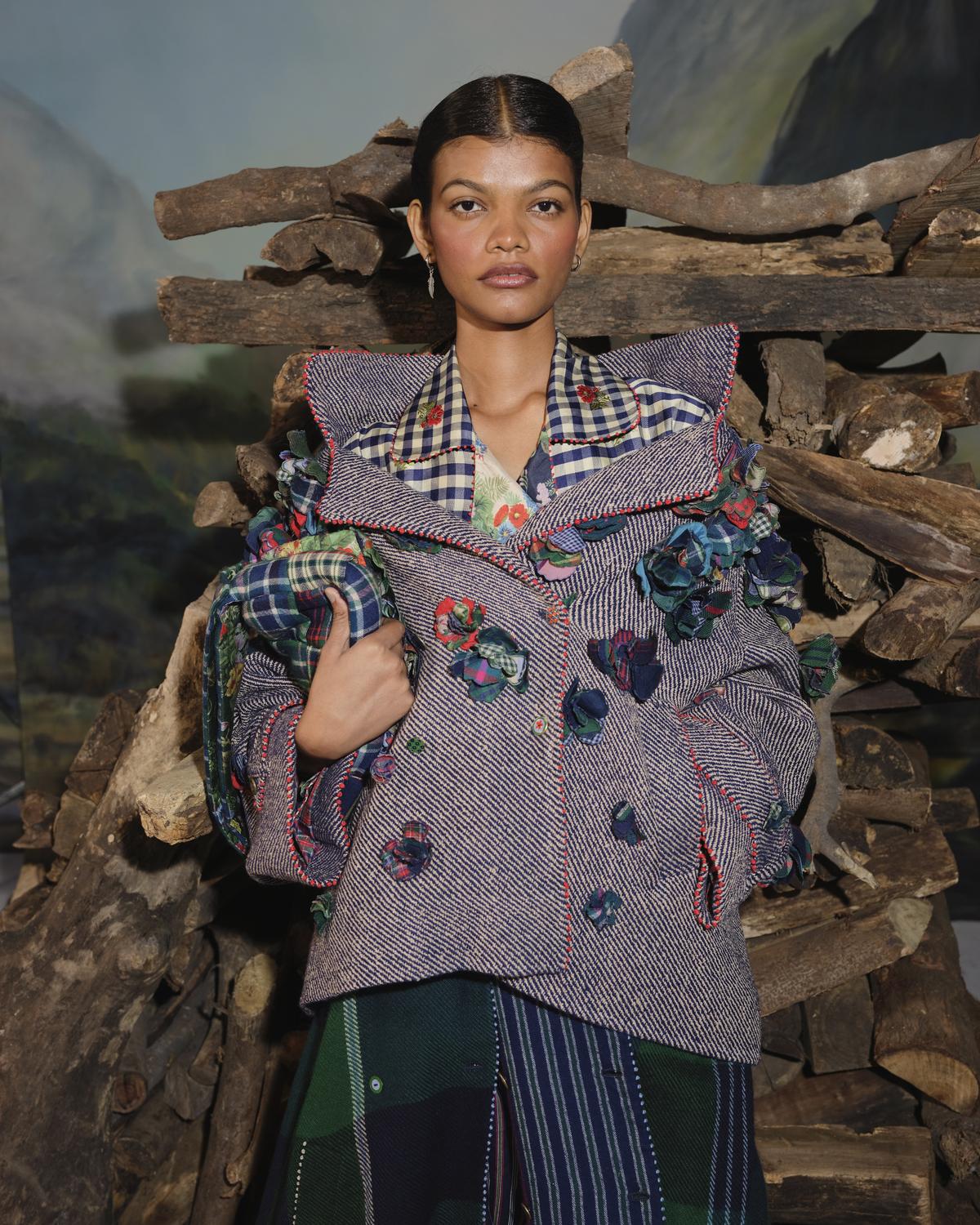
Part of their wildly popular 100 unique jackets edit, the checks are a nod to southern textile traditions, while the kadua extra weft technique create delicate florals that appear as if embroidered. This painstaking weave uses a supplementary weft technique where each motif is hand woven with extra threads with such precision that it leaves no loose threads at the back.

Payal Khandwala

Silk Brocade Jacket

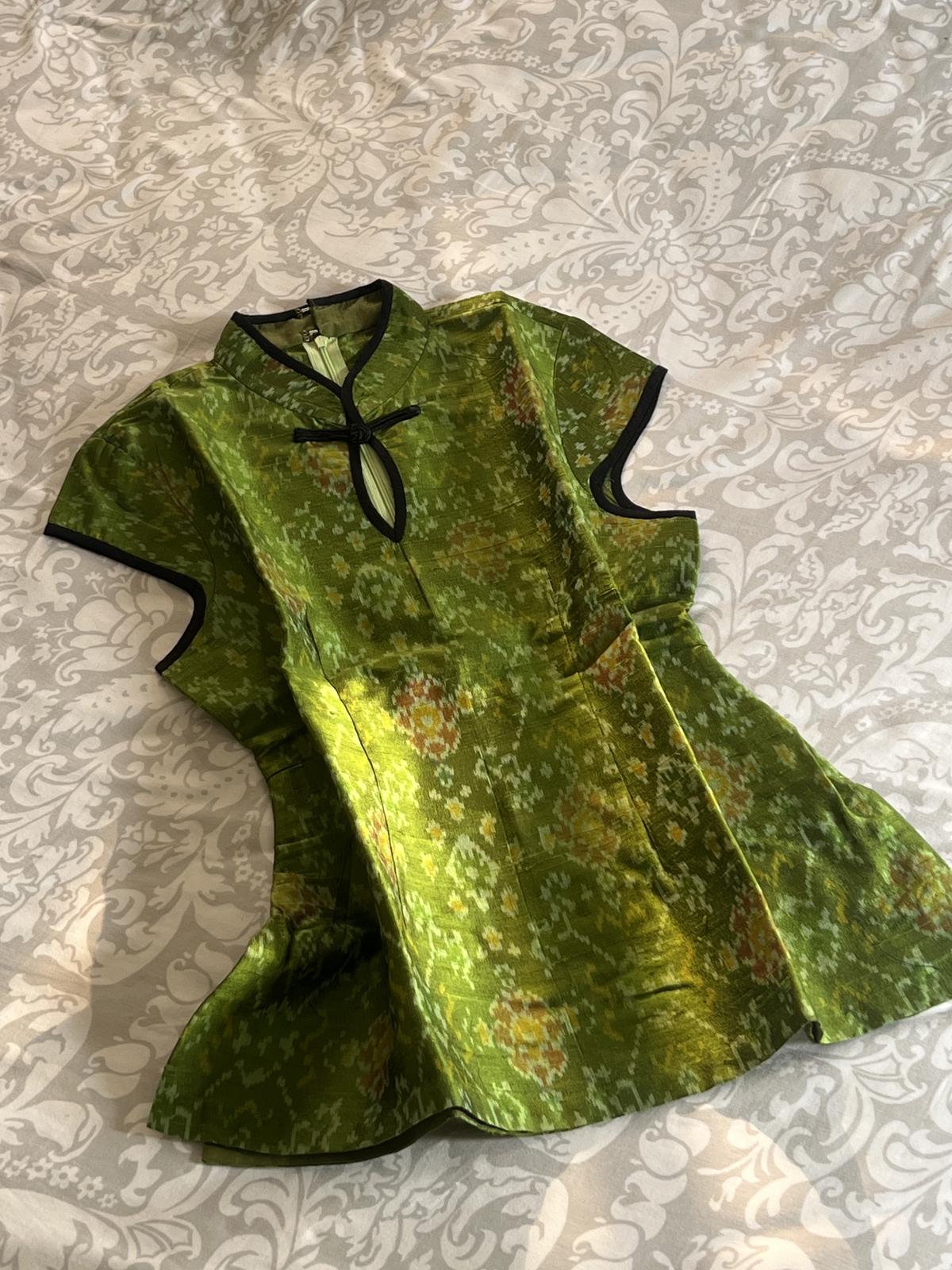
There is something distinct about women designing for women. Khandwala’s minimal chic designs have found admirers among discerning consumers and A-list actors such as Deepika Padukone, Alia Bhatt, and Tabu. Despite the widespread revival of Banarasi brocade over the last two decades, the designer’s work stands apart for its clarity and restraint. This handwoven, longline silk brocade jacket from her Autumn-Winter collection reinterprets the structure of a classic men’s sherwani into a precisely constructed feminine form.
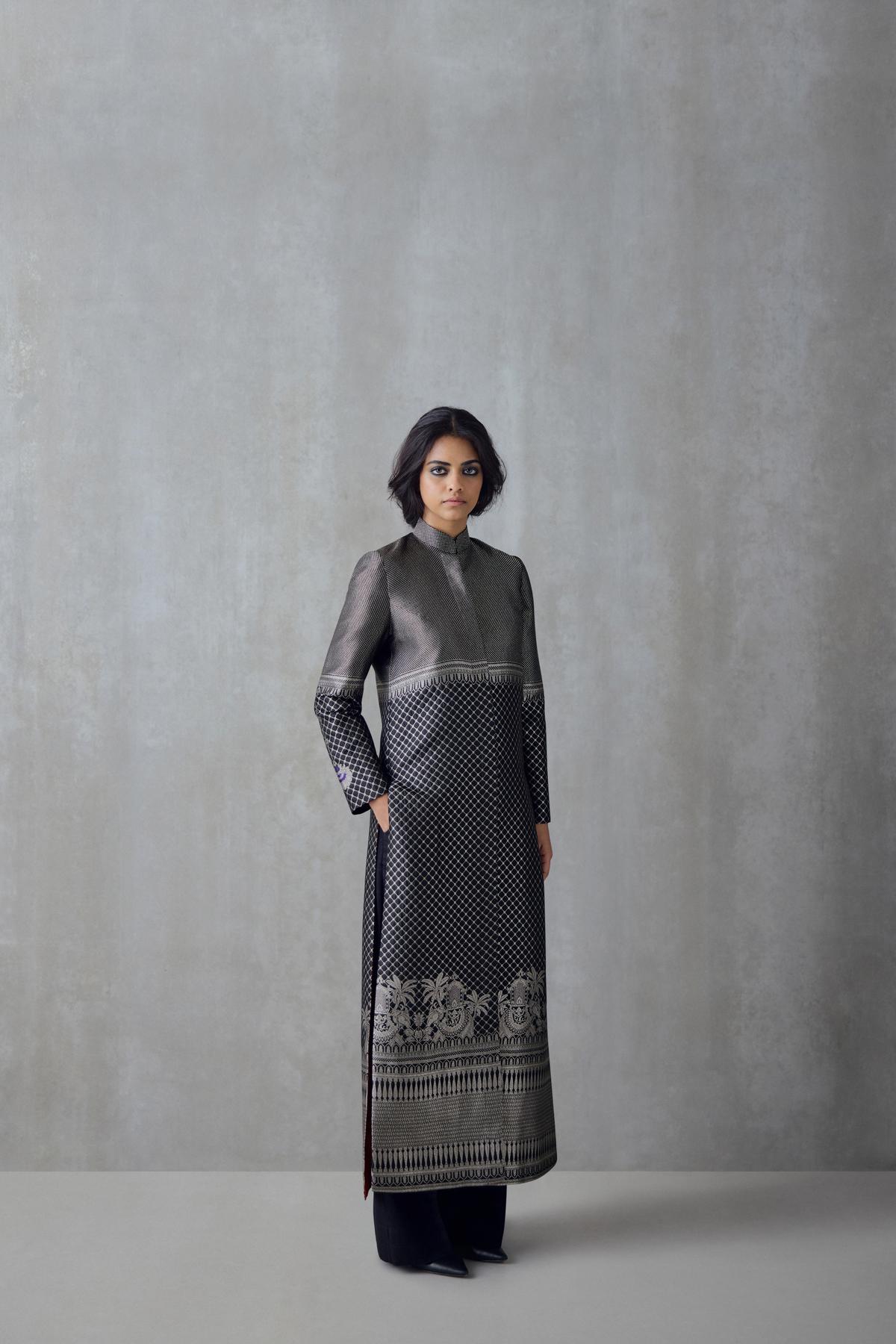
The subtle nod to heritage motifs, the jaal pattern all take from patterns we may have previously seen on saris, but their controlled addition to a jacket makes the interpretation fresh.

Injiri

Micro Bandhani Jacket

Since 2009, Chinar Farooqui’s label has built a loyal following, with wearers collecting her pieces season after season, constructing a wardrobe where they can stack and layer from her old and new pieces. Farooqui is best known for her work with desi wool, contemporary jamdani, and softly structured checks. If you were looking for a forever piece, however, her micro bandhani jacket stands out.
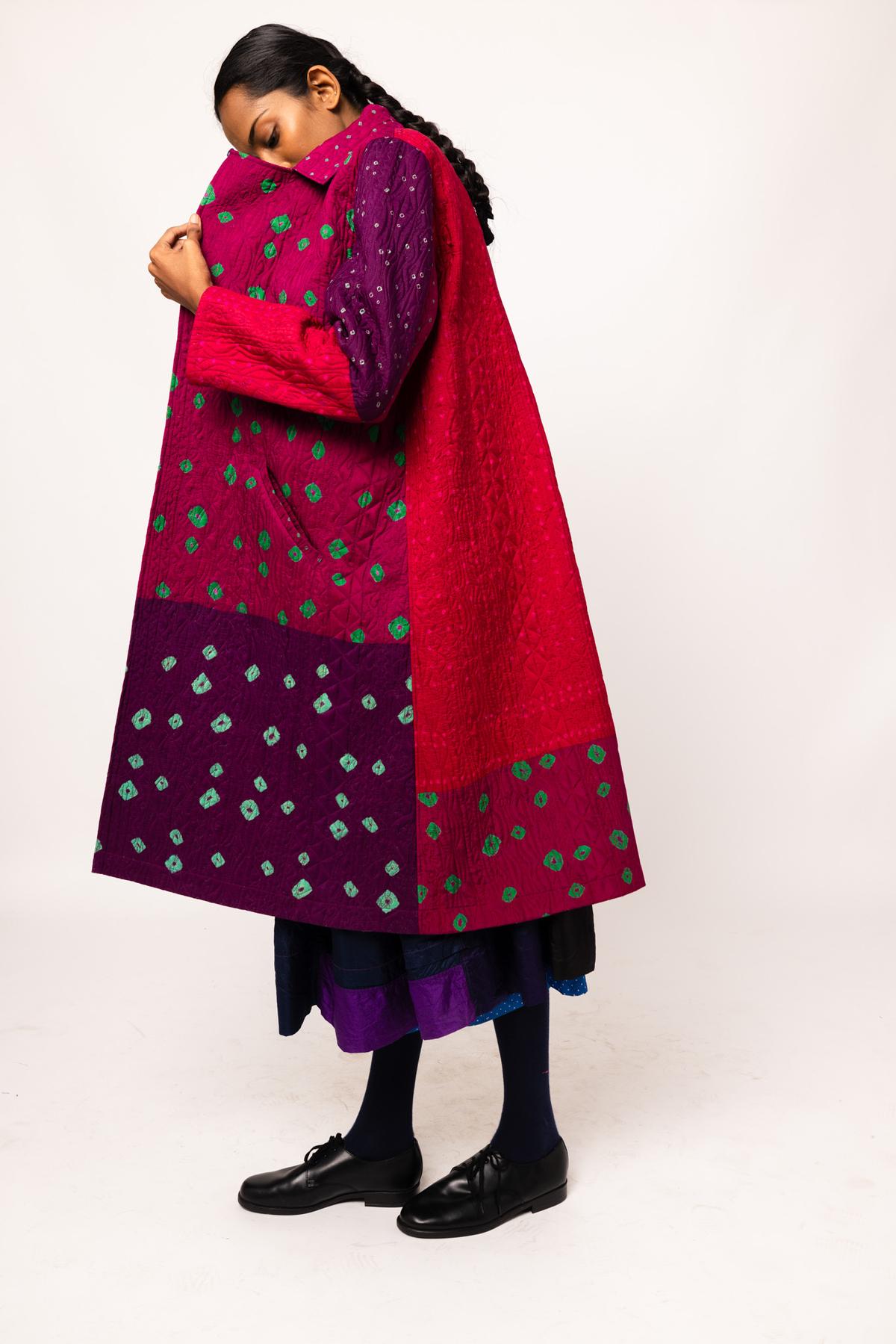
Rendered in vivid hues that are a nod to Rajasthan’s enduring love for bright colours, the placement of the dots are inspired by the skirts of the Halepotra community in Kutch, a region that continues to be her playground and long-term site of textile practice.

Jigmat Couture

Thik-ma Jacket

A well-defined wardrobe would be remiss without the unique Northeastern sensibility. Take thik-ma, the traditional tie-dye technique jacket from Jigmat Couture. The process (practised largely in Zanskar and Changthang in Ladakh) uses resist dyeing with natural threads to create bold circular motifs, long believed to ward off the evil eye. Some of the earliest visual records appear in the 11th-century murals of Tibet’s Alchi Monastery, where the textile was used to veil Thanka painting.
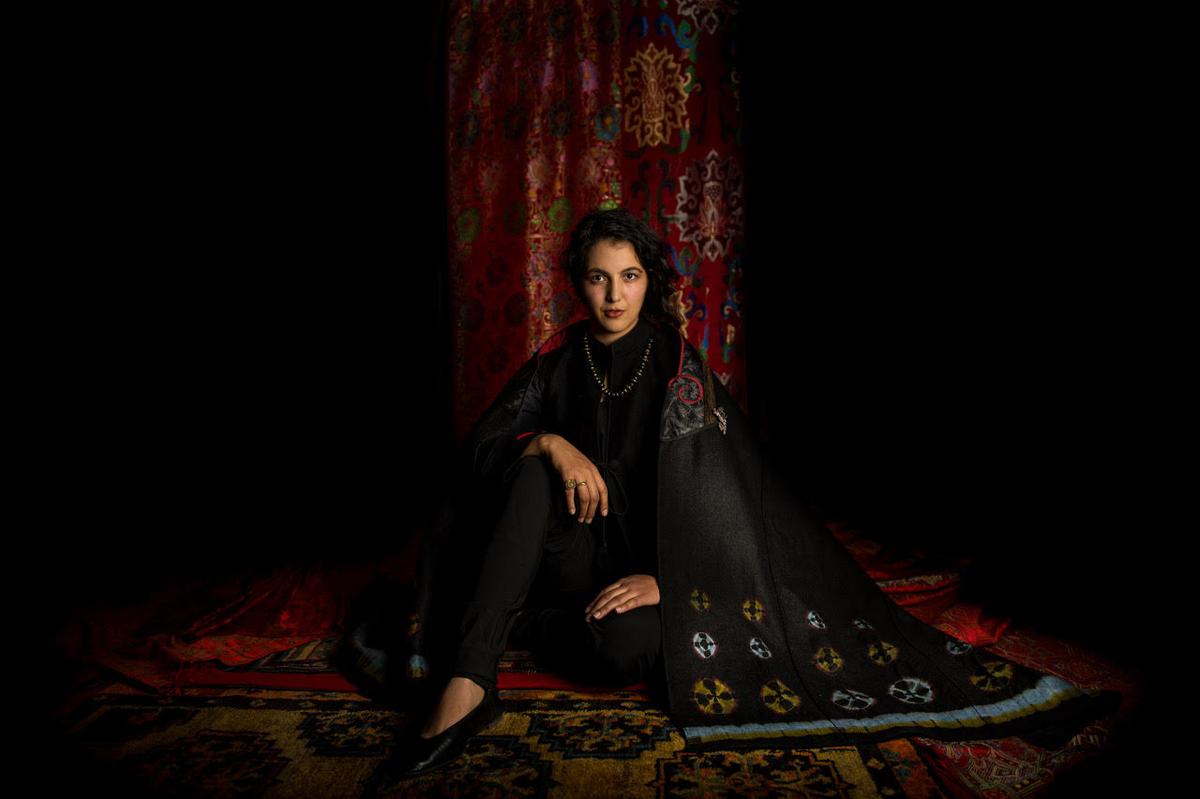
Zanskari artisans use thik-ma to make their traditional stak-ta costumes, bok capes, and pabu shoes. Jigmat Couture draws from this lineage, working with natural vegetable dyes on handspun, handwoven lambswool, cashmere, and yak wool.

Bejewelled by Richa

Bhujodi Shawls

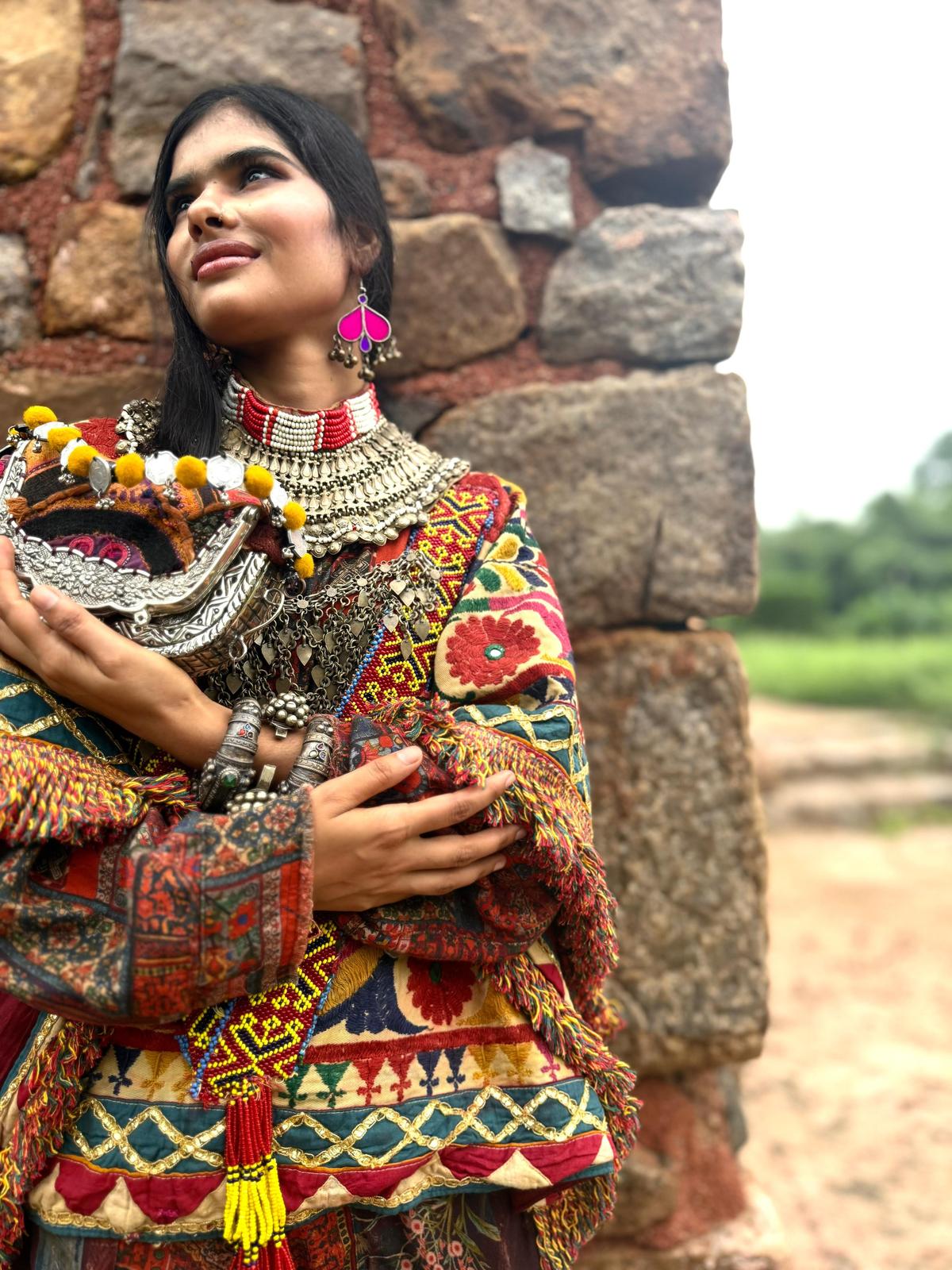
These are one-of-a-kind statement pieces. Known for her hand-finished batwas and purses, Richa’s jackets combine G.I.-tagged Bhujodi shawls, woven locally in Kutch with sheep wool with Kutchi embroidery. No two pieces are alike, as the designer personally mixes and matches different pieces to arrive at a collage that feels true to her singular sensibility. They lend themselves naturally to an Indian boho aesthetic.
The writer is a Mumbai-based fashion stylist.
Published – December 27, 2025 01:45 pm IST


Source link

Meneesha Kellay interview: ‘I don’t believe in erasing history’, says the youngest trustee at the British Museum


At 39, Meneesha Kellay has made history as the youngest trustee in the British Museum’s 272-year history. In the storied corridors of Britain’s cultural institutions, Kellay represents a new chapter.

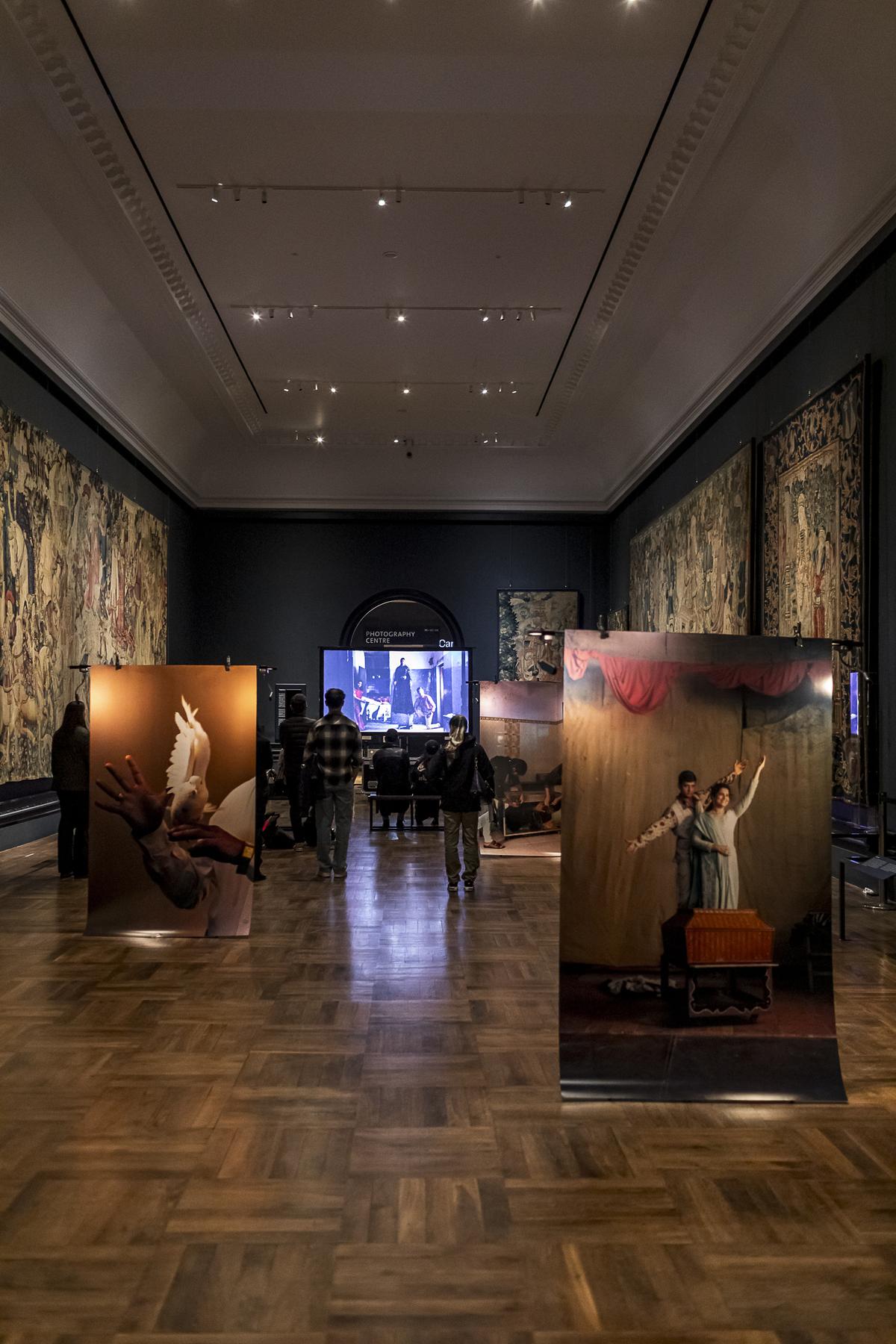
Born and raised in Southall to parents of Punjabi heritage who arrived from East Africa in the 1970s, she is also lead curator for the Victoria & Albert Museum’s forthcoming exhibition celebrating South Asian creativity.

Today, her journey from “half-itect” (as she jokingly calls herself for doing four of the seven years required to become a fully qualified architect in the U.K.) to one of the most influential cultural voices in Britain is as layered as the histories she now helps reframe. “I call myself a half-itect because I got halfway there,” she laughs. “I didn’t fully qualify. I loved studying architecture, but I was always more enthusiastic about the sociological and anthropological aspects — how people interact with buildings and how they shape cities. I just found the design process really painful.”

Meneesha Kellay has made history as the youngest trustee in the British Museum’s 272-year history

Meneesha Kellay has made history as the youngest trustee in the British Museum’s 272-year history
| Photo Credit:
Getty Images

Now, seated in the V&A East Storehouse, the museum’s radical new outpost in East London, she speaks about disrupting old frameworks and bringing lived experience into institutional spaces.

How does it feel to be the youngest trustee in the British Museum’s history, and what does that role look like day to day?

Trustees are a voluntary role. There are lots of incredible minds on the board — people like Mary Beard, who has written countless books on ancient Rome, as well as Sirs, Dames and Lords. So me joining as a relatively young person, and someone from a South Asian background, feels like a huge honour. What I can bring to the role is that lived experience and also my background in architecture.

My whole practice within museum spaces has been about broadening participation, especially for underrepresented communities and young people. The trustees meet quarterly, but I’m also part of the master plan committee. Last summer, Nicholas Cullinan, the new director, asked me to join the expert jury alongside others such as artist Tracey Emin and Mahrukh Tarapor, an Indian museum professional who received the Padma Shri, to appoint the next architect designing the Western Range [of galleries at the museum] — the largest cultural infrastructure project in history.

‘What I can bring to the role is that lived experience and also my background in architecture’: Meneesha Kellay

‘What I can bring to the role is that lived experience and also my background in architecture’: Meneesha Kellay

How did you come to be invited to the board?

I curated the British Pavilion at the Venice Architecture Biennale in 2023, and we won an award for it. I think from the British Museum’s perspective, I was ticking several boxes — having both museum experience and an architecture background. At the end of that jury process, George Osborne, the chair of trustees, asked me to apply. I had my interview with the Department for Culture, Media and Sport, and a few months later, received a letter from 10 Downing Street signed by the Prime Minister appointing me. That really hit home — like, wow, this is real.

You’ve described your curatorial practice as “collaborative and questioning.” What questions are you hoping to raise through your work at V&A East?

We’re opening V&A East Museum next year, and one in five people in this part of London have South Asian heritage. So, it felt like almost a no-brainer to do an exhibition celebrating contemporary South Asian creative practice. There’s been no major institutional show anywhere in the world of contemporary fashion, architecture, and design from Bangladesh, India, Pakistan, Nepal, and Sri Lanka. The idea is to celebrate what’s happening now — designers, architects, and makers whose work draws on deep generational knowledge and ancient practices, but redefines them for 21st century contexts. Even people who are invested in South Asian culture often don’t realise how much is happening because there aren’t enough global platforms for it. There are incredible initiatives like the India Art Fair, Dhaka Art Summit, Kochi Biennale, Serendipity Festival, and Colomboscope, but they rarely get disseminated more widely than South Asia. It’s really about shining a spotlight on the region and showing how relevant this creativity is globally.

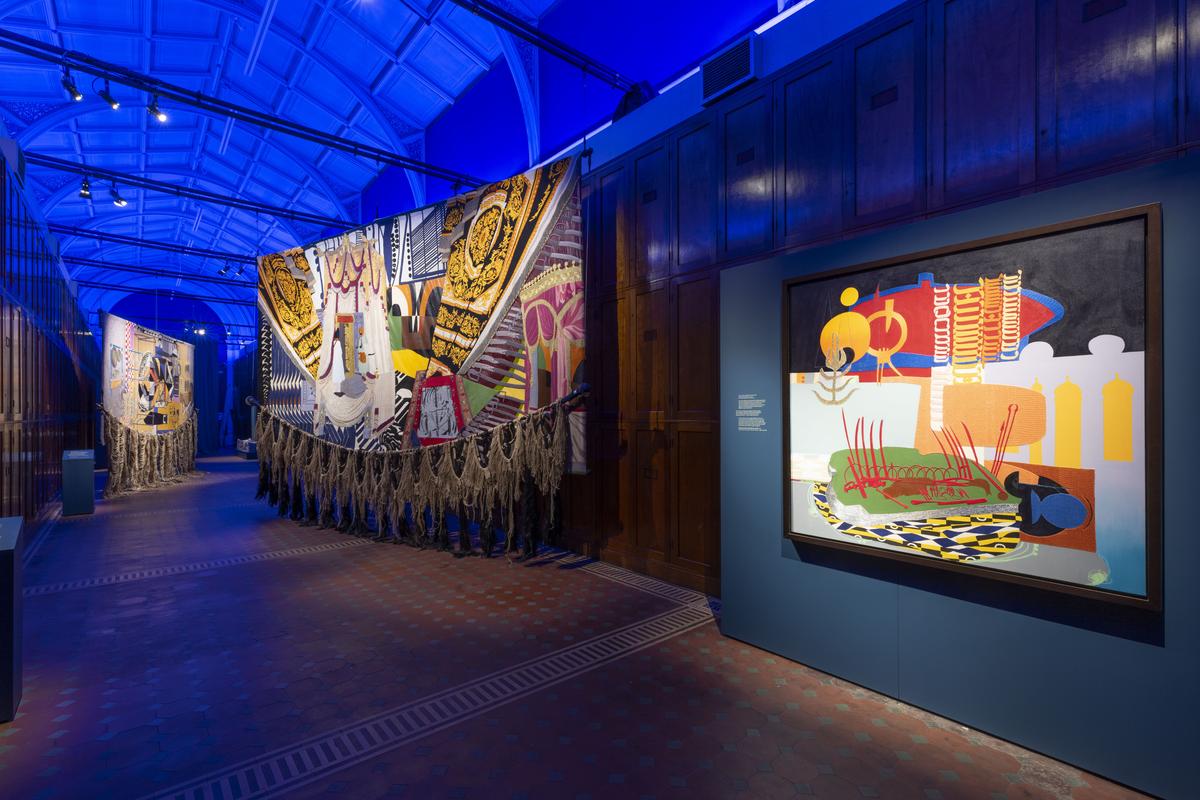
Unstruck Melody, a collab between British-born Canadian artist Nirbhai (Nep) Singh Sidhu and U.K. arts organisation Without Shape Without Format at the Victoria and Albert Museum

Unstruck Melody, a collab between British-born Canadian artist Nirbhai (Nep) Singh Sidhu and U.K. arts organisation Without Shape Without Format at the Victoria and Albert Museum
| Photo Credit:
Petre Kelleher

When you think back to your own upbringing as a British Indian, what kinds of stories or perspectives did you feel were missing from cultural spaces?

My parents were really interested in us seeing the world. We’d travel by car across countries [once, from New York all the way to LA] and they’d take us to museums everywhere we went. Being children of two diasporas — born and raised in East Africa, with heritage in Punjab, and then settling in the U.K. — gave them this insatiable curiosity. My mum was an art teacher in Nairobi before moving here, so that creative side was always there. My dad never sat still. He was a teacher but also always building something. I think that’s where my desire to become an architect came from.

The legacies of the Empire are obviously deep and problematic, but one unintended consequence is that the South Asian diaspora became one of the most global in the world. That’s something I’m really interested in exploring, how that worldly outlook shapes our creative expression today.

Your father sounds like quite an influence. How have those early values filtered into your curatorial work?

We were a zero-waste household. I think that attitude has stayed with me. At the V&A, I once commissioned an installation using leftover materials from the Kimonos exhibition. I’d always email colleagues asking if they had materials we could reuse.

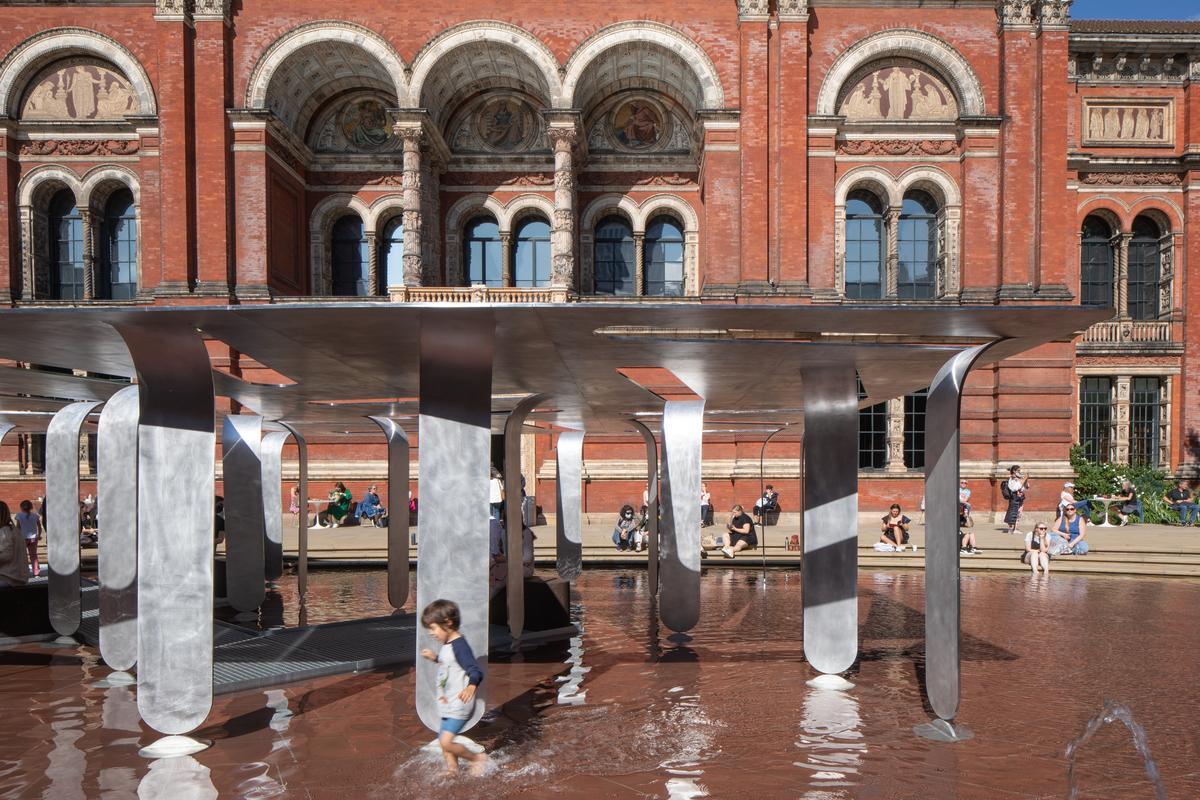
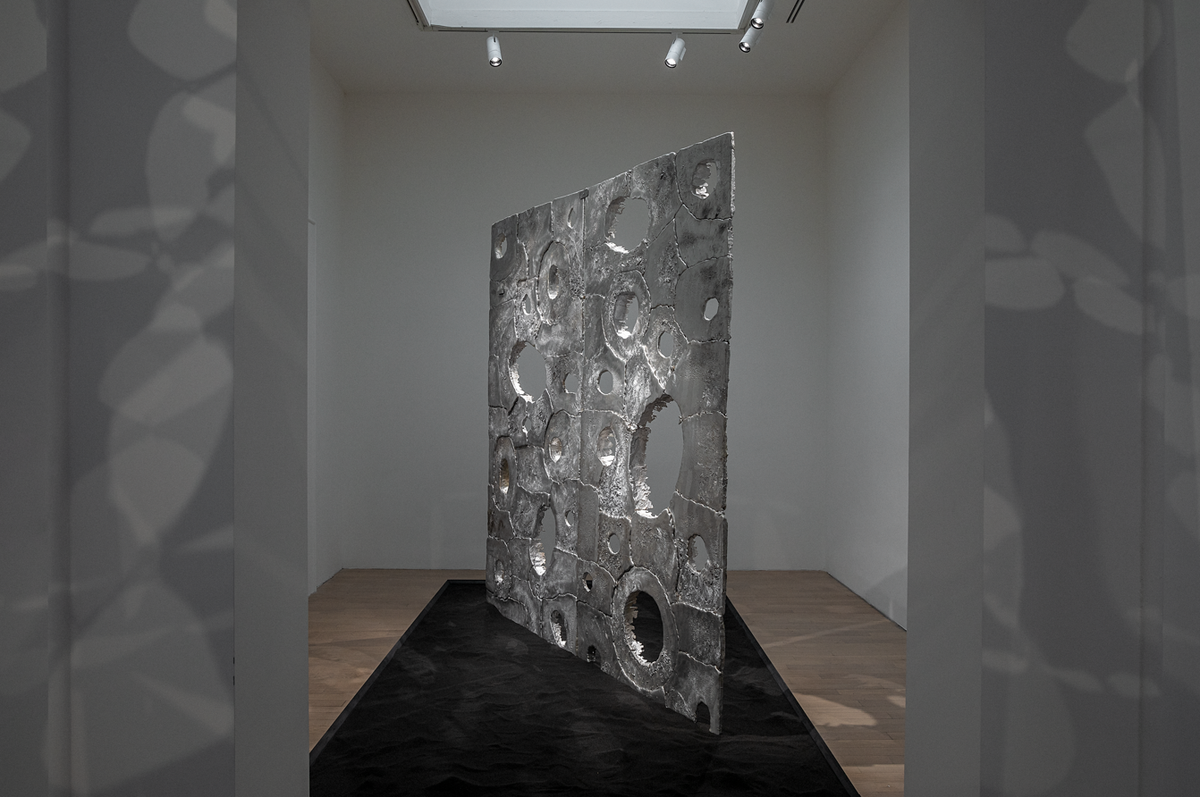
Sustainability has to be embedded in how I work. When I commissioned designers Nebbia Works for an ultra-low carbon aluminium pavilion at the V&A, we later repurposed the infinitely recyclable material for an installation in the British Pavilion at the Venice Biennale for a piece called Bardo, stemming from the Buddhist idea of rebirth. That kind of cyclical thinking feels very natural to me.

Nebbia Works’ Between Forest and Skies at the V&A

Nebbia Works’ Between Forest and Skies at the V&A

Madhav Kidao’s Bardo at the Venice Biennale’s British Pavilion

Madhav Kidao’s Bardo at the Venice Biennale’s British Pavilion
| Photo Credit:
Taran Wilkhu

The British Museum has long been a flashpoint in conversations about colonial legacy and restitution.

The British Museum is 272 years old, and it’s not going anywhere. I’m genuinely delighted to be joining at this moment of transformation. We’ve got a visionary director in Nicholas Cullinan who understands the mission of making it a “museum of the world, for the world.” I don’t believe in erasing history. It’s important to acknowledge what has happened, but also build on it — to ensure people see the value in the collection and understand that it’s theirs. The museum is free to enter, it belongs to the public. Rather than closing up, it’s about opening up, collaborating more, and ensuring communities around the world, whether in India, Pakistan, or Nigeria, feel represented.

V&A East has positioned itself as a museum for a new audience. What does accessibility and representation look like to you?

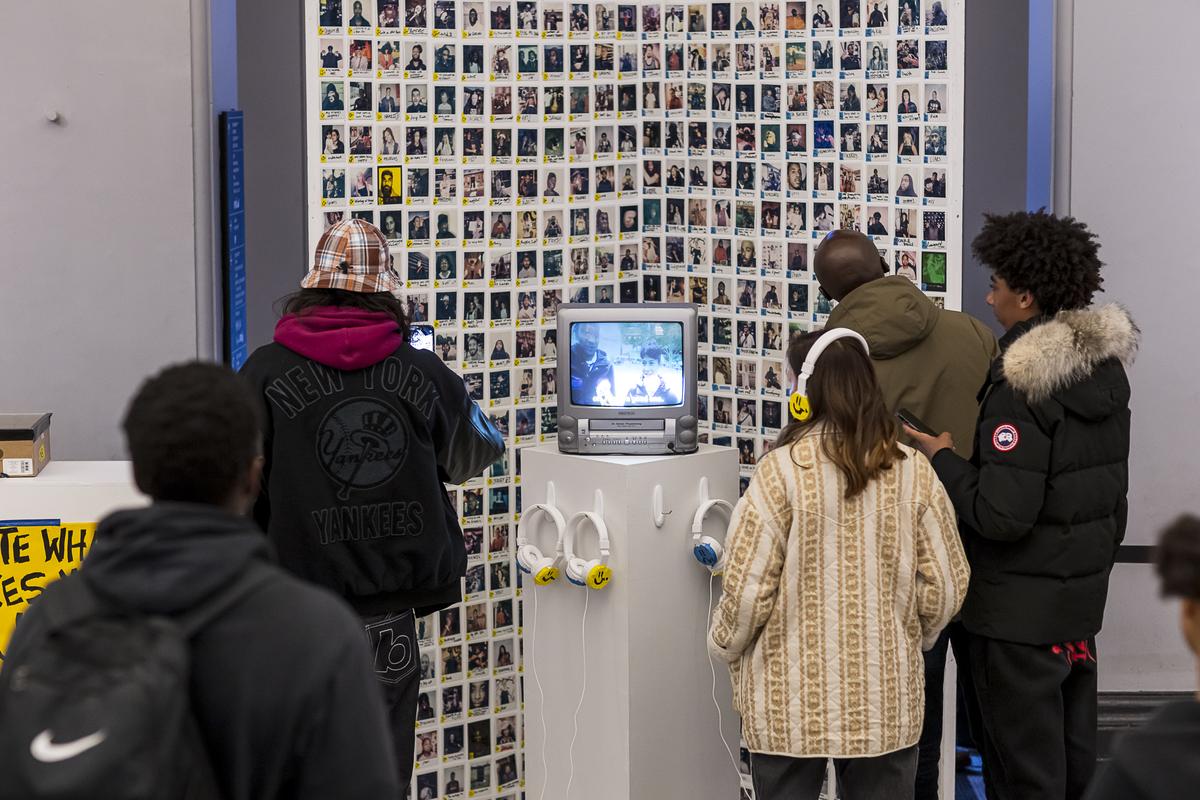
It’s about participation and dialogue. I recently commissioned [content agency] Diet Paratha to curate a Friday Late at the V&A, a night that brought 6,000 people together to celebrate South Asian creativity. It was so joyous because it wasn’t just South Asians; it was incredibly diverse. It was a reflection of London.

Diet Paratha’s Friday Late at the V&A

Diet Paratha’s Friday Late at the V&A
| Photo Credit:
Hydar Dewachi

Friday Late at the V&A

Friday Late at the V&A
| Photo Credit:
Hydar Dewachi

The world feels increasingly polarised because of online platforms, but when you meet people in person, there’s usually common ground. I think cultural institutions have a civic duty to create spaces where people can come together — to debate, discuss, even disagree — and do it in a way that’s civil and curious. That’s something I feel really passionate about right now.

What kind of museum do you hope your generation will leave behind?

A museum where people can come together to learn about other cultures and feel nourished. We need to make them places for transformation — where people feel moved and engaged. Museums aren’t static. They’re experimental spaces, places where things can constantly be done differently. And I think it’s up to us, as cultural workers, to continually push for that — to make sure these institutions evolve as places that reflect who we are, and who we’re becoming.

The writer is an independent journalist based in London, writing on fashion, luxury and lifestyle.


Source link

Autism Club Ernakulam’s desktop calendar for 2026 celebrates creativity of individuals on the spectrum


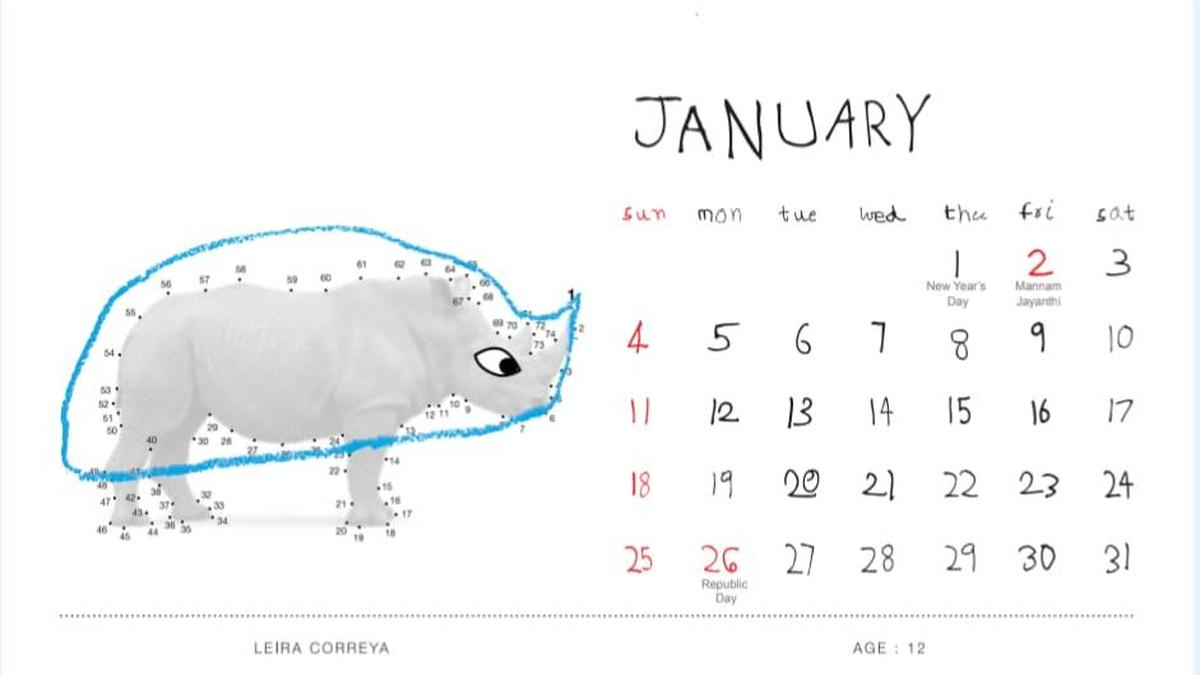
The first page of Autism Club Ernakulam's desktop calendar for 2026

The first page of Autism Club Ernakulam’s desktop calendar for 2026
| Photo Credit: SPECIAL ARRANGEMENT

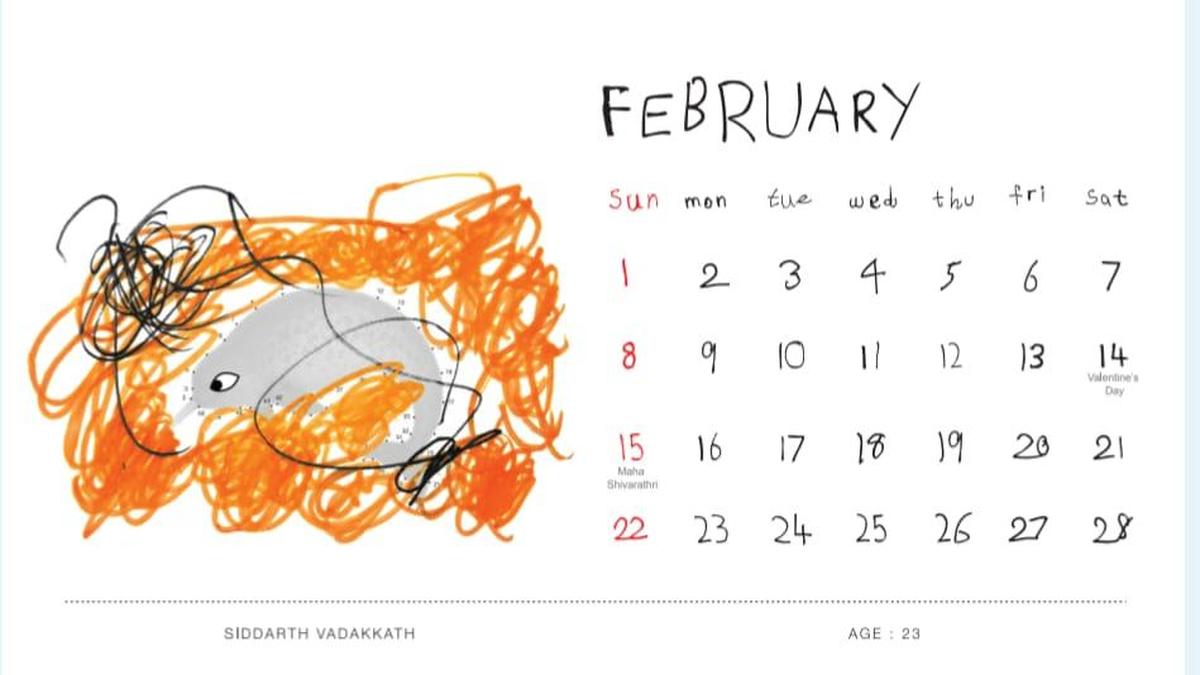
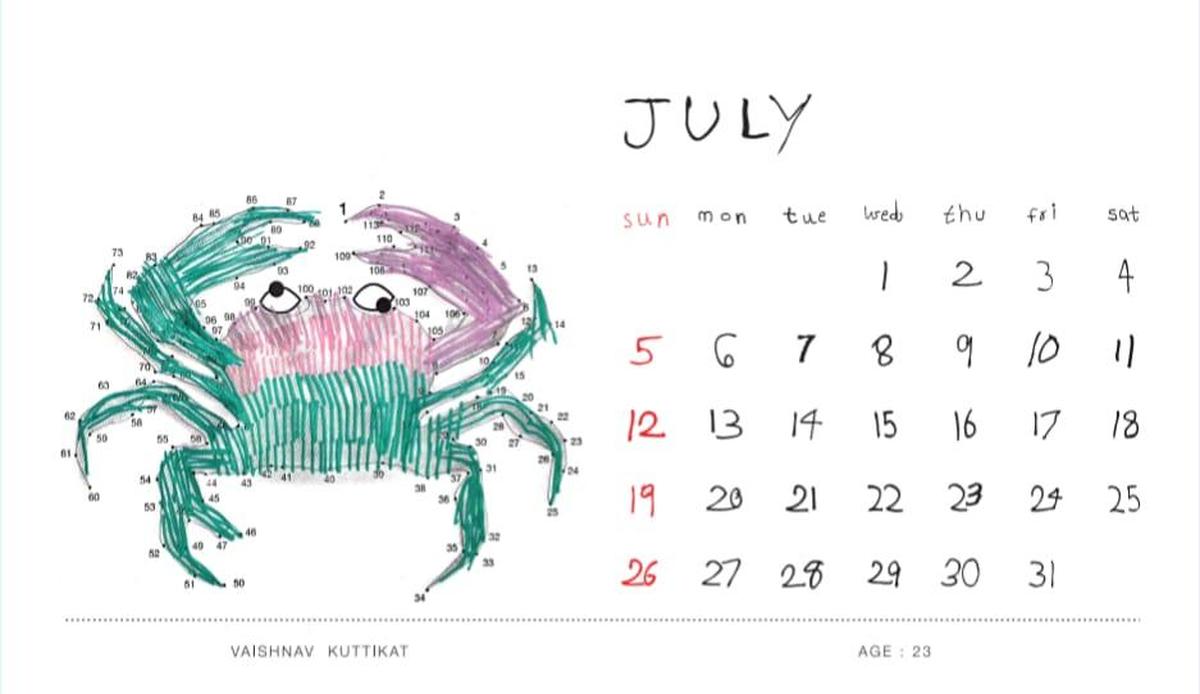
The pages of the Autism Club, Ernakulam, calendar for 2026, are the kind that would make one smile. January has a rhinoceros, whose dots have been connected by Liera Correya, 12, who is on the autism spectrum. The connect-the-dots rhino has a blue rhino-shaped outline. While March’s squirrel has all the dots neatly connected by Abhishek Ramakrishnan, 25. Twenty-three-year-old Vaishnav Kuttikat’s crab for July is neat as well — the dots connect and are shaded with green and pink lines. The calendar is the work of 19 children and young people who are on the spectrum. 

“Autism is a spectrum, each child is different. Every year we bring out a calendar showcasing the art work of the more talented among the children. This year, however, Albert Nishal Correya, Leira’s father, put forth a suggestion that why not let all the children create, according to their abilities. Rather than pick the more talented ones, let us acknowledge the talent in each children and include all kinds of ‘dot joining’,” says Deepthi Mathews, who is also a member of the Autism Club. 

Autism Club Ernakulam's desktop calendar

Autism Club Ernakulam’s desktop calendar
| Photo Credit:
SPECIAL ARRANGEMENT

The idea took root there and grew with Albert providing the dotted pages for the children. “Albert told us to let the children be led by their creativity. We were not to guide them in any way, it was to be all the work for the children,” Deepthi says. While 12 children and individuals ‘drew’ the pictures, seven others contributed with the writing — dates, days and months.

A page from the Autism Club calendar

A page from the Autism Club calendar
| Photo Credit:
SPECIAL ARRANGEMENT

Several sheets were handed to them to ‘create the artwork’ that would become the calendar. Deepthi says how the parents loved the idea, it was validation of the creativity of the children. Some of it was messy initially but over a few tries the children found their way around it. Deepthi’s son, Sam Varghese rewrote the numbers of the dots because he found the font size was too small. “It was not about the perfect or the best or the most talented, it was acknowledgement that each child is different and uniquely talented,” she adds.  

Another initiative, supported by the Autism Club is, Ausome Bites, a bakery project which aims to empower and provide vocational skills to people with autism. The new calendar is also aimed at acknowledging and encouraging the individuals irrespective of the ‘level’ of their talent and skills. 

For details about, and to order, the calendar, contact 9447028367


Source link

Batik workshops to the world’s first arrack-speciality bar — a lowdown on lesser-known destinations of Sri Lanka


Sri Lanka is trending, especially among Indian travellers, given its proximity, connectivity, pristine beaches, boutique hotels, safari parks and outstanding experiences for travellers. According to the numbers released by the Sri Lankan tourism board, the island nation clocked 2.17 million tourists by December 11, which, despite the effects of the cyclone, have surpassed last year’s numbers, with the India continuing to be the highest generator of tourists.

We ask three influential locals, insiders in their own right, to give us their ‘local’ recommendations on things to do that are off the beaten path. Colombo can be looked at as a hub for trendy design, art and architecture; Galle, albeit touristy, is a hotbed of insider experiences, and the unexplored parts of Yala National Park can also be looked at through a cultural lens, beyond wildlife. 

In and around Colombo

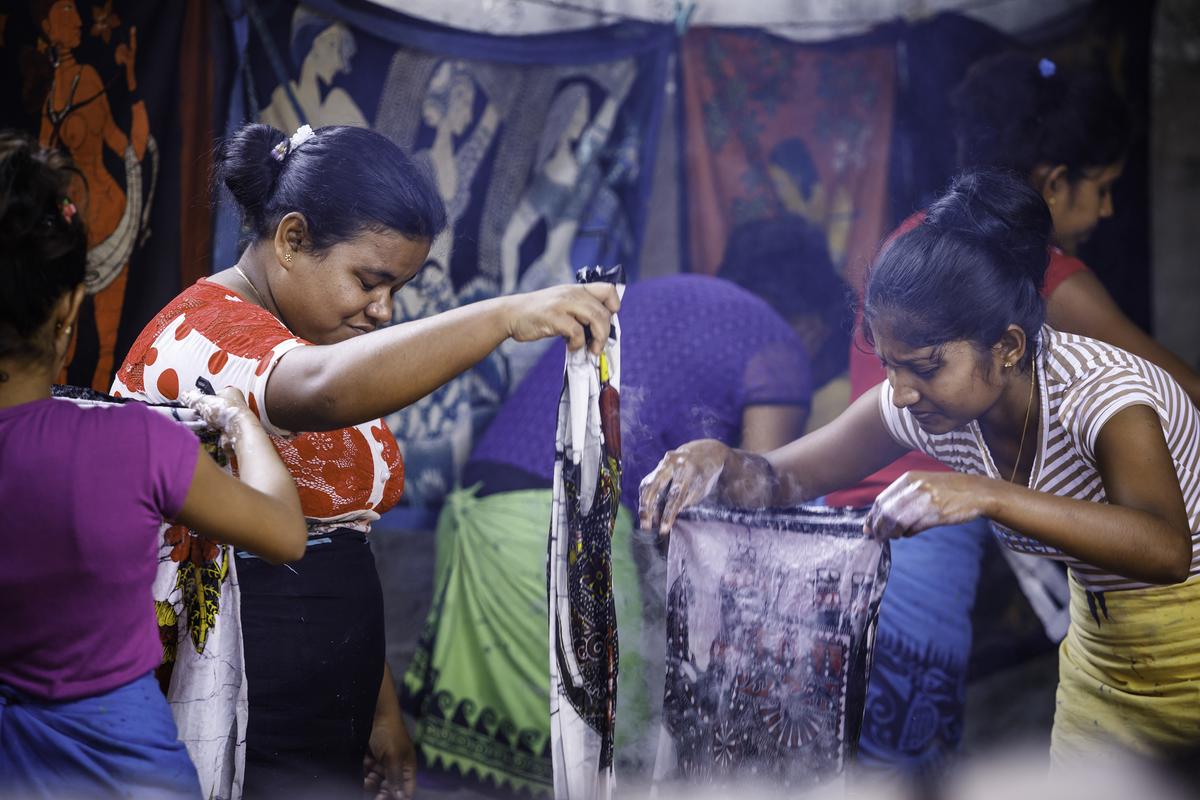
Dambulla/Inamaluwa, Sri Lanka - December 10, 2016: Local women make the colourful batik. The material created by the batik-makers is used to produce bed covers, tablecloths, wall pictures, dresses, shirts, sarongs, beachwear and others men's and ladies' wear. Each batik piece is individually handmade by adult women who look very young. The manufacture and export of the batik textile products are one of the biggest industries in Sri Lanka.

Dambulla/Inamaluwa, Sri Lanka – December 10, 2016: Local women make the colourful batik. The material created by the batik-makers is used to produce bed covers, tablecloths, wall pictures, dresses, shirts, sarongs, beachwear and others men’s and ladies’ wear. Each batik piece is individually handmade by adult women who look very young. The manufacture and export of the batik textile products are one of the biggest industries in Sri Lanka.
| Photo Credit:
Adam Smigielski

Few tourists spend more time in Colombo and areas surrounding it. Colombo is a bustling hub of art, design, culture, food and drink, as well as fashion.

Since I love the Sri Lankan art form of batik, I would definitely recommend visitors to take a half-day trip just outside Colombo to the batik village of Koswadiya. Located just 65 kilometres outside Colombo, closer to the town of Negombo,here you can attend a batik workshop to understand how saris and sarongs are made in batik and interact with the artisans. The Buddhi Batiks batik workshop is a great place to do this and you can follow it with a simple, Sri Lankan vegetarian meal cooked by the villagers. Another place to explore, before heading to the Bandaranaike International Airport, is the seaside town of Negombo. It is just a couple of minutes away from the airport. Negombo’s main beach road, brimming with restaurants and cafes, is popular with tourists but it is a great place to see authentic Sri Lankan daily life. I enjoy going to Negombo over the weekend.

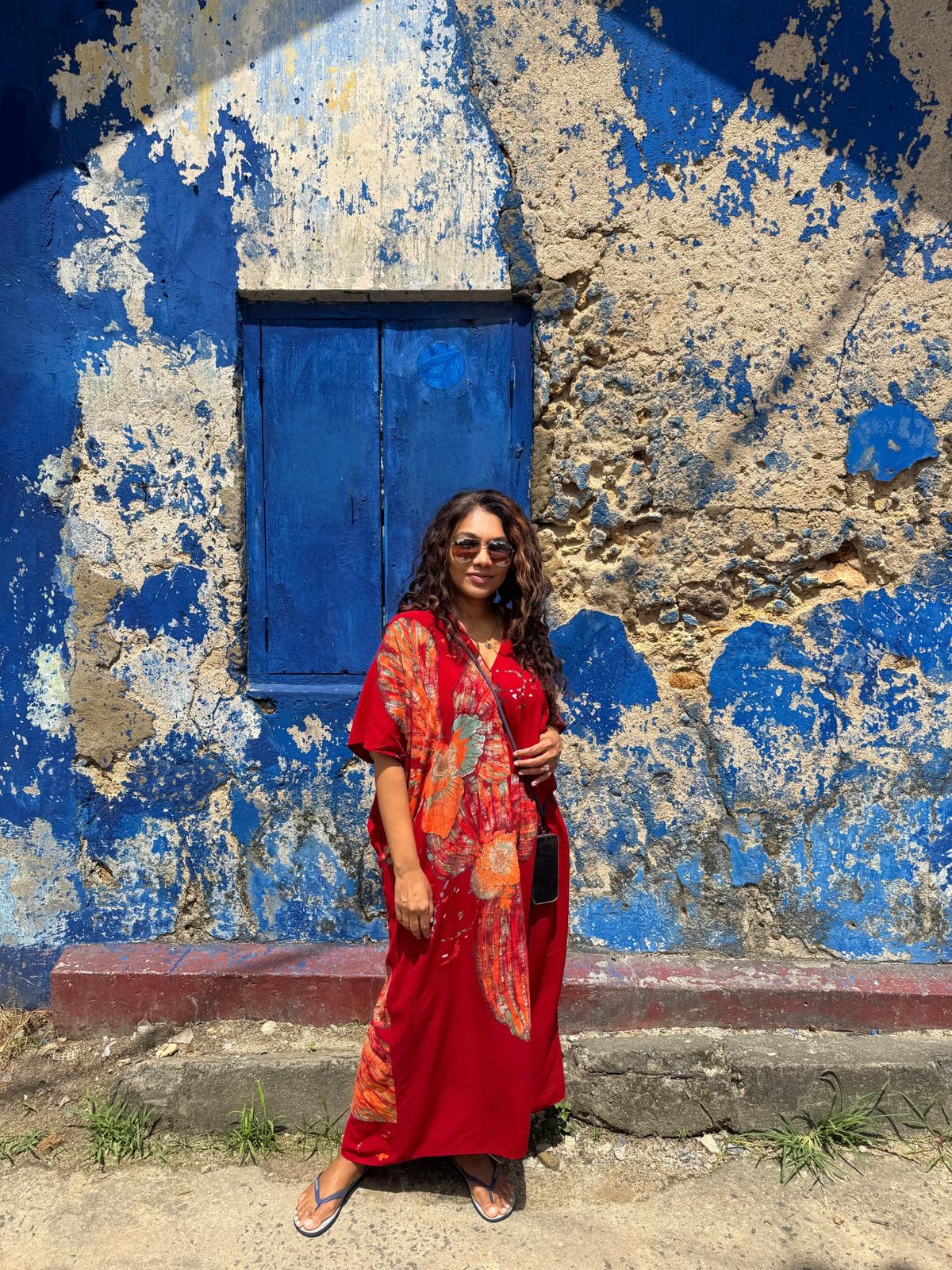
 Darshi Keerthisena

 Darshi Keerthisena
| Photo Credit:
Special arrangement

I highly recommend spending some time in Colombo to experience the local lifestyle — There are art galleries like Saskia Fernando Art Gallery, or the Radicle art gallery in a restored heritage building with a chic café at the corner, and hidden bars like Kampong in a nondescript part of town.

-Darshi Keerthisena, fashion designer and batik specialist

Nature’s lap

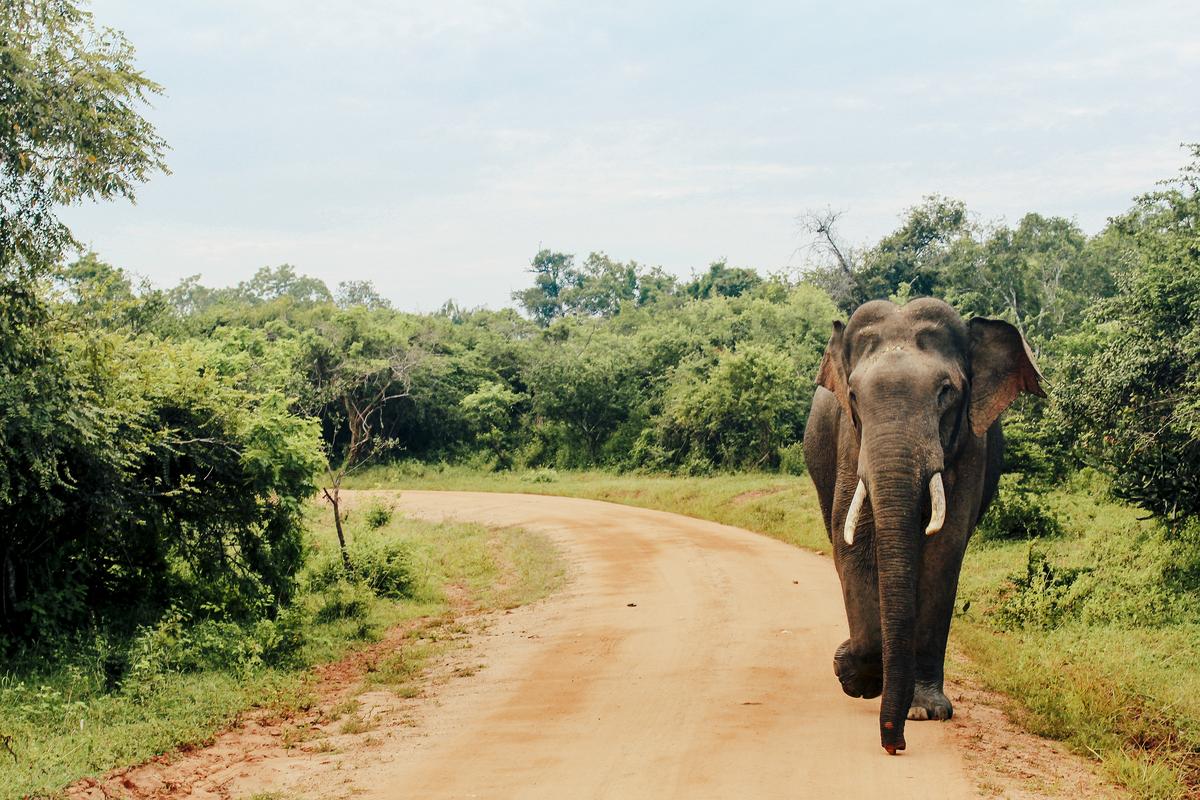
An Asian elephant can be seen walking along a dirt road at Yala National Park in Tissamaharama, Southern Province of Sri Lanka.

An Asian elephant can be seen walking along a dirt road at Yala National Park in Tissamaharama, Southern Province of Sri Lanka.
| Photo Credit:
SolStock

While Yala National Park’s popular touristy areas may be done to death, and often jammed with tourists. I do like exploring the lesser-known parts of the national park. Block 5 in Yala is barely frequented by tourists and is my favourite part to explore as it welcomes serious wildlife enthusiasts for its sightings of elephants, leopards, deer, monkeys, water buffalo and sloth bear; and tropical landscape dotted with ponds, rivers and arid planes. There are nice spots to drive around, enjoy a picnic, and take a dip in the lakes and rivers too.

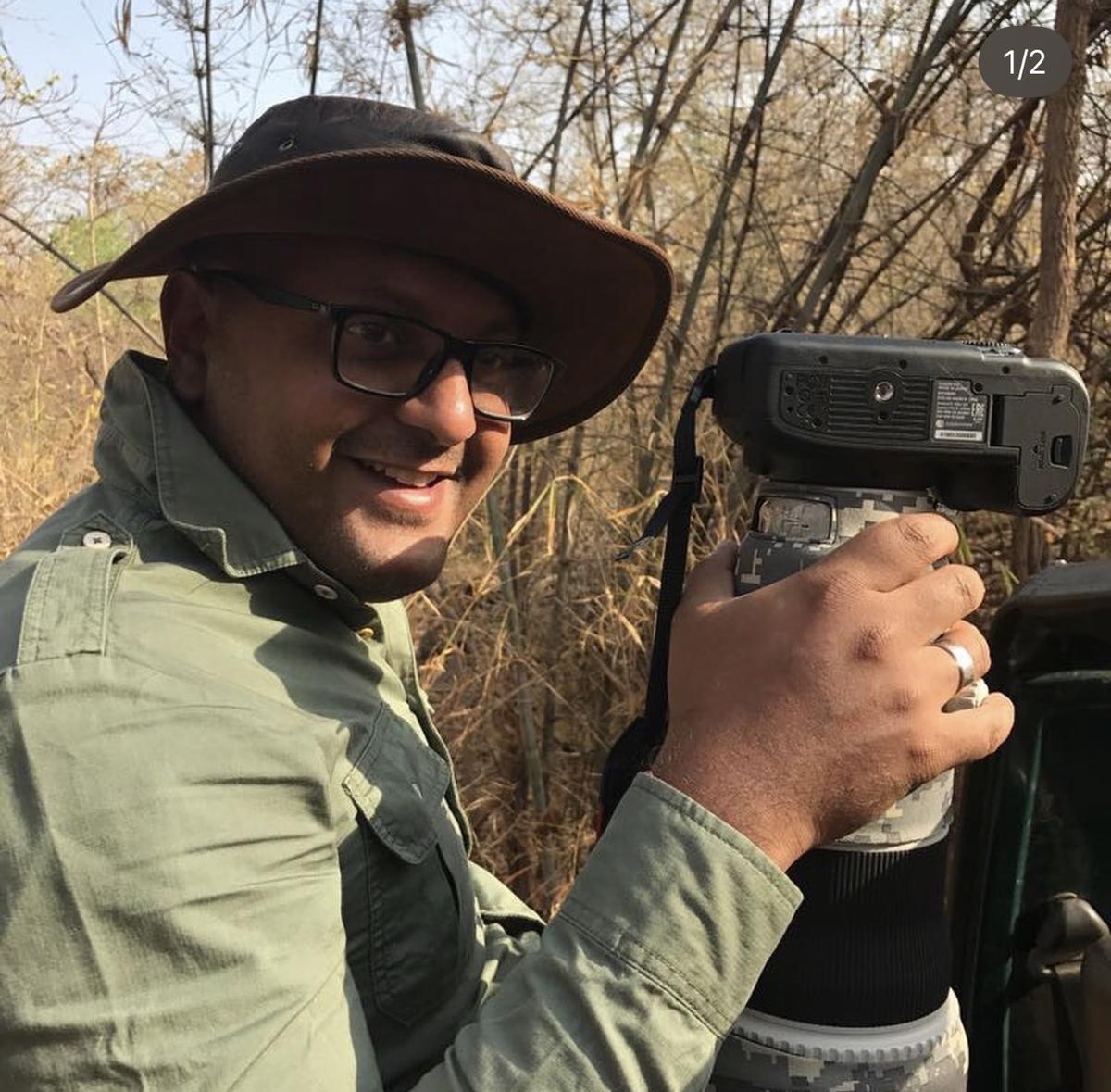
Amrit Rajaratnam

Amrit Rajaratnam
| Photo Credit:
Special arrangement

Then, there is the town of Sella Kataragama, an important temple town for Hindu pilgrims. This is another lesser known tourist spot adjoining Block 5. At night, there is a market that comes alive, with beautiful stalls from local communities and it is quite popular, so it is amazing to see the energy of Kataragama. I enjoy coming here on weekends, and staying at the four-room luxe lodge, The Warden’s House, and I find lots to do in this part of the country. The nearby towns are dotted with small stalls selling fresh hoppers for breakfast, tea by the curb or fresh fruit from the nearby farms.

-Amrit Rajaratnam, hotelier and wildlife photographer

Up for arrak?

The south coast of Sri Lanka is trending right now, with its thriving surf culture, amazing coffee, food options and beach clubs. Some even call it the new Ibiza or Gold Coast. I go to the south coast towns of Galle, Ahangama, Weligama and Hiriketiya quite often, but I prefer to do some non-touristy stuff — and there is lots to do. I would definitely recommend the silence of a sunrise walk along the beach, to try and spot the famous stilt fishermen at this hour. Look for them at Midigama and Thalpe beaches. Currently trending is the beach town of Hiriketiya, and this beach is open year round. There is a thriving F&B scene there, including the award-winning Smoke & Bitters bar, one of Asia’s Top 50 bars, which is now and a landmark in Hiriketiya now. 

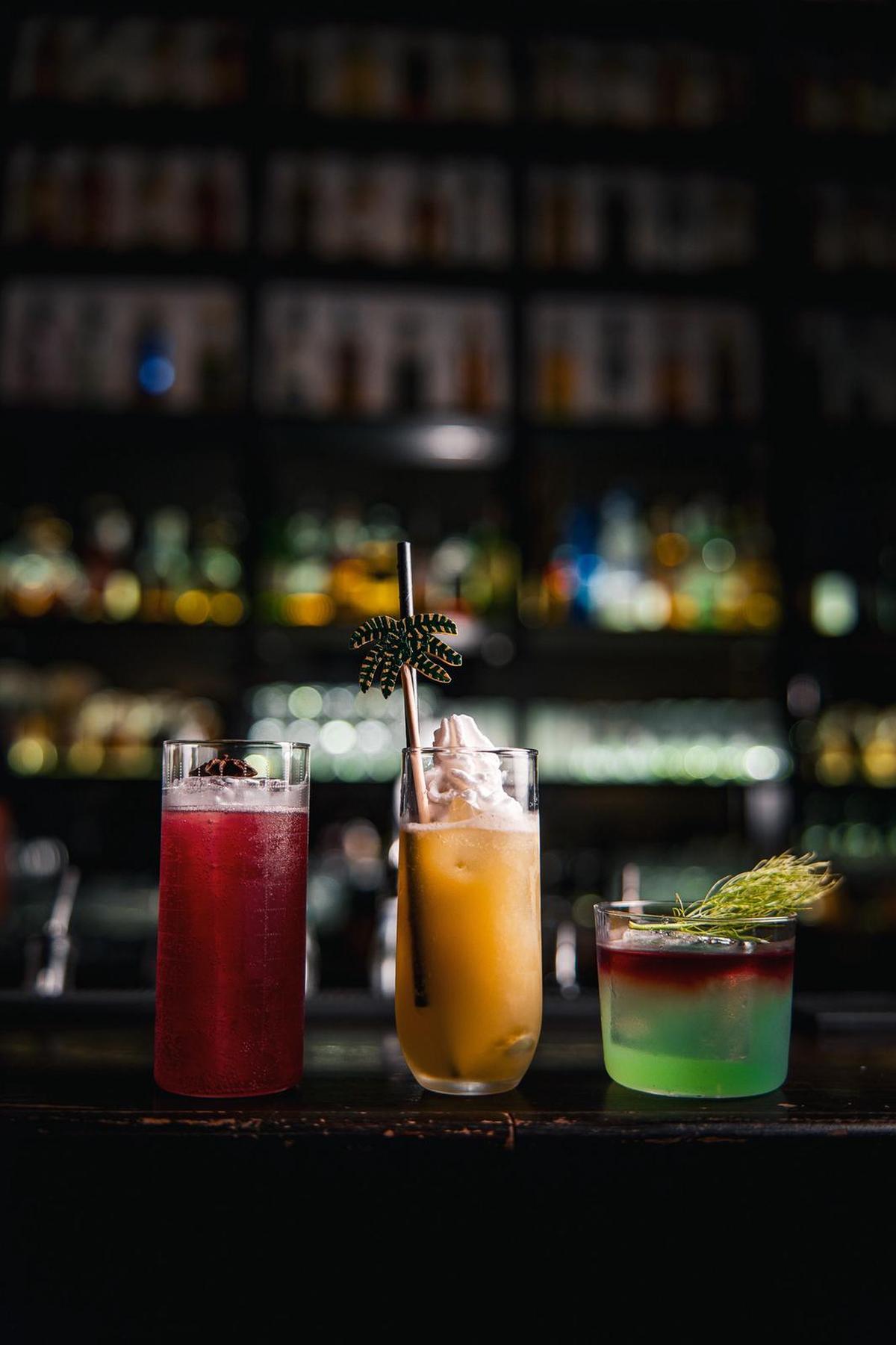
Limited-edition cocktail selection at Ropewalk

Limited-edition cocktail selection at Ropewalk

The crown jewel of the south coast is the Galle Fort, but I would recommend doing an insider’s walking tour in the fort to understand its nuanced architectural styles, a visit to the art galleries and traditional Galle jewellery stores that have existed here for centuries. And top it all with a visit to try Sri Lanka’s national spirit — arrack — at Ropewalk, the world’s first arrack-speciality bar.

Chathri Sahabandu

Chathri Sahabandu
| Photo Credit:
Special arrangement

Chathri Sahabandu, Sri Lanka luxury travel specialist and content creator @wandering_unicorns

Published – December 26, 2025 08:26 pm IST


Source link

Kochi Muziris Biennale: How the Indian art world sees it


At Anand Warehouse, Mattancherry

At Anand Warehouse, Mattancherry
| Photo Credit: THULASI KAKKAT

As the activities pick up around the various venues of the Kochi Muziris Biennale, with art enthusiasts, tourists and locals heading to the 29-odd venues hosting art-related events, some of the Indian art world’s prominent names delve into what the Biennale means to not just the art community, but also to the regular folk of the city.

Kiran Nadar

Kiran Nadar
| Photo Credit:
@MOHAMMED ROSHAN

I love it

The Kochi Biennale is evolving, I love it. There have been problems in the past but they seem to have been ironed out. For me, the atmosphere, the fact of getting younger artists doing work, showing them, getting the involvement of the local people… it is the biggest asset, the People’s Biennale part of it. This Biennale has a great atmosphere and everybody is feeling a sense of achievement… so that’s good!

Kiran Nadar

Founder and Chairperson, Kiran Nadar Museum of Art

Aparajita Jain

Aparajita Jain
| Photo Credit:
SPECIAL ARRANGEMENT

KMB has put India on the map of the art world

It is really just about the art, not about the commerce of it, though funnily enough everything is about funding. But this is a place where the artist can actually work without having to work under the pressure to sell. So, bienniales are very important. For the country, this is one of the more important bienniales though there are others in the country like the Calcutta Biennale and the Chennai Photo Biennale, this may be the first of this kind. The scale of the Kochi Biennale is larger, a lot more international. If we want things to happen in India, we have to make them happen. It has given us so much, it has put our country on the map [of the international art world] and become one of the centres of conversation when it comes to art. 

Aparajita Jain 

Director, Nature Morte Art Gallery, Mumbai 

Shireen Gandhy

Shireen Gandhy
| Photo Credit:
VIVEK BENDRE

‘We love it so much’

I was sceptical the first year [the first edition of the KMB in 2012] when I came. The moment I stepped into Kochi, into Aspinwall House, it was all a mess at the time. But, for the first time, I was struck by the feeling that the Indian art world had come together for something. It was the beginning of a love affair, which has really, really not gone away. Of course I was broken-hearted the last time when it didn’t happen [on time] as we get upset when things don’t happen on time. It is only because we love it so much. For me, it is how everybody here, the locals, are so proud. I remember the rickshawala showing us around, where a particular artist’s show was. The people are so present. From what I have seen, the word for me is visceral. Just by looking at the works you feel the texture of it. Nikhil and gang have such a sense of…they are performers and that performative element comes through [in the curation]. 

Shireen Gandhy 

Chemould Art Gallery, Mumbai 

Roshni Vadehra

Roshni Vadehra
| Photo Credit:
SPECIAL ARRANGEMENT

Amazing energy and vibe

I think it is one of the most important art gatherings in the country. The energy and the vibe is amazing. It brings the art community together, it is amazing how the public enjoy it and how they engage with art. A new, local audience is engaging with contemporary art, which is wonderful and there is the usual audience from around the world. It is such a proud moment for the Indian art world to have something like this in our country; garnering traction and attention over time. With the world looking at South Asian art seriously, it is an opportunity for everyone to come and see what we have to offer. International names like Marina Abrahamovic will be performing alongside South Asian artists. 

Roshni Vadehra,

Gallerist/Collector 

Director, Vadehra Art Gallery 


Source link

Here’s how can you can elevate your cocktail lounge for a party, this New Year’s Eve


The New Year party has moved indoors. After the pandemic, this trend continues and has resulted in the rise of the home bar space as an interior design statement. From elaborate drinks trolleys to island bars, sophisticated LED lighting to mixed media bar stools, there is an aesthetic to suit every mood.

The Bar Furniture Market — Global Industry Analysis, Size, Share, Growth, Trends, and Forecast 2021-2031 industry report says, the focus on enhancing the ambience of home bars has increased with technological advances in lighting, and a shift in marketing by the e-commerce industry to home consumers rather than just commercial establishments.

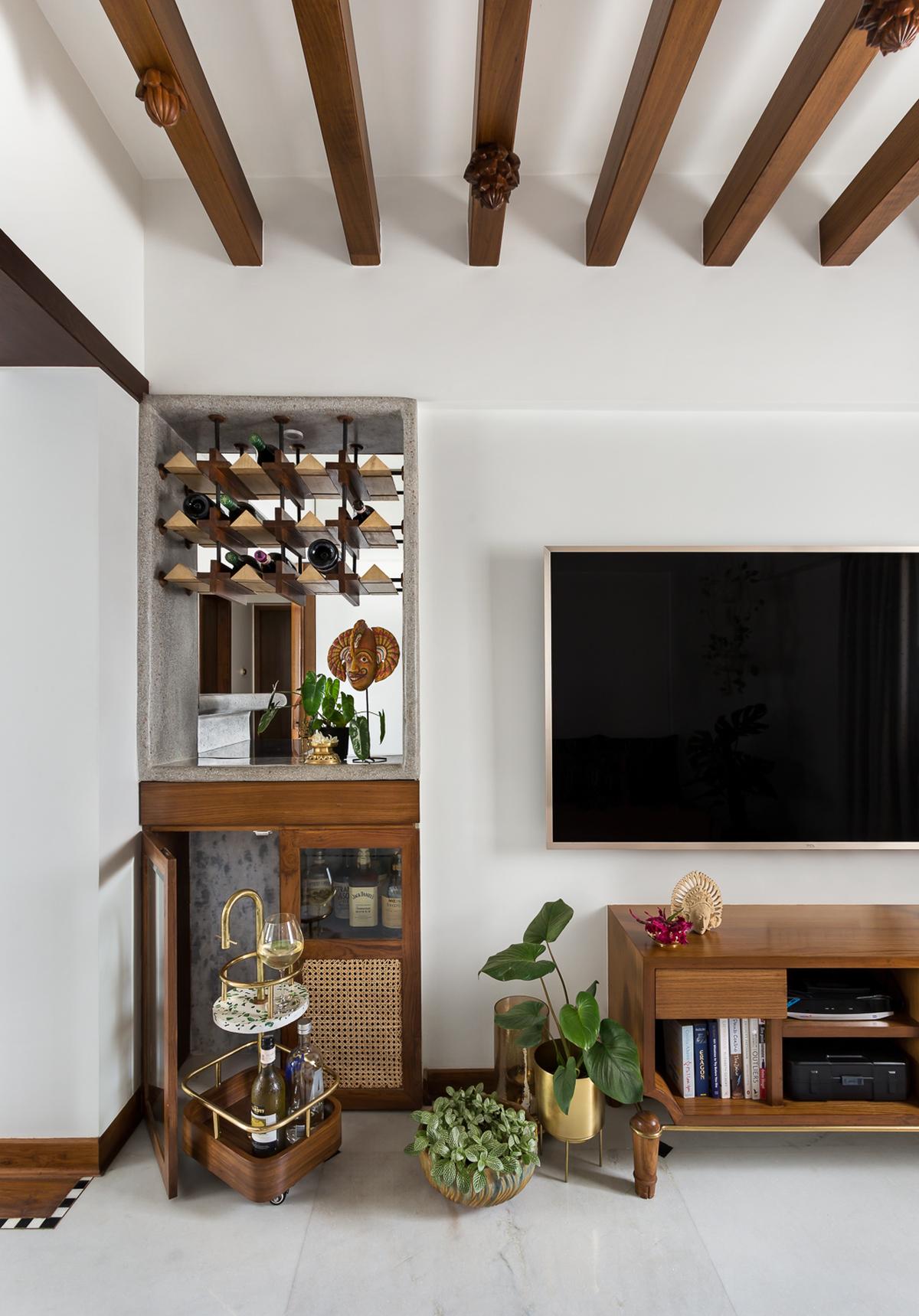
A compact bar space for a Mumbai apartment designed by Sahiba Madan, Insitu

A compact bar space for a Mumbai apartment designed by Sahiba Madan, Insitu
| Photo Credit:
Kunal Bhatia

With the rise in the number of bars in India, and five of them breaking into the Asia’s 50 Best Bars list, an elegant cocktail culture for upwardly mobile and well-travelled young Indians has found a place at home, and the home bar is an extension of this hospitality. 

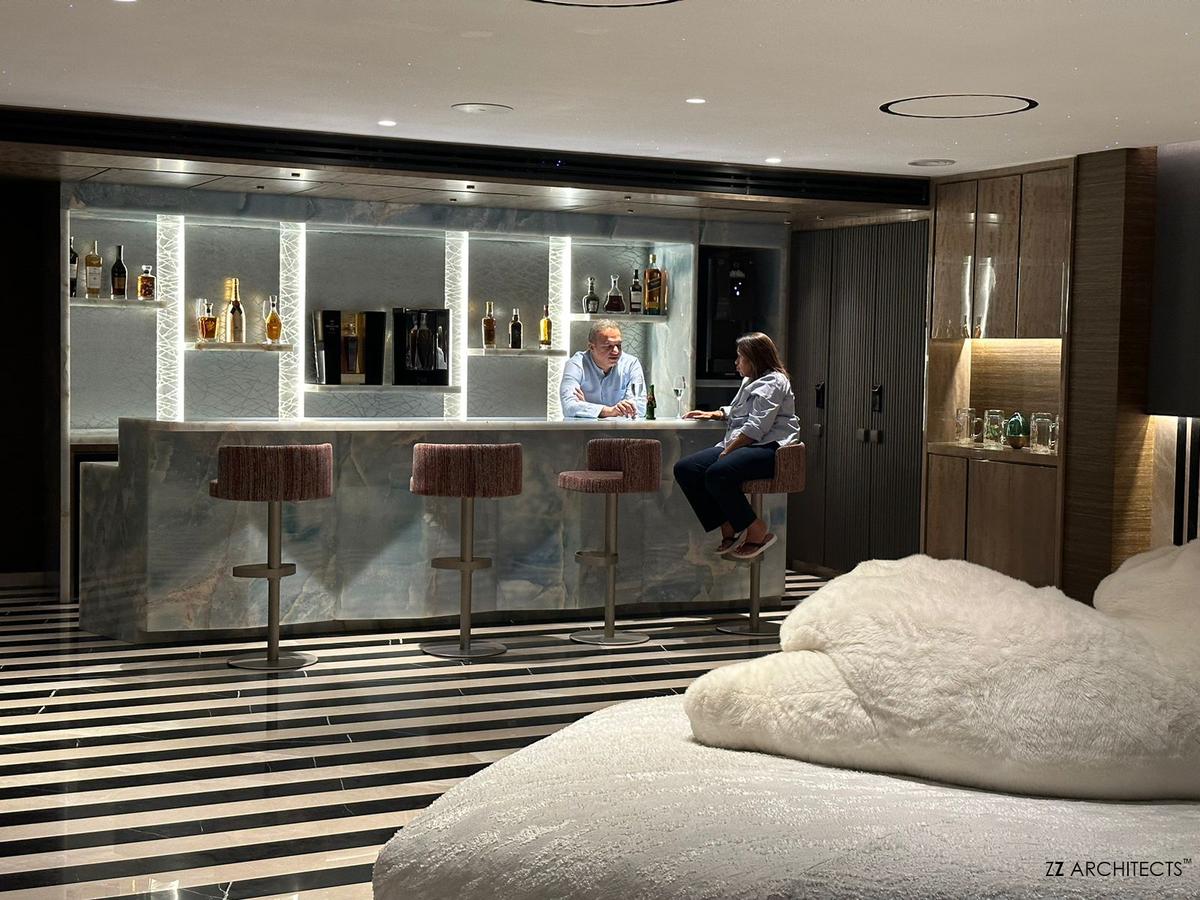
 A home bar space designed by Mumbai- based ZZ Architects

 A home bar space designed by Mumbai- based ZZ Architects
| Photo Credit:
Special Arrangement

Krupa Zubin, principal partner and architect, ZZ Architects, Mumbai, explains why the bars can be more than just a space for cocktails. “A majority of homes we design, have home bars to suit every need. For one couple, we made a hybrid bar that caters to an oenophile and a coffee enthusiast, so both enjoy the space equally. In some large multi-storeyed homes, we have designed bars for both outdoor and indoor spaces, adjacent to the home theatre, or near a pool deck — it is the client’s prerogative.”

The bar has come to be a centrepiece of the entertainment area, and has to speak the same design language as the rest of the home. In terms of design, Mumbai-based architect Sahiba Madan, founder, Insitu and Kalakaarihaath, says, form and function play an important role. “There is definitely a demand for a home bar, whether it’s concealed in plain sight in multi-generational or joint family settings, compact in a smaller flat, or is an extension of the living space,” she says.

Sahiba’s design incorporates wood, brass, and marble in a more neutral palette, keeping up with the aesthetic of the project. “Whether simple trolleys, integrated bars that have refrigerators, or independent bars with serving counters, there’s a place for all of them, depending on what the family is looking for.” Traditionally, wood was the material of choice, with a mirror or simple glass doors to display contents. 

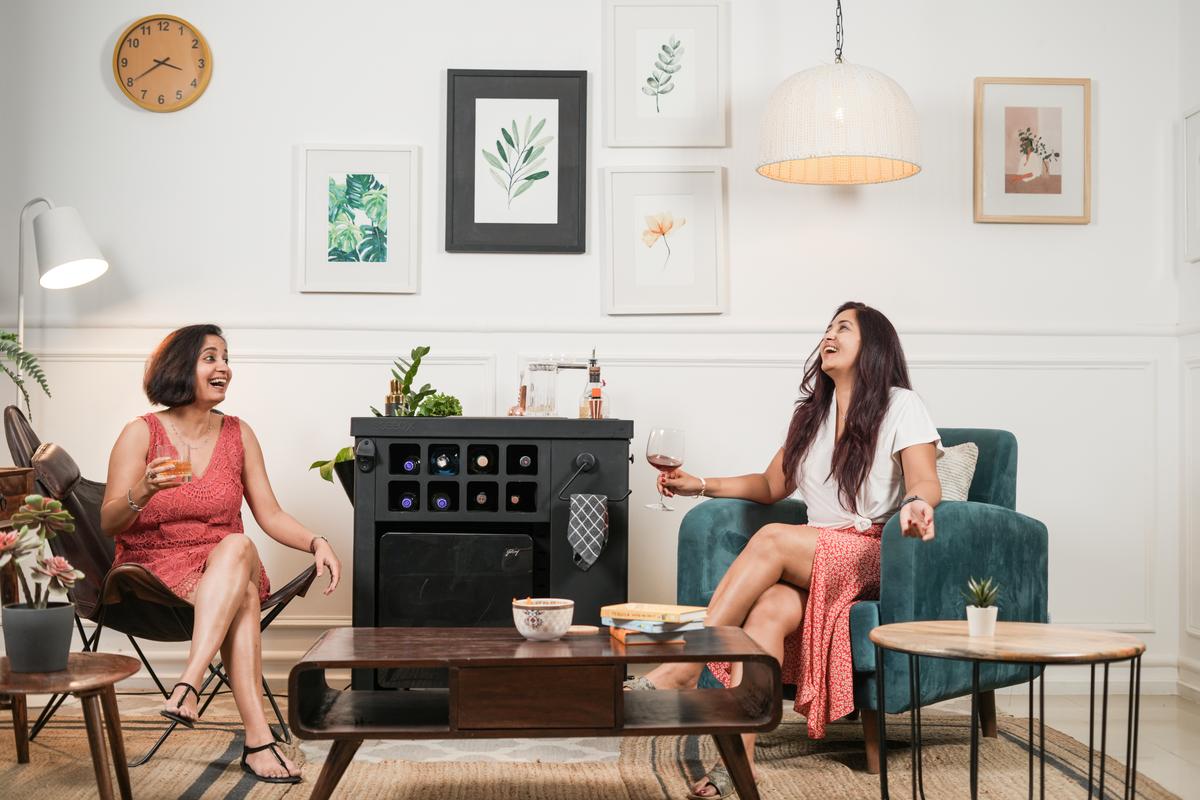
Bar trolleys by New Delhi-based Spin

Bar trolleys by New Delhi-based Spin
| Photo Credit:
Special Arrangement

While home bars, in the 1990s and early 2000s, were part of a larger dining display unit with a wooden door that pulled out on a hinge, that look has now become outdated. With interior stylists playing with metal, wood and glass to suit the design language of the home, the bar is now a modern reflection of the host, with soft lighting, and wooden elements. 

Anirudh Singhal, founder of New Delhi-based, SpeedX, will vouch for this shift, as he pivoted his business post 2020, to cater to the home entertainment segment. “Our home bar, ModelX was a COVID baby, and in 2023, we launched a brand-new identity for our home bars — Haus Of Bars. From selling two to three units a day pre-2020, we now consistently sell at least 10 units per day”.

The Model M mini bar (₹30,199) has a laser cut drip tray, space for eight bottles, an ice bucket, a cabinet for glasses or books and all weather protective coating while Model C (₹45,599 upwards) is an AM-PM coffee and cocktail bar. Their bestseller is the fast-moving Model X and Double Model X varying between ₹72,799 and ₹1,18,899, “this hits the sweet spot, not really entry level but not too expensive either for all the features we incorporate,” adds Anirudh. Hosts using a bar cart, hosts can comfortably fit up to a dozen bottles, three or more mixer cartons and a tray for garnishes in these models. The larger ones could accommodate double that capacity with a built-in sink, and space for an ice bucket.  

New Delhi-based, SpeedX’s cocktail bar

New Delhi-based, SpeedX’s cocktail bar
| Photo Credit:
Special Arrangement

“Our bars have refrigerators, which solve a pain point for customers who don’t want to run back and forth for ice or chilled drinks,” says Anirudh, adding that Hyderabad has emerged as the single-largest market for this category, followed closely by Mumbai, Goa and Delhi. “In terms of tones, the South prefers matte black or marble finishes, while customers in the North want the matte red and gold combination.”

Haus of Bars designs its units of food safe steel, tempered glass and a protective coating in different finishes, but what has really caught their customers’ eye is customisation. “We have a laser cut drip tray on top of the counter for the inevitable spills, but we have offered customisation for either a name or hashtag in that space, and that has been a big hit. This appeals to people who gift these units for weddings, or want their signature statement visible while they entertain,” adds Anirudh.

Not all cities can accommodate expansive home bars, so eye-catching, stand-alone cabinets in eclectic styles sell too. Chennai-based design space Cape Kamoryn, co-founded by Alamelu Kesavan, sources bar units in leather, reclaimed wood, metal, inlay work and with quirky automotive elements, from across India and Southeast Asia.

She highlights, “We have a lot of customers for moto-themed units, made from reclaimed bike parts or designed from race car bodies. These typically are conversation pieces, and you have to have the space and personality to pull it off. Versatility is an important design feature as well, as some compact bars are tables that open up, some are closed cabinets that lend character to a room.” A red or blue, British telephone booth bar, is a fast-moving piece with plenty of storage. “This sells quickly, in both red tones and other hues,” she adds. These units are not stocked permanently at the store on East Cost Road, with prices available on request, and styles and colours changing every few months.

Smaller home bar units, are built to be compact, holding half a dozen bottles, a few glasses, a small ice bucket, and a cocktail shaker. Larger bar units typically include a refrigerator for wine, another chilling unit for mixers, with space to hold bottles, myriad glassware, garnishes and a bar set that comprises peg measures, muddlers, cocktail shakers and other bar accessories.

A moto- themed bar unit at Cape Kamoryn,  Chennai

A moto- themed bar unit at Cape Kamoryn, Chennai
| Photo Credit:
SPECIAL ARRANGEMENT

For New Delhi-based Spin, bar trolleys and individual units or an entire bar ecosystem (priced between ₹7,000 and ₹95,890), offer, “an elevated everyday experience, which is a sum total of different aspects — bar furniture, accessories and varied barware,” says Jyoti Nautiyal, co-founder at the company.  

For Krupa, material and personalisation are important considerations while designing a bar. She states, “We like stone or wood, that offer a tactile element and really interact with each other. Soft lighting and comfortable seating go a long way as well. These days, we are not encumbered by bar stools. A client set up a bar space in his basement and has a large island seat with other smaller seats for a more luxurious experience.” 

Jyoti concludes, “We see customers put in an effort to curate collections of barware to flaunt their individuality. Another trend is the emergence of vertical bars to offer great space optimisation, and LED lights to highlight your glassware. Just like we saw home kitchen renovation witness an up tick in UK post 2020, we see the home bar take its place. Ultimately, the usage of the home bar space is determined by the imagination of the host.”


Source link

Here are some late-night services ensuring party-goers a safe journey to their homes


There was a time when David M (name changed for privacy), a senior executive at a leading IT organisation, thought nothing about driving himself home after a night of wild partying. “Back in college, I used to think that driving after drinking was cool because it made you look more masculine and in control,” he says. Not anymore, however.

If he ever has alcohol outside, he now makes it a point to take a cab back or hire a driver to ferry him home. “A switch suddenly flipped, and I realised how socially unacceptable, irresponsible and selfish it was to drink and drive. You can kill someone and destroy a family,” he says. Additionally, the laws around drunk driving in India have gotten much stricter, with fines being raised from ₹1,000–₹1,500 to a whopping ₹10,000 and/or six months in prison. “It is a good thing that the fines are so huge,” feels David.

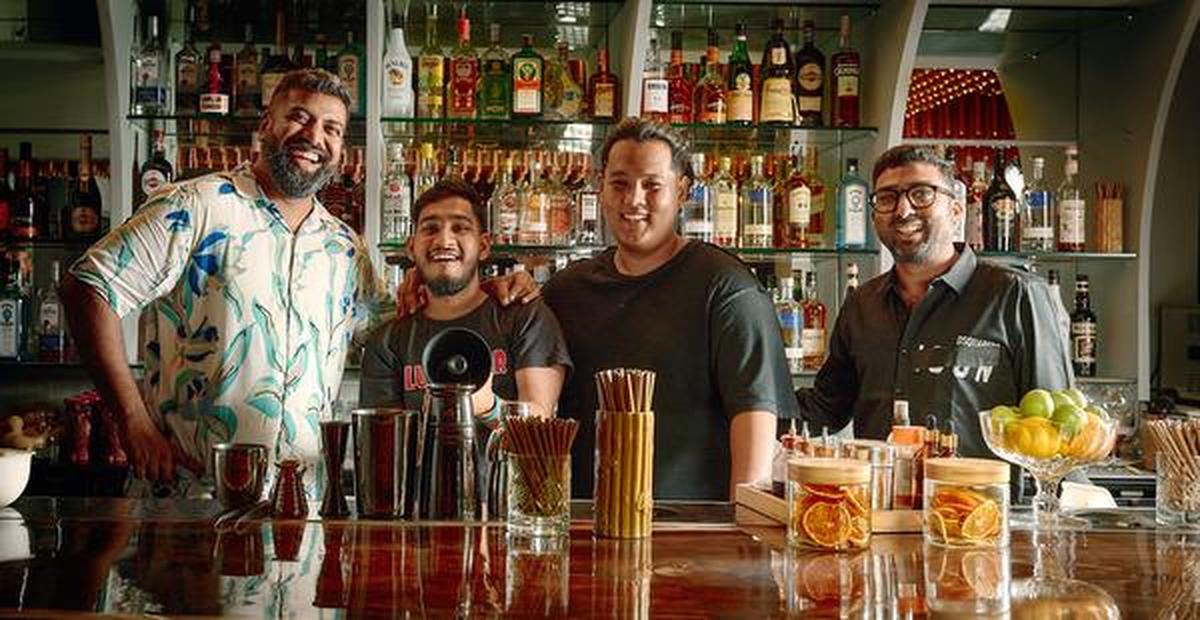
(Clockwise from far left) L to R: Santhosh Zachariah Abraham, Rohit Rajput, Bishal Gurung, RVS Kiran

(Clockwise from far left) L to R: Santhosh Zachariah Abraham, Rohit Rajput, Bishal Gurung, RVS Kiran
| Photo Credit:
Special Arrangement

Santhosh Zachariah Abraham, the managing partner at the Madras Cocktail Company, aka MadCo, a speakeasy in Chennai, welcomes the move, too. As someone who once worked at a leading alcohol company and has witnessed the outcome of driving under the influence, he thinks it is simply an unwise thing to do. “You are not just risking your own life, but you’re putting everyone else’s life in danger,”

The culture of driving after a few drinks, once commonplace, appears to be undergoing a shift, catalysed by several factors, the topmost being these stringent checks and heftier fines. And, in response to this, many clubs and bars in India are now actively helping customers get home safely. MadCo is one of them, with valets instructed to ask every guest upfront if they will need a driver after partying. “If they do, we make arrangements for that,” says Santhosh, who believes that most guests are amenable to this idea.

Gaanesh Ranganath, the managing partner at Bier Loft Brewing Company and Gulp in Bengaluru, agrees that partygoers are more sensible nowadays and eschew driving after a drink. “They just want to book a cab, take it easy, have a good evening and call it a night,” he says.

People just want to book a cab, take it easy, have a good evening and call it a night

People just want to book a cab, take it easy, have a good evening and call it a night
| Photo Credit:
Mlenny

At Bier Loft, too, valet drivers can be employed to get clients home safely. “We are located in Electronic City, and people who come don’t live beyond six or seven kilometres usually. So, our drivers can easily drop them and come back,” he says. His staff also helps clients to book ride-hailing apps, especially if there are clear signs that they have had too much to drink and may need help getting home safely. “Our staff is appropriately trained to recognise when a guest is a little more than tipsy. If we see that they’ve drunk beyond the permissible limit, we help them book cabs since their safety is our priority,” he says.

What, by most accounts, is also fuelling this mindset shift is the mushrooming of easy and relatively inexpensive transport options. While this is not true of all parts of the country — Goa, for instance, has fewer options, despite its reputation for being a haven for affordable alcohol — most metros and even two-tier cities have excellent ride-hailing services and may even have public transport at night. “This technology has led to a change in behavioural patterns. People no longer need to drive home after drinking because all these services are at the tip of your fingers,” agrees David, who believes this has played a vital role in making it easier to have fun without worrying about the hassle of getting home after drinking.

The plethora of cab and driver services makes it easy to get home safe after a night of drinking

The plethora of cab and driver services makes it easy to get home safe after a night of drinking
| Photo Credit:
lakshmiprasad S

Shiva Shailendran, director of consumer growth at Uber India South Asia, echoes this sentiment. “We have seen more people turning to Uber as their preferred way to get home responsibly,” he says, citing a recent survey conducted by the brand in Delhi-NCR and Bengaluru, where an overwhelming 93% of the respondents said they chose not to drive back drunk only because of the availability of ridesharing options. In keeping with the organisation’s goal of having reliable rides available whenever people need them, especially late at night and on weekends, Uber has strengthened supply across major metros. This ensures riders can find a trip quickly, even during peak party hours, he adds. “It encourages people to enjoy their evenings out while making the responsible choice when it is time to head home.”

Technology encourages people to enjoy their evenings out while making the responsible choice when it is time to head home.” 

Technology encourages people to enjoy their evenings out while making the responsible choice when it is time to head home.” 
| Photo Credit:
Peopleimages

And it is not just cabs that can be booked quickly on your phone: drivers can be, too. David still recalls, while on a visit to Thiruvananthapuram, encountering an ad for DriveU, a start-up that allows you to pre-book a driver. “After you are done drinking, two people will arrive on a bike. One will get into your car and drive you to your destination, with the other person following you on his bike,” he says. “Once you get dropped off, the person who drove your car will hop back on the bike and leave.”

Drivly, a newly launched AI-powered mobile app that instantly connects car owners with trusted, background-verified call drivers, is another option for Chennai-based partygoers (the co-founders plan to soon expand to other parts of India). “Around 25-30 percent of our bookings come from nightlife users, and they really appreciate the fact that we can provide a driver in thirty minutes,” says Zachariah Jacob, who co-founded Drivly with Karthikeyan G. Most call drivers take anywhere between 45 minutes to an hour to reach a client, he points out, making this a convenient option since people don’t always want to wait that long for a driver. “We are giving the option of being able to use your own car without worrying about safety,” he says.

After all, as Santhosh puts it, “It doesn’t make any sense for you to spend thousands and thousands of rupees drinking, and then not pay ₹500 for a (safe) ride.”

Published – December 26, 2025 07:43 pm IST


Source link

Ready for a better year ahead? Experts weigh in on the habits to drop in 2025 and the ones to build in 2026


The new year is almost here, along with that comes the usual conversation of new beginnings and resolutions. Then begins the tussle between willpower and letting go. It can be overwhelming to decide what habits to pick and what to ditch, especially if you have a rapidly crumbling resolve. We speak to experts who tell us what to incorporate into our schedules in 2026.

Divyak D’Souza

Stylist and costume designer

Divyak D’Souza had never thought of a career in fashion. But here he is, styling celebrities, creating costumes, and hosting shows; visibly in love with what he does. “I was studying Mass Media, when I started working as an intern at GQ magazine. I was with the production department, in charge of getting tea, coffee, change of clothes etc. Arjun Bhasin, fashion director of the magazine and a costume designer, asked me to work in the fashion department because he felt I had what it takes. So by the time I was 20, I started styling for the magazine and fell in love with fashion,” says Divyak. In 2016, he started freelancing as a stylist and was also the host on the show Say Yes To The Dress India.

Divyak D’Souza

Divyak D’Souza
| Photo Credit:
SPECIAL ARRANGEMENT

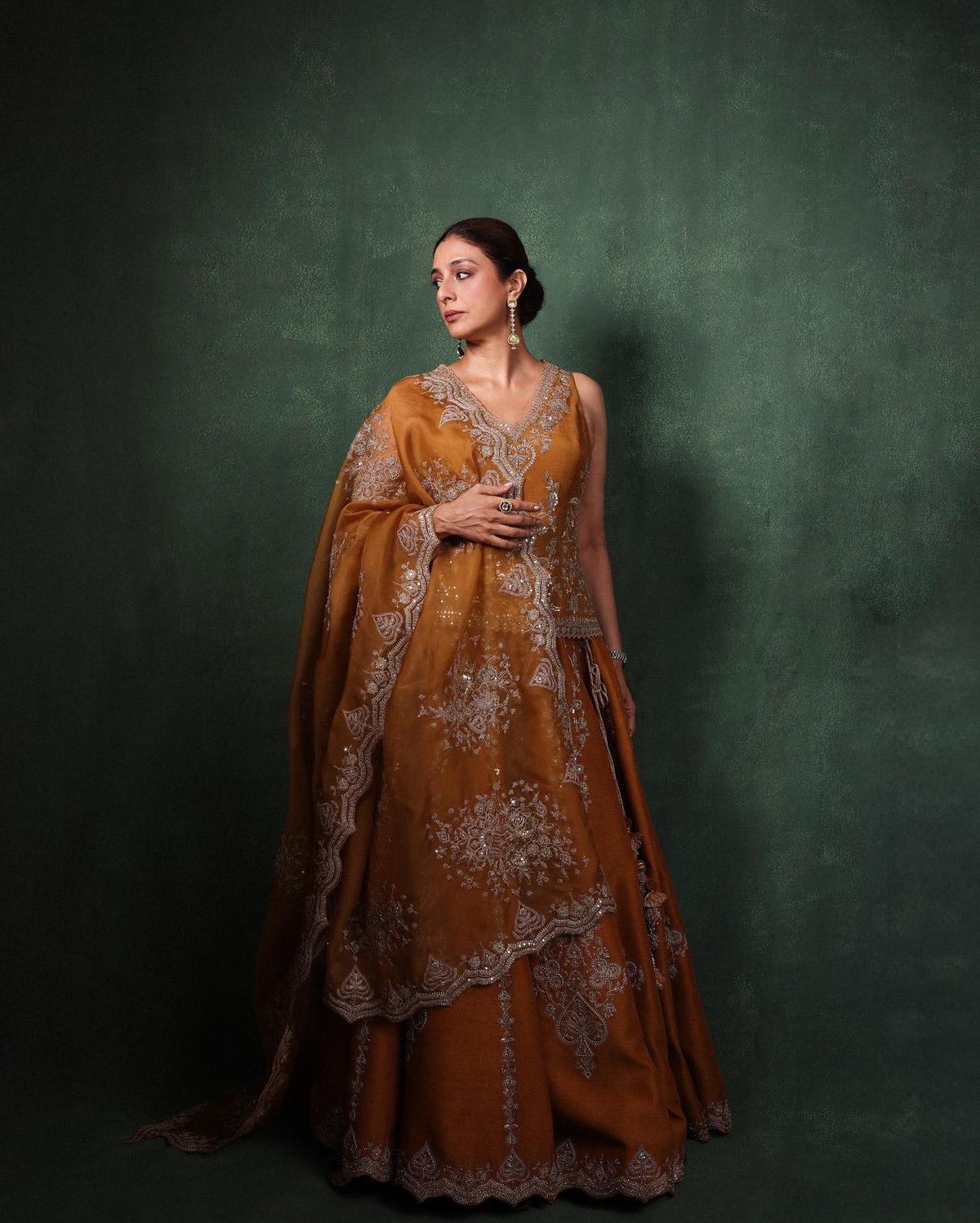
The whole game of personal styling has exploded 10-fold now, believes Divyak, who has been part of this industry for 15 years. Over the years, he has styled numerous big names from Bollywood such as Kareena Kapoor Khan, Tabu, Amir Khan, Farhan Akhtar…

Tabu styled by Divyak

Tabu styled by Divyak
| Photo Credit:
SPECIAL ARRANGEMENT

“I enjoy the process of creating visuals and stories through clothes, be it a one-minute ad film, a fashion shoot for a magazine or giving a personality a certain look and feel,” says 37-year-old Divyak. From his recent assignments he says, he enjoyed putting together Kareena’s look for a press conference. She wore a shirt by Ladakhi label Namza Couture and a himroo weave skirt by Re-ceremonial. “It’s interesting to play around with young Indian labels. They are doing a great job in the space of Indian craft preservation,” he says, adding, “Tabu is a brilliant muse too and is open to ideas. We did a shoot with her and gave her a fresh look with curly hair.”

Divyak says he is lucky to do a job that is creative and fun on most days. “Once I finish an assignment, I check out and don’t pay attention to what’s being said on Instagram about it or what critics say. I see constructive feedback and try to improve.”

Three habits to leave behind in 2025

Over consumption: Being mindful of consumption patterns across the board.

Dressing up for others: We should be dressing up for ourselves and presenting ourselves to the world in a way that articulates our self expression rather than seeking the approval of others.

Being unkind: With social media and the whole freedom to say whatever you want and leaving the meanest of comments anonymously… that kind of unkindness is awful.

Three habits to adopt in 2026

Dressing in homegrown textiles and crafts: I am a big champion of talent that Indian designers have and the rich textile and craft heritage our county has. Be local, buy local is one of the best things I did for my personal wardrobe as well.

Making space at the table for different voices: Being more inclusive of different kinds of voices and perspectives. We are already seeing it in fashion in the form of age inclusivity, size inclusivity and different forms of gender expression getting acceptance.

Taking a pause before reacting/deciding: As a society we must be a little more mindful whether it is reacting on social media or a professional or personal situation. Take a pause, understand the different perspectives and then give our take on the matter.

Dr Vinay Menon

Global wellness leader

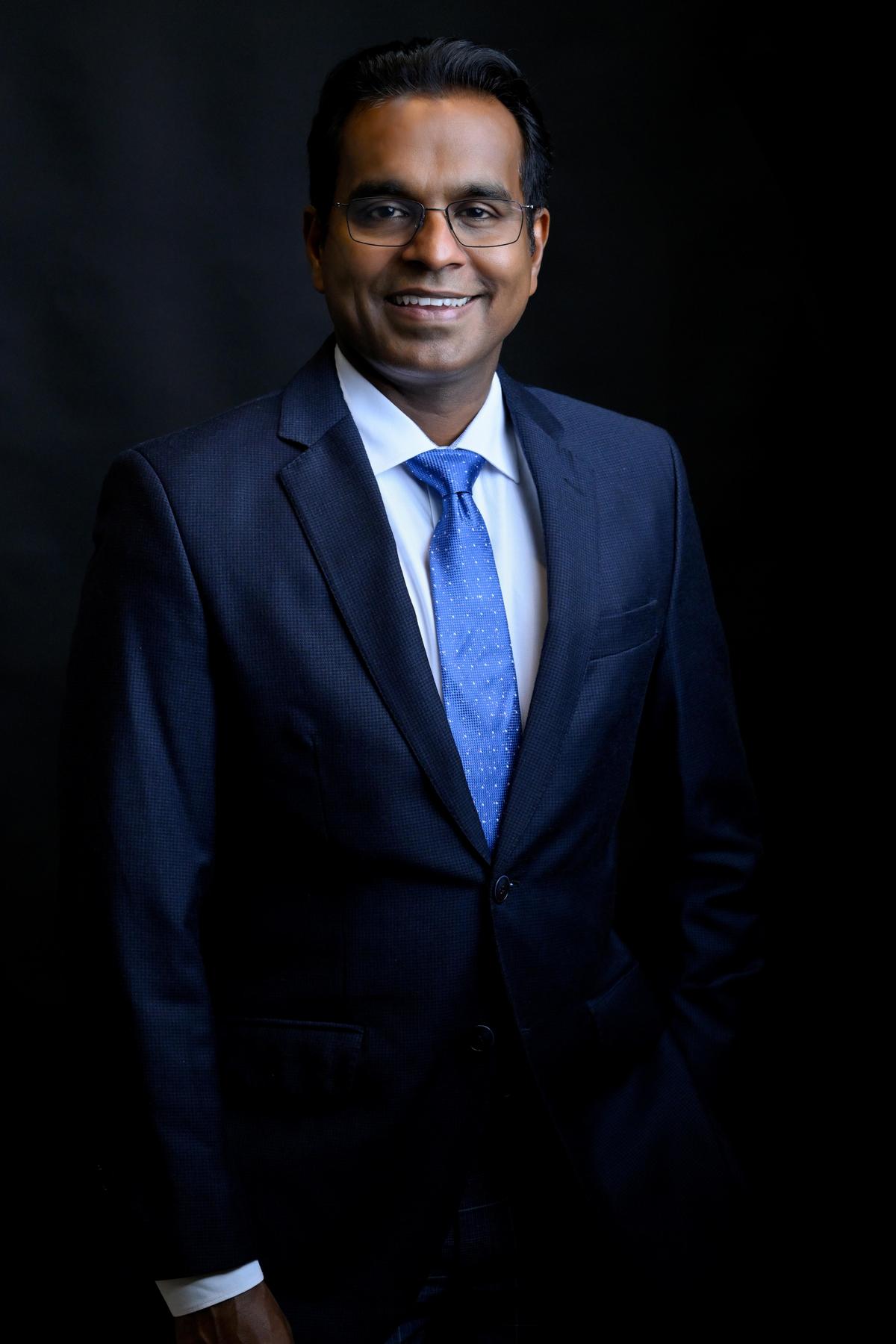
For many years, the Chelsea football team had an Indian member — Dr Vinay Menon. “I spent more than four years with Chelsea Football Club as Head of Wellness and Wellness Coach. My responsibility was to support players through recovery, sleep, and overall well-being during a very intense and successful phase for the club. It taught me that performance is sustained not by pushing harder, but by recovering smarter,” says Vinay, who is now based out of the UAE, and is Head of Sports and Wellness, Burjeel Holdings, a healthcare group. Vinay’s task is to take lessons from elite sport and apply them to preventive healthcare and community well-being. “We work with children, working professionals, and older adults, using modern science — sleep medicine, brain optimisation, health data — alongside holistic practices. The aim is to create healthier, happier people across every stage of life,” he explains.

ABU DHABI, UNITED ARAB EMIRATES - FEBRUARY 12:  of Chelsea during the FIFA Club World Cup UAE 2021 Final match between Chelsea v Palmeiras at Mohammed Bin Zayed Stadium on February 12, 2022 in Abu Dhabi, United Arab Emirates. (Photo by Darren Walsh/Chelsea FC via Getty Images) 20WK

ABU DHABI, UNITED ARAB EMIRATES – FEBRUARY 12: of Chelsea during the FIFA Club World Cup UAE 2021 Final match between Chelsea v Palmeiras at Mohammed Bin Zayed Stadium on February 12, 2022 in Abu Dhabi, United Arab Emirates. (Photo by Darren Walsh/Chelsea FC via Getty Images) 20WK
| Photo Credit:
Darren Walsh/Chelsea FC via Getty Images

While there is much brouhaha surrounding wellness lately, Vinay says it is something very simple. “It’s about waking up with energy, sleeping well at night, and having the emotional space to enjoy life. It’s not a luxury — it’s a necessity, especially in today’s fast-paced world.”

The most common queries he receives are about how to sleep better, why they feel tired even after enough rest, how to manage stress without burning out, or even basic questions like how to feel happier and smile more. “That question says a lot about the times we live in,” he adds thoughtfully.

Dr Vinay Menon

Dr Vinay Menon
| Photo Credit:
SPECIAL ARRANGEMENT

The biggest challenge he notices in wellness today is that people have accepted tiredness as normal. “Being constantly busy has become a badge of honour. But the body and mind don’t work that way. Rest, balance, and connection are not optional — they are essential,” he adds.

Three habits to leave behind in 2025

Normalising exhaustion as a marker of success: In elite sport, fatigue is treated as a risk factor, not a virtue. The same applies to everyday life.

A reactive approach to health: Waiting for symptoms before acting is outdated. The future of wellness lies in early awareness and prevention.

Unstructured, screen-driven routines that disrupt sleep: Poor digital habits quietly undermine recovery, focus, and long-term health.

Three habits to adopt in 2026

Protecting sleep as a performance asset: In high-performance environments, sleep is non-negotiable. It should be treated the same way in daily life.

Using health data to guide early decisions: Tracking sleep, stress, and recovery allows timely intervention before issues escalate.

Building daily recovery into routine: Simple practices such as breathwork, movement, and mental decompression are essential for sustained performance.

Shiny Surendran

Sports and preventive health dietician, and founder-partner Art of Eating

A poor eater becomes a nutritionist. Oh, the irony. But that is the story of Shiny Surendran. “Growing up, I never used to eat veggies. As a result, I fell sick a lot. My mother used to say, ‘if you don’t want to fall sick, and attend school then you must eat well’. I loved studying. So, that’s when the turnaround happened,” says Chennai-based Shiny who has been a nutritionist for 26 years and was among the first Indians to be certified with a Graduate Diploma in Sports Nutrition by the International Olympic Committee.
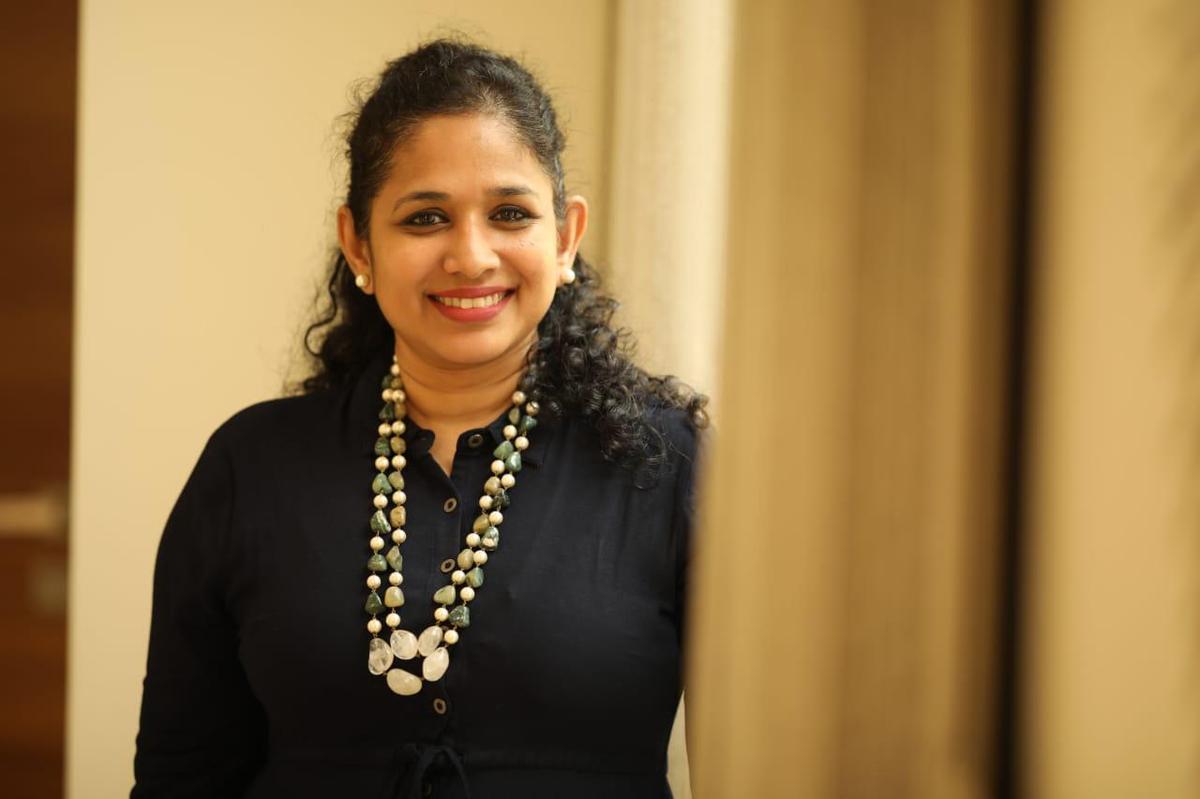

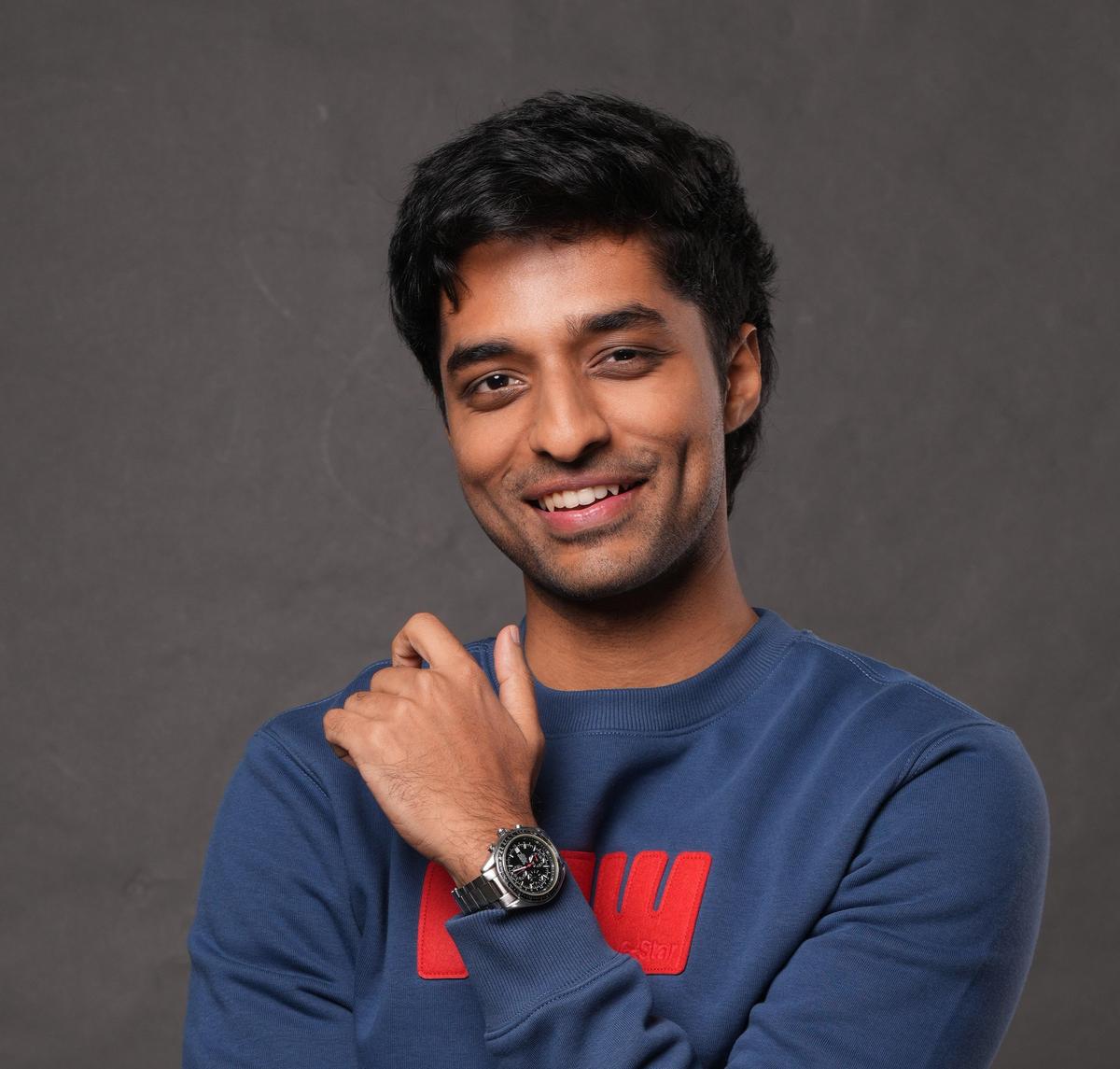
Shiny Surendran

Shiny Surendran
| Photo Credit:
SPECIAL ARRANGEMENT

Shiny wanted to do something for the community, and nutrition, she says, made sense. A firm believer in you are what you eat, Shiny says it gives her great joy when she sees her clients reverse certain disorders by eating right or are asked by their doctors to reduce certain medication.

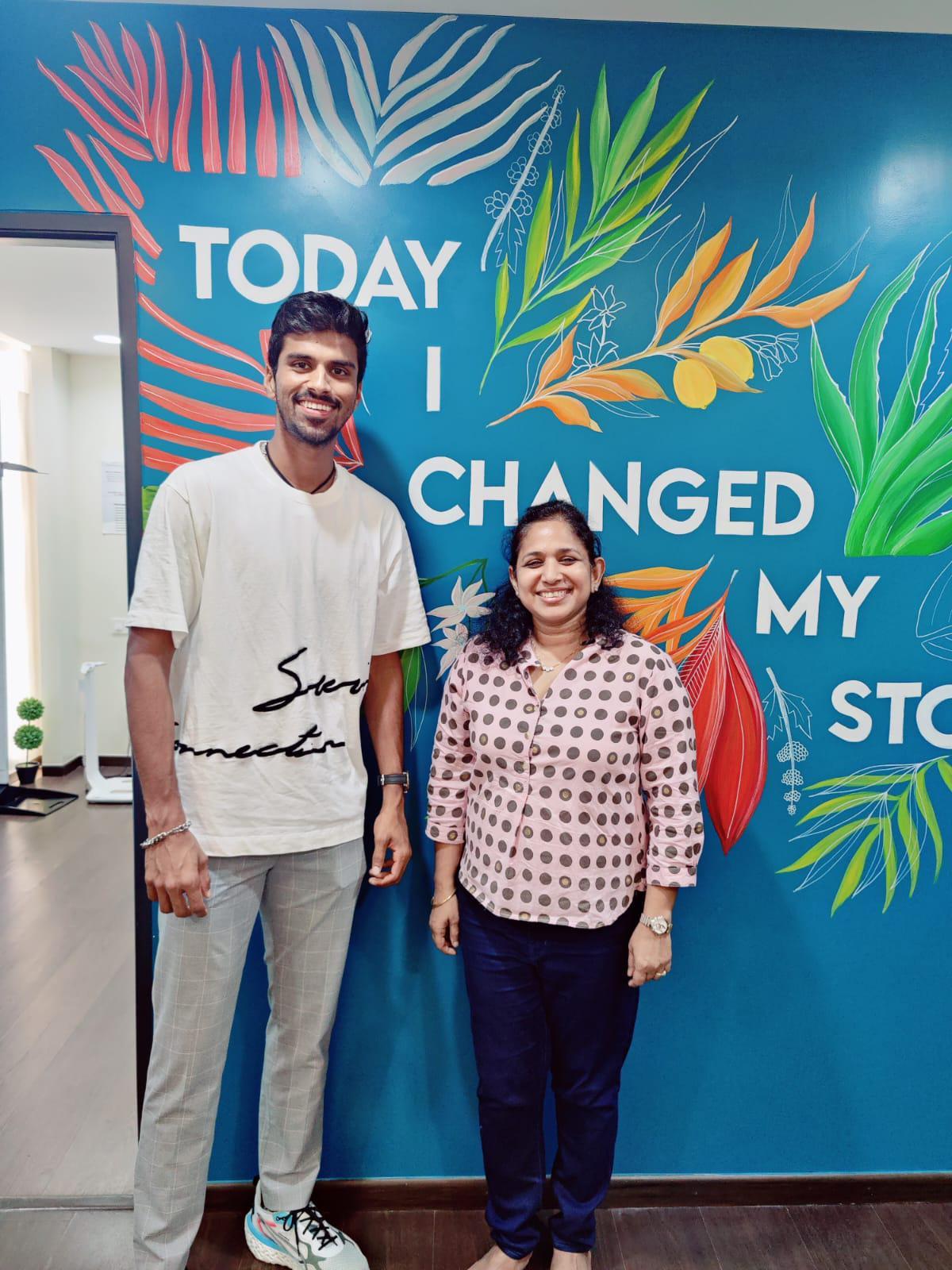
“When I started out in 1996, sports nutrition as a specialisation hardly existed. I attended Dr Kannan Pugazhendi’s lecture. Kannan sir asked me to focus on this area and I did,” says Shiny who has worked with cricketer Washington Sundar, former table tennis player Sharath Kamal, and actor Sivakarthikeyan among others.

Shiny with Washington Sundar

Shiny with Washington Sundar
| Photo Credit:
SPECIAL ARRANGEMENT

Eat right, not less is what Shiny suggests. You can’t have rigid rules, she says. “There has to be fun food so people don’t feel deprived. If my client wants to eat biryani, then I ask them to eat more pieces, or if they want pizza, they can have a home-cooked one loaded with veggies and chicken… We have to make tweaks,” explains Shiny. The team goes through the menu of whichever restaurant its client is going to, and suggests healthy options.

Three habits to leave behind in 2025

Short cuts don’t work: Have you given 100% to what your fitness trainer or nutritionist said, before jumping to GLP?

Don’t binge. Work on habits. If you are used to watching television and sitting with a box of snacks, work on that. Try to not take the elevator and instead climb stairs.

All or nothing approach: You may be doing everything right but then end up eating two plates of biryani or high calorie food. Avoid a very extreme mindset or approach to nutrition.

Three habits to adopt in 2026

Limit screen time. This affects sleep.

The minimum effective dose: People think after one hour of walking or gymming, it’s ok to sit throughout the day. Instead, walk after lunch etc. Every one or two hours get up for 10 minutes rather than not doing anything for 23 hours.

Include protein and fibre in each meal. Also, eating local works and is sustainable.

Sharan Hegde

Finance content creator

Bengaluru-based Sharan Hegde, one of the most popular financial content creators does not come from a finance background. He studied Mechanical Engineering but was always good with finance. So, it is no surprise that his Instagram handle Finance with Sharan now has 2.8 million followers, including 15 to 65-year-olds. “They are here to take help,” says Sharan, adding that the most common questions he gets are about what stock and mutual funds to buy or how does one become a crorepati quickly.

Sharan Hegde presenting his book to MS Dhoni

Sharan Hegde presenting his book to MS Dhoni
| Photo Credit:
SPECIAL ARRANGEMENT

Sharan became a full-time financial advisor in 2021. His calling was to break down complicated boring finance jargon and make it fun for someone not interested in the subject. “I started learning when I was 18 and I have been improving knowledge and learning from people who are smarter than me. Finance is multi-dimensional,” he says. “When we are small it’s about addition subtraction. When we grow older it translates to how do you make money grow, insurance, credit card etc. That’s a learning process that comes when you are obsessed with how money moves,” he says. 

Sharan Hegde

Sharan Hegde
| Photo Credit:
SPECIAL ARRANGEMENT

There is a lot of misconception surrounding the world of finance: people think loans are bad, credit card is bad, all insurance products are good. Sharan aims to bring clarity to his viewers. What he enjoys the most is “bringing new perspectives to an audience about new investment products and hidden strategies and tactics and seeing the wow factor in their eyes”.

Three things to leave behind in 2025

No cost EMI for depreciating assets.

Loans for one-time things like vacation, marriage etc.

Invest and forget: Stop doing that, instead actively manage your assets.

Three things to adopt in 2026

Plan expenses using credit cards.

Build a second source of income: Get a commercial rental property, monetise your knowledge on social media…

Don’t just stick to India, learn how to invest money outside the country.


Source link

Why a walk through Jew Town, Mattancherry, is full of surprises


No matter how many times you have ambled through the ancient alleys of Jew Town, it never fails to leave you spell bound. It could be an artifact, cafe, or nugget of history hitherto unknown, that makes you want to linger a little longer.

Just a few kilometres away from Fort Kochi, Synagogue Lane in Jew Town, Mattancherry, straddles the old world and the new in curious ways. The best way to find out is to explore it on foot and without a fixed agenda.

Despite this though, there are sights that one cannot miss. Here is our list: 

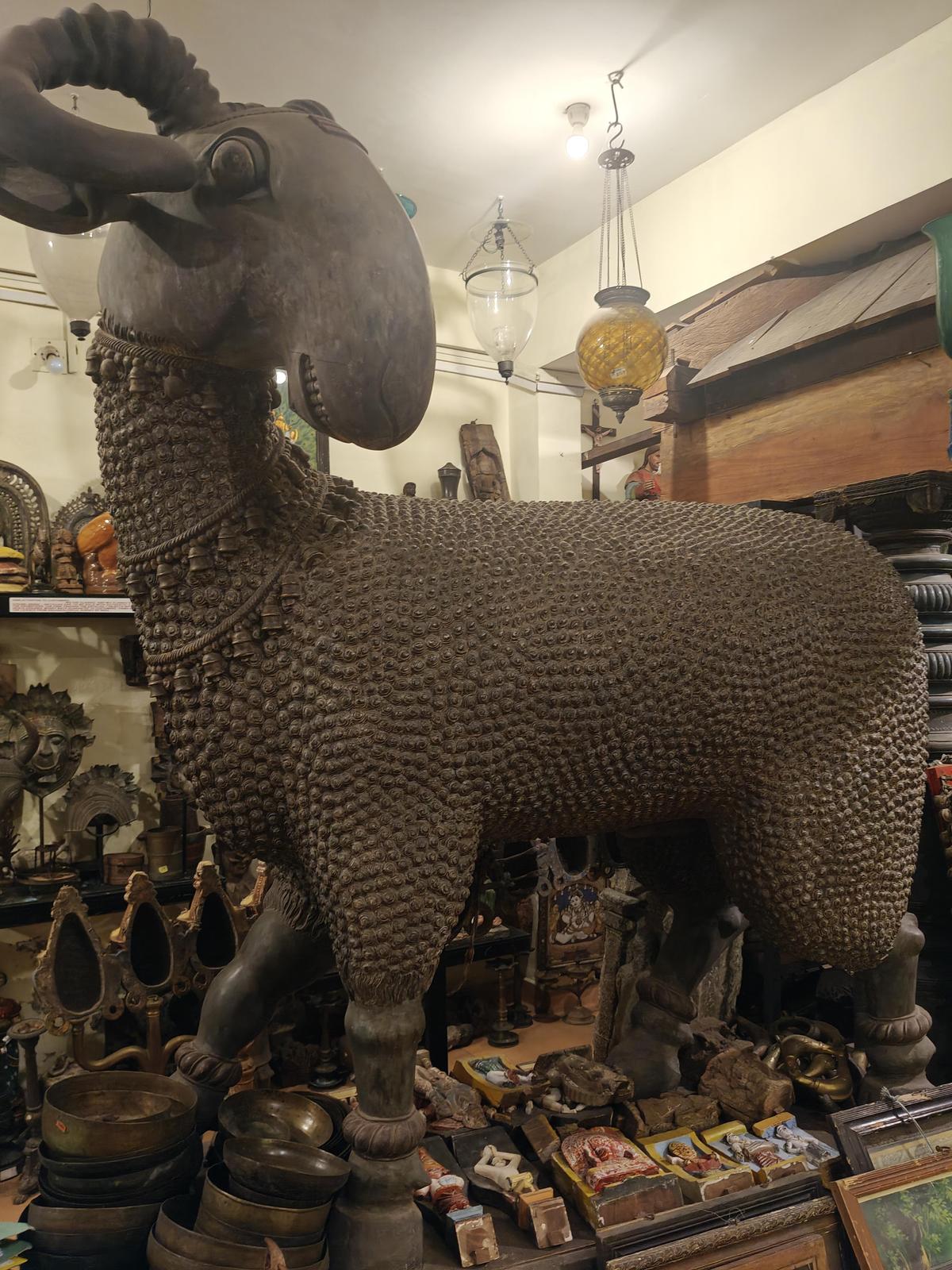
The sculpture of a wooden ram at an antique store on Synagogue Lane

The sculpture of a wooden ram at an antique store on Synagogue Lane
| Photo Credit:
Special Arrangement

The antique trail

A six-foot-tall wooden ram, towering over a collection of assorted antiques, is the showstopper at The Classic, a 60-year-old antique shop at Jew Town. When Prince Charles was in Fort Kochi, as part of his India visit in 2013, he was “especially fascinated by this one”. Sourced from Tamil Nadu, this supposed ‘vehicle of Veera Bhadra Swamy [a local deity]’ called Shevai, is just one of the many interesting objects in this shop. Figurines, paintings, lamps and sculptures that date back years have been preserved. “The price depends on the object’s vintage nature, not size,” says Suja Sunil, the shop attendant. Jew Town is full of such antique shops where one could pick up a totem from the past for anywhere between ₹2,500 and ₹25 lakh.

Old photographs at  Sarah Cohen's home in Jew Town

Old photographs at Sarah Cohen’s home in Jew Town
| Photo Credit:
Thulasi Kakkat

A home that was

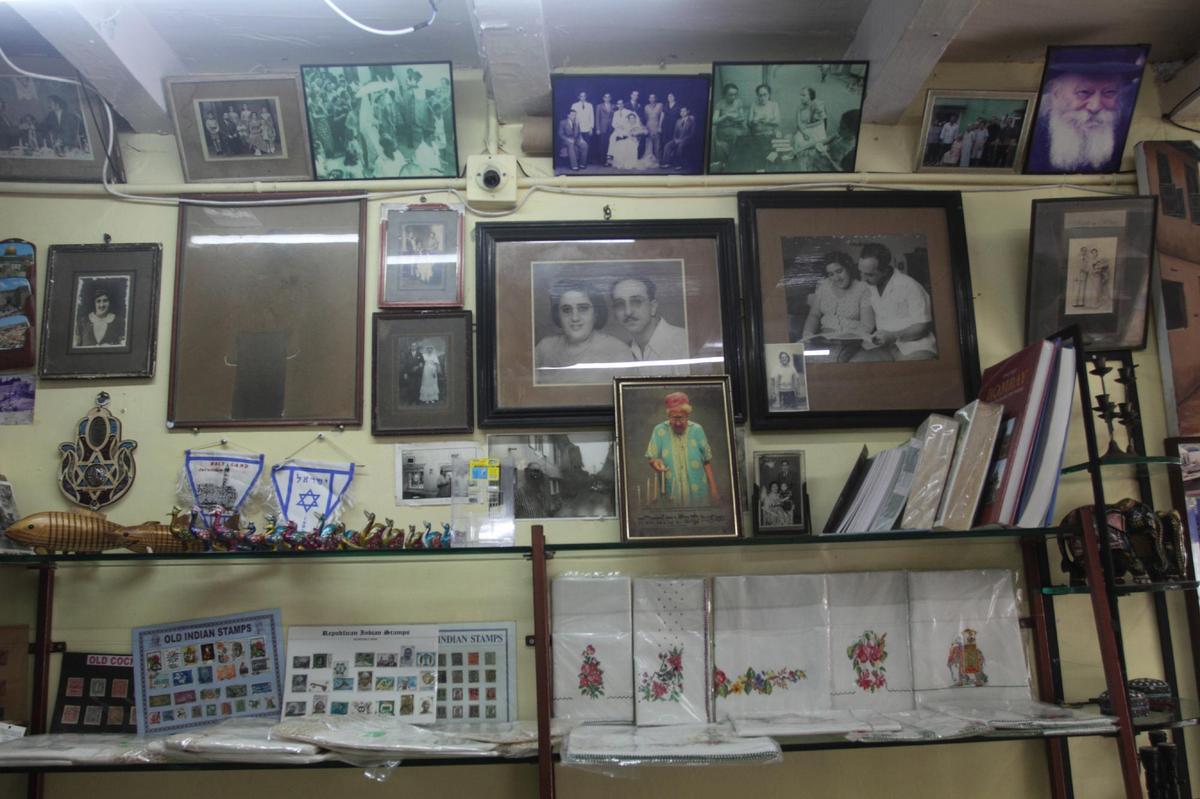
Sarah Cohen’s home and embroidery shop is now a little museum of memories. Sarah, a prominent member of the Kochi’s Jewish community, died in 2019, leaving her shop to Thaha Ibrahim, who was like a son to Sarah and her husband Jacob. They took him in as a boy, when he sold postcards outside their shop. Thaha takes forward Sarah’s hand embroidery legacy, which she taught him. He preserves the sanctity of the traditional designs that were passed down to him. The little green building with a low ceiling maintains Sarah’s hand embroidery, linen, towels, kippah, table runners and some of her belongings such as kitchen utensils, prayer books and old photographs of Sarah and Jacob. 

A work at Little Queen Embroidery

A work at Little Queen Embroidery
| Photo Credit:
Special Arrangement

Threads that connect

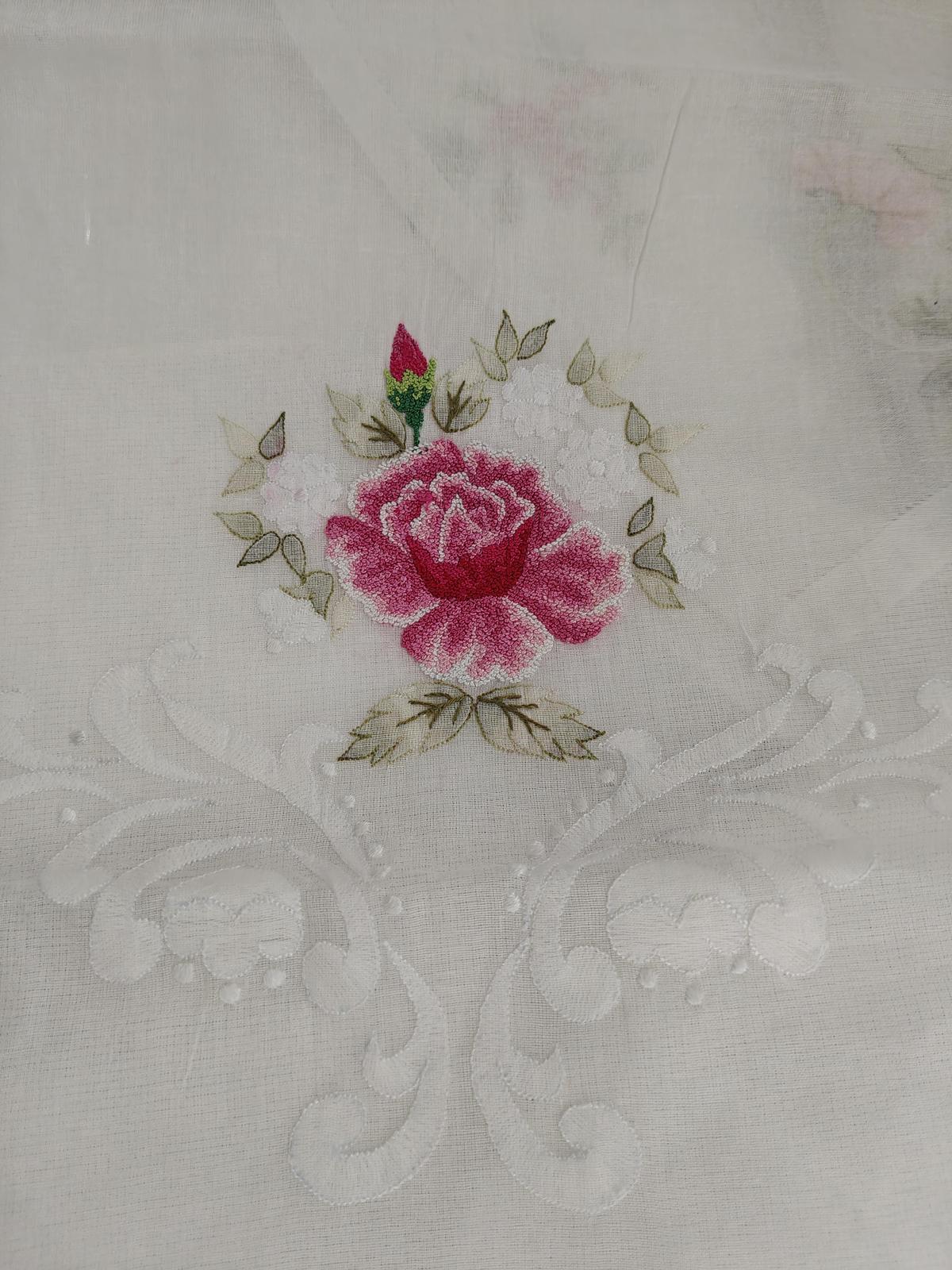
Little Queen Embroidery shop in Jew Town is for those who love embroidery. For those familiar with the work, there is everything from cross stitch to herringbone, shadow work, French knot and the rare petit point done on delicate white organdy table runners, coasters, table mats, napkins and dresses. The shop, set up easily over 50 years, preserves the old world charm of embroidery and lace work, a tangible cultural legacy left by European colonisers in Kochi. The owner of the shop, Thomas PE, is eager to explain the different stitches to visitors. He has a unit, which employs women who do this embroidery. 

Mandalay Hall in Jew Town

Mandalay Hall in Jew Town
| Photo Credit:
Special Arrangement

The house that witnessed the last Jewish wedding

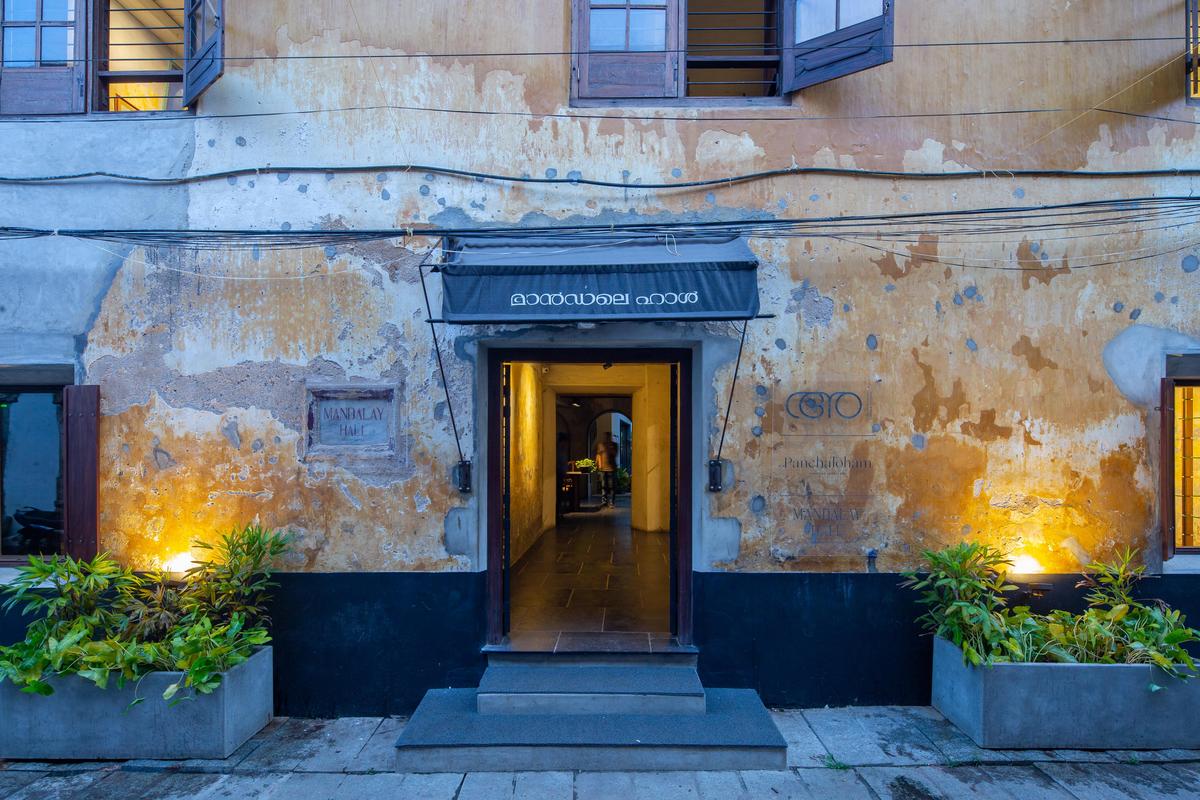
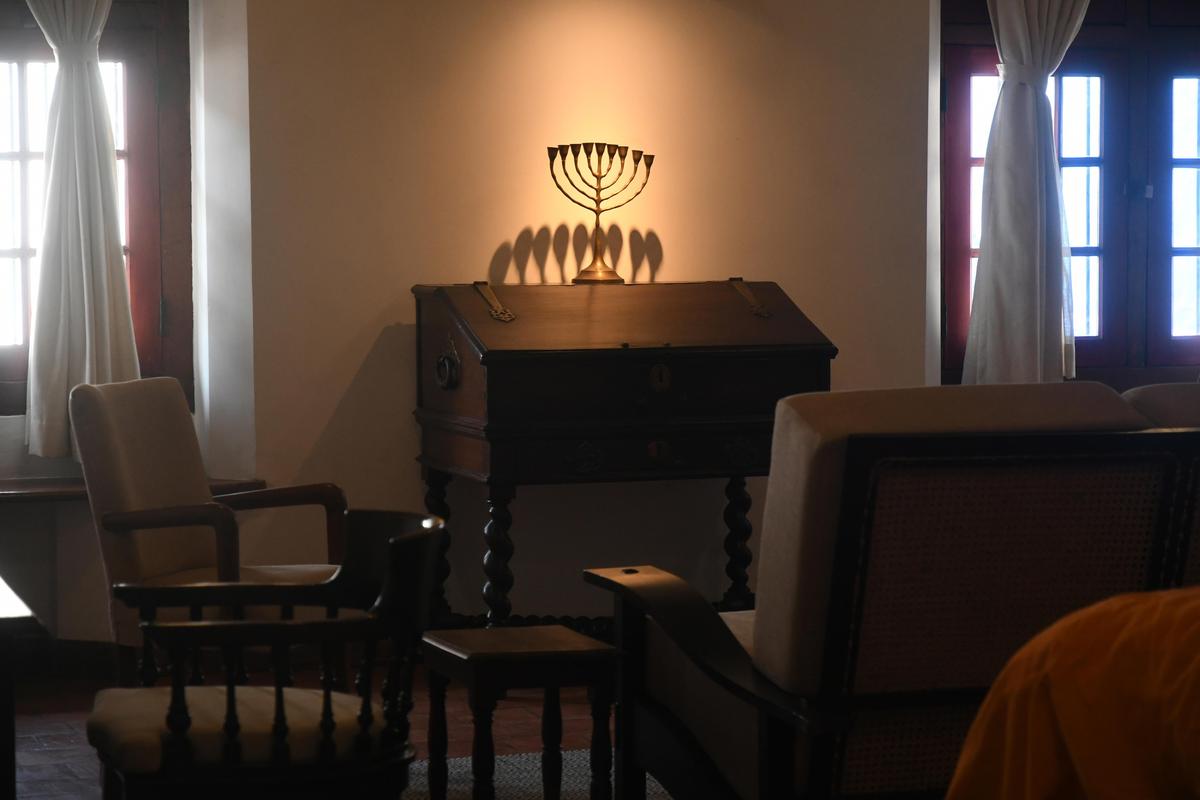
This 18th century building, one of the few remaining Jewish homes in Kochi, was constructed in the Dutch Burgher style, brought in by the Sephardic Jews (who arrived in Kochi after they were expelled from Spain and Portugal in the 15th Century). This building is especially significant as it witnessed the last Jewish wedding in Mattancherry in 1978 (Glennis Simon, who was residing in Mandalay Hall then married Leslie Salem at the Paradesi Synagogue, a Jewish Synagogue). Today, it has been carefully restored and run as a luxury boutique art hotel — The Postcard Mandalay Hall.

AB Salem House in Jew Town, Mattancherry

AB Salem House in Jew Town, Mattancherry
| Photo Credit:
Thulasi Kakkat

The house of Jewish Gandhi

A 350-year-old mansion that belonged to Abraham Barak Salem, a prominent Jewish lawyer, politician, and Indian freedom fighter popularly known as the ‘Jewish Gandhi’, was renovated and opened as a heritage guest house in 2023. Thoughtfully restored, this house with 10 rooms, allows one to experience the history and culture of Kochi’s earliest Jewish settlers.   

Spices on display at the Mattancherry market

Spices on display at the Mattancherry market
| Photo Credit:
Vibhu H

A whiff of spice

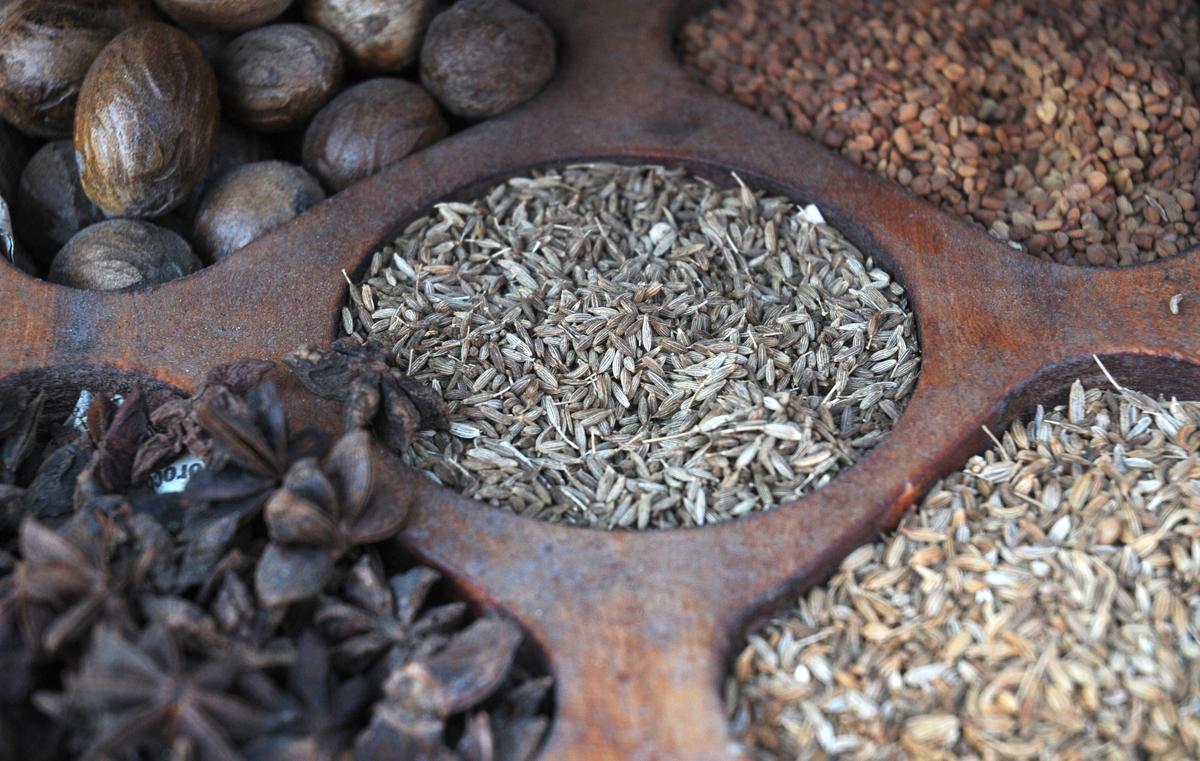
What makes a stroll down Jew Town all the more special is the invigorating scent of spices. Extending to the road, the stalls selling different varieties of spices including black pepper, cardamom, nutmeg, cloves and star anise, are a hallmark of this heritage port town. Mattancherry’s spice trade history dates back centuries. With the decline of the Muziris port, Mattancherry emerged as the centre for spice trade, even hosting the world’s first pepper exchange. Right from the 15th Century, it has attracted communities from far and wide, who have taken up crucial roles in the spices business. When you visit, be sure to pick up your favourites. Take in both the scent of spices, and years of storied history.  

Published – December 26, 2025 06:46 pm IST


Source link

The anti-trend shift transforming India’s New Year’s party dressing


Every December, the familiar cycle returns — predictions, palettes, and the quiet dread of “What am I going to wear for New Year’s Eve?” It is a cultural reflex by now: Will sequins reign again? Will black dominate, or will everyone pivot to maroon, olive, Champagne or silver? For years, the very concept of party dressing in India has been built around this ritual of forecasting and conformity.

But something has shifted. When measured against how people are actually dressing today, these annual preoccupations feel increasingly out of step. Because while we still enjoy a touch of shine and a well-behaved elevated basic, India’s night-out aesthetic has moved steadily towards something more personal. We are now living through an anti-trend era, where dressing for the night feels instinctive rather than instructed.

Partywear has become softer, more intuitive, more emotionally charged. And suddenly, the most interesting trends are not trends at all — they are countercurrents.

The turn towards meaningful wardrobes

This shift begins not with clothes, but with the people wearing them.

Tanya Mehta in an evening look from her label, Moving Parts

Tanya Mehta in an evening look from her label, Moving Parts
| Photo Credit:
Tanya Mehta

Mumbai-based fashion consultant and writer Tanya Mehta, who launched her label Moving Parts this year, encapsulates a generational transition. “As a teenager, I remember hunting for the perfect New Year’s Eve dress — something sequinned, something that fulfilled the fantasy,” she recalls. “It rarely lasted beyond the occasion.”

With time, her approach changed. “I’ve veered away from anything explicitly ‘party’. Now, I gravitate towards pieces that feel timeless or quietly disruptive, especially black separates that can live beyond one night.”

Tanya’s outfit created with a silk tissue and jute bodice and a full skirt in handwoven Ikat

Tanya’s outfit created with a silk tissue and jute bodice and a full skirt in handwoven Ikat
| Photo Credit:
Tanya Mehta

Her label reflects the same instinct. Moving Parts proposes a new vocabulary for “going-out dressing”: draped ikat bustiers paired with masculine trousers, silk-tissue slip dresses that move gently with the body, handloom fabrics shaped into sculptural forms. “These silhouettes feel more authentic to personal style,” she says. “They offer a way to opt out of the sartorial conformity that December tends to impose.”

The broader shift mirrors her philosophy: people are dressing for themselves, not the event. Borrowing, upcycling, rewearing, rediscovering, it is evident now that wardrobes are becoming emotional ecosystems.

Nostalgia as personal style

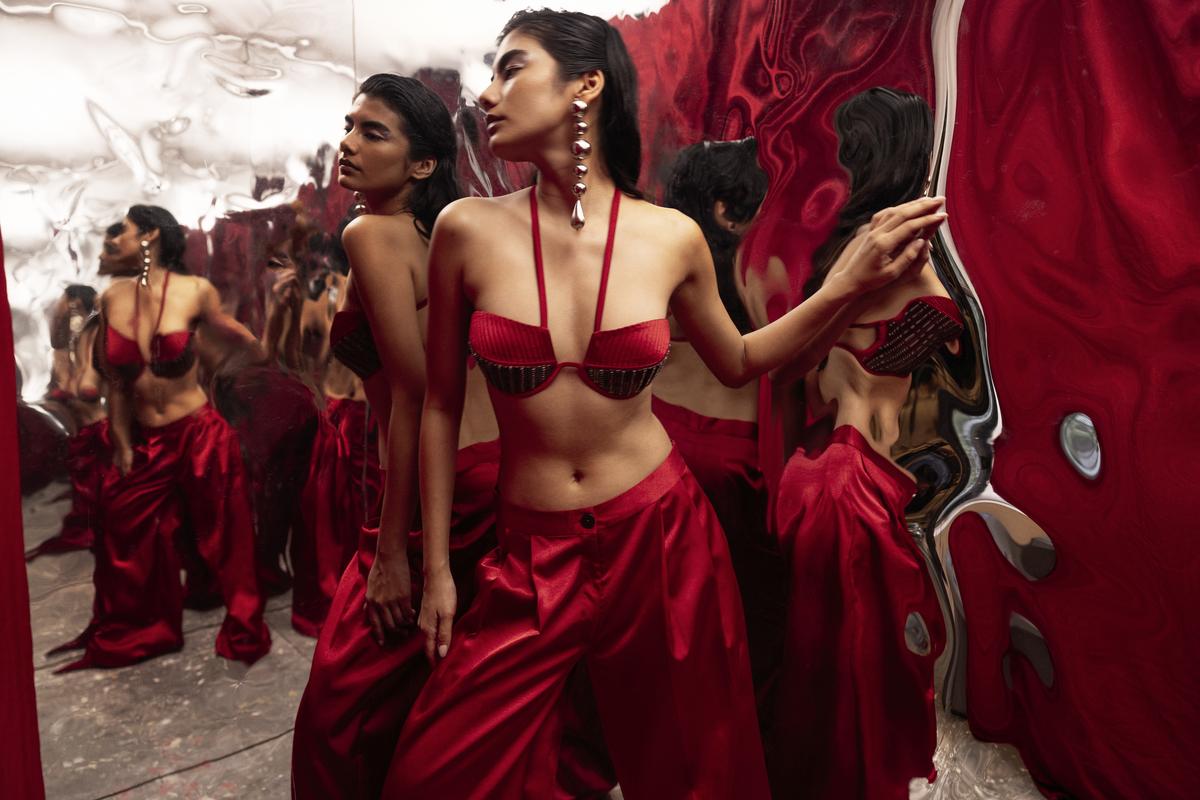
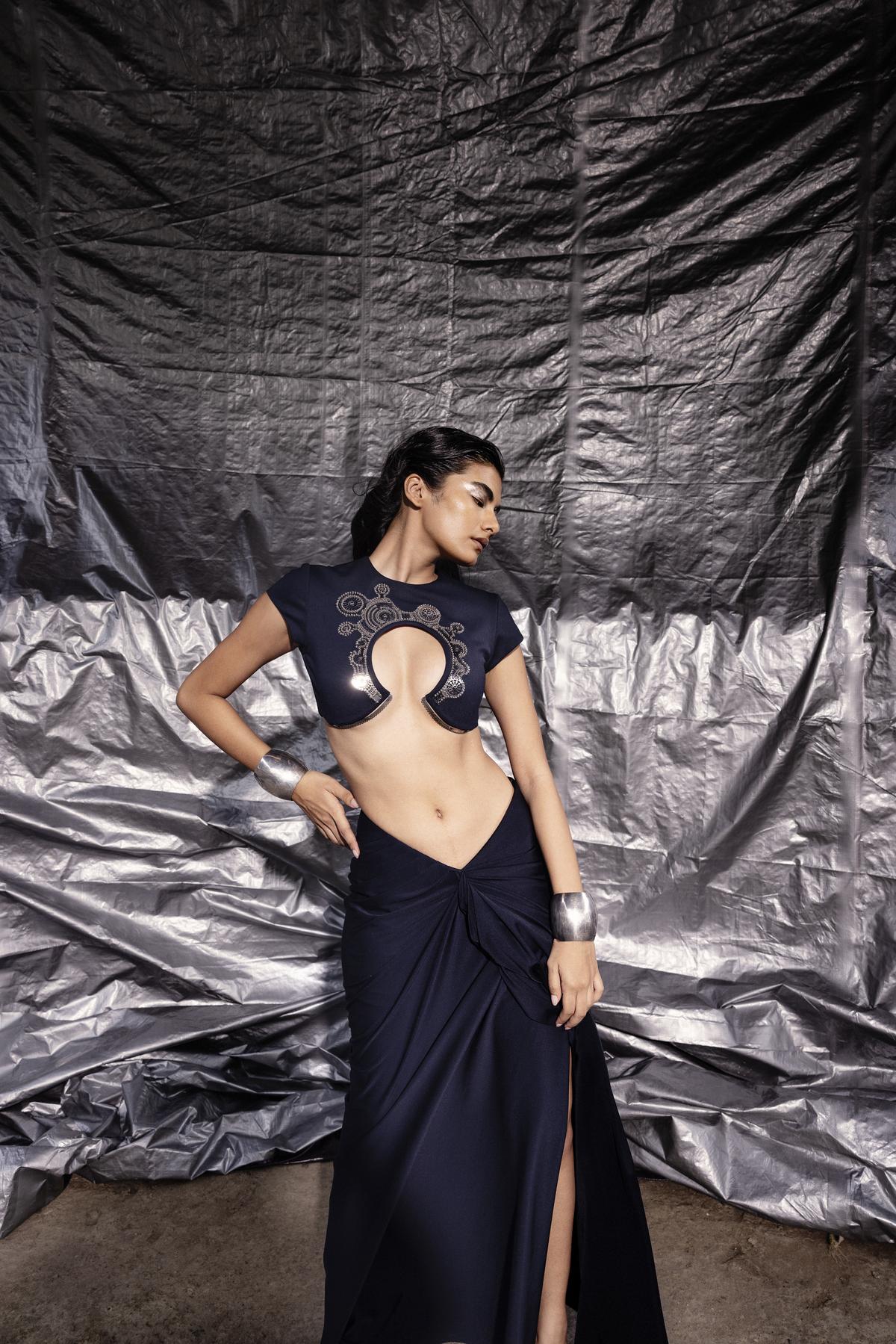
If the past decade’s partywear relied on novelty, this era relies on familiarity. Designers Vrinda Sachdev and Gurinder Singh, who founded Qbik in Delhi in 2011, have witnessed this shift first-hand. Their label, known globally for its tactile experimentation and the now-iconic The Wave bralette introduced in 2023, has built its identity on surfaces that feel both futuristic and intimate. And yet their clients’ preferences are turning inward, not outward.

Disco Discord collection by Qbik

Disco Discord collection by Qbik
| Photo Credit:
Adil Hasan

“People don’t want to dress like a campaign anymore,” says Vrinda. “They want to dress like themselves. There’s comfort in reaching for pieces that already hold a memory — a saree that drapes exactly the way you like, a blouse you’ve danced in.”

Their interpretation of anti-trend is not synonymous with minimalism. “It’s not about austerity. It’s about meaning,” says Gurinder. “It’s instinctive dressing. It’s choosing textiles and silhouettes that already feel like part of your language.”

Disco Discord collection by Qbik

Disco Discord collection by Qbik
| Photo Credit:
Adil Hasan

For Qbik, this means inviting clients to bring older garments back for reinvention. A blouse can be re-engineered, a dupatta re-draped, a surface reimagined. “Personal style isn’t about acquiring something new for every moment,” they say. “It’s about evolving what already belongs to you. This is one of the most defining countercurrents of the moment: memory has become a material.”

Texture as subtle glamour

Perhaps one of the most interesting shifts is how glamour itself is being redefined. Where partywear once sought attention through embellishment and shine, it now seeks expression through tactility. Texture — softness, structure, grain, sheen, coolness — has become the new form of depth.

As Vrinda puts it, “Texture is where emotion hides. Glamour doesn’t need to shout. It can whisper through a sculpted neckline, a softened metal curve, a riveted grid.”

A look from Qua

A look from Qua
| Photo Credit:
Hansraj Dochaniya

This evolution is equally central to Qua, co-founded in 2019 by Divya Agarwal, whose label sits at the intersection of clean tailoring and maximal textiles. “Trendiness has become the new basic,” says Divya. “When everything global is instantly accessible, it stops being a marker of taste. People want clothing that signals discernment, not consumption.”

A look from Qua

A look from Qua
| Photo Credit:
Special arrangement

A look from Qua

A look from Qua
| Photo Credit:
Special arrangement

At Qua, the result is a philosophy she calls bold minimalism .“The silhouette stays clean and unfussy,” she explains. “The fabric carries the drama — molten textures, faux fur, liquid satins, jacquards, leathers. These introduce depth without tipping into excess.” For many modern dressers, glamour is no longer a performance but a sensation.

Menswear’s emotional expansion

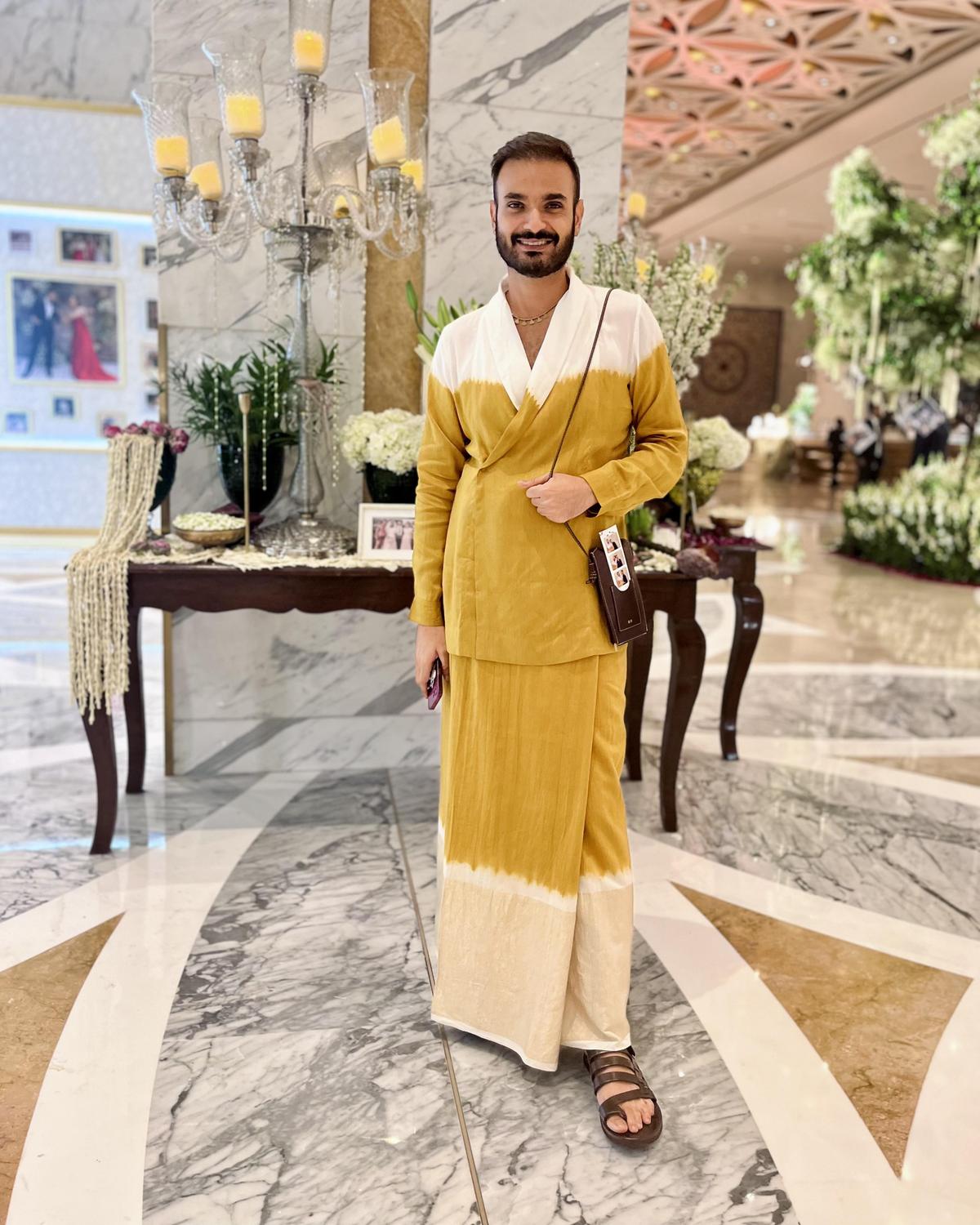
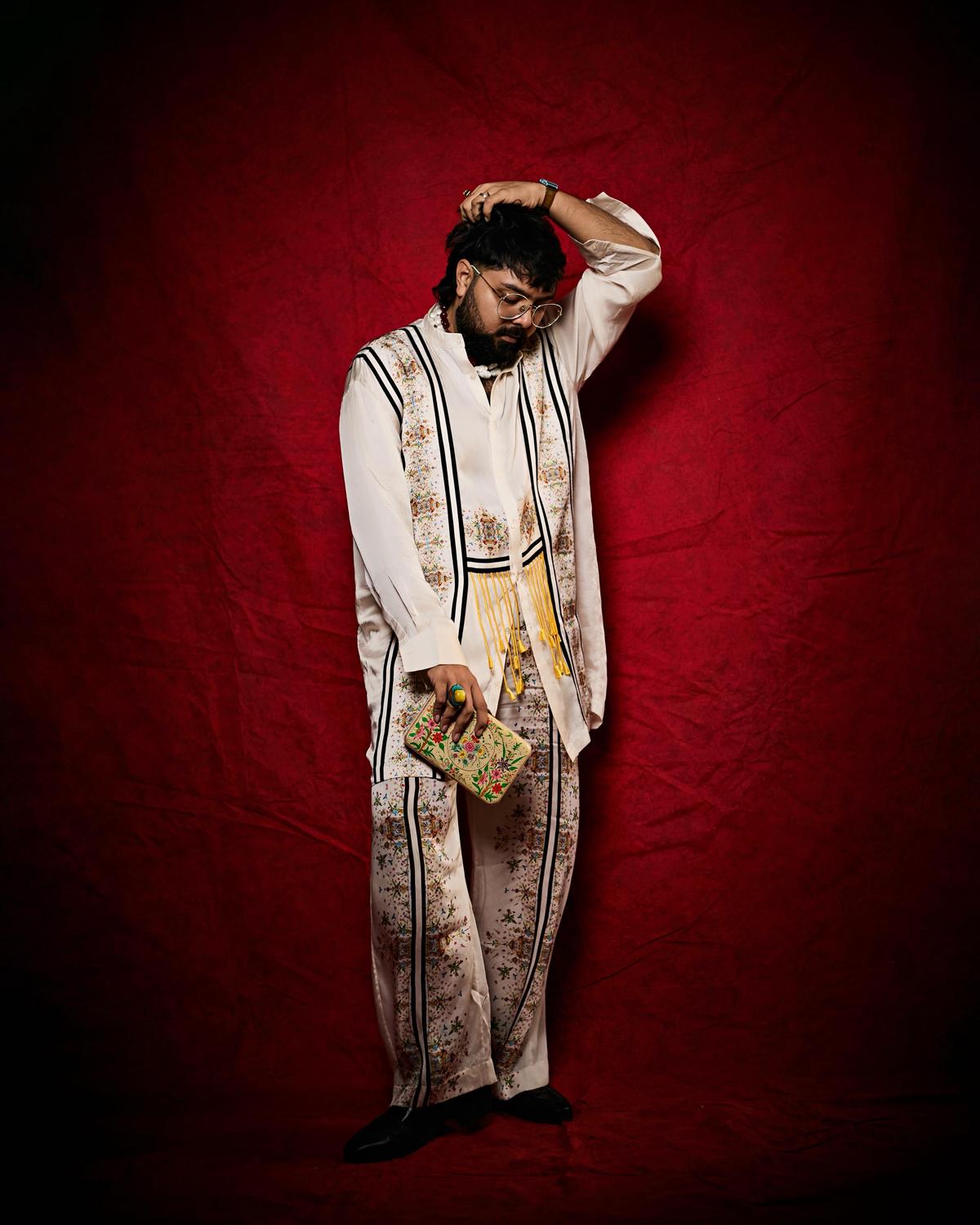
Menswear, too, is quietly entering its anti-trend phase. Mumbai-based textile professional Siddhant Beriwal has noticed a rise in men embracing Indian textiles in everyday and evening contexts. “Handlooms have penetrated deeply into men’s wardrobes,” he observes. “Sanganeri-printed shirts at lunches, Patan patola pocket squares at weddings, handwoven linen shirts returning to workwear.”

Men are also experimenting with drape in ways previously policed by gender norms .“Shawls, dushalas and dupattas styled over bandhgalas, Jodhpuri jackets and even sleek suits,” he says. “Embroidery too, from light kantha to heavily embroidered lapels, is now everywhere.”

A Madras check outfit from JADE’s menswear Autumn/Winter 2025 collection

A Madras check outfit from JADE’s menswear Autumn/Winter 2025 collection
| Photo Credit:
JADE

For him, this shift has deep roots. “Indian textiles have always signalled identity, community, social standing. When men wear them today, they’re re-entering that lineage.” His advice for eveningwear this season is both simple and philosophical: Choose handcrafted textiles as it carries history forward.

Return to Androgyny

Kolkata-born and Mumbai-based designer Saim Ghani, formerly a senior designer at Anamika Khanna and now founder of Saim India, sees the anti-trend moment as a correction. “If you look at Indian history, everything is androgynous,” he says. “Clothes were draped for function, not gender. Society imposed rules later.”

He believes modern menswear is finally revisiting this truth .“Why shouldn’t a man repurpose his mother’s wedding sari into a draped dupatta? Our maharajas wore far more dramatic silhouettes. History was always extra for the man.”

What he celebrates most, however, is the emotional shift .“Comfort isn’t logistical,” he says. “It’s emotional. And for years, that emotion was missing in men’s style. Now it’s returning.”

Ease as uniform

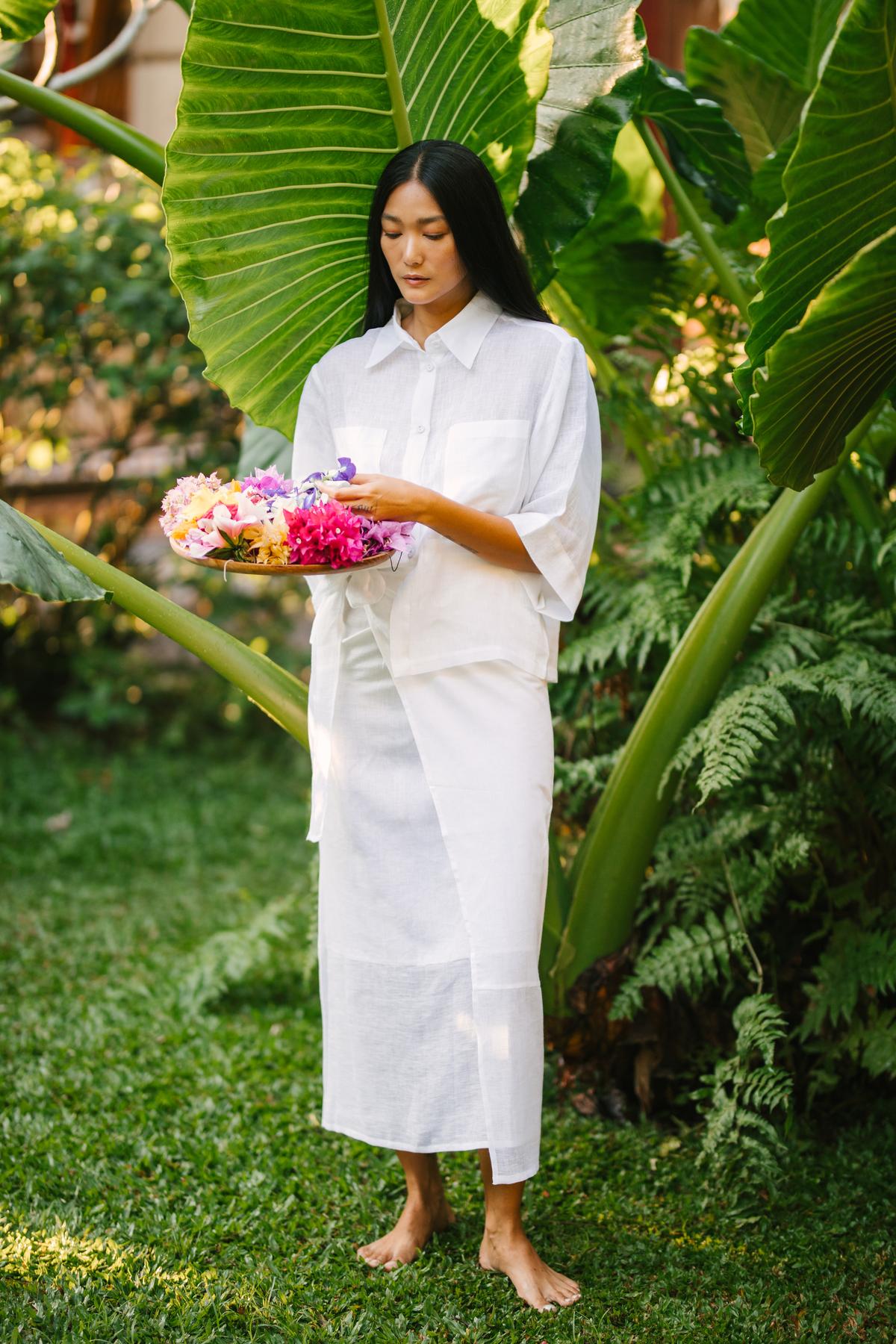
When it comes to New Year’s Eve specifically, the desire for ease is unmistakable. Lylah Shaw, who founded ituvana in 2019 — a slow luxury label steeped in Bali and India — traces the shift to the fatigue of constant stimulation.

A look from Ituvana

A look from Ituvana
| Photo Credit:
Special arrangement

A look from Ituvana

A look from Ituvana
| Photo Credit:
Special arrangement

“People want to feel more like themselves,” she says. “Comfortable, effortless, free. ”Silk, linen, fine wool — natural fibres that breathe, move and soften — have become preferred night-out choices. Their appeal lies in their quietness, not their spectacle. Lylah believes Pantone’s Color of the Year, Cloud Dancer — a muted, almost weightless white — captures this longing for clarity and calm.

The rewearing renaissance

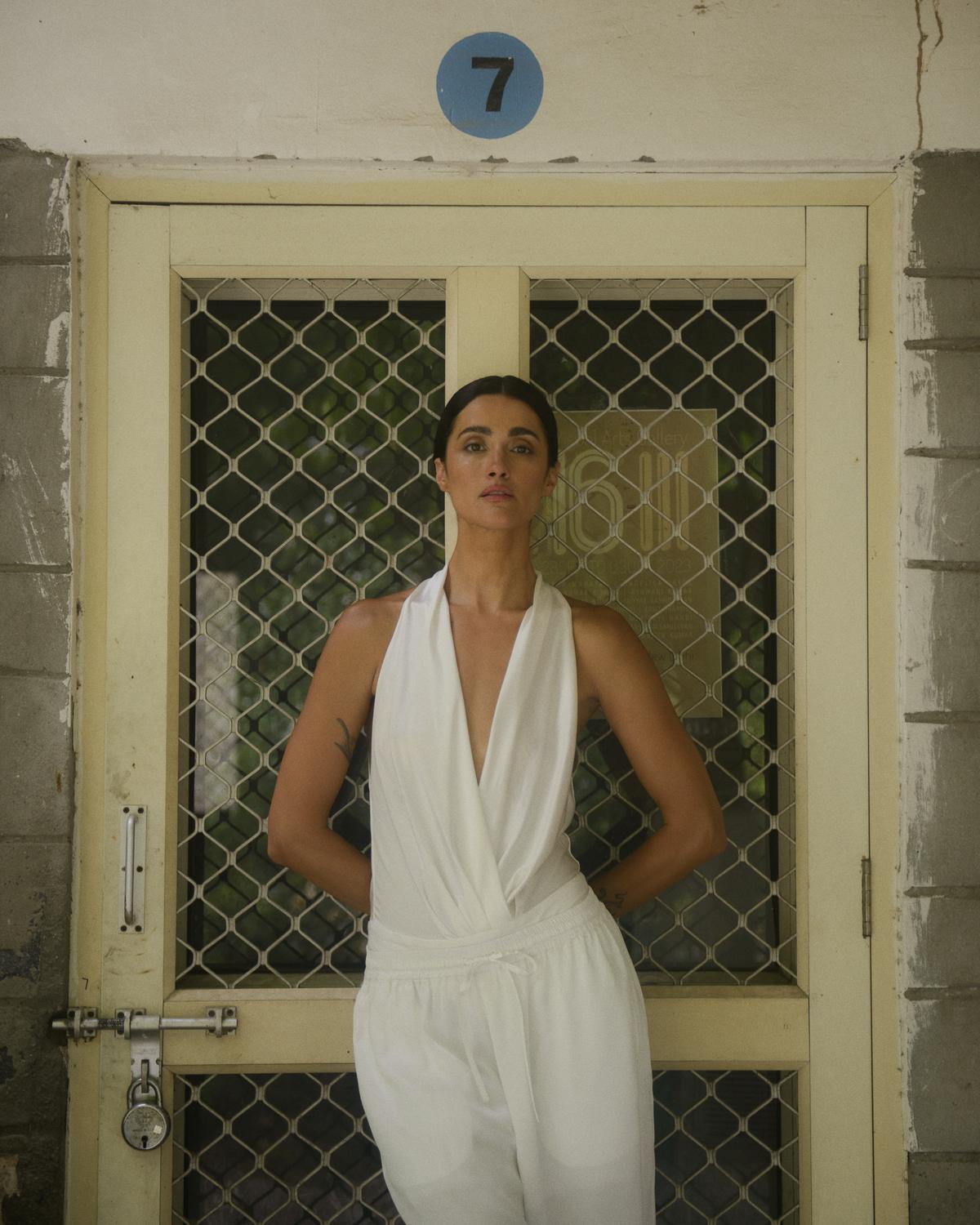
Designer Ikshit Pande, who founded Quod in 2019 and shuttles between Delhi and New York, views anti-trend dressing as a cultivation of self-awareness. “We are moving away from trends and towards an intuitive understanding of what works for us,” he says. “It’s comfort first, but never second on style.”

Nostalgia and rewearing, he emphasises, are no longer signs of restraint but of attachment. “There’s a growing awareness around craftsmanship and the value of clothing,” he says. “People want pieces that tell stories.”

He believes modern eveningwear is less about acquisition and more about recontextualisation .“A textured weave, a hand-finished detail, a shift in drape, these can alter an entire garment,” he notes. His personal styling philosophy — “minimal with maximal” — summarises the moment: a clean base elevated with one deliberate gesture.

It is safe to say then that the anti-trend mood is not about rejecting beauty, glamour or ceremony. It is about rejecting prescription and dressing with intention, not obligation.


Source link