Life & Style

Where crocodiles are family: Inside a Nubian village in Egypt


A young boy with a pet crocodile at an Egyptian Nubian village

A young boy with a pet crocodile at an Egyptian Nubian village
| Photo Credit: Srinivasa Ramanujam

A crocodile hatchling is crawling on my shirt making its way to my head.

I scream.

Seven-year-old Ali Mustafa nimbly picks up the reptile. He grins, rather mischievously.

We are inside a colourful Nubian village in interior Egypt, located on the West bank of the Nile. To get here, we have to come to Aswan, a city much calmer than the bustling Egyptian capital Cairo. Aswan is a place where you can immerse in history and heritage, much like the rest of Egypt. Apart from exploring popular tourist spots like the Unfinished Obelisk and the Aswan High Dam, , the Nubian village is a must-visit, because of its unique cultural heritage.

You are greeted by a herd of camels gently strolling the streets, even as you disembark from a leisurely boat ride that lets you take in the sights and sounds of the Nile. There is also a line of shops selling Egyptian souvenirs, a common sight in most tourist places. But none of this prepares you for this village’s fascination for crocodiles: in fact, most houses have atleast one crocodile, with children even playing with them!

Ali Mustafa should know. I watch him pick up the hatchling from its habitat, a fish tank perched upon a table in the middle of their home, and tying its mouth carefully. “Do not touch his stomach… he doesn’t really like that,” Ali tells me, as he coaxes me into holding the crocodile.

A few yards away, inside a well, the mother – a crocodile much bigger in size – is watching us.

A view of a Nubian village in Egypt

A view of a Nubian village in Egypt
| Photo Credit:
Srinivasa Ramanujam

Reptile god

Ancient Egyptians feared crocodiles, one of the top predators in the Nile, endangering both human lives and livestock. Over time, this fear became awe, so much so that they started worshipping the reptile as Sobek, the ancient Egytpian god depicted as a crocodile. Egypt, in fact, has a dedicated temple for the crocodile (Kom Ombo) and a museum that displays mummified crocodiles and several ancient carvings related to the reptile.

While these are remnants of the past, modern Egypt still pays a hat tip to the crocodile through cultural practices, which are seen even today at places like the Nubian village. Some houses preserve crocodile parts. Others display photos of the reptile on the walls. The reptile is still significant to both tourism and the local belief system, according to Hany Rafail, a tour guide who hails from Aswan. “The locals believe that it wards off the evil eye,” he explains, “They feel that it absorbs jealousy and ensures prosperity for the family and the village.”

L Nhmda seconds that thought. Their family has been living here for generations, and today, along with her husband and three children, these Nubians make ends meet thanks to fishing and tourism. “We have three crocodiles in this house; a mother and her two babies,” she informs, even as she offers us some bread and pickled cheese, “Our ancestors worshipped the crocodile. And, we believe that it is still lucky for us.”

The writer was in Egypt at the invitation of Egyptian Tourism Authority.


Source link

Why do students fear math? | National Mathematics Day


For many students, mathematics feels less like a subject and more like a verdict, you’re either “good at it” or you’re not. There’s no escape from maths in school, and for some, every class brings a familiar knot of anxiety rather than curiosity or confidence. You’re not imagining it: the fear is real, and it’s widespread enough to have a name. Arithmophobia, also known as numerophobia, refers to an intense fear of numbers and mathematical thinking.

But here’s the truth, this fear is far more common than we admit. Generations of students have grown up believing they simply aren’t “maths people.” But is that label even valid? Experts say no. Math ability isn’t an inborn talent reserved for a few; it’s shaped by experience, teaching, and mindset. To understand where this fear comes from and how it can be overcome, we spoke to educators and mathematics experts. And for everyone who has ever struggled with math, they have an answer.

Learning maths with bad drawings

So what do the people who love math say about this fear? Let’s turn to Benjamin Orlin—an educator who has made a career out of doing math differently. Based in Minnesota, Ben proudly describes himself as a “lover of math, bad at drawings.” And that contradiction is exactly his strength. Through stick figures, simple sketches, and sharp humour, he breaks down complex ideas and makes math feel human, approachable, and even fun. As the bestselling author of the Math with Bad Drawings series, Orlin proves that you don’t need perfect equations — or perfect drawings — to truly understand math.

Math with bad drawings by Benjamin Orlin.

Math with bad drawings by Benjamin Orlin.

To understand why math fear takes root so early, and how it can be unlearned, we asked what really drives students away from mathematics, Orlin points to something deeper than numbers or formulas.

“Young people move through life asking a few big questions. One of these is, ‘What am I good at?’”

Math with bad drawings by Benjamin Orlin.

Math with bad drawings by Benjamin Orlin.

According to him, students often tie their sense of self-worth to how they perform in math class. Those who feel successful tend to enjoy the subject. Those who don’t, quickly internalise failure.

“To oversimplify vastly,” he says, “kids learn to hate math if it makes them feel stupid.”

Much of Orlin’s work focuses on dismantling this feeling. One major problem, he argues, lies in how math classrooms are structured.

Math with bad drawings by Benjamin Orlin.

Math with bad drawings by Benjamin Orlin.

When everyone is doing the same kind of work, side by side, day after day, you learn pretty quickly who in the class is fastest and most accurate. It’s hard not to compare yourself… and feel like a ‘winner’ or a ‘loser.’”

To change that, Orlin believes educators must first disrupt this hierarchy and then redefine what success in math actually looks like.

“Math is all about doing. What problems can you solve? What can you accomplish and create? To learn math is to develop new powers of thought.”

He is equally critical of traditional teaching methods that rely heavily on repetitive exercises. “That’s like learning a sport by doing practice drills and running laps, but never actually playing a game.”

Instead, he advocates for meaningful, real-world tasks, from designing budgets to analysing data — that reflect how mathematics is used beyond classrooms.On whether fear of math is universal, Orlin is clear: “It’s virtually 100% cultural.”

And for students — especially those who feel bored or overwhelmed, his message is both honest and encouraging. “Math is full of variety… so if you’re feeling bored, find something that excites you and start digging. And if you find this stuff hard, well, it is! That’s what makes it worth studying.”

What teachers see from the classroom

For educators, the fear of mathematics isn’t abstract — it plays out daily in classrooms. After three decades of teaching, Mathew K. Thomas, Mathematics Educator at Don Bosco School, Delhi, says anxiety around maths usually begins when understanding breaks down.

Students who miss foundational concepts—fractions, algebra, geometry, often struggle to catch up. “They feel lost,” he explains, and that feeling slowly turns into fear. Added to this are societal expectations, parental pressure, and the belief that maths is about speed and perfection rather than thought.

One misconception, Thomas says, does particular damage: the idea that students are either “good” or “bad” at maths.

Mathew K. Thomas, Mathematics Educator at Don Bosco School, Delhi.

Mathew K. Thomas, Mathematics Educator at Don Bosco School, Delhi.

“Maths is not about memorisation or getting the right answer,” he stresses. “It’s about understanding the process.”

That belief is echoed by Parijat Jain, author of the S.M.A.R.T. Minds Mathematics series, who sees fear take root the moment students stop understanding and start memorising.

“When a concept is not clear, students switch from understanding to rote learning. Very soon, that creates confusion — and repeated confusion turns into anxiety.”

Parijat Jain, author of the S.M.A.R.T. Minds Mathematics

Parijat Jain, author of the S.M.A.R.T. Minds Mathematics

Jain describes mathematics as a staircase: miss a few steps early on, and every new chapter feels impossibly high. “The real issue is not intelligence,” he says, “it is missing foundations.”

Both educators argue that traditional teaching methods often reinforce this fear. When classrooms prioritise speed, marks, and rote procedures, students who need more time begin to believe they are “not maths people.” Meaningful engagement, projects, visualisation, real-life applications, changes that perception.

Jain puts it simply: “Mathematics is not something to memorise, it is something to understand.”

And once students understand, the fear begins to fade. Maths, they emphasise, is not just a school subject but a way of thinking, one that builds logic, patience, and problem-solving skills far beyond the classroom.

As Thomas reminds his students: “Mathematics is a journey, not a destination. Focus on the process—and the confidence will follow.”

“There is nothing called a math brain”

Geeta Mahashabde, a veteran math educator and Director of the Navnirmiti Learning Foundation, Maharashtra, has spent over two decades working with teachers, textbooks, and classrooms across India. A former Chief Consultant for Quality for the Maharashtra government and a member of the NCERT mathematics textbook writing team, she has seen—firsthand—how fear of mathematics is not natural, but created.

According to her, no child begins school afraid of numbers. “When 100 children enter Class 1,” she points out, “not a single one is scared of maths. But by Class 10, nearly 80% want to drop it.” That shift, she says, is not accidental—it is systemic.

Geeta Mahashabde, math educator and Director of the Navnirmiti Learning Foundation, Maharashtra

Geeta Mahashabde, math educator and Director of the Navnirmiti Learning Foundation, Maharashtra

Mahashabde strongly challenges the widely held belief that some people are “math people” and others are not. Research in brain science, she explains—building on the work of scholars like Carol Dweck and Jo Boaler, has conclusively shown that there is no such thing as a ‘math brain’. Intelligence is not fixed, and mathematical ability grows with the right mindset and experiences.

So where does the fear come from?

One major culprit is speed. Classrooms often reward the fastest answer, not thoughtful thinking. A question is asked, a few children shout out the answer, and the lesson moves on—leaving many others mid-thought. “Children don’t fail because they can’t think,” she says. “They fail because they are not given time to think.”

Mathematics, unlike many subjects, is vertical, each concept builds on the previous one. Miss a step, and everything that follows feels impossible. When children are rushed, interrupted, or discouraged from making mistakes, they slowly disengage.

Mahashabde advocates a radically simple shift: let children handle, build, and discover mathematics the way humans always have — by observing patterns, arranging objects, and asking questions. Whether it’s using sticks to construct triangles, blocks to discover square numbers, or real-life stories to explain fractions, learning becomes permanent when children experience concepts instead of memorising formulas.

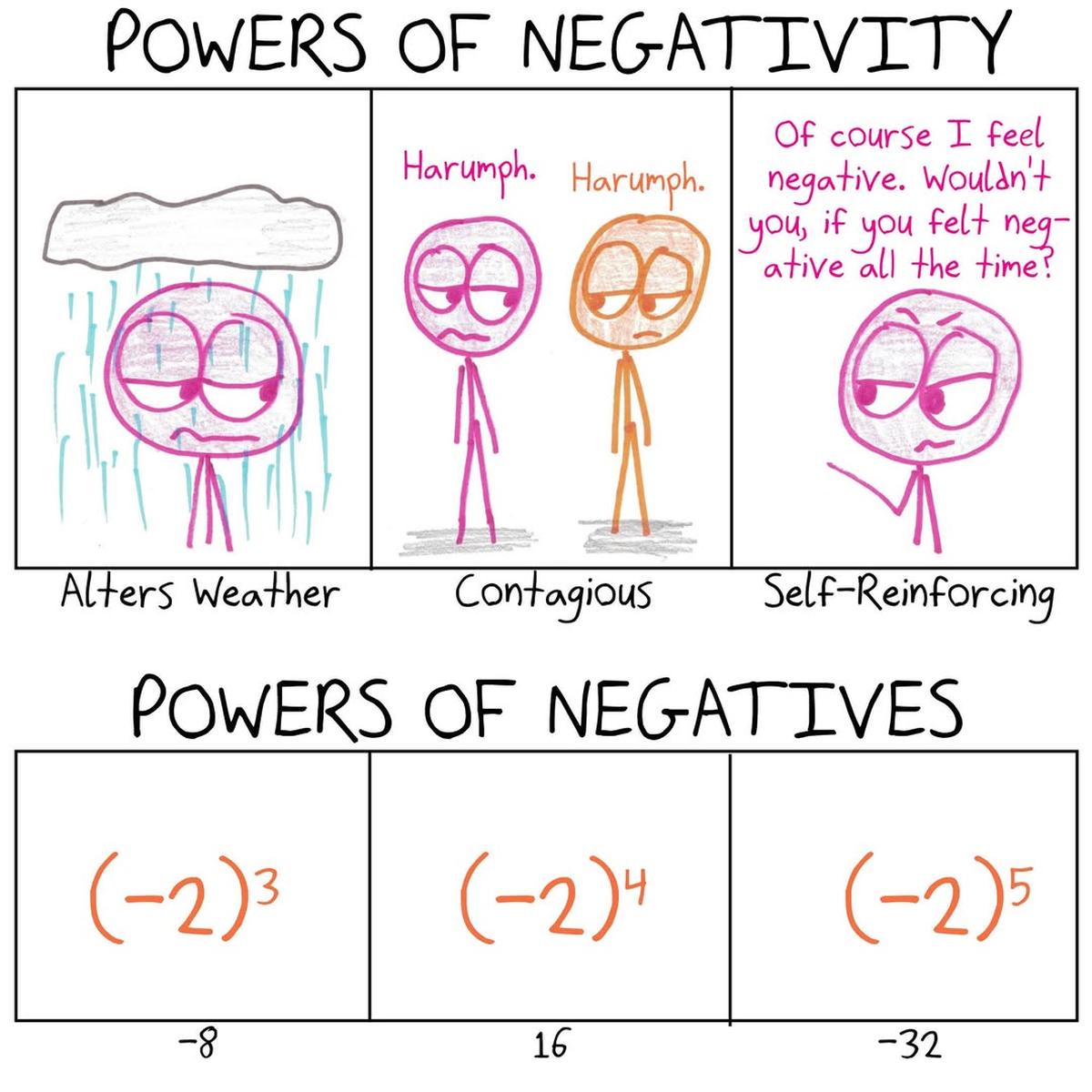
She gives a striking example: Most adults freeze at a question like 5 ÷ ½  —but the same people can easily answer, “If you have 2½ litres of milk and pack it in half-litre packets, how many packets will you get?”

The math is identical. The fear comes from the language, not the idea.

Equally important, she says, is how teachers are supported. Confidence in students cannot grow unless confidence in teachers does. One-off workshops, rigid scripts, and excessive monitoring through apps do little to change classroom practice. What works is time, trust, collaboration, and teacher autonomy.

Her message, ultimately, is not just for students — but for parents, teachers, and the system itself: “Everyone can learn mathematics. Just like swimming, you don’t learn it by watching from outside. You learn it by getting into the water.”

And when children are given small steps, space to think, and repeated experiences of success, fear gives way to confidence—one problem at a time.

When fear becomes anxiety

While teaching methods and classroom culture play a major role, the emotional impact of math fear cannot be ignored. Dr. Rahul Chandhok, Senior Consultant and Head of Psychiatry at Artemis Lite NFC, explains that math anxiety often stems from pressure—both internal and external.

Students, he says, begin to fear mathematics when they believe they must get every answer right, constantly compare themselves to others, or internalise the idea that only “smart” people can do well in the subject. Past struggles or repeated failures can deepen this fear. “Students need to understand that it’s normal to find a subject challenging,” Dr. Chandhok notes. “Struggling does not mean weakness, it simply means learning something new takes time.”

Dr. Rahul Chandhok, Senior Consultant and Head of Psychiatry at Artemis Lite NFC.

Dr. Rahul Chandhok, Senior Consultant and Head of Psychiatry at Artemis Lite NFC.

To manage stress around maths, he suggests practical strategies: breaking problems into smaller steps, practising regularly, asking questions without fear, and using visual aids. Even simple habits — like taking short breaks or celebrating small improvements — can reduce anxiety. Support from adults matters just as much. Parents and teachers, he says, should focus on effort rather than perfection, use encouraging language, and create safe spaces where students feel comfortable expressing confusion.

Equally important is mindset. Dr. Chandhok emphasises that children need to accept that they don’t have to excel at everything. “No one is good at every subject,” he says, and recognising this helps reduce pressure. When students focus on effort and progress rather than results alone, they develop confidence, resilience, and a healthier relationship with learning.

He also points out that maths is often taught in a rushed, high-pressure manner—leaving little room for slow thinking or understanding. Normalising different learning speeds, connecting maths to real life, and praising problem-solving instead of just correct answers can make a significant difference. Above all, reminding students that intelligence cannot be measured by a single subject helps replace fear with self-belief.



Source link

Bollywood actor-director Tannishtha Chatterjee on cancer, creativity and female solidarity


To hear Tannishtha Chatterjee speak about her “girl gang”, with a youthful excitement in her voice, is to be reminded of the essence of Jhumpa Lahiri’s short story Only Goodness from her collection Unaccustomed Earth (2008). The author portrays sister-like bonds, albeit through a brother-sister relationship, but symbolic in spirit, of sisters as people who carry each other silently. For Chatterjee, the notion and power of urban sisterhood is a recent awakening.

Delhi-girl Chatterjee, whose family has lived in Kenya, Australia and London, pivoted from chemistry (Sri Venkateshwara college) to dramatics (National School of Drama) while her friends pursued medicine, biochemistry or biotechnology. She’s been a “drama-magnet”, she says with a laugh.

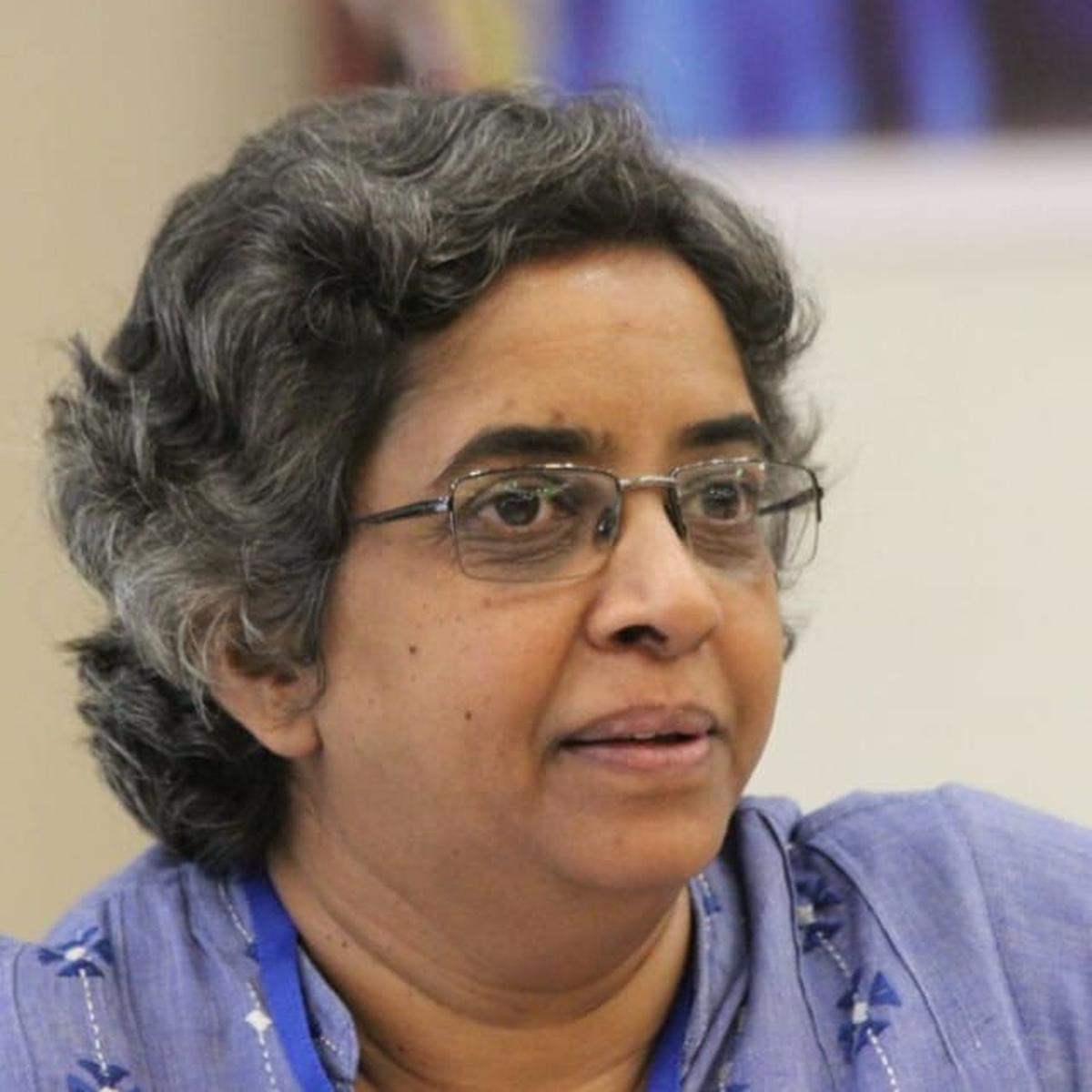
Actor, director and playwright Tannishtha Chatterjee.

Actor, director and playwright Tannishtha Chatterjee.
| Photo Credit:
Courtesy Tannishtha Chatterjee

At NSD, Anwar Jamal saw her play and cast her in Swaraaj (2003). Then she did Raja Menon’s Bollywood film Bas Yun Hi (2003); Academy Award-winning Florian Gallenberger’s Bengali-language German film Shadows of Time followed; and Sarah Gavron’s British film, Brick Lane (2007), “and after that I moved to London for five years. I also got married within four months of courtship,” she says. Chatterjee, who was seen in Devashish Makhija’s Joram (2023), has never done the big Bollywood film. She quips, “I’m a kind of a person who does what comes my way. I don’t go out and get my pictures taken. Casting directors call me and I give my auditions very sincerely.”

A drama called life

In London, she did a lot of theatre, including a musical at the Royal Opera House, West End. Back in India, she did shows with Daksha Sheth Dance Company, Zuleikha Allana, Kirti Jain, Roysten Abel and Vidya Jagdale. Currently, she’s writing a musical-comedy play, Breast of Luck, on breast cancer, with actor Sharib Hashmi, who’s been a caregiver to his four-time, cancer-survivor wife. Hashmi is also an actor in Chatterjee’s sophomore Full Plate. Her directorial debut was with the Nawazuddin Siddiqui-starrer Roam Rome Mein (2019).

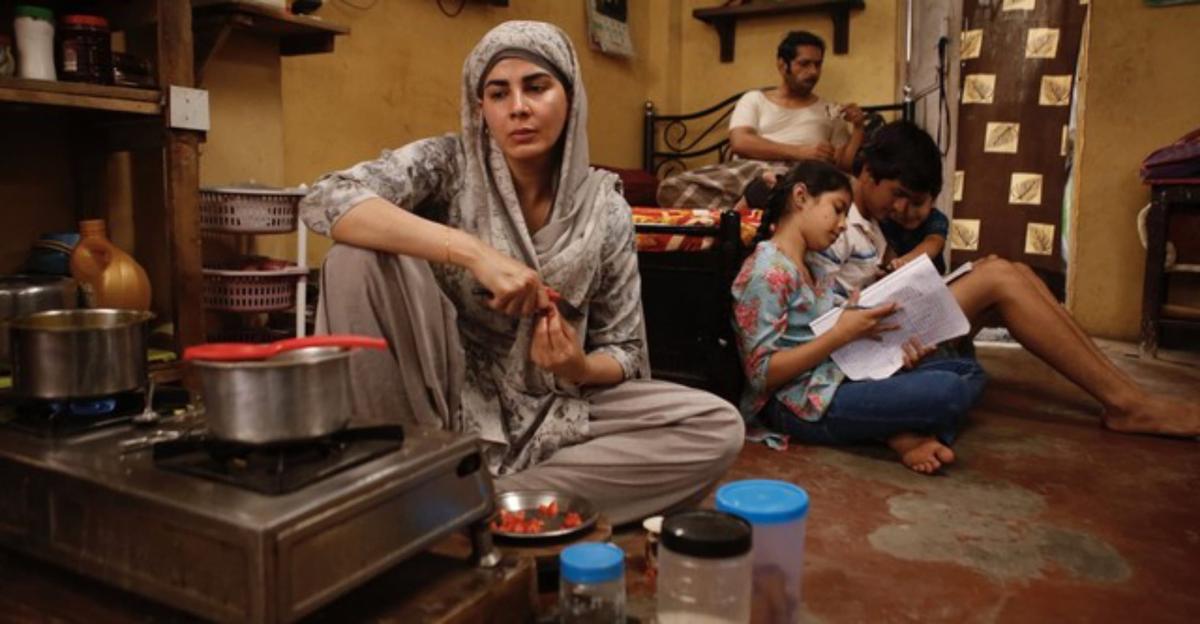
Chatterjee was at Thiruvananthapuram, at the 30th International Film Festival of Kerala, where the Kirti Kulhari-starrer Full Plate screened in the Indian Cinema Now segment. The film, seen through the lens of food, is inspired from the life of her cook — about a Muslim woman who juggles career, relationships, personal expectations and emotional fulfilment in modern urban life — because she wears hijab, most people don’t want to hire her.

A still from Full Plate, starring Kirti Kulhari and Sharib Hashmi.

A still from Full Plate, starring Kirti Kulhari and Sharib Hashmi.

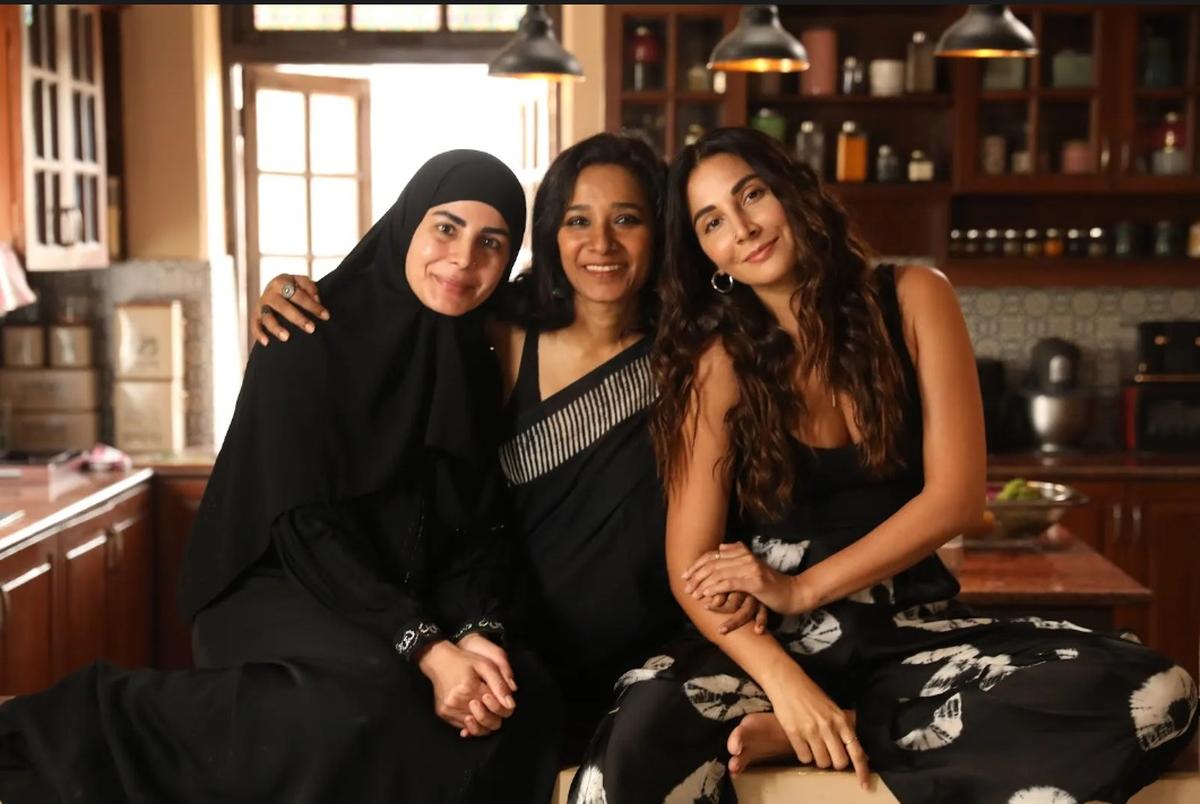
A BTS shot of the making of Full Plate.

A BTS shot of the making of Full Plate.

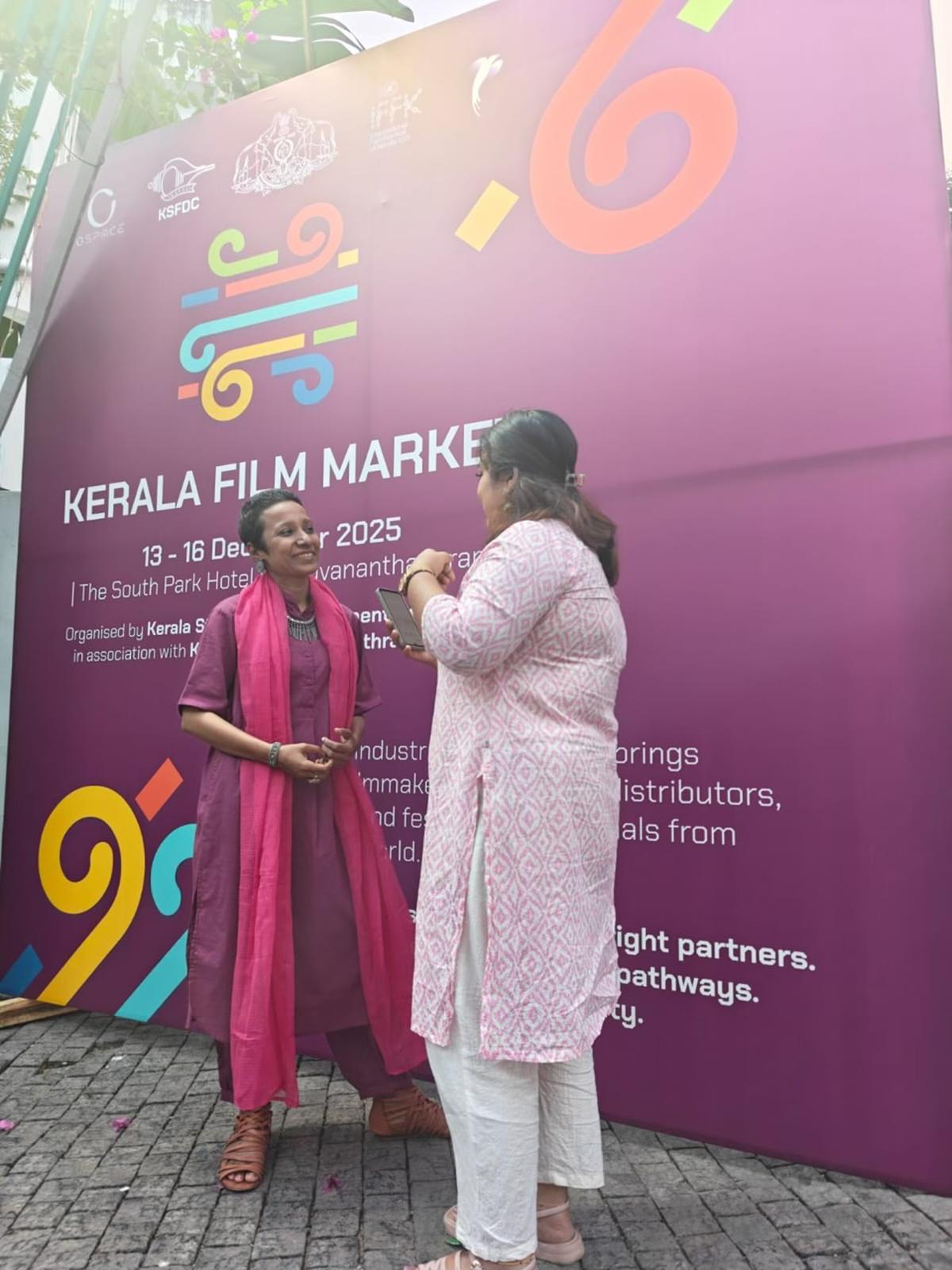
Glimpses from IFFK Kerala 2025

Glimpses from IFFK Kerala 2025

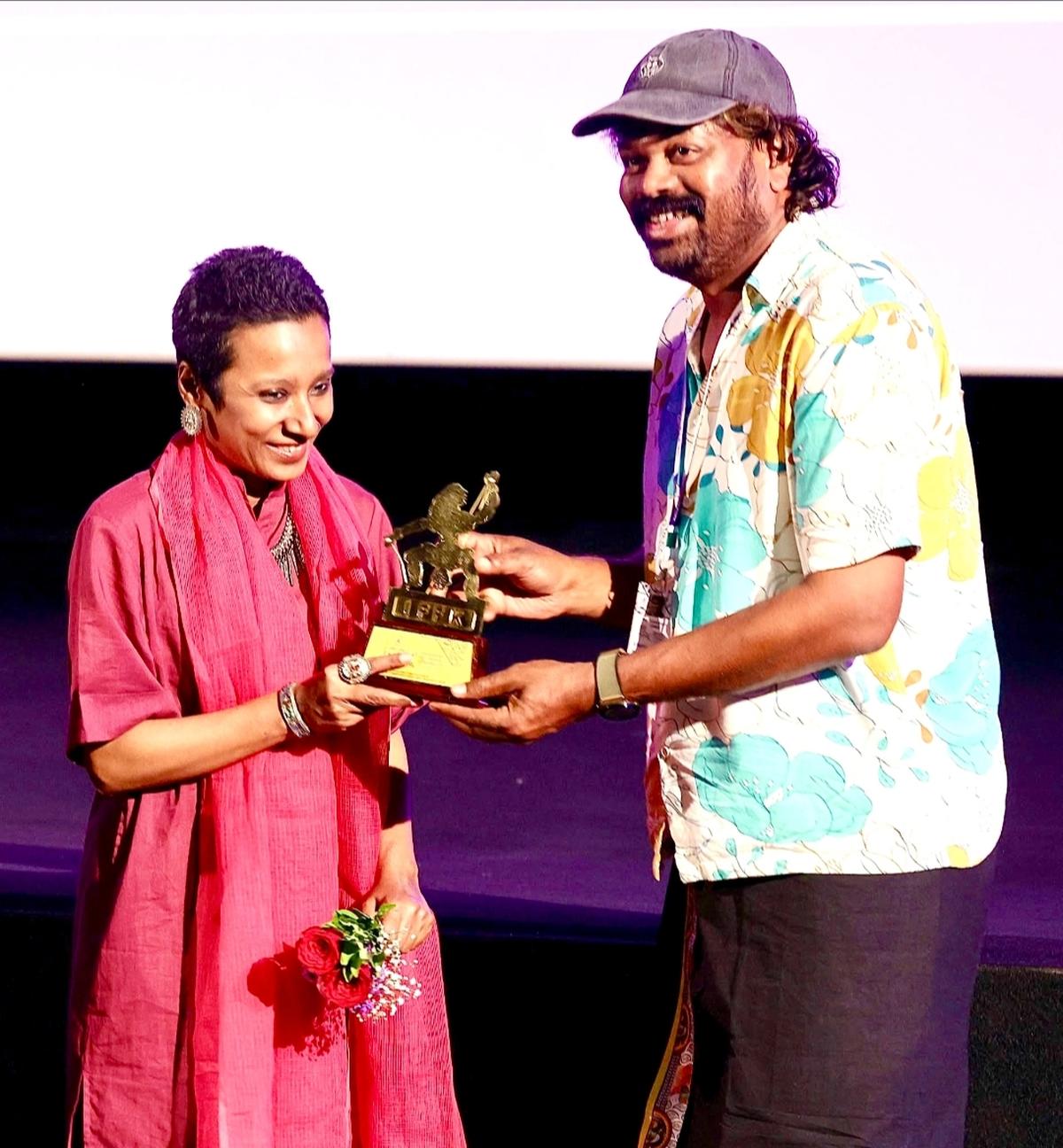
Tannishtha Chatterjee felicitated at IFFK Kerala 2025.

Tannishtha Chatterjee felicitated at IFFK Kerala 2025.

Making cinema with female perspective

The director says she’s “looking for interesting stories. Whether it’s male-centric or women-centric, like Roam Rome Mein had a male protagonist but it was about a woman, the worldview and gaze will still be mine,” she says.

I ask her if we have regressed in terms of cinema writing, particularly in Bollywood, and she quips, “Society, in general, has.”

Not enough women-led roles are being written in Hindi cinema right now. “Look at Rekha’s biggest hit, Umrao Jaan (1981). It was a blockbuster back then. Imagine a film which is centred on a woman, with great music and a sad love story, written by a man, and that was a blockbuster, we don’t have that anymore,” she says, adding, “Some of the films that Vidya did (Kahani, Dirty Picture), those two were perhaps the last ones, where are the solo women stars now, like the yesteryear Madhubala, Meena Kumari, Mala Sinha, Suchitra Sen, Sridevi? People used to go to watch them, they would watch an Uttam-Suchitra film not only because it was an Uttam Kumar film but a Suchitra Sen film, too. Her Hindi film Mamta (1966) and Aandhi (1975) are driven by her, she is the central character in spite of Dharmendra and Sanjeev Kumar, respectively, who were the big Bollywood stars, or Dream Girl (1977), spotlighting Hema Malini, despite Dharmendra in it. Now, every once in a while, there might be a Gangubai (2022), Queen (2013), Tanu Weds ManuReturns (2015), but those are too few and far between.”

Tannishtha Chatterjee and actor Kirti Kulhari at Busan International Film Festival 2025.

Tannishtha Chatterjee and actor Kirti Kulhari at Busan International Film Festival 2025.

Full Plate has a “poetic ending,” quips Chatterjee, “cinema, or any piece of art, is not just documenting what is but also trying to put in, as artists, our vision, our point of view of the world, and how we would like to see the world. We encounter the realities, every day has moments of joy, happiness and absolute conflict, and then in the end, I want my protagonist to break free.” The film had its world premiere at the 30th Busan International Film Festival in September, where it won Chatterjee the Visionary Director Award.

Stand by me: Her Bollywood sisterhood

That Chatterjee could complete Full Plate, making of which hit several roadblocks, and face life after her cancer diagnosis, she credits her “sisters”. They call the collective the Dher Saara Pyaar (lots of love) group. Shabana Azmi is the leader, and its members include Urmila Matondkar, Sandhya Mridul, Tanvi Azmi, Divya Dutta, Richa Chadha, Vidya Balan, Dia Mirza, Shahana Goswami, and Konkona Sensharma. Each of these names carries a weight, one that comes with the heft of portraying strong women characters on screen and championing those off it. They call Chatterjee “Tiger Tan”.

On January 17, at Javed Akhtar’s 80th birthday party Tannishtha Chatterjee had the time of her life, with her girl gang in tow. Three days later, life came knocking with a stopwatch, and the actor-director-playwright “kind of disappeared”.

Chatterjee, who was busy with Full Plate, had been diagnosed with stage 4 oligo-metastatic cancer. “My film was in the middle of post-production, and everything fell apart,” she says. “My sister doesn’t live in India (her sister and brother-in-law are academics at the Columbia University, New York). I am single (separated from her husband). I felt very lonely at that point. I had lost my father a year back. It was the hardest for my mother, who was still in depression. Also in my care is my daughter (who she has adopted). To deal with so much and then to get diagnosed (with cancer), I could only humour it; that this drama also needed to happen in my life.”

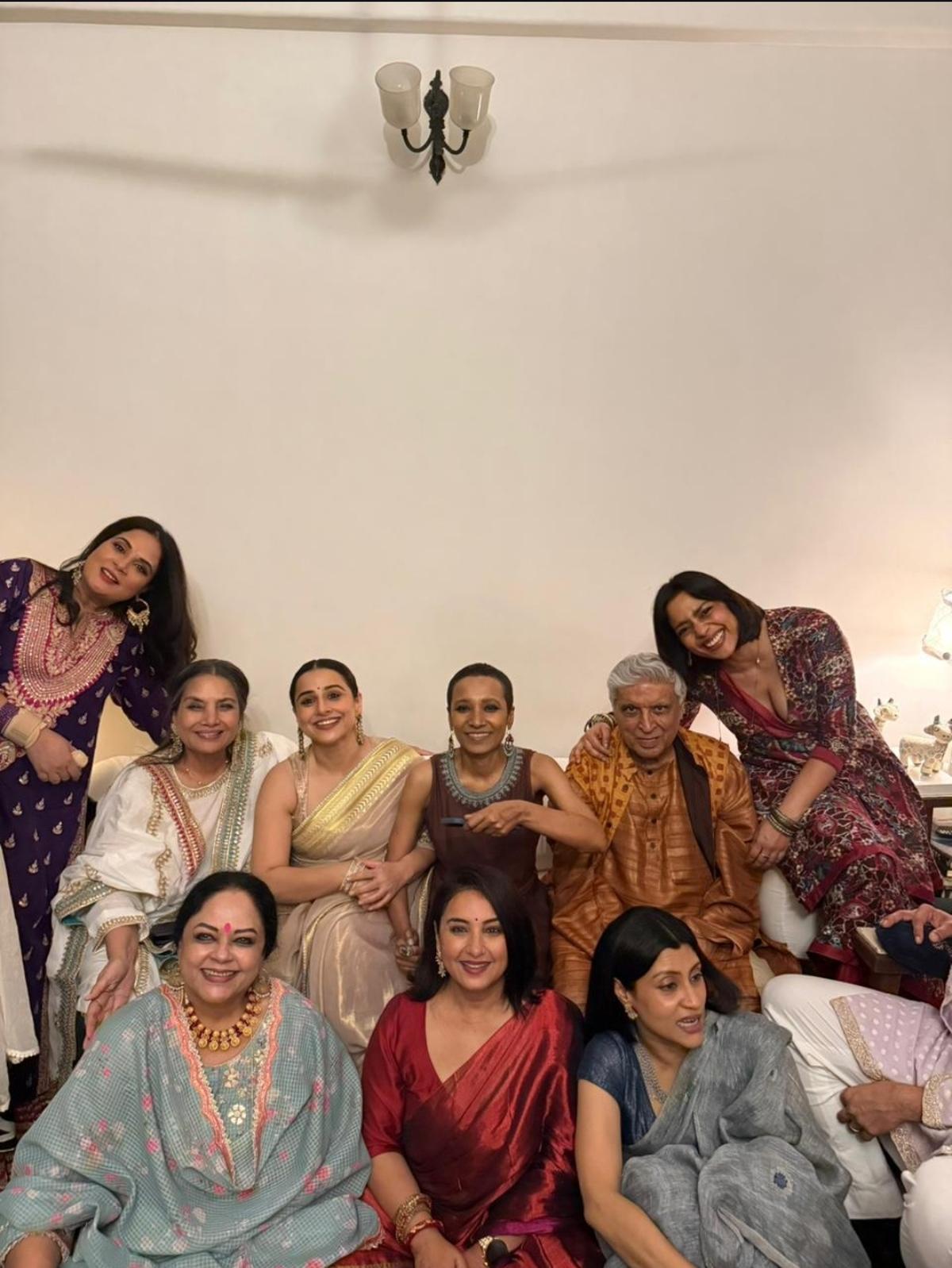
 A few members of the Dher Saara Pyaar group (clockwise from left, back) Richa Chadha, Shabana Azmi, Vidya Balan, Tannishtha Chatterjee, Javed Akhtar, Shahana Goswami, (front) Konkona Sensharma, Divya Dutta and Tanvi Azmi.

A few members of the Dher Saara Pyaar group (clockwise from left, back) Richa Chadha, Shabana Azmi, Vidya Balan, Tannishtha Chatterjee, Javed Akhtar, Shahana Goswami, (front) Konkona Sensharma, Divya Dutta and Tanvi Azmi.

Together, we thrive

Weeks after her diagnosis, on February 4, Chatterjee did not show up at Matondkar’s birthday. “I decided I would let her celebrate her birthday and then I will tell everybody. But it didn’t work out like that. Sandy [Mridul], Richa and others came to know, and then Urmila’s party turned into a ‘how to help Tannishtha’ event,” she says.

The diagnosis has made her “very fearless, but it’s also given me so much love.” She adds, “Physically, I’m going through a lot of pain, my hair is coming back now, I have no eyebrows, I have lost a lot of weight, I have thinner arms now, but it is all part of my experience, life is only a series of experiences. I don’t know what the future is. People ask me: ‘Are you cancer free now?’ I don’t know. My doctors also can’t tell what’s in the future. But now, I am in no rush. I’m living every moment. We are also blessed to be artists that we can express our experiences. And make it a little larger than just my personal thing. Creative expressions helps us heal, like the play I’m writing now.”

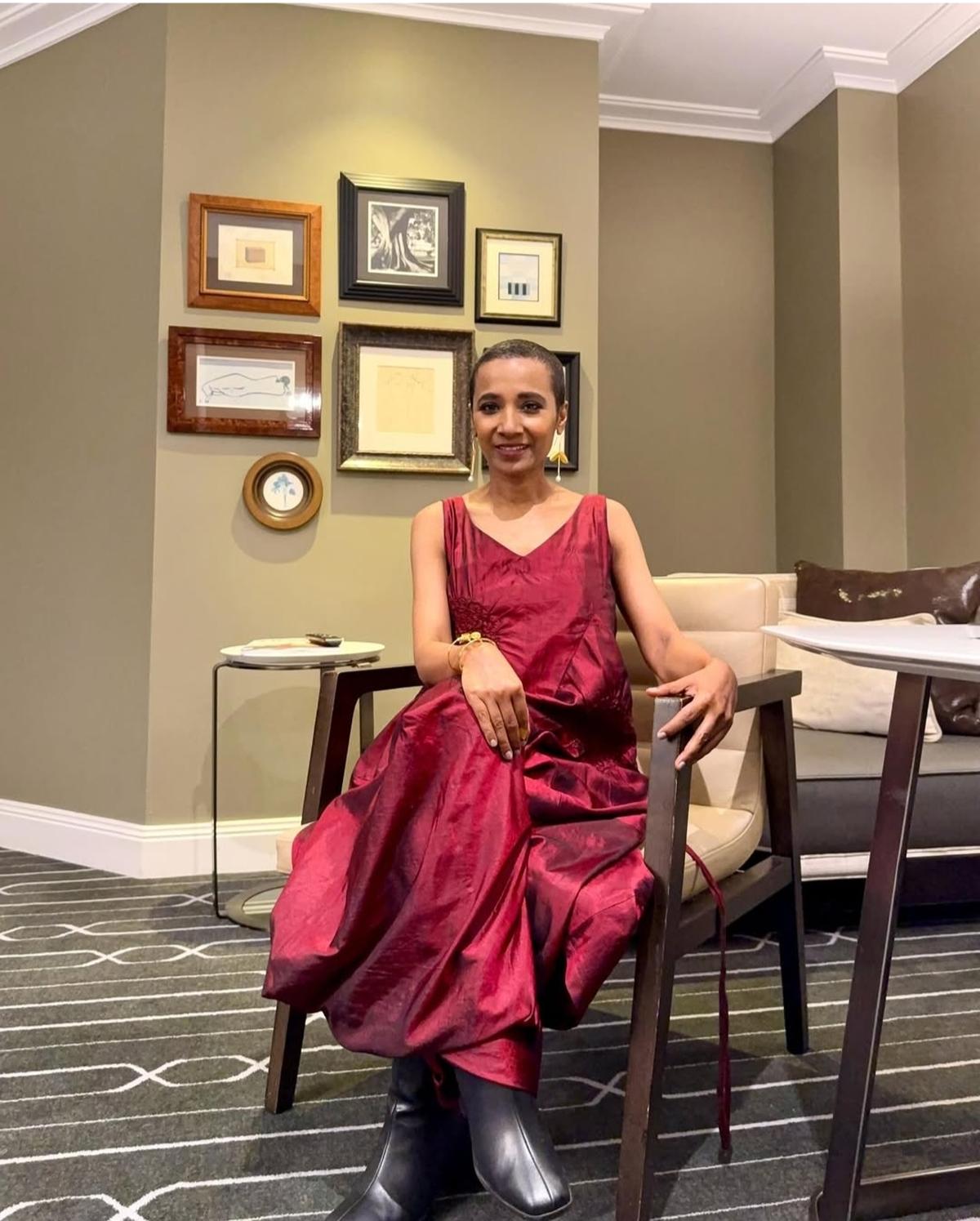
Tannishtha Chatterjee.

Tannishtha Chatterjee.

Chatterjee admits that “sisterhood is a very recent discovery” for her. Right from her childhood, all her closest friends have been men.“Some of my very dear male friends have been a great support, too. (Actor) Sanjay Suri has been a beautiful support, Manish Hariprasad (Chennai Express associate producer) keeps checking on me, my childhood friend who’s a cancer specialist, who I keep bouncing all the questions at, comes from Delhi to see me. They are all my sisters.” However, “slowly, as we are growing older, I realised that the kind of compassion and love that you can receive and give (among women) is very different,” she says.

She adds, “Because I’m getting a side effect of radiation right now, the other day, Dia called and gave me a list of numbers, Vidya fixed an appointment and picked me up. All that is constantly there. This year, I read Radical Remission (by Kelly A. Turner) and, then it was getting too much and I didn’t want to read about cancer anymore. So, I started reading fiction (Butter by Asako Yuzuki) and poetry by Rumi, and Sandy’s (Mridul) book of poems, titled Untamed, which are beautiful. Shabana sends me videos of exercises, which I’m doing. It’s just amazing.”

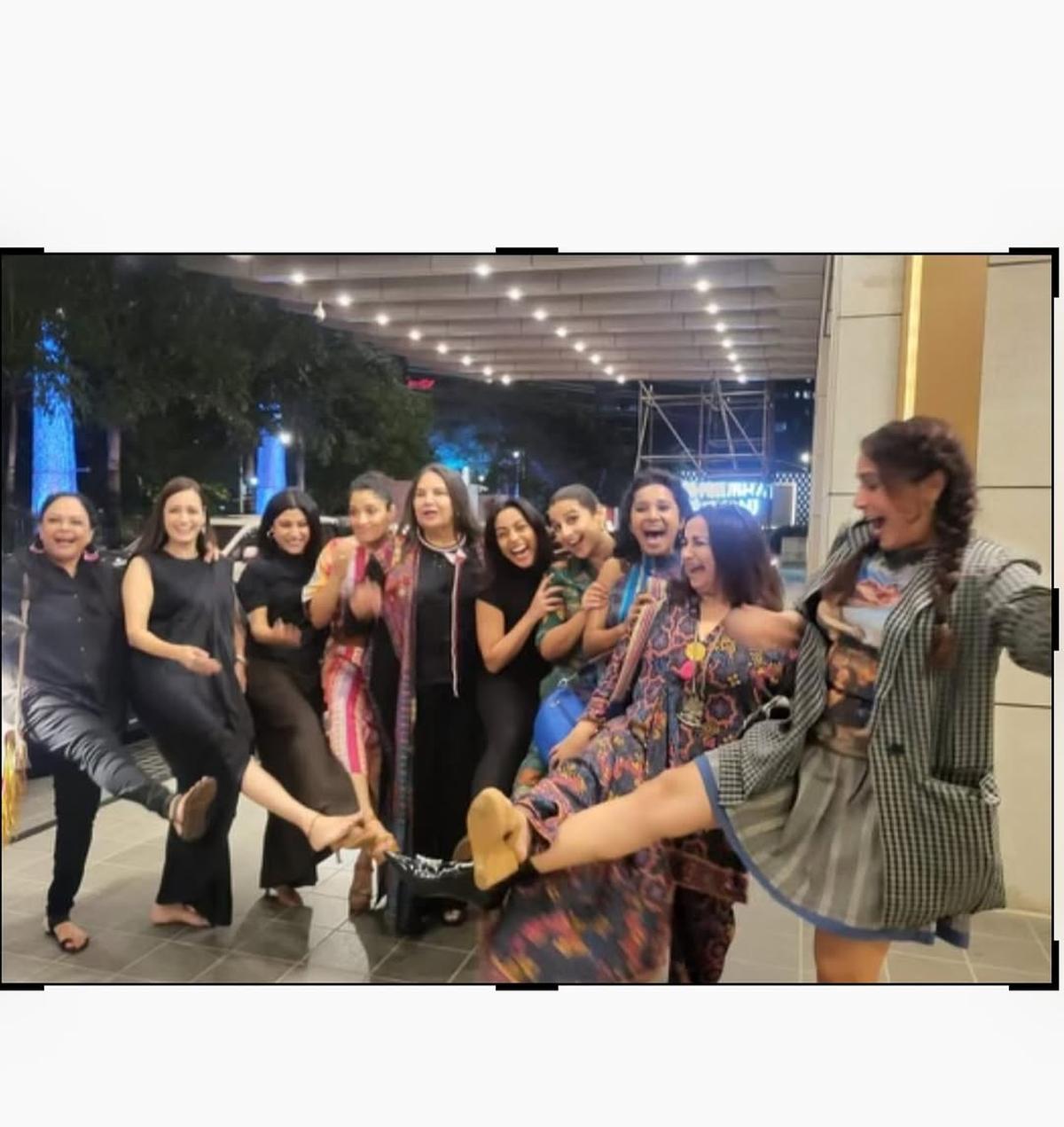
Members of Dher Saara Pyaar group.

Members of Dher Saara Pyaar group.

Earlier, Dher Saara Pyaar was just a “fun group, where we met, laughed, joked around and talked about things that people can’t talk about in public. But when this happened to me, all of us realised that there’s responsibility and care too. It’s this group as well as my friends and family who have been so beautifully supportive,” shares Chatterjee.

tanushree.ghosh@thehindu.co.in


Source link

From 1925 to today: How Ernakulam Karayogam has shaped the city’s social fabric


Thottekat Diwan’s Memorial (TDM) Hall, located in the heart of the city, is the headquarters of the Ernakulam Karayogam which, over the past 100 years, as a socio-cultural organisation, continues its commitment to social service irrespective of caste. This is worth mentioning because when the Karayogam was formed, registered under the Cochin Literary, Scientific and Charitable Societies Act in 1925, by prominent members of the Nair community; one of the goals was the “welfare of the Nair community”. However, since inception it has not limited engagement to caste-based activities and instead adopted an approach to service where caste does not play a role. 

Bearing testimony to it is the fact that the funds for the construction, in the 1930s, of TDM Hall came from a cross section of society, which included the Archbishop of Ernakulam apart from other prominent and not-so prominent citizens of the city. “Everyone donated to the cause, which is why we have no restrictions of caste, creed or religion, when it comes to our charitable services,” says P Ramachandran, the general secretary, Ernakulam Karayogam.

An organisation for the Nairs

Although officially formed in 1925, the ball was set rolling in 1913 when a few Nairs from prominent families felt the need for an organisation to “protect the rights of the Nairs in Ernakulam”. Says history enthusiast Rajith Nair, “Most of them lawyers — Ambadi Sankara Menon, TK Krishna Menon, VK Kochunni Menon and C Achutha Menon — came together to discuss the need for an organisation to safeguard the rights and advance the interest of the Nairs. The Nair way of life was falling apart by this time, their tharavads were disintegrating and they were being left behind economically. ” 

Nothing came out, immediately, of the discussions which dragged on endlessly. Neighbouring Travancore had already taken the lead in 1903, with C Krishna Pillai forming the Travancore Nair Samajam. “Then, in 1905, he would collaborate with CV Raman Pillai to form the Keraliya Nair Samaj. Two years later at a conference organised by the Samaj there were participants from the Malabar and Cochin as well. . At this conference, the creation of Nair Karayogam’s (village branches) across the Malabar, Cochin and Travancore were recommended. The Cochin group’s desire to start a Karayogam can be seen in this light,” Rajith adds. 

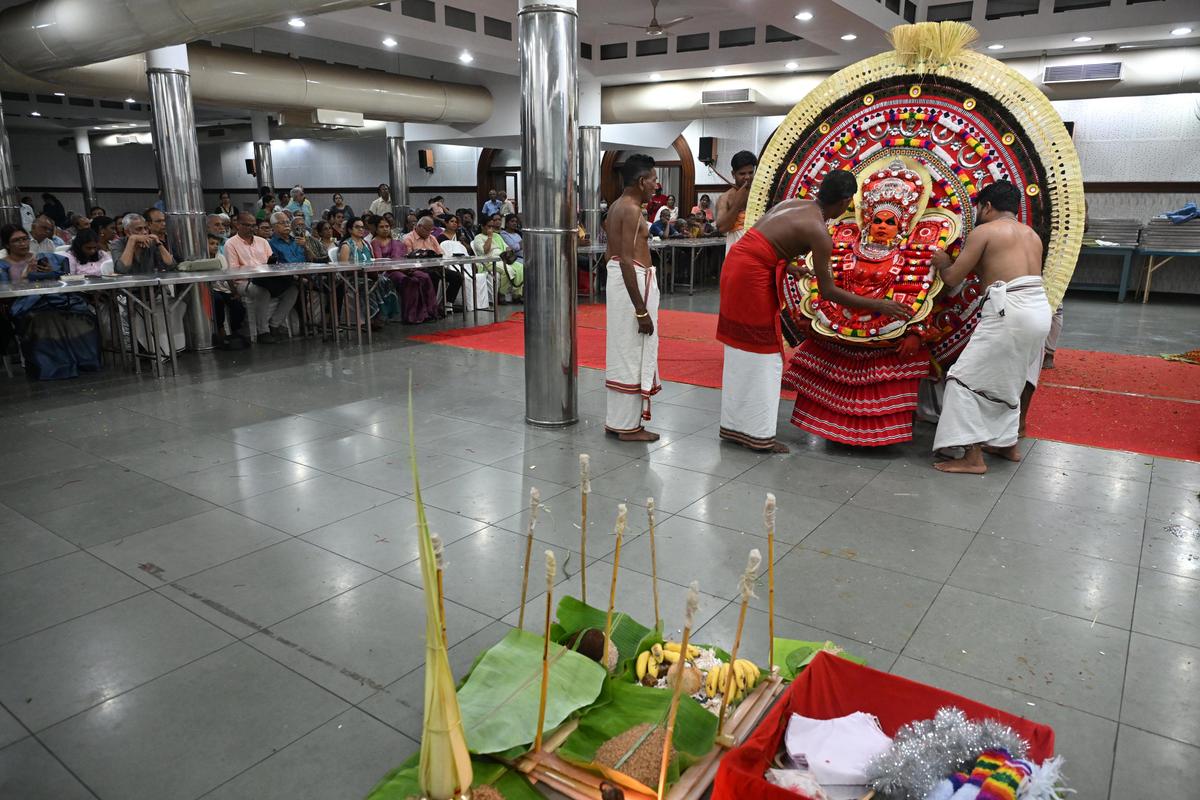
Priyesh Panikker and group from Kasaragod performing Panchuruli theyyam at TDM Hall as part of the Ernakulam Karayogam’s year-long centenary celebrations

Priyesh Panikker and group from Kasaragod performing Panchuruli theyyam at TDM Hall as part of the Ernakulam Karayogam’s year-long centenary celebrations
| Photo Credit:
THULASI KAKKAT

He goes on, “After much delay, a plan for Karayogams in every village of Cochin and a central Nair Samajam began to take shape in 1923. In June that year draft rules were published, a Karayogam at Ernakulam seems to have been started by TK Krishna Menon sometime in October 1923, however, it would only be in October 1925 that the decision to formally register the Ernakulam Nair Karayogam was taken. An All Cochin Nair Karayogam or Cochin Nair Maha Samajam seems to have been born alongside.”  When the Ernakulam Karayogam was finally formed, it was the word of 11 men, most of them lawyers. 

Part of the land on which TDM Hall stands today was handed over to the Ernakulam Karayogam, by the East Thottekkat family. The family planned to construct a memorial for two ancestors — Diwan Sankunni Menon and Diwan Kochugovinda Menon — on 23 cents of land that was entrusted to a trust and handed over to the Karayogam to build a memorial. Since the land was insufficient for a ‘memorial befitting the stature of the Diwans’, Ambadi Sankara Menon, the president of the Karayogam, requested the Diwan of Cochin, CG Herbert to allot 49 cents of land adjacent to it which also had a pond which would be reclaimed. The land was given, “free of land value” for the hall. TDM Hall is the main source of the Karayogam’s income and its activities. 

An office during the Second World War

Even before construction was completed, in 1939, during Second World War , the building served as the office of the Extra Assistant Recruiting Officer Ernakulam, during which period 6,712 persons were recruited into the defence forces. In 1941 it was handed back to the Ernakulam Karayogam.  

The Karayogam’s focus continues to be charity and social service. Among its welfare activities are the Ladies Hostel (1969), working women’s hostel (1977), ambulance service (1971), employment training centre, computer centre, matrimonial data bank, schools, technical library and Prasanthi Old Age Home among others.

“We have many dreams and aspirations when it comes to the Karayogam. Over the 100 years of our existence, we have put service first. One of our big dreams is a residential project, Vasudhaiva Kutumbakam,  spread over 200-300-odd acres, where senior citizens and families would be able to live. It is a huge project. Another big dream is a follow-up hospital/clinic for those in need. Usually people sponsor or donate for the treatment of major illnesses or diseases. But these require follow-ups which are expensive, and we hope to provide the service free of cost with the infrastructure we have! We have so many dreams, we live on the wings of those dreams, hoping to realise them!” says Ramachandran.  

The centenary celebrations of the Ernakulam Karayogam, on at TDM Hall, conclude on December 25. 

Published – December 20, 2025 03:01 pm IST


Source link

Rkive and the art of repair


In the last week of December, Perry Cross Road in Mumbai’s Bandra suburb, which has hosted streetwear favourites such as Jaywalking, Mainstreet Marketplace and Bhavya Ramesh, will also become home to New Delhi-based circular fashion label Rkive City’s next experiment: a 400 sq.ft. repair shop.

It is a wild step for a young brand, but not for Ritwik Khanna. All of 26, energetic, carrying the sort of undaunted, reckless optimism that powers start-ups and late night sewing rooms, Khanna says, “It may not make sense financially to repair other people’s clothes, but it’s not a marketing activity either.” He is calling it an impact play. A kind of designer-led CSR where instead of discarding their beloved or not-so-beloved clothes, people can reimagine what they were ready to bin. “We want to gamify the concept of repairing, where you can get your frayed pieces patched or fixed, with a cool contemporary play on it.”

Ritwik Khanna

Ritwik Khanna
| Photo Credit:
Abyinaav

Love me again

Repairing or rafugari is not new in Indian parlance. Patchwork, quilting, kantha, darning, even Japanese boro that conscious labels such as Studio Medium and Padmaja propagate follow the same zero-waste instinct, where torn or roughed up pieces earn second lives with more character than the first.

But what does a designer repair shop charge? Khanna laughs at the question and then answers it seriously: “We are not going to be functionally the biggest repair store in the country. That is still someone like the tailor uncle who sits close to Galleries Lafayette [in Kala Ghoda] and is capable of repairing anything. But it will reflect a designer intervention.” And with that, a higher price point. Not for mending, but for recontextualising.

Khanna is aware that in India repair has always been tied to lack. “Someone who worked at OLX explained to me that the way Indians need to be marketed second lives is not with the shame of buying pre-owned but by encouraging selling.” This small insight sits alongside the mountains of post-consumer textiles he has accumulated. Together, they form the beginnings of a new system. “Circular Design Challenge at Lakme Fashion Week [India’s biggest award for circular fashion, which he won last year] gave me a platform, but I do believe we will see de-institutionalisation of brands moving away from fashion week formats,” he says.

For a young designer to show confidence outside the system reveals where their minds are now. It mirrors a generational shift, too. While Millennial designers once chased international runways and couture conquests, the younger lot really does want to save the world, but not by stopping people from buying clothes. Instead they want to build parallel worlds, ones that make clothes last longer, and loop back.

Khanna, who comes from a family of clothing exporters, faced resistance when he refused to join the business. “I told them I would work in the clothing market but in my own way.” He now works with his 21-year-old brother Aarav, collecting discarded clothing bits and seeing them in a completely different light. “As impossible as it may seem I’ve put certain codes in place for how we want to arrange the discarded bits, colours, materials.” Rkive, the brand they co-own, often posts images of their mountainous collections of degenerated clothing, pieces they later pull apart and rebuild through cuts, patterns, repairs.

Old uniforms and red socks at Mayo

Khanna carried this same restless energy into the night of his first solo show recently at his old stomping grounds in Mayo College Ajmer. His cast included former teachers, young models, current students and hotelier Abhimanyu Alsisar.

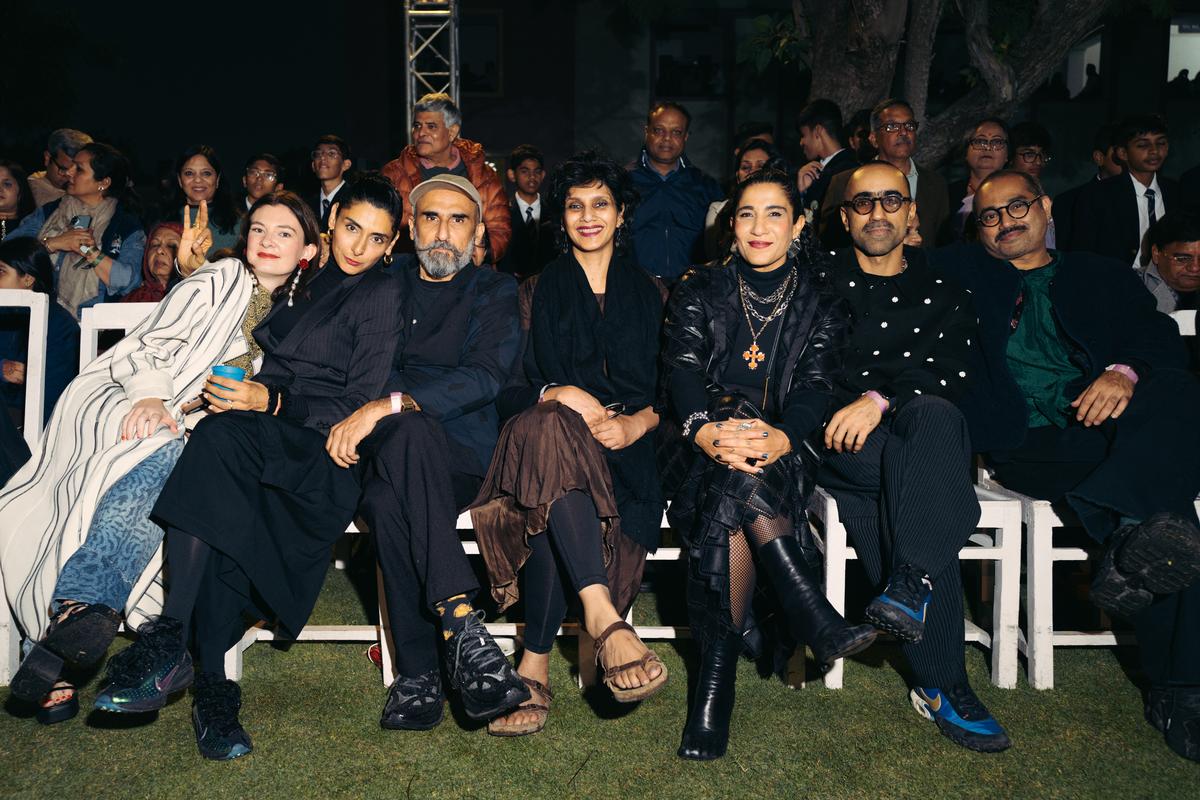
The audience was an equally eclectic roll call. Young Jaipur prince and princess Pacho and Gauravi Kumari (Khanna’s friends and batchmates), alumni and friends such as artist Paresh Maity, designers Amrit and Gursy of Lovebirds, Ruchika Sachdeva of Bodice, photographers Bharat Sikka (whose studio is next to Khanna’s in Delhi), Prarthna Singh and Rid Burman, jewellers Samarth Kasliwal of Gem Palace, and Digvijay Shekawat of Sunita Shekhawat all watched from the sidelines.

Bharat Sikka, Amrita Khanna and Gursi Singh at the show

Bharat Sikka, Amrita Khanna and Gursi Singh at the show

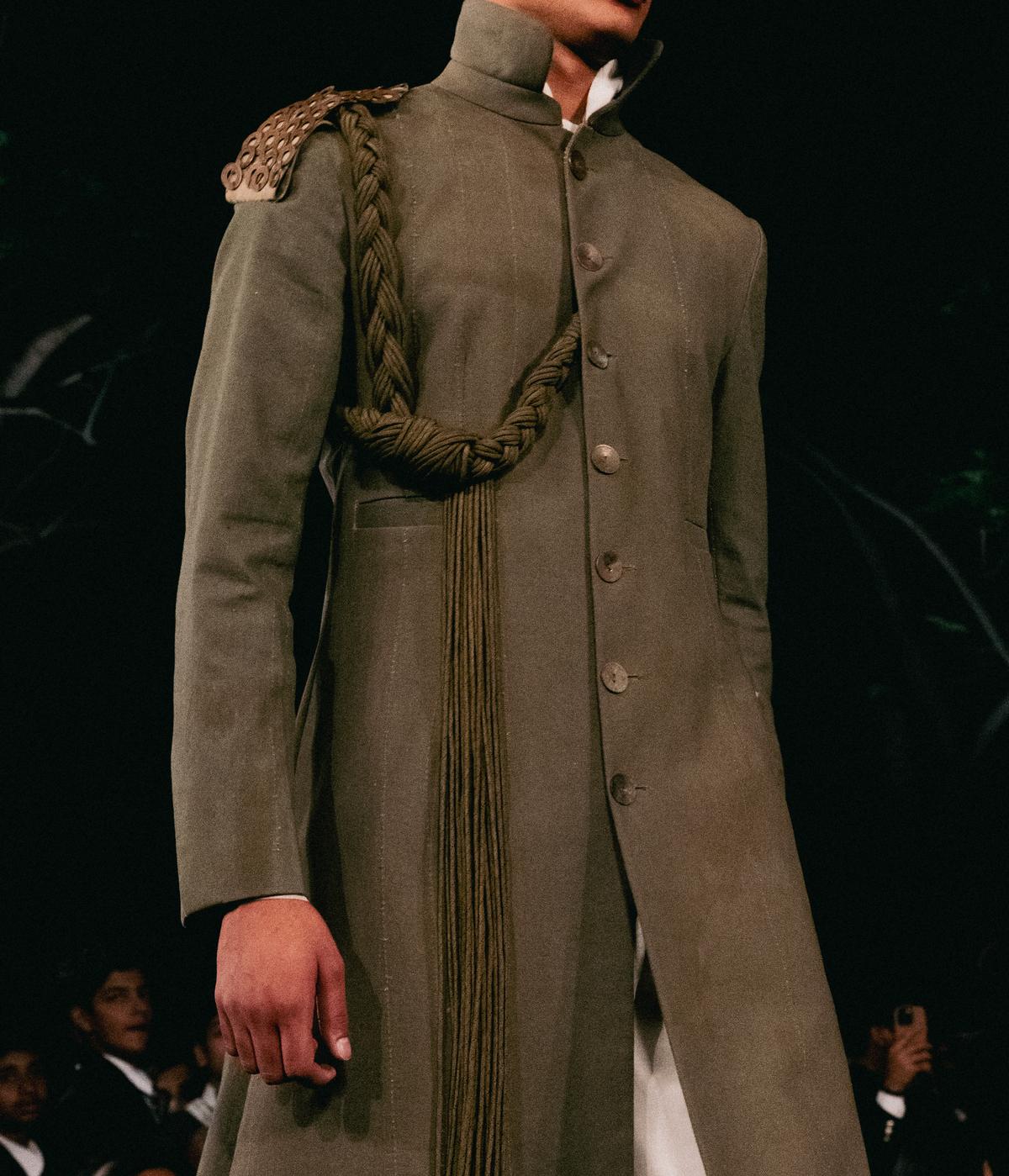
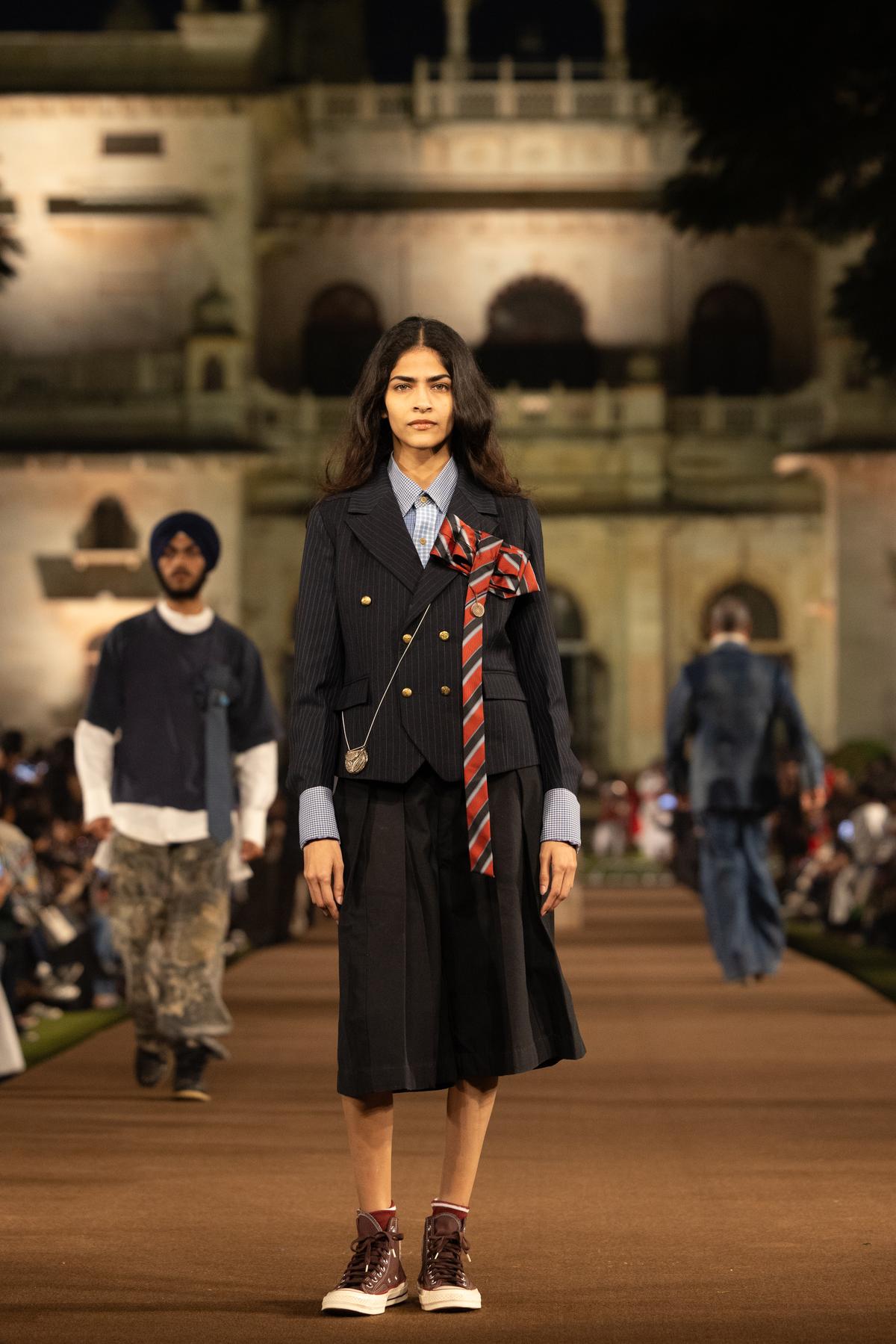
The show marked a milestone at his alma mater. Mayo College, in its 150th year, had celebrated with polo matches, concerts and a gathering of old and new students. Khanna’s show slipped neatly into the mood, then twisted it. He pulled from the college’s history and Rajasthan’s visual codes, tugging the familiar slightly off-centre. Uniforms were taken apart and rebuilt into cropped breeches, collarless bandhgalas, trench coats, deconstructed denims, corduroy jackets, pockets printed upside down and the crowd favourites, panchranga pieces five coloured, bold striped seperates, made from the school’s five coloured tent cloth.

A school tie and antique coin, reimagined as a brooch

A school tie and antique coin, reimagined as a brooch

Discarded linens, old uniforms, and decades-old curtains resurfaced as medals, coins, rings, safas and ties recast into buttons and badges. Made entirely from what the campus had quietly stored for years, it gave a new meaning to kids singing “we don’t need no thought control.” And ever the rebel, Khanna insisted on red socks on the models. A colour that, according to school lore, annoyed teachers and wardens, but boys wore anyway to attract the attention of girls.

A white blazer and pachranga shorts, styled with red socks

A white blazer and pachranga shorts, styled with red socks

Back in Mumbai, I have one last question: “how do you mend a relationship?” Quietly he replies, “Space first, then be the first to apologise.” Khanna’s optimism proves torn clothes can have a new lease at life, and with a little patience, perhaps relationships, too.

The writer is a Mumbai-based fashion stylist.

Published – December 20, 2025 10:51 am IST


Source link

Sisterhood in the city | Women’s collectives and groups are a rising phenomenon in urban India


“I have a cousin who got beaten up by her husband and they need legal support. Does anyone have any contacts?” reads a message on the ‘Women for Women’ WhatsApp group on a random Sunday. Even though the message is posted around midnight, help pours in within minutes — many share contacts, references, possible solutions, and more — as the group comes together to aid a woman none there has ever met. The WhatsApp community, started as an initiative in 2024 by Sumedha Dey, a women’s studies scholar in Kolkata, is pan-India today. It has become a free space for discussions, support, and more.

Women’s collectives and groups are a rising phenomenon in urban India, as women try to navigate a new world where they are independent yet not devoid of the need for safe spaces and genuine human connections. Women are coming together to create ‘sisterhoods’, to “do life together” as a community. Be it midnight walks, sharing job opportunities, offering solidarity and friendship in a new city, an exercise group, or even a book club, they are exploring different kinds of kinship and building safe spaces for each other.

Women are coming together to create ‘sisterhoods’, to “do life together” as a community

Women are coming together to create ‘sisterhoods’, to “do life together” as a community
| Photo Credit:
Illustration: Priya Sebastian

WCC stands up

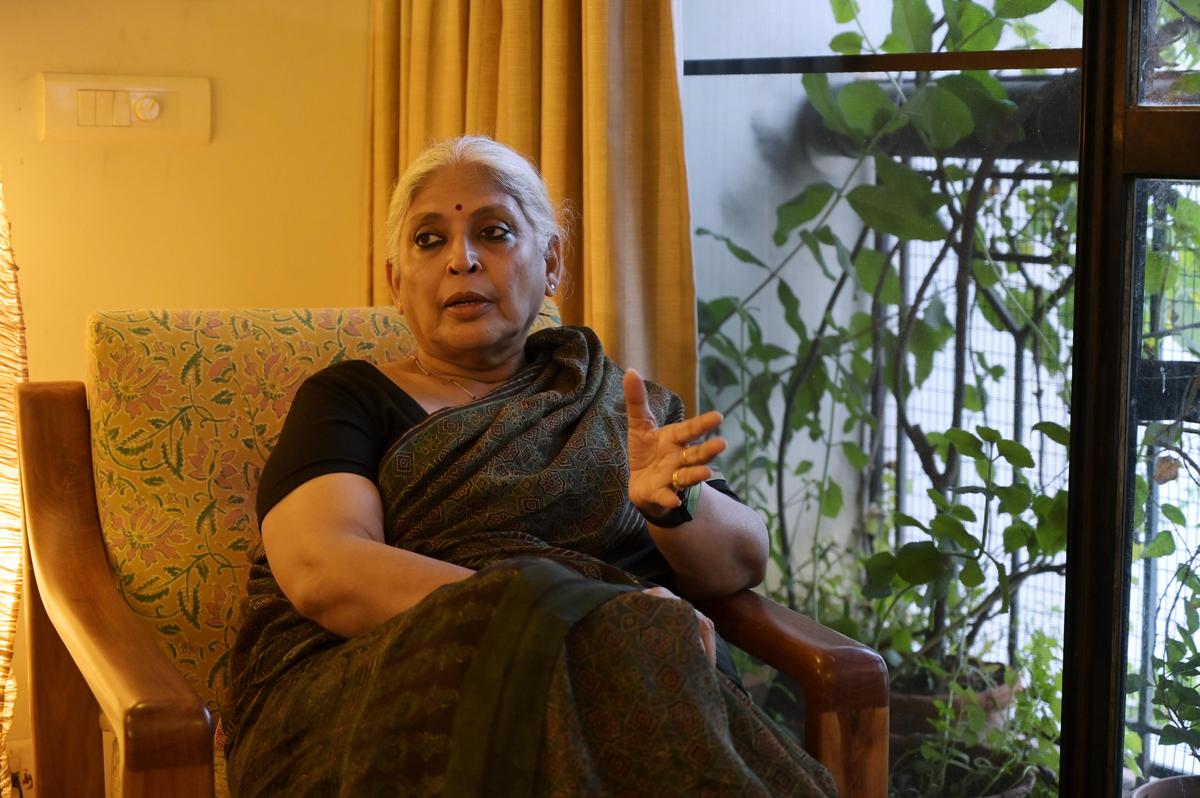
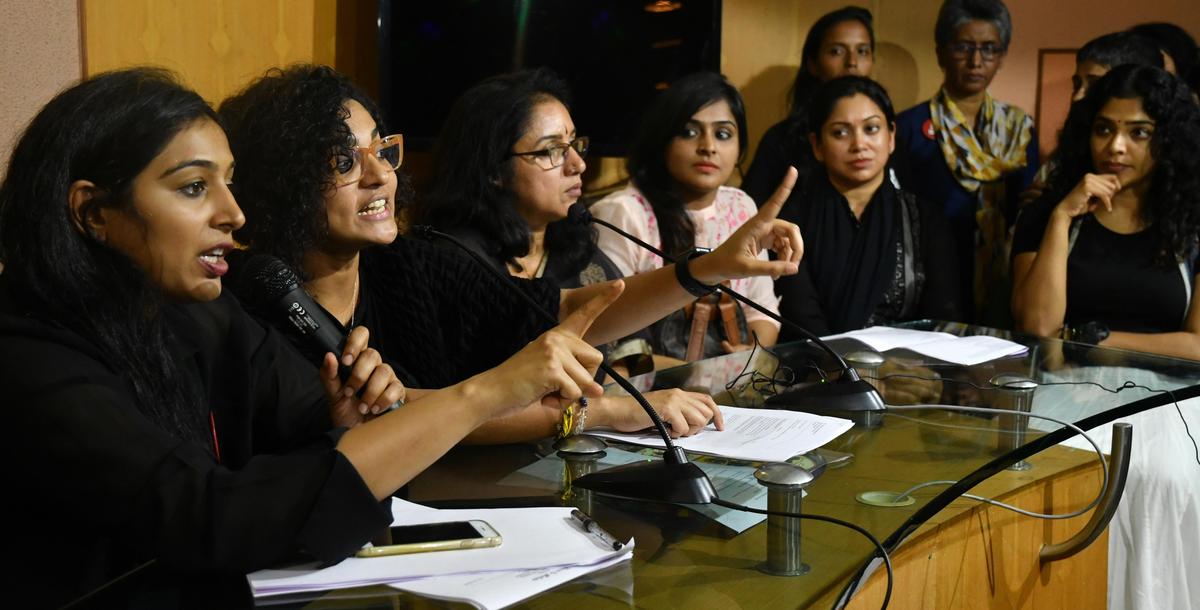
Nowhere is this more evident today, and making headlines, than in Kerala. In 2017, a group of film actors, writers and technicians formed the Women in Cinema Collective (WCC), following the sexual assault case involving a prominent actress in the Malayalam film industry. On December 8, when Malayalam actor Dileep walked out scot-free after being acquitted in one of Kerala’s most closely watched sexual assault and abduction cases (six other men were found guilty), men gathered outside the Ernakulam District and Sessions Court to show solidarity. They were seen cheering and clicking his photos. But the women, inside and outside the WCC, refused to break — even after their long fight against Dileep, who was accused of criminal conspiracy to kidnap and assault the actress.

The once popular hashtag #avalkoppam (with her) from 2017 started trending once again as thousands came out in solidarity with the survivor. “When the rape and abduction first happened in 2017, we formed a WhatsApp group and there was an angry and emotional outpouring of our own stories of abuse,” recalls Bina Paul, one of the founding members of the the WCC. “Though many of us have worked together in the same industry for years, we realised we had not collectivised and spoken about our ordeals before. This became the trigger point.” In the years that followed, they made their voice heard. From meeting with Chief Minister Pinarayi Vijayan to voice their safety concerns, advocating for their rights within the industry, to standing with the survivor as she fought the case for over eight years, they came through.

Bina Paul, one of WCC’s prominent faces

Bina Paul, one of WCC’s prominent faces

Paul, a senior editor in the Malayalam film industry, adds that their coming together gave the survivor strength, and in turn gave WCC the power to fight against the systematic abuse, male-domination, and patriarchal systems of the industry. “When we first started, people used to ask, ‘What will a bunch of privileged women do?’,” says Jolly Chirayath, a Malayalam actor and WCC member. “But over time, WCC brought about the Hema Committee report [a state-appointed inquiry into systemic sexual harassment and power abuse in the Malayalam film industry], and pushed women from other industries and other parts of the country to speak up against the workplace harassment they faced.” She adds they are with “the survivor in however she wants to take the fight forward”, but Chirayath is clear that they want answers on who the masterminds of the case are. “If Dileep is acquitted, then who did it? We deserve answers.”

Members of the Women in Cinema Collective

Members of the Women in Cinema Collective
| Photo Credit:
Thulasi Kakkat

In a way, the survivor and her reaction in the Dileep case was a crucial stepping stone, which led to many women in the Hindi film industry too speaking out about the abuse they faced in Bollywood. Actor Tanushree Dutta stepped up first, and it snowballed from there. This also triggered the #MeToo movement across India in 2018, when common women verbalised their stories of abuse and harassment at the workplace. Corporate honchos, mediapersons and academics were named in the list of abusers, leading to a wider reckoning across professions, as women began questioning not just individual perpetrators but the systems that enabled silence and impunity. Women’s collectives started taking shape, and gaining strength.

Creating city-wide lifelines

Generations of Indian women have heard the phrase “women are women’s biggest enemies”. The narrative has been used to divide them, and force them to suffer in silence rather than find kinship in a community. However, when societal systems and administration fail, women have always been each other’s strongest defenders and cheerleaders. Across India’s cities now, women’s networks are taking shape to become a lifeline, leading through solidarity.

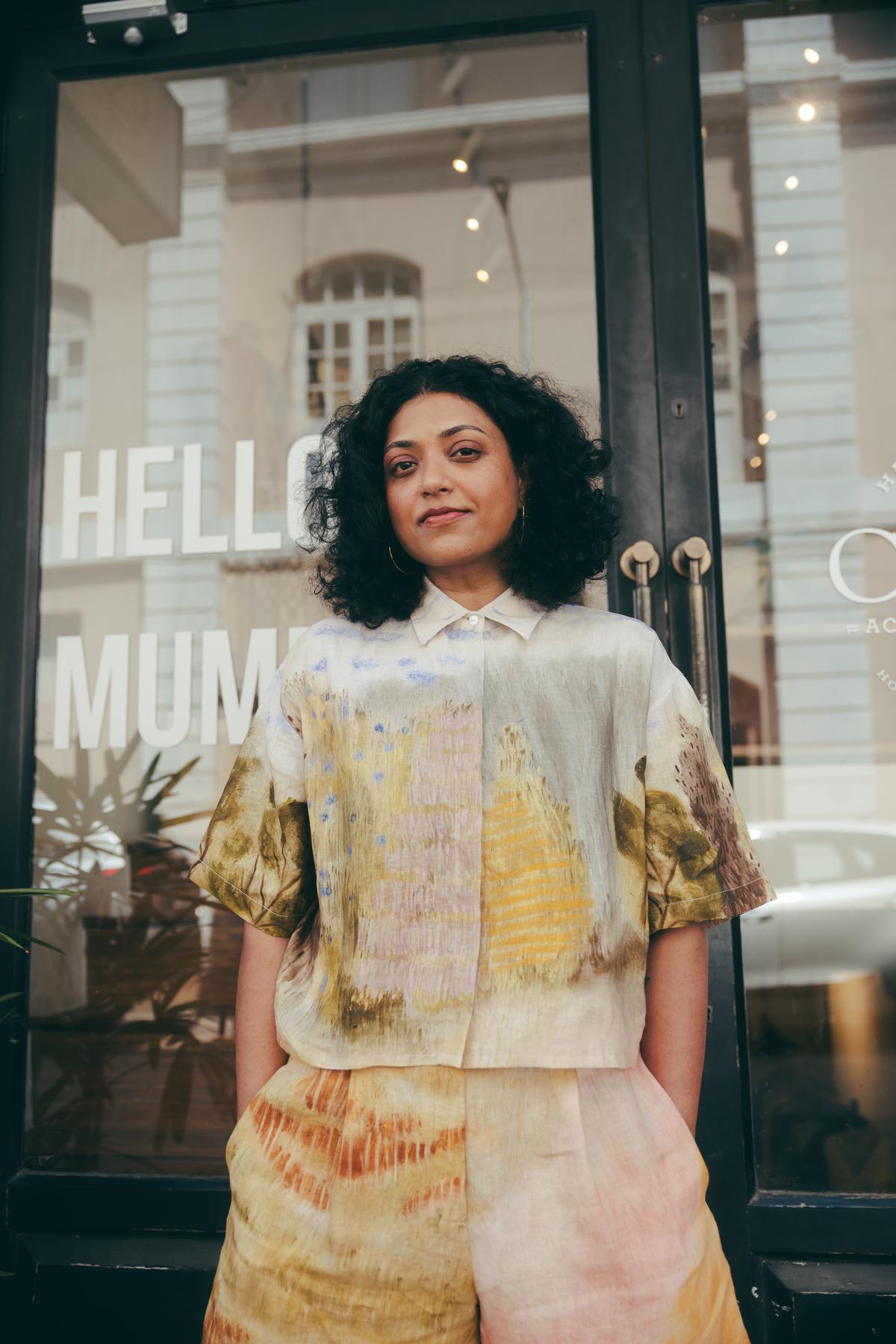
Last year, Aishwarya Subramanyam, popularly known as @otherwarya on social media, encouraged her followers to start a sisterhood cohort through WhatsApp in their respective cities. “There is a lot of talk about the male loneliness epidemic. But women are equally lonely, and struggle to find like-minded people,” shares Subramanyam. “We were having a discussion [on Instagram] about this and that is where the idea came about, so women could meet and find a safe space and build a community. This is about friendship and connection, this is not subscriber-based. We want to keep it informal, just how organic friend groups should be.” These tight-knit groups function on a hybrid model: they have digital shared spaces and in-person meet-ups.

Aishwarya Subramanyam encouraged her followers to start a sisterhood cohort

Aishwarya Subramanyam encouraged her followers to start a sisterhood cohort

Football and a safe space

In Bengaluru, Sisters in Sweat (SIS) was launched in 2017 as a for-profit organisation to bridge the gap of women dropping out of sports after school or college. The community, which promotes fitness and wellness through sports, is now also a space for bonding and camaraderie. “This is my way to stay close to my husband [an ardent football lover],” says a woman in her 30s, who joined SIS after she lost him a few years back. It helped her feel closer to her late spouse and, in the process, she discovered a community of women who played with her every Sunday and stood by her through her grief.

Swetha Subbiah, a fitness trainer and co-founder of SIS, remembers the group’s first meeting in 2017 — when 17 women showed up to play a friendly football match. “Something magical happened after that first Sunday. Every week, more women started to show up, brought their friends too. This became their safe space, their ‘me time’ away from other roles at home and work,” says Subbaih. “This is now beyond sports and physical activity. This is a dose of community building that has helped many with their mental health issues, to find a group they can fall back on.” The SIS community is thriving across five cities now, and has over 15,000 members.

Swetha Subbiah (right) and Tanvie Hans, co-founders of Sisters in Sweat

Swetha Subbiah (right) and Tanvie Hans, co-founders of Sisters in Sweat

Women have always stood together

Many women-led groups, both formal and informal, are in operation across India, such as the Network of Women in Media (women in journalism), The Bikerni (women two-wheeler riders), Sheroes (networking group), Break Free Stories (divorced women group), and Majlis (women lawyers offering legal aid). While each may have a different cause and origin story, they are all bound by a common thread: to create safe spaces for women.

“Free movement is liberation, and traditionally, women have not had this. So, to own a bike or a car and take control of a powerful engine makes you feel strong. When we ride our own bikes, we can go out at any time without seeking permission from people or worrying about our safety in someone else’s vehicle.”Urvashi PatoleFounding member of The Bikerni, which is now in 11 cities and has over 2,500 members

Urvashi Patole of The Bikerni

Urvashi Patole of The Bikerni

The formations of these structured groups may be a recent phenomenon, coming up in the last decade or so, helped by the availability of the Internet, but the truth is women have always found ways to stand together. Even when the initiatives were not so structured.

When the woman doctor in Kolkata’s R.G. Kar Medical College and Hospital was raped and murdered at her workplace on August 9 last year, emotions ran high. Anger spread across the city, then the State, and even took root in multiple States across India. On the nights of August 14 and 15, lakhs of women took to the streets of West Bengal to ‘Reclaim the Night’ as their own. With candles in hand and songs of protest on their lips, they claimed space for their deceased sister, daughter, and friend.

Years before Reclaim the Night, women had already shown what it means to hold space. During the anti-Citizenship Amendment Act (CAA) protests, they came together in December 2019 to protest the controversial bill. It started with 15 women from the Muslim-dominated area in Shaheen Bagh; however, in the next few weeks, thousands started joining as the cause resonated across societies. The women, mostly homemakers, knew their politics and stood tall. They braved the cold Delhi winter nights, police barricades, and intimidation, and sat on the road for months, refusing to give up on their rights.

Reclaiming the streets

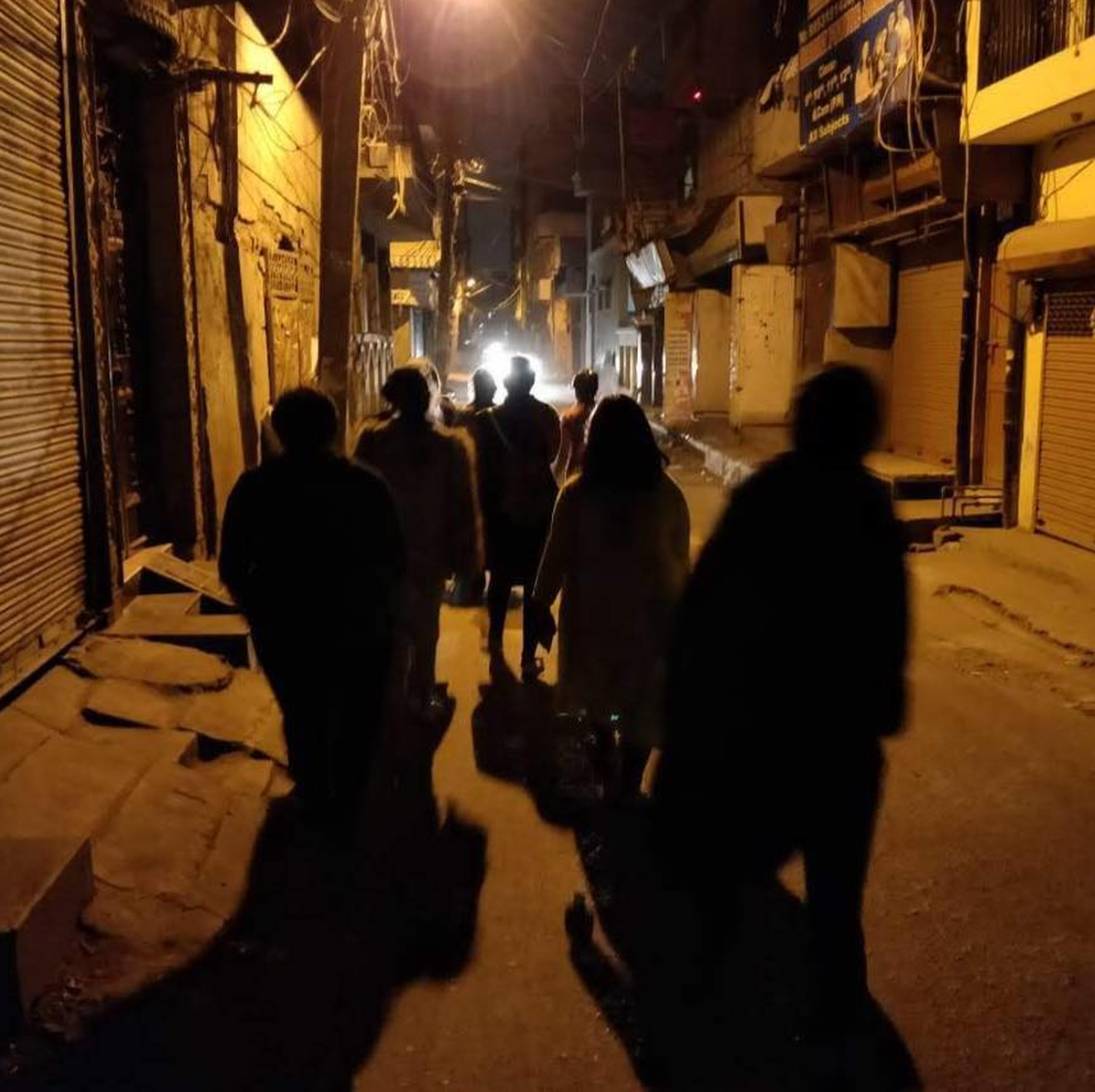
One of the best known women’s initiatives is ‘Women Walk at Midnight’. Started by Mallika Taneja in Delhi in 2016, it encourages women across India to walk around their cities and live and breathe freely. “We never have to explain what the movement is to other women or queer and trans people,” says Taneja. “But men ask us, ‘What will you get out of this walk?’ Because they have always walked freely, they do not know how restricted a woman’s movement is in her own city, own country, is.” There are 13 groups across India that keep in touch over WhatsApp. And the frequency and location are decided based on the individuals and how each city works. “There have been many before us you have resisted, and there will be many after us. It is like a silsila [series]. That we can do these walks is also a culmination of the fight of the women who came before us,” she says, adding that hopefully soon women walking at night will become a common sight, so mundane that society will stop questioning it.

Women Walk at Midnight in New Delhi

Women Walk at Midnight in New Delhi

“When newsrooms are male-dominated and women do not find anyone in the workplace who has faith in their work, it is a beautiful feeling to have this group of women who believes in you. It is reaffirming to be seen. From sharing resources and fellowship opportunities, offering emotional support and advocating for better workplace safety, to standing by survivors of abuse and harassment, the group has always come forward for women journalists and this sisterhood.”Rajashri Dasgupta Founding member of Network of Women in Media, India, which has close to 1,000 members across the country

Being there for each other

These initiatives, acts of resistance, and sisterhoods may not dismantle patriarchy, but the shared courage and community-building are helping many women find their voice amid the noise. Sumi Thomas, a member of the Otherwarya group in Kochi, points out that informal sisterhoods like theirs has helped women such as her find a community that shares similar values. “In this digital age, we have become so distant from each other that there is loneliness, but finding this group has helped women realise they are not alone in this. From 20- to 50-year-olds, everybody is going through a similar journey and they have found each other in the process,” she says. Thomas adds that the Kochi group, which now has over 80 members, has become a space for shared wisdom where women offer their insights on life to help others get through tough phases. “From opening up about their vulnerabilities to discussing their dating lives and politics, we have done it all.”

Sumi Thomas, a writer and brand storyteller based in Kochi

Sumi Thomas, a writer and brand storyteller based in Kochi

Within these sisterhoods, women are building parallel spaces where gender roles are not assigned, and choices are being shaped by individual agency. Kavita Krishnan, a Delhi-based women’s rights activist, says that the act of creating these spaces is also a political one. “Women are standing up against the patriarchal system and making a conscious choice to be there for other women through various issues in life,” she says, pointing out that such groups help women unlearn their own biases and liberate them from the societal shackles and patriarchal rules that hold them back and stunt growth.

And while women remain honest about the unlearning that remains, they are determined to continue to learn, unlearn, and lead in fresh ways — and be there for each other through it all.


Source link

‘Tis the season to uncork a sparkling English wine


“It’s been 22 years and the quality of English sparkling wine is nothing short of astounding,” said acclaimed winemaker Dermot Sugrue when I spoke to him in May. “In this short time, we are able to stand shoulder to shoulder with Champagne.” His words proved prophetic. A month later, the Decanter World Wine Awards were announced and Sugrue South Downs’ ‘The Trouble with Dreams’ 2009, won a historic Best in Show award, beating a slew of Champagne brands. In all, the U.K. won 188 medals.

Not too long ago, few consumers knew that English wine existed. There had been attempts to make wine in England, but with limited success — owing to its focus on still wines using cold-hardy German hybrid grapes such as Madeleine Angevine, Huxelrebe and Reichensteiner. The wines were thin, highly acidic and lacked balance. The country’s famously unpredictable, marginal climate meant that it was too cool, too wet to successfully grow ripe vitis vinifera grapes.

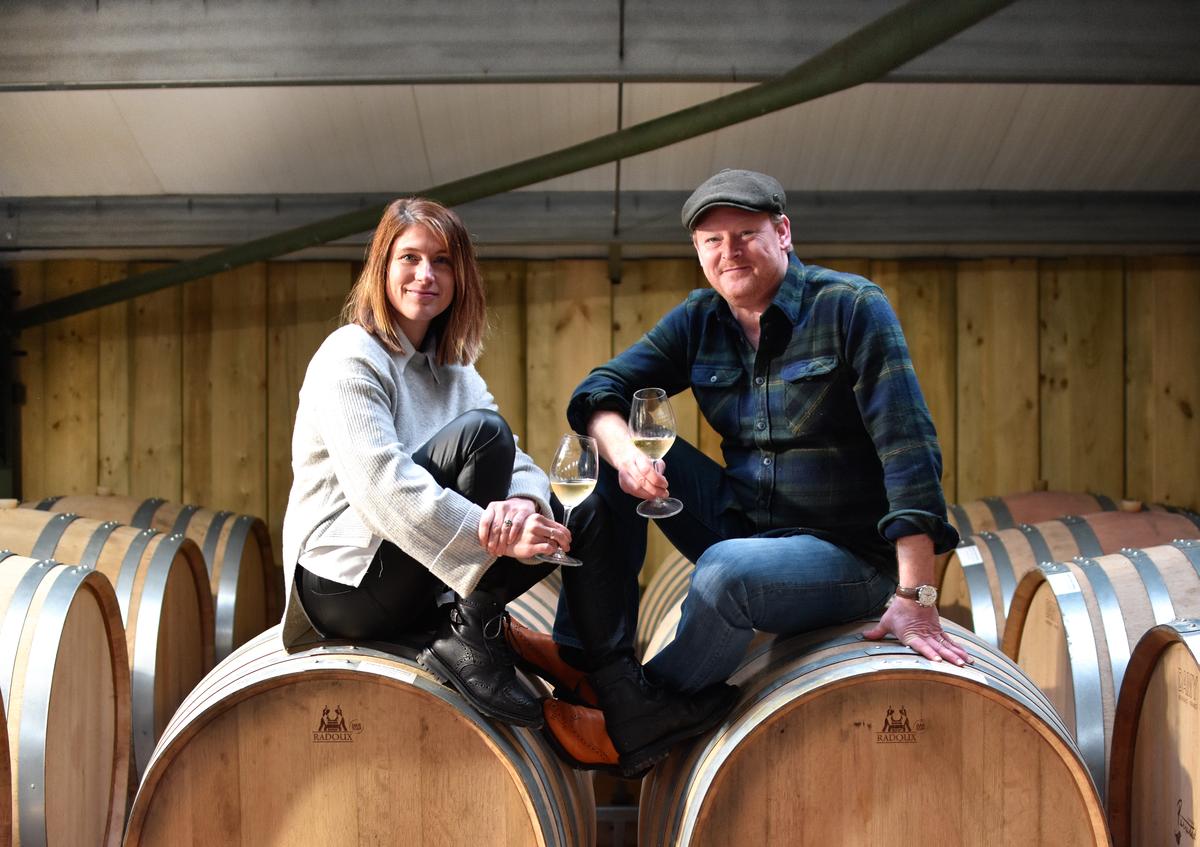
Dermot Sugrue

Dermot Sugrue

So, what changed? The climate did. It began to warm up, and with it came the prospect of better ripening of grapes and less vine disease. And this year, as the holidays draw close, we will be seeing English wines on many celebratory tables.

A check for global warming?

The new era began in the 1980s when the focus turned to sparkling wines, made using traditional Champagne grapes such as Pinot Noir, Meunier and Chardonnay, grown on chalky limestone soils. In 1988, Nyetimber, a now-renowned English producer — whose Blanc de Blancs 2016 Magnum was named top sparkling wine this year at the International Wine Challenge, the first ever non-Champagne wine to win the title — decided to plant vines in West Sussex. Soon, it stunned the wine world when its Classic Cuvée 1993 was judged the best in the world at an international competition.

Nyetimber’s Blanc de Blancs 2016 Magnum, the first ever non-Champagne wine to win the world’s best title at the International Wine Challenge

Nyetimber’s Blanc de Blancs 2016 Magnum, the first ever non-Champagne wine to win the world’s best title at the International Wine Challenge

That began what many today call ‘the Nyetimber effect’: the planting of Champagne grapes to make sparkling wine on soils much like France’s Champagne region, using the Champagne method. Emboldened by the opportunity to try their hands at growing wine grapes, a new breed of farmers emerged. Many of them gave up lucrative urban jobs to turn to winemaking.

Most English vineyards today are in the south east of England, clustered around the counties of Kent and Sussex, where the soil is chalk, along with mineral-rich greensand — ideal for growing vines. Vineyards may also be found in Surrey, Essex, Devon, and Hampshire, even further north as the climate continues to warm. So, it is not surprising to read that the U.K. now boasts 1,104 vineyards, according to WineGB, the trade association for English and Welsh wine. This represents a growth rate of 123% since 2013 — significant especially in 2024 when top world wine regions saw negative growth. English wine saw a 3% growth, with reports placing it as one of the world’s fastest growing wine regions.

Artelium’s vineyards

Artelium’s vineyards
| Photo Credit:
Will Hearle

As Kirsty Goring, brand director of Wiston Estate in West Sussex, points out, unlike Champagne, which is located inland, England is surrounded by water. “Fresh breezes help ward off disease, and being only 5 miles from the sea there are less frost issues.” The brand — established in 2006 by her parents Pip and Harry Goring — plants grapes on 30 acres of chalk soil, nestled in their 6,000-acre estate. Adds Tamara Roberts, CEO of Ridgeview Wine Estate, one of the earliest producers along with Nyetimber: “Climate change is impacting all wine regions. This will result in certain regions becoming too hot for viticulture or having to change their winemaking traditions to survive. New regions such as England will become more viable.”

Climate change may have had a positive effect in England and Wales, but a closer look at historic winemaking regions reveal that the advantages of warming can as quickly turn to devastation. Burgundy suffers spring frosts, unseasonal rain, and hail, and vines were reportedly afflicted by hydric stress, even sunburn. California has repeatedly been hit by wildfires that impacted up to 80% crop rejection due to smoke taint.

Wine casks at Sugrue South Downs

Wine casks at Sugrue South Downs
| Photo Credit:
Sarah Weal

Today, sparkling wine production continues its domination, with Champagne grapes representing over 70% of all vines grown in the U.K. Initially priced on par with Champagne, it struggled to sell. But as the industry expands, it is now possible to find wines starting from £30 upwards.

Future-ready with PIWIs

The U.K.’s ability to produce excellent wine is also due to advancing technology in both vineyard and winery. Despite advanced clonal (genetically identical copies) and site selection and new tech, the country’s climate remains unpredictable. So, new-age hybrid grape varieties called PIWIs (short for Pilzwiderstandsfähige Reben, German for ‘fungus-resistant vines’) are being grown and assessed for future use.

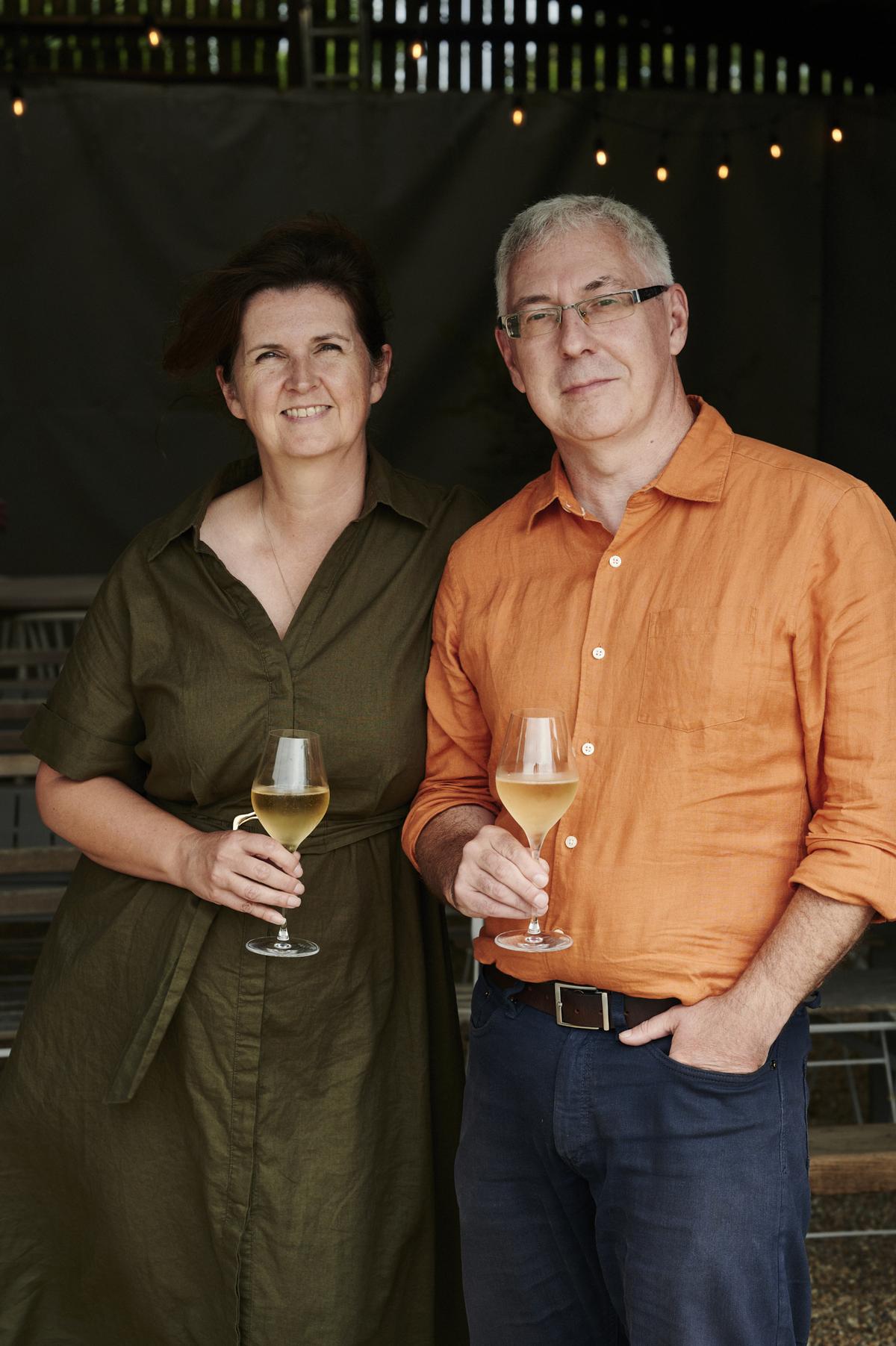
Artelium Wine Estate, Ridgeview’s neighbour, established in 2018, farms 65 acres in East Sussex. I walked through the sun-dappled vineyards with owner Mark Collins and Poppy the vineyard dog. Under Collins, formerly a tech professional, and his telecom executive wife Julie Bretland, Artelium won awards soon after their 2021 launch, including the title of Supreme Champion at the WineGB Awards 2022.

Julie Bretland and Mark Collins of Artelium

Julie Bretland and Mark Collins of Artelium

“It sets the bar high,” confesses Collins. Artelium grows Chardonnay, Pinot Noir, Meunier, and Pinot Gris, besides 20,000 disease-resistant PIWI vines planted in 2020. Collins says, “As we get warmer, there’s a risk of it getting wetter too.” Unseasonal rainfall means vine diseases could spike, devastating crops — something PIWIs are resistant to.

Pinot Noir being harvested

Pinot Noir being harvested
| Photo Credit:
Jo Hunt

However, some producers have mixed feelings about PIWI grapes. Some, like Wiston Estate and Sugrue South Downs believe that they still lack sufficient finesse, requiring further research. But many admit that the necessity of adopting climate-resistant grapes like PIWIs looms large. There might be little choice, Sugrue admits. “As the climate continues to change, we will have to keep adjusting our rootstocks and clones,” he says. “Seasonal vineyard management in general will also have to adapt. Years like 2025 have been unpredictable and required viticulturalists to stay on their toes. We don’t think that the popularity of Chardonnay, Pinot Noir, and Meunier will disappear any time soon. However, PIWIs are getting better with each vintage [we tried a remarkable Cabaret Noir recently] and research is improving. In the future, it is likely that there will be new PIWI X Vinifera crossings developed suitable for good viticulture and winemaking.”

Top 3 from Sussex

Sugrue South Downs’ The Trouble with Dreams 2020

Wiston Estate’s Blanc de Blancs 2018

Ridgeview’s Fitzrovia Rosé NV

English sparkling wines are not available for sale in India yet, but a recent U.K.-India FTA (Free Trade Agreement) has wine lovers hoping to see it in the country soon.

Ridgeview’s Fitzrovia Rosé

Ridgeview’s Fitzrovia Rosé
| Photo Credit:
Adrian Lander

Big and small success stories

Ridgeview remains focused solely on sparkling wine production. Founded in 1995 by Mike and Chris Roberts, the business is now run by the family’s second generation: with Tamara as CEO and Simon Roberts as the winemaker. Recognition came in 2005 when their Bloomsbury NV sparkling 2002 won at the IWSC competition. A year later, their Blanc de Blanc 2002 was picked as Queen Elizabeth II’s celebration wine at her 80th birthday banquet. Sales soared, standing at 500,000 in 2023 from 25,000 bottles in their first year.

Wiston Estate, on the other hand, has chosen to limit production to under 100,000 bottles. As does Sugrue. Despite his success and cult-like following, his annual production is deliberately small — limited to 20,000 to 50,000 bottles of wine.

Dermot and Ana Sugrue

Dermot and Ana Sugrue

The vineyards are also taking sustainability seriously. The Gorings believe looking after nature is the key to ensuring productivity of the land. “Regenerative farming teaches us that everything is better when we work with, rather than against nature,” Kirsty says. This sentiment has led to the early success of the Sustainable Wines of Great Britain Scheme, established in 2020 to encourage sustainable farming practices and regenerative farming in the wine industry.

While England is justifiably proud of its industry’s accelerated growth, Sugrue underlines the need for a collective strategy and vision for the future. England’s wines are unique and tell their own story, he says. That is reason enough to differentiate itself from regions such as Champagne with their legendary quality and scale built over centuries. “Our message should be about making brilliant, quality wines in our own unique style.”

Food, wine, and tourism

The proximity of English wine regions to London makes access easy for wine lovers and curious tourists. So, on-premise tours, tastings, cellar door sales and restaurants have quickly found success. The Sussex Winelands, a body representing wineries and vineyards, has been created to drive this advantage further: the first Sussex Wineland trail in East Sussex, called the Rother Wine Triangle was launched this year, linking seven wineries. The objective is to simplify things for tourists with maps, information and signage linking vineyards and wineries. “The plan is to replicate this with more wine trails across the county,” explains Wiston’s Kirsty.

Wiston Estate: Chalk, the fine-dining restaurant, attracts close to 18,000 visitors annually, where chef Jordan Powell pairs multiple courses with the estate wines. Kirsty, who has created sculptures from Wiston chalk to decorate the all-white themed restaurant says, “Chalk was created to have somewhere we could showcase our wines with food. We always felt that English sparkling wine, with its racy acidity, brings out the best in a variety of dishes.” Their sold-out restaurant and waiting list confirm this.

| Photo Credit:
Matthew J. Thomas

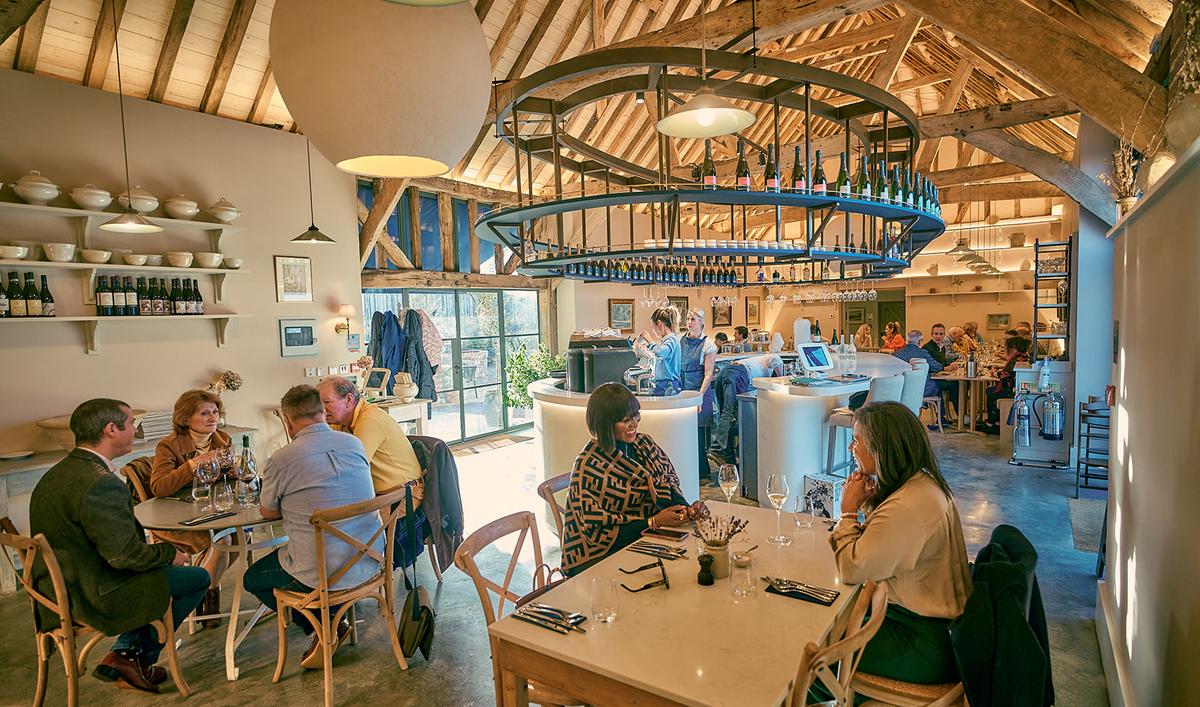
Artelium: A tasting at their on-site restaurant Artelium Kitchen, proves their sparklings live up to their hype. The Decanter Gold-winning 2018 Blanc des Blancs is delicate and elegant, while the Curator’s Cuvee 2018 is opulent and rich. Artelium Kitchen combines a cellar door shop with the eatery, offering an eclectic menu along with popular food and wine nights.

Artelium wine harvest

Artelium wine harvest
| Photo Credit:
Will Hearle

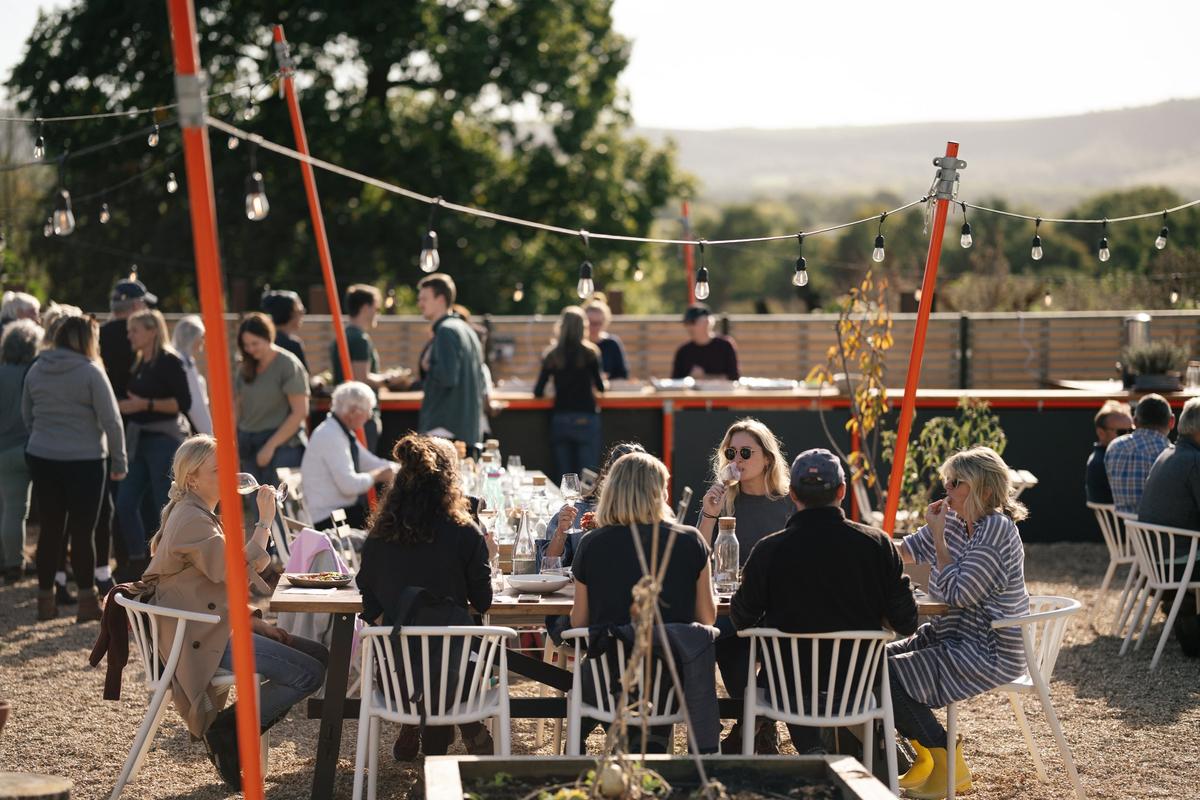
RidgeviewEstate: It opened its successful al fresco restaurant The Rows and Vine in 2023. Surrounded by verdant vineyards, guests dine on a selection of small plates accompanied by a selection of the estate’s wines. The Ridgeview made-for-hospitality still wines, a rosé, and a Chardonnay,have proved immensely popular, says Roberts.

The wine journalist, educator and travel writer is based in Bengaluru.


Source link

How to make small urban homes feel spacious and stylish


Think urban homes, and the biggest challenge one faces is the lack of space. In today’s dense urban environments, many of us are living in spaces smaller than ever before, whether it’s a compact apartment or a studio.

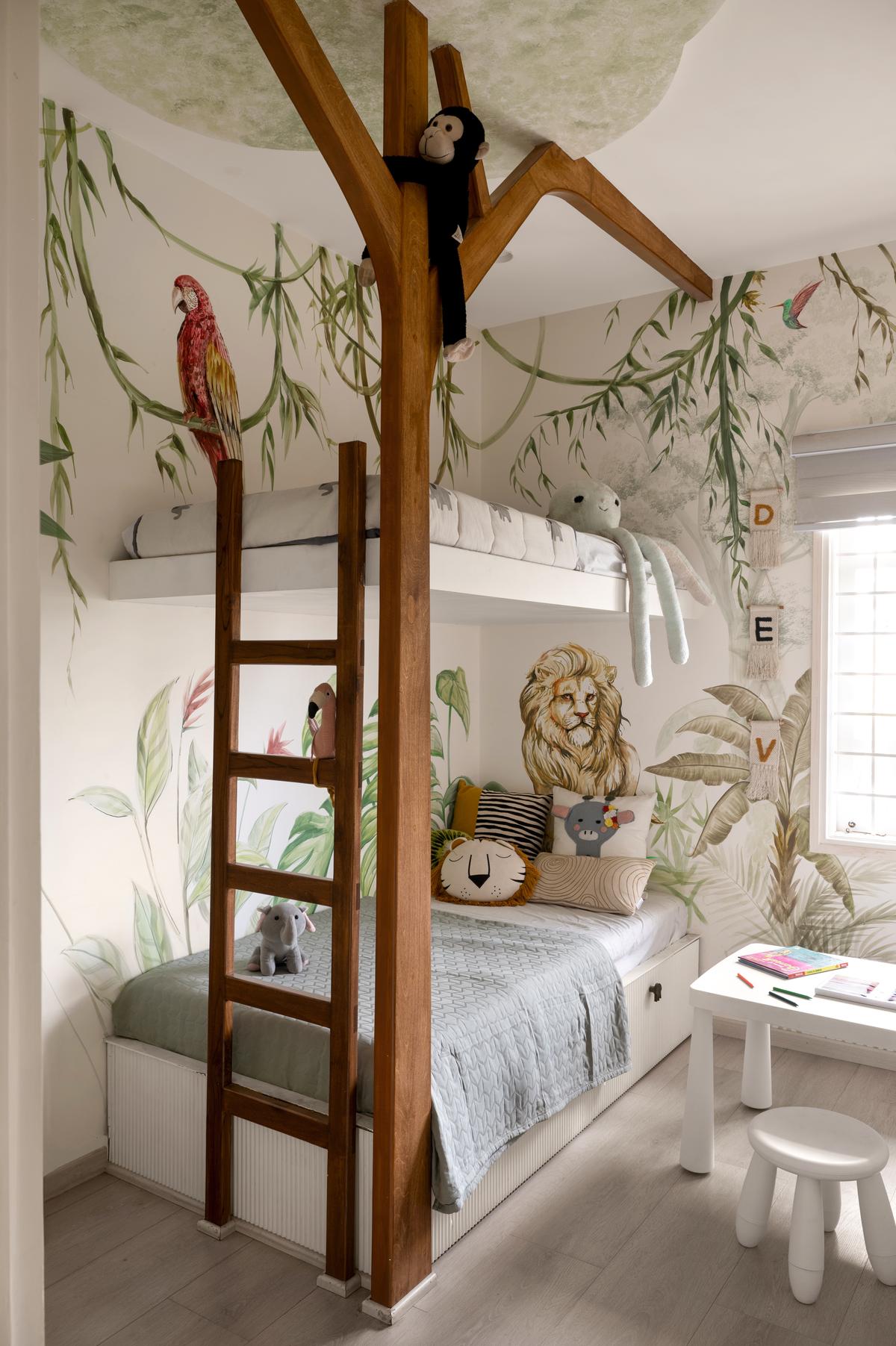
Compact yet creative, this joyous jungle room imagined by AD Studio9 in Pragati Nivasa makes the room feel expansive and stylish.

Compact yet creative, this joyous jungle room imagined by AD Studio9 in Pragati Nivasa makes the room feel expansive and stylish.
| Photo Credit:
Nayan Soni

Room sizes are shrinking, every square foot has to work harder, and there’s always the pressure to make it functional yet stylish and chic. “The real challenge isn’t just about fitting everything in. It becomes essential to understand the experience of living in such spaces, because when a home feels cluttered, it affects not only movement but also the sense of ease and calm one naturally seeks,” says Rahul Mistri, founder and principal designer, Open Atelier Mumbai.

It’s crucial to plan a layout that enables smooth circulation, allowing people to move around easily without obstruction.

It’s crucial to plan a layout that enables smooth circulation, allowing people to move around easily without obstruction.
| Photo Credit:
Andre Fanthome–Studio NAC

Designing a compact, urban home is a lesson in how to do more with less, effectively combining comfort, utility, and design within a limited footprint. “Every decision, from the size of furniture to the amount of natural light entering, has great significance. If there isn’t enough storage or if circulation isn’t thoughtfully considered, spaces can feel cramped all too quickly. It’s also crucial to maintain a sense of openness; otherwise, a small home may end up feeling boxed in rather than welcoming and airy. The process is really about striking that fine balance between having everything one needs and still keeping the home visually light and inviting,” says Devika Khosla, creative director, The Works Interiors.

Varun Poddar.

Varun Poddar.

A room of one’s own

When designing for urban spaces, the key considerations revolve around context, density, and human experience. “First, it is essential to respond to the site and its surroundings — working within constraints of limited space, neighbouring structures, and local regulations while still creating a distinctive identity. Second: light, ventilation, and privacy. [These] become critical as urban homes are often tightly packed. Thoughtful spatial planning, orientation, and material choices can transform these limitations into opportunities. Also, integrating green spaces, energy-efficient systems, and natural elements helps balance urban density with ecological well-being. Finally, the user experience is paramount. Urban spaces should not only function efficiently but also provide comfort, calm, and a sense of connection to nature — turning homes into sanctuaries within the bustling city fabric,” says Sandesh Dhanaraj, co-founder, AD Studio9.

Another key consideration is creating a sense of openness and flow. “In a limited footprint, even minor interruptions in circulation can make a home feel closed off. The scale of furniture, the way storage is integrated, the integration of natural and artificial lighting, and even the choice of materials all contribute to a sense of balance,” adds Mistri.

Adaptability is equally essential. A compact home will continually evolve, and its design must be flexible enough to support these shifts, whether that’s a corner doubling as a work desk or a dining area that expands to accommodate more people. This adaptability can also extend to technology, where strategic automation systems add to the experience of comfort and ease. The purpose is to make the space feel intuitive, where every element actively enriches the rhythm of daily life, without drawing attention to the home’s size.

Aditi Savani

Aditi Savani

Ways to maximise space

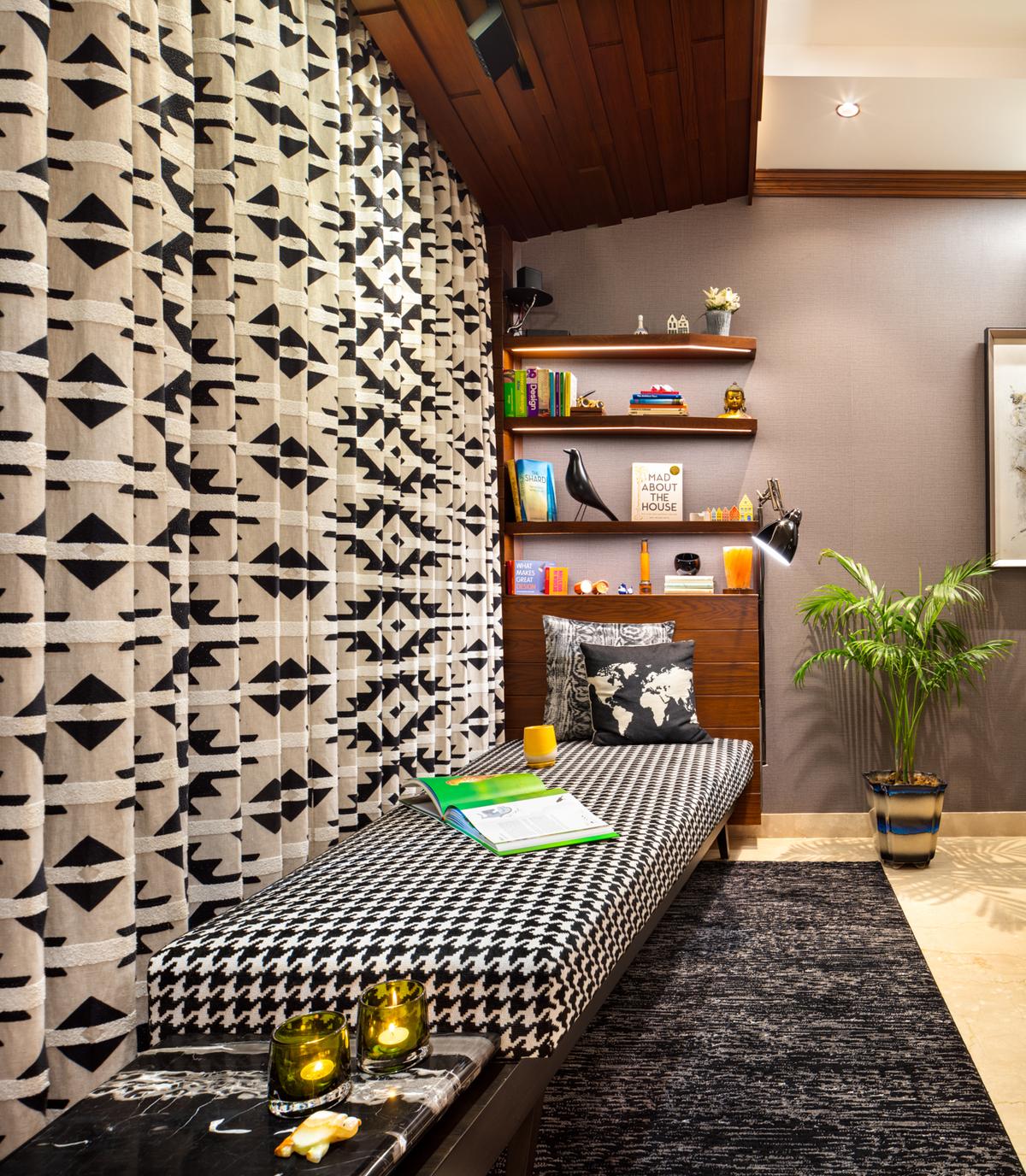
Maximising space in a compact home is all about getting creative with every nook and cranny. “Always stack functions through lofts, tall shelving, or layered layouts to free up floor area. Keep pathways clear, so movement feels seamless and spaces feel larger. It is also key to use consistent flooring or a muted material palette to create a cohesive look throughout the spaces and maintain visual continuity. Natural partitions, such as screens, mirrors, glass dividers, or open shelving, can effectively zone spaces without making them feel enclosed,” says Rachna Agarwal, founder and design ideator, Studio IAAD.

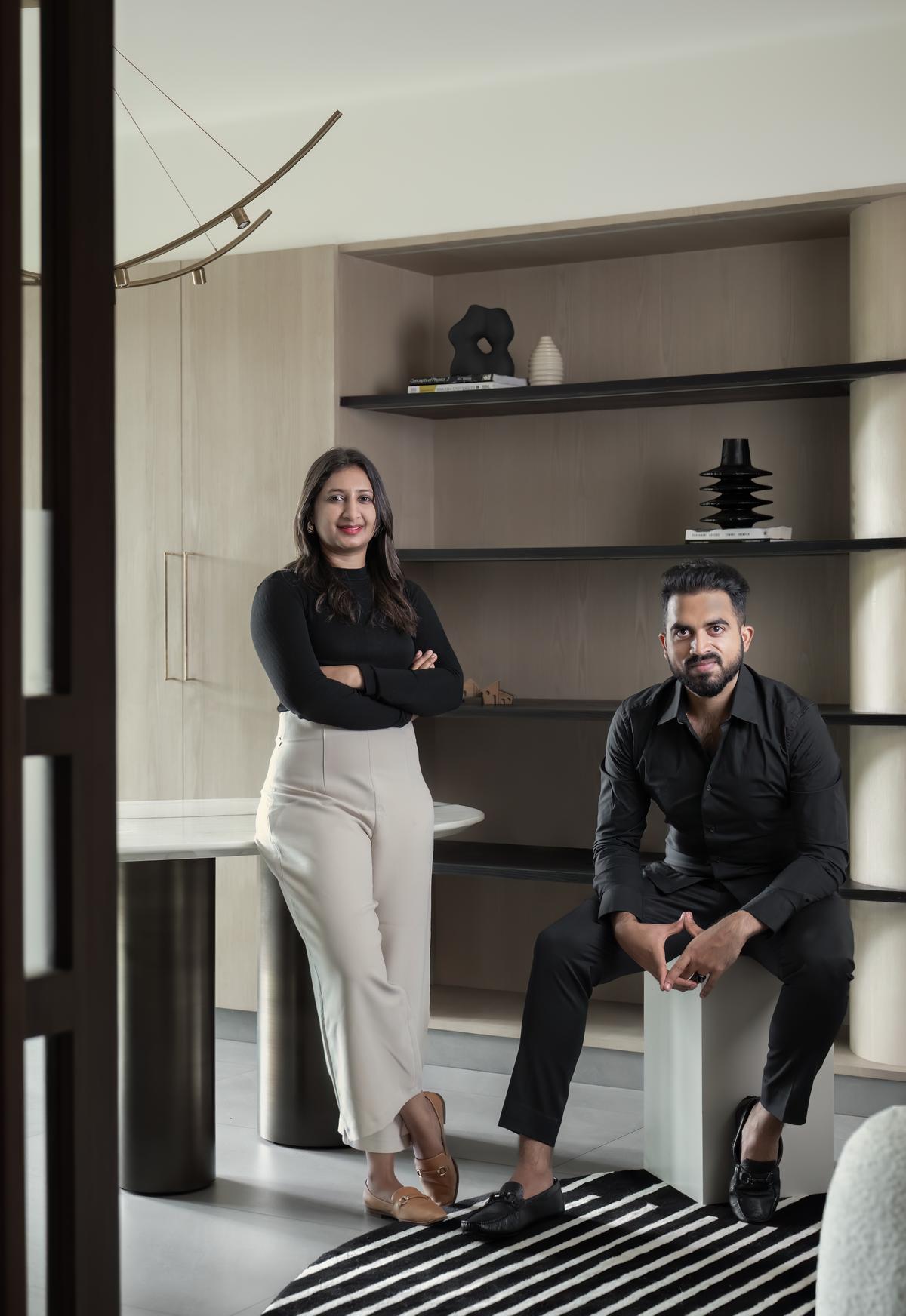
Apoorva Lekha and Sandesh Dhanaraj

Apoorva Lekha and Sandesh Dhanaraj

Instead of building heavy walls, subtle zoning with rugs, sliding doors, or even lighting can help define areas while keeping the layout flexible and airy. “Double- or triple-height volumes, skylights, and vertical connections help open up interiors, making compact homes feel expansive. In one of our projects, we introduced a triple-height skylight above the staircase. This became the heart of the home, flooding every corner with natural light, despite the building being surrounded closely by neighbours,” says Apoorva Lekha, co-founder, AD Studio9.

Importance of furniture choices

Apart from tall storage units, shelves that go right up to the ceiling, or wall-mounted storage that keeps the floor clear are also clever choices. “Think sofa-cum-beds, extendable dining tables, or ottomans that double up as storage. Even built-in seating with hidden compartments or foldable desks can transform how a small space functions. And let’s not forget the ‘invisible’ spaces, like slim pantries tucked into corners or laundry units hidden behind cabinetry,” says Aditi Savani, founder, Studio Tattva.

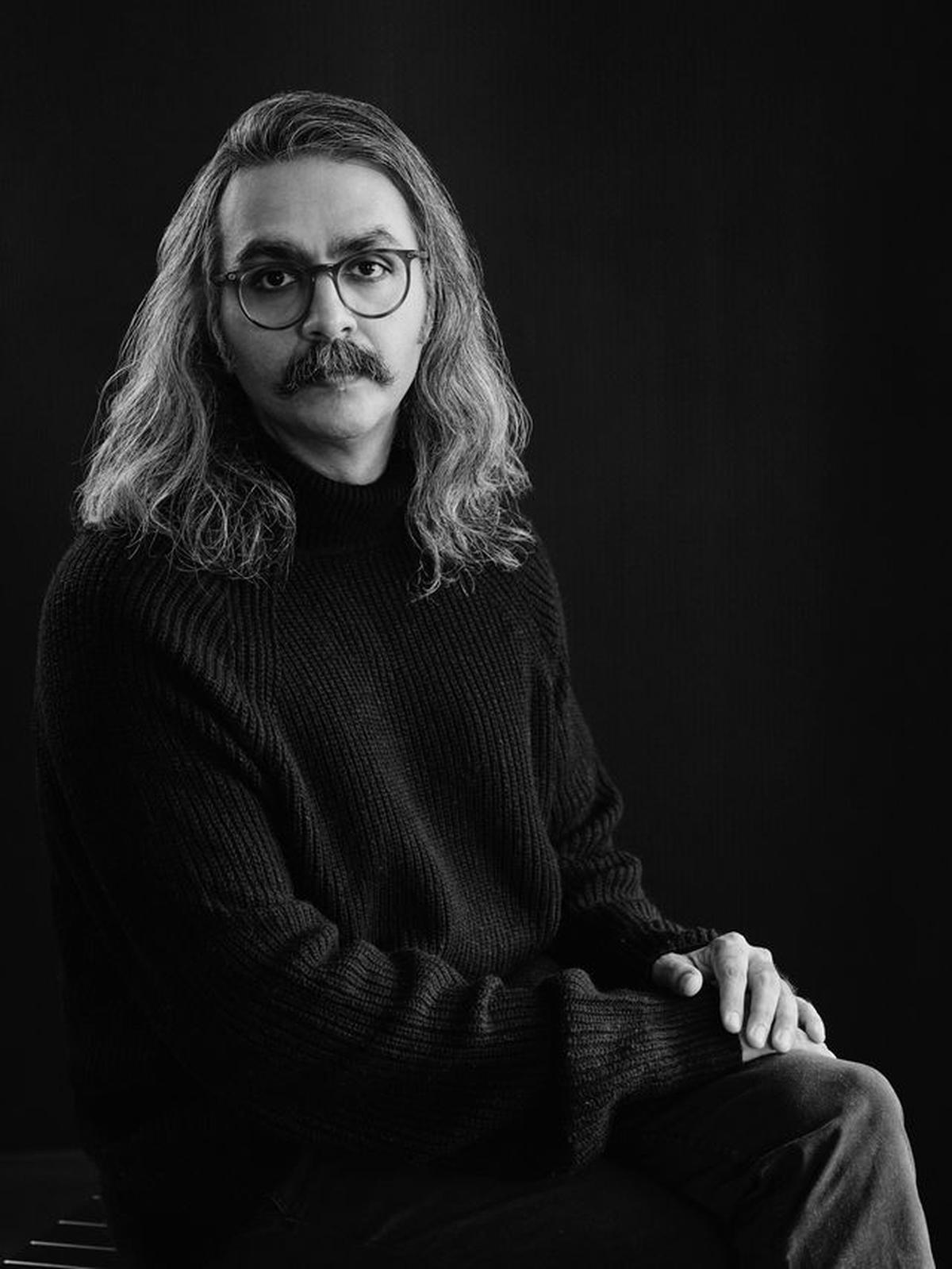
Rahul Mistri

Rahul Mistri

Even corners and transitional areas can be turned into productive zones with a desk, a reading nook, or built-in seating. Custom wardrobes, concealed storage under beds, or even a window ledge seating can create functionality without breaking the sense of flow. The more integrated these elements are, the less intrusive they feel. “The space under the staircase, for example, can be brilliantly reinvented. It might become a run of drawers for extra storage, a cosy reading bench, or even open shelving for books and decor, tailored to the family’s lifestyle,” adds Khosla.

A guest room could do double duty as a home office, or a dining nook can transform into a reading and relaxation corner when not in use. Kitchen counters serve multiple roles as well, functioning as a meal prep area, a small dining space, a buffet counter when entertaining, or even a workspace on busy days.

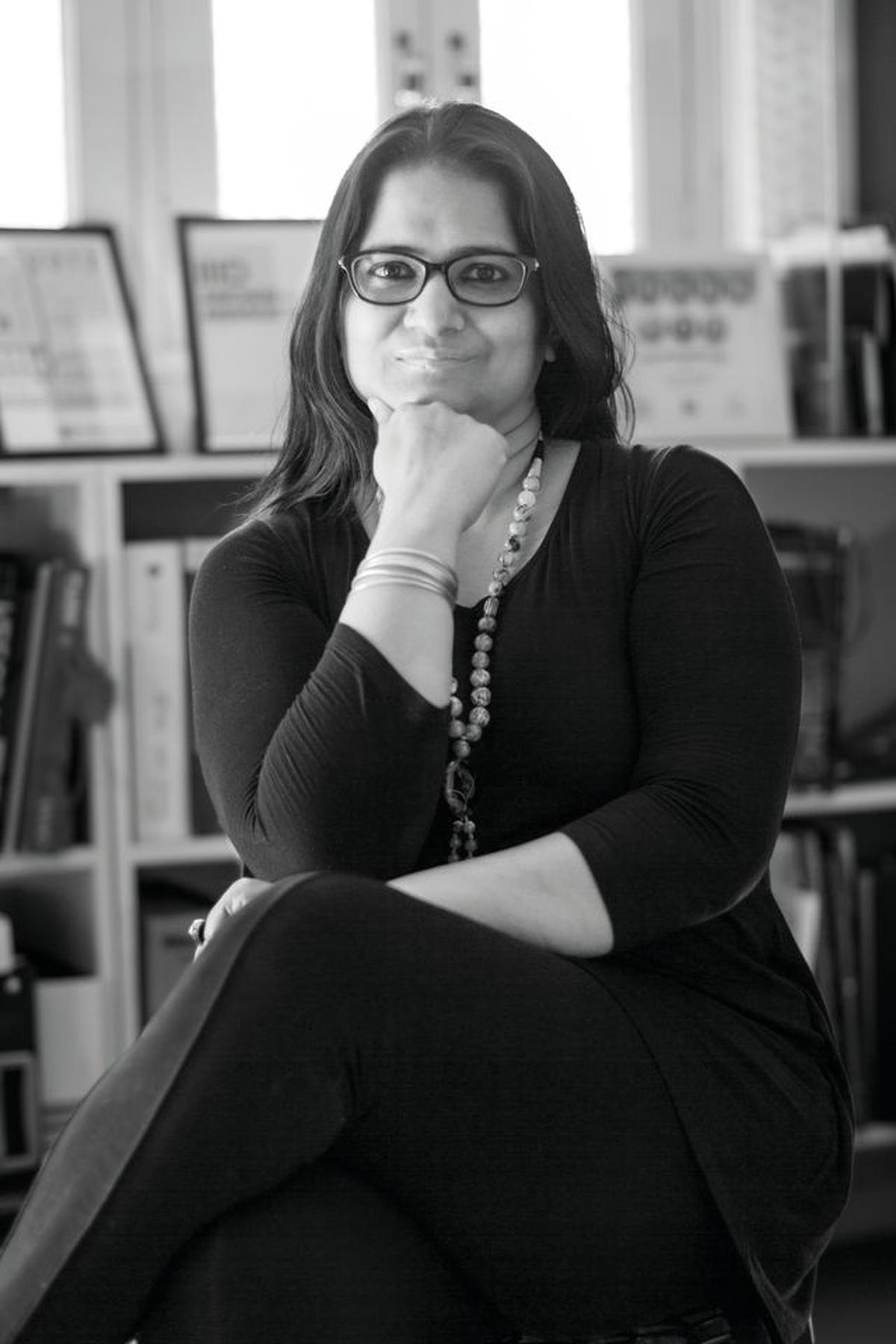
Rachna Agarwal

Rachna Agarwal

Another consideration that can transform these homes is the use of outdoor extensions. Even the smallest balcony or patio, if designed well, can become an additional room. The right furniture and greenery allow the home to breathe and give residents more flexibility in how they live.

The selection of durable, easy-to-maintain materials is particularly crucial in tropical climates, where humidity and weather can quickly wear down surfaces. “Homeowners can opt for infratop ceilings as they are maintenance-free, waterproof and help give spaces an aesthetic look. Light finishes and good exterior wall panels further enhance the feeling of space reflecting sunlight to brighten interiors. Altogether, these elements come together to create urban homes that are not only more practical and resilient, but also effortlessly elegant,” says Varun Poddar, Founder VOX India.

Lighting often plays an underrated role. A well-lit space, layered with natural task and accent lights, can completely change how a compact home is experienced. Instead of bulky lamps, wall-mounted or pendant fixtures free up the floor and maintain openness. Maximise natural light with sheer drapes and larger or additional windows wherever possible. Mirrors and glass partitions bounce light and visually open up enclosed spaces.

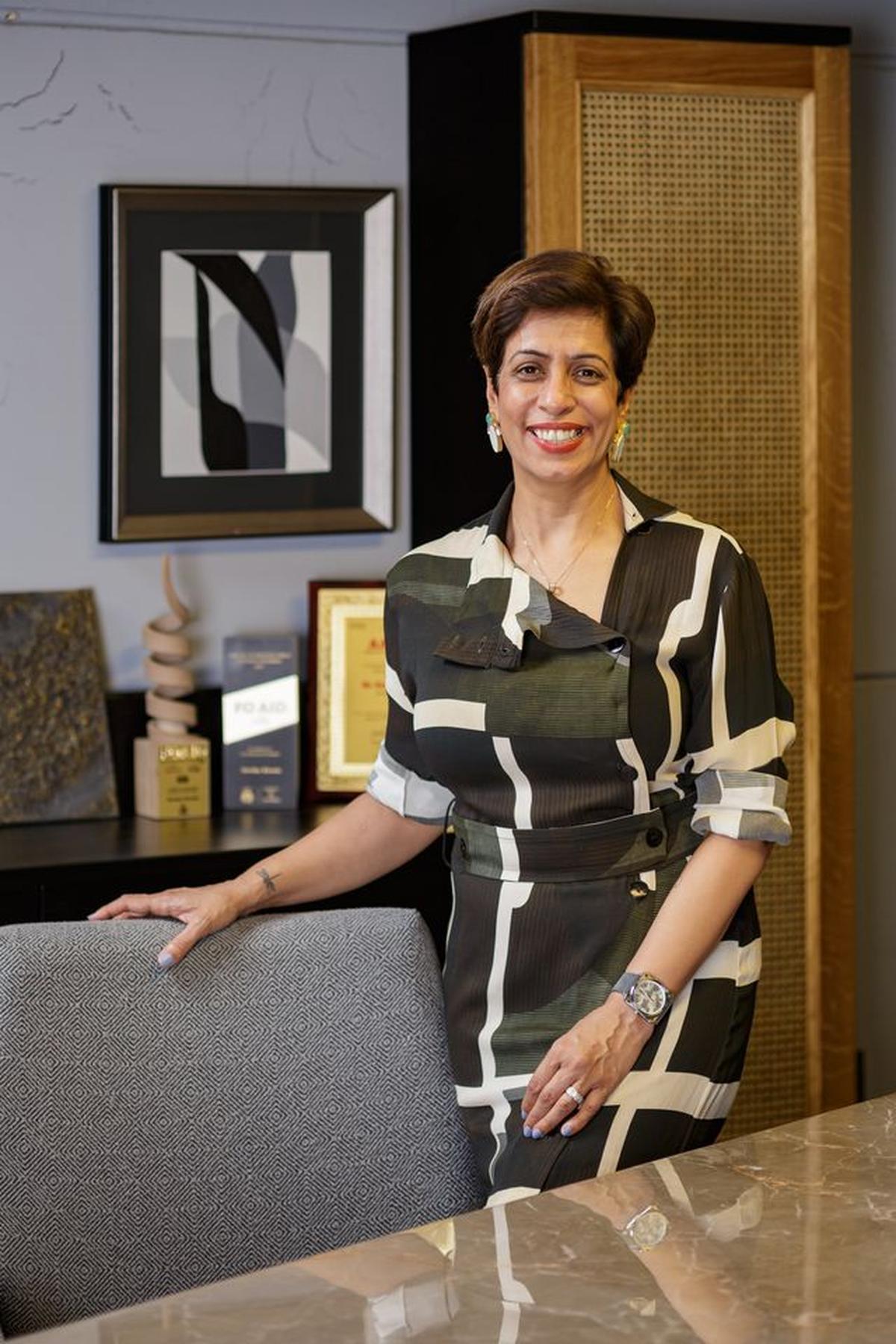
Devika  Khosla

Devika Khosla

Ultimately, the key lies in choosing design elements that serve both purpose and personality. When design decisions are made with clarity, even the smallest homes can feel expansive, layered, stylish and distinctly their own.

Smart spatial strategies
Stack functions vertically with lofts and tall shelves
Maintain visual continuity using consistent flooring and muted palettes
Use light partitions — screens, glass, mirrors, open shelves.
Rugs, sliding doors, and lighting can zone spaces without enclosure.
Double- and triple-height volumes and skylights dramatically expand perception

Furniture that works overtime
Multi-functional pieces with sofa-cum-beds, extendable dining tables and storage ottomans
Built-ins with hidden storage add function without visual clutter.
Foldable desks, slim pantries, concealed laundry units maximise ‘invisible’ space.

Making every inch count
Corners and passageways can become desks, reading nooks, seating
Under-bed storage, window ledge seating, and custom wardrobes enhance flow.
Staircases can hide drawers, benches and open shelving

Lighting as a space multiplier
Layered lighting (natural, task, accent) reshapes perception.
Wall-mounted and pendant lights free up floor space.
Sheer drapes, larger windows, mirrors, and glass partitions amplify light.

The Bengaluru-based freelance writer is passionate about all things design, travel, food, art and culture.


Source link

India and Italy: a shared language of craft, stone and design


What do Indian and Italian craftsmanship and design have in common? Both countries boast ancient and storied sculptural languages, Italy in marble, and India in makrana marble, soapstone, sandstone and granite.

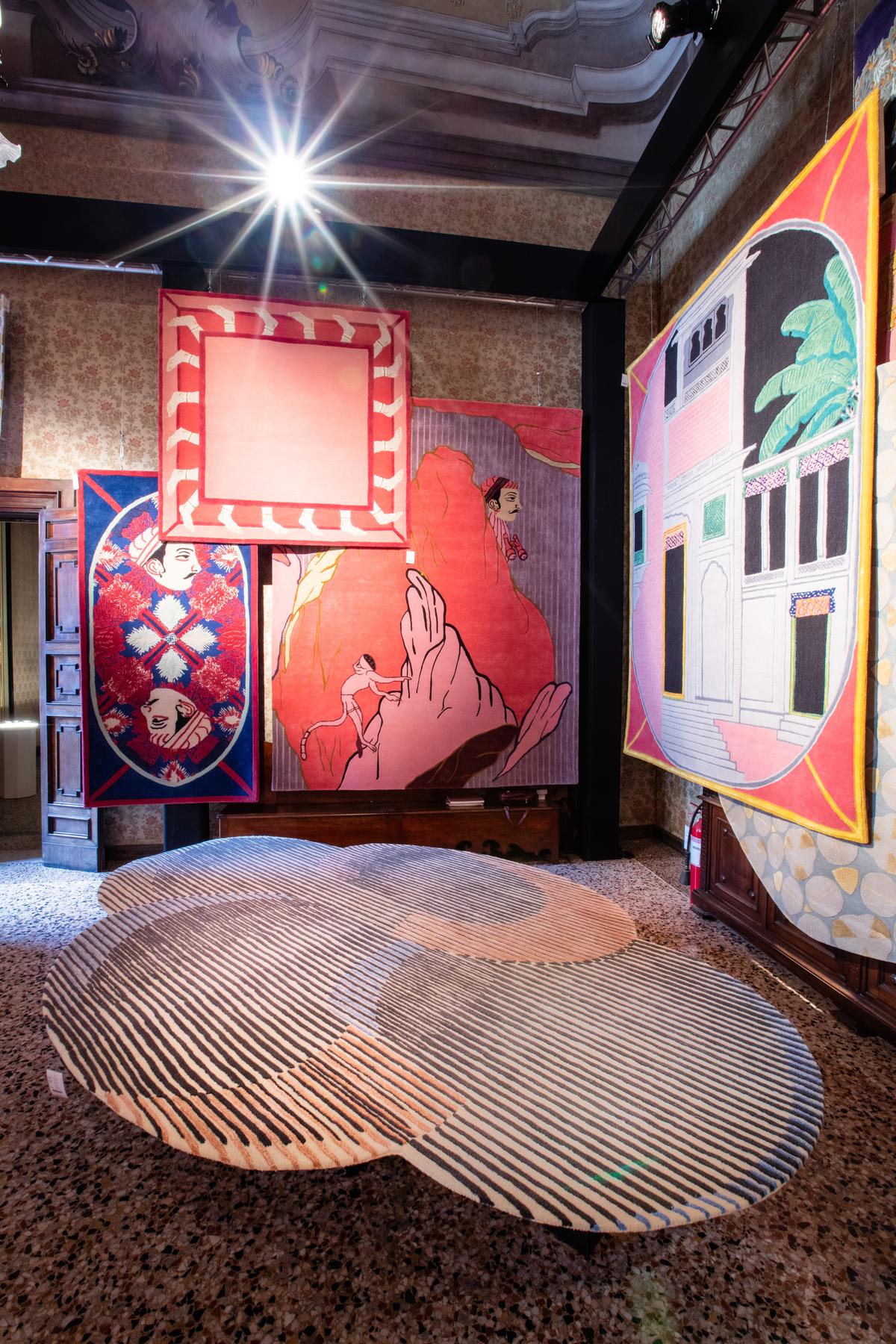
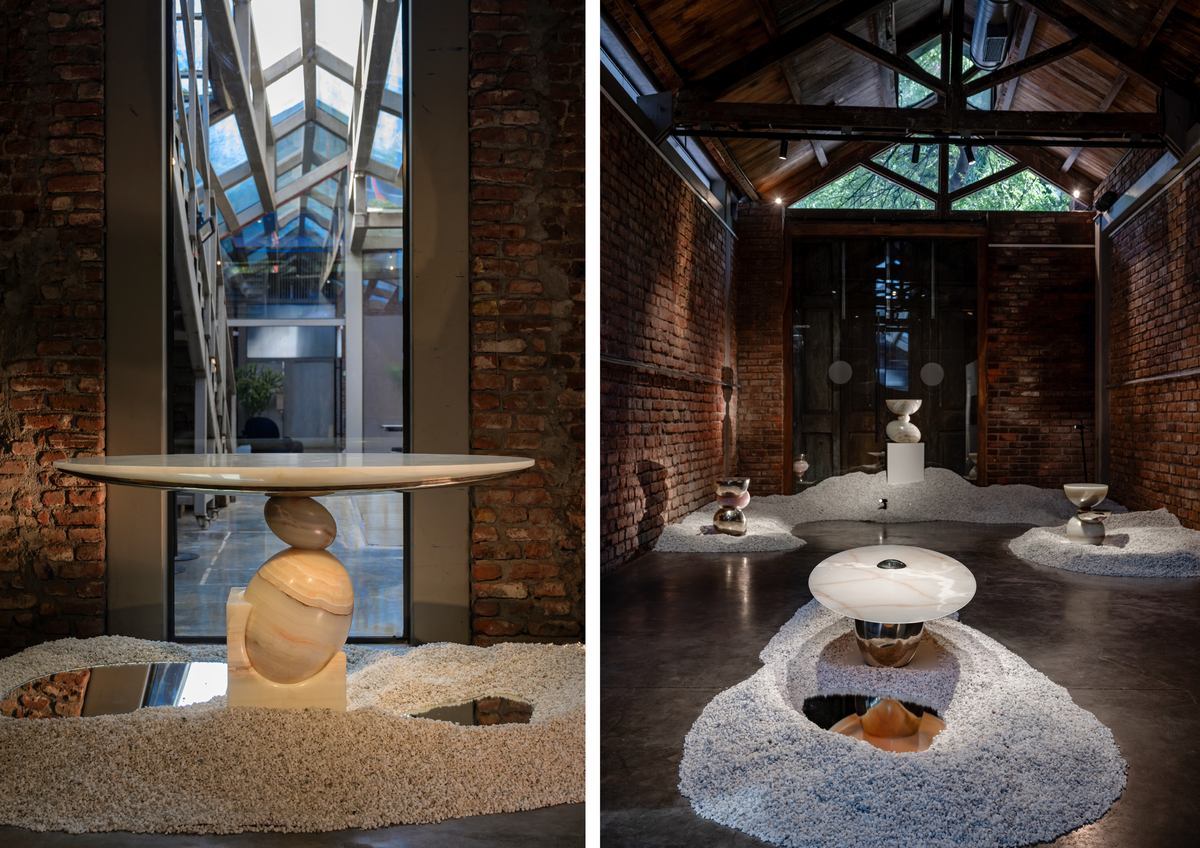
Indian hand-knotted rug maker, Jaipur Rugs and Italian designer Matteo Cibic created an eclectic experiential trip to Rajasthan through handmade rugs.

Indian hand-knotted rug maker, Jaipur Rugs and Italian designer Matteo Cibic created an eclectic experiential trip to Rajasthan through handmade rugs.

Today, a love of Italy’s design language in stone and soft furnishing, inherent luxury in leather and minimalist lines, has driven imports of an average of $7.4 billion in the furniture design and building materials sector each year, as per the Indo-Italy Chamber of Commerce and Industry. To discuss this, ‘Crafting the Contemporary: Architecture and Design Between India and Italy’ was held on November 11 as part of the GENS Public Programme at the Venice Biennale Architettura 2025, organised in collaboration with the Indian Chamber of Commerce in Italy (ICCI) and India Design ID. The event featured architects and designers from both nations conversing in the language of heritage and innovation in modern design. Misha Bains, Fair Director, IndiaDesignID, moderated the discussion with Italian designer and sculptural artist Matteo Cibic, Italian architectural designer Paola Marpillero (Studio Marpillero & Associati), and Indian designer Rooshad Shroff, whose work in creating ephemeral India-first spaces, sets him apart. Edited excerpts from the conversation:

Misha Bains

Misha Bains

How does materiality play a role in the Indian-Italian design connection?

Bains: Materiality in stone connects India and Italy today through how designers in both countries are pushing the material into new forms. In India, studios like [Rooshad] Shroff are hand-carving marble into furniture and lighting with microtextured surfaces, and Studio Raw Material works with Makrana to produce almost architectural objects. In Italy, designers like Matteo Cibic experiment with coloured and composite marbles, and brands collaborate with designers like Piero Lissoni and Patricia Urquiola to create precisely milled stone furniture using advanced CNC technology.

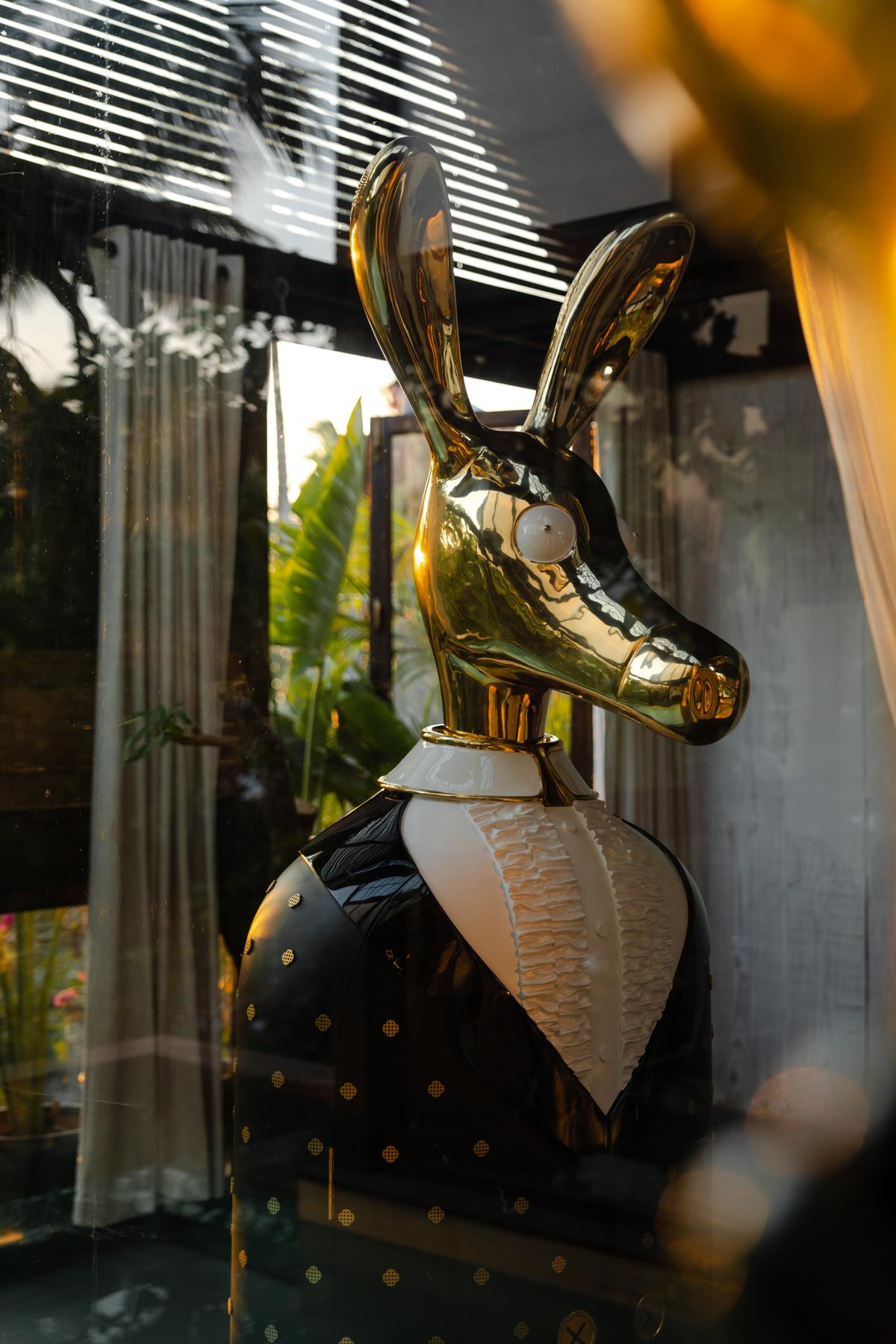
Cibic: For me, working for a decade with Scarlet Splendour [Kolkata-based design studio] to create sculptural pieces started a journey with Indian artisans who learnt to use resin and mineral powders to create inlay furniture, which was inspired by inlay work in both countries. We play with new materiality, where no animal-based products are used, but with skill sets already found in India, and drawing from the black and white inlay you find in Florence, Italy.

Shroff: Our countries have been working with Carrara (Italy) stones, Makrana in Jaipur and Agra, and that tradition has continued into contemporary times. Design, in a way, is becoming global, but when you focus on material and craft, it also roots you to an area, because of the practicality of sourcing and craftsmanship. So, both India and Italy are unique in that sense.

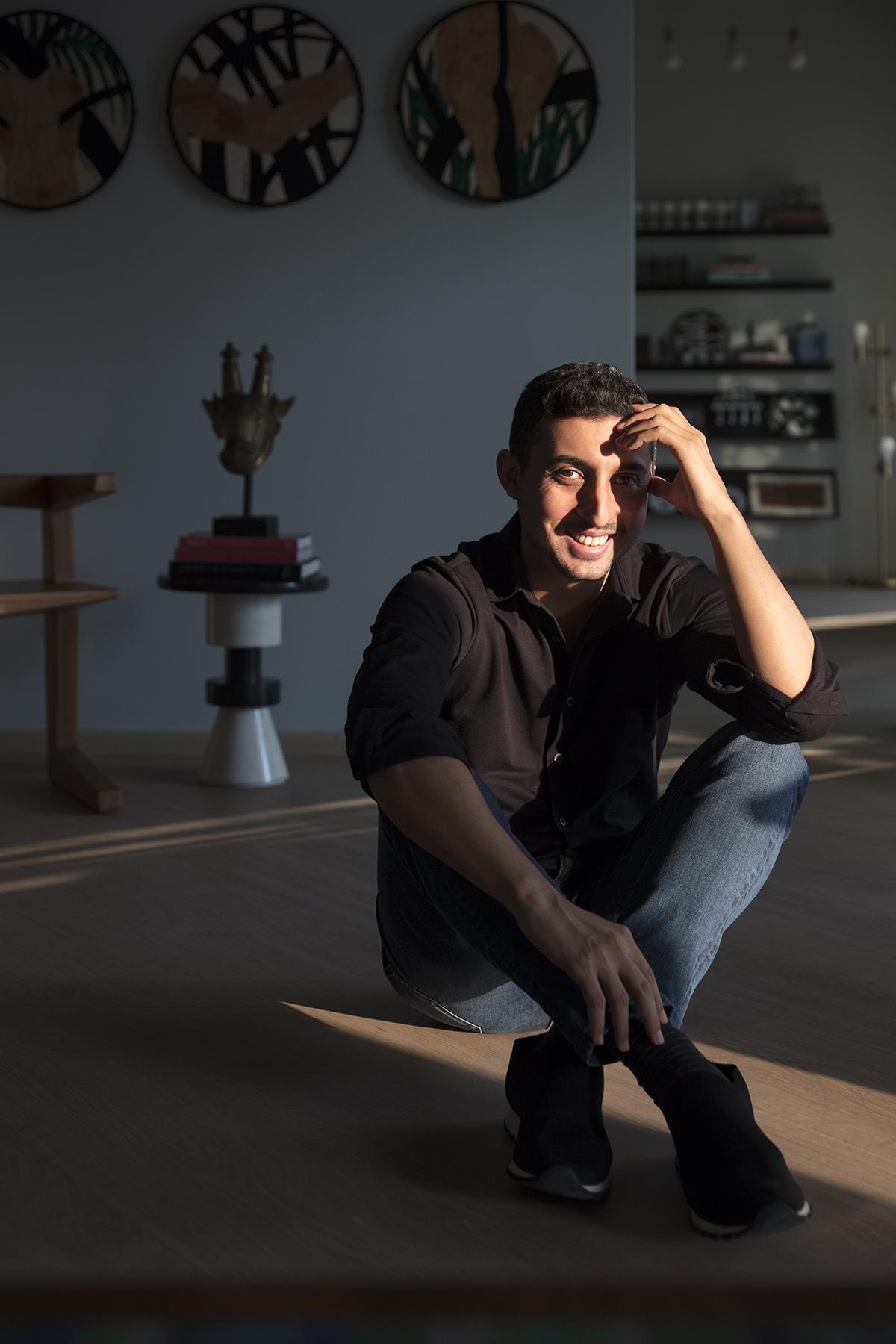
Matteo Cibic

Matteo Cibic

In the current moment, why are Indian interior stylists so drawn to Italian design syntax? And is there space for Indian design to cross international borders?

Bains: Italian design offers sophistication, proportion, restraint and a coherent visual language that aligns with India’s growing taste for quieter, more intentional luxury. Spaces are being styled now, pairing Italian lighting or seating with Indian-made and -designed furniture, textiles, stonework, craft-led objects, creating interiors that feel global yet rooted. Meanwhile, there has been a strong crossover of Indian design into the Italian space through craft-driven collaborations. Jaipur Rugs has brought Indian hand-knotting to Milan through collections with Matteo Cibic and Richard Hutten at Salone del Mobile. Scarlet Splendour has showcased Indian collectible furniture in Milan, while Taro Collective is presenting contemporary Indian craft and material experimentation across European platforms. Max Modesti acted as a bridge, bringing Indian embroidery and hand techniques into European high fashion and design, as Bijoy Jain’s Hermes furniture collection and Rahul Mishra’s collaboration with Tod’s further merge Indian craftsmanship with Italy.

Cibic: Today, the Indian market is very interested in design, different from other parts of the world, and is very experimental in the use of materials, colours, and shapes. I can see there are huge opportunities with new clients open to designing their homes with designers pushing the boundaries. I can see a large market for Indian consumers abroad, too. I think the world today needs colour and happiness, and you find that, whether in Jaipur, working on a rug collection or in the different crafts you see across India.

Rooshad Shroff

Rooshad Shroff

Shroff: Italy has been the mecca of design for years now. They managed to transform craftsmanship into a controlled, larger-scale production, and their major design houses flourish because of that. Today, they’re looking beyond Italian designers, and there could be opportunities for Indian designers to be integrated into that. Nilufar (founded in 1979 in Milan by Nina Yashar), a legendary gallery known for its selection of vintage design masterpieces, has collaborated with Vikram Goyal, an acknowledgement of India’s voice and talent being noticed on the world stage.

To close with takeaways from the symposium, Bains sums up, “New luxury emerges when design engages deeply with making, when materials, craft knowledge and cultural context converge. Each context offers lessons to the other — India, with its deep lineage and resilience in craft, [and] Italy, with refined craftsmanship and material innovation.”

The freelance writer is based in Chennai.

Published – December 19, 2025 11:43 pm IST


Source link

Tiffany, Swarovski and a new language of Christmas decor


The Christmas tree bauble has often been a purely sentimental object. But now it is also an indicator of taste, especially when some ornaments are as carefully produced as the most-wanted fashion accessories. You have limited-edition and hand-blown options, and homemade craft-forward creations. And then there are those that are mass produced and affordable. Together, they can dress up your tree in the most unique manner. Here are some of our picks for timeless festive decor.

Swarovski

Gingerbread ornament

The festive gingerbread ornament will sweep your heart away and enhance the Christmas tree. Suspended from red grosgrain ribbons, the three designs include a loving couple and their gingerbread cottage, crafted with Swarovski’s golden shadow effect. In total, the set — made out of crystal and polyester — reveals 361 light-catching facets, with detailing added in white print and crystals of multiple colours.

Price: ₹22,000 swarovski.com

Versace

Coin holiday ornament

Medusa, the Greek mythological figure known for her serpentine hair and power to turn men to stone, symbolises beauty, strength, and power for this Italian luxury house. Echoing this bold iconography, the delicate glass ornament is finished with fine glitter embellishments, featuring a three-dimensional La Medusa emblem on one side and the Versace Allover pattern on the other.

Price: versace.com

Kay Bojesen

Santa Claus

Kay Bojesen’s original Santa Claus, dating back to the 1940s and complete with sack and cane, has become a festive favourite, delighting families each year when decorations are unpacked. Part of Bojesen’s imaginative collection of wooden figures, it charms both children and adults alike. A timeless classic, this Santa makes a thoughtful gift that can be cherished and passed down through generations.

Price: approx. ₹10,000 shop.nordicurban.com

Santa Stores

The Nutcracker

A perennial favourite for holiday decor, the Nutcracker adds festive charm and old-world whimsy to any space. Dressed in rich reds and golds, it brings a regal touch to Christmas trees, entryways, and seasonal displays. Available in sizes ranging from a petite 12 inches to an impressive six feet, there’s a Nutcracker to suit every festive setting. Located in Chennai, this festive store offers premium Christmas trees and festive decor.

Price: ₹4,750 To order, call: 8807044880

Ralph Lauren

Coffee holiday ornament gift set

This coffee ornament gift sit is a window to yesteryear’s good old days. Presented as a boxed trio, these vintage-inspired ornaments are crafted in painted steel and finished with red ribbon hanging loops. Designed to add a touch of classic charm to festive décor, they make an elegant addition to the tree.

Price: ₹10,500 ralphlauren.global

Tiffany

Polar Bear ornament

The holiday season feels incomplete without a touch of Tiffany. Rooted in classic festive motifs, the brand’s ornament collection brings a sense of tradition and quiet luxury to the tree, year after year. Crafted in bone china, this polar bear ornament adds a subtle yet unmistakable Tiffany signature to the home.

On international.tiffany.com

MacKenzie-Childs

Confetti Christmas garland

Creating distinct items by fusing traditional, modern and playful elements since 1983, this year’s Christmas is incomplete without the opulent confetti garland. Featuring multicoloured shatterproof and glass ornaments with handcrafted faux greenery and polyester ribbon, MacKenzie-Childs draws firom ts rich handmade heritage to transform your home into your happy place and make every corner feel fresh and original.

Price: approx ₹42,000 neimanmarcus.com

Pottery barn

Mercury glass ball ornament

Inspired by Victorian-era kugels, these old-world charm mercury glass ball ornaments are crafted from antique-finished blown glass. The six bulbs with blown glass with an antique mercury and bronze finish are a seasonal must.

Price: ₹3,750 potterybarn.in

West Elm

Bottlebrush dapper animal ornaments

A rabbit to the rescue, this is created in collaboration with Rachel Kozlowski. Made out of buri fibre, it adds instant charm to trees. This is an adorable gift for animal lovers.

Price: ₹900 westelm.in

Out of the Box

DIY Christmas Tree

This DIY tree, which is 26 cm tall and flat-packed with pre-installed lights, can brighten any space and make for a perfect last-minute Christmas tree if you don’t want to dedicate too much room. Founded by Karthic Rathinam, the creative design studio, situated in Chennai, transforms cardboard and paper into valuable experiences. This DIY tree is designed by Theenappan and comes in a quaint packaging box that also doubles as a calendar.

Price: ₹599, outofthebox.design

swati.ks@thehindu.co.in

Published – December 19, 2025 07:43 pm IST


Source link