Life & Style

Why Canberra’s quiet charm makes it one of Australia’s most underrated escapes


As I stepped off the plane, I realised how little I actually knew about Australia’s capital. People often write off Canberra as a place of politics, not holidays. But within a few hours, it was clear Canberra had more going on than it is given credit for.

Here is what three days in Canberra can feel like.

Day 1: From lake to latte

We begin at dawn with a slow glide across Lake Burley Griffin. The Love Boat — a self-driven cruiser you can hire for up to two hours — may sound cheeky at first, but as we move along watching the city fan out beyond its banks, it is clear why locals say it is the perfect introduction to Canberra.
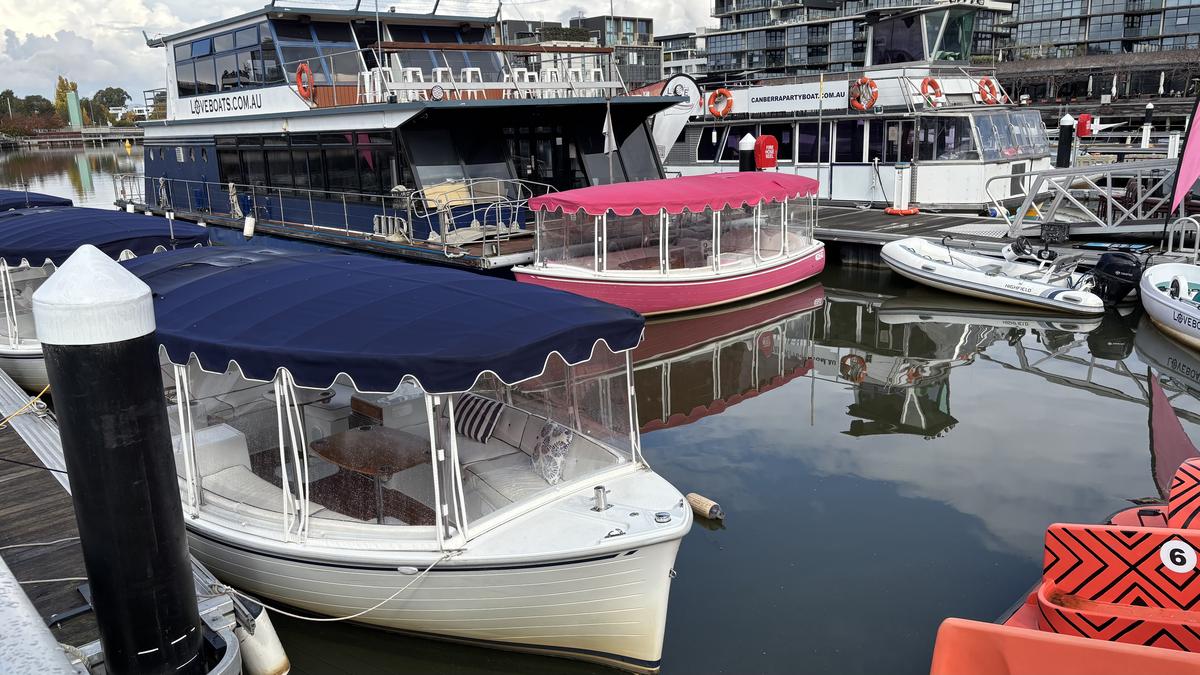
The Love Boat on Lake Burley Griffin

The Love Boat on Lake Burley Griffin
| Photo Credit:
Hiranwathi

You do not need a boating license. Just bring along a little sense of adventure, while you are at the helm, captaining your own little boat. As we move past the National Museum and Parliament House, black swans glide alongside, and cyclists pass along the shore. While out on the water here, steering the wheel, and munching on the snacks we brought along, Canberra was unknowingly giving us a feel of what was to come.

Back on land, the city’s cultural side was waiting to welcome us. The National Museum of Australia gives a glimpse of life across Australia. “Everything here has a story,” says our guide, as we wander around the interactive displays and stand under beautiful sculptural installations. One moment, you are eyeing a Holden from the ’60s, the next, you are inside a room telling us the stories of the past. The First Australians gallery and the Great Southern Land exhibition are among the museum’s major attractions. Entry is free for visitors and you can choose a guided tour or explore at your own pace.

The day continues at the ONA coffee house in Fyshwick. Inside what looked like an industrial warehouse, ONA takes its role in Canberra’s coffee scene a little playfully. Once a week, they host a cupping session: the industry’s method for evaluating coffee flavours. We lean towards bowls of freshly ground coffee, pour hot water over it, crack the crust from the top, inhale the strong aroma of the coffee, and slurp from cupping spoons, getting the taste of the bean at its barest. Some are fruity, others are rich and chocolatey, and everyone left there with a caffeine kick and a favourite in hand. 
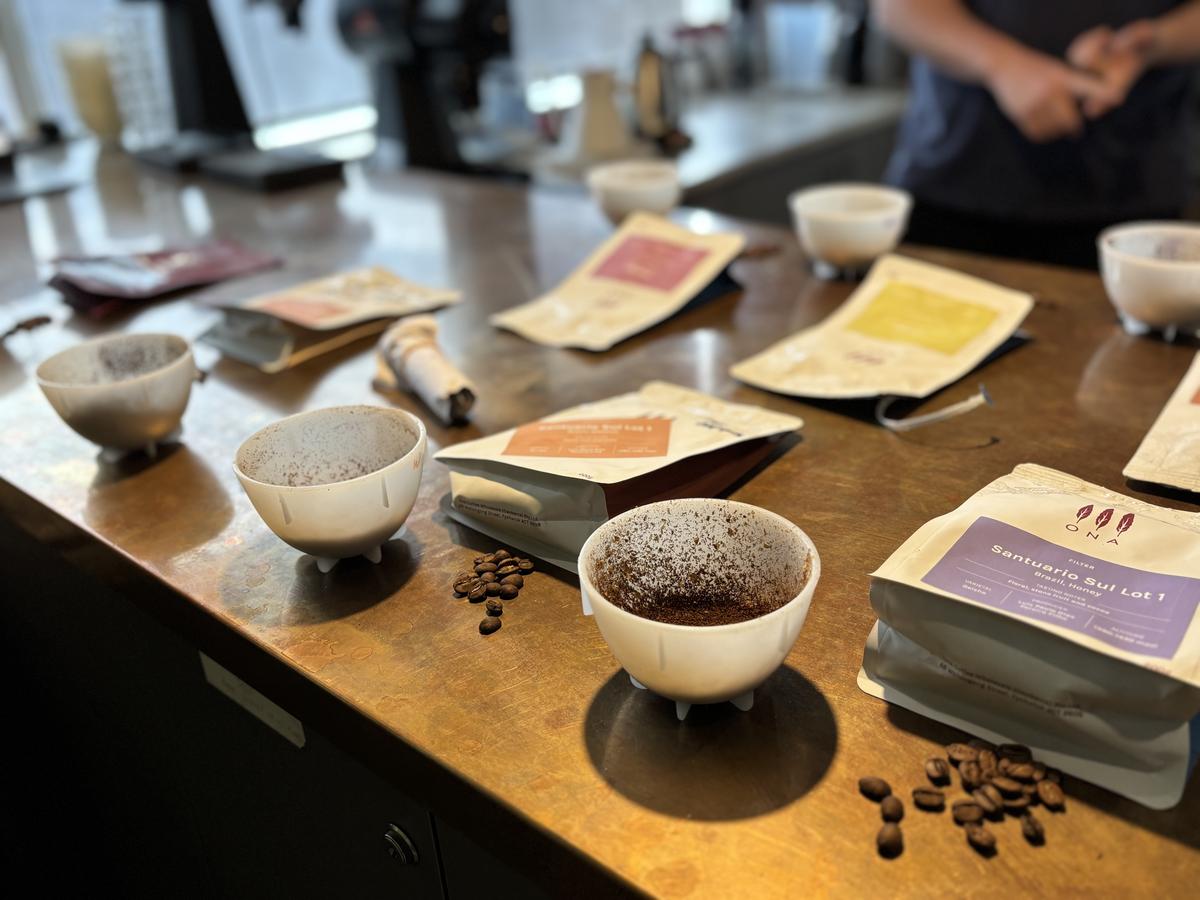
During a cupping session at ONA Coffee

During a cupping session at ONA Coffee
| Photo Credit:
Hiranwathi

Day two: Wines and chocolate

Just half an hour away from the city, Brindabella Hills is a small escape from the rush. As we reach the countryside, we see green fields and vineyards, with small groups of kangaroos hopping through the valleys. Most vineyards are run by families here and the people pouring you the glass of wine are the ones who made it. Vineyard tours run twice a day and are not about wine tasting. You will get the chance to walk through the vineyards, meet passionate winemakers, hear their stories and sip wines made over time. 

Vineyards at Brindabella Hills Winery

Vineyards at Brindabella Hills Winery
| Photo Credit:
Hiranwathi

In between, we find a few baby goats near the fence, looking at us. Visitors can feed them, we are told, and soon a few nibble grain from our palms.

There is a warmth in this side of the city. Our guide calls it the “Australian Tuscany,” and on a good day, with a lunch in the hills and a glass of Riesling, it is easy to believe her.

And, there are chocolates too. We find them at Murrumbateman Chocolate Co., a small shop along the road back from the winery. Their chocolates are made with native ingredients like wattleseed, lemon myrtle, and Davidson plum. Every bite of the chocolate, along with the vineyard view and chilly weather, made the Brindabella Hills experience feel wholesome. 
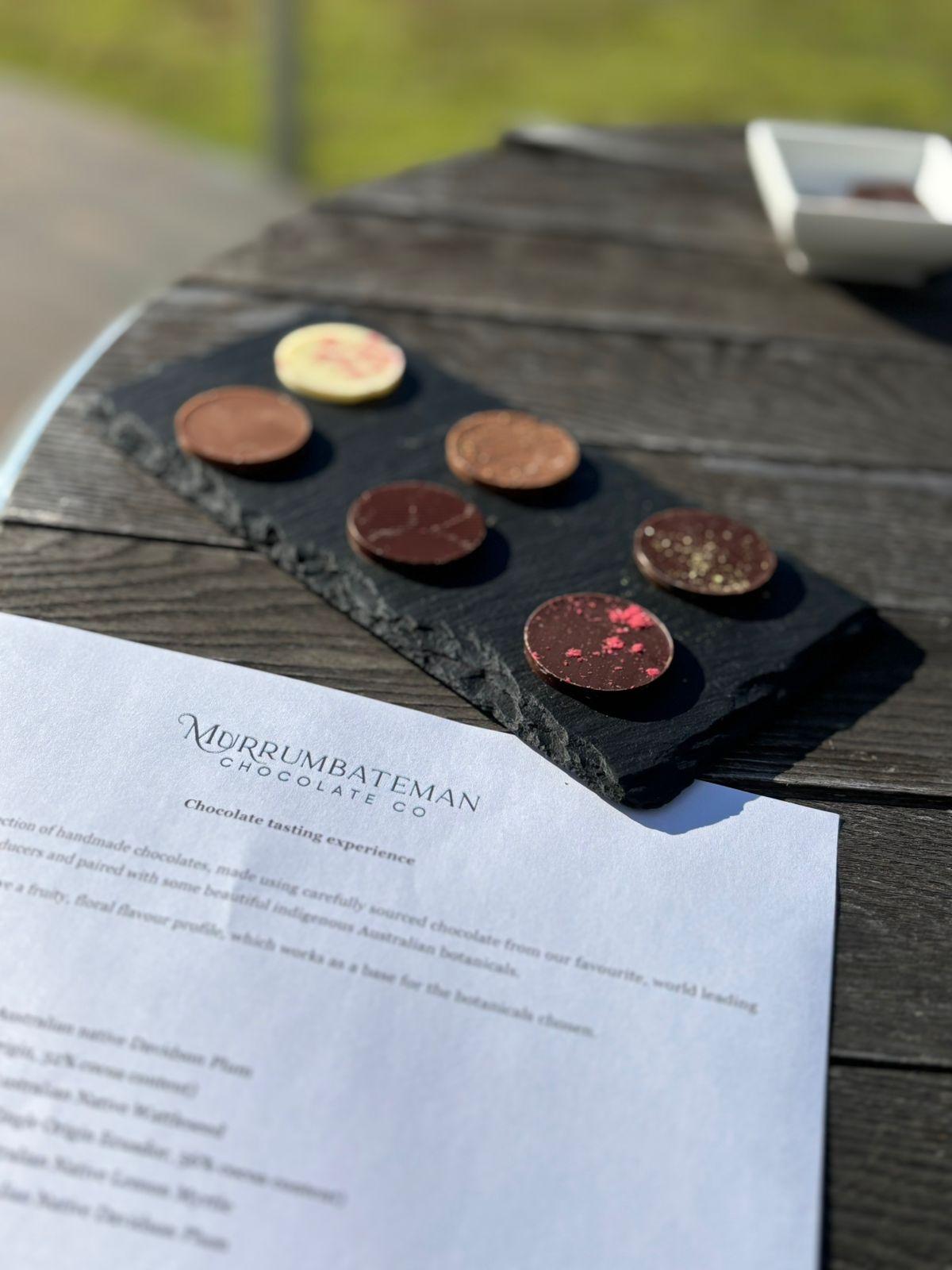
Chocolate tastings at Murrumbateman Chocolate Co

Chocolate tastings at Murrumbateman Chocolate Co
| Photo Credit:
Hiranwathi

Between stops

Between wines and chocolates, the National Arboretum gives a pause. This was once a pine forest lost in the 2003 bushfires. Now it is home for 94 forests with more than 44,000 trees from different parts of the world. Entry is free and it is open every day.

We walk through the path with bonsai and bottle trees on the side, then make our way up to Dairy Farmers Hill. A steel eagle sculpture watches over the grounds. Some hike or cycle here. Others just spread out picnic blankets under the sun.  

Views from the National Arboretum

Views from the National Arboretum
| Photo Credit:
Hiranwathi

Day Three: Gin and a hike

The Canberra Distillery, a barrel-lined space in Mitchell, becomes our classroom for the day. In a cosy tasting room lined with bottles, we taste six gins, each introduced with its story. We taste them in four different ways: first, neat, then with ice, tonic, and finally with garnishes like dried apple or rose petals. 

From a lavender-toned French Earl Grey gin that turns pink with tonic to a bold Blood Orange gin, the tasting becomes a play of senses. You do not need to book to pop in. Walk-in tastings run six days a week. Bonus: you leave a little giddier and more appreciative of how much heart goes into every bottle.

Gin tasting at The Canberra Distillery

Gin tasting at The Canberra Distillery
| Photo Credit:
Hiranwathi

Our last stop is Mount Ainslie Lookout. Just 10 minutes away from the city, the lookout is free to access. This was the view captured by Marion Mahony Griffin, an American architect who, along with her husband Walter Burley Griffin, helped design the city. 

He called it a “city of the future,” and after all these years, that vision holds. You can hike the 4 km trail behind the War Memorial if you are feeling a little adventurous. But reaching just before sunset and eager to end the last day in the city with a beautiful memory, we opt for the scenic drive. From the top, the full view of the city opens up: Parliament at its heart, Lake Burley Griffin circling the city, and the Brindabella ​Hills in the far, turning golden.

Canberra at night from Mount Ainslie Lookout 

Canberra at night from Mount Ainslie Lookout 
| Photo Credit:
Getty Images

On my final morning, I drink a flat white sitting outside my hotel watching the city wake, thinking about all I have seen. As a city, with a rich history and culture, Canberra does not seek our attention with bright lights or big glory, but in the quiet, it offers exactly what you did not know you were looking for.

The writer was in Canberra on the invitation of Tourism Australia
Published – December 19, 2025 07:03 pm IST


Source link

At the heart of Malaika Arora’s Christmas is her mother, Joyce


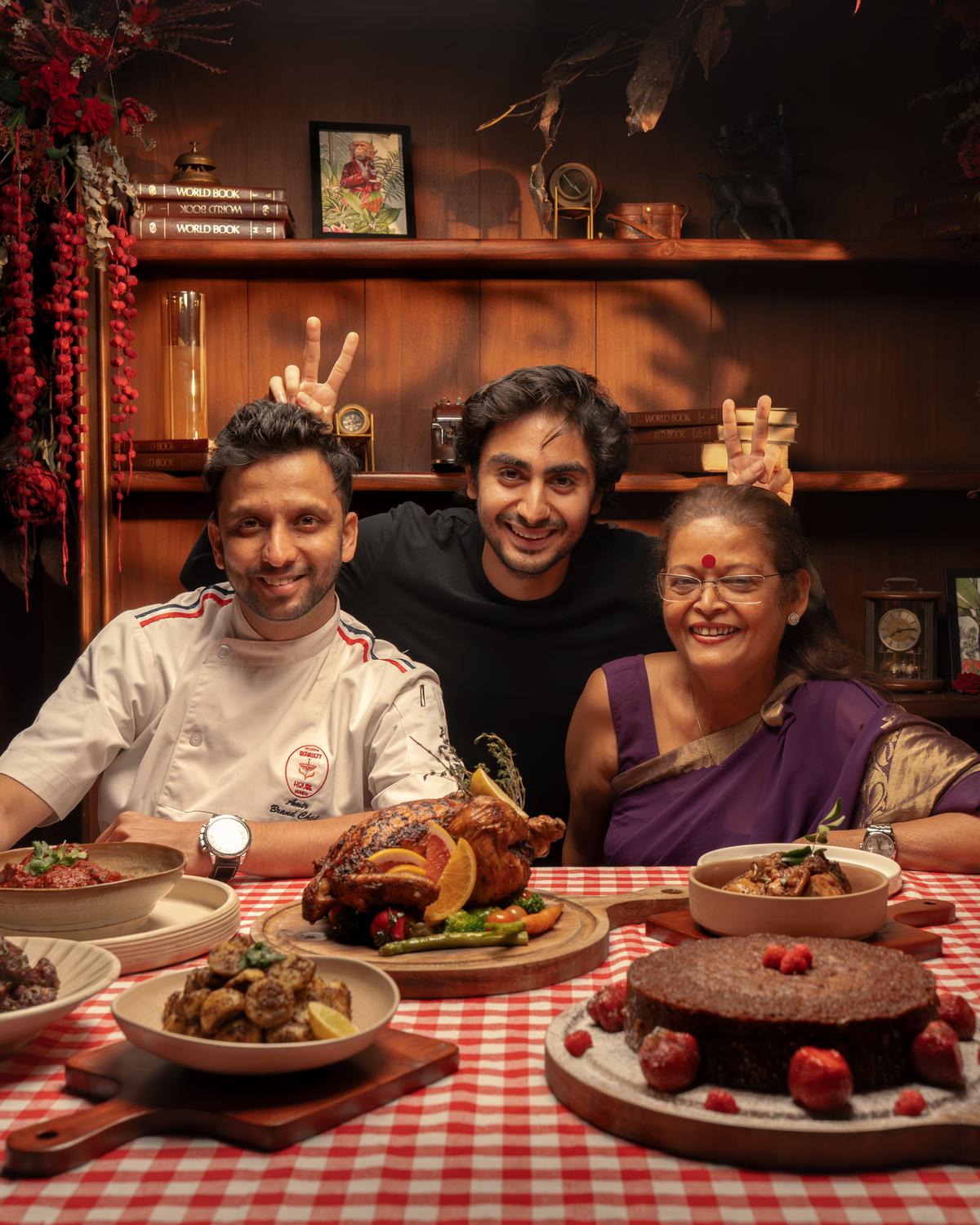
Joyce Arora is full of beans. She welcomes you the way only certain mothers do — with an instinctive warmth, a laugh that arrives before the food does, and the kind of unfiltered candour that makes you lean in before you have even taken your seat. Yes, she is actor and entrepreneur Malaika Arora’s mother, a detail that invariably precedes her, but Joyce is very much a personality in her own right: anecdotal, sharp-witted, refreshingly honest about life, and fuelled by a lived generosity that cannot be manufactured. I meet her as she unveils her special Christmas menu for Scarlett House in Mumbai’s Bandra neighbourhood, served until January 1, and within moments it becomes clear that this is more than a festive menu — it is a map of her memory, shaped by the twin histories of where she grew up and where her roots truly lie.

Joyce’s childhood unfolded in Kirkee — or Khadki, as it is officially known — one of Pune’s oldest cantonments, established by the British in the early 19th century after the 1817 Battle of Khadki. Even today, the neighbourhood carries that distinct, slightly time-suspended rhythm: tree-lined avenues; bungalows and barracks softened by gulmohar and rain trees; and Christian families of Goan, Tamil, Malayali, and Anglo-Indian heritage who built tightly woven communities around the parish church. “Kirkee was very close-knit,” Joyce says. “Everyone knew everyone. Sundays meant church, and festivals meant food. There was a sense of belonging you didn’t question.”

Arhaan (centre) with his grandmother, Joyce and Scarlett House chef, Aamir Sohail

Arhaan (centre) with his grandmother, Joyce and Scarlett House chef, Aamir Sohail
| Photo Credit:
Special arrangement

But the flavours that shaped her belonged equally to Kerala, where her extended family lived — kitchens scented with coconut oil, curry leaves crackling and fresh masala ground daily. “Those tastes are my roots,” she says. “No matter where I lived, my food always found its way back to Kerala.” Joyce’s father served in the Armed Forces.

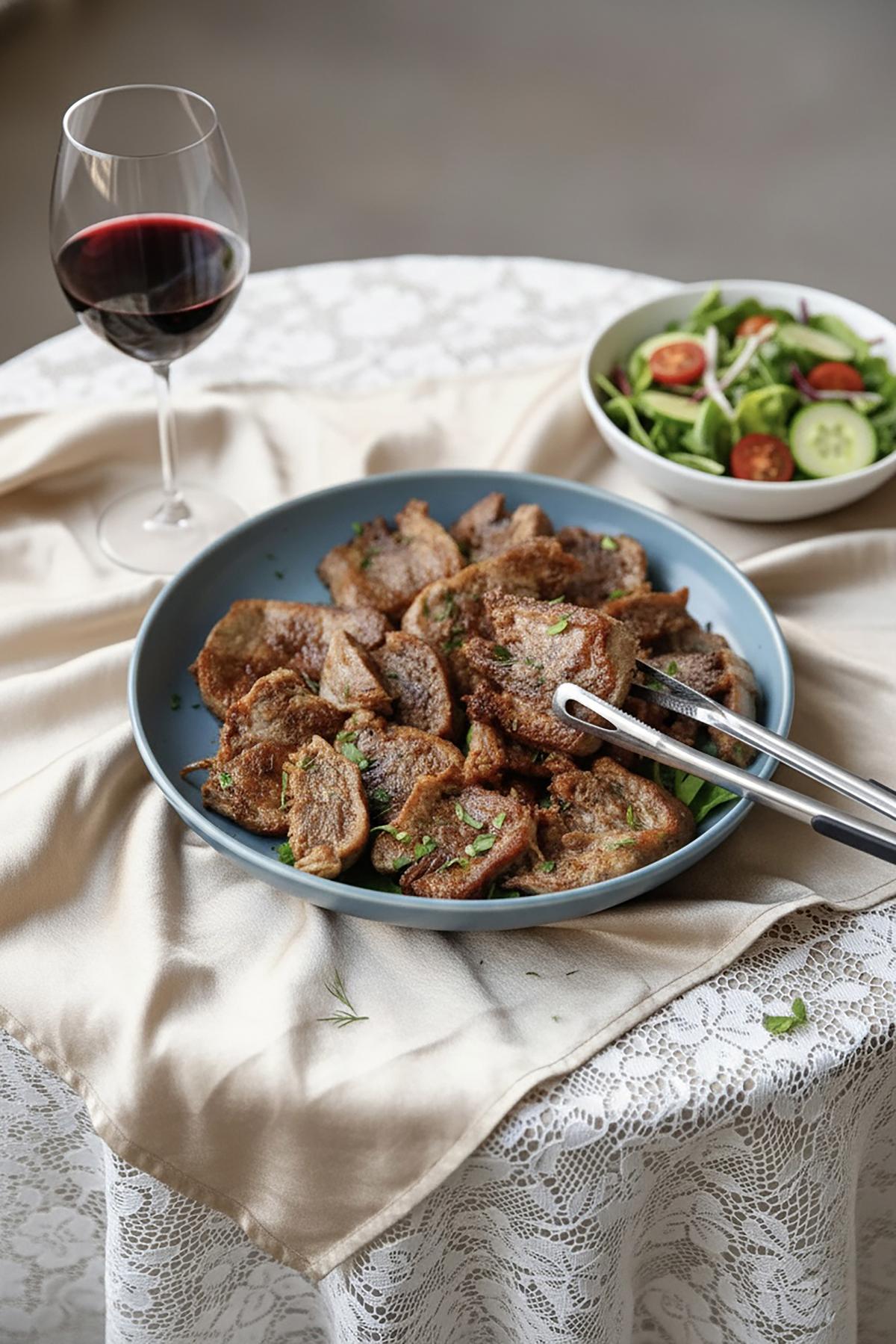
Food is where her storytelling glows, especially when it concerns Christmas. Joyce recounts, with the half-amused horror of adulthood, her earliest festive misadventure: the salted beef tongue that made its annual appearance on many Christian tables. “I never enjoyed eating it,” she says frankly, “but my parents adored it.” Soaked for days in brine and stored in a tin on the highest shelf, it was a forbidden object of curiosity. “I was very inquisitive,” she laughs. “One day I dragged the tin down, it spilled everywhere, and I was convinced I’d ruined Christmas. That was my first and last encounter with beef tongue!” The anecdote captures the contradictions of cantonment life — order and mischief, discipline softened by warmth, tradition made human through small domestic accidents.

Head of the Christmas table

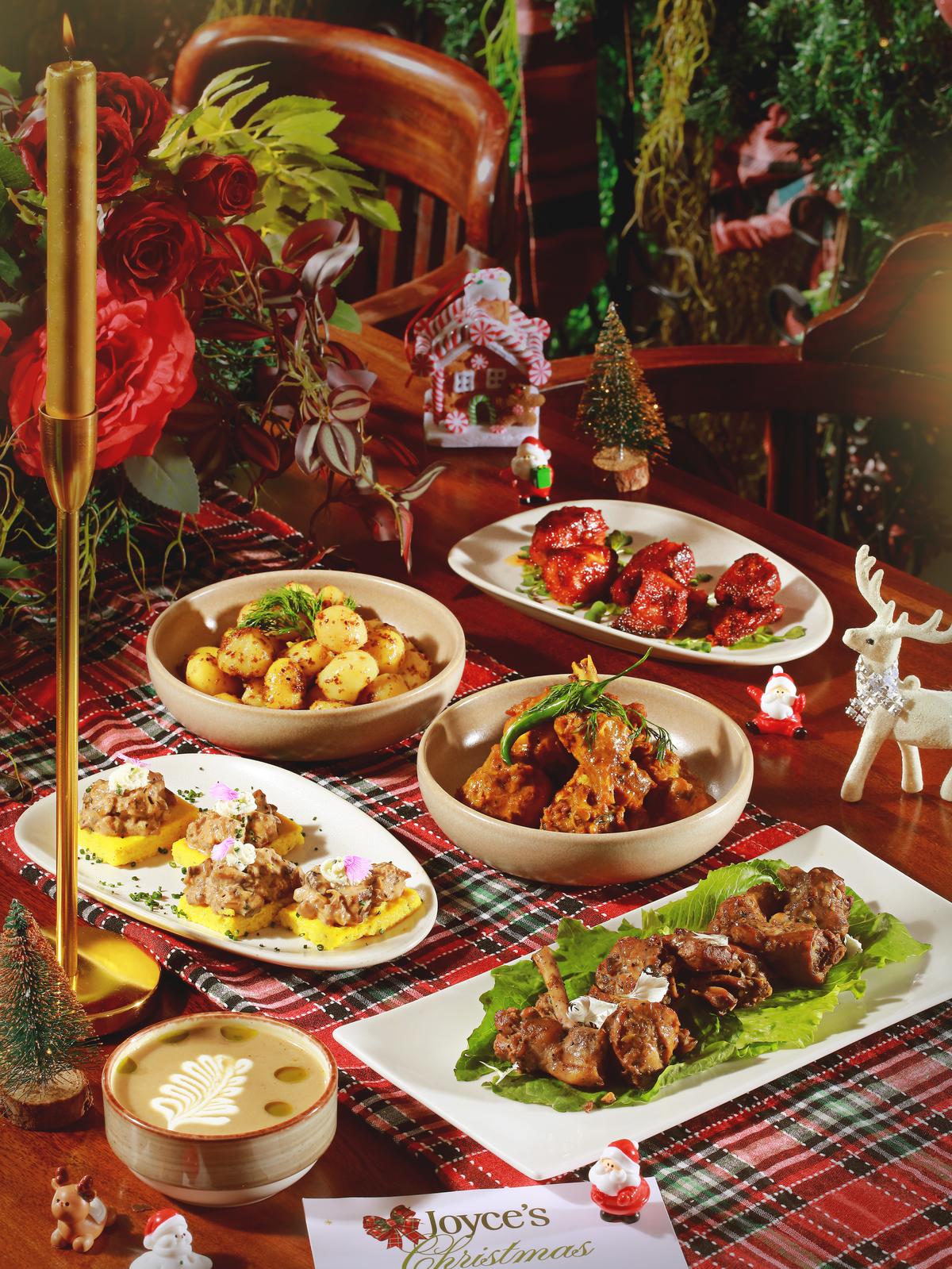
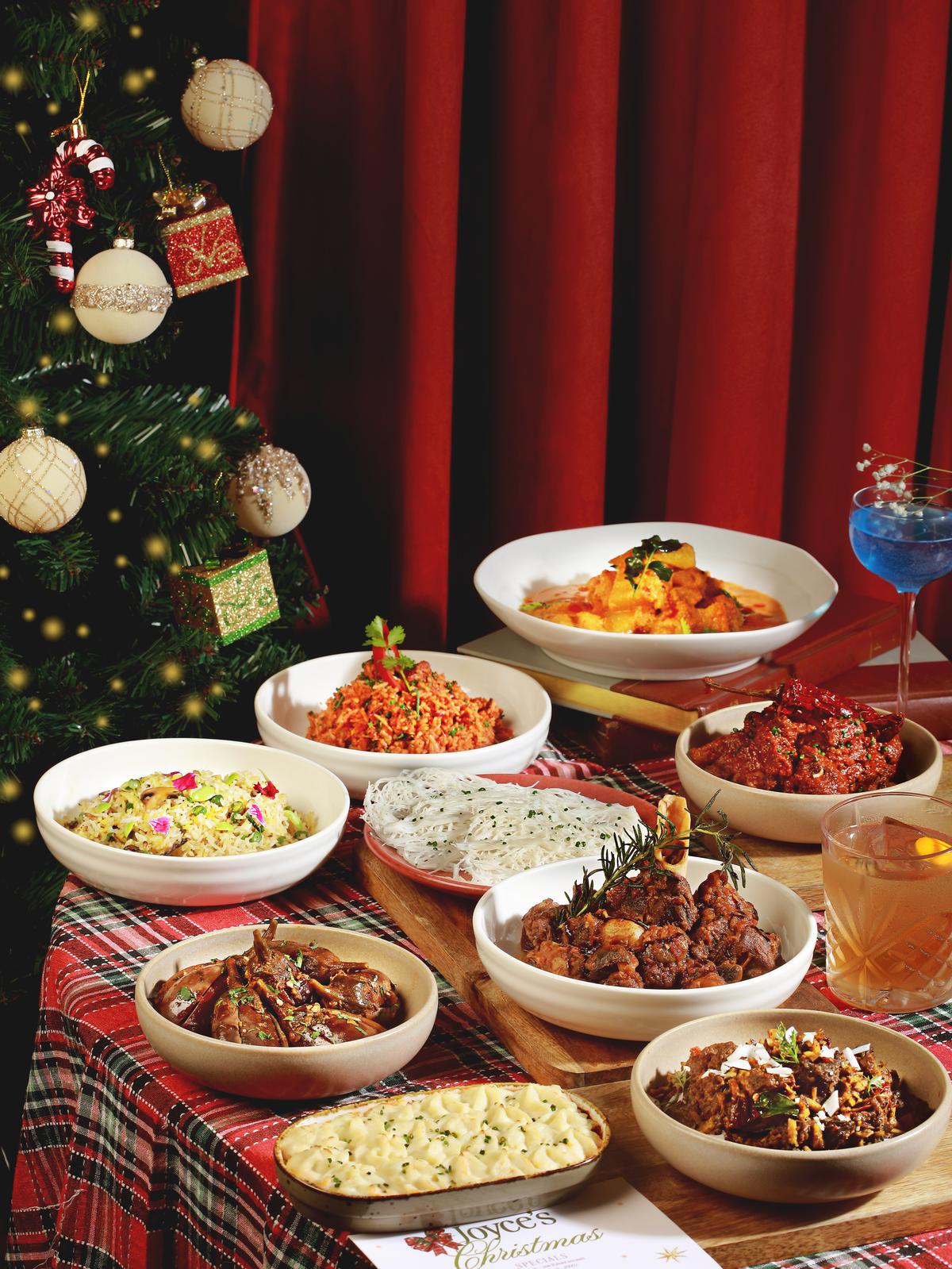
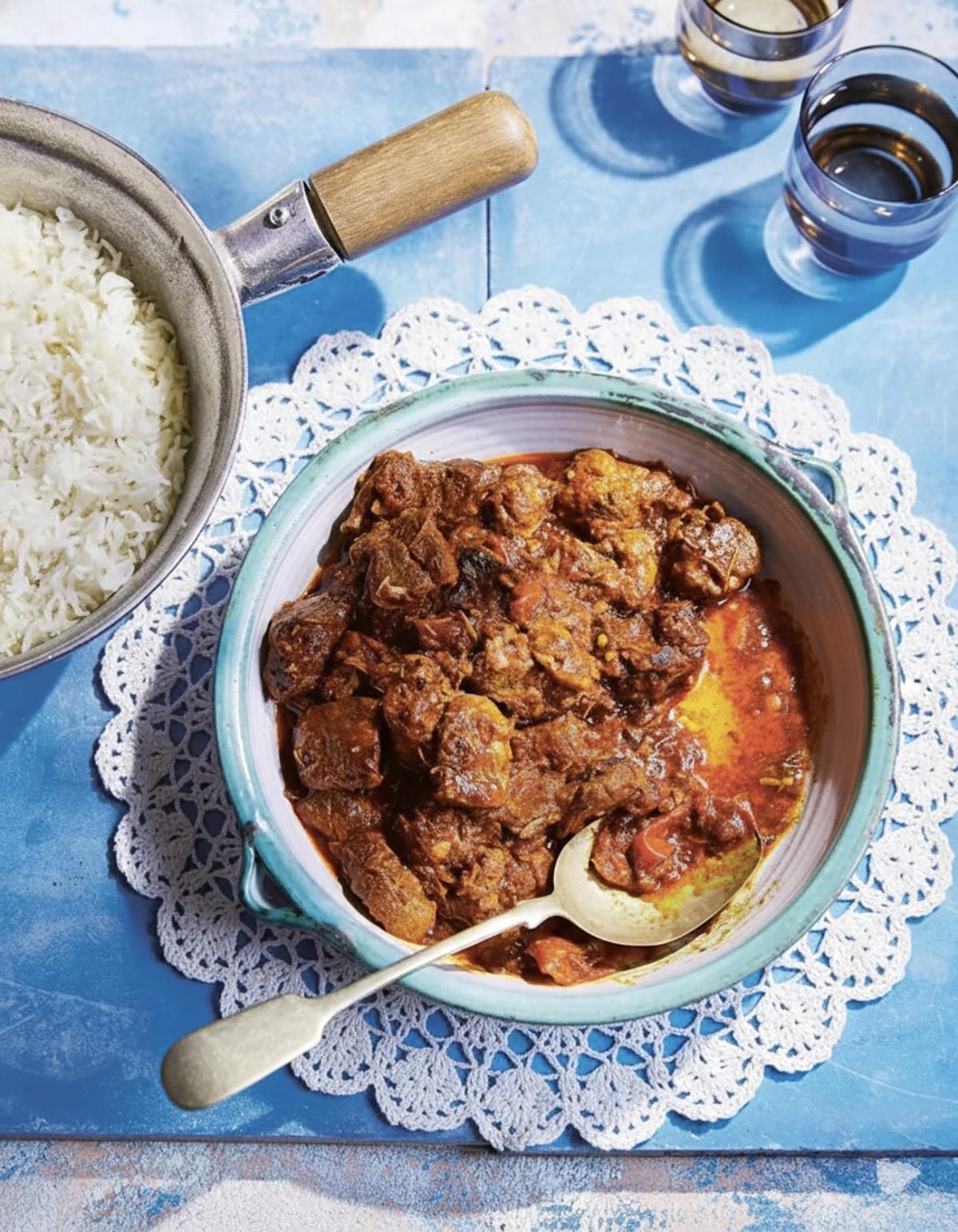
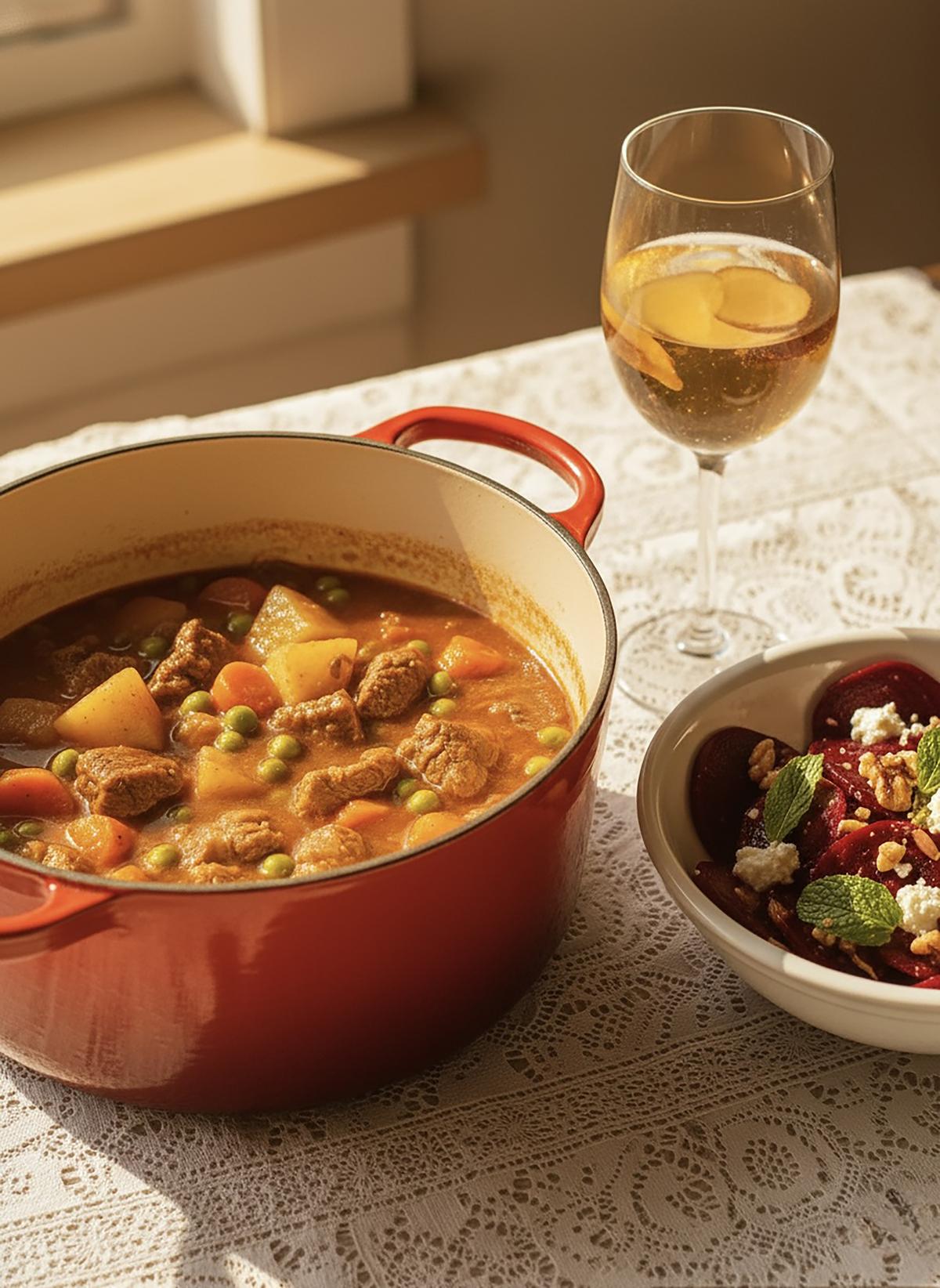
Joyce’s Christmas menu for Scarlett House distils decades of such moments. Kalan, Joyce says, “was always there — a thick, comforting Kerala curry of coconut, curd and Kashmiri chilli that signalled Christmas had begun.” Her soup cube pulao, made with stock cubes, mushrooms, broccoli and saffron rice, is “simple, soulful… the calm before the Christmas storm.” The vegetable shepherd’s pie — slow-roasted vegetables under buttery mashed potatoes — is “a warm hug.” Her Malayali buff fry is “deep, rich, slow-roasted beef with toasted coconut,” served with Malabar parotta, while the pork vindaloo is “bold and tangy with vinegar and garlic.” Chorizo pulao is cooked “from memory,” and wine mutton, simmered with mushrooms, potatoes and a full bottle of red, “perfumes the whole home.”

Her grandson Arhaan Khan describes Christmas with a certainty that borders on reverence. “Without a doubt, it’s her pepper chicken,” he says, when asked about the meal Joyce prepares for Christmas, which takes a few days to prep for, including negotiating what can and cannot be procured from her local vendor in the Khar-Bandra area.

Joyce’s spread at Scarlett House

Joyce’s spread at Scarlett House
| Photo Credit:
Mitali Vyas

“For me, that is Christmas. The aroma alone tells you the season has begun. It’s one of those dishes no one else should ever attempt because it won’t taste the same, and somehow, it won’t feel right,” says Arhaan. Watching Joyce cook, for him, is as much ritual as the meal itself. “It’s a mix of complete control but we allow it because it means so much for ammamma (grandmother in Malayalam),” he says. “There’s constant movement, instructions flying, music playing — yet everything comes together perfectly. Watching her run the kitchen is a Christmas tradition in itself.”

And like anyone raised in a home where food and affection share the same vocabulary, he recognises how deeply this shaped him. “Food is family,” he says simply. “It’s loud, crazy, warm, generous and full of heart. There’s always too much food, too many people, never enough space — but that’s the magic. You might arrive as guests, but you always leave feeling like family.”

Joyce’s spread at Scarlett House

Joyce’s spread at Scarlett House
| Photo Credit:
Mitali Vyas

Joyce’s daughter Malaika Arora remembers Christmas as a sense of festive electricity that settled into the house long before the 25th. “It’s the whole feeling of Christmas that stays with me,” she says. “Putting up our tree, every ornament with a story, the house buzzing with excitement. Friends would come in and never leave without a doggy bag. It was laughter, presents, warmth — something special was just in the air.”

Her mother’s hosting style, she says, shaped her understanding of what a “real” Christmas looks like. “It always started with grace,” she reflects. “Then came the feast — appams and stew, the wine mutton marinated a day ahead, roast chicken, rum cake… it felt like celebration in every bite.” And what about helping in the kitchen? She laughs. “It’s still very much mum’s kitchen, mum’s rules. She knows exactly how she wants everything. I try to help, but mostly, I’m learning. There’s gentle teasing, a lot of giving… it’s its own little tradition.”

Now, with her own family, those traditions continue — lightly adapted but unmistakably Joyce in spirit. “I find myself going back to her blueprint so naturally,” Malaika says. “But I add small touches of my own because life evolves. At its heart, though, it’s still about togetherness, indulgence, laughter, warmth and belonging.”

And perhaps that is the real through line: a childhood in a cantonment where community meant everything; a kitchen where curiosity once toppled a tin of beef tongue; festive tables where Kerala heritage met cantonment culture; and a family for whom Christmas is not a date but a way of being. The Scarlett House menu may be new, but Joyce’s Christmas — abundant, rooted and impossibly warm — has been simmering for generations.

Joyce’s Christmas specials will be served throughout December at Juhu and Bandra; DM @scarletthousebombay for details


Source link

Why wellness-centric workspace design is the next big differentiator


The conversation around employee well-being has finally moved from the periphery to the very centre of business thinking. Across India Inc., we’re seeing a quiet but powerful transformation in how leaders view their offices, which are no longer static enclosures for work, but ecosystems that influence how people think, feel, and connect. The workplace today has evolved into a critical tool for engagement, collaboration, creativity, and belonging. It has become a tangible expression of a company’s culture and care for its people.

For too long, the office space was planned around efficiency, how many people could fit into a defined surface area, how space could be standardised, and how costs could be contained. That lens has shifted dramatically. Today, with the Return-To-Office mandate from many companies, a great workplace is seen as an investment in human vitality, a way to keep employees healthy and engaged while returning to the office.

It is not only about visual appeal but about how every detail, from light and material to temperature and texture, contributes to how employees experience their day. We are designing not for occupancy, but for energy and well-being.

Flow and connect

A wellness-centric approach to design asks us to think intentionally about every spatial and sensory decision. It starts with light, the rhythm of natural daylight that regulates our mood and alertness, reminding the body of its natural cycle. It extends to the integration of nature, or biophilia, which has moved far beyond the trend of placing plants in corners. It is about creating a subtle dialogue between the indoors and outdoors, through organic textures, materials that breathe, some that even absorb CO2, and a visual connection to natural elements that calm the mind and stimulate creativity.

Acoustics, too, are an often-overlooked dimension of wellness. The modern workplace can easily become overstimulating, and noise is one of the greatest hidden stressors. Designing for acoustic comfort, with materials that absorb rather than reflect sound, and spaces that offer both collaboration and quiet, is essential to enabling focus and mental clarity. The same thought extends to movement. A healthy workspace is not confined; it encourages flow. From social zones to the ergonomics of furniture, design can gently nudge people to move more, connect more, and sit less.

Today, we see a much wider variety of workspaces within the same office, such as focus pods, sit-stand desks, one or two pax booths, high collab tables, and so forth.

Equally important is creating moments of pause. True wellness in design is about balance, the interplay between stimulation and restoration. High-energy collaborative areas must coexist with contemplative zones where people can recharge, reflect, or simply be still. These are the small but profound details that elevate a workplace from functional to nurturing.

Wellness systems

What is interesting is that wellness-led design is no longer a luxury reserved for global headquarters or marquee offices. With the rise of flexible workspace providers and design & build solutions, it is now possible to embed these principles across a company’s entire footprint. Flexible workspace partners are not just providing real estate; they are co-creating environments that align with an organisation’s wellness and sustainability goals. By leveraging deep expertise in sustainable and healthy materials, integrating cutting-edge technology-enabled wellness systems (like air quality monitoring and smart HVAC systems), and applying globally recognised standards (such as WELL Building principles), space providers drastically cut down the design-to-delivery timeline.

Ultimately, wellness in design is not about following a global trend; it is about creating environments that enable people to perform their best, feel their best, and live their best. The office, when designed with intention and empathy, becomes much more than a place of work; it becomes a source of energy. For India Inc., this is the new frontier of differentiation: spaces that don’t just house teams but truly sustain them. The future of work will belong to organisations that understand this simple truth: that every great design begins and ends with people.

The writer is global senior director and design at Awfis Space Solutions Ltd.


Source link

How Anglo-Indian Christmas food traditions are surviving migration, memory and modern life


For 45-year-old Adrian McCluskie, Christmas has never been about spectacle. It arrives through preparation — a rhythm that begins days in advance. As part of a longer Anglo-Indian migration story that has unfolded across decades, he moved to Perth, Australia, from Mumbai in 2003. Yet, every December, his kitchen fills with a familiar smell — vinegary, clove-heavy, unmistakably meaty — one that pulls him back to his childhood in Malad, and to Christmases that were shaped more by ritual than noise.

“Christmas meant salted beef tongue,” he says, without hesitation. “It was the highlight of the season”. In his family, the tongue was thinly sliced and eaten cold; paired with bread and butter, sometimes a dab of mustard. It was offered carefully to guests who did not recoil at the idea of eating beef tongue, and packed up for relatives who were counting on it. Before his parents dressed up and headed out for the Christmas dance — a staple of Anglo-Indian social life in the decades after Independence — beef tongue anchored the evening.

Preparing it was his father’s domain. He began making salted meat in the 1960s, gradually moving on to tongue, a cut that demanded patience, discipline and time. The recipe, his father always said, came from his grandmother, which made sense in an era when curing and preserving were practical skills rather than culinary affectations.

Beef tongue

Beef tongue
| Photo Credit:
Special arrangement

The process was exacting. The tongue had to be fresh, never previously chilled. During marination, no water could touch it; it was wiped carefully with a cloth instead. Excess fat was trimmed away, holes were pierced with a skewer, and cloves pushed in. The tongue was placed in an earthenware or enamel bowl and covered almost completely with a boiled mixture of vinegar, saltpetre and crude sugar. Lime juice was squeezed over the top, the spent skins turned inside out and laid over the meat like a seal.

Each day, it was pierced again with the same two-pronged fork — a tool reserved solely for this purpose. After four days — five at most — the tongue was boiled with beetroot for colour, peeled, returned briefly to the pot until tender, then drained, cooled, wrapped in foil and refrigerated. It was best eaten cold, and slowly.

Adrian still prepares salted tongue in Perth, though less often now. Fresh tongues are harder to source, and work has a way of compressing time. Still, when he does make it, the ritual holds. After his father passed away, his brother inherited the two-pronged fork. “That felt right,” he says. “Some things carry memory better than recipes.”

That restraint is woven deeply into Anglo-Indian food itself, a cuisine shaped not by region but by circumstance. Unlike other Indian Christian communities — where Christmas tables are defined by dishes such as Goan sorpotel, Mangalorean dukra maas or Keralite achappam — Anglo-Indian cooking emerged from the intersection of British meal structures and Indian techniques. It was a cuisine formed in workplaces and institutions, particularly the railway colonies, where proximity and routine shaped both daily life and celebration.

Pickled pork vindaloo

Pickled pork vindaloo
| Photo Credit:
Special arrangement

From the 19th Century onwards, the railways were among the most significant employers of Anglo-Indians. Colonies were not merely clusters of housing but complete social ecosystems, with schools, clubs, churches and messes. Jamalpur, home to the East Indian Railway locomotive workshop opened in 1862, became the blueprint: regimented layouts, bungalow lines, community halls and lives organised around shift-work and timetables. Perambur in Madras followed a similar pattern with its Loco and Carriage Works, alongside hubs such as Howrah and Kanchrapara in West Bengal.

Food followed function. Dishes had to stretch, feed many mouths, and sit patiently through long hours. Over time, that density thinned. Migration, urbanisation and the gradual break-up of extended households altered how — and where — Anglo-Indian food was cooked. The 2011 Census of India, which recorded just 296 people under the “Anglo-Indian” category, later became a flashpoint, cited in parliamentary debates and used to justify the withdrawal of nominated Anglo-Indian seats under the 104th Constitutional Amendment. Within the community, the figure is widely regarded as a severe undercount. What Census data struggled to capture, however, had already retreated into private spaces — into kitchens, recipes and memory.

A different time

In places like Kolar Gold Fields, a mining town roughly 100 kilometres from Bengaluru, that sense of communal life once ran deep. Often described as “Little England”, KGF had clubs, schools, choirs and kitchens that formed a tightly knit, multi-ethnic society. Christmas there was not a single meal but a sequence, unfolding across days.

Food historian Bridget White-Kumar, who grew up in KGF and has authored seven books on Anglo-Indian cuisine, remembers Christmas as an all-hands affair. “Everyone joined in,” she says. “The aunts, the cousins, the older girls — we all helped my grandmother prepare the turkey roast with stuffing.” Alongside it, there would be chicken fry or roast, but never rice. “Rice simply didn’t feature at Christmas dinner,” she recalls.

Almorth

Almorth
| Photo Credit:
Special arrangement

Bridget spotlights a forgotten Anglo-Indian Christmas staple, almorth, also known as buffarth — a mixed meat stew made with beef, pork, chicken and vegetables, eaten with bread or rolls. “It was cooked to last,” she explains. “We’d often eat it after midnight mass, or again at breakfast the next morning.” Christmas breakfast itself was generous by any measure: “Eggs, bacon, sausages — a full English spread before the day had properly begun.”

That kind of abundance, she notes, is increasingly rare. “Today, most Anglo-Indian Christmas tables have narrowed to a roast, a vindaloo and some pulao,” she says. The reasons, she adds, are familiar: “People are busy, families are smaller, and many don’t really know their own food heritage anymore.”

Chennai-based writer-director Harry Maclure, founder ofAnglo-Ink Books (India’s first Anglo-Indian publishing company) and editor of the magazine, Anglos In the Wind that examines issues of the diaspora, recalls a time when a far broader repertoire circulated through Anglo-Indian homes and magazines. Alongside almorth were dishes such as pickled pork vindaloo, slow-cooked in vinegar and mustard oil, and padre duck roast, simmered in coconut milk with spices, sugar and arrack before being finished with fried potatoes. These labour-intensive dishes, rooted in European techniques and adapted to Indian climates, were meant to be shared. He also remembers a winter speciality once common in North India: bone marrow soup, now rarely made.

Mince rice

Mince rice
| Photo Credit:
Special arrangement

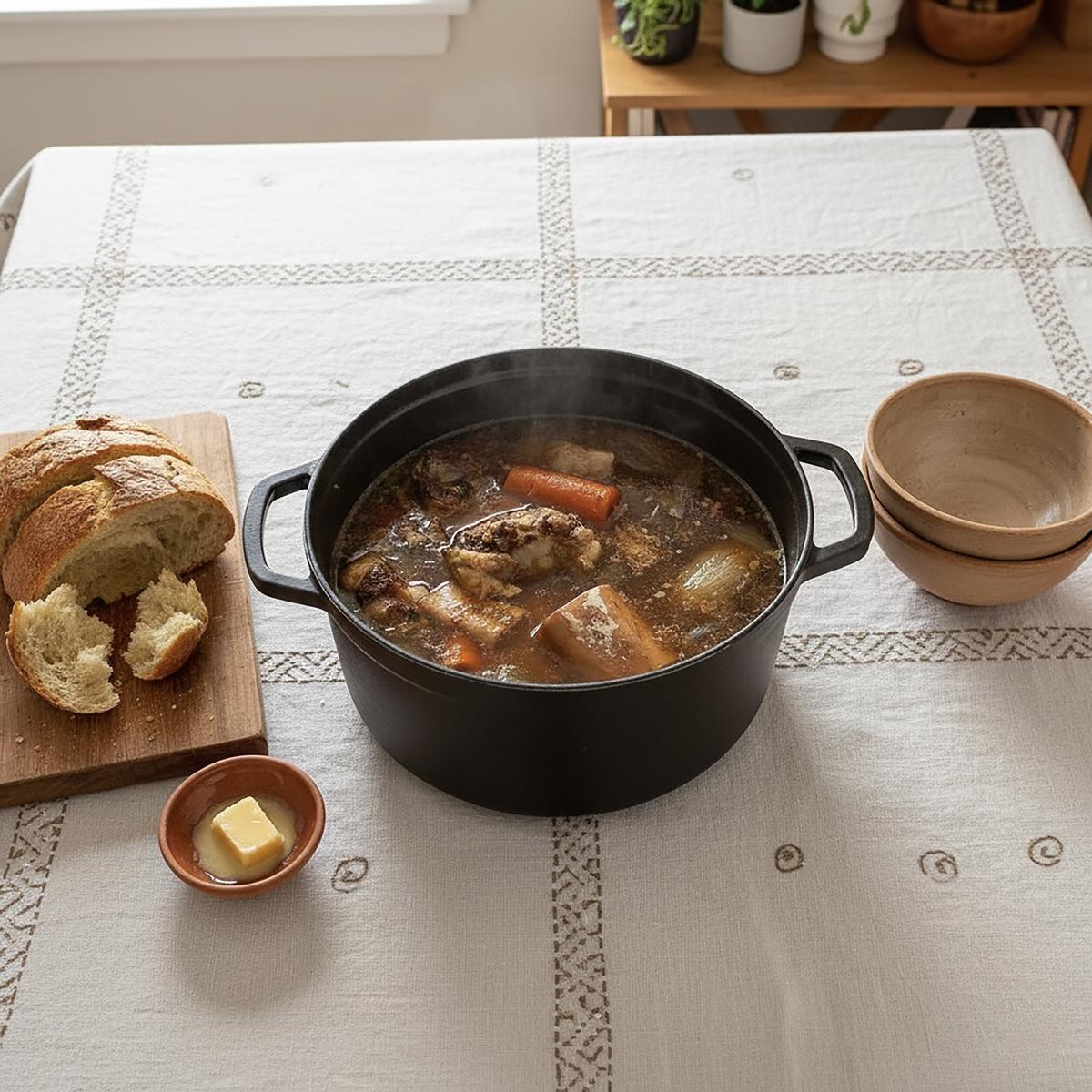
For Cedric Hawthorne, 62, who grew up in Delhi after his parents moved from Bilaspur in present-day Chhattisgarh, Christmas arrived quietly, too. In the 1970s and 80s, Delhi winters were colder and damper, and houses rarely warmed through. In the days leading up to Christmas, his mother prepared what the family called bone pepper water or marrow bone soup, made with beef, simmering beef bones with vegetables, garlic and black pepper for hours. Served in mugs when people returned home chilled, it marked the moment when Christmas truly began. Cedric still makes the concoction but has swapped out beef for mutton.

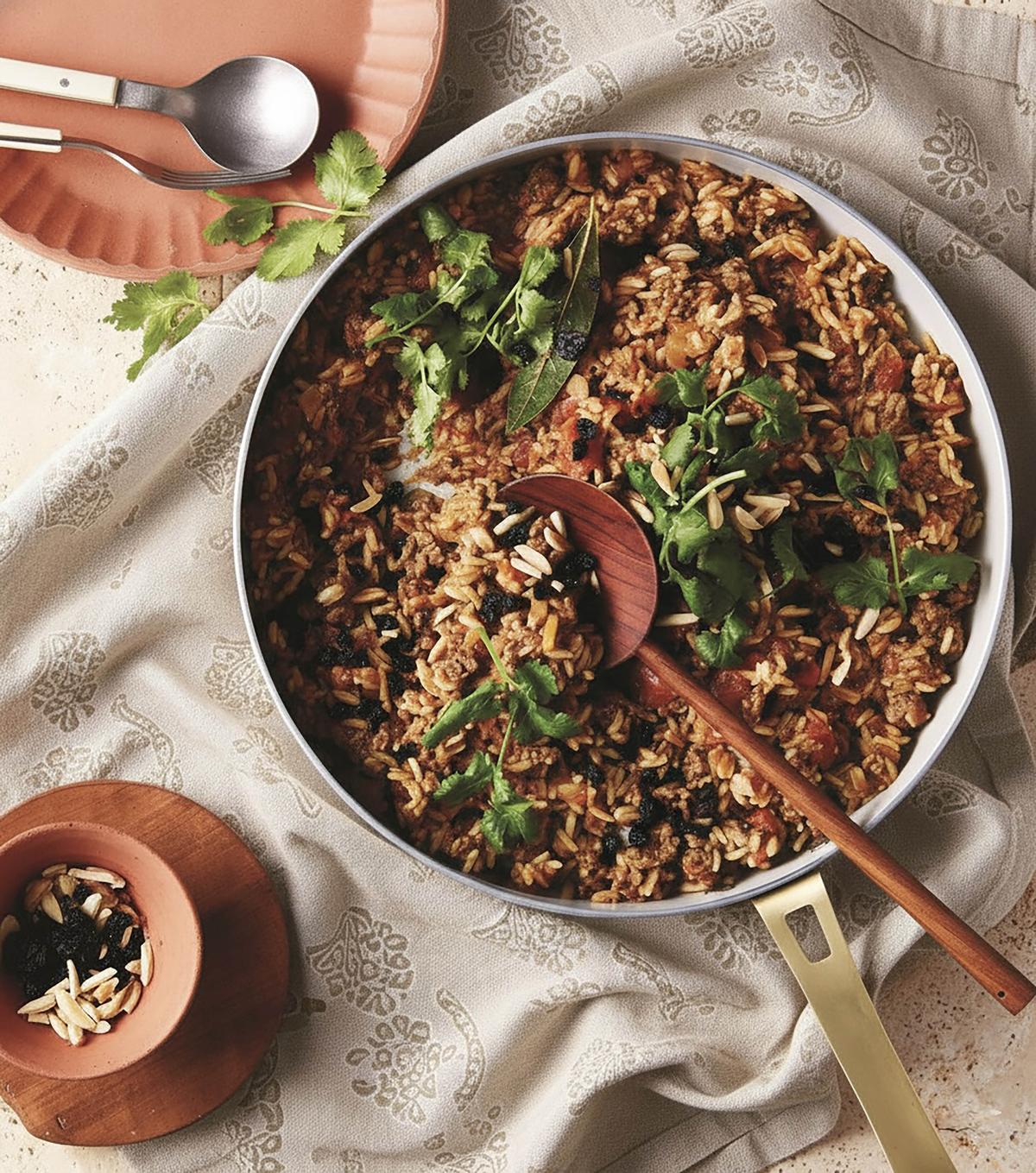
That sense of continuity carries into the present through people like Karen Myers, a Bengaluru-based PR and communications specialist. For her, cooking is both inheritance and intent. One dish she returns to is mince rice, a keema pulao that began as improvisation when excess mince was folded into rice with carrots and beans. It became tradition. Her family history — a Scottish grandfather, a grandmother who was English and Anglo-Burmese, with earlier roots in Kerala — explains the layering. What her grandmother once casually called “noodles and curry” is now recognisable as a house-style adaptation of khow suey, the Burmese coconut noodle curry that travelled into Indian kitchens through Anglo-Burmese communities. It appears on her Christmas table only occasionally, usually when the weather turns cold, but when it does, it captures the essence of Anglo-Indian food: adaptable, comforting and shaped by movement.

Bone marrow soup

Bone marrow soup
| Photo Credit:
Special arrangement

That adaptability is perhaps best captured in the archive of Jenny Mallin, whose book A Grandmother’s Legacy, which was published in 2015, traces five generations of Anglo-Indian women through handwritten recipes. Her great-great-great grandmother Wilhelmina, born in Vellore in 1828, recorded a Christmas cake recipe in 1865 that required fruit to be dried in the sun. By the time Jenny’s grandmother Irene Jefferies (née Shandley), born in 1899 in Madras, was baking, the recipe called for 150 egg yolks, a marker of scale, labour and communal celebration. Irene’s notes also record change — Sun-Maid raisins could now be bought ready to use.

Jenny still bakes the cake today, but with five eggs instead of 150. The reduction is practical, inevitable. What remains unchanged is the lineage — a reminder that Anglo-Indian food traditions survive not by remaining fixed, but by adjusting carefully to time, place and circumstance.


Source link

The new rules of cuffing season: From situationships to NRI flings and everything in between


It is cuffing season again — Nature’s annual reminder that humans, like migratory birds and Delhi influencers, become deeply seasonal creatures. The temperature dips, the lighting gets forgiving, and suddenly everyone wants someone to sit beside them on a couch that otherwise feels aggressively large. Sensible people who have spent most of the year insisting they are “very happy alone” begin sprinting into temporary arrangements with the urgency of contestants on a dating show filmed entirely in December.

For the uninitiated, cuffing season is that winter-adjacent window when single people seek short-term companionship — warmth, routine, shared meals, someone to watch bad television with, without the long-term paperwork. It is meant to be a pit stop. What fascinates me isn’t the ritual itself, but how earnestly we misinterpret it.

Nowhere is this clearer than in the great Indian sub-genre of cuffing season: NRI and foreigner season. A friend in Jaipur once told me, with the calm logic of someone who has cracked the code, “I wait all year for winter. That’s when all the foreigners arrive. It’s perfect. You meet for coffee, go out for drinks, have great sex, enjoy the city, and then they leave.” She paused. “No escalation. No confusion. No awkward run-ins at a Diwali party six months later.”

Another friend in Goa swears by dating only people with return tickets. “The expiry date is the romance,” she said. “Nobody’s asking where this is going because everyone knows where it’s going — departures.” There’s something refreshingly honest about this. Temporary arrangements work best when everyone agrees they are temporary. NRIs and visitors come pre-packaged with boundaries. You cannot accidentally build a future with someone flying back to Copenhagen on Sunday.

Things get messier closer to home. A woman I know met someone, who was visiting Mumbai for two months, and did what many of us do: she built a winter narrative. They cooked together, watched films, spent most evenings indoors. “I thought we were doing something cosy and slow,” she told me later. “Turns out he thought we were just hiding from the cold.” When February arrived, so did his sudden interest in “being free again”. She was heartbroken; he was confused. Neither of them was malicious. They were simply operating with different subtitles.

Another friend described cuffing season going spectacularly right. “We met in December, agreed it was casual, and actually stuck to it,” he said. “No future talk or anxiety crept in. It ended in March with a hug and a ‘take care’ text. It was one of the healthiest things I’ve done.” His secret, he claimed, was low projection. “I didn’t imagine who they could become by summer. I just liked who they were on Wednesdays.”

It is not that serious

Of course, cuffing season also produces its own special delusions. Someone else confessed, “If you dance with a person at two weddings and one Christmas party, your brain decides you’re basically married.” Another laughed, “I once got offended that someone didn’t invite me to their New Year’s party. We had been on three dates.” Winter does funny things to perspective.

Part of the problem is that loneliness has become ambient. Not dramatic loneliness, but the low hum of wanting company. Someone to send memes to. Someone to sit beside you while nothing happens. That desire is not wrong, but it does make us over-invest quickly. A friend put it bluntly: “Loneliness makes us eager, and eagerness makes us intense. Intensity ruins perfectly good casual arrangements.”

Cuffing season collapses time. You see someone more often because it is cold, dark, and socially acceptable to cancel other plans. Familiarity accelerates. Suddenly, a person you met two weeks ago feels central to your emotional weather. That is when expectations creep in. And when those expectations are not met, confusion follows.

What we often forget is that cuffing season was never designed for continuity. It is not a trial relationship or a promise of spring. It ia a seasonal companionship experiment. Some people thrive in it. Some people shouldn’t attempt it at all. One woman I know said, “I realised cuffing season isn’t for me because I want something wholesome. Casual makes me anxious.” That is self-awareness.

Others are built for it. A man told me, “I love winter dating. Nobody’s trying to impress. It’s just dinners, conversations, and sleep.” He shrugged. “By March, we both wanted our lives back.”

Maybe that is the real lesson. Cuffing season goes right when we let it be what it is — warm, temporary and unambitious. It goes wrong when we demand permanence from something designed to be fleeting. A small pocket of warmth in a cold stretch. Sometimes, body heat really is enough.

A fortnightly guide to love in the age of bare minimum

Published – December 19, 2025 06:36 pm IST


Source link

What the Hong Kong fire signals for India’s fast-densifying cities


A large fire which broke out at the Wang Fuk Court apartment complex in Tai Po, Hong Kong, on November 26 sent shockwaves through the global real estate community. The fire consumed seven out of eight blocks of an entire complex and killed more than 150 people.

The incident, stemming from inadequate safety planning and extreme congestion, poses a question that resonates powerfully across India’s fast-growing metros: are we normalising unsafe, over-densified living in the name of affordability?

For India’s real estate sector, this is not a hypothetical concern. It is very real in cities where developers face mounting pressure to maximise space, residents often trade safety for location, and regulatory conversations gain momentum only after disasters make headlines. The widening gap between rapid urbanisation and responsible urban safety demands immediate attention, not just as a compliance exercise, but as a fundamental reimagining of our design philosophy.

Systemic vulnerabilities

Incidents like the Hong Kong fire are not isolated anomalies. They reflect systemic vulnerabilities emerging in densely populated urban centres worldwide — vulnerabilities that are increasingly visible in Indian metros. Mumbai, Delhi NCR, Bengaluru and other cities are witnessing unprecedented vertical growth, with Floor Space Index (FSI) consumption pushing buildings higher and closer together. In this race for density, critical safety elements often become negotiable commodities.

The compromises are subtle but consequential however. The inadequate spacing between buildings that restricts natural ventilation and fire brigade access, substandard materials chosen for cost optimisation, ventilation systems designed for regulatory clearance rather than actual air quality, and fire exits that meet minimum standards on paper but prove inadequate in emergencies — each compromise, taken individually, may seem minor. But collectively, they create vulnerable living environments where residents are unknowingly at risk, along with long-term financial and reputational impact for the developer.

Cross-ventilation is non-negotiable. Fresh air and occupant health must be foundational priorities. Cross ventilation isn’t merely about meeting building codes; it is about understanding how air circulation patterns change throughout the year. In Mumbai, for instance, wind direction shifts from southwest to northeast across seasons — pre-monsoon, post-monsoon, and during different weather patterns.

Windows must be strategically positioned to capture these changing wind patterns effectively, ensuring that what works for southwest winds in summer also functions when Northeast winds dominate in winter.

Material quality matters as well. While homebuyers with limited vision may prioritise aesthetic appeal, developers bear the moral responsibility to prioritise health and safety through material selection. The quality of glass and aluminium sections has direct implications for energy efficiency and indoor comfort. Thermal breaks in aluminium sections prevent heat transfer between exterior and interior environments, reducing air conditioning loads and improving thermal comfort. Double-glazed windows with low U-value silver coating (now advancing to triple-layer silver coating) significantly enhance insulation while maintaining natural light.

Air conditioning without hot air pockets can prove harmful. Hot air pockets within buildings create discomfort and impede breathing.

Developers should specify chilled water systems with cold water lines, mandating water-cooled compressor VRVs (Variable Refrigerant Volume systems) that don’t expel hot air into common areas or adjacent spaces. This integrated approach to climate control prevents the creation of uncomfortable micro-climates within the building setup.

Emphasis on fire safety

Fire safety deserves special emphasis, as it represents one of the most critical and most commonly compromised aspects of building safety. Several principles must guide responsible development:

Let’s start with material selection. Aluminum Composite Panels (ACP), particularly those with flammable cores, should be categorically avoided. Similarly, buildings must be spaced adequately, not just to meet minimum setback requirements, but to ensure that fire cannot easily spread between structures and that fire brigade vehicles have adequate access.

A gap in system maintenance must be avoided. A persistent challenge in India is the maintenance gap. Developers often install robust fire safety systems — pumps, wet risers, hydrants, sprinklers, extinguishers — but they fail under society management. This gap demands a systemic solution. Building management committees must understand that fire safety systems, including both pumping mechanisms and wet risers, should remain constantly charged through overhead tank connections.

Safety audits must be made mandatory. The solution lies in mandated annual fire safety audits conducted by certified, independent professionals. Retired fire officers with decades of field experience could be licensed as auditors, creating a robust ecosystem where their expertise continues serving public safety. Government enforcement must be strict; societies failing to submit certified audit reports should face meaningful penalties.

Building design must also account for extreme weather events. When typhoons or cyclones approach, building geometry becomes critical. Structures should be designed to divert wind rather than resist it head-on. By channelling wind around and over buildings, developers and designers reduce pressure on glazing and structural elements substantially. Glass thickness and quality must be specified with extreme weather scenarios in mind.

Small efforts such as strategically placed wind turbines that help direct airflow into buildings for natural ventilation, demonstrate how passive design strategies can enhance both safety and sustainability simultaneously. These approaches reflect a developer’s passion for creating genuinely superior living environments.

Overall, responsible urban development requires a future-ready safety framework encompassing design precision, continuous monitoring, and shared accountability across the building lifecycle.

The Hong Kong tragedy should catalyse permanent change in how we conceive, design, and maintain urban living spaces. We have the knowledge, technology, and resources to build safer cities. What we need now is the collective will to prioritise lasting value over short-term gains.

The writer is chairman of The Wadhwa Group.

Published – December 19, 2025 06:35 pm IST


Source link

Deepika Nagasamy’s recently-launched moisturiser, Malli Malli is rooted in heritage but refined by science


Dipsy’s debut moisturiser Malli Malli.

Dipsy’s debut moisturiser Malli Malli.
| Photo Credit: SPECIAL ARRANGEMENT

In a country where every new skincare launch promises to be cleaner, greener, and more “traditional” than the last one, it is fair to wonder whether India needs another brand championing native ingredients? For Deepika Nagasamy, who recently launched her skincare brand Dipsy, the answer did not come from trend forecasts or branding decks. It came from something more personal — a childhood nickname, and an everyday kitchen conversation. Having been part of the legendary Dindigul Thalapakatti food empire, a Tamil Nadu-born biriyani brand with outlets in India and abroad , Deepika has always understood the power of ingredients grown on home soil. “Ingredients and food that’s native to the soil we live in are something I knew very well,” she says. “So I wondered, why can’t I do this with skincare?”

Deepika Nagasamy

Deepika Nagasamy
| Photo Credit:
SPECIAL ARRANGEMENT

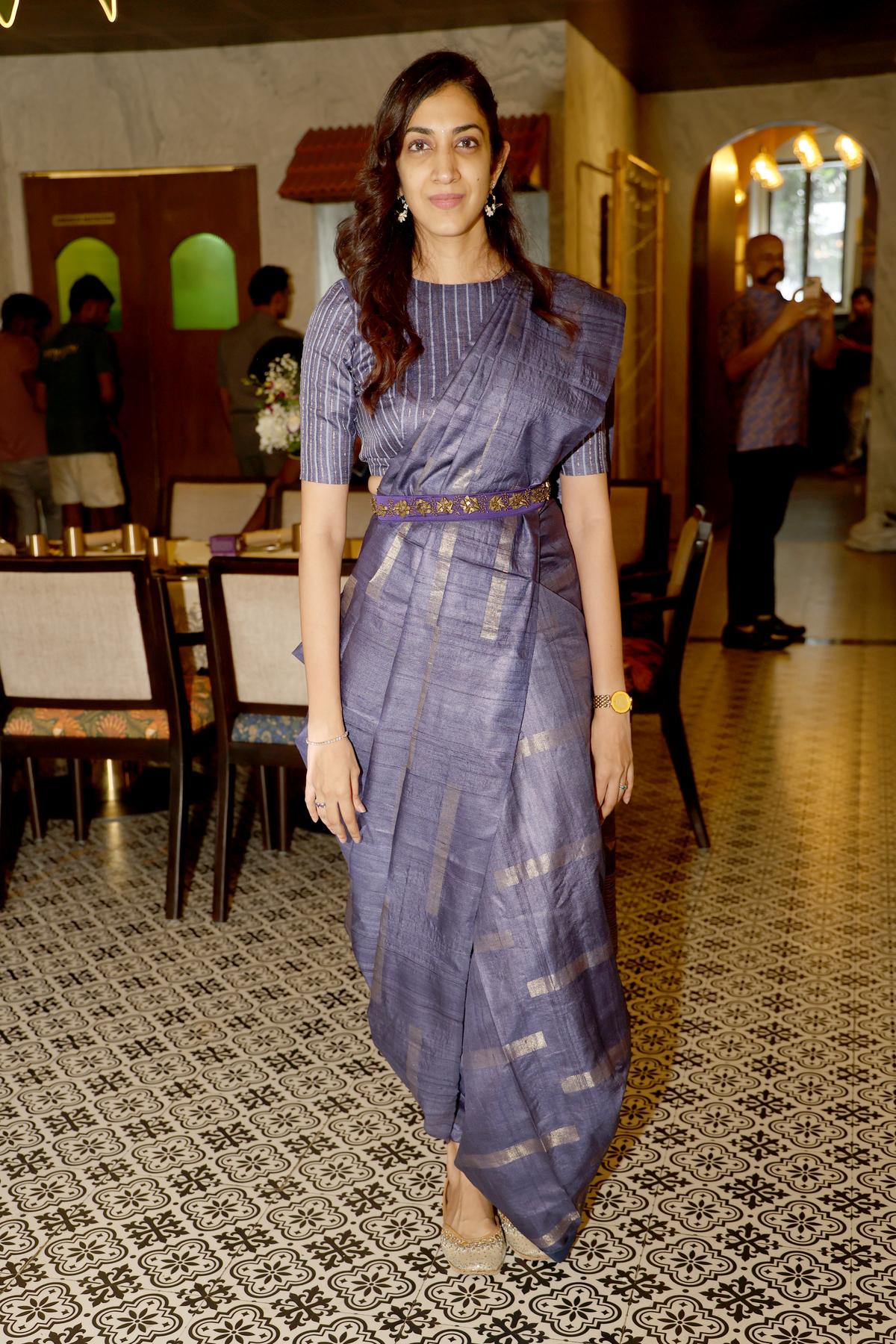
The name Dipsy finds its roots in Deepika’s nickname. “I wanted a name that speaks to me,”  she says, clad in an ensemble that reflects her tradition-meets-contemporary expression as well as the deep purple hue of her brand design. “I’m someone who loves experimenting with my culture and making it my own. I wanted the brand to mirror that.” 

The brand’s debut product is called Malli Malli, an everyday moisturiser. For Deepika, an Andhraite settled in Tamil Nadu now, the name felt symbolic with cultural intersections. “Malli in Telegu means coriander, which inspired the formula journey, and it also translates to Jasmine in Tamil, so it felt like a clever wordplay for the product.” Choosing a moisturiser as the debut product for the brand was a strategic choice, “I didn’t have the expertise in doing a sunscreen, and moisturiser felt like something that works day and night.” 

The formulation journey, Deepika shares, was quite a struggle. “There were batches that grew mould, tests were formula that changed colour, and attempts that ended with odd smells after a few days.”  Malli Malli is crafted using Indian-origin ingredients, sourced from different regions of Tamil Nadu and Andhra Pradesh featuring mango butter, kokum butter, neroli, and coriander. “We source them from regions of India where they grow naturally; those ideal conditions yield ingredients that are more potent and effective.” Even though it promises to uphold Indian traditional ingredients, the product is also backed by science. “We have tried to balance it both where it is more modern as well as rooted in Indian tradition,” she adds.

Next in line for Dipsy is a line-up of vanity-shelf staples, starting with a cleanser, followed by a sunscreen and toner.

Malli Malli is priced at ₹1,999, and available on their website dipsy.store


Source link

Inside Copenhagen’s Alchemist: Chef Rasmus Munk on food, provocation and his India-inspired dishes


There are two impressions inspired by India on Danish restaurant Alchemist’s menu: one takes its cue from pani puri, the other from the dosa. Danish chef Rasmus Munk, however, is yet to visit the country, though he hopes to change that soon, with a tentative trip pencilled in for April next year.

Rasmus Munk

Rasmus Munk

In Copenhagen, Rasmus’s immersive dining experience is known for its scale and ambition. Two Michelin stars, 50 impressions (as the courses are called), and multiple drink pairings come together to form a meal that can stretch to eight hours. Diners are not seated at a single table but move between the Lounge, the Dome and the Balcony, each offering a distinct atmosphere.

A spread at Alchemist.

A spread at Alchemist.
| Photo Credit:
SPECIAL ARRANGEMENT

1984 novel inspired dish

1984 novel inspired dish
| Photo Credit:
SPECIAL ARRANGEMENT

Speaking about Alchemist, Rasmus says, “For me, it’s really a way to express myself. It’s a way to be creative and to see food and the restaurant as an artistic medium — one that can convey things I believe are important in society. Like a musician creating an album with 20 songs about different emotions, I see this restaurant in the same way: as a platform to communicate ideas that matter to us.”

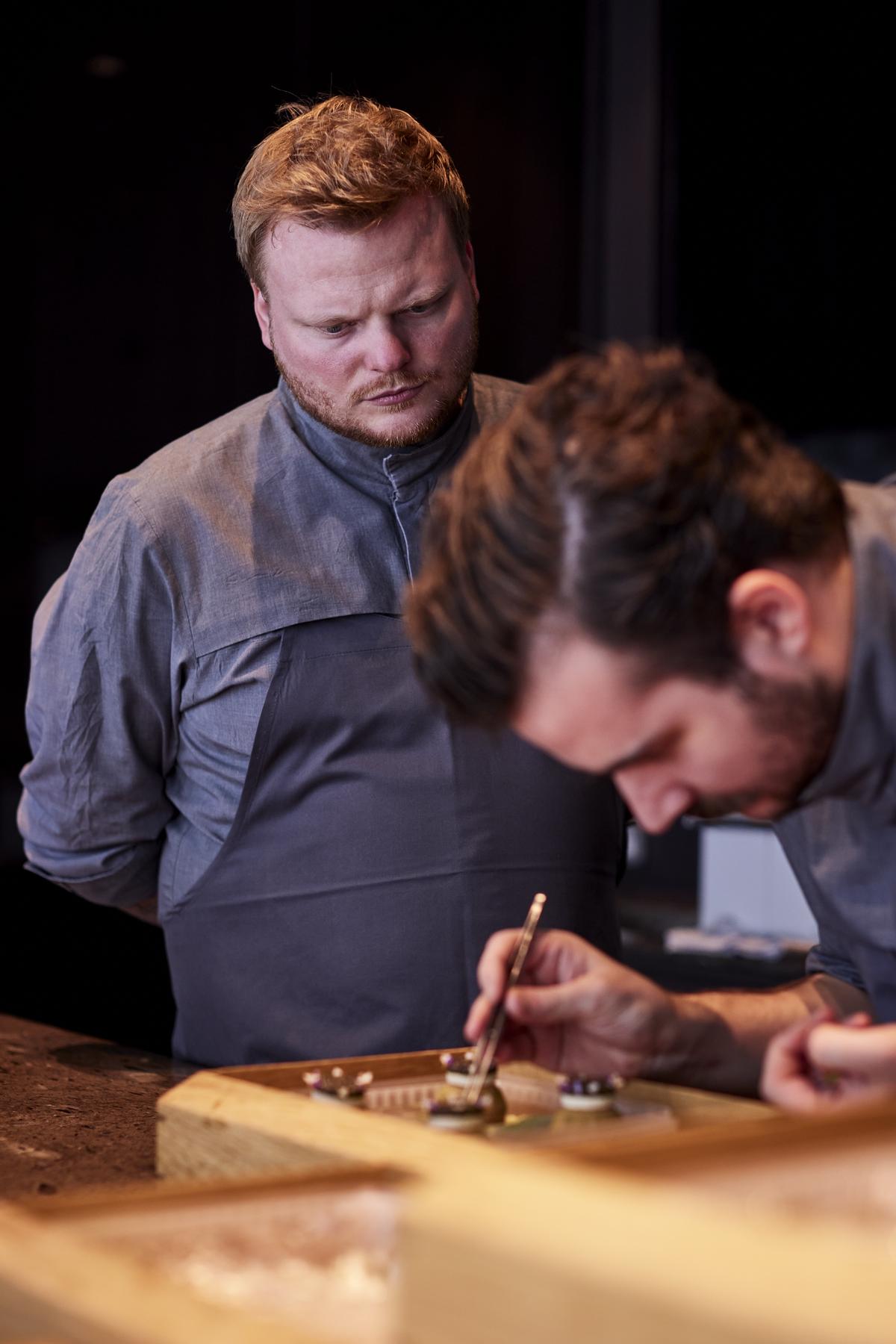
Rasmus inspects plating

Rasmus inspects plating
| Photo Credit:
SOREN GAMMELMARK

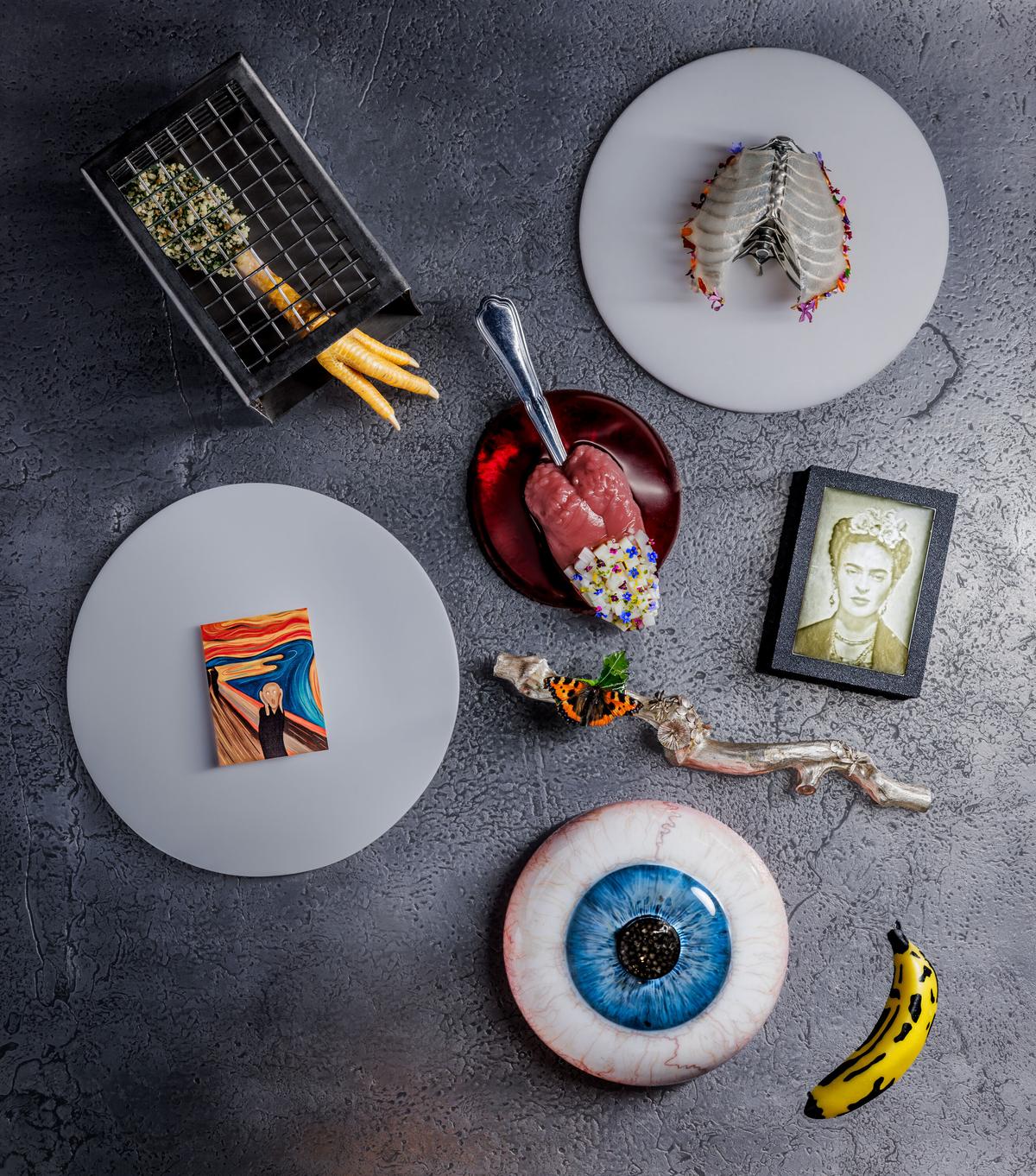
At 34, the chef is known for using his tasting menu to provoke thought as much as appetite. One impression, 1984, inspired by George Orwell, is served inside an eye, with diners spooning into a caviar-topped ‘pupil’. Beneath it lies a salad of lobster claw, corn, Swedish chanterelles, crunchy crouton and codfish eye gel. As warnings about digital surveillance go, this one is disarmingly delicious. Another dish — crispy cod cheeks in collagen batter with algae — is designed to resemble plastic. As Rasmus notes, “For me, it’s rewarding when people talk about plastic in the ocean or organ donation, instead of discussing the acidity of a sauce. I think it’s interesting that food can do that.”

More than a meal

Beyond Alchemist, Rasmus is also the founder of Spora, a research lab exploring new food systems. The lab recently launched Notch, a cocoa-free ‘chocolate’ made from spent grain in Denmark. He also runs Junk Food, a non-profit initiative that feeds over 1,000 people daily and has served more than a million meals to date.

Research from Spora often finds its way onto The Alchemist’s menu. This includes space bread designed to be sent into orbit, and a grain-based dessert developed through lab experimentation. “There’s strong synergy between the two kitchens,” Rasmus explains. “At Spora, chefs work closely with researchers. Everything there must be sustainable, scalable and, of course, delicious.”

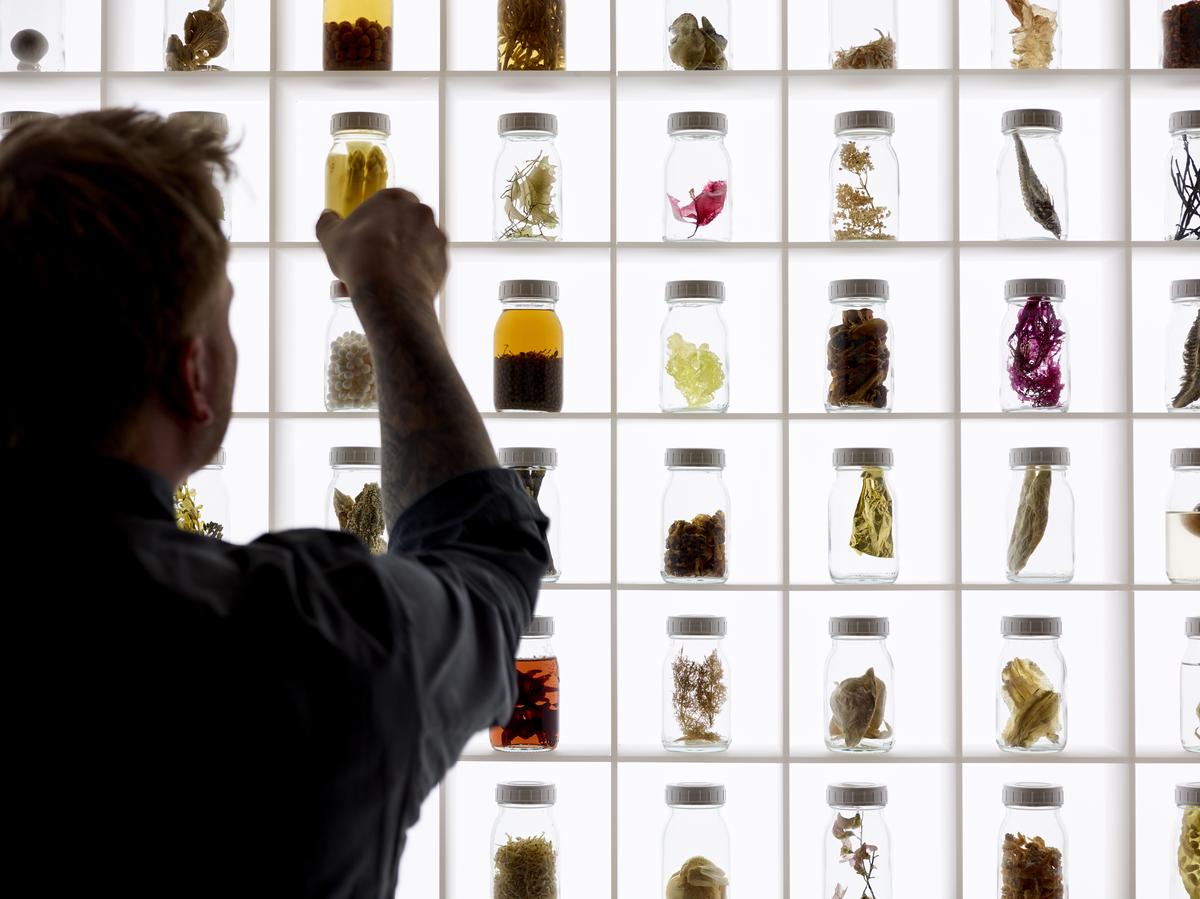
Inside Alchemist Explore

Inside Alchemist Explore

This grounding in science has led to published research and collaborations with the Gates Foundation and the Novo Nordisk Foundation, including work on converting carbon dioxide into protein.

Feeding people across income brackets is central to Rasmus’s philosophy. At Alchemist, this takes the form of provocation as much as nourishment: jellyfish (considered a pest), freeze-dried butterfly (a protein source), and lamb brain, presented as a call to use every part of the animal. Presentation is integral. In one instance, a chicken foot is served intact, claws included, to prompt reflection on industrial meat production. Many of these impressions unfold beneath the restaurant’s vast dome, accompanied by immersive videos created by its in-house studio, ranging from staring eyeballs to jellyfish morphing into plastic, and even the sensation of being inside a beating heart.

With a global audience — Alchemist is ranked No. 5 on The World’s 50 Best Restaurants list in 2025 — cultural responses vary. “The most challenging dish on the menu,” Rasmus says, “is not the mealworms, butterflies, lamb brains or cow’s udder. It’s our noodle.” A cold, sweet noodle soup with a tea-like broth, made from tapioca, often puzzles diners unfamiliar with its chewy texture. “But guests from Thailand, China or Japan love it,” he adds.

Indians, too, are familiar with tapioca, and Rasmus says he is eager to experience the country’s food culture first-hand. “It’s one of the only major food countries I haven’t visited yet, perhaps the most important,” he says. His Nordic dosa uses a five-day fermented batter, filled with Danish Vesterhavost cheese, local ramps and capers. While he has refined a more traditional batter recipe, he is holding off on adding it to the menu until after his visit. “It has the chewiness, acidity, crisp exterior and soft interior,” he says. “But I want to come to India before I serve it at Alchemist.”

Published – December 19, 2025 06:05 pm IST


Source link

This festive season, choose from a range of clutches: martini, chips, pizza or patisserie


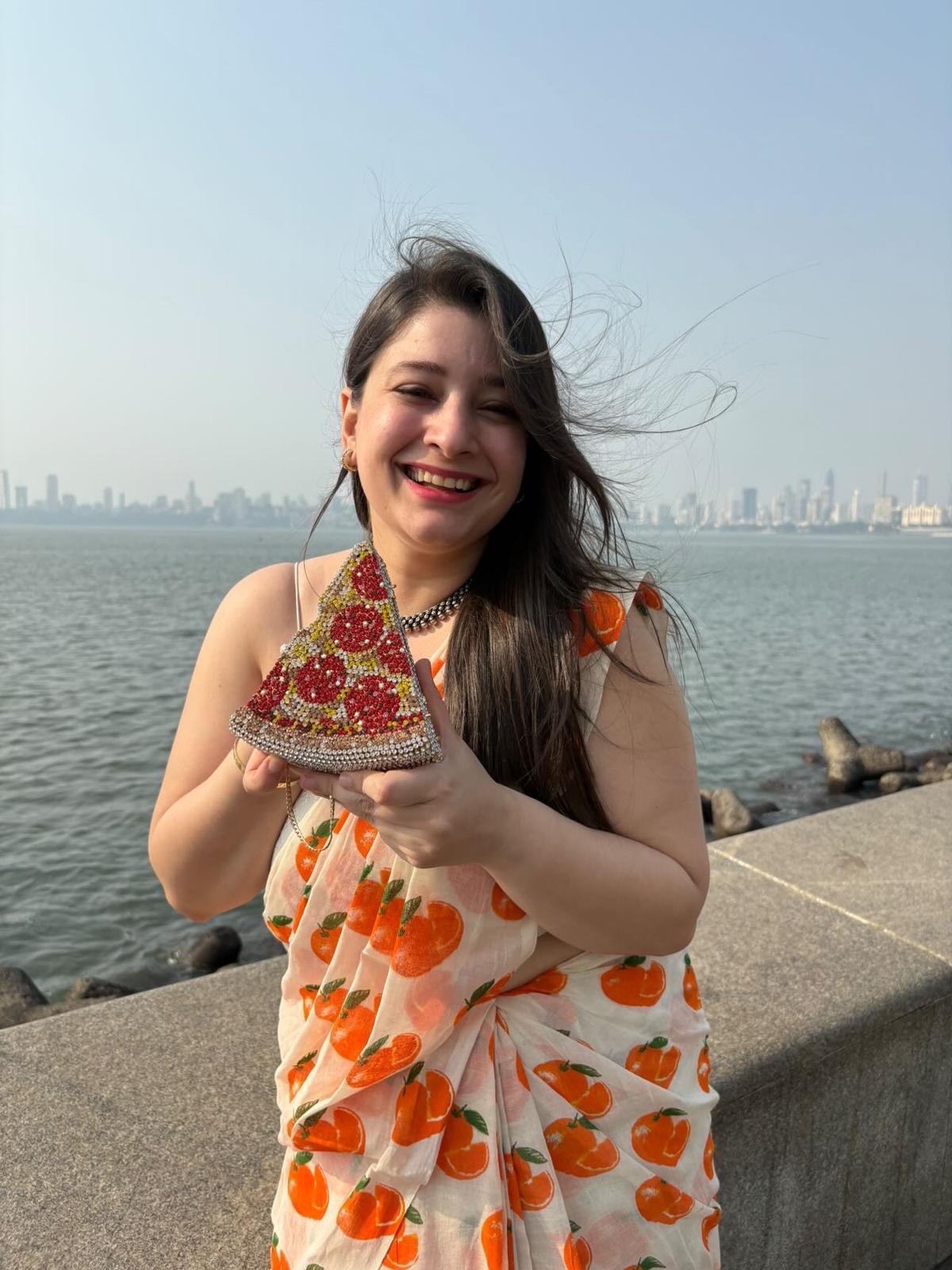
What is your favourite late night indulgence? A slice of pizza at 2 am while you binge watch a show? A thick slice of decadent chocolate cake? Or is that bag of potato chips calling your name? What India Eats, an annual report brought out by Swiggy in partnership with management consultancy Kearney, says in 2025 — pizzas and cakes in particular are seeing the highest growth across India’s metros in terms of consumption beyond 11 pm. So much so, Indians are enjoying their food not just as cuisine but couture as well. Inspired by designer Judith Leiber’s food-themed handbags and Kate Spade’s take on the crystal studded pizza slice crossbody bag, Indian designers are taking cue and using Indian traditional embroidery and craftsmanship to create their versions.  

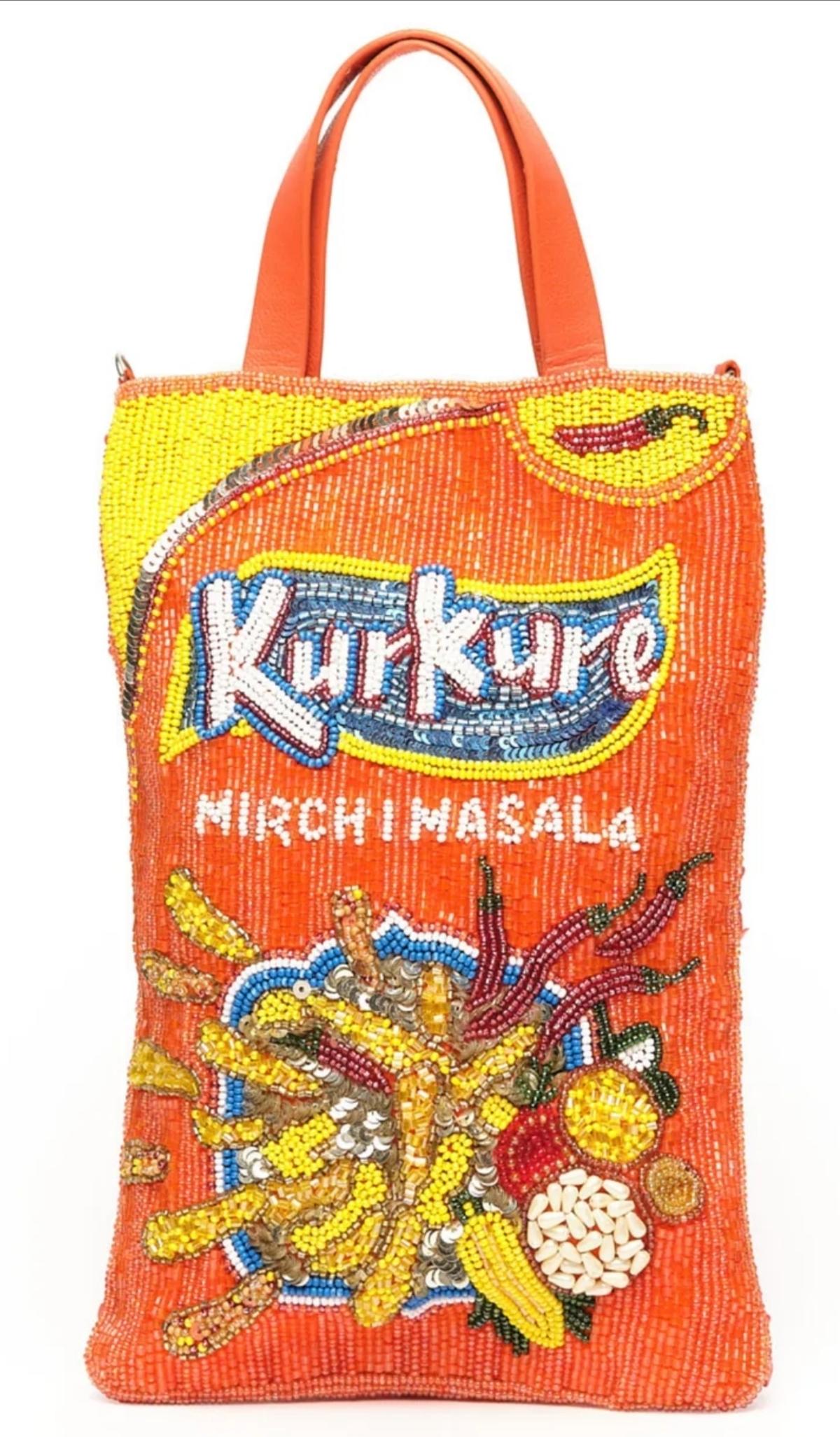
Kimaya Singh’s Lays Magic Masala bag

Kimaya Singh’s Lays Magic Masala bag
| Photo Credit:
Special Arrangement

Mirchi by Kim by Kimaya Singh

Model and entrepreneur Kimaya Singh, who splits her time between New York and India, launched her eponymous brand in 2024, and one of her most Instagrammed products is her blue embroidered chips handbag. “Food is one of those timeless inspirations; it brings people together, sparks conversations, and has this way of being both playful and deeply personal. I grew up eating these snacks in boarding school, a shared nostalgia, a little guilty pleasure that so many of us connect over, so it felt like the perfect entry point.”

A creation by Kimaya Singh

A creation by Kimaya Singh
| Photo Credit:
Special Arrangement

The Lays Magic Masala bag and the Mirchi Masala bag both crafted with faux leather and painstakingly hand-embroidered with details in glass beads, come with a detachable beaded strap, and a hefty retail tag of ₹41,000. But that has not deterred buyers. In fact, the bags have been restocked multiple times since their launch in 2024. Masterchef India finalist Chef Natasha Gandhi says she is drawn to these bags, and grabs them as soon as her algorithm sends her a pop up ad. “ I bought the Lays and Kurkure bags, just based on reels I saw. I like to incorporate these products into my stories and content, and like supporting smaller brands instead of the imported ones.”

A bag by Puneet Gupta

A bag by Puneet Gupta
| Photo Credit:
Special Arrangement

For Kimaya, it is not just about viral content, each bag tells a story of Indian craftsmanship, threaded through nostalgia. “People love that karigars with years of knowledge, precision, and tradition creating something so playful, almost childlike, yet detailed and intricate. That tension between heritage craft and pop culture is what makes these bags stand out. Our strongest roots are in the global South Asian community; but we’re also getting so much love from girls across the US, India, and Europe who might not share the exact nostalgia but still appreciate the beading, and the storytelling behind it.” 

Upwards of ₹41,000. @mirchibykim on Instagram

Puneet Gupta’s creation

Puneet Gupta’s creation
| Photo Credit:
Special Arrangement

Whispers of Versailles by Puneet Gupta 

For Puneet Gupta, who specialises in elaborate wedding invitations and gifting, confectionery is his new muse. His latest capsule collection is at the intersection of French patisserie and rococo. “The miniature bags are inspired by cakes and pastry shops, and centred around weddings, which is my preferred space. Like the three-tier wedding cake bag, that opens out for the bride to store a few essentials.” With the soft pink and green tiered cake or the bakery storefront bag with colourful cupcakes on display, the details are carefully executed, he says. “Our beadwork draws from traditional South Asian techniques like zardozi and aari, but we adapt them to sculpt three-dimensional textures and vivid motifs. Sometimes, we entertain special requests to match a colour palette, so we can customise the colour of the icing on the cake,” explains Puneet.

A team of seven or eight artisans start with raw sketches, then create prototypes on cardboard to get the shape and proportions just right. Then the bags are created from MDF and fabric. Even the hardware is painstakingly chosen, so the locks are discrete, and do not sacrifice the aesthetic.  Bigger versions of the bags are available as “exaggerated versions for weddings or for photoshoots”.   

Upwards of ₹20,000 on puneetgupta.in

The pizza bag by Varshha Shetty

The pizza bag by Varshha Shetty
| Photo Credit:
Special Arrangement

Vrrishti by Dr Varshha Shetty

“Everyone wants to make a statement. Food is just another way of expressing yourself,” says Bengaluru-based Dr Varshha Shetty, whose day job left her craving a more creative outlet when she was at home. “I’m a radiologist who got into jewellery and bags for the love of it. I remember seeing the Judith Leiber Swarovski studded bags that Carrie carries in Sex and the City. I thought we could do our own version with semi-precious stones and I launched a few bags in 2024, and they sold out,” adds Varshha.

The Rhinestone collection by Varshha Shetty

The Rhinestone collection by Varshha Shetty
| Photo Credit:
Special Arrangement

Her Martini clutch, which comes in two metallic tones, is a sculptural piece. “It is more spacious than it looks, fits beautifully on the hand and goes with Indian or Western attire, dressed down or dressed up,” she explains. Which are the most popular from her collection of fries, pizza and Martini glasses? “The cocktail glass for sure,” she quips, though she has a soft spot for the fast food theme bags. “My daughter saw a kid-sized version of a pizza bag and I wanted to carry an adult upgraded version. Our artisans do colour grading using rhinestones and crystals. Each piece takes around three days to craft,” she concludes. 

Upwards of ₹3,050. @vrrishti_byvs on Instagram 

Published – December 19, 2025 05:53 pm IST


Source link

Gram Art Project, a rural collective using art to drive sustainability and eco-conscious living


Gram Art Project, a rural collective based in Paradsinga village on the border of Madhya Pradesh and Nagpur district in Maharashtra, marks 12 years of sustained community-led work. Today, the village has become a source of livelihood and collective strength for nearly 350 members, most of them women, from 14 neighbouring villages across the two states. The collective brings together artists, artisans, farmers, agricultural workers, weavers and students.

A four-member team from Gram Art Project is in Hyderabad for the Natural Dye Handmade Festival, organised by the India Handmade Collective from December 19 to 21 at CCT Spaces, Council of Telangana in Banjara Hills.

Founded in 2013 by artist Shweta Bhattad, a fine arts graduate from Maharaja Sayajirao University of Baroda, the initiative grew out of her decision to step away from a conventional art career. Motivated by the need to connect art with lived realities, Shweta and a group of collaborators began organising art residencies that combined creative practice with discussions on women’s issues, child welfare and farming-related concerns.

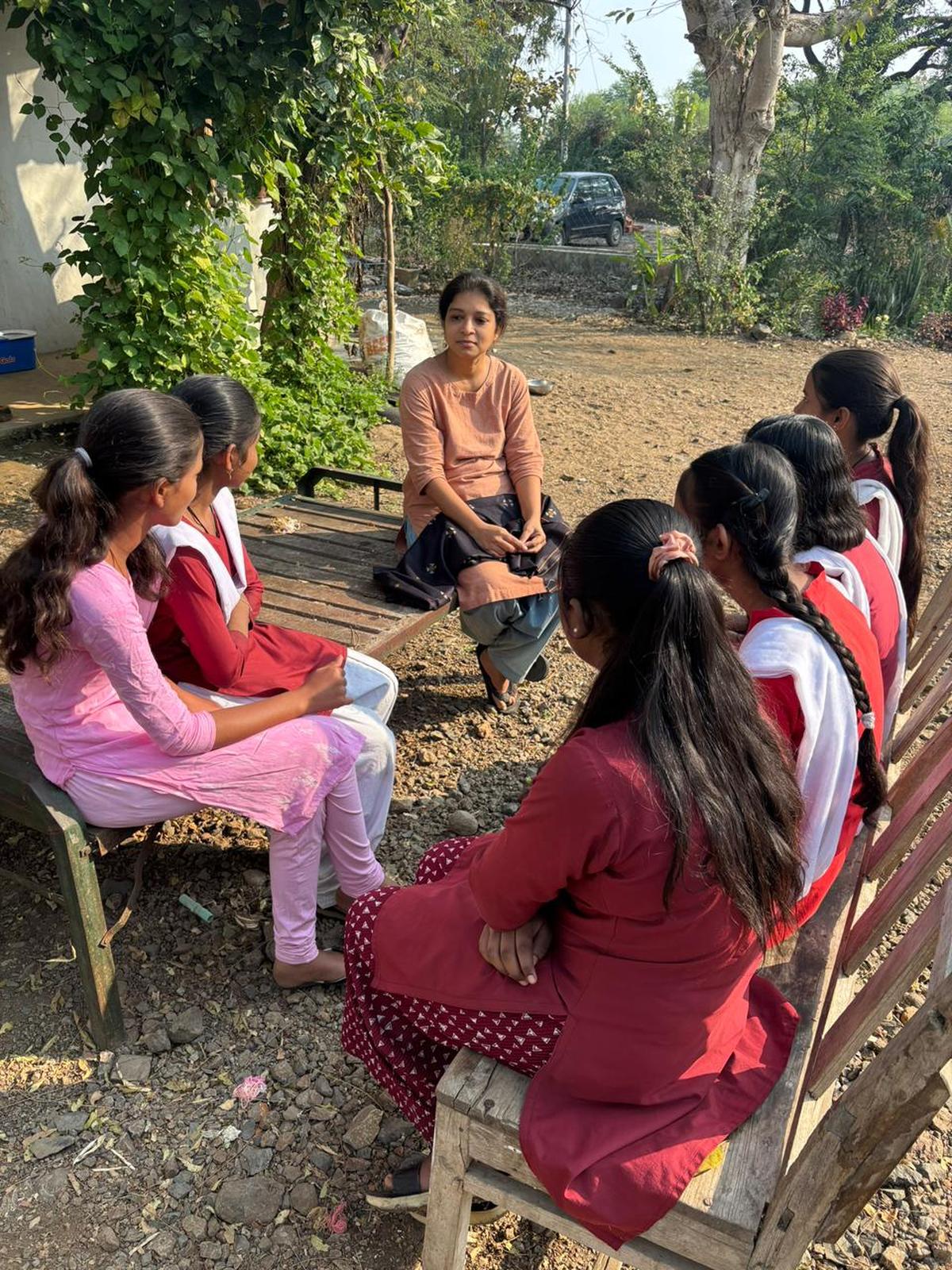
Shweta Bhattad explains the alternative ways of farming, living and earning livelihood out of it to government school students of the village. The girls belong to families of farming or have a farm labour background.

Shweta Bhattad explains the alternative ways of farming, living and earning livelihood out of it to government school students of the village. The girls belong to families of farming or have a farm labour background.
| Photo Credit:
Special Arrangement

“We wanted to address real issues while building skills that support both personal and professional growth,” she says.

For a green environment

Sustainable clothing, seed jewellery, seed creatures and seed library and product development of foraged materials in collaboration with Dhimar community, who are jungle dwellers and foragers, seed paper making, acoustic boards and papers out of crop waste. and seed bands and other products of indigenous cotton yarn

The art residencies brought together diverse voices from the community. Using art and performance as tools, participants addressed issues such as open defecation, the lack of safe play spaces, and the need for open dialogue. “The aim was to gradually shift beliefs, create opportunities for ourselves, make informed lifestyle choices, and encourage changes in behaviour and mindset as an ongoing process,” she explains.

Helping each other

Screen printing using indigo

Screen printing using indigo
| Photo Credit:
Special Arrangement

With a focus on building internal skills, the collective began with cotton farming and multi-cropping, learning through shared labour and support. Although women form a large part of the rural agricultural workforce, they rarely benefit from crop yields due to limited control. Seed-saving became a turning point, allowing members to reclaim agency while adding natural colour to raw cotton fibres used to make rakhis.

The process also sparked difficult conversations. “Some women questioned the idea of rakhi itself,” says Swetha. “They would say, ‘I run the house. Why do I need protection?’”

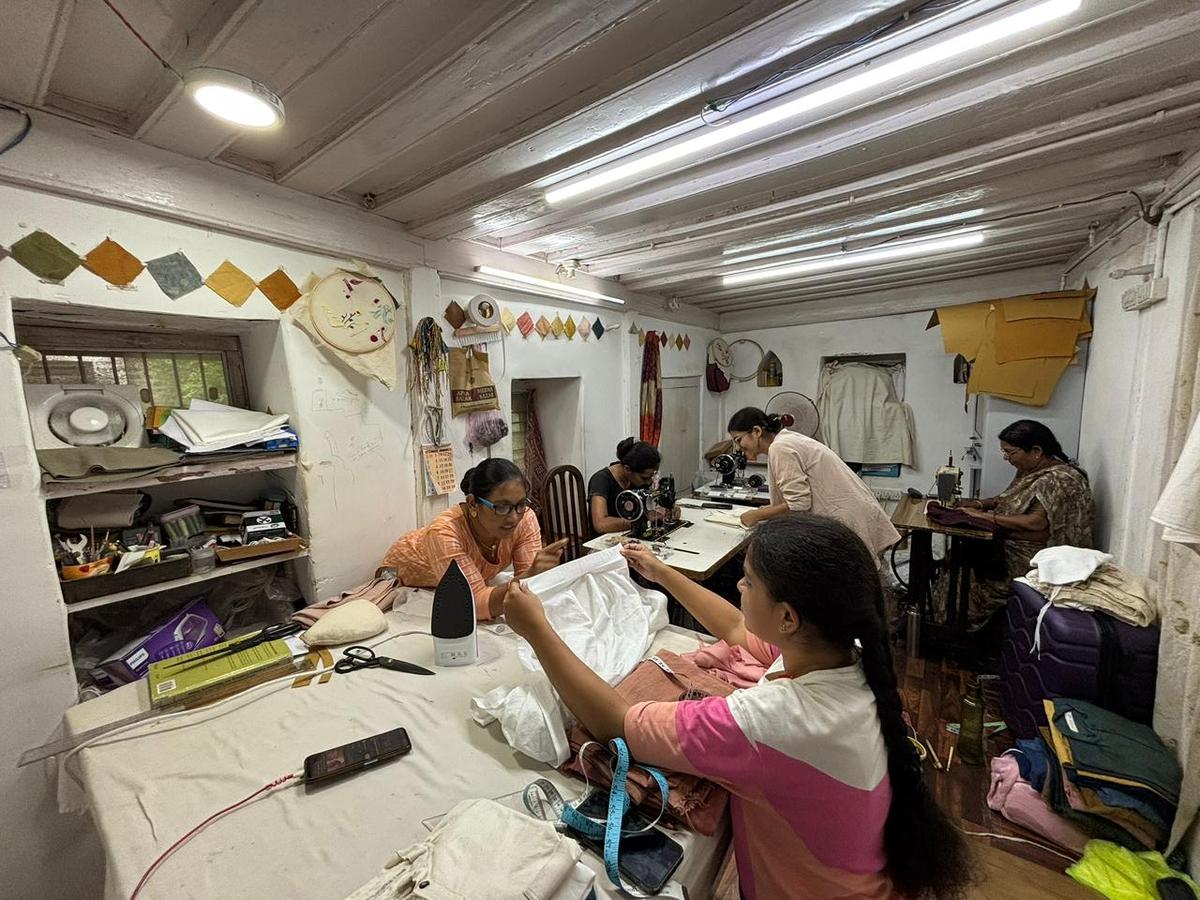
Tailoring unit

Tailoring unit
| Photo Credit:
Special Arrangement

Over time, initiatives such as Cotton Stainers, Jungle Jammat and Beejpaatra helped members become local change-makers, embedding sustainability into daily life. What began as seed banks with 20 women across two villages has grown to 350 women from 14 villages. While full-time employment remains a challenge, members now have work for nearly eight months a year.

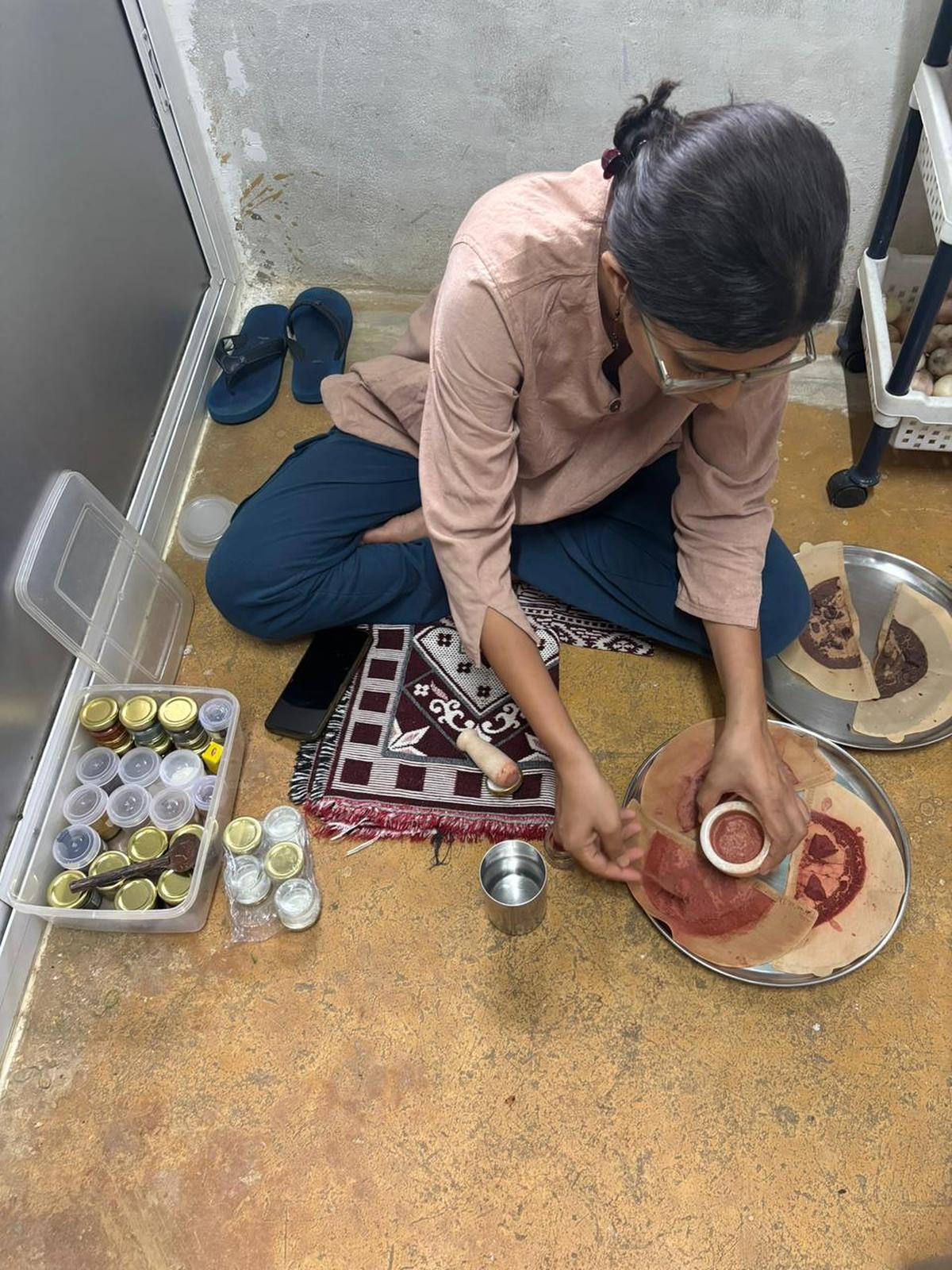
Organic colour making from roots, leaves, steams, flowers and seeds

Organic colour making from roots, leaves, steams, flowers and seeds
| Photo Credit:
Special Arrangement

Kambal Ghar, a three-year-old programme, focuses on children’s creative learning. Working with government schools and their own community space, the team encourages children to make paper, clay, natural dyes, tools, performances and stories using materials around them.

For Gram Art Project, art is not a profession alone but a way of living. From seed paper and jewellery to crop-waste acoustic boards, land art and live performances, all work is grounded in social and ecological responsibility. “We’re expressing village life as it is—how it shapes us, and how we shape it,” says Shweta.

Published – December 19, 2025 05:07 pm IST


Source link