Life & Style

What’s fuelling the boom of cafe culture in Hyderabad?


Cafés are an increasingly visible trend within the restaurant industry, and Hyderabad now has more cafés in a single neighbourhood than one could visit in a month. Why this surge? Conversations with café owners, artists and regular café-goers point to one recurring reason: flexibility. Interestingly, the same flexibility that draws customers in is also what attracts entrepreneurs to the café business.

Naina Polavarapu, founder of LastHouse Coffee: By The Lake at Durgam Cheruvu, sees this clearly. “In India, there is a growing need for third spaces — places away from home,” she says. “A café’s informal structure allows people to be themselves. When a space is both casual and thoughtfully designed, it feels approachable.” She adds that coffee acts as a social catalyst. “People come to read, talk, work, or simply observe. That curiosity — about ideas, conversations and culture — is a strong driver.”

Third space

Cafés today are no longer just places to eat or drink. Increasingly, they are positioned as local landmarks — spaces where people work, meet, gather, or simply slow down. The shift towards remote and hybrid working has further fuelled demand for flexible venues that combine food, beverage and a comfortable setting. Globally, the cafés and bars market is projected to reach USD 26.17 billion by 2029, growing at a CAGR (compound annual growth rate) of 8.33% between 2024 and 2029, according to Mordor Intelligence.

Among consumers, cafés have become preferred hangout spots, closely followed by informal meetings. From a real estate perspective, they do not demand large footprints; even a 10-seat space can work — one reason why formats like Coffee@10 draw steady crowds. Freelance photographer Dinesh Kakollu explains, “As people become more open to newer brewing styles, any place serving coffee becomes a ‘must-try’ for coffee lovers. Regardless of the food, the coffee will be sampled. Takeaway options also make it easier.” Dinesh’s go to spots are cafes and the ones he frequently visits double up as his workspace where he spends at least three hours.

A restaurant consultant offers another perspective: “The lower capital requirement is a major draw. A café doesn’t need a large or luxurious space. You can start with 10 or 20 seats — something that isn’t viable for a fine-dining restaurant.”

Dawn to dusk

Driven by the idea that any time of day is a good time to meet or think, cafés have become natural spaces for meetings — something that is often impractical at fine-dining restaurants. Aparnna Gorepatti of Zuci and Bougainville explains, “Where do you go to meet a friend or catch up for work? The obvious choice is a café. With a menu that ranges from coffee and desserts to main courses, there’s no pressure to plan a full meal.” She adds that cafés are also spaces where people feel comfortable dining alone, often while finishing work calls or spending time by themselves. Zuci’s menu draws the cafe and the serious diners as well. The ones who hang around for longer hours, invariably sit in the outdoor space.

Community building
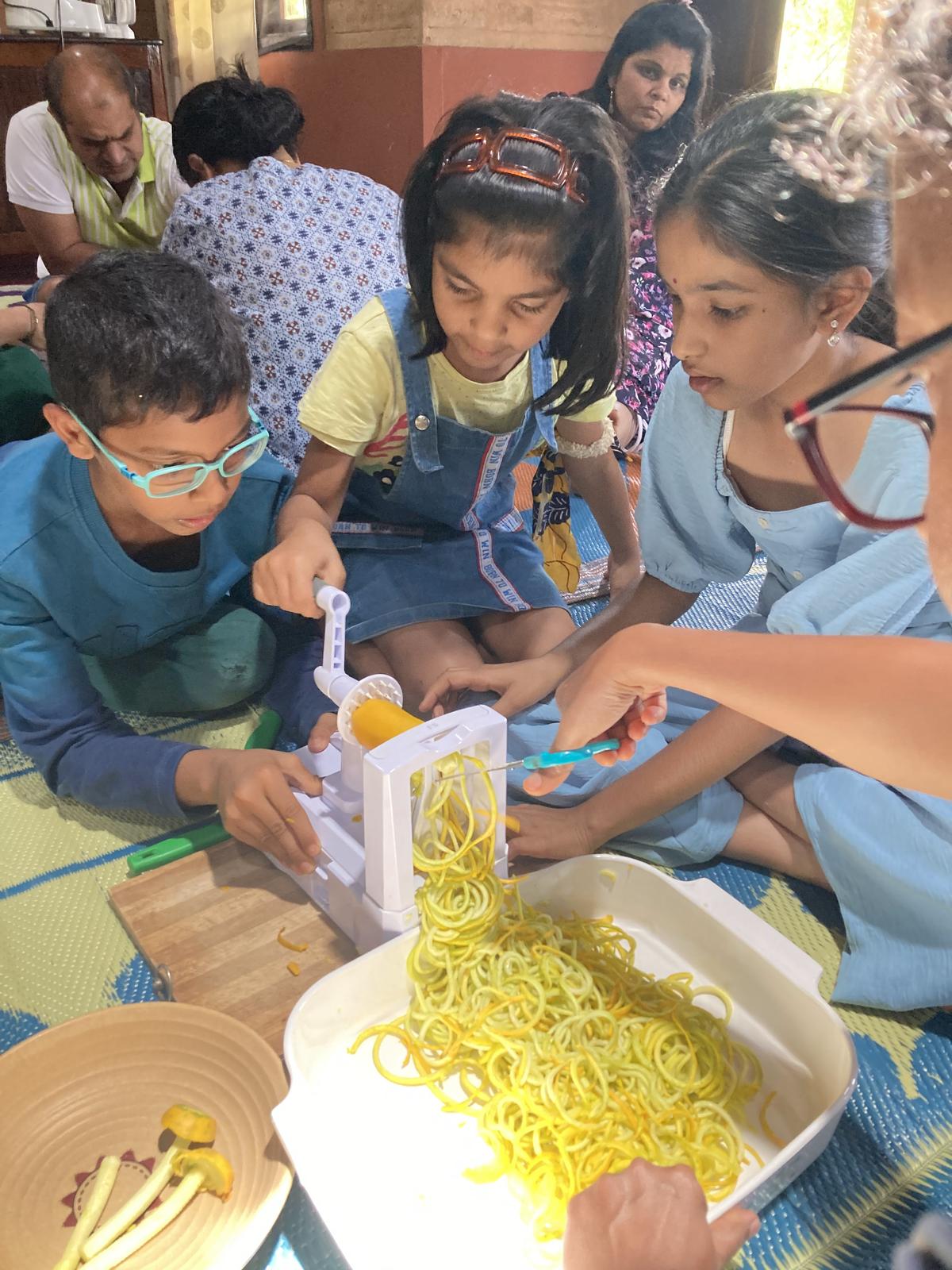
Cafes double up as activity centres to spark curiosity among visitors

Cafes double up as activity centres to spark curiosity among visitors
| Photo Credit:
Special Arrangement

Naina believes that cafés are increasingly functioning as community centres. The atmosphere of a café, she says, naturally lends itself to shared experiences and collective activity. “Single-use spaces aren’t where people go for open, community-led events,” she explains. “We host three events a week and have seen strangers turn into a community.”

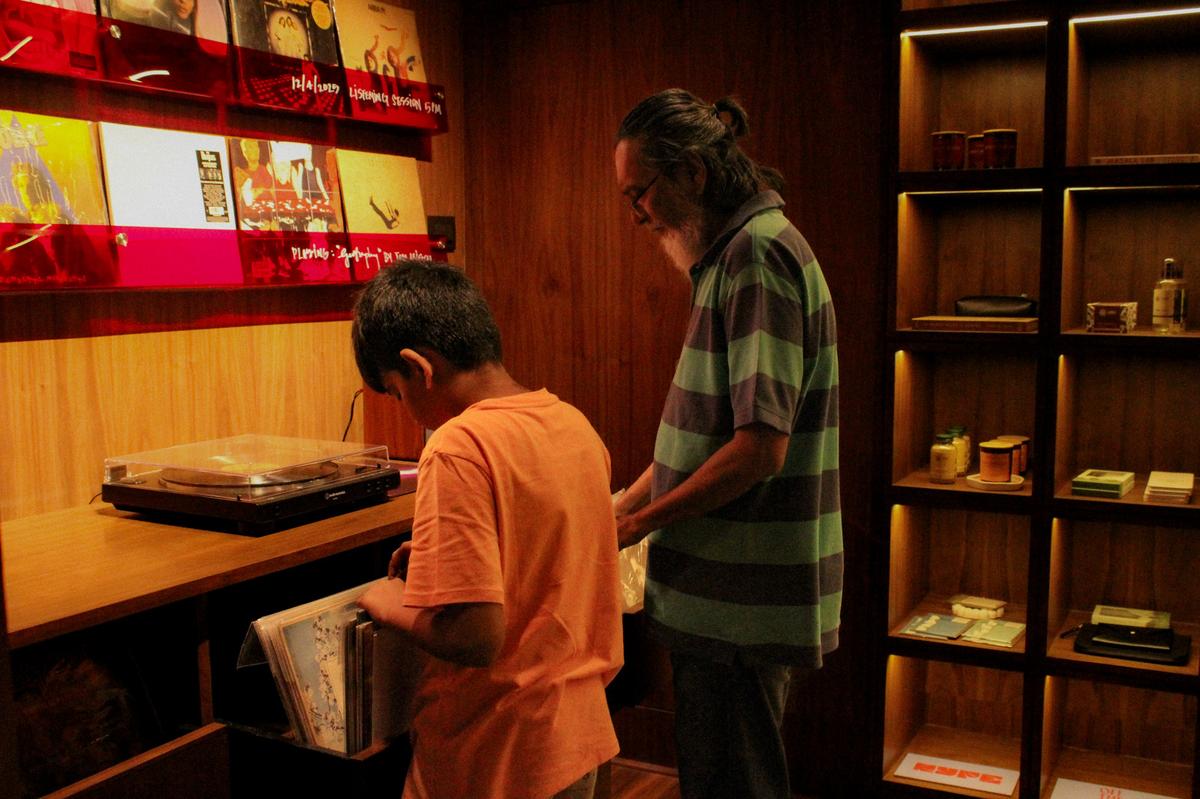
To encourage connections, LastHouse hosts a wide range of events like game nights and trivia evenings, along with listening sessions by the vinyl corner. The space welcomes pet-friendly gatherings, supports local run clubs and occasionally turns into a theatre for plays or a dance floor for tango sessions. “The analog spirit continues through film development workshops, exhibitions featuring typewriters and cameras, and collaborations that evoke a sense of nostalgia and tactility. We often also transform it into a co-working nook for designers, architects, and other creatives, as well as a stage for author readings and conversations,” added Naina.
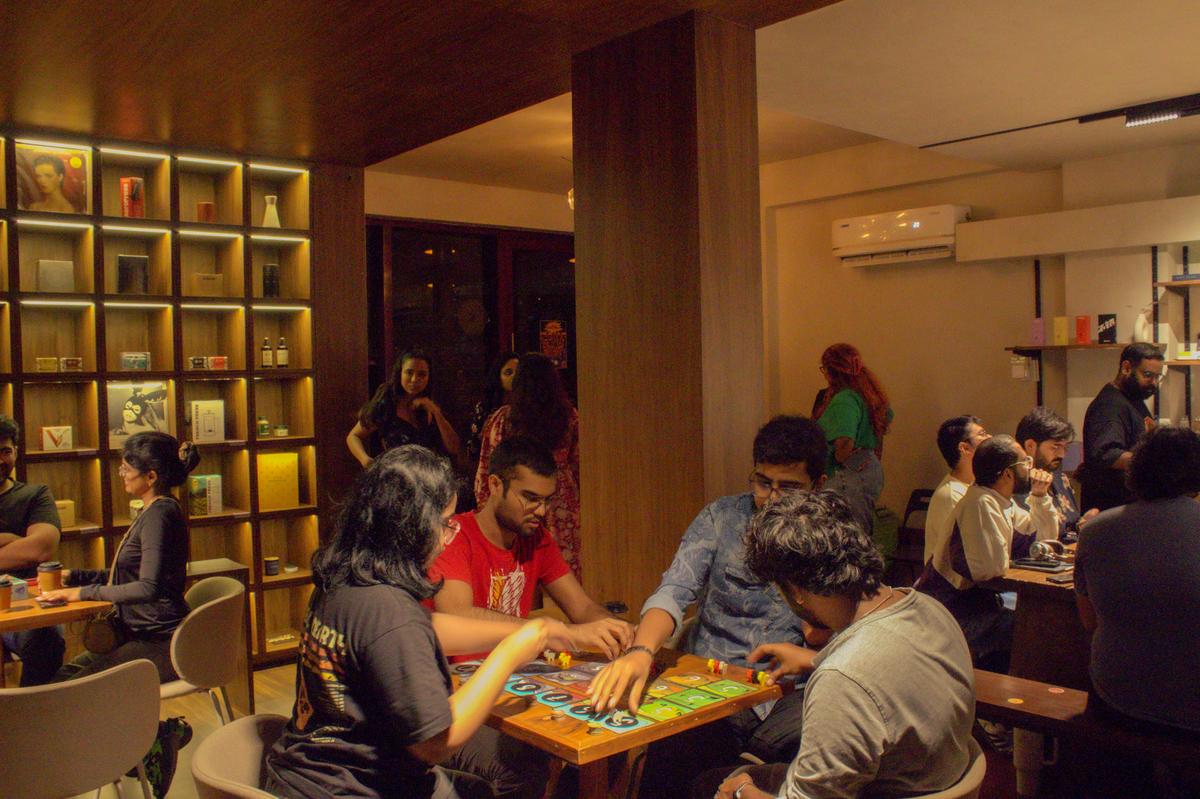
Play a board game, catch up with friends, or unwind at a cafe

Play a board game, catch up with friends, or unwind at a cafe
| Photo Credit:
Special Arrangement

With more people moving to cities for work, she notes, there is a constant search for safe, familiar environments to meet like-minded people — places where repeated interactions build trust and recognition. “Coffee plays a key role,” she adds. “People are curious, they want to learn, and coffee lovers don’t need much beyond the chance to understand and talk about a good cup of coffee.”

At the heart of every café is coffee. For Sooraj Toopalli of Toops Coffee House, community-building began with the cup itself. “My idea of creating a community was through coffee,” he says. “Hyderabad’s speciality coffee culture is strong — ahead of many other cities in India. It thrives because there are enough people genuinely interested in coffee.”

At Toops, coffee leads the conversation, not ancillary activities. “The growth has been organic and focused. Educating customers gives us real satisfaction.”
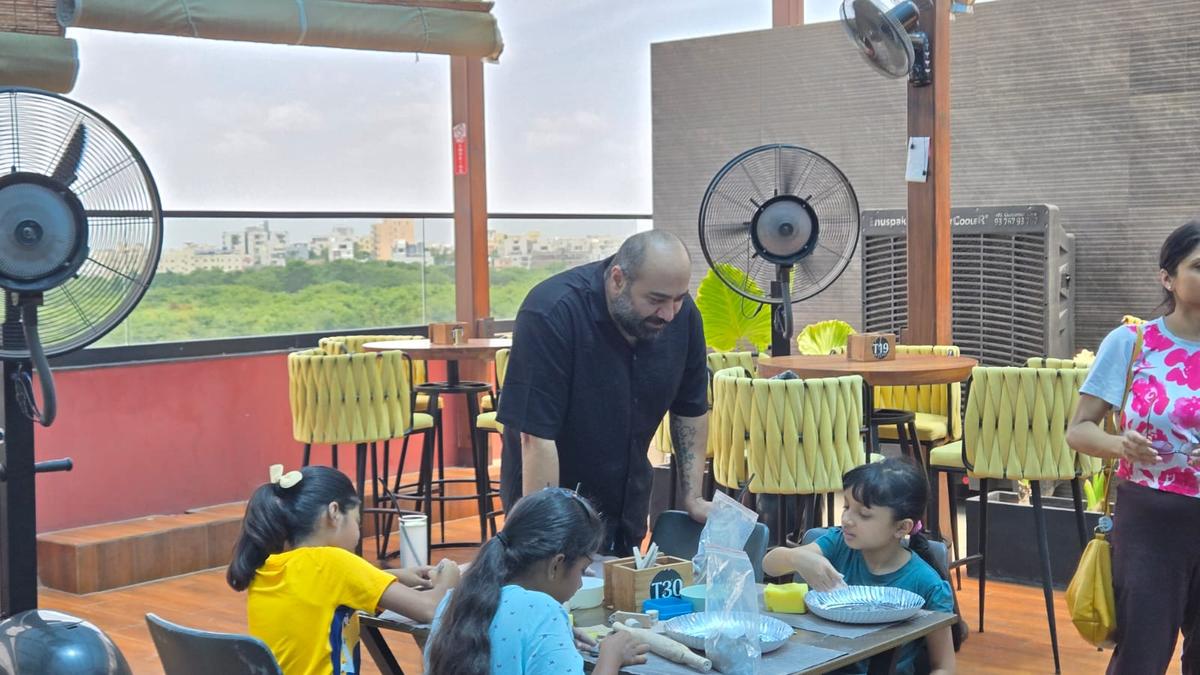
Cafes are open to hosting events for all age groups

Cafes are open to hosting events for all age groups
| Photo Credit:
Special Arrangement

For Syed Mujtaba Ali, partner at Grano – Coffee Affairs in Jubilee Hills, cafés were the natural choice for connection. “When we were in college, cafés were the only places we could truly hang out,” he says. “Not restaurants.” That sense of ease prompted him and his partner to start Grano. “We curate dishes that appeal to younger audiences and host activities that bring people together. Community-building is central to what a café does.”

Pottery artist Nitin Soma, who conducts workshops across cafés in Hyderabad, sees these spaces as catalysts for curiosity. “People walk into cafés to break routine or simply to be alone,” he says. “When they notice a workshop in progress, curiosity often pulls them in — and sometimes that’s how they discover a creative side they didn’t know they had.”
Published – December 18, 2025 04:36 pm IST


Source link

Top five cafes to visit at Kochi Muziris Biennale


Walking through the art venues at the Kochi Muziris Biennale 2025 at Fort Kochi can be tiring, especially in humid weather. Here’s a guide to cafes and eateries around the galleries where you can grab a glass of something cold and comforting to quench your thirst and find a nice dish to go with it. From sandwiches and pastas to traditional Kerala flavours, there is a selection to choose from.

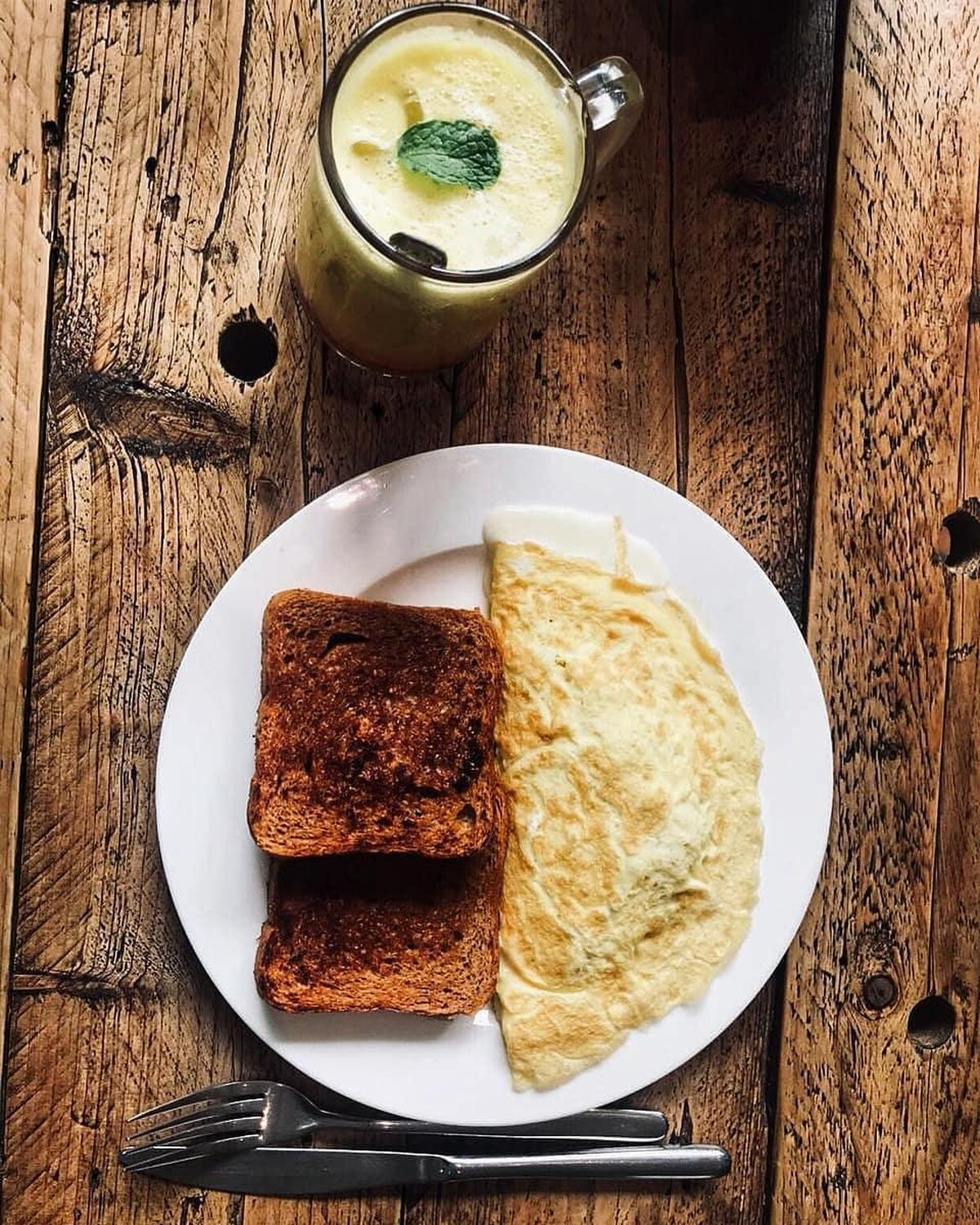
Toast and omelette at Qissa Cafe

Toast and omelette at Qissa Cafe
| Photo Credit:
Special Arrangement

Qissa Cafe

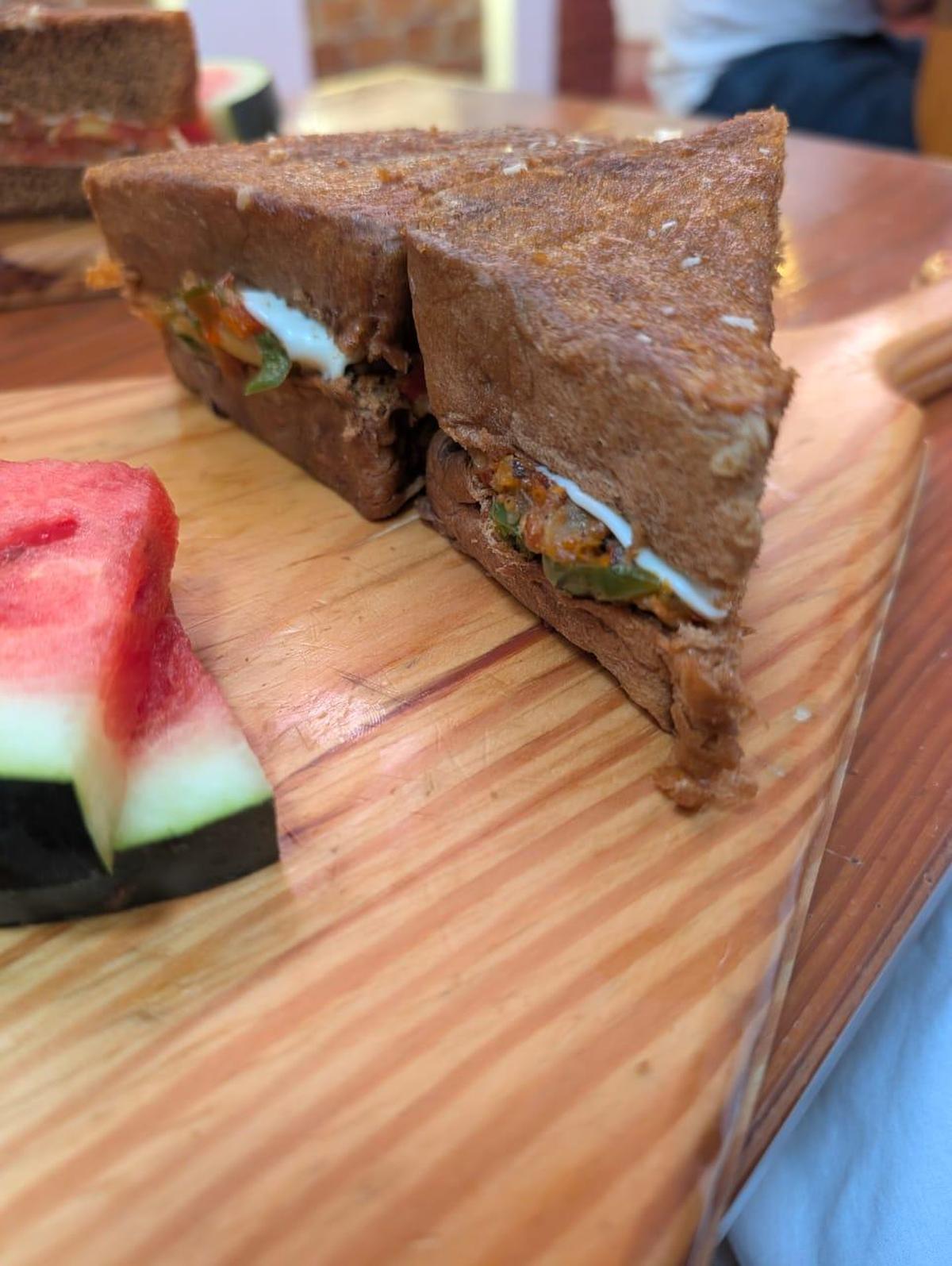
If you are not in the mood for a full meal, try the sandwiches here. These tuna, cheese, egg and chicken sandwiches are surprisingly light, yet filling. Served with two crunchy slices of watermelon, they are ideal for a quick lunch. Salads are on the menu, too. The drinks include tea and coffee, both hot and iced, and a variety of seasonal fruit juices. While at Qissa, check out the works on display as part of the Art Pavilion 2025, a showcase of paintings by various artists taking place alongside the biennale. Opened in 2015, the cafe’s breakfast offerings, including avacado special toast, are especially popular.

Order this: Pineapple cheese sandwich and ginger lemon soda

On KB Jacob Road, opposite the Police Station, Fort Kochi.

₹580 for two

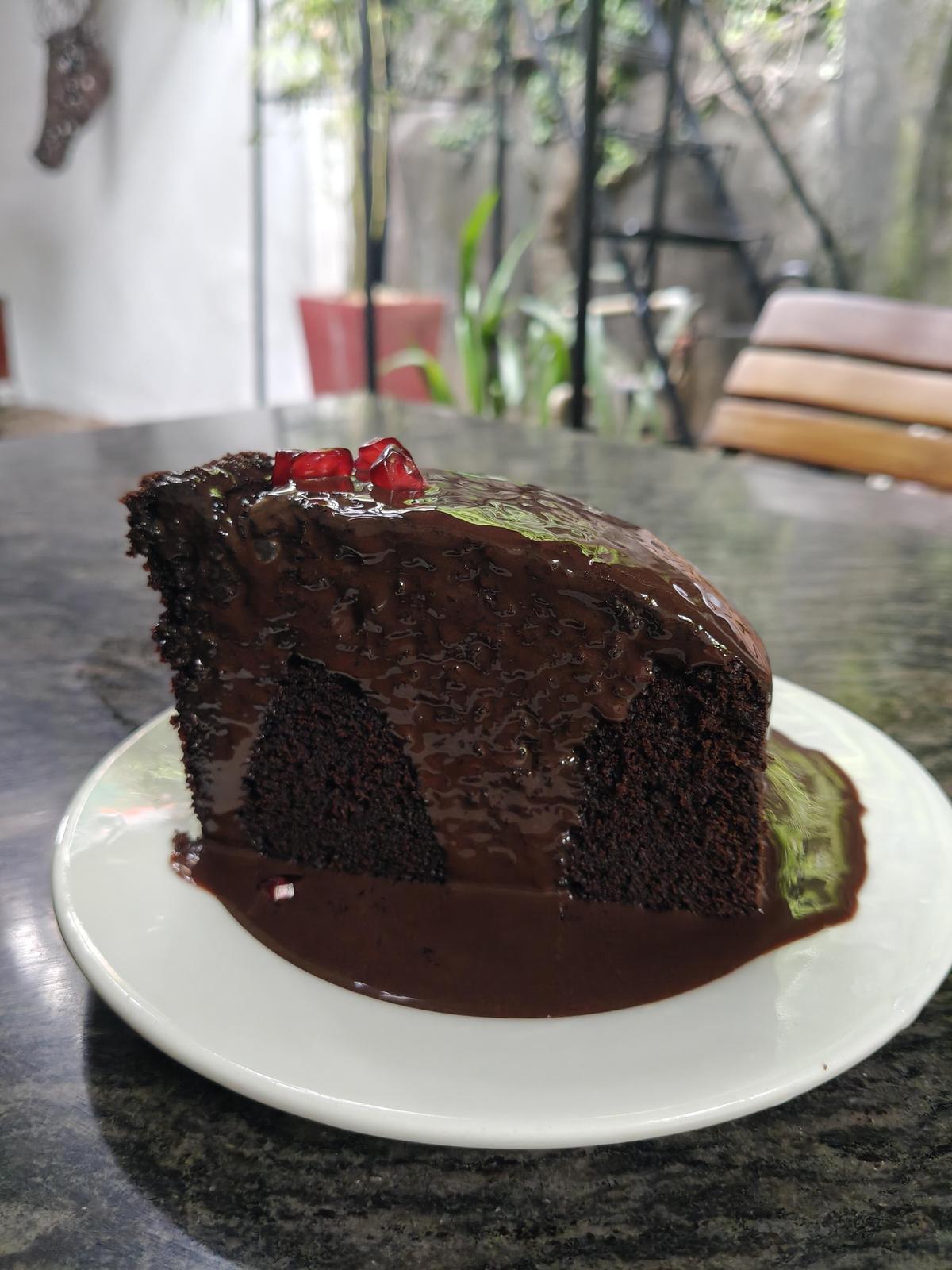
Chocolate cake at Kashi Art Cafe

Chocolate cake at Kashi Art Cafe
| Photo Credit:
Special Arrangement

Kashi Art Cafe

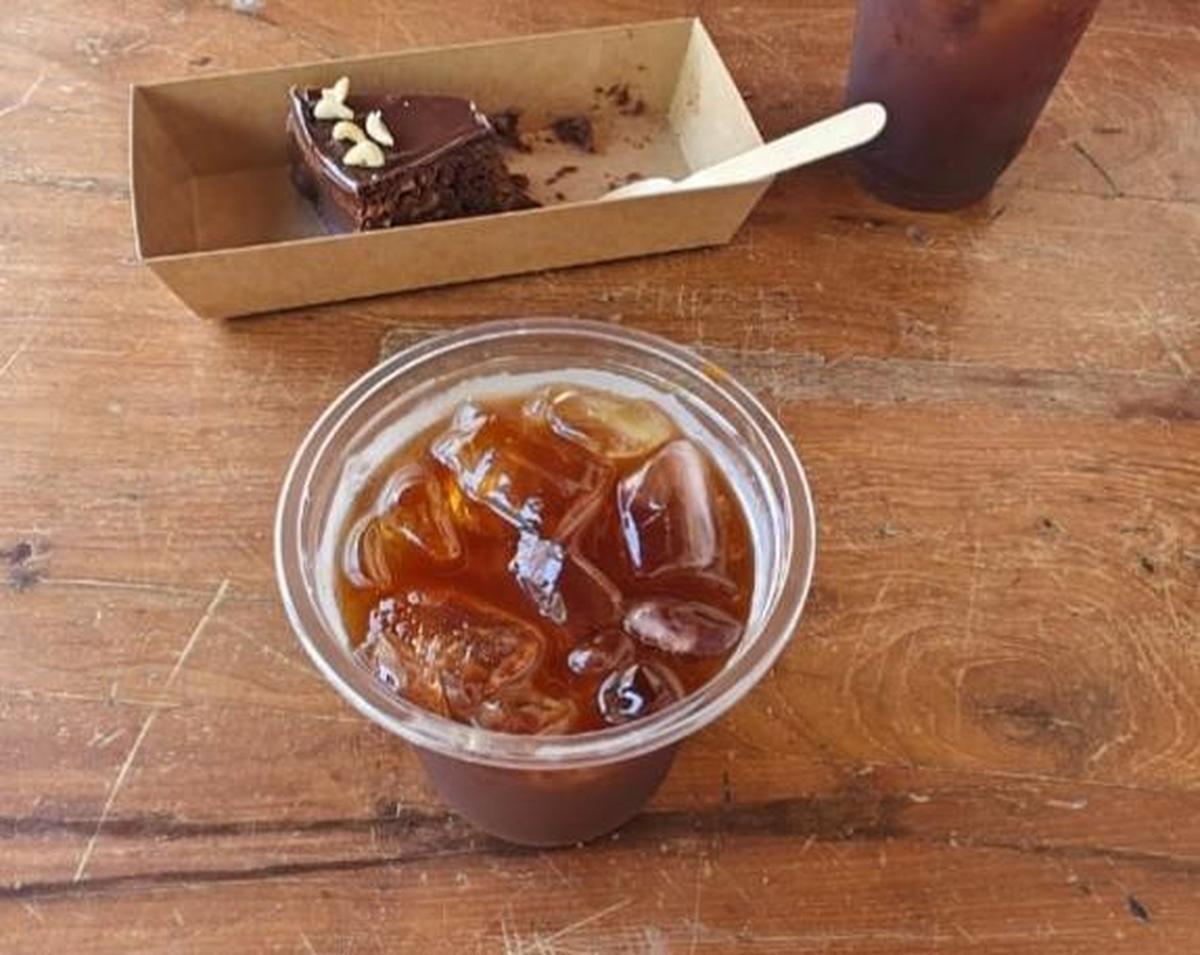
The chocolate cake at Kashi Art Cafe has always been and still is its biggest draw. It is a large portion of warm cake, moistened with chocolate sauce and can be easily shared by two people. If your are around during breakfast, try the appam and stew. Or choose from a selection of whole wheat sandwiches or omelettes available through the day.  It has a fully vegan and gluten free menu in addition to the main menu. Opened in 1997, Kashi is one of Kochi’s earliest art cafes, featuring the works of some of Kerala’s well-known artists, including Riyas Komu. Formerly an old Dutch House, with a courtyard, which is now the central space of the cafe, with lots of greenery, Kashi can be easily accessed on foot (about a two-minute walk) from one of the main biennale venues, The Aspinwall House.

Order this: Chocolate cake, cold coffee with ice cream, all meat lover’s omelette.

On Burgher Street, Fort Kochi.

₹800 for two

Meals at Solar cafe

Meals at Solar cafe
| Photo Credit:
Special Arrangement

Solar Cafe

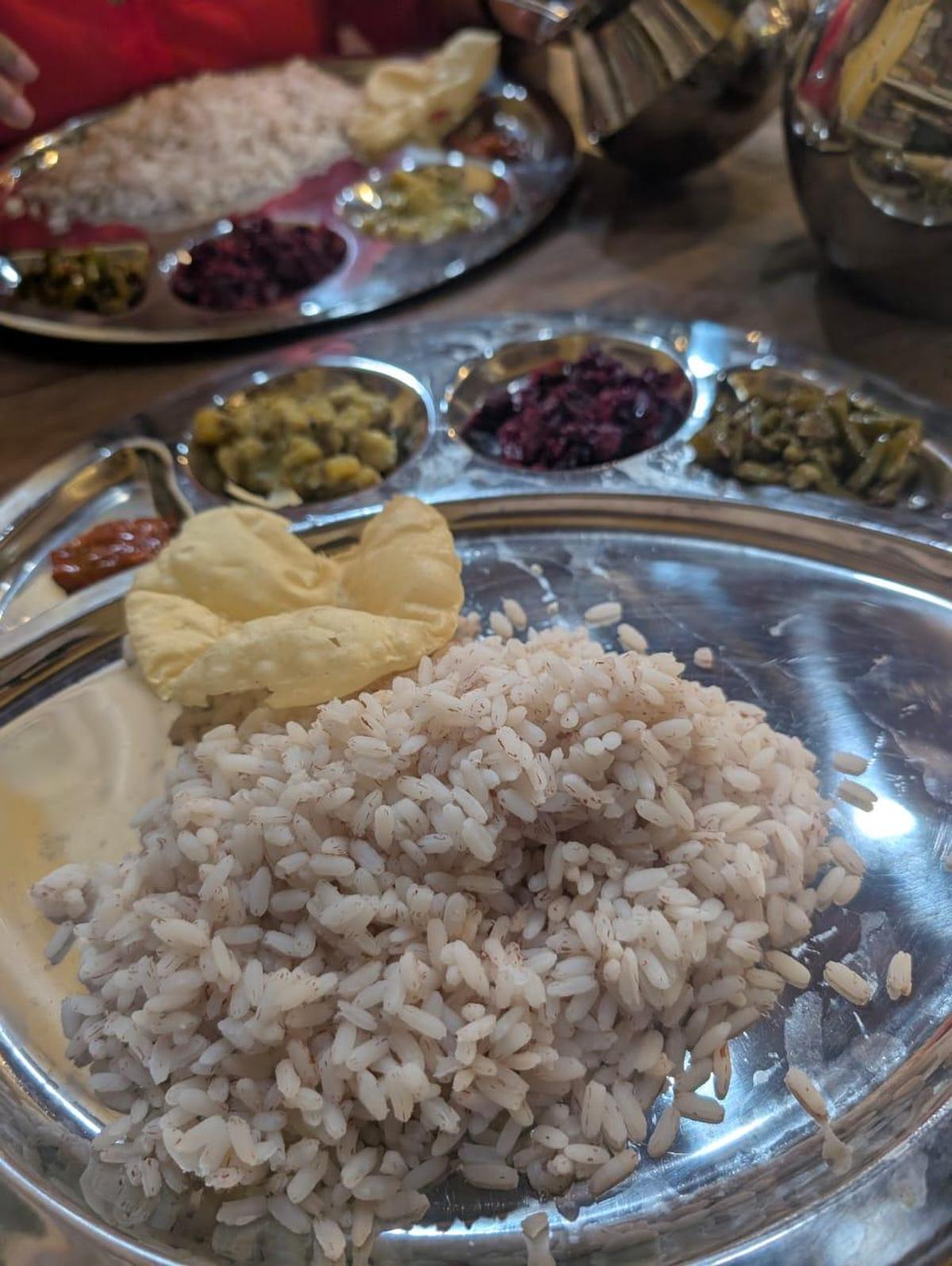
Open only during the Kozhi Muziris Biennale, this cafe with its bright yellow walls and shelves lined with books and vintage tables and chairs is buzzing with energy in the middle of the day. Take the wooden flight of stairs to find your spot. A satisfying traditional Kerala meal, complete with fish curry and fry, pappadam and buttermilk gives you an experience of the local flavours. Salads and sandwiches are available too, in addition to tea, coffee and fruit juices.

Order this: Fish curry meals and lime soda

Opposite Customs Jetty.

Calvathy Road, Kunnumpuram, Fort Kochi

₹400 for two

Cocobay mint at Pepper House Cafe

Cocobay mint at Pepper House Cafe
| Photo Credit:
Special Arrangement

Pepper House Cafe

Coffee and coconut blend perfectly well in Cocobay Mint, a speciality drink at Pepper House Cafe. Managed by Rakkaudella Chocolates, a Kerala-based single origin chocolate brand, the cafe serves a limited but tasty selection of sandwiches, salads, cold drinks and desserts. A chocolate experience centre, set to open soon, will feature 32 varieties of the brand’s chocolates. The experience centre will function even after the biennale. What enhances the experience is the partly-open air seating and Pepper House’s heritage vibe. One of the main venues of the beinnale, the galleries on the first floor showcase the works of artists including Monica Correya and Nityan Unnikrishnan.

Order this: Chocolate cake and Cocobay Mint

Near Hotel Seagull, Fort Kochi.

₹800 for two

Spicy potato sandwich at Mocha Art Cafe

Spicy potato sandwich at Mocha Art Cafe
| Photo Credit:
Special Arrangement

Mocha Art Cafe

A full tomato cheese sandwich is filling, but eating it in a cafe housed in a 16th century Dutch mansion speaks directly to the soul. The busy little cafe is at one of the narrow passageways within the mansion, which has various rooms converted into antique and clothing stores. The menu includes salads, soups, steak, sandwiches, a selection of omelettes, pasta and pancakes. Tea, coffee and seasonal fruit juices form a chunk of the menu. While you wait for the food, you could take a look at a collateral show of the biennale, The Lightness of Being, a collection of abstract paintings by Shobha Broota, curated by Ina Puri. 

Order this: Spicy potato sandwich and cold coffee with ice cream

Opposite the Jewish Synagogue, Jew Town, Mattancherry.

₹600 for two

Published – December 18, 2025 04:25 pm IST


Source link

Inside India’s growing whole food plant-based movement


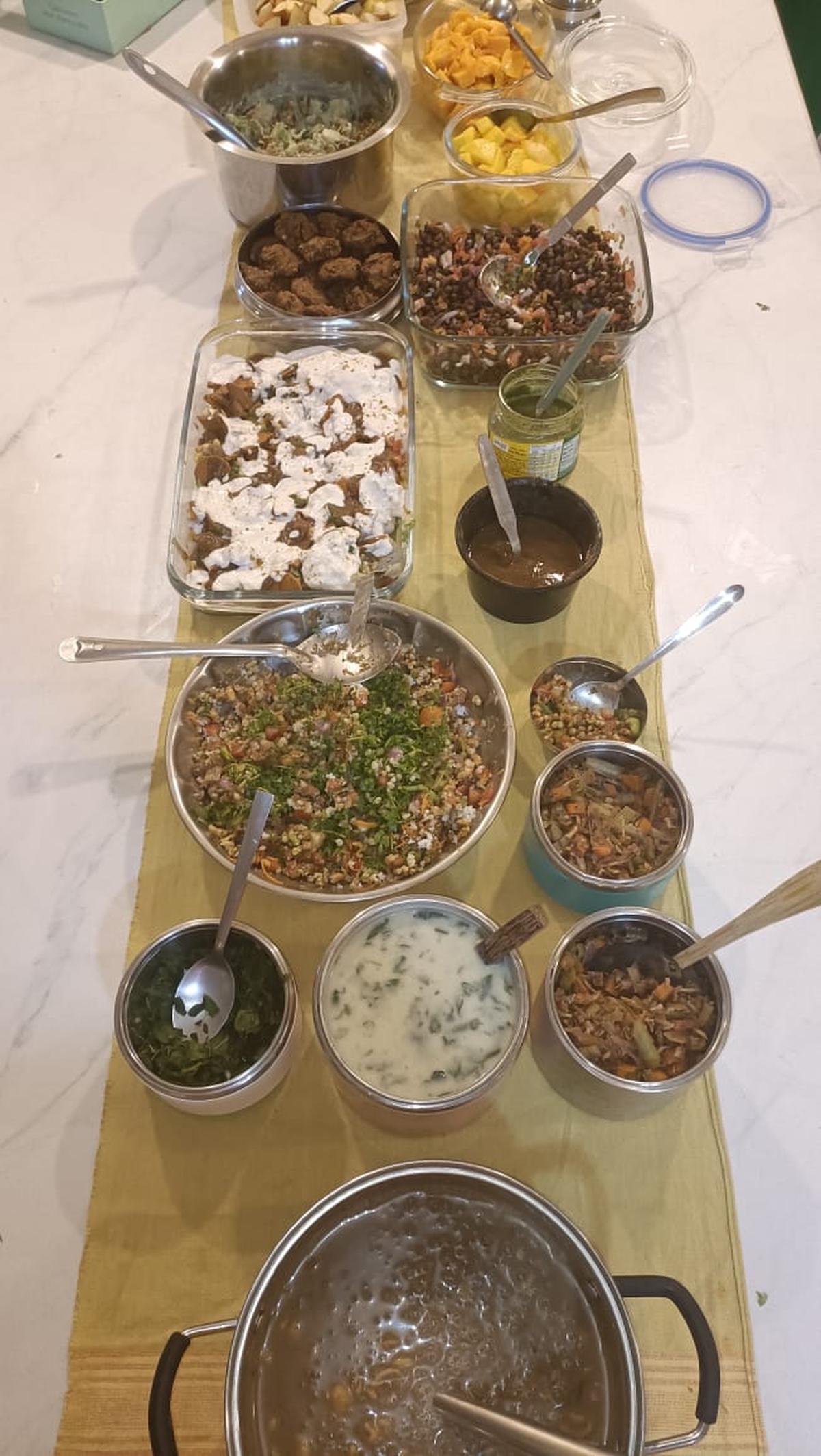
A few months ago, I attended a vegetarian potluck where no oil, dairy, or refined products were allowed. I took my mother’s dry fruit ladoos made only with dates and nuts. To my surprise, the event organised by Poshak Life, brought together a wide variety of dishes, from payasam to fresh bread. It also introduced me to the vibrant and growing community of Whole Food Plant-Based (WFPB) makers and eaters.

Bengaluru-based entrepreneur Deepali Gaonkar was introduced to this lifestyle five years ago when she attended a webinar by Poshak Life, a Pune-based organisation founded by nutritionist Saee Bapat that offers holistic nutrition and wellness coaching. “I joined a 21-day challenge and that’s where the journey truly began,” says Deepali, 53, who later joined Poshak Life as co-founder and now crafts the brand’s snacks.

The core idea of the WFPB diet is to eliminate “the five whites”

The core idea of the WFPB diet is to eliminate “the five whites”
| Photo Credit:
Thai Liang Lim

Start in the kitchen

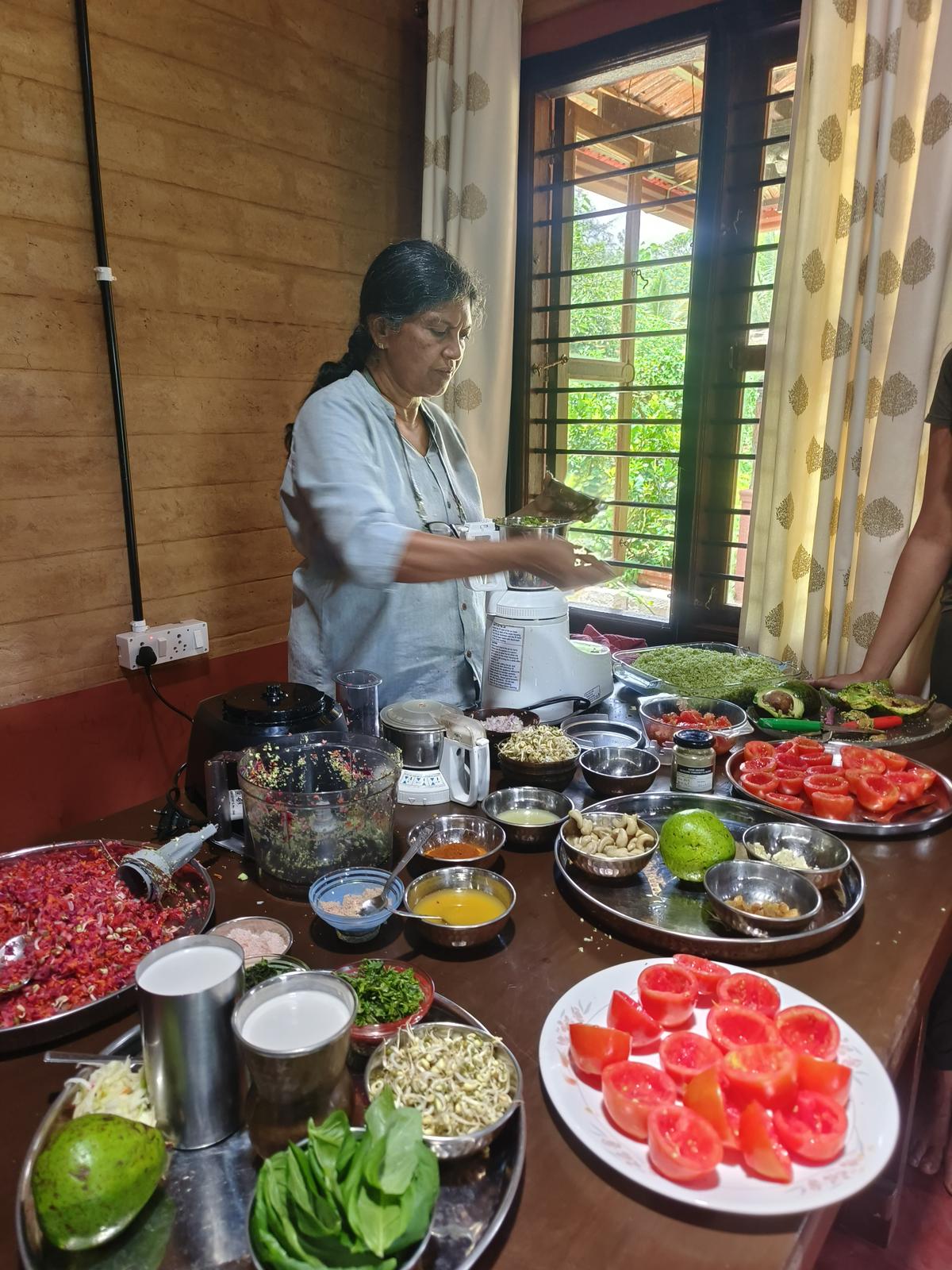
The core idea of the diet, she says, is to eliminate “the five whites”: replace white rice with unpolished rice, dairy milk with plant-based milk, refined flour with native whole grain flour, white salt with sea salt or Himalayan pink salt, white sugar with natural sweeteners, and refined oil with whole fats from seeds, nuts, coconut, and avocado. “My kitchen has access to ripe fruits, a variety of seasonal vegetables, coconut, unpolished rice, unrefined flours, and regular Indian spices. For special occasions, I use cashew cheese or almonds but that’s not regular food. Daily meals don’t need anything fancy,” says Deepali.

The movement has followers across India. In Bengaluru, yoga and naturopathy physician Achyuthan Eswar launched Sampoorna Ahara in 2019. “After every workshop, people would ask us if someone could home deliver WFPB food, and since then we have delivered over 2.5 lakh meals across India,” he says, adding that they supply comprising ladoos, murukkus, gravy mixes and more.

A snapshot from the Let Food Be Thy Medicine workshop

A snapshot from the Let Food Be Thy Medicine workshop
| Photo Credit:
Special Arrangement

Natural farmer, Merwin Fernandes — who runs the Savera Naturals farm in Sakleshpura — runs four-day workshops titled Let Food Be Thy Medicine, which comprise theory and practical demos coupled with yoga. The 66-year-old says he switched to a WFPB lifestyle in 2017. “Previously, I wouldn’t step into the kitchen. Now I make my own salads, desserts, etc. I don’t need alcohol to socialise which was unthinkable earlier. I feel more energetic and healthier at 66 today than in my 50s,” says Merwin.

How to bake a whole wheat cake

Chefs like Anuradha Sawhney are finding creative ways to work with whole foods. Anuradha headed People for the Ethical Treatment of Animals (PETA) for over nine years and started a WFPB kitchen, Back to the Basics, after she retired. “I transitioned to a vegan bakery where we use only whole wheat, jaggery, dates, bananas, sorghum, brown rice and other millets to make cakes. I also started Bombay Cheese Company, and my latest offering is mithai,” she says.

Food at the Let Food Be Thy Medicine workshop

Food at the Let Food Be Thy Medicine workshop
| Photo Credit:
Special Arrangement

The distinction between vegan and WFPB is an important one, “and one that many people are still learning about”, says Nidhi Nahata who runs JustBe, a WFPB cafe in Bengaluru. “Vegan, vegetarian, and plant-based diets all stem from ethical and health-conscious choices. But WFPB diets go a step further. It is about eliminating not just animal products, but also oil, white flour, refined sugar, and highly processed ingredients. That said, I also recognised the importance of being inclusive. At Justbe, we offer both vegan and WFPB options,” says Nidhi.

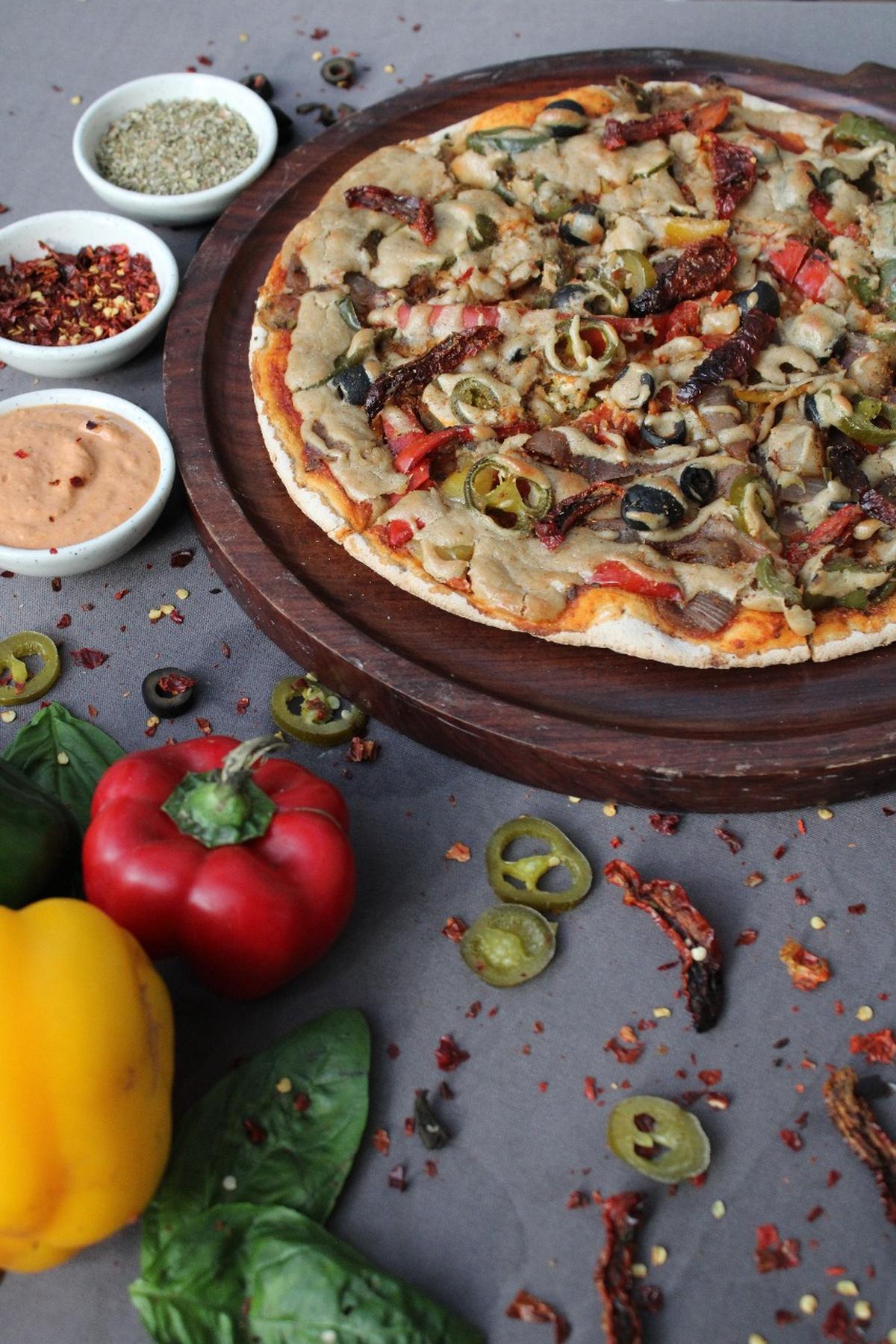
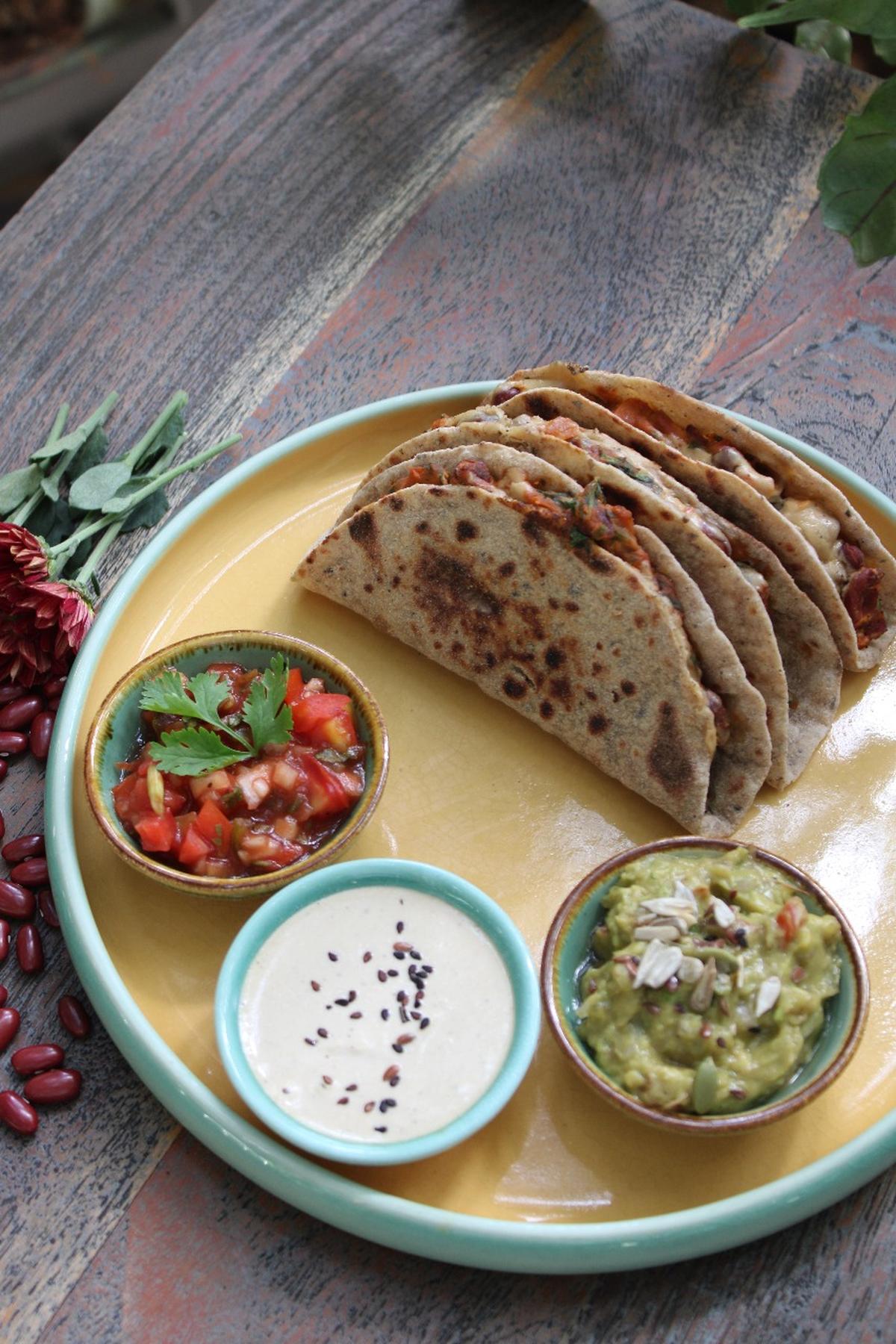
Nidhi’s says training chefs is challenging. “Most are trained in the belief that flavour comes from fat: oil, butter, cream. But when they begin experimenting and tasting, they are amazed,” says Nidhi. The menu includes Parthewali Gully, a lasagna that uses vegetables instead of pasta sheets, kali dal that is rich and creamy without dairy, and gluten-free pizzas made with nut-based cheeses. She adds, “Most people equate a good meal with feeling full to the point of heaviness. WFPB food nourishes you; it fills you up without weighing you down.” .

A pizza at JustBe

A pizza at JustBe
| Photo Credit:
Special Arrangement

Given that these diets are not as mainstream yet, social situations, dining out and travelling can be challenging. Neelima Sriram, a chef and recipe developer currently based in Almaty, Kazakhstan, from where she conducts online and offline classes says she follows the 80-20 rule. “Which means I don’t hesitate to order vegan food but I make sure to pick healthier options and I also carry a few basics like roasted seeds, trail mix, or a quick khichdi mix. At restaurants, I ask for simple customisations: steamed or lightly sautéed veggies, or salads with lemon. And when I’m invited to someone’s home, I usually take along a WFPB dish to share.”

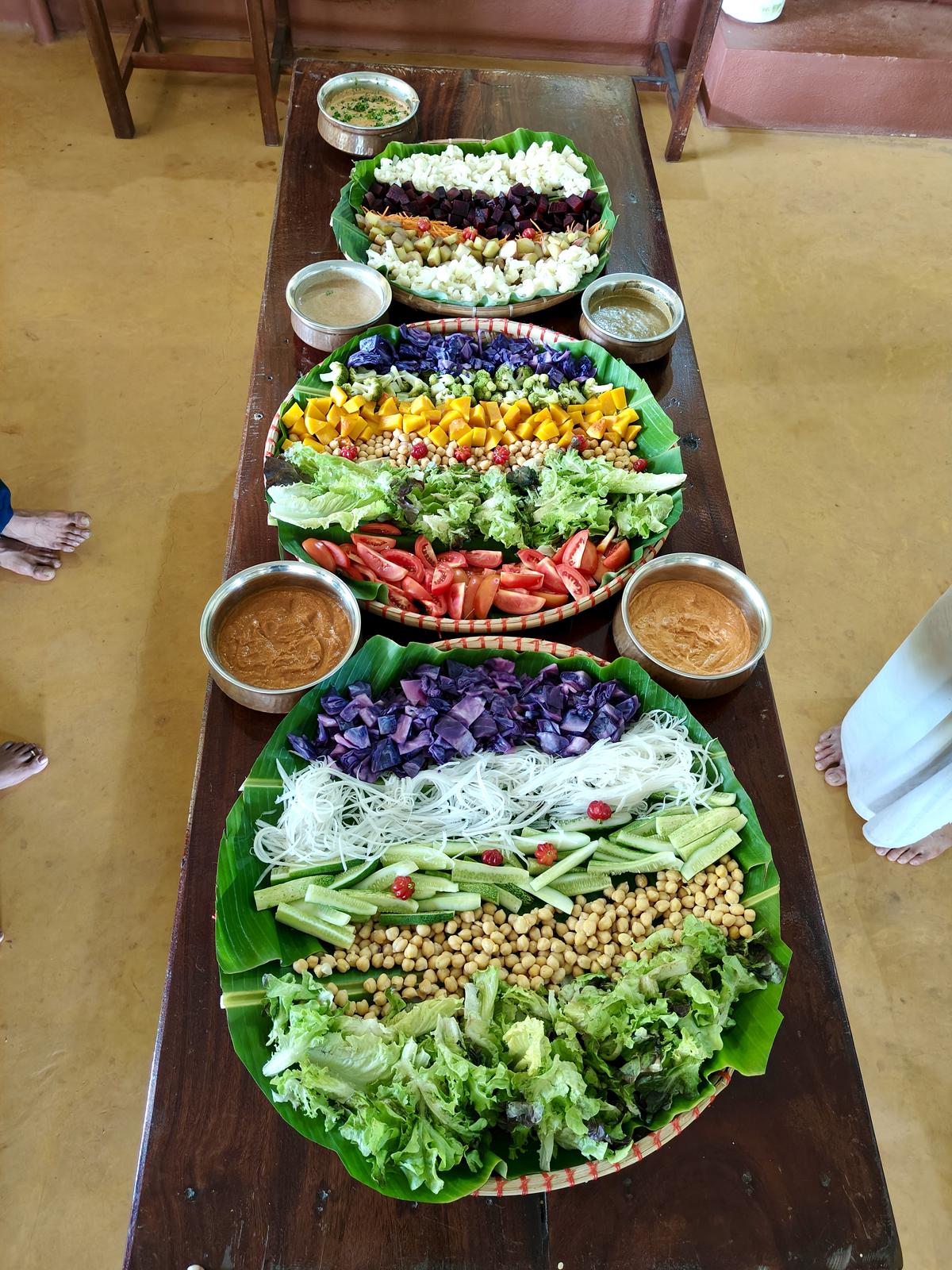
Food at a Poshak Life potluck

Food at a Poshak Life potluck
| Photo Credit:
Special Arrangement

What do doctors say?

However, swapping biriyani for a millet cake is not a magic solution. Dr. Lakshmi Sundar, President, Indian Society of Lifestyle Medicine, says that “While it is a healthier approach to living, I cannot follow it 100%. There are times I have a samosa or a vada, and that is alright which is something I tell my patients too,” she says. “I ask them to first increase the quantity of vegetables on their plate. If they feel like indulging in say, a biryani, I tell them to have a smaller portion and pair it up with a vegetable,” adds Dr Lakshmi who is also pushing for policy-level changes with the government. Lobbying for subsidised vegetables for the poor, for instance.

Food at JustBe

Food at JustBe
| Photo Credit:
Special Arrangement

Dr Rajeena Shahin, Medical Director for the Physicians Association for Nutrition (PAN) India, notes that nutrient inadequacy can exist if diets are poorly planned. “Plant-based diets can fall short in nutrients like B12, iron, zinc, iodine, and omega-3s, but these gaps are addressed through mindful planning, fortified foods, and targeted supplementation,” says Rajeena, who has trained nearly 10,000 doctors to integrate evidence-based nutrition interventions into clinical practice through Continuing Medical Education (CME) programmes and conducted workshops in medical colleges and AIIMS institutions.

A snapshot from the Let Food Be Thy Medicine workshop

A snapshot from the Let Food Be Thy Medicine workshop
| Photo Credit:
Special Arrangement

Dr Rajeena also explains that certain medical conditions and medications may require modifications. “For example, individuals with chronic kidney disease may need to monitor their intake of potassium, phosphorus, and certain plant proteins. People on blood thinners may need to maintain consistent vitamin K intake, which is abundant in leafy greens. Those with digestive disorders might initially need a lower-fibre approach.”

If you cannot make the switch, even small swaps are beneficial. Dr. George Thomas, an orthopedic surgeon and independent practitioner, says that while a vegetarian or WFPB diet is healthier, it is not possible for everyone to follow. “Our body needs essential amino acids, the building blocks of protein, that it cannot produce by itself, and therefore depend on our diet to supplement us. Animal-based foods are the easiest source of these amino acids. It is possible to meet the requirement in a vegetarian diet, but it is expensive,” he says, adding, “One needs to be practical.”


Source link

Inside Studio Saar’s upcoming sustainable PCB factory project


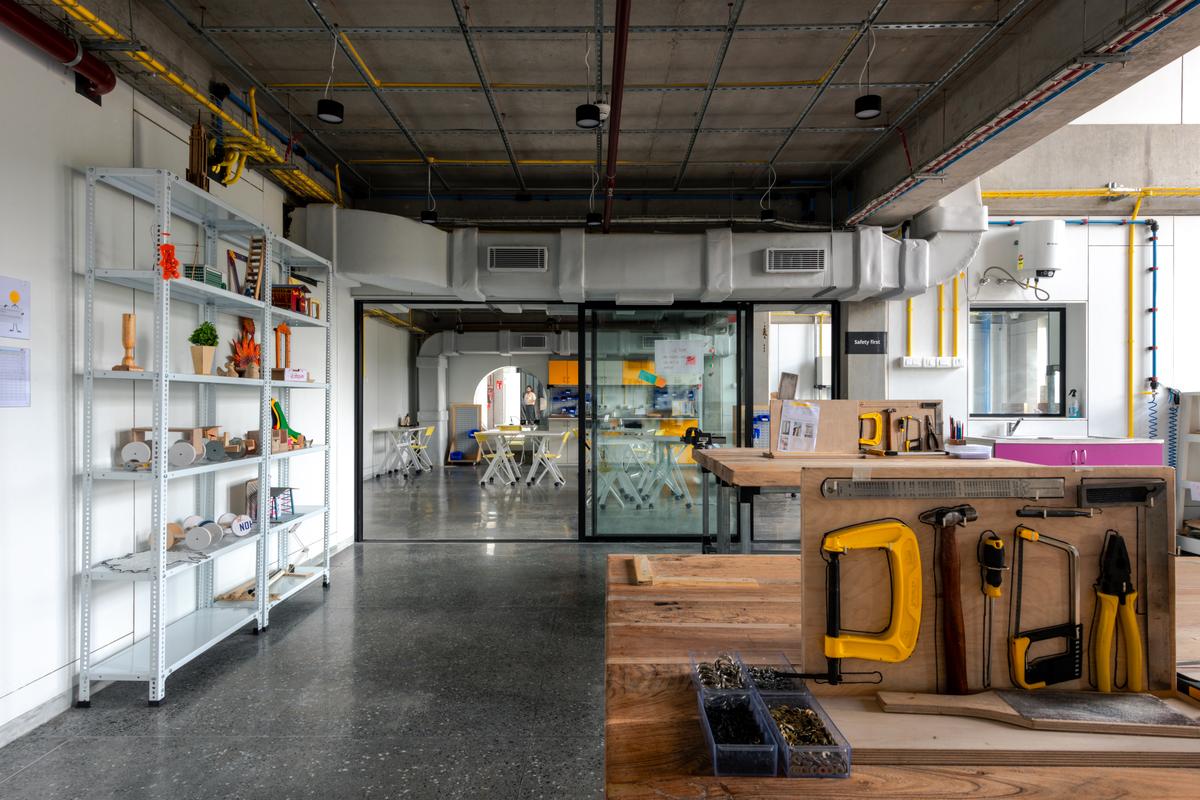
There is a lot that can change in our cities, especially in India, if people and organisations take ownership of their public spaces. And Studio Saar — an Udaipur-based architecture practice with a presence in the UK — has several examples of enriched public spaces in Udaipur courtesy of community-led design. Key projects of the practice helmed by Ananya Singhal include: Udaan Park (located on the west bank of the Swaroop Sagar lake) that has been redeveloped by interactive landscapes, a canopy of bird replicas, repurposed tyres, and medicinal plants; and The Third Space, a vibrant community centre with interactive educational games, a toddler day care centre, science experiment zones, and more.  

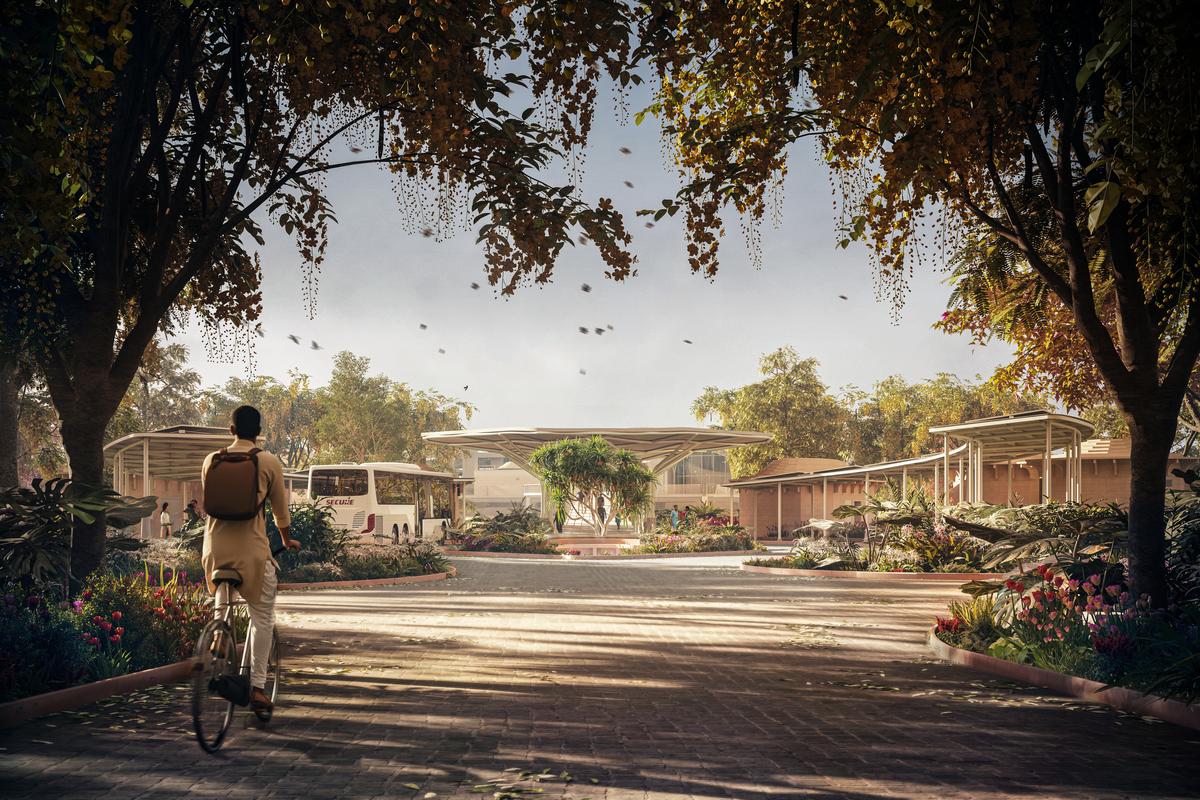
A visualisation ofa the upcoming factory at Sehore, Madhya Pradesh

A visualisation ofa the upcoming factory at Sehore, Madhya Pradesh
| Photo Credit:
Hayes Davidson

Now, the team is busy working on one of their most ambitious projects till date. This is designing the ‘world’s most sustainable printed circuit board (PCB) factories’ at Sehore, Madhya Pradesh, for Studio Saar’s parent company Secure Meters, an Indian multi-national metering and energy business. To be completed in October 2026, Secure Sehore is projected to supply 30% of the country’s PCB demand, and boost India’s high-tech manufacturing sector that currently sources only 10% of PCBs domestically. 

Ananya Singhal, managing partner, Studio Saar explains how, in the case of PCB manufacturing, present practices are not customer service-centric. “They use a lot of clean water, and are responsible for a vast amount of carbon generation and physical waste,” he says, adding how the manufacturing of PCBs requires water, skilled labour, land, low carbon and low-cost energy, and central India was an apt choice to locate the factory in. Secure Sehore, Ananya explains, is a part of a major cohort of new industrial development that will boost India’s ability to manufacture high value electronics domestically. “PCBs are low value, but critical to create quality components in all electronics. This is a major opportunity to de-risk a key industry from the uncertainties and the current volatility of global markets and politics.”

A snapshot of The Third Space in Udaipur

A snapshot of The Third Space in Udaipur
| Photo Credit:
ANKIT JAIN

Landscape-derived design 

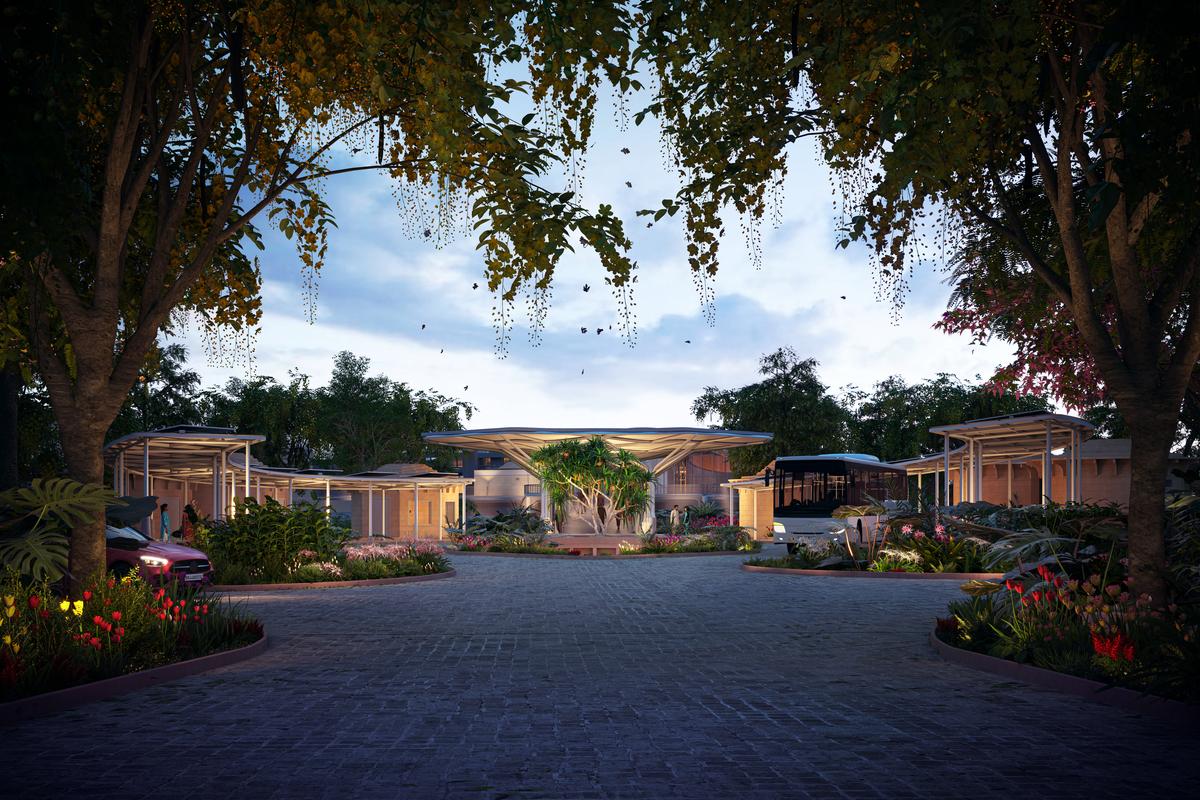
Designed according to the principles of passive, circular, and regenerative design, the facility is slated to employ 1,000 people, with 500 working on-site at peak capacity. “The form of the building is very much derived from the landscape,” says Ananya. Traditional stone architecture is spread through the building, with cantilevered staircases that are inspired by the havelis of Bhopal, and corbelled roof structures that highlight the region’s local stone masonry culture. He adds, “We have endeavoured to ensure the building and the manufacturing process balance between cost, energy, water and quality. From the moment people will be picked up from their homes by a bio-diesel powered bus, to the fact that we are designing the whole structure to be reusable with virtually no processing.” 

Ananya says a combination of heat, dust, and humidity, is a major cause of quality failures in PCB manufacturing. Hence, the design includes shaded openings, highly insulated roofs with solar panels, facades that absorb radiative heat, and vegetation around the site. Over 80% of rainwater that will fall on the site will be conserved to aid an eight-acre native forest and shrub-land rewilding scheme, and production in the factory. “We are targeting 95% water re-use in the factory and ensuring we can retrieve usable minerals and metals from the waste water,” he says.

A visualisation ofa the upcoming factory at Sehore, Madhya Pradesh

A visualisation ofa the upcoming factory at Sehore, Madhya Pradesh
| Photo Credit:
Hayes Davidson

Green strategies

Elaborating on the site’s rewilding programme, Ananya says it was initially a wasteland “due to overgrazing and poor management of the scrubland”. Along with Secure’s community-driven environmental initiative 10 Lakh Vriksh and experts in rewilding and traditional forestry, a rewilding campaign has been initiated. “There are stages of planting that begin with soil stabilisation and end with a drought resistant, native, self-sustaining biodiverse ecosystem. This will include bioswales that will prevent surface runoff and purify the water entering the soil and our rainwater harvesting tanks,” he says, adding, “This is a zero-discharge site with 95% water reuse, along with this, the use of reusable and recyclable materials with passive cooling is also key.” 

I ask Ananya if there is a particular part of the project he is most excited to see when it is completed next year. For him, a project with regenerative practices at its core must have all its elements come together “to make the scheme sing”. “I am genuinely looking forward to seeing how the staff and workers experience the joyfully designed indoors, the rewilded and biodiverse green spaces, and the experience customers will have that will completely alter the paradigm of what PCB plants can be,” he concludes.

Published – December 18, 2025 03:14 pm IST


Source link

Politics on my plate: Salt, labour and culture at 10th Serendipity Arts Festival


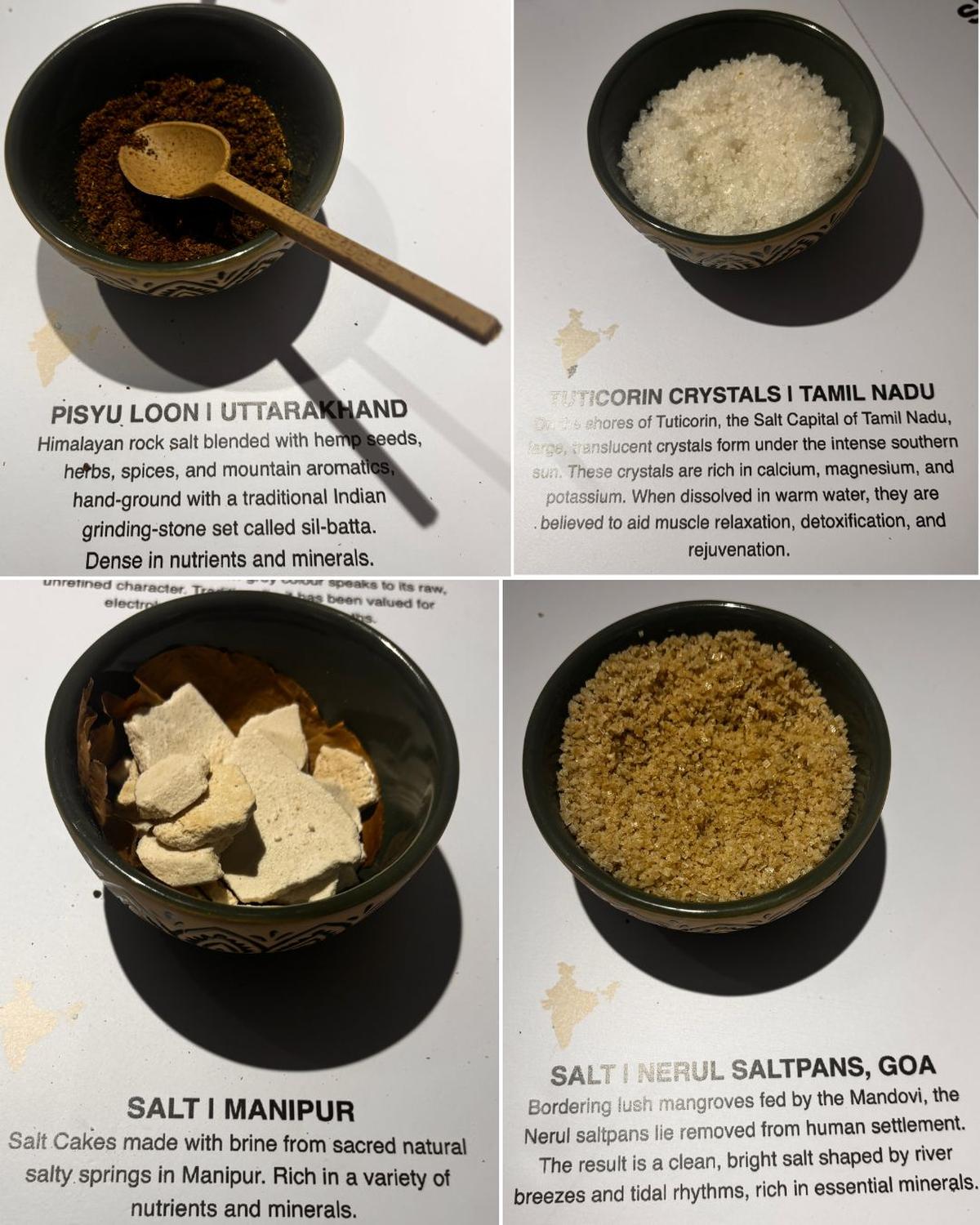
Who makes our salt? What is the skill needed to make it? Where does it come from? At Salt, one of the 250-plus projects of the Serendipity Arts Festival in Panjim, Prahlad Sukhtankar, sommelier and founder of The Black Sheep Bistro in Goa, invites participants to immerse themselves in stories of Indian salts. As part of the experience, they can dip into bowls of 16 types of salt. “In Tamil Nadu, salt is culture,” one photo-story says, detailing how fish and meat are salted, how it is offered to deities, and brought into the house by a bride. “Sambalam, meaning wages, derives from the combination of samba (paddy) and alam (saltpan),” a note tells us.

After an eight-month-long research with communities that make salt, Sukhtankar says what annoyed him the most was either a total disinterest in the everyday ingredient or a reverence for salts that came from abroad. American journalist and author Mark Kurlansky barely mentions India in his book Salt: A World History (2003), he says.

No one anticipated how salt pans would come into focus, when, on December 6, a couple of weeks before Serendipity, 25 people died in a fire at a Goa bar, with allegations that it was built illegally, on a salt pan.

At Salt, by Prahlad Sukhtankar, founder of Goa’s Black Sheep Bistro, participants can dip into bowls of 16 types of salt.

At Salt, by Prahlad Sukhtankar, founder of Goa’s Black Sheep Bistro, participants can dip into bowls of 16 types of salt.
| Photo Credit:
Sunalini Mathew

Sukhtankar hopes the message people will take away is that “we don’t look at salt pans as empty plots of land waiting for development. It is a living intelligent ecosystem that we need to nurture and protect, and it will do the same in return”.

At the Serendipity Arts Festival, now in its 10th year, festival director Smriti Rajgarhia says, curators — this time over 35, expanding from the usual 10-12 — were given 10 “curatorial parameters”, including addressing local concerns and appealing to the youth.

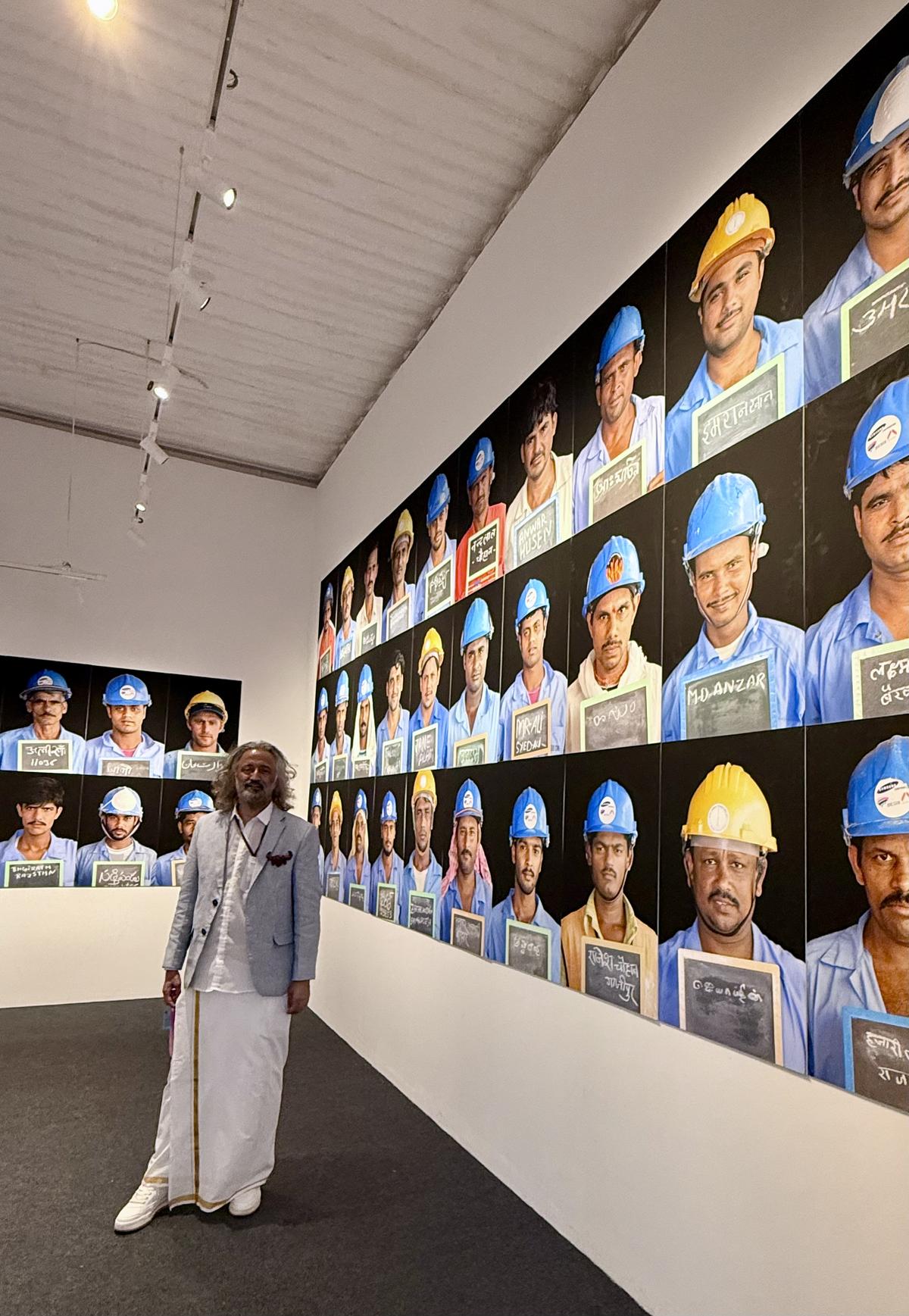
In fact, they only enunciate themes that the news throws up: of migration, oppression and war. For instance, in curator Ranjit Hoskote’s Otherland, which exhibits works by a group of four photographers, Ram Rahman addresses issues of human rights violations, through images of protest from the streets of New York, against Israel’s offences in Gaza. ‘Dump Trump & Mulch Musk’ says one poster within the photograph. Samar Jodha’s Narratives of the Nameless, about 3,500 passport photographs of migrant workers from 30-35 countries, who built the world’s tallest structure, the Burj Khalifa in Dubai, forces viewers to think of labour and the loss of identity.

Artist Samar Jodha with his photographic exhibit Narratives of the Nameless.

Artist Samar Jodha with his photographic exhibit Narratives of the Nameless.
| Photo Credit:
Serendipity Arts

Today, here, now

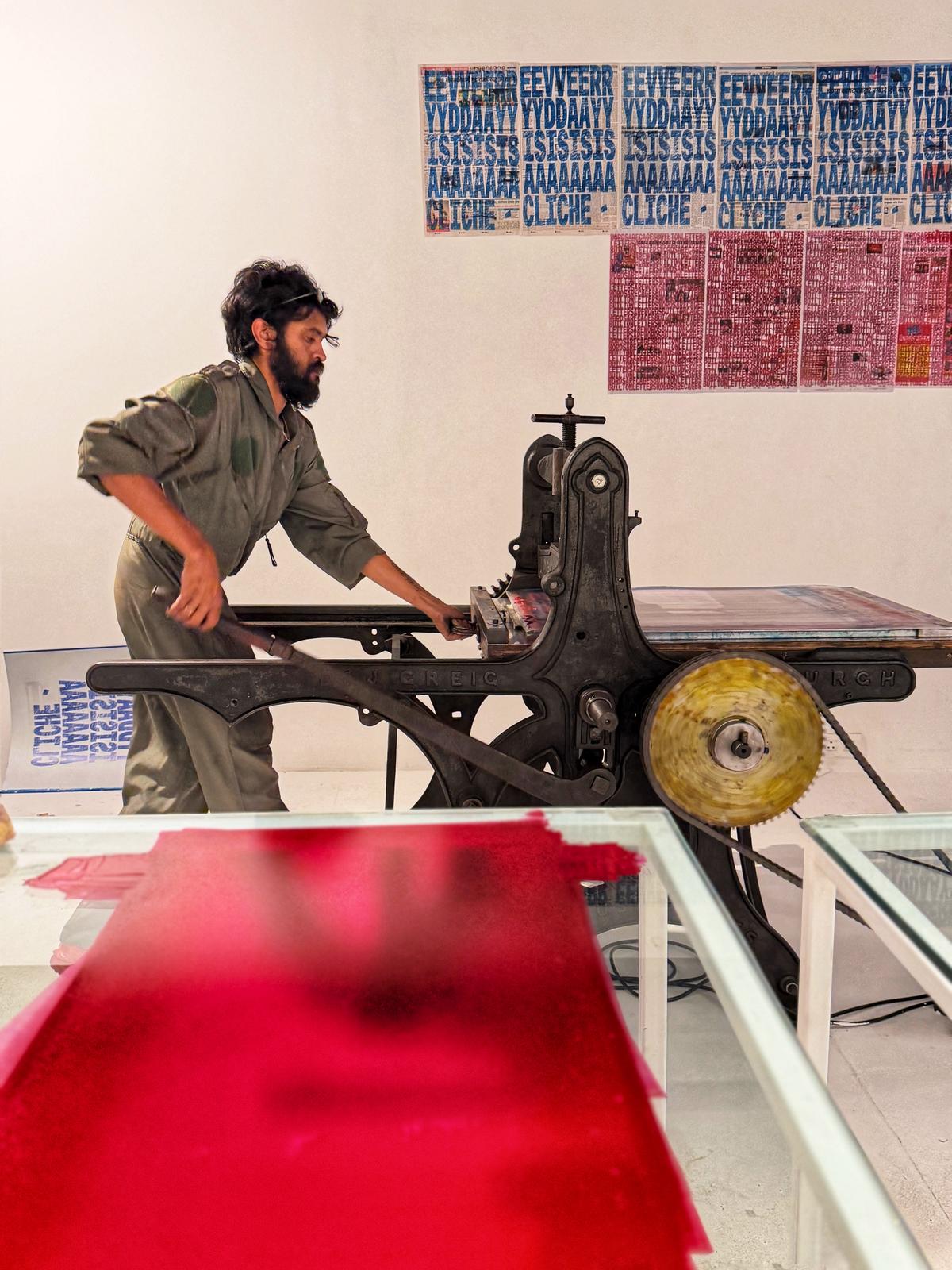
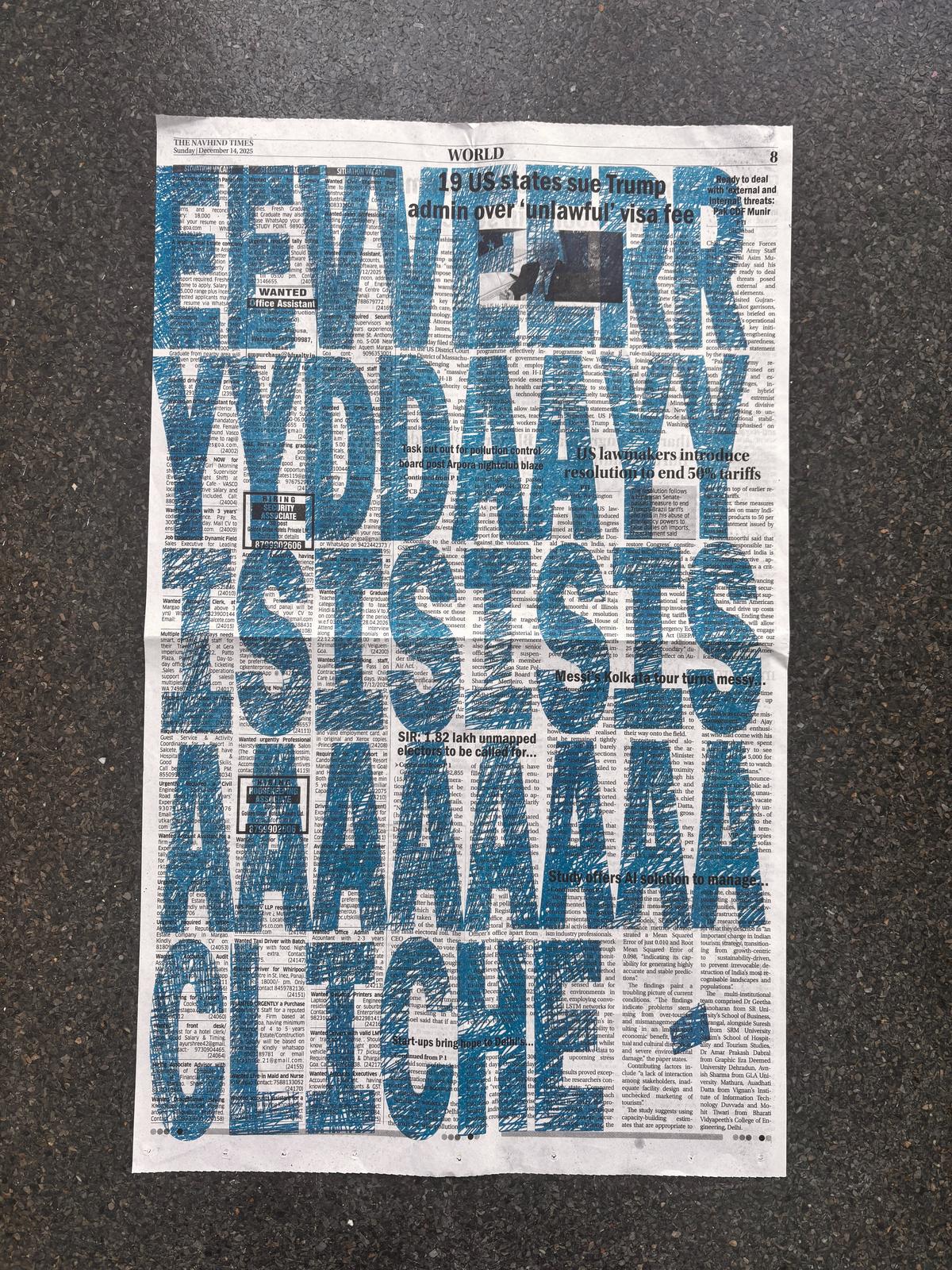
At the heritage Directorate of Accounts, one of the 13 locations in an 8km radius, Jayasimha Chandrashekar, a Bengaluru-based artist, uses a litho press, an over-200-year-old technology, to print the phrase ‘Every day is a cliché’, on the day’s newspaper. The ink goes across headlines that speak about the Special Intensive Revision, Trump’s visa fee, Goa’s nightclub blaze.

Artist Jayasimha Chandrashekar printing the phrase Every day is a cliché on the day’s newspaper on a litho press.

Artist Jayasimha Chandrashekar printing the phrase Every day is a cliché on the day’s newspaper on a litho press.
| Photo Credit:
Rohit Chawla

Jayasimha Chandrashekar’s print Every day is a cliché.

Jayasimha Chandrashekar’s print Every day is a cliché.
| Photo Credit:
Serendipity Arts

“The performance opens up layers: old rhythms of work, labour that is disconnected from the end product, the insignificance of news in a paid-media landscape, and the noise around news,” says Sumir Tagra, of the Gurugram-based artist duo Thukral and Tagra. A part of Multiplay 02 — a segment that started last year — their curation spans eight adaptive spaces or “soft systems”, offering “new ways of seeing and being”.

Melbourne-based Chunky Move’s performance You, Beauty.

Melbourne-based Chunky Move’s performance You, Beauty.
| Photo Credit:
Serendipity Arts

Melbourne-based Chunky Move’s performance You, Beauty.

Melbourne-based Chunky Move’s performance You, Beauty.
| Photo Credit:
Serendipity Arts

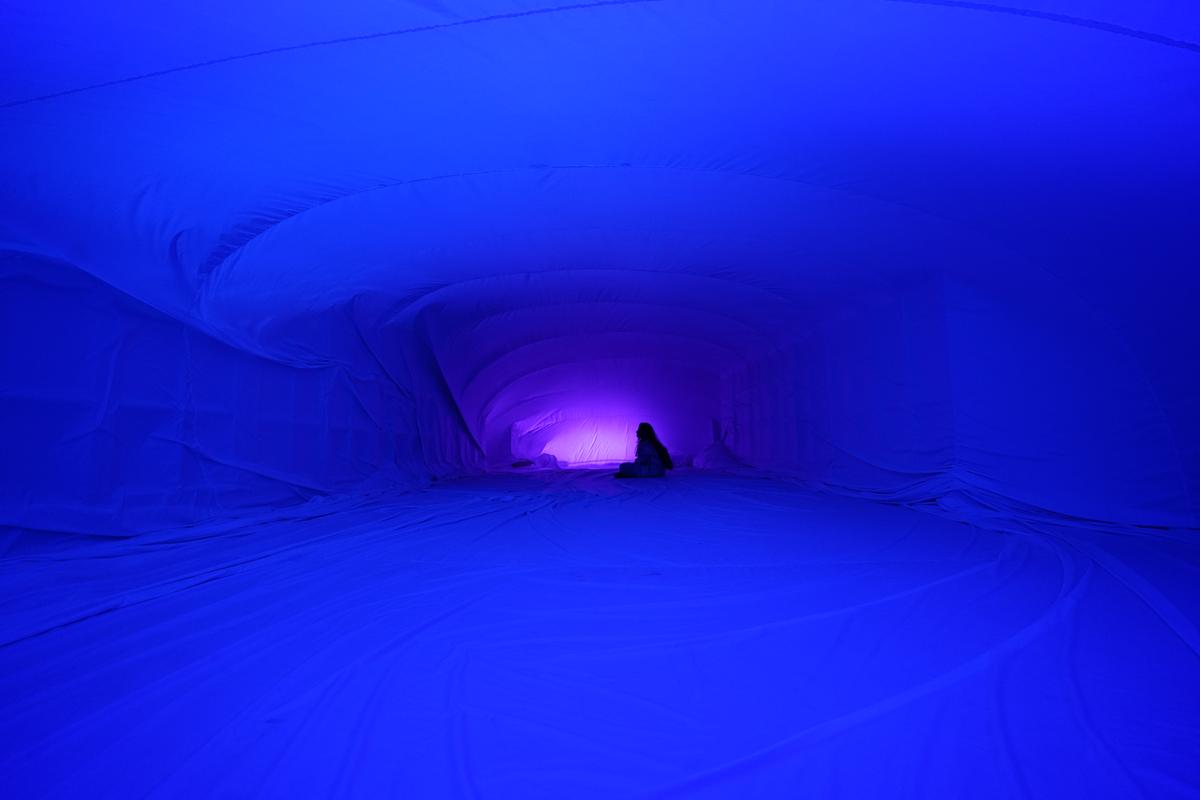
In You, Beauty, a performance by Melbourne-based Chunky Move, an inflatable expands and shrinks, much like the sea, sometimes rising to the rafters, sometimes flowing so close to the audience in a room lined with now-empty wooden cabinets. Through a puncture, viewers glimpse the innards of the inflatable, a couple of people manipulating its movement, a reminder of the innards of government agencies that control. The pink-and-purple light reflects off the glass of the cupboards that were once record holders in the 19th-century accounts building. The performer contours herself, moving with the oversize ‘balloon’, soon inviting people into it, transforming its interiors into a performance space. The white material forms a tunnel, like in Silkyara, sometimes collapsing around the dancers.

Prajakta Potnis’ Elegy in Light set on a retired barge at Serendipity Arts Festival.

Prajakta Potnis’ Elegy in Light set on a retired barge at Serendipity Arts Festival.
| Photo Credit:
Serendipity Arts

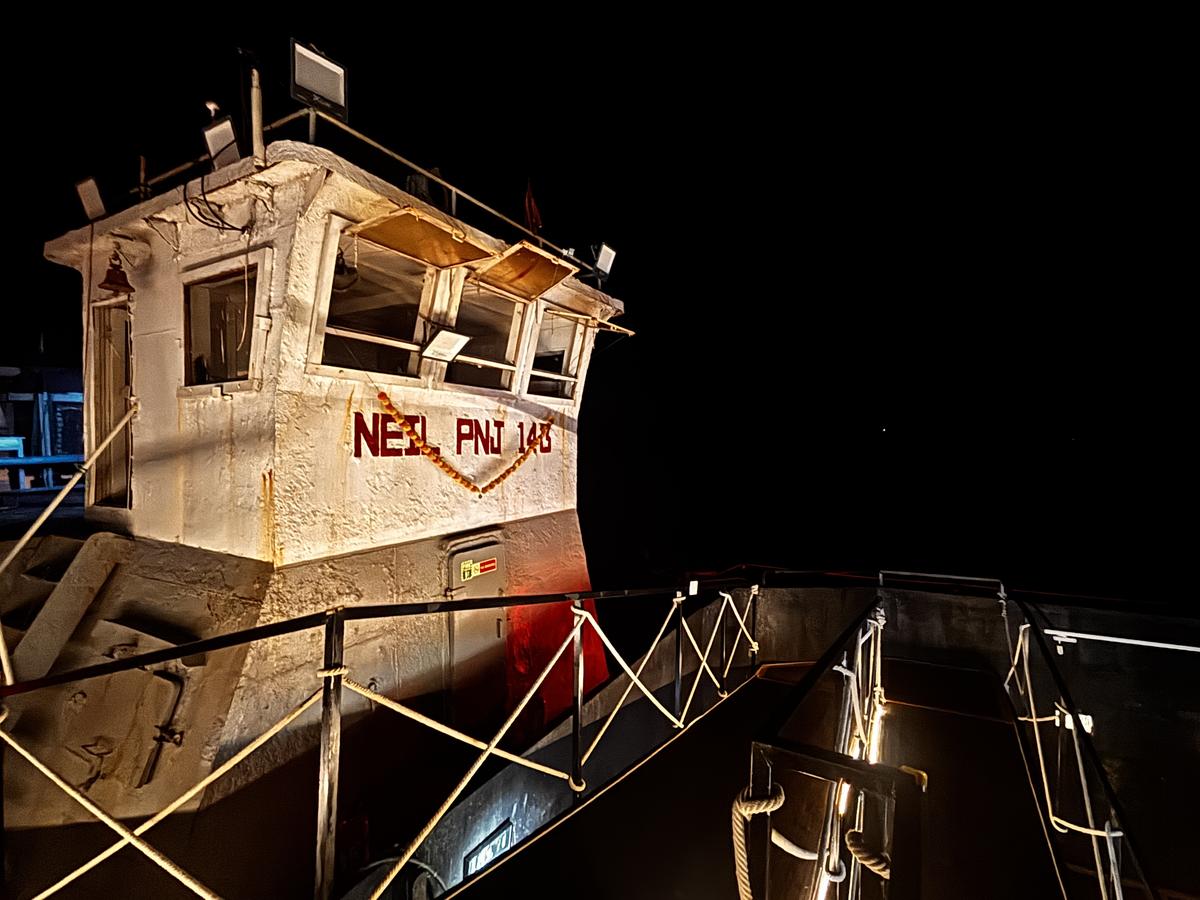
One way governments control citizens is through surveillance. In Prajakta Potnis’ Elegy in Light, set on a retired barge, a moving spotlight highlights an iron chain, a worker’s shirt, and other everyday maritime objects. “While historically, lighthouses were considered beacons of safe passage, they have emerged as a contested symbol… Their primary function is now to act as surveillance beams,” says the project description.

Past forward

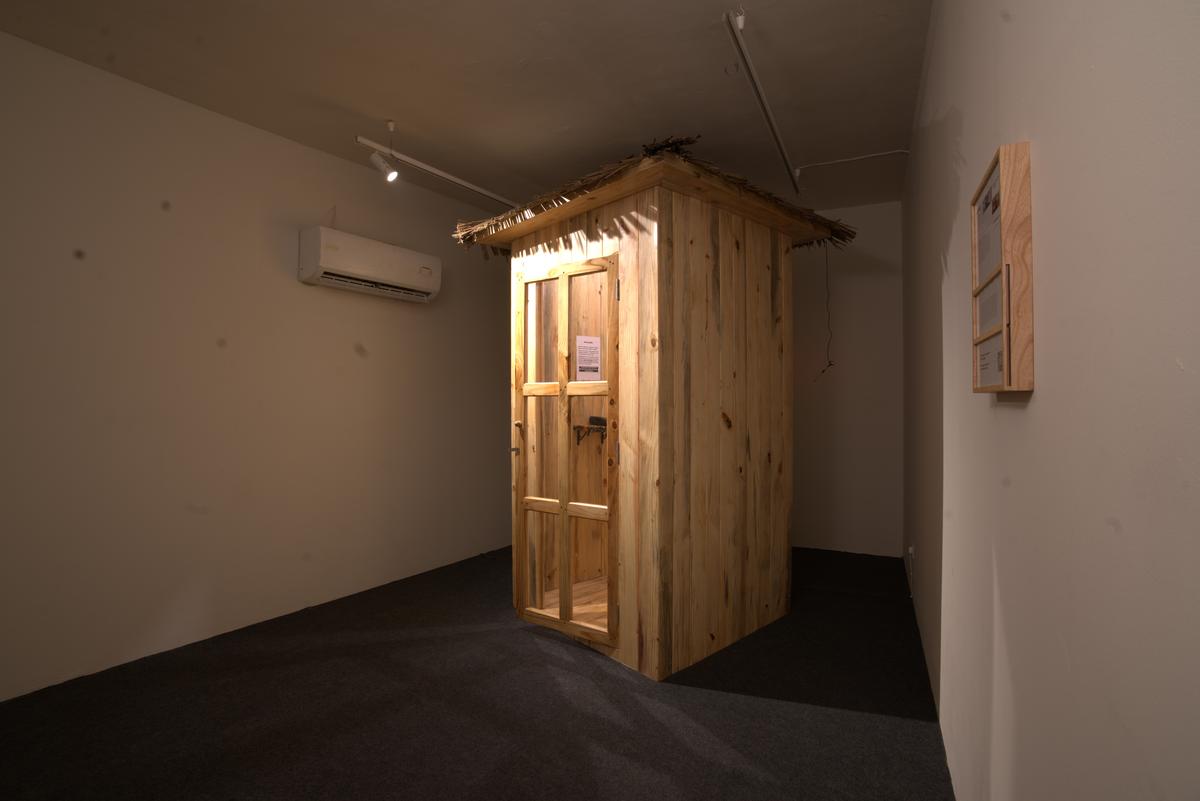
“Sometimes the future answers in whispers, not shouts,” says ‘Dr Bwanga’ over a phone, as part of a generative AI counselling session in the Lusaka-based artist Benny Blow’s own voice. ‘Dr Bwanga’ offers ‘consultations’ in a phone booth, and the wisdom is based on the artist’s research into Zambia’s traditional healers.

 Lusaka-based artist Benny Blow’s Dr Bwanga installation at Serendipity Arts Festival.

 Lusaka-based artist Benny Blow’s Dr Bwanga installation at Serendipity Arts Festival.
| Photo Credit:
Serendipity Arts

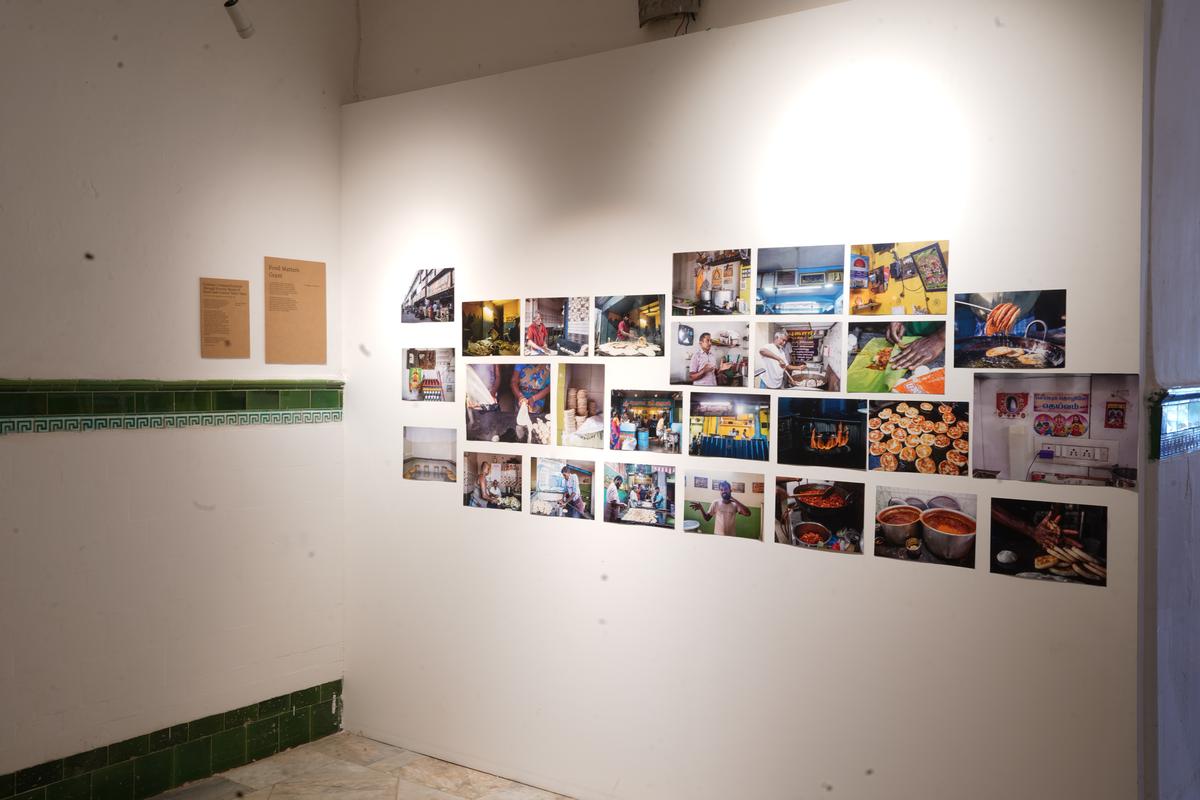
Lost Fish Recipes, co-created by Biswajit Das,  supported by Serendipity through the Food Matters Grant.

Lost Fish Recipes, co-created by Biswajit Das,  supported by Serendipity through the Food Matters Grant.
| Photo Credit:
Serendipity Arts

Lost Fish Recipes, co-created by Biswajit Das,  supported by Serendipity through the Food Matters Grant.

Lost Fish Recipes, co-created by Biswajit Das,  supported by Serendipity through the Food Matters Grant.
| Photo Credit:
Serendipity Arts

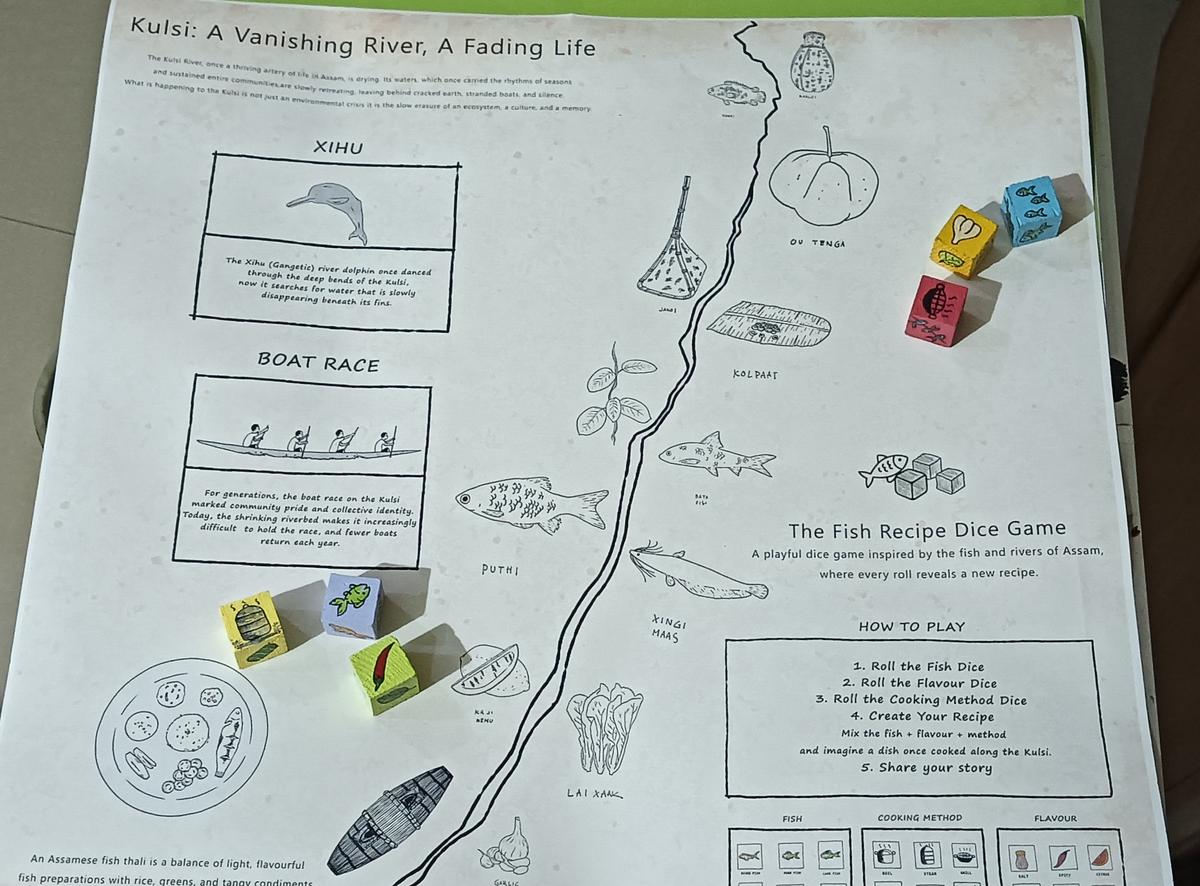
This reclamation of indigenous knowledge and nature is also visible at Lost Fish Recipes. At the entrance of the century-old Government Medical College, participants are encouraged to play a game of dice: one die is a fish, another a flavour, and a third, a cooking method. People can formulate a recipe putting together the three. Biswajit Das, one of its creators who imagined the project which was supported by Serendipity through the Food Matters Grant, says the project was rooted in the drying up of the Kulsi river, because of excessive sand mining, bridges built over it and weather change. “The fish started disappearing, and with it the fishermen.”

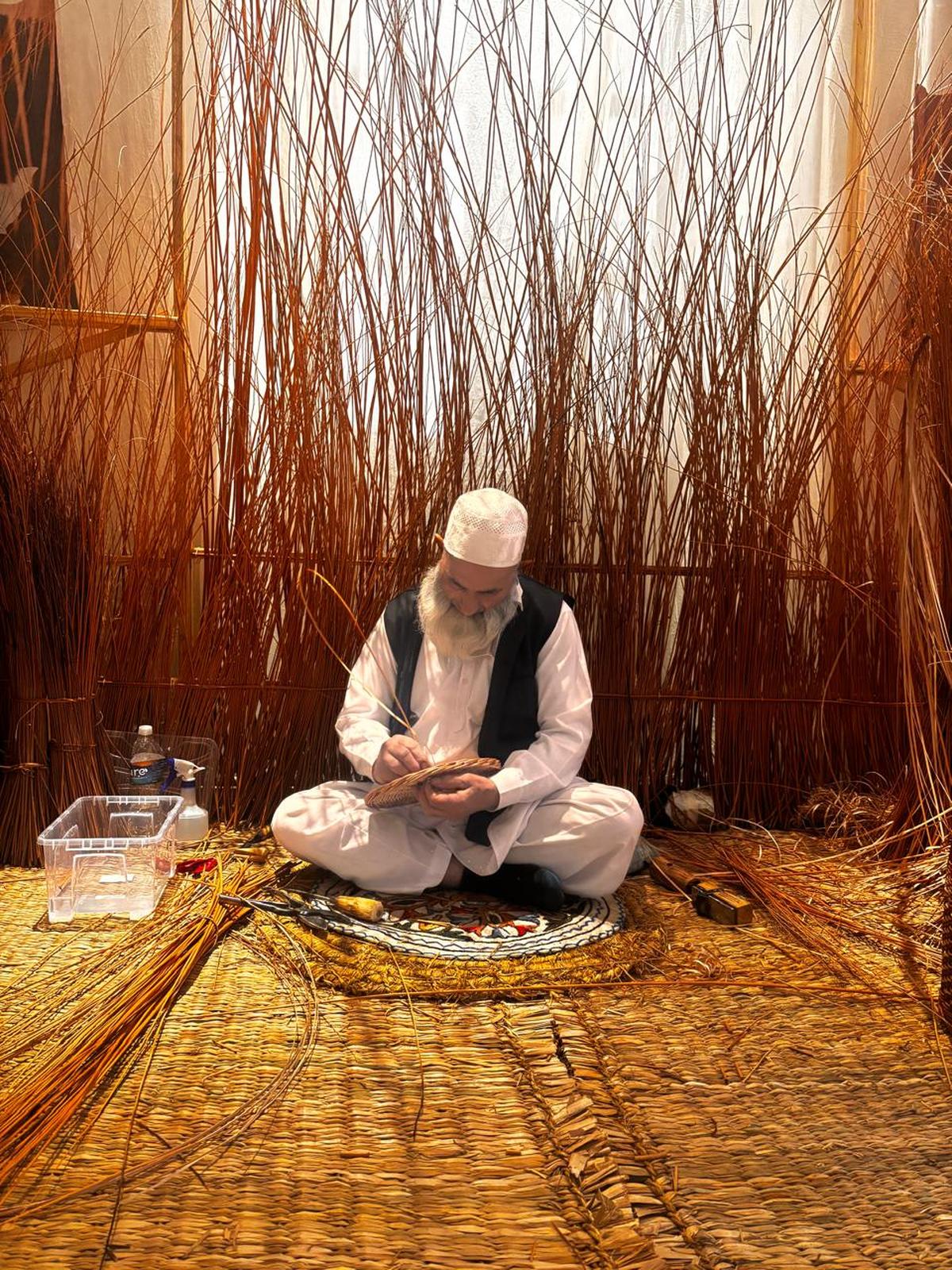
At a writing workshop on soil, a participant says, “Soil is a weighted blanket,” while another explores how it looks and feels like chocolate. Bengali and Assamese singer Shams Qabid’s song Chup (quiet) asks : ‘if you don’t say anything now, then when will you?’ A visitor speaks about how the theme of migration is running through art festivals globally. She saw it at the Venice Architecture Biennale, too. Another sits and watches a basket weaver making waguv, a Kashmiri traditional mat, which has been given a Geographical Indicator tag this year.

A Kashmiri waguv traditional mat weaver at 10th Serendipity Arts Festival.

A Kashmiri waguv traditional mat weaver at 10th Serendipity Arts Festival.
| Photo Credit:
Sunalini Mathew

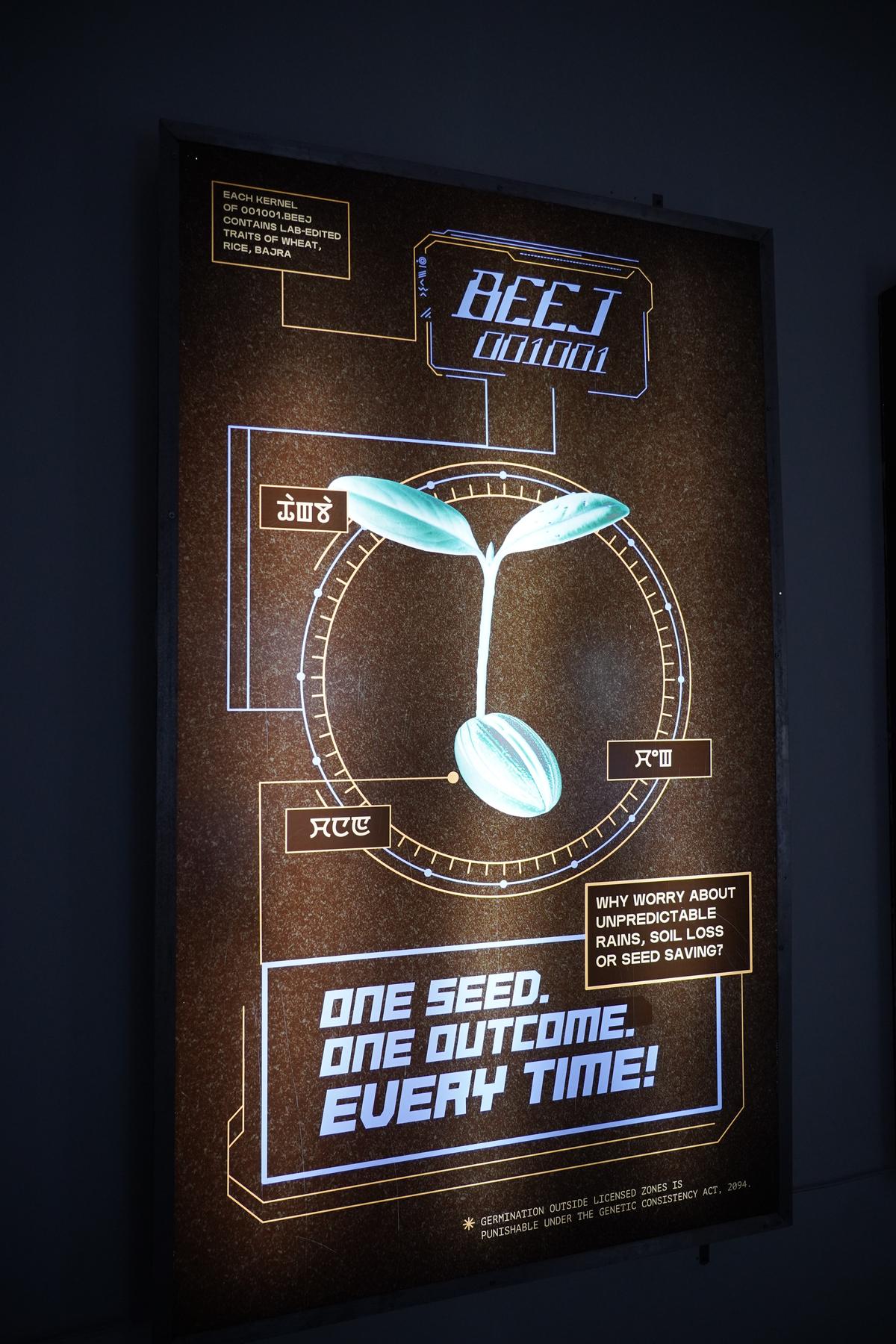
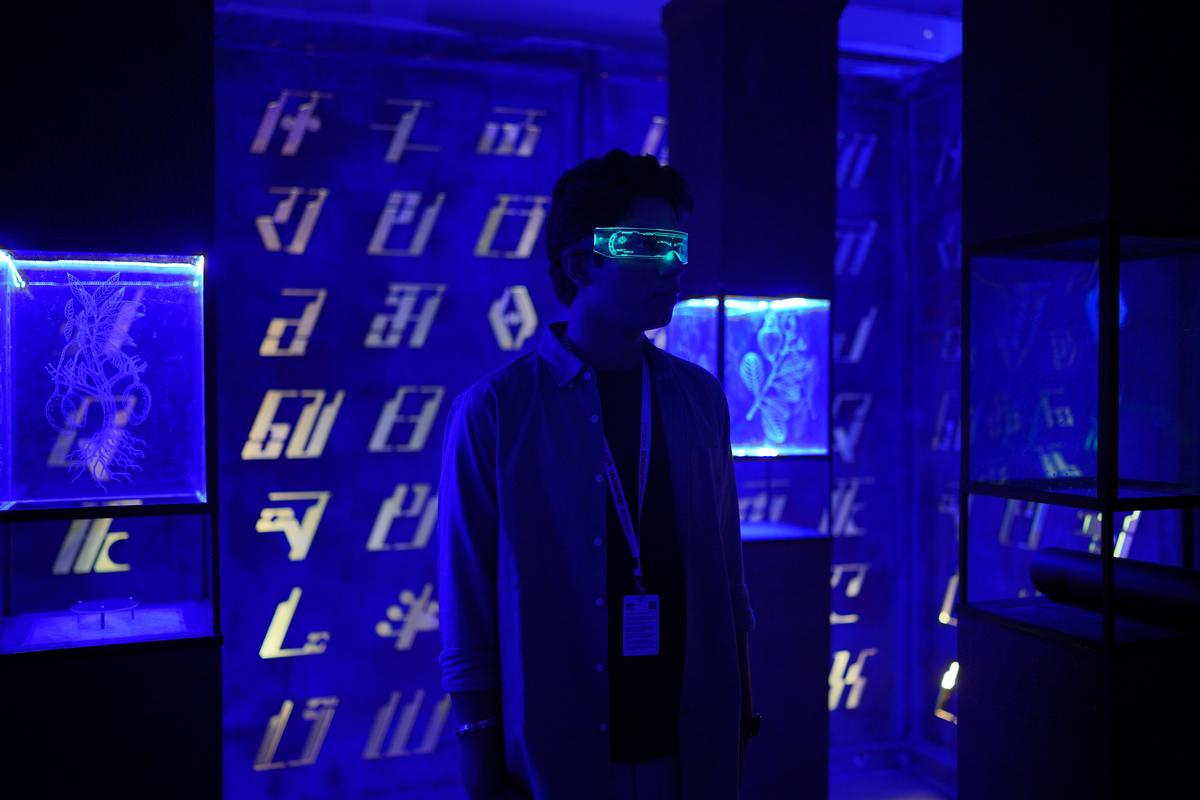
What Does Loss Taste Like? is a multi-disciplinary immersive experience about the future of food, curated by Chef Thomas Zacharias and The Locavore, a food movement, in collaboration with Immerse, an immersive-experience production company, and theatre company QTP. It presents a speculative journey into the year 2100, with cubes of food instead of food as we know it. Here, food is stripped of memory and aroma, and soil stripped of nutrients. It is about loss, the loss of soil, and with that, the loss of plant and diversity. Zacharias’ team tells participants that in that year, there will be, “One seed, one outcome. Every time!”

What Does Loss Taste Like? is curated by Chef Thomas Zacharias and The Locavore, in collaboration with Immerse and QTP.

What Does Loss Taste Like? is curated by Chef Thomas Zacharias and The Locavore, in collaboration with Immerse and QTP.
| Photo Credit:
Chef Thomas Zacharias and The Locavore

What Does Loss Taste Like? is a multi-disciplinary immersive experience about the future of food.

What Does Loss Taste Like? is a multi-disciplinary immersive experience about the future of food.
| Photo Credit:
Chef Thomas Zacharias and The Locavore

Zacharias says, “After a decade of travelling through India’s food systems, sitting with farmers, fishers, cooks, and producers, and hearing the same quiet grief surface again and again, it was increasingly obvious to me that something fundamental is slipping away. I realised loss wasn’t abstract — it was deeply physical, emotional, and lived. What Does Loss Taste Like? tries to translate that into an experience, so we don’t just understand what’s disappearing, but actually feel it viscerally, and are nudged to do something about it.”

The writer was invited to the festival by Serendipity Art Foundation.

sunalini.mathew@thehindu.co.in


Source link

Quiz | Easy like Sunday morning: All about crosswords


A molecular biologist from Madurai, our quizmaster enjoys trivia and music, and is working on a rock ballad called ‘Coffee is a Drink, Kaapi is an Emotion’. @bertyashley

Quiz | Easy like Sunday morning: All about crosswords

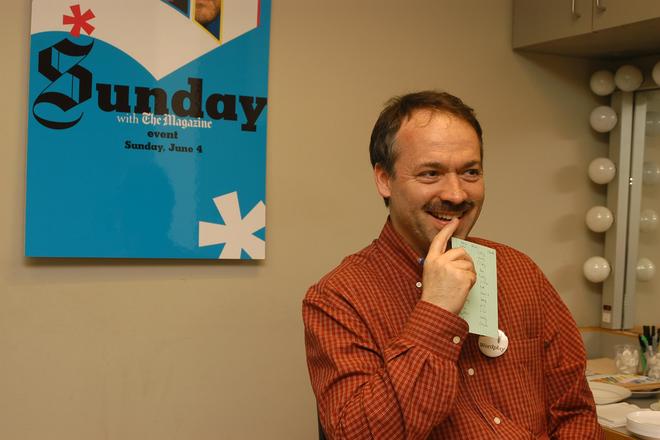
Will Shortz, The New York Times crossword puzzle editor, graduated from Indiana University with a degree in the study of puzzles.

START THE QUIZ

1 / 10 |
On December 21, 1913, the New York World published a diamond-shaped puzzle with 32 clues by journalist Arthur Wynne. It had a title that referenced the nature of the puzzle. Unfortunately, due to a typesetting error, the order got mixed up and has been referred to by a different name ever since. What was the original title of this puzzle?


Source link

Awara nahin, hamaara hai: The Indie Calendar 2026 showcases 12 heartwarming stories and photographs


A photograph by Vishwanathan

A photograph by Vishwanathan
| Photo Credit: Special Arrangement

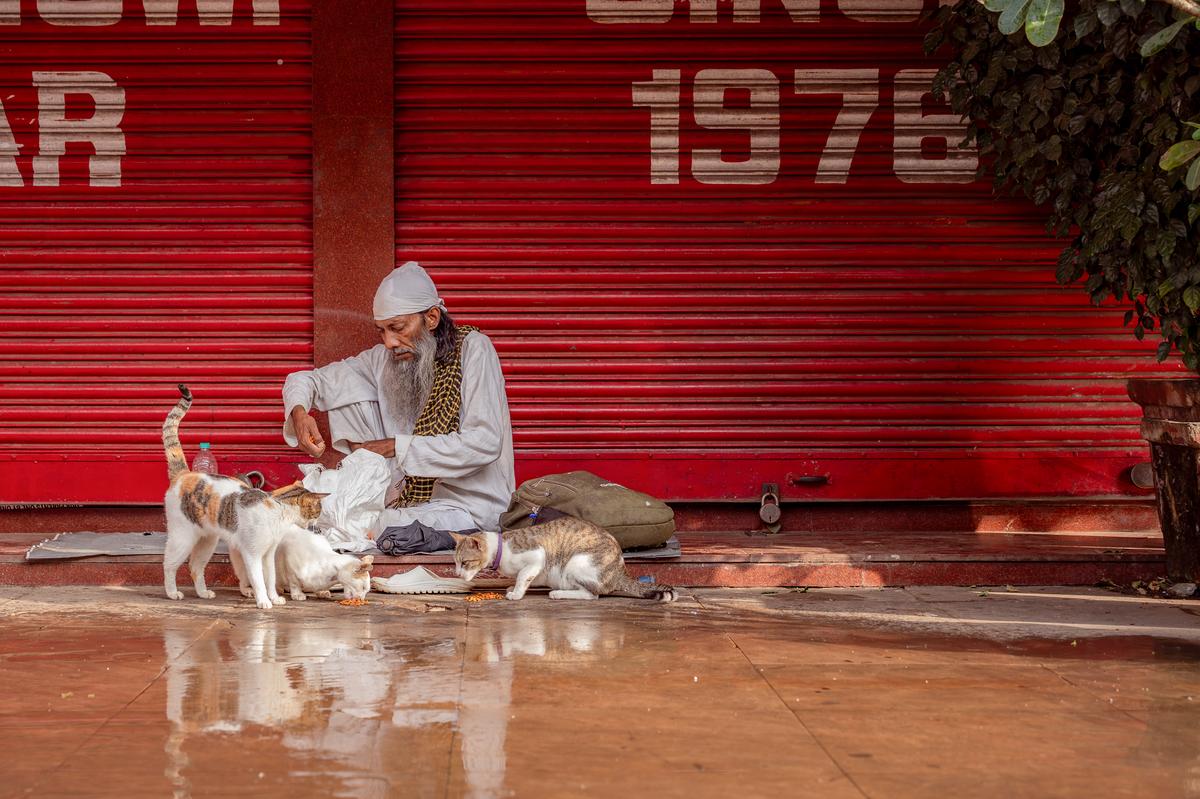
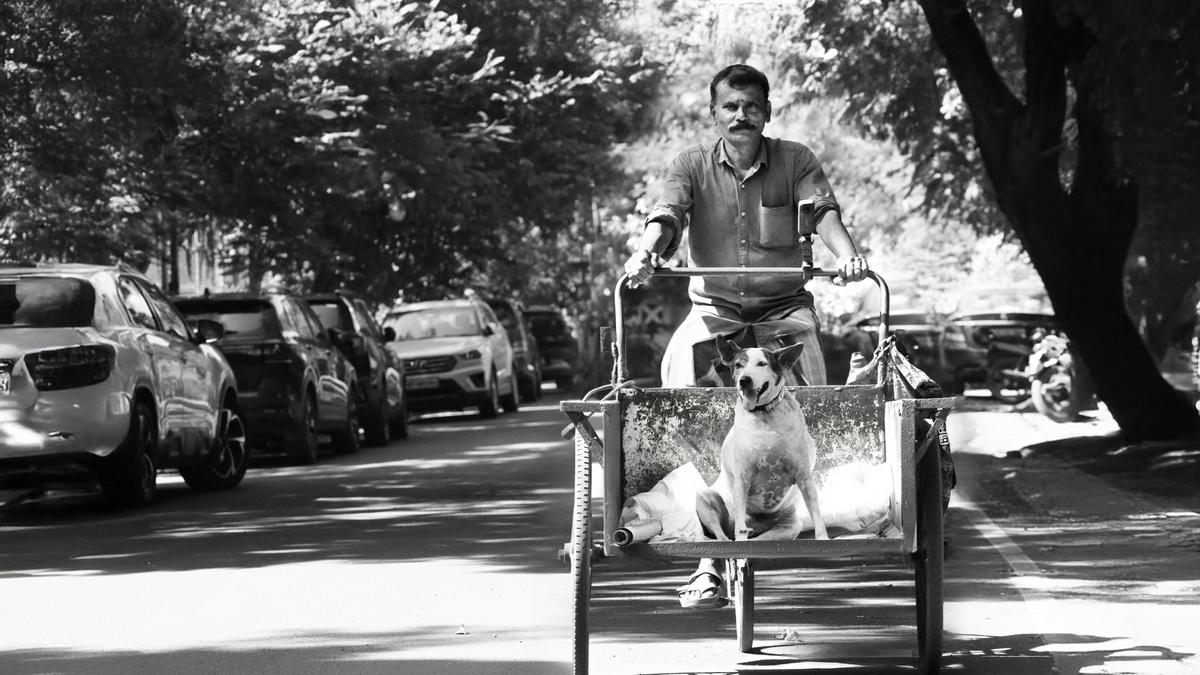
Ten-year-old Mani is much loved in his neighbourhood in Adyar, Chennai. Found as a puppy and cared for with with affection, the streetie shares a special bond with newspaper collector Pandian and is often seen hitching a ride on his tricycle. Mani’s one such joyful moment captured by amateur photographer Vishwanathan is one among the 12 heartwarming stories of The Indie Calendar 2026.

 Prathima Pingali

 Prathima Pingali
| Photo Credit:
Special Arrangement

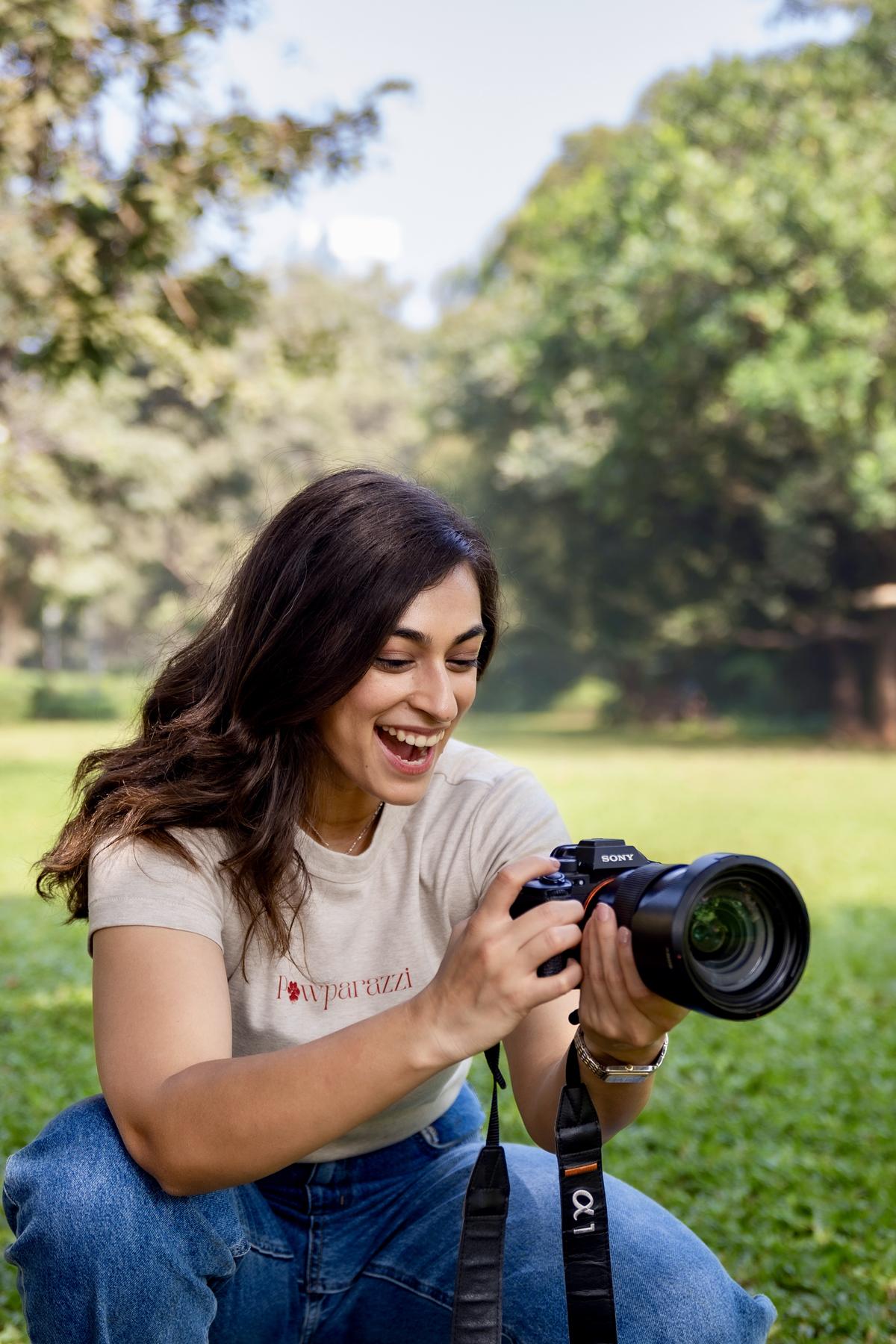
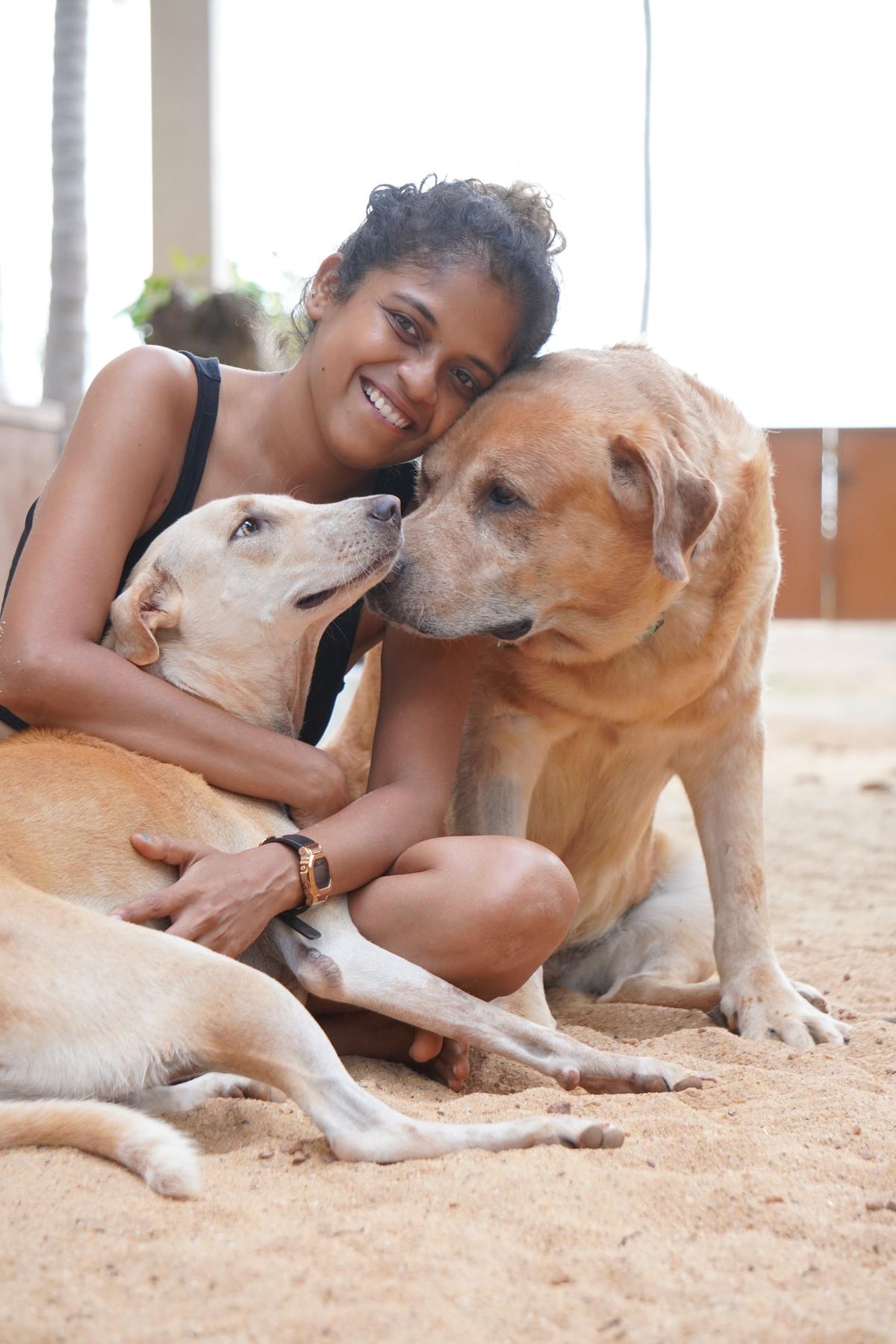
Pet photographer Prathima Pingali, founder of Pawparazzi, a pet photography company calls ‘The India Calendar 2026 – Awaara nahi, humara hain’ a heartfelt tribute to the bond shared with streeties including cats. Pratima has been working on a pet calendar for six years to create awareness for indies and their adoption. “This year’s calendar is different,” she says. “Many animal lovers have taken to the streets to protest against the recent Supreme Court verdict on stray dogs and the revolution was tagged as ‘Awara nahin, hamaara hai’ (‘They are not strays, they are ours’). We wanted to highlight it in this year’s calendar.

Like a family

A photograph by Manjusha Pillai

A photograph by Manjusha Pillai
| Photo Credit:
Special Arrangement

The intent was to feature stories of people who do not have enough money, resources or even a home but they have opened their hearts to take care of streeties and treat them like their own family. “Apart from featuring stories, we also thank these individuals to highlight the fact that if they can be so loving and open, what is stopping us from doing so? Why are we running after breeds? Why aren’t we giving enough love to our Indies?”

Photographers who have contributed

Minal Kalekar, Prathima Pingali, Vishwanathan, Sameera Sindhu, Rishabh Sinha, Manjusha Pillai, Maitreyi Damugade, Purva Desai, Nupur Singh, and Diya Pais.

More than 50 people enrolled for the project in October and submitted the photos in early November 2025. “Whether they were selected or not, they still went out and brought us those beautiful stories.” Prathima also did photo walks to help members understand the nuances of photography.

A photograph by Rishabh Sinha

A photograph by Rishabh Sinha
| Photo Credit:
Special Arrangement

The selection process was simple — a heartwarming story, photo with a human element and an indie stray dog being cared for by someone who provides food and shelter everyday. “We wanted the interaction between the individual and the stray dog to be highlighted. We have featured cats as well.”

Twelve stories were selected from Chennai, Mumbai, Bengaluru and Baindur in Karnataka, and Kochi. Speaking of the creative agency Homegrown which designed the calendar, Prathima says, “Homegrown’s owner Varsha Patra and I connected on our love for animals and this was the perfect start to our journey.”

The desk calendar is priced at ₹899; wall calendar is ₹1199. Available at www.pawparazzi .com.


Source link

Carrom World Cup gold medallist L. Keerthana: ‘I want to help other players’


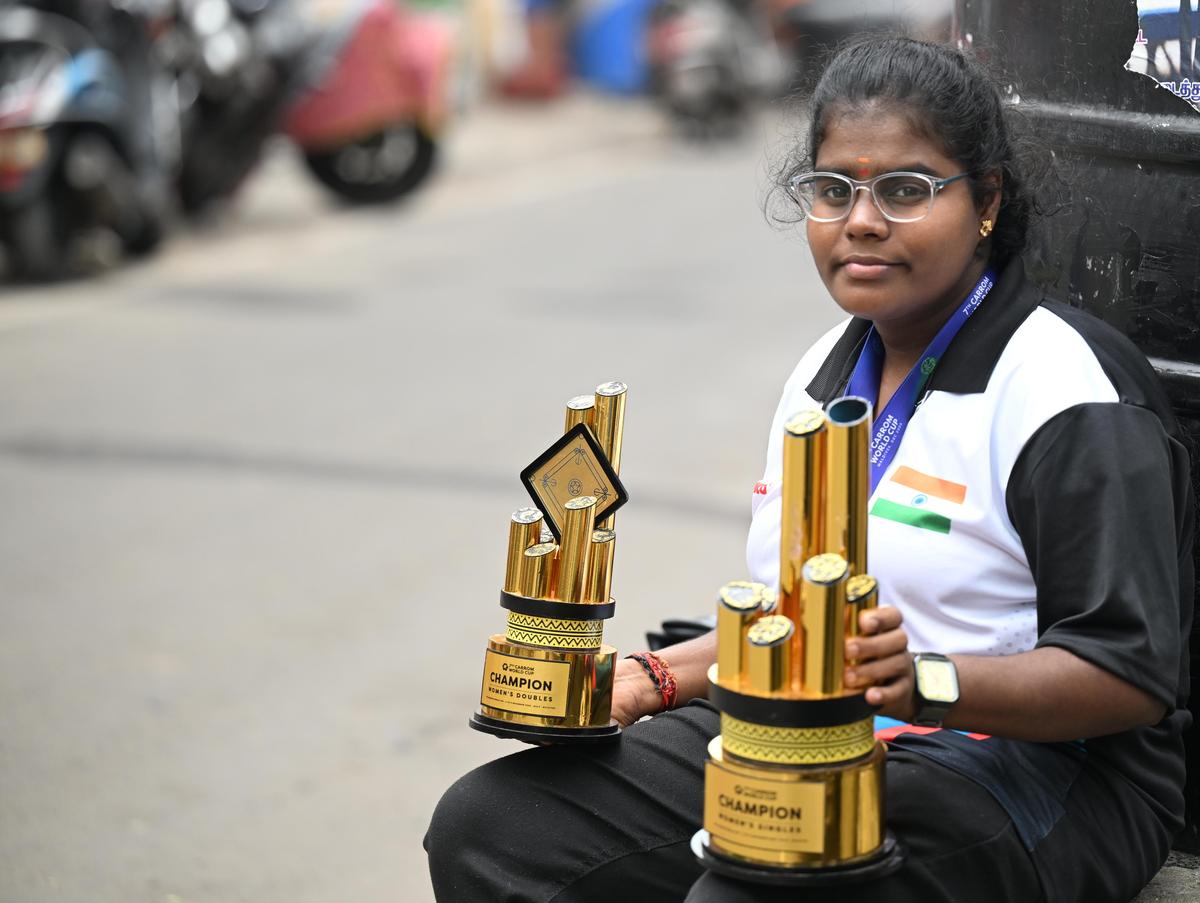
Carrom player L Keerthana from New Washermanpet in Chennai

Carrom player L Keerthana from New Washermanpet in Chennai
| Photo Credit: JOTHI RAMALINGAM B

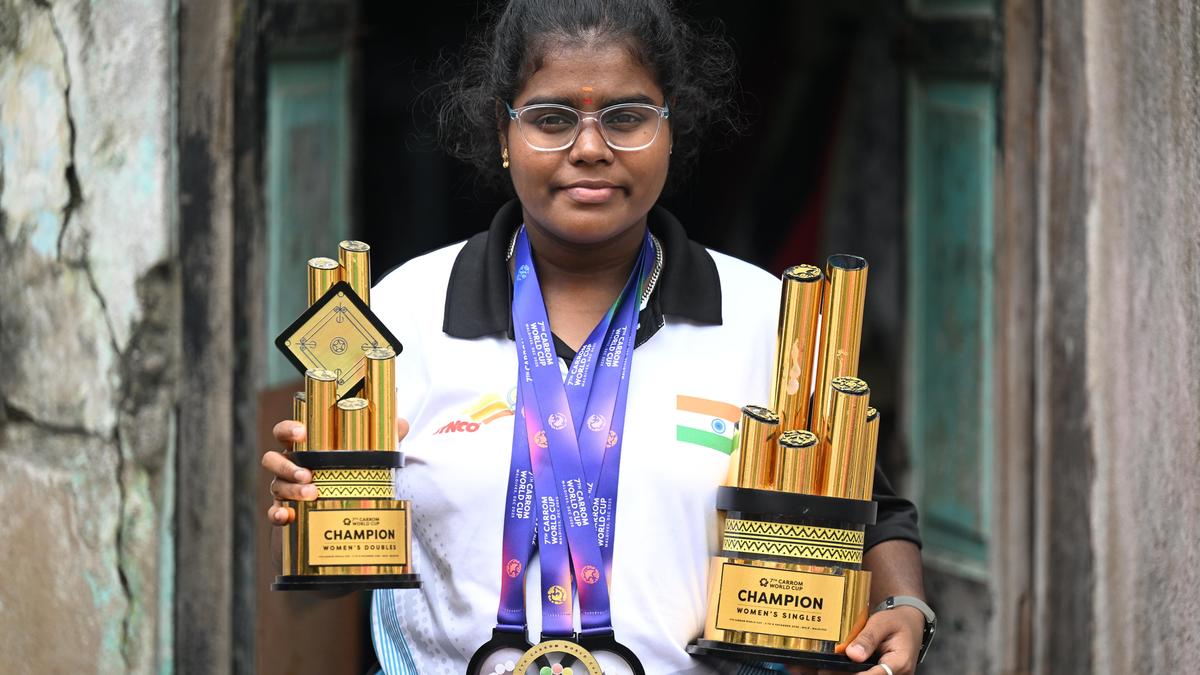
L Keerthana is at the peak of her carrom career. She won three golds in the 7th Carrom World Cup held earlier this month in the Maldives and was awarded ₹1 crore by Chief Minister M K Stalin a few days ago. Yet, when asked about her future plans for the sport, she says: “I want to help other players from my academy taste the same success,” adding: “I shouldn’t be the only one winning medals. There are so many players like me in my neighbourhood of New Washermanpet who love carrom and are good at it. They should win too.”

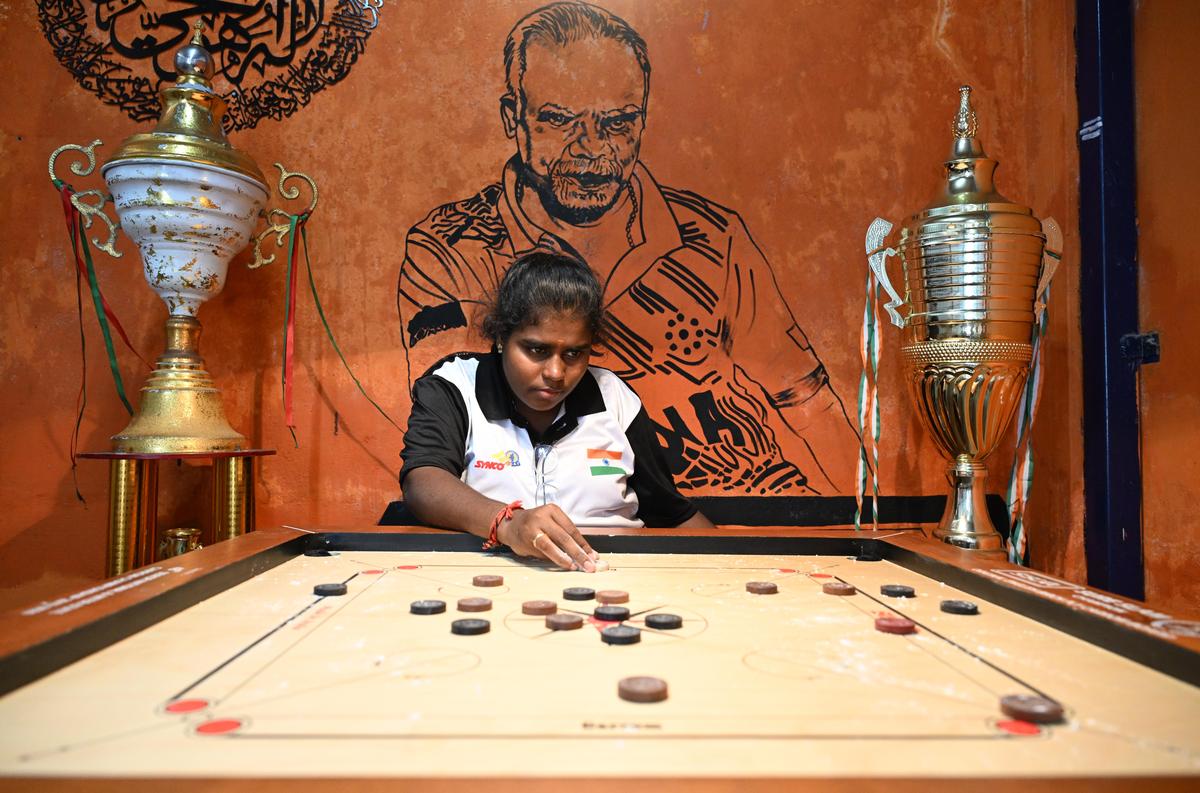
L Keerthana at the Carrom and Coaching Academy in New Washermanpet in Chennai

L Keerthana at the Carrom and Coaching Academy in New Washermanpet in Chennai
| Photo Credit:
JOTHI RAMALINGAM B

The 22-year-old wants to now focus on training players at the Carrom and Coaching Academy (CCA) where she plays. “Boys and girls there are so happy for me; they’ve been cheering for me from the time I entered the World Cup. I hope their parents get to see them win in the near future.”

Ever since she returned to Chennai from her historic win at the Maldives — a gold each in women’s singles, doubles, and team events — she has been on the move, meeting local politicians, celebrities, and senior carrom players. There has been a massive outpouring of love for her.  Away from the glare of cameras and phone calls in the quiet of her home in Washermanpet, Keerthana is thinking of her late father R Loganathan.  

Carrom player L Keerthana with her World Cup medals and trophies

Carrom player L Keerthana with her World Cup medals and trophies
| Photo Credit:
JOTHI RAMALINGAM B

“He was the one who initiated me into carrom,” she recalls. Loganathan was a loadman. He loved the sport and developed an interest for it by observing the many carrom players of North Chennai. “He held my hand to show me how to strike when I was three years old,” she says.

After his death, when she was 15, Keerthana stopped playing. She also had to discontinue school to support her family financially. Her mother L Indirani was a house-help back then. “I started working in a steel workshop nearby,” she says, adding that there were four mouths to feed at home. “My friends would go to play, and I would head to the workshop,” she says. “I felt bad for how my life had turned out, but I didn’t have a choice.”

Help arrived in the form of M Nithyarajan from Royapuram. As the father of two children who were also into carrom, he noticed Keerthana’s talent during her many games with his son. He encouraged her to continue playing, offering financial support and also setting up CCA for young players such as herself. Keerthana played day and night. She loved the sport much like her father and had a natural flair for it. She credits her coach and Arujuna-awardee Maria Irudayam from Vepery who is the secretary of Tamil Nadu Carrom Association and R Amudhavanan, secretary of the Chennai District Carrom Association, for advice throughout her journey.

It was Keerthana’s two golds in the 52nd Senior National Carrom Championship in New Delhi in March this year that secured her a spot in the World Cup. “But to travel to the Maldives for the match, I needed ₹1 lakh,” she says. J Meghanatha Reddy from the Sports Development Authority of Tamil Nadu helped organise a meeting with the Chief Minister for funding. “I was able to travel to the Maldives thanks to his intervention,” she says.

Keerthana trained from 4am every day for the World Cup in the months leading up to the match. “I would play at the academy till 8pm with short breaks for lunch and breakfast,” she says. “Everyone at home made space for me. No one would call me on my phone once I left for the academy. They knew how important carrom was for me. How I valued my training.”

Keerthana hopes to spend the prize money on her house. “It often gets flooded with water from a canal nearby,” she says. It will be among the first things she will do as World Cup champion.


Source link

Chennai-based brand Indru turns jamakkalams into chic bags


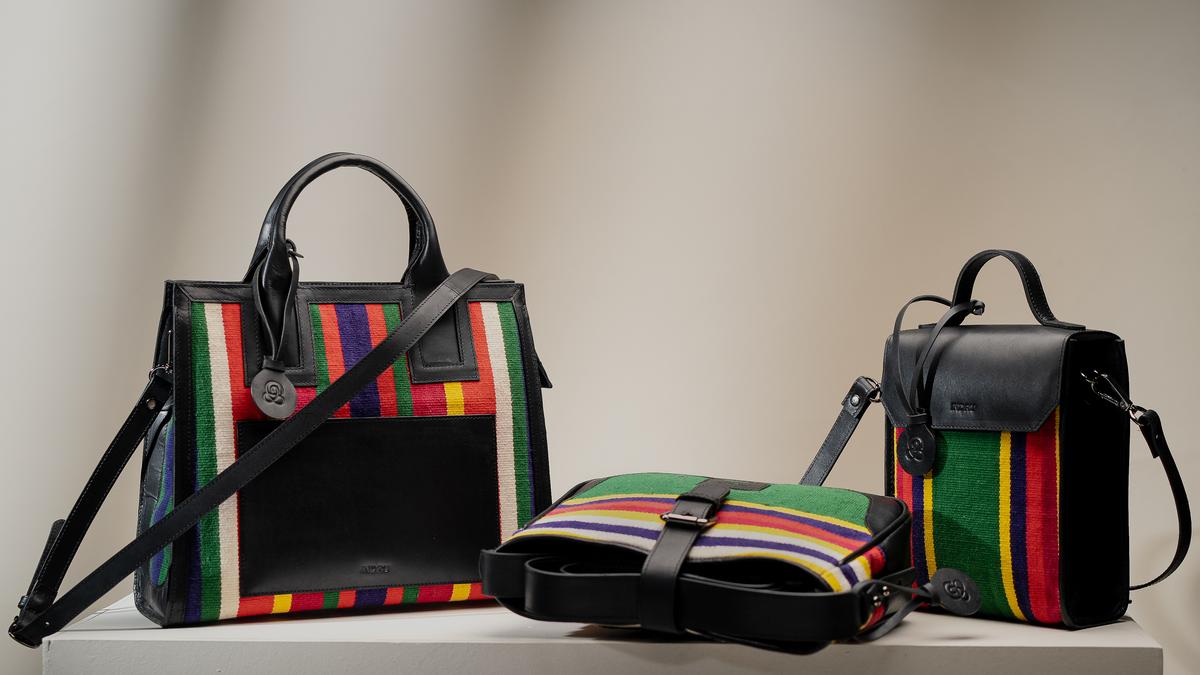
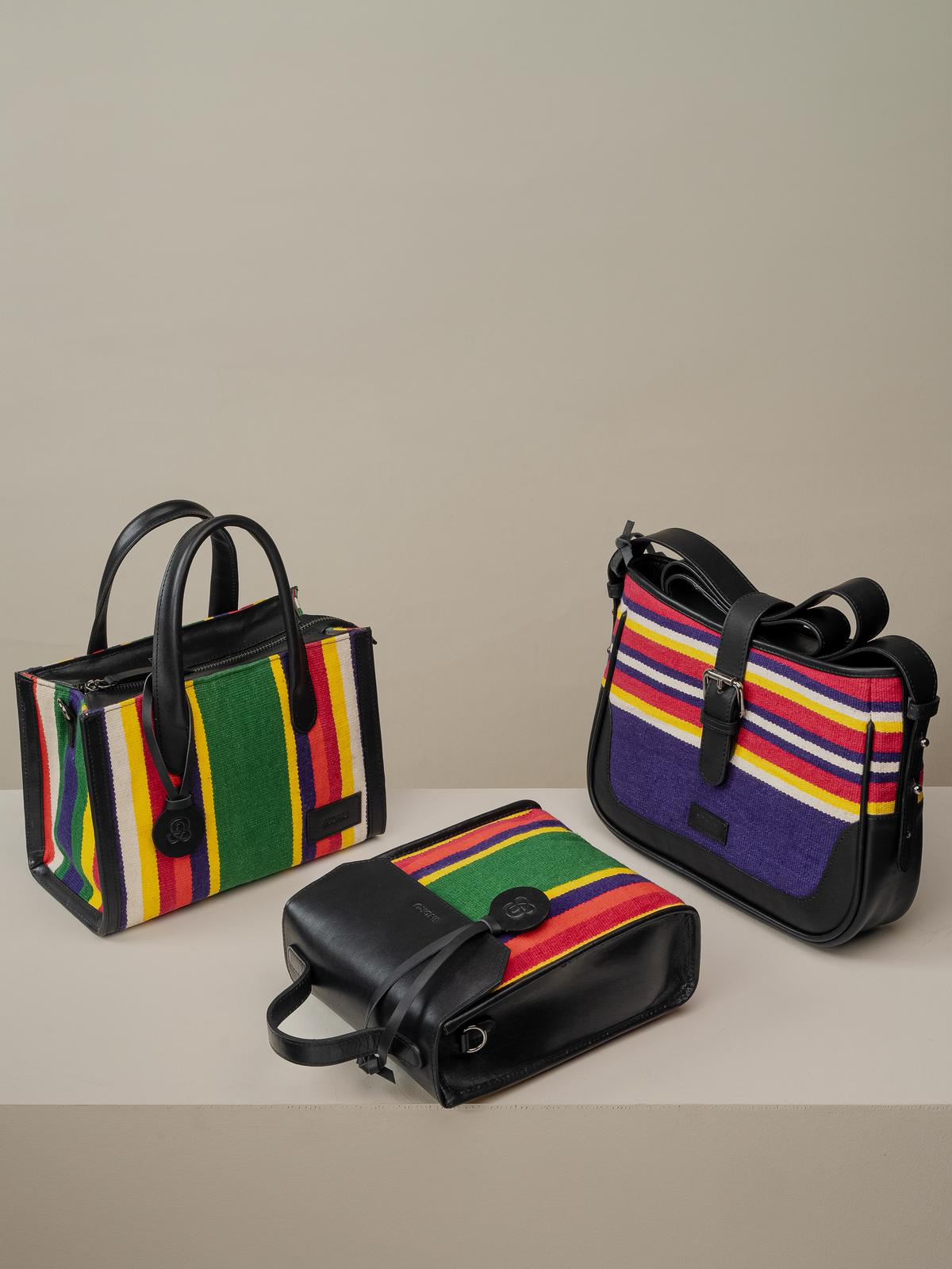
Bags by Indru

Bags by Indru
| Photo Credit: Special Arrangement

In Tamil Nadu, the jamakkalams’s bold green, white, purple and yellow stripes, rolled out on the floor, are a quintessential part of many gatherings — weddings, family meetings and other occasions that bring people together.  

But what if you could carry these iconic colour combinations as structured totes, postman sling bags and more? Indru, a Chennai-based brand is working on doing exactly that, with a vision to make heritage wearable.

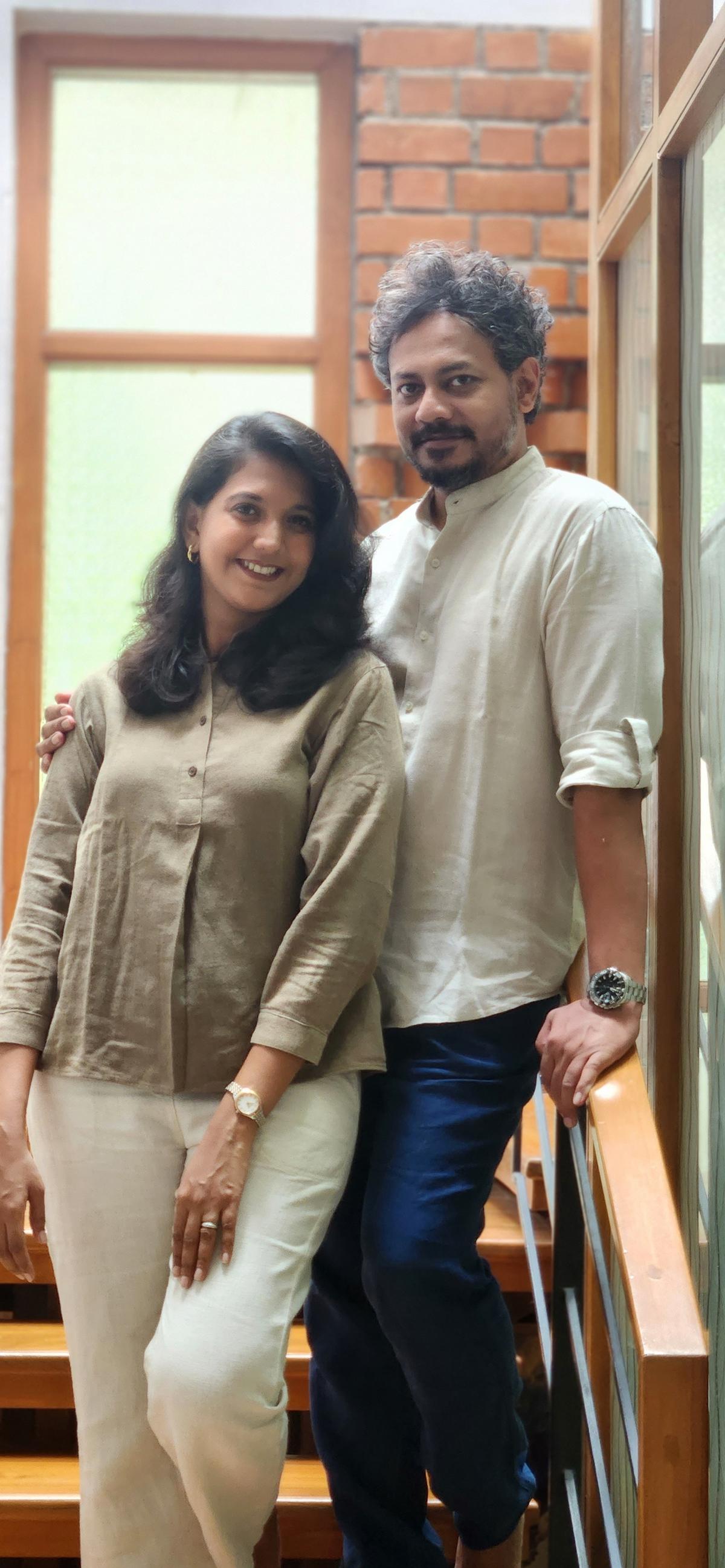
For Hari Madhavan and Ramya Balachandran, co-founders of Indru, their connection with the jamakkalam is personal. Hari hails from Erode, and in 2022, an opportunity to work on a project for the Indira Gandhi National Centre for the Arts (IGNCA) on jamakkalam revival had the couple going back to the town of Bhavani.  

Hari Madhavan and Ramya Balachandran

Hari Madhavan and Ramya Balachandran
| Photo Credit:
Special Arrangement

“We were trying to explore new ways of using the jamakkalam and newer designs, by putting a modern spin on it. We first had to learn and understand the art behind it, and what is possible and not possible with this,” Hari says. 

With over 13 years of experience in the bag-making industry with their brand Hydes studio, which designs and sells leather bags and accessories, it was only natural that they gravitated towards working with bags again. “We sat down with the weavers in Bhavani, explained what we were trying to do, and worked on understanding colours, patterns and techniques. We had to start at the design level and work our way up,” says Ramya. 

In Bhavani, the couple says they learnt more about how weaving jamakkalams was becoming a dying tradition, with only a handful of families still practising the craft. “The weavers are currently scattered around Bhavani and we had to work with them and understand what their difficulties are. Revival projects like this, we feel, are probably something that will encourage and sustain the craft. The jamakkalams used to make bags for Indru are specially woven by the weavers we work with” Hari says. 

Indru’s range of bags heroes the jamakkalam and its pops of colour, and keeps their designs modern. While Bommai, a postman sling, has a green, yellow, purple and orange striped jamakkalam pattern, Kadal, a shoulder-sized tote has broad blue and white stripes. The trimmings and handles on the bags are made with upcycled leather. “Functionality has always been the core of our bag making and there are pockets, rear zippers and other small details that we add to make the bags more user friendly. The bags should be something people come back to, and to use for a long time,” Hari says. 

The jamakkalams are woven specially for these bags, which have leather trimmings and handles

The jamakkalams are woven specially for these bags, which have leather trimmings and handles
| Photo Credit:
Special Arrangement

While customers have the option of customising their bags and getting their names monogrammed, Indru also offers to make bags vegan on request. 

“While the nostalgia factor is high with our older customers, the structured bags and the colours seem to appeal to GenZ, who appreciate these bags as a fashion statement,” Hari adds. 

Bags are priced from ₹6,000 onwards on shopindru.com


Source link

How India established its first research station in Antarctica


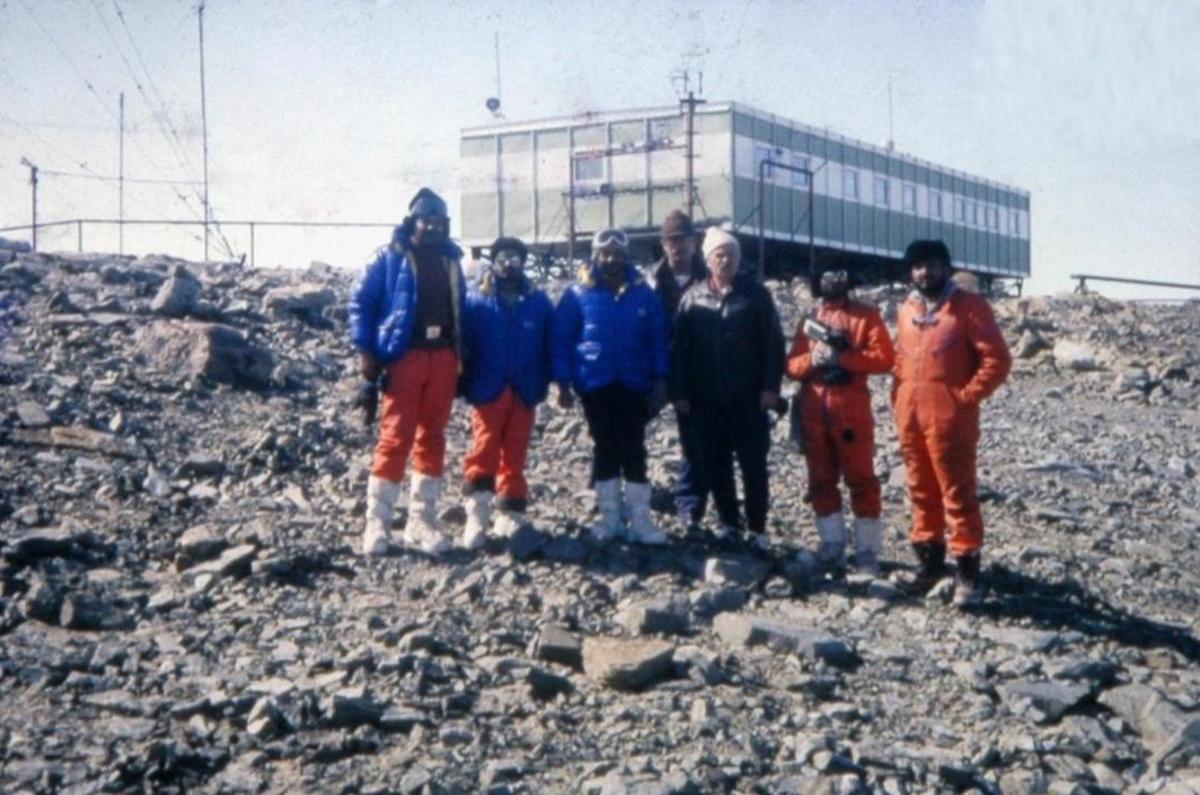
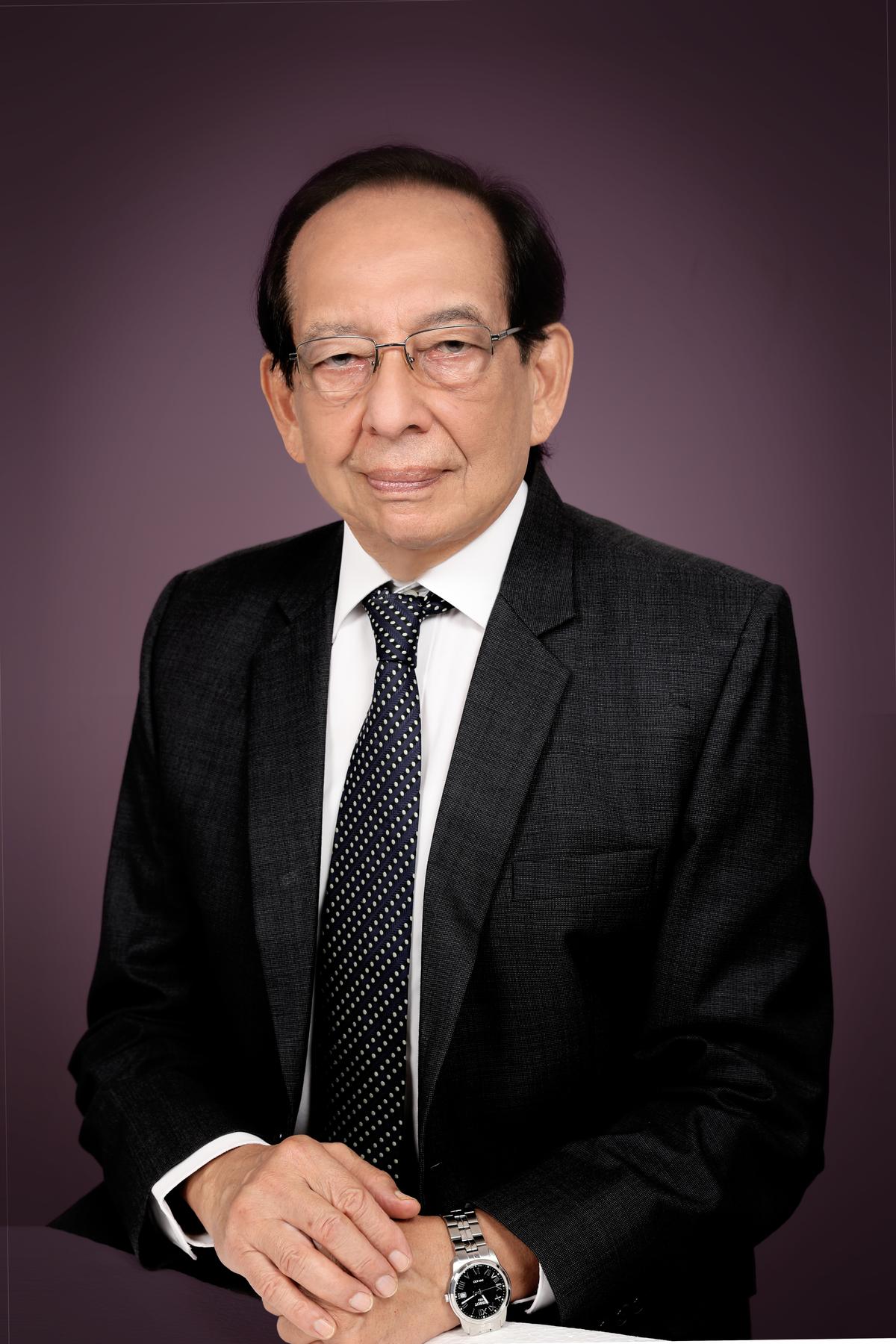
Dr Harsh K Gupta remembers the sequence of events that led to the establishment of Dakshin Gangotri, India’s first permanent research station in Antarctica, as if it happened yesterday. A year after he had moved to Thiruvananthapuram as director of the Centre for Earth Science Studies in 1982, a call for proposals to carry out scientific work in Antarctica was issued, says the renowned earth scientist and seismologist, who led India’s Third Antarctic Expedition between 1983-84 and successfully established Dakshin Gangotri there.

“I am basically a geophysicist, and my expertise is in earthquake seismology. So, I put up a proposal to set up five stations in Antarctica,” says the Hyderabad-based Harsh, a fellow of the International Science Council (ISC), the President of the Geological Society of India and also a member of the Atomic Energy Regulatory Board of India.

India’s first permanent base would go on to shape the future of the country’s Antarctic programme.

India’s first permanent base would go on to shape the future of the country’s Antarctic programme.
| Photo Credit:
Special Arrangement

He was soon called to make a presentation of his proposal at the Department of Ocean Development (DOD), New Delhi, which, according to him, “everyone liked very much.” However, his proposal was not selected.

Instead, Sayed Zahoor Qasim, the marine biologist who had led India’s very first expedition to Antarctica back in 1981, told him that India was planning to set up a permanent base there and asked him if he was willing to lead the expedition. “My question was why me,” recollects Harsh, on a Zoom call.

In response, he was told he was exactly the sort of person they were looking for to lead the next expedition to Antarctica and also set up a permanent research station there: he was the director of a full-fledged laboratory at only 40 years of age, had an extensive body of work in the Himalayas with an impressive publication record, and was also a good athlete.

Harsh was thrilled with the offer and said yes right away. Soon after, he met with the then Prime Minister, Indira Gandhi. “She was delighted to see that a young man would be the leader of the expedition,” says the Padma Shri awardee, in whose honour South Sudan named its first seismological centre this July.

Harsh and his team left India on December 3, 1983 on the Finnpolaris

Harsh and his team left India on December 3, 1983 on the Finnpolaris
| Photo Credit:
Special Arrangement

The task ahead, however, was daunting. India’s Antarctic Programme was only two years old by then, and “no country had, till then, set up a permanent base in Antarctica and populated it in one Antarctic summer, barely two months”, says Harsh, who was excited about the challenge, even though he knew that the odds of success were slim, only 10-15 %.

On December 3, 1983, Harsh and his team set out from Goa aboard the Finnpolaris, a Finnish ice-class cargo ship capable of breaking ice. “Eighty-one families (of the people onboard) were there to bid farewell to us,” he says, adding that once they commenced sea passage, he began brainstorming on how to construct the station in around 30 days, “since out of those 60 days of an Antarctic summer, many would be lost in whiteouts and blizzards.”

Harsh remembers some of the events that took place on that journey: the setting up of a hospital on the ship, which would prove to be exceptionally fortuitous; stopping at Mauritius to pick up material and encountering the rough sea at approximately 40º S latitude (called the “Roaring Forties”), where “almost everyone fell seasick, except Harsh Gupta, because there is something biologically wrong with me,” he quips.

The team got into an accident a few days after arrival

The team got into an accident a few days after arrival
| Photo Credit:
Special Arrangement

They reached Antarctica in 20-odd days, on December 24 to be precise, and began their construction. Disaster, however, struck on December 29, when one of their Mi-8 helicopters, which was being used to unload the ship, crashed, requiring its occupants to be hospitalised immediately.

Even the Prime Minister called him to check on the situation. “She asked me if I could still do it,” says Harsh, who told her that if he did not do it, he would not return. “There was a long, deafening pause of 40-50 seconds, and she then told me to go ahead.”
And go ahead they did, successfully building a 620-square-meter station complete with living quarters for 12, kitchen, washrooms, gymnasium, water-melt tank, laboratories, generator room housing three generators, and communication facilities by February 25, 1984. This construction, India’s first permanent base there, would go on to shape the future of the country’s Antarctic programme.

In the following few decades, India sent over 40 expeditions to the continent, established two more research stations, and created the National Centre for Polar and Ocean Research (NCPOR) in Goa.

“Over the years, India has done very well in Antarctica, coming up with many firsts. For instance, we have identified more than half the microbes in Antarctica, “ says Harsh, pointing out that India’s Antarctic programme has impacted our weather forecasting to a large extent, illustrating the importance of this research for our country.

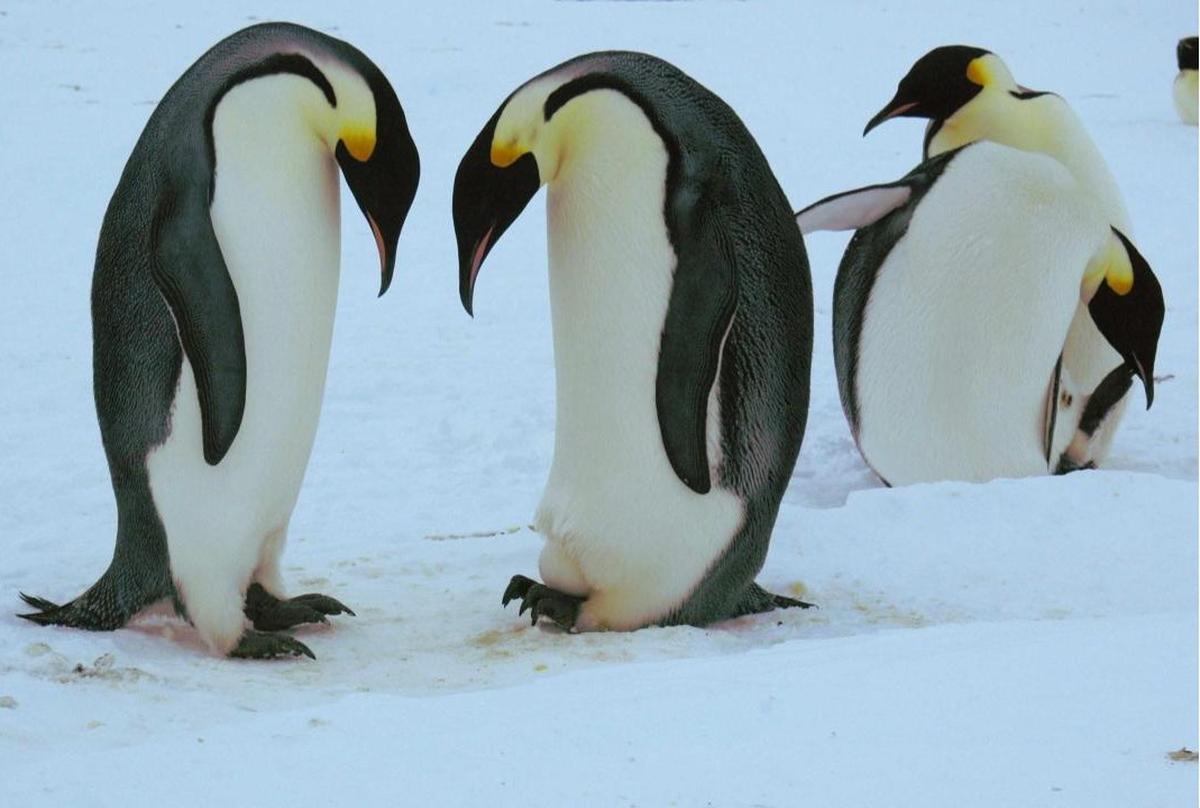
The icy continent is crucial to India, Harsh explains, because 180 million years ago, the supercontinent of Gondwanaland, which includes present-day South America, Africa, Australia, Antarctica, India, Madagascar, and Arabia, began splintering.

“India moved northward and then, about 60 million years ago, collided with Eurasia, giving rise to the Himalayan mountains,” explains Harsh. Between Antarctica and India, he adds, there is mostly only ocean, except for a few small island countries like Mauritius. “Antarctica completely controls the weather of the Indian Ocean, and the Indian Ocean controls the weather of the Indian subcontinent,” says this self-described accidental scientist, who was born in Moradabad and moved to Mussoorie as a child.

Dr Harsh K Gupta 

Dr Harsh K Gupta 
| Photo Credit:
Special Arrangement

“The last thing I ever thought I would be was a scientist,” says Harsh, who studied at Saint George’s College in Mussoorie, an all-boys school where “everyone tried to become an army or naval officer. I, too, went through that drill.”

He recalls walking to and from school, around five kilometres away; the hours spent in NCC training, boxing, hockey, and swimming; and a strict routine that involved going to sleep by 8 pm and waking up at 4 am each day to study before school. “All that toughened me up.” .
While Harsh qualified for the National Defence Academy, his brother-in-law, himself an army officer, discouraged him from joining the armed forces, he says. So, Harsh chose to follow his older brother and study engineering.

His brother had completed a BE in mechanical engineering from the Indian Institute of Technology, Kharagpur, and was working for Oil and Natural Gas Corporation Limited (ONGC).

“He had joined ONGC and was sent for advanced training to the US; there, he realised that geophysics is a very important area of research and encouraged me to give it as my first choice when I wrote the entrance at the Indian School of Mines (now Indian Institute of Technology, Dhanbad),” says Harsh. He cleared the exam and joined the institute, which he now thinks was “one of the best things that ever happened to me.”

Antarctica completely controls the weather of the Indian Ocean, and the Indian Ocean controls the weather of the Indian subcontinent

Antarctica completely controls the weather of the Indian Ocean, and the Indian Ocean controls the weather of the Indian subcontinent
| Photo Credit:
Special Arrangement

There was no looking back from there. He went on to work at the Central Seismological Observatory (CSO) at Shillong, where, “once I started looking at the records of the earthquakes, I got glued to them,” says Harsh. He is the author of several research papers, popular articles and over 20 books, including a two-volume Encyclopedia of Solid Earth Geophysics, published by Springer, which he compiled and edited.

“Each one is around 1,000 pages, and the best part is that there hasn’t been a single fault found in it so far,” says Harsh, who has developed several earthquake models, made successful earthquake forecasts, and was also instrumental in establishing India’s Tsunami Early Warning System after the 2004 Sumatra earthquake.

Though in his early 80s, he shows no sign of slowing down. “This work is my hobby, and I am very relaxed while I do it. If someone can play the sitar until the age of 95, I can do the same,” says Harsh, who is currently working on developing a framework for how societies can become earthquake-resilient, which he says requires education and awareness as well as a construction paradigm that needs to be thoughtfully created. “If I tell someone on the coming Sunday, at noon, there will be a seven-magnitude earthquake in Delhi, is it possible for everyone to run away?” he asks rhetorically. “So we have to learn to live with earthquakes, and that is my focus today.”


Source link