Life & Style

Off the record: Vinyl and beers come together at this new microbrewery in Bengaluru


33&Brew

33&Brew
| Photo Credit: Special arrangement

Bengaluru has been leading the trends for microbreweries for a decade now, and now it can add another feather to its cap. The country’s first vinyl microbrewery opens its doors in Brookfield, called 33&Brew. Started by the folks behind Record Room in Ashok Nagar, this one is bigger and, dare I say it, better.

The listening area

The listening area
| Photo Credit:
Special arrangement

The vibe

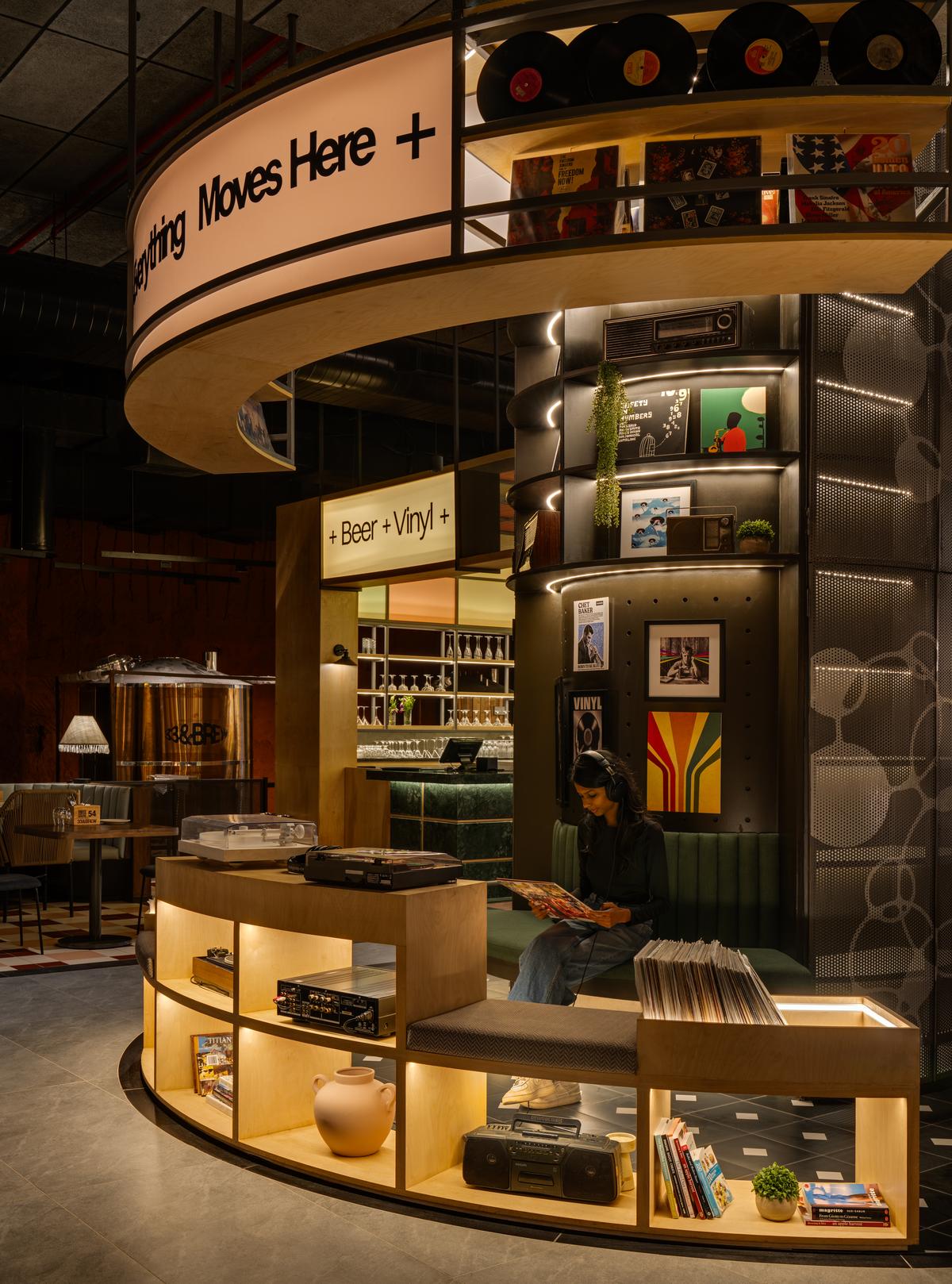
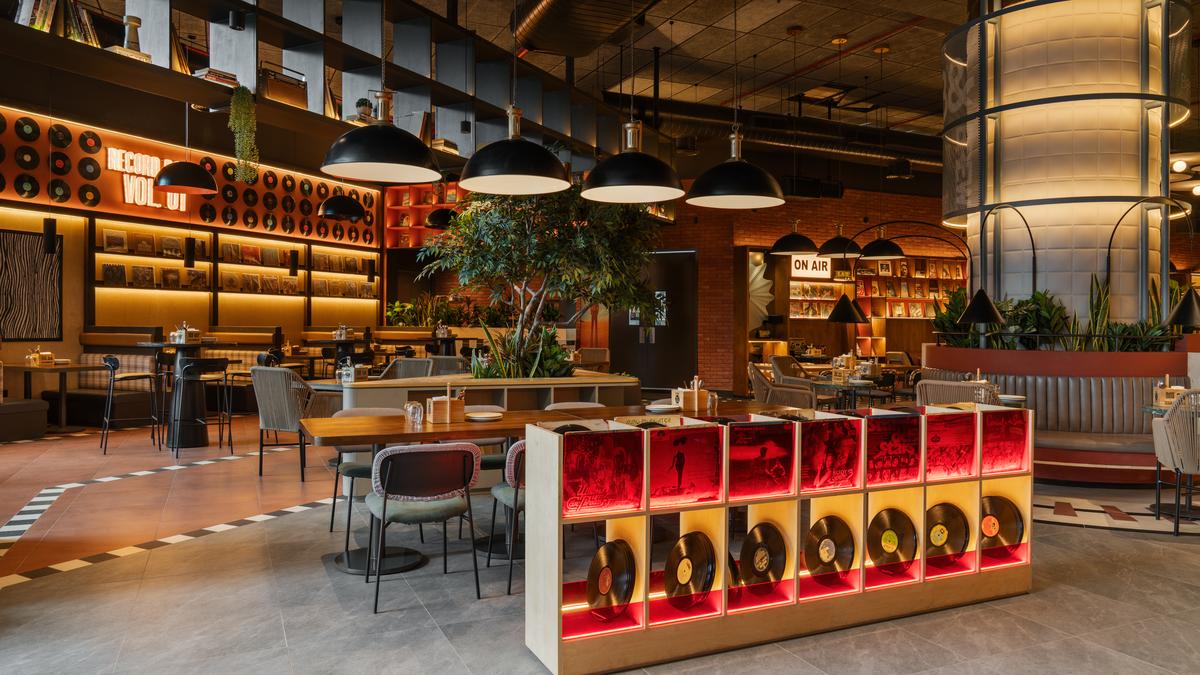
Flanked by skyscrapers of the tech park it is located inside, 33&Brew is surrounded by a sterile aesthetic. But as I walk into the brewery, it is warm and welcoming. Matte black and deep red accents bring the theme together. The brew tanks are on the right side behind glass walls, which adds to the industrial grungy vibe.

Records don every wall of the place. The music collection is eclectic, with 200 records spanning classic rock labels to folk artistes. At the centre of 33&Brew is the listening area. Guests can pick up a record and listen to the music over headphones.

A few starters from the menu

A few starters from the menu
| Photo Credit:
Special arrangement

The beers and cocktails

Behind the beer programme is master brewer Stephen Nelson, a second-generation brewer from Southern Australia with over 20 years of experience. When I visit the beers are not ready, but they will roll out just in time for the new year. “A total of six styles of beers will be available,” he tells us.

The beers are named thematically, with needle drop IPA (a West Coast IPA), A-side lager (a crisp Helles-style lager), and golden groove hefeweizen. Since they are not on tap yet, I try one of their cocktails Brine and Bass. The spicy number has gin, spicy olive brine, and lime juice.

The food

The food is what sets 33&Brew apart from other breweries. The menu, designed by celebrity chef Sabyasachi Gorai, has global influences. The caramalised zucchini phyllo pie is made of grilled onions and toasted spinach in a puff pastry. The pastry is light and flakey. The lamb empanadas are baked to a golden crisp and stuffed with minced meat.

The mushroom ravioli at 33&Brew

The mushroom ravioli at 33&Brew
| Photo Credit:
Anagha Maareesha

The pasta is handmade and fresh. I try the mushroom ravioli. It is a visual treat, so I have to pull out my phone camera for this one, before I dig in. The ravioli parcels are stripped black and white, and stuffed with mushroom and truffle butter, before being folded carefully. It is served with a creamy sauce.

The Malaysian Mamak chicken kebab too is a spectacle. The grilled chicken is brought to the table on skewers with a fresh salad, and roasted veggies. Other signatures include Harissa cauliflower steak, Goan prawn arancini, and Neapolitan style pizzas.

With an elevated menu and an interesting concept, 33&Brew stands out in the crowd of breweries. Pity the beers are not ready yet, I will be returning to try them.

₹2,500. Open all days, 12 pm onwards. Guests below 21 years permitted till 7 PM only. At Brookfield. For more details, call


Source link

Blueprints for a revival | Indigo is finding modern champions


In a room well beyond the Blue Futures: Reimagining Indigo exhibition at Hampi Art Labs stands a large plastic vat, wrapped in a bright red-and-black tartan blanket. Night temperatures in Vidyanagar, the Jindal South West (JSW) township at the edge of which the art gallery and residency are situated, drop to about 16°C and that vat of indigo is as precious as a baby in the eyes of all the artists in attendance.

So much so that the first display the visitor encounters at the exhibition is a vat of the blue dye. Meera Curam, the curator of the show, removes the lid with a flourish, allowing us to gaze at the floating ‘flower’, a coalesced skin formation that indicates successful processing of the dye. The gallery is air-conditioned against the harsh sun of the day but the vat itself is well insulated, just like the one in the workshop.

The care could be a metaphor for indigo in the Indian culturescape right now. From the west to the east and the south to the north, this ancient dye — predominantly used for fabric in most of recorded history — is the focus of new cultivation, fresh innovations and novel applications. Indigo-dyed stone? Done. Indigo-infused metal? Patented. Indigo you can wear as a perfume? So close.

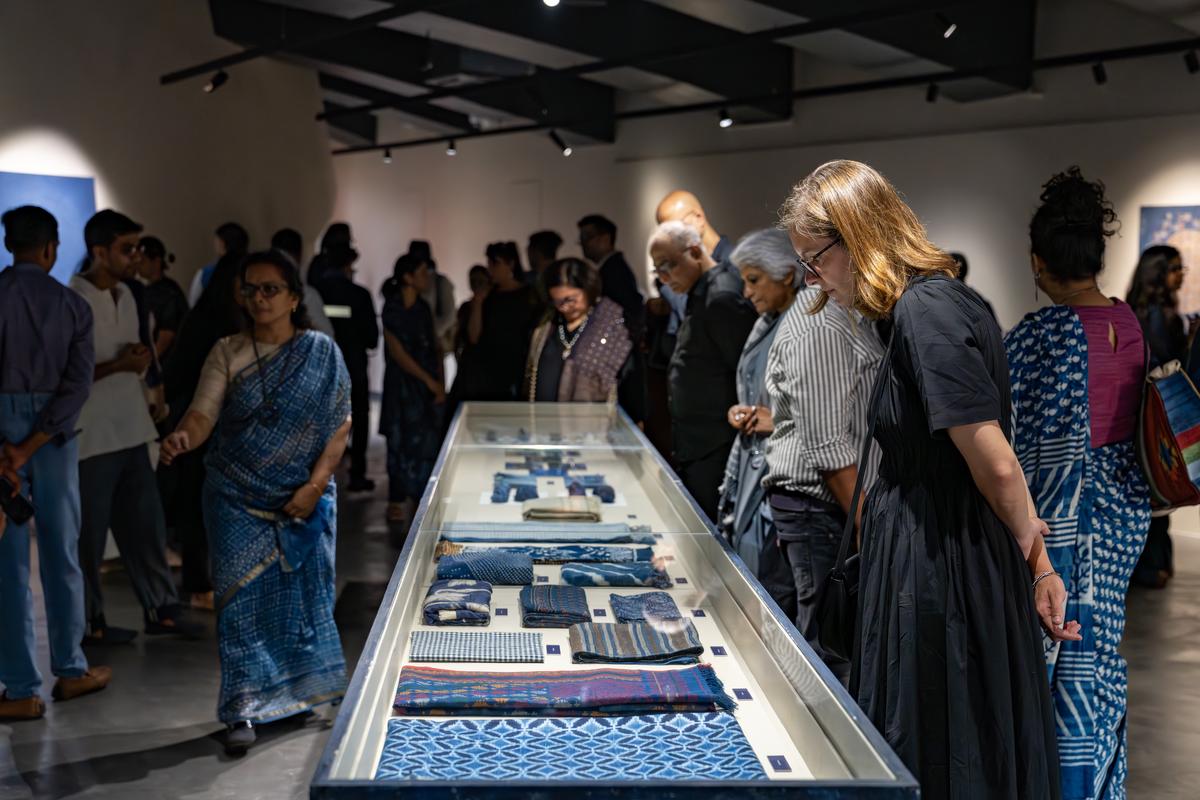
Visitors at Blue Futures: Reimagining Indigo

Visitors at Blue Futures: Reimagining Indigo

It might be a reach to call it the second indigo revolution, but the resurgence of interest in the Indigofera tinctoria plant is showing up in exhibitions such as Blue Futures, in textile artworks snapped up by leading collectors, in laboratories pushing the boundaries of the dye, in designer textiles, and yes, in artisanal crafts as well.

While the simultaneous showcasing can be put down to coincidence, practitioners are aware that it’s been a long time coming. Over the past couple of decades, as capitalist systems of thought and economy came under scrutiny, alternative thinkers have sought out slower, more mindful and sustainable ways of living. The growing popularity of natural dyes is only one of its manifestations.

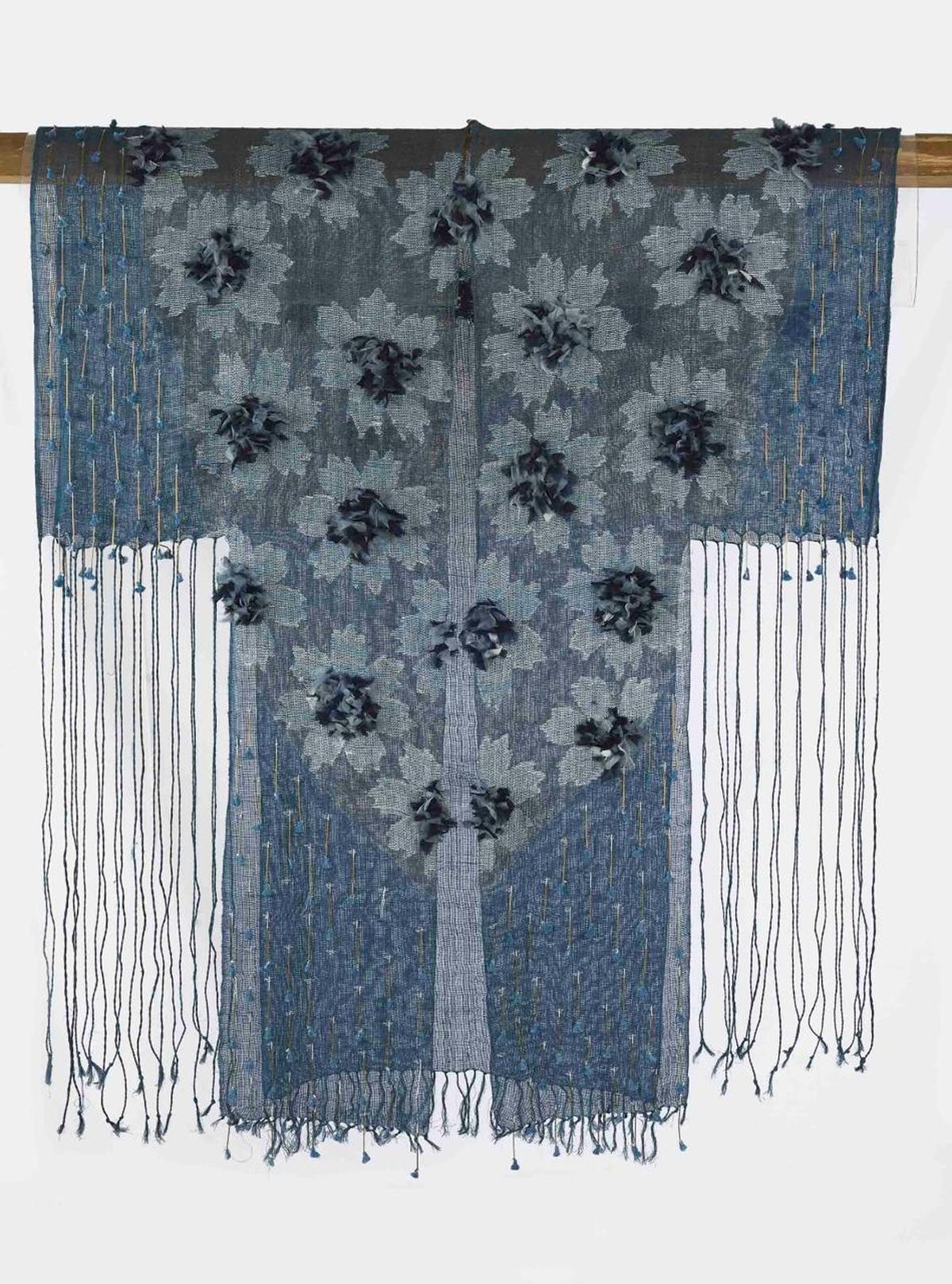
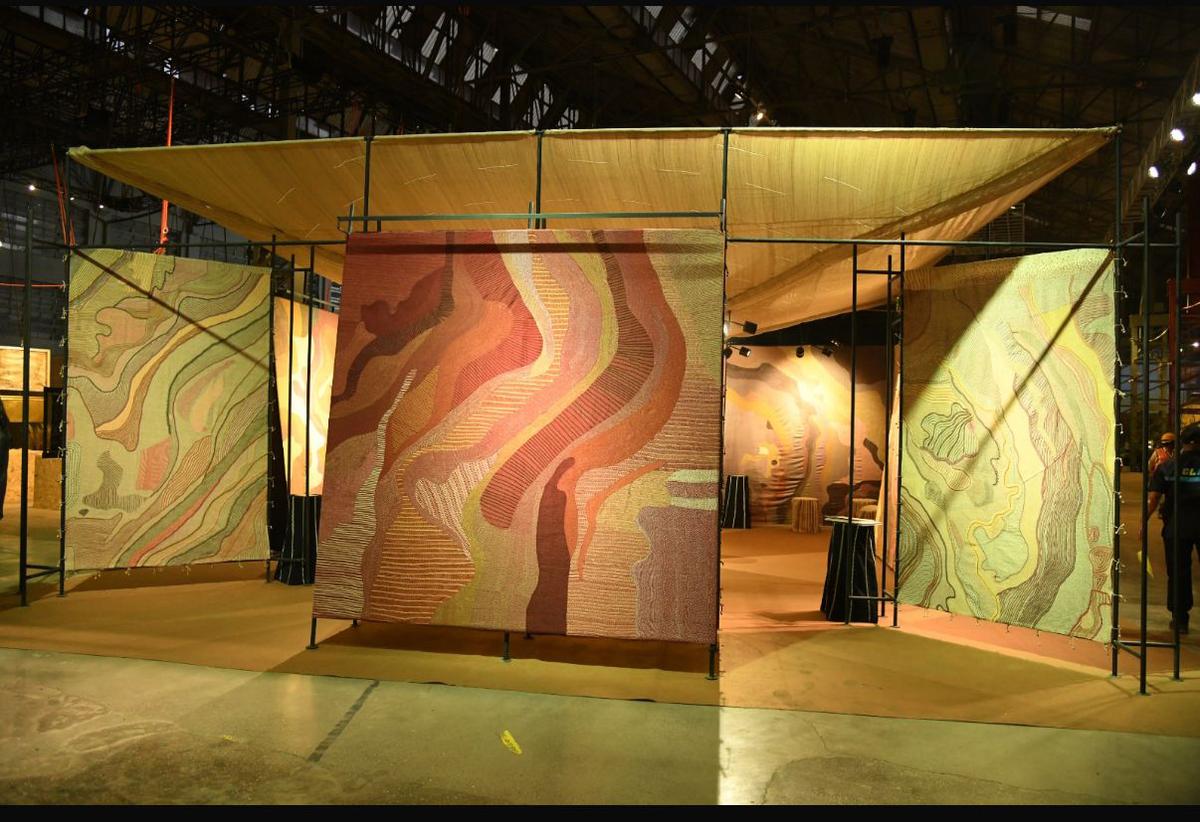
New Horizons Weftscapes by Bappaditya Biswas(handwoven jamdani in natural indigo)

New Horizons Weftscapes by Bappaditya Biswas(handwoven jamdani in natural indigo)

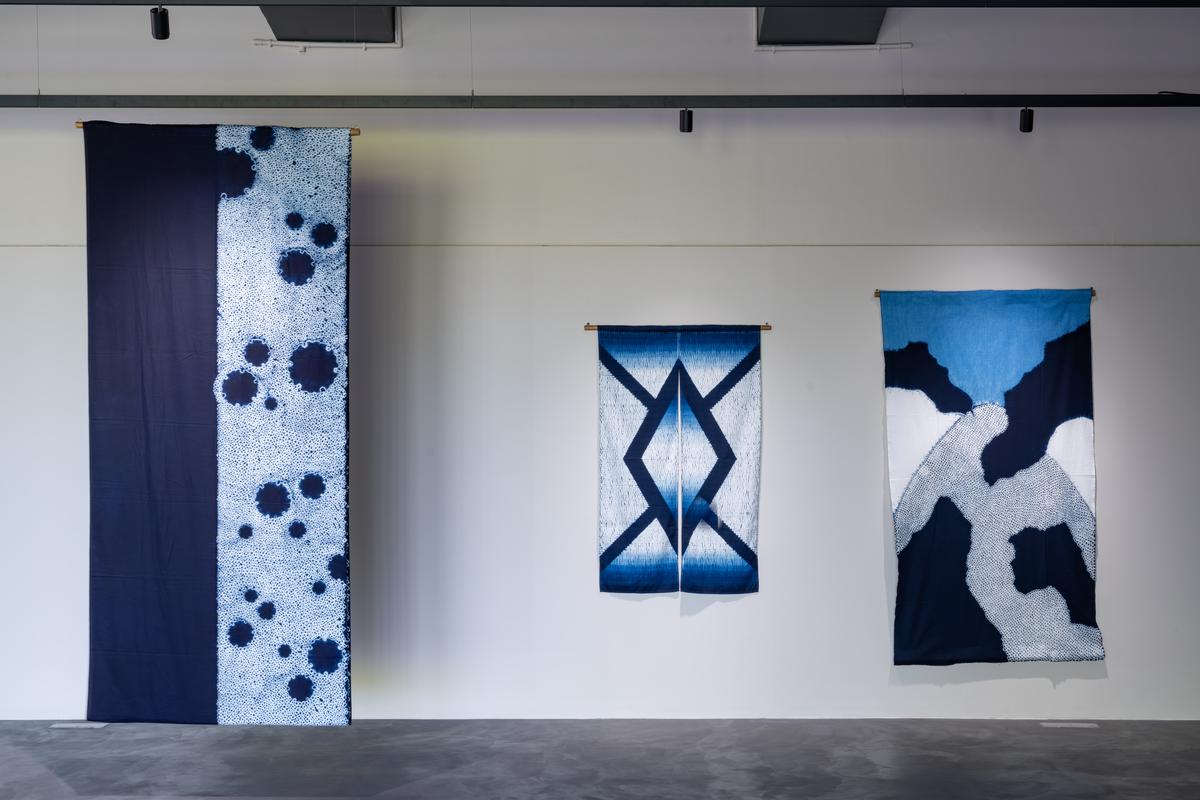
Tapestry by Takuma; (L-R) natural indigo with yatara miura shibori, and indigo on cotton with yatara miura shibori and boshi shibori

Tapestry by Takuma; (L-R) natural indigo with yatara miura shibori, and indigo on cotton with yatara miura shibori and boshi shibori

“This renewed love for natural indigo feels like a return to memory — an attempt to remember our past with care. It is also a quiet movement back towards the earth, and towards our shared sense of humanity.”Anuradha SinghDirector of Jaipur-based Nila House, an organisation working with indigo at the intersection of craft, design, sustainability and community empowerment

From growing and farming the indigo plant to fermenting and developing the pigment, each of the processes is necessarily meditative and unhurried, a delicate tango of time, skill, learning and nurture. Much of this corpus of expertise is inherited and undocumented, and there is little official effort to preserve this massive knowledge base.

Artistic entrepreneurs see this lacuna as an opportunity for an intervention. And, wiser after centuries of appropriation of Indian craft know-how, they’re ready with guardrails for their discoveries. The last is important because, as textile designer Mayank Mansingh Kaul points out, much of the research into indigo and, indeed, natural dyeing, is driven by foreign — especially Japanese — demand.

Bappaditya Biswas

Reintroduced the indigo plant in West Bengal

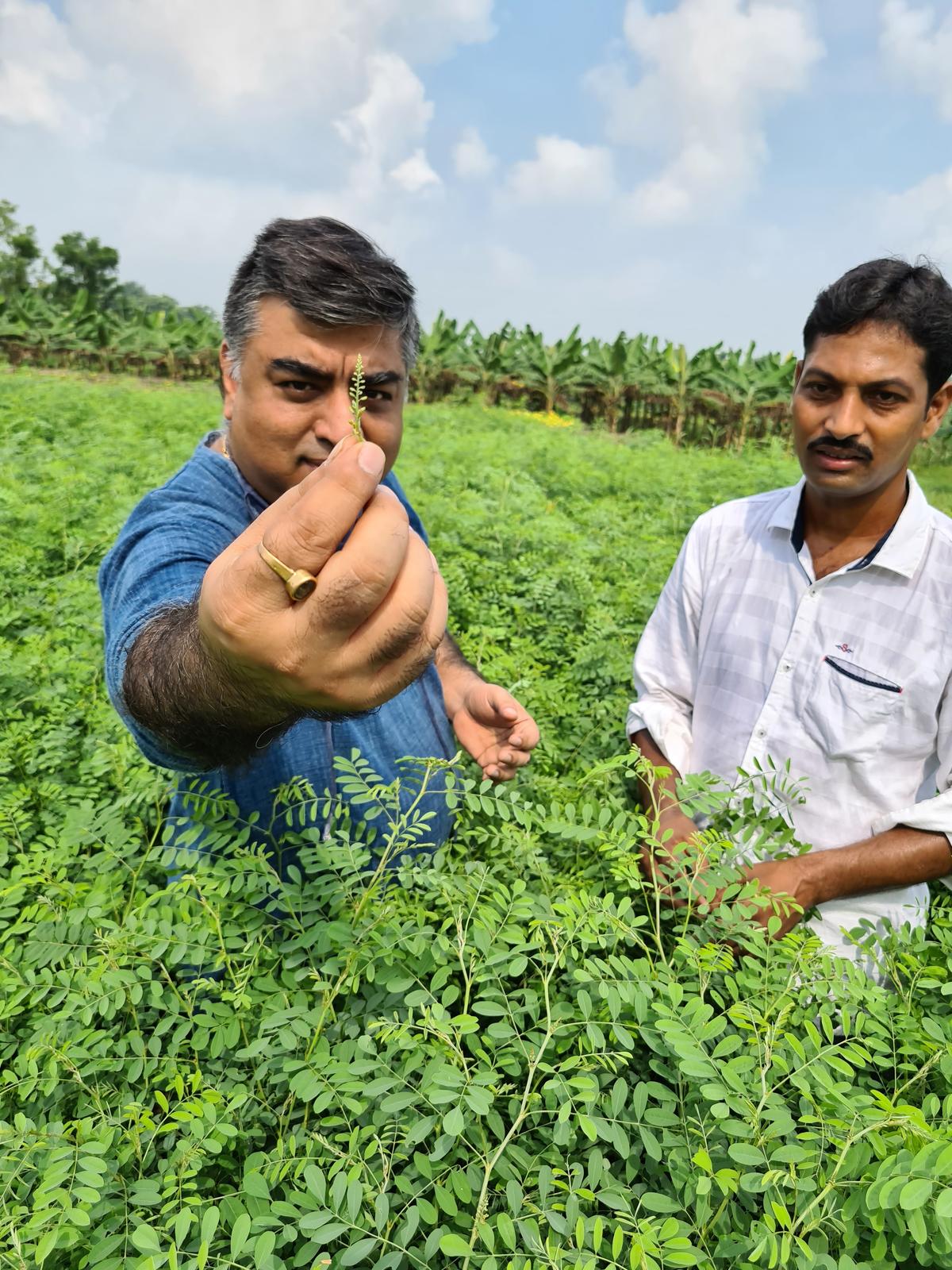
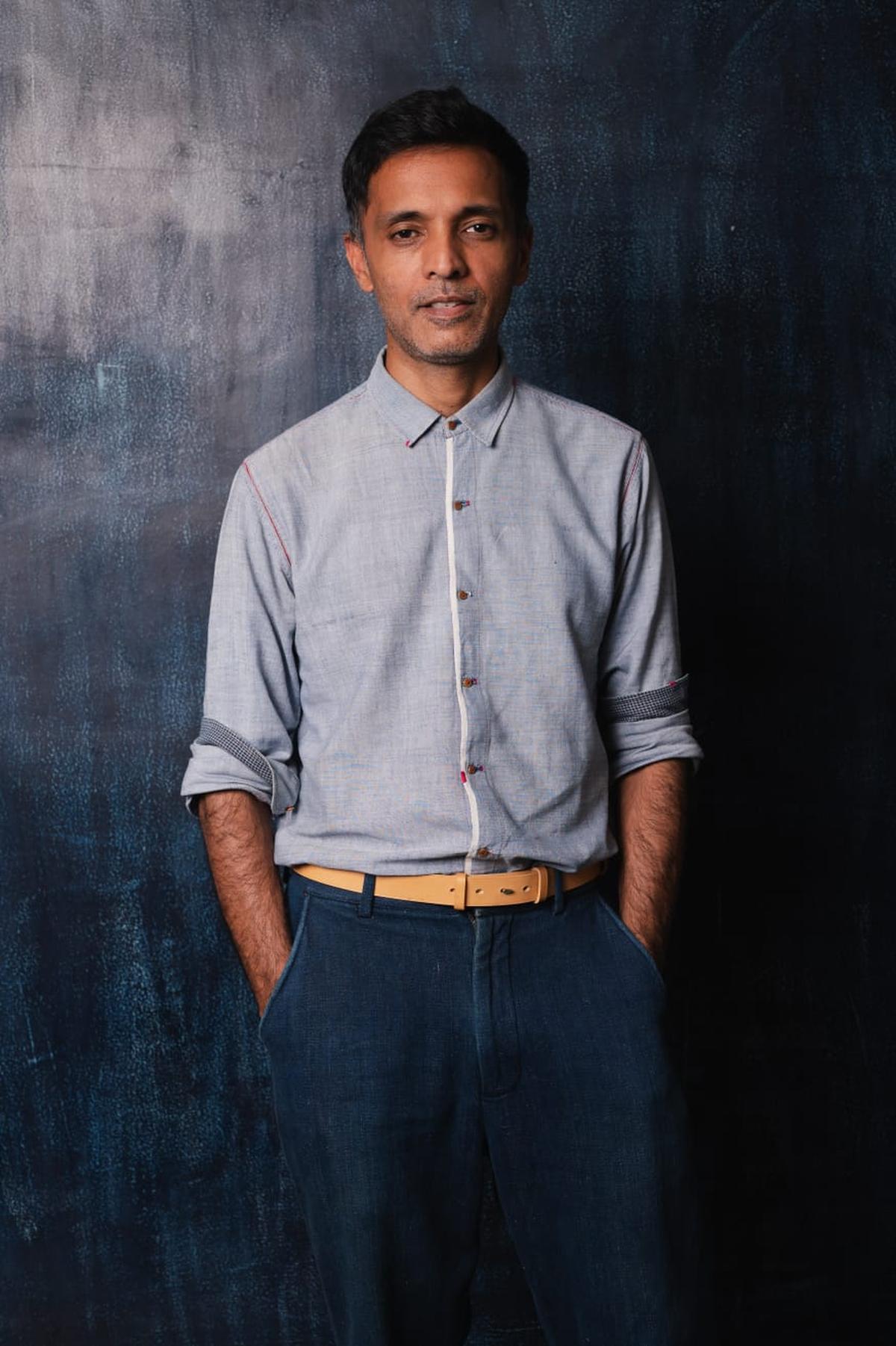
A textile designer, successful businessman, fabric engineer, and chintz artist. Bappaditya Biswas wears many hats, but the most recent jewel in his crown comes from reintroducing the indigo plant in Bengal. “A very strong sense of oppression and fear is still associated with indigo in eastern India,” says Biswas, of the erstwhile epicentre of the British trade in the dye in the 1800s. “In Phulia, they call it the ‘evil crop’, they said it ruined the land, they even built over the historical vats.”

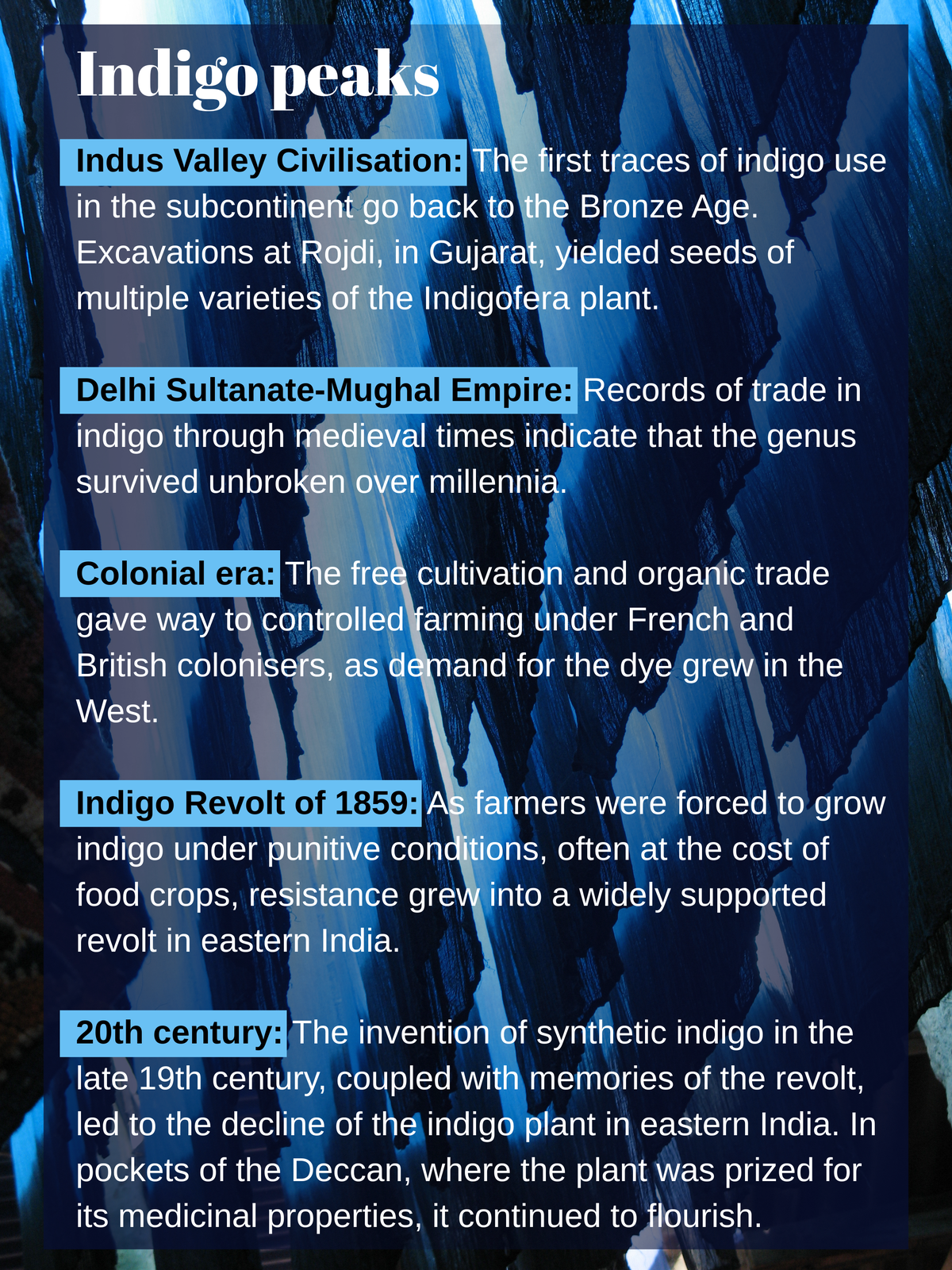
Fired by the idea of a dye that could inspire a revolution — the nil bidroho (indigo revolt) of 1859 was a landmark peasant movement against the extreme cruelty of British planters looking to maximise indigo output — Biswas began researching indigo in 2006. But it was only in 2020 that he was able to convince Sanjay Pramanik, a Phulia-based master weaver for his Byloom label, to grow the plant. “For 165 years, indigo had only lived in the imagination. There isn’t even a record of the variety of indigo that grew here,” says Biswas. “We procured the seeds of the Indigofera tinctoria from Tamil Nadu [it’s an old crop there], and it took to the conditions really well. What is also encouraging is that it helped the locals discover its benefits compared to chemical dyes.”

Bappaditya Biswas in a field of indigo

Bappaditya Biswas in a field of indigo

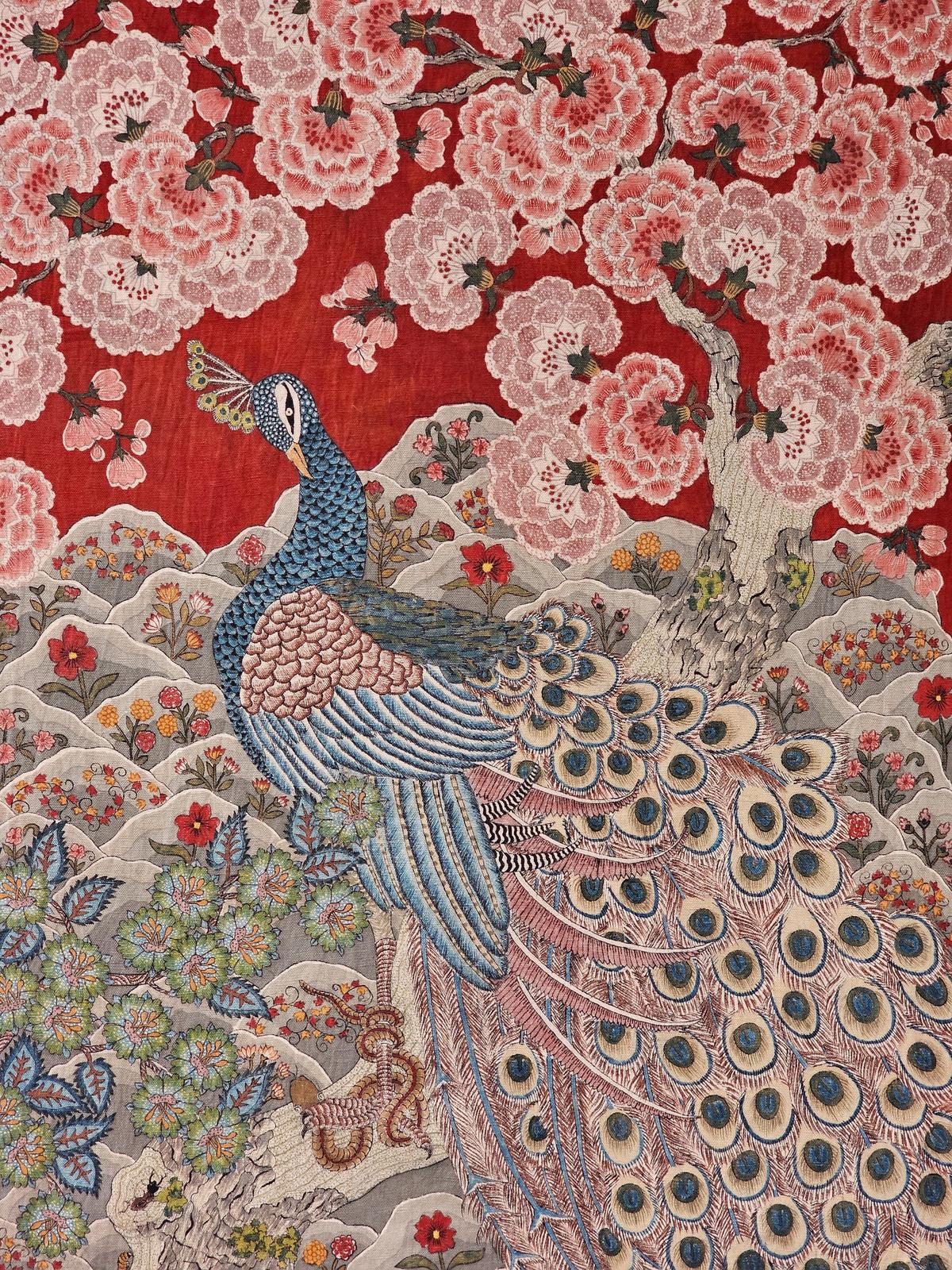
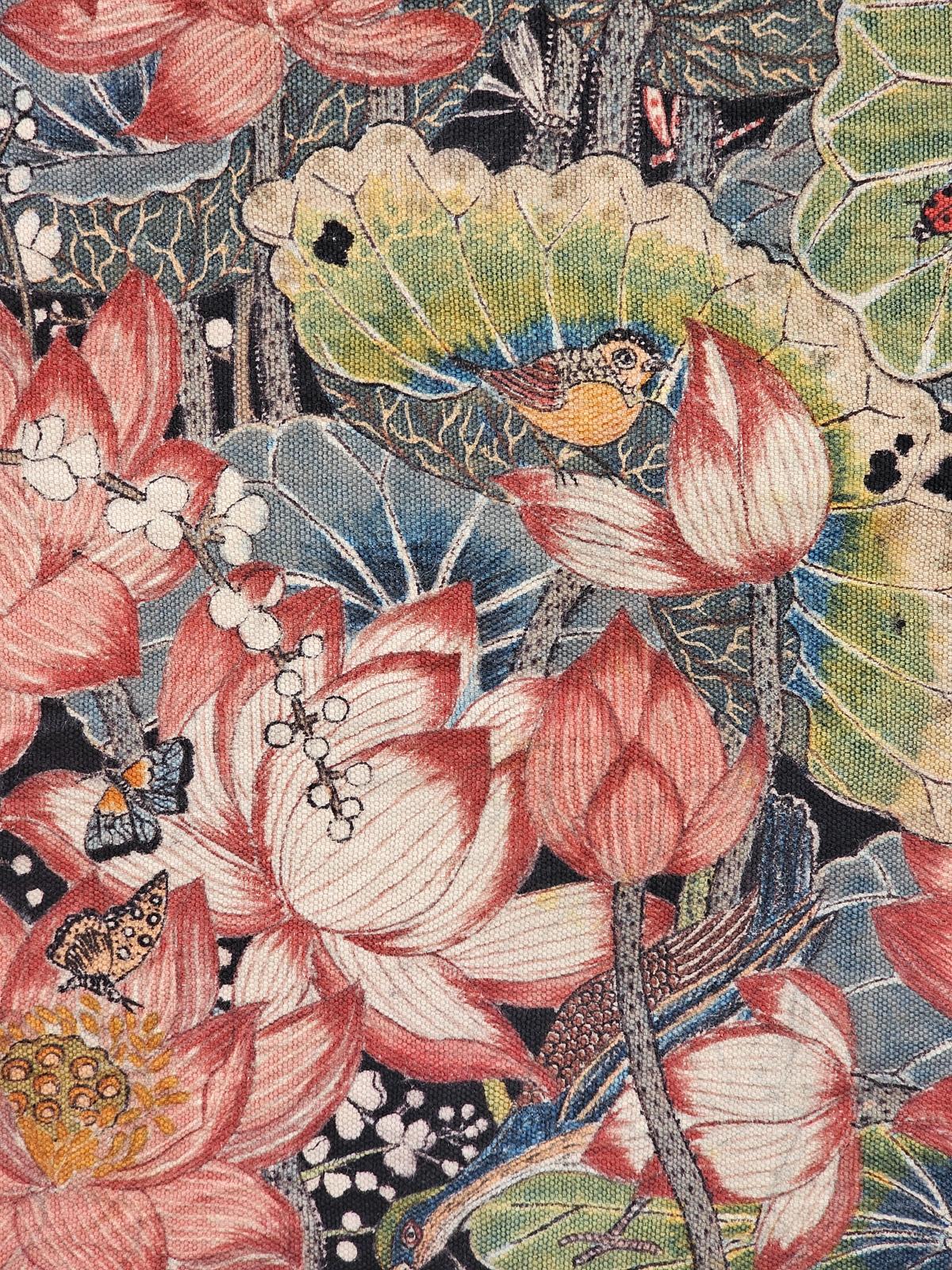
At present, the indigo output is too small to take care of the demands of Byloom — about 20% of its production uses natural dyes — but Biswas puts the Phulia indigo to excellent application in the large handwoven, handspun cotton canvases he prefers for his meticulously crafted chintz art. “Chintz is also something that has been wiped out [like indigo in Bengal],” says the entrepreneur with a revivalist’s soul. “Chintz refers to a particular design pattern, yes, but it is also a technique. I wanted to find out if it could still be done the old way: with natural dyes, in a mordant-resist process.”

Chintz done the old way, with natural dyes, in a mordant-resist process

Chintz done the old way, with natural dyes, in a mordant-resist process

Biswas’s interest was first piqued by a large handpainted chintz from the TAPI Collection (a private collection of textile and art in Surat) in the early 2000s. He followed it up with a seven-day workshop with French-Canadian artist Michel Garcia in 2009. But it was only during the pandemic lockdown that he was able to put paint to cloth, remaking chintz with foliage, fauna and Vishnu avatars in natural dyes. Inspiration comes from childhood memories, calendar art, even holidays in North Bengal tea gardens. “It’s all an expression of my love for textiles,” he says, refusing to draw lines between his various practices. “There are all parts of my whole being coming together.”

Kavin Mehta

Uses indigo to dye natural materials such as stone

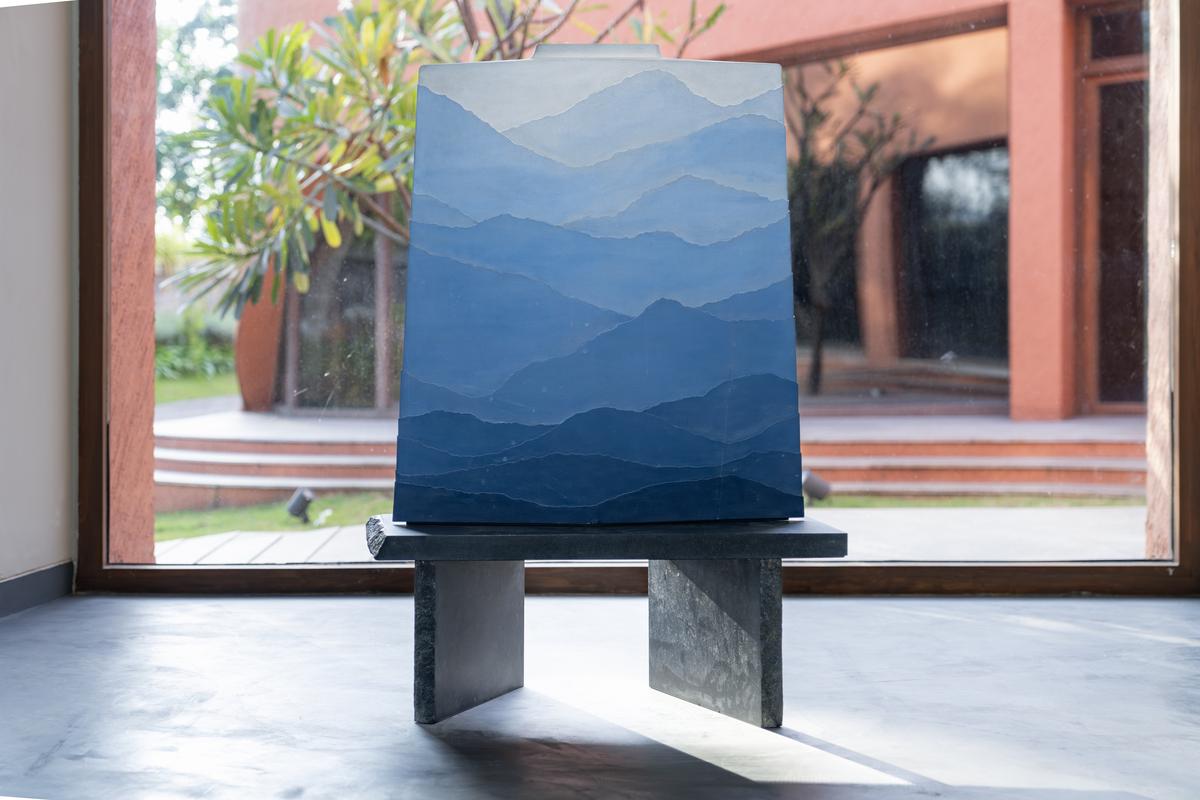
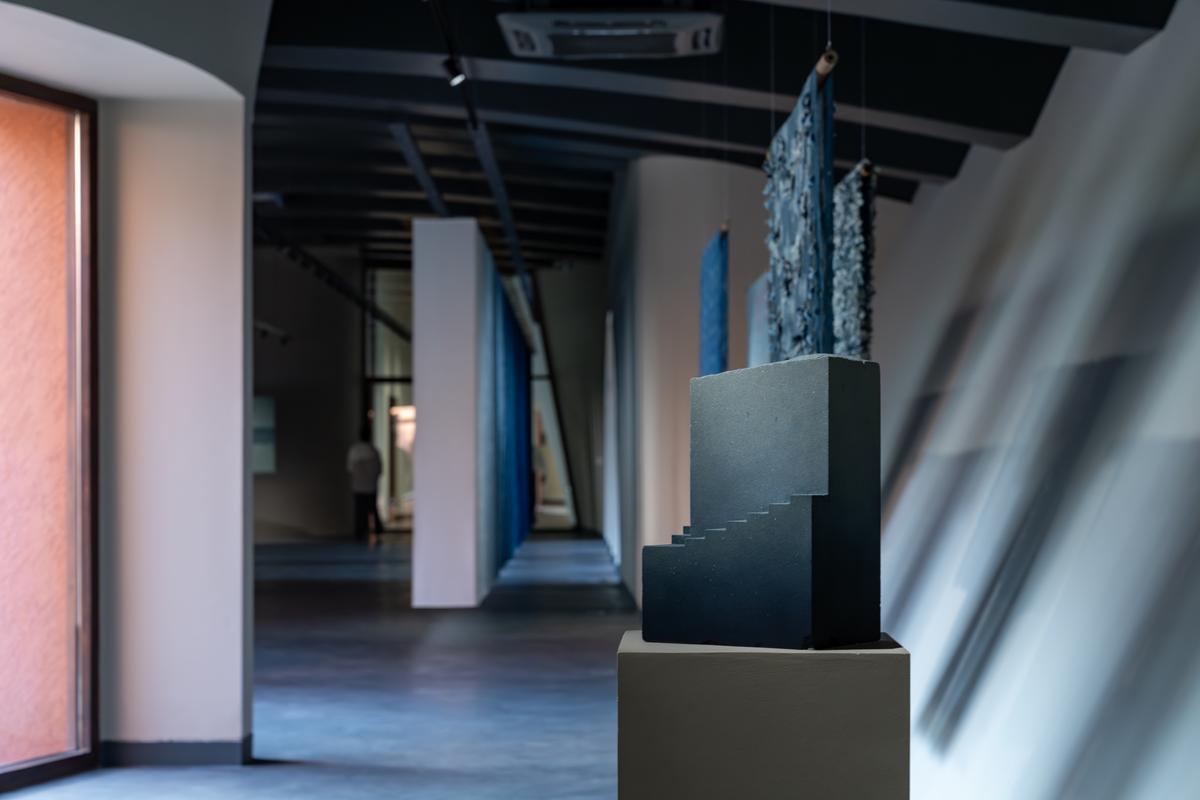
Immersion takes on new meaning at the Blue Futures show, which can make visitors feel like they are in a blue dreamscape, or in a fantastic underwater expedition, surrounded by spot-lit, surreal objects of joy. Against the twilight-darkened floor-to-ceiling windows of the gallery, however, one artwork draws every eye. It’s a large, almost rectangular stone sculpture, etched with ever lighter shades of indigo. Container, as it’s called, is a vase made of western Indian limestone (wrongly described as sandstone in the title card) and painted with natural indigo dyes — of which the limestone is also a component. The stark, evocative work gives circularity a whole new nuance.

Container, a vase made of western Indian limestone and painted with natural indigo dyes

Container, a vase made of western Indian limestone and painted with natural indigo dyes

A few feet away stands another piece, this one untitled. Reminiscent of Dutch graphic artist Escher’s puzzle-like works, it’s also crafted out of a limestone block — but this one is dyed in a single shade of indigo, its darkness throwing into sharp relief the glittering embedded silica, invisible in its natural white state.

Crafted from a limestone block

Crafted from a limestone block

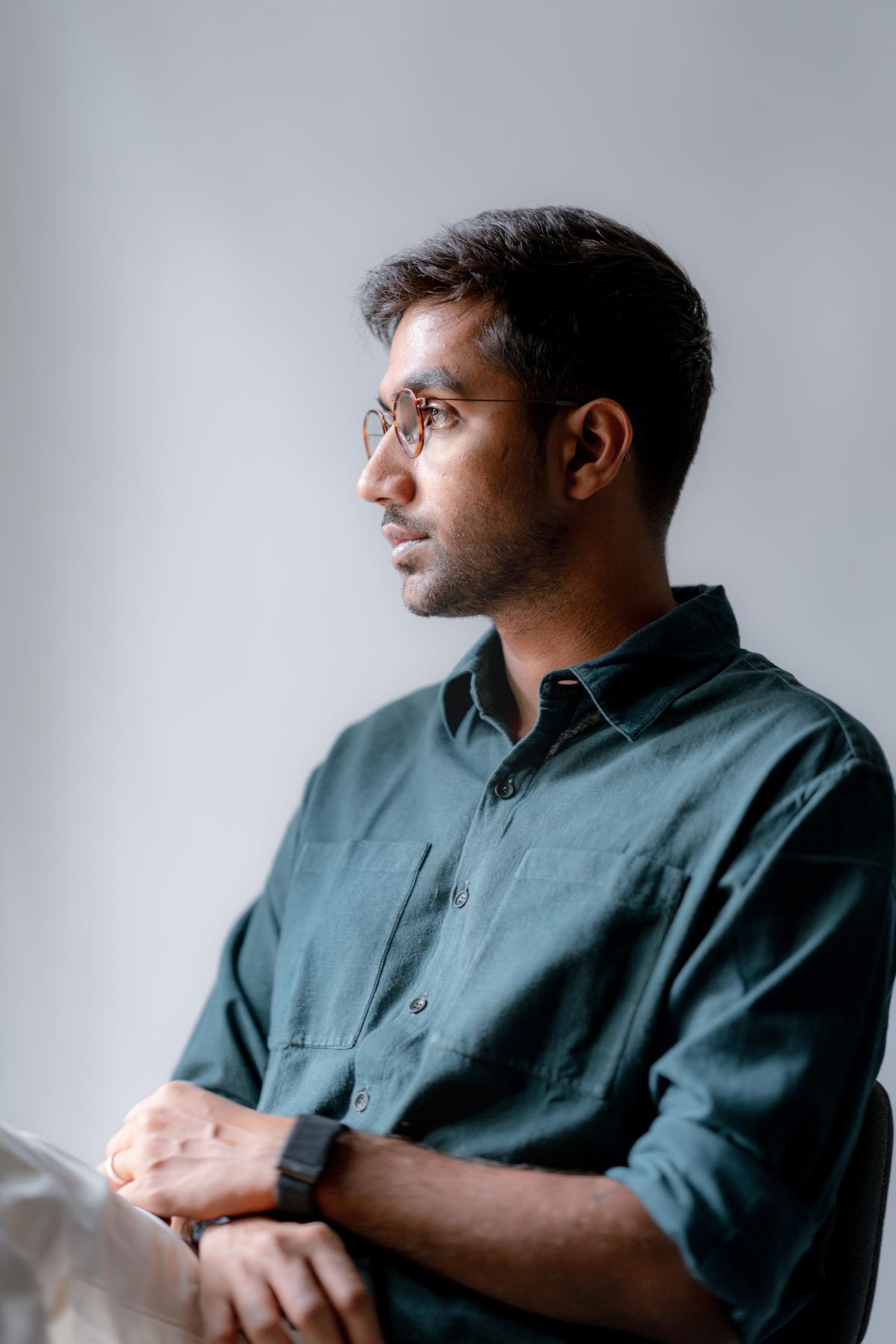
Both works are by Kavin Mehta, industrial designer and accidental artist. “I became interested in indigo as a student in the U.K. when I was researching products that get better with age; it was that metamorphosis [think how a pair of jeans reflects the shape and postures of its wearer] that really spoke to me,” says Mehta. “Back in Ahmedabad, I was building my design studio in an old mining hub called Gota, when I started tinkering with the stone around. I learnt from traditional stonemasons, that’s how I started my art practice. I tried to look at stone as space, so, Container, for instance, plays with the idea of depth in an introspective sense as well.”

Kavin Mehta

Kavin Mehta

Mehta’s art brought him in touch with Sanjay Lalbhai of Arvind Ltd., one of the world’s largest denim manufacturers. Keen to initiate deeper research into his key dye in its natural form, Lalbhai set up the Indigo Art Museum in Ahmedabad in 2019 and asked Mehta to head it, with a special brief to discover indigo’s affinities with non-textile materials. Those investigations have led to 20 patents for the museum, including fusions of indigo with aluminium and leather, as well as ongoing artistic explorations.

Mehta himself also works with wood, clay, ceramics and other natural materials in conjunction with natural indigo, a process he describes as a “dialogue” with his own vision, with each element possessing its own unpredictabilities. “No chemical blue gives an artist the range indigo can. Nothing has ever challenged me like indigo — every time I think I know it, it surprises me,” he says. “As a designer, I build for longevity, not merely sustainability, and indigo resonates with that philosophy.”

11.11/eleven eleven

Learning to paint and print with indigo

That this renewal of interest in indigo has legs is clear from the research being conducted independently into various aspects of the dye. Their originators often choose to showcase their breakthroughs first as art; commercialisation, they are aware, will follow. As a part of the recent Madras Art Weekend, Chennai-based boutique Collage, for instance, exhibited an installation by craft-forward design brand 11.11/eleven eleven to mark their formulation of indigo paste.

Collage and 11.11/eleven eleven at Madras Art Weekend

Collage and 11.11/eleven eleven at Madras Art Weekend
| Photo Credit:
Rangaprasad

“Indigo has always been used as dip-dye — 100% natural indigo cannot be used for printing. But we like to paint and print with natural dyes,” says Shani Himanshu, co-founder of the 16-year-old label, pointing out that till date, a chemical reduction would be necessarily added to natural indigo to allow printing. (This is also the reason commonly available indigo prints get a bad rap for bleeding, rubbing and fading, since the chemical process makes it susceptible to oxygen.)

Shani Himanshu

Shani Himanshu

“The question was, how can we keep indigo in a reduced form naturally. After years of R&D, we discovered the answer in indigo paste. It uses a natural binder, which is our intellectual property, and the moment it reacts with water, it oxidises and turns blue.”

Coming on the back of two decades of experimenting with indigo, 11.11/eleven eleven is one of the few textile enterprises (if not the only one) to have their own vats, capable of fermenting 5,000 litres of natural dye in their New Delhi studio. The research was aimed at ensuring all-round safety for the artisans who would be working with the material, says Himanshu. “We also believe what you wear should breathe with you, it should be good for you,” he adds. “Indigo is a medicinal plant, it has many beneficial properties.”

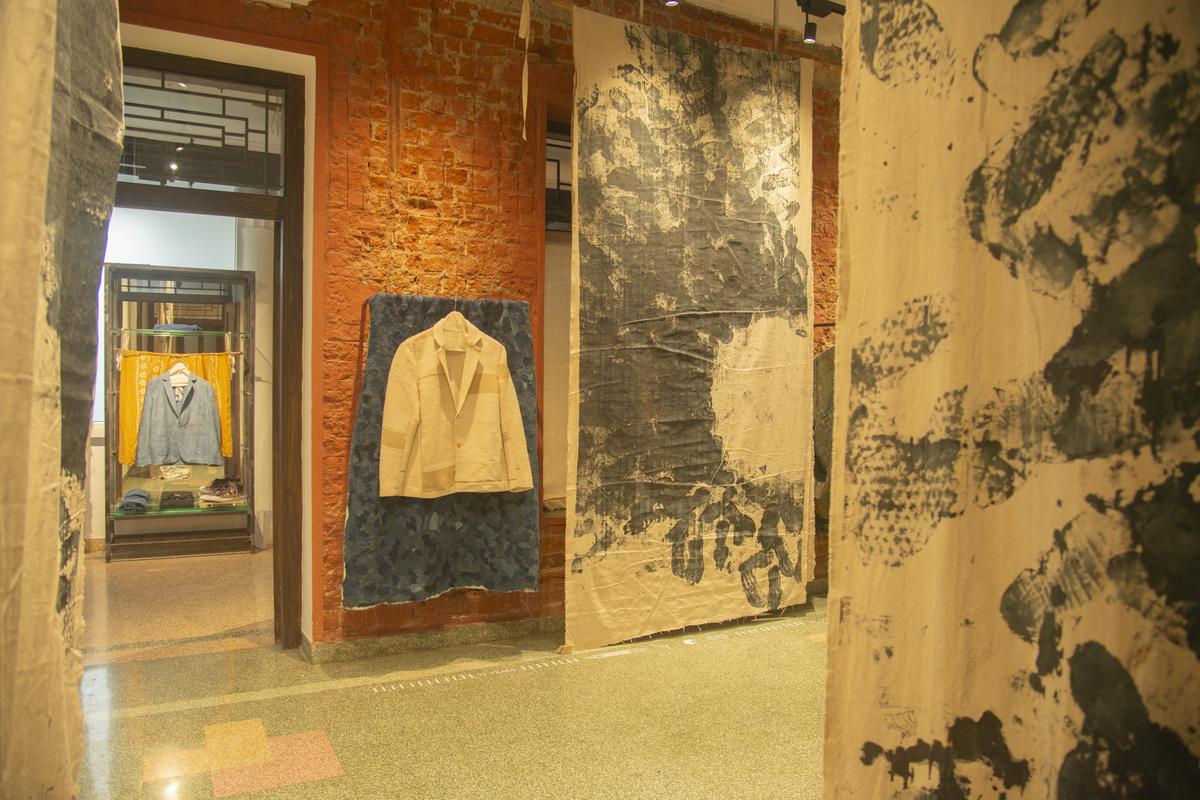
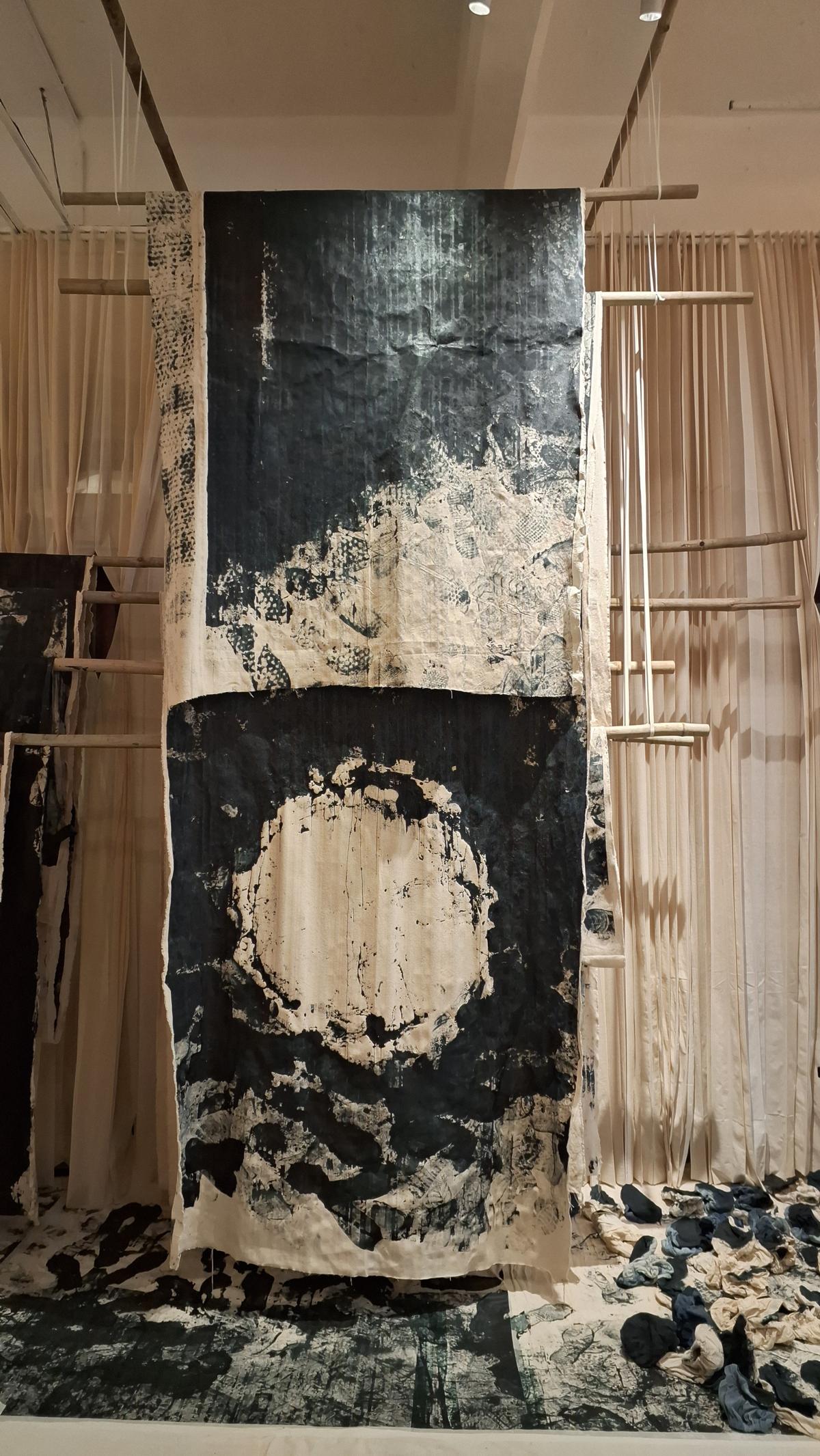
The 11.11/eleven eleven installation at Collage (first launched at their Mumbai store opening last year) encapsulated this participatory idea by displaying tapestries created when people walked through indigo paste onto large canvases, ‘painting’ it, so to say, with their feet. Each piece is thus unique and distinct. This is exactly the spirit that, Himanshu hopes, will be carried forward as artists, designers and textile practitioners make the stabilised indigo paste their own.

11.11/eleven eleven at Madras Art Weekend

11.11/eleven eleven at Madras Art Weekend

“Much like ikat, indigo is a medium for us in India to connect with the world. Africa has indigo, as do other parts of Asia. The next stage for us as curators is to start looking at connections that Indian textiles have with other parts of the world, especially the Asia-Africa paradigm.”Mayank Mansingh Kaul Textile designer, writer and curator

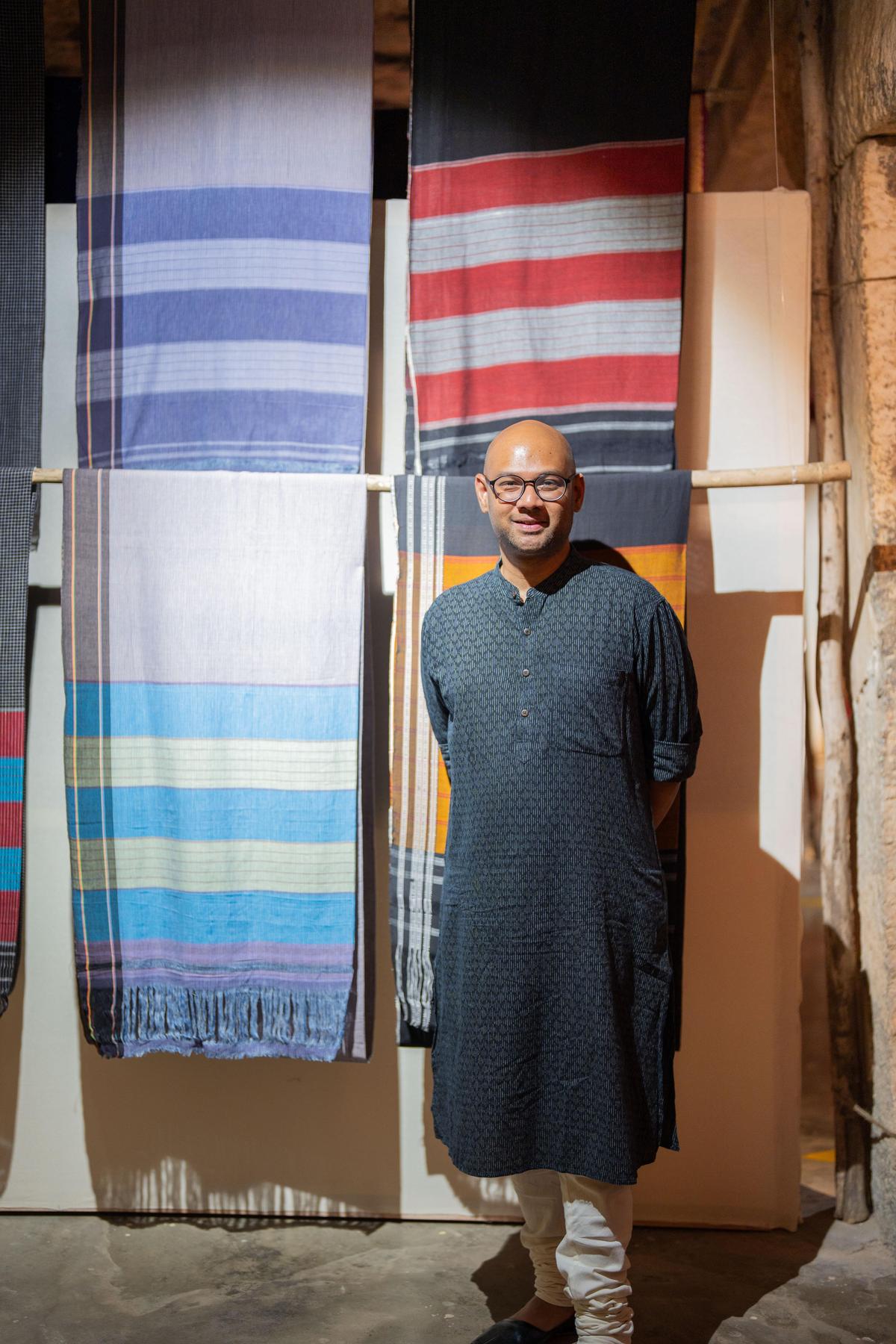
Mayank Mansingh Kaul

Mayank Mansingh Kaul
| Photo Credit:
Courtesy the Baldota Foundation

Visalakshi Ramaswamy

Adding blue to Chettinad’s palm leaf basketry

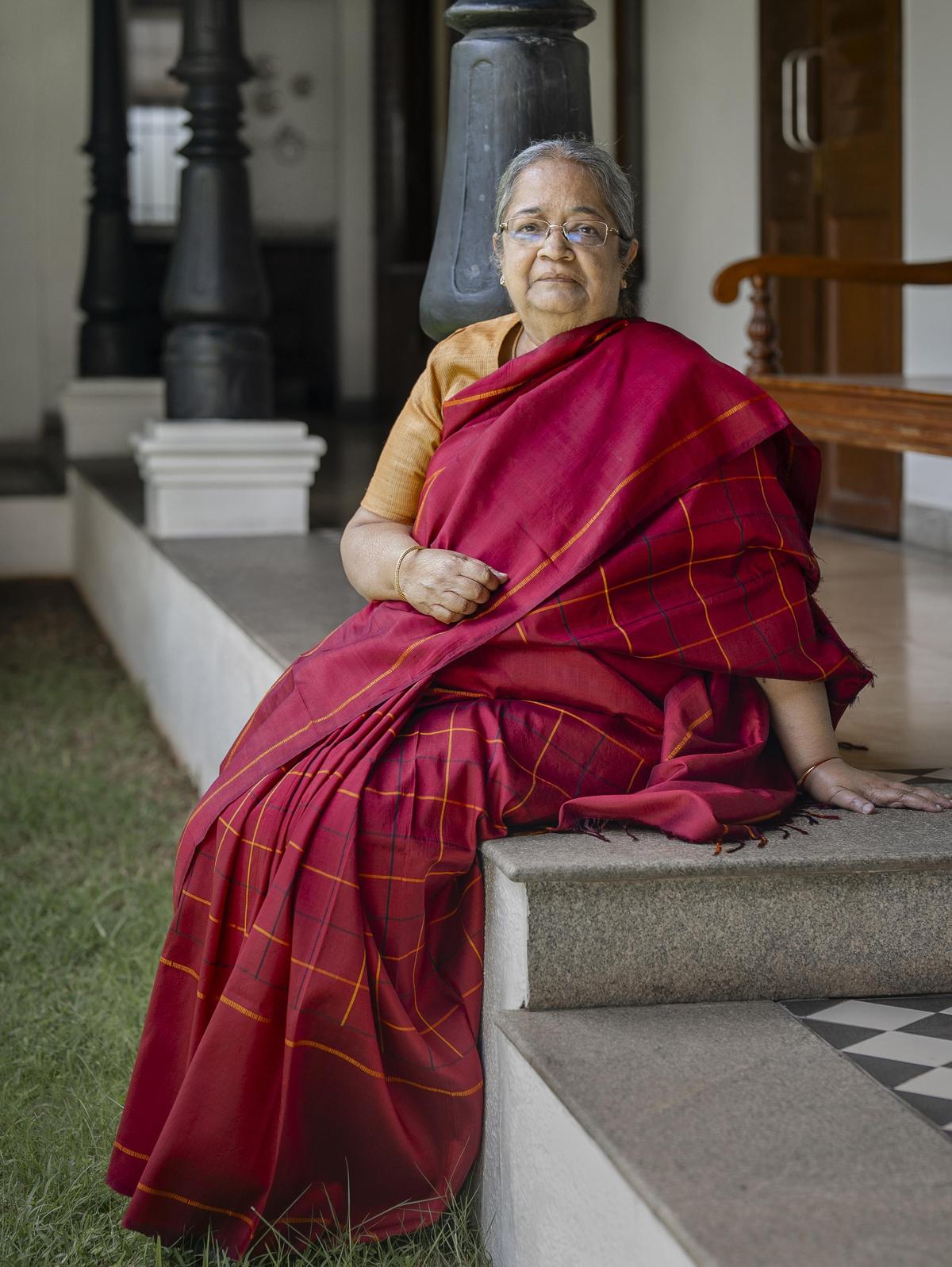
Back in 2000, when Visalakshi Ramaswamy established the M.Rm.Rm. Cultural Foundation to work with the local cultural heritage of Chettinad, she chose kottan, the woven palmyra leaf basket traditional to the region, as her first project. A quarter century and many other initiatives later, it continues to be the product the Foundation is best known for. But Ramaswamy is not satisfied.

Visalakshi Ramaswamy

Visalakshi Ramaswamy

“We started the kottan project to generate employment for village women. Palm is locally available but, for most of the lifespan of the project, we’ve had to use chemical colours as they were the only option,” says Ramaswamy. “A few years ago, we started experimenting with natural dyes, they seemed more in keeping with the ethos of the raw material. While we’ve been able to produce 28 colours with natural dyes, indigo has proved to be a challenge.”

About a year ago, the Foundation reached out to the Indigo Art Museum for help. “We thought it would be great to take it up because the leaf has some inherent properties we hadn’t worked with,” says Kavin Mehta, the lead on the research project. “They wanted to display indigo basketweaves at their 25th anniversary exhibition, and we managed to deliver. But we knew we could improve the process. Developing an easy-to-use kit for the artisans, to my mind, is an even bigger challenge.”

Dyeing palm leaves

Dyeing palm leaves
| Photo Credit:
Courtesy M.Rm.Rm. Cultural Foundation

The chief issue Mehta’s eight-member R&D team faced with the palm leaf was its hydrophobic nature: as a water-proximate plant, it is naturally resistant to moisture, which includes the indigo dye. The next step was preparing a dye vat with affinities towards the raw material. After the washing and the final fixing, the leaf also needs to retain its natural malleability for the weaving. Though the team has achieved some success with the colour, the artisans are not happy with the brittleness of the indigo-dyed leaf.

But Mehta is not about to give up either. And so, hopefully some day not too far in the future, the palm leaf kottan, in addition to the yellows, greens, reds and blacks it is already available in, will also turn a brilliant blue.

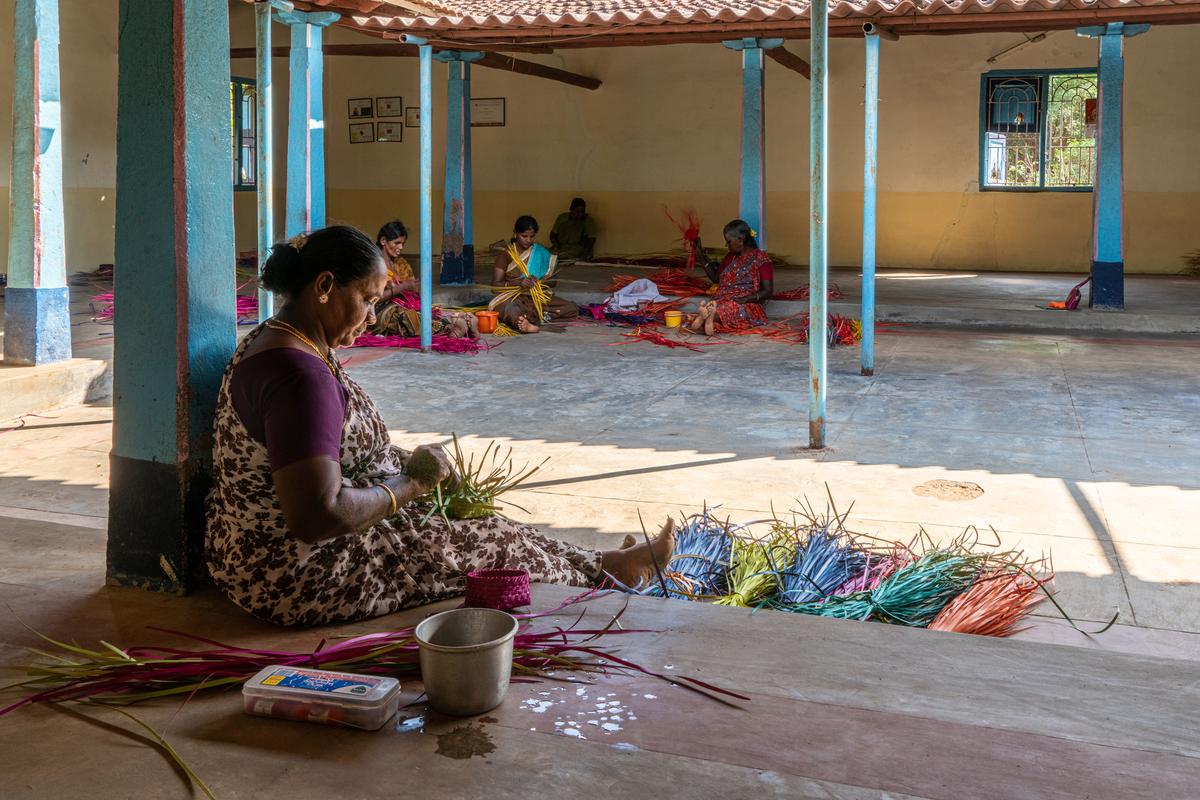
Kottan weavers at work

Kottan weavers at work
| Photo Credit:
Catherine Karnow

Ally Matthan

Making an ‘earthy, dense and green’ indigo perfume

In 2019, entrepreneur Ally Matthan was in an IIM-Ahmedabad classroom, trying to conceptualise a perfume project. “Every single idea I put out was scuttled. Anchal Jain, co-chair of the Creative and Cultural Businesses Programme, kept urging me to look within,” she remembers. “By then, I was deeply embedded in the indigo community through textiles [as founder of the research-driven Registry of Sarees]. And I think that’s what led to my experiments with the indigo plant for a perfume.”

Ally Matthan

Ally Matthan
| Photo Credit:
Chaitali Paranjape

A graduate of ISIPCA (Institut Supérieur International du Parfum, de la Cosmétique et de l’Aromatique Alimentaire), Versailles, Matthan believes fragrance is a way for her to “sensorially understand the depth and soul of indigo”. She explains, “In the Indian system — think attars — the process of extraction is very different from modern methods. The language reflects it too; the essential oils [derived through steam distillation] are the rooh, the soul.”

Over the lockdown years, Matthan started growing her own indigo on the outskirts of Bengaluru and has, since then, experimented steadily to arrive at its perfect aromatic representation. “Different crop cycles have, at different times, given us different extractions — that is why we have spent so long in development,” she says, naming Ashok Siju of Jeevan Indigo, Kutch, and Jesus Ciriza Larraona of Colours of Nature, a natural dye house in Auroville, as her mentors through the process. “I like working with the roots and stem of the plant — the leaves produce a scent that’s similar but not the same — and blend the essential oils thus extracted with other ingredients to provide the complete indigo experience, the closest reflection of my own immersion in indigo.”

Ask Matthan to describe the fragrance — scheduled to roll out in the next four to five months — and the adjectives roll off her tongue: earthy, woody, amber, dense and green, while also being humid and wet. “I also think, as much as there is lightness about indigo, there’s also a darkness,” she says. “Indigo is not a fragrance by itself, it comes with a context and a subtext. If the colour is its personality, I feel the fragrance is its soul.”

Blue Futures: Reimagining Indigo will be on show at Hampi Art Labs till January 28, 2026.

The writer and editor is based in Bengaluru.


Source link

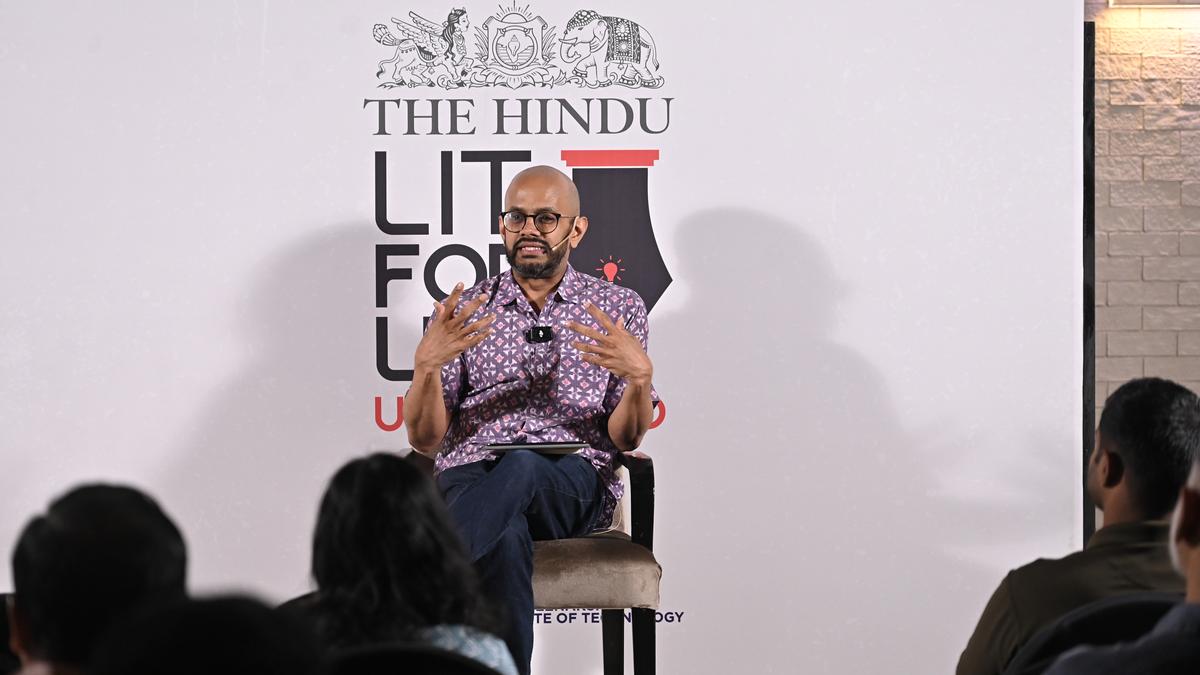
The Hindu Lit For Life Unplugged: Samanth Subramanian spotlights undersea cables that power the internet


Samanth Subramanian

Samanth Subramanian
| Photo Credit: B Thamodharan

Author Samanth Subramanian described the coming together of his latest book as ‘serendipitous’. 
The book, The Web Beneath The Waves: The Fragile Cables That Connect Our World, published by Columbia Global Reports, which explores the undersea cables that power the Internet and the secret battles to control them, took the centrestage at The Hindu Lit For Life Unplugged event on Friday (December 12, 2025) evening. The Cheroot malt bar at ITC Grand Chola, Guindy, played host to a packed audience for the talk by Samanth, writer and managing editor of Equator magazine, modelled after New York City’s Lectures on Tap movement. 

“In 2011, I read Neal Stephenson’s essay ‘Mother Earth Mother Board’, which delved into the network of undersea cables. I read this piece on my mobile phone then, and it felt like an engaging and entertaining reminder that underneath this immaterial internet or so we think, is a very sort of material infrastructure underpinning it and a lot of it is under the ocean. And this was completely fascinating to me in many ways,” Samanth recalled. 

In 2022, a volcanic eruption damaged the undersea cables of Tonga, an Island country in Polynesia and resulted in an internet disruption to parts of the island which reminded Samanth of the essay again. “I started wondering about how the materiality of the internet has changed since Stephenson’s essay, what the undersea cable networks look like today, how it has changed, and who was going out there and repairing Tonga’s undersea cable. I then pitched a book on this and worked on this over the next two and a half years,” Mr Samanth recalled.

The book took Mr Samanth all over the world; to the Ivory Coast, Singapore, Taiwan, Malaysia, Madrid, Cornwall and California, and enabled him, he said, to meet a cast of exciting characters. “There are roughly 900,000 miles of such cables under the ocean, and these transmit 95% of all international data traffic,” he said. 

Undersea cables, he said, soon also started becoming a geopolitical flashpoint.”It seemed like suddenly, there were a host of bad actors around the world who started to realise that to cripple parts of a country, or its economy, or corporations, an effective way to do this was to cut its undersea cables,” he said, of the geopolitical urgency to the book. 

Mr Samanth further emphasised on how despite satellites improving, cables would still hold its place of prominence.  “Satellites cannot handle the volume of Netflix we stream, or the Whatsapp messages, emails and many other things we do with the internet. For the foreseeable future, cables will be the way the world at large recieves its internet,” he added. 

The Hindu Lit For Life Unplugged is presented by The all-new Kia Seltos in association with CHRIST (Deemed to be University) and NITTE Meenakshi Institute of Technology. Associate Partners are Orchid International School and Akshayakalpa Organic, bookstore partner is Crossword and venue partner; The Cheroot. 

In the run up to The Hindu Lit For Life on January 17 and 18, 2026, watch out for more events as a part of Lit for Life Unplugged. Follow @hindulitforlife on Instagram for more updates.


Source link

Niraba brings sabai grass weaving to contemporary furniture design


The Niraba (meaning quiet strength in Odia) collection reimagines grass on grain.

The Niraba (meaning quiet strength in Odia) collection reimagines grass on grain.

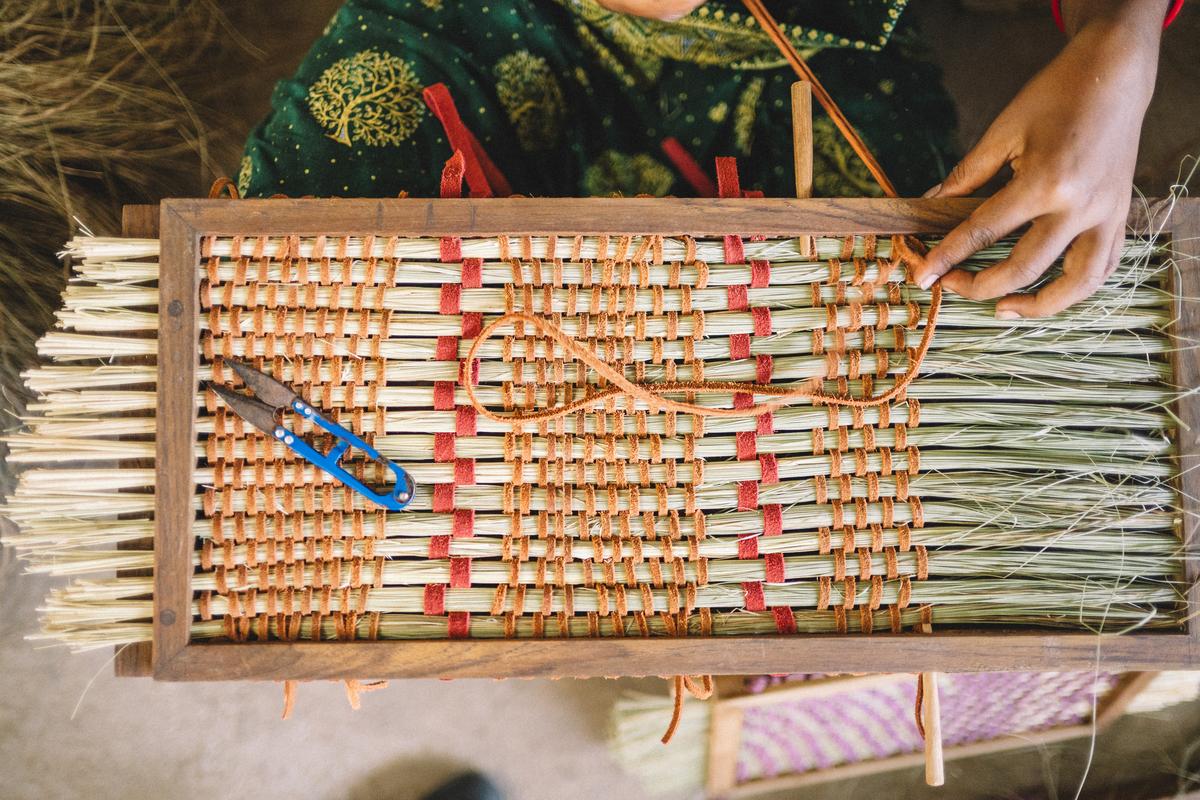
Shining a spotlight on Indian artisans, with a craft collaboration across the east and west coasts of India, the Niraba (meaning quiet strength in Odia) collection reimagines grass on grain. An artisan-led initiative between Boito, an Odisha-based slow fashion brand, and Ahmedabad-based design studio This and That, sabai grass weaving and dhokra craft find a worthy canvas on wardrobes, chairs, barstools, lamps, and cabinets. Showcased recently at the India Design ID 2025 in Mumbai, and at the Bougainvillea Gallery in Ahmedabad, the Niraba bed and Jyoti lamp won awards at the Elle Deco International Design Awards held last month in Mumbai.

Niraba eka wardrobe

Niraba eka wardrobe

Ariane Thakore Ginwala, founder of This and That, recalls the eventful collaboration. “Sometime in February, I stumbled upon these antique sal doors at a store in Mayurbhanj, and fell in love, so I took all 27 of them,” says Ginwala. “Meanwhile, I was in touch with Richa Maheshwari [founder of Boito] because I loved her coats [made with heirloom Odia weaving techniques ], and one thing led to another, and we decided to merge two crafts [bobei sabai weaving and dhokra metal craft along with woodcraft in Gujarat]. I conceptualised the collection in May, prototyped the furniture with my craftspeople using local grass to see if the weaving would work on wood. Then, we had to figure out logistics — move both 150 kilograms of sabai grass and the weaving cluster to our studio.”

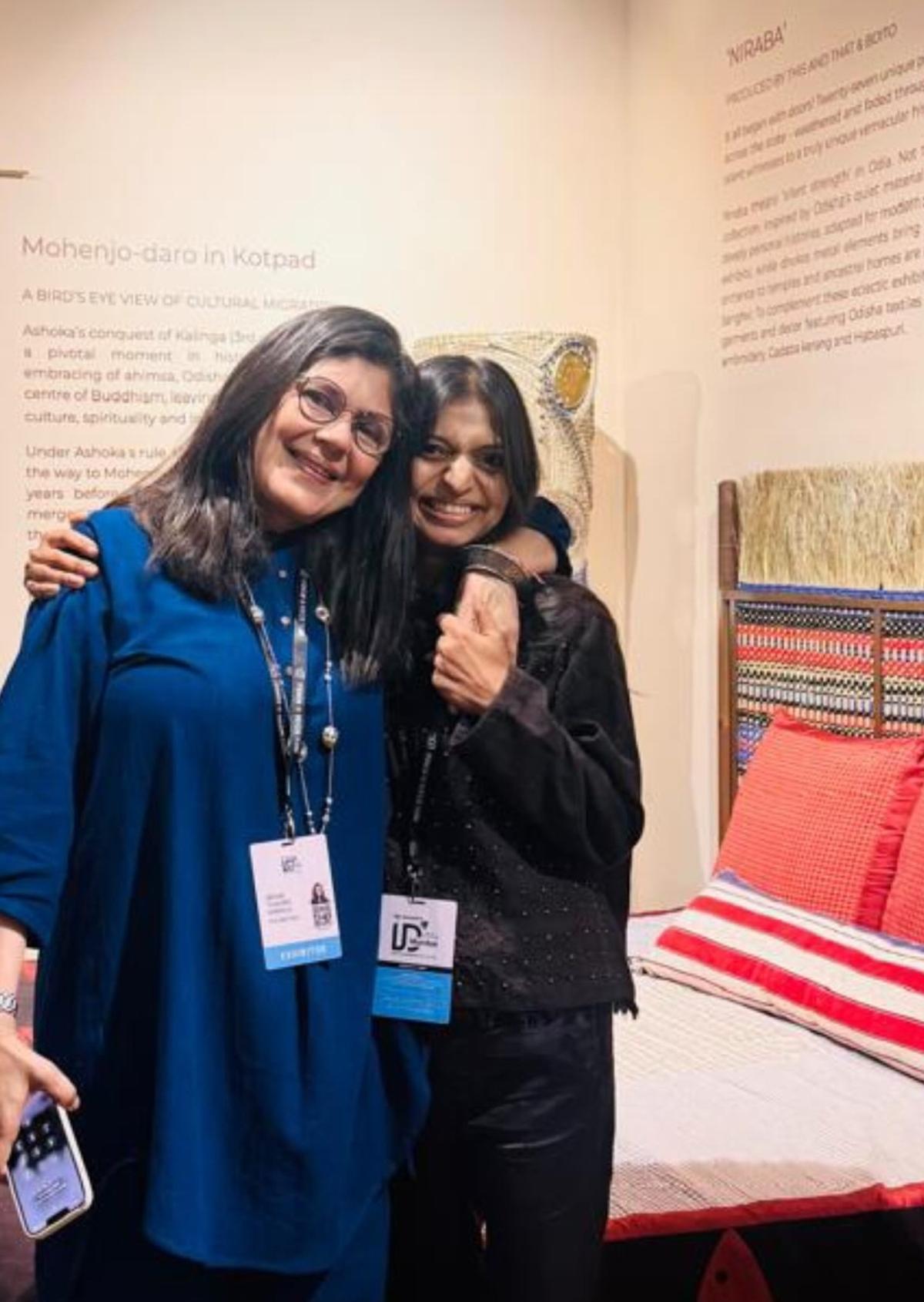
Ariane Ginwala and Richa Maheshwari.

Ariane Ginwala and Richa Maheshwari.

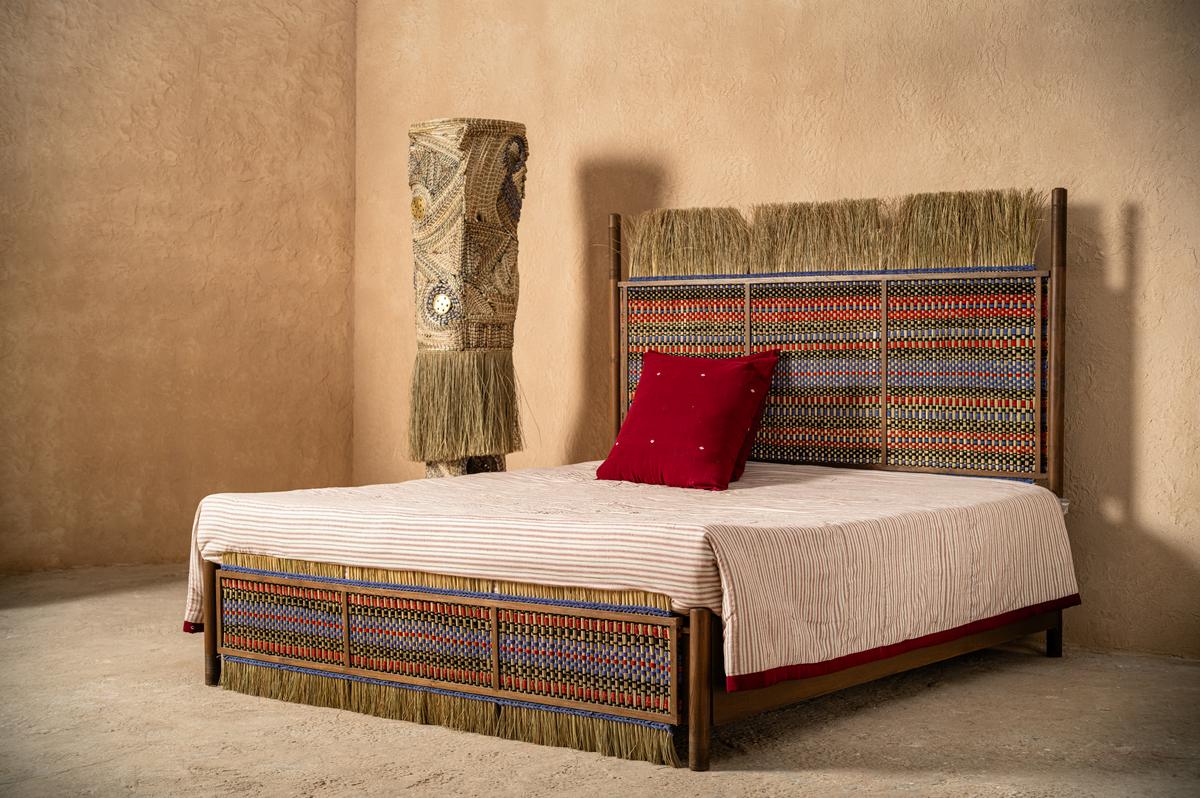
Niraba niva bed

Niraba niva bed

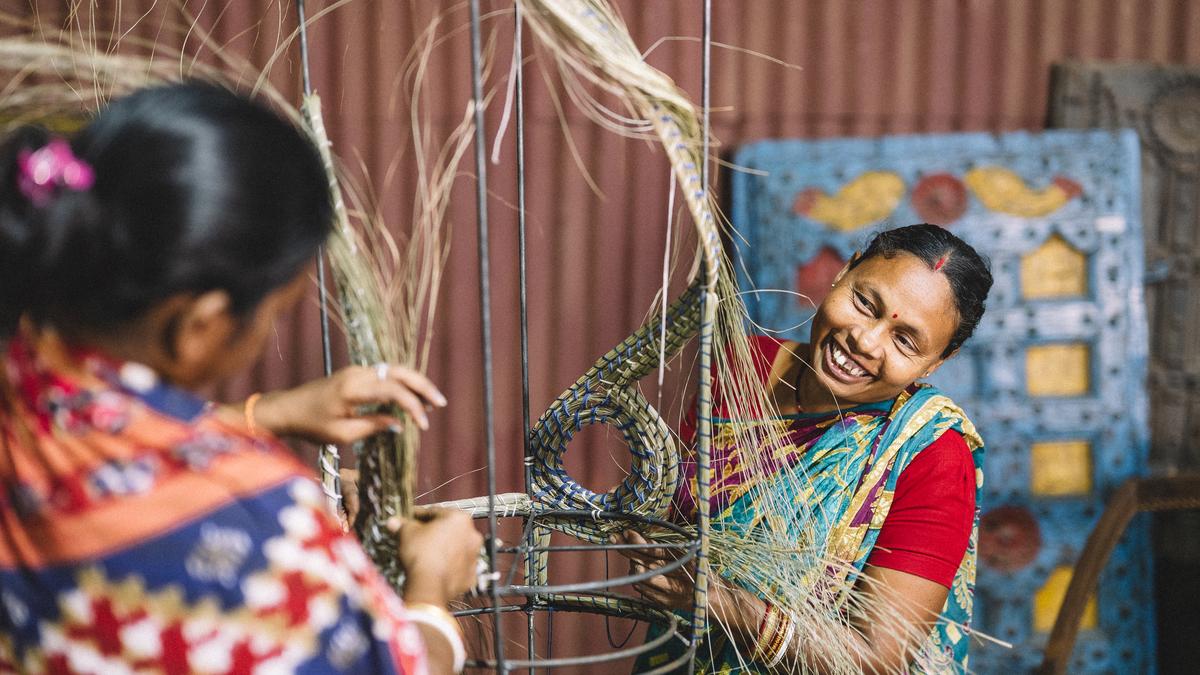
Five female weavers from Boito, and a woodworking team in Ahmedabad fused bobei sabai grass weaving and dhokra metal craft with sculptural lighting and furniture, in just 15 days.

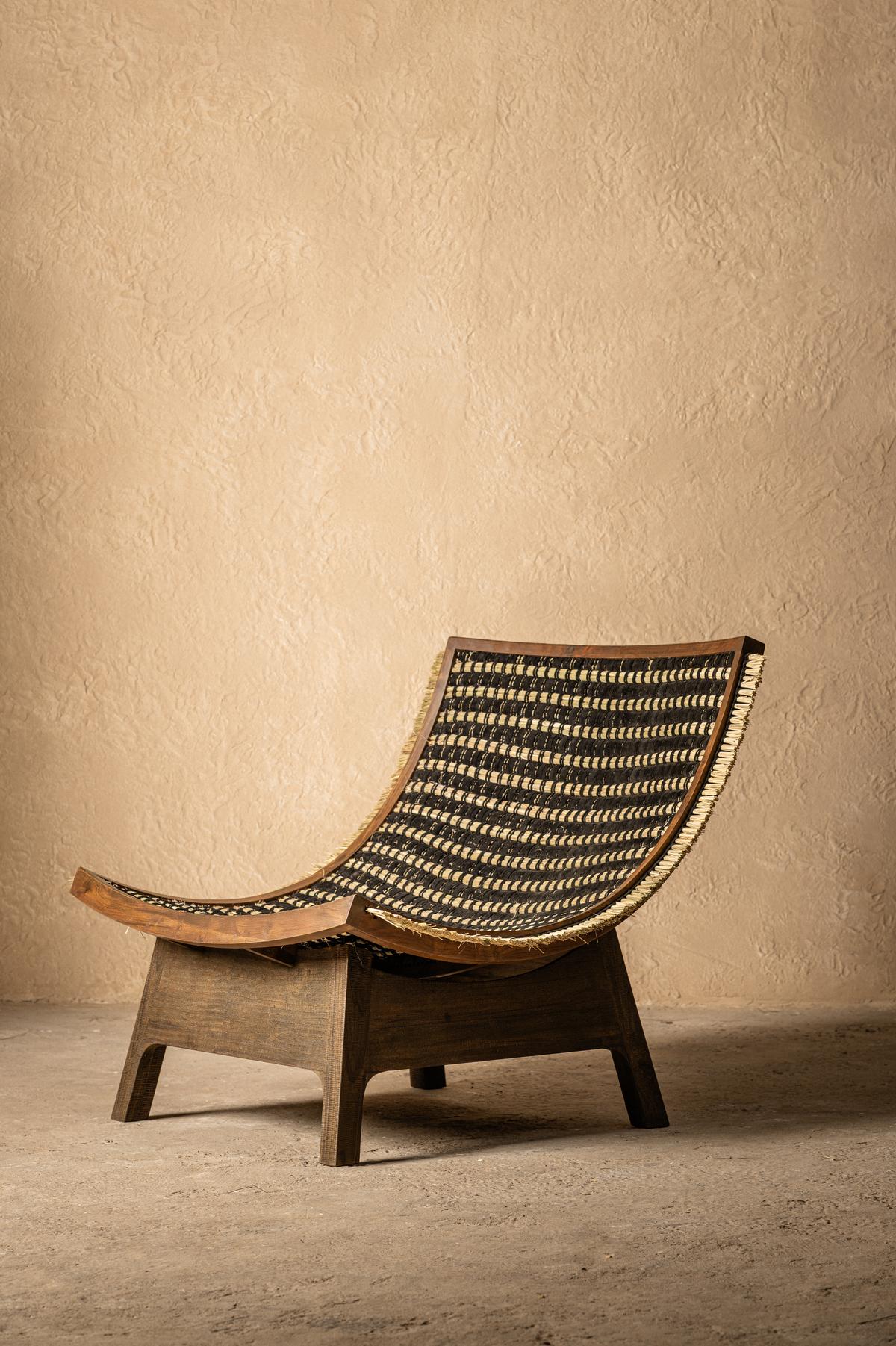
Niraba aaram chair

Niraba aaram chair

Ariane Ginwala (left) and Radhika Sanghvi (middle) with Odia craftswoman.

Ariane Ginwala (left) and Radhika Sanghvi (middle) with Odia craftswoman.

Light as a metaphor

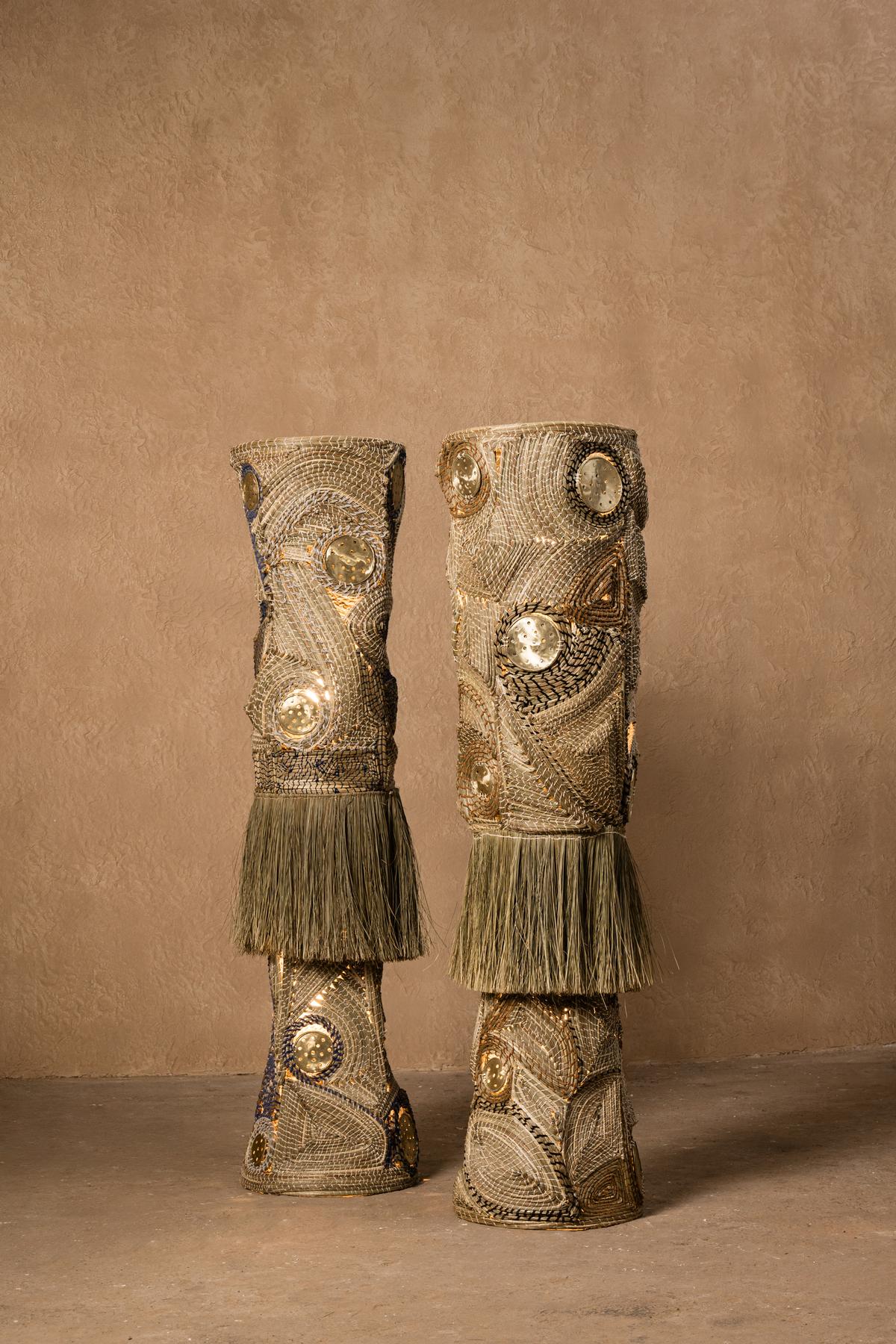
The lighting collection conceptualised by sculptural artist Radhika Sanghvi, uses illumination as a threshold. Sanghvi explains, “I see light as a metaphor as it reveals, softens, and transforms matter into experience. With Niraba, my intent was to honour the traditions and techniques Indian craftsmen have refined for generations, while pushing their boundaries into a new aesthetic language.” The lamps (called Chhaya, Akash, Kiran, Jyoti, Prabha and Deepa), are covered in elaborate woven grass panels. For the wardrobes (Dui, Eka and Sona) and chests (Vara and Reka), clients can choose from a range of salvaged sal doors in shades of turquoise or natural grain, which are accentuated with woven drawers, making each piece unique. The chairs (Aaram, Jora and Sara) and bar stools (Kona and Tala) have teak frames with multi-hued grass mats draped over the back and seating areas. The delicate weaving juxtaposed with the teak skeleton creates seating pieces that are ergonomically sound and conversation starters.

Sabai grass with suede and leather lacing.

Sabai grass with suede and leather lacing.

Of textile and teak

At ID 2025, Boito debuted its first capsule collection of home textiles, featuring Odisha’s heritage khandua bandha silk, Kotpad handloom cotton, Pipli appliqué and Habaspuri silk, on Niraba furniture. The door panels are a bridge in the collaboration as Boito’s woven textiles mirror the motifs and elements carved into the wood.

Niraba Kiran (left) and Prabha Lamp (right).

Niraba Kiran (left) and Prabha Lamp (right).

The textiles in deep red, ivory and navy, painted a pretty picture at the Niraba booth. Maheshwari says the collaboration is an instrument to take traditional weaving into a future-ready and functional dimension. “My main aim is to spotlight Odisha, so the artisans get an opportunity to challenge themselves, and for the next generation to pick up the craft to showcase their expressions,” she adds.

Niraba deepa lamp

Niraba deepa lamp

Boito works with 17 weaving clusters across the State. While such material and craft partnerships open a new pipeline of revenue, the main focus is an eagerness to push boundaries, Maheshwari states. With Niraba, furniture meets woven art, and the journey has been eventful and enriching. “The collection is a step towards creating sustainable opportunities for craftspeople to expand their skills, earn steady incomes, and see their work valued in new contexts of collaboration,” says Ginwala. The wood used across the collection is reclaimed teak, and the collection pursues circularity in process and product, where every material — grass or wood — is carefully calibrated and crafted to create a product that is greater than the sum of its parts.

Boito at Burning Man
Boito is the Odia term for ‘boat’, derived from the ancient maritime festival Boita Bandhana, commemorating the voyage of mariner merchants, Sadhabas, whose precious cargo included textiles. Odia craft shone at Burning Man 2025, with a 17-foot sculpture representing a mythical creature, Navagunjara ( of nine animal forms), brainchild of Richa Maheshwari and Jnaneshwar Das, two Odia engineers and artists. “Navagunjara Reborn: The Phoenix of Odisha” showcased Odisha’s crafts (pattachitra, dhokra) merged with the mythical nine-formed creature symbolising rebirth, unity, and Indian artistry on a global stage.

The freelance writer is based in Chennai.


Source link

Henry Skupniewicz on Godrej Design Lab at Conscious Collective 2025


Walk into the historical industrial space of Godrej Enterprise Group’s Vikhroli campus and touch heat sensitive walls to make the visuals start shifting magically: the warmth of your hands makes the pixels move and Mumbai’s coastline becomes the built landscape. Design, art and architecture come together at the Conscious Collective this time to focus on how to design to stay cool with increased warming of cities. Great arches of bamboo by IBUKU and Bamboo Village Trust emphasise how this regenerative material can create cooler, human-centred futures, rethinking how we build. ‘Tides of Change: Kolis of Mumbai’ invites us to examine Mumbai’s oldest fishing communities and their role in cultural and ecological restoration.

Henry Skupniewicz

Henry Skupniewicz
| Photo Credit:
Bhushan Gavas

We speak to the head of Godrej Design Lab (GDL), Henry Skupniewicz, about the role of design in sustainable living, the revival of indigenous solutions. Skupniewicz, now 35, who did his architectural programme at Massachusetts Institute of Technology (Cambridge, USA) first visited India as a young international student. He returned in his mid-20s and helped start up the FabLab at CEPT, Ahmedabad in 2013 — “to enable everyone to build almost anything”. He then went to Mumbai to head Godrej Design Lab in 2014. Here, he tells us about the programming which concludes on December 14.


How do you see creative ‘labs’ as grounds for design development and sustainable action?


Godrej Design Lab started as a showcase lab in 2014 for products and furniture. In 2019, when I got involved with the programme, we started looking at how to engage with the system on a broader level, to create products and infrastructure that help society. In 2023 post-pandemic, we wanted to expand our portfolio by creating forums and spaces for discussions to get people excited about design and engage with students, with a focus on sustainability — how do we bring industry and laypersons together, in the same place, to think about sustainable solutions about the built environment?

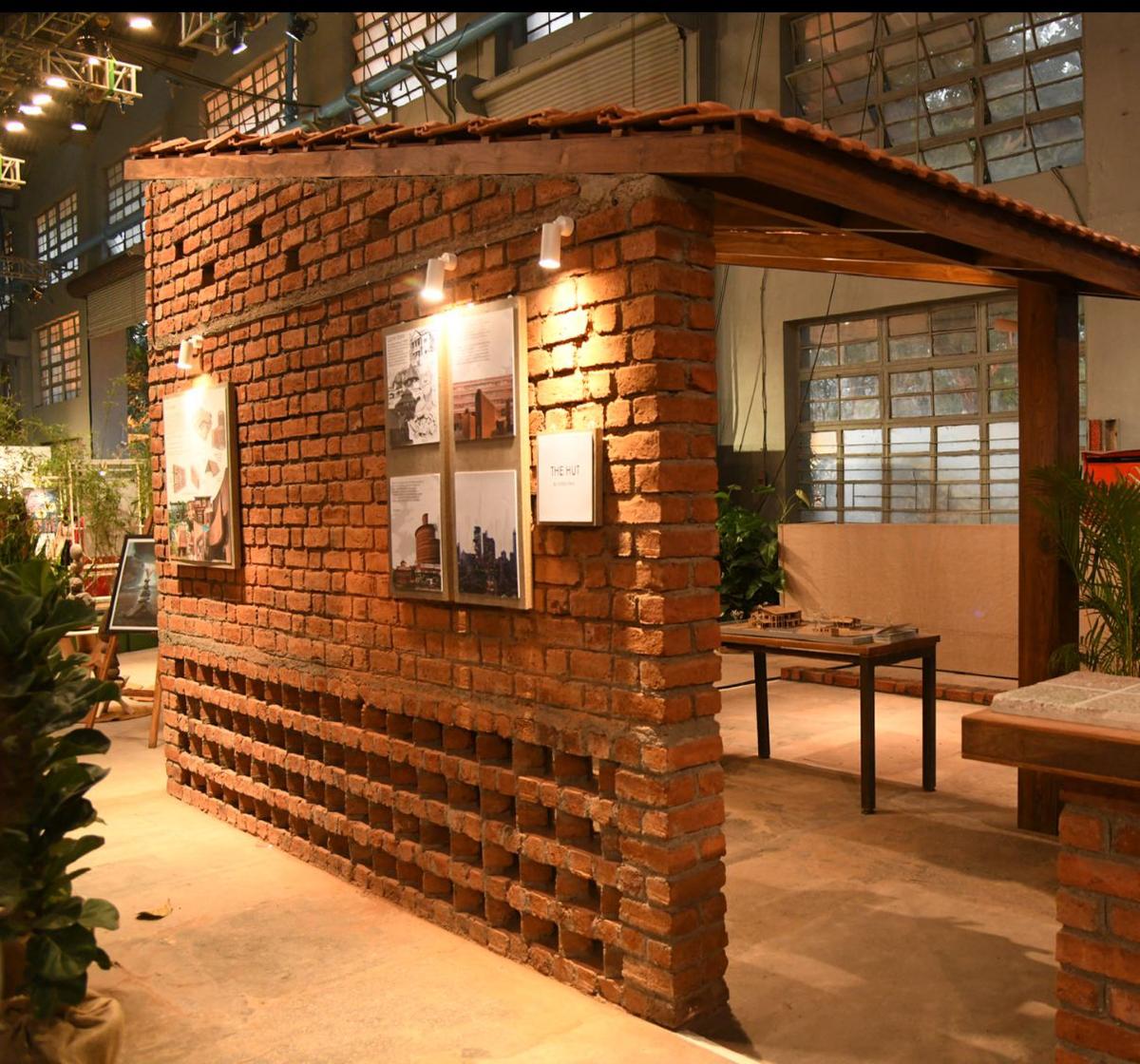
Bonding over Brick Installation at Conscious Collective 2025.

Bonding over Brick Installation at Conscious Collective 2025.


How does GDL’s fellowship support creative entrepreneurs? What are you showing at Conscious Collective 2025?


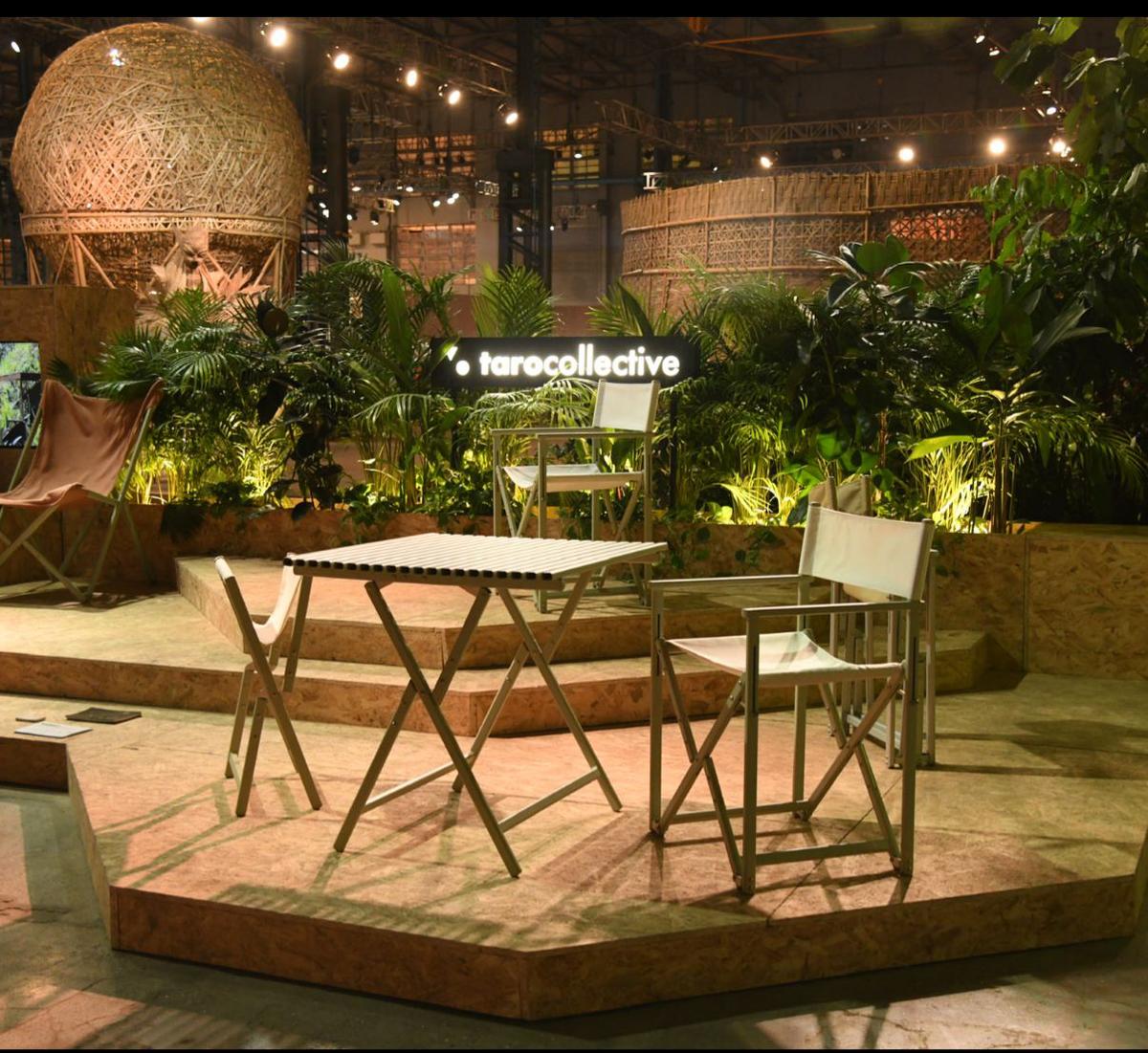
Our yearly grants through our fellowship provides financial aid and mentorship. Our mission is to catalyse designers towards meaningful directions by engaging broader conversations that elevate the power of design — how is design shaping lives? We will be showcasing six of our fellows at this edition. Murubi from Vadodara has transformed an invasive aquatic species, water hyacinth, for use in furniture. Bengaluru firm Taro has reimagined their collection Kadham in aluminium as Kadalum — lightweight, durable folding furniture with custom metal sections. The Vernacular Modern from Bengaluru has revived the age-old pakha, devising motorable solutions for this once human-operated rope-pulled gigantic fan.

Installation by Morii Design Studio at Conscious Collective 2025.

Installation by Morii Design Studio at Conscious Collective 2025.


What can we expect around the theme ‘Reclaiming Cool’ at Conscious Collective this year?


Conscious Collective 2025’s theme ‘Reclaiming Cool’ is a timely response to the escalating challenge of heat resilience and climatic comfort in urban environments. As cities worldwide grapple with rising temperatures, this edition explores how thoughtful design, innovative materials, and inclusive planning can foster cooler, healthier, and more liveable futures. Expect a compelling mix of global voices and local practitioners sharing insights on design-led climate adaptation. Ayaz Basrai will lead a dialogue on dignified cooling, examining equitable solutions for dense urban neighbourhoods. Bamboo Village Trust and IBUKU will showcase regenerative bamboo construction as a natural, climate-conscious alternative, while experts like Kunal Maniar, Samira Rathod, and CEEW will unpack strategies for balanced urban infrastructure that prioritises thermal comfort in a rapidly warming world.
Beyond discussions, Conscious Collective offers immersive experiences that make these ideas tangible. Visitors can step into code.drift, a walk-through of shifting microclimates that reveals how heat is trapped and released in urban pockets. Workshops such as ‘Crafting Comfort’ invite participants to prototype cooling strategies using sustainable materials, while Speculative Fiction encourages collaborative storytelling to imagine resilient futures.

Taro Collective Installation at Conscious Collective 2025.

Taro Collective Installation at Conscious Collective 2025.


What should we know about immersive installations?


At the heart lies an immersive zone designed to make the realities of a warming world visceral and unforgettable. Among its most compelling experiences is The Living Shore by [American new media artist] Lake Heckaman and photographer Sarang — a striking installation that imagines a future coastline transformed by rising temperatures and shifting waterlines. Visitors step into a speculative landscape where ecological boundaries blur, confronting the fragility of our relationship with nature and the urgent need for adaptive design. Through layered visuals and spatial storytelling, The Living Shore transforms climate data into an emotional, sensory experience, reminding us that the fight for thermal comfort is not abstract — it’s deeply human and ecological.

The Force Within Installation at Conscious Collective 2025.

The Force Within Installation at Conscious Collective 2025.

Special sessions

For children
Go with the Flow is a performative show of song, dance and humour where Devina, a sharp, street-smart young girl, and her band of ‘water pirates’ steal and resell water for survival. An adventure about courage, community, and the universal right to water, the production by NCPA invites audiences to imagine a future shaped not just by crisis, but by resilience and the choices we make today.
Immersive experiences for children include Bomanime, an anime film experience by Obataimu, clay moulding, a cycling and biodiversity trail, and a dyeing workshop.

Conversations
Listen to a conversation between architects Diana Kellogg and Sameep Padora on ‘Reclaiming shade: heat resilient design and the built environment’. Award-winning French architect Arthur Mamou-Mani will speak on ‘Parametrics in the age of heat’. From building with bamboo to building with local and indigenous materials and techniques are a core part of the programmes.
Pick from several curated workshops or cycle in the mangroves. Make with Waste, Knots and Shade with Mamou-Mani. Or simply, bond over brick with Studio KPA.

The Vernacular Modern Installation at Conscious Collective 2025.

The Vernacular Modern Installation at Conscious Collective 2025.

Events to check out
From jeans to green: crafting eco-friendly planters
Make your own organic potpourri
How to cook Bombay duck in various ways by Parag Tandel x Tarq
Living with the land / reweaving the ecosystem
Mini charpai weaving by Sirohi

For more details, check out: @godrejdesignlab

The writer is a brand strategist with a background in design from SAIC and NID.

Published – December 12, 2025 09:58 pm IST


Source link

Mumbai | Networks of the Past: A Study Gallery of India and the Ancient World opens at CSMVS


Mumbai’s Chhatrapati Shivaji Maharaj Vastu Sangrahalaya (CSMVS) has opened a daring experiment in how we teach, and feel, history. ‘Networks of the Past: A Study Gallery of India and the Ancient World’, which opened its doors today, assembles more than 300 archaeological objects from 15 Indian and international museums to argue a simple but potent claim: ancient India was not isolated, it was central to global exchange.

Designed as a study gallery, it strings together Harappan seals and pottery, Mesopotamian cuneiform, Egyptian sculpture (even a cat mummy), Greek and Roman portraits, Chinese ceramics and jade, coins, inscriptions and everyday objects so students and the public can read antiquity as evidence, not myth. The timeline runs from the Sindhu-Sarasvati (Harappan) civilisation, roughly 5,000 years ago, to the Gupta age of the sixth century CE, and culminates by placing Nalanda and Alexandria — two great knowledge economies of the ancient world — in conversation, reminding visitors that ideas have always travelled as vigorously as goods.

In a moment when historical thinking is increasingly constrained by textbook revisions and shrinking space for critical inquiry, this project creates an alternative route into the past: one grounded in material evidence, shared human questions, and a sense of intellectual play.

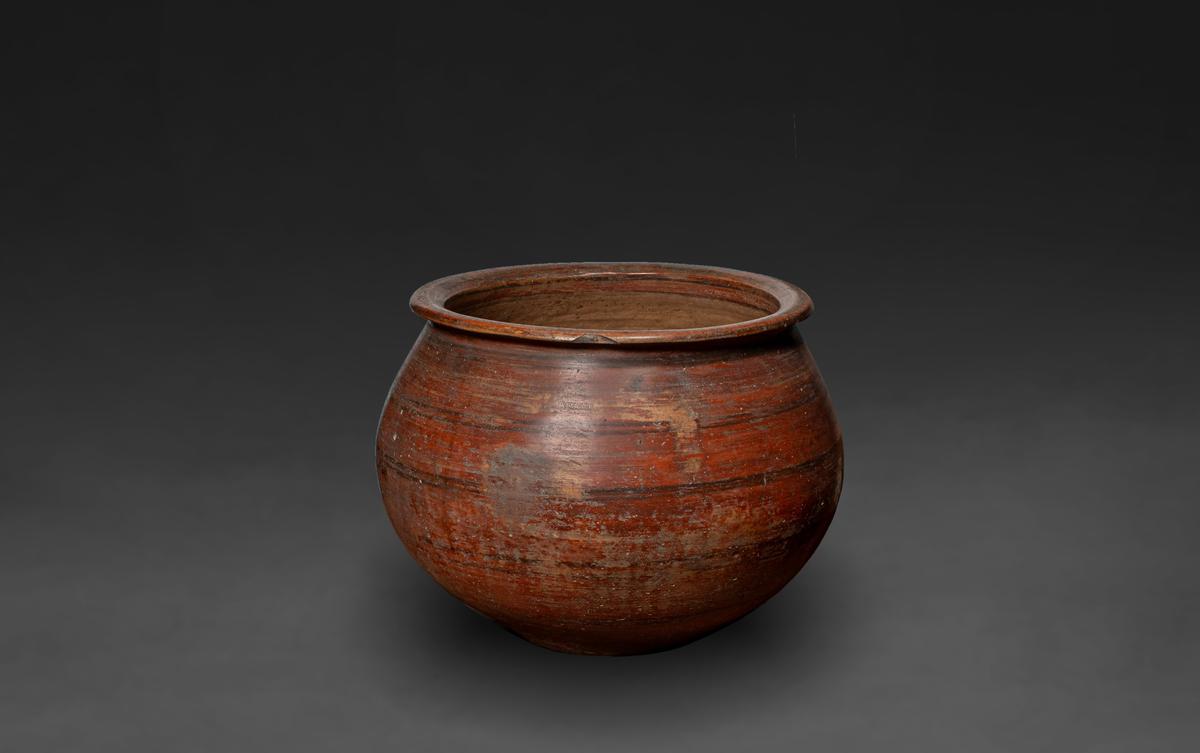
Harappan storage jar

Harappan storage jar
| Photo Credit:
Courtesy CSMVS

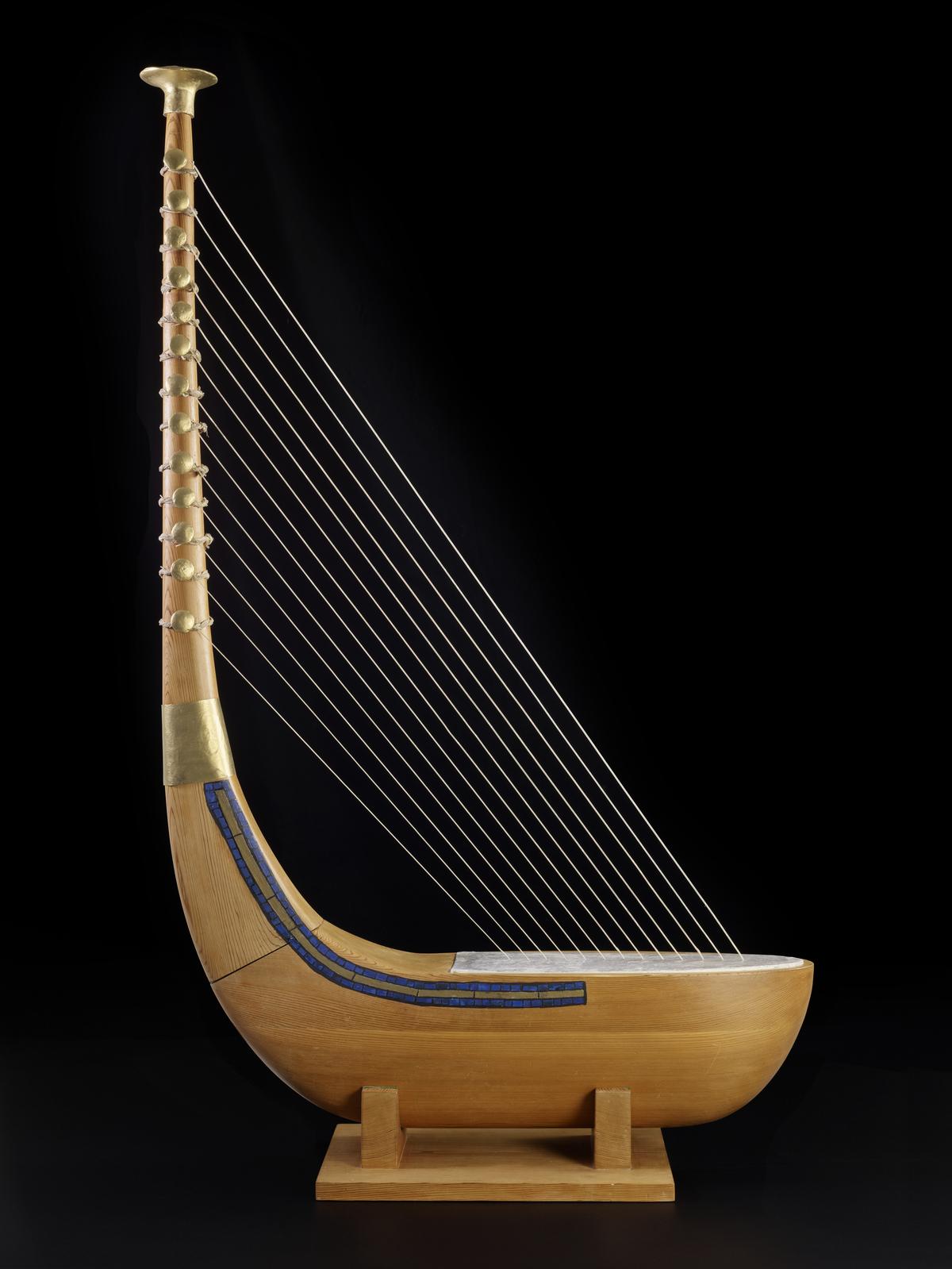
A harp owned by Queen Puabi of the Sumerian city of Ur

A harp owned by Queen Puabi of the Sumerian city of Ur
| Photo Credit:
Courtesy CSMVS

“It is only when we see the Harappan civilisation in the broader context of its wide, far-reaching trade connections with Mesopotamia, do we realise the true achievement of our predecessors… India is part of a much larger story, and only with such a perspective can we see how astonishingly great its contribution is to the world.”Joyoti RoyAssistant Director (Projects & PR), CSMVS

‘A history beginners’ toolkit’

Over four years, CSMVS co-curated the gallery with partner institutions including the British Museum, Staatliche Museen zu Berlin, Benaki Museum (Athens) and others, supported by Getty’s Sharing Collections Programme. Indian and international curators jointly selected objects and co-authored interpretive frameworks aimed at Indian audiences.

That pedagogical ambition is explicit. CSMVS has built a neighbouring learning centre, Nalanda, and stitched the gallery into university partnerships. More than 20 institutions will structure courses around original objects. Audio guides, short films, a dedicated website, and outreach through its Museum on Wheels and Trunk Museum projects (outreach programmes featuring mobile museums and themed trunks filled with artefacts) promise to take curated encounters beyond metropolitan elites and into schools across the country.

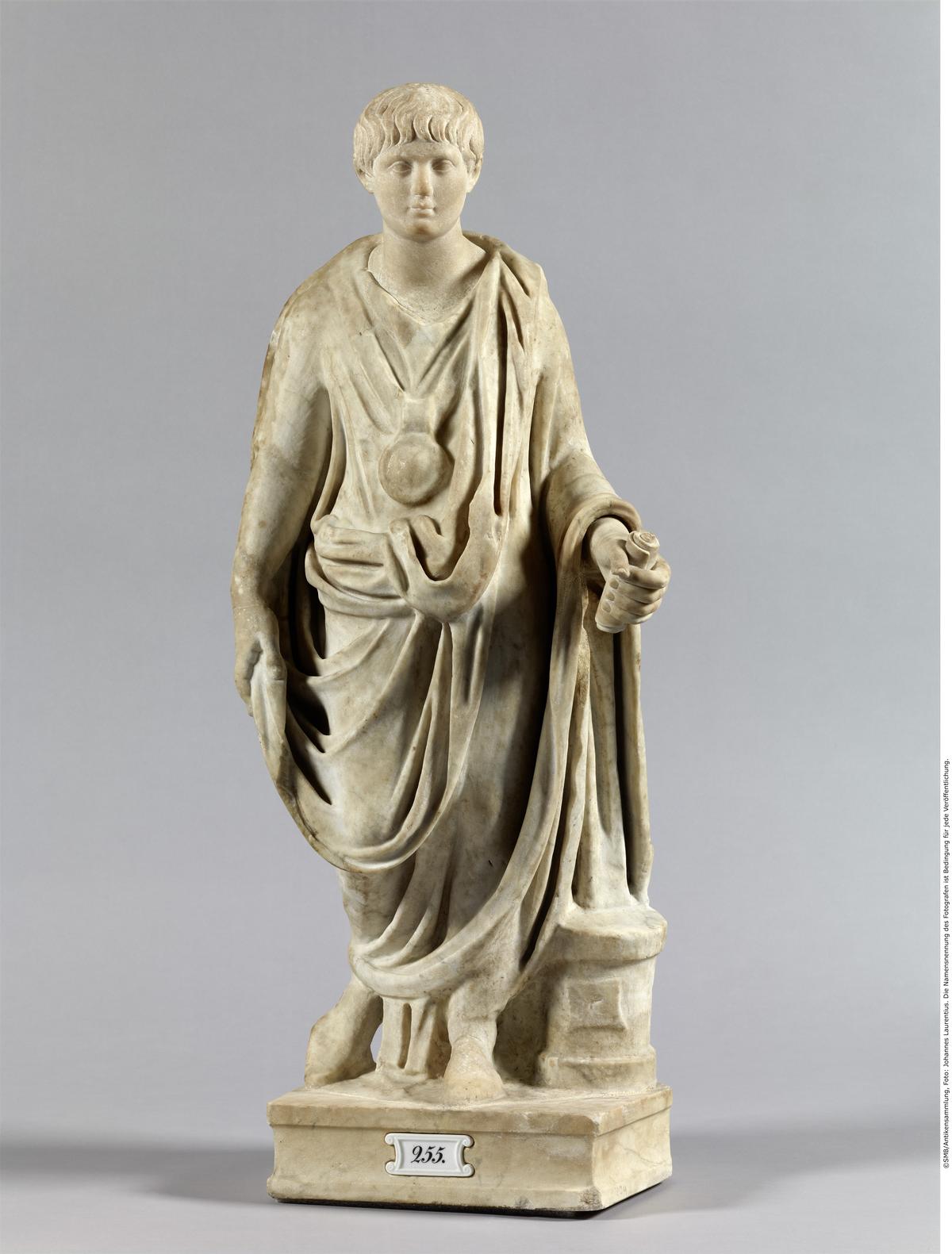
Funeral statue of a Roman boy

Funeral statue of a Roman boy
| Photo Credit:
Courtesy CSMVS

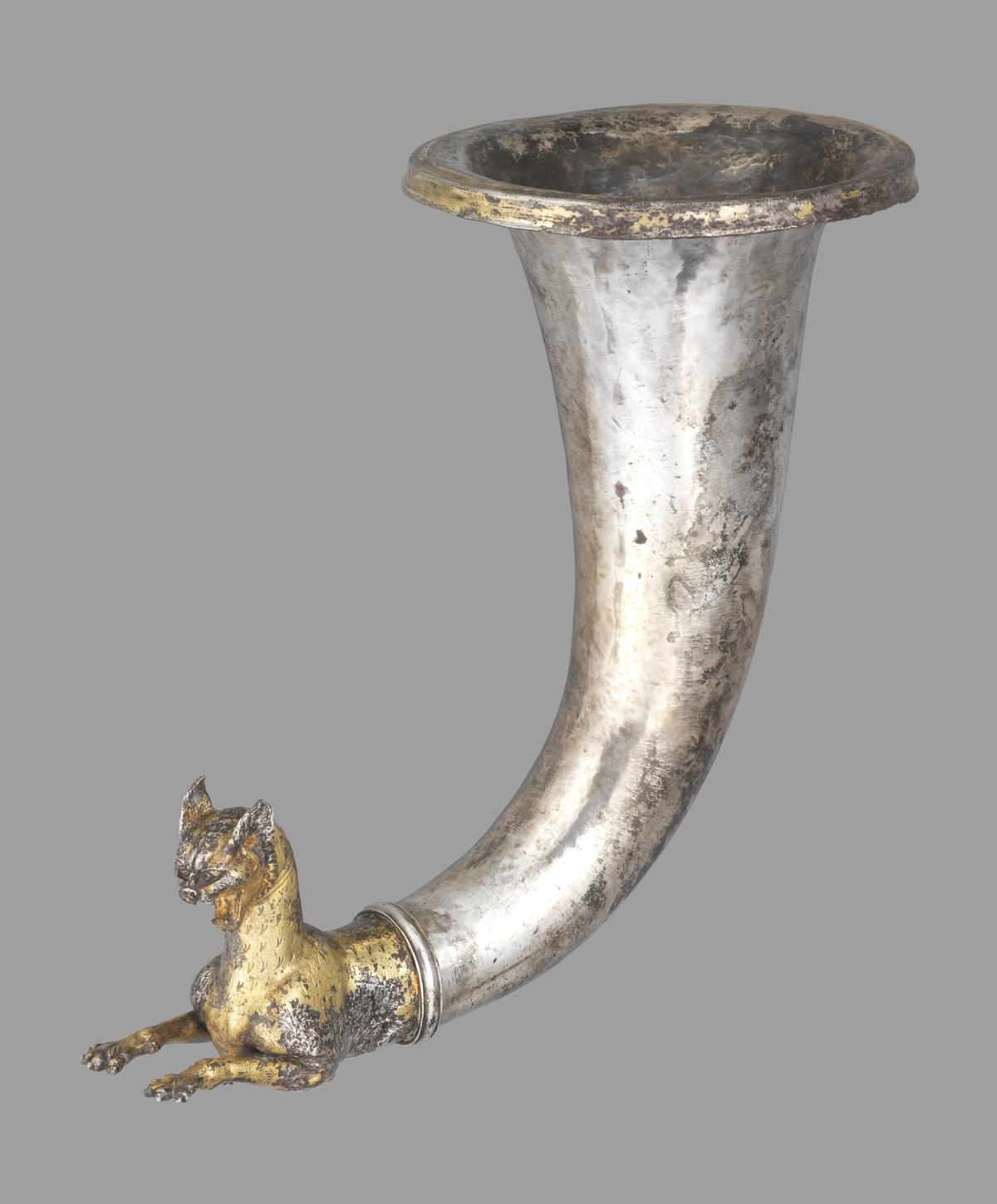
A rhyton with a caracal cat, a Parthian-era silver drinking vessel

A rhyton with a caracal cat, a Parthian-era silver drinking vessel
| Photo Credit:
Courtesy CSMVS

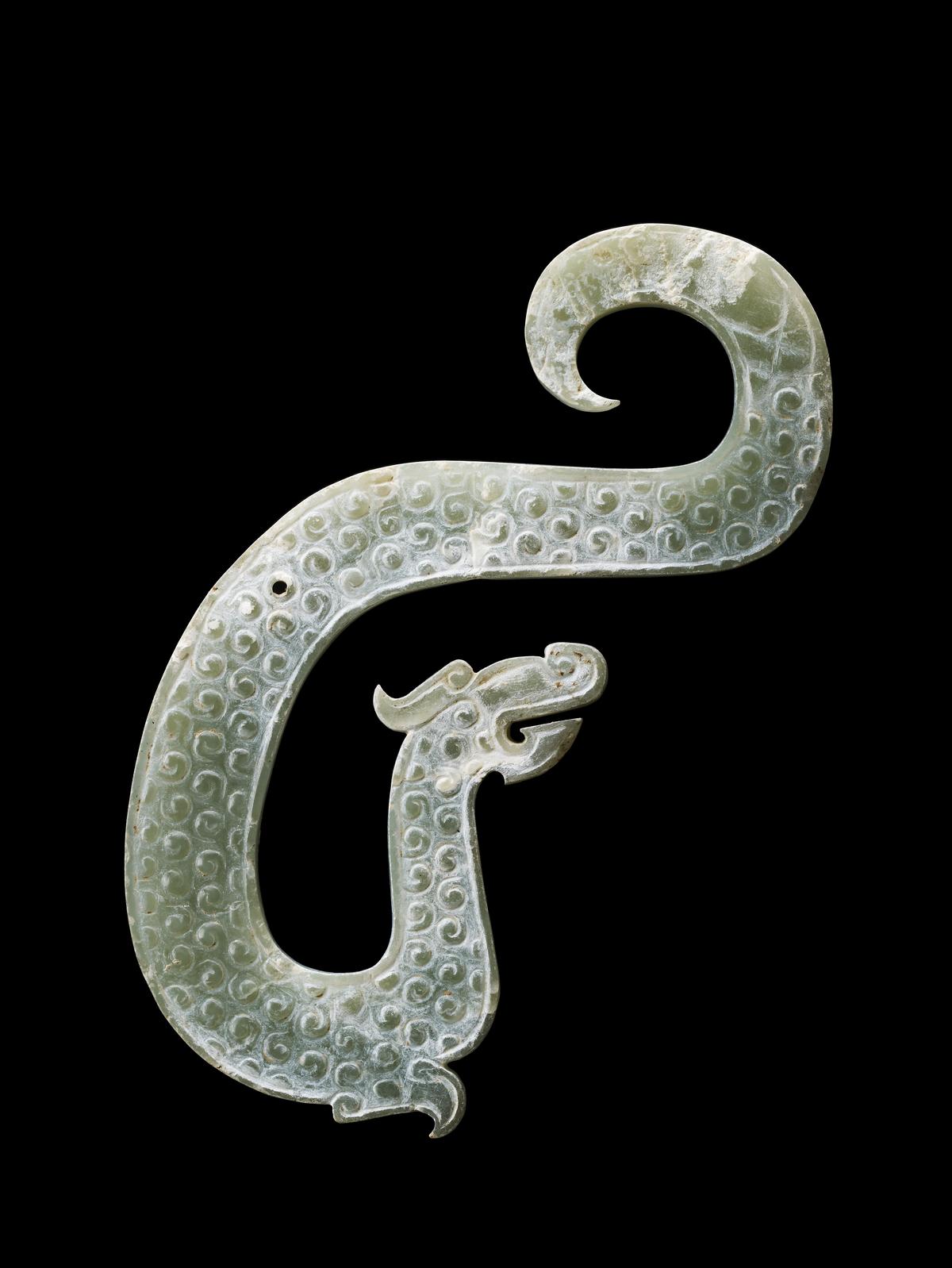
A dragon pendant

A dragon pendant
| Photo Credit:
Courtesy CSMVS

Crucially, many of the loans are long-term: the gallery will remain on view for three years, allowing sustained engagement. As Renuka Muthuswamy, Assistant Curator (International Relations), notes, this format “functions almost as an ancient history beginners’ toolkit for Indian students”, bringing together what is often taught “in a chronologically dissonant manner” into a single, coherent experience.

The gallery is also a corrective to the old museum grammar that placed the Mediterranean at the centre of ancient world histories. By foregrounding exchange — trade networks, shared technologies, migratory motifs — CSMVS reframes India as both contributor and beneficiary in a pan-continental tapestry. “Stories in museums are often presented in a linear format to an assumed ‘homogeneous’ audience,” explains Nilanjana Som, curator (Art). “But audiences are diverse, Indian audiences even more so.” This matters politically and intellectually: museums in formerly colonised regions have long been arenas where authority over the past is contested. Co-curation and shared custodianship, as practised here, are pragmatic answers to that contestation. “By looking through each others’ eyes, we see these objects afresh,” states Thorsten Opper, lead curator, Greek & Roman Sculpture, The British Museum.

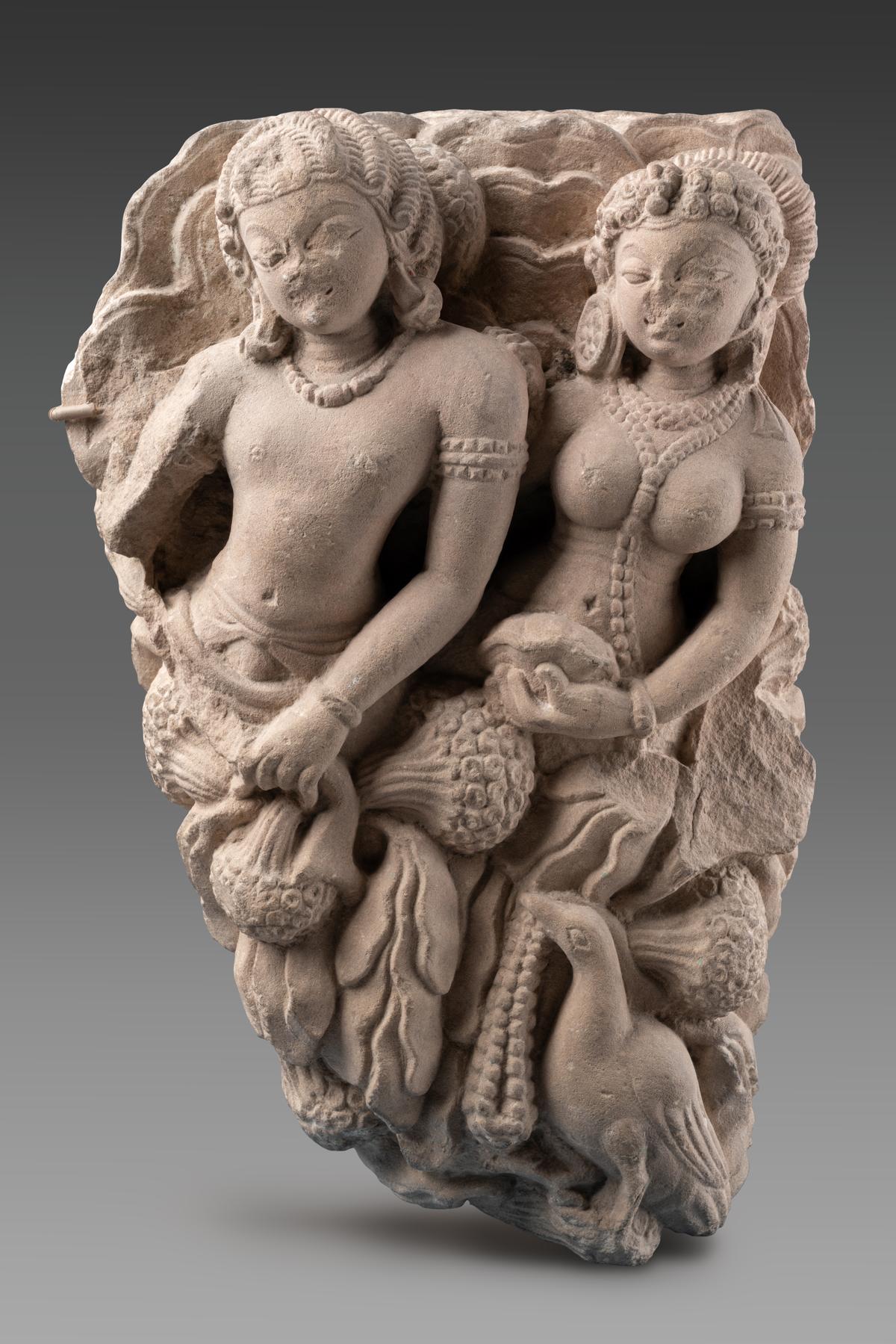
A Mithuna statue

A Mithuna statue
| Photo Credit:
Courtesy CSMVS

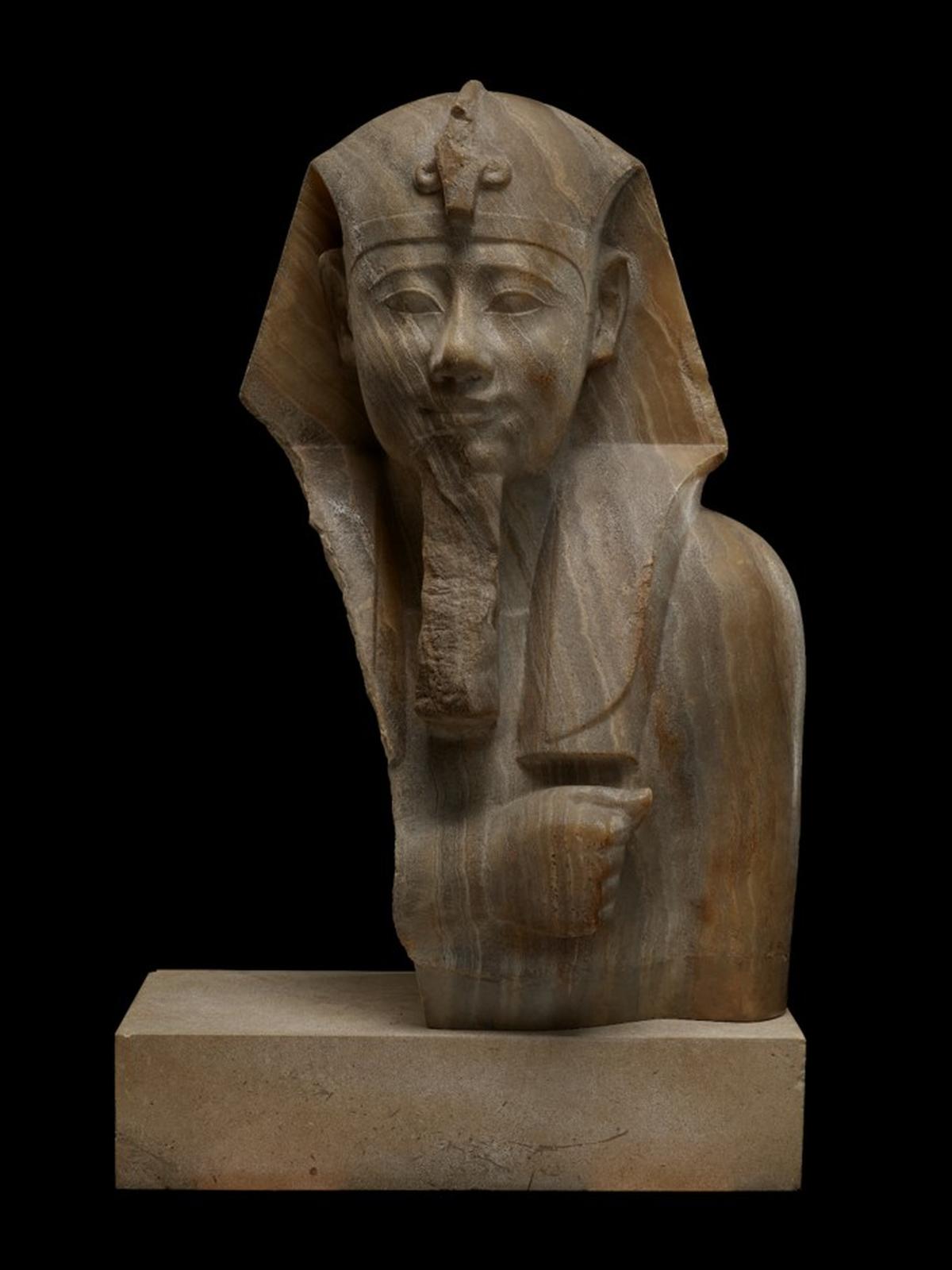
A bust of Ptolemy II, the king of Egypt

A bust of Ptolemy II, the king of Egypt
| Photo Credit:
Courtesy CSMVS

Test case for Indian museum practice

There are limits, of course. No matter what a gallery selects, omissions and emphases will invite debate. Still, the project’s scale and its explicit educational purpose make it a test case for Indian museum practice: can objects provoke public reasoning rather than passive admiration? Can long loans, co-written labels and classroom partnerships shift who gets to narrate the past?

For visitors, the immediate pleasure is elemental: to stand before a seal or a coin and feel a line of human choices extend across millennia. For educators and curators, the value is structural: a model for conversation between museums, scholars and the public. Networks of the Past does not close the book on antiquity; it opens a desktop of questions that ask to be read, taught and argued over.

The essayist-educator writes on culture, and is founding editor of Proseterity — a literary arts magazine.

Published – December 12, 2025 06:18 pm IST


Source link

Rethinking scale in India’s healthcare


India’s healthcare story is changing fast, not by building large tertiary hospitals, but by rethinking scale — with micro-hospitals emerging as a game-changer for Tier-2 and Tier-3 cities. These compact, high-efficiency healthcare facilities are designed to provide quality medical services to underserved populations, bridging the gap between rural and urban healthcare.

The concept

Micro-hospitals are small-scale, technologically advanced healthcare facilities that offer a range of medical services, including emergency care, diagnostics, specialised treatments, and short-stay procedures. They typically have 10-50 beds, making them ideal for smaller cities and towns where larger hospitals are not feasible. Micro-hospitals offer a distinct advantage: clinical effectiveness without the capital and operational drag of full-scale hospitals.

Tier-2 and Tier-3 towns face three linked problems: distance from advanced care, underused primary clinics, and rising disease burdens requiring timely intervention. Micro-hospitals address all three. They shorten the time-to-care for cardiac events, accidents, and obstetric complications; they deliver diagnostics and short procedures locally; and they act as referral hubs that reduce pressure on metro centres. Pragmatically, their smaller footprint allows faster deployment and far smaller upfront capital, which is crucial for private investors and public health programmes. Lower operational costs enable more affordable healthcare services.

They prioritise a compact patient journey that moves seamlessly from ambulance entry and triage to diagnostics — including point-of-care imaging and lab services — followed by observation or short-stay beds and a streamlined OR/DP (day procedure) suite.

In its design, circulation should clearly separate clean and contaminated flows while using minimal square footage. Spaces must remain flexible, with rooms designed for rapid conversion between observation, isolation, and short-stay functions to maximise utility. Natural ventilation, daylighting, and the use of local materials help reduce energy and maintenance costs while supporting patient recovery, blending traditional wisdom with modern efficiency. A modular, scalable architectural approach ensures easy expansion, while streamlined processes and integrated technology enable faster diagnosis and treatment.

Technology and workflow

Digital diagnostics, telemedicine, and AI triage tools let a small onsite team deliver outsized care. A reliable tele-link to a tertiary centre transforms a 20-bed micro-hospital into an extension of a larger network: specialists can supervise critical procedures remotely, radiology reads can be instant, and capacity planning becomes data-driven.

Micro-hospitals demand mixed skill sets. Nurses and general physicians should be trained for higher acuity; task-sharing with nurse practitioners and emergency medical technicians multiplies capacity. Rotational staffing with city specialists keeps costs down while maintaining expertise. From an operational view, bundling services (an amalgamation of diagnostics, short procedures and observation) increases throughput and revenue per square foot, improving financial sustainability without compromising care.

Capital costs per bed for micro-hospitals are materially lower than tertiary hospitals, and operating costs benefit from smaller, more efficient systems. Public-private partnerships, outcome-based contracts, and blended financing (grant plus low-interest debt) can bridge early viability gaps. Crucially, governments should support the model through regulatory clarity — simplified licensing for modular builds and standard clinical protocols — and by integrating micro-hospitals into referral and insurance ecosystems (PMJAY-type schemes included).

Architectural solutions can’t be plug-and-play without cultural fit. Design must respect local caregiving norms (family involvement, privacy needs), climate extremes (monsoon drainage, passive cooling), and material availability. Engaging local builders and community health workers not only reduces costs but also builds trust — essential when introducing new models of care in small towns.

Large hospitals will always be necessary for complex tertiary care. But chasing size as a proxy for quality is a misplaced faith. The smarter play for India’s health equity is surgical: place well-designed, networked micro-hospitals where people live. They are not a compromise; they are an architectural and systems solution that respects economics, workforce realities, and human urgency.

Micro-hospitals combine smart architecture, modular construction, digital triage, and pragmatic workforce models to deliver high-efficiency healthcare in Tier-2 and Tier-3 towns. They decentralise access without fragmenting quality, and they do so in a way that’s fast, affordable, and adaptable. As the healthcare landscape continues to evolve, micro-hospitals will play a vital role in bridging the healthcare gap and improving health outcomes across the country.

The writer is a founding partner and mentor at Renascent Consultants.

Published – December 12, 2025 06:10 pm IST


Source link

The flexible workspace revolution – The Hindu


iStock

iStock
| Photo Credit: CG Tan

Flexible workspaces have always been one step ahead. They have now become the ultimate status symbol for up-and-coming and innovative companies globally. The shift is mainly due to monetary savings and various factors such as better employee health and prestige in a competitive environment that supports innovation and flexibility.

End of traditional leases

Long-term office leases, which were once regarded as the symbol of business continuity, have now become mundane and are considered a burden to companies. Lock-in periods, heavy initial payments and limited square footage have all become unattractive as companies are facing uncertainties in the market and need to respond quickly to the changes demanded for their workforce. Many companies globally are adopting flexible work policies, making traditional long-term leasing arrangements less relevant.

Flexible work environments bring significant savings, too. The organisation will not be required to make a huge investment upfront, and the leased office will no longer incur ongoing maintenance costs. They only pay for the space they use, get access to prime locations and facilities whenever needed, and can easily resize their space as their needs change. Thus, flexibility is a critical factor that appeals more powerfully to businesses that have their staff spread out or that are constantly increasing their workforce temporarily for projects.

Scalability, adaptability

The power to increase or decrease office space without being trapped in a long-term agreement is a big plus for companies during the current cutthroat market competition. Coworking spaces are growing faster than the traditional office sector by about 14% every year. They are not only the ideal working place for small and one-person businesses but big companies as well, the latter being highly interested in seeing their premium and flexible options in city centres and suburbs.

The movement towards flexible workspaces is a great plus for employees — 84% of workers in hybrid or flexible work settings say their mental health is better, and 56% indicate they are more productive there than in standard offices. Accessibility to wellness-oriented facilities, interactive common areas, and nearby locations are a great factor in job satisfaction and stability.

Prestige and innovation

Today’s companies and their clients regard having an office in a flexible workspace as a blend of modern and chic. Companies consider these places as signs of a strong commitment to green practices, flexibility, and worker-friendly policies.

Premium flexible spaces in leading markets fetch rents that are two to five times higher than those of standard leases, thus demonstrating their worth and popularity. Flexible workspaces also promote environmental protection by using resources more wisely, sharing infrastructure, and applying intelligent energy solutions. They bring together a lively professional community that has networking opportunities and access to industry events — and the ‘status’ of their members being further enhanced.

Property investment

More than 40% of Fortune 500 firms, and many big companies are considering flexible workspaces as an essential element of their real estate policies. The suburbs and commuter areas are being seen as new areas of interest, which means that this shift is not only affecting corporate culture but also property investment.

The transition from long-term leases to flexible workspaces can be seen as a huge shift in business models. Adapting to change, employee benefits, and seizing new opportunities — these are the things that make a company successful today, and all of them are made available by the flexible workspace revolution.

(The author is founder and CEO of Enzyme Office Spaces)


Source link

The story behind Goa’s 18-foot crochet Christmas tree


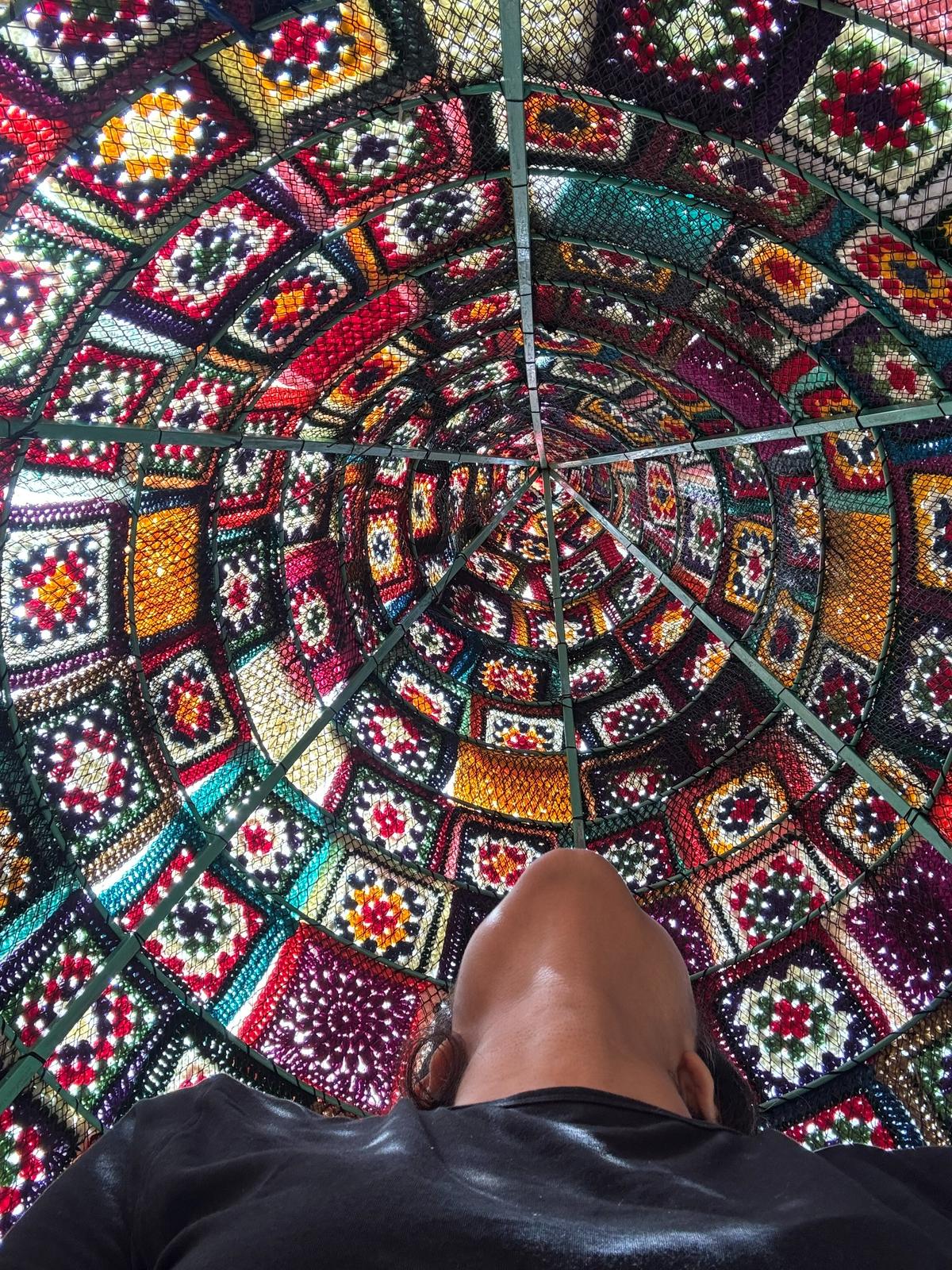
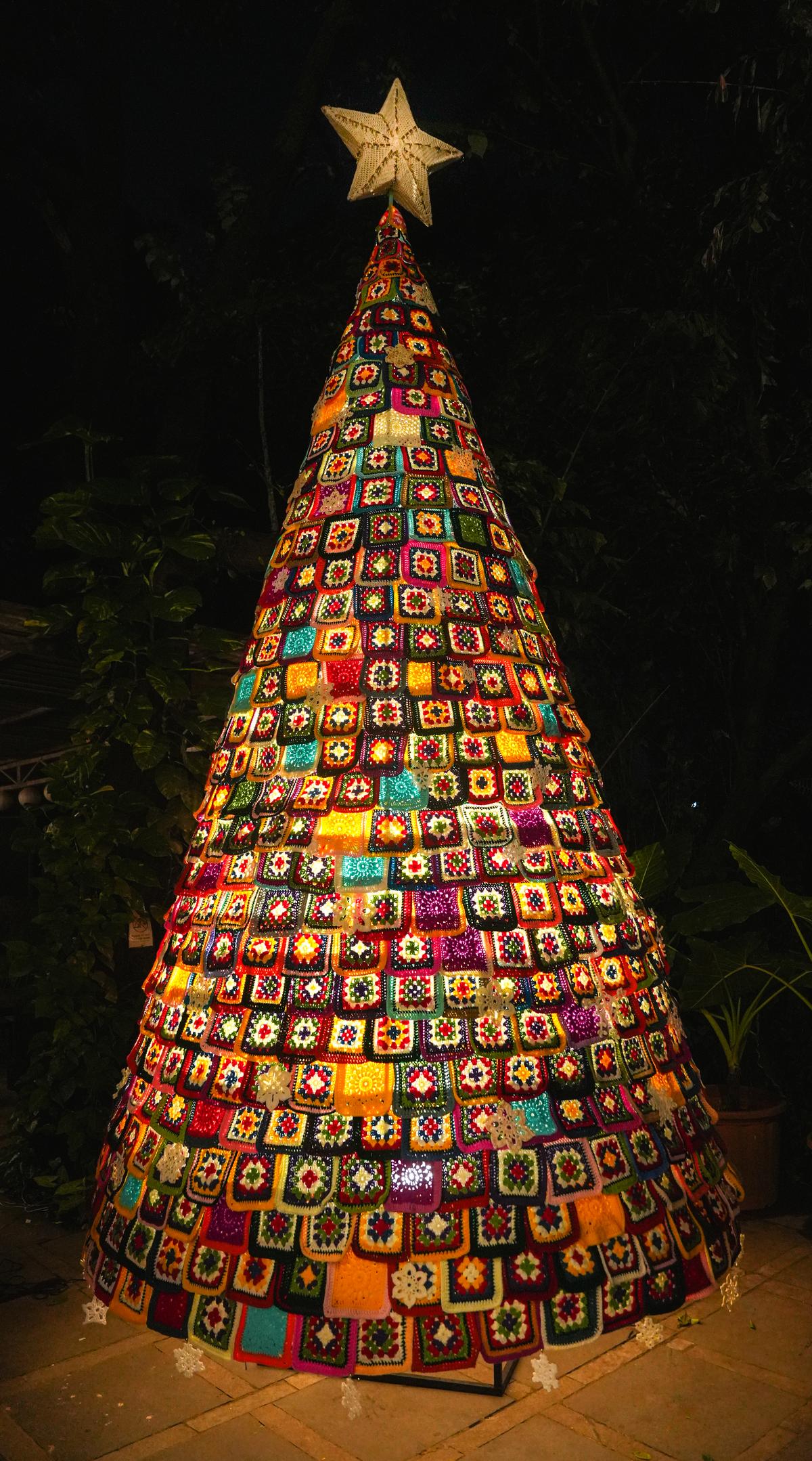
How do you create a Christmas tree with crochet? Take notes from crochet artist Sheena Pereira, who co-founded Goa-based Crochet Collective with crocheter Sharmila Majumdar in 2025. Their artwork takes centre stage at the Where We Gather exhibit, which is part of Festivals of Goa, an ongoing exhibition hosted by the Museum of Goa. The collective’s multi-hued, 18-foot crochet Christmas tree has been put together by 25 women from across the State. “I’ve always thought of doing an installation with crochet. So, we thought of doing something throughout the year that would culminate at the year end; something that would resonate with Christmas message — peace, hope, joy, love,” explains Sheena. 

18-foot-tall crochet Christmas Tree

18-foot-tall crochet Christmas Tree
| Photo Credit:
Special arrangement

Christmas spirit

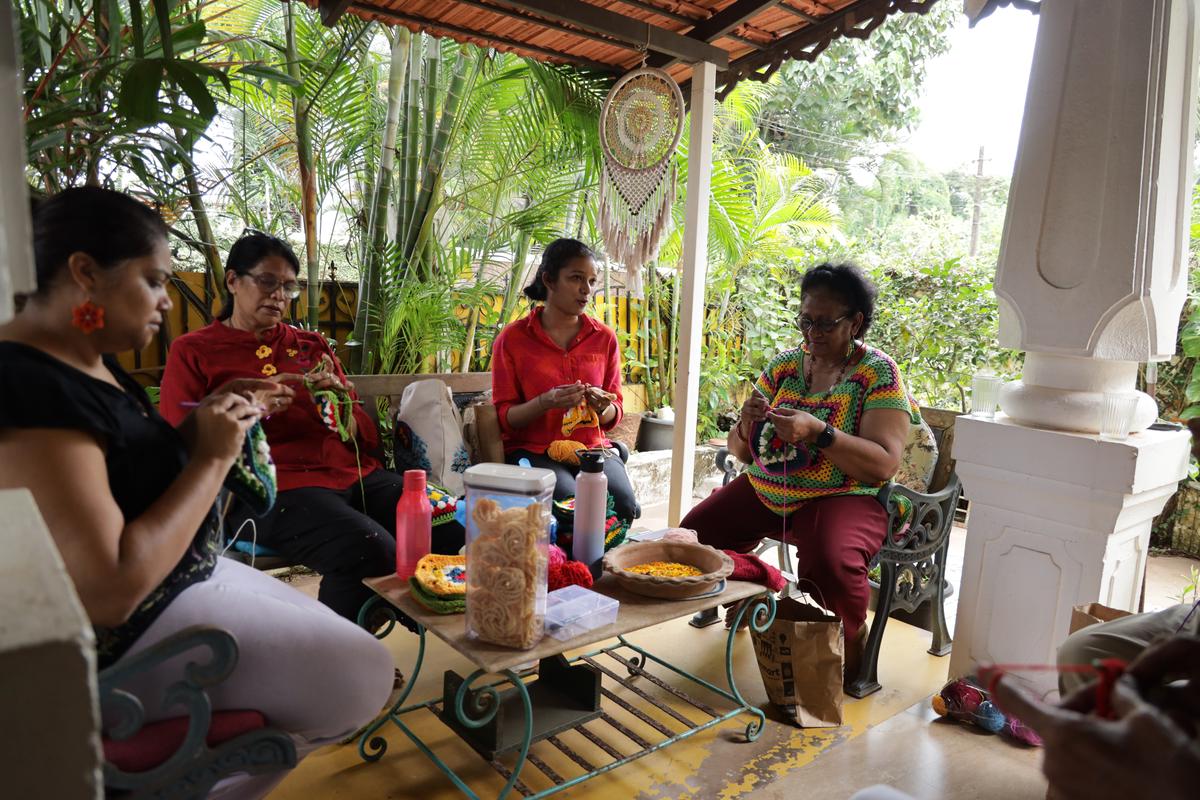
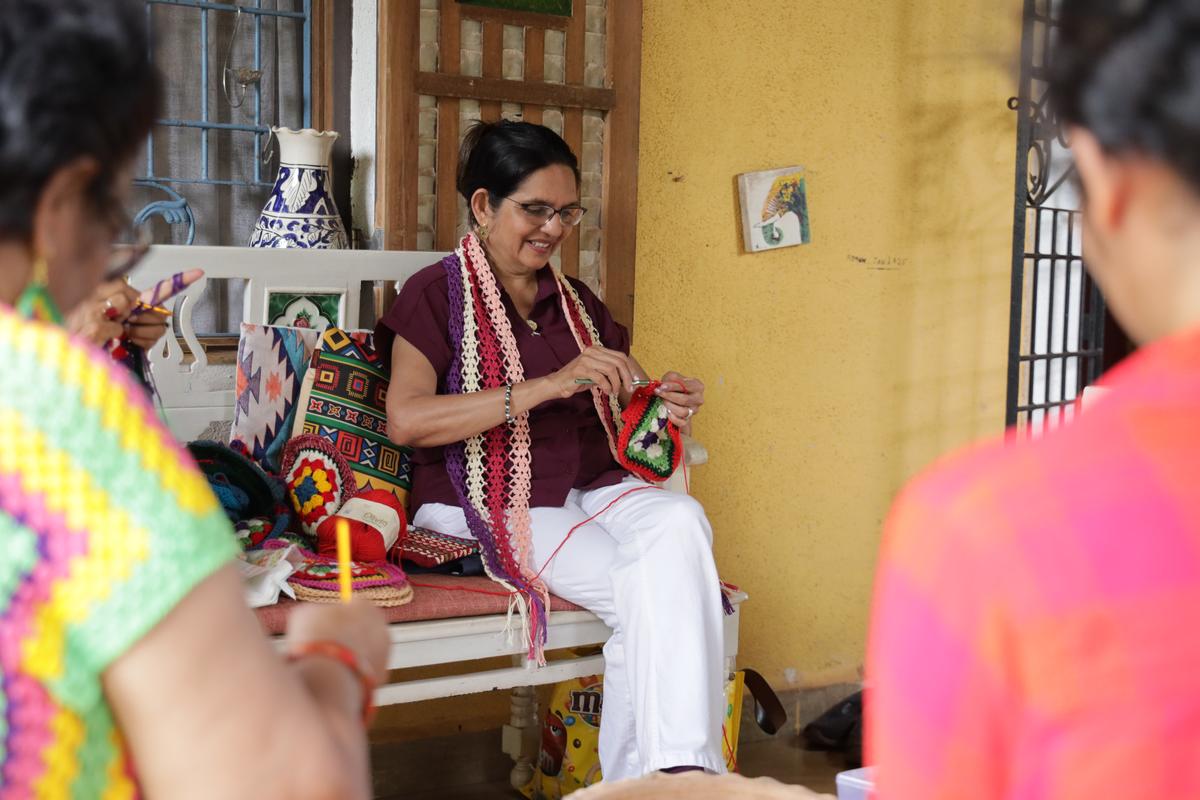
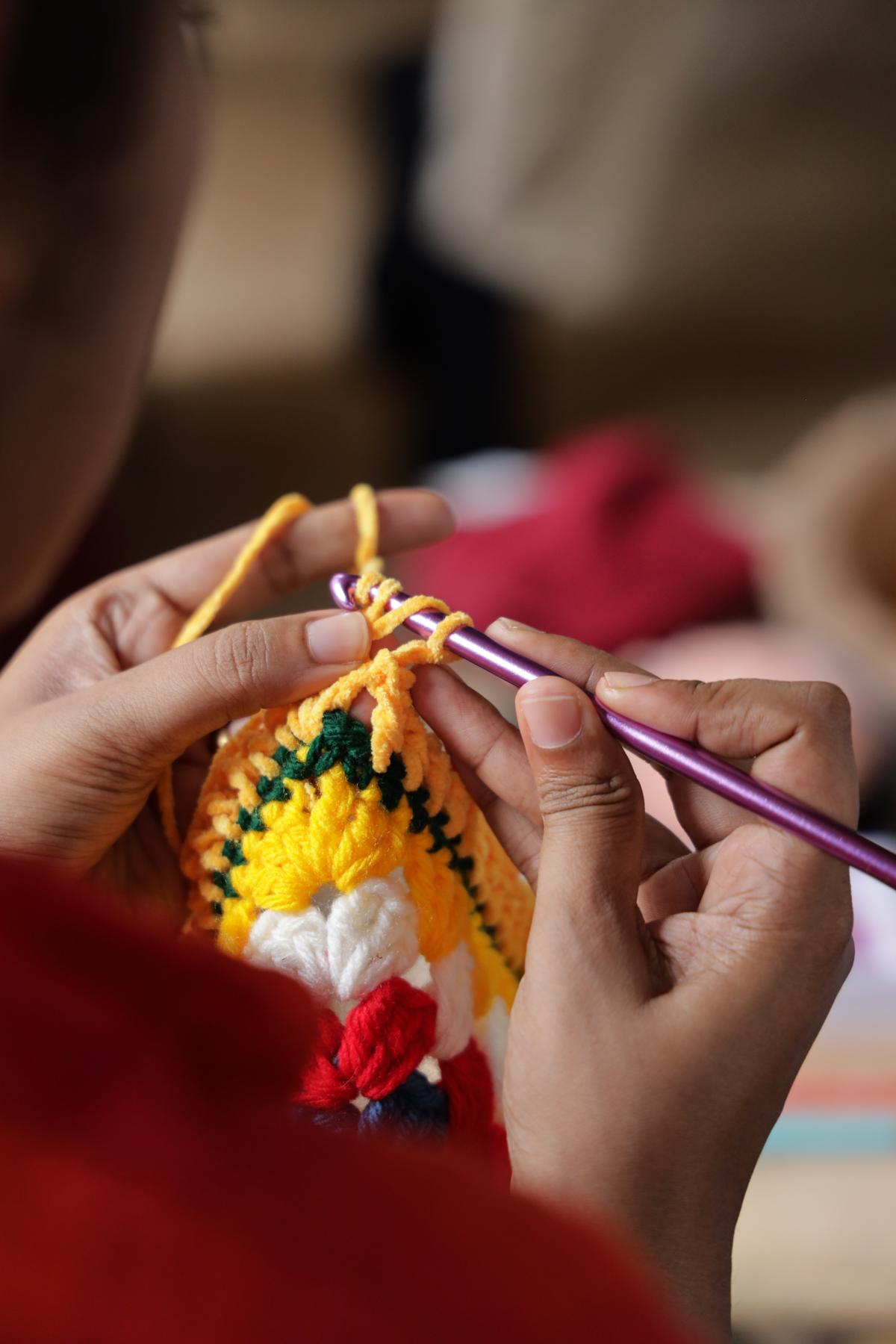
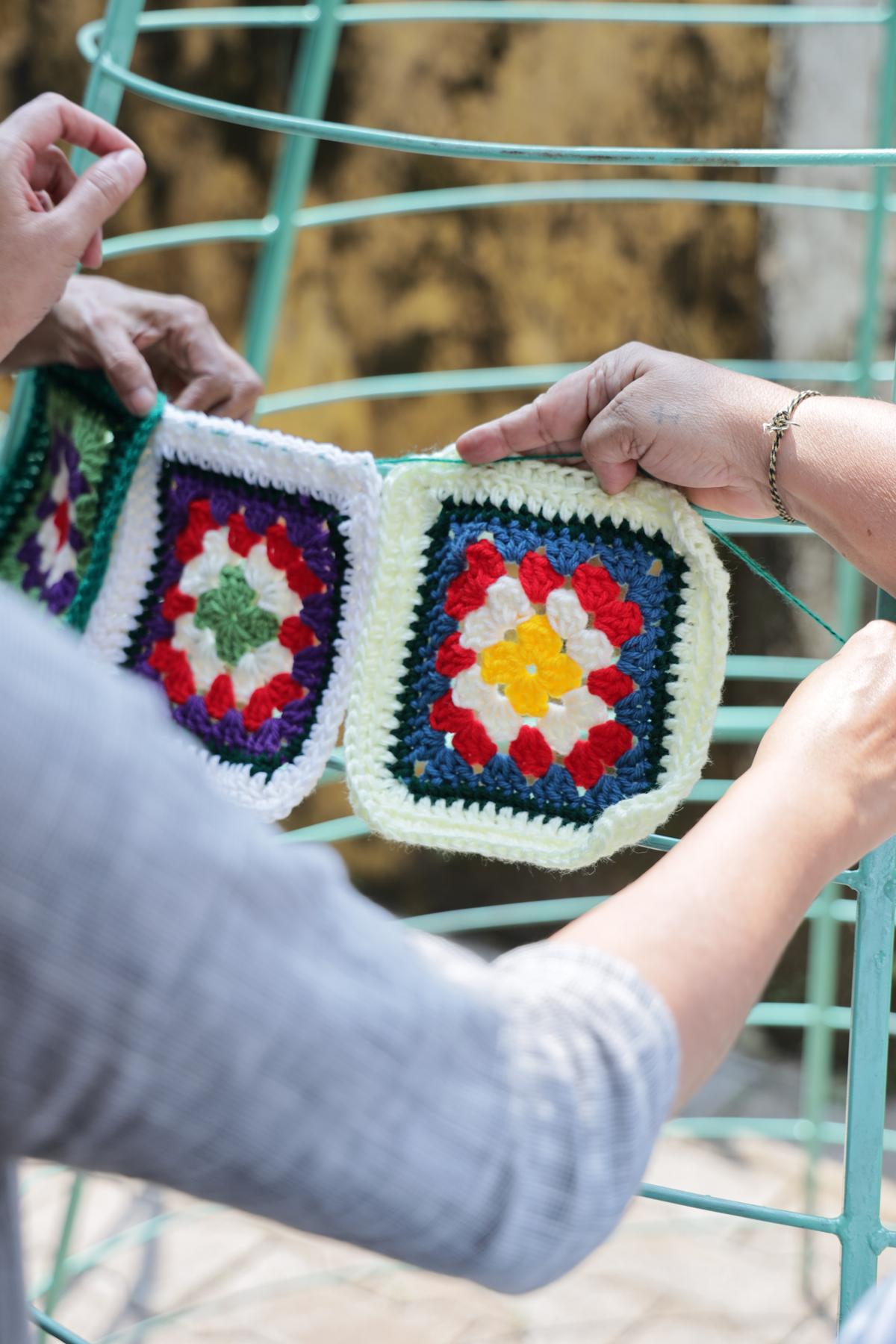
Sharmila played host to the motley crew who often gathered to share songs, savouries, sweets and stories, as they crocheted 1,000 granny squares (a crochet pattern that starts as a circle and ends up a square, often used to create larger pieces). The self-funded project was made in three months with acrylic yarn that weathers Goa’s humidity and monsoon better than traditional wool.

Crocheting as a collective: a few happy hands gather at a member’s house, with snacks and song, as they create granny squares for the Christmas tree

Crocheting as a collective: a few happy hands gather at a member’s house, with snacks and song, as they create granny squares for the Christmas tree
| Photo Credit:
Special arrangement

A palette of contrasting colours was given to each participant, who could crochet at home, or choose to meet with others once a month across parts of North and South Goa. “Initially, all interaction was over Zoom and WhatsApp. When it came to assembling the tree, the camaraderie was amazing, especially because all 25 of us were meeting physically for the first time!” says Sharmila. She adds, the process had its pitfalls. “When the cyclonic weather hit us, we couldn’t work. The deadline was fast approaching, but we were all confident that we would get things done in time. We had to place the squares on the tree, and the torrential rain made it difficult to work outside, forcing us to pause with the weather, and cover the structure in plastic.”

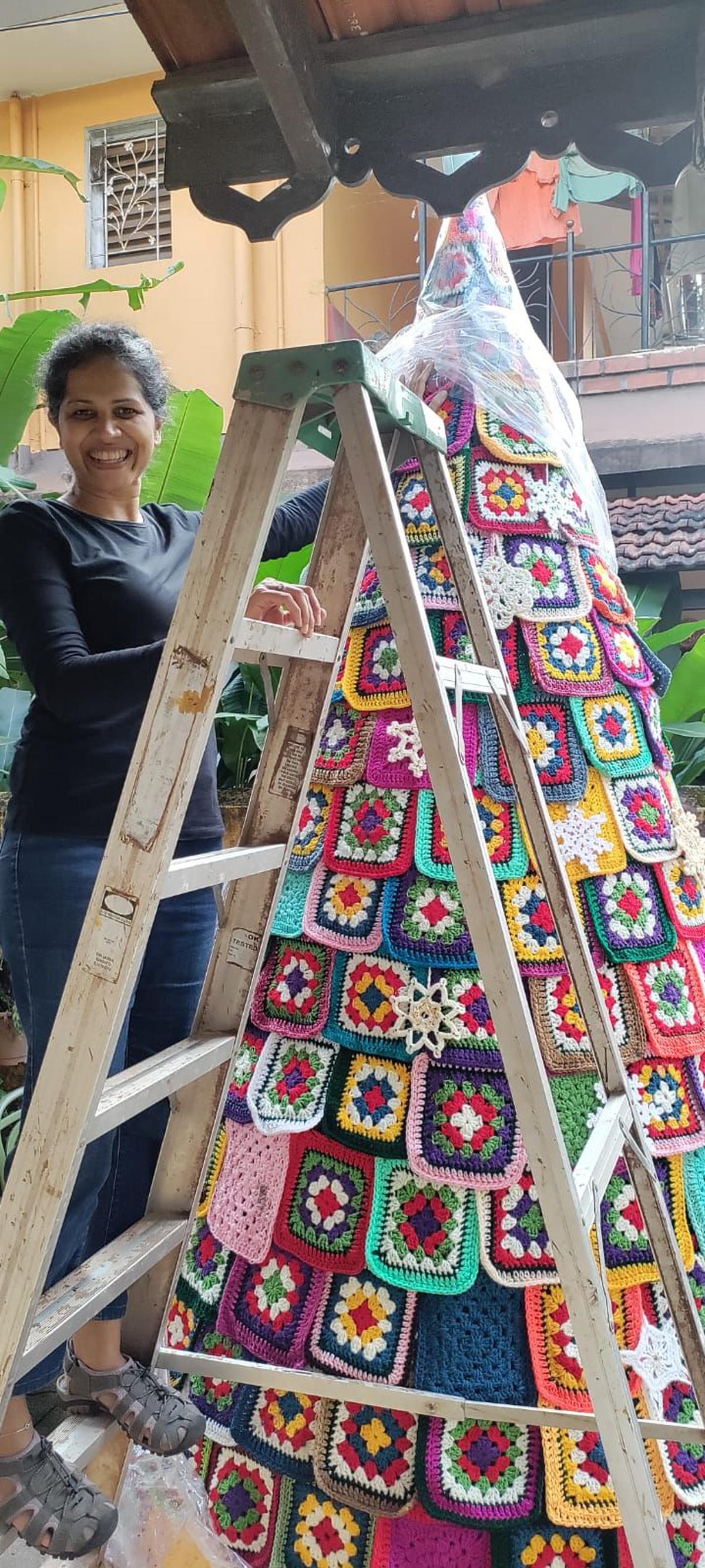
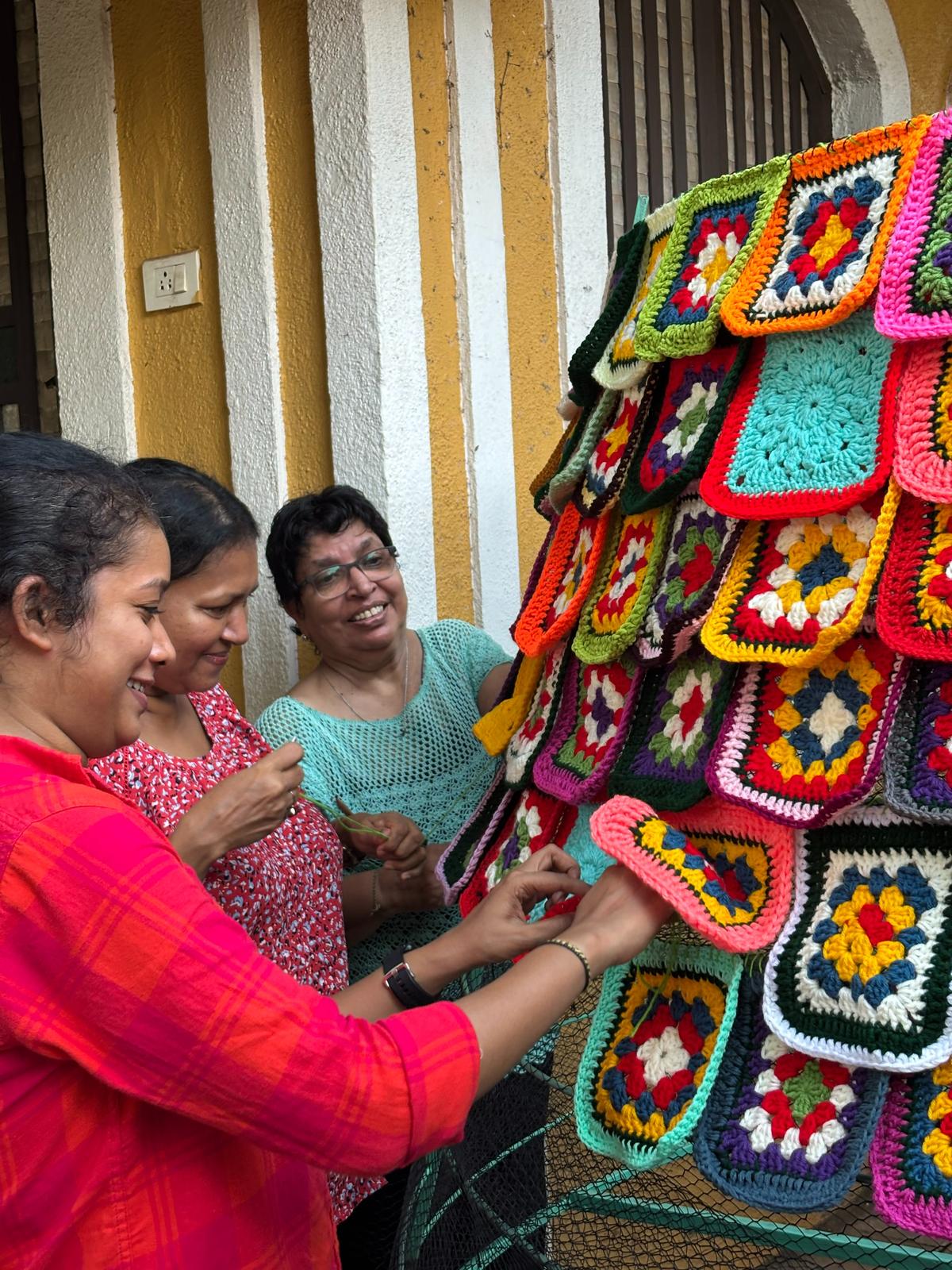
Sheena Pereira, co-founder of the Crochet Collective, attaches each of the 1,000 granny squares for a 3D effect.

Sheena Pereira, co-founder of the Crochet Collective, attaches each of the 1,000 granny squares for a 3D effect.
| Photo Credit:
Special arrangement

The group played around with a few designs that could be interactive and provide a three-dimensional effect. Instead of tacking the squares together to form panels that would wrap around a metal tree structure, each of the 1,000 pieces was individually tethered to the frame, overlapping one another, like the branches of a tree would.

The crochet Christmas tree is on display at the Museum of Goa

The crochet Christmas tree is on display at the Museum of Goa
| Photo Credit:
Special arrangement

Sheena states, “We distributed the yarn, and once the squares were made, the frame was brought to Porvorim at one of the participant’s compounds.” The group was working in tandem, “thinking of locations for display but nothing panned out. If we waited for a space we would lose time. Sharmila knew of the 10th anniversary celebration at the Museum of Goa, and the venue then presented itself, serendipitously through the Museum’s team,” adds Sheena. 

Each member of the Crochet Collective is wearing handcrafted crochet tops, scarves or earrings, as the art form is popular across the State

Each member of the Crochet Collective is wearing handcrafted crochet tops, scarves or earrings, as the art form is popular across the State
| Photo Credit:
Special arrangement

Art and heirloom 

Sharada Kerkar, director, Museum of Goa, says when Goans think of festivals, the celebrations are incomplete without the arts and crafts of local communities, including Goans coming together to build something for festivals. “Crochet is an art that came to Goa through the Portuguese nuns, who once practised it within their convents, and then took it to the surrounding villages. We all have crochet doilies and table linen to adorn our homes. A bride’s trousseau usually has an extensive collection of crochet items handed down through generations,” says Sharada, reiterating, “we celebrate the collective spirit through crochet. Crochet is not a craft, it is art done with intention and skill. So ‘Where we Gather’ highlights artforms that bring communities together transcending religion.”    

One of the 1,000 squares being crocheted

One of the 1,000 squares being crocheted
| Photo Credit:
Special arrangement

The crochet Christmas tree was supposed to be an “easy-peasy Christmas tree”, according to participant Sophy Sivaraman, or so she thought, when she learnt to crochet with Sheena. “But when the 1,000 squares were assembled on the tree in an early iteration, the collective regrouped to create larger squares. I worked on augmenting the squares from six to eight inches. Then we added the other crochet elements with snowflakes and stars,” says Sophy. 

All the artists painstakingly attach squares to craft the 1,000-piece crochet tree, for the Where We Gather exhibit for the Festivals of Goa, MOG

All the artists painstakingly attach squares to craft the 1,000-piece crochet tree, for the Where We Gather exhibit for the Festivals of Goa, MOG
| Photo Credit:
Special arrangement

The highlight of this project has been, “how 25 women who had never met, worked seamlessly to put the tree together. Each one of us had a tremendous sense of ownership,” concludes Sharmila.

The members of the collective mount crochet squares on the frame of the tree

The members of the collective mount crochet squares on the frame of the tree
| Photo Credit:
Special arrangement

The tree will be on display at the Museum of Goa from November 9 to January 18, after which the plan is to either use the squares to make blankets, which would be donated or to create a canopy for a street.

For the record

The exhibition, Festivals of Goa, celebrates a decade of the Museum of Goa, and reflects on the land’s shared histories, interfaith practices, and evolving traditions, with four shows, over 90 artists and more than 100 artworks. The tallest crochet sculpture measures 77 feet and 1.2 inches and was achieved by Ajuntament de Vilamarxant in Valencia, Spain, on January 5, 2024. A massive 10,000 crochet squares were used, with 120 women participating and over 200 individuals contributing to it, over nine months. The colours chosen reflect the Christmas spirit (red and green) and the colours of the Valencia province – orange and yellow of citrus fruits, and the blue of the Mediterranean sea.

Published – December 12, 2025 03:59 pm IST


Source link

Margazhi music and dance season: What is on the cards fashion-wise, this year?


Come December, and Chennai collectively gears up to become a connoisseur of all things ragatalamudras and of course, the food at the sabha canteens.

For the bevy of artistes gearing up to take the stage, this is also the season to put their most stylish foot forward. It is a delicate tightrope walk: wanting to experiment without drifting too far from the classics, and ensuring their outfits enhance, and not upstage the performance. There is meticulous planning involved, specifications to adhere to for onstage comfort, statement jewellery or even fitness trackers, and of course, colours to match the mood; who says you can’t have fun onstage?

We speak to four artistes — preparing for a packed Margazhi calendar — about their fashion fundas, how they curate their wardrobes, the meticulously thought-of design specifications, and their signature stage styles. Read on.

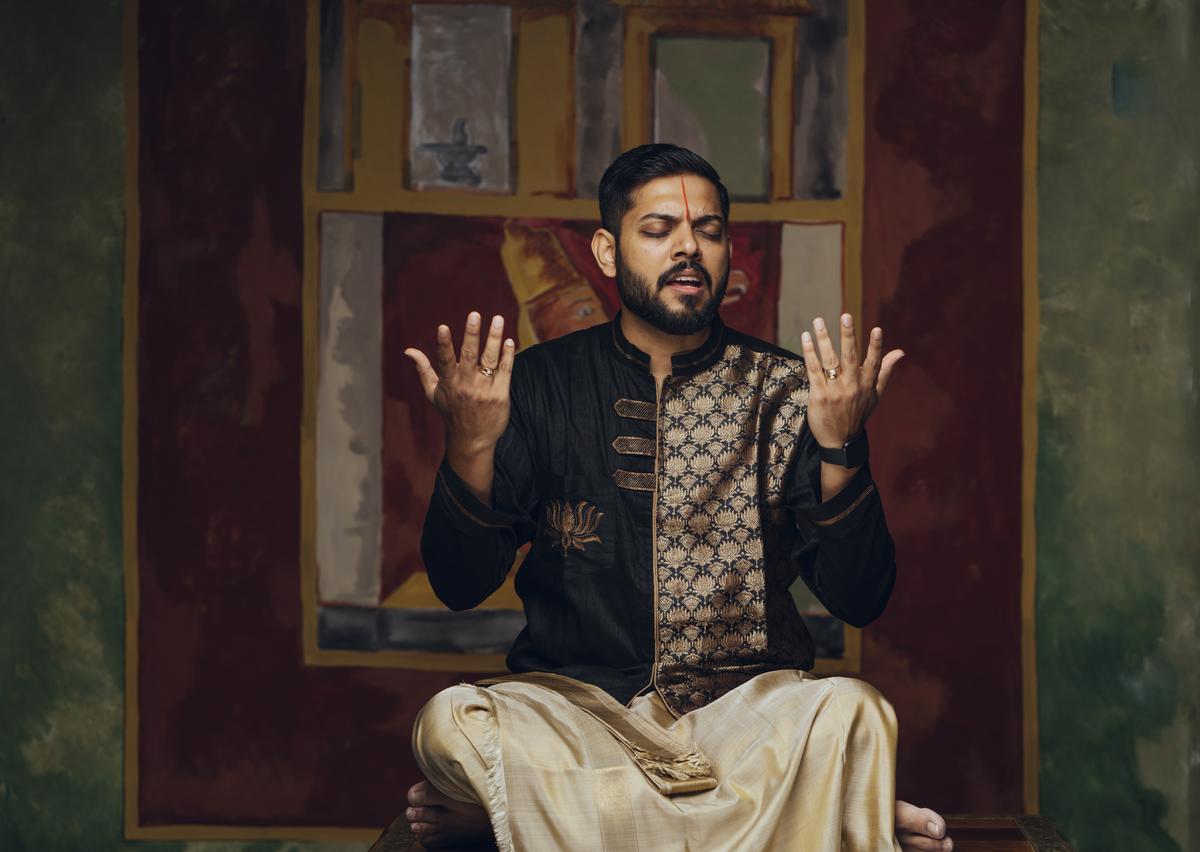
Rithvik Raja

Rithvik Raja

Rithvik Raja
| Photo Credit:
Amar Ramesh

“The fundamental goal for me on stage is to feel super comfortable with what I’m wearing. I’m there to sing. Everything else is an additional component,” says Carnatic singer Rithvik Raja.

For his custom-made kurtas in ajrakh, ikat, chikankari and more, which have been a talking point among his peers and Margazhi season audiences alike, the singer says he has arrived at a ‘sweet spot’ as far as the design specifications are concerned. “The length of my kurtas is always only slightly longer than a shirt so that it falls naturally when I sit. The sleeves are at a 3/4th length with an open slit cuff, so when I lift my hands during a performance, it feels free,” Rithvik explains.

Over the last 15 years, for his kurtas, Rithvik has worked with artist and designer Lakshmi Srinath who runs Tvam Art and Design Studio. “I’m very conscious about buying only handloom material and love sourcing directly from artisans. I do not like flashy designs or too much patchwork. Once I pick the base material, I leave it to Lakshmi to come up with a design that we go back and forth on,” he says.

His kurtas might hog the spotlight, but Rithvik says he takes pride in his collection of dhotis which are rarer to source. “I pick different weaves from wherever I travel; be it Odisha or Andhra Pradesh. These aren’t ones you can find in your regular, large textile stores,” he says. “With a limited number of kurtas, it is easy to mix-and-match different ensembles with veshtis and angavasthrams (shawls) for the stage,” he adds.

Rithvik jokes about a brief phase of wearing flashy diamond studs, but one accessory has stayed for a decade; his Apple Watch. “I even briefly wondered if I should match straps to outfits, but decided to keep it simple. The watch has now become part of my onstage energy and vibe,” he adds.

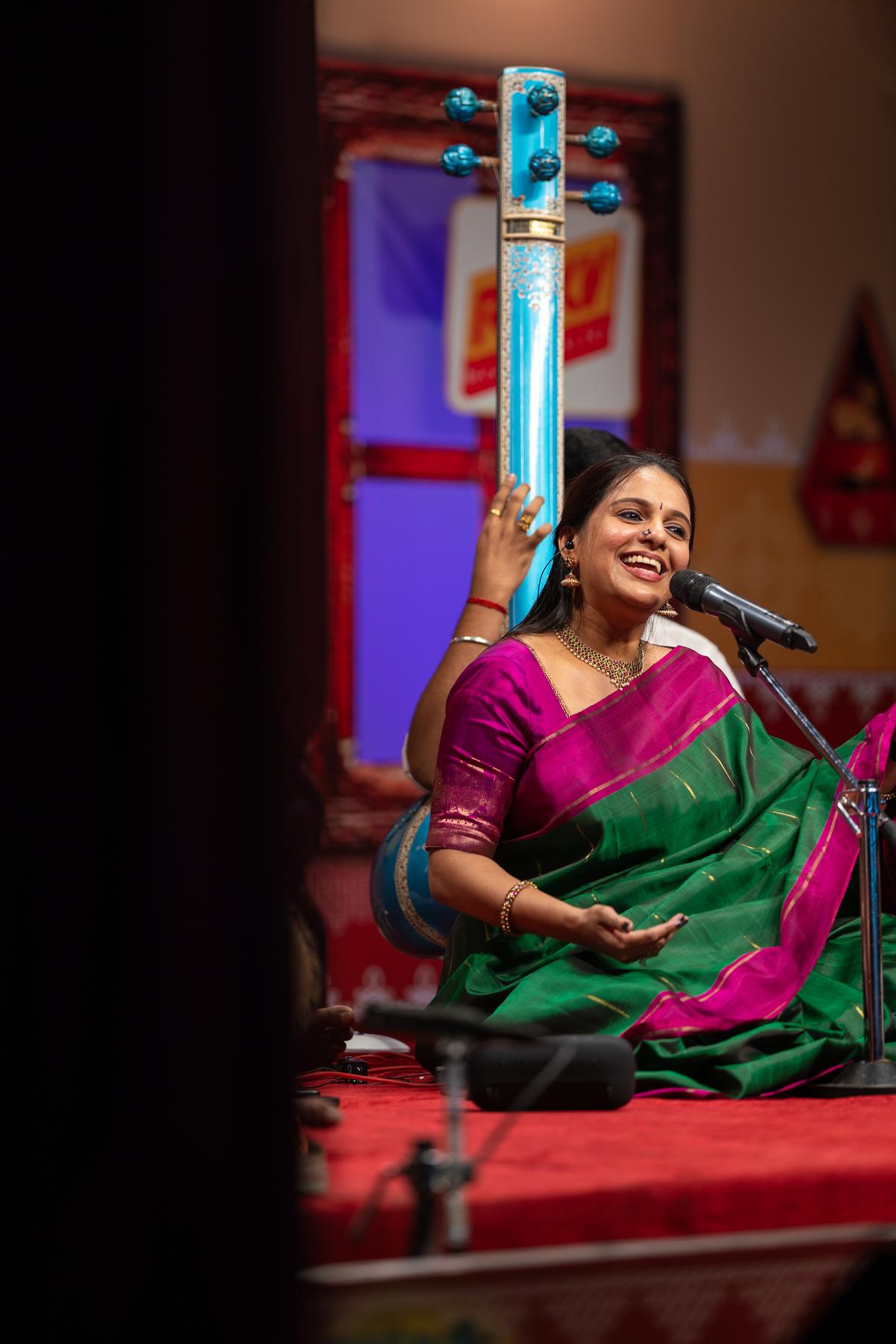
Sriranjani Tapasya Santhanagopalan

Sriranjani Tapasya Santhanagopalan

Sriranjani Tapasya Santhanagopalan
| Photo Credit:
Ambrish

Saris in jewel tones, temple jewellery, and colourful, large mookuthis (nose studs) will feature prominently in Carnatic singer Sriranjani Tapasya Santhanagopalan’s wardrobe, this music season.

Her ‘thorough’ checks in place for saris, she laughs, has befuddled many sales representatives at sari shops over the years. She runs us through her checklist as well. “I check how the fabric behaves, whether it irritates my skin and even look at it under different lighting. I thankfully work with a designer, Chuka Ramanan, who is as meticulous as I am and before we finalise any ensemble, we actually mimic my concert postures — from how I sit to how I tune my tanpura— to make sure what I am wearing fully supports this,” she says.

A lovely visual and aural fixture on Sriranjani’s concert stages over the years has been her bright blue tanpura with intricate designs on it, fondly called ‘neelamani’. And as for another signature style fixture, the singer says she has no problem wearing her trusty Whoop fitness band, stacked with bangles on her wrist.

Sriranjani describes her style as understated, and says that when it comes to her saris or her jewellery, she prefers a fly on the wall approach. “My ensemble should never be distracting for me or any other person in the audience. The clothing has to serve the music, not the other way round,” she says.

Her wardrobe for the music season comes together through the year, and Sriranjani says she picks out her own saris and always gravitates towards Kanjivarams. “Some of my most cherished additions to my wardrobe for the season are gifts from my friends or saris and jewellery I borrow from them. My dancer friends, for instance, have been encouraging my love for temple jewellery. I didn’t even have to ask them; they readily sent across pieces that I am very excited to wear this year,” she says.

Christopher Gurusamy

Christopher Gurusamy

Christopher Gurusamy
| Photo Credit:
Natya Ink by Sudha

A week ahead of a performance, Christopher Gurusamy lays out the sari he plans on draping as his costume and the jewellery to go with it, ready on his bed. “It reminds me of what my purpose is for the show; a totem of sorts. I am reminded that this is what I picked out to wear when I had no pressure or stress. It reminds me of what the performance actually is about, and grounds me,” he says.

A self-confessed Kanjivaram sari connoisseur, the Australia-based dancer who is in Chennai for the Margazhi season says that colours are the first thing that catch his eye. Over the years, Christopher has made Kanjivarams pop with vibrant colour pairings that include blue with red, purple with teal, orange with green.

“The choice of colors can really make a performance more cohesive and I want the sari to reflect the pieces that I’m performing; a kamas (a dance piece dedicated to a deity) would mean I will gravitate towards pinks, and if my dance is about lord Vishnu, I would choose blues or yellows,” he says.

Christopher says, as a fan of contemporary art, the works of artist Mark Rothko serve as a great guide on colour palettes. “You also just need to look around yourself, at Nature, to get inspired; for shades of manjal (yellow) that work with a leafy green, or even many variations of cream and off-white from strings of jasmine. Colours in Chennai are just so different and amazing,” he says.

His wardrobe for the season this year holds gifts from friends, pieces of sentimental value he remembers wearing from memorable performances in the past, and newer saris. “I’m particularly excited for a sari from designer Vijayalakshmi Krishna’s Aavaranaa. She has been a regular collaborator and has often given me honest feedback on what works and doesn’t,” he says.

Christopher deftly drapes the vibrant silks he picks out without a single safety pin as his costume, and adds two sashes around the waist; his signature style statement. “I also absolutely have to wear a vanki or an arm band. Without these two things, I feel lost onstage,” he laughs. 

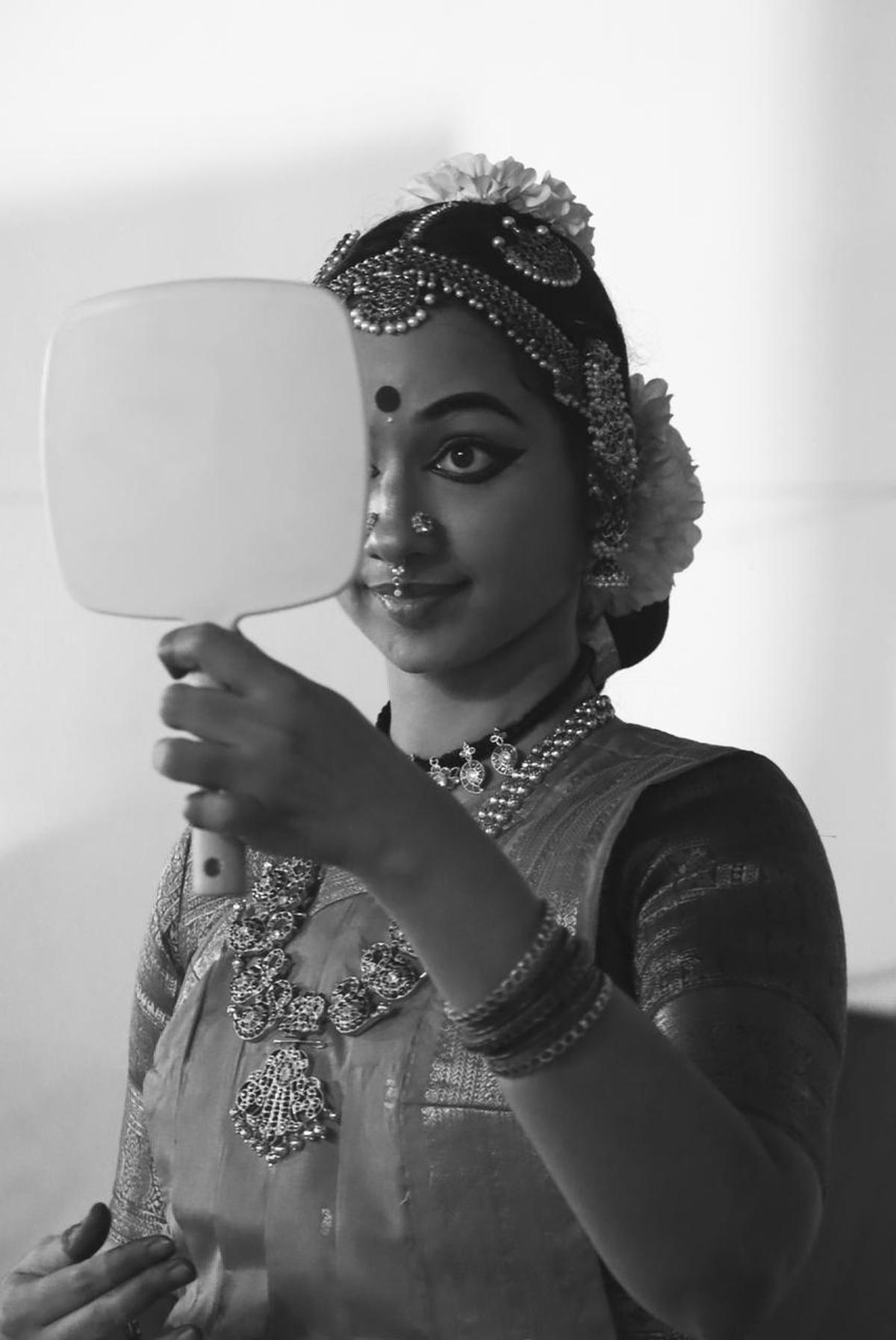
Harinie Jeevitha

Harinie Jeevitha

Harinie Jeevitha
| Photo Credit:
A S Jayashri

Harinie Jeevitha says she has just finished a trip to Nalli, to look at saris for her costumes. The dancer, who has solo performances and is also a part of group productions this season, says she prioritises sustainability and affordability of the fabrics she picks for her costumes.

“I choose colours which might go well with the themes I am presenting. For instance, a performance centered on ‘shakti’ or female force means picking bright red or yellow. The venue and the lighting are factors that come into play as well,” she says. “Costumes are just an additional layer to your dance, not something which defines dance,” she adds.

While Harinie acknowledges the excitement of putting together new costumes for the season’s major solo shows, she also often does a mix-and-match with the costumes she already has. Picking fabrics like silk cotton, she says, ensures costumes can be worn multiple times . “I always pick traditional temple jewellery to complement my costumes — chokers with a gopuram design or the maanga haaram (long chain) are pieces that have a charm of their own,” she says. A student of Sheela Unnikrishnan, Harinie says she takes suggestions from her teacher’s sister, Kuchipudi exponent Shobha Korambil, for her costumes.

Eschewing the traditional tight, long braid or dancer’s bun, Harinie says she likes to style her hair in a loose braid. “This is a style I have worn onstage for many years now, and I do it for some performances,” she says, of her signature style onstage.

After years of performing and watching her peers and fellow dancers take the stage, Harinie says her admiration for them has only grown. “I’m constantly in awe of how beautifully they dress and carry themselves under the lights,” she says.


Source link