Life & Style

Vimoo Sanghvi’s retrospective ‘Whispering Clay’ is heading to Kochi in time for the Biennale


Ceramicist Vimoo Sanghvi was a potter and a pathbreaker. One of India’s pioneering studio pottery artists, she often said that pottery “kept her alive”. But the reverse was equally true: a woman artist who strove to keep the art form pertinent at a time when the medium wasn’t as popular.

Trained in England and based in Bombay, where she exhibited extensively, her repertoire is little known. But a retrospective is now helping correct that gap. Whispering Clay: Celebrating a Life in Ceramics, her showcase that opened earlier this year in Mumbai, is travelling to Kochi, in time for the sixth edition of the Kochi-Muziris Biennale. The show is a fluid exposition of the master artist who worked with equal proficiency in throwing on the wheel, slip casting, carving and incising, and sculptural forms.

Vimoo Sanghvi at the wheel
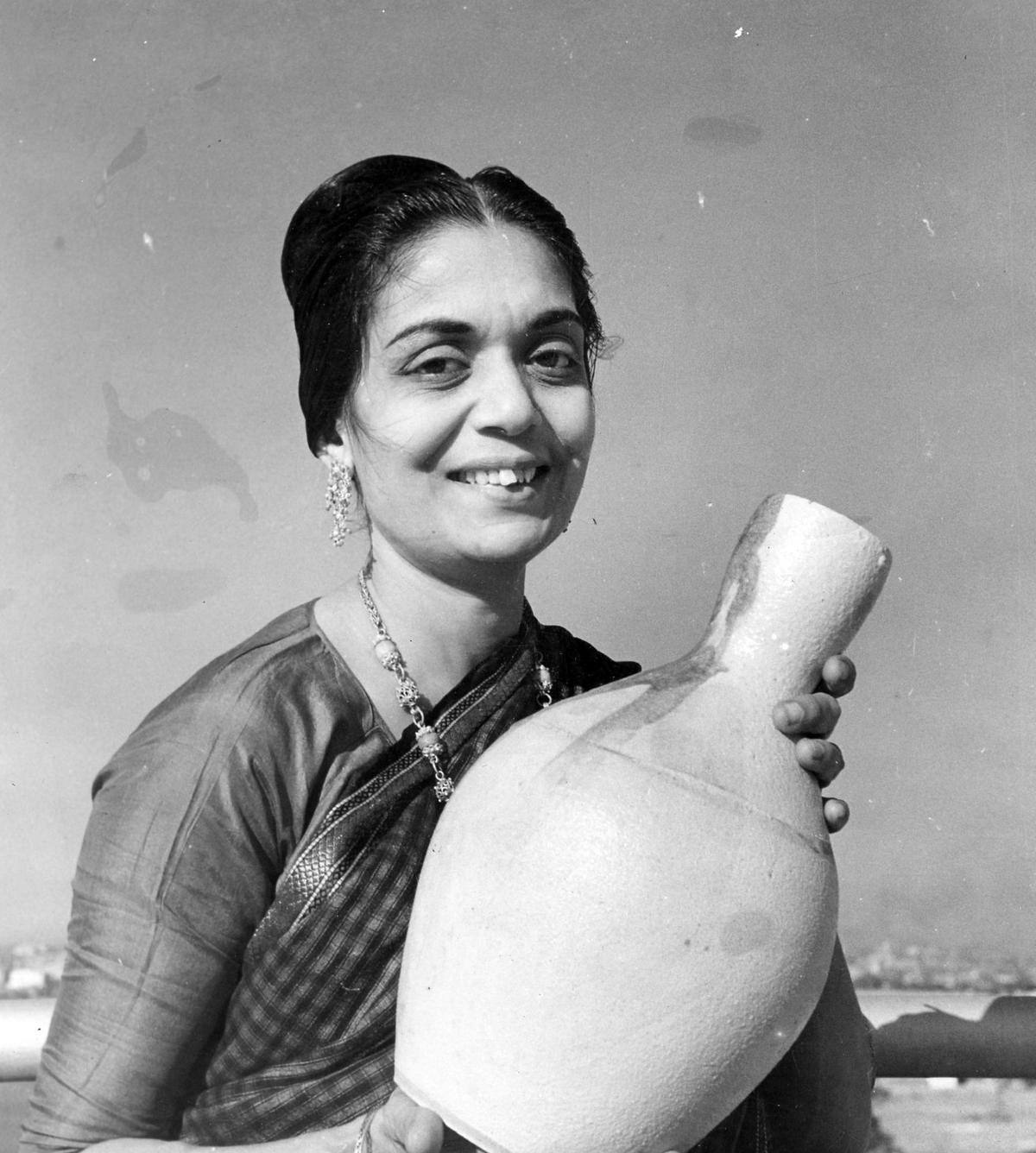
Vimoo Sanghvi at the wheel

Vimoo Sanghvi with one of her creations

Vimoo Sanghvi with one of her creations

Her ‘magnificent obsession’, as her son, journalist and writer Vir Sanghvi, recalls, was the story of a woman who pushed the boundaries of her time and of technical perfection. Vimoo experimented with scale, moved away from the pastels of western pottery to create earthy indigenous glazes, steered her British pedagogy to Indian silhouettes and shapes, and established her own unique repertoire at a time when the Progressive Art Movement was sweeping across Bombay.
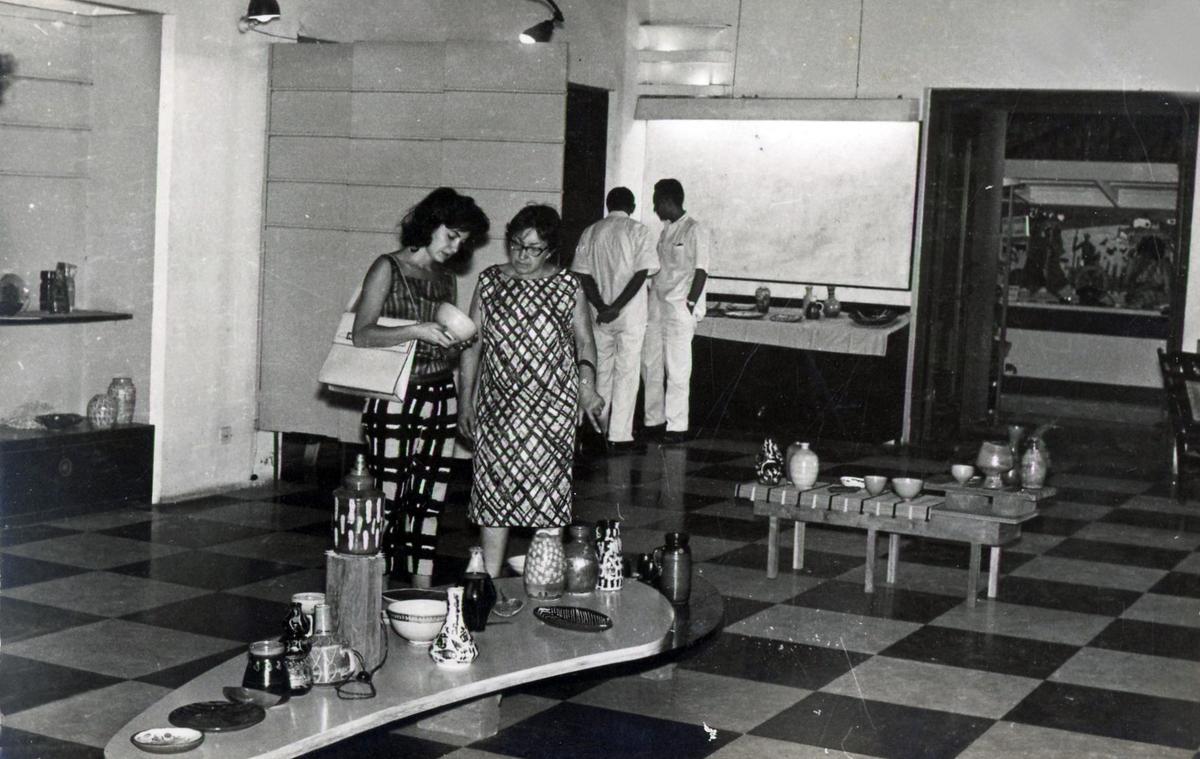
An exhibition of Vimoo Sanghvi’s ceramics

An exhibition of Vimoo Sanghvi’s ceramics

Learning from the Modernists

The idea of pottery first fascinated Vimoo as a young mother living in south Bombay. The daughter of a wealthy Gujarati industrialist (born in 1920), she chose formal training in England at the Willesden Art School in the ’50s.

In the early ’60s, with an imported wheel and kiln that she set up a studio in Churchgate, Vimoo joined the modern arts movement of the time — watching the first contours of modernist painting in India being defined and seeking to do the same in her work. As her hands mastered clay, she moved to abstract expressionism, the Cubist style she observed among Bombay’s Progressive, and to forms that were not always utilitarian, influenced by her extensive travels in America and Europe. Kristine Micheal, curator of Whispering Clay, says that “she had a direct impact on the development of early studio pottery and ceramic art in Mumbai — be it with her contemporaries like Primula Pandit, as well as artisans like B.R. Pandit and Ismail Kumbhar”.

In this glazed terracotta piece, Vimoo shows her mastery in sculpting clay into a form that seems familiar and yet is unusual. She is also known for her mastery of multihued glazes — an alchemy where different oxides react in the kiln to produce the colour on the surface.

In this glazed terracotta piece, Vimoo shows her mastery in sculpting clay into a form that seems familiar and yet is unusual. She is also known for her mastery of multihued glazes — an alchemy where different oxides react in the kiln to produce the colour on the surface.

Her travels influenced her works. Inspired by Inca pottery, which combined sculptural forms with utilitarian spouts, Vimoo created playful, colourful pots.
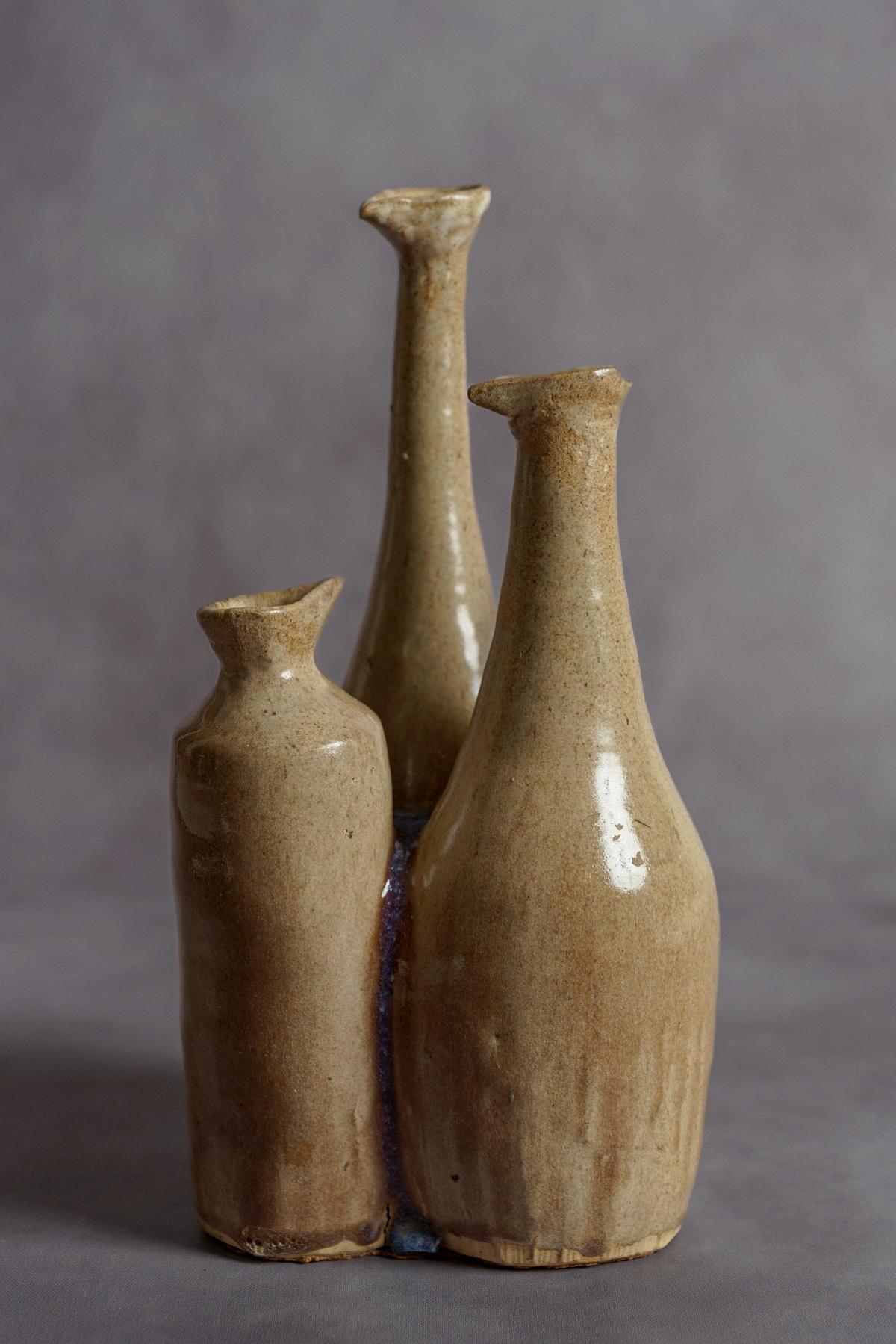
Her travels influenced her works. Inspired by Inca pottery, which combined sculptural forms with utilitarian spouts, Vimoo created playful, colourful pots.

Vimoo displays her skill at the wheel by making shapes that slightly break the perfect profile we expect in pottery shapes. So, every angle had a different shape.

Vimoo displays her skill at the wheel by making shapes that slightly break the perfect profile we expect in pottery shapes. So, every angle had a different shape.

A distinctly Indian aesthetic

Her work with traditional potters in Dharavi, who prepared her clay and fired her bisque pieces, and teaching stints at the JJ School of Art also influenced her decision to turn to India for inspiration. From her choice of colours to her motifs — sometimes religious or drawn from indigenous communities and vernacular landscape, such as rangoli designs and the Ajanta-style swans — she forged a path that was entirely her own.

Her last burst of creativity drew from the Arabian Sea that she saw daily, with elements of coral and textures based on the sea. In 1983, when she showcased her work at the Jehangir Art Gallery (incidentally, also where she held her first exhibition, in 1962), some of the pieces were a complete departure from her earlier work; almost sculptural, they combined built clay and wheel work.
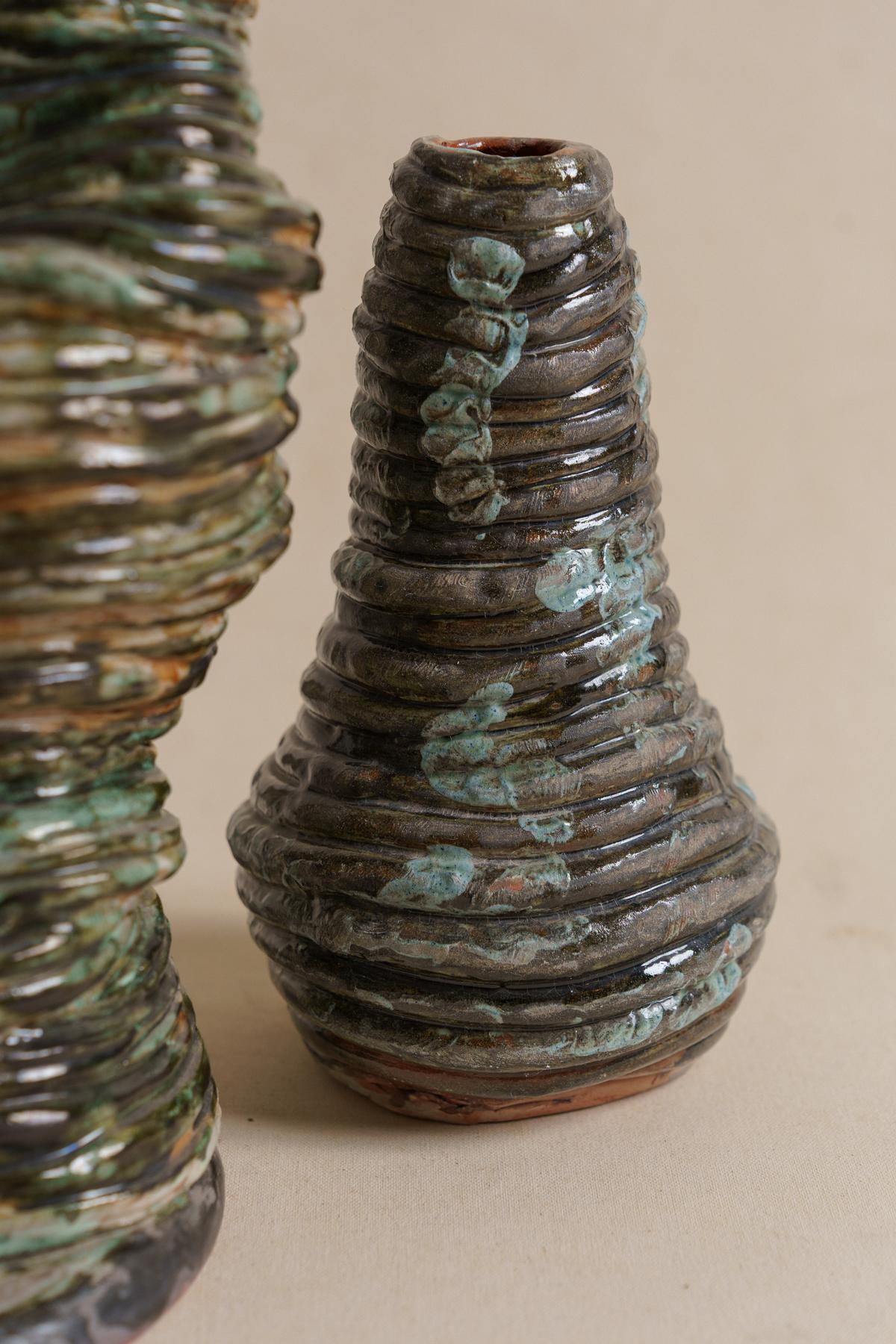
Coiling is a technique where clay is made into long rope-like shapes and then stacked in layers allowing a potter to make sculptural forms.

Coiling is a technique where clay is made into long rope-like shapes and then stacked in layers allowing a potter to make sculptural forms.

From her last series By the Sea, this work is both complex and textured, inspired by her love for the ocean.

From her last series By the Sea, this work is both complex and textured, inspired by her love for the ocean.

Glazed stoneware detail from Vimoo’s figurative period — the first studio potter in India with advanced skills to make these ceramics.
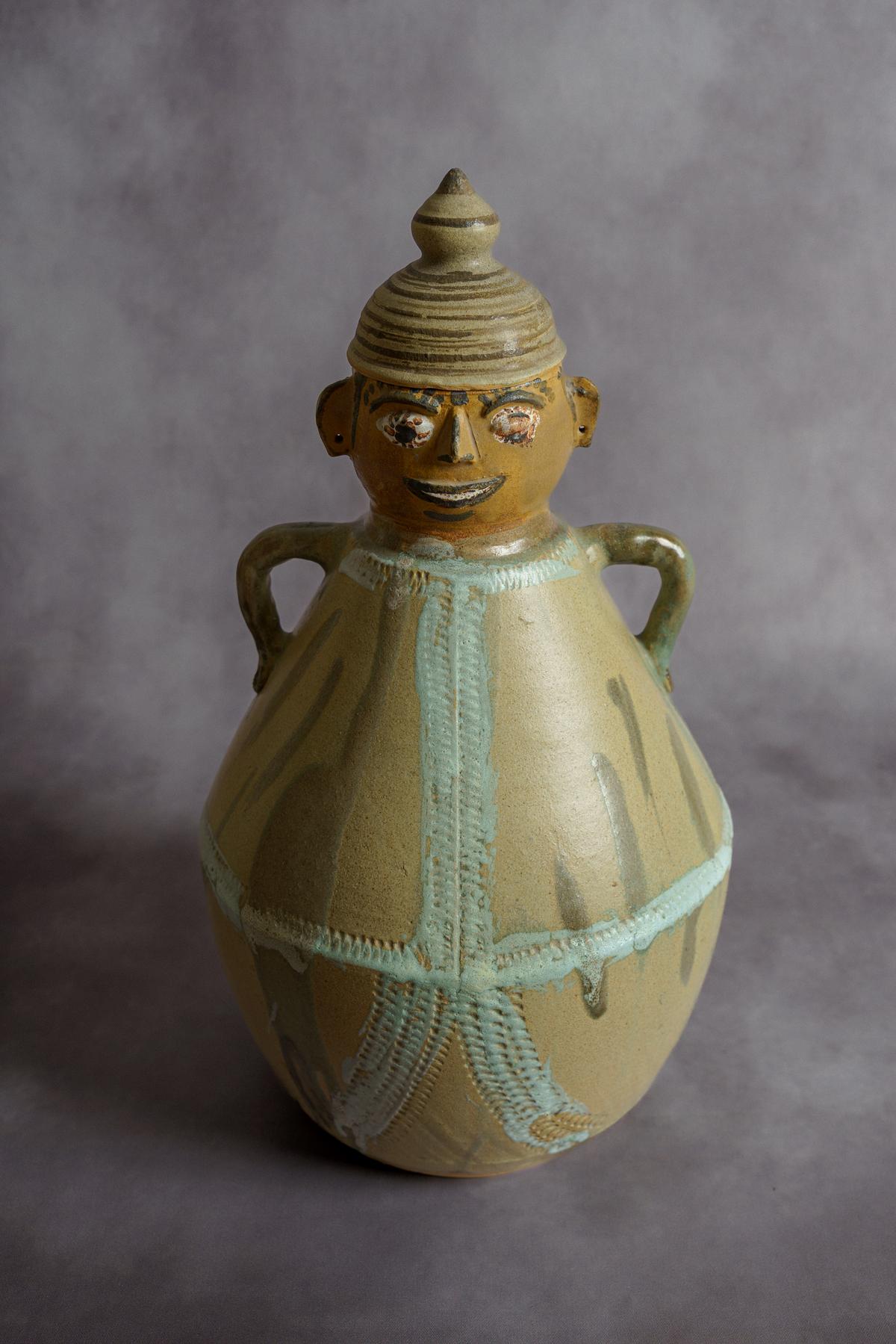
Glazed stoneware detail from Vimoo’s figurative period — the first studio potter in India with advanced skills to make these ceramics.

Stoneware that displays her mastery over form, glaze and technique.

Stoneware that displays her mastery over form, glaze and technique.

Whispering Clay focuses on it all: her idea of beauty in the everyday, the influence of artists such as Japanese master potter Sōetsu Yanagi, her ability to bridge the East and the West. It is a lesson in experimentation and exploration for studio potters today.

Whispering Clay: Celebrating a Life in Ceramics — curated by Kristine Michael and facilitated by Ranvir Shah, Prakriti Foundation, and Raaj and Mallika Sanghvi — is on view at the OED Gallery, Mattancherry.

The writer is the founder-director of Eka Archiving Services.
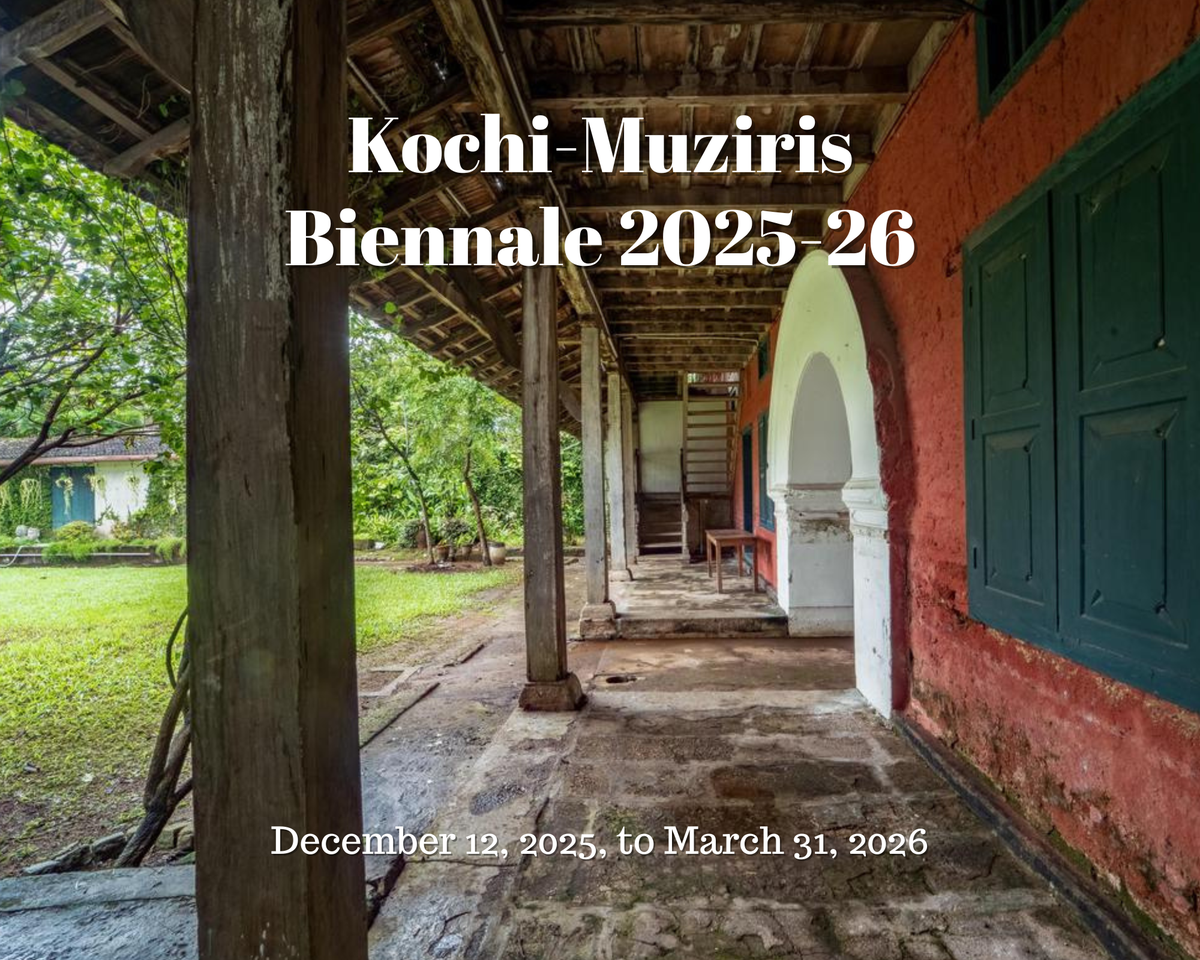
While at the KMB

The sixth edition will showcase the works of 66 artists and collectives from 25 countries across 22 venues. Here are six the KMB team is excited about:

Gulam Mohammed Sheikh’s ‘Of Worlds Within Worlds’

Curated by Roobina Karode, the retrospective traces the painter’s artistic evolution, from early expressions of personal memory to monumental works that celebrate humanity and critically examine global and contemporary politics. The showcase will have more than a hundred selected works from the museum’s collection and loans from other institutions and private collections.

Presented by Kiran Nadar Museum of Art, at Durbar Hall

Ibrahim Mahama’s ‘Parliament of Ghosts’

The large-scale installation explores Ghana’s colonial past, post-independence struggle and collective memory using a haunting assemblage of discarded objects such as jute sacks (once used to transport cocoa beans and charcoal, materials deeply tied to the country’s histories of labour and commodity dependence), scrapped school furniture, and faded railway sleepers. Also encompassing painting, sculpture, photography and film, it evokes the histories and memories of Ghana and its people.
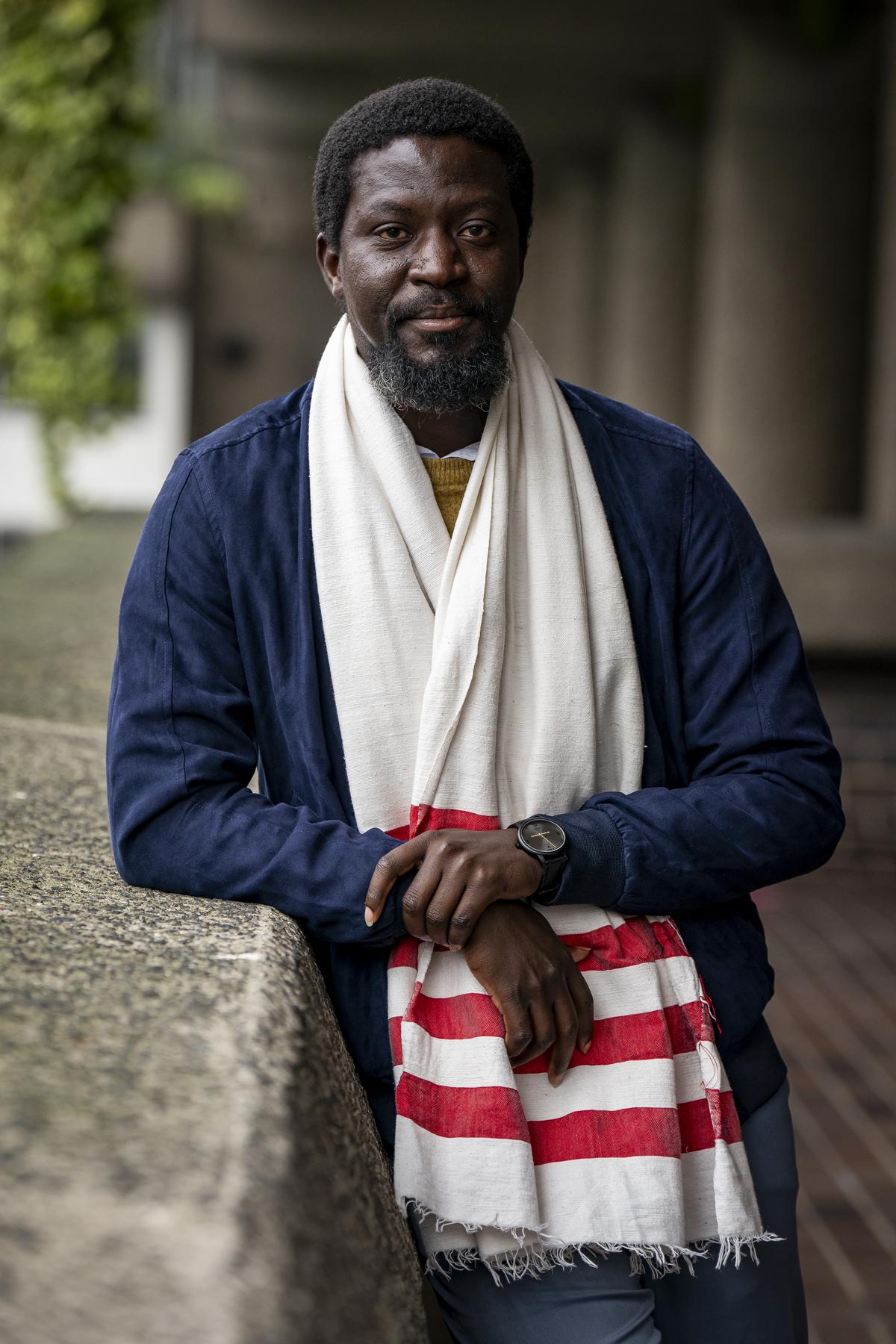
Ghanaian artist Ibrahim Mahama

Ghanaian artist Ibrahim Mahama
| Photo Credit:
Getty Images

At Anand Warehouse

Marina Abramović’s performance lecture

The U.S.-based conceptual artist is all set to deliver a performance lecture that traces her artistic journey. But till she arrives in February, her presence will be marked at the KMB by her immersive projection Waterfall and a presentation by the Marina Abramović Institute (MAI) Archive — which will highlight a collection of long-duration works and their corresponding documentation. Waterfall is a video installation depicting 108 Tibetan monks and nuns chanting the Heart Sutra, one of Buddhism’s most profound texts.

Marina Abramović

Marina Abramović
| Photo Credit:
Getty Images

First week of February, at Island Warehouse

Vivan Sundaram’s ‘Six Stations of a Life Pursued’

The installation debuted at the Sharjah Biennale in 2023 shortly after the artist’s death. It consists of sequences of photography-based works created in collaboration with artists such as Hilal Ahmed Khan, Anita Khemka, Imran Kokiloo, and Harish Khanna — focusing on the body, whether in isolation or in relationship to surroundings with specific political resonances.

Vivan Sundaram

Vivan Sundaram

At Cube Arts Space

Otobong Nkanga’s garden

The Belgium-based visual artist and tapestry maker examines the interconnectedness between humans and land within the contexts of resource extraction, colonisation, and migration. At the KMB, she will nurture an outdoor garden that mirrors the region’s biodiversity — native and non-native varieties of fruiting and flowering plants — and deep connection between the soil and cultural memory.
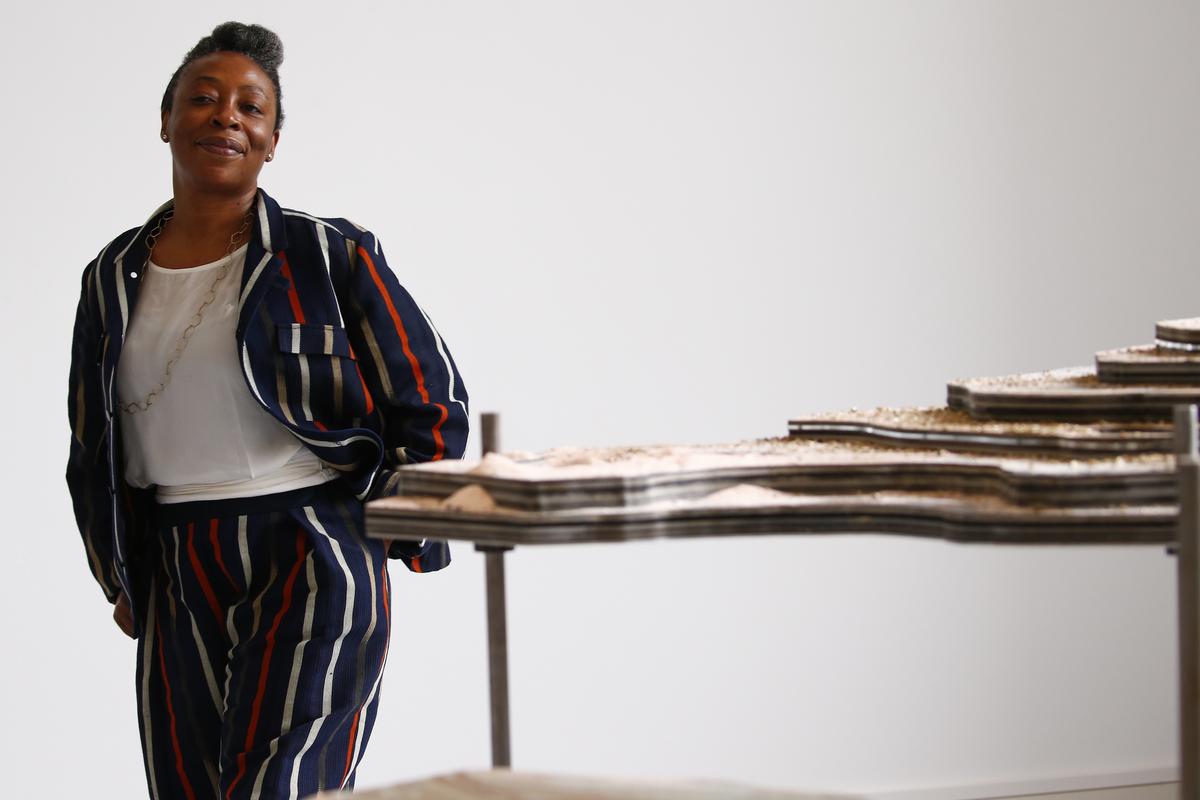
Nigerian artist Otobong Nkanga

Nigerian artist Otobong Nkanga
| Photo Credit:
Getty Images

At 111 Markaz & Cafe, Mattancherry

Island Mural Project

A new initiative by the Kochi Biennale Foundation, the Project brings art to public spaces in conversation with communities and regional histories. The first edition will have artists and collectives such as Aravani Art Project, Munir Kabani, Osheen Siva, Pradip Das, and Trespassers painting murals on select walls, creating spaces for connection, reflection, and shared belonging — inviting everyone to experience the neighbourhood in a new light.

Across Fort Kochi and Mattancherry


Source link

Manhattan’s hot new INDN Bar: butter chicken cocktails, keema pav, zero kids 


Like all good Indian dads, his first response was: “No.” 

“Indian restaurants are for families. How can you leave out the children?” said Vicky Vij, shaking his head with disapproval. “Who will come?” 

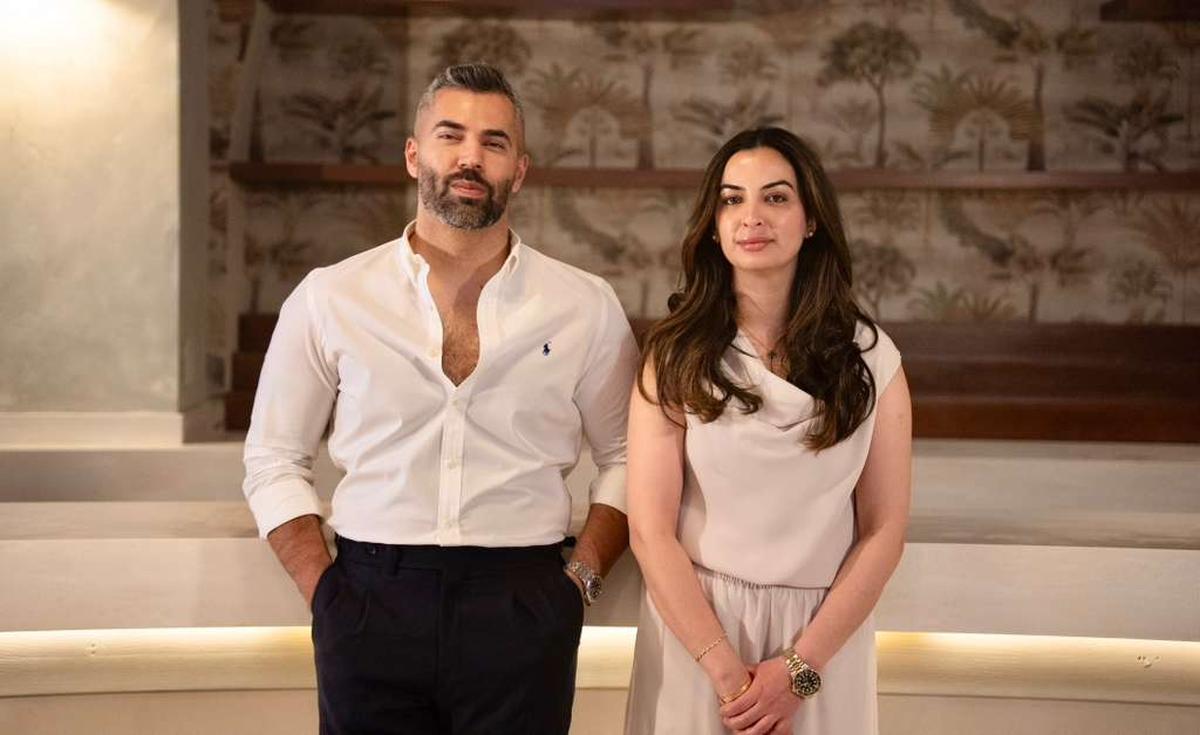
Even as he tut tuts, young couples and groups of friends walk in. It is 7pm on a Thursday night in New York city, and INDN is buzzing with energy. Recently launched by Vicky’s daughter Kanika Vij Bakshi and her husband, Simran Bakshi, the modern Indian space revels in shattering desi cliches with savoury cocktails, small plates and, a sleek bar designed for an ‘above 21’ crowd. 

The cocktails are savoury, with unexpected Indian flavours

The cocktails are savoury, with unexpected Indian flavours
| Photo Credit:
Special Arrangement

It is a good thing the kids are home with their babysitter. INDN’s tagline, splashed in bold across the main wall, is a rather bawdy Punjabi phrase that our desk made me cut — we are, after all, a “family newspaper”. I make the mistake of asking Simran to translate it for me, in front of a crowd of visibly amused diners. Then promptly need two more butter chicken cocktails to recover.

Inspired by the rise of savoury cocktails in spaces like New York’s Double Chicken Please (which has zoomed up global best bar lists, and is now virtually impossible to snag a reservation at), Simran and Kanika have created a bar menu inspired by dhaba classics.  

Simran Bakshi and Kanika Vij Bakshi

Simran Bakshi and Kanika Vij Bakshi
| Photo Credit:
Special Arrangement

Simran says, “I wanted to create a drink that mimics butter chicken. So we began experimenting with mezcal for smokiness. Then started playing around, adding garam masala.” With a splash of Empirical Ayuuk, fenugreek and lemon, the drink was complete. We sip it appreciatively, as it conjures up images of road trip lunches and family dinners.  

Discussing how the drinks took many months of R&D, Simran says they went through 20 iterations of the ‘Parle-G Spot’ before they learnt to balance the Pierre Ferrand 1840 Cognac and masala chai with a Parle-G foam. We also try Who the Chaat Are You?, which is my favourite: smooth and fiery with Cazadores Tequila Reposado, Cointreau and clarified chutney. Try the Saleem Ka Ghoda: Tanqueray, cucumber, amaro blend, lime and the jagged burn of Indian green chilis.  

The restaurant is set up with an easy self-confidence that comes from experience. Simran and Kanika ran Spice Bazaar, a modern Indian restaurant in New Jersey for 10 years. They also have another not-so-secret weapon: Kanika’s dad. Vicky has run the popular Bukhara Grill, catering for high profile weddings and parties, in New York for decades.  

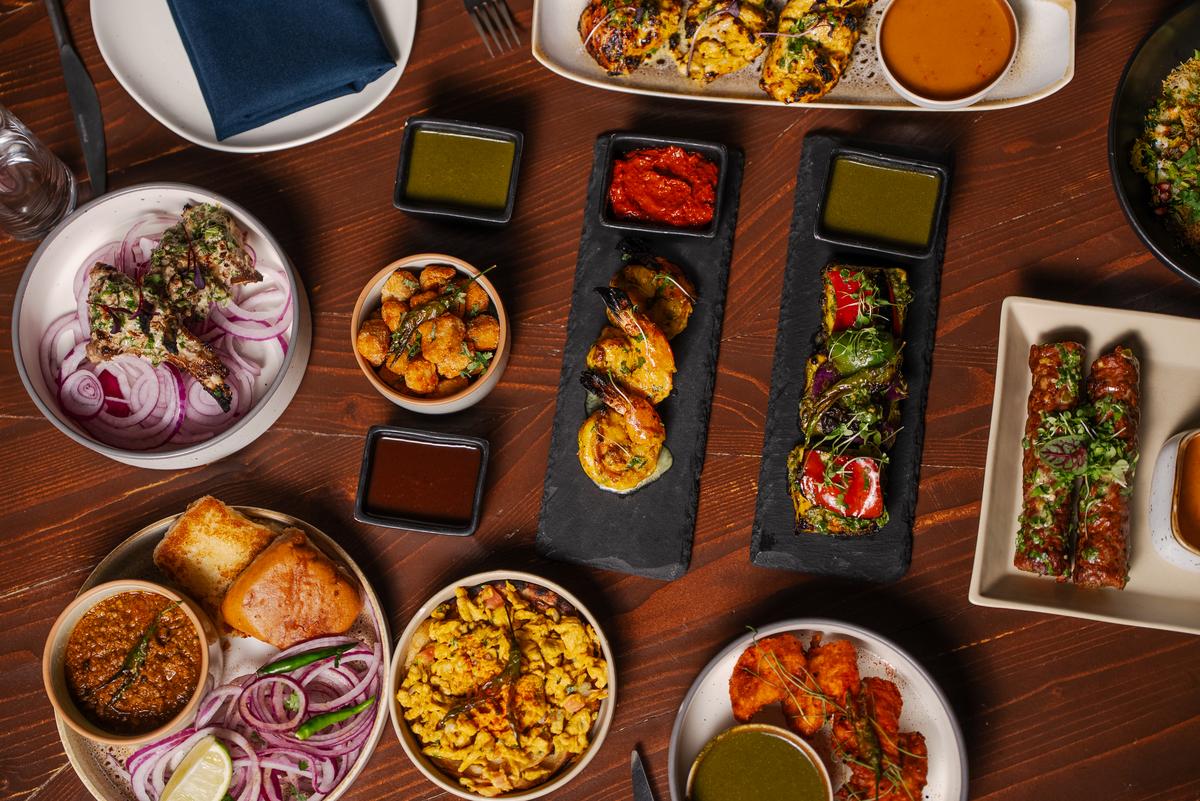
INDN focuses on small plates of North Indian classics

INDN focuses on small plates of North Indian classics
| Photo Credit:
Special Arrangement

Together they made a smart decision with the food, one all three unequivocally agreed with: INDN would serve a robust, straight forward Indian menu with the cocktails. “People want authentic food,” says Simran, adding with a smile, “This is daru and chakna basically.” 

Hence the brief for the chefs was to create, “Anything that goes well with daru,” says Simran. Traditional North Indian favourites, are styled up and served on small plates instead of the conventional heavy Indian three-course menu.

The message is clear: ‘Hello New Yorkers. Sure, Spain may have its trendy tapas, but have you tried our chakna?’  

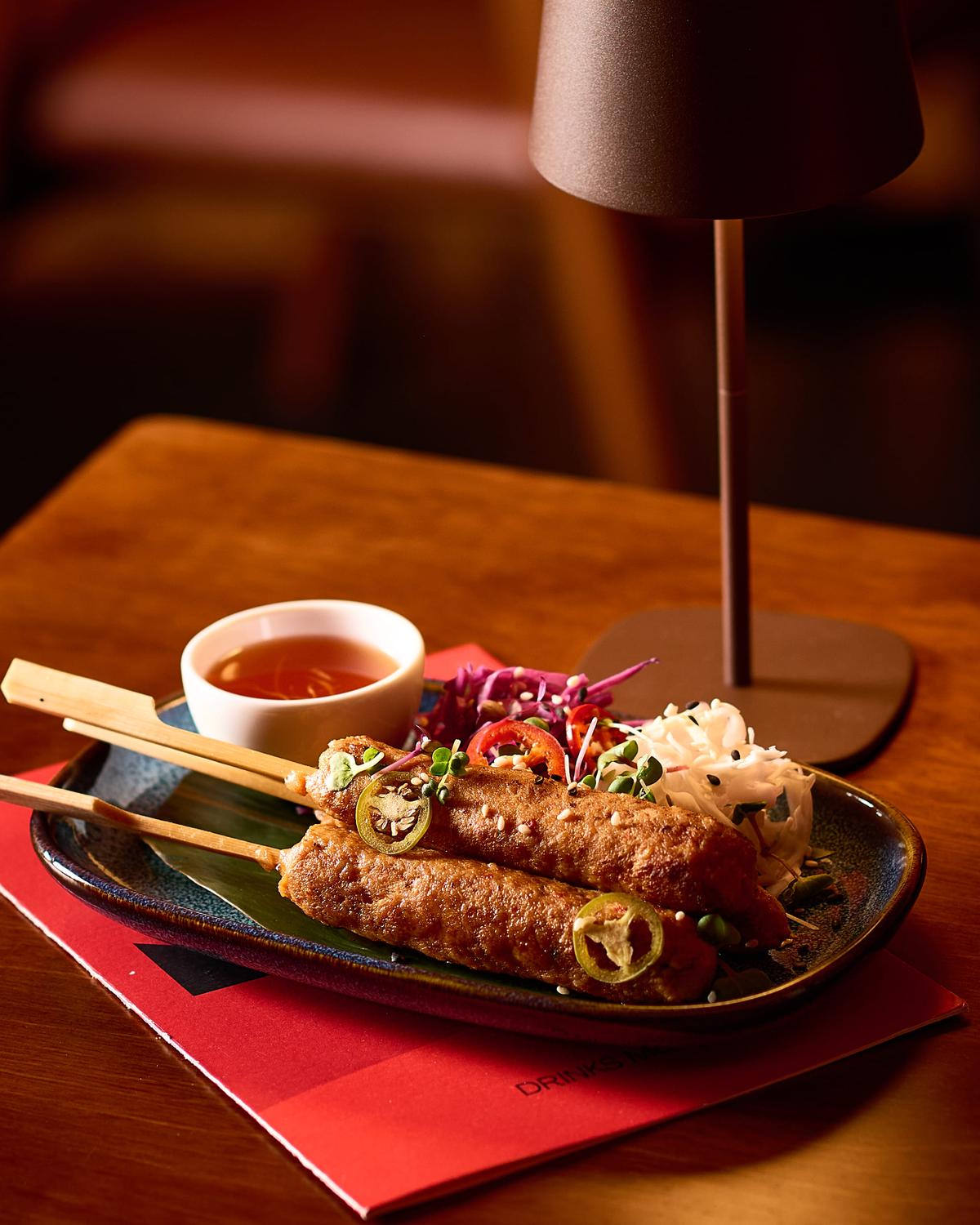
“We play with a lot of chaat and tandoori,” says Kanika, as the waiter sets down warm plates of Amritsari fish, encased in a crisp batter, followed by a platter of chicken, straight out of the tandoor. There are fluffy squares of buttered pav served with keema, and pan seared spinach patties. The highlights are the sheek kebabs, fragrant with the swagger of masala, and slow grilled lamb chops, cloaked in the heady scent of smoked garlic.  

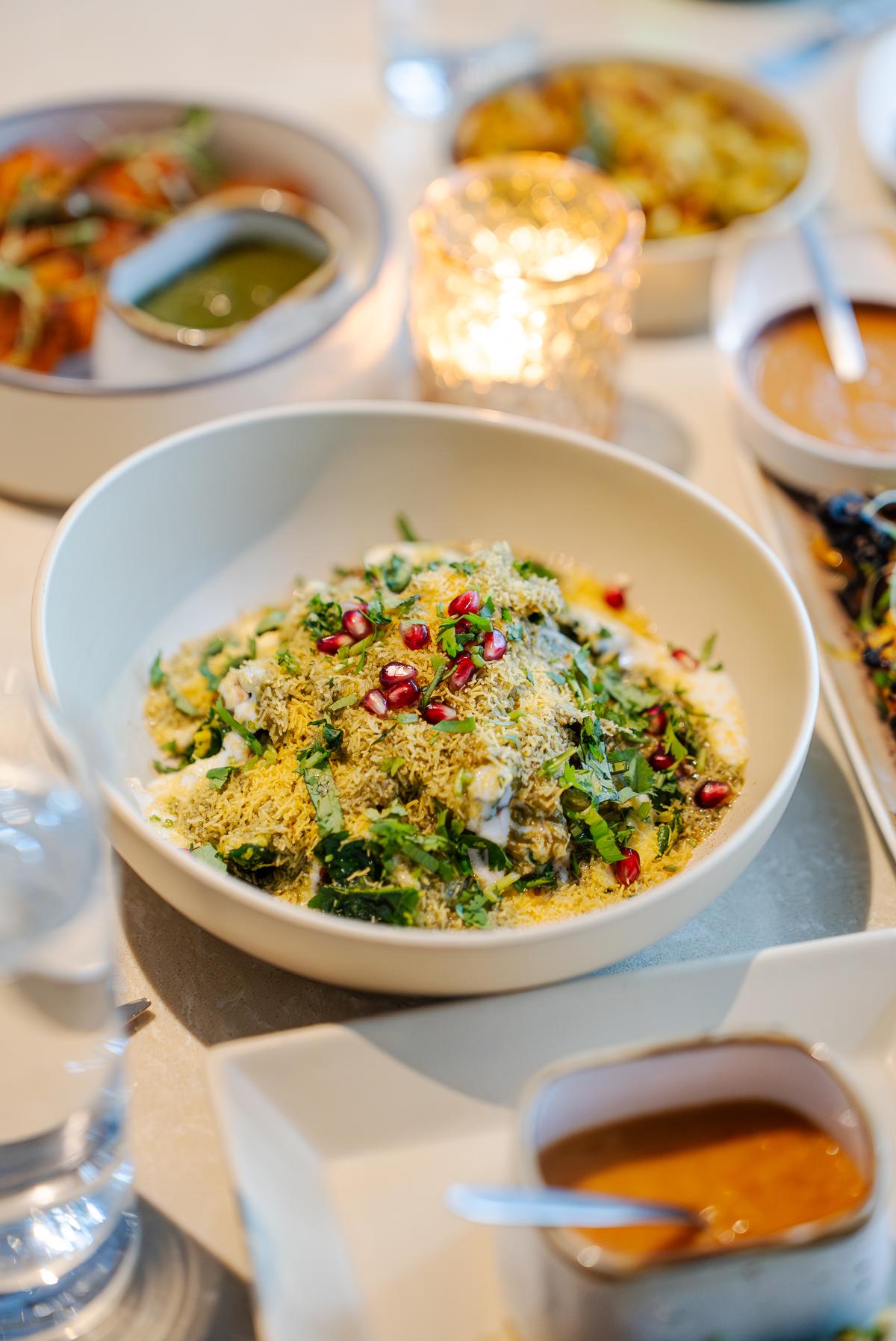
A tribute to India, the seasonal chaat changes through the year

A tribute to India, the seasonal chaat changes through the year
| Photo Credit:
Special Arrangement

As we try the large plates – under the ‘Daru ke baad… ya Saath’ section, Kanika explains why they are not taking reservations for about 50% of their 90+ seats. “It has become so hard to get a table in New York, and personally, I enjoy impromptu dinner plans. I want people to be able to walk in,” she says. 

Meanwhile her father urges us to try the dishes INDN has inherited from his Bukhara Grill: a charred traditional butter chicken in freshly made tomato sauce. “Nothing from a can,” he declares. And an indulgent dal bukhara, accompanied by chili oil kulchas and pudina lacha parathas.  

As he chats with us, he waves hello and goodbye to guests. “I’m old school,” he confesses. “I’m a face to face guy. I don’t like Instagram.” Simran and Kanika laugh nervously as I ask him what he thinks about INDN.

There is an expectant silence.  

“We fought about 21-plus and small plates. I had eight high chairs and four boosters for children in my Indian restaurant,” he says, shaking his head. Then adds the one thing you rarely hear from an Indian parent: “But I was wrong. This is good.” 

Published – December 10, 2025 05:23 pm IST


Source link

When stamps take you birding


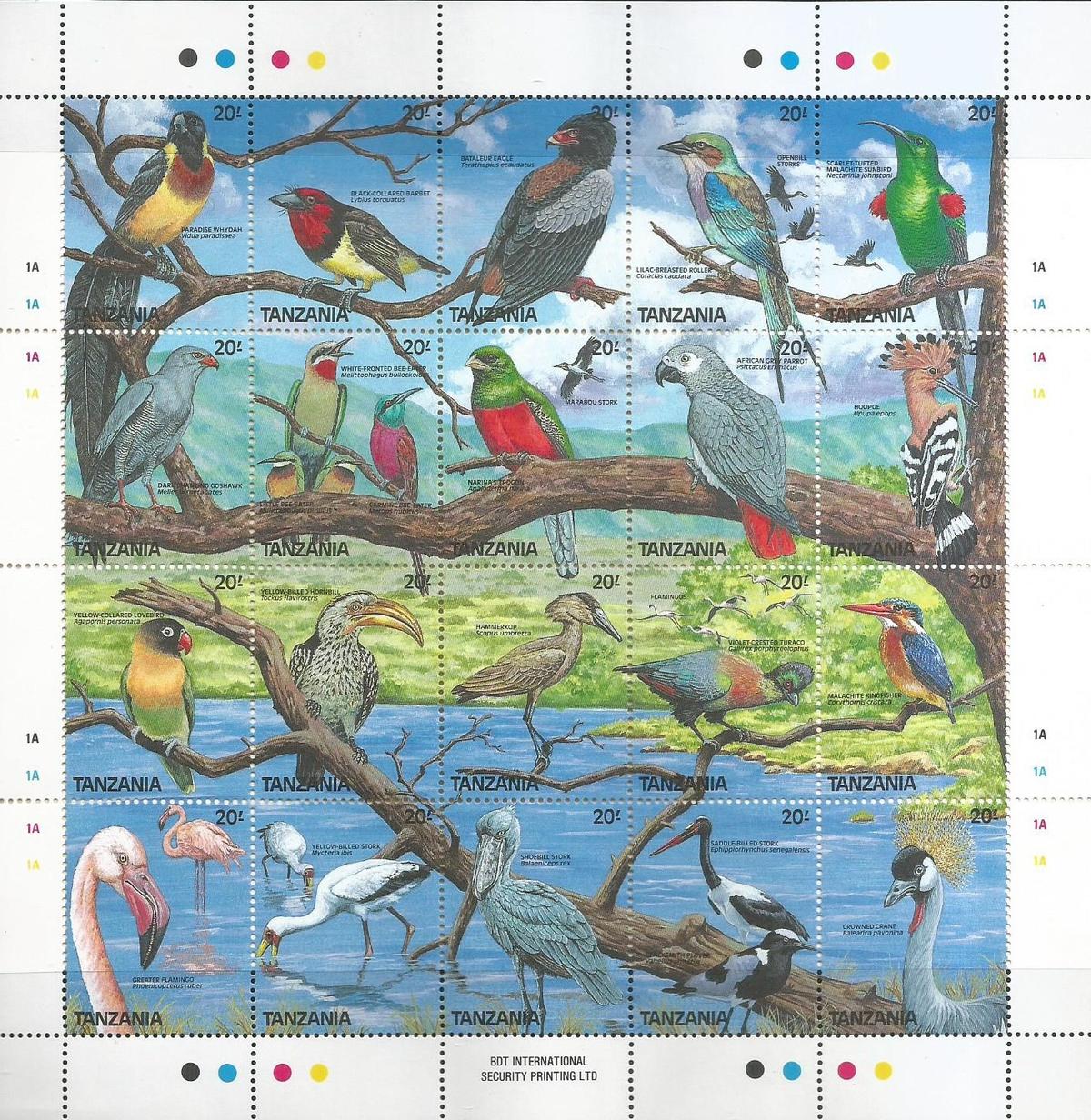
A medley of chirrups, hoots, squawks, caws, coos and trills greet me at the Indian Institute of World Culture in Basavanagudi, where ‘Let’s Go Birding’, a bird-themed stamp exhibition, is being held. Playing the birdcalls of around 139 birds on a loop is an attempt to make the viewing experience more immersive, explains exhibition’s curator Ramu M Srinivasa, as he leads me past a dizzying array of frames, containing bird-themed stamps, postcards and miniature sheets, all from his personal collection.

These include a sheet of Salim Ali-themed stamps issued on March 20, 1996 to commemorate the ornithologist’s birth centenary; a sepia-toned stamp bearing an image of a fossilised pteranodon issued by the now-defunct Deutsche Demokratische Republik (East Germany); numerous stamps from all over the world depicting various species of penguins, raptors, owls, pheasants and waterfowl; a series of pigeonograms and even a hunting and fishing license issued by the United States Department of the Interior.

“There are 30,000 stamps on birds, which have been issued across the world, of which I have 25,000,” says Ramu, who has chosen to showcase around 18,000 stamps of those on this occasion. Of the 10,000-odd species of birds found in the world, “here, in this exhibition, you will see close to 2,300 different species.”

Some of the stamps on display

Some of the stamps on display
| Photo Credit:
Special Arrangement

‘Let’s Go Birding’ is a tribute to the late Dr RG Sangoram, a retired professor of Chemistry at MES College in Malleswaram and a keen philatelist himself, who had inducted Ramu into the world of topical philately in the 1980s. “He inspired me to choose a particular theme and collect on that. He would always say that when you are collecting, you should have focus, otherwise it becomes too generalised,” he says, recalling the professor’s advice

Being a science teacher himself, Dr Sangoram encouraged science-themed collections, says Ramu, who currently has around 1 lakh stamps, 50,000 of which revolve around specific themes such as butterflies, scientists and geology.

“Initially, I started with birds, butterflies and crawling creatures and later on started developing those collections,” he says, pointing out that he has spent nearly 40 years, since the age of 12, collecting stamps. The bird stamp collection, his largest, was also influenced by his own interest in birding. “I had a childhood friend who used to take me wherever he would go trekking or birdwatching. He showed me the path, and I continued it,” he says.

Some of the stamps on display

Some of the stamps on display
| Photo Credit:
Special Arrangement

In spite of having an impressive stamp collection, putting together an exhibition of nearly 18,000 stamps was no easy task for the philatelist. “It was teamwork,” says Ramu, who credits his friends Naveein OC and Jagannath Mani for helping him pull off this mammoth task. “Without them I wouldn’t have been able to work,” he says, adding that the exhibition has been developed keeping in mind the guidelines of competitive philately exhibits. “It requires a lot of brainstorming and correlating visual images with a storyline, which, in turn, needs to have a flow.”

The first few frames of the 60-odd panels focus on more general themes related to birds, such as origin, anatomy, communication, habits, migration, human-bird relationship and conservation, while the remaining are dedicated to bird taxonomy. “I have covered around 27 orders,” he says.

Stamps on display

Stamps on display
| Photo Credit:
Special Arrangement

Since every stamp has at least three attributes: the name of the country issuing it, the denomination and the image, it is an excellent tool for cognitive learning, says Ramu, who believes that once you’re bitten by the stamp bug, “you feel like digging up more.”

He hopes that more children come to this exhibition because stamps can also help them learn more about the world around us. “An average birder would have seen 200 to 250 species of birds, and if they travelled across India, maybe a maximum of 500. But here, you’ll be able to see close to 2,300 species of birds, a treat for the eyes.”

Let’s Go Birding’ is on at the Indian Institute of World Culture in Basavanagudi till December 25

Published – December 10, 2025 05:02 pm IST


Source link

St Xavier’s College in Mumbai to stage its first ever Malayalam play


Osiyath - The Feast poster

Osiyath – The Feast poster
| Photo Credit: SPECIAL ARRANGEMENT

“It is inspired by many lives in a quintessential Malayali family,” says Evlyn Giju, a third-year mass-communication and journalism student at St Xavier’s College, Mumbai, and the co-director of Osiyath-The Feast, the first Malayalam play to premiere at the college on December 11.

The play is set in a house in Kerala, where the family is mourning the passing of the matriarch. The play explores unwelcome discussions that emerge in the family. The mother’s loss brings her estranged children together, opening a Pandora’s box of dialogue “which should not be discussed at a house in such a situation,” alluding to the play’s title which means will in Malayalam.

Osiyath… began as a discussion between two roommates, Evlyn and Anitta Sara Daby, co-director and co-writer of the play, during the first year of college. “We were sure we either wanted to create a movie or a drama in English with this subject,” says Evlyn, also a co-writer and actor in the play.

“Last year, we had planned to present it at St Xavier’s flagship theatre event, Jashn-e-Fitoor, organised by the college’s official theatre society as a Malayalam play. But it did not happen. However, this year we got the go-ahead as soon as we pitched the idea to the theatre society. When we told our teachers, they asked, ‘Why didn’t you do this earlier with so many Malayalis around?’”

Evlyn points out some scenes are inspired by incidents she witnessed at her grandfather’s funeral. “My view of Kerala comes from an NRI’s perspective, when they visit the country once a year. When you return to a place that is still your home, you tend to observe way more than someone who stays there, as you are still searching for a connection,” says Evlyn, originally from Thrissur. “It was Anitta who helped me understand the cultural differences and nuances,” she adds.

The cast of Osiyath - The Feast

The cast of Osiyath – The Feast
| Photo Credit:
SPECIAL ARRANGEMENT

“We have tried to emulate the conversation and props of a house in mourning on stage, which might not make sense to someone who is not a Malayali. For instance, at funerals, there is a ritual of covering the deceased person’s bed with a white bed sheet. Details like these made us discuss each scene and decide what we put on stage,” says Evlyn.

During the play’s trial run with the theatre society, which mostly consists of non-Malayalis, the team put up a comprehensible show, says Evyln. “We have designed the play in such a way that physical language is important. That is something we have worked on, allowing people to get the essence of the play.”

Staging Osiyath… came with its own challenges. Everyone in the 15-member cast is acting in a play for the first time. “It was quite a task for them to adapt to the theatre style of acting. There was so much perseverance from their side, and transforming them was a big challenge,” says Evlyn.

The writer duo also believes it is difficult to put pen to paper about something that is so personal. “It must be emotionally true, yet at the same time, be relatable to others. As an actor, there are some scenes which I can’t do many times, because they are emotionally intense and they require a lot of energy.”

Osiyath: The Feast will be staged on December 11 at 4pm at College Hall, St Xavier’s College, Mumbai. Tickets available on link in the bio of the Instagram handle @xaviers.fitoor


Source link

India Art Festival 2025 Brings 3,000 artworks to Bengaluru


Art by Kappari Kishan

Art by Kappari Kishan
| Photo Credit: Special Arrangement

The lack of public art galleries in India, and limited venues for emerging artists to showcase their work is what prompted Rajendra Patil to launch India Art Festival in 2011 in Mumbai. Since then, the founder-director has taken the public art event to New Delhi, Bengaluru, and Hyderabad.

With the 2025 edition set to take place in Bengaluru this week, Rajendra explains how the idea behind starting the festival was simple: to create a platform for artists. “Back in 2011, metros did not have any art fairs. As an art activist associated with The Bombay Art Society, I strongly felt the need to create opportunities for both urban and rural artists, as well as art galleries.”

Art by P Gnana

Art by P Gnana
| Photo Credit:
Special Arrangement

Now in its fifth edition, the Festival will showcase over 3,000 artworks from more than 20 galleries and 300 artists from 25 cities across India. Artists will feature an array of artworks across mediums such as paintings, sculptures, photography, ceramics, installations, and traditional art forms.

With individual artists at the core of the festival, Rajendra created a dual model that features an Art Galleries Pavilion and an Artists’ Pavilion. “Since there are very few public art galleries in India, many talented artists struggle to find space to show their work. The festival aims to bridge that gap,” he says, adding that new artists are onboarded every year, alongside 50–60% repeat participants.

“Some of the artists debuting this year include watercolour artist Anil Verghese; Rajeev Rai, who experiments with photography and mixed media; young talents such as Dev Mehta, Arthi Singavi, Khushi Sancheti, Rigden Lama, among others.” 

Rajendra Patil

Rajendra Patil
| Photo Credit:
Special Arrangement

For the 2025 edition, he is introducing a curated landscape art show titled ‘Brush Strokes of Karnataka’ that has been curated by K. S. Appajaiah, former dean, Karnataka Chitrakala Parishath College of Fine Arts.

“This show brings together leading landscape artists who beautifully portray Karnataka’s natural and cultural heritage: its historic sites like Hampi, Badami, Aihole, Pattadakal, as well as its forests, rivers, hills, rural life, and temple architecture,” explains Rajendra.

Anjali Prabhakar’s artwork

Anjali Prabhakar’s artwork
| Photo Credit:
Special Arrangement

As for new art forms being explored this year, he says the line-up features artists Arul Murugan and Parimal who will showcase a fusion of modern art and Tanjore styles; M Narayan will present watercolours of polo players; and galleries such as Studio3 Art Gallery in Mumbai, Bengaluru’s Sara Arakkal Gallery, etc. will exhibit contemporary art and pieces by senior artists.

Art by Rajeev Rai

Art by Rajeev Rai
| Photo Credit:
Special Arrangement

Showcasing in Bengaluru is always a win, Rajendra says. “The city has a vibrant, diverse, and growing community that appreciates art. Young professionals, families, and collectors here regularly visit art events. So, the Festival supports artists, especially from rural and semi-urban areas, and also caters to art lovers.”

From December 12-14 at Crown Pavilions, Palace Ground – Gate No 5


Source link

New menus, festive popups in Bengaluru to try this December


Christmas is around the corner and every restaurant and baker in town has their festive menu ready, replete with Christmas cakes, gingerbread men, and more. This week, we take a detour and focus on all things seasonal and comforting. Be it a warm bowl of khowsuey, decadent dumplings, or heirloom specials like the undhiyo. Here is a lowdown of new menus and popup events to explore this month.

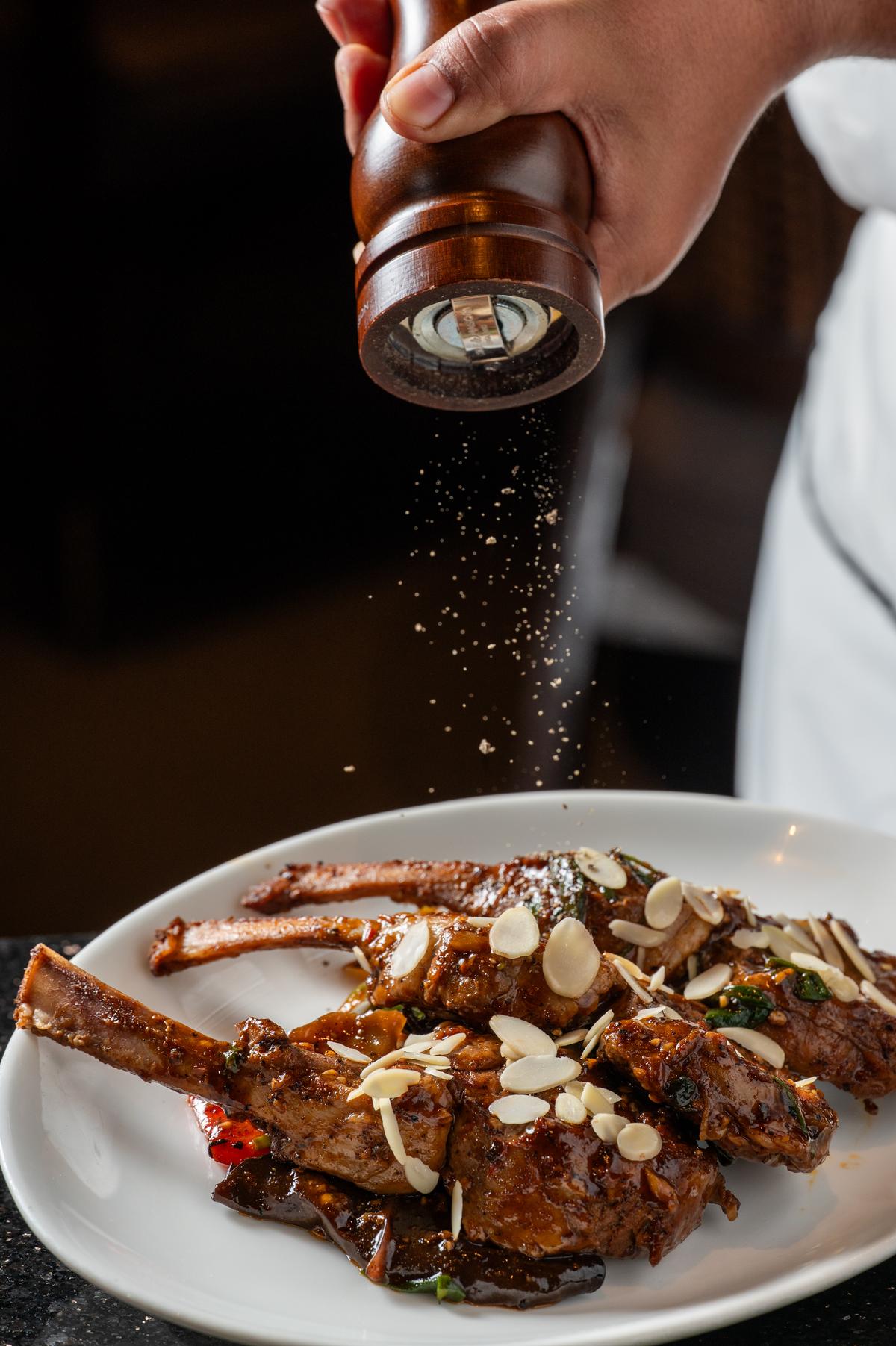
Black pepper lamb chops at Wabi Sabi

Black pepper lamb chops at Wabi Sabi
| Photo Credit:
Special Arrangement

NEW MENUS

Dumplings and more @ Wabi Sabi

After launching an array of Japanese Nikkei dishes by Chef Randy Cultivo earlier this year, the city’s speciality Asian restaurant – known for its innovative Japanese and Chinese cuisine – has now launched a new Chinese menu. At the helm is senior sous chef and Wabi Sabi co-lead, Ablu Bhowmick who has crafted a delicately-flavoured set of dishes with unique pairings. 

Blending the spicy signature of Sichuan dishes and steamed delicacies from Canton, the new menu harmonises traditional flavours with surprising bursts of taste, which break conventional pairings and embody Wabi Sabi’s philosophy of finding perfection in the imperfect. 

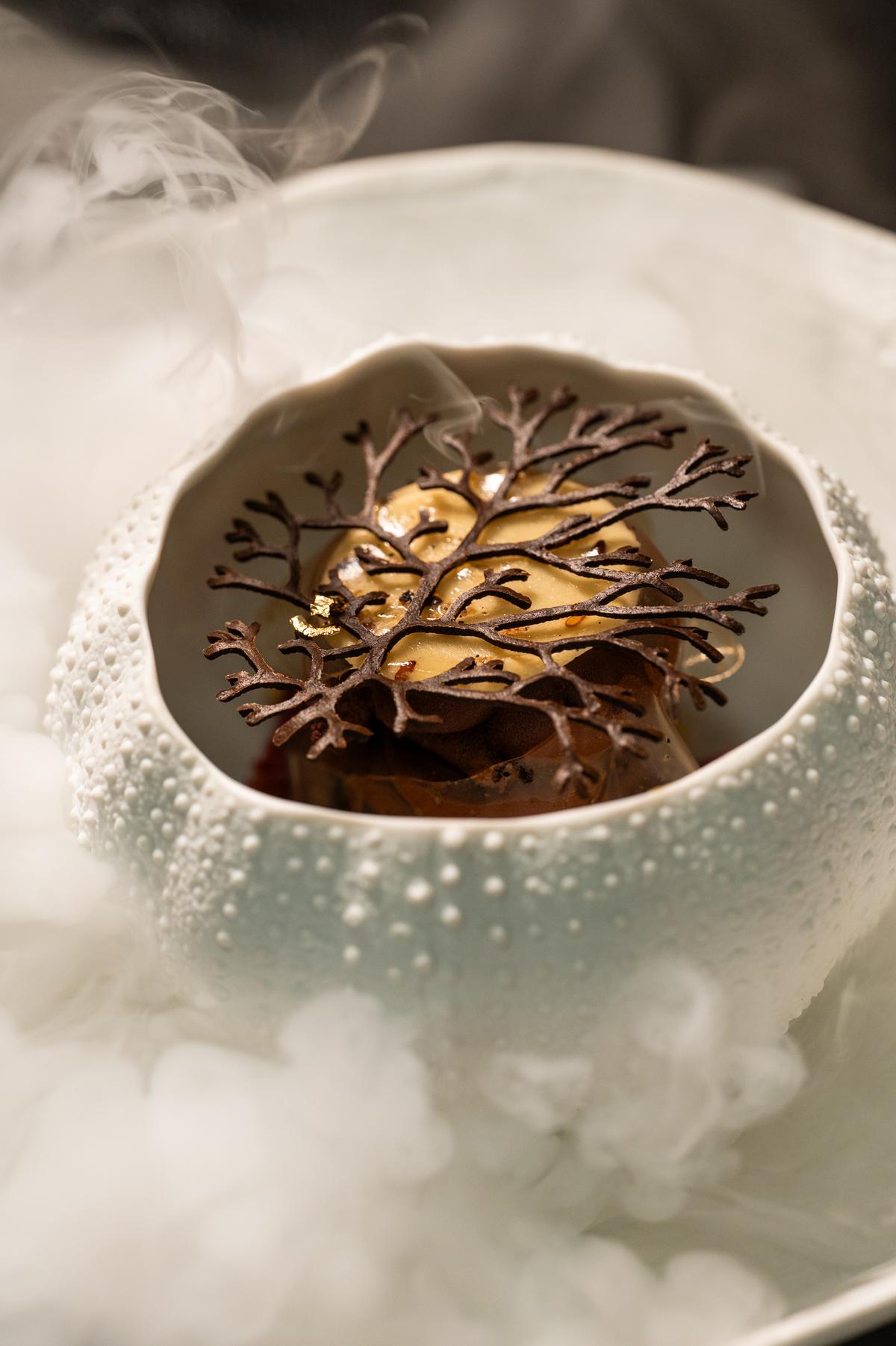
Into the Dark at Wabi Sabi

Into the Dark at Wabi Sabi
| Photo Credit:
Special Arrangement

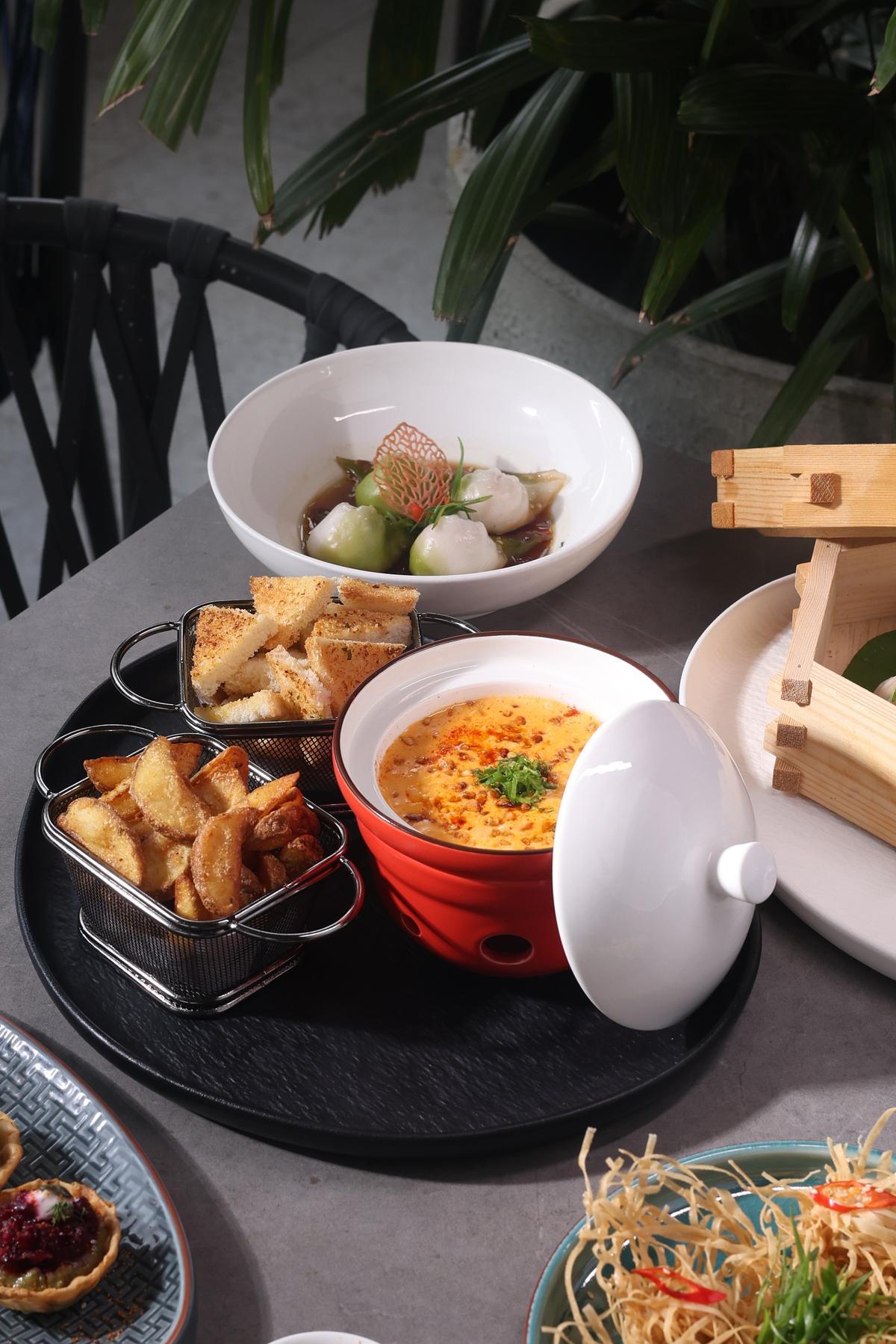
Highlights from the new menu include classic Peking duck served with rice paper pancakes, shallots, and plum sauce; grilled pork belly with fresh herbs, chilli spice, and sesame; charred scallop with plum coriander butter and grilled sweet corn; black pepper lamb chops; a Chilean seabass with baby leeks; duck taro puffs; and more. Vegetarians, fret not, for there are refreshing dishes like a smoked enoki and asparagus, chilli essence, and potato crunch; tofu and three jade soup; Chengdu dan-dan noodles; tofu baos; and radish dumplings that are light on the palate. 

For dinner, there is a Wabi Sabi caviar box with lactose-free banana cremeux, inspiration Valrhona chocolate, crunchy pearls; Kintsugi that has ginger yoghurt mousse and mango shiso sorbet; and Into the Dark that comes with Valrohna’s Guanaja chocolate mousse, raspberry crisp, burrata ice-cream, and wasabi. 

At The Oberoi, MG Road. For reservations, please call +91 80 2558 5858  

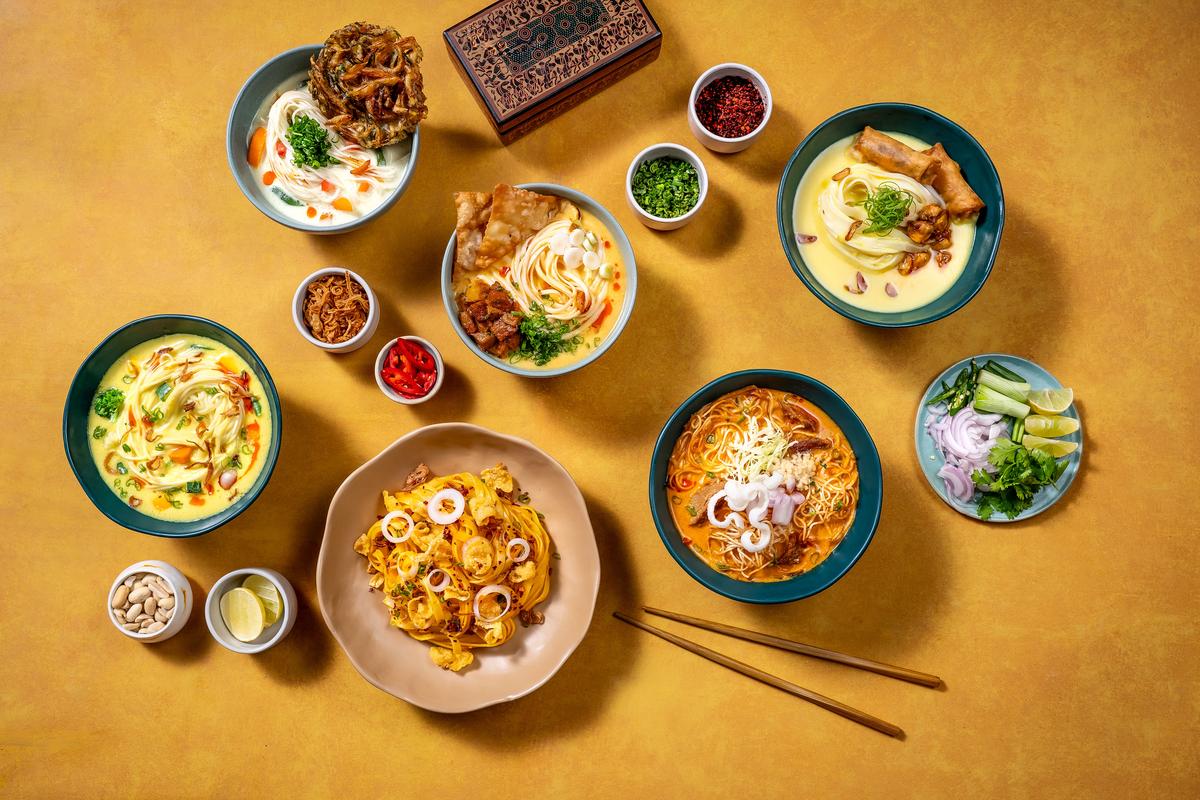
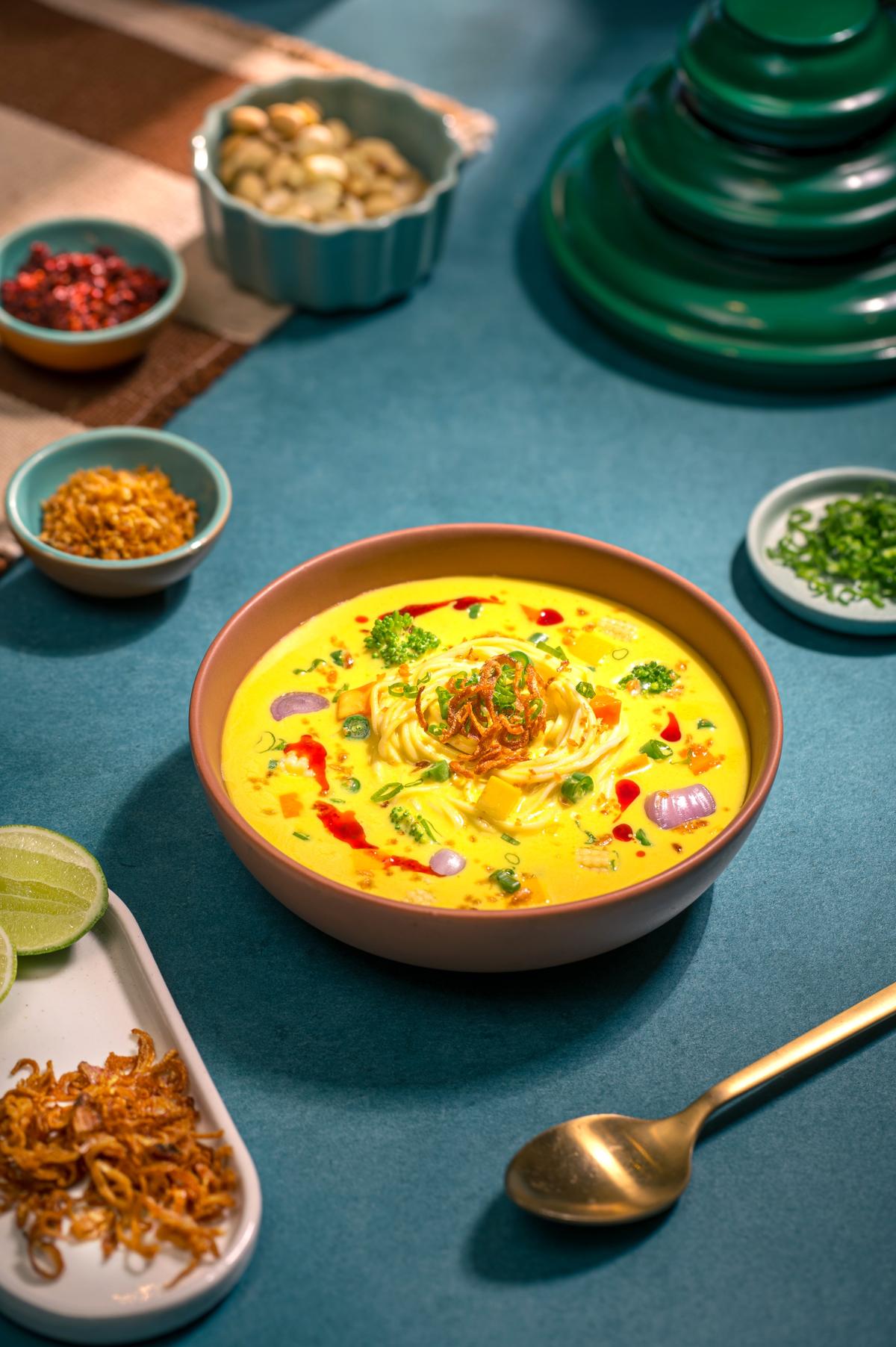
Khowsuey at Burma Burma

Khowsuey at Burma Burma
| Photo Credit:
Seen Media

Bowled over @ Burma Burma

It is the perfect weather for soupy meals, and this restaurant has you covered. Burma’s traditional khowsuey gets a twist with Burma Burma’s new menu with six new variants that are inspired by the different regions of Burma. 

Offerings include Oh No Khowsuey with coconut milk curry infused with lemongrass and tamarind, topped with diced vegetables; a Dry Khowsuey that has rice noodles hand-tossed with gram flour, roasted red chilli, garlic and tamarind. Grandma’s Famous Khowsuey is based on the heirloom recipe from the co-founder’s ancestral hometown, Prom (Pyay), and features a mild curry with coconut milk, toasted peanuts, and is topped with tomatoes, garlic chilli oil drizzle and onion fritters.

Oh No Khowsuey

Oh No Khowsuey
| Photo Credit:
Assad Dadan

Other bowls include Shwe Taung Khowsuey, from the town of Shwe Taung, is a soupy curry with pan-fried noodles and mock meat; No Ze Khowsuey is a curry sans coconut milk and has evaporated milk instead and is served with rice noodles and a crisp spring roll stuffed with sweet corn and onion; and a spicy Downtown Khowsuey that is inspired by the team’s first taste of khowsuey in downtown Yangon. 

Wash this down with their range of zero-proof cocktails including the Pandan Royale, Cane Glow, Burma Sour and Yangon Sunset.

Until January 31 at outlets across the country

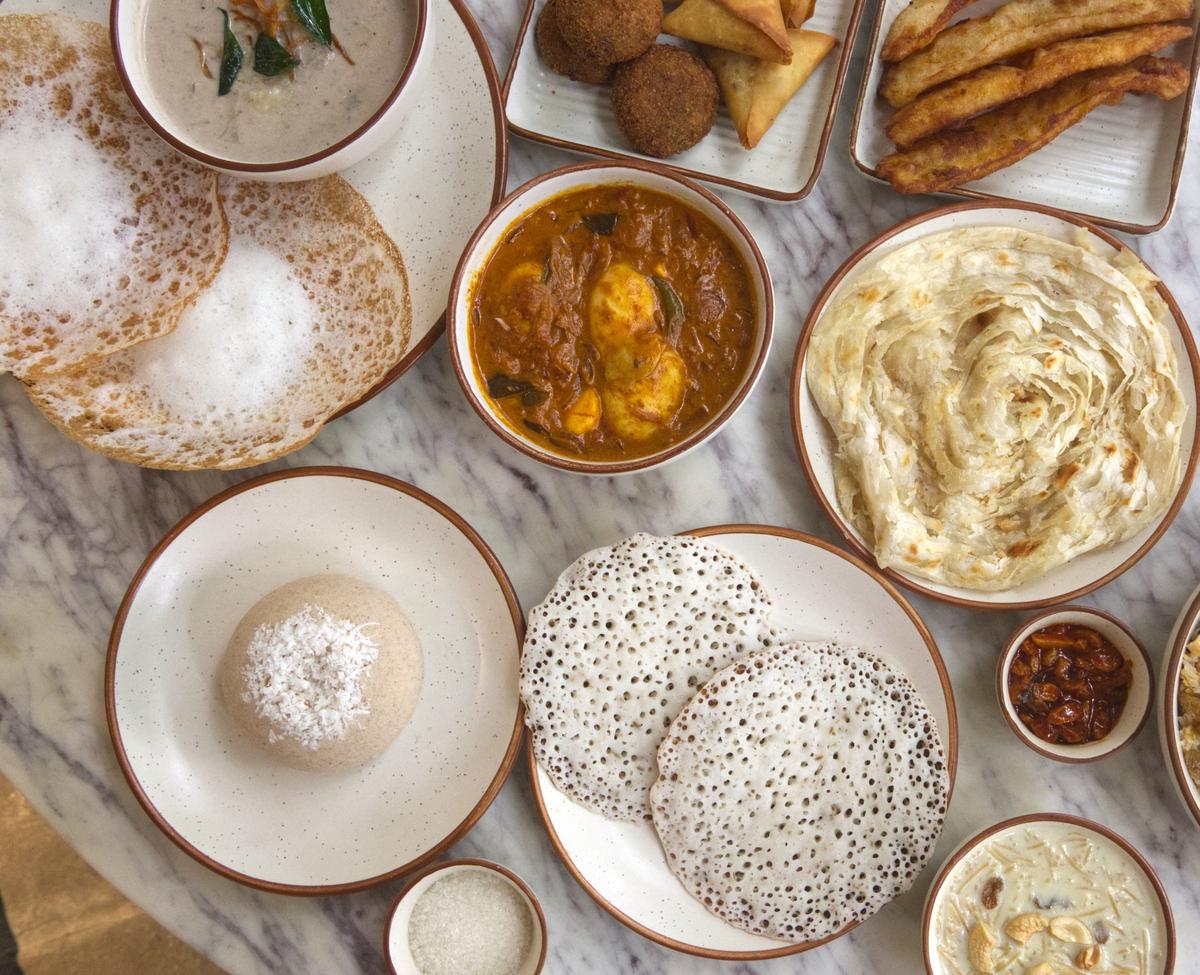
Breakfast at Coracle

Breakfast at Coracle
| Photo Credit:
Special Arrangement

Breakfast first @ Coracle

The latest addition to the city’s breakfast spots is this home-style Kerala meal that is offered every Sunday. An ode to traditional, homestyle cooking from Kerala, the menu features mutton, beef, and chicken stews, the classic egg roast, and a Kerala fish curry. For vegetarians, there are dishes like vegetable stew, kadala curry, and coconut milk with appam. Alongside appam, idiyappam, and puttu, diners can savour the aval Nanachathu, a sweetened rice flake preparation.

Another nostalgic dish is the kanji payar, rice gruel with green gram, that is a staple across homes in the State. End the meal on a sweet note with steamed nendran banana, and chaaya (tea) to complete the experience.

Every Sunday, from 9 am to 11 am at BIC Café, Indiranagar

Food at Kai

Food at Kai
| Photo Credit:
ARANYA GHOSH

Penthouse brunch @ Kai – Bar & Kitchen 

Fancy a brunch perched atop 13 floors? Then head to MG Road for a meal and 360-degree views overlooking the Army Cantonment’s heritage greens. 

On the menu are appetisers like the skyline platter, Kyoto mushrooms, vine tomato tostas, mint and lime prawns, crispy lamb, and Kai roll. There are also dimsums like truffled edamame and asparagus, charcoal chicken and porcini. The large plates include porcini and mascarpone risotto, Penang curry, vodka spaghetti prawn, Malabar seared fish, harissa chicken, and a grill selection with chilli and fennel salmon, balsamic pork, and more. 

End with tiramisu, chocolate and cranberry cookie dough tart, and house-made ice creams in flavours like double chocolate, salted caramel, and coconut-kaffir lime.

₹3750+ taxes with alcohol at 13th Floor, Du Parc Trinity, Ashok Nagar

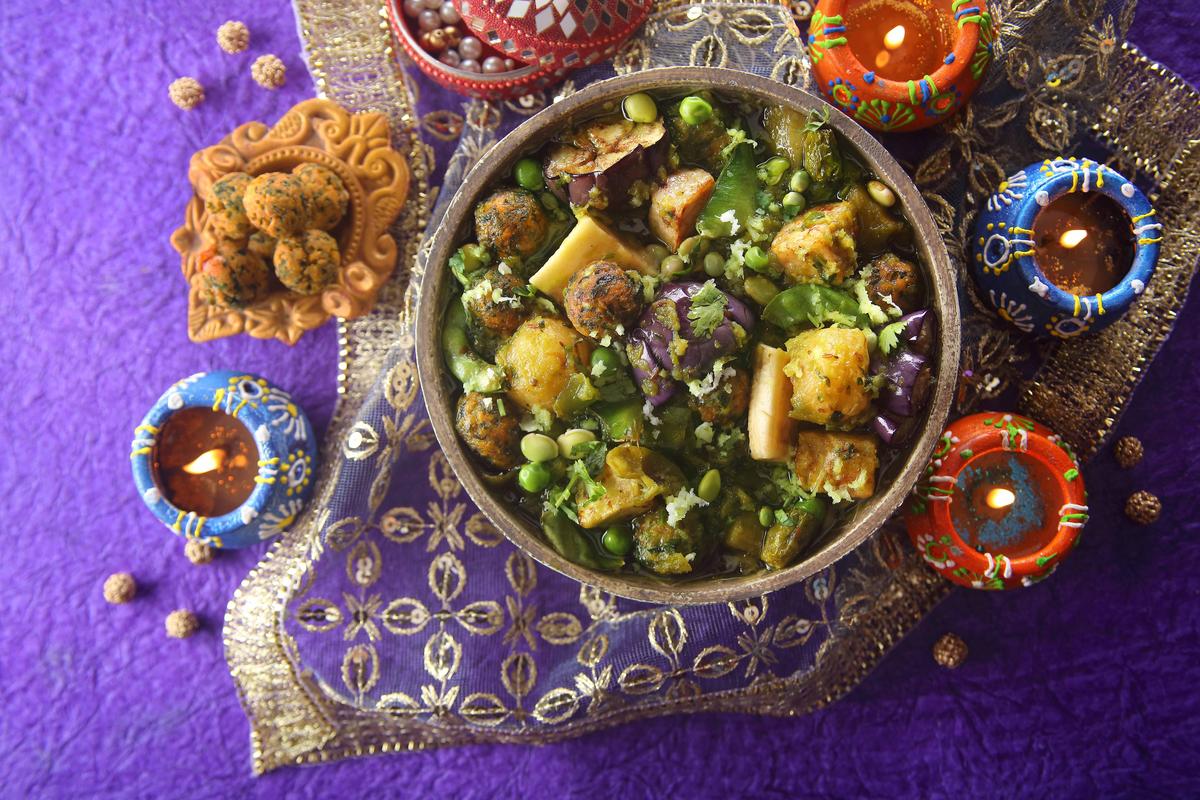
Undhiyu

Undhiyu
| Photo Credit:
Special Arrangement

FESTIVE SPECIALS

Winter specials @ Khandani Rajdhani

The season for sarson da saag and warm makkai rotis is here. Ringing in the winter season, this thali speciality restaurant has launched Swad Kesariya, a festival to celebrate seasonal delicacies. On the menu are dishes such as undhiyu, adadiya pak, mogri peru, mooli kofta subzi, and more. The extensive range of desserts include shakarkhand, gajar ka halwa, and ragi coconut ladoo. There is also a farsan platter with bathua ka muthiya, kela-methi-na-gota, arbi-nu-tuk, and the platter comes with a range of chutneys, Indian breads, and a rice and khichdi

At outlets across the country 

A satay dish at Mirth

A satay dish at Mirth
| Photo Credit:
Special Arrangement

Holiday treats @ Mirth

This 65-seater cocktail bar has introduced a holiday special bar food menu curated by Chef Baljeet Mehra. Highlights are the umami ash with warm potatoes in a goma dressing; Goa glow with prawns tossed in a spicy house-made thecha; and Kyoto hush is a refined take on the fried chicken. Other dishes include chicken Thai’d up, sunny side south that pairs Malvani curry with a chicken-filled omelette; beef in transit; and more. 

Until December at Indira Nagar 1st Stage

Pork chops at Daysie

Pork chops at Daysie
| Photo Credit:
JISVIN

British Christmas @ Daysie

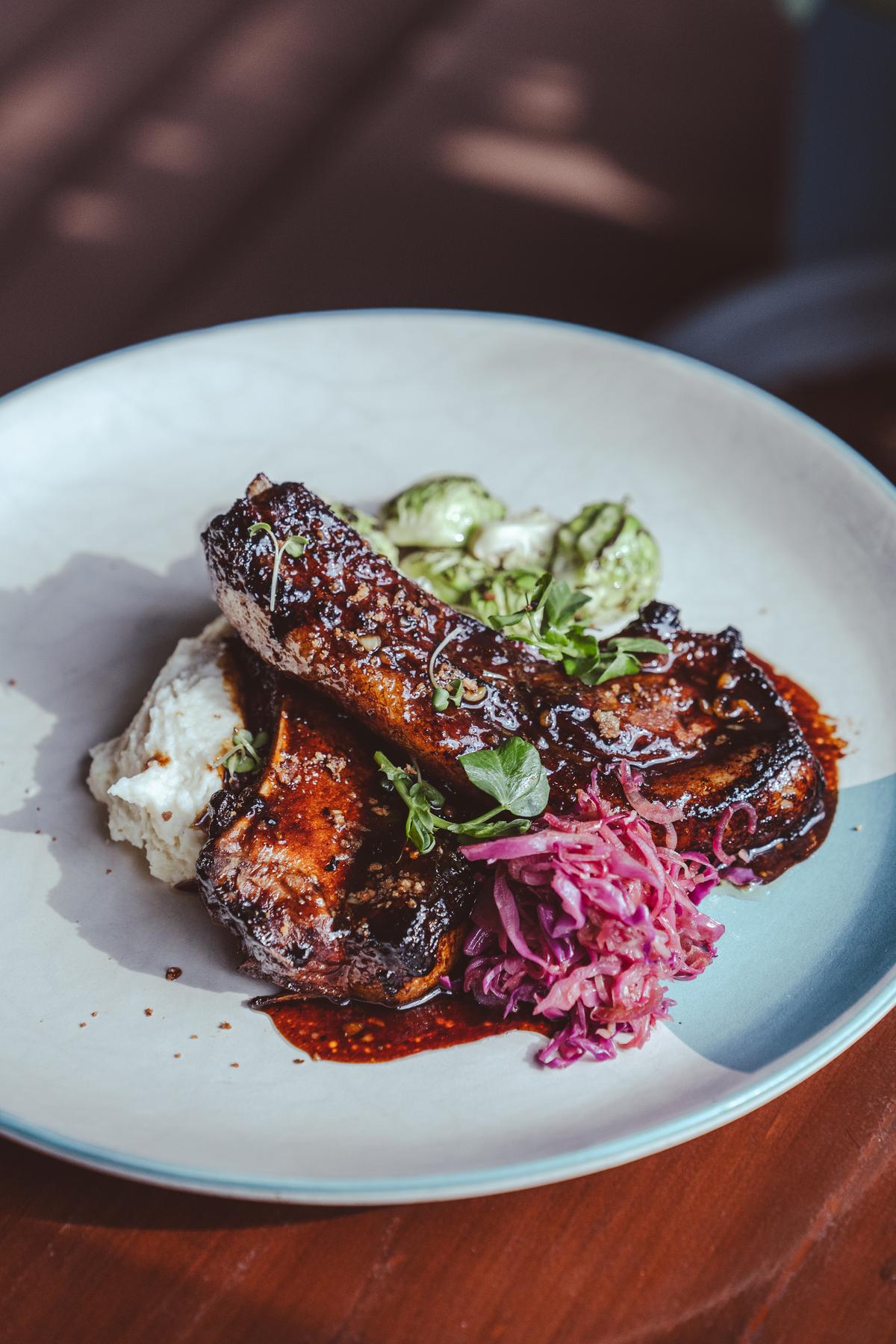
Seasonal festive treats are at the core of their new menu, as are family-style meals, private evening dinners, and warm cocktails. The menu begins with truffle parsnip velouté, and is followed by celebratory small meals like creamy spinach and ricotta croquettes; duck breast carpaccio with pickled pear and orange gel; Moroccan lamb cigars with harissa mayo. The celebratory mains include herb-infused spinach, mushroom, and citrus ricotta cannelloni; five-spice roast duck with rosemary-plum glaze; and a pork chop with mustard-maple glaze.

Pair these with their cocktails: eggnog, mulled wine, Santa’s Little Secret, Christmas Punch, North Pole Adas, and the Christmas Fashioned. End the meal with the roasted fig and honey-thyme tart with pistachio sablé and the Christmas spiced pavlova with bourbon vanilla cream and roasted winter fruits.

From December 22 to 30 at Daysie, MG Road 

A dish at Arena

A dish at Arena
| Photo Credit:
Special Arrangement

Cocktails first @ Arena

Inspired by the pyramid, Indira Nagar gets a new dining destination that brings together global cuisines, cocktails, craft brews and immersive design across four levels. It is rooted in the philosophy of ‘Many Worlds. One Destination; and each floor has been designed with a different flavour and atmosphere

The menu comprises guacamole tarts, crispy prawn curlies, char sui pork belly, and truffle ricotta cannelloni, alongside signatures like smoked chilli chicken, mutton chops and honey almond pie for dessert. Arena’s cocktail programme features Popcorn Whisky, Forbidden Fling, Singing Sunset and Gin and Juice.

A calamari panuozzo at Serious Slice

A calamari panuozzo at Serious Slice
| Photo Credit:
JISVIN

POP-UPS

Italian affair @ Serious Slice

Modern European cuisine meets Neapolitan fare at this one-day culinary experience. Titled Fire and Flour it is in collaboration with Chef Clive Fernandes who is known for blending classical techniques with contemporary creativity.

Curated to capture the warmth of wood-fire cooking, the menu begins with antipasti such as focaccia with leek, parsley butter and sea salt; Caesar salad; pumpkin fritti with sauce verte and chilli crisp. For mains, the pasta section has scarpinocca with orange beurre blanc, chilli crisp and fried milk crumbs; chilli shrimp spaghetti with shellfish tomato bisque and parsley pangrattato; and the classic gnocchi with brown butter and wild mushrooms/pork. The risotto selection features ceppès risotto with porcini marmalade and smoked scamorza; shrimp risotto with shellfish red pepper bisque and smoked scamorza, etc. The meal ends with bomboloni with pastry cream; and canelé with mulberry gel.

On December 17 at Serious Slice, Cunningham Road


Source link

As Mumbai’s iconic Cream Centre opens in Bengaluru, we take a trip down memory lane


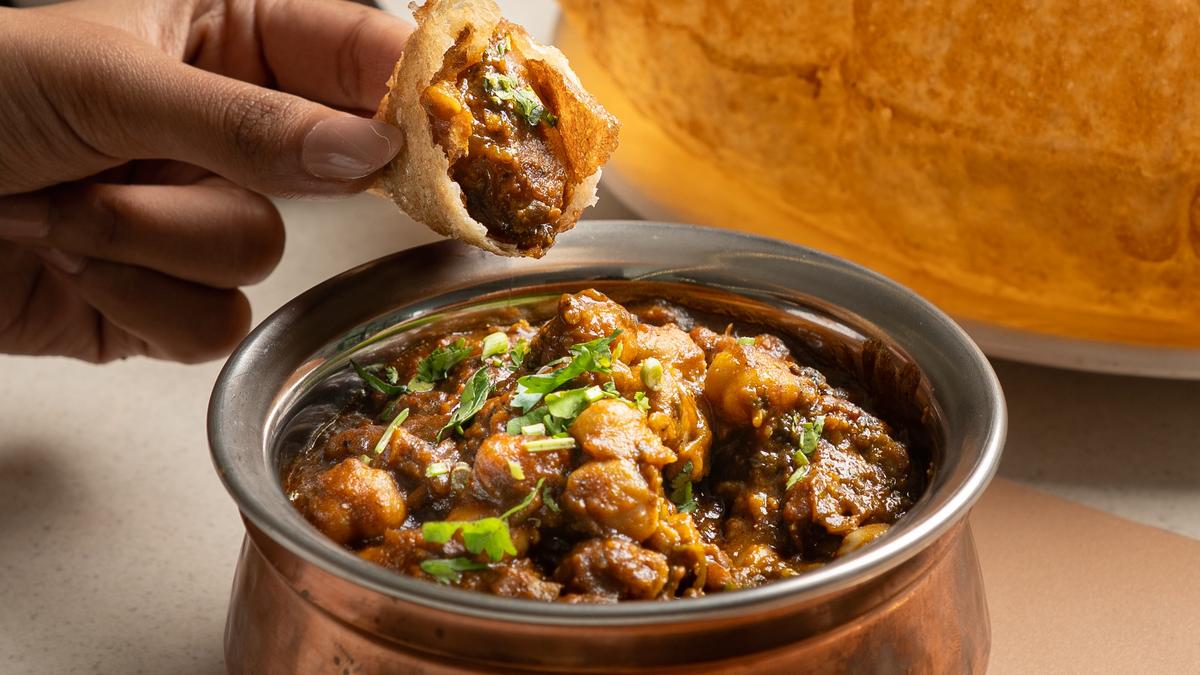
Cream Centre’s iconic chole bhature

Cream Centre’s iconic chole bhature

The history of Mumbai’s iconic restaurant Cream Centre is as old as the history of the country.

“My father, Ramesh Chona, came to Mumbai during the Partition. He was an ice cream man and started ice cream brands 72 years ago,” says Sanjiv Chona, the chairman of Cream Centre. “He was a foodie, so he thought let me open a north Indian restaurant. We found a place in Chowpatty. Those days the name didn’t matter much. His friends suggested that his ice cream brand name was famous enough, so why not keep the same name for the restaurant.”

Today, Sanjiv runs the company with his son Rishi Chona, who is the CEO. Cream Centre is in 30 plus locations, in cities such as Chennai, Kolkata, Ahmedabad, and now opens doors in Bengaluru.

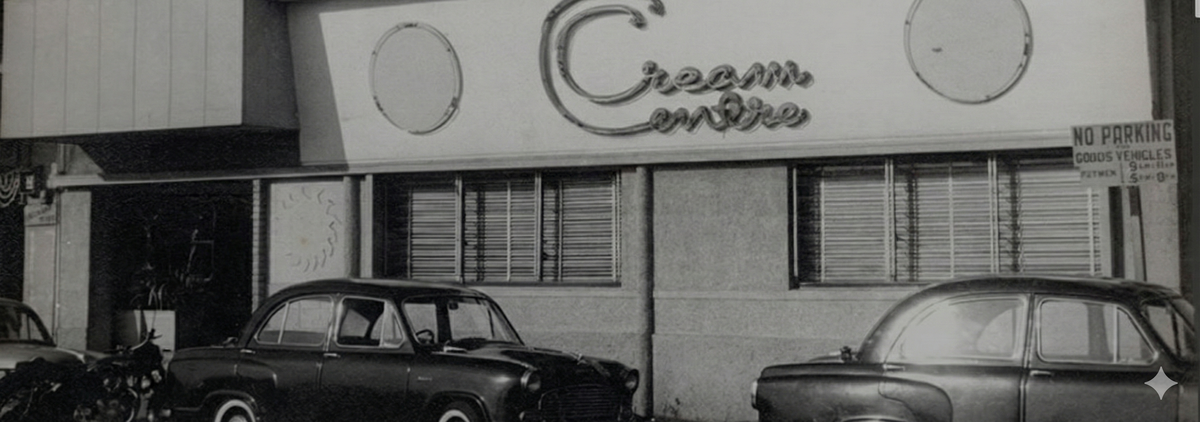
Cream Centre in Chowpatty

Cream Centre in Chowpatty

Patrons of Cream Centre include names such as the Ambanis, Deepika Padukone and Ranveer Singh, Anand Mahindra and Ravi Shashtri. The owners of the building they opened the first Cream Centre in were Jain, so they had to adopt a vegetarian menu.

Rishi says, “We are a premium multicuisine vegetarian restaurant. If someone wants Mexican, Chinese, Italian, or Indian and chaats, we have everything. We are a family dining setup, so even on our menu we wanted something for all generations. When a family comes with their grandparents, and kids, the kids have pastas and pizzas. The adults can have their chana bhatura.”

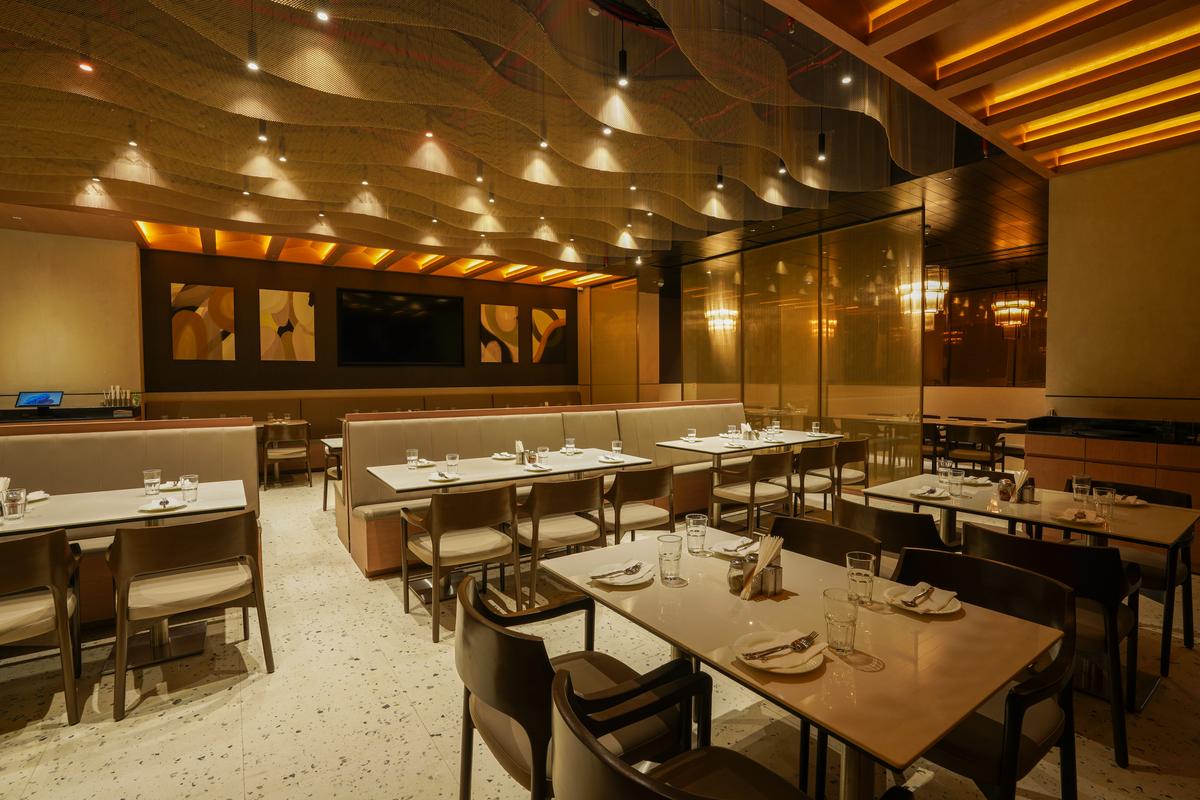
The restaurant in Mall of Asia, Bengaluru

The restaurant in Mall of Asia, Bengaluru

What is so special about the chole bhature?

Speaking of chole bhature, when I told my Mumbai friends about Cream Centre, the resounding opinion was that the dish is a must try. “That is our most iconic product. It is a secret family recipe that has been passed down for three generations. We use 20 different spices to make the chana’s masala. The actual chickpeas we import from South America,” Rishi says.

Sanjiv chimes in, “Just like diamonds are one carat or two carats, we specify the size of our chickpeas to our supplier. That size is picked for us, so that each chickpea is the same size.”

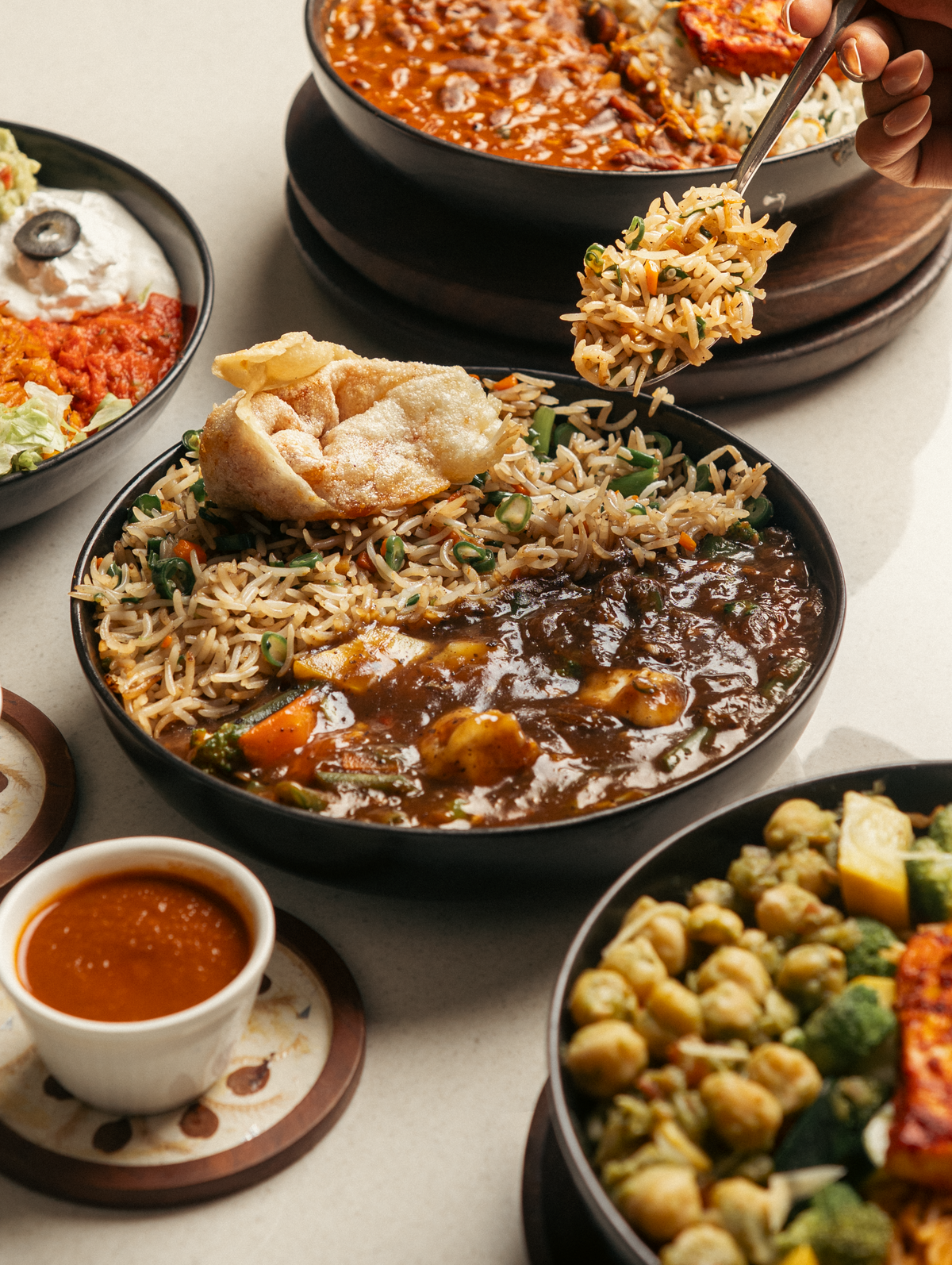
A selection of dishes from the menu

A selection of dishes from the menu

The restaurant also has a special formula for the nachos cheese sauce that has been going strong for 37 years. That makes it another of their best sellers. Also on the menu are pav bhaji, wontons, tandoori dishes, sizzlers, and a whole section of chaats. Desserts include sizzling brownie, kulfi and sundaes. Old school!

The duo stresses that they are a family business and keeping it within the family, and maintaining the standards is very important to them. “We have 4,000 franchise requests. But I always wait to open a restaurant at the right place and the right time. I was waiting for Mall of Asia to get a good location,” Sanjiv says. Cream Centre will open in three or four more outlets in Bengaluru in the coming few months.

₹2,000 for two. At Mall of Asia, Sahakara Nagar. For more details, call 9867479224


Source link

The All Living Things Environmental Film Festival in Bengaluru asked the important questions on climate change


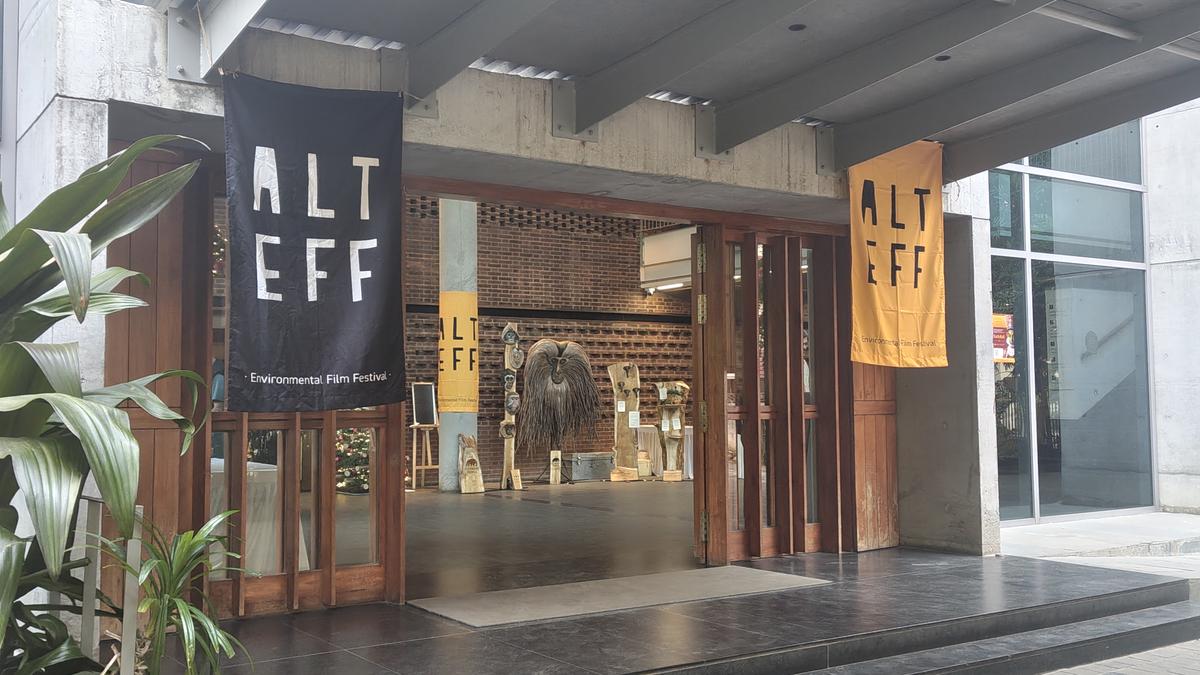
All Living Things Environmental Film Festival at BIC in Bengaluru

All Living Things Environmental Film Festival at BIC in Bengaluru
| Photo Credit: Deva Manohar Manoj

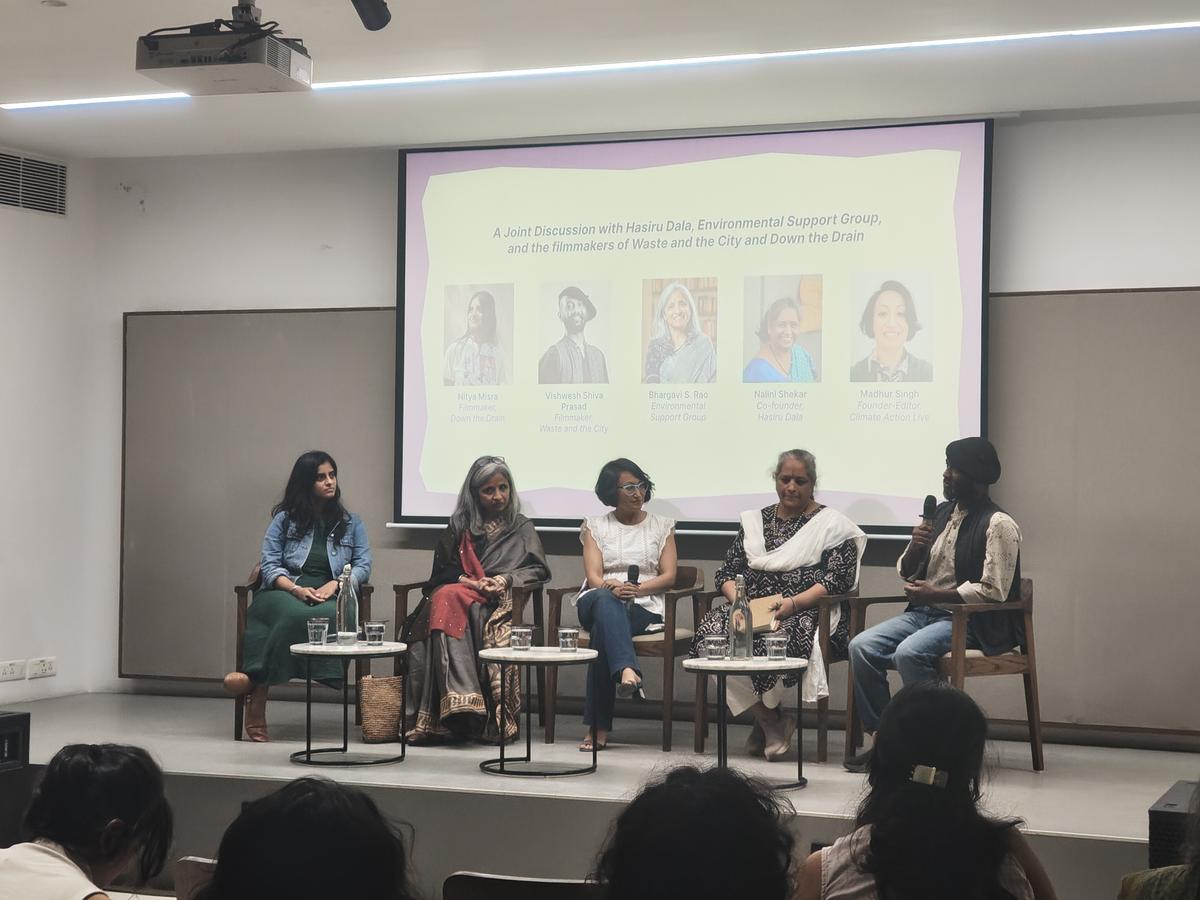
All Living Things Environmental Film Festival (ALT EFF)’s opening weekend in Bengaluru was about urgent conversations regarding the environment, and where those dialogues unfolded through the language of cinema.

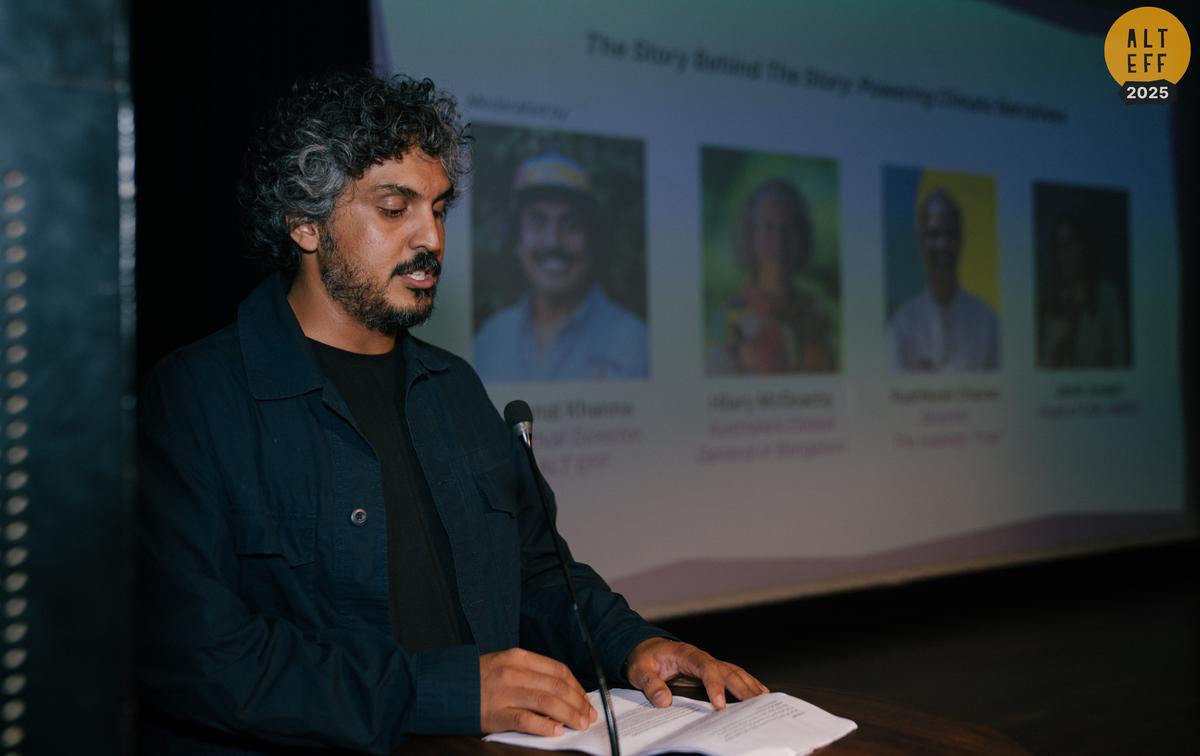
Audiences got a glimpse into sewage systems and landfills, solar parks and wetlands, fungi and forests, folk theatre and immersive experiences, often in a single afternoon. For festival director and co-founder, Kunal Khanna, an economist‑turned systems thinker and permaculturist, the goal was clear: to bring together a range of films that would provide a way for people to take action.

A panel discussion in action

A panel discussion in action
| Photo Credit:
Deva Manohar Manoj

Human stories, the heart of climate cinema

Across the various rooms at Bangalore International Centre (BIC) where the festival was held, the importance of the environment never felt distant; it showed up in villages, cities, factories and forests. From stories such as Kentaro (Tilmann Stewart, Gaku Matsuda) and Future Council (Damon Gameau) making us see the “future” through the eyes of children, to Marching in the Dark (Kinshuk Surjan) following women living with the fallout of farmer suicides and institutional neglect and The Dooars World (Shaon Pritam Baral) stepping into a fragile corridor where wildlife and people coexist, the festival highlighted its core principles of change.

According to the team behind ALT EFF, the features they showcased were not just about the environment, but also about understanding the human connection to it.

“Big filmmakers are getting behind environmental narratives, and these stories are so strong, that the sub‑genre is about the environment, and the main narrative is human emotion,” says Laura Christe Khanna, who is also co-founder and producer of the festival.

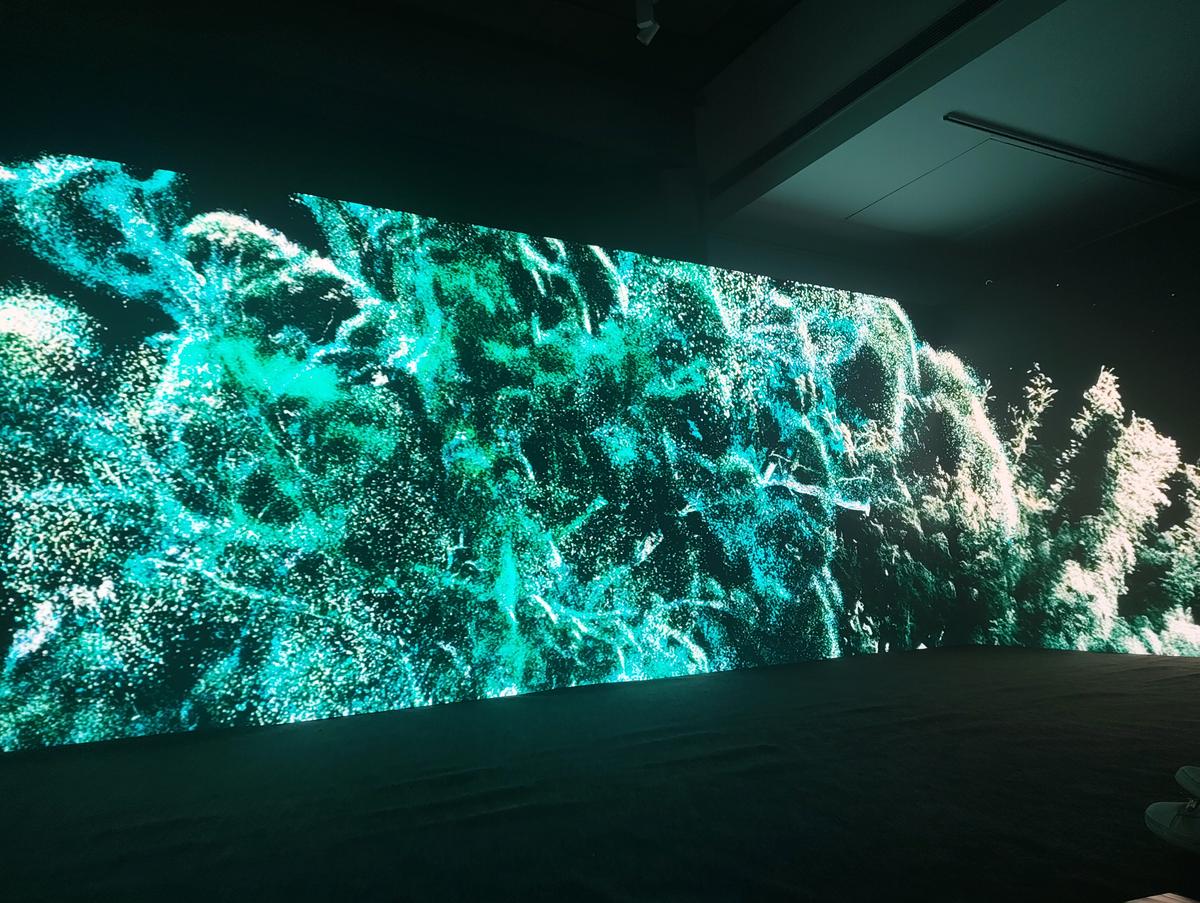
The message holds a delicate balance between ecological urgency and emotional immediacy, something that is deliberate and not accidental. Even on stage, performances such as Beware of Plastic Asura, about a Yakshagana demon who embodies our plastic problem, pushed ideas of transformation, while immersive art experiences like The Giants, transported audiences into the heart of Australia’s ancient forests.

Festival director and co-founder, Kunal Khanna

Festival director and co-founder, Kunal Khanna
| Photo Credit:
Special arrangement

Homegrown climate on the big screen

Though the festival covered experiences from all around the world, its gaze never left home for too long. Documentaries such as Down the Drain, a watch’s journey through the city’s sewage system, and Waste and The City, a revisitation of Mavallipura after years of protests and dumping, returned the focus to Bengaluru’s streets, pipes and landfills.

Nitya Misra (Down the Drain) and Vishwesh Bhagirathi Shivaprasad with Karishma Rao (Waste and The City) credit ALT EFF as a platform for audiences to take accountability as well as bring about positive justice.

In the same spirit, Beneath The Panel: The Hidden Losses of India’s Solar Parks, directed by Aparna Ganesan, also asked serious questions about what happens to people displaced in the name of clean energy, and gave audiences a lot to think about.

Immersive experience titled The Giants

Immersive experience titled The Giants
| Photo Credit:
Deva Manohar Manoj

Talking about the future, Kunal is optimistic that festivals like ALT EFF with a decentralised nature, events hosted in multiple cities and a growing network of watch parties, will go a long way in sensitising people to burning issues surrounding the planet.


Source link

Unveiling the body: Art, intimacy, and resistance intersect at an art exhibit in Chennai


A luscious magenta coloured quilt bears the face of a woman raising her arm in defiance. Displayed prominently against a dark brown background, this piece of cloth radiates a fierce warmth through quick, carefully-laid out stitches. Who is she and what is her story?

In this artwork titled Blanket of Solidarity (quilt on satin, 2020) by Rah Naqvi, the multi-disciplinary artist documents the fight of several hundred Muslim women who took part in a peaceful sit-in protest at Shaheen Bagh, Delhi condemning the CAA (The Citizenship Amendment Act) and NRC (National Register of Citizens). Braving the unforgiving cold, the women used quilts and blankets to keep warm and continue resisting. In this piece, one sees the body of an assertive woman with a marginalised religious identity, interacting with the quilt, intimate and essential to protect one’s flesh, while shielding one from the chill, showing us how bodies manifest while protesting.

Several such works offering a multitude of perspectives about the body in opposition, love, pain, and desire, are now part of Udal, Reading the Body from the Avtar Collection at Alliance Française of Madras until January 13. According to a release, the artworks from South Asia, covering the gamut of premodern imagination across secular Rajput miniatures, contemporised ritual tantra and folk art, to 19th Century Company paintings.

Art by Rah Naqvi

Art by Rah Naqvi
| Photo Credit:
Special Arrangement

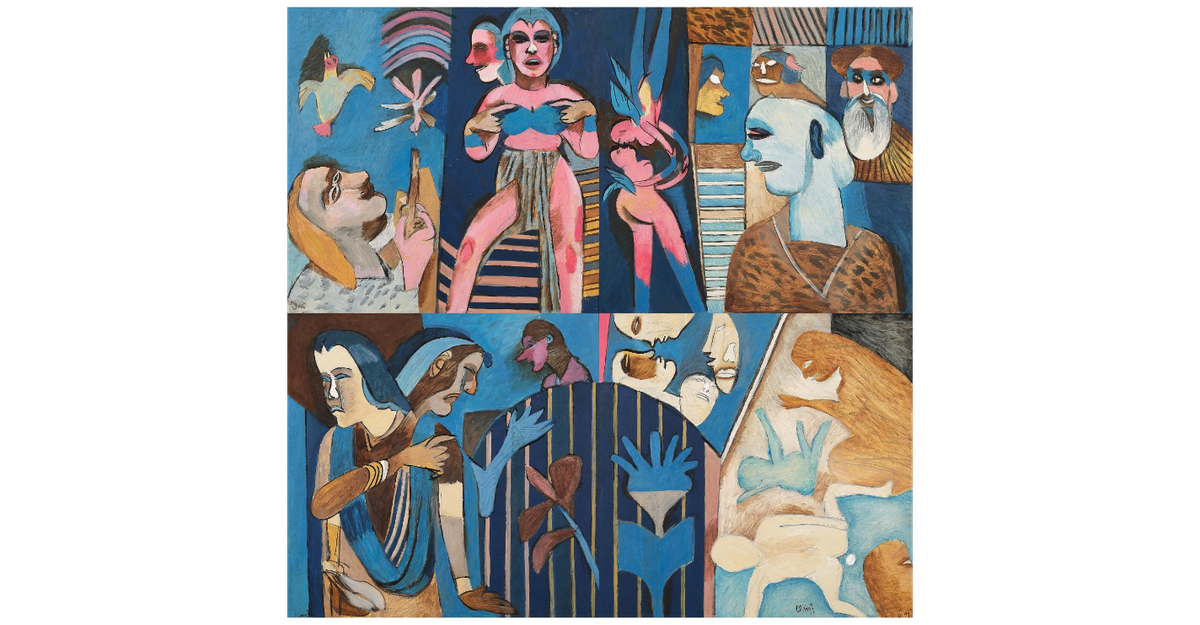
“There is a primacy to the human body. Through it lies a centrality to all our experiences. In it is life, identity, memory and appearance. But also, mortality which one must contend with at all times,” says Shruti Parthasarathy, curator. “There is a narrative created with the different understandings of the body as you move through the exhibition. And i wanted to bring a complexity to this display of the body in art, particularly about the body being political,” she adds, highlighting artists on display including prominent Indian artist and philosopher KG Subramanyan whose work dabbles with the body and fantasy; and Somnath Hore, whose deeply abstract work tells us about the internal workings: of blood, bone, and muscle. It shows the body as frail, mortal even. Not to forget Atul Dodiya’s Dancing Dervish & Trussed Bull, in resplendent white, a moving tribute painted in Tyeb Mehta’s style when the former heard about Mehta’s passing in 2009.

Art by KG Subramanyan

Art by KG Subramanyan
| Photo Credit:
Special Arrangement

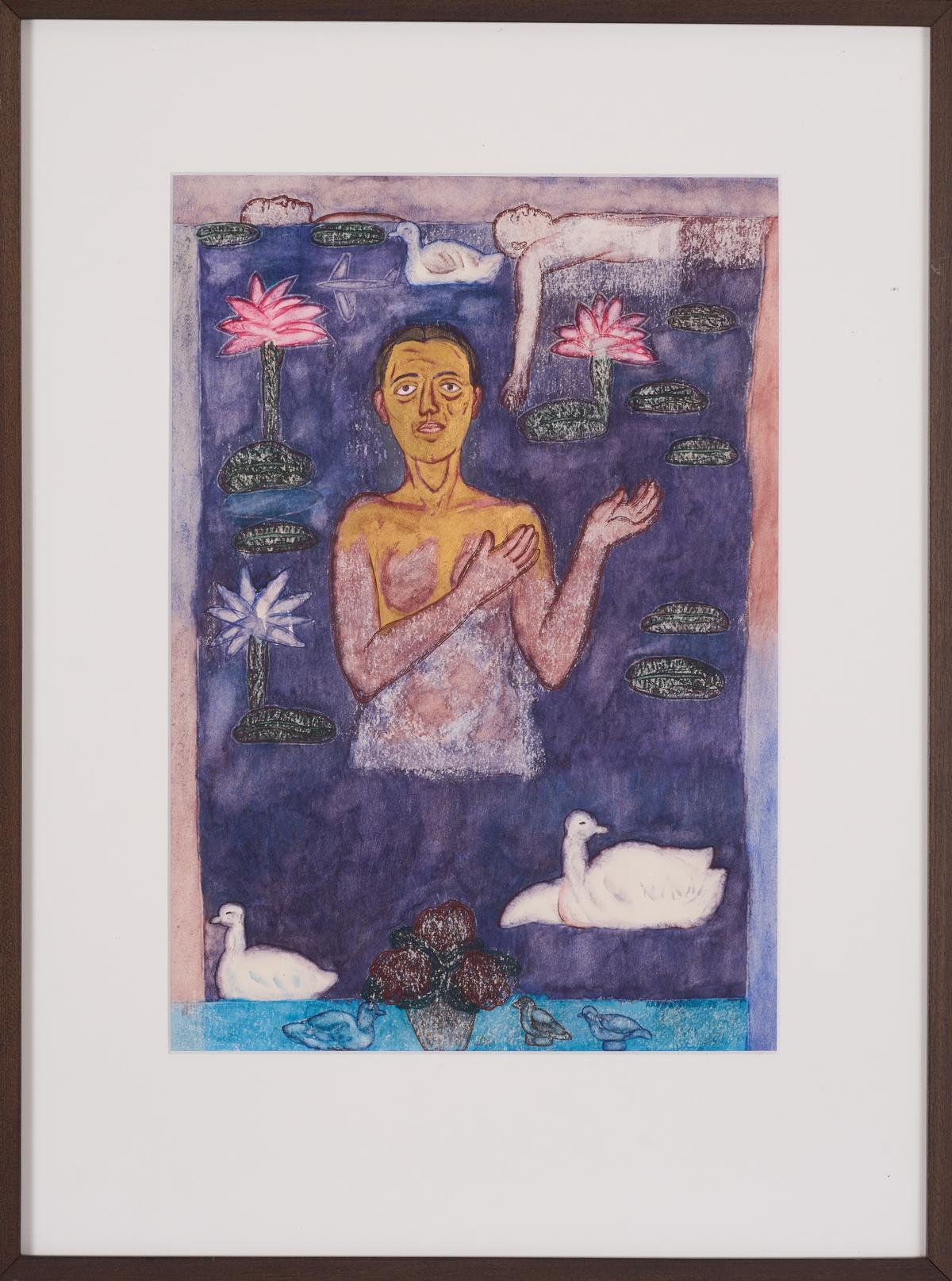
Also on display is artist Arpita Singh, whose beautiful painting of an aging woman’s body, wearing none of the oppressive demands of society to stay young and fit; is placed right next to FN Souza’s work showing the female nude in a slick, sensual light.

All the pieces on display are from art collector and entrepreneur Jaiveer Johal’s collection who began Avtar Foundation in 2024 with the aim to bring fine Indian contemporary art to Chennai, and take contemporary art from here to other parts of the country. Speaking about this exhibit, the collector says that one is eased in with a fairly straight-forward piece of the female body form by Indian contemporary artist Jamini Roy. The viewer then proceeds to witness bodies sans form through works like that of Prabhakar Kamble’s Chandelier made of ropes, metal, brass bells, cowry, leather, terracotta pots, celebrating the working class communities, particularly Dalits, whose labour has been foundational to the development of India.

Untitled by Arpita Singh

Untitled by Arpita Singh
| Photo Credit:
Special Arrangement

An interesting aspect of the display is also the several manifestations of the male nude. Take for instance Pallavi Singh’s five-panel work titled The Bather, where a woman’s gaze falls upon a man whose long, flowing hair is in a bathtub. Much like the erotic sringara often employed towards women who dress themselves, this and another painting by Lakshya Bhargava shows a rare image of a man shaving his leg. Painted on plywood, the texture lends itself to a playfulness, making it seem like there is indeed hair on the canvas.

“The exhibit aims to look at bodies in many different lights including one where it is wounded, intimate, political, and around other creatures. The aim is to front the centrality of the body to the human experience. The body is after all, the home we carry,” says Shruti.

Udal Reading the Body from the Avtar Collection is at Alliance Française of Madras, Nungambakkam until January 13. Avtar is doing curated walks throughout the month. For details, check @avtarfoundation on Instagram

Published – December 10, 2025 03:00 pm IST


Source link

A book to help you mend your broken heart


In September last year, a day before her birthday, Milan Vohra, India’s first Mills & Boon author, had an unfortunate experience. “I was trekking in Bhutan and had a retina detachment so in the space of some two or three hours, in the middle of absolutely nowhere, I went blind in one eye,” says the Bengaluru-based writer and advertising professional.

She recalls the darkness that descended on her, “all I could see were the shoes of the person in front of me…one sliver at the bottom,” says Milan, who rushed to Delhi for an emergency surgery, which was followed by three more within months.

The incident, she says, was a wakeup call. “It made me realise that everything is fragile. I had been downplaying the importance of what writing meant to me because I was quite pressed for time and energy, especially as a caregiver and working at a demanding job.”

Lying in the hospital, still struggling to see properly, however, made her reexamine her life and priorities. “I asked myself this question: if I had six months left, what am I going to regret the most?” Not finishing the books, which were important to Milan was top of the list. “They are quite clear in my head. I had to stop procrastinating and buckle down to doing it. After all, nobody else can write your book.”

The incident catalysed her decision to go ahead and write Heartbreak Unfiltered: Things nobody told you about love, loss and letting go (Rupa Publications), a genre-defying collection of stories of heartbreak suffered by real people, interspersed with research, personal anecdotes and mental exercises to help broken-hearted readers come to terms with their loss.

In the thick of all her surgeries, Milan, who had been researching for and thinking about this book for nearly a decade, ended up meeting Dibakar Ghosh, Editorial Director at Rupa Publications. “He got the book right away…connected to it on a heart level and also understood how pressing the need for this book was.”

By the time she actually started putting the book together, Milan had already collected many of the stories that would be part of this book. “Having written romances for years, I find that people easily confide in me about their lives. I listen well, share too from my life, care deeply and remember details.”

For instance, one of the stories titled ‘Hugs for Free: Arun’s story’ emerged out of a chance encounter with a young man in Bengaluru’s Central Business District, back in 2020. “I was walking down the street to my cafe when I saw this person standing there with a board that said, ‘Feeling sad. Need a hug. Come and hug me’.” She promptly did and then stayed a while, watching him hug other people as well. “It wasn’t just a hug in isolation. It was almost as if he was asking people to open up and talk if they felt like it.”

Heartbreak Unfiltered has stories of real people and relationships

Heartbreak Unfiltered has stories of real people and relationships
| Photo Credit:
franckreporter

They went on to exchange numbers and Milan set up a meeting with this young man. It was pouring the day of the meeting, she remembers, and she was worried that he would cancel, but, “he made it, soaked, with an umbrella in his hand, and we had the longest conversation,” says Milan, who changed names and details to protect the identities of those featured.

The initial plan of the book was to have a series of stories about heartbreak, taken from people across gender identities, cultures, age groups, sexual orientations and class divides, says Milan. “I thought that the stories just spoke for themselves, without me needing to add anything. They make you reflect on your own relationships because you can sometimes spot parallels between what was happening in the story and what could have been happening with you.”

However, she kept getting feedback that while the stories were powerful, a reader would need more, so the structure of the book changed.“For instance, understanding attachment styles or the push-pull dynamic is not something a person can take away from a story alone,” says Milan, who added the chapters and exercises to the book to help readers find understanding and work through the heartbreak, something nearly everyone in the world goes through at some point in their lives. ”I hope after reading this book, they will come away inspired to use their heartbreak as an act of resistance to create something bigger than the pain.”

The years spent in advertising, she says, also helped her develop the book. “When I have to crack an advertising brief with too much information and little direction, I distance myself from the information overload and hover over the problem. I tell myself to take a helicopter view of things. I wanted people to look at their relationships, too, with this helicopter view,” says Milan, who has been writing fiction, in addition to copywriting, for many years now.

Heartbreak happens to everyone, says Milan

Heartbreak happens to everyone, says Milan
| Photo Credit:
kaipong

Heartbreak Unfiltered is her first foray into non-fiction, something, she was a little nervous about, at first. “I kept overthinking it, because I was going out of my zone, which is writing fiction. This vision crisis made me realise time is precious. I had to do it,” she says, adding that this is the first time she has funnelled so much of herself into a book. “I am very private in the public space usually, but in this book I talk about vulnerabilities, my weight, work trauma, personal grief … all of that in the context of applying my life hacks to dealing with heartbreak. The book has a lot of truth and I hope that comes across.”

Published – December 10, 2025 02:04 pm IST


Source link